Geschke Center
Doctoral Dissertations Theses, Dissertations, Capstones and Projects
4-2018
Perceptions of Primary School Principals in
Singapore about Their Role as Justice Agents
Kit Wah Antonia Teng
University of San Francisco, [email protected]
Follow this and additional works at:https://repository.usfca.edu/diss
Part of theEducational Administration and Supervision Commons,Educational Leadership Commons, and theElementary Education Commons
This Dissertation is brought to you for free and open access by the Theses, Dissertations, Capstones and Projects at USF Scholarship: a digital repository @ Gleeson Library | Geschke Center. It has been accepted for inclusion in Doctoral Dissertations by an authorized administrator of USF Scholarship: a digital repository @ Gleeson Library | Geschke Center. For more information, please [email protected].
Recommended Citation
Teng, Kit Wah Antonia, "Perceptions of Primary School Principals in Singapore about Their Role as Justice Agents" (2018).Doctoral Dissertations. 428.
PERCEPTIONS OF PRIMARY SCHOOL PRINCIPALS IN SINGAPORE ABOUT THEIR ROLE AS JUSTICE AGENTS
A Dissertation Submitted to
The Faculty of the School of Education Department of Leadership Studies Catholic Educational Leadership Program
In Partial Fulfillment
of the Requirements for the Degree Doctor of Education
by
Kit Wah Antonia Teng San Francisco
ii ABSTRACT
Perceptions of Primary School Principals in Singapore About Their Role as Justice Agents
Justice in school is central to both the Catholic church and the government of Singapore.
Both institutions have expectations of principals as justice agents to serve the needs of every student by means of equality and equity in educational provision to all students. There is limited research on how principals of Catholic and government primary schools in Singapore perceive
their role as justice agents and how they fulfill this expectation.
This qualitative research examined the experiences of primary school principals in
Singapore in their enactment of educational leadership for justice. Of the 10 principals
interviewed, 4 were principals of Catholic schools and 6 were principals of government schools. Interviews were conducted according to guided questions focused on participants’ perceptions of
leadership for justice, the origins of their beliefs about justice, how their beliefs about justice shaped school culture, and ways educational policies, programs, and practices in these schools
promoted justice.
The results indicated that participants embraced their responsibilities as citizens and public servants and subscribed to the role of education as a social leveler. As public servants,
participants recognized the significance of the mission of the Singapore education service to mold the future of the nation and articulated their commitment to it. Leadership for justice in Singapore entailed serving the holistic development of every student including socioemotional
iii
and leading structural change to promote just practices. Justice for teachers is essential to leadership for justice and encompasses respect for teachers as individuals with personal and
professional needs. Principals built trusting relationships with teachers to create a culture of care and advanced the professional development and career growth of teachers.
Because the values and beliefs of principals determine their leadership practice, it is
essential that the selection process of educators for the principalship is able to provide insights into potential candidates’ moral compass, self-awareness, and understanding of their own impact
iv
approved by the members of the committee, has been presented to and accepted by the Faculty of the School of Education in partial fulfillment of the requirements for the degree of Doctor of
Education. The content and research methodologies presented in this work represent the work of the candidate alone.
Kit Wah Antonia Teng, Candidate 24 April 2018
Dissertation Committee:
Patricia Mitchell, Ph.D., Chairperson 24 April 2018
Ursula Aldana, Ph.D., Committee Member
24 April 2018
Michael Duffy, Ed.D., Committee Member
v
Many wonderful people have supported me in the completion of this dissertation. In particular I would like to thank the following individuals:
The University of San Francisco Jesuit Community and the McGrath Institute for Jesuit Catholic Education for their support, which made this doctoral degree possible.
The chair of my dissertation committee, Dr. Patricia Mitchell, who was an invaluable
mentor and an insightful professor. Thank you for your dedication, responsiveness and expertise. The members of my dissertation committee, Dr. Michael Duffy and Dr. Ursula Aldana,
who were also my professors. Thank you both for encouraging and challenging me along the way.
My professor and mentor, Dr. Doreen Jones, who taught me what it means to have Christ at the center of our lives.
Dr. James Everritt, Fr Ralph Metts, S.J. and Dr. Jane Bleasdale for enriching my studies
at ICEL.
Dr. Jose Munoz, Dr. Emily Nusbaum, and Dr. Arpi Hovasapian for your meaningful and
valuable courses of study.
The Ministry of Education, Singapore, for the approval to conduct the study without which this dissertation will not have come into fruition.
The 10 principals in Singapore who engaged in this research, for without them this study would never have been realized. Thank you for willingly and generously making time for the
interviews.
vi
and Dr. Ng Pak Tee at the National Institute of Education, Singapore for your encouragement and support.
vii
ABSTRACT ... II SIGNATURE PAGE ... IV ACKNOWLEDGEMENTS ... V LIST OF TABLES ... X LIST OF FIGURES ... XI
CHAPTER I THE RESEARCH PROBLEM ...1
Statement of the Problem ...1
Background and Need for the Study ...3
A Call to Justice in Catholic Social Teaching and Education ...3
Singapore National Values—Justice, Equality and Meritocracy ...5
A Comparison of Catholic Schools in the United States and Singapore ...6
An Overview of the Singapore Education System ...13
Expectations of Educational Leadership in Singapore ...21
Purpose of the Study ...21
Research Questions ...22
Conceptual Framework ...22
Significance of the Study ...33
Limitations and Delimitations of the Study ...33
Definition of Terms...34
CHAPTER II REVIEW OF LITERATURE ...36
Restatement of the Problem ...36
Overview of the Literature ...36
Justice in Catholic Social Teaching and Singapore National Values ...36
Ethical Leadership ...40
Educational Leadership for Justice ...45
School Culture—Transformational/Transformative and Shared Leadership ...52
Educational Leadership in Curriculum and Instruction ...56
Summary ...58
CHAPTER III RESEARCH METHODOLOGY ...59
Restatement of the Purpose of the Study ...59
Research Design...59
Qualitative Research ...60
Phenomenology...61
Semistructured Interviews ...62
Population and Sample ...64
Instrumentation ...65
Validity and Reliability ...67
viii
Researcher’s Background ...74
CHAPTER IV ...81
FINDINGS ...81
Overview ...81
Demographics ...81
Research Question 1: What are the perceptions of primary school principals in Singapore about leadership for justice? ...82
Consciousness of Justice in the National Agenda ...83
How Beliefs About Justice Influenced Practice as Ethical Leader ...86
Leadership Actions for Justice ...89
Summary ...98
Research Question 2: What are the origins of principals’ beliefs about justice in school? ...99
Influence of Faith ...99
Influence of Family ...104
Influence of Personal Experiences ...107
Influence of World Leaders ...109
Summary ...111
Research Question 3: How do principals’ beliefs about justice shape school culture? ...111
Leadership by Example...112
Justice for Teachers...113
Communication ...115
Catholic School Culture ...117
Key Success Factors to Culture Building ...119
Challenges or Barriers to Culture Building ...123
Emergent Theme ...127
Summary ...127
Research Question 4: In what ways do the educational policies, programs, and practices in these schools promote justice? ...128
Vision for Quality Teaching and Learning ...128
Improving Student-Learning Outcomes ...132
Partnership with Parents and the Community ...136
Summary ...137
Summary of Findings ...137
CHAPTER V SUMMARY, DISCUSSION, CONCLUSIONS, IMPLICATIONS, AND RECOMMENDATIONS ...141
Summary and Discussion of Findings ...141
Conclusions and Implications ...157
Recommendations ...158
ix
APPENDIX A: QUALTRICS REPORT FOR FEEDBACK ON INTERVIEW
QUESTIONS ...172
APPENDIX B: THE INSTITUTIONAL REVIEW BOARD FOR THE PROTECTION OF HUMAN SUBJECTS (IRBPHS)—APPROVAL AND CONSENT FORM ...177
APPENDIX C: LETTER TO REQUEST APPROVAL FROM THE MINISTRY OF EDUCATION, SINGAPORE TO CONDUCT THE STUDY ...180
APPENDIX D: REPLY FROM THE MINISTRY OF EDUCATION, SINGAPORE GRANTING APPROVAL TO CONDUCT THE STUDY ...182 APPENDIX E: LETTER OF INVITATION TO PARTICIPATE IN THE STUDY ...183
APPENDIX F: SINGAPORE TEACHING PRACTICE AND SINGAPORE
x
Table 1 Starratt’s (2009) Five Levels of Ethical Enactment and the MOE’s Leader Growth Model ...28
xi
CHAPTER I
THE RESEARCH PROBLEM Statement of the Problem
Justice is one of three founding principles of Singapore, the other two being equality and meritocracy (National Heritage Board, Singapore, 2014; Parliament of Singapore, 2009). In the document Sharing Catholic Social Teaching: Challenges and Directions by the U.S. Conference
of Catholic Bishops, the exhortation by the Bishops stated, “Central to our identity as Catholics is that we are called to be leaven for transforming the world, agents for bringing about a kingdom
of love and justice” (U.S. Conference of Catholic Bishops, 1998, p. 3). Accordingly, justice is a core value of the Catholic church and the government of Singapore. For this study on the
perceptions of primary school principals in Singapore about their role as justice agents, justice is defined as equality and equity in educational provision to all students as well as action grounded in a commitment to inclusion.
The Catholic church and the government of Singapore rely on principals to be the justice agents in their schools. As described in The National Standards and Benchmarks for Effective
Catholic Elementary and Secondary Schools (The Center for Catholic School Effectiveness, 2012), the Catholic church expects Catholic principals to serve their school community and the Catholic church to transform their practice into a full response to the Gospel message of “love of
God and neighbor, and service to the world, especially the poor and marginalized” (The Center for Catholic School Effectiveness, 2012, p. 2). For the Ministry of Education, Singapore (MOE),
education policies and programs, and enables the MOE to assess the efficacy of the education
system. The desired outcomes of education follow:
• a confident person who has a strong sense of right and wrong, is adaptable and
resilient, knows himself, is discerning in judgment, thinks independently and critically,
and communicates effectively;
• a self-directed learner who takes responsibility for his own learning, who questions,
reflects and perseveres in the pursuit of learning;
• an active contributor who is able to work effectively in teams, exercises initiative,
takes calculated risks, is innovative and strives for excellence; and,
• a concerned citizen who is rooted to Singapore, has a strong civic consciousness, is
informed, and takes an active role in bettering the lives of others around him. (MOE,
2015a, para 3)
Because schools are fundamentally places where students learn to be productive citizens,
their lived experiences are called to facilitate justice for themselves and others. The principal has the duty to see that the lived experience of justice occurs throughout the school and in every classroom. Little empirical research in Singapore describes the perceptions of principals
concerning their role as justice agents as well as the extent to which and the manner in which principals carry out their roles as justice agents. Although the National Institute of Education,
Singapore conducted a baseline study on leadership and organizational change (Dimmock, 2011), a study by Dimmock and Tan (2013) noted a scarcity of published empirical studies on the Singapore educational system and its leadership.
of these MOE guidelines on the practice of principals in Singapore schools has not been
established. The MOE’s expectation of educational leaders in Singapore to possess a strong sense of personal identity, self-awareness, and understanding of their own leadership is the
impetus for this research to establish the connection between principals’ beliefs and their leadership practice. Also, as recognized by the Archdiocesan Commission for Catholic Schools in Singapore (ACCS), research on Catholic schools in Singapore has yet to be launched (ACCS,
2012). The leadership of Catholic schools in Singapore needs to be better understood if Catholic schools in Singapore are to preserve their Catholic character and ethos.
Background and Need for the Study
Students’ lived experiences in school will impact their learning about justice in society,
and school values and ethos influence the quality of their school experience. The principal as a justice agent establishes the moral and ethical climate of the school. According to Sergiovanni (2009), “the principal assumes the role of ‘high priest’, seeking to define, strengthen, and
articulate those enduring values, beliefs, and cultural strands that give the school its unique identity over time” (p. 137). Hence, an understanding of the call to justice in Catholic social
teaching (CST) and education; Singapore’s national values of justice, equality, and meritocracy; the Singapore education system; and the expectations of educational leadership in Singapore provided insights into the context of this investigation.
A Call to Justice in Catholic Social Teaching and Education
The call to justice for the principal of a Catholic school in Singapore rests in CST and the
of belief, published in 1998, Sharing Catholic Social Teaching: Challenges and Directions,
provides guidance toward the vision of a just society. The seven themes of CST follow:
1. Life and dignity of the human person—the Catholic Church proclaims that human life
is sacred and exhorts respect for the dignity of all people. Thus, every Catholic institution is measured by the extent to which it respects the life and dignity of the human person.
2. Call to Family, Community, and Participation—this theme emphasizes the rights of individuals as well as the duty of individuals to seek the common good and
well-being of all in society, especially the poor and vulnerable.
3. Rights and responsibilities—Catholic tradition insists that personal rights and
responsibilities must conjoin with social responsibilities and protection of the rights of others.
4. Option for the poor and vulnerable—the basic moral test of a society in which there
are deep divisions between rich and poor is how the most vulnerable members are coping.
5. Dignity of work and the rights of workers—workers have the right to productive work, to decent and fair wages, to organize and join unions, to private property, and to economic initiative. Respecting these rights of workers ensures an economy that
serves people instead of an economy served by people. This theme seeks to advance the well-being of all people.
7. Care for God’s creation—stewardship of creation and care for the earth is a
requirement of the Catholic faith. Thus, the moral and ethical dimensions of the challenges to the environment cannot be disregarded (U.S. Conference of Catholic
Bishops, 1998).
Although the Catholic church in Singapore has not issued a similar document on CST to guide Catholic schools, the ACCS (2012) crafted a paper, Catholic Education, Singapore: Core
Values, Common Purpose & Goals, in consultation with the various supervisory religious
authorities, management committees, school leaders and teachers of Catholic schools. The ACCS acknowledged every school’s particular mission and charism while emphasizing facets essential and common to all schools. At the start of each school year in Singapore, the Archbishop of Singapore appoints new principals to lead Catholic schools. As reported by the ACCS, at the commissioning mass on January 23, 2016, Archbishop Goh highlighted the role of principals as ethical leaders and justice agents. Goh likened them to being “bishops” of schools, responsible for the well-being of multiple groups of people including students, parents, and teachers, and emphasized the enduring objective of Catholic schools to serve the “poorest of the poor.”
Archbishop Goh identified students who were intellectually, spiritually, and emotionally poor as those who were in need of the most help (ACCS, 2016).
Singapore National Values—Justice, Equality and Meritocracy
Singapore was a British colony, granted internal self-governance in 1959. Singapore joined Malaysia in 1963 and became an autonomous state in the Malaysian federation. On
era in Singapore, various racial groups were located in separate enclaves to minimize
intercommunal interaction (Ho, 2009). The Chinese formed the largest racial group at 75%, with Malays at 13%, Indians at 7%, and Eurasians and others at 5%. As a result of this racial
segregation and two episodes of interracial tension in the 1950s and 1960s, “the postcolonial democratically elected government of Singapore has single-mindedly implemented integrative policies toward the different racial groups through major developmental programs such as public
housing and national education” (Ho, 2009, p. 288). The Singapore government identified justice and equality as foundational values for nation-building and the development of a Singapore
identity among multiracial and multireligious people. Meritocracy was regarded as the national value that would enable various ethnic communities to build trust among themselves and
collectively seek harmony in a multiracial and multireligious society.
A Comparison of Catholic Schools in the United States and Singapore
This section compared Catholic parish elementary schools in the United States with
Catholic primary schools in Singapore. In the literature on Catholic education in the United States, the term ‘parochial schools’ was used interchangeably with ‘parish elementary schools’.
The following paragraphs examined the purpose, finance, administration, and curriculum of the Catholic schools in the two countries.
According to Walch (2016), the two goals of Catholic parochial education in the United
States were (a) to preserve the Catholic faith of Catholic children and (b) to prepare these
children for productive roles in American society. Catholic parochial schools in the United States
United States was that the family and the Church were primarily responsible for the education of
the children, not the government. The movement to establish Catholic parochial schools was a response to perceptions of Catholic leaders that public schools usurped the role of the Church in
the educational process, and curriculum in the public schools was influenced by Protestant teachings and anti-Catholic propaganda.
Furthermore, Walch (2016) argued that public schools were regarded as a tool to preserve
social order when the arrival of millions of immigrants from Ireland and Germany generated fear of social and political unrest among many Americans. Community leaders who advocated for
public schools contended that the state had the right and responsibility to provide education to preserve social order. To do so, public schools were expected to ensure mixing of children from
different social classes, nationalities and faiths, and to produce good, law-abiding and patriotic citizens. Thus, the opposition among Catholic leaders to public schools was to prevent loss of religious faith among Catholic children. Currently, there are more than 5,000 Catholic
elementary schools serving over 1.3 million students (U. S. Conference of Catholic Bishops, 2018).
The first Catholic school in Singapore was established in 1852. Currently, there are more than 57 Catholic schools from kindergarten to junior college. After Singapore achieved
independence in 1965, education was regarded as the tool for socialization and nation-building
among a multiracial and multireligious people. Like public schools in the United States, schools in Singapore were common spaces for social mixing of all children regardless of race, language,
Furthermore, schools had to ensure that religious activities were not imposed on non-Catholic
students, teachers or staff. Catholic churches in Singapore took on the responsibility of conducting religious education lessons for Catholic children. However, the termination of
religious lessons in Catholic schools, together with new policies governing admission to Primary One and Secondary One, may have given rise to perception among Catholic parents that Catholic schools were not much different from their government counterparts (ACCS, 2012).
In his book, Parish School: A History of American Catholic Parochial Education from Colonial Times to the Present, Walch (2016) traced the changes that had taken place in
educational models of Catholic parish schools in the United States. He first described three early models: the publicly-supported parochial school, the Americanized Catholic school, and the
ethnic Catholic school. Next, he presented new Catholic educational models that arose in response to a decline in the number of Catholic schools in the country.
In the early model of publicly-supported Catholic school, in operation from 1831 to 1916,
the school board leased a school from the local parish and paid the salaries of the teachers. The school board and the pastor jointly selected teachers. The school board determined curriculum,
schoolbooks, and examinations but the pastor ensured that the curriculum was acceptable to the Catholic Church. However, no religious instruction was permitted during curriculum time. The second early model was the Americanized Catholic school. Although this model was utilized in
the last quarter of the nineteenth century, contemporary parochial schools were based on this model. The goal of these parochial schools was to compete with public schools by outperforming
them in the delivery of superior secular and religious education. Additional curricular features of these schools, aimed at encouraging Catholic parents to choose Catholic schools, were
which operated until the 1930s. This model emphasized literacy, religious faith, foreign
languages and cultures. The model appealed mostly to German Catholics. Walch (2016) emphasized that in the United States, public aid could not be used to support or promote a
religious denomination because the state was not involved in regulation of religion. However, states were permitted to provide schoolbooks and transportation for parochial school students.
According to Walch (2016), new models of parish schools arose in the twenty-first
century. The new models included public aid for private schools using vouchers, Catholic charter schools, and schools built by private philanthropy and professional initiative. Like the early
models, there was much experimentation in each new model of parish schools. Walch opined that schools developed on the voucher model produced mixed results, and were not widely
adopted because most states did not support the use of public funds for private schools. However, an article Voucher, Tax Credit Programs Maintain Momentum (Voucher, 2013) asserted that school-choice programs had continued to grow since 1990s. School-choice in the
form of vouchers and tax credit scholarships had improved educational access for low-income Catholic families. Although the number of states which had approved school-choice programs
remained small, an increasing number of states using vouchers and tax credits improved the probabilities of other states adopting them. The article also reported an observation by Sister John Mary Fleming, O.P., executive director of the U.S. Bishops’ Secretariat of Catholic
Education that when bishops were actively involved in promoting school-choice legislation, it often found success. However, Sister John Mary Fleming also cautioned that even as bishops
Furthermore, Kaufman (2017) stated that voucher programs that used government funds
to support students attending private schools was gaining popularity among religiously affiliated schools around the United States. Kaufman reported research findings by Hungerman, Rinz, and
Frymark that vouchers provided churches that operated voucher-accepting schools with more revenue than even worshippers, but the voucher programs did not result in any increase in religious activity. Instead, the voucher programs caused declines in church donations. Kaufman
cautioned that church-state issues could be problematic, and implications of the voucher program needed to be examined.
The second model described by Walch (2016) comprised publicly funded Catholic charter schools where Catholic cultural artifacts, prayers and liturgies were disallowed.
Furthermore, religious education activities were optional and conducted after school. Although Catholic leaders did not consider this model ideal, they accepted that these schools provided safety, good curriculum, competent teachers and sound values in the education of low-income,
non-Catholic children. The third model sought synergy from leadership of bishops and pastors, collective responsibility of the parish community to provide tuition free Catholic education, and
donations from the business community. The Jubilee Catholic Schools which exemplified this model of parish schools achieved extraordinary success (Walch, 2016).
Walch (2016) also described new Catholic educational models developed in the last
decade for middle, high school and universities. The NativityMiguel network of middle schools and the Cristo Rey network for high schools were distinctive new models propelled by leadership
cities. A distinctive feature of the Cristo Rey schools was the work-study program which
nurtured lifeskills and provided students with revenue for their education.
Another new model that had the potential to make a powerful impact on Catholic schools was the “University Consortium for Catholic Education” (UCCE). The UCCE model was a
collaboration among Catholic universities across the United States in the professional
development of highly qualified teachers for Catholic schools. Essential features of the UCCE
program were academic preparation, community living, and spiritual formation.
In contrast, the Singapore government was almost entirely responsible for the finance of
education in both government schools (state schools) and government aided schools (state-supported schools). Government aided schools, such as Catholic schools, were established by
clans or religious groups but were funded and supervised by the government. Primary education was free in both government and government aided schools. MOE was responsible for the operating budgets of all schools, based on student enrolment. Furthermore, MOE trained all
teachers, key personnel and principals at the National Institute of Education and paid the salaries of teaching and administrative staff in primary schools. Additionally, MOE provides
development funds for school-based curriculum innovation. Additionally, MOE supported the entire cost of the physical upgrading of government school sites, and subsidized government-aided schools up to 95% of the cost of their upgrading. Hence, ACCS (2012), having considered that Catholic education was not subsidized in many other countries, stated that “We have a very
good situation and should work pro-actively to keep our Catholic identity and ethos strong in our changing environment.” (p. 2).
bishop had the right and responsibility to oversee the Catholic schools, and Catholic doctrine
must be the foundation of education in Catholic schools. The Office of Catholic Education in the diocese issued curriculum guidelines and standards for Catholic schools. Superintendents or Directors of Catholic schools ensured balance of mission of the Catholic school with parents’
expectations of superior academic standards. Although Catholic schools, by their private school status, were not required to use the Common Core State Standards, they were advised to consider
local, state, and national educational requirements, and ensure that their students were not disadvantaged in their post-secondary education.
Walch (2016) noted that in response to changes in the public-school systems and aspirations of Catholic parents, parish schools in the United States had in recent years revised
their curriculum and incorporated many elements of public schooling. However, he argued that changes in the parish school system had already begun since the second Vatican Council in the 1960s and now the distinction between Catholic schools and non-Catholic schools had been
blurred, giving rise to questions about the need to maintain a separate and costly school system. Nevertheless, the success of new Catholic educational models in the last decade had generated
hope and inspiration for the future of Catholic schools in the United States.
Conversely, a single education system in Singapore incorporated both government and government-aided schools. Catholic schools in Singapore were supervised by MOE through
Cluster Superintendents, and Catholic school boards comprising the religious order, alumni and members of the community. The influence of Catholic school boards on daily operations of
Catholic schools varied. Furthermore, Cluster Superintendents managed the performance appraisal of Catholic school principals and vice principals. Validation of schools’ self-appraisal
common curriculum designed by MOE. At the end of six years, students in Catholic primary
schools, like students in all other primary schools in Singapore, sit the national examination. Although Catholic schools were supervised by MOE, the mission, vision, and values of Catholic
schools in Singapore were aligned with Catholic values or the charism of the Founder. Furthermore, the mission, vision, and values of Catholic schools guided the customisation of MOE curriculum to meet specific needs of students. Like publicly-funded Catholic schools in the
United States, religious education in Singapore Catholic schools was conducted outside of curriculum hours. Still, principals of Catholic schools recognized their responsibility to preserve the schools’ Catholic identity and ethos.
An Overview of the Singapore Education System
The government of Singapore regards the education of the citizens of Singapore to be of strategic national significance. Singapore is a small city-state with no natural resources.
Singapore’s only resource is her people. The MOE believes that how Singaporeans bring up their
children at home and teach them in school will shape Singapore in the next generation. Hence, the mission of the education service in Singapore is to mold the future of the nation by molding
the people who will determine the future of the nation. Prime Minister Goh announced MOE’s vision of “Thinking Schools, Learning Nation” in 1997. This vision describes a nation of thinking and committed citizens capable of meeting future challenges, and an education system
geared to the needs of the 21st century. The MOE designs a standardized curriculum for all schools and conducts national examinations for graduating classes at the primary and secondary
Bilingualism has been a key feature of the Singapore education system since 1959. The
English language is the language of instruction for all subjects and the working language in Singapore. In addition, students in Singapore learn a mother-tongue language: Malay, Mandarin,
or Tamil. The mother-tongue language serves to strengthen an individual’s values and sense of cultural belonging (National Library Board, Singapore, 2016). Students learn the English language and the mother-tongue language throughout their primary and secondary school years.
The School Readiness Test, taken by all students in Primary Grade 1, identifies those who are weak in language or literacy skills. Students who do not have the necessary
English-language or literacy skills are supported through an early literacy-intervention program called the Learning Support Programme (LSP). The LSP is a specialized program that equips students with
basic literacy skills so they can access learning in the regular classroom. All primary schools have Learning Support Coordinators who are given additional training by the MOE to equip them with specialized knowledge and skills to implement the program. Students in the LSP are
supported daily for half an hour each day in groups of eight to 10 students. This support continues in Primary Grade 2 for students who need additional support (MOE, 2015b).
The MOE has also developed an early numeracy intervention program called Learning Support for Mathematics (LSM). The LSM provides additional support to students who do not have the foundational numeracy skills and knowledge to access the Primary Grade 1
Mathematics curriculum. A screening program at the beginning of Primary Grade 1 identifies pupils for the intervention. An LSM teacher supplies support for 2 to 4 hours each week. The
The MOE provides funds for the operating budgets of all government schools as well as
government-aidedschools, such as Catholic schools, based on student enrollment. The MOE is responsible for salaries of all teachers and administrative staff. Education at the primary level is
free but parents pay a small amount (SGD 6.5 to SGD 13.00) every month for miscellaneous fees. The MOE provides financial assistance to needy students so that all Singaporeans,
regardless of their financial circumstances, can benefit from the best opportunities in education
(MOE, 2016d). Additionally, to ensure all students have access to facilities that can support a wide range of educational program, in 1999 the MOE launched a major program called PRIME
to rebuild and improve existing schools. New and upgraded facilities include computer laboratories, media-resource libraries, IT learning-resource rooms, pastoral-care rooms, and
health and fitness rooms. Schools also get bigger classrooms and staff-rooms and more
interaction areas. Depending on the state of existing facilities, schools constructed before 1997 will either be upgraded or rebuilt. The MOE bears the entire cost of PRIME for government
schools, and subsidizes government-aided schools up to 95% of the cost of PRIME (MOE, 2015c).
Special-education schools and mainstream schools collectively cater to the educational needs of students of school-going age who have a range of special learning needs. A declaration made by Prime Minister of Singapore Lee in 2004 explicitly stated, “We will look after the less
educated and the elderly who have helped build Singapore. And we must also have a place in our hearts and our lives for the disabled, who are our brothers and sisters too”(Lee, 2004, ¶ 17). The
To date, all primary schools and 92 secondary schools have at least one allied educator,
trained to meet the learning and behavioral needs of students with disabilities through the provision of in-class support, individual or small-group intervention (e.g., literacy skills, social
skills, and study skills), transition support, and case management (MOE, 2017a). In addition, 10% to 20% of teachers in each primary and secondary school received in-service training in special needs. Teachers provide individual or small-group support in classrooms, monitor the
academic progress of students with disabilities, and share expertise and resources with other teachers and parents (MOE, 2017a). Additionally, a number of schools have facilities or
programs to support their students with respective special needs such as integration programs for students with hearing loss who use Total Communication or Natural Auditory Oral Approach,
integration programs for students with visual impairment, and full handicapped facilities for students with physical impairment (MOE, 2017a).
Wong et al. (2015) asserted that following the introduction of these support structures, a
greater presence has emerged of students with disabilities in mainstream schools. Students with disabilities who are cognitively able to access mainstream curriculum are part of the
general-education system, supported mainly by the allied educator and teachers trained in special needs. Wong et al. estimated 2.5% of school-going children (about 13,000), aged between 7 and 18 years, have disabilities. Of these, about 7,600 are in mainstream schools and 5,400 in special
schools.
Singapore implemented compulsory education in 2003 to ensure all children of
children receiving homeschooling. Currently, almost the entire cohort attends the 6 years of
primary education, with less than 1% of each cohort dropping out in the secondary education school years, compared to 5% 10 years ago. More than 95% of each cohort progresses to
postsecondary education, compared to about 85% a decade ago (MOE, 2014a). Furthermore, MOE statistics showed that Singapore has ensured gender equality in education. Enrollment indicators disaggregated by gender indicate comparable enrolment of male and female students
at all levels of education. Additionally, international benchmarking studies such as the Trends in International Mathematics and Science Study, Progress in International Reading Literacy Study,
and Programme for International Student Assessment have also consistently demonstrated that female students in Singapore are able to outperform male students in certain learning domains
(MOE, 2014a).
The MOE seeks to ensure that every child is given equal opportunity to access education and to pursue personal goals in the education system, based on the principle of meritocracy. At
the end of Primary Grade 6, students take the national examination called the Primary School Leaving Examination (PSLE) in English, their mother-tongue language, mathematics, and
science. Based on their performance at the PSLE, students are placed in the express, normal (academic), or normal (technical) course in secondary schools. The aim is to match different curricular emphases to the learning abilities and interests of the students. Students can opt to
transfer laterally between express, N (academic) and N (technical), if they are assessed to be more suitable for these courses (MOE, 2016b).
Advanced-level examinations at junior colleges or centralized institutes, or to courses at the
polytechnics and Institute of Technical Education. (b) Selected specialized schools offer customized programs for students who are inclined toward hands-on and practical learning.
Some of these schools offer the Normal Technical-level examinations. (c) Specialized independent schools offer customized education catering to students with talents and strong interests in specific fields, such as the arts, sports, mathematics and science, and applied
learning. These students progress to universities, polytechnics, or arts institutions. (d) The Integrated Programme (IP) offered by high-performing independent secondary schools or junior
colleges allow secondary school students to proceed to junior colleges without taking the
General Certification of Education Ordinary-level examinations. Some of these schools offer the
international baccalaureate. Students admitted to the Integrated Programme are considered to be university-bound (MOE, 2016b).
Postsecondary options available to students include junior colleges, centralized institutes,
polytechnics, the Institute of Technical Education, arts institutions, or universities. Some pathways allow student movement between postsecondary institutions. Beyond postsecondary
education, adults and working professionals are encouraged to upskill and reskill through quality learning options in lifelong learning provided by institutes of higher learning as well as
Singapore Workforce Skills Qualifications training, with providers accredited by the Singapore
Workforce Development Agency (MOE, 2016b).
Although students in Singapore have achieved a high level of educational attainment over
Kang (2005) examined the way ethnicity, in partnership with various social institutions such as
the family, affects the educational outcomes of students. A study of students’ postsecondary aspirations and perceptions of educational possibilities showed that although ethnicity did
influence students’ education-related behaviors, streaming in the Singapore educational system had produced unintended consequences that shaped the postsecondary educational outcomes of the students.
The impact of meritocracy in the Singapore education system has also been the subject of a study by Lim (2016), who opined that since Singapore’s independence in 1965, the logic and
practice of meritocracy in the country has developed an elitist class. Lim viewed the Integrated Programme and the Independent School scheme as expressions of the education system’s elitist
orientation. Lim cautioned that the current practice in Singapore of applying meritocracy to the identification and nurture of a small group of academically talented individuals to be leaders who determine policies for achieving success and well-being of the entire population could result in
the diminishing ability of these leaders to represent the perspectives of the people in Singapore. Furthermore, I. Y. H. Ng (2014) suggested that certain characteristics of the Singapore
education system may contribute to a decrease in intergenerational mobility in Singapore. I. Y. H. Ng (2014) identified these characteristics as ability-based and school-based streaming, privatization of basic and tertiary education, expansion of tertiary education while increasing
fees, and possibly regressive public expenditure on education. I. Y. H. Ng (2014) argued that although the Singapore education system seeks to develop a globally competitive workforce by
compromising students’ performance and the nation’s economic competitiveness (I. Y. H. Ng,
2014).
Political leaders in Singapore recognized that although meritocracy has worked for
Singaporeans thus far, elitism is a threat to the inclusive society that Singapore aims to build, and the concept of meritocracy must broaden for Singapore to become a society where people
recognize one another’s strengths and treat one another as equals, regardless of education or job
(Goh, 2013; Tharman, 2013). The Singapore government is investing significantly in preschool education to provide opportunities and enhance social mobility for all Singaporeans, particularly
for those in lower income groups who may need more support initially. The current priority is to raise the quality of programs while keeping fees affordable. Moving forward, the MOE specified
the government will aim for every student to complete secondary education and continue to pursue a postsecondary qualification (MOE, 2014a).
In 2016, the Institute of Policy Studies conducted a survey on parental perceptions of
primary school education with 1,500 parents who are Singapore citizens or permanent residents. This study, carried out in all primary schools in Singapore, showed that 90.4% of Singaporean
parents think most primary schools in Singapore provide high-quality education, 81.8% agreed that Singapore’s education system provides equal opportunity for children from different socioeconomic backgrounds, 81.8% perceived Singapore’s education system as able to nurture
socially responsible citizens, and 80.9% had confidence in Singapore’s education system to cater to students of different styles and paces of learning. Parents were content with the education
emphasis could be strengthened. They also suggested a reduction in the amount of homework
(Mathews, Lim, & Teng, 2017).
Expectations of Educational Leadership in Singapore
Given that the government of Singapore, the MOE and the people of Singapore have placed a very high value on equality and equity in education; the expectations of school
principals in Singapore to deliver the promise is correspondingly high. The MOE has articulated
a set of beliefs and guiding principles for school principals. The document, Anchored in Values and Purpose: Philosophy for Educational Leadership in Singapore (MOE, 2007), guides
principals at the individual level as they reflect on their practices, as well as provides directions for MOE’s policy formulation and leadership-development efforts. School principals in
Singapore are expected to inspire their school community toward a desired future and take action to turn vision into reality. Because of the connection between principals’ leadership practices and students’ learning and lived experiences, what principals believe about justice and how their
beliefs influence their leadership practice will illuminate the linkages between leadership and the quality of the school experience. No research existed on this topic in Singapore and this
dissertation sought to fill that void.
Purpose of the Study
The purpose of the study was to examine how principals’ perceptions about leadership
for justice influence their practice as (a) an ethical leader, (b) culture builder, and (c) educational leader of curriculum and instruction. In this study, I also elucidated the factors concerning the
ways educational policies, programs, and practices in these schools promote justice. This study
sought to fill the gap in educational research in Singapore regarding the perceptions of principals about their role as justice agents as well as the extent to which and ways in which principals
carry out their roles as justice agents.
Research Questions The following research questions guided this study:
1. What are the perceptions of primary school principals in Singapore about leadership for justice?
2. What are the origins of principals’ beliefs about justice in school? 3. How do principals’ beliefs about justice shape school culture?
4. In what ways do the educational policies, programs, and practices in these schools promote justice?
Conceptual Framework
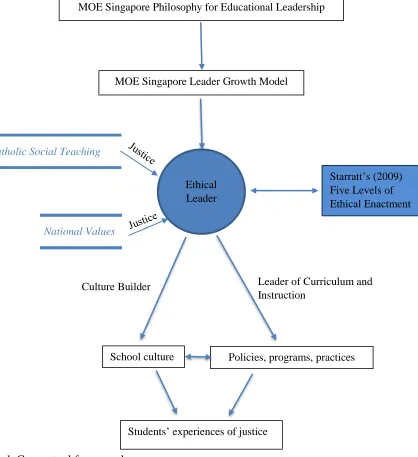
At the heart of educational leadership in Singapore is the ethical leader. On the personal level, influences on the beliefs of principals about justice in school include their personal
background, individual formation, and Singapore’s national values. On a professional level, principals are guided by their philosophy of educational leadership and the leader-growth model developed by the MOE. Principals, as ethical leaders, impact the school culture and curriculum
when they enact the roles of culture builder and leader of curriculum and instruction.
Consequently, Starratt’s (2009) five levels of ethical enactment served as a relevant theoretical
practices based on the roles of the leader in curriculum and instruction articulated by the MOE
(2014b). Figure 1 presents the proposed conceptual framework in this study.
Figure 1. Conceptual framework.
The MOE accepts as true that “leadership starts from within” (2007, p. 9). Principals’ self-awareness of their strengths and weaknesses enables them to appreciate that who they are as
Starratt’s (2009) Five Levels of Ethical Enactment
National Values Catholic Social Teaching
Ethical Leader
MOE Singapore Leader Growth Model
Students’ experiences of justice
Culture Builder Leader of Curriculum and
Instruction
people determines their leadership. Thus, four principles guide educational leadership in
Singapore, articulated in the philosophy for educational leadership (MOE, 2007): • Educational leadership is anchored in values and purpose.
The values of principalship serve as a moral compass for principals while the purpose of
principalship provides the motivation for principals as they seek to influence their community to effect positive change. Principals are guided by the MOE Corporate
Values in their actions and decisions. These values (Integrity the Foundation, People our Focus, Learning our Passion, and Excellence our Pursuit) are upheld in their lives and work. Principals find their purpose in the belief that all students can learn. (MOE, 2007,
p. 9)
• Educational leadership inspires all toward a shared vision.
Principals provide clear direction for the school and its partners, and inspire them to
contribute towards a common goal. Principals champion the vision of the school, enthusing and motivating the school community to embrace the vision. This vision
focuses on student learning and development, preparing our students today for tomorrow’s world, taking into account the collective needs of the student, school, community and nation as well as the students’ roles as global citizens. (MOE, 2007,
p. 11)
• Educational leadership is committed to growing people.
Principals value their staff as individuals and as professionals. They respect their staff for
building trusting relationships within a learning and caring school culture. Principals
role-model development for the entire school community. (MOE, 2007, p. 13) • Educational leadership leads and manages change.
Principals appreciate that leadership and management are distinctive yet complementary
systems of action. Leadership sets the direction while management provides the systems, structures and processes the school needs to achieve its goals. Principals recognize that
the change process is about innovativeness and establishing the conditions for continuous improvement. They appreciate that making change work requires the ideas, commitment and ownership of the school community. Principals therefore lead change for the benefit
of the school community by creating energizing environments in their schools. (MOE, 2007, p. 15)
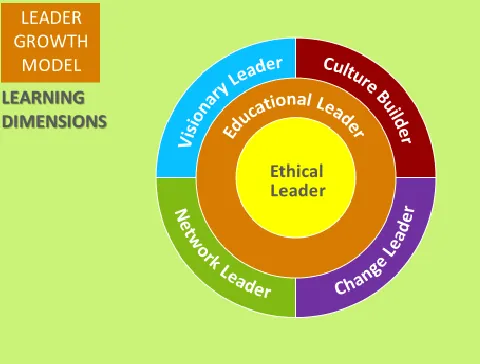
Following the development of the philosophy for educational leadership, the MOE
created the education leader growth model (LGM) shown in Figure 2. The LGM emphasizes that ethical leadership is central to educational leadership in Singapore.
In the LGM, the ethical leader is one who possesses a reflective spirit, operates from a
values-driven core, undergirded by the ethos of the teaching profession and the philosophy for educational leadership, crafted by the MOE to guide educational practice in Singapore. The
ethical leader possesses a strong sense of personal identity, self-awareness, and understanding of his or her own leadership (MOE, 2014b).
In addition to the national values of justice and equality that influence the school leader
in Singapore, the ACCS (2012) provides guidance to Catholic school principals on CST through their statement of core values and purpose:
1. Core values: We believe
a. that each person /child, created in the image and likeness of God, is a precious gift
and sacred responsibility.
b. that good Catholic education includes spiritual growth and fulfillment of potential.
c. in building Christ-centered communities for service to one another.
d. parents have a primary role in Catholic education which is a shared responsibility.
(ACCS, 2012, p.5)
2. Common purpose: We believe in God’s abiding love for human kind. Therefore, we want
a. to give our students a sense of God;
b. to uphold a view of the human person as made in the image and likeness of God;
c. to provide young people with a view of life that is positive - based on faith, hope and love expressed in selfless service;
e. to work with parents to build up citizens for society who embody compassion,
justice and joy;
f. to set the benchmark for good education;
g. to bring the Gospel to life and bring Christ to a needy world;
h. to provide a Catholic education for Catholic students (ACCS, 2012, p.6). The practice of ethical leadership in this study was examined through Starratt’s (2009)
five levels of ethical enactment:
• Level 1—As a human being. Humans deserve to be treated with a basic level of
respect and sacredness. To violate that respect, to deny them their sacredness, is to
violate their humanity; as such it is an ethical violation.
• Level 2—As a citizen-public servant. The principal is viewed as the state in action.
The role of the principal is to see that democracy works and to further the democracy
of the people. If principals violate the rights and the trust of the people in the school, they are not only breaking the law, they are acting unethically in their role of
citizen-public servant.
• Level 3—As an educator. The activity of educating has intrinsic value, connected to
the ethic of learning itself. Therefore, in the hiring, evaluation, and professional-development processes, the principal must ensure teachers are conversant with the
curriculum, have strong grounding in subject mastery and pedagogy, are able to connect learning with meaning and application to life, and have knowledge of
students to personalize learning.
• Level 4—As an educational administrator. Principals must question and critique the
• Level 5—As an educational leader. The principal, as a transformational leader,
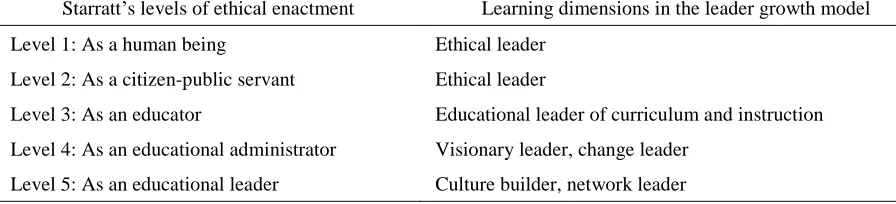
inspires staff and students to go beyond their self-interests to strive for higher ideals. Starratt’s (2009) five levels of ethical enactment and the LGM developed by the MOE have points of alignment (see Figure 2); the association between the two appears in Table 1.
Table 1
Starratt’s (2009) Five Levels of Ethical Enactment and the MOE’s Leader Growth Model
Starratt’s levels of ethical enactment Learning dimensions in the leader growth model
Level 1: As a human being Ethical leader
Level 2: As a citizen-public servant Ethical leader
Level 3: As an educator Educational leader of curriculum and instruction
Level 4: As an educational administrator Visionary leader, change leader
Level 5: As an educational leader Culture builder, network leader
The domain of ethical leader in the LGM aligns with Starratt’s Level 1 (as a human being) and Level 2 (as a citizen-public servant) of ethical enactment. The ethical leadership in the LGM is values-driven and undergirded by the ethos of the teaching profession and the
philosophy for educational leadership (MOE, 2014b). The enactment of ethical leadership envisioned in Starratt’s Level 1 is also values-driven, as the principal is expected to possess
respect for others as well as recognition of the sacredness with which others deserve to be treated. As a citizen-public servant in Starratt’s Level 2, the principal is a representative of the state. Similarly, principals in Singapore schools are considered public servants who serve the
nation. If principals violate the rights and the trust of the people in the school, they are not only breaking the law, they are acting unethically in their role of citizen-public servant (Starratt,
The domain of educational leader for curriculum and instruction in the LGM aligns with
Starratt’s Level 3 (as an educator). In the LGM and Starratt’s Level 3 of ethical enactment, the principal should possess a firm understanding of the learning process and be able to lead staff in
developing professional knowledge in curriculum, pedagogy, assessment, psychology of
learning, and global issues, contexts, and trends, to personalize learning for students and achieve desired learning outcomes (MOE, 2014b; Starratt, 2009).
The domains of visionary leader and change leader in the LGM align with Starratt’s Level 4 (as an educational administrator). In Starratt’s (2009) Level 4, principals must question
and critique the status quo of structures that create injustices, and take action to address those injustices. To do so, the principal must have a vision of a just school and lead the change to
achieve that vision. Thus, Starratt’s Level 4 expectations of the principal are similar to the expectations of the LGM, where, as a visionary leader, the principal must have clarity on the school’s strengths and a firm grasp of the areas for development; thus, the principal should be
able to articulate a compelling vision, and set and sustain a sense of shared purpose and goals. Furthermore, to lead the change to achieve the vision, the principal, as a change leader, needs to
be mindful of the present context, be respectful of the school’s journey, tap into available strategic resources, and provide supportive structures for the change process (MOE, 2014b).
Finally, the domains of culture builder and network leader in the LGM align with
Starratt’s Level 5 (as an educational leader). Starratt (2009) argued that the principal, as a transformational leader, inspires staff and students to go beyond their self-interests to strive for
understands the multiplier effect that comes through unity of purpose and collective sharing of
ideas and recognizes that leadership is a distributed process to which all can contribute. In
addition, the network leader plans for sustainability when creating purposeful collaborations with
partners locally and overseas (MOE, 2014b).
In a seminal work on leadership, Burns (1978) distinguished between transactional leadership and transforming leadership. In transactional leadership, leaders and followers
exchange one thing for another, for example, rewards for effort. Although transactional
leadership is the more common form of leadership in organizations, transforming leadership is
the more powerful in achieving strategic goals because the leader recognizes and appeals to followers’ needs and wants. The transforming leader understands the potential motives of
followers and engages the full person of followers. Burns trusted that “the result of transforming leadership is a relationship of mutual stimulation and elevation that converts followers into leaders and may convert leaders into moral agents” (p. 4). Burns’s concept of the transforming
leader presumes the leader is an ethical person who seeks the common good, not a self-serving one who exploits followers’ needs.
Sergiovanni’s (2009) description of the main leadership activities carried out by
principals in culture building provides insights into how Burns’s (1978) transforming leadership can translate into leadership for cultural change. Sergiovanni (2009) listed the main leadership
activities by principals as (a) articulating the school purposes and mission, (b) engaging in legacy building, (c) telling stories that reinforce beliefs and traditions, and (d) explaining the accepted
ways things are done in the school. Schein (2010) added to the idea of culture building by presenting six mechanisms for the cultural-embedding process:
2. How leaders react to critical incidents and organizational crises;
3. How leaders allocate scarce resources by observed criteria; 4. Leaders’ deliberate role modeling, teaching, and coaching;
5. How leaders allocate rewards and status by observed criteria; and
6. How leaders recruit, select, promote, retire and excommunicate organizational members by observed criteria (Adapted from Schein, 2010, Exhibit 14.1, p. 236).
Spillane (2006) maintained that complexity in leadership rests on the fact that leaders rely on those led to implement a vision, achieve a goal, or complete a task. Distributed leadership
recognizes that leading schools require multiple leaders. Distributed leadership goes beyond the heroic leadership of a charismatic individual to the collective practice of leadership by members
of the school community who formally or informally lead in their areas of expertise, for example, by improving instruction, changing expectations of staff about students, or
transforming culture. However, distributed leadership is not merely delegation; others, such as
teachers or parents, take on leadership responsibility in the school on their own initiative. Thus, the distribution of leadership entails a shift in thinking from the structure, roles, and functions of
leadership (the what) to the practice of leadership (the how). The practice of school leadership surpasses the actions of the principal, taking into consideration the interactions among members of the school community—the principal, teachers, parents, and others in the school—and their
situations. Spillane suggested the situation defines leadership practice and is defined through leadership practice.
The roles of the leader in curriculum and instruction articulated by the MOE follow: 1. Creating a vision for quality teaching and learning. Leaders develop and
strong understanding of the school culture and the learning needs of staff and
students; foster shared ownership for a holistic, balanced, rigorous and engaging curriculum, in line with the vision, that is relevant to national and individual needs;
and align curriculum to educational philosophy, vision and mission.
2. Promoting a culture of learning. Leaders raise positive expectations of excellence for themselves, students, and staff; cultivate innovation and develop a community of
learners by encouraging curricular innovation; create a climate of inquiry and continuous improvement through reflective practice and teacher-driven inquiry;
participate actively in learning with the school and models continuous learning; and nurture a positive climate of integrity, professionalism, and well-being.
3. Improving student learning and outcomes. Leaders establish change-management processes for the school and support the continuous professional learning and development of all teachers with an effective professional-development framework;
establish an effective framework for the monitoring and evaluation of student performance and learning so that all curriculum decisions build on a variety of
information sources including research; establish an effective framework for the monitoring and evaluation of classroom practice and instructional programs so teachers receive constructive feedback for improvement; ensure a physically,
emotionally, and psychologically safe and supportive learning environment; align school resource management with student- and teacher-learning needs; and engage
Significance of the Study
This study aims to contribute to the field of research on educational leadership for justice. Numerous studies have focused on educational leadership for justice in the United States and
other countries, but a dearth of research exists on this topic in Singapore. This study adds to a limited body of research on educational leadership in Singapore. Furthermore, almost no research describes the beliefs and practices of Catholic primary school principals in Singapore,
so this study significantly adds to the literature in the field.
The intent of this study was to provide the MOE and the ACCS with a comprehensive and deep understanding of the beliefs and practices of primary school principals as justice agents. The study sought to portray the impact of the beliefs and practices of primary school
principals on their students’ lived experiences of justice in school through the ways principals shape school culture, transform teaching and learning, and lead the change in their schools.
Finally, the study aimed to provide an awareness of the extent to which the MOE’s
philosophy for educational leadership and the LGM have influenced the practice of primary school principals in Singapore. Insights from this study can inform the design of
educational-leadership-preparation programs, the selection of principals by school boards, and the leadership development and formation of Catholic school principals.
Limitations and Delimitations of the Study
This study was limited to primary school principals in Singapore, due to the researcher’s experience in the Singapore education system. Principals in Catholic primary schools and
government primary schools in Singapore were included. Principals’ perceptions of their role as justice agents in education were gathered. Because this study was limited to schools in
historical, cultural, religious, political, and economic backgrounds from Singapore. Although
some findings could be relevant to secondary schools in Singapore, one should not assume that the findings can be applied to secondary schools in Singapore. Permission from the MOE was
obtained before principals were able to participate in this study.
This study on the perception of principals about their role as justice agents did not include investigation into the perception of teachers and students about how their principals had
enacted their role as justice agents. My experience as a principal in the Singapore education system for more than 10 years required that bracketing be a rigorous process in this
phenomenological study to reduce bias. Additionally, I am professionally and personally familiar with many of the participants in this study.
Definition of Terms
The following terms have been operationalized for this study:
Beliefs: A set of conceptual representations that signify to its holder a reality or given
state of affairs of sufficient validity, truth, or trustworthiness to warrant reliance on it as a guide to personal thought and action (Richardson, Anders, Tidwell, & Lloyd, 1991)
Catholic school culture: A school’s way of life rooted in Christ, a Gospel-based creed and code, and a Catholic vision that provides the inspiration and identity and includes the school’s history, traditions, symbols, relationships, norms, and educational programs (Cook,
2015).
Culture builder: A principal who inspires commitment from the staff toward a shared
continually strengthens professional expertise, and cares for the career development of the staff
(MOE, 2014b).
Educational leader of curriculum and instruction: A principal who has an informed
understanding of the learning process and is able to lead staff to achieve the shared goal of developing the desired student outcomes. Educational leaders of curriculum and instruction avail themselves of professional knowledge in curriculum, pedagogy, assessment, psychology of
learning, and global issues, contexts, and trends (MOE, 2014b).
Ethical leader: A principal whose leadership is values-driven and undergirded by the
Singapore education system’s ethos of the teaching profession and philosophy for educational leadership. Ethical leaders possess a strong sense of personal identity, self-awareness, and
understanding of their own leadership (MOE, 2014b).
Justice in school: The two components of justice in school are (a) Equality and equity in educational provision, requiring that the same resources are made available to all students and
schools, and more resources are intentionally provided to better serve the students with the highest need (Bates, 2006; Larson & Barton, 2013). (b) Action grounded in a commitment to
inclusion, valuing Singapore’s sociocultural diversity, and promoting social cohesion and harmony (MOE, 2012).
School culture: The ways the school seeks to define, strengthen, and articulate those
CHAPTER II
REVIEW OF LITERATURE Restatement of the Problem
Justice in school is central to the Catholic church and the government of Singapore. Both institutions have expectations of principals to serve the needs of every student through equality and equity in educational provision to all students, and a commitment to inclusion. However,
limited research described how principals of Catholic and government primary schools in Singapore perceive their role as justice agents and how they fulfill this expectation.
Overview of the Literature
The literature that informs this investigation into principals’ perceptions about their role
as justice agents, and how their beliefs about justice influence their leadership practice focused on two main areas: (a) the concept of justice in CST, and in Singapore’s national values, and (b) theories and empirical studies on leadership. Theories and research on leadership include
ethical leadership, educational leadership for justice, the impact of transformational and shared leadership on school culture, and educational leadership in curriculum and instruction.
Justice in Catholic Social Teaching and Singapore National Values
With reference to the conceptual framework of this study shown in Figure 1, I envisaged that the sources of influence on the beliefs of principals about justice would be their personal
formation and life experiences or the national values of the country. As the scope of this study was limited to principals of Catholic schools and government schools in Singapore, this literature