
R E V I E W
Open Access
Cellulose membrane as a biomaterial: from
hydrolysis to depolymerization with
electron beam
Mi Young Eo
1, Huan Fan
1, Yun Ju Cho
1, Soung Min Kim
1*and Suk Keun Lee
2Abstract
The cellulose membrane (CM) is a major component of plant cell walls and is both a chemically and mechanically stable synthetic polymer with many applications for use in tissue engineering. However, due to its dissolution difficulty, there are no known physiologically relevant or pharmaceutically clinical applications for this polymer. Thus, research is underway on controlled and adjusted forms of cellulose depolymerization.
To advance the study of applying CM for tissue engineering, we have suggested new possibilities for electron beam (E-beam) treatment of CM. Treatment of CM with an E-beam can modify physical, chemical, molecular and biological properties, so it can be studied continuously to improve its usefulness and to enhance value.
We review clinical applications of CM, cellulose binding domains, cellulose crosslinking proteins, conventional hydrolysis of cellulose, and depolymerization with radiation and focus our experiences with depolymerization of E-beam irradiated CM in this article.
Keywords:Cellulose binding domain, Cellulose crosslinking protein, Cellulose membrane (CM), Depolymerization, Electron beam (E-beam) irradiation
Background
Electron beam irradiation (EBI), also known as electron beam (E-beam) processing, is a process that uses electrons, usually of high energy, to treat objects for purposes such as sterilization and crosslinking of polymers. E-beams have been used in many types of research, technology, and medical therapy fields and used in electron microscopes for the ultramicroscopic analysis of materials as well as to produce images on television screens [1–4].
Cellulose is a major component of plant cell walls and is the most abundant macromolecule on earth. It is also an inexpensive and abundant synthetic polymer with routine applications in its powdered form as a tablet binder or filler. It is chemically and mechanical stable as well as completely insoluble under physiological condi-tions, which makes the cellulose membrane (CM) an ideal candidate for medical modifications and for tissue
engineering uses. However, due to its dissolution diffi-culties, there are no convenient systems known for using cellulose in physiologically relevant or pharmaceutically clinical applications. Cellulose depolymerization in controlled and adjusted forms is of interest to many researchers [5–8].
During our recent investigations of the effects of EBI on maxillofacial reconstructive polymer materials, we have tried to identify gross and elemental changes in E-beam irradiated CMs [9–11]. E-beam treatment involves accelerating a beam of electrons to near the speed of light and by utilizing an oscillating magnetic field, sweeping the electrons back and forth across the poly-mers. It can be thought to modify physical, chemical, molecular and biological properties. To advance the study of applying E-beam irradiated CM for tissue engineering approaches, here, we suggest new possibilities for EBI treatment of CM.
Clinical applications of CM
Cellulose is a naturally occurring polymer composed of re-peating anhydroglucose units linked to gather by β1–4 * Correspondence:[email protected]
1Department of Oral and Maxillofacial Surgery, Dental Research Institute,
School of Dentistry, Seoul National University, 101 Daehak-ro, Jongno-gu, Seoul 110-768, South Korea
Full list of author information is available at the end of the article
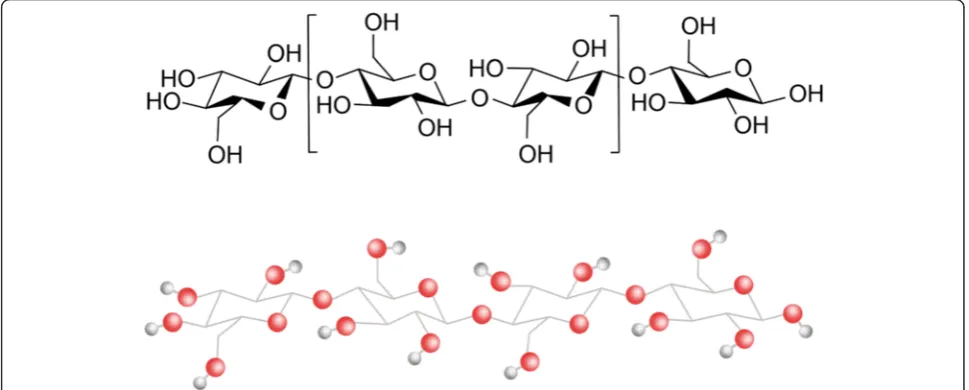
glycosidic linkages (Fig. 1). It is an organic polysaccharide compound with the formula (C6H10O5)n consisting of a linear chain of several hundred to many thousandβ1–4 linked D-glucose units [5, 8, 10]. Based on the location of hydrogen bonds between and within strands of units, different crystalline structures of cellulose are known (cellulose I to IV). Two major allomorphs of cellulose consisting of a microfibrillar crystalline array of linear
β1,4-glucan chains are found in nature; all naturally oc-curring cellulose allomorphs are oriented parallel to one another with the same polarity [12, 13]. Natural cellulose is cellulose I with structure Iα is produced mainly by bacteria and algae, while that with structure Iβ is the main composition of higher plants. The ex-tended chain conformation of cellulose I allows the for-mation of microfibrils with extraordinary mechanical strength. Cellulose II is formed from cellulose I through chemical treatments such as mercerization that alter the crystal structure. The cellulose II allomorph is also produced by a few organisms in nature. The conversion of cellulose I to cellulose II is irreversible, suggesting that cellulose I is metastable and cellulose II is stable [14–16].
Cellulose polymers are known to have a good biocom-patibility and wound healing characteristics like other natural polymers including alginates and chitosan. Much incorporative trial of such natural polymers in synthetic combinations can produce biomaterials with features of synthetic polymers and specific biocompatible and wound healing characteristics of natural polymers [17]. Thus, the application of natural polymers for medical or environmental purposes necessitates the use of these polymers in crosslinking hydrogels [18] or the chain scis-sioning with exposure to high energy radiation [14, 19]. We reviewed and summarized clinical applications of CM (Fig. 2).
Guided bone regeneration membrane
In the clinical medical and dental fields, a variety of non-resorbable and absorbable barrier membranes for bony augmentation were used as the basis of guided bone re-generation (GBR). GBR was introduced to correct bony deficiency and has shown good clinical results over the last several years. The basic concept of GBR evolved from guided tissue regeneration; it is used to compartmentalize new osteogenesis using barrier membranes by protecting the blood clot, creating space, and excluding soft tissue cell proliferation [20, 21]. Several membranes, from non-resorbable expanded polytetrafluoroethylene mem-brane to absorbable memmem-brane, including polyglactin 910 (coated Vicryl®), collagen, calcium phosphate or other intact connective tissue, have been shown to have specific characteristics necessary to manufacture GBR, such as material biocompatibility, stability over the re-quired duration of barrier functions, space mainten-ance, exclusion of undesired cell ingrowth, and ease of use [9, 22].
We previously demonstrated that CM can be success-fully used as a GBR membrane in combination with par-ticulate bone grafting and that the peculiar characteristics of E-beam irradiated CM are also useful for space main-tenance and biocompatibility [2, 5, 10, 11]. Five surgical factors are required to achieve predictable results with GBR procedures: 1) use of an appropriate membrane, 2) achievement of primary soft tissue healing, 3) creation and maintenance of a membrane-protected space, 4) close adaptation and stabilization of the membrane to the sur-rounding bone, and 5) a sufficiently long healing period. Other prerequisites for ideal barrier membranes are known including biocompatibility, cell occlusivity, tis-sue integration, space-making effect, and clinical man-ageability. E-beam irradiated CM fulfills one important
surgical limitations faced with non-resorbable CM, but it has appropriate results in above all surgical factors and prerequisites. E-beam irradiated CM does not need a second surgical procedure for its removal due to its biocompatible longevity. The second surgery increases the risk of loss of regenerated bone on the flap reflec-tion [1, 11].
Anti-inflammatory effect of CM
Several purified molecules and included composition from CM have been shown to have anti-inflammatory and anti-cancer effects. Chondroitin sulfate (CS) ex-tracted from the Styela clava tunic can significantly in-hibit NF-kB driven expression of vascular cell adhesion molecule-1 and inducible nitric oxide synthase by blocking Akt signaling in JB6 cells [23]. CS is a naturally present gly-cosaminoglycan in the extracellular matrix of articular car-tilage and is also known to have anti-inflammation and anti-cancer effects. Hyaluronic acid-carboxymethylcellulose membranes can be applied topically for postoperative scar tissue reduction; they decrease perineural scar formation and adhesion after sciatic nerve repair in rats and are also effective in promoting peripheral nerve regeneration at the repair site [24]. 5-Fluorouracil loaded calcium-zinc-gellan and calcium-zinc-gellan-ethylcellulose microbeads are also useful for sustained drug release, with a formulation ratio of drug:gellan:ethylcellulose at 2.5:7.5:1. Sustained drug re-lease activity was found to provide more effective anti-cancer activity [25].
Methylcellulose (MC) has been used to control the gelation time of silk fibroin aqueous solution and in the design and tailoring of drug release of hydrogels by con-trolling the sol–gel transition [26]. During release proce-dures of donor or receiver fluid, regenerated CM remains chemically unchanged; its pore size remains constant, and no drugs are partitioned into the membrane [27]. CM is also recognized as a permeation enhancer. Improved per-meation of diclofenac diethylamine using isopropyl myris-tate and isopropyl palmimyris-tate as permeation enhancers for fabrication of topical formulations was also observed when bacterial cellulose was used as the diffusion membrane [28]. More recently, the effect of the molecular weight of MC on gelation viscosity and strength of ophthalmic
formulations was confirmed in increased drug release properties among different formulations [29].
Drug delivery CM capsules
Due to the inert biologic and chemical characteristics of CM, it is considered as an ideal candidate for capsule-based controlled drug delivery.
Two piece hard shell variant telescoping capsules are rarely used for controlled drug delivery. The feasibility for controlled release using CM can be determined in a relatively short time with small quantities of bulk drug, especially when dealing with early drug candidates [30]. Moreover, since the capsule properties can be inde-pendently modulated without interacting with the core formulation, this dosage form is suitable for drug mole-cules that are difficult and expensive to obtain and for those sensitive to aqueous or organic environments and the elevated temperatures typically encountered during tablet coatings used for controlled release [31].
The gelatin capsule is the most common starting compo-nents, and gelatin dissolution times in the gastro-intestinal tract have been investigated to improve the feasibility of using gelatin capsules for delayed and extended drug delivery [32–34]. Recently, drug release performance from regenerated cellulose capsules was studied, and an additional coating over hard gelatin capsules to achieve controlled, delayed, and or sustained release from capsules was approved in spite of the presence of pepsin and pan-creatin in the stomach and intestinal fluids [33, 35]. This cellulose capsule possessed the advantages of ease of use and portability. Capsules are a popular dosage form be-cause they provide a smooth, slippery, easily swallowable, and tasteless shell for drug delivery; they are particularly beneficial for drugs with unpleasant tastes and odors [30, 31]. Thus, gelatin capsule made from regenerated cellulose are commonly used in the commercial fabrica-tion market of two piece telescoping capsules used for controlled oral drug delivery.
Cellulosic scaffolds
In addition to its role as a drug delivery system, cellu-losic scaffolds can also be used for tissue engineering [6, 7] and other bio-medical applications. The process of cellulose generation and scaffold fabrication involves
the use of Acetobacter xylinum bacteria in a glucose rich environment to produce a highly purified cellulose matrix with high degrees of swelling. A. xylinum is a representative bacteria in which the physiochemical properties of the cellulose matrix are controlled by changes in growth medium to obtain the desired func-tionality, and different kinds of cell seeding and tissue growth, as well as the addition of non-biological products, can easily be achieved by placing living cells in the same growth medium as theA. xylinumbacteria [36].
Regenerated CM is commonly used in protein separation and reverse osmosis processes such as diffusion induced phase separation precipitation of cellulose solutions in aqueous environments, thermal annealing in various or-ganic non-solvents, or polymer consolidation (hornification processes) [37]. However, there is very little information on the properties of these scaffold membranes formed after diverse processes.
More recently, blended films have been prepared from native cotton linters and depolymerized cotton linters to alter regenerated CM properties such as water uptake, porosity, and tortuosity [38]. The changes in solute size hydrophobicity were achieved through E-beam irradiated regenerated CM [11, 17]. The structure and properties of these membranes could be controlled and modified de-pending on the energy, type, and E-beam dose [39].
Cellulose binding domains and cellulose crosslinking proteins
Cellulose binding domains (CBDs) are structurally and functionally independent; no catalytic modules nor essen-tial elements are found in many cellulose or hemicelluloses degrading enzymes (Fig. 3) [11, 40, 41]. All CBDs have affinity for cellulose; they are divided into several families
and do not have any hydrolytic activity [40]. Many or-ganisms produce different CBDs, providing immense potential for applications of CBDs in the field of bio-technology. CBDs were recently used to facilitate pro-tein immobilization on cellulose supports.
Cellulose is an ideal matrix for large-scale affinity puri-fication procedures. This chemically inert matrix has ex-cellent physical properties as well as low affinity for nonspecific protein binding [42]. CBDs can be removed from enzymes by proteolysis or by protein engineering, and CBDs can be applied in the modification of physical and chemical properties of composite materials and the development of modified materials with improved proper-ties. It is available in a diverse range of forms and sizes, is pharmaceutically safe, and is relatively inexpensive. How-ever, at the molecular level, the role of the CBD in the hydrolytic action of enzyme remains unclear.
The affinity of CBDs can be significantly improved by fusing two CBDs together using a linker to form a double CBD [43]. Most cellulose-degrading enzymes have a two-domain structure that consists of a catalytic two-domain and a CBD connected by a linker region. The linkage and the in-teractions of the two domains represent the function of these enzymes. Phenotypically, the removal of CBD from the enzyme results in decreased affinity and much re-duced hydrolytic activity on crystalline cellulose.
Classification and purifications of cellulose binding domains
Family I CBD can reversibly bind to cellulose, while Families II and III CBD display irreversible binding. When Family I CBD is used as an immobilizing tag, low-rate column leakage is often observed [44]. Fungal Family I CBD differs from bacterial Family II CBD in
size and structure. Early experiments with the
Tricho-derma reesei cellobiohydrolase I (CBHI) CBD suggested
that these CBDs bind irreversibly to cellulose columns [45]. Linder et al. [44] constructed a chimeric protein that was composed of CBD HII and CBHI from
Tricho-derma reeseiand a single-chain antibody. In this procedure,
measurement of the reversibility and exchange rates was very difficult for its sensitization of tritium labeled proteins [44].
Brun et al. [46] proposed a novel two-phase separation system to purify proteins from aqueous solutions utilizing Family IV CBD that bind to water-soluble cellulosic mate-rials such as hydroxyethylcellulose [46]. The system was composed of phase-forming polysaccharide polymers to which CBD can bind and a phase-inducing agent such as polyethylene glycol. The solution containing the CBD-fused peptide or protein was mixed with the phase-forming oligosaccharide followed by the addition of the phase-inducing agent. The two phases were then sepa-rated, and the target protein was purified. This system can be very effective for the separation of proteins from fermentation broths as well as from other aqueous solu-tions. Most work on CBD-mediated protein immobilization has been carried out using family II CBDs, especially those
from Cellulomonas fimi[47]. The leaking of immobilized
proteins has been studied, but usually none is detected, thus leakage has not been regarded as a problem [48]. This has led to the hypothesis that the interaction of these CBDs with cellulose is irreversible and the utilization of CBDs has advantages for the many production of CBD fusion proteins in plants by use of E-beam.
Targeting of cellulose binding domains
From the many technical applications for CBD binding, the most common and first commercial application was the use of CBDs in fusion proteins as tags for affinity purification or immobilization. Since CBDs spontan-eously adsorb to cellulose from almost any solution, very little or no pretreatment of the samples is required prior to immobilization. Thus, CBDs offer many industrially attractive uses.
Cellulose is a major constituent of many commercial products; therefore, targeting functional molecules to cellulose-containing materials can be mediated by CBDs. The commercial potential of CBD in this context was first realized for denim stonewashing [49]. With the introduction of recombinant enzyme technology, the strong affinity between cellulose and CBD was utilized for enzyme targeting to garments. This development eventually evolved into an alternative process that com-pletely replaced the traditional stones [49].
The strong affinity between cellulose micrifibrils and CBDs is used in many applications associated with the textile industry. Numerous laundry powders contain
recombinant enzymes that do not possess a native affin-ity for the cellulosic fabrics. The performance of these enzymes under conventional washing conditions can be improved by increasing their affinity to the textile sub-strate [50], and this can be achieved by fusion to CBDs. Additional substances can also be targeted to cellulosic fabrics. For example, fragrance-bearing particles conju-gated to CBD can be added to laundry powder, which reduces the amount of fragrance needed in the product.
Threads are exposed to considerable mechanical strain during the weaving process. To prevent tearing, the threads are reinforced by gelatinous substances by a process called ‘sizing’. The most popular material used for sizing is starch, but cellulose derivatives such as carboxymethylcellulose (CMC), hydroxyethylcellulose, hydroxypropylcellulose, and MC are also employed. A contradictory effect of the sizing agents is that fabrics are not able to absorb water-based finishing agents, such as dyes. To improve the enzymatic ‘desizing’ process, target enzymes can be fused to CBD, thus increasing the affinity of the enzymes for the cellulosic fabrics [50, 51].
Antimicrobial agents can be targeted to polysaccharide materials. Emerson et al. [52] proposed the targeting of aromatic aldehydes or alcohols to cellulose-containing materials. Aromatic aldehydes and alcohols, including benzaldehyde, acetaldehyde cinnamaldehyde, piperonal, and vanillin, are known to be effective disinfectants for bacteria, fungi, and viruses and are nontoxic to humans and animals. Targeting can be attained with the assistance of CBD and may be useful for directly impregnating sur-faces such as paper or wood.
Another interesting application of CBD is in oral care products. Polysaccharides such as fructan and glucan that are present in the oral cavity are known to be in-volved in the formation of dental plaque; these sugars can be degraded by CBD fused to enzymes. Fuglsang and Tsuchiya [53] concluded that CBD on its own or in combination with other ingredients removes existing plaque or prevent its formation when used in conven-tional oral hygiene.
Cellulose crosslinking proteins (CCPs)
Cellulose crosslinking proteins (CCPs) are found as essential and efficient cross-linkers between hydrophilic surfaces of different CBD, which enables each cellulose microfibril to crosslink in the final cellulosic materials (Fig. 3). In more recent biotechnology, CCPs with CBD linking has been used to modify polysaccharide materials both in vivo and in vitro. The potential applications of CCPs technology range from modulating the architec-ture of individual cells to modifying entire organisms in tissue engineering [42, 43].
CBDs exert nonhydrolytic fiber disruption on cellulose-containing materials. Application of a single CBD molecule to paper can improve its mechanical properties but to a lesser extent when compared to CCP. In addition, pa-pers treated with CCP become more hydrophobic and demonstrate water repelling properties. At high CCP concentrations, most binding sites on cellulose are occu-pied by single CBD moieties; consequently, the second un-bound CBD moiety of CCP exposes a hydrophobic surface and, in this manner, increases surface hydrophobicity. At optimum CCP concentrations, all binding sites in CCP are attached to the cellulosic surface, which results in improved mechanical properties [42, 43]. It has been demonstrated that the application of CBD on secondary fibers, such as old paperboard containers, results in in-creased tensile and burst indexes as well as improved pulp drainage [42].
Our experiences with E-beam irradiated CM
To create a bone regeneration membrane, we developed CM from native sea squirt skin, called non-native tuni-cate or Styela clava, which inhabits sea facing bays and harbors. Previously, we determined that a CM was suc-cess sful for use as a GBR barrier in combination with particulate bone grafting [5, 9, 10]. Additionally, the pe-culiar characteristics of E-beam irradiated CM were found to be useful in space maintenance and biocom-patibility [11]. E-beam irradiated CM overcomes some of the limitations of non-resorbable CM such as the need for a second surgical procedure for its removal.
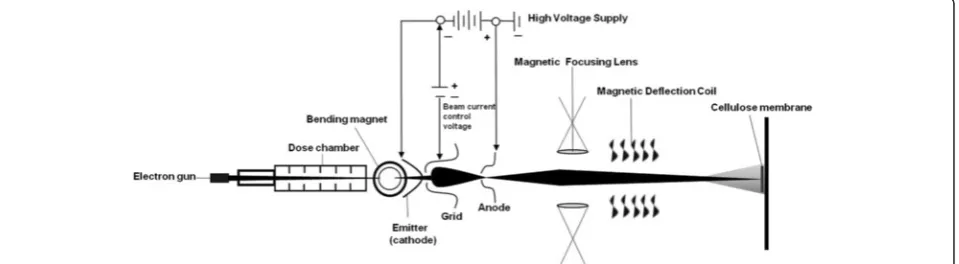
To evaluate the effect and potential of E-beam irradiated CM, we used a 1.0 MeV linear accelerator or a 2.0 MeV superconductive linear accelerator (power 20–300 kW, pressure 115 kPa, temperature −30–120 °C, sensor sensi-tivity 0.1–1.2 mV/kPa, generating power sensitivity 44.75 mV/kPa, supply voltage 5 ± 0.25 V) with different irradiation doses (1, 10, 30, and 120 kGy; Fig. 4). Struc-tural changes in CM were studied in vitro by elementary and amino acid analysis, elementary analysis using field
emission scanning electron microscope, electron spectros-copy for chemical analysis (ESCA), attenuated total reflec-tion infrared analysis, and scanning electron microscopy (SEM). And we compared changes under different condi-tioned E-beam irradiated CM in an in vivo animal study, which were applied on standardized transosseous circular 8.0 mm sized calvarial defect 8-weeks-old, Sprague–Dawley male rats (Fig. 5) under the approvement of Seoul National University Institutional Animal Care and Use Committee (SNU-120801-3-3).
E-beam treatment involves accelerating a beam of electrons to near the speed of light and, by using an os-cillating magnetic field, sweeping the electrons back and forth across the CM [1, 2]. From our analysis, CM has a pure carbohydrate polymer structure consisting of a rigid outer surface and a delicate inner surface; this structure lends itself to development as a tissue regen-erative barrier membrane [5, 10]. Very small amounts of peptide fragments derived from E-beam treated CM, such as CCP, which is a kind of anchoring protein com-posed of glycocalyx, could be lost its own structure [11].
Cellulose is a carbohydrate polymer composed of carbon, hydrogen, and β-glucose and is the main composition of plant cell walls. Glucose is the major constructive carbohy-drate in 95 % of cellulose, while fucose, arabinose, and mannose make up 1–2 % each. There are more C-O bonds than C-C bonds, and several related results showed that depolymerization of cellulose microfibrils forms microtu-bules. The C = O functional group is also present in both the organic and non-organic synthetic materials, and sur-face chemical bonding energy of each carbon and oxygen has been confirmed through C1s and O1s spectra in ESCA (Fig. 6) [11].
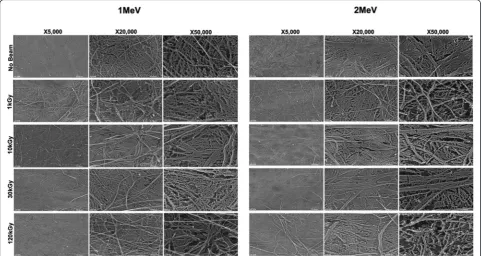
Scissioning of long carbohydrate polymers can be ob-served under SEM (Fig. 7), and uniform turgor pressure to maintain the directionality of the CM can be changed to be elongated after EBI. Arrangements of microtubules can also be changed indirectly, so cellulose and enzyme complexes are able to migrate in the plasma membrane.
Tensile strength of CM can be changed because polysac-charide cross-linking is able to lose its resistance to com-pression and modify its physical, chemical, molecular and biological properties. CCP was lost after EBI, leading to detachment of the strong crosslinking binding of each fibril [11, 22].
In light microscopic observations of the regenerated calvarial defects after 12 and 24 weeks, new bone forma-tion was histologically more active in the 12 weeks spec-imens with EBI than in the sham or control groups (Fig. 8). In the 24 weeks specimens, some part of CM was partially degraded, as observed under H&E, Masson Trichrome, and toluidine blue stains (Fig. 9). The poten-tial of E-beam irradiated CM polymers as thin um thick-ness medical membranes for guided bone regeneration
and the possibilities of clinical application of E-beam ir-radiated CM as biodegradable or resorbable membranes was confirmed.
Depolymerization of CM
For the chronological understandings of cellulose de-polymerization, we separated the subheadings from the hydrolysis of cellulose to the radiation induced and E-beam irradiation.
Degradation or hydrolysis of cellulose
The natural polymer form of cellulose is composed of repeating anhydroglucose units linked together byβ1–4 glycosidic linkages. The native regular patterns of crys-talline cellulose in electron diffraction are cellulose
Fig. 5Photomicrographs of the standardized transosseous circular 8.0 mm sized calvarial defect with E-beam irradiated CM (a), the covered defect with different conditioned E-beam irradiated CM (b), and the inner side of the frontal bone including the perforated area and periosteal membrane at 12 weeks (c) and 24 weeks (d)
microfibrils. Cellulose could be assembled abiotically by many kinds of enzymatic polymerization. For example, cellulose from cotton linter sheets can be depolymerized according to the mineral acid hydrolysis method [54, 55]. Briefly, cotton linter sheets were shredded into 1 cm × 1 cm pieces, and sections weighing approximately 50 g were placed in a 1 l flask filled with 500 ml of 2 N hydro-chloric acid and agitated using a magnetic stir bar at 40 °C in a thermostatic water bath for up to 72 h. At predeter-mined time intervals, approximately 1 to 5 g samples were removed from the flask and rinsed under running water for 2 h, followed by washing in acetone. Finally, the sec-tions were placed in an oven at 105 °C for 24 h. At the end of 72 h, the remaining cellulose slurry was rinsed and dehydrated by the same method [54].
Until the early 21st century, only two major allomorphs of natural cellulose biopolymer were known: cellulose I and II. Cellulose I and II both consist of a microfibrillar crystalline array of linearβ1,4-glucan chains, all of which are oriented parallel to one another with the same po-larity. The extended chain conformation of cellulose I allows for the formation of microfibrils with extraordinary mechanical strength. Cellulose II and its various allo-morph were recently shown to be formed from cellulose I by altering the crystalline structures, for example by mer-cerization, recrystallization, or polymerization [55, 56].
Abiogenic synthesis of various cellulose allomorphs has been produced by a few organisms in nature. Dissolution or degradation of cellulose microfibrils also occurs in na-ture. Brown-rot fungi in decaying wood is a representative
Fig. 7SEM findings of the inner surface of 1 MeV and 2 MeV E-beam irradiated CM according to 1, 10, 30 and 120 kGy doses at × 5.0 k, × 20.0 k, and × 50.0 k magnifications
natural organism that rapidly depolymerizes cellulose during the early stages of wood decay by producing endo-1–4 β-glucanases [55]. In wood decayed by brown-rot fungi, the hemicelluloses fraction is virtually absent, and the degree of cellulose depolymerization is abruptly reduced. Crystalline cellulose can be also degraded by a synergistic action between endo- and exo-glucanases in the case of white-rot fungi such as Trichoderma reesei, which is an important industrially used microorganism with cellulose production ability, and Sporotrichum
pul-verulentum, which has abundant cellulases induced by
cellobiose dehydrogenase and repressed by small amounts of glucose [55, 57]. These white-rot fungi depolymerize cellulose more slowly and utilize the degradation products simultaneously, while brown-rot fungi depolymerize cellu-lose rapidly during early stages of wood decay and pro-duce abundant amounts of cellulases with glucose as the only carbon source [57, 58].
Brown-rot fungi is known to lack the synergistic endo-and exo-glucanase cooperation needed to degrade crys-talline cellulose; no other enzyme systems are known to substitute for these effects. Koenigs [55] was the first person to suggest that brown-rot fungi oxidize cellulose and that they are more powerful producers of H2O2than white-rot fungi. He suggested that the initial attack on crystalline cellulose by brown-rot fungi is via an H2O2/Fe2+ system [55, 58].
The eventual involvement of H2O2in the degradation of cellulose by brown-rot fungi has been studied in great detail by Highley [58, 59]. Initially, he determined that
H2O2might be involved in cellulose degradation byPoria
placenta, since a decrease in cellulose was the result of the
addition of -OH and H2O2quenching agents. Additionally, he found that only one of the six brown-rot fungi studied produced significant amounts of extracellular H2O2, while several of the white-rot fungi produce extracellular H2O2. Localization of H2O2during degradation of hemlock wood by two different fungi, the brown-rot fungusPoria placenta and the white-rot fungusCoriolus versicolorwith diamino-benzidine cytochemically, the role of H2O2in wood deg-radation was finally revealed [58]. A recent study of the brown-rot fungus P. placenta demonstrated that com-pounds affecting the H2O2/-OH system did not affect the degradation of wood. Thus, these results strongly suggest the involvement of extracellularly produced H2O2in cellu-lose depolymerization by brown-rot fungi [55, 57–59].
Radiation induced depolymerization
Radiation processing is a very convenient tool for imparting desirable effects in polymeric materials, and it has been an area of much interest in the last few de-cades. Radiation processing has been established as a commercially successful technology for the modification of a variety of synthetic polymeric materials for a variety of applications such as crosslinking of wire and cable, production of heat shrinkable materials, modification of rubber tires, and production of foamed materials. However, radiation processing of natural polymers has received much less attention because most natural polymers undergo chain sicssioning when exposed to high energy radiation making
it difficult to process natural polymers in various forms and sizes [14, 19, 60]. High energy radiation techniques in-cluding gamma irradiation can be effectively used for re-ducing the molecular weight of polysaccharide polymers such as cellulose and alginate [61]. Conventionally synthe-sized low molecular weight oligosaccharides are being ex-plored as plant growth promoters; however, until recently, the effect of radiation degradation of polysaccharide poly-mers was not clearly studied. The areas of applications of natural polymers being explored include health care appli-cations and agricultural appliappli-cations wherein it has been observed by a number of researchers that some low mo-lecular natural polymers, particularly polysaccharides such as chitin/chitosan or alginates, show very interesting prop-erties. Many natural polymers have an extremely high affinity for toxic metal ions and dyes, which makes natural polymers useful in environmental conservation due to their molecular structure [14, 19, 62].
Several related studies have been carried out in recent years on polysaccharides and their derivatives to attempt radiation-induced crosslinking in cellulose, starch, and chitin/chitosan water-soluble derivatives under various experimental conditions. Polysaccharide water soluble derivatives such as CMC, carboxymethylstarch, carbox-ymethylchitin, and carboxymethylchitosan are readily crosslinked when irradiated in a highly concentrated aque-ous solution in paste-like state [14, 19]. Natural polymers are difficult to process and degrade when exposed to high energy radiation. Thus, radiation processing of natural polymers largely remains unexplored and industrial ap-plications have been difficult to achieve.
The radiation technology for processing of synthetic polymers can be attributed to ease of process ability in various shapes and sizes, and most of these polymers undergo crosslinking reactions on exposure to radiation. In the case of hydrogels, which have emerged as important biomaterials as they possess excellent biocompatibility after ionizing radiation processes [18, 63]. Hydrogels are three dimensional crosslinked network structures that are pro-duced by simultaneous polymerization and crosslinking of suitable monomers or by crosslinking of linear polymers. Ionizing radiation possesses the unique ability to initiate polymerization and crosslinking reactions without the need to add toxic chemicals, because the conventional crosslinking involves the use of toxic additives to bring about polymerization or crosslinking and thus is not suitable for biocompatible hydrogels [18, 64]. Therefore radiation processing is emerging as an excellent tool to produce hydrogels for a variety of medical applications.
E-beam irradiated CM
To evaluate the effect and potential of E-beam irradiated CM, we exposed sea squirt derived CM fromStyelaclava, a non-native tunicate, to a 1–2 MeV electron beam.
Cellulose is a carbohydrate polymer composed of carbon, hydrogen andβ-glucose, CCP was lost after EBI, and thus the thin and delicate cellulose fibrils detached from each other by moving the cellulose synthase complex (Fig. 10) [11]. The potential of the cellulose polymer as a thin um medical membrane for guided bone regeneration by E-beam irradiated depolymerization has been suggested [11].
In our previous in vitro results, C-O bonding was in-creased more than C-C bonding, and several related re-sults showed depolymerization of cellulose microfibrils composed of microtubules on high-resolution C1s and O1s ESCA spectrum (Fig. 6). In ESCA analysis, the nor-mal spectra of C1s bindings are shown as hydrocarbon (C-C, C-H) bonding at the 284.9 eV peak, hydroxyl car-bon (C-O-H) car-bonding at the 286.7 eV peak, ether carcar-bon (O-C-O) bonding at the 288.4 eV peak, and ester carbon (O-C = O) bondings at the 289.6 eV peak. In the high-resolution of O1s ESCA spectrum, hydroxyl oxygen (−C-O-H), ether oxygen (−C-O-C-) and ester oxygen (−COO) bindings were differently observed [65, 66]. The peak value of 38 cps (counts per second) in the non-E-beam irradiated CM was abruptly increased to 240–250 cps after EBI, indicating a fast increase in C-O binding in sur-face analysis after EBI. The acceleration of oxygenation by structural changes from C-C bindings to C-O bindings on the CM surface is an important effect of depolymerization of E-beam irradiated CM [11]. This chemical shifting also can be regarded as similar to the natural reaction of H2O2 production in brown-rot fungi [55].
CM with increased C-O binding activates hydration with the surrounding water composition. The resultant hydrophilic C-OH groups have strong bioactive and hy-drolysis effects. This phenomenon was confirmed using SEM (Fig. 7), which showed the many scissioning effects of C-C bindings in cellulose microfibrils by EBI with high hydrophilicity on the inner side of CM.
Suggested E-beam effects to CM
From our small findings and related few literature re-view, we can suggest the possible effects of E-beam to CM as below.
1) E-beam treatment process involves accelerating a beam of electrons to near the speed of light and, by utilizing an oscillating magnetic field, sweeping the electrons back and forth across the CM.
2) Treatment of CM with an E-beam can modify physical, chemical, molecular and biological properties, so it can be studied continuously to improve its usefulness and to enhance value. 3) CCP is lost after EBI, and so the strong crosslinking
4) As the dose of the E-beam increases, the inner and outer surface morphologies of CM achieve similar characteristics. Scissioning of long cellulose carbohydrate polymers can be observed in SEM findings; it is suggested that some kinds of unknown reaction of EBI must occur.
5) Depolymerizatoin processes also occur, so EBI can be used to waste some degraded cellulose fibrils. It is known that some portions of the lignin structure in plants can change their own structures.
6) E-beam irradiated CM display more hydrophilic tendencies in the ESCA because the scissioning processes in the C-O bonding are much greater than those in C-C bonding.
7) The tensile strength of CM can be changed after EBI because polysaccharide crosslinking causes a loss of resistance to compression, and uniform turgor pressure to keep the direction of the CM elongated after EBI.
8) Arrangements of microtubules can be changed indirectly, so cellulose and enzyme complexes are able to migrate in the plasma membrane by EBI.
Conclusions
The application of nanotechnology in biomaterials en-gineering is one of the fastest growing areas in tissue engineering [8, 9]. Radiation has been shown to be a useful tool for arranging atoms and ions with electron beams. Radiation effects from ionizing radiation can originate either from a radioactive source or from highly ac-celerated electrons [9–11]. Recent advances in the under-standing of EBI have resulted in new therapeutic strategies
designed to improve the crosslinking of polymer-based products, the degradation of recycled materials, and the sterilization of medical and pharmaceutical goods. In this article, we focused on CM.
Availability of supporting data
Recent advances in the understanding of EBI have re-sulted in new therapeutic strategies designed to im-prove the crosslinking of polymer-based products, the degradation of recycled materials, and the sterilization of medical and pharmaceutical goods. In this article, we review clinical applications of CM, cellulose binding domains, cellulose crosslinking proteins, conventional hydrolysis of cellulose, and depolymerization with radi-ation and focus our experiences with depolymerizradi-ation of E-beam irradiated CM.
Acknowledgement
This research was supported by a grant of the Korean Health Technology R&D Project, Ministry of Health & Welfare, Republic of Korea (HI15C0689).
Funding None to declare.
Authors’contributions
All authors read and approved the final manuscript. MY read and wrote the manuscript, FH collected the E-beam data, YJ prepared the figures with the schematic drawings, SM summarized whole contents, and SK prepared CBD and histological data.
Competing interests
The authors declare that they have no competing interests.
Ethics approval and consent to participate Approved. - Patient permission: Not required.
Author details
1Department of Oral and Maxillofacial Surgery, Dental Research Institute,
School of Dentistry, Seoul National University, 101 Daehak-ro, Jongno-gu, Seoul 110-768, South Korea.2Department of Oral Pathology, College of Dentistry, Gangneung-Wonju National University, Gangneung, 123 Chibyon-dong, Gangneung 210-702, South Korea.
Received: 4 March 2016 Accepted: 2 June 2016
References
1. Kim SM, Fan H, Cho YJ, Eo MY, Park JH, Kim BN, et al. Electron beam effect on biomaterials I; focusing on bone graft materials. Biomaterials Research. 2015;19:10.
2. Kim SM, Eo MY, Kang JY, Myoung H, Choi EK, Lee SK, et al. Bony regeneration effect of electron-beam irradiated hydroxyapatite and tricalcium phosphate mixtures with 7 to 3 ratio in the calvarial defect model of rat. Tissue Engineering Regenerative Medicine. 2013;9:24–32.
3. Park JM, Kim SM, Kim MK, Park YW, Myoung H, Lee BC, et al. Effect of electron-beam irradiation on the artificial bone substitutes composed of hydroxyapatite and tricalcium phosphate mixtures with type I collagen. J Korean Assoc Maxillofac Plast Reconstr Surg. 2013;35:38–50.
4. Laurell B, Föll E. Electron-beam accelerators for new applications. RadTech Europe 2011 Exhibition & Conference for Radiation Curing. Electron Crosslinking AB. 2011.
5. Kim SM, Lee JH, Jo JA, Lee SC, Lee SK. Development of a bioactive cellulose membrane from sea squirt skin for bone regeneration-a preliminary research. J Kor Oral Maxillofac Surg. 2005;31:440–53.
6. Svensson A, Nicklasson E, Harrah T, Panilaitis B, Kaplan DL, Brittberg M, et al. Bacterial cellulose as a potential scaffold for tissue engineering of cartilage. Biomaterials. 2005;26:419–31.
7. Sokolnicki A, Fisher R, Harrah T, Kaplan D. Permeability of bacterial cellulose membranes. J Membrane Science. 2006;272:15–27.
8. Lee JH, Brown Jr RM, Kuga S, Shoda S, Kobayashi S. Assembly of synthetic cellulose I. PNAS. 1994;91:7425–9.
9. Kim SM, Sep BM, Lee JH, Choung PH, Lee SK. Clinical application and development of guided bone regenerative membrane research. Tissue Engineering and Regenerative Medicine. 2008;5:959–73.
10. Kim SM, Park JM, Kang TY, Kim YS, Lee SK. Purification of squirt cellulose membrane from the cystic tunic of Styela clava and identification of its osteoconductive effect. Cellulose. 2013;20:655–73.
11. Kim SM, Woo KM, Song N, Eo MY, Cho HJ, Park JH, et al. Electron beam irradiation to the Styela clava derived cellulose membrane. Polymer. 2015;39:1–9. 12. Kokorevics A, Gravitis J. Cellulose depolymerization to glucose and other
water soluble polysaccharides by shear deformation and high pressure treatment. Glycononj J. 1997;14:669–76.
13. Chundawat SP, Bellesia G, Uppugundla N, da Costa SL, Gao D, Cheh AM, et al. Restucturing the crystalline cellulose hydrogen bond network enhances its depolymerization rate. J Am Chem Soc. 2011;133:11163–74. 14. Bouchard J, Methot M, Jordan B. The effects of ionizing radiation on the
cellulose of wood free paper. Cellulose. 2006;13:601–10.
15. Bastidas JC, Venditti R, Pawlak J, Gilbert R, Zauscher S, Kadla JF. Chemical force microscopy of cellulosic fibers. Carbohydr Polym. 2005;62:369–78. 16. Dourado F, Mota M, Pala H, Gama FM. Effect of cellulase adsorption on the
surface and interfacial properties of cellulose. Cellulose. 1999;6:265–82. 17. Kimura S, Kondo T. Recent progress in cellulose biosynthesis. J Plant Res.
2002;115:297–302.
18. Jiang B, Wu Z, Zhao H, Tang F, Lu J, Wei Q, et al. Electron beam irradiation modification of collagen membrane. Biomaterials. 2006;27:15–23. 19. Henniges U, Okubayashi U, Rosenau T, Potthast A. Irradiation of cellulosic
pulps: understanding its impact on cellulose oxidation. Biomacromolecules. 2012;13:4171–8.
20. Dahlin C, Linde A, Gottlow J, Nyman S. Healing of bone defects by guided tissue regeneration. Plast Reconstr Surg. 1988;81:672–6.
21. Dahlin C, Sennerby L, Lekholm U, Linde A, Nyman S. Generation of new bone around titanium implants using a membrane technique: an experimental study in rabbits. Int J Oral Maxillofac Implants. 1989;4:19–25. 22. Kim SM, Eo MY, Park JM, Myoung H, Lee JH, Park YI, et al. Basic structure
and composition analysis of sea squirt originated cellulose membrane. Tissue Engineering and Regenerative Medicine. 2010;7:191–201.
23. Xu CX, Jin H, Chung YS, Shin JY, Woo MA, Lee KH, et al. Chondroitin sulfate extracted from the Styela clava tunic suppresses TNF-a-induced expression of inflammatory factors, VCAM-1 and iNOS by blocking Akt/NF-jB signal in JB6 cellsacrophage-mediated biodegradation of poly(DL-lactide-co-glycolide) in vitro. Cancer Lett. 2008;264:93–100.
24. Park JS, Lee JH, Han CS, Chung DW, Kim GY. Effect of hyaluronic acid-carboxymethylcellulose solution on perineural scar formation after sciatic nerve repair in rats. Clin Orthop Surg. 2011;3:315–2.
25. Sahoo SK, Behera A, Patil SV, Panda SK. Formulation, in vitro drug release study and anticancer activity of 5-fluorouracil loaded gellan gum microbeads. Acta Pol Pharm. 2013;70:123–7.
26. Park CH, Jeong L, Cho D, Kwon OH, Park WH. Effect of methylcellulose on the formation and drug release behavior of silk fibroin hydrogel. Carbohydr Polym. 2013;98:1179–85.
27. Reid ML, Brown MB, Moss GP, Jones SA. An investigation into solvent-membrane interactions when assessing drug release from organic vehicles using regenerated cellulose membranes. J Pharm Pharmacol. 2008;60:1139–47. 28. Wu C, Murtaza G, Yameen MA, Aamir MN, Akhtar M, Zhao Y. Permeation study
through bacterial cellulose membrane. Acta Pol Pharm. 2014;71:297–300. 29. Dewan M, Bhowmick B, Sarkar G, Rana D, Bain MK, Bhowmik M, et al. Effect
of methyl cellulose on gelation behavior and drug release from poloxamer based ophthalmic formulations. Int J Biol Macromol. 2015;72:706–10. 30. Thombre AG, Cardinal JR, DeNoto AR, Herbig SM, Smith KL. Asymmetric
membrane capsules for osmotic drug delivery: I. Development of a manufacturing process. J Control Release. 1999;57:55–64.
31. Frisbee SE, Mehta K, McGinity J. Processing factors that influence the in vitro and in vivo performance of film-coated drug delivery systems. Drug Deliv. 2002;2:72–6.
32. Digenis GA, Gold TB, Shah VP. Cross-linking of gelatin capsules and its relevance to their in vitro-in vivo performance. J Pharm Sci. 1994;83:915–21. 33. Bussemer T, Bodmeier R. Formulation parameters affecting the performance of coated gelatin capsules with pulsatile release profiles. Int J Pharm. 2003; 267:59–68.
34. Dahl TC, Sue IL, Yum A. The effect of pancreatin on the dissolution performance of gelatin-coated tablets exposed to high-humidity conditions. Pharm Res. 1991;8:412–4.
35. Pina ME, Sousa AT. Application of hydroalcoholic solutions of formaldehyde in preparation of acetylsalicylic acid gastro-resistant capsules. Drug Dev Ind Pharm. 2002;28:443–9.
36. Serafica G, Mormino R, Bungay H. Inclusion of solid particles in bacterial cellulose. Appl Microbiol Biotechnol. 2002;58:756–60.
37. Fernandes JMB, Gil MH, Castro JAAM. Hornification-its origin and interpretation in wood pulps. Wood Sci Technol. 2004;37:489–94. 38. Spence KL, Venditti RA, Habibi Y, Rojas OJ, Pawlak JJ. The effect of chemical
composition on microfibrillar cellulose films from wood pulps: mechanical processing and physical properties. Bioresour Technol. 2010;101:5961–8. 39. Devasahayam S, Hill DJT, Connell JW. Effect of electron beam radiolysis on
mechanical properties of high performance polyimides. A comparative study of transparent polymer films. High Performance Polymers. 2005;17: 547–59.
40. Linder M, Nevanen T, Söderholm L, Bengs O, Teeri TT. Improved immobilization of fusion proteins via cellulose-binding domains. Biotechnol Bioeng. 1998;60:642–7.
41. Bolam DN, Xie H, Pell G, Hogg D, Galbraith G, Henrissat B, et al. X4 modules represent a new family of carbohydrate-binding modules that display novel properties. J Biol Chem. 2004;28:22953–63.
42. Levy I, Shoseyov O. Cellulose-binding domains: biotechnological applications. Biotechnol Adv. 2002;20:191–213.
43. Linder M, Salovuori I, Ruohonen L, Teeri TT. Characterization of a double cellulose-binding domain. Synergistic high affinity binding to crystalline cellulose. J Biol Chem. 1996;271:21268–72.
44. Linder M, Mattinen ML, Kontteli M, Lindeberg G, Ståhlberg J, Drakenberg T, et al. Identification of functionally important amino acids in the cellulose-binding domain of Trichoderma reesei cellobiohydrolae I. Protein Sci. 1995; 4:1056–64.
45. Reinikainen T, Ruohonen L, Nevanen T, Laaksonen L, Kraulis P, Jones TA, et al. Investigation of the function of mutated cellulose-binding domains of Trichoderma reesei cellobiohydrase I. Proteins. 1992;14:475–82.
47. Jervis EJ, Haynes CA, Kilburn DG. Surface diffusion of cellulases and their isolated binding domains on cellulose. J Biol Chem. 1997;272:24016–23. 48. Shoseyov O, Shani Z, Levy I. Carbohydrate binding modules: biochemical
properties and novel applications. Microbiol Mol Biol Rev. 2006;70:283–95. 49. Wang AA, Mulchandani A, Chen W. Whole-cell immonilization using cell
surface-exposed cellulose-binding domain. Biotechnol Prog. 2001;17:407–11. 50. Degani O, Gepstein S, Dosoretz CG. A new method for measuring scouring
efficiency of natural fibers based on the cellulose-binding domain-beta-glucuronidase fused protein. J Biotechnol. 2004;107:265–73.
51. Ibrahim NA, Amr A, Eid BM, Mohamed ZE, Fahmy HM. Poly(acrylic acid)/ poly(ethylene glycol) adduct for attaining multifunctional cellulosic fabrics. Carbohydr Polym. 2012;89:648–60.
52. Emerson RW, Crandall BG. Method for decontamination of a liquid of gaseous environment. US patent. 1998;5:843–375.
53. Fuglsang CC, Tsuchiya R. Cellulose binding domains (CBDs) for oral care products. US patent. 2001;6:264,925.
54. Battista OA. Hydrolysis and crystallization of cellulose. Ind Eng Chem. 1950; 42:502–7.
55. Imamura R, Ueno T, Murakami K. Depolymerization of cellulose by electron beam irradiation. Bull Inst Chem Res Kyoto Univ. 1972;50:51–63.
56. Delmer DP. Cellulose biosynthesis: exciting times for a difficult field of study. Annu Rev Plant Physiol Plant Mol Biol. 1999;50:245–76.
57. Raeder U, Broda P. Comparison of the lignin-degrading white rot fungi Phanerochaete chrysosporium and Sporotrichum pulverulentum at the DNA level. Curr Genet. 1984;8:499–506.
58. Highley TL, Kirk TK, Ibach R. Effect of brown-rot fungi on cellulose. Biodeterioration Resear. 1989;2:511–25.
59. Green IIIF, Highley TL. Mechanism of brown-rot decay: paradigm or paradox. Int Biodeterior Biodegradation. 1997;39:113–24.
60. Malek MA, Chowdhury NA, Matsuhashi S, Hashimoto S, Kume T. Radiation and fermentation treatment of cellulosic wastes. Mycoscience. 1994;35:95–8. 61. Matsuhashi S, Kume T, Hashimoto S, Awang MR. Effect of gamma irradiation
on enzymatic digestion of oil palm empty fruit bunch. J Sci Food Agric. 1995;69:265–7.
62. Laguardia L, Vassallo E, Cappitelli E, Mesto E, Cremona A, Sorlini C, et al. Investigation of the effects of plasma treatments on biodeteriorated ancient paper. Appl Surf Sci. 2005;252:1159–66.
63. Mironi-Harpaz I, Wang DY, Venkatraman S, Seliktar D. Photopolymerization of cell-encapsulating hydrogels: crosslinking efficiency versus cytotoxicity. Acta Biomater. 2013;8:1838–48.
64. Singh B, Pal L. Radiation crosslinking polymerization of sterculia polysaccharide-PVA-PVP for making hydrogel wound dressings. Int J Biol Macromol. 2011;48:501–10.
65. Johansson LS, Campbell JM, Fardim P, Anette H, Boisvert J, Ernstsson M. An XPS round robin investigation on analysis of wood pulp fibres and filter paper. Surf Sci. 2005;584:126–32.
66. Bora U, Sharma P, Kannan K, Nahar P. Photoreactive cellulose membrane-a novel matrix for covalent immobilization of biomolecules. J Biotechnol. 2006;126:220–9.
• We accept pre-submission inquiries
• Our selector tool helps you to find the most relevant journal • We provide round the clock customer support
• Convenient online submission • Thorough peer review
• Inclusion in PubMed and all major indexing services • Maximum visibility for your research
Submit your manuscript at www.biomedcentral.com/submit

![Fig. 3 Schematic drawing of the cellulose binding domain (a) and cellulose crosslinking protein with cellulose microfibril and lignin (b)[confirmed permission from reference journal 11]](https://thumb-us.123doks.com/thumbv2/123dok_us/417992.1534923/4.595.59.539.518.703/schematic-cellulose-cellulose-crosslinking-cellulose-microfibril-permission-reference.webp)


![Fig. 10 Schematic drawings of extracellular cellulose microfibrils attached to the intracellular microtubule [confirmed permission from referencejournal 11]](https://thumb-us.123doks.com/thumbv2/123dok_us/417992.1534923/11.595.57.540.89.286/schematic-extracellular-cellulose-microfibrils-intracellular-microtubule-permission-referencejournal.webp)