J
SSE
Journal of
Social Science
Education
Finance-Informed Citizens, Citizen-Informed Finance: An Essay Occasioned by the International Handbook of Financial Literacy
Lauren E. Willis
Making ‘Good’ or ‘Critical’ Citizens: From Social Justice to Financial Literacy in the Québec Education Program David Lefancois, Marc-Andre Ethier
Political Science and the Good Citizen: The Genealogy of Traditionalist Paradigm of Citizenship Education in the American School Curriculum
Iftikhar Ahmad
Cosmopolitan Citizenship Education: Realistic Political Program or Program to Disillusioned Powerlessness? A Plea for a Critical Power Perspective within Global Citizenship Education
Andreas Eis, Claire Moulin-Doos
Justification and Critique of Educational Reforms in Austria: How Teachers and Headteachers (Re-)Frame New
Governance Doris Graß
Inspecting School Social Quality: Assessing and Improving School Effectiveness in the Social Domain
Anne Bert Dijkstra, Remmert Daas
The Rise and Fall of Citizenship and Human Rights Education in Turkey
Abdulkerim Sen, Hugh Starkey
Changing Attitudes, Changing Behaviors. Conceptual Change as a Model for Teaching Freedom of Religion or Belief
Mary Anne Rea Ramirez, Tina Marie Ramirez
‚Places of Remembrance’: Spaces for Historical and Political Literacy. A Lesson Report
Journal of Social Science Education
Volume 16, Number 4, Winter 2017 ISSN 1618–5293
Masthead
Editors:
Reinhold Hedtke, Bielefeld University, Faculty of Sociology Ian Davies, Department of Educational Studies, University of York
Andreas Fischer, Leuphana University Lüneburg, Faculty of Economics and Social Sciences Tilman Grammes, University of Hamburg, Faculty of Educational Science
Isabel Menezes, University of Porto, Faculty of Psychology and Educational Sciences Birgit Weber, University of Cologne, Faculty of Human Sciences
Editor of this Issue:
Reinhold Hedtke, Bielefeld University, Faculty of Sociology Claude Proeschel, GSRL (EPHE-CNRS) (Paris)
Andrea Szukalla, Westfälische Wilhelms Universität Münster, Institute for Sociology
Editorial Assistant: Simon Niklas Hellmich
Editorial Office:
Journal of Social Science Education Bielefeld University
Faculty of Sociology Postbox 100 131 33501 Bielefeld Germany
E-Mail: [email protected]
http://jsse.ub.uni-bielefeld.de/index.php/jsse/index
Editorial Board:
Helena Costa Araujo, Porto, Portugal; Mehmet Acikalin, Istanbul, Turkey; Gert Biesta, Luxembourg; Franziska Birke, Freiburg, Germany; Xavier Bonal, Amsterdam, Netherlands; Jennifer Bruen, Dublin, Ireland; Olga Bombardelli, Trento, Italy; Pepka Boyadjieva, Sofia, Bulgarian; Kenan Çayır, Istanbul, Turkey; Aviv Cohen, Jerusalem, Israel; Isolde De Groot, Utrecht, Netherlands; Pedro Daniel Ferreira, Porto, Portugal; Karl-Peter Fritzsche, Magdeburg, Germany; Márta Fülöp, Budapest, Hungary; Thomas Hellmuth, Wien, Austria; Margarita Jeliazkova, Enshede, Netherlands; Ireneusz
Karolewski, Wrocław, Poland; Vjeran Katunarić, Zagreb, Croatia; Takahiro Kondo, Tokyo, Japan; Hiroyuki Kuno, Nagoya, Japan; Gitsa Kontogiannopoulou-Polydorides, Athens, Greece; Mary Koutselini, Nicosia, Cyprus; Janez Krek, Ljubljana, Slovenia, Slovenia; Bruno Losito, Rome, Italy; Tristan McCowan, London, Great Britain; Erich Mistrík, Bratislava, Slovakia; Concepción Naval, Pamplona, Spain; May-Brith Ohman Nielsen, Kristiansand, Norway; Fritz Oser, Fribourg, Switzerland; Svitlana Poznyak, Kiev, Ucraine; Jean Simonneaux, Toulouse, France; Trond Solhaug, Trondheim, Norway; Vladimir Srb, Kutná Hora, Czech Republic; Anu Toots, Tallinn, Estonia; Nicole Tutiaux-Guillon, Arras &
Villeneuve d'Ascq, France; Ruud Veldhuis, Amsterdam, Netherlands; Arja Hellevi Virta, Turku, Finland; Irena Zaleskiene, Vilnius, Lithuania
The Journal of Social Science Education is published quarterly by sowi-online e.V., a non-profit organisation and registered society at the Bielefeld Court of Record (Registergericht), Germany. Members of the JSSE team are the editors, the editorial assistant, the technical staff, and the editorial board.
Contents
Editorial
The Transformation of Civic and Citizenship Education: Challenges to Educational Governance, Agency and Research
An Introduction
2-15
Reinhold Hedtke, Claude Proeschel, Andrea Szukala Essay
Finance-Informed Citizens, Citizen-Informed Finance: An Essay Occasioned by the International Handbook of Financial Literacy
16-27
Lauren E. Willis Featured Topic
Making ‘Good’ or ‘Critical’ Citizens: From Social Justice to Financial Literacy in the Québec Education Program
28-37
David Lefrançois, Marc-André Ethier, Amélie Cambron-Prémont
Political Science and the Good Citizen: The Genealogy of Traditionalist Paradigm of Citizenship Education in the American School Curriculum
38-48
Iftikhar Ahmad
Cosmopolitan Citizenship Education: Realistic Political Program or Program to Disillusioned Powerlessness? A Plea for a Critical Power Perspective within Global Citizenship Education
49-59
Andreas Eis, Claire Moulin-Doos
Justification and Critique of Educational Reforms in Austria: How Teachers and Head Teachers (Re-)Frame New Governance
60-74
Doris Graß
Inspecting School Social Quality: Assessing and Improving School Effectiveness in the Social Domain
75-84
Anne Bert Dijkstra, Remmert Daas
The Rise and Fall of Citizenship and Human Rights Education in Turkey 85-97
Abdulkerim Sen, Hugh Starkey Articles
Changing Attitudes, Changing Behaviors. Conceptual Change as a Model for Teaching Freedom of Religion or Belief
98-109
Mary Anne Rea Ramirez, Tina Marie Ramirez
‚Places of Remembrance’: Spaces for Historical and Political Literacy. A Lesson Report
110-121
Susanne Offen
Reinhold Hedtke is Chair of Social Science Education and Economic Sociology and editor-in-chief of the JSSE. Research interests: philosophy of social science education, socioeconomic education, theory of socioeconomics, sociological market theory. Bielefeld University, Faculty of Sociology, Postfach 10 01 31, 33501 Bielefeld, Germany.
Email: [email protected] Andrea Szukala is Professor of Social Science Education at the University of Münster. Research Interests: Comparative civic education governance and citizenship, norms and values in civic education, inquiry learning and metacognition
Scharnhorststraße 121, 48151 Münster Email:[email protected]
Claude Proeshel is Lecturer in Political Science at the University of Lorraine (France) and researcher at the GSRL (Groupe Sociétés, Religions, Laïcités) (EPHE-CNRS),PSL Research University,
Paris. Research interests : politic and religion ; citizenship, regulation of diversity in democratic societies. GSRL, 27 rue Paul Bert, 94204 Ivry-sur-Seine Email:[email protected].
Journal of Social Science Education
Volume 16, Number 4, Winter 2017 DOI 10.4119/UNIBI/jsse-v16-i4-1785
2
Reinhold Hedtke, Claude Proeschel, Andrea Szukala
The Transformation of Civic and Citizenship Education: Challenges to Educational Governance,
Agency and Research
An Introduction
Keywords
Sociological theory of civic education, neo-pragmatism, educational governance, materialism; governmentality
1 Introduction
The current issue of the Journal of Social Science Education wants to start a conceptual debate about the impact of recent challenges for the making, regulating and the practical performing of civic education in differ-rent educational contexts and settings. As is well known, educational politics today comprise almost always multi-level settings from local to international or from micro to macro levels. This suggests, in the first place, to make use of a broad basic concept, the approach of educational governance. We want, however, to go beyond and ad-vocate a widening of empirical and theoretical perspec-tives on civic and citizenship education. Therefore, we propose neo-pragmatistic approaches from sociology for an elaborate and productive analysis of multi-level dynamics in civic education. By doing so, alternative the-oretical foci can be set on domains of critical trans-formative impact and significance, without, however, losing sight of the broader context of civic education in the political field.
As there is little consensus in the field about the meaning and the epistemological status of the concept of governance and its analytical potential, we want to clari-fy its key conceptual foundations and definitions (sec-tion 2), before demonstrating its diverse uses in the field of educational research (section 3), raising the crucial
problems of analysing agency in civic educational re-search (section 4), suggesting new rere-search perspectives for analysing actor centred multi-level dynamics in civic education by means of neo-pragmatist conventionalist educational research (section 5), and finally presenting and theoretically contextualising the contributions of the authors of this volume (section 6).
2 Governance: A multivocal concept
Despite its established roots in the very early days of new institutionalist economics (Coase, 1937) and later in bu-siness management through the idea of corporate governance, governance as a social science concept was established more generally in the 1980s as part of public policy analyses to describe "the interaction between many governing actors that are not all state nor public stakeholders" (Leca, 1996, p. 339).
It is generally defined as "the process of coordinating actors, social groups and institutions to achieve goals that have been discussed and set collectively in frag-mented and uncertain environments" (Le Galès, 1999). It also refers to "new interactive forms of government in which private actors, various public organisations, citi-zens’ groups or communities, and other types of stake-holders take part in the formulation of policy" (Marcou, 1997). Governance is therefore a means to better under-stand and to explain the evolution of decision-making tools and the coordination of public action. The need to develop a new heuristic framework has emerged after the reconfiguration of nation-states and their changing roles because of globalisation and international develop-ments both in the European and global stage since the 1990s.
The use and application of the concept of governance in the European Union (EU) as a tool to form partner-ships between citizens and civil society has played a particularly decisive role for the concept’s career. In this context, governance describes the concept of institu-tional polycentrism (Boussaguet, 2010), which puts em-phasis not only on the complexity and multiplicity of places where decisions are made, but also on a modus operandi that is more horizontal and less coercive com-pared to the processes of authoritative policy making within hierarchical constellations of actors (Gräsel et al., 2011). “Governance regimes” are understood here as "the specific combinations of principles, norms, rules and procedures guiding the actions in a constellation of actors unique to a certain field or area" (ibid., p. 812).
3
suited to new situations, where the classic framework of"government", connected to the monopoly of the state, is no longer appropriate.
But now and again, the term “governance” is used more prescriptively than analytically (see Sack on the twofold notions of governance as a normative and an analytic concept: Sack, 2015). It also highlights, for ex-ample, problems concerning the democratic quality of policy processes, such as the EU’s democratic deficit (strengthening the nation state’s central executives: Moravcsik, 2003) to emphasize the importance of demo-cratic inclusiveness and the integration of civil society in public decision-making processes. "Governance" is also used normatively to debate the legitimacy of the state in regulating increasingly complex issues in the context of risk societies (Beck, 1986) and to illustrate the necessity to reconfigure the state in a way that calls on the particular knowledge and expertise of relevant civil society actors. These uses sometimes involve questioning how parliamentary democracy works in Europe:
"One of the main reasons that parliamentary systems are increasingly marginalized in modern politics and governances is that western societies have become highly differentiated and far too complex for a parlia-ment or its governparlia-ment to monitor, acquire sufficient knowledge and competence, and to deliberate on. Today manifold discourses, negotiations, policy-making and implementation take place in thousands of specialized policy settings or sub-governments" (Andersen & Burns 1996, 229).
For that reason, governance has been particularly used in research about the construction and functioning of the EU and its specific modes of decision-making, character-rised by multi-level governance and the juxtaposition of non-state actors alongside government bodies (Hooghe, 2001).
The analytical perspective of "governance" is a changing one, connected in specific ways with the the-oretical frameworks within which the concept is used and appropriated (see also below). It has as well been used by theorists of rational choice and public choice as by theorists of public management sticking more particularly to the idea of efficiency. These theories seem to translate governance in terms that are typically addressed in the political science of neoclassical econo-mics, which puts emphasis on the idea of optimisation and balance. “Good governance” thus implies a weaken-ing of the state and government, the creation of new spaces for the free operation of the market and the freedom of various strategic actors. It also illustrates the idea of an institutional polycentrism that is more efficient in areas of collective choices (Ostrom & Ostrom, 1977). Thus, in this context institutional interventions and public actions seem to focus solely on dealing with potential market failures.
But governance has also been used by neo-marxist proponents, including Anglo-Saxon researchers in urban sociology, and their analyses of public policy, marked by the limited role of local governments compared to the private interests of real estate agents. In this sense,
neo-marxist studies allude to the substitution of the idea of governance to that of government (Jessop, 1995).
Other research has used the concept of governance to analyse the different forms of the modern state’s failures in fulfilling its mission and its inability to enforce laws or decisions and impose its legitimacy to civil society groups (Mayntz, 1993). The idea of governance also reflects the drive of civil society groups to take active part in solving social problems and creating multiple social opportunity structures (Kooiman, 2003).
3 Between economisation and globalisation: Governance approaches in the study of educational systems
Governance in educational research is heuristically rele-vant to the multi-level analysis of the control over reform processes, but also to the observation of practical behaviour in the implementation of reforms by actors in specific situations. It allows the study of multiple insti-tutional levels in the management of education and thus often thoroughly integrates the logic of new public management (NPM) and accountability, initiated more particularly at the European and/or international level (Merki et al., 2014). Thus, many analysis of this type remain more or less descriptive and do not fully seize the need for a theoretical framework, as governance analysis itself only provides a heuristic for analysing multi-level policy-making, new regulative modes and public-private networks of actors (Altrichter et al., 2007).
In public policies in general as well as in education policy, current changes of the modes of governance are the result of several crucial factors, including the in-creased importance of the supranational and/or the local, as well as the common challenges and the partici-patory claims of economic and professional stakeholders. Traditional theories of education and educational policy have been conceived within the conceptual framework of the modern state and the essential and notably unique role of government, which is being challenged by globalisation and economisation. In this context, gover-nance approaches are used to question the evolution and deep realignment in the processes of organising and managing educational systems (Pelletier, 2009).
Today, the new managerial public organisation of education is discussed as being an intrinsic part of the process of globopolitanism, a result of the dual phenol-menon of localisation and cosmopolitanism (Uljens & Ylimaki, 2017). There is a "redefinition of how power and influence is distributed anew between levels, trans-national e.g. agencies, central administration and local schools, between state level administration and private (family) interests, but also within each level." (ibid, 5). This is especially true for the antinomic globalisation and renationalisation dynamics of curricula under transfor-mative stress (see in civic education: Szukala, 2016).
Journal of Social Science Education
Volume 16, Number 4, Winter 2017 ISSN 1618–5293
4
chiefly address the problematic roles of private andsemi-private actors in the management of educational systems (Alexadiou et al., 2000) and in the development of learn-ing materials and curricula (Ballarino, 2011, see in eco-nomic education: Hedtke, 2011). Newer analysis seem to point to clearcut neo-marxian and materialistic types of theoretical perspectivation, when questioning the basic role of corporate actors (Gunter et al., 2017) and the privatisation of education in general (see Ball & Youdell, 2008: endogenous privatisation by importing ideas, practices and technologies from the market world; ex-ogenous privatisation by commodification and commer-cialisation of school services and technology/materials used in the classroom).
A third important approach that uses the concept of governance in the field of education questions the grow-ing importance of output-evaluations and quantification-orientation in public action and policy decisions in the context of internationalisation (Musselin, 2008; Altbach & Knight, 2007; Chatel, 2001), more particularly Europeanisation (Normand, 2016). In general, Europe is increasingly a matter of concern while becoming "the most dynamic and competitive knowledge-based econo-my in the world" (Kok, 2004).
Furthermore, the concept of governance is recurrently used for meta-analyses of how different claims on de-mocratic regulation of education are balanced and to understand how "the apparent consensus on values, norms and modes of collective functioning within various socio-demographic areas is built, maintained and chang-ed" (Charlier & Croché, 2017).
Finally, educational governance analysis replicates some of the strengths but also the weaknesses of gover-nance analysis in other fields of public action: Some strands are overly functionalistic, descriptive and power-blind, they sometimes badly conceptualize the real “new” role of the national states and have a quite poor explanatory power with regard to problems of parti-cipation and the legitimacy of actors in typical concrete educational settings (Sack, 2015, p. 113).
4 Theoretical strands of governance analysis and educational regulation of citizenship: The problem of agency
The above brief introduction into “governance” as an approach for analysing post-modern policy-making and different forms of cooperation (“governance modes”) between different types of actors at different levels of government also refers to the specific contexts of educa-tional governance and above all to the continuing trans-nationalisation of the field.
The problem of balancing and acknowledging demo-cratic responsibility and agency is particularly highlighted in the context of European policy steering, which has triggered the emergence of a European educational space through regulation and re-regulation of important parts of the national education systems (Jakobi et al., 2010; Capano & Piattoni, 2011). This is especially true for the tertiary level as a target of European policy of mutual recognition of educational certificates and diploma. In
the OECD, the “peer-learning” of nation states in context of the so called “soft governance” via the 1995 “Soft Go-vernance in Transition”-campaign transformed the ways education is “self”-governed by establishing new governance structures such as a decentralisation/devo-lution and the centralisation of steering functions as well as new governance devices such as performance stan-dards and certificates.
These new modes of governance are actively promoted by central agents in recently established international networks (Hartong & Schwabe, 2013), who support these new governance modes and (sometimes) simul-taneously discredit the more or less “overstable” institu-tional arrangements driving the nainstitu-tional arenas of educational policy making, where traditional stake-holders and organisations, such as teacher unions and academics’ professional associations, play an important part (see e.g. Wilkoszewski & Sundy, 2014).
Thus, the globalized transformation of education through trans- and supra-national governance is habitu-ally disconnected from typical policy networks of practitioners and regulative styles in education and is pri-marily related to the means and discourses, which promote perspectives that highlight how education sys-tems are linked to production regimes and markets (see for the PISA example: Dale and Robertson 2007).
The new basic premise is an entrepreneurial nation state in global competition (Hartong & Münch, 2012). Here, educational governance mainly refers to the com-petitive distribution of economic opportunities through the allocative functions of education systems (Fend, 2011), which in modern economies connect human resources with employment in manifold ways, often also sidelining socio-economic contexts and the functions that public education performs in different national welfare models (see also the connection to Varieties of Capita-lism, Iversen & Stephens, 2008; Hoelscher, 2012; Hurrelmann & Quenzel, 2011; Busemeyer, 2014).
In this context, institutional change from above triggers educational systems that are undergoing rapid change at the macro-level, characterized above all by the increasing organisational differentiation, regulation by output standards and commodification as well as the Europea-nisation of certificates, which have been exhaustively analysed in the last decades: Education has become a prominent field of European-level action and governance through harmonisation policies, such as the Bologna process (Lawn 2002). These policies are based on shared and comparative assessments, which have formed a genuine common “know-how of governance” (Novoa & Yariv-Mashalt, 2003; Grek, 2008, 2011) built on a mix of policy diffusion and supranational regulation (Rogers, 2010).
5
representing powerful special interests successfullyinstrumentalise international obligations and circumvent national gate-keepers (Panait & Teodoro, 2017; Gunter, et al 2017).
But, while the rapid transformation especially of voca-tional education systems (Trampusch, 2009; Verdier, 2008; Verdier, 2012) is in the focus of extensive social scientific analysis and critique, other functions of the systems of education, above all those still characterised by particularly strong levels of path dependency and actors’ resistance to change, are less taken into account (Green & Preston, 2006).
Beyond that, all types of educational regulation and government are carried out under conditions of improba-bility of effective outcomes of macro-political-programs in micropolitical educational situations. Curricularly formatted school knowledge provided in teaching situations always suffers from the technology deficits of pedagogy (Luhmann & Schorr, 1979). Those regulative “failures” elucidate the contingent conditions under which specific educational governance outcomes – the “production” of skills and competencies – tend to be even more uncertain in the pedagogical domain than in a good number of other policy domains (Dimmock, 1993).
Paradoxically, despite current high levels of concrete micro-regulation, a new culture of control and guidance (e.g. standard setting for specific teaching and learning processes, ubiquitous evaluation), educational actors get more and more under stress, because the general orien-tation towards evaluation and control creates growing internal incongruities and subjective strain, e.g. at the school actors’ level, who have till then been driven by local compromises and flexibility (Dérouet, 1992): As the micropolitics of educational regulation (Moos 2017) tend to undermine more general pedagogical norms and non-quantifiable educational objectives, actors in concrete educational settings express difficulties when trying to refer to a stable set of culturally shared educational norms, discourses and routine practices/heuristics to legitimise and to stabilise their concrete pedagogic ac-tions. This is especially true for practices, which affect the sensible actualisation of the social, the moral, the economic and the political in school, most prominently in contexts of civic education.
Still, under growing societal tensions and intensifying claims on education in a context of a debate about decivilisation/radicalisation, political polarisation, “re-gression” and social and normative erosion in West European societies (see the eminent international volume about societal regression: Geisselberger, 2017) a new debate on education and the pedagogical perfor-mances of educational actors emerges.
Actors are called to provide social stabilisation at public micro-levels (class-rooms) and to fulfil multiple tasks for the social system apart from those of allocation, the mandatory certification of skills and the provision of human resources to markets (Oelkers, 2000). As the insti-tutionalisation of mass education went hand in hand with the establishment of modern systems of govern-ment (Green, 1990; Luhmann, 2002) the functions of
social integration, cultural transmission and the stabilisation of behavioural expectations in the con-stitutive era of modern mass societies are still valuable and still pivotal for understanding the institutional setting and ideational contexts of current educational systems (Popkewitz, 1991). Still, there is incongruity and there is an ever-growing tension between the allocative and integrative functions that also affects the justifi-cation strategies of actors vis-à-vis schools and edujustifi-cation in situations, when concrete transformative pedagogical and organisational norms are to be explained and legitimised.
Uljens and Ylimaki point to this issue as being a critical asynchronicity, a parallelism of continuity and disconti-nuity of current educational norms and theory with ongoing societal transformations:
“In the beginning of the (this) nation-state era, citizenship as cultural identity and religion was promoted over citizenship as political participation. Today the idea of education is, therefore, connected to a political-democratic citizenship idea, both in terms of that education was to be equally offered to each and every one, but also that education was to prepare individuals for political participation, economic life and culture. The recent policy, education for the globalized competition state, is redefining a concept of citizenship emphasizing the subject, not as a cultural or political citizen but as an economic one.” (Uljens & Ylimaki, 2017, p. 15).
In this context, conventional governance research may be able to describe empirical multi-level transformation processes and globalized actor networks, but lacks a comprehensive understanding of the individual actors’ orientations and their handling of contradictory norms in concrete educational settings.
This is not only valuable for “institutionalised” agency, such as government actors, educational professionals, learners and parents. But it is also relevant for ways of subjectivation of societal norms and ideas in general, when education performs as “ultimate anthropolitical” device (Ricken, 2006). A device, which explicitly does not address the different modes of governance, such as the hierarchical intervention, context regulation and adapta-tion, but the cultural transmission of values, the assimilation of societal norms and aspirations towards a “good life” as a human and a citizen incorporated at the subject’s level (see critical on educational expansion to-wards a moral and/or value education of the individual: Luhmann, 2002, p. 122f.).
Journal of Social Science Education
Volume 16, Number 4, Winter 2017 ISSN 1618–5293
6
make critical choices and to provide an interpretation ofthe setting making their own choice possible and sensible.
Recent research is progressively focusing on these blind spots mobilising Bourdieusian field theory as well as Foucauldian governmentality theory to provide deeper understandings of the creation of the field and the instrumentalisation of the new international symbolic capital (Bourdieu, see e.g. Hartong & Schwabe 2013) as well as the embodiment of new educational efficacy and efficiency norms, such as a quasi-panoptical educational monitoring, which creates and affects educational practices at any level of policing and classroom imple-mentation (Foucault, see Moos, 2017, p. 164) in ways Sørensen and Torfing call the simultaneity of subjection and subjectification (Sørensen & Torfing 2008, see also on subjectification in education: Davies, 2006).
After this very brief outline of governance approaches in research of the educational field, we now turn to a very short outline of a neo-pragmatistic, conventionalist approach to provide an approach aiming at connecting competent agency with a critical structural analysis in civic education.
5 Comparing concepts for comparative analysis of citizenship education
Cultural, political, cognitive embeddedness and path de-pendency are key characteristics of civic and citizenship education. This field of education and educational policy is involved in potent normative contexts shaped by the processes of nation-building, the specific institutional set-ups of the school systems, citizenship conceptions as well as norms and routines driving educational policies and actors’ strategies (see e. g. the paper of Ahmad, Ethier and Lefrançois as well as Sen and Starkey in this issue of the JSSE). Moreover, institutions, situations and practices of citizenship education are connected and contingent upon one another, in terms of concepts, expectations, legitimations, organisations, persons and resources. Usually, these entanglements of citizenship education are conceived as a system of vertical levels – micro-, meso-, macro-level, often assumed as a hierar-chical order – and complementary horizontal relations. This strand of thinking is exemplified by drawing a straightforward picture of citizenship education policy from the supranational and to the national as the Council of Europe or the European Union and national govern-ments or ministries of education, via regional bodies or local school authorities down to the micro-level of classroom management (cf. Hedtke & Zimenkova, 2008).
Such multi-level structures of citizenship education governance are often taken for granted. But empirical evidence is increasingly pointing to alternative ways of analysis adopting a reverse direction: educational policy analysis is highlighting that education, its curricular content, goals and procedures cannot solely be understood as results from the efforts of a broad range of stakeholders, competing and collaborating for specific educational goals while continuously transgressing the micro-macro-divide (Levin, 2008; Westbury, 2008;
Hedtke & Zimenkova, 2008). Historical analysis has shown how at classroom levels even school subjects themselves have come into being through a complex process of actors organizing and lobbying for their introduction – contrary to the idea of government or the academy handing them down to the general public (Goodson, 1999). This research gives sufficient reason for questioning the prevailing image of a kind of hierarchy of levels and for choosing research approaches which put the actors’ agency, perspectives, practices and collabo-rative action, in brief: the situation, in the centre of inter-est (Eymard-Duvernay, 2012; see Grass in this volume).
The économie des conventions or economics of con-ventions (EC) provides the theoretical and methodolo-gical framework, concepts, methods and empirical evi-dence to overcome well-established, still influential dichotomies of social science research like micro vs. macro analysis, individualism vs. holism or agency vs. structuralism. Drawing on EC allows an elaborated research in the field of citizenship education, a field populated with embedded and competent actors who are strongly interested to stabilise their situation by esta-blishing a common understanding, normally via working on a compromise. In doing so, competent actors are accustomed to refer to a limited plurality of values and justifications and to make use of an assemblage of objects (form investments) in order to justify their claims and to coordinate themselves in an uncertain or con-tested situation (cf. Boltanski & Thévenot, 1991, pp. 286-290; Dodier, 1993; Thévenot, 2002; Thévenot, 2006, pp. 227-259; Thévenot, 2007).
Below, we will compare the leading questions and the potential performance of conventionalism with the main features of a multi-level governance approach. Within this context, we focus on the understanding of situations and the conventionalist methodology of situationalism and the concept of interlinked situations.
5.1 Multi-level governance and économie des conventions
Seen from a conventionalist standpoint, the approach of multi-level governance still includes a more or less mana-gerial core idea. This mode of thinking, however, was weakened by moving away from a machine model of political steering towards an enlarged, differentiated, loosened and less state-centred understanding of governing which also encompasses leeway in decision-making, self-management and self-governance (Gunter et al. 2017). In contrast, from a conventionalist strand of thinking, research should not focus on specific mode(s) and levels of governance, but concentrate more gene-rally on the situation of a group of actors who are challenged by the practical problem of coordination (Diaz-Bone, 2015, p. 329).
7
role of the state and its relationship to non-state actors,the reconfiguration of policy making and implemen-tation, questions which are at the centre of governance research. Rather, instead of analysing different forms and levels of governance and its impact, the con-ventionalist situationalism has been applied in research of a broad scope of empirical phenomena, ranging from the construction of markets for specific products and goods, environmental conflicts around infrastructure projects to the reconfiguration of categories in welfare and labor statics. Moreover, conventionalist research addresses the field of education (Derouet, 2000a; Imdorf, 2011 and 2017; Leemann, 2014; Leemann & Imdorf, 2015; Normand, 2000; Peetz et al., 2013; Verdier, 2017).
Having said that, it has to be realised that governance and conventionalist approaches and research may com-plement one another. This holds especially in the field of citizenship education. In some respects, the situationalist approach resembles concepts of soft governance which emphasise informality, horizontality, intentionality of actors’ action taking place in switch-role playing field of governors and governed (Göhler et al., 2009). Soft governance analysis focuses on influencing actors, their options, decisions and actions via communication and interpretation, argumentation, discursive practices and symbols. At first glance, this approach seems to have a great deal in common with a conventionalist approach. A closer look reveals some complementary differences, the two most important of which are the understanding of situation and the concept of actor and agency in a situation.
5.2 Situations and situationalism
The conventionalist notion of situation emphasises prob-lems of coordination of actors in situations marked by uncertainty, critique and conflicts, arising from a plurality of justifications and their agency and competencies for tackling such coordination problems of situations. On one side, this plurality generates the contingency of practical situations, but at the same time it provides a limited number of acceptable justifications and a variety of material objects actors in a situation lean on to create a common interpretation, to construct a compromise and to resolve problems of coordination and conflict, albeit often only for some time (Boltanski & Thévenot, 1991, p. 338-343). Common worlds or “orders of worth” which actors may refer to for justifying and evaluating actions, actors and objects are the inspired, domestic, civic, opinion, market and industrial world and, intro-duced later, the ecological and the project world (Boltanski & Thévenot, 1999, pp. 369-373; Thévenot et al. 2000/2013, pp. 241, 256-257; Boltanski & Chiapello, 1999, pp. 161-207; Diaz-Bone, 2015, pp. 135-153). For research on civic and citizenship education, the approach of “worlds of justification” offers the advantage of a theoretical sound as well as empirically well-founded tool promising to be suitable for comparative international research, too.
Situations are understood as “complex arrangements or constellations of objects, cognitive formats, problems
(coordinations to be realized), institutional settings, persons, concepts” (Diaz-Bone, 2011b, p. 49). A conven-tionalist analysis of a situation “reconstructs the complex practice of the interplay between coordinating actors and conventions” and investigates “the logic actors apply in order to coordinate themselves in the process of production” (Diaz-Bone, 2011b, p. 54; emphasis added). Some examples for the diversity of such products in the field of citizenship education are syllabi, collections of material, teaching units, tests, sample solutions and rating sheets, local concepts of excursions, local mission statements of a school subject or of the school, school certificates and labels or cooperation agreements with stakeholders. Conventions denote shared supra-indivi-dual logics used in a situation by actors for coordinating their own actions and the actions of others as well as for evaluating these actions, other individuals and objects (Salais, 1989, pp. 213-214; Diaz-Bone, 2015, p. 324).
Moreover and most importantly, a conventionalist approach to situations highlights the entanglement of the actor(s) with the material environment within the respective situation and its objects. Material objects play a constitutive role for the actors’ agency and action, for coordination and evaluation of situations (Dodier, 1993). Current examples from the educational fields are classroom architecture and furniture, seating arrange-ments, presentation devices, computers, smartphones, wall maps, (inter-)national flags, textbooks and teacher manuals, national tests and grading, exercise books, working sheets, test forms, class-registers, voter advice applications, democracy contests and prizes and so forth (cf. e.g. Normand, 2000; Acikalin & Kilic, 2017; Kristensen and Solhaug 2016; Strandler 2017). The JSSE issue “Insights into Citizenship Classrooms: The Art of Documentation & Description” presents a valuable photo documentation of objects in schools in Denmark, Germany, Japan, Luxembourg and Poland (Grammes 2014a and 2014b).
The logic of a convention results and consolidates from processes of iterated interactions which prove to be legitimate and viable, it is perceived by the actors as a kind of natural common accord of a situation which is ta-ken for granted (Storper & Salais, 1997, p. 16-17; Salais, 1989, p. 213). The conventionalist starting point of understanding situations and their interconnectedness is “the individual’s interpretative effort”, seen from the perspective of the actors from inside the situation (Storper & Salais, 1997, pp. 15; Salais, 2007, pp. 96). Actors’ efforts of interpretation, their leaning on objects and their reference to other situations are best to be analysed in a critical situation which requires explicit justification (Boltanski & Thévenot, 1999, pp. 265-270; Diaz-Bone, 2014, pp. 325-330).
Journal of Social Science Education
Volume 16, Number 4, Winter 2017 ISSN 1618–5293
8
approach starts in the same way but follows the actors’and arrangements’ contextual references and goes beyond the situation’s border in order to analyse the relevant context from an outside perspective. Both un-derstandings are quite near to an ethno-methodological account, but enable to transcend pure localism by considering more general modes of evaluation like ge-neralised values, justifications or conventions (Thévenot et al., 2000/2013, p. 266). Conventions, for example, have a trans-situational scope and actors can use them as principles of structuring a range of situations (Dodier, 1993, pp. 73-82).
In either case, understanding situations as primarily locally constituted constellations of actors, objects and devices also helps to avoid reductionist approaches which presuppose top-down impacts from superordinate levels on subordinate levels. In this regard, convention-nalist approaches refrain from deductive inferences, for example from alleged characteristics of a nation down to the feature of local conflicts (Thévenot et al. 2000, p. 236). This caveat also applies to comparative research on contested situations in the field citizenship education.
5.3 Multi-level structure and interlinked situations Much more than an actor-centred multi-level governance approach, situationalist research focuses on actor-defined conceptions of and perspectives on a local situation. In conventionalist research, “local” does not denote the placement of a situation at the “micro-level”, but the understanding of the actors themselves that they are situated in a specific situation. Other “levels” get in touch with local situations from inside, if and as far as they are present or presented by actors, objects or constellations. In brief, other “levels” are coming in by being made relevant from within. Conventionalist situationalism helps to turn multi-level governance approaches the right way up again by reframing multi-level analysis as locally situated links analysis.
Thévenot, Moody and Lafaye provide an exemple of a situationalist multi-level approach, a comparison of cases of environmental disputes in France and the United States (Thévenot et al., 2000/2013). They analyse the “claims and arguments made by the conflicting entities” and its dynamics as well as the “institutional, technical, legal, and material arrangements which support or complement the situation” (Thévenot et al. 2000/2013, 229). Thus, the “levels” which are related to, interfering with or influencing a specific situation are not defined and ascribed to a situation in advance but reconstructed from the very situation itself, from its entities and their situational communication and intervention.
For the economics of conventions and its metho-dological situationalism, an analysis of multi-level gover-nance requires to turn towards situations and to focus on coordination problems of actors in a specific situation (Diaz-Bone, 2011b, p. 49). The mode of strategically influencing actors by modes and means of governance, moving from one level to the next is expected only to occur from time to time as a special form of interaction within a local situation. Put in a nutshell, the approaches
of multi-level governance and situationalism are distinguished by their point of view: an internal stand-point from within the situation placing interpretative processes of the actors to the fore versus an external perspective putting strategic action in the centre of analysis (cf. Bessy, 2002, pp. 33-34). The économie des conventions provides an interpretative approach to local situational constellations which are seen as being based on a shared legitimate principle of coordination – embedded in a plurality of principles belonging to plural “orders of worth” –, whereas the (soft) governance concept represents an understanding of actors who are strategically acting in a systematic multi-level con-stellation and striving for an equilibrium of individual interests (cf. Bessy, 2002, p. 20; Diaz-Bone, 2011b, p. 55).
Actors in schools legitimise their teaching practices, for instance, by referring to objects and devices like the national curriculum for citizenship education, to a recent educational policy of participation communicated via the media or by using the social studies textbook approved by the ministry. By enacting and justifying their everyday practices they simultaneously relate their local situation to other situations and reinforce these relations by refer-ring to them. In this way, they create and stabilise multiple networks of interlinked situations.
Obviously, situations in the field of citizenship education can also be coupled from outside by means of power or coercion like government decrees or discipli-nary measures because school-based citizenship educa-tion is integrated into the partially hierarchical structure of the public educational system. From the actors’ perspective, references to outside situations are used as resources to articulate and structure, criticise and legitimise claims, positions and modes of coordination in uncertain or contested local situations.
Such external references to other situations become visible or significant when they are used, claimed, articulated or contested in processes of solving coordi-nation problems of actors. Such extra-situational refe-rences made in situations allow reconstructing the actors’ situational perception of the relevance of other situations and actors’ work of establishing links to elements of other situations. An analysis of the actors’ cognition, communication and collective construction of relevant relationships and networks of situations reveals the working of a multi-level structure of governance in a specific field.
9
outside situations of which some elements may beoccasionally brought in a situation if they are thought to be useful for tackling and solving problems of coordi-nation or supporting claims of justification.
A multi-level network of situations in the field of citizenship education, for instance, may relate a political situation of contested educational policies of integration, assimilation and participation of the migrant youth with pedagogical situations in schools where actors have to deal with the official expectation of imparting and reinforcing common political values and the students’ claims for acknowledgment of diversity and request for real political, economic and social participation.
Multi-level analysis, then, is doing research on net-works of situations which can be reconstructed from the inner perspective of a number of situations and to find out how these situations are linked with one another. From within a situation, other situations may be per-ceived, acknowledged or contested as superordinate, subordinate or coordinate situations, entities, actors or objects. Moreover, cross-situational constraints are to be considered, too (Thévenot et al., 2000/2013, p. 266). The appropriate theoretical concept is a perspectival, flexible and changeable cluster of locally linked situations, not a whole of different levels in a more or less stratified order. Its soundness, viability and capability are a ques-tion of empirical research.
6 Empirical perspectives on educational governance in citizenship education
Processes of financialisation in economy and society and its expressions in educational policy, instructional con-texts and teaching materials from the field of citizenship education provide textbook examples for multilevel gov-ernance analysis and situationalist research drawing on the economics of conventions.
An excellent starting point for this complex of themes is the review essay “Finance-informed citizens, citizen-informed finance”, a paper motivated by reading the “International Handbook of Financial Literacy” (Aprea & Wuttke et al., 2016). Lauren E. Willis from the US-Loyola Law School presents four constructs of financial education prevailing in contributions to the eminent handbook, which have dominated the discussions about financial education in a context of economic and ideo-logical crisis in the recent years: financial literacy as money management ability, financial literacy as social-lisation, as a simulative financial “capability” without actual financial resources, and financial literacy as cure-all device replacing a reorganising of global financial capitalism, which is still going off the rails. She pro-blematises the over-burdening of financial literacy as a teachable cognitive capacity, which as she states “may be encumbered with too much ideology and wishful thinking to achieve meaningful change within its discourse”, because premises are rooted in “market ide-ology and not in market reality”. As a result of this overburdening of financial education, she criticises the educational objectives of financial “socialisation” as ways to ensure a general (and unjustified) confidence in
institutions of the financial world, namely banks. This prevents learners from developing a critical approach to real finance capitalism, from thinking about ways to criticise the economic and financial order and leads them to accept the individualisation of economic insecurity as well as the corruption and non-transparency of market dynamics in finance. Willis therefore finally calls for a “finance-informed citizen, who can build citizen-informed finance”.
The author not only critically discusses the pedago-gisation of the financial, but also unmasks the perfor-mative value of certain conventional concepts of financial education and financial literacy and thus thoroughly divulges the governmentality behind educa-tional research in economic and especially financial education. Her review essay is a significant analysis of the governance potential of didactical constructions and therefore a valuable contribution on its own to the ongoing critical debate about the educational gover-nance in socio-economic and civic education.
How a specific educational approach to financialisation promoted as supra-national policy concept by the OECD is translated and transformed into national and regional educational programmes can be exemplarily traced in a Canadian case study. In their article "Making 'good' or 'critical' citizens: from social justice to financial literacy in the Quebec Education Program", Marc André Ethier and David Lefrançois use the perspective of citizenship education to analyse the development of financial edu-cation, presented in 2016 by the Ministry of Education of Quebec. Using the typology of Westheimer and Kahne, they conducted a thematic content analysis of the pro-gramme, which allowed them to identify good citizen practices. Their work sheds light on the understanding of the political presuppositions and implications of this type of education that has been developed in several western countries in the past ten years following the re-commendations of the OECD. The study shows how the content and the values transmitted through this type of curriculum, but also the terms of evaluating it, reflect more broadly the choices made by a society.
Journal of Social Science Education
Volume 16, Number 4, Winter 2017 ISSN 1618–5293
10
theory of educational governance. Moreover, the paperpresents a very valuable study of the tension between the normative mission of schools to foster the citizenship spirit of the youth and the approaches to politics and citizenship from political science - which are, of course, normative, too.
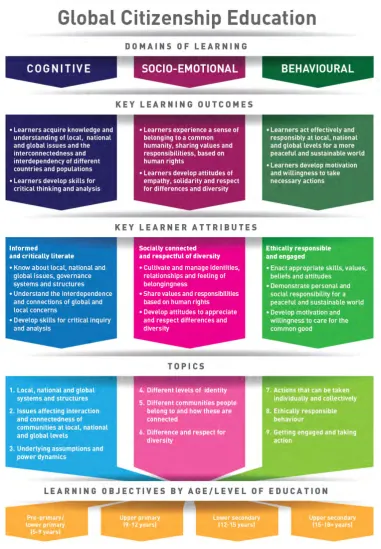
The question of the “right” model of citizenship and citizen is almost always in the centre of attention. Only on rare occasions, however, the implicitly preferred picture of the citizen is carefully delineated and scholarly well-founded. Starting with the argument that cosmo-politan democracy is beyond any realistic perspective of dealing with global crises, Andreas Eis and Claire Moulin-Doos discuss challenges of citizenship education resulting from young people’s feeling of powerlessness. They hold a bi-dimensional notion of citizens as co-actors and right-holders and ask whether this is applicable to supranational and global levels. Their analysis of European and German policy documents reveals that these papers mainly address students as right-holders, seldom as political actors and even then, they narrow agency to a-political figures like consumer-citizenship, socio-civic engagement or volunteering. This also holds for the guidance of global citizenship education published by the UNESCO. These educational devices exhibit a more or less non-political construct of the citizen as a common feature and as a shared mission for education. Moreover, the authors found three blind spots: global power, conflicts and exploitation of the global south. Eis and Moulin-Doos criticise the affirmative and overoptimistic stance of these approa-ches, their overestimation of the power of education and their disregard of power relations and inequalities. Finally, they claim a political cosmopolitism based on a twofold model of the citizen as right-holder and political actor. This may be understood as an attempt to change actor centred educational governance of citizenship education by establishing an alternative guiding figure of the “good citizen”.
What can be marked as a “good school” of today and how can it be legitimised? In her paper “Justification and Critique of Educational Reforms in Austria: How Teachers and Headteachers (Re-)Frame New Governance”, Doris Grass explores the Austrian case of school reforms in an actor and structure centred neo-pragmatistic perspec-tive: what are the justifications of central change agents mobilized by actors in critical situations of school reform? The article analyses the connections between everyday re-evaluation and contextualisations of edu-cational norms with conflicting macro-political orient-tations of new educational governance regimes in times of societal transformation. It sticks to a conventionalist theoretical framework (Boltanski & Thévenot, 1991) to analyse moments of critical evaluation and affirmative justification of macro-political reforms as well as of everyday work practices. The paper thus focuses on changing “conventions”, which on the one hand highlight the economisation of schools and education (“market”, “industrial” and “flexible” convention, Boltanski & Chiaparello, 2009). On the other hand, the references
made to the common public good and to the so called “civic convention” highlight the critical potential of conventionalist analysis to elaborate the multifaceted ways competent actors choose to stabiliee their social and professional world.
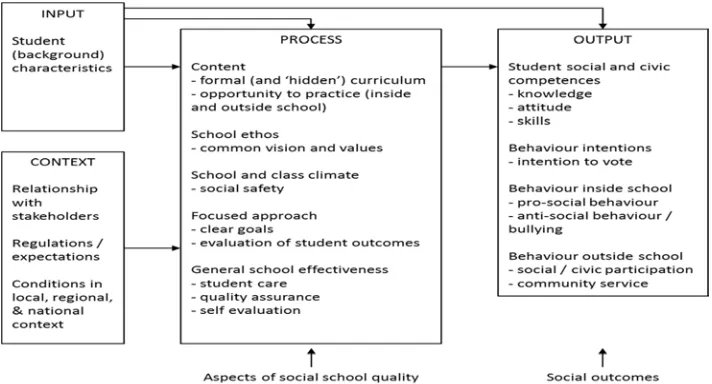
If a “good school” is expected to perform in an effective way, then its social quality and outcome, too, may be subject to external inspection. The paper “Inspecting School Social Quality: Assessing and Improving School Effectiveness in the Social Domain” presents an analysis of the qualities and the impact of school climate-focused school inspections. Dijkstra and Daas raise an important problem of the evaluation-focused governance of schools: the relationship between causes and effects in contexts of institutional change. Agency is not only rooted in educational actors but also in the devices used to analyse and to organise the data gathering in contexts of school inspections.
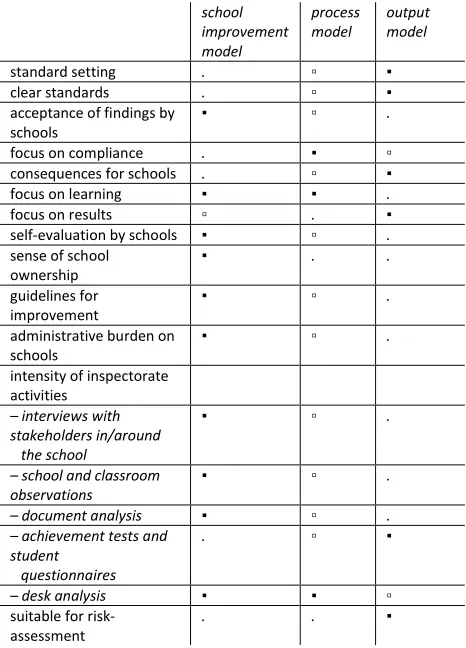
However, the interplay of mechanisms in- and outside the evaluated organisations makes it difficult to isolate the effects of the new school governance on the social climate and democratic quality of a school. Furthermore, the authors suggest that an evaluation based school effectiveness model allows analysing central aspects of school social quality. In the end, the inspection itself can influence school performance in a quite differentiated range of ways. The authors present three ideal-type models of inspection, focusing on outcomes, school improvement and processes.
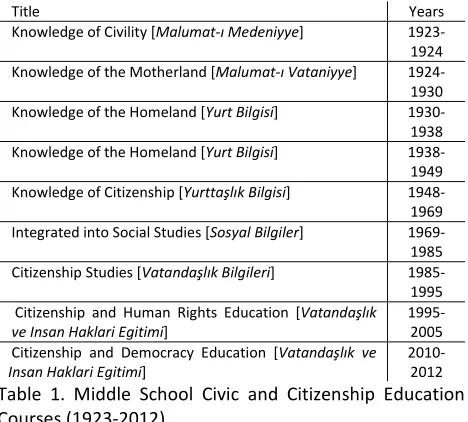
The article of Abdulkerim Sen and Hugh Starkey “The rise and fall of citizenship and human rights education in Turkey” shows specific vulnerabilities of civic education governance regimes in political systems, which undergo deep societal and political transformation. This is especially true when policy change in education is induced from the outside as in the Turkish case during the period of commitment to accession to the European Union (1999-2005). The authors explore how the citizenship education curriculum translates manifest-tations of power and change from a secular national ethos and identity to the post-Cold War democratisation movement and the electoral rise to power of a religious party from the late nineties onwards. By exploring the evolution of the curriculum in a crucial period, during which political power was switching from the ideology of secular nationalism to that of religious nationalism, the present study illustrates ways in which external and internal influences may affect citizenship education. In particular, it contributes to the international governance debate over the role of external agencies in curriculum change, not only in civic education, but probably also in other domains of socio-economic education.
The current issue presents two more papers beyond the field of the featured topic.
11
Teaching Freedom of Religion or Belief“ to the challengesof teaching Freedom of Religion or Belief (FORB) in a contemporary world that is shaped by an increase in religion-based conflicts (cf. for example the report “‘Mobilising for the Values of the Republic’ - France's Education Policy Response to the ‘Fragmented Society’: A Commented Press Review” from Matthias Busch and Nancy Morys in JSSE 3-2016 and the commentary from Claude Proeschel in JSSE 2-2107. The tolerant and respectful understanding of different beliefs by everyone is a key challenge in societies that are de facto pluralistic but also weakened by intolerance, extremism and radicalism. The authors emphasize the vulnerability of children to such intolerant views, a problem that only few curricula seem to address. Using data from research conducted between 2015 and 2017 among teachers in several countries in the Middle East who have been trained on FORB and on teaching methods and con-ceptual change theories, the authors examine both the consequences and the potential of these ideas, com-pared to more traditional pedagogical methods, in promoting an awareness of the importance of freedom of religion and belief for peaceful coexistence.
Vocational schools mostly remain in the shadows of public debates and scholarly research on social studies and citizenship education. In her lesson report “‚Places of Remembrance’ - spaces for historical and political literacy”, Susanne Offen presents empirical evidence from classroom observation of teaching strategies of imparting historical and political knowledge on the prosecution of Nazi crimes. She discusses how teachers may effectively foster an inquiring attitude, a critical practice of working with material from an exhibition and a differentiated judgment concerning justice in a recent Nazi trial. Her research shows how students, stimulated by an artistic intervention, not only developed sustain-able curiosity, but also constructed their own conclusions on this controversial issue. One of the most important claims of this paper may be that students should be acknowledged as “legitimate speakers from the beginning” of the learning process, a process formatted as the students’ own research project. Seen from an educational governance perspective, Offen’s study provi-des valuable evidence of an educational setting which relies on exhibits as a specific kind of material objects things and an exhibition as a material arrangement of meanings.
Acknowledgement
We are very grateful to Henning Middelschulte for some helpful comments on parts of this introduction.
References
Acikalin, M., & Kilic, H. (2017). The Role of Turkish National Holidays in Promoting Character and Citizenship Education. Journal of Social Science Education, 16 (3), 74-83.
Alexadiou, N.; Lawn, M.; Nicolas, J.-M.; Robert, A. & Forquin, J.-C. (2000). Politiques d'éducation prioritaire: l'expérience britannique. Revue française de pédagogie, No. 133, 25-36.
Altbach, P.G. & Knight, J. (2007). The internationalization of higher education: Motivations and realities. Journal of studies in international education, 11(3-4), 290-305. Altrichter, H., Brüsemeister, T., & Wissinger, J. (2007). Educational governance. Handlungskoordination und Steuerung im Bildungssystem. Wiesbaden.
Andersen S. & Burns, T. (1996). The European Union and the Erosion of Parliamentary Democracy. A Study of Post-Parliamentary Governance. In: S. S. Andersen & K. A. Eliassen (Eds.), The European Union: How democratic is it? London: Sage, 227-251.
Ball, S. J., & Youdell, D. (2008). Hidden privatisation in public education. Brussels: Education International. Ballarino, G. (2011). Redesigning curricula: the involvement of economic actors. In Regini, M. (Ed.), European Universities and the Challenge of the Market. A Comparative Analysis, (pp. 11–27).
Cheltenham/Northampton: Edward Elgar.
Beck, U. (1986). Risikogesellschaft. Auf dem Weg in eine andere Moderne. Frankfurt a.M.: Suhrkamp.
Aprea, C., Wuttke, E., Breuer, K., Koh, N. K., Davies, P., Greimel-Fuhrmann, B., & Lopus, J. S. (Eds.) (2016). International Handbook of Financial Literacy. Cham: Springer.
Bessy, C. (2002). Représentation, convention et
institution: Des repères pour l'Économie des conventions (Document de travail, no. 20). [Noisy-le-Grand].
Boltanski, L., & Chiapello, È. (1999). Le nouvel esprit du capitalisme. Paris: Gallimard.
Boltanski, L., & Thévenot, L. (1991). De la justification: Les économies de la grandeur. Paris: Gallimard. Boltanski, L., & Thévenot, L. (1999). The Sociology of Critical Capacity. European Journal of Social Theory, 2(3), 359–377.
Boussaguet, L., Jacquot, S. & Ravinet, P. (2010). Dictionnaire des politiques publiques: third edition actualisée et augmentée. Paris: Presses de Sciences Po (P.F.N.S.P.).
Busemeyer, M. R. (2014). Skills and inequality: partisan politics and the political economy of education reforms in Western welfare states. Cambridge: Cambridge
University Press.
Journal of Social Science Education
Volume 16, Number 4, Winter 2017 ISSN 1618–5293
12
Charlier, J. & Croché, S. (2017). Résistances, esquives,ruses et réappropriations: Jeux de dupes et production collective de la doxa en education. Education et sociétés, 39(1), 119-135.
Chatel, E. (2001). Comment évaluer l’éducation. Pour une théorie sociale de l’action éducative. Lausanne:
Delachaux et Niestlé.
Coman, R., & Lacroix, J. (2007). Les résistances à l'Europe: cultures nationales, idéologies et stratégies d'acteurs. Bruxelles: Editions de l'Université libre de Bruxelles. Dale, R., & Robertson, S. L. (2007). New arenas of global governance and international organisations: Reflections and directions. In Dale, R., & Robertson, S. L. (Eds.), Transformations of the State and Global Governance. London: Routledge, 2-10.
Davies, B. (2006). Subjectification: The relevance of Butler’s analysis for education. British journal of sociology of education, 27(4), 425-438.
Derouet, J. L. (1992). École et justice: de l'égalité des chances aux compromis locaux? Paris: Editions Métailié. Derouet, J.-L. (2000a). Pluralité des mondes et
coordination de l'action: l'exemple des établissements scolaires. In J.-L. Derouet (Ed.), L'école dans plusieurs mondes (pp. 125–143). Bruxelles, Paris: De Boeck; Institut national de recherche pédagogique. Derouet, J.-L. (Ed.). (2000b). L'école dans plusieurs mondes. Bruxelles, Paris: De Boeck; Institut national de recherche pédagogique.
Diaz-Bone, R. (2011a). „Einführung in die Soziologie der Konventionen“. In R. Diaz-Bone (Ed.), Soziologie der Konventionen: Grundlagen einer pragmatischen Anthropologie (pp. 9–41). Frankfurt am Main: Campus. Diaz-Bone, R. (2011b). The Methodological Standpoint of the "économie des conventions". Historical Social Research, 36(4), 43–63. Diaz-Bone, R. (2013).
Methodological Positionings and Perspectives. Journal of Management Inquiry, 23(3), 324–327.
Diaz-Bone, R. (2015). Die „Économie des conventions“: Grundlagen und Perspektiven eines
wirtschaftssoziologischen Paradigmas. Wiesbaden: VS Verlag für Sozialwissenschaften.
Diaz-Bone, R. (Ed.). (2011). Soziologie der Konventionen: Grundlagen einer pragmatischen Anthropologie. Frankfurt am Main: Campus.
Dodier, N. (1993). Les appuis conventionnels de l'action. Éléments de pragmatique sociologique. Réseaux, 11(62), 63–85.
Eymard-Duvernay, F. (2012). Du chômage keynésien au chômage d'exclusion. In F. Eymard-Duvernay (Ed.), Épreuves d'évaluation et chômage (pp. 9–46). Toulouse: Octarès éd.
Fend, H. (2011). Die Wirksamkeit der neuen Steuerung – theoretische und methodische Probleme ihrer
Evaluation. Zeitschrift für Bildungsforschung, 1(1), 5-24. Geiselberger, H. (2017). The Great Regression.
Cambridge: Polity Press.
Göhler, G., Höppner, U., & De La Rosa, S. (2009). Einleitung. In Göhler, G., Höppner, U., & De La Rosa, S. (Eds.), Weiche Steuerung. Studien zur Steuerung durch diskursive Praktiken, Argumente und Symbole (pp 11-26). Baden-Baden: Nomos.
Goodson, I. F. (Ed.). 1999. Entstehung eines Schulfaches. In Das Schulfach als Handlungsrahmen: Vergleichende Untersuchung zur Geschichte und Funktion der
Schulfächer (pp 151–176). Bildung und Erziehung Beiheft 7. Köln: Böhlau.
Grammes, T. (2014a). Symbols of Citizenship Education in Schools: A Pictoral Analysis. Journal of Social Science Education, 13(1), 137–138.
Grammes, T. (2014b). Cultures of Citizenship Education in Schools: Thematic Arrangement of Photographs. Journal of Social Science Education, 13(1), 176–189.
Gräsel, C., Bormann, I., Schütte, K., Trempler, K., Fischbach, R., & Assenburg, R. (2011). Outlook on research in education for sustainable development. Policy Futures in Education, 13(2), 115–127.
Green, A. (1990). Education and state formation: The rise of education systems in England, France and the USA. New York: St. Martin's.
Green, A., Preston, J., & Janmaat, J.G. (2006). Education, equality and social cohesion: a comparative analysis. Basingstoke: Palgrave Macmillan.
Grek, S., Lawn, M., & Ozga, J. (2011). Introduction: qualité, évaluation, européanisation et gouvernance de l'éducation. Education et sociétés, 33(2), 5-19.
Grek, S. (2008). From symbols to numbers: the shifting technologies of education governance in Europe. European Education Research Journal, 7(2), 208-218. Gunter, H. M., Hall, D., & Apple, M. W. (2017). Corporate elites and the reform of public education. New York: Policy Press.
Hartong, S. & R. Münch (2012). Der Wettlauf um PISA-Punkte. Gewinner, Verlierer, Illusionen. Pädagogische Korrespondenz, 46, 5–20.
Hartong, S. & U. Schwabe (2013). Wie 'Agenten des Wandels' deutsche Bildungspolitik transformier(t)en – Ein integratives Diffusionsmodell für die Prozesse PISA und Bologna. Schweizerische Zeitschrift für Soziologie. Revue suisse de sociologie, 39(3), 493-515.