Original Research Article.
Prevalence of Headache among Taibah University Students in Al Madinah
Ruba Mohammed Saeed
1, Hosam Mohammed Saeed
2, Maryam Azim Al-Harby
1,
Noha Salah Alsoheeme
1, Elyas Abed Al-Ofui
2, Magda Hassanein Metwally
31Fifth Year Medical Student, 2Internship Year,
College of Medicine, Taibah University, Medina, Saudi Arabia. 3Professor, Department of Physiology,
College of Medicine, Taibah University, Medina, Saudi Arabia.
ABSTRACT
Background: Headache is one of the most common
complaints due to numerous psychological and physical stressors.
Objectives: To assess the prevalence of headache among students at Taibah University in Al Madina (Saudi Arabia) and to determine the common triggering factors of headache among students.
Methods: A cross sectional study was carried out among students in the different Colleges at age 18- 25years old. Results: A total of 511 students were evaluated. The prevalence of headache was 18.0%, (50.0% migraine type and 50.0% tension type headache (TTH)). The prevalence of headache was higher among female than male students (79.3 vs 20.7%, respectively). Most common type of headache seen among medical students was TTH in 14.1% students, whereas, migraine was more in the students of the College of Arts and Humanities 15.3%. Higher percentage of headache attack among fourth and fifth academic year students than other academic years.
Conclusion: The prevalence of headache is higher among
female students at Taibah University. Equal proportions of TTH and migraine headaches are found. Prevalence of TTH was higher among faculty of medicine students than other students. Higher percentage of headache attack among fourth and fifth academic year students.
Keywords: Tension Type Headache; Migraine; Medical and Non-Medical Students; Academic Years.
*Correspondence to:
Hosam Mohammed Saeed, Internship Year, College of Medicine, Taibah University, Medina, Saudi Arabia. Article History:
Received: 04-11-2017, Revised: 23-11-2017, Accepted: 27-12-2017
Access this article online Website:
www.ijmrp.com
Quick Response code
DOI:
10.21276/ijmrp.2018.4.1.015
INTRODUCTION
Headache is one of the most common complaints during university life and it occurs due to numerous psychological and physical stressors, which are more common in university students than general population. Frequent and severe headache have a major impact on academic performance and quality of life, and may bring about limitation in daily activities and work, the problem
may also influence the students’ future job performance, causing a
large burden for individual and the society.1-4 Headache is the most common neurological symptom, but has a low healthcare and public profile, which is associated with under treatment and under recognition, despite being amongst the top ten causes of disability.5
Tension type headaches (TTH) or its medical term "cephalgia", is generally a diffuse, mild to moderate pain or discomfort in the head, scalp, or neck that's often described as feeling like a tight band around the head. A tension headache is the most common type of headache, and yet its causes aren't well-understood. It is one of the common medical diseases that is not only considered a disturbance but also has a negative impact on the quality of life,
making the person too ill to perform his routine daily activities properly.6 Tension type headaches are recurrent episodes of
headache lasting minutes to weeks. The pain is typically pressing or tightening in quality, of mild to moderate intensity, and bilateral in location, and does not worsen with the routine physical activity. Nausea and vomiting is usually absent, but photophobia or phonophobia may be present.7These headaches were previously
known by many terms such as psychogenic headache, stress headache, psychomyogenic headache, muscle contraction headache etc.
or tingling on one side of the face or in your arm or leg. Migraine is most common in women and has a strong genetic component.8 The prevalence of migraine and tension headache was determined in a 2-stage, door-to-door community survey in Thugbah, Saudi Arabia. Out of 22630 subjects surveyed, 2742 individuals had headaches thus yielding a crude prevalence of 12.1%. The prevalence of tension-type headache was higher than migraine.9 Other study was in a rural community in the Qassim region of Saudi Arabia. Results of 5891 inhabitants, 473 suffered from headaches. Tension-type headache diagnosed in 185 subjects predominated (3.1%), while the prevalence of migraine was 2.6%.10 Previous studies have demonstrated a positive association between headache in general and obesity11,12 and sleep disturbance.13,14 Substantially less data existed examining the TTH and obesity association. While Robberstad et al13 found that 40% increased risk of TTH (episodic and chronic together) in adolescents 13–18 years of age who were overweight or obese. When evaluating CTTH, a 40% increased risk of CTTH was found
in those with a BMI ≥35 as compared with those with a BMI 18.5–
24.9 in another cross-sectional general population study by Bigalet al.15 On the other hand, Bigal et al reported no association between episodic tension headache (ETTH) and obesity in the predominantly adult population.16 In other study Obesity is a stronger risk factor for transformed migraine than for chronic tension-type headache.17
Headaches were generally not directly associated with blood pressure elevations in the studied group of stage 1-2 hypertensive patients because (i) blood pressure values from headache periods were not significantly higher than those from headache-free periods; (ii) blood pressure values directly preceding the pain were not significantly different from values at the beginning of headache; and (iii) in the vast majority of hypertensives, their maximal blood pressure values were recorded during headache-free periods. Moreover, in some instances, patients who showed maximal ABPM values during headache had relatively high blood pressure, i.e. > or = 180/110 mmHg.18
The likelihood of having headaches increased in stepwise fashion with stress level and decreased ability to relieve stress, in both men and women. The subjects whose self-estimated degree
of stress was “little or none” had the lowest rate of headache
(1.5% of men and 6.1% of women) among all the subcategories of
lifestyles evaluated in this study, in contrast to the highest rate (18.1% of men and 30.7% of women) among the subjects whose
ability to relieve stress was “none”.19
OBJECTIVES
The objectives of this study are to determine the prevalence of headache between males and females medical and non-medical students of the different colleges in Taibah University. Also, to evaluate any relationship between headache and different risk factors as stress, fast food, lack of exercise, family history, the daily consumption of water, blood pressure, lack of sleep and smoking.
METHODS
Study Design and Population
A comparative cross sectional study was started in December 2016 till June of 2017 and was conducted among medical and non-medical students in the different colleges at Taibah University in Al Madinah Al Monawarrah, kingdom of Saudi Arabia. Male and female students participated in the study were at age of 18- 25 years old. Sample size was 511 students as 20 samples from 533 were excluded because they didn't complete the questionnaire. The participants will be selected randomly from different colleges among students list. Any chronic medical illnesses (hypertension, anemia, diabetes mellitus) or local diseases as errors of refraction, rhinitis, sinusitis and dental problems. Also, married female students were excluded.
Data Collection
A Web-based survey questionnaire was developed after extensive literature review. A group discussion was conducted with other staff members to brainstorm and come up with a suitable data collection tool. The questionnaire was designed in Arabic language containing questions enquiring about the relationship between the tension headache and migraine with body weight, sleep and stress food & exercise, family history, volume of water & other drinks consumed daily, blood pressure and smoking. Data Analysis
The data entry and analysis were performed using Statistical Package for the Social Sciences Program (SPSS) 21th Edition. All statistical tests were two-sided; and a level of P < 0.05 was used to indicate statistical significance.
Figure 1: Male and female students participated in the study at Taibah University
30.53%
69.47%
RESULTS
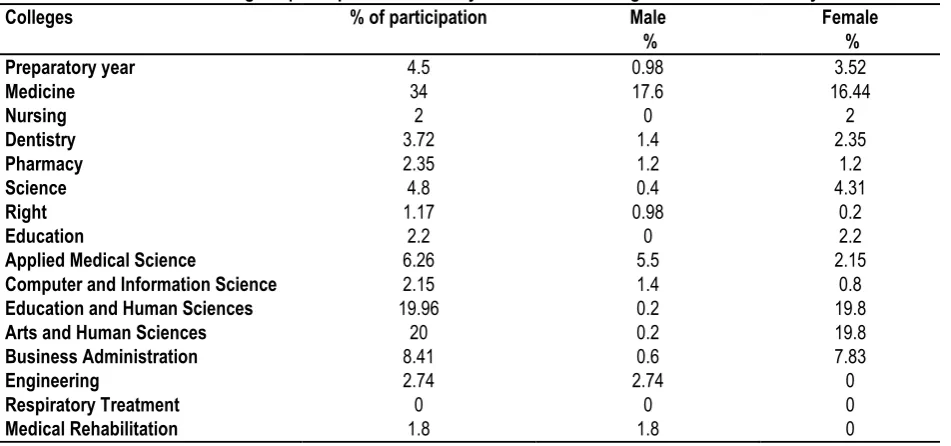
A total of 511 students at Taibah University were involved in this study. Male-Female students participated in the study were 30.53% and 69.47% respectively. Percentage of participants in the study from different colleges of Taibah University were shown in table (1).
Prevalence of Headache
This study comprised 92 (18.0%) students complained of headache. Female complained of headache was 73 (79.3%) and males were 19 (20.7%). The prevalence of headache among females was significantly higher than males (P value < 0.014). This study showed equal proportions of tension and migraine headaches; tension headache 46 (50.0%) female 36 and male 10, Migraine 46 (50.0%) female 37 and male 9.
Table 2 shows that the students of the College of Medicine were the most affected by the tension headaches followed by the college of Arts and Human Sciences, then the preparatory students, Applied Medical Science, the Dentistry, Business and
Science, Nursing and Education (14.1%; 12.9, 10.9, 4.7, 3.5, 3.5, 2.4, 2.4, 1.2, 1.2 respectively).Whereas, the most affected by migraine was the students of the College of Arts and Humanities followed by Medicine, business Administration, Science, Applied Medical Science, Preparatory year, Pharmacy, Applied Medical Science, Nursing, Dentistry, Engineering and Medical Rehabilitation (15.3, 9.4, 8.2, 4.3, 2.4, 2.4, 2.4, 1.2, 1.2, 1.2 &1.2 respectively).
Table 3 clarified the order of the prevalence of headache among the different academic years. The fourth year (31.5%) was the most affected then fifth year (23.9%), followed by third year (19.6%), then second year (9.8%), followed by preparatory year (7.6%) and Interne year (4.3%) and lastly was the first year (3.3%).
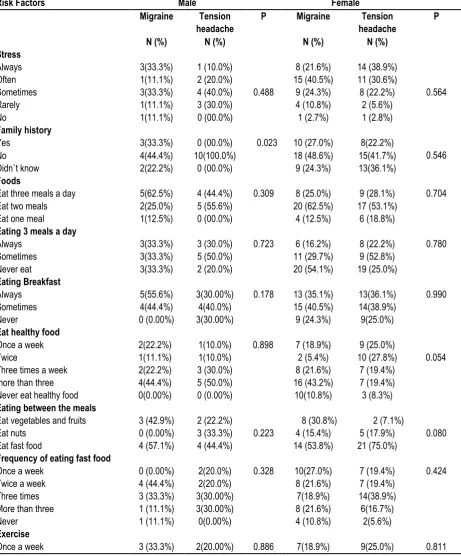
Table 4 shows the different risk factors of TTH and migraine among male and female students. No relationship between all these risk factors and headache could be identified.
Table 1: Percentage of participants in the study from different colleges of Taibah University.
Colleges % of participation Male
%
Female %
Preparatory year 4.5 0.98 3.52
Medicine 34 17.6 16.44
Nursing 2 0 2
Dentistry 3.72 1.4 2.35
Pharmacy 2.35 1.2 1.2
Science 4.8 0.4 4.31
Right 1.17 0.98 0.2
Education 2.2 0 2.2
Applied Medical Science 6.26 5.5 2.15
Computer and Information Science 2.15 1.4 0.8
Education and Human Sciences 19.96 0.2 19.8
Arts and Human Sciences 20 0.2 19.8
Business Administration 8.41 0.6 7.83
Engineering 2.74 2.74 0
Respiratory Treatment 0 0 0
Medical Rehabilitation 1.8 1.8 0
Table 2: Prevalence of Headaches among various colleges at Taibah University
Colleges Male Female Total
TTH %
Migraine %
TTH %
Migraine %
TTH %
Migraine %
Preparatory year 1(10.0) 1(11.1) 4(11.1) 1(2.7) 5(10.9) 2(4.3)
Medicine 6 (35.3) 2 (11.8) 6(8.8) 6(8.8) 12(14.1) 8(9.4)
Nursing 0(0) 0(0) 1(1.5) 1(1.5) 1(1.2) 1(1.2)
Dentistry 1 (5.9) 0(0) 2(2.9) 1(1.5) 3(3.5) 1(1.2)
Pharmacy 0(0) 1(5.9) 0(0) 1(1.5) 0(0) 2(2.4)
Science 1(5.9) 0(0) 1(1.5) 5(7.4) 2(2.4) 5(5.9)
Right 0(0) 0(0) 0(0) 0(0) 0(0) 0(0)
Education 0(0) 0(0) 1(1.5) 0(0) 1(1.2) 0(0)
Applied Medical Science 0(0) 1 (5.9) 4(5.9) 1(1.5) 4(4.7) 2(2.4)
Computer and Information Science 1(5.9) 0(0) 1(1.5) 0(0) 2(2.4) 0(0)
Education and Human Sciences 0(0) 0(0) 0(0) 2(2.9) 0(0) 2(2.4)
Arts and Human Sciences 0(0) 0(0) 11(16.2) 13(19.1) 11(12.9) 13(15.3)
Business Administration 0(0) 2(11.8) 3(4.4) 5(7.4) 3(3.5) 7(8.2)
Engineering 0(0) 1(5.9) 0(0) 0(0) 0(0) 1(1.2)
Respiratory Treatment 0(0) 0(0) 0(0) 0(0) 0(0) 0(0)
Table 3: The prevalence of Headache among various Academic years.
Table 4: The relation between various risk factors of migraine and tension headache among male and female participants
Risk Factors Male Female
Migraine Tension
headache
P Migraine Tension
headache
P
N (%) N (%) N (%) N (%)
Stress
0.564
Always 3(33.3%) 1 (10.0%) 8 (21.6%) 14 (38.9%)
Often 1(11.1%) 2 (20.0%) 15 (40.5%) 11 (30.6%)
Sometimes 3(33.3%) 4 (40.0%) 0.488 9 (24.3%) 8 (22.2%)
Rarely 1(11.1%) 3 (30.0%) 4 (10.8%) 2 (5.6%)
No 1(11.1%) 0 (00.0%) 1 (2.7%) 1 (2.8%)
Family history
0.546
Yes 3(33.3%) 0 (00.0%) 0.023 10 (27.0%) 8(22.2%)
No 4(44.4%) 10(100.0%) 18 (48.6%) 15(41.7%)
Didn`t know 2(22.2%) 0 (00.0%) 9 (24.3%) 13(36.1%)
Foods
Eat three meals a day 5(62.5%) 4 (44.4%) 0.309
0.723
8 (25.0%) 9 (28.1%) 0.704
0.780
Eat two meals 2(25.0%) 5 (55.6%) 20 (62.5%) 17 (53.1%)
Eat one meal 1(12.5%) 0 (00.0%) 4 (12.5%) 6 (18.8%)
Eating 3 meals a day
Always 3(33.3%) 3 (30.0%) 6 (16.2%) 8 (22.2%)
Sometimes 3(33.3%) 5 (50.0%) 11 (29.7%) 9 (52.8%)
Never eat 3(33.3%) 2 (20.0%) 20 (54.1%) 19 (25.0%)
Eating Breakfast
Always 5(55.6%) 3(30.00%) 0.178 13 (35.1%) 13(36.1%) 0.990
0.054
Sometimes 4(44.4%) 4(40.0%) 15 (40.5%) 14(38.9%)
Never 0 (0.00%) 3(30.00%) 9 (24.3%) 9(25.0%)
Eat healthy food
Once a week 2(22.2%) 1(10.0%) 0.898 7 (18.9%) 9 (25.0%)
Twice 1(11.1%) 1(10.0%) 2 (5.4%) 10 (27.8%)
Three times a week 2(22.2%) 3 (30.0%) 8 (21.6%) 7 (19.4%)
more than three 4(44.4%) 5 (50.0%) 16 (43.2%) 7 (19.4%)
Never eat healthy food 0(0.00%) 0 (0.00%) 10(10.8%) 3 (8.3%)
Eating between the meals
Eat vegetables and fruits 3 (42.9%) 2 (22.2%) 8 (30.8%) 2 (7.1%)
Eat nuts 0 (0.00%) 3 (33.3%) 0.223 4 (15.4%) 5 (17.9%) 0.080
Eat fast food 4 (57.1%) 4 (44.4%)
0.328
14 (53.8%) 21 (75.0%)
0.424 Frequency of eating fast food
Once a week 0 (0.00%) 2(20.0%) 10(27.0%) 7 (19.4%)
Twice a week 4 (44.4%) 2(20.0%) 8 (21.6%) 7 (19.4%)
Three times 3 (33.3%) 3(30.00%) 7(18.9%) 14(38.9%)
More than three 1 (11.1%) 3(30.00%) 8 (21.6%) 6(16.7%)
Never 1 (11.1%) 0(0.00%) 4 (10.8%) 2(5.6%)
Exercise
Once a week 3 (33.3%) 2(20.00%) 0.886 7(18.9%) 9(25.0%) 0.811
First year
Preparatory Year
Second Year
Third Year
Fourth year
Fifth year
The year of privilege
Total
▪ Diagnosed with
headaches
3 18 7 9 29 22 4 92
3.3% 19.6% 7.6% 9.8% 31.5% 23.9% 4.3% 100.0%
▪ Not diagnosed
with headaches %
38 63 24 65 120 94 15 419
9.1% 15.0% 5.7% 15.5% 28.6% 22.4% 3.6% 100.0%
▪ Total % 41 81 31 74 149 116 19 511
Twice a week 3 (33.3%) 3(30.00%) 6(16.2%) 4(11.1%)
Three times 1 (11.1%) 1(10.00%) 7(18.9%) 4(11.1%)
More than three 1 (11.1%) 3(30.00%) 5(13.5%) 6(16.7%)
Never 1 (11.1%) 1(10.00%) 12(32.4%) 13(36.1%)
Water and other drinks
Drink 2 liter of water/day 1 (11.1%) 4 (40.0%) 0.234 3 (8.1%) 8(22.2%) 0.104
Drink ˃2 liter /day 1 (11.1%) 2 (20.0%) 2 (5.4%) 0(00.0%)
Drink ˂2 liter /day 7 (77.8%) 4 (40.0%) 32 (86.5%) 28(77.8%)
Drink water 5 (55.6%) 4 (40.0%) 0.449 15 (40.5%) 15(41.7%) 0.299
Drink Coffee during the day 0 (00.0%) 1 (10.0%) 13 (35.1%) 8 (22.2%)
Drink tea 4 (44.4%) 2 (20.0%) 4 (10.8%) 6 (16.7%)
Drink Soft drinks 0 (00.0%) 1 (10.0%) 5 (13.5%) 3 (8.3%)
Drink Fresh juices 0 (00.0%) 1 (10.0%) 0 (00.0%) 1 (2.8%)
Drink Energy Drinks 0 (00.0%) 1 (10.0%) 0 (00.0%) 0 (00.0%)
Others 0 (00.0%) 0 (00.0%) 0 (00.0%) 3 (8.3%)
Sleep 0.451
6 hours a day 3(33.3%) 5(50.0%) 17(45.9%) 18(50.0%) 0.516
More than 6 hours a day 3(33.3%) 4(40.0%) 11(29.7%) 13(36.1%)
Less than 6 hours a day 3(33.3%) 1(10.0%) 9(24.3%) 5(13.9%)
Sleep continuously 6(66.7%) 4(40.0%) 0.245 18(48.6%) 17(47.2%) 0.903
Do not sleep continuously 3(33.3%) 6(60.0%) 19(51.4% 19(52.8%)
Sleep (did not sleep at night)
Always 2(22.2%) 2(20.0%) 0.055 11(29.7%) 7(19.4%) 0.628
Often 2(22.2%) 5(50.0%) 12(32.4%) 11(30.6%)
Sometimes 5(55.6%) 0(00.0%) 12(32.4%) 14(38.9%)
Rarely 0(0.00%) 2(20.0%) 2(5.4%) 4(11.1%)
No 0(0.00%) 1(10.0%) 0(0.00%) 0(0.00%)
Sleep (complain of Insomnia)
Always 4(44.4%) 1(10.0%) 0.278 10(27.0%) 6(16.7%) 0.603
Often 2(22.2%) 2(20.0%) 4(10.8%) 7(19.4%)
Sometimes 2(22.2%) 2(20.0%) 12(32.4%) 15(41.7%)
Rarely 0(0.00%) 3(30.0%) 9(24.3%) 6(16.7%)
No 1(11.1%) 2(20.0%) 2(5.4%) 2(5.6%)
Obesity
BMI was less than 24.9 3(37. 5%) 6(60.0%) 0.572 23(65.7%) 21(63.6%) 0.794
BMI was25 and more 5(62.5%) 4(40.0%) 12(34.3%) 12(36.4%)
Blood pressure
Hypertension 1(11.1%) 1(10.0%) 0.019 5(13.5%) 3(8.3%)
0.775
Normotensive 3(33.3 %) 9(90.0%) 22(59.5%) 23(63.9%)
Not diagnosed 5(55.6%) 0(0.00%) 10(27.0%) 10(27.8%)
Smoking
Smokers 1(11.1%) 3(30.0%) 0.313 1(5.4%) 3(8.3%) 0.620
DISCUSSION
The present study showed that the prevalence of headache among the university students was 18.0%, it is higher comparing with8–12% in two reports done on Saudi Community (1997).20,21 The results reported significant higher percentage of headache attack among female than male students. It was 79.3% comparable with study done in King Faisal University in Kingdom of Saudi Arabia that reported 77.0%and higher than that done in Gaziosmanpasa University in Turkey that reported 41.02% of female students experienced headache.22
The prevalence of Tension-type headache and Migraine were similar in the current study 50.0%,which is different from the result of community base study done in Saudi Arabia, in which the prevalence of tension-type headache and migraine was 9.5% and 5.0% respectively.21 Other study done in Al-Khobar, Saudi Arabia
(1990) tension headache (66%) and migraine (22%).23 Previous studies done in the same university found that 61.77% and 58% of female students had migraine and TTH respectively, these results were less than our result, migraine headache and tension-type headache among females were 80.4% and 61.77% respectively.24,25
their study.26 On the other hand, migraine was higher among Art and Human Sciences College.
This study showed high percentage of headache attack among fourth and fifth academic year students (31.5%, 23.9% respectively), possibly due to increased stress related to stress of graduation and career prospects. The lowest headache percentage was shown in first and year of privilege (3.3%, 4.3% respectively).
There were studies confirmed that stress is a major precipitating factor of headaches, a finding consistent with the results of previous cross-sectional studies [27, 28] and a recent prospective study.29 In the current study 85.9% (73.7% males, 89.0% females) had stressful life. Other study found (32.5%males, 69.3% females) had stress.30
In the current study, no positive family history among the students who complains of headaches. This result is in contrast to the positive family history for headache that was present in 10% of the cases of study done in Al-Khobar, Saudi Arabia (1990)23 and 48.3% in other study.25 The percentage of family history in females was 33.3% and is lower than that of other study done on female students in King Faisal University, Saudi Arabia which was 64.93%.31
The present study showed no relation between headache and exercise. This result is in contrast with other study done in Japan (2009) in which there was relation between people having headaches and exercise. (7.2% for men and 17.7% for women) in the other one.30 Whereas, other study found that the prevalence of headache is seemingly lower in athletic university students (41.2%) than non-athletic (58.3%) and clarified that exercise lower the range of having headache.32
It is to be noted also that there was no difference in the risk factors (stress, family history, foods, exercise, water and drinks, sleep, obesity and smoking) among TTH and Migraine among male and female participants. The results showed no relationship between all these risk factors and headache whereas, previous study in King Saud University reported a relationship between these factors and headaches, where these factors increase the rate of headache.33 The results of our study showed that there is no relationship between headache and drinking water compared to Angela A Stanton study that showed that drinking water helps prevent headaches.34
There was no relation between hypertension and headache could be clarified in this study. In 1913, Janeway35 noted that migraine was common in subjects with arterial hypertension and since then the relation between blood pressure and headache has been examined in many studies.36-39 A higher prevalence of headache40,41 and migraine42,43 has been reported in hypertensive patients than among normo-tensive controls. On the other hand, a higher prevalence of hypertension has been reported in patients with headache44-46 or migraine47,48 than among headache free people.
CONCLUSION
This study demonstrated that prevalence of headache is higher among female students in Taibah University. Prevalence of tension type headache was higher among students of College of Medicine and Migraine was higher among Art and Human Sciences College. Obesity, drinking little amount of water could be attributed causes.
LIMITATION
Limitations of this study can be low sample size and not studying all the students in the University.
RECOMMENDATION
There is a need to spread awareness about headache, its consequences and ways and means of prevention among the students.
REFERENCES
1. Kurt S, Kaplan Y. Epidemiological and clinical characteristics of headache in university students. Clin Neurol Neurosurg. 2008;110:46–50.
2. Demirkirkan MK, Ellidokuz H, Boluk A. Prevalence and clinical characteristics of migraine in university students in Turkey. Tohoku J Exp Med. 2006;208:87–92.
3. Bicakci S, Bozdemir N, Over F, Saatci E, Sarica Y. Prevalence of migraine diagnosis using ID Migraine among university students in southern Turkey. J Headache Pain. 2008;9:159–63.
4. Smitherman TA, McDermott MJ, Buchanan EM. Negative impact of episodic migraine on a university population: Quality of life, functional impairment, and comorbid psychiatric symptoms. Headache.2011;51:581–9.
5. World Health Organization (2006) Neurological disorders: public health challenges. World Health Organization [https://books.google.com.sa/books?hl=ar&lr=&id=Z8uwPwlPUw4 C&oi=fnd&pg=PR1&dq=World+Health+Organization+(2006)+Neur ological+disorders:+public+health+challenges.+World+Health+Or ganization&ots=ggmCD4UrYo&sig=6oYtV4VmAbkM2n-bN6batfce_9g&redir_esc=y#v=onepage&q=World%20Health%20 Organization%20(2006)%20Neurological%20disorders%3A%20p ublic%20health%20challenges.%20World%20Health%20Organiza tion&f=false].
6. Ojini FI, Okubadejo NU, Danesi MA. Prevalence and clinical characteristics of headache in medical students of the University of Lagos, Nigeria. Cephalalgia.2009; 29:472-7.
7. Vos, T; Flaxman, A. D.; Naghavi, M; Lozano, R; Michaud, C; Ezzati, M. et al. (Dec 15, 2012). "Years lived with disability (YLDs) for 1160 sequelae of 289 diseases and injuries 1990-2010: a systematic analysis for the Global Burden of Disease Study 2010". Lancet 380 (9859):2163–96.
8. NINDS migraine information page. National Institute of Neurological Disorders and Stroke. Accessed Feb. 29, 2016. [https://www.ninds.nih.gov/Disorders/All-Disorders/Migraine-Information-Page/#disorders-r1]
9. The prevalence of migraine and tension headache in Saudi
Arabia: a community-based
study.[http://onlinelibrary.wiley.com/doi/10.1111/j.1468-1331.1997.tb00391.x/full]authorss. al rajeh,a.awada,o. bademosi,a. ogunniyifirst published: september 1997
10. Prevalence of Primary Headache Syndrome in Adults in the
Qassim Region of Saudi Arabia.
12. Keith SW, Wang C, Fontaine KR, Cowan CD, Allison DB. BMI and headache among women: Results from 11 epidemiological datasets. Obesity. 2008;16:377–383.
13. Tension-type headache and sleep.rains jc1, davis re, smitherman ta. Curr Neurol Neurosci Rep. 2015;15(2):520. doi: 10.1007/s11910-014-0520-2.
14. Sleep quality, arousal and pain thresholds in tension-type headache: a blinded controlled polysomnographic study.studyshowlessmengstrøm, k hagen, m bjørk, ljstovner, m stjern, t sand .first published december 23, 2013
15. Bigal ME, Lipton RB. Obesity is a risk factor for transformed migraine but not chronic tension-type headache. Neurology.2006;67:252–257.
16. Bigal ME, Tsang A, Loder E, Serrano D, Reed ML, Lipton RB. Body mass index and episodic headaches: A population-based study. Arch Intern Med. 2007;167:1964–1970.
17. Marcelo E. Bigal and Richard B. Lipton. Obesity is a risk factor for transformed migraine but not chronic tension-type headache [http://www.neurology.org/content/67/2/252.short] First published July 24, 2006. vol. 67 no. 2 252-257 .
18. Headache in patients with mild to moderate hypertension is generally not associated with simultaneous blood pressure elevation. Kruszewski, Piotr; Bieniaszewski, Leszek; Neubauer, Jolanta; Krupa-Wojciechowska, Barbara .Journal of Hypertension: April 2000 - Volume 18 - Issue 4 - p 437–444 .
19. Associations between headache and stress, alcohol drinking, exercise, sleep, and comorbid health conditions in a Japanese population. masako yokoyamaemail authortetsuji yokoyamakazuo funazutakeshi yamashitashuji kondohiroshi hosoaiakira yokoyamaharuo nakamura .The Journal of Headache and Pain. 27 March 2009; 10(3):177–185.
20. Jabbar MA, Ogunniyi A (1997) Sociodemographic factors and primary headache syndromes in a Saudi community. Neuroepidemiology 16:48–52, 10.1159/000109670, 8994940 21. Al Rajeh S, Awada A, Bademosi O, Ogunniyi A (1997) The prevalence of migraine and tension headache in Saudi Arabia; a community-based study. Eur J Neurol 4:502–506
22. Ezeala-Adikaibe AB, Stella EO, Ikenna O, Ifeoma U. Frequency and pattern of headache among medical students at Enugu, South East Nigeria. Niger J Med. 2012 Apr-Jun[cited 2013 Oct 2];21(2):205
23. Saadai- rajeh, Olajide bademosi, Hassan ismail, Adnan awada. Headache. 1990 May; 30(6):359-62.10.1111/j.1526-4610.1990.hed3006359.x .
24. Mays Garah, Hanan Neyaz, Faten Shaqrun, Khadijah Alhussaini, Bushra Hafiz, Mona Alrehaili, Basma Zahid,Wala'a Alraddadi, Hana Aboauf, Nisreen Albouq and Maha Alhejaili. Medical student, Taibah University. International Journal of Advanced Research (2016), Volume 4, Issue 7, 1526-1534. 25. Nedaa Talee Al-Jabry, Abeer Zaki Abduljabbar, Abrar Nasser Mansoor, Baraah Abdolrahman Alhadad, Najah Muhmmad Almukhtar, Salwa Awad AlMutairy, Shoroog Mohammad Sahla, Waad Saleh Raji Al-Harbi, and Wesam Alsihaty. College of Medicine, Taibah University, KSA. International Journal of Academic Scientific Research ISSN: 2272-6446 Volume 3, Issue 4 (November-December 2015), PP 46-53 www.ijasrjournal.org. 26. FI Ojini, Nu Okubadejo, MA Danesi Neurology Unit, Dept. of Medicine, College of Medicine, University of Lagos, PMB 12003, Lagos,Nigeria.[http://journals.sagepub.com/doi/abs/10.1111/j.1468
-2982.2008.01766.x] First Published April 1,2009 Research Article. Volume: 29 issue: 4, page(s): 472-477 Article first published online: April 1, 2009; Issue published: April 1, 2009 Received: February 27, 2008; Accepted: July 29, 2008 https://doi.org/10.1111/j.1468-2982.2008.01766.x
27. Spierings ELH, Ranke AH, Honkoop PC (2001) Precipitating and aggravating factors of migraine versus tension-type headache. Headache 41:554–558 Department of Neurology, Brigham & Women's Hospital and Harvard Medical School, Boston, Mass, USA.
28. Rasmussen BK (1993) Migraine and tension-type headache in a general population: precipitating factors,female hormones, sleep pattern and relation to lifestyle. Pain 53:65–72 Department of Internal Medicine C, Glostrup Hospital, University of Copenhagen, Denmark.
29. Wöber C, Brannath W, Schmidt K et al (2007) Prospective analysis of factors related to migraine attacks: the PAMINA study. Cephalalgia 27:304–314 Department of Neurology, Medical
University of Vienna, Vienna, Austria.
30. https://link.springer.com/article/10.1007/s10194-009-0113-7] The Journal of Headache and Pain .June 2009, Volume 10, Issue 3, pp 177–185Masako Yokoyama .Tetsuji Yokoyama. Kazuo Funazu. Takeshi Yamashita Shuji Kondo. Hiroshi Hosoai. Akira Yokoyama .Haruo Nakamura Open Access Original First Online: 27 March 2009.
31. Eman Salman Al-Hassan, Amani Ali Al-Mulifi, Abrar Mohammed Al-Khudhayr, Amjad Wahab Al-Quraini, Asma’a
Mohammed Al-Omran, Eman Jawad Al-Musallam, Batool Abdullah Al-Rashed, Doa’a Ali Al-Mubarak, Huda’a Murtadha Al -Yousof, Khadija Radhi Al-Khalifa, Zainab Salman Al-Obaid, Sayed Ibrahim Ali, Aneela Khalid. Medical students at King Faisal University, College of Medicine, Saudi Arabia. King Faisal University, College of Medicine, Saudi Arabia.
https://www.ijsr.net/archive/v5i6/NOV164093.pdf]Index Copernicus Value (2013): 6.14 | Impact Factor (2015): 6.391. 32. Pegah Jahani, Mohsen Salesi, Maral Marzban, and Gholamreza Abdollahifard. The Prevalence of Headache Among Athletic University Students. Asian J Sports Med. 2016 Mar; 7(1): e33515.Published online 2016 Mar 1. doi: 10.5812/asjsm.33515 [https://www.ncbi.nlm.nih.gov/pmc/articles/PMC4879901/] 33. Mohammed K.Alwahbi, Mohammed M.Alamri, Abdulrahman M.Alammar, Abdullah M.Alanazi, Abdulaziz G.Alotaibi, Sultan K.Alharbi, Ali A. Aljizani. Prevalence of Migraine among Medical Students of King Saud Bin Abdulaziz University for Health Sciences International Journal of Science and Research (IJSR). 34. Angela A Stanton. Migraine as a Metabolic Disease, study, www.fasebj.org/content/31/1_Supplement/636.27.short FASEB Journal, 2017.
35. Janeway TC. A clinical study of hypertensive cardiovascular disease. Arch Intern Med 1913;12():755–798.
36. Waters WE. Headache and blood pressure in the community. BMJ 1971;1(13):142–13. K Hagen, L Stovner, L Vatten, J Holmen, J Zwart, and G Bovim .
37. Cooper WD, Glover DR, Hormbrey JM, Kimber GR. Headache and blood pressure: evidence of a close relationship. J Hum Hypertens 1989;3(1):41-44.
patients with mi¬graine: relationship to atherosclerosis. J of stroke and cerebrovascular diseases 2010;19(2):92-103.
39. D’Alessandro R, Benassi G, Lenzi PL, Gamberini G,
Sacquegna T, De Carolis, P, Lugaresi E. Epidemiology of headache in the republic of San Marino. J NeurolNeurosurg Psychiatry 1988;51(1):21–27
40. Gardner JW, Mountain GE, Hines EA. The relationship of migraine to hypertension and to hypertension headaches. Am J Med Sci 1940;200:50–53.
41. Jaillard AS, Mazetti P, Kala E. Prevalence of migraine and headache in a high-altitude town of Peru: a population-based study. Headache 1997;37(2):95–101.
42. Markush RE, Herbert RK, Heyman A., O’Fallon, W.M.
Epidemio¬logic study of migraine symptoms in young women. Neurology 1975;25(5):430–435.
43. Marcoux S, Berube S, Brisson J, Fabia J. History of migraine and risk of pregnancyinduced hypertension. Epidemiology 1992;3(1):53–56.26. D’Alessandro R, Benassi G, Lenzi PL,
Gamberini G, Sacquegna T, De Carolis, P, Lugaresi E. Epidemiology of headache in the republic of San Marino. J NeurolNeurosurg Psychiatry 1988;51(1):21–27
44. Featherstone HJ. Medical diagnosis and problems in individuals with recurrent idiopathic headaches. Headache 1985;25(4):136–140. Dr. Sherifa Ahmed Hamed (M.D.) Consultant Neurologist Associate Professor Assiut University Hospital Department of Neurology and Psychiatry,
45. Ziegler, D.K., Hassanein, R.S, Couch, J.R. Characteristics of life head¬ache histories in a non-clinic population. Neurology 1977;27(3):265– 269. University of Keele, Department of Postgraduate Medicine, North Staffordshire Medical Institute, Stoke-on-Trent.
46. Headache and cardiovascular risk factors: positive association with hypertension. Headache 1999;39(6):409-416. Cirillo M, Stellanto D, Lombardi C, De Santo NG, Covelli V. Schools of Medicine, Chair of Nephrology, Department of Pediatrics, Second University of Naples, Italy.
47. Franceschi M, Colombo B, Rossi P, Canal N. Headache in a population-based elderly cohort. An ancillary study to the Italian longitudinal study of aging (ILSA). Headache 1997;37(2):79–82. 48. Atkins J.B. Migraine as a sequel to infection by L ictero haemorrha¬giae. BMJ 1955; 1 (4920): 1011 – 1012. Department of Clinical Neuroscience, Section of Neurology, Faculty of Medicine, Norwegian University of Science and Technology, 7006 Trondheim, Norway. [email protected].
[
Source of Support: Nil. Conflict of Interest: None Declared.
Copyright: © the author(s) and publisher. IJMRP is an official publication of Ibn Sina Academy of Medieval Medicine & Sciences, registered in 2001 under Indian Trusts Act, 1882. This is an open access article distributed under the terms of the Creative Commons Attribution Non-commercial License, which permits unrestricted non-commercial use, distribution, and reproduction in any medium, provided the original work is properly cited.
Cite this article as: Ruba Mohammed Saeed, Hosam
Mohammed Saeed, Maryam Azim Al-Harby, Noha Salah Alsoheeme, Elyas Abed Al-Ofui, Magda Hassanein Metwally. Prevalence of Headache among Taibah University Students in Al Madinah. Int J Med Res Prof. 2018 Jan; 4(1):71-78.