Lincoln
University
Digital
Thesis
Copyright
Statement
The
digital
copy
of
this
thesis
is
protected
by
the
Copyright
Act
1994
(New
Zealand).
This
thesis
may
be
consulted
by
you,
provided
you
comply
with
the
provisions
of
the
Act
and
the
following
conditions
of
use:
you
will
use
the
copy
only
for
the
purposes
of
research
or
private
study
you
will
recognise
the
author's
right
to
be
identified
as
the
author
of
the
thesis
and
due
acknowledgement
will
be
made
to
the
author
where
appropriate
you
will
obtain
the
author's
permission
before
publishing
any
material
from
the
thesis.
Spatial Patterns in Bacterial Community
Structure and Function within Shallow Alpine
Tarns
A thesis
submitted in partial fulfilment
of the requirements for the Degree of
Master of Science
at
Lincoln University
by
Julia Ruth Bellamy
Spatial Patterns in Bacterial Community Structure and Function
within Shallow Alpine Tarns
by
Julia Ruth Bellamy
Small scale spatial variation in bacterial community structure and function in freshwater
ecosystems is poorly understood. I investigated the spatial variation of bacterial
communities within three tarns located at Tekapo Scientific Reserve using automated
ribosomal intergenic spacer analysis (ARISA). I examined the variability in bacterial
community structure both within and among tarn locations and explored whether bacterial
communities adhere to the same biogeographical patterns commonly reported for
communities of larger organisms; these were the taxa-area and distance-decay relationships.
I also attempted to identify physicochemical variables that were significantly related to the
observed community heterogeneity. To achieve these aims, I collected more than 100
samples in total across the three tarns and measured a range of physicochemical variables
(pH, conductivity, total carbon and anion concentrations) for each sample. The ARISA data
revealed significant variability in bacterial community structure among the tarns and some
variation within the tarns that was related to correlated spatial variability in a range of
physicochemical variables such as, pH, total carbon and conductivity. Distance-decay and
taxa-area relationships in bacterial community similarity were also observed. There was no
correlation between the structural and functional attributes (i.e., carbon substrate utilisation
patterns) of the bacterial communities, suggesting that there was some functional
redundancy in these bacterial communities in terms of carbon substrate utilisation. This
study provides valuable information about how freshwater bacterial biodiversity is
maintained and expands our understanding of the link between bacterial community
structure and function.
Keywords: Biogeographical patterns, taxa-area, z-value, distance-decay, ARISA, BIOLOG
Acknowledgements
First and foremost, I would like to thank Dr. Gavin Lear at the University of Auckland, NZ, for
his patience and guidance throughout the duration of this study. I would also like to thank
Dr. Hannah Buckley at Lincoln University, NZ, for her significant contribution towards this
study, especially in regards to data analysis and interpretation. I am grateful to Bradley Case,
also at Lincoln University, NZ, for his help with the GIS program, ArcMap 10. Finally, the kind
assistance with sample collection by Jack Lee and Taiga Yamamura was much appreciated.
Table of Contents
Acknowledgements ... iii
Table of Contents ... iv
List of Tables ... vi
List of Figures ... vii
Chapter 1 Introduction ... 1
1.1 Taxa-area relationship ... 2
1.2 Distance-decay relationship ... 4
1.3 Relationship between spatial scaling and efficient sampling strategies ... 6
1.4 Link between microbial community structure and function ... 7
1.5 Aims, objectives and hypotheses ... 11
Chapter 2 Methods ... 13
2.1 Experimental design ... 13
2.1.1 Study site ... 13
2.1.2 Sample locations ... 13
2.1.3 Sample collection ... 15
2.1.4 Physicochemical properties of the tarns ... 17
2.2 Molecular methods ... 18
2.2.1 Filtration procedure ... 18
2.2.2 DNA extraction ... 19
2.2.3 Polymerase chain reation (PCR) ... 19
2.2.4 Agarose gel electrophoresis ... 21
2.2.5 DNA purification ... 22
2.2.6 Automated ribosomal intergenic spacer analysis (ARISA) ... 22
2.3 Functional analysis (carbon substrate utilisation) ... 22
2.4 Statistical analysis ... 23
2.4.1 Evaluation of the taxa-area hypothesis ... 24
2.4.2 Evaluation of the distance-decay hypothesis ... 24
2.4.3 Evaluation of the space vs environment hypothesis ... 25
Chapter 3 Results ... 29
3.1 Overview ... 29
3.2 Taxa-area relationship ... 29
3.3 Distance-decay relationship ... 31
3.4 Spatial and environmental variation ... 33
3.4.1 Among tarn variation ... 33
3.4.2 Within tarn variation ... 37
Chapter 4 Discussion ... 48
4.2 Taxa-area relationship ... 48
4.3 Distance-decay relationship in bacterial community structure... 50
4.4 Distance-decay relationship in bacterial community function ... 51
4.5 Spatial and environmental variability among the tarns ... 53
4.6 Spatial and environmental variability within the tarns ... 54
4.6.1 Spatial variability within the tarns ... 55
4.6.2 Environmental variability within the tarns ... 55
4.7 Variance partitioning of spatial factors and environmental variables ... 56
4.8 Future research ... 58
4.9 Conclusions ... 59
BIOLOG EcoPlate™ ... 60
Appendix A Automated ribosomal intergenic spacer analysis (ARISA) data ... 61
Appendix B R script for taxa-area relationship ... 62
Appendix C R script for distance-decay relationship ... 63
Appendix D Cluster plots for bacterial community function ... 65
Appendix E Variance Partitioning ... 66
List of Tables
Table 1. Samples required for analyses and storage conditions. ... 17 Table 2. Reagents used to create a mastermix suitable for the PCR amplification of DNA
for ARISA for one sample. ... 20 Table 3. Conditions under which the PCR was performed. ... 21 Table 4. Average water chemistry obtained for samples abstracted from each tarn. Data
are means ± standard error. ... 36 Table 5. Relationship of different environmental variables with bacterial community
structure. Environmental variables in bold were identified as being significant (P < 0.05). Subscript numbers indicate the order of significance of the
environmental variables (forward selection) and the % represents the proportion that each environmental variable contributed towards total
variation. Depth was only measured for samples in Tarn 3. ... 44 Table 6. Relationship of different environmental variables with bacterial community
function. Environmental variables in bold were identified as being significant (P < 0.05). Subscript numbers indicate the order of significance of the
environmental variables (forward selection) and the % represents the proportion that each environmental variable contributed towards total
variation. Depth was only measured for samples in Tarn 3. ... 44
Table A. 1. Carbon sources in BIOLOG EcoPlate™ (BIOLOG Inc, Hayward, CA, U.S.A.). Each plate contains triplicate replicates of the carbon sources. ... 60 Table A. 2. Sample of tabulated ARISA data. Columns are samples and the data in each
List of Figures
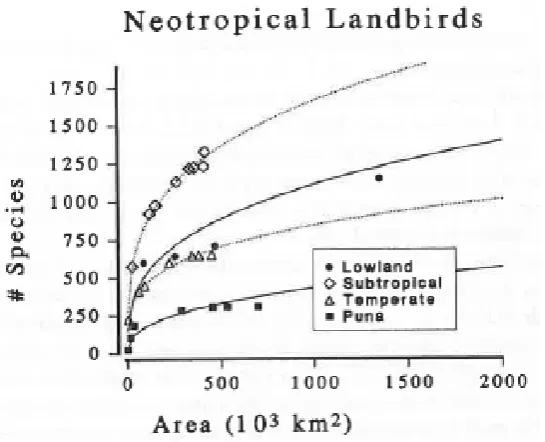
Figure 1. Taxa-area relationship modelled by the power law and plotted in arithmetic space showing an increase in species richness with increasing area. Taken
directly from Rosenzweig (1995). ... 2 Figure 2. Relationship between the compositional similarity of paired Inga communities
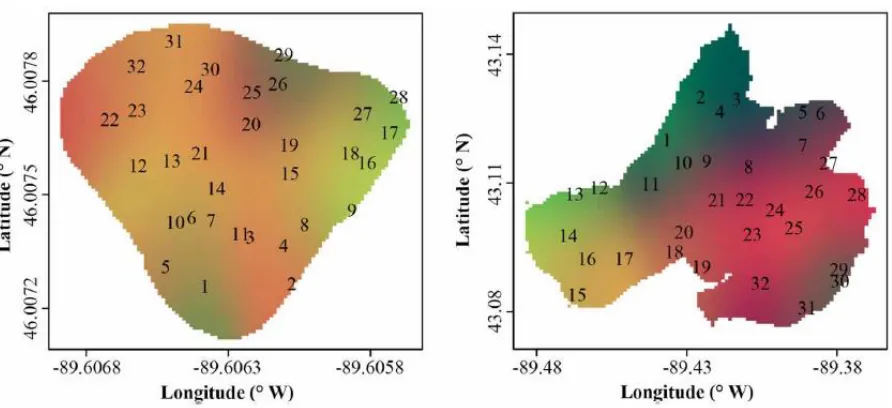
and geographic distance. Taken directly from Dexter et al. (2012). ... 4 Figure 3. Lake Mendote and Crystal Bog. Principle coordinate analysis (PCoA) was
performed on the bacterial community composition in the lakes and the axis of the ordinations were coloured and this information was plotted on the maps. Similar colours denote sites represented by more similar bacterial
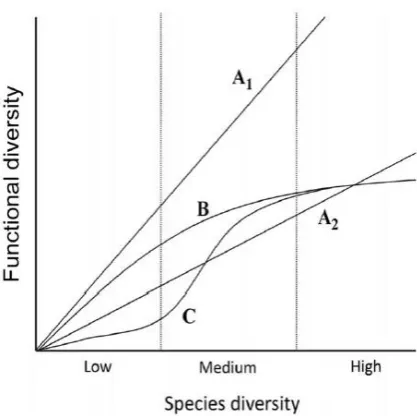
communities. Taken directly from Jones et al. (2012). ... 7 Figure 4. Schematic of possible relationships between functional and species diversity. A1,
every species has a unique functional role resulting in a ratio of 1:1 between functional and species diversity; A2, multiple species have similar functional attributes; B, at low species richness, functional diversity rapidly increases and then increases at declining rates with high species diversity, and eventually reaches an asymptote; C, relationship between functional diversity and species diversity is sensitive to changes in environmental variables. Taken
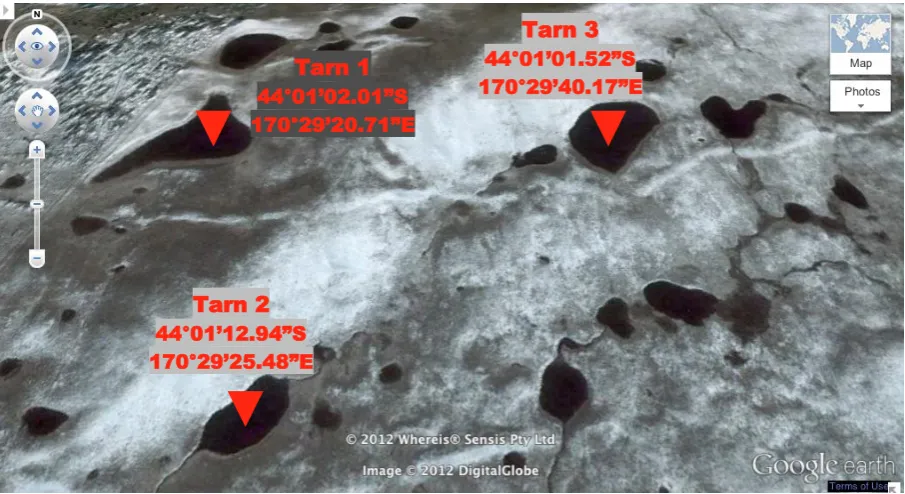
directly from Guillemot et al. (2011). ... 8 Figure 5. Location of tarns near Lake Tekapo, New Zealand. ... 14 Figure 6. Sample locations in the three tarns from which samples were collected. Each dot
shows where water samples, and other data were collected. ... 14 Figure 7. Schematic showing the components of the sampling apparatus. The adjustable
support poles extended to a height of 2.5 m and the rope was 100 m long
giving us the ability to sample across a distance of 50 m (not to scale). ... 15 Figure 8. One of the support poles with attached rope and tubing of the sampling
apparatus. ... 16 Figure 9. Floatation device that was used to collect water from a depth of 5 cm. ... 16 Figure 10. Buchner filter showing a Buchner funnel (Nalgene®, Thermo SCIENTIFIC,
Rochester, NY, U.S.A.) and the waste collection container (KIMAX®, KIMBLE, Vineland, NJ, U.S.A.). ... 18 Figure 11. Unused BIOLOG EcoPlate™ (left) and BIOLOG EcoPlate™ (right) showing colour
development. ... 23 Figure 12. Example of variance partitioning displayed on a column plot. Four different
components are shown: (hatched) unexplained variation; (black) pure environmental variation that is independent of any spatial factors; (white) pure spatial variation that is independent of any environmental variables;
(grey) spatially structured environmental variables. ... 28 Figure 13. Taxa-area relationship for each tarn. The cumulative number of samples (mean
taxa richness was calculated for each combination of samples) was used to represent area. The relationship in each tarn was modelled by the power law
(S = cAz, red line = fitted values). ... 30
Figure 15. Differences in bacterial community structure (left) and bacterial community function (right). Plots are non-metric multidimensional scaling of ARISA data and carbon substrate utilisation data, using Bray-Curtis similarity matrices of samples. Data points relate to samples abstracted from Tarn 1, 2 or 3. Two-dimensional stress values are 0.20 and 0.18 for plots of bacterial community structure and function, respectively. ... 33 Figure 16. Similarity in bacterial community structure and function among tarns. Bacterial
community data for each tarn were subjected to a data reduction procedure by non-metric multidimensional scaling of Bray-Curtis similarity data. The differences between the highest and lowest 1-d configuration scores for each plot were then used to classify the configuration into ten equally sized classes. The bacterial community data falling within each class was assigned a
different colour, across a gradient from dark blue (lowest 1-d configuration score) to light green (highest 1-d configuration score. The outcome of this approach is that samples hosting more similar bacterial community data are represented by more similar colours on each map... 35 Figure 17. Example of a dendrogram for bacterial community structure in Tarn 1 showing
the cut off at 50 % (red line) Bray-Curtis similarity. Each branch that the red line crosses is a different cluster in the tarn at the 50 % Bray-Curtis similarity level. ... 37 Figure 18. Variation in bacterial community structure in each tarn. Plots are derived from
non-metric multidimensional scaling of ARISA data using a Bray-Curtis similarity measure. Group average clusters are superimposed on each plot (red circles) at the level of 50 % Bray-Curtis similarity. Each sample that is not constrained was in its own cluster. Two-dimensional stress values are 0.16, 0.13 and 0.13, respectively. ... 38 Figure 19. The plots on the left show similarity in bacterial community structure within
the tarns. Bacterial community data for each tarn were subjected to a data reduction procedure by non-metric multidimensional scaling of Bray-Curtis similarity data. The differences between the highest and lowest 1-d
configuration scores for each plot were then used to classify the configuration into ten equally sized classes. The bacterial community data falling within each class was assigned a different colour, across a gradient from dark blue (lowest 1-d configuration score) to light green (highest 1-d configuration score). The outcome of this approach is that samples hosting more similar bacterial community data are represented by more similar colours on each map. The plots on the right show the physical location of the different clusters within the tarns. Each colour represents a different cluster with black
representing individual samples that did not fall within the main clusters. ... 40 Figure 20. Similarity in bacterial community structure and function within the tarns.
Bacterial community data for each tarn were subjected to a data reduction procedure by non-metric multidimensional scaling of Bray-Curtis similarity data. The differences between the highest and lowest 1-d configuration scores for each plot were then used to classify the configuration into ten equally sized classes. The bacterial community data falling within each class was assigned a different colour, across a gradient from dark blue (lowest 1-d configuration score) to light green (highest 1-d configuration score. The outcome of this approach is that samples hosting more similar bacterial
Figure 21. Contour plots of significant environmental variables. A = nitrite-N, Tarn 1; B = total carbon, Tarn 2; C = sulphate-S, Tarn 2; D = pH, Tarn 3; E = total carbon, Tarn 3; F = depth, Tarn 3. The difference between the highest and lowest value for each environmental variable was used to classify the data for each variable into ten equally sized classes. The environmental data falling within each class was assigned a different colour, across a gradient from dark blue (lowest 1-d configuration score) to light green (highest 1-d configuration score). The outcome of this approach is that samples hosting more similar environmental values (for the selected environmental variable) are
represented by more similar colours on each map... 45 Figure 22. Results of partial regression analysis, partitioning the variation in bacterial
community structure within each of the three tarns (data for each tarn analysed individually), or among all tarns (data for all three tarns analysed together). Four different components are shown: (hatched) unexplained variation; (black) pure environmental variation that is independent of any spatial factors; (white) pure spatial variation that is independent of any
environmental variables; (grey) spatially structured environmental variables. ... 47 Figure 23. Results of partial regression analysis, partitioning the variation in bacterial
community function within each of the three tarns (data for each tarn analysed individually), or among all tarns (data for all three tarns analysed together). Four different components are shown: (hatched) unexplained variation; (black) pure environmental variation that is independent of any spatial factors; (white) pure spatial variation that is independent of any
environmental variables; (grey) spatially structured environmental variables. ... 47
Figure A. 1. Variation in bacterial community function in each tarn. Plots are derived from non-metric multidimensional scaling of ARISA trace data using a Bray-Curtis similarity measure. Group average clusters are superimposed on each plot at the level of 50 % Bray-Curtis similarity. Two-dimensional stress values are
0.18, 0.14 and 0.19, for tarns 1, 2, and 3, respectively. ... 65 Figure A. 2. Diagram of how the variation attributable to different components is
calculated. Taken directly from Clarke and Gorley (2006) ... 66 Figure A. 3. DistLM output in PRIMER-E showing the proportion of variation calculated for
the different components. The numbers in the coloured bubbles are the
Chapter 1
Introduction
An important focus of ecology is to understand how biodiversity is generated and
maintained. This can, in part, be achieved through understanding the spatial distribution of
organisms (Green and Bohannan, 2006). However, while the distribution of larger organisms
is well documented (Rosenzweig, 1995), the biogeography of other groups of organisms,
such as, microorganisms remains poorly understood (Fierer and Jackson, 2006; Green and
Bohannan, 2006; Martiny et al., 2006). This is partly due to the fact that until recently we
relied on culture based techniques to identify microorganisms. It is proposed that less than
0.5 % of microorganisms can be cultured (Torsvik et al., 1990),such that a large proportion
of the microbial community is not detectable using such methods. However, with the
introduction of molecular techniques, microorganisms can now be rapidly characterised by
their DNA, removing the need to grow cells in the laboratory (Malik et al., 2008). Molecular
based techniques also allow microorganisms to be detected in situ (Gilbride et al., 2006).
Consequently, interest in microbial ecology continues to increase.
There is controversy surrounding the distribution of microorganisms. Some argue that all
microbial taxa are everywhere (cosmopolitan distribution) (Martiny et al., 2006), since the
small size and high abundance of microorganisms means that they are widely distributed in
large numbers in global currents of wind and water. Conversely, others claim that
microorganisms display biogeographical patterns, such as the species-area and
distance-decay relationships (Green and Bohannan, 2006; Horner-Devine et al., 2004; Martiny et al.,
2006), which suggests that there are barriers or limitations to microbial immigration or
1.1
Taxa-area relationship
A common biogeographical pattern reported for communities of macroorganisms is the
species, or taxa-area relationship (Crawley and Harral, 2001; Fridley et al., 2005; Rosenzweig,
1995; Ulrich and Buszko, 2003). The taxa-area relationship states that taxa richness increases
in accordance with area sampled (Lomolino, 2001). There are a number of formulae used to
model the taxa-area relationship (Scheiner, 2003), with the power law, Arrehenius (1921),
being one of the most commonly used:
S = cA
zwhere S is species or taxa richness (number of species), A is area sampled, c is a constant
that partially determines the slope of the curve with z which is a measure of the rate of taxa
turnover across space. A larger z value represents a greater rate of turnover (Rosenzweig,
1995; Zhou et al., 2008). For example, the taxa-area relationship was modelled using the
power law in arithmetic space for South American birds in four biomes types and shows the
expected increase in species richness with increasing area sampled (Rosenzweig, 1995)
(Figure 1).
With the taxa-area relationship, it is important to understand that there is a difference in the
z-values for islands and contiguous habitats, which may be because islands are surrounded
by a barrier that hinders colonisation, whereas contiguous habitats can be colonised from
adjacent areas (Bell et al., 2005). With islands, z-values typically range from 0.25 to 0.35
(Rosenzweig, 1995). However, with contiguous habitats, z-values usually range from 0.12 to
0.18 (Rosenzweig, 1995). These z-values are for macroorganisms, so it is possible that they
may be different for microorganisms. It has been proposed that because the small size and
high abundance of microorganisms means that they are widely distributed, this will result in
lower z-values for microorganisms than for macroorganisms (Bellet al., 2005). Cencini et al.
(2012) determined that as the size of the local population increases, the species-area curve
become shallower (lower z-value), which is consistent with the theory that because
microorganisms are widely distributed, they will have a higher local population and hence
lower z-values than macroorganisms. Alternatively, microorganisms may have lower z-values
than macroorganisms due to decreased local diversification, because large population sizes
result in low extinction rates (Fenchel and Finlay, 2004), or low speciation rates due to
horizontal gene transfer (Thomas and Nielsen, 2005) and lack of geographical isolation
(Finlay, 2002).
The taxa-area relationship can be explained by three possible theories. First, it is likely that
more taxa will be encountered when sampling a larger area than a smaller area because
there is a higher probability that rare taxa will be encountered (Hill et al., 1994; Kallimanis et
al., 2008). Second, a larger area will be more environmentally heterogeneous and will thus
support a greater variety of taxa, each of which may be specialised to different
environmental conditions (Cam et al., 2002; Kallimanis et al., 2008; Preston, 1962;
Rosenzweig, 1995). Finally, the island biogeography theory which states that a dynamic
equilibrium exists between immigration and extinction rates on an island (MacArthur and
Wilson, 1967), and can be used to qualitatively predict shifts in species richness and turnover
rates with changes in area sampled and degree of isolation. One of the first studies to
identify a taxa-area relationship for microbial communities was performed by Bell et al.
(2005). Bell et al. (2005) observed a taxa-area relationship for microbial communities in
water-filled tree holes (islands). This study was performed over a relatively small spatial
scale with the largest island sampled (volume of water) being 20 litres. In contrast to Bell et
communities from six reservoirs of different sizes (maximum volumes ranged from 0.6 to
1700 Mm3) in Burkina Faso or three alpine lakes (maximum volumes ranged from 1124 to
8900 Mm3) in France. The inconsistency in these findings may be due to differences in the
scale of the studies as Bell et al. (2005) concluded that with large areas of contiguous habitat
the slope of the taxa-area relationship appears reduced. Alternatively, microbial
communities in freshwater ecosystems may not display taxa-area relationships because
freshwater systems are usually well mixed and environmental heterogeneity is low (Scheiner
et al., 2000). These studies highlight the importance of understanding the distribution of
microorganisms at various spatial scales.
1.2
Distance-decay relationship
Another common biogeographical pattern described in literature is the distance-decay
relationship (Dexter et al., 2012; Finkel et al., 2012; Jones et al., 2012; King et al., 2010;
Palmer, 2005; Sommaruga and Casamayor, 2009; Thieltges et al., 2009). The distance-decay
relationship states that community similarity declines with increasing geographic distance
(Horner-Devine et al., 2004). For example, this relationship was observed by Dexter et al.
(2012), who identified that the compositional similarity of Inga (a genus of nitrogen fixing
tree) communities in Madre de Dios, Peru for terra firme and floodplain showed a decline
with increasing geographic distance (Figure 2).
Two mechanisms may be responsible for the distance-decay relationship. First, because
microorganisms may have limited dispersal ability, community similarity will show a decline
with increasing geographic distance regardless of environmental features (Soininen et al.,
2007). Second, increasing environmental heterogeneity with increasing geographic distance
will result in a decline in community similarity with increasing distance. This is because
microorganisms are adapted to different environmental conditions which change over space
and will therefore be present where favourable conditions exist. For example, the landscape
structure and the degree of isolation of the landscape may influence the dispersal rate of
microorganisms (Nekola and White, 2004). The similarity of communities within a complex
landscape structure that has dispersal barriers will decline more abruptly than a less
complex and more open landscape. Also, landscapes that are more isolated will take longer
to colonise resulting in a gradient in microbial diversity after a disturbance.
Horner-Devine et al. (2004) analysed whether or not microorganisms displayed a taxa-area
relationship, using a distance-decay approach, in a New England salt marsh, and determined
that environmental heterogeneity affects microbial communities more than geographic
distance. It was found that when the effect of geographic distance was removed, habitats
with similar environmental conditions had similar microbial communities. However, when
the effect of environmental similarity was removed, geographic distance had no effect on
the microbial communities. This was supported by Van der Gucht et al. (2007), who
concluded that spatial distance is insignificant compared to local environmental conditions.
Finkel et al. (2012) investigated the dispersal limitation in phyllosphere communities on the
leaf surfaces of spatially dispersed, salt-excreting Tamarix trees. The trees were located over
a 500 km east-west transect in the Sonoran Desert of southwestern United States with
relatively uniform climate conditions (minimising environmental heterogeneity). They found
that some communities of bacterial taxa, such as betaproteobacteria, showed a significant
decline in similarity with increasing geographic distance. However, even though the sampling
regime was designed to minimise environmental heterogeneity, a weak relationship was
observed between geographic distance and environmental heterogeneity. This study
indicates that the distance-decay relationship can be observed for microorganisms over a
relatively large spatial scale (0 to 500 km). However, will it still be present over finer spatial
In regards to the distance-decay relationship being present over a range of spatial scales,
King et al. (2010), determined that the dissimilarity in bacterial community composition in
soil samples collected from a continuous landscape on the south side of the Green Lakes
Valley Watershed, Colorado, USA, only showed an increase between 2 to 240 m. However, in
contrast to Finkel et al. (2012), between 240 to 2000 m King et al. (2010) observed no
relationship between dissimilarity in bacterial community composition and geographic
distance. Spatial differences in bacterial community composition for samples that were
located less than 240 m apart were suggested to be due to the landscape distribution of
biogeochemical properties (King et al., 2010). These studies indicate that environmental
heterogeneity is a significant driver of the distance-decay relationship for microorganisms,
but also suggest that spatial location has some influence on the distance-decay relationship.
In addition, it has been identified that the distance-decay relationship might not be present
at all spatial scales.
1.3
Relationship between spatial scaling and efficient sampling strategies
The spatial scale of variation in microbial diversity may result in microbial communities that
are separated on a small scale of less than a metre being significantly different from each
other in terms of their composition (Franklin and Mills, 2003). The difference in microbial
communities may be due to variation in local, or microsite, conditions such as pH, organic
matter content or interactions with biological neighbours. Unfortunately, many sampling
regimes do not take this into consideration and in analysing only a limited number of
samples, they underestimate total microbial diversity (Mocali and Benedetti, 2010). The
spatial structure of microbes is poorly understood because a large number of samples are
typically required to accurately determine spatial variation (Saetre and Bååth, 2000).
However, recent advances in the high throughput analysis of microbial DNA now allow the
simultaneous analysis of hundreds of samples at a relatively low cost. A previously
mentioned study, Humbert et al. (2009), involved samples being collected from only one
location in reservoirs in individual lakes in Burkina Faso and alpine lakes in France because it
was concluded in an earlier study (Dorigo et al., 2006) that one sample provides a good
evaluation of the total bacterial diversity in a freshwater ecosystem. However, this is not
analyse the variation in bacterial community composition on a small spatial scale (10 m).
They identified significant horizontal variation in bacterial community composition across
the lakes (Figure 3). These studies suggest that even though microbial diversity may appear
to be relatively homogeneous across freshwater ecosystems nevertheless it may display
small scale spatial patterns. Therefore it is important to collect multiple samples across
freshwater ecosystems in order to provide an accurate representation of the microbial
community present.
Figure 3. Lake Mendote and Crystal Bog. Principle coordinate analysis (PCoA) was performed on the bacterial community composition in the lakes and the axis of the ordinations were coloured and this information was plotted on the maps. Similar colours denote sites represented by more similar bacterial communities. Taken directly from Jones
et al. (2012).
1.4
Link between microbial community structure and function
Microorganisms have a significant influence on important ecological processes in the
environment, such as trace gas emissions, soil structure and formation, decomposition of
organic matter and xenobiotics, and the recycling of essential elements (e.g. carbon,
nitrogen, phosphorous, and sulphur) and nutrients (Green and Bohannan, 2006;
Horner-Devine et al., 2004; Rastogi and Sani, 2011). The fact that microorganisms are involved in a
number of important ecological processes, along with the recent development of molecular
Tiedje, 2000; Horner-Devine et al., 2004; Reche et al., 2005; Van Der Gast et al., 2005) being
performed on microorganisms in relation to their distribution, which contributes to our
understanding of biodiversity. However, there remains limited information regarding the link
between the variation in microbial composition and the functional attributes of the
communities in natural ecosystems. It has been proposed that the number of species
required to sustain ecosystem functioning is directly correlated with the number of
processes considered (Hector and Bagchi, 2007) and there are a number of different
scenarios that can be used to model the relationship between functional diversity and
species diversity (Figure 4). A number of studies have attempted to identify the link between
microbial composition and ecological processes.
Figure 4. Schematic of possible relationships between functional and species diversity. A1, every species has a unique functional role resulting in a ratio of 1:1 between functional and species diversity; A2, multiple species have similar functional attributes; B, at low species richness, functional diversity rapidly increases and then increases at declining rates with high species diversity, and eventually reaches an asymptote; C, relationship between functional diversity and species diversity is sensitive to changes in environmental variables. Taken directly from Guillemot et al. (2011).
Balser and Firestone (2005) performed a study investigating the link between microbial
community composition and soil process rates such as N mineralisation, nitrification, CO2
and N2O flux, independent of certain environmental variables (soil temperature and water
conifer forest ecosystem, along an elevation gradient with different climates (temperature
and precipitation). Not only did they find that there was a significant relationship between
microbial community composition and soil processes independent of soil temperature and
water content, but soil processes were also related to the environment. Unfortunately, this
study only controlled soil temperature and water content and it is possible that there were a
number of other environmental variables that would have affected the soil processes.
Another study by Eilers et al. (2010) analysed shifts in bacterial community phylogenetic
structure in soils following the addition of specific carbon compounds (glucose, glycine and
citric acid). They found that the magnitude of the change in function (CO2 respiration) in
bacterial communities upon the addition of carbon compounds did not correlate with the
change in bacterial community composition. An increase in the abundance of a subset of
taxa was observed when the carbon compounds were added to the soil. However, a number
of abundant taxa showed no response to the addition of the carbon compounds. This study
shows that there is a link between bacterial community composition and ecological
processes to some degree but also indicates that microbial communities may exhibit some
functional redundancy. Functional redundancy is defined by Wohl et al. (2004) as “multiple
species, while biologically unique, contributing with similar intensity to the same process
within an ecosystem, such as energy flow or nutrient cycling”. It is evident from the study by
Balser and Firestone (2005) that there is variation in the functional attributes of microbial
communities in soil ecosystems. Is this relationship also present in freshwater ecosystems,
which can be expected to be less heterogeneous, due to mixing (Scheiner et al., 2000), or
will the microbial communities in these ecosystems show functional redundancy?
It is possible that microbial communities contain some functional redundancy. The high
species richness that is usually displayed by microorganisms is thought to facilitate
functional redundancy because the probability of encountering multiple species that
perform the same ecological processes is increased. An important question in microbial
ecology is, if a microbial community suffers from a disturbance that results in a loss of
biodiversity, will the new community be functionally similar to the original community or will
a loss in ecological processes be observed? Functional redundancy can be observed in two
different ways: (i) First, the new community may be compositionally different (e.g. contain
different taxa). However, it may still be capable of performing the same ecological processes
the community but individual taxa may function differently resulting in the same process
rate at the community level (Allison and Martiny, 2008). Alternatively, microbial
communities may display functional dissimilarity where a loss in the number of microbial
taxa corresponds to a loss in ecological processes. Microbial communities showing both
functional redundancy and functional dissimilarity have been observed in a range of studies.
Yin et al. (2000) performed a study that involved a number of soil samples from a soil
reclamation gradient in a tin mine site in Brazil being amended with different carbon
compounds (L-serine, L-threonine, sodium citrate, and α-lactose hydrate). A change in the
functional attributes of the bacterial communities would be expected upon the addition of
the carbon substrates and the corresponding amount of change or no change in the richness
and diversity of the bacterial communities would give an indication of the degree of
functional redundancy present in the bacterial communities. The richness and diversity of
bacterial groups increased along the reclamation gradient in response to the addition of the
carbon substrates, indicating some functional dissimilarity in the bacterial communities
because the modification in environment conditions supported the growth of new bacterial
taxa. However, even though some functional dissimilarity was observed, it was determined
that bacterial functional redundancy was positively correlated with changes in soil that
supported plant growth. Wohl et al. (2004) investigated functional redundancy by analysing,
under constant environmental conditions, if an increase in species richness influenced
function (cellulose decomposition) and if a decline in species richness was observed over
time in functionally redundant communities. It was observed that, in contrast to what was
expected, a decline in species richness only occurred for microcosms inoculated with two
species (one species was eliminated). Species richness was maintained in the other
microcosms that were inoculated with four or more species which was thought to be due to
the inherent diversity of multiple species that allowed for different resources to be
exploited. This implies that a functionally redundant community can support high species
richness through the production of resources by individuals resulting in resource
heterogeneity. The study also found that species richness was the main driver of function
(cellulose decomposition) with the microcosms that contained four or eight species
displaying the highest cellulose decomposition. Finally, Strickland et al. (2009) performed a
study that involved sterilised litter being inoculated with soil, both of which were collected
litter decomposition (measured by carbon mineralisation) was explained by the inoculum
source. This supports the idea of functional dissimilarity, that is, species perform unique
functions. These studies are evidence of research being performed to look at the functional
attributes of microbial communities in which the link between microbial composition and
function remains poorly understood (Guillemot et al., 2011), especially in freshwater
ecosystems. Unfortunately, the majority of the aforementioned studies were temporal
based and it would have been interesting if the studies had incorporated spatial parameters
into the investigation of functional diversity. In addition, previous studies investigated the
functional attributes of microbial communities by amending their habitat and then
monitoring the response of the microbial communities to this change instead of determining
functional redundancy in an undisturbed environment.
1.5
Aims, objectives and hypotheses
My study characterises spatial variability in bacterial community structure and functional
characteristics within tarns (shallow mountain lakes) located at Tekapo Scientific Reserve.
The influences of geographical distance and sample area on the bacterial communities were
investigated to examine concepts related to patterns of distance-decay and taxa-area
relationships, respectively. More than 100 bacterial community samples were collected
using a custom built sampling apparatus that minimised disturbance and mixing of the tarns.
Multiple samples were collected from each tarn allowing an investigation of fine scale spatial
variation within the tarns. It was expected that the variation within the tarns would be less
than the variation among the tarns. Bacterial community structure was assessed using a DNA
finger-printing approach, automated ribosomal intergenic spacer analysis, (ARISA), and
differences in bacterial community function were assessed using carbon substrate utilisation
analysis (BIOLOG EcoPlates™).
Identification of the most significant factors driving the bacterial community structure of
these freshwater ecosystems may improve our ability to adequately sample them for
assessment of bacterial community structure and function. I examined the extent to which
bacterial communities in alpine tarns adhered to common biogeographical patterns.
Specifically: (1) The taxa-area relationship; I characterized the taxa-area relationships for
a positive taxa-area relationship, i.e. that taxa richness would increase in relation to the
volume of sample. (2)The distance-decay relationship; I characterized distance-decay
relationships for the bacterial communities in the tarns. I expected that (i) similarity in
bacterial community structure and function would decline with increasing geographic
distance between samples, and (ii) there would be more variation in bacterial community
structure among the tarns than within the tarns. (3) Spatial and environmental variation; I
characterized spatial variation in bacterial community structure and function in the tarns. I
then used regression analyses to identify which environmental variables had the most
significant relationship with bacterial community structure and function in the tarns. I
predicted that (i) spatial location would contribute the most towards variation in bacterial
community structure and (ii) the environment would have a stronger relationship with
Chapter 2
Methods
2.1
Experimental design
2.1.1 Study site
Samples of water were collected from tarns located at the Tekapo Scientific Reserve, New
Zealand (Figure 5). Three tarns were selected based on their volume of water, as many of
the smaller tarns were dry. Samples were collected consecutively over three days; the 10th,
11th and 12th of January 2012 from Tarns 1, 2 and 3, respectively. Additional
physicochemical data (depth, dissolved oxygen and temperature) for all three tarns were
collected on the 12th of January 2012. The tarns are located on Department of Conservation
(DOC, http://www.doc.govt.nz/) land and therefore permission was obtained from DOC
before commencement of sampling.
2.1.2 Sample locations
The tarns had the following surface areas; Tarn 1 = 2,450 m2, Tarn 2 = 2,800 m2 and Tarn 3 =
3,900 m2. From each tarn, samples were collected using a grid format, of approximately 7 m
x 7 m (Figure 6). For the largest tarn, Tarn 3, additional samples were collected from three
random locations using a smaller grid format, of approximately 3.5 m x 3.5 m. The
coordinates from where the samples were collected were recorded using two GPS systems
(Rino 650, Garmin and Trimble ProXT Differential GPS). A total of 36, 33 and 53 samples
Figure 5. Location of tarns near Lake Tekapo, New Zealand.
Figure 6. Sample locations in the three tarns from which samples were collected. Each dot shows where water samples, and other data were collected.
Tarn 3 44°01’01.52”S 170°29’40.17”E Tarn 1
44°01’02.01”S 170°29’20.71”E
2.1.3 Sample collection
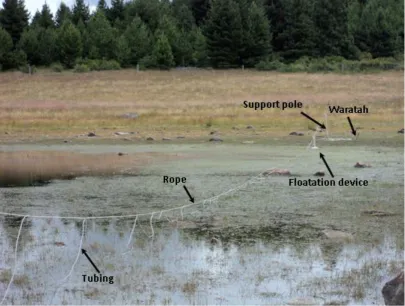
A custom designed sampling apparatus was constructed to allow the collection of samples
with minimal disturbance of the tarns while also being portable and easy to set up. The
sampling apparatus (Figure 7 & Figure 8) consisted of; (i) two adjustable support poles that
were erected either side of the tarns, (ii) a length of rope with tubing attached, connecting
the two poles together, (iii) a floatation device (Figure 9) that allowed the end of the tubing
to be positioned at a set depth of 5 cm below the water’s surface and finally (iv) a
petrol-engine pump which was used to transfer the water through the tubing. To ensure that each
sample was not contaminated with water from the previous sample, after the collection of
each sample, both ends of the tubing were briefly removed from the water to allow the
formation of an air bubble and then the tubing was flushed until approximately 10 seconds
after the air bubble had been expelled.
Figure 8. One of the support poles with attached rope and tubing of the sampling apparatus.
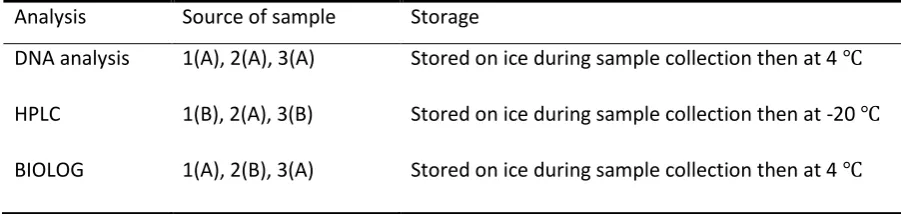
For Tarn 1, two 250 mL opaque sample bottles (1(A), 1(B)) were filled to capacity with water
for each sample (Table 1). Two 250 mL bottles (3(A), 3(B)) were also collected for Tarn 3. Due
to resource limitations, for Tarn 2, only one 250 mL bottle (2(A)) was collected per sample.
However, an additional 15 mL of water was collected in a centrifuge tube (2(B)) for each
sampling location in Tarn 2.
Table 1. Samples required for analyses and storage conditions.
Analysis Source of sample Storage
DNA analysis 1(A), 2(A), 3(A) Stored on ice during sample collection then at 4 ℃
HPLC 1(B), 2(A), 3(B) Stored on ice during sample collection then at -20 ℃
BIOLOG 1(A), 2(B), 3(A) Stored on ice during sample collection then at 4 ℃
2.1.4 Physicochemical properties of the tarns
A range of physicochemical properties were measured onsite. These included; pH, dissolved
oxygen, temperature and depth. To measure pH, 250 mL of water from each sample location
was collected in a measuring cylinder and the pH was recorded using a portable pH meter
(handylab pH 11, SCHOTT Instruments) within five minutes of sample collection. The
dissolved oxygen content and the temperature of the tarns were measured using a dissolved
oxygen probe (550A YSI, Yellow Springs, OH). The depths of the tarns were measured using a
pole marked at 5 cm intervals.A minimum of 12 random sites in each tarn were analysed for
the suite of physicochemical properties. Samples were also collected for chemical analysis.
These samples were analysed by High Performance Liquid Chromatography (HPLC), by Joy
Jiao, Lincoln University. HPLC allows the concentrations of various anions; chloride, bromide,
2.2
Molecular methods
2.2.1 Filtration procedure
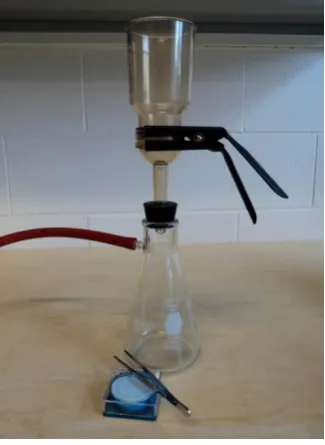
In preparation for DNA extraction and subsequent analysis, water samples were filtered
using a Buchner filter (Figure 10) to collect bacterial cells on filters.
Figure 10. Buchner filter showing a Buchner funnel (Nalgene®, Thermo SCIENTIFIC, Rochester, NY, U.S.A.) and the waste collection container (KIMAX®, KIMBLE, Vineland, NJ, U.S.A.).
Using a Buchner filter, 100 mL of each sample was filtered through a new filter (Millipore
Express® PLUS Membrane, polyethersulfone, hydrophilic, 0.22 µm, 47 mm, MERCK Millipore,
Billerica, MA, U.S.A.). Using sterile forceps the filter was placed in a bead beater tube (Micro
tube, 2 mL, Global Science and Technology, Auckland, New Zealand), containing 0.5 g of 0.1
mm zirconia/silica beads and 0.5 g of 2.3 mm zirconia/silica beads (BioSpec, Inc., Bartlesville,
OK, U.S.A.). The bead beater tubes were then stored in a freezer at -20 °C. After each sample
had been filtered, the filtering apparatus was rinsed with tap water and then distilled water.
The forceps were sterilised between each sample to avoid the transfer of contaminants by
2.2.2 DNA extraction
In order to investigate the microbial diversity in the tarns the DNA had to first be extracted
from the filters prepared in the previous procedure (see section 2.2.1). The DNA extraction
procedure utilised in this study was adapted from Miller et al. (1999). To extract the DNA,
270 µL of phosphate buffer (100 mM, pH 8.0) and 300 µL of Sodium Dodecyl Sulphate (SDS)
lysis buffer (100 mM, Tris pH 8.0, 10% SDS) were added to each bead beater tube containing
a filter. The samples were then gently mixed by hand and then 300 µL of chloroform:isoamyl
alcohol (24:1) was added to each tube. Tubes were shaken in a TissueLyser II (QIAGEN®,
bio-strategy, Auckland, New Zealand) at 3 m s-1 for 1 min. The tubes were then transferred to
the other side of the TissueLyser II and shaken for another minute. The tubes were
transferred to a bench top centrifuge (Spectrafuge 24D; Labnet, Woodbridge, NJ, U.S.A.) and
were centrifuged at full speed (13,300 rpm) for 5 min to pellet debris. The supernatant
(approximately 650 µL) was transferred to a clean 1.5 mL microtube (AXYGEN, Auckland,
New Zealand) and then 360 µL of 7 M ammonium acetate (NH4OAc) added to the tubes to
achieve a final concentration of 2.5 M. The tubes were gently mixed by hand and then
centrifuged at full speed (13,300 rpm) for 5 min. After centrifugation, two distinct phases
were observed, with the SDS forming a gel-like interphase. The upper phase (approximately
580 µL) was transferred to a clean 1.5 mL microtube and 315 µL of ice-cold isopropanol
(Analar) was added to each tube. The tubes were then incubated at room temperature for
15 min before centrifugation at full speed (13,300 rpm) for 5 min to pellet the DNA. The
supernatant was then discarded and the pellets were washed using 1 mL of 70% ethanol.
The tubes were again centrifuged at full speed (13,300 rpm) for 5 min and the supernatant
discarded. The pellets were then dried in a desiccator jar under vacuum for 15 - 45 min.
Once the pellets were dry, they were resuspended in 50 µL of Nuclease-Free water
(Promega, Sydney, Australia).
2.2.3 Polymerase chain reation (PCR)
PCR was performed on the DNA extracts to amplify bacterial DNA that was of interest to us
in the present study. The PCR that was performed utilised primers designed for automated
ribosomal intergenic spacer analysis (ARISA). ARISA primers (InvitrogenTM Ltd., Victoria,
16S rRNA and the 23S rRNA genes. This region is highly variable among different microbial
species and thus a PCR utilising ARISA primers will result in the production of many
fragments of different lengths. The resulting fragment pattern can therefore be used to
characterize differences in microbial community composition among samples. For the PCR, a
master mix containing all the different components required for a PCR was made (Table 2).
The GoTaq® reagent (Hot Start Green Master Mix, 2X, Promega, Sydney, Australia) used in
the master mix contained Taq DNA polymerase, dNTPs, MgCl2 and reaction buffers at
optimal concentrations.
Table 2. Reagents used to create a mastermix suitable for the PCR amplification of DNA for ARISA for one sample.
*SD Bact (5’-TGCGGCTGGATCCCCTCCTT-3’) (InvitrogenTM Ltd., Victoria, Australia)
** LD Bact (5’-CCGGGTTTCCCCATTCGG-3’) (InvitrogenTM Ltd., Victoria, Australia)
For each sample, 48 µL of master mix was added to each well of a 96 well plate (Scientific
Specialties Inc., Lodi, CA, U.S.A.) and then 2 µL of DNA extracts added to each well, except
for two DNA-free controls which were included to ensure that PCR mastermixes were not
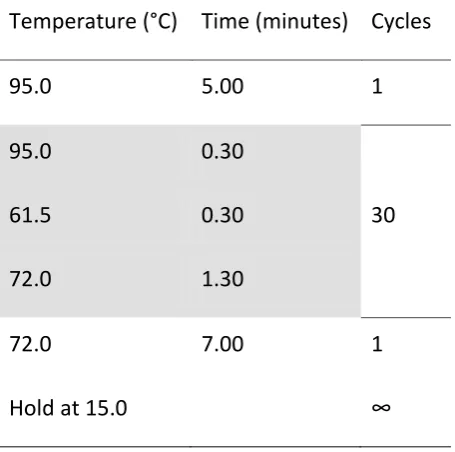
contaminated with bacterial DNA. PCR was performed in a thermal cycler (Veriti, 96 Well
Thermal Cycler, Applied Biosystems, Victoria, Australia) under the following conditions listed
in Table 3.
Reagent Volume
Nuclease-Free water 18 µL
*Forward primer, SD Bact (10 µM) 2 µL
**Reverse primer, LD Bact (10µM) 2 µL
Bovine serum albumin BSA, 10%
(InvitrogenTM Ltd., Victoria, Australia)
1 µL
GoTaq® (Hot Start Green Master Mix,
2X, Promega, Sydney, Australia)
25 µL
DNA (2 µL)
Total volume (master mix) 48 µL
Table 3. Conditions under which the PCR was performed.
Temperature (°C) Time (minutes) Cycles
95.0 5.00 1
95.0 0.30
61.5 0.30 30
72.0 1.30
72.0 7.00 1
Hold at 15.0 ∞
2.2.4 Agarose gel electrophoresis
Agarose gel electrophoresis was performed on the PCR samples to confirm that the DNA
extraction and PCR both worked. An agarose gel was prepared by combining 1.5 g of agarose
(AppliChem low EEO powder, Auckland, New Zealand) in 100 mL of 1X Tris/Borate/EDTA
(TBE) buffer in a 500 mL Schott bottle. The agarose was dissolved by heating in a microwave
for two minutes, or until fully dissolved. The liquid agarose was allowed to cool to the touch
before 10 µL of SYBR® safe DNA stain (invitrogen, Victoria, Australia) was added and then
the solution was poured into a rectangular gel mould and left to set at room temperature
(20 min). The solid agarose gel was placed into the electrophoresis apparatus (ENDURO,
Labnet, Woodbridge, NJ, U.S.A.) and 1X TBE was added until the gel was completely
submerged. The gel was then loaded with 6 µL of 1 Kb Plus DNA ladder (E-Gel®, invitrogen,
Victoria, Australia) into the first well. With the samples, 6 µL of each sample (including the
negative controls) was loaded directly into individual wells of the gel because the GoTaq®
master mix already contains loading dye. Electrophoresis was performed at 110 V for 30 to
40 min. The gel was then visualised under UV light using a gel doc (UVItec Limited,
2.2.5 DNA purification
The agarose gel electrophoresis confirmed that DNA was present in the samples and no
contamination was observed in the negative controls, therefore DNA purification was
performed. DNA was purified (using a DNA Clean & ConcentratorTM-5 Kit; ZYMO RESEARCH,
Irvine, CA, U.S.A.) to remove the primers and other unwanted DNA sequences in the
samples.
2.2.6 Automated ribosomal intergenic spacer analysis (ARISA)
After DNA purification had been performed 1 μl of each sample was combined with 10 μl
HiDi formamide and an internal LIZ1200 standard (Applied Biosystems Ltd., New Zealand).
The samples were then heat treated (95 °C, 5 min) and cooled on ice. To generate ARISA
profiles, the samples were run on a 3130XL Capillary Genetic Analyser (Applied Biosystems
Ltd.) using a 50 cm capillary and standard Genemapper protocol, but with an increased run
time (15 kV, 65 000 s).
2.3
Functional analysis (carbon substrate utilisation)
To provide a measure of the functional capability of the bacterial community in each sample,
BIOLOG EcoPlates™ (BIOLOG Inc, Hayward, CA, U.S.A., Figure 11) were inoculated by
aliquoting 120 µL of each sample into individual wells which contain a range of carbon
substrates (Appendix A). The plates were incubated in the dark, at room temperature, for
approximately 48 hours. The absorbance of the colour produced in the individual wells was
measured at a wavelength of 590 nm using a plate reader (BMG LABTECH FLUOstar Omega
model). The absorbance recorded for the well containing water was used as a blank and the
Figure 11. Unused BIOLOG EcoPlate™ (left) and BIOLOG EcoPlate™ (right) showing colour development.
2.4
Statistical analysis
GENEMAPPER software (v 3.7; Applied Biosystems Ltd.) was used to produce
electropherograms from the fluorescence data obtained during the ARISA procedure. The
electropherograms provide a comparison of the proportional quantities of different-sized
DNA fragments in each sampled community (Lear et al., 2008).The protocol of Ramette et
al. (2009) was then used to identify ‘true peaks’ (i.e., removing background ‘noise’ generated
during automated analysis) and bin fragments of similar size. Each number greater than
zero, in the tabulated ARISA data (Appendix B), represented a detected taxon. The ARISA
and BIOLOG data were standardised, in which relative percentages, disregarding the effect
of total abundance (ARISA) or intensity (BIOLOG) were calculated. A Bray-Curtis similarity
matrix (Legendre and Legendre, 1998) was then produced for both bacterial community
structure (ARISA data) and function (BIOLOG data) in PRIMER (version 6.1.12; Primer-E Ltd.,
Plymouth, UK) to allow a quantitative description of the relative differences among the
samples. The following Bray-Curtis equation was used to produce the matrices;
( ∑
∑ ∑ ), eq. 1
where is the standardised peak size of taxon i from sample 1 and is the standardised
peak size of taxon i from sample 2 (Clarke and Gorley, 2006). This was calculated for all
2.4.1 Evaluation of the taxa-area hypothesis
To determine whether positive taxa-area relationships existed in the tarns, a species
accumulation curve was plotted (using the tabulated ARISA data) for each tarn using the
‘exact’ argument (Kindt et al., 2006) in the ‘specaccum’ function in the ‘vegan’ package in R
(version 2.15.2) (R_Core_Team, 2012). A taxa-area curve usually involves species richness
being plotted against area sampled. However, with this study, the method that was used to
determine bacterial richness, ARISA, only has resolution to taxa (ARISA peak) level, not
species level, and therefore taxa richness was plotted instead of species richness. The
cumulative number of samples was used to represent sample ‘area’ because each analysed
sample was approximately the same volume of water (100 mL) (samples were taken
approximately 7 m apart from each other in a grid format). After the curves were plotted, a
power law function was fitted to the data using the non-linear regression function ‘nls’ in R
(version 2.15.2) (R_Core_Team, 2012) (see Appendix C for R script). For Tarn 3, the samples
collected from the smaller grid format of 3.5 x 3.5 m were excluded to allow a direct
comparison of these data with data collected from Tarns 1 and 2, from which such samples
were not collected.
2.4.2 Evaluation of the distance-decay hypothesis
Distance-decay plots were produced for both the ARISA and BIOLOG data. The ‘vegan’
package in R (version 2.15.2) (R_Core_Team, 2012) was used to calculate a Bray-Curtis
similarity matrix (see eq. 1) for both bacterial community structure (ARISA data) and
function (BIOLOG data). These similarity matrices were then used to compare similarity in
bacterial community data with their geographic (straight-line) distance apart. For Tarn 3, the
samples that were collected from the smaller grid format of 3.5 x 3.5 m were included in the
analysis to increase the sensitivity of the approach. For bacterial community structure an
exponential curve was fitted to the data using the non-linear regression function ‘nls’ in R
(version 2.15.2) (R_Core_Team, 2012). The function took the form, , where S
is the pairwise Bray-Curtis similarity, a is a constant and distance is pairwise distance. A
linear function was fitted to the data for bacterial community function (see Appendix D for R
2.4.3 Evaluation of the space vs environment hypothesis
Variation among the tarns
Using PRIMER (version 6.1.12; Primer-E Ltd., PERMANOVA+ add on, Plymouth, UK), the
overall variation in the tarns was visualised by producing non-metric multi-dimensional
scaling (MDS) plots. Two-hundred and fifty re-starts were conducted for both bacterial
community structure and function using the respective Bray-Curtis matrix. MDS plots are 2-d
or 3-d ordination plots in which the relative distances apart of all points are in the same rank
order as the relative Bray-Curtis similarities of the samples. This results in samples that have
more similar bacterial community structure or function being located closer together.
Permutational MANOVA (PERMANOVA) was then performed to determine if there were
significant differences in bacterial community structure and function among the tarns, and
to identify the tarns with the most similar/dissimilar communities. Type III (partial) analyses
with 9999 unrestricted permutations of the raw data were used (Lear et al., 2008). Like the
more traditional, multivariate analysis of variance (MANOVA), PERMANOVA is used to
determine if the means of several groups are significantly different. The advantages of using
PERMANOVA over MANOVA are that PERMANOVA can be used for unequal group sizes and
also, because PERMANOVA is a permutation method, it is unaffected by the statistical
distribution of the samples.
To visualise spatial differences in bacterial community structure and function among the
tarns, contour plots of the data were constructed for each study site. The values plotted on
the contour plots were the 1-d ‘configuration scores’ sourced from the MDS plots of the
ARISA and BIOLOG Bray-Curtis for all tarns. The data from the contour plots were
interpolated using the inverse distance weighting (IDW) interpolation function in the
Geostatistical Wizard, ArcMap10 (Esri, Wellington, New Zealand). The IDW function predicts
values for unmeasured locations by using measured values surrounding the prediction
locations. More weight is given to values close to the prediction locations than values that
are further away. After the predicted values had been calculated, the range of values were
classified into ten even classes and each class was assigned a colour from a colour gradient
(lowest value = dark blue to highest value = light green) with more similar colours
representing more similar values. Similar plots were produced by Jones at al. (2012) (see
which sampling locations that contained similar bacterial communities were represented by
a similar colour.
Differences in environmental variables among the three tarns were determined by
calculating the mean concentration and standard error of each environmental variable (pH,
conductivity, total carbon, chloride, nitrite-N, bromide, nitrate-N, phosphate-P, sulphate-S)
and performing Tukey’s test in MiniTab 16 to confirm significant differences (P ≤ 0.05).
Tukey’s test identifies means that are significantly different by comparing all possible pairs of
means.
Variation within the tarns
The following analyses were all performed in PRIMER (version 6.1.12; Primer-E Ltd.,
PERMANOVA+ add on, Plymouth, UK). An MDS plot was produced for each tarn, based on a
resemblance matrix constructed from Bray-Curtis similarity data. For the same sample data a
cluster diagram, or dendogram was plotted using the ‘group average’ approach. Bacterial
samples that were determined to be less than or equal to 50 % similar using this approach
were then marked as separate clusters on the MDS plots. Clusters were not overlaid on the
MDS plots for bacterial community function because all the samples for each tarn were
constrained in one cluster at the 50 % similarity level (Appendix E). The significant
differences in bacterial community structure among the clusters were investigated using
PERMANOVA (type III (partial), unrestricted permutation of raw data, 9999 permutations).
The total variation in bacterial community structure among the samples within each tarn
was analysed using the multivariate dispersion (MVDISP) function which calculates a factor
dispersion value in which larger values are indicative of greater variation in the samples. The
clusters were plotted on maps of each tarn (where different data clusters were represented
by different colours) allowing the visualisation of the position of the clusters within the
tarns. The same approach that was used to produce the contour plots showing the variation
among the tarns (see section 2.4.3; ‘Variation among the tarns’) was used to produce
contour plots for both bacterial community structure and function within the individual
tarns, using the ARISA and BIOLOG Bray-Curtis data for the individual tarns to identify any
To analyse the environmental variation in the tarns, regression analyses were performed
using distance-based linear models (DistLM) as used by Lear et al. (2008) to identify any
environmental variables that had a significant relationship with bacterial community
structure or function after any correlated environmental variables (Draftsmans plot,
r < -0.05; r > 0.05) had been removed. DistLM was carried out using the following
parameters in the Primer-E program: selection procedure; ‘Forward selection’, which adds
one variable, the variable that improves the selection criterion the most, at each step until
no improvement in the selection criterion is possible; selection criteria, ‘ R2’, which is the
proportion of explained variation and finally 9999 permutations were performed. DistLM is a
regression analysis that models the relationship between a resemblance matrix (e.g.
Bray-Curtis similarity matrix) and a set of predictor variables, which in this study were a range of
environmental variables. For any environmental variable that was identified as having a
significant relationship with bacterial community structure or function, the IDW
interpolation function in the Geostatistical Wizard, ArcMap10, was used to produce a
contour plot from the raw data for the environmental variable. This allowed the visualisation
of any spatial patterns present in these environmental variables in the tarns.
Finally, variance partitioning was performed using DistLM to determine the proportion of
total variation explained by either spatial location, environment variables or a combination
of both for each tarn separately. The spatial factors and environmental variables were
divided into two categories using the ‘Indicator’ function in PRIMER (version 6.1.12; Primer-E
Ltd., PERMANOVA+ add on, Plymouth, UK). One of the categories, Space (S) consisted of the
complete trend surface regression (Eastings (E), Northings (N), E2, N2, EN, E2N, N2E, E3, N3)
(Legendre and Legendre, 1998)and the other category, Environment (E) included any
uncorrelated (see section 2.4.3 ‘Variation within tarns’) environmental variable data. DistLM
analysis was carried out using the following parameters in the Primer-E program: Group
variables (S and E); selection procedure; ‘All specified’, which fits the predictor variables (S
and E) in the order given under the ‘Force inclusion’ column in the ‘Selection’ dialog, ‘R2’ and
finally 9999 permutations were performed. Dividing the data into two categories, S and E,
allowed the proportion of total variation explained by one of these categories to be
determined directly from the DistLM output. This value was used to manually calculate the
proportion of total variation explained by the other category and space and environment