M E T H O D O L O G Y
Open Access
Using a continuum of hybrid
effectiveness-implementation studies to put
research-tested colorectal screening interventions
into practice
Beverly B. Green
1*, Gloria D. Coronado
2, Malaika Schwartz
3, Jen Coury
4and Laura-Mae Baldwin
3Abstract
Background:Few previous studies have applied the hybrid effectiveness-implementation design framework to
illustrate the way in which an intervention was progressively implemented and evaluated across multiple studies in diverse settings.
Methods:We describe the design components and methodologies of three studies that sought to improve rates
of colorectal cancer (CRC) screening using mailed outreach, and apply domains put forth by Curran et al.: research aims, research questions, comparison conditions, sample, evaluation methods, measures, and potential challenges. The Hybrid 1 study (emphasis on effectiveness) was a patient-level randomized trial of a mailed fecal test and stepped phone-outreach intervention program delivered in an integrated healthcare system (21 clinics, 4673 patients). The primary outcome was effectiveness (CRC screening uptake). Implementation outcomes included cost-effectiveness and acceptability.
The Hybrid 2 study (shared emphasis on effectiveness and implementation) was a pragmatic cluster-randomized trial of mailed fecal immunochemical test (FIT) outreach implemented at safety net clinics (26 clinics, 41,000 patients). The intervention used electronic health record tools (adapted from Hybrid 1) and clinic personnel to deliver the intervention. Outcomes included effectiveness (FIT completion) and implementation (FIT kits delivered, clinic barriers and facilitators, cost-effectiveness).
Hybrid 3 study (emphasis on implementation) is a demonstration project being conducted by two Medicaid/ Medicare insurance plans (2 states, 12,000 patients) comparing two strategies for implementing mailed FIT
programs that addressed Hybrid 2 implementation barriers. Outcomes include implementation (activities delivered, barriers) and effectiveness (FIT completion).
Results:The effectiveness-implementation typology successfully identified a number of distinguishing features between the three studies. Two additional features, program design and program delivery, varied across our studies, and we propose adding them to the current typology. Program design and program delivery reflect the process by which and by whom a program is designed and delivered (e.g., research staff vs. clinic/health plan staff).
(Continued on next page)
© The Author(s). 2019Open AccessThis article is distributed under the terms of the Creative Commons Attribution 4.0 International License (http://creativecommons.org/licenses/by/4.0/), which permits unrestricted use, distribution, and reproduction in any medium, provided you give appropriate credit to the original author(s) and the source, provide a link to the Creative Commons license, and indicate if changes were made. The Creative Commons Public Domain Dedication waiver (http://creativecommons.org/publicdomain/zero/1.0/) applies to the data made available in this article, unless otherwise stated.
* Correspondence:[email protected]
1Kaiser Permanente Washington Health Research Institute, Kaiser Permanente Washington, Seattle, Washington, USA
(Continued from previous page)
Conclusions:We describe three studies that demonstrate the hybrid effectiveness to implementation continuum
and make recommendations for expanding the hybrid typology to include new descriptive features. Additional comparisons of Hybrid 1, 2, and 3 studies may help confirm whether our hybrid typology refinements are generalizable markers of the pipeline from research to practice.
Keywords:Implementation trial, Adaptation, Adoption, Scale-up, Comparative effectiveness research/methods, Colorectal cancer, Screening
Background
Strong evidence indicates that colorectal cancer (CRC) screening decreases CRC morbidity and mortality. How-ever, only 62% of age-eligible adults are current for screen-ing, with lower rates among low-income (47%), uninsured (25%), and Hispanic populations (47%) [1]. Effective strat-egies for improving CRC screening uptake and decreasing disparities are needed, as is research on whether the most effective strategies can be adapted, implemented, and maintained in diverse settings.
Much has been written about difficulties in translating evidence-based practices and research-tested programs into routine care. From the time evidence is generated to the time it becomes part of everyday practice is esti-mated to take longer than 17 years [2]. Reasons for this delay include that (1) resources used to implement an effective program in a research setting may not be avail-able in community settings, (2) the original intervention was tested in a unique setting (such as an academic center) and under optimal conditions that are not gene-ralizable to other settings, and (3) the research inclu-ded patients that are not representative of the general
population or did not test the program with disadvan-taged groups (such as those with language barriers or who lack health insurance).
We describe the design components and methodolo-gies of three studies that sought to move a research-tested program into practice. In our description, we apply the hybrid effectiveness-implementation design models as described by Curran et al. [3]. The hybrid model provides a framework for designing studies that have dual purposes of testing intervention effectiveness and implementation strategies to accelerate knowledge creation and increase the relevance of research [3]. Hybrid studies provide a pathway for rapidly moving knowledge from research to implementation. Hybrid 1 studies generally focus on the effectiveness of a clinical intervention in a setting where it will be implemented, while secondarily exploring some as-pects of implementation (e.g., fidelity of intervention de-livery, costs). The main emphasis in this type of study is the following:Is the clinical intervention effective? Hybrid 2 studies focus on both implementation and effectiveness outcomes, and generally ask the following:Does the imple-mentation method facilitate impleimple-mentation of the inter-vention and is it still effective?Hybrid 3 studies focus on comparing different implementation strategies for scaling up and maintaining an intervention. We present here three pragmatic studies designed along this continuum, with each sequentially informing the next research ques-tions and study design [4]. We recommend ways for aug-menting the hybrid effectiveness-implementation design framework to include two additional categories: program design and program delivery.
Methods
We first described key characteristics of three studies using the hybrid effectiveness-implementation design continuum, including the design, setting, data sources, participants, intervention/program, and outcomes. We then used Curran et al.’s published domains (Table1) to characterize these Hybrid 1, 2, and 3 studies. These do-mains include research aims, research questions, units of randomization, comparison conditions, sample, evalu-ation methods, measures, and potential challenges. Fi-nally, we compared the characteristics of the three hybrid studies along these domains and considered how Contributions to the literature
We describe three studies that demonstrate the hybrid effectiveness to implementation continuum framework and recommend adding two new domains: program design and program delivery.
Hybrid 1 study focused on the effectiveness of direct-mailing of fecal tests to increase colorectal cancer screening. Hybrid 2 adapted the program to community settings,
evaluating implementation and effectiveness. Hybrid 3 is evaluating strategies designed to address Hybrid 2 study barriers.
Program design and delivery became increasingly pragmatic, adaptable, and informed by contexts: researcher-led in
Hybrid 1; collaborative in Hybrid 2; and organization-led in Hybrid 3.
Table 1Hybrid design characteristics and key challenges as described by Curran [3] and abridged by the authors
Study characteristic
Hybrid trial Type 1 Hybrid trial Type 2 Hybrid trial Type 3
Research aims Primary aim: determine effectiveness of a clinical intervention
Secondary aim: better understand context for implementation
Co-primary aim: determine effectiveness of a clinical intervention
Co-primary aim: determine feasibility and potential utility of an implementation intervention/strategy
Primary aim: determine utility of an implementation intervention/strategy Secondary aim: assess clinical outcomes associated with implementation trial
Research questions (examples)
Primary question: will a clinical treatment work in this setting among these patients? Secondary question: what are potential barriers/facilitators to a treatment’s widespread implementation?
Co-primary question: will a clinical treatment work in this setting/these patients?
Co-primary question: does the implementation method show promise (either alone or in comparison with another method) in facilitating implementation of a clinical treatment?
Primary question: which method works better in facilitating implementation of a clinical treatment?
Secondary question: are clinical outcomes acceptable?
Units of randomization
Patient, clinical unit Clinical effectiveness: see type I
Implementation: see type III, although may be nonrandomized, for example, case study
Provider, clinical unit, facility, system
Comparison conditions
Placebo, treatment as usual, competing treatment
Clinical effectiveness: see type I
Implementation: see type III, although may be nonrandomized, for example, case study
Provider, clinical unit, facility, system: implementation as usual, competing implementation strategy
Sampling frames
Patient: limited restrictions, but some inclusion/exclusion criteria
Provider, clinical unit, facility, system: choose subsample from relevant participants
Patient: limited restrictions, but some inclusion/exclusion criteria. Providers/ clinics/facility/systems; consider“optimal” cases
Provider/clinic/facility/system: either “optimal”cases or a more heterogeneous group
Secondary: all or selected patients included in study locations
Program design
Program is largely designed by the research team, but can be informed by program sites
Program is designed collaboratively by researchers and program site and adapted to setting and populations.
Implementation strategies may be designed by the research team, collaboratively by the research team and program site, or by the program site with the research team as consultants and or evaluators.
Program delivery
Program is largely delivered by the research team with attention to fidelity
Delivered by the program site, with support from the research team. Fidelity may be variable, with reasons for variability explored
Delivered by the program site with variable support from the research team. Fidelity may be variable, with reasons for variability explored
Evaluation methods
Primary aim: quantitative, summative Secondary aim: mixed methods, qualitative, process-oriented
Clinical effectiveness aim: quantitative, summative
Implementation aim: mixed method; quantitative, qualitative; formative and summative
Primary aim: mixed method, quantitative, qualitative, formative, and summative Secondary aim: quantitative, summative
Measures Primary aim: patient symptoms and functioning, possibly cost
Secondary aim: feasibility and acceptability of implementing clinical treatment, sustainability potential, barriers and facilitators to implementation
Clinical effectiveness aim: patient symptoms and functioning, possibly cost-effectiveness
Implementation aim: adoption of clinical treatment and fidelity to it, as well as related factors
Primary aim: adoption of clinical treatment and fidelity to it, as well as related factors Secondary aim: patient symptoms, functioning, services use
Potential design challenges
Generating“buy in”among clinical researchers for implementation aims. Insuring appropriate expertise on study team to conduct rigorous Secondary aim. These studies will likely require more research expertise and personnel, and larger budgets, than non-Hybrids
Generating“buy in”among
implementation researchers for clinical intervention aims. These studies will require more research expertise and personnel, as well as larger budgets, than non-Hybrids. Insuring appropriate expertise on study team to rigorously conduct both aims“Creep”of clinical treatment away from fidelity needed for optimal effective-ness. IRB complexities with multiple types of participants
our studies fit with the hybrid typology. This analysis led us to identify two additional domains, program design and program delivery, that distinguished our three stud-ies along the Hybrid 1 through 3 continuum, as de-scribed below.
Program designconsiders the initial design of the pro-gram or intervention, and further adaptations for varied settings and populations. In the effectiveness to imple-mentation continuum of our studies, we identified vary-ing levels of collaboration between the program sites and researchers. This continuum went from researchers determining the design, to a shared process, to resear-chers mainly serving as consultants and/or evaluators.
Program delivery includes the specification of the who, what, where, when, and how the program is delivered in each setting and is in part informed by the work of Proc-tor and others in specifying implementation components [5, 6]. For example, the who in Proctor is called the
actor—or the individual implementing the strategy,
which might be the research team or individuals with-in the settwith-ing with or without research team support or training. The what, when, and how the strategy is delivered may also vary across studies, with some stud-ies focusing mainly on effectiveness and consistent de-livery of interventions, and other studies focusing on real-world implementation of various program delivery strategies.
Description of the Hybrid 1, 2, and 3 study examples Multiple prior publications provide detailed descriptions of the Hybrid 1 and 2 studies presented here; the Hybrid 3 study is on-going [7–9]. A brief description of each study is provided below. We also describe the two new domains, program design and program implementation as these were distinctly different between the three studies.
The Hybrid 1 study (Systems of Support to Increase Colorectal Cancer Screening, SOS, R01 CA121125) was a 4-arm patient-level randomized trial (4675 patients). It was conducted from 2008 to 2011 in an integrated health care system that provides both health insurance and health care (primary and specialty care, including colonoscopies) [7, 10]. The research staff used auto-mated data (electronic health record [EHR] data, labora-tory data, and procedural CPT codes) to identify age-eligible patients not current for CRC screening and evaluate outcomes. The intervention was embedded in the health care system and used an EHR-linked regis-try to deliver a centralized program to encourage CRC screening uptake. Usual care (Arm 1) received annual birthday reminders of overdue screening tests includ-ing CRC screeninclud-ing. In addition to usual care, partici-pants randomized to active interventions received stepped intensity interventions: information on CRC screening choices, mailed fecal kits, postage-paid return envelopes,
and a mailed reminder if the kit was not returned (Arm 2); mailings plus brief telephone assistance if screening was not completed after the mailings (Arm 3); mailings plus brief assistance plus nurse navigation for those still not completing screening (Arm 4). The research team managed the database with a vendor service mailing the intervention components; clinic medical assistants and nurses worked from their regular clinic but had pro-tected time (the study paid for about 4–8 h a week of their time) to provide telephone assistance and naviga-tion to patients across the organizanaviga-tion [7]. The pri-mary outcome was CRC screening adherence over 2 years in each of the progressive intensity arms compared to usual care (Arm 1). Secondary implementation out-comes included the reach of the intervention, cost-effectiveness from the health plan’s perspective, qualita-tive assessments from the patients’ perspective of how the intervention could be improved, and the inter-vention’s fit within the organization’s other quality im-provement efforts to increase CRC screening [10–14]. The mailed program alone doubled CRC screening up-take, with incremental increases in the stepped inten-sity groups [10]. Mailed interventions and calls from medical assistants or nurses from other clinics were ac-ceptable to patients if the medical assistant or nurse had access to their EHR record and could communicate with the patient’s physician [13].
The Hybrid 2 study (Strategies and Opportunities to STOP Colon Cancer in Priority Populations, UH3 AT007782), was a pragmatic cluster-randomized trial conducted from 2014 to 2016 at 26 safety net clinics with over 40,000 patients in the first year who were age-eligible and overdue for CRC screening [8, 15]. EHR and laboratory data were used to identify eligible patients and to evaluate effectiveness outcomes. The intervention was adapted in part from the Hybrid 1 SOS study, in that it used EHR data to identify individuals overdue for CRC screening and a registry to automatically generate mail-ings. However, the research team, EHR vendor, and clinic staff collaboratively designed and implemented the pro-gram for use in community clinic settings and by diverse patients. Adaptations included translating patient letters into Spanish and other languages, using wordless fecal im-munochemical test (FIT) pictographic instructions [16], and embedding the registry into the EHR (Reporting Workbench) to generate lists of patients overdue for CRC screening and to create mailings. An advisory committee made up of organizational and clinic program leaders, CRC screening experts, and patients reviewed all materials and suggested changes or enhancements. Clinic staff gen-erated lists and completed mailings, with the research team only providing initial training, monthly clinic staff
of Plan-Do-Study-Act (PDSA) cycles to help the clinics
improve program implementation [17]. The primary
outcomes were FIT completion (effectiveness) and im-plementation outcomes based on the Reach, Effective-ness, Adoption, Implementation, and Maintenance (RE-AIM) framework (e.g., percent of clinics participating, percent of letters mailed by each clinic, percent of clinics continuing the program) and the Consolidated Frame-work for Implementation Research (CFIR) to assess contextual factors related to implementation (e.g. barriers and facilitators). Additional implementation outcomes in-cluded program cost-effectiveness. The intervention over-all led to significantly higher rates of FIT completion compared to usual care clinics [15], but the net difference was modest (net increase 3.4%), mainly because imple-mentation varied greatly across intervention clinics, with the health center-level percent of eligible inter-vention participants mailed a FIT ranging from 6.5 to 68.2% [15]. Among the patients who were mailed FITs, completion rates were close to the Hybrid 1 SOS study, 21% [15]. Mixed methods summative analyses of barriers and facilitators to implementation are underway, but qualitative rapid cycle assessments during the study suggested that contributing factors were delays in start-up, personnel changes and staffing shortages, and challenges with the technologies and lab order-ing processes [18].
The Hybrid 3 study began in 2015 and is an on-going evaluation of two different mailed FIT programs being implemented by two Medicaid/Medicare insurance plans in 2 states (BeneFIT, UDP-14-0012) [9], with age-eligible health plan members identified and outcomes evaluated using claims data (12,000 patients in year 1). The investi-gators initiated the relationship with the health plans with the goal of addressing implementation barriers ex-perienced in the Hybrid 2 study, specifically that clinics often had insufficient staff or resources to consistently implement the program. One program is working col-laboratively with clinics to integrate it into their usual workflow (e.g., a vendor mails the same FIT kit type used in clinical care, and completed tests are mailed back to the clinics, where staff place test orders and deliver follow-up care). The other is a centralized pro-gram whose vendor mails the FITs, which are sent to a centralized laboratory for processing, then sends the results to the providers and directly contacts patients with abnormal results. Mixed methods outcomes in-clude percent of age-eligible patients receiving mail-ings, acceptability of and satisfaction with the program by the health plans, implementation barriers and facili-tators, effectiveness (FIT and colonoscopy completion rates), and program costs. Contextual factors related to implementation and maintenance of the programs are assessed using the CFIR framework.
Results
Hybrid design model characteristics of the 3 study examples
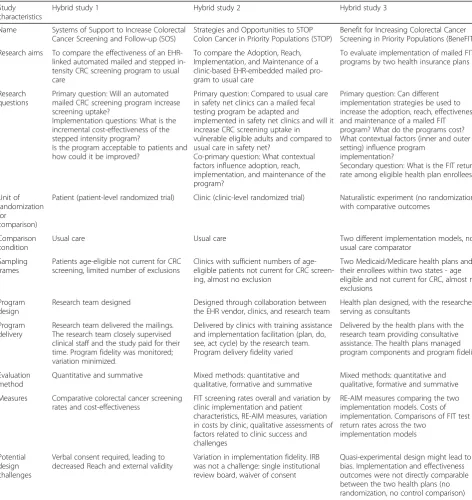
Table 2 compares each of the three reported hybrid
studies across key design characteristics and shows dif-ferences with progression from Hybrid 1 to Hybrid 3 de-signs. SOS, the Type 1 hybrid study, was a person-level randomized controlled trial that invited almost all age-eligible individuals’ overdue for CRC screening and had few exclusions (CRC, inflammatory bowel disease, life-threatening health conditions). Outcomes were primarily effectiveness, but mixed methods were used to under-stand screening barriers and facilitators and to further refine study interventions in subsequent study years [13]. Cost-effectiveness evaluations were performed from a health care organization perspective to assist with decisions about adoption of the overall program and its specific components (such as the incremental cost-effectiveness of adding phone assistance and naviga-tion) [12]. Challenges included the requirement of ver-bal consent by the institutional review board, with only 38% of those invited agreeing to participate [19]. Non-white and Hispanic individuals, and individuals with lower levels of education, were less likely to par-ticipate than non-Hispanic white individuals and pa-tients with higher levels of education.
STOP CRC, the Hybrid 2 study, sought to adapt and implement the SOS program within community health center clinics that care for populations with the lowest CRC screening rates. STOP CRC had almost no ex-clusions and consent was waived, making it possible to reach nearly 100% of the population that needed the intervention. This study measured both overall effective-ness of the program compared to control clinics, (i.e., FIT uptake) and variation in effectiveness across health centers [18]. Implementation was measured as the proportion of eligible patients who were mailed a FIT (quantitative) at each health center and their barriers and facilitators to implementation (qualitative) [16] and maintenance (RE-AIM). Early in the study, it became obvious that implementation fidelity was the primary challenge, with some clinics delaying start-up until almost the end of the participant accrual interval. These delays and implementa-tion variability led to reducimplementa-tions in program effectiveness.
responsible for conducting their programs, and both contracted with vendors to implement the mailings. The program is measuring implementation using mixed me-thods: quantitative (e.g., proportion of age-eligible enrol-lees mailed a FIT and delivered reminders, supporting activities by clinics, program costs) and qualitative inter-views of key stakeholders to assess motivations, barriers, and facilitators of the program. Effectiveness outcomes are limited to what is easily measurable (e.g., FIT and
colonoscopy completion rates using claims data). The Hybrid 3 study has no usual care comparison, as we knew already from the Hybrid 2 study that no mailings led to lower FIT completion rates.
Program design and program delivery
Program design and delivery, the two new domains pro-posed for the hybrid studies, were distinctly different be-tween the three studies. In Hybrid 1, the research team Table 2Examples of Hybrid 1, 2, and 3 studies with recommendations for additional categories (shaded)
Study characteristics
Hybrid study 1 Hybrid study 2 Hybrid study 3
Name Systems of Support to Increase Colorectal Cancer Screening and Follow-up (SOS)
Strategies and Opportunities to STOP Colon Cancer in Priority Populations (STOP)
Benefit for Increasing Colorectal Cancer Screening in Priority Populations (BeneFIT)
Research aims To compare the effectiveness of an EHR-linked automated mailed and stepped in-tensity CRC screening program to usual care
To compare the Adoption, Reach, Implementation, and Maintenance of a clinic-based EHR-embedded mailed pro-gram to usual care
To evaluate implementation of mailed FIT programs by two health insurance plans
Research questions
Primary question: Will an automated mailed CRC screening program increase screening uptake?
Implementation questions: What is the incremental cost-effectiveness of the stepped intensity program?
Is the program acceptable to patients and how could it be improved?
Primary question: Compared to usual care in safety net clinics can a mailed fecal testing program be adapted and
implemented in safety net clinics and will it increase CRC screening uptake in
vulnerable eligible adults and compared to usual care in safety net?
Co-primary question: What contextual factors influence adoption, reach, implementation, and maintenance of the program?
Primary question: Can different implementation strategies be used to increase the adoption, reach, effectiveness, and maintenance of a mailed FIT program? What do the programs cost? What contextual factors (inner and outer setting) influence program
implementation?
Secondary question: What is the FIT return rate among eligible health plan enrollees?
Unit of randomization (or
comparison)
Patient (patient-level randomized trial) Clinic (clinic-level randomized trial) Naturalistic experiment (no randomization) with comparative outcomes
Comparison condition
Usual care Usual care Two different implementation models, no
usual care comparator
Sampling frames
Patients age-eligible not current for CRC screening, limited number of exclusions
Clinics with sufficient numbers of age-eligible patients not current for CRC screen-ing, almost no exclusion
Two Medicaid/Medicare health plans and their enrollees within two states - age eligible and not current for CRC, almost no exclusions
Program design
Research team designed Designed through collaboration between the EHR vendor, clinics, and research team
Health plan designed, with the researchers serving as consultants
Program delivery
Research team delivered the mailings. The research team closely supervised clinical staff and the study paid for their time. Program fidelity was monitored; variation minimized.
Delivered by clinics with training assistance and implementation facilitation (plan, do, see, act cycle) by the research team. Program delivery fidelity varied
Delivered by the health plans with the research team providing consultative assistance. The health plans managed program components and program fidelity
Evaluation method
Quantitative and summative Mixed methods: quantitative and qualitative, formative and summative
Mixed methods: quantitative and qualitative, formative and summative
Measures Comparative colorectal cancer screening rates and cost-effectiveness
FIT screening rates overall and variation by clinic implementation and patient characteristics, RE-AIM measures, variation in costs by clinic, qualitative assessments of factors related to clinic success and challenges
RE-AIM measures comparing the two implementation models. Costs of implementation. Comparisons of FIT test return rates across the two
implementation models
Potential design challenges
Verbal consent required, leading to decreased Reach and external validity
Variation in implementation fidelity. IRB was not a challenge: single institutional review board, waiver of consent
designed and built the EHR-linked mailed fecal testing program, trained clinical staff, and paid for their time, which helped to ensure fidelity to and completion of the intervention components. In Hybrid 2, the research team collaborated with the EHR vendor and health centers to design and build the EHR-embedded mailed FIT pro-gram, but the program itself was delivered by the clinic staff, with the research team assisting only with training and quality improvement activities. The timing, dose, and components of the intervention varied across health centers. For example, some health centers mailed letters and kits only once during the intervention year, while others completed monthly mailings. Some health centers combined the introductory letter mailing with the kit mailing and some required that the completed FIT be returned to the clinic, both were associated with decreased program effectiveness. The research provided clinics with small incentives but did not pay for program implementa-tion. In Hybrid 3, the research team serves as consultants to the health plans and assists with evaluation but pro-vides no training or implementation assistance. Hybrid 3 was paid for entirely by the health plans. They received an incentive for participation, but this was mainly to offset costs related to research, data capture, qualitative assess-ments, and time spent in meetings with the research staff.
Discussion
The US Preventive Services Task Force recommends CRC screening for adults aged 50–75 because of strong evidence that it decreases CRC incidence and mortality [20]. However, screening rates remain suboptimal,
par-ticularly among disadvantaged populations [21]. The
three studies we present were designed sequentially (in-formed by each prior study) to move evidence-based, research-tested interventions to increase CRC screening in diverse settings. The Hybrid 1 study, SOS, had the main goal of testing intervention effectiveness. It was embedded in a health care system, used automated data to identify eligible participants, used an EHR-linked registry to generate mailings, and employed clinic staff that worked in the delivery system to outreach to con-sented patients. Cost-effectiveness assessments were de-signed to inform decision-making about the spread of the program, and mixed methods explored potential refinements of the program and feasibility of imple-mentation. The Hybrid 2 study, STOP CRC, moved the intervention into a community health center setting with a more diverse population. Key differences from the Hy-brid 1 study were (1) inclusion of almost all age-eligible people, as consent was not required; (2) the collaborative process undertaken to design the program, which in-volved the EHR vendor, health center staff, and resear-chers; and (3) the implementation of the program solely by health center staff. The research team gave equal
attention to evaluating overall program effectiveness and implementation by the community health centers. The Hybrid 3 study, BeneFIT, compares two different imple-mentation strategies developed by the health plans, and was designed in part to decrease the implementation burden experienced in the Hybrid 2 study, STOP CRC. Each study answers important effectiveness and imple-mentation questions and generated new questions.
We encountered some difficulties in trying to fit our 3 studies neatly into the hybrid framework. The Hybrid 1 study, SOS, is described as testing the effectiveness of an intervention on increasing CRC screening. However, one might argue that SOS instead tested different imple-mentation strategies (i.e., the stepped interventions were
implementation approaches). SOS had both “proof of
concept” and pragmatic features. It was among the first trials to use EHR data to identify people and generate in-terventions for individuals’ overdue for CRC screening. It was also pragmatic in that it was embedded in a health care system and relied on employed clinic staff. As the primary outcome of the SOS trial was effective-ness of the intervention compared to usual care, we con-sider it to be an effectiveness trial, embedded in a real-world setting, but others might consider it to be an im-plementation study comparing different imim-plementation methods, or an effectiveness trial only. Others have ac-knowledged that the distinction between effectiveness and implementation trials can be blurred [22].
Curran et al.’s framework domains omitted some distin-guishing features we observed in our Hybrid 1, Hybrid 2, and Hybrid 3 studies, such as the role of research staff ver-sus clinic/health plan staff in designing (or adapting) and implementing the intervention [3]. We think these fea-tures might be generalizable to other hybrid studies that progress along the research to practice continuum. Based on our three studies, we propose additional categories to the current hybrid typology.
Program design
Collaboration with the target setting is often a critical component of implementation studies and helps to ensure a smoother implementation process. In the Hybrid 1 study, the researchers designed program elements and dose, while considering the resources available in that spe-cific setting. In the Hybrid 2 study, researchers and health-care centers collaboratively adapted the Hybrid 1 study components based on the new settings’resources. In the Hybrid 3 study, the health plans implementing the pro-gram adapted the propro-gram components to fit their re-sources, with the researchers serving as consultants only.
Program delivery
studies, the “agents” who delivered the intervention, as defined by Proctor et al. [5], shifted from tight to almost no research control. In the Hybrid 1 study, the research team delivered the mailings, and they also trained and monitored the clinical staff (nurses who made the follow-up calls). In the Hybrid 2 study, the research team assisted with training and implementation supports (PDSA cycles). In the Hybrid 3 study, the research team provided consultation services only, with the health plans delivering the program on their own, as would be the case once the program was institutionalized.
Our studies demonstrate that research-tested interven-tions for increasing CRC screening are rarely ready
“right out of the box”for broad dissemination and may explain in part the long transition from research to prac-tice. Even when the intervention is found to be effective, cost-effective, feasible, and acceptable, transitioning the intervention to day-to-day practice is a stepped and nu-anced process, and one size may not fit all. Furthermore, contextual factors may lead to diminution of interven-tion effectiveness, resulting in addiinterven-tional research ques-tions and further program adaptaques-tions.
Our analysis of the Hybrid 1, 2, and 3 SOS, STOP CRC, and BeneFIT studies has limitations. We describe the hy-brid continuum of research to practice studies using only one area of research, CRC screening, and this continuum may be different than in other areas of health services im-plementation research. We also note that others may dis-agree with the hybrid category we assigned each study.
Our studies began prior to the hybrid design frame-work publication, and while our knowledge of the model may have influenced the design of our Hybrid Type 2 and 3 studies, we did not plan our progression a priori based on the framework. The progression of the three studies over a ten-year period was more organic, with each study answering questions posed by the prior study, and implementation progressively becoming more import-ant than effectiveness, as the body of evidence on effect-iveness grew. Lastly, the hybrid framework was intended to speed research into practice, which our studies may or may not demonstrate. Mailed FIT programs are burgeon-ing, but implementing sites face many implementation challenges and potential solutions that we and others con-tinue to explore.
Conclusion
Research-tested interventions are rarely ready for wide-spread dissemination. The hybrid models provide a frame-work for a series of progressive studies that test not just effectiveness, but also implementation, with each step pro-gressing towards real-world practice. We present three studies that illustrate this process. We also found that the study continuum from an effectiveness focus to a focus on implementation may be nuanced and difficult
to categorize clearly. We propose adding two new fea-tures that might be useful in characterizing hybrid studies: program design and program delivery, with a continuum from researcher-led in Hybrid 1 studies; re-searcher-organizational collaboration in Hybrid 2 studies; to organization-led in Hybrid 3 studies. Our three hybrid studies’ design and delivery became increasingly prag-matic, adaptable, and informed by the contexts, individ-uals, and organizations delivering them. Additional comparisons of Hybrid 1, 2, and 3 may help to confirm whether these new features are generalizable markers of studies along the pipeline from research to practice and whether they speed the uptake of research into practice.
Abbreviations
BeneFIT:BeneFIT to increase Colorectal Screening in Priority Populations; CFIR: Consolidated framework for implementation research; CRC: Colorectal cancer; EHR: Electronic health record; FIT: Fecal immunochemical test; PDSA: Plan-Do-See-Act; RE-AIM: Reach, Effectiveness, Adoption, Implementation, Maintenance; SOS: Systems of Support to Increase Colorectal Cancer Screening and Follow-up; STOP CRC: Strategies and Opportunities to STOP Colon Cancer in Priority Populations
Acknowledgements
Research reported in this publication was supported by the National Cancer Institute (NCI), R01CA121125; National Cancer Institute of the National Institutes of Health under Award Number UH3CA188640; and Centers for Disease Control (CDC) (U48DP005013). The content is solely the responsibility of the authors and does not necessarily represent the official views of the National Institutes of Health.
We would like to acknowledge Dr. David Chambers, Deputy Director for Implementation Science, Division of Cancer Control and Population Sciences, National Cancer Institute, and Dr. Geoffrey M. Curran Director, Center for Implementation Research, University of Arkansas for Medical Sciences, for reviewing the manuscript and providing input.
Funding
National Cancer Institute of the National Institutes of Health under Award No. UH3CA188640.
Availability of data and materials Not applicable.
Authors’contributions
BBG, GDC, JC, and LMB contributed to the study design. BBG, GDC, MS, JC, and LMB contributed to the manuscript writing and editing. All authors read and approved the final manuscript.
Ethics approval and consent to participate
The study was approved by the Institutional Review Board of University of Washington (STUDY00000472).
Consent for publication
Not applicable, no consent was required.
Competing interests
This manuscript was supported by grants from the following:
National Cancer Institute (NCI): R01CA121125
National Institute of Health (NIH): Common Fund, through a
cooperative agreement (U54 AT007748, UH2AT007782 and 4UH3CA18864002.) from the Office of Strategic Coordination within the Office of the NIH Director.
Centers for Disease Control (CDC): Health Promotion and Disease
The views presented here are solely the responsibility of the authors and do not necessarily represent the official views of the NCI, NIH, or CDC. From November 2014 to August 2015, Dr. Coronado served as a co-Investigator on an industry-funded study to evaluate patient adherence to an experimental blood test for colorectal cancer. The study was funded by EpiGenomics. From September 2017 to June 2018, Dr. Coronado served as the Principal Investigator on an industry-funded study to compare the clin-ical performance of an experimental FIT to an FDA-approved FIT. This study was funded by the Quidel Corporation. All other authors declare no conflicts of interest.
The other authors report no conflicts of interest other than the funding that was awarded to their institutions for these grants. All authors take responsibility for the design, writing, editing, and final version submitted.
Publisher’s Note
Springer Nature remains neutral with regard to jurisdictional claims in published maps and institutional affiliations.
Author details
1Kaiser Permanente Washington Health Research Institute, Kaiser Permanente Washington, Seattle, Washington, USA.2Kaiser Permanente Center for Health Research, Kaiser Permanente Northwest, Portland, Oregon, USA.3Department of Family Medicine, University of Washington School of Medicine, Seattle, Washington, USA.4CareOregon, Portland, Oregon, USA.
Received: 11 October 2018 Accepted: 13 May 2019
References
1. White A, Thompson TD, White MC, et al. Cancer screening test use - United States, 2015. MMWR Morb Mortal Wkly Rep. 2017;66:201–6.
2. Glasgow RE, Lichtenstein E, Marcus AC. Why don’t we see more translation of health promotion research to practice? Rethinking the efficacy-to-effectiveness transition. Am J Public Health. 2003;93:1261–7 PMCID: 1447950.
3. Curran GM, Bauer M, Mittman B, et al. Effectiveness-implementation hybrid designs: combining elements of clinical effectiveness and implementation research to enhance public health impact. Med Care 2012;50:217–226. PMCID: 3731143.
4. Brown CH, Curran G, Palinkas LA, et al. An overview of research and evaluation designs for dissemination and implementation. Annu Rev Public Health. 2017;38:1–22 PMCID: 5384265.
5. Proctor EK, Powell BJ, McMillen JC. Implementation strategies: recommendations for specifying and reporting. Implement Sci 2013;8. PMCID: 3882890.
6. Leeman J, Birken SA, Powell BJ, Rohweder C, Shea CM. Beyond
“implementation strategies”: classifying the full range of strategies used in implementation science and practice. Implement Sci 2017 Nov 3;12(1):125. PMCID: 5670723.
7. Green BB, Wang CY, Horner K, et al. Systems of support to increase colorectal cancer screening and follow-up rates (SOS): design, challenges, and baseline characteristics of trial participants. Contemp Clin Trials. 2010;31:589–603 PMCID: 2956868.
8. Coronado GD, Vollmer WM, Petrik A, et al. Strategies and opportunities to STOP colon cancer in priority populations: pragmatic pilot study design and outcomes. BMC Cancer. 2014;14 PMCID: 3936821.
9. Coury JK, Schneider JL, Green BB, et al. Two Medicaid health plans' models and motivations for improving colorectal cancer screening rates. Transl Behav Med 2018. doi:https://doi.org/10.1093/tbm/iby094. [Epub ahead of print] PubMed PMID: 30445511.
10. Green BB, Wang CY, Anderson ML, et al. An automated intervention with stepped increases in support to increase uptake of colorectal cancer screening: a randomized trial. Ann Intern Med. 2013;158:301–11 PMCID: 3953144.
11. Murphy CC, Verson SW, Haddock NM, et al. Longitudinal predictors of colorectal cancer screening among participants in a randomized controlled trial. Prev Med. 2014;66:123–30 PMCID: 4209306.
12. Meenan RT, Anderson ML, Chubak J, et al. An economic evaluation of colorectal cancer screening in primary care practice. Am J Prev Med. 2015;48:714–21 PMCID: 4441758.
13. Green BB, BlueSpruce J, Tuzzio L, et al. Reasons for never and intermittent completion of colorectal cancer screening after receiving multiple rounds of mailed fecal tests. BMC Public Health. 2017;17:531 PMCID: 5450259. 14. Green BB, Anderson ML, Chubak J, et al. Colorectal cancer screening rates
increased after exposure to the Patient-Centered Medical Home (PCMH). J Am Board Fam Med. 2016;29:191–200 PMCID: 4868497.
15. Coronado GD, Petrik AF, Vollmer WM, et al. Effectiveness of a mailed colorectal cancer screening outreach program in community health clinics: the STOP CRC cluster randomized clinical trial. JAMA Intern Med. 2018;178: 1174–81.
16. Coronado G, Sanchez J, Devoe J, Green B. Advantages of wordless instructions on how to complete a fecal immunochemical test: lessons from patient advisory council members of a federally qualified health center. J Cancer Educ. 2014;29:86–90 PMCID: 3946071.
17. Coury J, Schneider JL, Rivelli JS, et al. Applying the Plan-Do-Study-Act (PDSA) approach to a large pragmatic study involving safety net clinics. BMC Health Serv Res. 2017;17:411 PMCID: 5477281.
18. Coronado GD, Burdick T, Kapka T, et al. Using an automated data-driven EHR-embedded program for mailing FIT kits: lessons from the STOP CRC pilot study. J Gen Pract. 2014;14 PMCID: 3936821.
19. Green BB, Bogart A, Chubak J, et al. Nonparticipation in population-based trial to increase colorectal cancer screening. Am J Prev Med. 2012;42:390–7 PMCID: 3549634.
20. Knudsen AB, Zauber AG, Rutter CM, et al. Estimation of benefits, burden, and harms of colorectal cancer screening strategies: modeling study for the US Preventive Services Task Force. JAMA. 2016;315:2595–609.
21. White A, Thompson TD, White MC, Sabatino SA, de Moor J, Doria-Rose PV,
Geiger AM, Richardson LC. Cancer screening test use - United States, 2015. MMWR Morb Mortal Wkly Rep. 2017;66:201–6.
![Table 1 Hybrid design characteristics and key challenges as described by Curran [3] and abridged by the authors](https://thumb-us.123doks.com/thumbv2/123dok_us/628409.1558744/3.595.56.536.98.709/table-hybrid-characteristics-challenges-described-curran-abridged-authors.webp)