R E S E A R C H
Open Access
A randomized matched-pairs study of
feasibility, acceptability, and effectiveness
of systems consultation: a novel
implementation strategy for adopting
clinical guidelines for Opioid prescribing in
primary care
Andrew Quanbeck
1,2*, Randall T. Brown
1, Aleksandra E. Zgierska
1, Nora Jacobson
3, James M. Robinson
4,
Roberta A. Johnson
1, Brienna M. Deyo
1, Lynn Madden
5, Wen-Jan Tuan
1and Esra Alagoz
2Abstract
Background:This paper reports on the feasibility, acceptability, and effectiveness of an innovative implementation
strategy named“systems consultation”aimed at improving adherence to clinical guidelines for opioid prescribing in
primary care. While clinical guidelines for opioid prescribing have been developed, they have not been widely implemented, even as opioid abuse reaches epidemic levels.
Methods:We tested a blended implementation strategy consisting of several discrete implementation strategies, including audit and feedback, academic detailing, and external facilitation. The study compares four intervention clinics to four control clinics in a randomized matched-pairs design. Each systems consultant aided clinics on implementing the guidelines during a 6-month intervention consisting of monthly site visits and teleconferences/ videoconferences. The mixed-methods evaluation employs the RE-AIM (Reach, Effectiveness, Adoption, Implementation, Maintenance) framework. Quantitative outcomes are compared using time series analysis. Qualitative methods included focus groups, structured interviews, and ethnographic field techniques.
(Continued on next page)
* Correspondence:[email protected] 1
University of Wisconsin Department of Family Medicine and Community Health, Madison, WI, USA
2University of Wisconsin Center for Health Enhancement Systems Studies,
Madison, WI, USA
Full list of author information is available at the end of the article
(Continued from previous page)
Results:Seven clinics were randomly approached to recruit four intervention clinics. Each clinic designated a project team consisting of six to eight staff members, each with at least one prescriber. Attendance at intervention meetings
was 83%. More than 80% of staff respondents agreed or strongly agreed with the statements:“I am more familiar with
guidelines for safe opioid prescribing”and“My clinic’s workflow for opioid prescribing is easier.”At 6 months, statistically
significant improvements were noted in intervention clinics in the percentage of patients with mental health screens, treatment agreements, urine drug tests, and opioid-benzodiazepine co-prescribing. At 12 months, morphine-equivalent daily dose was significantly reduced in intervention clinics compared to controls. The cost to deliver the strategy was $7345 per clinic. Adaptations were required to make the strategy more acceptable for primary care. Qualitatively, intervention clinics reported that chronic pain was now treated using approaches similar to those employed for other chronic conditions, such as hypertension and diabetes.
Conclusions:The systems consultation implementation strategy demonstrated feasibility, acceptability, and
effectiveness in a study involving eight primary care clinics. This multi-disciplinary strategy holds potential to mitigate the prevalence of opioid addiction and ultimately may help to improve implementation of clinical guidelines across healthcare.
Trial registration:ClinicalTrials.gov(NCT02433496).https://clinicaltrials.gov/ct2/show/NCT02433496 Registered May 5, 2015
Keywords:Opioid prescribing, Evidence-based practice, Organizational coaching, Clinical practice guidelines, Organizational implementation strategies, Primary care
Background
Implementing clinical guidelines in healthcare organizations
Healthcare adopts evidence-based practices (EBPs) no-toriously slowly [1]. Traditional approaches to improving medical practice have relied upon experts producing and publishing clinical guidelines in academic journals. Various methods have been tried to help clinics adopt clinical guidelines and other EBPs, such as providing educational materials, audit/feedback [2], and academic detailing [3], with mixed results. Despite the use of such methods, only about 55% of adults in the USA receive recommended care for 30 acute and chronic conditions [4], a rate that has remained relatively stable since it was first reported in 2003 [5]. Many of the chronic conditions reported in these studies—such as hypertension, diabetes, asthma, and hypertension—are usually treated in primary care, the setting of interest in this paper.
Much has been published about the problem of clinical guideline uptake and possible solutions to it [6–10]. Various explanations of the problem and possible solutions have been identified—e.g., relating the process of develop-ing guidelines to their uptake, or changdevelop-ing the methods used to disseminate the guidelines, or determining how implementable the guidelines are. The best approaches to bridging the gap between medical research and clinical practice are not yet known.
Opioid prescribing
Increases in prescription opioids misuse have raised alarms throughout the USA [11]. The problem is now
spreading to Canada and other countries [12]. Since 1999, the number of opioid overdose deaths in the USA has quadrupled, as has the amount of prescription opi-oids dispensed [13]. Prescription opioids account for more than half of overdose deaths [14], and about half of opioid prescriptions are written in primary care [15]. Prescribing opioids for chronic non-cancer pain is accompanied by a dose-dependent risk of addiction and overdose [16–18]. Additionally, patients at increased risk for misuse (i.e., those with mental health and/or sub-stance use disorders) are more likely to receive opioid prescriptions and higher daily doses [16, 19–21]. By the end of 2016, seven states had adopted laws limiting opioid prescribing [22]. Federally, various agencies (the Substance Abuse and Mental Health Services Administration, the Centers for Disease Control and Prevention, and the National Institutes of Health) have issued new guidelines and approaches to opioid prescribing [23].
The implementation strategy
This study reports on a novel implementation strategy, called systems consultation, designed to promote clinical guideline implementation for opioid prescribing in primary care. The term“systems consultation” was inspired by an article entitled “Controlling variation in healthcare: a consultation from Walter Shewhart”[26]. Shewhart was an iconic systems engineer; the name “systems consultation” refers to the strategy’s roots in systems engineering.
Systems consultation arose from a study that tested various approaches to making organizational change in one of the largest cluster-randomized quality improvement (QI) trials conducted in US healthcare [27]. Among the tested approaches, organizational coaching—a critical element of systems consultation—proved to be the most cost-effective in that study of 201 addiction treatment clinics [27]. (The termcoachingwas changed toconsulting
in this study because we heard from primary care physi-cians that “doctors don’t like to be coached.”) Systems consultation is a blended implementation strategy offering a bundle of integrated approaches to improve the uptake of EBPs [28,29], including (1) audit and feedback, which consists of providing performance feedback to clinics that serves as baseline information and points to opportunities for improvement; (2) academic detailing, in which a respected physician with expertise in addiction medi-cine visits clinics to provide advice on how to improve clinical practice; and (3) organizational coaching (or
external facilitation, the term common in primary
care), an intensive advising approach designed to tailor guideline or policy recommendations to specific clinical contexts.
Blended approaches have been suggested to speed the implementation of evidence-based practices in general [30, 31] and the implementation of clinical guidelines specifically [32]. The particular blend of strategies in the systems consultation model has not been tested before, although evidence exists for each of its elements [27,33,34].
We initially expected the physician consultants who provided academic detailing also to take on the more intensive external facilitation role, but it became clear that they needed more support to do this and that facili-tation could be capably handled by another research team member with less training (i.e., master’s level). As a result, the physician consultant and the other research team member, the facilitator, formed a “consultation team.” The facilitator provided data and other support to clinics, arranged meetings, went on regular site visits with the physician consultant, and led the clinic’s use of tools from systems engineering (e.g., walkthrough exer-cises [35], flowcharting [35], nominal group technique [36], and Plan-Do-Study-Act (PDSA) cycles [37]) to help clinics make improvements in clinic processes. This
team structure mirrors the structure of care teams in most primary care clinics, in that the consultation team was led by a physician who delegated more time-intensive activities to a staff member with less education and training.
Study aim
Systems consultation was rated by NIH grant reviewers as innovative but untested, and thus suitable for NIH’s R34 clinical trial planning grant mechanism. The aim of the study reported in this paper was to pilot test the systems consultation strategy in a small set of primary care clinics to see if the strategy demonstrated feasibility, acceptability, and preliminary effectiveness in improving clinician adherence to opioid-prescribing guidelines and reducing morphine-equivalent daily dose (MEDD) for patients on long-term opioid therapy. If so, we would plan a follow-up study to test the approach in a large-scale randomized trial. If ultimately proven effective, systems consultation could be applied on a population level to help combat the prescription opioids crisis and possibly be applied to other clinical guidelines.
Methods
into a preliminary checklist. This checklist was the subject of a full-day, in-person meeting of the entire advisory panel held in November 2014. During the meeting, the research team presented the initial checklist and asked panel members to provide feedback and revisions. We presented a variety of archetypal patient cases (e.g., a new chronic pain patient being considered for opioid therapy versus a patient already established on long-term opioids) and asked panel members to discuss how the checklist should be adapted to fit different circumstances and local contexts (which research suggests is vital to successful implementation) [40].
Teaming panelists who wrote the clinical guideline for opioid prescribing [24] with implementation experts and primary care physicians produced an implementation guide that formed the content of the intervention. This guide consisted of a checklist of the essential elements of the clinical guidelines and a set of systems engineering tools designed to assist with local customization of the implementation strategy. The checklist initially specified a target dose limit of 120 MEDD. When CDC guidelines were issued later, this target was lowered to 90 MEDD to agree with the CDC standard (although we used 120 MEDD for evaluation). Developing the implementation guide also clarified elements of the implementation. For example, the question of where to start the work in a clinic, which could have been daunting, was answered by initially focusing on the opioid prescription refill process for existing patients. Each clinic has a process for prescription refills, and refill requests are relatively predictable—whereas the arrival of a new patient with a chronic pain complaint is not. The goal of the improvement effort was framed as using the checklist to put safeguards in place for all patients, beginning with patients already on long-term opioid therapy.
Implementation study design
The study employed a randomized matched-pair design conducted with eight community-based primary care clinics, with four clinics receiving the intervention and four clinics serving as controls. Given the novelty of the implementation strategy, we decided to study a small number of clinics in detail, using both quantitative and qualitative methods, rather than powering the study as a randomized trial of effectiveness. During the 6-month intervention, physician consultants met with small groups called“change teams”at each intervention clinic at months 1, 2, and 6 and had teleconferences or videoconferences with change teams in months 3, 4, and 5. Occasional email and phone correspondence took place between physician consultants and clinic staff; more frequent email corres-pondence took place between the study facilitator and change team members.
Setting and ethics approval
The study took place in family medicine clinics that are part of UWHealth, the health system affiliated with the University of Wisconsin Department of Family Medicine and Community Health. The intervention was introduced to the four intervention clinics on staggered starting dates between February and May 2016, ending in each clinic 6 months later. The study protocol was reviewed and approved by the University of Wisconsin – Madison’s Health Sciences Institutional Review Board, submission 2015-0280-CR002.
Study participants Consultation team
The two physician consultants are faculty members in the University of Wisconsin’s Department of Family Medicine and Community Health. Both are board-certified in family medicine and addiction medicine and have current clinical practices in the same health system as participating clinics. They have extensive clinical experience with opioid ther-apy in accordance with clinical guidelines. Each consultant worked with two intervention clinics. The consultants received training from two experienced organizational coaches [41] before the intervention began and ongoing advice during the intervention. The training covered systems engineering principles and tools such as using the walk-through exercise, flowcharting, nominal group technique, and Plan-Do-Study-Act cycles [35]. The study facilitator scheduled meetings, prepared materials, kept records, helped clinics use systems engineering tools, and answered questions from the clinic change team participants during the intervention.
Clinics and change teams
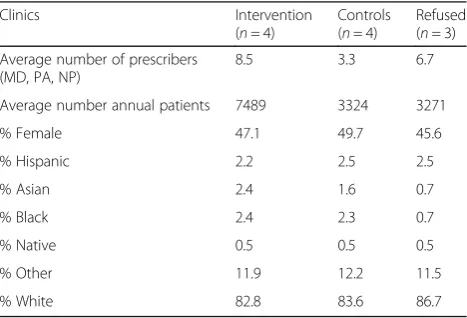
Clinic characteristics are shown in Table 1. Each clinic was asked to designate a change team of six to eight staff members to work on the project. Each change team had at least one prescribing clinician, one registered nurse,
Table 1Clinic and patient characteristics
Clinics Intervention
(n= 4)
Controls (n= 4)
Refused (n= 3)
Average number of prescribers (MD, PA, NP)
8.5 3.3 6.7
Average number annual patients 7489 3324 3271
% Female 47.1 49.7 45.6
% Hispanic 2.2 2.5 2.5
% Asian 2.4 1.6 0.7
% Black 2.4 2.3 0.7
% Native 0.5 0.5 0.5
% Other 11.9 12.2 11.5
one medical assistant or licensed practical nurse, and an administrative staff member, such as a receptionist. Each change team had a leader who either volunteered for or was nominated by the team for the role. The leader was responsible for communicating with the research team.
Study procedures
Clinic recruitment and randomization
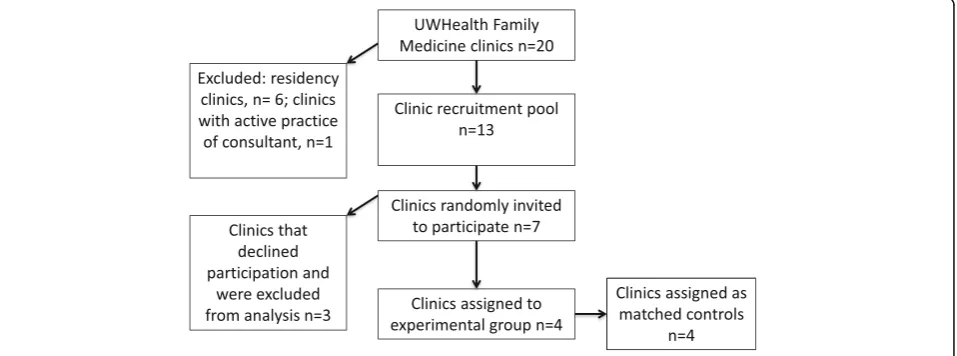
Recruitment in this unblinded trial focused on the 20 family medicine clinics in the UWHealth system. Clinics offering resident training were excluded (n= 6); one clinic was excluded because one of the physician consultants had an active practice there. We selected the remaining 13 clinics as a recruitment pool to enable systematic monitoring through the clinics’ common electronic health record. The 13 clinics were first grouped into two categories (urban vs. rural) and then ranked from largest to smallest by the number of patients with consistent opioid prescriptions (defined as three or more opioid prescriptions in each of the most recent 3 months). Then, we selected the three largest of the four pairs in the urban group and the larger of the two pairs in the rural group. Within each pairing, one clinic was invited to be the intervention clinic by random selection using a computerized random number generator. If that clinic agreed to participate, the second clinic in the pairing was assigned to the control condition. If the first clinic declined to participate, the second clinic in the pair was invited to be the intervention clinic. If the second clinic agreed to participate, it was assigned to be the interven-tion clinic, and the closest matching clinic from the remainder of the recruitment pool was assigned to the control condition (Fig.1).
Recruitment began with obtaining permission to conduct the study and recruit clinics from the UWHealth Primary Care Leadership Council. Then, in January 2016,
the two physician consultants wrote emails to the medical directors of clinics that had been randomly selected from each pairing. The emails included a one-page flyer about the study. The first three clinics declined to participate, citing a lack of time or turnover of key staff (clinic managers or medical directors). The next four clinics that were approached agreed to participate, with the final clinic agreeing to participate in April 2016. In summary, we randomly approached seven clinics to recruit four. The intervention clinics consisted of four of the eight clinics in the initial selection pool; the control clinics consisted of one clinic from the initial selection pool and three from outside the original selection pool.
Implementation timeline
Before the 6-month intervention period began, consultants conducted informational meetings at the clinics to discuss the opioid prescribing problem and the goals of the study. After this, the study facilitator went to each clinic to complete the informed consent process and conduct a walk-through of the opioid prescription refill process. In the walk-through, the facilitator and change team mem-bers followed the steps in the process of refilling an opioid prescription, starting with the patient calling or coming to the clinic and ending with the patient having the refill in hand. This process was summarized in a flowchart designed to show how the process worked, and in so doing, reveal inefficiencies, redundancies, and opportunities for improvement.
After the walkthrough and flowchart were done, the intervention officially began with the first of six monthly meetings between the consulting team and clinic change teams. The consulting teams visited the clinics for these meetings in months 1, 2, and 6; in months 3, 4, and 5, the meetings took place via videoconference or telecon-ference. Lunches were supplied to the change team and
the research team members during the on-site meetings, which lasted 1 hour and took place during lunchtime. At the suggestion of the intervention clinics, a telephone conference involving all four clinics took place at the end of July 2016 (roughly the middle of each clinic’s intervention) to give the change teams a chance to learn from one another. Each team reported on its work, results, and what they had learned to date. Researchers who attended the meetings were, in addition to the physician consultants, the study facilitator, an organizational coach from systems engineering, and a qualitative researcher.
During the first meeting with clinic change teams, the physician consultant introduced two systems engineering tools, the nominal group technique and PDSA cycles. The nominal group technique [36] is a method for group decision-making used to identify problems or solutions. It begins with the meeting organizer posing a question, such as,“What problem in our opioid prescribing process is most important to solve first?” Change team members individually brainstorm answers to this question, then share their responses with the group, and then vote to decide which idea to pursue. PDSA cycles [37] allow change teams to rapidly test a change on a small scale, modify it in response to feedback, and test it again until the change meets the goal.
In subsequent meetings, change team members reviewed data on opioid prescribing guideline concordance and PDSA change forms prepared by the study facilitator. The change teams sought advice from the research team on matters such as how to implement treatment agreements, mental health screening, and urine drug testing. The sixth and final meeting combined a review of the clinic’s performance data, reflections from change team members, next steps for the change team, and a cele-bration of progress.
Outcome measures
This pilot test of systems consultation used the RE-AIM (Reach, Effectiveness, Adoption, Implementation, Mainten-ance) evaluation framework. To assessreach, we compared characteristics of intervention clinics, control clinics, and clinics that refused participation, including number of prescribers and characteristics of the patient panel. For
effectiveness, we examined overall opioid prescribing rates; average morphine-equivalent daily dose for patients on long-term opioid therapy (defined as receiving an opioid prescription in each of the most recent 3 months); rates of use of treatment agreements, urine drug testing, and mental health screening; and opioid/benzodiazepine co-prescribing. Effectiveness measures used patient-level data extracted from clinics’ electronic health records. Effectiveness outcomes are reported for intervention and control clinics over the 6-month implementation period at each site by fitting least-square lines through the
monthly outcome results and comparing the resulting monthly slopes and computing the pvalues of the slope estimates. We used a 12-month piecewise linear function with “knots” at 0 and 6 months, allowing for a second linear progression from months 6 to 12 to capture any continuing effect or regression to pre-intervention levels. Each clinic had equal weight in the analysis, consistent with prior organizational research conducted by the study team [27]. For adoption, we examined the characteristics of clinic change teams, attendance at scheduled inter-vention activities, and ratings by staff participants on a satisfaction survey. The survey asked a series of questions about satisfaction with the implementation strategy; responses were given on a 1 to 5 scale from strongly disagree to strongly agree. Satisfaction ratings served as a measure of acceptability. Assessment of implementation
focused on the cost of delivering the implementation strategy. Detailed logs were kept of contact between the research team members and clinic change teams to estimate the number of hours spent delivering the imple-mentation strategy. These hourly estimates were multi-plied by an hourly rate of $140 for physician consultants (an hourly rate based on an annual salary of $195,000 for a family physician) and $38 for the facilitator. Costs for food and mileage for site visits were also included in the cost assessment. Maintenance was assessed using 6-month follow-up data on the effectiveness measures described above.
Sources of qualitative data
and adaptation impact; and analyzed using both within-clinic and cross-within-clinic comparisons.
Results
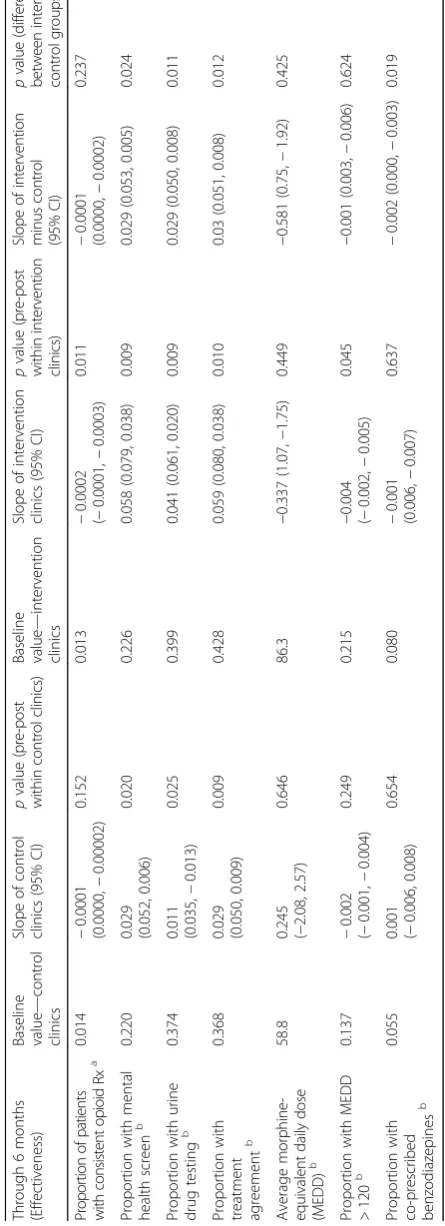
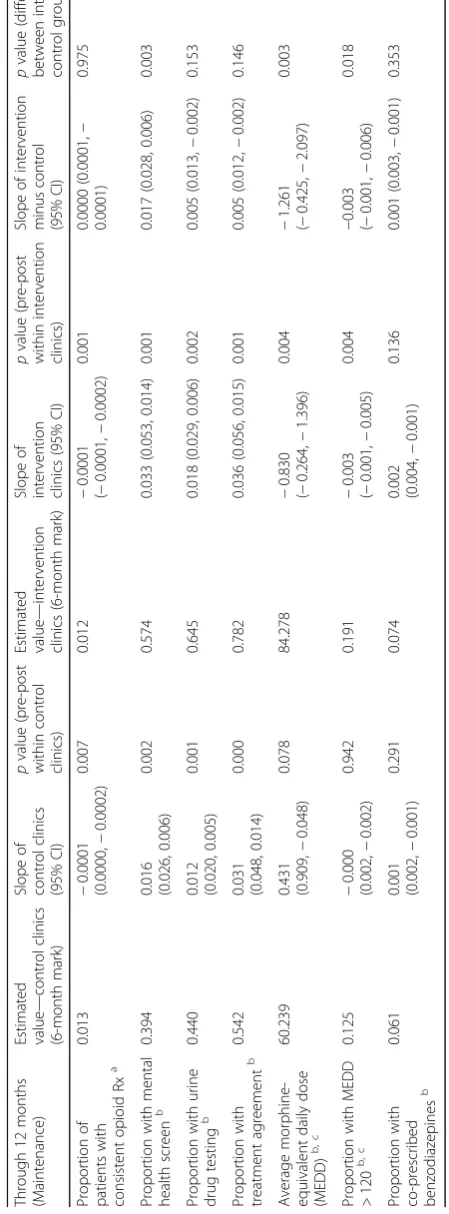
Results are organized according to the RE-AIM frame-work. The aim of the study corresponds to the RE-AIM domains as follows. Feasibility is assessed by one Reach measure (ease of recruitment, given under“Clinic recruit-ment and randomization”above) and one Implementation measure (costs, given below under “Implementation”). Acceptability is assessed by three Adoption measures (characteristics of change teams in Table 4; attendance at scheduled implementation meetings, given under “ Adop-tion”below; and staff satisfaction ratings shown in Table5) and two Implementation results (adaptations made to the protocol and lessons learned, both described below under “Qualitative results”). Effectiveness outcomes are shown in Table2, and Maintenance outcomes in Table3.
Reach
Table1illustrates characteristics of clinics that agreed to participate and were assigned to receive the implementa-tion strategy (n= 4), matched control clinics (n= 4), and clinics that were invited to participate but refused (n= 3). The most notable difference is that the intervention clinics were relatively large, with two of the four having patient panels over 10,000. Patient characteristics (gen-der, ethnicity, race) appeared relatively similar across each group of clinics.
Effectiveness
Tables 2 and 3 contain results in the effectiveness and maintenance domains (refer to Table 2 for outcomes at 6 months and to Table3for outcomes at 12 months). At 6 months, statistically significant improvements were noted in the percentage of patients with mental health screening, up-to-date treatment agreements, urine drug screening, and rates of opioid-benzodiazepine co-prescribing. The overall rate of opioid prescribing and average morphine-equivalent daily dose held steady at 6 months for both intervention and control clinics.
Adoption
Table4illustrates the characteristics of the clinic change teams. Each clinic change team member signed an informed consent document (we obtained a waiver of informed consent at the patient level). Attendance at scheduled implementation meetings (site visits and follow-up teleconferences/videoconferences) was 83%.
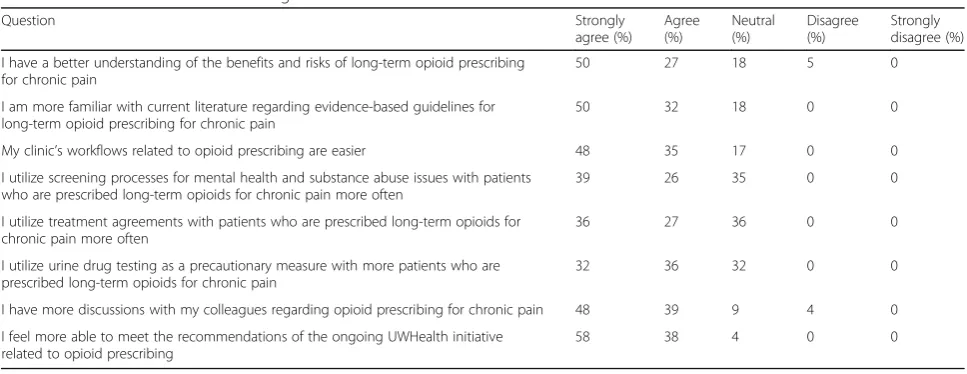
At the end of the 6-month intervention, we administered the satisfaction survey; 24 of the 27 consented staff mem-bers responded. See Table 5 for results. Staff members’ largely positive responses indicate that participants found the intervention useful and acceptable.
Implementation
Cost was the primary outcome in the Implementation domain. Across all four sites, the facilitator spent 237.7 h delivering the implementation strategy, which included time spent preparing for and implementing site visits, conducting email and phone correspondence with sites, and hosting monthly teleconferences/videoconferences. The two physician consultants combined to spend 85.7 h working with sites. At $140 per hour for physician con-sulting and $38 per hour for facilitation, respectively, consultation team costs amounted to $21,031 ($5258 per clinic) for the 6-month intervention. Providing lunches to change team members added an incentive for them to attend on-site meetings with the consultation team. Continuing medical education credits were also available to change team members. Food cost $1911.97 or $477.99 per clinic. Mileage costs for travel to site visits were $435.78. We did not attempt to monetize time spent by clinic staff members to participate in the research. We estimated that each member of the change team spent about 9 h on the study, one each for the informational session, walk-through meeting, six monthly meetings, and all-clinic teleconference. This does not include time change team members may have spent outside these study meetings to work on study-related efforts. We gave each clinic a modest stipend of $1500 to partially offset time away from clinical care required for participation in scheduled implementation activities. The total cost of delivering the intervention (i.e., consultant and facilitator time, food, mileage, and clinic stipend) was $29,379 or $7345 per clinic.
Maintenance
Table 2 Effectiveness outcomes Throu gh 6 month s (Effec tiveness ) Basel ine value — cont rol clinics Slope of control clinics (95% CI) p valu e (p re -p o st wi thin con trol cli nics) Bas eline valu e — interven tion cl inics Sl ope of interve ntion clinic s (95% CI) p value (p re -p o st wi th in interventi o n clini cs) Slope of in te rv e n ti o n minus co n trol (9 5 % C I) p value (difference between inter vention — contro lg ro u p s) Pr opor tion o f patien ts with consistent op ioi d Rx a 0.014 − 0.00 01 (0.0000 , − 0. 00002 ) 0.152 0. 013 −
0.0002 (−0.0001,
− 0.0003) 0.011 − 0.00 01 (0.0000, − 0.00 02) 0.23 7 Prop ortion with me ntal health screen b 0.220 0.029 (0.052, 0.00 6) 0.020 0. 226 0.05 8 (0.07 9, 0.038) 0.009 0.029 (0.05 3, 0.005) 0.02 4 Prop ortion with uri ne drug testing b 0.374 0.011 (0.035, − 0.013) 0.025 0. 399 0.04 1 (0.06 1, 0.020) 0.009 0.029 (0.05 0, 0.008) 0.01 1 Prop ortion with treatme nt agreement b 0.368 0.029 (0.050, 0.00 9) 0.009 0. 428 0.05 9 (0.08 0, 0.038) 0.010 0.03 (0.051, 0.008) 0.01 2 Average m o rp hi n e -equ iv al e nt da ily dos e (MEDD) b 58.8
0.245 (−2.08,
2.57) 0.646 86 .3 − 0.337 (1.0 7, − 1.75) 0.449 − 0.581 (0.75, − 1.92 ) 0.42 5 Prop ortion with MED D > 120 b 0.137 − 0.00 2 (− 0.001, − 0.004) 0.249 0. 215 −
0.004 (−0.
Table 3 Maintenance outcomes Throu gh 12 mon ths (Mai ntenanc e) Esti mated valu e — control clinics (6-m onth mar k) Slope of contro l clinics (95% CI) p value (pre-po st within control clinics) Estimated value — interve ntion clinics (6-mo nth mar k) Slope of interven tion clinics (95% CI) p value (p re-post with in interve ntion cl inics) Slo pe of interve ntion minus contro l (95 % CI) p value (differen ce betwee n intervent ion — control groups) Prop ortion of patien ts with cons istent opioid Rx a 0.01 3 − 0. 0001 (0.00 00, − 0.0002) 0.007 0.012 − 0. 0001 (− 0.0001, − 0.00 02) 0. 001 0.00 00 (0.0 001, − 0.00 01) 0.975 Prop ortion with me ntal health screen b 0.39 4 0.016 (0.02 6, 0. 006) 0.002 0.574 0.033 (0.0 53, 0.014) 0. 001 0.01 7 (0.02 8, 0.00 6) 0.003 Prop ortion with uri ne drug testing b 0.44 0 0.012 (0.02 0, 0. 005) 0.001 0.645 0.018 (0.0 29, 0.006) 0. 002 0.00 5 (0.01 3, − 0.002) 0.153 Prop ortion with treatme nt agre ement b 0.54 2 0.031 (0.04 8, 0. 014) 0.000 0.782 0.036 (0.0 56, 0.015) 0. 001 0.00 5 (0.01 2, − 0.002) 0.146 Average morp hine-equiv alent dai ly dose (MED D) b, c 60.2 39 0.431 (0.90 9, − 0.048) 0.078 84.278 − 0. 830 (− 0.264, − 1.396) 0. 004 − 1.261 (− 0.42 5, − 2.097) 0.003 Prop ortion with MED D > 120 b, c 0.12 5 − 0. 000 (0.00 2, − 0.002) 0.942 0.191 − 0. 003 (− 0.001, − 0.005) 0. 004 −
0.003 (−0.00
Qualitative results
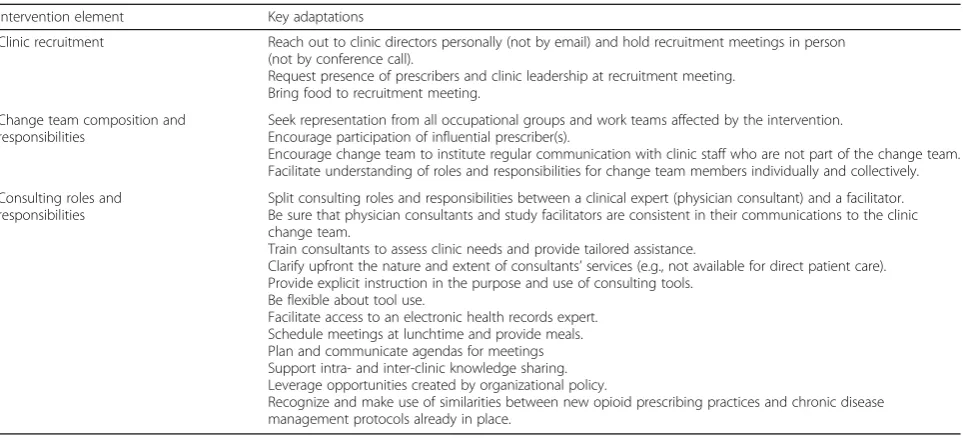
The qualitative findings suggested that adaptations to the protocol were required in the following domains: clinic recruitment, composition and responsibilities of the change team, and composition and responsibilities of the consulting team. (Because the qualitative data analysis was concurrent with the intervention, the research team could make some of these modifications in real time; other adaptions await future iterations of the intervention.) Table6summarizes key adaptations in each domain.
Overall, these modifications may be distilled into four main lessons. First, use a personal touch to promote and sustain clinic engagement. Second, recognize the import-ance of clear and frequent communication: emphasize intra-clinic communication at each stage of the interven-tion and provide opportunities for inter-clinic communi-cation at key points. Third, develop clear expectations for change team roles and responsibilities and explicit instruc-tion for using implementainstruc-tion tools but remain flexible to accommodate the change team’s constraints and prefer-ences. Fourth, ensure that the systems consultation team is familiar with the clinic’s organizational context and can use this knowledge to link changes to the organization’s existing workflows, policies, and values.
Discussion
The systems consultation implementation strategy dem-onstrated feasibility, acceptability, and effectiveness in a
study of eight primary care clinics. Clinic teams actively participated in the intervention (attendance at scheduled implementation activities was 83% of consented staff members) and reported positive feedback in focus groups and satisfaction surveys. The implementation strategy showed positive effects on several key measures of guide-line concordance, including average morphine-equivalent daily dose. Opioid prescribing is a difficult issue that is receiving a great deal of scrutiny; this implementation strategy seemed to give primary care clinics the type of support they want and need to effect organizational change.
Liebschutz et al. [42] achieved positive results in an implementation trial with a similar aim of increasing opioid guideline concordance in primary care clinics. Integral to their approach was a dedicated nurse case manager who worked directly with patients on long-term opioid therapy. The systems consultation strategy includes no role for direct patient contact, instead relying on clinics’ integrating elements of the guidelines using workflow changes and delegation of tasks to existing staff. Change teams largely accomplished their goals by inte-grating changes within the context of standard clinical care (i.e., billable patient follow-up appointments). Evidence from both studies shows that either approach can work (case management vs. guideline integration), and both have tradeoffs. Hiring a dedicated case manager to work with chronic opioid patients can be a
Table 5Clinical Staff Satisfaction Ratings
Question Strongly
agree (%)
Agree (%)
Neutral (%)
Disagree (%)
Strongly disagree (%)
I have a better understanding of the benefits and risks of long-term opioid prescribing for chronic pain
50 27 18 5 0
I am more familiar with current literature regarding evidence-based guidelines for long-term opioid prescribing for chronic pain
50 32 18 0 0
My clinic’s workflows related to opioid prescribing are easier 48 35 17 0 0
I utilize screening processes for mental health and substance abuse issues with patients who are prescribed long-term opioids for chronic pain more often
39 26 35 0 0
I utilize treatment agreements with patients who are prescribed long-term opioids for chronic pain more often
36 27 36 0 0
I utilize urine drug testing as a precautionary measure with more patients who are prescribed long-term opioids for chronic pain
32 36 32 0 0
I have more discussions with my colleagues regarding opioid prescribing for chronic pain 48 39 9 4 0
I feel more able to meet the recommendations of the ongoing UWHealth initiative related to opioid prescribing
58 38 4 0 0
Table 4Clinic change teams
Intervention clinic Members Composition Attendance at intervention meetings
Team 1 6 MD, NP, RN, LPN, Lab, COM 81%
Team 2 7 MD (2), RN, MA (3), Reception 88%
Team 3 8 MD (2), RN, MA (2), Reception, Lab, COA 69%
Team 4 6 MD, RN, LPN (2), Reception, COM 92%
Abbreviations:COAClinic Operations Assistant,COMClinic Operations Manager,LPNLicensed Practical Nurse,MAMedical Assistant,MDMedical Doctor,
straightforward way to increase guideline concordance if fi-nancial resources can support the hire. Clinical staff may also prefer to delegate the work of chronic opioid manage-ment to a specialist rather than take on the responsibilities themselves. However, integrating guidelines into standards of primary care may be more feasible and sustainable in the long-term approach, especially in resource-constrained settings. Systems consultants helped clinical staff engage in potentially fraught conversations with patients on long-term opioid therapy, including the expectation of regular monitoring (via urine drug screens) and the need for regular follow-up appointments. Clinics began to use an approach for chronic pain management similar to approaches used for other chronic conditions (e.g., hypertension and diabetes) and built activities indicated by the clinical guidelines into standards of care for chronic pain (including the ability to bill for these activities).
Limitations
The problem of opioid prescribing received attention both locally and nationally during the intervention period, and notable secular changes in opioid prescribing outcomes were evident (see Additional file 1). The UWHealth system also introduced a new opioid-prescribing policy in February 2016, concurrent with the beginning of the study period. The Centers for Disease Control and Pre-vention published guidelines for opioid prescribing in March 2016 that are based on the guidelines [24] used in this study. One possible interpretation is that intervention clinics were able to achieve desired changes more quickly, while control clinics started catching up on the process-related outcomes associated with the UWHealth opioids policy over time (though not on average
morphine-equivalent daily dose). Notably, the UWHealth policy included a standardized treatment agreement that included all the elements of the checklist developed during this research as well as many other items. Ultimately, to avoid redundancy, the UWHealth treatment agreement replaced the checklist developed using the integrative group process. Finally, though our study design used a randomized matched-pairs design, this was not a fully powered randomized trial and the assessments of effectiveness should not be considered definitive.
Conclusion
This research advances implementation science by demonstrating (1) a method for distilling clinical guide-lines into a concise, checklist-based implementation guide and (2) a blended implementation strategy based on principles of systems engineering for successfully putting the guidelines into practice. This study showed the promise of the implementation strategy and identified improvements to it that can make it more effective for wider use. A randomized trial is being planned to use the knowledge gained during this study to deliver an adaptive implementation strategy. The planned study will more precisely reveal which elements of the implementation strategy are essential in different clinic settings, enabling us to determine the most efficient methods of promoting clinical guideline adoption for opioid prescribing in primary care.
Additional file
Additional file 1:Figures A-G, PDF, Time series quality indicator outcomes. (PDF 350 kb)
Table 6Adaptations/enhancements to systems consultation strategy
Intervention element Key adaptations
Clinic recruitment Reach out to clinic directors personally (not by email) and hold recruitment meetings in person (not by conference call).
Request presence of prescribers and clinic leadership at recruitment meeting. Bring food to recruitment meeting.
Change team composition and responsibilities
Seek representation from all occupational groups and work teams affected by the intervention. Encourage participation of influential prescriber(s).
Encourage change team to institute regular communication with clinic staff who are not part of the change team. Facilitate understanding of roles and responsibilities for change team members individually and collectively.
Consulting roles and responsibilities
Split consulting roles and responsibilities between a clinical expert (physician consultant) and a facilitator. Be sure that physician consultants and study facilitators are consistent in their communications to the clinic change team.
Train consultants to assess clinic needs and provide tailored assistance.
Clarify upfront the nature and extent of consultants’services (e.g., not available for direct patient care). Provide explicit instruction in the purpose and use of consulting tools.
Be flexible about tool use.
Facilitate access to an electronic health records expert. Schedule meetings at lunchtime and provide meals. Plan and communicate agendas for meetings Support intra- and inter-clinic knowledge sharing. Leverage opportunities created by organizational policy.
Acknowledgements
The authors thank the distinguished experts who served on the advisory panel for the study and took part in translating the clinical guideline for opioid prescribing: from pain management, the experts who developed the guideline for opioid prescribing, Jane Ballantyne, MD, Roger Chou, MD, and Perry Fine, MD; from healthcare quality improvement and implementation, David H. Gustafson, PhD, Dennis McCarty, PhD, and Paul Batalden, MD; and from community-based family medicine, Jonas Lee, MD, Beth Potter, MD, and John Frey, MD. The authors also thank Richard O. Welnick, MD, from UWHealth for his support of the project and staff members Judith Ganch and Nicholas Schumacher for their editorial assistance.
Funding
The National Institute on Drug Abuse (NIDA) is the primary funder of the study (R34-DA-036720-01 and 1K01DA039336-01). The funder had no role in study design, the collection or interpretation of data, or the publication of results.
Availability of data and materials
The datasets used and/or analyzed during this study are available from the corresponding author upon request.
Authors’contributions
All authors provided substantial contribution to the conception and design of the study and interpretation of the data. WJT contributed to the acquisition of data. All authors provided substantial contribution to drafting and revising the manuscript and give final approval of the version to be published. Authors AQ, NJ, and JMR contributed to the analysis of the data. All authors read and approved the final manuscript.
Ethics approval and consent to participate
The study protocol was reviewed and approved by the University of
Wisconsin–Madison’s Health Sciences Institutional Review Board,
submission 2015-0280-CR002.
Consent for publication
Not applicable
Competing interests
Authors Quanbeck and Johnson have a shareholder interest in CHESS Mobile Health, a public benefit corporation that develops healthcare technology for patients struggling with addiction. This relationship is managed by the authors
and the University of Wisconsin–Madison’s Conflict of Interest Committee. The
other authors declare that they have no competing interests.
Publisher’s Note
Springer Nature remains neutral with regard to jurisdictional claims in published maps and institutional affiliations.
Author details
1University of Wisconsin Department of Family Medicine and Community
Health, Madison, WI, USA.2University of Wisconsin Center for Health Enhancement Systems Studies, Madison, WI, USA.3University of Wisconsin– Madison School of Nursing, Madison, WI, USA.4University of Wisconsin Center for Health Systems Research and Analysis, Madison, WI, USA.5APT Foundation, New Haven, CT, USA.
Received: 25 September 2017 Accepted: 16 January 2018
References
1. Berwick DM. Disseminating innovations in health care. JAMA. 2003;289:
1969–75.
2. Grol R, Grimshaw J. From best evidence to best practice: effective
implementation of change in patients’care. Lancet. 2003;362:1225–30.
3. van Eijk ME, Avorn J, Porsius AJ, de Boer A. Reducing prescribing of highly
anticholinergic antidepressants for elderly people: randomised trial of group
versus individual academic detailing. BMJ. 2001;322:654–7.
4. McGlynn EA, Asch SM, Adams J, Keesey J, Hicks J, DeCristofaro A, et al. The
quality of health care delivered to adults in the United States. N Engl J Med.
2003;348:2635–45.
5. Levine DM, Linder JA, Landon BE. The quality of outpatient care delivered
to adults in the United States. JAMA Intern Med. 2016;176:1778–90.
6. Cabana MD, Rand CS, Powe NR, Wu AW, Wilson MH, Abboud PA, et al. Why
don’t physicians follow clinical practice guidelines? A framework for
improvement. JAMA. 1999;282:1458–65.
7. Gagliardi AR, Brouwers MC, Palda VA, Lemieux-Charles L, Grimshaw JM. How
can we improve guideline use? A conceptual framework of implementability. Implement Sci. 2011;6:26.
8. Graham R, Mancher M, Wolman D, Greenfield S, Steinberg E. Clinical practice
guidelines we can trust. Washington DC: National Academies Press. 2011;
9. Kastner M, Bhattacharyya O, Hayden L, Makarski J, Estey E, Durocher L, et al.
Guideline uptake is influenced by six implementability domains for creating and communicating guidelines: a realist review. J Clin Epidemiol. 2015;68:
498–509.
10. Flodgren G, Hall AM, Goulding L, Eccles MP, Grimshaw JM, Leng GC, et al.
Tools developed and disseminated by guideline producers to promote the
uptake of their guidelines. Cochrane Database Syst Rev. 2016;https://doi.
org/10.1002/14651858.CD010669.pub2.
11. Paulozzi LJ, Xi Y. Recent changes in drug poisoning mortality in the United
States by urban-rural status and by drug type. Pharmacoepidemiol Drug Saf.
2008;17:997–1005.
12. Humphreys K. Avoiding globalization of the prescription opioid epidemic.
Lancet. 2017;390:437–9.
13. Centers for Disease Control and Prevention (CDC). Wide-ranging online data
for epidemiologic research (WONDER). Atlanta: U.S. Department of Health
and Human Services; 2016.http://wonder.cdc.gov. Accessed 6 Sept 2017.
14. Rudd RA, Seth P, David F, Scholl L. Increases in drug and opioid-involved
overdose deaths—United States, 2010-2015. MMWR Morb Mortal Wkly Rep.
2016;65:1445–52.
15. Daubresse M, Chang HY, Yu Y, Viswanathan S, Shah ND, Stafford RS, et al.
Ambulatory diagnosis and treatment of nonmalignant pain in the United
States, 2000-2010. Med Care. 2013;51:870–8.
16. Edlund MJ, Martin BC, Fan MY, Devries A, Braden JB, Sullivan MD. Risks for
opioid abuse and dependence among recipients of chronic opioid therapy:
results from the TROUP study. Drug Alcohol Depen. 2010;112:90–8.
17. Bohnert ASB, Valenstein M, Bair MJ, Ganoczy D, McCarthy JF, Ilgen MA, et al.
Association between opioid prescribing patterns and opioid overdose-related
deaths. JAMA. 2011;305:1315–21.
18. Dunn KM, Saunders KW, Rutter CM, Banta-Green CJ, Merrill JO, Sullivan MD,
et al. Opioid prescriptions for chronic pain and overdose: a cohort study. Ann Intern Med. 2010;152:85.
19. Edlund MJ, Martin BC, Devries A, Fan MY, Braden JB, Sullivan MD. Trends in
use of opioids for chronic noncancer pain among individuals with mental
health and substance use disorders: the TROUP study. Clin J Pain. 2010;26:1–8.
20. Weisner CM, Campbell CI, Ray GT, Saunders K, Merrill JO, Banta-Green C,
et al. Trends in prescribed opioid therapy for non-cancer pain for individuals
with prior substance use disorders. Pain. 2009;145:287–93.
21. Banta-Green CJ, Merrill JO, Doyle SR, Boudreau DM, Calsyn DA. Opioid use
behaviors, mental health and pain-development of a typology of chronic
pain patients. Drug Alcohol Depen. 2009;104:34–42.
22. Blackman K. Prescribing policies: states confront opioid overdose epidemic.
In: Health. National Conference of State Legislatures (NCSL). 2017.http://www.
ncsl.org/Portals/1/Documents/Health/prescribingOpioids_final01-web.pdf. Accessed 20 Dec 2017.
23. Collins F. The federal response to the opioids crisis. National Institute on
Drug Abuse 2017.
https://www.drugabuse.gov/about-nida/legislative-activities/testimony-to-congress/2017/federal-response-to-opioid-crisis. Accessed 20 Dec 2017.
24. Chou R, Fanciullo GJ, Fine PG, Adler JA, Ballantyne JC, Davies P, et al. Clinical
guidelines for the use of chronic opioid therapy in chronic noncancer pain.
J Pain. 2009;10:113–30.
25. Centers for Disease Control and Prevention (CDC). Opioid overdose: information
for patients. Atlanta, GA: U.S. Department of Health and Human Services. 2017. https://www.cdc.gov/drugoverdose/patients/index.html. Accessed 20 Dec 2017.
26. Berwick DM. Controlling variation in health care: a consultation from Walter
Shewhart. Med Care. 1991;29:1212–25.
27. Gustafson DH, Quanbeck AR, Robinson JM, Ford JH 2nd, Pulvermacher A,
French MT, et al. Which elements of improvement collaboratives are most
effective? A cluster-randomized trial. Addiction. 2013;108:1145–57.
28. Powell BJ, Waltz TJ, Chinman MJ, Damschroder LJ, Smith JL, Matthieu MM,
Expert Recommendations for Implementing Change (ERIC) project. Implement Sci. 2015;10:21.
29. Proctor EK, Powell BJ, McMillen JC. Implementation strategies:
recommendations for specifying and reporting. Implement Sci. 2013;8:139.
30. Powell BJ, McMillen JC, Proctor EK, Carpenter CR, Griffey RT, Bunger AC. A
compilation of strategies for implementing clinical innovations in health
and mental health. Med Care Res Rev. 2012;69:123–57.
31. Curran GM, Bauer M, Mittman B, Pyne JM, Stetler C.
Effectiveness-implementation hybrid designs: combining elements of clinical effectiveness and implementation research to enhance public health
impact. Med Care. 2012;50:217–26.
32. Forsner T, Hansson J, Brommels M, Wistedt AA, Forsell Y. Implementing
clinical guidelines in psychiatry: a qualitative study of perceived facilitators and barriers. BMC Psychiatry. 2010;10:8.
33. Ivers N, Jamtvedt G, Flottorp S, Young JM, Odgaard-Jensen J, French SD,
et al. Audit and feedback: effects on professional practice and healthcare
outcomes. Cochrane Database Syst Rev. 2012;https://doi.org/10.1002/
14651858.CD000259.pub3.
34. Baskerville NB, Liddy C, Hogg W. Systematic review and meta-analysis of
practice facilitation within primary care settings. Ann Fam Med. 2012;10:63–74.
35. Gustafson DH, Johnson KA, Capoccia V, Cotter F, Ford JH 2nd, Holloway D,
et al. The NIATx Model: process improvement in behavioral health. Madison,
WI: University of Wisconsin—Madison; 2011.
36. Delbecq AL, Van de Ven AH, Gustafson DH. Group techniques for program
planning: a guide to nominal group and Delphi processes. Glenview: Scott Foresman Company; 1975.
37. Deming WE. Out of the crisis. Cambridge: Massachusetts Institute of
Technology, Center for Advanced Engineering Study; 1986.
38. Quanbeck A, Brown RT, Zgierska AE, Johnson RA, Robinson JM, Jacobson N.
Systems consultation: protocol for a novel implementation strategy designed to promote evidence-based practice in primary care. Health Res Policy Syst. 2016;14:8.
39. Gustafson DH, Cats-Baril WL, Alemi F. Systems to support health policy
analysis: theory, models and uses. Ann Arbor, MI: Health Administration Press; 1992.
40. Kaplan HC, Brady PQ, Dritz MC, Hooper DK, Linam WM, Froehle CM, et al.
The influence of context on quality improvement success in health care: a
systematic review of the literature. Milbank Q. 2010;88:500–59.
41. Quanbeck AR, Madden L, Edmundson E, Ford JH 2nd, McConnell KJ,
McCcarty D, et al. A business case for quality improvement in addiction treatment: evidence from the NIATx collaborative. J Behav Health Serv Res.
2012;39:91–100.
42. Liebschutz JM, Xuan Z, Shanahan CW, LaRochelle M, Keosaisn J, Beers D,
et al. Improving adherence to long-term opioid therapy guidelines to reduce opioid misuse in primary care: a cluster-randomized clinical trial.
JAMA Intern Med. 2017;177:1265–72.
• We accept pre-submission inquiries
• Our selector tool helps you to find the most relevant journal • We provide round the clock customer support
• Convenient online submission • Thorough peer review
• Inclusion in PubMed and all major indexing services • Maximum visibility for your research
Submit your manuscript at www.biomedcentral.com/submit