1 Title page
Predicting and repurposing of drug and drug like compounds for inhibition of the covid-19 and its cytokine storm by computational methods
Azhar Salari-Jazi1, Karim Mahnam2, Sayed Hossein Hejazi3, Mohammad Sadegh Damavandi1,
Parisa Sadeghi1, Mehrdad Zeinalian4, Faezeh Tabesh5, Seyedeh Mahnaz Mirbod6, Hossein Khanahmad4*
1. Ph.D. student of medical bacteriology, Department of Microbiology, School of Medicine, Isfahan University of Medical Sciences, Isfahan, Iran.
2. Associate Professor ofBiophysics, Biology Department, Faculty of Sciences, Shahrekord University, Shahrekord, I.R. Iran.
3.Professor of Parasitology, Skin Diseases and Leishmaniosis Research Center, Department of Parasitology and Mycology, School of Medicine, Isfahan University of Medical Sciences, Isfahan, Iran.
4. MD-Ph. D, Department of Genetics and Molecular biology, School of Medicine, Isfahan University of medical science, Isfahan, Iran.
5. Cardiac Rehabilitation Research Center, Cardiovascular Research Institute, Isfahan University of Medical Sciences, Isfahan, Iran.
6. Resident of Cardiology, Department of cardiology, Isfahan University of Medical Sciences, Isfahan, Iran.
Corresponding Author; Hossein Khanahmad
MD-Ph. D, Department of Genetics and Molecular biology, School of Medicine, Isfahan University of medical science, Isfahan, Iran
Tel: +98 3136680048 Fax: +98 316688597
E-mail: [email protected] NO conflict of interest
2
Predicting and repurposing of drug and drug like compounds for inhibition of the covid-19
and its cytokine storm by computational methods
Abstract
Background: The SARS-CoV-2 virus is a new highly pathogen virus that can suppress cell immune response (Poly ADPR process, and interferon releasing in infected cell) by viral macrodomain and create fatal pneumonia. Cytokine storm phenomenon which can create consequence of SARS COV-2 by increase of the performance of human TRPM2, is a dangerous condition for human and its body organ such as kidney, heart, and liver. it seems like prevention of beginning of these events is necessary. Material and methods: in this study drug and drug like database was used for inhibition of the viral macrodomain and human TRPM2 that can initiate of the viral cell cycle infection and human cytokine storm respectively. Ligand base drug designed, pharmacophore modeling, docking and molecular dynamic simulation was performed Results: among up to billion compounds, 20 compounds were screened by infinisee program. Then 7 compounds were selected by pharmacophore modeling. between 7 compounds, 5 compound was removed because of high similarity to ADPR and possibility of toxic effect for human RNA and DNA polymerase. One compound was losartan and selected for docking and molecular dynamic simulation. Conclusion: losartan earned a proper dock score and binding affinity to create the complexes with TRPM2 and macrodomain. Molecular dynamic simulation has shown losartan had an adequate binding free energy for human trpm2 and viral macrodomain. The inhibitory effect of losartan on these protein has shown and it could interfere in several points (PARP, PARG- macrodomain and TRPM2) and decreases oxidative stress, apoptosis, cytokine storm in COVID-19
.
3
Introduction
At the end of 2019, the emergence of the novel coronavirus infection in Wuhan, China, it has rapidly spread across China and many other countries. The International Committee on Taxonomy of Viruses has been named SARS-CoV-2 and the disease it causes has been named coronavirus disease 2019 (COVID-19). The SARS-CoV-2 virus is a new pathogen that is highly contagious, which can spread quickly [1]. This virus must be considered capable of causing enormous health, economic and societal impacts with their setting The SARS-CoV-2 virus like SARS-CoV and MERS-CoV, is a beta-coronavirus which all of them have originated from bats. On 30 January 2020, the World Health Organization (WHO) declared that the SARS-CoV-2 outbreak constituted a Public Health Emergency of International Concern [2]. The outbreak has rapidly evolved, and more than 180 countries worldwide have reported laboratory-confirmed cases of SARS-CoV-2 [3].
4
ADP-ribose (ADPR) polymers that synthesized by members of the PARPs family of enzymes. The Viral macrodomains involve in cellular signaling consist of; ADP-ribose-generating or-consuming pathways and roles in determining RNA synthesis, replication, and virulence. This protein hydrolase ADPR polymer from ADP-ribosylated proteins. ADPR-binding to the CoVs nsp3 macrodomain that is necessary for the initiation of virus replication, whereas the hydrolase activity facilitates to amplify the replication complex. Therefore, macrodomains can remove ADP-ribosy polymer from modified proteins [7].
The antiviral properties of PARPs are regulated by interferon (IFN), and under evolutionary selection, it has been given that primary function of viral macrodomain is counter the host response viral infection. Accordingly, macrodomain by removing ADP-ribosylation from modified host proteins, prevent host responses to viral infection[8].
On the other hand, PARG activity of MD leads to increase the level of free ADPR in the cell, which activates the Transient Receptor Potential 2 (TRPM2). TRPM2, a subtype of TRP-melastatin subfamily (TRPM), is a multifunctional Ca2+ permeable and nonselective cation
channel. Exposure to hydrogen peroxide (H2O2), tumor necrosis factor α (TNFα), reactive
5
cytokine storms, tissue necrosis, protecting cells from plasma membrane damage and cell death [9,10].
Losartan is an angiotensin-converting enzyme (ACE) inhibitors that used to treat hypertension. ACE inhibitors are used for a similar indication but associated with a cough [11]. Here, we showed that Losartan is a functional ligand for inhibition of the TRPM2 and macrodomain and has a high affinity to them. The comparative data have shown Losartan is effective agent for inhibition of the TRPM2 and macrodomain.
Methods
Protein and ligand preparation
High-resolution X-ray diffraction SARS CoV-2 of macrodomain binding ADP ribose phosphate and human TRPM2 protein structures were downloaded from protein data bank (https://www.rcsb.org/pdb). The exported files included 6W02 consists of two COVID-19 macrodomain molecules complexes with ADP ribose phosphate as the main ligand. Because macrodomain has only one monomer, we elected, chain A of the PDB structure, and other additional parts were omitted. Another exported file, 6PUR contains four TRPM2 molecules complexes with ADP ribose phosphate. Among the four molecules, chain A was selected, and extra parts were removed. In chain A, sequence between residue 1234 to 1534 was selected because it forms biding site of TRPM2, and this sequence which has been located in the cytoplasmic part involved in the cell cascade [12,13].
6
of 0.1 calÅ−1. Ligands’ 3D structures were prepared and minimized by the Marvin Suite software [14].
Chemical library
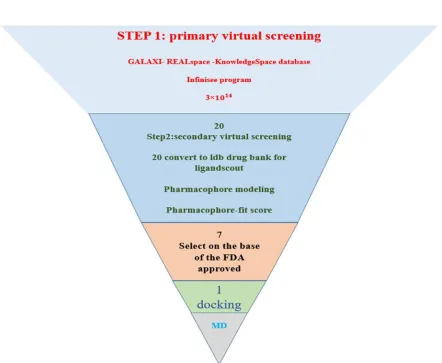
The procedure of this study shown the Figure 1. The virtual screening was done to recognition of the hit compounds from the GalaXi_2019-10, KnowledgeSpace_2019-05, and REALspace_2019-12 databases in biosolveit (https://www. biosolveit.de/) with infinisee software [15], for finding similar compounds to ADP ribose phosphate. The all current databases collections include up to 2.9×10¹⁴ compounds,which consist of every compound on the world, but in this study on the base of the necessity and urgency of investigation about coronavirus treatment was more focused on the GalaXi_2019-10 database that has drug-like and all drug library (other databases is not removed).
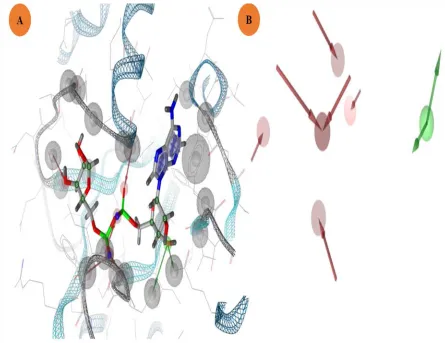
Primary virtual screening was performed over all databases by the infiniSee software (ligand base, similarity 30-100), resulted in to obtain 20 compounds. This collection was imported to the ligandScout software and converted to ligandScout library, then, on the base of the ADPR pharmacophore model (two hydrogen donors and six hydrogen acceptors) (figure2) secondary virtual screening was done. After that, seven compounds were obtained by high pharmacophore-fit score. Figure 2 Pharmacophore model of molecules that are similar to ADPR and pharmacophore of ADPR
7
Molecular docking
In this step, we used SeeSAR 9.2, AutoDock Vina module of ligandScout 4.3, and Molegro Virtual Docker v6.0 to investigate the conformational of Losartan in interaction with macrodomain and TRPM2 proteins [16,17]. At first SeeSAR 9.2 was used for a primary docking of Losartan. The applied parameters were used the genetic algorithm. The population size, selection pressure, and number of run were 100, 1.2 and 100, respectively. Conformations that were obtained in this step were used for final docking with Molegro Virtual Docker and AutoDock Vina, and the best affinity score was estimated between our load conformations [18,19]. The population size and the number of run in this step were 500 and 200, respectively. Profiles of interactions between Losartan and proteins were obtained via Discovery Studio Visualizer and LIGPLOT software [20].
Molecular dynamic simulation
8
(NVT) for 100 ps, with a restraint force of 10 kcal/mol at temperature of 100 K, and then at constant pressure (NPT) for 100 ps, with a restraint force of 1 kcal/mol at temperature of 300 K, were performed. Afterward, an equilibration step at NPT was performed for reaching to equilibrium in density for 100 ps, while the restraint force was removed. This method allows the water to equilibrate around the complexes. In the position restraints and equilibration steps, Langevin dynamics were used to control the temperature. In final step, 20 ns (nanosecond) MD simulation was used for each protein-ligand complex. For analyses of MD simulations , CPPTRAJ of AMBER18 was used [24].
Binding energy calculation
An attractive and interesting method in Computer-Aided Drug Design (CADD) is Molecular Mechanics Poisson Boltzmann/ Surface Area (MM-PBSA). The binding energies (ΔGbinding=Gcomplex-Gprotein-Gligand) in this study were calculated with the MM-PBSA method by
Amber18 [25]. The accuracy of docking was calculated through obtaining the binding free energy over the molecular dynamics simulations. The last five ns of MD simulation trajectories were used for calculation of binding free energy [24].
After calculations of Gibbs energy changes (ΔG) and entropy changes (ΔS) values by the amber18 package, the enthalpy change (ΔH) was calculated (ΔG=ΔH−TΔS).
If the enthalpy change (ΔH) was negative numbers, the reactions between ligands and proteins would be exothermic.
Results
The virtual screening for macrodomain and TRPM2
9
pharmacophore modeling by ligandScout with pharmacophore-fit score 86.16 - 85.56 (table2 and fig2). Losartan (with pharmacophore-fit score 85.26) was between of them, and other compounds because were nucleotides or similar to nucleotides (such as guanosine ribose phosphate and other nucleotides or their analog) were removed, Losartan was selected as a hit compound.
The docking results
ADP ribose and Losartan in the macrodomain
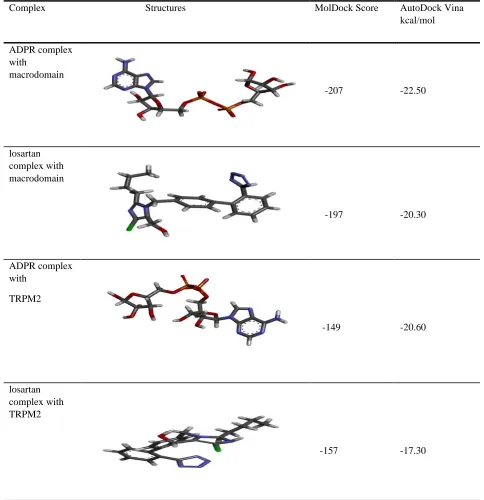
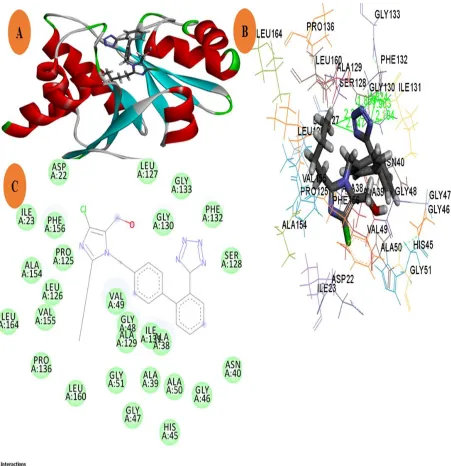
Thedocking score ADP ribose phosphate and losartan in the Molegro Virtual Docker software for for macrodomain was calculated -207 and -197, respectively (table3). The similar scores were also obtained using SeeSAR and Autodock Vina software tools. Losartan formed six hydrogen bonds with four amino acids, Phe132, Ser128, Gly180, and Ile131 by the distance between 1.83 and 2.44 Å. Besides, 20 hydrophobic contacts were exhibited with Asp22, Ile23, Phe156, Ala154, Val155, Lue164, Pro136, Pro125, Gly48, Gly51, Gly47, Gly46, Asn40, Ala39, His45, Leu127, Gly133 and Ile131 among the range 3.40-3.90 Å. The highest hydrophobic interaction belonged to Ile131 with three hydrophobic interactions (figure 3 and table4).
ADP ribose and Losartan in the TRPM2
10 Molecular dynamic simulation
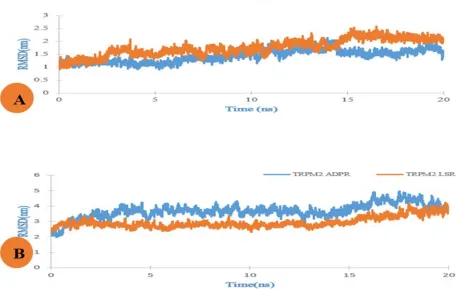
For checking the stability of the protein-ligand complexes, 20 ns molecular dynamic simulations were used to all complexes. Figure 5 exhibits the RMSD value for every complex of trpm2 and macrodomain structures on the simulation time. Assessment of average last five ns of RMSD plots showed that they are relatively stable backbone trajectories of TRPM2-Lsr (average 3.44Å, fig5B) and macrodomain-Lsr (average 2.16, fig5A) as compared to TRPM2-ADPR (average 4.2Å, fig5B), and macrodomain- ADPR (average 1.58Å, fig5A) complexes. In addition, it can be inferred that creating losartan complex with these proteins is led to the stability of protein and it is a useful ligand for inhibition of them.
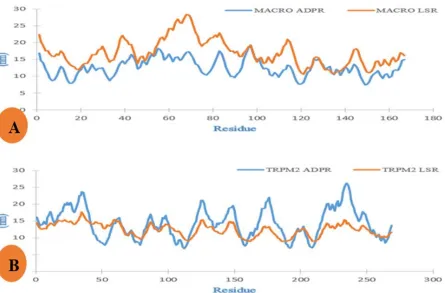
Figure 6 shows RMSF profile of these complexes. The residues of macrodomain have lower fluctuation in complex with ADPR relative to Losartan, but there are some peaks in the plot that are amino acids in the active site and had similar stability and same fluctuation as compared to macrodomain-ADPR fig6A, 6B, and. So it has concluded Losartan can contest with ADPR for binding macrodomain and create resemblance stability
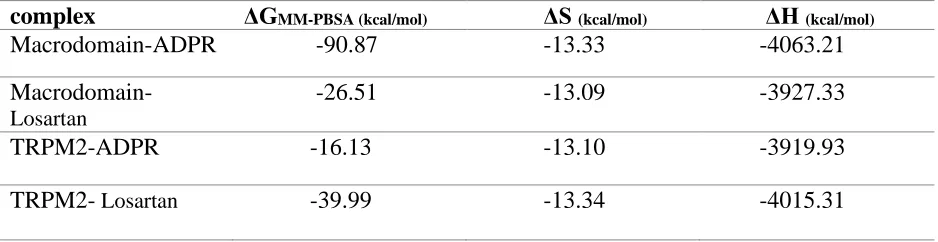
In the case of TRPM2 protein, the Losartan induces less fluctuation or more stability relative to the ADPR inhibitor. (Figure 6B). These results are compatible with RMSD results (figure 5). In other words, despite of the more stability of the ADPR than Losartan, Losartan can compete to ADPR for creating a complex with macrodomain protein, and in the case of TRPM2, Losartan could be a proper inhibitor for TRPM2. The free binding energy and thermodynamics parameters of all ligands in complexes have been mentioned in table 5, it has shown that ADPR has more binding affinity for macrodomain, and Losartan has more binding affinity for TRPM2 protein. The binding between proteins and ligands were exothermic. These results also are similar to RMSD and RMSF results.
Discussion
11
COVID-19, but have not shown an efficient and potent therapeutic effect on this virus. This limitation and threat made us work on some drug databases that are FDA approve and some drug-like databases. In the primary virtual screening by infinisee, the new bank had created by some molecules with relative similarity to ADPR. Next, pharmacophore modeling was shown seven molecules that have similar pharmacophore. Between them, because five compounds were analog of nucleotide, they were omitted. Nucleotides analog have toxicity for human cells and bodies, so were removed.
Criteria for selection of the ligand was six terms consist of:
1- visibility
2- FDA approves existed drugs 3- Availability
4- cost-benefit effective compounds
5- the relative similarity to ADPR but not capability to binding to other nucleotide-binding enzymes (on the other hand compound have selective toxicity for other enzymes, and their effect had been proved)
12
Xiao Luo and et al. worked on the TRPM2 inhibitors by two novel ligands that were synthesized as ADPR analogs [26]. Xiao Luo’s work was done without attention to the possible toxicity of these compounds for every enzyme (enzymes that have a high affinity for binding to ADPR, such as DNA-polymerase or RNA-polymerase). Xiao lue and et al. had focused only on the synthesis of these compounds. That study conceded ADMET investigation and laboratory assays for these ligands in the future studies for other scientists.
Our study against the Xiao Lue et al study, was done with Precise focused on the possible toxicity, and utilization of the FDA approved drugs and drug-like database. The bioinformatic calculation was performed to increase the accuracy of screening methods and obtaining the best drug to inhibit the both proteins.
John G. Starkus and et al. studied scalaradial (natural product compounds) as an inhibitor of the TRPM2 with the experimental assay, but they have not any computational approaches [27]. Scalaradial is not an available compound and, more importantly, is not as an FDA approved drug. Then there is an urgent necessity for drug and inhibition of the TRPM2 and macrodomain for treatment of any person affected by COVID-19 [28].
Our knowledge Until now, there was not any study for the inhibition of the macrodomain and its function. This study is for TRPM2 and macrodomain inhibition by a bioinformatics approach with the utilization of the drug and drug-like database. Particularly as now, there is no study for inhibition any coronavirus’s macrodomain (that has high affinity to bind ADPR). It seems the activity of MD protein of COVID19 runs a lethal cycle between PARP, MD and TRPM2 Zeinalian, M., et al explained this cycle and suggested that PARP, MD (NSP3 of virus) and TRPM2 are critical therapeutic targets in COVID19 [29].
13
the initiation of the cell infection and the virus-cell cycle. Macrodomain with poly ADPR degradation and increase of the free ADPR’s levels can provide activation of the TRPM2 and prevent of the produce interferon-gamma so that cell would be susceptible to COVID-19 infection; therefore, it has been suggested as the target protein for efficient therapeutic approaches against the coronavirus infection.
Some different studies have shown that ACE inhibitors such as Losartan could have a protective effect on some tissue injury due to the systemic inflammatory diseases. Losartan has anti-aggregative platelet, anti-diabetic, and prevent end organ injuries and fibrosis. Also in the disease that affected with chronic kidney disorder, and blood pressure, prescription losartan led to decrease from kidney damage. In another study has shown that Losartan was able to prevent damage to the ischemic and oxidative stress and proliferation of tubules cells and penetration of the macrophage from parenchyma kidneys [30]. On the other hand, losartan could also reduce indirectly oxidative stress through inhibition of TRPM2. It leads to prevent cytokine storm, apoptosis, and cell necrosis. Losartan can also directly bind to TRPM2, and creates an inhibitory complex with it [31].
14
Conclusion
It seems Losartan can inhibit the viral macrodomain and TRPM2 so that it can interrupts the cell cycle of the virus and apoptosis, necrosis, fibrillation, and cytokine storm consequence of the COVID-19 infection. Therefore, Losartan, with preventing the induction of overexpression of the inflammatory cytokine, may decrease the severity of the disease and time of hospitalization. Presumably, Losartan with inhibition of these proteins activate the production of the interferon-gamma and intracellular defense against the COVID-19 virus, so enhancement resistance of person to the coronavirus.
References
Wu Y, Ho W, Huang Y et al. (2020) SARS-CoV-2 is an appropriate name for the new coronavirus. The Lancet 395 (10228):949-950. doi:10.1016/S0140-6736(20)30557-2
Lu R, Zhao X, Li J et al. (2020) Genomic characterisation and epidemiology of 2019 novel coronavirus: implications for virus origins and receptor binding. The Lancet 395 (10224):565-574
Raoult D, Zumla A, Locatelli F et al. (2020) Coronavirus infections: Epidemiological, clinical and immunological features and hypotheses. Cell Stress. doi:10.15698/cst2020.04.216
Chan JF-W, Kok K-H, Zhu Z et al. (2020) Genomic characterization of the 2019 novel human-pathogenic coronavirus isolated from a patient with atypical pneumonia after visiting Wuhan. Emerging Microbes & Infections 9 (1):221-236
Fehr AR, Jankevicius G, Ahel I et al. (2018) Viral macrodomains: unique mediators of viral replication and pathogenesis. Trends in microbiology 26 (7):598-610
Feng X, Koh DW (2013) Roles of poly (ADP-ribose) glycohydrolase in DNA damage and apoptosis. In: International review of cell and molecular biology, vol 304. Elsevier, pp 227-281
15
Grunewald ME, Chen Y, Kuny C et al. (2019) The coronavirus macrodomain is required to prevent PARP-mediated inhibition of virus replication and enhancement of IFN expression. PLoS pathogens 15 (5)
Sumoza‐Toledo A, Penner R (2011) TRPM2: a multifunctional ion channel for calcium signalling. The Journal of physiology 589 (7):1515-1525
Zheng M, Gao, Y., Wang, G. et al (2020) Functional exhaustion of antiviral lymphocytes in COVID-19 patients. Cell Mol Immunol doi:https://doi.org/10.1038/s41423-020-0402-2
Powers BJ, Coeytaux RR, Dolor RJ et al. (2012) Updated report on comparative effectiveness of ACE inhibitors, ARBs, and direct renin inhibitors for patients with essential hypertension: much more data, little new information. Journal of general internal medicine 27 (6):716-729
Tronrud D (1992) Conjugate-direction minimization: an improved method for the refinement of macromolecules. Acta Crystallographica Section A: Foundations of Crystallography 48 (6):912-916 Brooks BR, Brooks III CL, Mackerell Jr AD et al. (2009) CHARMM: the biomolecular simulation program. Journal of computational chemistry 30 (10):1545-1614
Marvin was used for drawing, displaying and characterizing chemical structures, substructures and reactions, Marvin 17.21.0, ChemAxon (https://www.chemaxon.com).
infinisee version 1.3; BioSolveIT GmbH, Sankt Augustin, Germany, 2019, www.biosolveit.de/SeeSAR. Wolber G, Langer T (2005) LigandScout: 3-D pharmacophores derived from protein-bound ligands and their use as virtual screening filters. Journal of chemical information and modeling 45 (1):160-169
SeeSAR version 9.2; BioSolveIT GmbH, Sankt Augustin, Germany, 2019, www.biosolveit.de/SeeSAR. Trott O, Olson AJ (2010) AutoDock Vina: improving the speed and accuracy of docking with a new scoring function, efficient optimization, and multithreading. Journal of computational chemistry 31 (2):455-461
Thomsen R, Christensen MH (2006) MolDock: a new technique for high-accuracy molecular docking. Journal of medicinal chemistry 49 (11):3315-3321
16
Salomon‐Ferrer R, Case DA, Walker RC (2013) An overview of the Amber biomolecular simulation package. Wiley Interdisciplinary Reviews: Computational Molecular Science 3 (2):198-210
Lindorff‐Larsen K, Piana S, Palmo K et al. (2010) Improved side‐chain torsion potentials for the Amber ff99SB protein force field. Proteins: Structure, Function, and Bioinformatics 78 (8):1950-1958
Da Silva AWS, Vranken WF (2012) ACPYPE-Antechamber python parser interface. BMC research notes 5 (1):367
Farrokhnia M, Mahnam K (2017) Molecular dynamics and docking investigations of several zoanthamine-type marine alkaloids as matrix metaloproteinase-1 inhibitors. Iranian journal of pharmaceutical research: IJPR 16 (1):173
Kumari R, Lynn A (2011) Application of MM/PBSA in the prediction of relative binding free energy: Re-scoring of docking hit-list. Journal of Natural Science, Biology and Medicine 2 (3):92-92
Luo X, Li M, Zhan K et al. (2018) Selective inhibition of TRPM 2 channel by two novel synthesized ADPR analogues. Chemical biology & drug design 91 (2):552-566
Starkus JG, Poerzgen P, Layugan K et al. (2017) Scalaradial is a potent inhibitor of transient receptor potential melastatin 2 (TRPM2) ion channels. Journal of natural products 80 (10):2741-2750
Wang M, Cao R, Zhang L et al. (2020) Remdesivir and chloroquine effectively inhibit the recently emerged novel coronavirus (2019-nCoV) in vitro. Cell research 30 (3):269-271
Zeinalian M, Salari-Jazi A, Jannesari A et al. (2020) A potential protective role of losartan against coronavirus-induced lung damage. Infection Control & Hospital Epidemiology:1-2. doi:10.1017/ice.2020.80
Ivanov M, Mihailović-Stanojević N, Milanović JG et al. (2014) Losartan improved antioxidant defense, renal function and structure of postischemic hypertensive kidney. PloS one 9 (5)
Ko SY, Wang SE, Lee HK et al. (2019) Transient receptor potential melastatin 2 governs stress-induced depressive-like behaviors. Proceedings of the National Academy of Sciences 116 (5):1770-1775
17
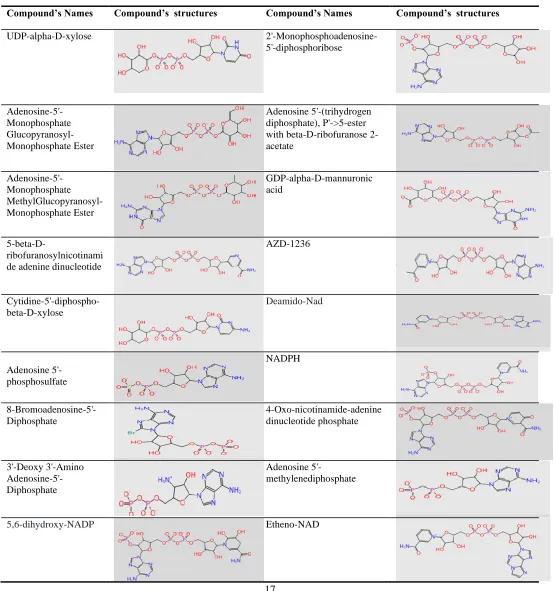
Table 1. The molecular structures of 20 screened compounds by infiniSee program for coronavirus macrodomain and TRPM2
Compound’s Names Compound’s structures Compound’s Names Compound’s structures
UDP-alpha-D-xylose 2'-Monophosphoadenosine-5'-diphosphoribose Adenosine-5'-Monophosphate Glucopyranosyl-Monophosphate Ester Adenosine 5'-(trihydrogen diphosphate), P'->5-ester with beta-D-ribofuranose 2-acetate Adenosine-5'-Monophosphate MethylGlucopyranosyl-Monophosphate Ester GDP-alpha-D-mannuronic acid 5-beta-D-ribofuranosylnicotinami de adenine dinucleotide
AZD-1236 Cytidine-5'-diphospho-beta-D-xylose Deamido-Nad Adenosine 5'-phosphosulfate NADPH 8-Bromoadenosine-5'-Diphosphate 4-Oxo-nicotinamide-adenine dinucleotide phosphate 3'-Deoxy 3'-Amino Adenosine-5'-Diphosphate Adenosine 5'-methylenediphosphate
18 N‐(4‐{[N‐(2,4‐difluoro
phenyl)4
acetamidobenzenesulfo namido]sulfonyl}pheny l)acetamide
losartan
Table 2. six molecules that were removed after ligandScout virtual screening and Losartan selected for docking
Numbers Compound’s Names Compound’s Names
1 Adenosine-5'-Monophosphate Glucopyranosyl-Monophosphate Ester
2 2'-Monophosphoadenosine-5'-diphosphoribose
3
Adenosine-5'-Monophosphate Methyl
Glucopyranosyl-Monophosphate Ester
4 AZD-1236
5 GDP-alpha-D-mannuronic
acid
6 N‐(4‐{[N‐(2,4‐difluoropheny l)4‐
acetamidobenzenesulfonami do] sulfonyl}phenyl) acetamide
19
Table 3. The affinity and binding score of the ligand-protein complexes.
Complex Structures MolDock Score AutoDock Vina kcal/mol
ADPR complex with
macrodomain
-207 -22.50
losartan complex with macrodomain
-197 -20.30
ADPR complex with
TRPM2
-149 -20.60
losartan complex with TRPM2
-157 -17.30
20
Table 4. Hydrogen bonding and hydrophobic interactions of the Complexes and distance of the
interacting atoms between ligand and protein.
Table 5. Thermodynamic parameters of binding ligands to Macrodomain and TRPM2.
complex ΔGMM-PBSA (kcal/mol) ΔS (kcal/mol) ΔH (kcal/mol)
Macrodomain-ADPR -90.87 -13.33 -4063.21
Macrodomain-Losartan
-26.51 -13.09 -3927.33 TRPM2-ADPR -16.13 -13.10 -3919.93 TRPM2- Losartan -39.99 -13.34 -4015.31
complex Hydrogen binds Hydrophobic interaction
Amino acids Distance (Å) Amino acids Distance (Å) Macrodomain complex with Losartan Phe132, Ser128, Gly180, Ile131 1.83-2.44
Asp22, Ile23, Phe156, Ala154, Val155, Lue164, Pro136, Pro125, Gly48, Gly51, Gly47, Gly46, asn40, Ala39, His45, leu127, Gly133
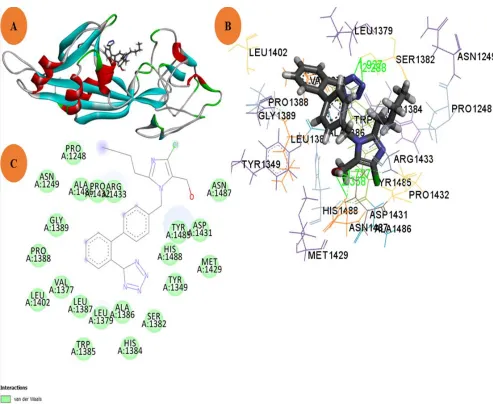
3.40-3.90 TRPM2 complex with Losartan Asn1487, Arg1433, Ser1382
1.8 – 2.8
Pro1388, Val1377, Leu1379, Ser1382,
21
22
23
24
25
26
27
Figure 7. A-Black arrows are the cell mechanism in the normal situation (health people): TRPM2 can active running of the cell death, and apoptosis signaling cascade. This protein is active in the high level of the ADPR in the cell. C-in a viral infection PARP enzyme active in the viral infection. PARP creates poly-ADPR and ADP-ribosylate different types of the protein in the cell. ADP-ribosylating of the proteins is the initiation for the Interferon gamma (IFNγ) signaling cascade, so IFNγ produce and release from the cell. The IFNγ can active the human cellular immune response against the virus, and increase the resistance of the human cell in confronting with covid-19 virus.