* To whom all correspondence should be addressed. E-mail:[email protected]
Evolution of Bactericidal Activity of Selected Food
Additives Against Food Borne Microbial Pathogens
Samy A. Selim1*, Sahar M. El Alfy2, Mohamed H. Abdel Aziz2, Mona S. Mashait3 and Mona F. Warrad2
1Department of Medical Laboratory Science, College of Applied Medical Sciences, Al-Jouf University, P.O. 2014, Sakaka, Saudi Arabia.
2 Department of Botany, Microbiology Section, Faculty of Sciences, Suez Canal University, Ismailia- 415 22, Egypt.
3Women Health Department, Faculty of Medicine, King Khaled University, Abha, Saudi Arabia.
(Received: 18 May 2012; accepted: 25 June 2012)
The present study was undertaken in order to examine the bactericidal effects of some selected food additives on food-borne pathogenic bacteria. The antibacterial effect of 9 chemical food additives on our isolates was performed which representing different groups. The study shown that phloxine, nisine, ascorbic acid and sorbic acid had very good antibacterial activity to 4 isolates, this effect was similar to the effect of antibiotics on 4 isolates. Thus, this additives used as preservatives in food. Four isolates were sensitive to small quantities of all tested food additives. Phloxine had best results against gram positive and gram negative isolates, while nisine had more antibacterial activity against gram positive than gram negative. Time kill curves for most potent food additives were performed (phloxine, nisine, sorbic acid, ascorbic acid and sodium benzoate). The results shown that ascorbic acid kill 100% of E. coli, Salmonella indica and Staphylococcus aureus after 2 hours, while it need 24 hours to kill Bacillus cereus. Phloxine killed 100% of Bacillus cereus and Staphylococcus aureus after 2, 24 hours respectively. It needs more than 48 hour to kill E.coli or Salmonella indica. Nisine kill 100% of E. coli, Salmonella indica and Staphylococcus aureus after 12, 2 and 4 hours respectively. Nisine can’t kill Bacillns cereus or Staphylococcus aureus until 48 hours, while killed E.coli and Salmonella indica after 2, 8 hours respectively. E. coli and Staphylococcus aureus killed completely after 2, 24 hours after treated with sodium benzoate, while Bacillus cereus and Salmonella indica didn’t killed completely until 48 hours. The data suggest that these food addatives may have some potential anti-microbial applications.
Key words: Bactericidal, Food additives, Food borne microbial pathogens.
A food additive is any substance not commonly regarded or used as food, which is added to, or used in or on, food at any stage to affect its keeping quality, texture, consistency, taste, colour, alkality or acidity, or to serve any
other technological function in relation to food, and includes processing aids in so far as they are added to or used in or on food (The Food Labelling Regulations, 1980 and Food Intolerance and Food Aversion, 1984).
Previous work shows that several halogenated fluoresceins, such as eosin, erytrosin, and Rose Bengal, have shown to have a bactericidal effect on Staphylococcus aureus (Rasooly and
(20,40,50,70-tetrabromo- 4,5,6,7-tetrachlorofluorecein disodium salt), has bactericidal effect on S. aureus and has a potential
as a useful antibiotic agent. Phloxine B has a bactericidal effect against gram positive but not against gram-negative bacteria and that the anti-microbial activity is light dependent. (Rasooly, 2005). The anti-S. aureus activity of phloxine B,
compound 14. FDA-certified batches of phloxine B (D&C red no. 28) are permitted in the United States for use in coloring cosmetics and ingested drugs with an acceptable daily intake for humans set by the FDA at 1.25 mg/kg of body weight (Federal Register, 1982). When dye was added at concentrations of 50 or 100 ug/ml, bacterial growth stopped completely. To assess the effect of phloxine B on MRSA bacteria, seven MRSA strains were incubated with phloxine B. The response of these strains was similar to the response obtained from the control strain, ATCC 13565. On the other hand, the common usage of phloxine B as a color additive in food, drugs, and cosmetics does bring the risk that bacteria might have the opportunity for exposure to small amounts of it over long periods of time, which might result in their developing resistance to its antimicrobial activity. (Rasooly & Weisz, 2002)
Nisin is a small cationic lanthionine antibiotic produced by Lactococcus lactis. During
its antimicrobial action, it targets intermediates in the bacterial cell-wall biosynthesis, lipid II, and undecaprenyl pyrophosphate. Awidely used food preservative, the peptide antibiotic nisin, E 234, is produced by Lactococcus lactis and shows high
antimicrobial activity against a broad spectrum of Gram-positive bacteria. Nisin is also effective in inhibiting the outgrowth of spores from Clostridium
and Bacillus species. Nisin activity toward
Gram-negative organisms also has been reported, although to a lower degree than against Gram-positives and usually in combination with chelating agents (Delves-Broughton, 1990). Nisin is active in the nanomolar range and has no known toxicity to humans, which has placed it in the unique position of worldwide acceptance as a powerful and safe food additive in control of food spoilage (Thomas
et al., 2000). The recent discoveries of lipid II as a
target for nisin and, in particular, the pivotal role played by the pyrophosphate group, also have brought nisin to the forefront in the battle with
resistant human infections as a model case for the design of new antibiotics. Nisin induced leakage of cytoplasmic contents from treated samples, , although it displayed multiple aberrations. Cytokinesis was evident 30 min after addition of nisin, which contradicts the current view of a rapid cell death after antibiotic addition. The principal site of cell-wall inhibition by nisin appears near the division site, where peptidoglycan formation is accelerated. Nisin permeabilizes plasma membranes, accelerates cell division and causes minicell formation. Nisin also deregulates cell envelope formation, which leads to aberrant cell morphogenesis. (Hyde et al., 2006)
Chitin is a natural polymer, found in the exoskeletons of crustaceans and insects, as well as in the cell walls of certain fungi (Rinaudo, 2006). Evidence has been put forward that chitosan possesses various biological activities, viz. antioxidant (Chien et al., 2007), and antibacterial
and antifungal properties (Liu et al., 2006; Rhoades
and Roller, 2000; Tikhonov et al., 2006 and Uchida et al., 1989), make it an interesting polymer for
several applications in food, industries, and also in medicine (Shi et al., 2006). However, its
high-molecular weight (MW) has limited its practical applications due to its insolubility at pH values above 6.3 (Okuyama et al., 2000 and Seo et al.,
2007). The antimicrobial effect of chitosans is strongly dependent on the type of target microorganism (Gram-negative versus Gram positive) and the MW of chitosan-being higher for lower MW in the case of the Gram-negative bacterium, and the reverse in the case of the Gram-positive one. The stronger antibacterial activity observed, at lower pH, in the juice matrix, coupled with the poor performance of the milk matrix, suggest that the use of chitosans (irrespective of MW) will be limited to food products that possess a low protein content. (Fernandes et al., 2008).
Higher MW chitosans (628and100kDa) surrounded both forms of B. cereus by forming a
polymer layer—which eventually led to the death of the vegetative form by preventing the uptake of nutrients but did not affect the spores since these can survive for extended periods without the access to nutrients. On the other hand, the use of chitooligosaccharides (COS) by itself on B. cereus
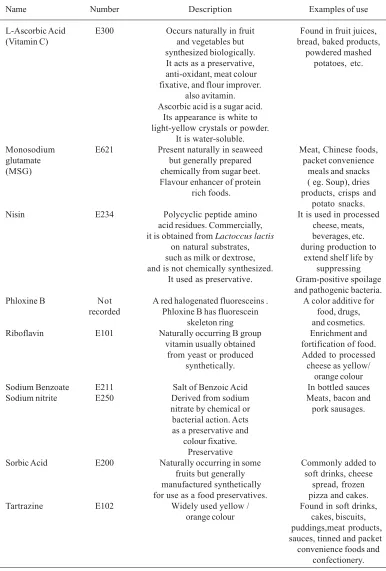
Table 1. E numbers of tested food additives
Name Number Description Examples of use
L-Ascorbic Acid E300 Occurs naturally in fruit Found in fruit juices, (Vitamin C) and vegetables but bread, baked products,
synthesized biologically. powdered mashed It acts as a preservative, potatoes, etc. anti-oxidant, meat colour
fixative, and flour improver. also avitamin. Ascorbic acid is a sugar acid.
Its appearance is white to light-yellow crystals or powder.
It is water-soluble.
Monosodium E621 Present naturally in seaweed Meat, Chinese foods, glutamate but generally prepared packet convenience (MSG) chemically from sugar beet. meals and snacks
Flavour enhancer of protein ( eg. Soup), dries rich foods. products, crisps and
potato snacks. Nisin E234 Polycyclic peptide amino It is used in processed
acid residues. Commercially, cheese, meats, it is obtained from Lactoccus lactis beverages, etc.
on natural substrates, during production to such as milk or dextrose, extend shelf life by and is not chemically synthesized. suppressing
It used as preservative. Gram-positive spoilage and pathogenic bacteria. Phloxine B Not A red halogenated fluoresceins . A color additive for
recorded Phloxine B has fluorescein food, drugs, skeleton ring and cosmetics. Riboflavin E101 Naturally occurring B group Enrichment and
vitamin usually obtained fortification of food. from yeast or produced Added to processed synthetically. cheese as yellow/
orange colour Sodium Benzoate E211 Salt of Benzoic Acid In bottled sauces Sodium nitrite E250 Derived from sodium Meats, bacon and nitrate by chemical or pork sausages.
bacterial action. Acts as a preservative and
colour fixative. Preservative
Sorbic Acid E200 Naturally occurring in some Commonly added to fruits but generally soft drinks, cheese manufactured synthetically spread, frozen for use as a food preservatives. pizza and cakes. Tartrazine E102 Widely used yellow / Found in soft drinks,
orange colour cakes, biscuits, puddings,meat products, sauces, tinned and packet convenience foods and
confectionery.
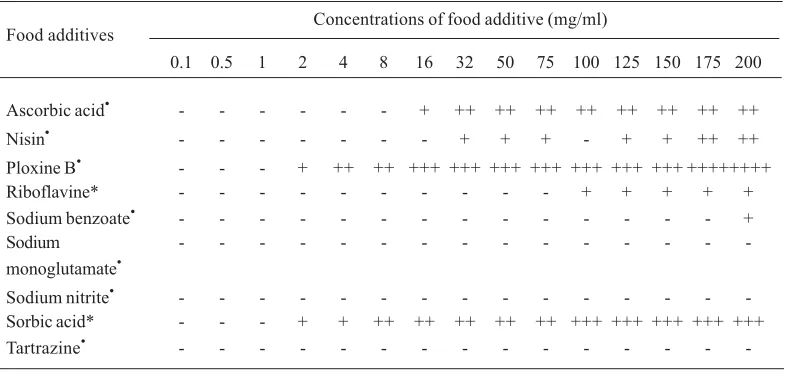
Table 2. Effect of selected food additives on inhibition of Bacillus cereus. Where inhibition
zone(mm)-(no effect), +(≤ 9), ++ ( < 15), +++ (15-20mm), ++++ (≥20 mm).
Food additives Concentrations of food additive (mg/ml)
0.1 0.5 1 2 4 8 16 32 50 75 100 125 150 175 200
Ascorbic acid• - - - + ++ ++ ++ ++ ++ ++ ++ ++
Nisin• - - - + + + - + + ++ ++
Ploxine B• - - - + ++ ++ +++ +++ +++ +++ +++ +++ +++ ++++++++
Riboflavine* - - - + + + + +
Sodium benzoate• - - - +
Sodium - - -
-monoglutamate•
Sodium nitrite• - - - -Sorbic acid* - - - + + ++ ++ ++ ++ ++ +++ +++ +++ +++ +++
Tartrazine• - - -
-* = dissolved in Dimethyl formamid.
•
= dissolved in distelled water.structure and its ability to contaminate, by inducing exosporiumloss.(Fernandes et al., 2009).
The present study was undertaken in order to examine the bactericidal effects of some selected food additives on some food-borne pathogenic bacteria.
MATERIAL AND METHODS
Food additives
A number of food additives include ; ascorbic acid, monosodium glutamate, nicin, phloxine B, riboflavin, sodium benzoate, sodium nitrite,, sorbic acid and tartrazine were chosen. Food additives were purchased from Sigma– Aldrich (Table 1).
Bacterial strains
The food additives were individually tested against the most potent proteolytic bacterial species which selected for this study. Preparation of 24 hours pure culture in saline in a Roux bottle. Each of these was streaked on to the appropriate culture slants and was incubated at 37ºC for 24 hours.
Determination of the antibiotic potency of food additives by Agar diffusion test using paper disc-diffussion method
Briefly, suspension in nutrient broth (NB) of the tested microorganism (200 μl of 107-108 cells
per ml) was spread over the surface of solid Muller
Hinton agar plate with a bent glass rod. Paper disc (6mm in diameter) were impregnated with 10μl of each concentrations of each food additive 1, 5, 10, 20, 40, 80, 160, 320, 500, 750, 1000, 1250, 1500, 1750 and 2000 placed on the inoculated plates. These plates were incubated at 37oC for 24h.The diameter
of the inhibition zones were measured in millimeters. All the tests were performed in duplicate and repeated twice. (Hayouni et al., 2008)
Minimum bactericidal concentration (MBC) The MIC of an antibacterial agent for a given organism is the lowest concentration of the agent required to inhibit the growth of an inoculum of the bacterium in a standard test. The MBC is the minimal concentration of antibiotic that kills the inoculum. MICs were determined as the lowest concentrations of food additive at which microorganisms cannot grow in (M–H) broth (Lab M, UK); the strains were inoculated into M–H broth and incubated to the logarithmic growth phase at 37oC. The growth density was adjusted to match a
MacFarland 0.5 standard (108 CFU/ml) .A 1:100
dilution was prepared in a fresh M–H broth, and used as the inoculum (106 CFU/ml). The following
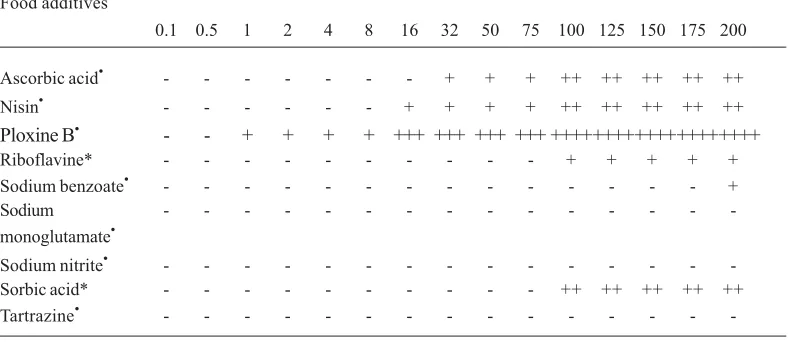
Table 4. Effect of selected food additives on inhibition of Salmonella indica.
Where inhibition zone (mm) - ( no effect), +(≤9), ++ ( < 15), +++ (15-20mm), ++++ (≥20 mm).
Food additives Concentrations of food additive (mg/ml)
0.1 0.5 1 2 4 8 16 32 50 75 100 125 150 175 200
Ascorbic acid• - - - + + + ++ ++ ++ ++ ++
Nisin• - - - + + + + ++ ++ ++ ++ ++
Ploxine B• - - + + + + +++ +++ +++ +++ ++++++++++++++++++++
Riboflavine* - - - + + + + +
Sodium benzoate• - - - +
Sodium - - -
-monoglutamate•
Sodium nitrite• - - - -Sorbic acid* - - - ++ ++ ++ ++ ++
Tartrazine• - - -
-* = dissolved in Dimethyl formamid.
•
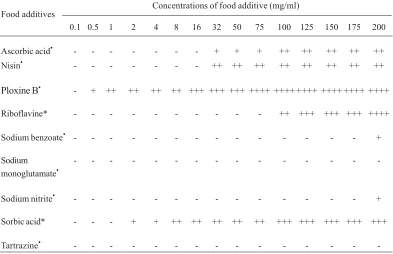
= dissolved in distelled water.Table 3. Effect of selected food additives on inhibition of E. coli. Where inhibition zone
(mm) - ( no effect), +( ≤9), ++ ( < 15), +++ (15-20mm), ++++ ( ≥20 mm)
Food additives Concentrations of food additive (mg/ml)
0.1 0.5 1 2 4 8 16 32 50 75 100 125 150 175 200
Ascorbic acid• - - - + + + ++ ++ ++ ++ ++ Nisin• - + ++ ++ ++ ++ +++ +++ +++ +++ +++ +++ +++ +++ +++ Ploxine B• - - - + ++ ++ +++ +++ +++ +++ +++ +++ +++ ++++++++ Riboflavine* - - - ++ ++ ++ +++ ++++ Sodium benzoate• - - - +
Sodium - - -
-monoglutamate•
Sodium nitrite• - - - -Sorbic acid* - - - - + + + + + + +++ +++ +++ +++ +++
Tartrazine• - - -
-* = dissolved in Dimethyl formamid.
•
= dissolved in distelled water.μl-aliquots of negative tubes (absence of turbidity in the MIC determination) on M–H agar, using the spread plate technique (Fernandes et al., 2008).
Time Kill Curve
The method of May et al., (2000) was
modified and performed. Ten isolates of each most potent proteolytic activity bacteria were inoculated
Table 5. Effect of selected food additives on inhibition of Staphylococcus aureus. Where inhibition zone
(mm) - ( no effect), +( d” 9), ++ ( < 15), +++ (15-20mm), ++++ (≥20 mm).
Food additives Concentrations of food additive (mg/ml)
0.1 0.5 1 2 4 8 16 32 50 75 100 125 150 175 200
Ascorbic acid• - - - + + + ++ ++ ++ ++ ++ Nisin• - - - ++ ++ ++ ++ ++ ++ ++ ++
Ploxine B• - + ++ ++ ++ ++ +++ +++ +++ ++++ ++++ ++++ ++++ ++++ ++++
Riboflavine* - - - ++ +++ +++ +++ ++++
Sodium benzoate• - - - +
Sodium - - -
-monoglutamate•
Sodium nitrite• - - - +
Sorbic acid* - - - + + ++ ++ ++ ++ ++ +++ +++ +++ +++ +++
Tartrazine• - - -
-* = dissolved in Dimethyl formamid. • = dissolved in distilled water.
was in time of subculture which was at 0, 2, 4, 8, 12, 24 and 48h of each sample. Then sub cultured isolates incubated at 37 o C for 24h for all isolates.
Time kill curves were determined by counting viable counts to give cfu/ml, and kill curves were plotted with time against the logarithm of the viable count.
RESULTS
Antibiotic susceptibility test of food additives Tables 2, 3, 4 and 5 show the inhibition effect (Antibacterial effect) of studied (selected) food additives on the 4 most potent proteolytic bacterial species (Bacillus cereus, E.coli, Salmonella indica and Staphylococcus aureus).
Four patterns of inhibition effect were observing according to the diameter of inhibition zones in plates provided with the solution of different concentrations of each additive. This 4 patterns were no effect (-) ≥9mm, slow effect (+ &++) (10 -14mm), intermediate effect (+++) (15-19mm) and high effect (++++) (≥20). Concentration of 16 mg/
ml of both ascorbic acid & nisine had no effect on
E.coli and Staph aureus, while this concentration
of ascorbic acid was affected on Bacillus cereus
and not affected on Salmonella indica. Vice versa
this concentration of nisine had an effect on
Salmonella indica and did not have an effect on Bacillus cereus. The smallest concentrations of
ascorbic acid and nisin (8 mg/ml and lower) were not inhibited the growth of all studied bacterial species. The concentrations more than the 32 mg/ ml up to 200 mg/ml of ascorbic acid and nisin were affected on E.coli, Salmonella indica and Staph aureus. The concentrations 175 mg/ml and lower
of sodium benzoate, sodium monoglutamate, sodium nitrite and tartrazine did not affect on the growth of all 4 studied bacterial species. The concentration of 200 mg/ml of sodium benzoate affected the 4 studied bacteria species.
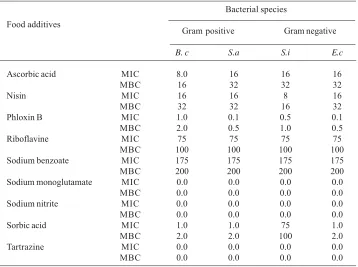
Table 6. The minimum inhibitor concentration (MIC) and minimum bactericidal concentration
(MBC) (μg) of food additives against studied bacterial species.
Food additives
Bacterial species
Gram positive Gram negative
B. c S.a S.i E.c
Ascorbic acid MIC 8.0 16 16 16
MBC 16 32 32 32
Nisin MIC 16 16 8 16
MBC 32 32 16 32
Phloxin B MIC 1.0 0.1 0.5 0.1
MBC 2.0 0.5 1.0 0.5
Riboflavine MIC 75 75 75 75
MBC 100 100 100 100
Sodium benzoate MIC 175 175 175 175
MBC 200 200 200 200
Sodium monoglutamate MIC 0.0 0.0 0.0 0.0
MBC 0.0 0.0 0.0 0.0
Sodium nitrite MIC 0.0 0.0 0.0 0.0
MBC 0.0 0.0 0.0 0.0
Sorbic acid MIC 1.0 1.0 75 1.0
MBC 2.0 2.0 100 2.0
Tartrazine MIC 0.0 0.0 0.0 0.0
MBC 0.0 0.0 0.0 0.0
Where B.c. is Bacillus cereus, S.a (Staphylococcus aureus), S.i (Salmonella indica), E.c (E.coli).
Bacillus cereus and Salmonella indica. While the
high inhibitory effect 20mm and more were recorded in E.coli and Staph aureus after the same treatment
with the same concentrations of riboflavine. It is important to notice that the concentrations of 16 mg/ml and more of phloxine B (16 up to 200 mg/ml) had a high inhibitory effect against the 4 studied bacterial species. The inhibitory zones were not recorded after the treatment with small concentrations of phloxine B (0.1, 0.5 & 1.0 mg/ml). The intermediate inhibitory effect (++,10-14mm) of sorbic acid was observed in Salmonella indica at
the concentrations more than 100 mg/ml up to 200 mg/ml, and in Bacillus cereus and Staph aureus at
the concentrations lower than 100 mg/ml up to 8 mg/ml of sorbic acid. While the concentrations lower than 100 mg/ml of sorbic acid did not affect
Salmonella indica. Also no inhibitory effect was
observed at the lower concentrations 0.1, 0.5 and 1 mg/ml in Bacillus cereus, E.coli and Staph aureus.
The high inhibitor effects (+++, 15-19mm) of the concentration more than 100 mg/ml of sorbic acid
were recorded in Bacillus cereus, E.coli and Staph. aureus.
Determination of minimum inhibitory concentration (MIC) & minimum bactericidal concentration (MBC) of food additives.
The minimum inhibitory concentration (MIC) and minimum bactericidal concentration (MBC) were determined for food additives which showing the inhibition zones and no inhibition zone. The results in table (6) showed that all studied bacterial species more resistant to sodium nitrite, tartarazine and sodium monoglutamate.This means that these additives had no effect as food preservatives in this study. Nisin and ascorbic acid had a similar intermediate effect on all studied bacterial species. MIC of phloxine-B was 1.0, 0.5, 0.1 mg/ml which effect on Bacillus cereus, Salmonella indica and both E.coli and Staphylococcus aureus respectively. phloxine-B
most effective additives on studied bacterial species in this study. The results in table 6 showed that the MBCs were larger than MICs for all studied bacterial species.
Determination of time kill curves of most effective food additives against the studied bacterial species. Time kill curves of most effective food additives toward most potent proteolytic bacterial species (Bacillus cereus, E.coli, Salmonella indica and Staphylococcus aureus) were
determined in Figures 1, 2, 3 and 4. Fig. 1 showed that the time-kill curve of most effective food additive against Bacillus cereus. Phloxine-B, had
acompletely killing effect (100% death rate) to ward
Bacillus cereus after 2 hour and still constant at 4,
8, 12, 24 & 48 hours. The starting killing time of ascorbic acid and sodium benzoate (6.25% death rate) was 2 hour toward Bacillus cereus. Time of
completely kill (100 % death rate) of ascorbic acid was 24 hours. It is important to notice the increasing of death rates of Bacillus cereus were
21.8%, 50%, 59.3%, 83.1% and 84.1% after 4, 8, 12,
24 and 48 hours respectively. Nisin and sorbic acid had no killing effect against Bacillus cereus. The
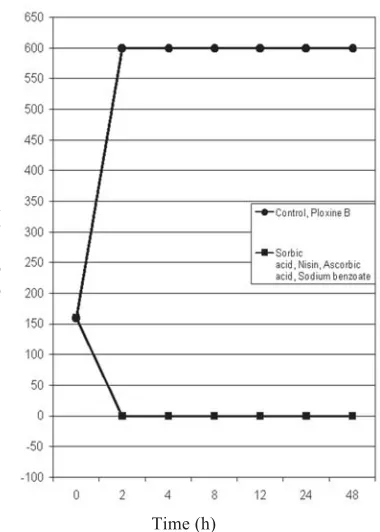
growth rate was 275% and 193.7% respectively, these results were recorded at 12 hours and 48 hours respectively. Fig 2. showsed that the time kill curves of most effective food additives. It is important to notice that two observation were observed. The first; time kill curve (completely killing 100% death rate) of sorbic acid, nisin,ascorbic acid and sodium benzoate) was 2 hours toward E. coli. The second observation was nokilling for phloxin-B. After 2 hours a good growth was observed. The growth rate was 375% after 2 hours. The similar growth rate 375% was observed in control culture. Fig. 3 showed the time-kill curves of selected food additives against Salmonella indica. The time-kill curves (100% death rate) of
ascorbic acid, sorbic acid and nisin toward
Salmonella indica was 2, 8, and 12 hours
respectively. The death rate of Salmonella indica
was 6.25%, 9.0%, 43.75%, 50%, 68.7% and 81% after 4, 8, 12, 24 and 48 hours. Phloxin-B has no killing effect toward Salmonella indica. Fig. 4
Time (h)
Fig. 1. Time Kill Curves of Bacillus cereus by
selected food additives.
CFU X 10
2 /ml
Time (h)
Fig. 2. Time Kill Curves of Escherichia coli
CFU X 10
Time (h)
Fig. 4. Time Kill Curves of Staphylococcus aureus
by selected food additives
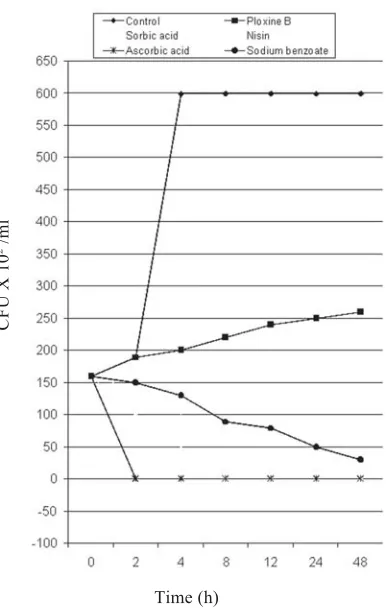
shows the time-kill curves of selected food additives against Staphylococcus aureus. The
time-kill curves (100% death rate) of ascorbic acid, nisin, phloxin-B and sodium benzoate at 2, 4 and 24 hours respectively. It is important to notice that after 2 hours the death rates of Staphylococcus aureus were 12.5%, 18.7%, 53%, 75% and 100%
after treatment by sorbic acid, sodium benzoate, nisin, phloxin-B and ascorbic acid.
DISCUSSION
The susceptibility of antibiotic on the studied bacterial species consider as a database for comparison between the known effect of antibiotic and the unknown effect of food additive. Food additives may play role in limiting or preventing microbial proliferation. Obviously, the number of chemical compounds permitted to be used as food and pharmaceutical preservatives is limited (Branen 1983 and Hugo and Russel, 1991).
The growth in the use of food additives has increased enormously in the past 30 years, totally now over 200,000 tons per year.
Therefore it has been estimated that today about 75% of the western diet is made up of various processed foods, each person is now consuming an average 8-10 lbs of additives per year with same possibily eating considerably more (Miller 1985 and ACARD, 1982). Chemical additives have generally be used to combats specific microorganisms and also can enhance or contribute to the flavour of acidified or fermented food. The susceptibility of antibiotic against the studied bacterial species was clear as follow;
Bacillus cereus was resistant to ampicillin and
azeteronan while Bacillus cereus, Staph aureus
and Salmonella indica were resistant to azternan
only. Both Salmonella indica and E.coli were
resistant to vancomycin. The same susceptibility effect was recorded in case phloxine B, nisine, ascorbic acid and sorbic acid, therefore this 4 food
Time (h)
Fig. 3. Time Kill Curves of Salmonella indica by
selected food additives.
CFU X 10
2 /ml
CFU X 10
additives were used as food preservatives. All studied bacterial species were susceptible to small concentrations of the all tested food additives.
Phloxin B was the most effective additive toward the all studied bacterial species; this means that this substance was available using as food preservative. This result was agreement with Rasooly, 2005 and Federal Reigister, (1982) they showed that phloxin B has antibacterial effect against gram positive and gram negative bacteria. The bacterial growth was stopped completely after the addition of 50-100ug/ml from phloxin B to the growth media (Rasooly and Weisz, 2002). Nisin shows high antibacterial activity against on growth of gram positive followed by gram negative bacteria. Nisin can help control of spoilage bacteria in dairy products, fish, juice and vegetables; this result was agreement with results. Organic acid can help control bacteria, molds and yeast in bakery products, meat, juices and other food. In general organic acids are abroad spectrum in using in food production, processing and industry.
REFERENCES
1. ACARD, The Food Industry and Technology, Cabinet Office, Advisory Council for Applied Research and Development, HMSO, London.(1982).
2. Branen, A. L. Introduction to use of antimicrobials. In Antimicrobials in Foods ed. Branen, A.1,. & Davidson, P.M. New York: Academic Press.1-9 (1983).
3. Chien, P. J.; Sheu, F.; Huang, W. T. and Su, M. S. Effect of molecular weight of chitosans on their antioxidative activities in apple juice. Food Chem.102: 1192–1198 (2007).
4. Delves-Broughton, J. Food Technol 44: 100–
117 (1990).
5. DermNet NZ. www.dermnetnz.org/reactions/e-numbers (2008).
6. Federal Register. D&C Red no. 27 and D&C Red no. 28. 47: 42566– 42569 (1982).
7. Fernandes, J. C.; Eaton, P.; Gomes A. M.; Pintado, M. E. and Malcata, F. X. Study of the antibacterial effects of chitosans on Bacillus cereus (and its spores) by atomic force
microscopy imaging and nanoindentation.
Ultramicroscopy.,109: 854–860 (2009). 8. Fernandes, J. C.; Tavaria, F. K.; Soares, J. C.;
Ramos, O. S.; Monteiro, M. J.; Pintado, M. E. and Malcata, F. X. Antimicrobial effects of chitosans and chitooligosaccharides, upon
Staphylococcus aureus and Escherichia coli, in
food model systems. Food Microbiology., 25:
922– 928 (2008).
9. Food Intolerance and Food Aversion. A Joint Report of the Royal College of Physicians and the British Nutrition Foundation. J Royal College of Physicians of London, 18(2):(1984).
10. Hayouni, E.; Imed Chraief, I.; Abedrabba, M.; Bouix, M.; Leveau, J.; Mohammed, H. and Hamdi, M. Tunisian Salvia officinalis L. and Schinus molle L. essential oils: Their chemical.
compositions and their preservative effects against Salmonella inoculated in minced beef meat. International Journal of Food Microbiology., 125: 242–251 (2008).
11. Hugo, W. B. and Russell, A. D. Types of antimicrobial agents. In Principles and Practice of Disinfection, Preservation and Sterilisation ed. Russell, A.D., Hugo, W.B. & Ayliffe, G.A.J. 2nd edn. Oxford: Blackwell Scientific Publications. (1991).
12. Hyde A. J. ; Parisot, J. I.; McNichol, A. and Bonev, B. B. Nisin-induced changes in Bacillus morphology suggest a paradigm of antibiotic action . PNAS ., 103(52): 19896–19901 (2006).
13. Liu, N.; Chen, X. G.; Park, H. J.; Liu, C. G.; Liu, C. S.; Meng, X. H. and Yu, L. J. Effect of MW and concentration of chitosan on antibacterial activity of Escherichia coli. Carbohydr. Polym.
64: 60–65 (2006).
14. May, J.; Ryan, C.; Barbano, D. M.; Rudan, M. and Boor, K. Effects of somatic cell count on quality and shelf life of pasteurized fluid milk.
J. Dairy Sci. 83: 264-274 (2000).
15. Miller, M. Danger! Additives at Work, London Food Commission, London. (1985).
16. Okuyama, K.; Noguchi, K.; Kanenari, M.; Egawa, T.; Osawa, K. and Ogawa, K. Structural diversity of chitosan and its complexes.
Carbohydr. Polym. 41: 237-247 (2000).
17. Rasooly, A. and Weisz, A. In vitro antibacterial activities of phloxine B and other halogenated fluoresceins against methicillin- resistant
Staphylococcus aureus. Antimicrob. Agents Chemother. 46(11): 3650–3653 (2002).
18. Rasooly, R. Expanding the bactericidal action of the food color additive phloxin B to gram negative bacteria. FEMS Immunology and Medical Microbiology ., 45: 239-244 (2005). 19. Rhoades, J. and Roller, S. Antimicrobial actions
of degraded and native chitosan against spoilage organisms in laboratory media and foods. Appl. Environ. Microbiol. 66: 80-86 (2000).
20. Rinaudo, M. Chitin and chitosan: properties and applications. Prog. Polym. Sci. 31: 603-632
21. Seo, S.; King, J. M. and Prinyawiwatkul, W. Simultaneous depolymerization and decolorization of chitosan by ozone treatment.
J. Food Sci.72: 522–526 (2007).
22. Shi, C.; Zhu, Y.; Ran, X.; Wang, M.; Su, Y. and Cheng, T. Therapeutic potential of chitosan and its derivatives in regenerative medicine. J. Surg. Res. 133: 185-192 (2006).
23. The Food Labelling Regulations S.I. 1980-1849 (1980).
24. Thomas, L. V.; Clarkson, M. R. and Delves-Broughton, J. In Natural Food Antimicrobial Systems, ed Naidu AS (CRC, New York) . 463– 524 (2000).
25. Tikhonov, V. E.; Stepnova, E. A.; Babak, V. G.;
Yamskov, I. A.; Guerrero, J. P.; Jansson, H. B.; Llorca, L. V.; Salinas, J.; Gerasimenko, D. V.; Avdienko, I. D. and Varlamov, V. P. Bactericidal and antifungal activities of a low molecular weight chitosan and its N-/2(3)-(dodec-2-enyl)-succinoyl/-derivatives. Carbohydr. Polym. 64:
66-72 (2006).