Original Research Article
Trend of clients attending an integrated councelling and testing centre
of a tertiary care hospital in North Karnataka: a record based study
Rakesh K. Nayak
1, Raghavendra D. Kulkarni
2, Ganavalli S. Ajantha
2*
INTRODUCTION
The prevalence of HIV among the adult population has continued a steady decline at the national level from an estimated peak of 0.4% in the year 2000 down to 0.26% in 2015. The total number of people living with HIV (PLHIV) in India is estimated at 21.17 lakhs in 2015 compared to 22.26 lakhs in 2007. The data shows that children below 15 years of age account for 6.54% while women account for 40.5% of the total estimated HIV positives. India has successfully achieved the sixth Millennium Development Goal of halting and reversing the HIV epidemic. Between 2000 and 2015, the number of new HIV infections dropped from 2.51 lakhs to
86,000, a reduction of 66% against the global average of 35%. Children below 15 years of age accounted for 12% of the total number of new infections while the remaining new infections were among adults.1
Early testing and diagnosis, on a voluntary basis, is the gateway to HIV prevention, treatment, care and other support services. An ICTC is a place where a person is counselled and tested for HIV, of his own free will or as advised by a medical provider. As on 31st August 2016 in India, there were 20,756 Integrated Counselling and Testing Centres (ICTC), mainly located in government hospitals. The main functions of an ICTC are conducting HIV diagnostic tests, providing basic information on the
ABSTRACT
Background: The prevalence of HIV among the adult population has continued a steady decline at the national level from an estimated peak of 0.4% in 2000 down to 0.26% in 2015. The data generated by ICTC may provide important clues to understand the epidemiology of the disease in a specific area, as well as pattern of risk behavior of the population.
Methods: The present retrospective record based cross sectional study was carried out at the ICTC Centre of SDM College of Medical Sciences and Hospital, Dharwad. Retrospective data for the past six years (2012-13 to 2017-18) on clients visiting the ICTC was collected from the ICTC registers.
Results: A total of 45,066 clients attended the ICTC over a period of 6 years, among which 61.6% were females and 38.4% were males. Among the total females, 55% were antenatal mothers. Out of the total clients tested, 99.75% of clients underwent post-test counseling. Among the total clients, 669 were HIV sero-positive clients out of which majority (61.7%) were males. The total positivity rate was 1.48% among the ICTC attendees. 47 clients had co-infections with TB.
Conclusions: The challenge is to increase access to and uptake of HIV testing priority. Intense IEC activities for behaviour change at grass root level populations should be encouraged.
Keywords: ICTC, HIV, Client trend
1
Department ofCommunity Medicine, 2Department of Microbiology, SDM College of Medical Sciences and Hospital, Shri Dharmasthala Manjunatheshwara University, Dharwad, Karnataka, India
Received: 15 April 2019
Accepted: 04 June 2019
*Correspondence:
Dr. Ganavalli S. Ajantha,
E-mail: [email protected]
Copyright: © the author(s), publisher and licensee Medip Academy. This is an open-access article distributed under the terms of the Creative Commons Attribution Non-Commercial License, which permits unrestricted non-commercial use, distribution, and reproduction in any medium, provided the original work is properly cited.
modes of HIV transmission, promoting behavioural change to reduce vulnerability and to link people with other HIV prevention, care and treatment services.
Ideally, a health care facility should have one Integrated Counselling and Testing centre for all groups of people. However, an ICTC is located in facilities that serve specific categories such as high risk group, pregnant women, STI cases, TB Patients, HIV/ AIDS symptomatic patients. As on 31st March 2016, in India, 74.4% percent of PLHIV were aware of their HIV status. The challenge before NACO is to reach to all HIV infected people in the country so that they adopt a healthy lifestyle; access life-saving care and treatment and help prevent further transmission of HIV. Thus, counselling and testing services are important components of prevention and control of HIV/AIDS in the country.2
The data generated by ICTC may provide important clues to understand the epidemiology of the disease in a specific area, as well as pattern of risk behavior of the population. With this purpose the present study was carried out to determine the trend of clients visiting the ICTC and understand the profile of sero-positive clients.
METHODS
The present retrospective record based cross sectional study was carried out at the ICTC Centre of SDM College of Medical centre and Hospital, Dharwad. The college is situated between the twin cities of Hubli and Dharwad, Karnataka. The ICTC Centre was established in this college in the year 2006 and since then it is catering a huge population of the twin cities. It conducts HIV tests, counselling of patients as well as maintains
proper records. Detailed Information about the
demography, age, sex, sero-positivity of clients was available in the registers from 2012 onwards and hence retrospective data for the past six years (2012-13 to 2017-18) on clients visiting the ICTC was collected. However for the trend estimate the data with respect to the number of clients was available from 2006 onwards. Study proforma consisted a checklist on socio-demographic characteristics of clients including age, sex, education, occupation, marital status, their serology report status, parameters like TB co-infection, HIV status of the spouse, ART registration status etc. ELISA, a simple and rapid test was used to diagnose HIV infection by two different antigens.
Data collection was done by accessing the records of the SDM ICTC Centre. Data was entered in excel sheet and analysed using SPSS 22 free trial version. Data was presented in percentages. Permission was sought from the Head of Department of Microbiology to access the ICTC records. Identity of the clients was not disclosed. Incomplete records in the register were excluded.
RESULTS
A total of 65,184 clients attended the ICTC over a period of 12 years. The total positivity rate among clients was 4.63%. Among the sero-positive clients, 61.5% were males and 36.5% were females. Nearly 2% were ANC clients. The rates of post-test counselling were 82.4% during the year 2006 which has improved to 100% during the year 2018 as shown in Table 1. The number of clients increased in each year, with decrease in the overall sero-positivity (Figure 3).
Table 1: Number of clients who underwent pre-test counseling, HIV test and post-test counseling over
years at the ICTC.
Year Pre-test Test Post-test
2006-07 875 816 721
2007-08 1207 1137 1132
2008-09 2618 2564 2327
2009-10 3545 3533 3521
2010-11 6211 6211 6176
2011-12 5662 5662 5626
2012-13 6301 6301 6278
2013-14 6853 6853 6807
2014-15 8011 8011 8011
2015-16 7454 7454 7454
2016-17 7740 7740 7740
2017-18 8707 8707 8707
Total 65184 64989 64500
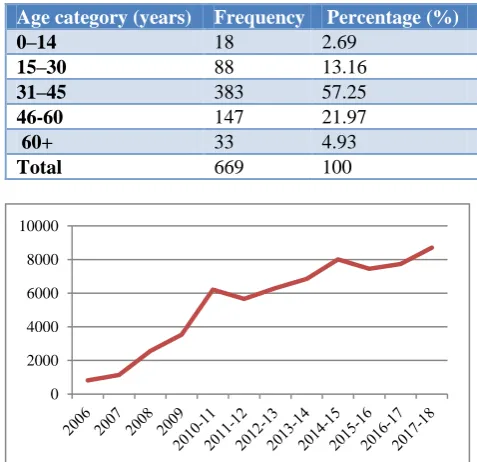
Table 2: Distribution of sero-positive clients based on age categories.
Age category (years) Frequency Percentage (%)
0–14 18 2.69
15–30 88 13.16
31–45 383 57.25
46-60 147 21.97
60+ 33 4.93
Total 669 100
Figure 1: Line graph showing the trend of clients who underwent HIV testing at the ICTC.
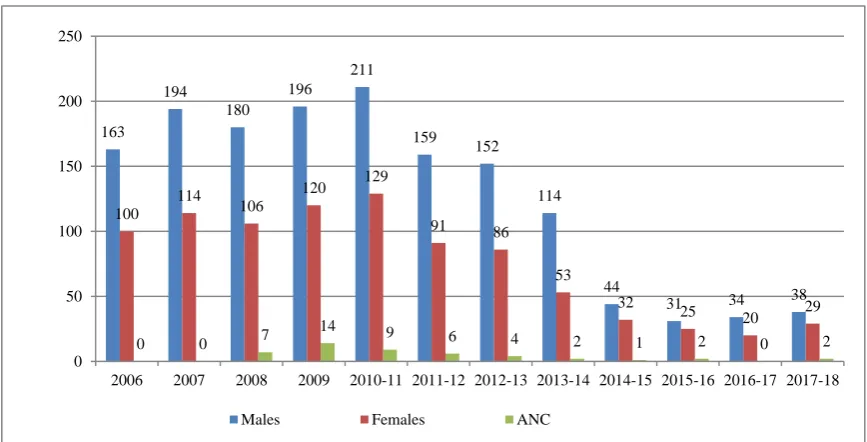
Figure 2: Bar graph showing the trend of distribution of sero-positive clients.
Figure 3: Line graph showing the trend of sero-positivity.
Complete set of demographic details of clients were available from 2012 onwards. Hence retrospective data collection was done for the past 6 years. A total of 45,066 clients attended the ICTC over a period of 6 years, among which 61.6% were females and 38.4% were males. Among the total females, 55% were antenatal mothers. Out of the total clients tested, 99.75% of clients underwent post-test counseling. Among the total clients, 669 were HIV sero-positive clients out of which majority (61.7%) were males. The total positivity rate was 1.48% among the ICTC attendees. Positivity rate was higher among males (3.16%) than females (2.53%). Positivity among ANC clients was 0.095%.
Majority of the sero-positive clients belonged to the age group between 31-45 years (57.2%) followed by 46-60 years (22%). Eighteen clients belonged to the pediatric
age group (Table 3). Among these clients, 67.7% were married, 9.5% were unmarried, 13.7% were widows, 4.4% were widowers and 4.8% were separated or divorced. Among the 327 married clients, spouse testing was possible with only 148, out of which test was negative in 73 (discordant couples) and positive in 75 (Concordant couples). Male component in the discordant couple accounted for 91.78% (67) and females accounted for 8.2% (6). TB Co-infection was seen among 3 of the concordant couples. Altogether 47 clients had co-infections with TB (Sputum positive - 34, Sputum negative- 5 and extra-pulmonary -8).
The mean CD4 count among primary clients was 257±184.4 with a minimum of 18 and maximum of 1016 counts. Similar tests done among spouses reported a mean count of 322±180 (Min- 34, Max – 947).
163 194
180 196
211
159 152
114
44
31 34 38
100 114
106
120 129
91 86
53
32
25 20 29
0 0 7
14 9
6 4 2 1 2 0 2
0 50 100 150 200 250
2006 2007 2008 2009 2010-11 2011-12 2012-13 2013-14 2014-15 2015-16 2016-17 2017-18
Males Females ANC
30
27.1
19.3
14.9
9.2
8 7.4
4.5
1.2
1 0.43
0.43 36.4
30.4
14.7
12.3
8.3
5.1 5.1
2 1.7 1.4 0.25 0.33
0 5 10 15 20 25 30 35 40
2006 2007 2008 2009 2010-11 2011-12 2012-13 2013-14 2014-15 2015-16 2016-17 2017-18
DISCUSSION
ICTC services provides to those who come to the centre either from referral (care providers and NGOS) or direct walk in clients. So the profile of attendees depends upon the characteristics of the areas served by the ICTC and the population residing there in. The subpopulations which are vulnerable or practice high risk behaviour (HRB) shall be the target group for these services. The ICTC is an ideal point for prevention, where HIV negative individuals learn to use full array of existing services and interventions to adopt and maintain risk reduction behaviours, and HIV positive individuals use quality prevention services to adopt and sustain lifelong protective behaviours and avoid the virus transmission.3
The HIV sero-positivity in ICTC clients in the present study was noted to be 4.63% which is less than the overall prevalence for Gujarat (7.3%), study done in Ranchi (6.9%), South Karnataka (9.6%), and West Bengal (17.1%).3-6
According to the present study, majority of the seropositive attendees belonged to the age group 31-49 years, as found in the studies Sinha et al (89.4% in male and 88.00% in female) and Ranchi study (87 and 85% respectively).3,7
In the present study, there was a gradual increase in the number of clients visiting the ICTC over years and a decrease in the trend of prevalence of HIV. The possible explanation for the increase in the number of attendees could be an increase in awareness among general population about HIV testing. Similar trend was noted in a study carried out in Meerut, Uttar Pradesh and Andhra Pradesh.8,9 However these results were in contrast to a study done in Tirupati where the number of clients decreased over years and no much difference was observed in prevalence.10 Heterosexual mode of transmission was responsible for sero-positivity among of HIV positive clients as noted with other studies. The married to unmarried ratio was 7.12:1 as against 4.47:1 (228/51) in Meerut study.8
In this study, majority of the sero-positives (67.7%) were married. Similarly Kommula et al, Chougale et al, Vyas et al, Dutta et al found large percentage of HIV
sero-positives were married.9,11-13 In this study,
widow/widower/ Divorced / separated group contributed to around 20% among HIV positives. Of the study population, 9.5% individuals were unmarried. More divorcees and widows were observed among HIV positives in a study conducted in Mumbai by Ingole et al.14
Out of 327 married individuals, only 148 individuals spouse were tested. Out of which 75 were seropositive and 73 were sero-negative. In this study, 92% males and 8% females were sero-discordant. Dutta et al reported in their study conducted in 2017, 10 (43.5%) males and 8
(34.7%) females were sero-concordant while 13 (56.5%) males and 15 (65.3%) were sero-discordant and Chougule et al reported 44.90% were concordant couples, whereas 55.10% were discordant couples.11,13
CONCLUSION
The challenge is to increase access to and uptake of HIV testing among priority populations. This warrants different innovative strategic approaches suitable for implementation across different states and union territories of India. There is a need to carry out intense IEC activities for behaviour change at grass root levels. Low literacy and limited access to health facilities need to be addressed.
ACKNOWLEDGEMENTS
The author would like to thank the Head of department, Microbiology for granting permission for accessing the records and also the staff of ICTC, SDM College of Medical Sciences and Hospital, Dharwad for their full co-operation. Special thanks to the Head of Department of Community Medicine for giving permission to carry out the study.
Funding: No funding sources Conflict of interest: None declared Ethical approval: Not required
REFERENCES
1. National HIV counselling and Testing services (HCTS) Guidelines, December 2016. Available at: http://naco.gov.in/sites/default/files/National%20HI V%20Counselling%20&%20Testing%20Services% 20Guideline,%20Dec%202016_0.pdf. Accessed on 18 March 2019.
2. National AIDS Control Organisation. Available at: http://naco.gov.in/integrated-counselling-and-testing-centre.Accessed on 18 March 2019.
3. Kiran A, Kujur M, Kumar M, Haider S, Kashyap V,
Sundaram S. Profile of the patients attending in ICTC, RIMS, Ranchi. Journal of Community Medicine and Health Education 2015;5(2):1-4.
4. Quarterly CMIS Bulletin Gujarat Strategic
Information and management Unit, Gujarat State AIDS Control Society. Meghaninagar, Ahmedabad, India, 2008.
5. Gupta M. Profile of Clients Tested HIV Positive in Voluntary Counseling and Testing Centre of a District Hospital, Udupi. Indian J. Community Med. 2009;34:223-6.
6. Kumari A. Prevalence rate of AIDS has dropped in
state: UNICEF, TNN, 2012.
7. Sinha T, Bansal AK, Mohan RS, Rathi HB,
8. Ahuja S, Pandey A, Vishkarma R, Madan M. Profile of HIV Positive Clients Attending an Integrated Counselling and Testing Centre of a Tertiary care Hospital in Meerut, Uttar Pradesh, India. Int J Current Microbiol Applied Sci. 2016;5(6):384-91.
9. Kommula VM, Mishra AK, Kusneniwar GN,
Chappa SN, Rao KV. Profile of HIV positive clients in an ICTC of a private medical college, Andhra Pradesh: A situational analysis. NJIRM. 2012;3:36- 40.
10. Ade A, Yamasani B, Deekala R, Kondagunta N, Dnyaneshwar T. Katyarmal. Profile of HIV sero-positive attendees: an integrated counselling and testing centre record based retrospective study. Int J Community Med Public Health. 2018;5(12):5069-76.
11. Dutta R, Choudhuri S, Goswami S. Profile of HIV positive clients: an ICTC record based retrospective study. Int J Community Med Public Health. 2017;4:3018-21.
12. Vyas N, Hooja A, Sinha P, Mathur A, Singhal A, Vyas L. Prevalence of HIV/AIDS and prediction of future trends in north-west region of India: A sixyear ICTC based study. Indian J Community Med. 2009;34:3:212-7.
13. Chougale R, Shinde P. Profile of HIV seropositive attendees of integrated counselling and testing center of a tertiary care teaching hospital in Kolhapur, India. Int J Contemporary Med Res. 2017;4(6):1330-6.
14. Ingole N, Paranjpe S, Sarkate P. Demographic profile of HIV seropositive clients attending
Integrated Counselling and Testing Centre,
Mumbai, India. J AIDS Clin Res. 2014;5:369.