Original Research Article
Prevalence of chronic respiratory symptoms in an urban population of
North Kerala
Bindhu Vasudevan, Silpa S.*
INTRODUCTION
With the advent of antibiotics in 1940s, the importance of acute respiratory tract infection as a cause of high mortality and morbidity, declined rapidly in developed countries and also it is decreasing in developing countries. However the burden of chronic diseases of respiratory system is increasing day by day. Tobacco
smoking, socio economic development, urbanization, associated life style changes and resulting increase in air pollution are undoubtedly the underlying causative factors. Apart from the discomfort of the symptoms and the prolonged treatment, chronic respiratory diseases are associated with a variety of serious complications, which result in high treatment costs, reduced quality of life, reduced productivity, and shortened life expectancy.
ABSTRACT
Background: Chronic respiratory diseases are becoming a challenge to public health due to its high morbidity and mortality. Most of these diseases are preceded by variable periods of chronic respiratory symptoms. If chronic respiratory symptoms can be diagnosed and managed properly and timely, we can reduce the incidence and complication of chronic respiratory diseases.
Methods: A community based cross sectional survey was conducted in 20 electoral wards of Calicut corporation of Northern Kerala among the adult resident population of 20-70 years to assess the prevalence of chronic respiratory symptoms such as chronic cough, phlegm, wheezing, breathlessness and nasal allergy and the factors associated with these chronic symptoms. The information was collected from 1384 eligible subjects selected by cluster sampling using British research council respiratory questionnaire.
Results: About 9.2% (n=95) of study population had at-least one of the chronic respiratory symptoms. 1.8% (n=19) had all the chronic respiratory symptoms. Prevalence of various chronic respiratory symptoms was chronic cough (8.7%), Phlegm (14.3%), wheezing (8.5%), breathlessness (2.2%) and nasal allergy (14.5%). Advancing age, current smoking, family history and past history of various respiratory diseases are significantly associated with the development of chronic respiratory symptoms. Female gender, longer duration of stay in Calicut corporation and regular alcoholism were significantly associated with chronic phlegm in the study population. Wheezing, breathlessness and chronic nasal allergy was significantly higher among lower socio economic status.
Conclusions: Prevalence of chronic respiratory symptoms is high among the urban population of Northern Kerala. Older age group, smoking, past and family history of respiratory diseases are the major risk factors associated with these respiratory symptoms.
Keywords: Chronic respiratory symptoms, Kerala, Nasal allergy, Calicut corporation Department ofCommunity Medicine, Govt. Medical College, Ernakulam, Kerala, India
Received: 30 January 2019
Revised: 17 March 2019
Accepted: 18 March 2019
*Correspondence:
Dr. Silpa S.,
E-mail: [email protected]
Copyright: © the author(s), publisher and licensee Medip Academy. This is an open-access article distributed under the terms of the Creative Commons Attribution Non-Commercial License, which permits unrestricted non-commercial use, distribution, and reproduction in any medium, provided the original work is properly cited.
According to the report ‘Respiratory disease in the world: realities of today-opportunities for tomorrow’ five conditions that primarily contribute to the global burden of respiratory disease are asthma, chronic obstructive
pulmonary disease, acute respiratory infections,
tuberculosis, and lung cancer.1 According to this report chronic obstructive pulmonary diseases (COPD) affect more than 200 million people and is the fourth leading cause of death in the world. COPD is the only major disease that is increasing in prevalence worldwide and on all continents. Asthma affects about 235 million people worldwide. According to WHO estimates, 65 million people have moderate to severe COPD. More than 3 million people died of COPD in 2005, which corresponds to 5% of all deaths globally.2
In India, chronic respiratory diseases account for 7% of deaths and 3% loss of disability adjusted life years (DALYs).3According to a multi-centric study conducted by Jindal, the national burden of asthma and chronic bronchitis was estimated at respectively 17.23 and 14.84 million.4 In the future nearly all population growth worldwide will take place in urban areas of developing
countries. With the inadequate public health
infrastructure and rising poverty levels in urban areas, chronic respiratory diseases are going to be one of the major threats in future.
Most of the epidemiological studies measured the prevalence of respiratory diseases either by measuring the proportion of population having chronic respiratory symptoms such as chronic cough, phlegm, breathlessness and wheezing or by measuring the proportion of population having air flow limitation.5 People may have respiratory symptoms such as chronic cough and phlegm before developing airflow limitation. Many of the prevalence data regarding chronic respiratory diseases are under reported due to this fact. According to a survey conducted by WHO in 76 primary health centers of nine countries, respiratory symptoms are among the major causes of consultation at primary health care centers.6
There is a dearth of basic data pertaining to the prevalence of chronic respiratory diseases in Kerala and so it is difficult to ascertain the increase or decrease in prevalence of such diseases over a period of time. Most of the studies conducted were confined to various occupational groups. Thus the present study was conducted in Calicut city, which is one of the major centres for trade and commerce in Kerala to assess the prevalence of chronic respiratory symptoms among the resident population of 20-70 years age group in Calicut corporation.
Objectives were to estimate the prevalence of Chronic respiratory symptoms such as chronic cough, chronic phlegm, breathlessness, wheezing and nasal allergy among the resident population of 20-70 years age group in Calicut corporation and to find out the factors
associated with these chronic respiratory symptoms among the study population.
METHODS
Study design: Descriptive cross-sectional
Study setting: Calicut Corporation located in the west coast of Kerala.
Study period: January 2004–December 2004
Study population
All residents in the age group of 20-70 years who were residing in Calicut corporation. People who are staying in the corporation for more than 6 months were considered as residents and included in the study. Those who could not trace after 3visits and those were not willing to participate in the study were excluded from the study.
Sampling technique
Cluster sampling was used. Electoral wards were selected as clusters. Calicut Corporation had 51 electoral wards. 20 electoral wards were selected based on probability proportionate to size (PPS).
Sample size
A study conducted by Kerala Sasthra sahithya parishad, reported the prevalence of chronic respiratory disease in Kerala as 14.3%.7 Based on this data and using the formula 3.84×pxq×D/d2 the sample size for the present study was fixed to be 1150. Here, D-the design effect was kept as 2 and d=relative precision; 20% of the p. It was decided to collect data from all the eligible people from 20 houses in each selected cluster.
Selection of house hold
A central point in each cluster was selected and a direction from this central point was selected randomly. The first house in the selected direction was also selected randomly. The next house selected was the one with the door adjacent to the previously selected house and so on till 20th house was reached.
Study procedure
history of respiratory diseases, smoking habits, alcohol consumption, type of fuel used in the family etc.
Case definition
Chronic cough/phlegm: The cough/phlegm will be counted if they have these symptoms with first smoke or on first going outdoors (excluded phlegm from nose).
Breathlessness: Shortness of breath.
Nasal allergy: Sneezing and congestion of the nose on most of the days with or without redness and itching of the eyes.
Wheezing: Whistling sound in the chest with breathing difficulty.
The term chronic was used when the subject had symptoms on most of the days for as much as three months in each year.
RESULTS
By taking census in the selected sample population, there were 1384 eligible subjects. 17 people were residing in the area for less than 6 months, 11 persons were not
willing to participate in the study and 323 subjects could not be contacted even after 3 attempts. They were excluded from the study. So the final sample size was 1033 with a coverage rate of 74.63%.
Mean age of the study population was 40.61±13.93). 555 (53.7%) belonged to below 40 years. 110 (10.7%) were above 60 years. 552 (53.4%) of study population were females. 42.5% of study population were residing in the corporation for more than 20 years. Mean duration of stay in the corporation was 20.74 years±17. 60.9% were belonged to middle socioeconomic status, 15.2% belonged to high socioeconomic groups and the rest were belonged to low socioeconomic status.
Table 1 shows the prevalence of chronic respiratory symptoms such as chronic cough, chronic phlegm, breathlessness, wheezing and nasal allergy. 9.2% (n=95) of study population had at-least one of the respiratory symptoms. 74.8% (n=773) had none of the chronic respiratory symptoms. 1.8% (n=19) had all the chronic respiratory symptoms. 7.7% (n=75) had both chronic cough and phlegm.
Among the symptoms chronic phlegm and nasal allergy were the most common symptoms. Breathlessness was the least prevalent symptom.
Table 1: Prevalence of chronic respiratory symptoms in the study population.
Symptom Chronic cough Chronic phlegm Breathlessness Wheezing Chronic nasal allergy
Number 91 148 23 88 150
Percentage 8.7 14.3 2.2 8.5 14.5
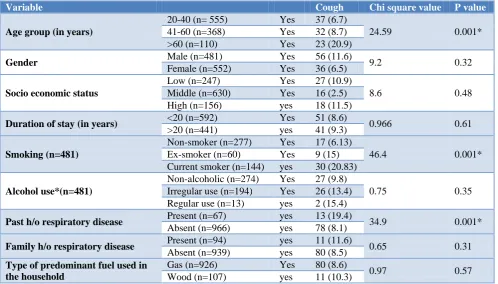
Table 2: Association of chronic cough and selected socio-demographic variables in the study population (N=1033).
Variable Cough Chi square value P value
Age group (in years)
20-40 (n= 555) Yes 37 (6.7)
24.59 0.001*
41-60 (n=368) Yes 32 (8.7)
>60 (n=110) Yes 23 (20.9)
Gender Male (n=481) Yes 56 (11.6) 9.2 0.32
Female (n=552) Yes 36 (6.5)
Socio economic status
Low (n=247) Yes 27 (10.9)
8.6 0.48
Middle (n=630) Yes 16 (2.5)
High (n=156) yes 18 (11.5)
Duration of stay (in years) <20 (n=592) Yes 51 (8.6) 0.966 0.61
>20 (n=441) yes 41 (9.3)
Smoking (n=481)
Non-smoker (n=277) Yes 17 (6.13)
46.4 0.001*
Ex-smoker (n=60) Yes 9 (15)
Current smoker (n=144) yes 30 (20.83)
Alcohol use*(n=481)
Non-alcoholic (n=274) Yes 27 (9.8)
0.75 0.35
Irregular use (n=194) Yes 26 (13.4)
Regular use (n=13) yes 2 (15.4)
Past h/o respiratory disease Present (n=67) yes 13 (19.4) 34.9 0.001*
Absent (n=966) yes 78 (8.1)
Family h/o respiratory disease Present (n=94) yes 11 (11.6) 0.65 0.31
Absent (n=939) yes 80 (8.5)
Type of predominant fuel used in the household
Gas (n=926) Yes 80 (8.6)
0.97 0.57
Table 3: Association of chronic phlegm and selected socio-demographic variables in the study population (N=1033).
Variable Phlegm Chi square value P value
Age group (years)
20-40 (n=555) Yes 66 (11.9)
19.94 0.001*
41-60 (n=368) Yes 51 (13.9)
>60 (n=110) Yes 31 (28.2)
Gender Male (n=481) Yes 83 (17.3) 5.29 0.02*
Female (n=552) Yes 64 (11.6)
Socio economic status
Low (n=247) Yes 44 (17.8)
0.87 0.45
Middle (n=630) Yes 76 (12.1)
High (n=156) yes 28 (17.9)
Duration of stay (years) <20 (n=592) Yes 72 (12.2) 12.99 0.01*
>20 (n=441) yes 76 (17.2)
Smoking*(N=481)
Non-smoker (n=277) Yes 34 (12.2)
30.88 0.001*
Ex-smoker (n=60) Yes 12 (20)
Current smoker (n=144) yes 38 (26.4)
Alcohol use*(N=481)
Non-alcoholic (n=274) Yes 41 (14.9)
10.72 0.005*
Irregular use (n=194) Yes 40 (20.6)
Regular use (n=13) yes 2 (15.4)
Past h/o respiratory disease Present (n=67) yes 16 (23.9) 8.28 0.04*
Absent (n=966) yes 132 (13.7)
Family h/o respiratory disease Present (n=94) yes 17 (17.9) 2.16 0.54
Absent (n=939) yes 131 (13.9)
Type of predominant fuel used in the household
Gas (n=926) Yes 131 (14.1)
0.83 0.62
Wood (n=107) yes 17 (15.9)
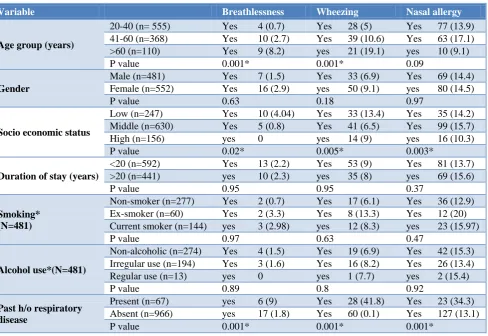
Table 4: Association of chronic breathlessness, wheezing, nasal allergy and selected socio-demographic variables in the study population (N=1033).
Variable Breathlessness Wheezing Nasal allergy
Age group (years)
20-40 (n= 555) Yes 4 (0.7) Yes 28 (5) Yes 77 (13.9)
41-60 (n=368) Yes 10 (2.7) Yes 39 (10.6) Yes 63 (17.1)
>60 (n=110) Yes 9 (8.2) yes 21 (19.1) yes 10 (9.1)
P value 0.001* 0.001* 0.09
Gender
Male (n=481) Yes 7 (1.5) Yes 33 (6.9) Yes 69 (14.4)
Female (n=552) Yes 16 (2.9) yes 50 (9.1) yes 80 (14.5)
P value 0.63 0.18 0.97
Socio economic status
Low (n=247) Yes 10 (4.04) Yes 33 (13.4) Yes 35 (14.2)
Middle (n=630) Yes 5 (0.8) Yes 41 (6.5) Yes 99 (15.7)
High (n=156) yes 0 yes 14 (9) yes 16 (10.3)
P value 0.02* 0.005* 0.003*
Duration of stay (years)
<20 (n=592) Yes 13 (2.2) Yes 53 (9) Yes 81 (13.7)
>20 (n=441) yes 10 (2.3) yes 35 (8) yes 69 (15.6)
P value 0.95 0.95 0.37
Smoking* (N=481)
Non-smoker (n=277) Yes 2 (0.7) Yes 17 (6.1) Yes 36 (12.9)
Ex-smoker (n=60) Yes 2 (3.3) Yes 8 (13.3) Yes 12 (20)
Current smoker (n=144) yes 3 (2.98) yes 12 (8.3) yes 23 (15.97)
P value 0.97 0.63 0.47
Alcohol use*(N=481)
Non-alcoholic (n=274) Yes 4 (1.5) Yes 19 (6.9) Yes 42 (15.3)
Irregular use (n=194) Yes 3 (1.6) Yes 16 (8.2) Yes 26 (13.4)
Regular use (n=13) yes 0 yes 1 (7.7) yes 2 (15.4)
P value 0.89 0.8 0.92
Past h/o respiratory disease
Present (n=67) yes 6 (9) Yes 28 (41.8) Yes 23 (34.3)
Absent (n=966) yes 17 (1.8) Yes 60 (0.1) Yes 127 (13.1)
Variable Breathlessness Wheezing Nasal allergy Family h/o respiratory
disease
Present (n=94) yes 1 (1.1) Yes 16 (16.8) Yes 26 (27.4)
Absent (n=939) yes 22 (2.3) Yes 72 (7.7) Yes 124 (13.2)
P value 0.42 0.009* 0.001*
Type of predominant fuel used in the household
Gas (n=926) Yes 20 (2.2) Yes 79 (8.5) Yes 137 (14.8)
Wood (n=107) yes 3 (2.8) yes 9 (8.4) yes 13 (12.1)
P value 0.66 0.96 0.46
Table 2, 3, and 4 shows the association between respiratory symptoms and selected socio demographic
variables. All the respiratory symptoms were
progressively increased as age increases except the nasal allergy which is maximum among 40-60 years. The association between age and respiratory symptoms was significant in all respiratory symptoms except nasal allergy as proven by chi square test. While chronic cough and phlegm was more among males and in high socioeconomic status, breathlessness and wheezing was more common among females and in low socioeconomic status. The distribution of nasal allergy was almost similar in both sexes, but it was significantly more among low and middle socioeconomic status. The association between gender and chronic respiratory symptoms was significant only in the case of chronic phlegm. The association between wheezing, breathlessness and low socioeconomic status was also statistically significant. Even though all respiratory symptoms except wheezing were more among the population who were staying in Calicut for more than 20 years a statistically significant association was seen only in the case of chronic phlegm.
None of the females admitted that they were using tobacco or alcohol in the present study. So the association
between chronic respiratory symptoms and
smoking/alcoholism was tested only among 481 males in the study population. There was a statistically significant gradient between smoking status and chronic cough and phlegm. It was highest among current smokers and was least among non-smokers. Other symptoms were higher among ex-smokers compared to current smokers but the associations were not significant. Chronic phlegm was significantly more among alcoholics compared to non-alcoholics. None of the other symptoms were significantly associated with alcoholism.
All respiratory symptoms were significantly higher among those who had previous history of respiratory diseases such as tuberculosis, pneumonia, etc. Wheezing and nasal allergy was significantly higher among those who had family history of wheezing and nasal allergy. Chronic cough and phlegm was more among the people who had family history of respiratory diseases such as wheezing, COPD, tuberculosis etc., but the associations was not statistically significant. Even though chronic cough, phlegm and breathlessness was more seen in the people from the families whose major cooking fuel was firewood, none of the respiratory symptoms were significantly associated with the type of cooking fuel they are using in the family.
DISCUSSION
A cross sectional study was conducted among 1033 individuals who were residing in Calicut Corporation of Kerala for more than 6 months. The study revealed that 9.2% of the study subjects were having at least one chronic respiratory symptom. Prevalence of chronic cough was 8.7% and phlegm was 14.3%. Most common chronic respiratory symptoms were nasal allergy and chronic phlegm. An Indian study conducted by Jindal et al at (INSEARCH study) various centers in India revealed a similar finding of prevalence of respiratory symptoms.4 According to the study, the prevalence of one or more respiratory symptoms among the study population was 8.5%. Even though the total prevalence of cough and phlegm was very low compared to the present study, the prevalence from one of their study centre at Trivandrum which is in Kerala got a comparable prevalence (cough-11.5%, phlegm-11.5%). Prevalence of breathlessness and wheezing from the Trivandrum centre was also comparable to the present study (wheeze 5.4% and breathlessness (2.6%). Another study conducted by Chhabra et al among the urban population of East Delhi reported a lower prevalence of chronic cough (2%), chronic phlegm (1.2%) and a higher prevalence of dyspnea (3.4%).8 According to Littlejohns et al 35% of study subjects in south west London had at least one of the chronic respiratory symptoms which was very high compared to the present study.9 9% of the study subjects of age 40-70 years in South West London had chronic cough, phlegm and wheeze. 9% of study subjects had wheeze alone. Another study by Banda reported that 22.5% of the study population of Malawi had at-least one respiratory symptoms and chronic cough was the most commonest symptom.10 Both these studies reported higher prevalence of chronic respiratory symptoms compared to the present study.
Age is a risk factor for all diseases due to cumulative effect of various risk factors over the years. Lung function status is expected to decrease with increasing age. Chhabra et al also observed that all the chronic respiratory symptoms were increasing with increasing age.8 According to him age above 50 years was a significant risk factor for chronic cough, chronic phlegm, dyspnea and wheezing. Peter Littlejohns et al also found out a similar finding.9 He couldn’t find out a significant gender difference in the occurrence of chronic respiratory symptoms. According to Krishnaveni et al prevalence of chronic bronchitis and asthma was higher among older age group among the study population of Kerala.11 She also reported that prevalence of chronic bronchitis was higher among males and asthma was higher among females which is similar to the present study findings. This may be due to the fact that females are less exposed to atmospheric pollution. INSEARCH study also finds age as a significant risk factor for chronic bronchitis and asthma but could not find out any gender association for the same.4
In the present study, chronic phlegm was the only respiratory symptom which was associated with longer duration of stay in the Calicut Corporation. Similarly prevalence of breathlessness and wheezing was significantly high among the lower socio economic status whereas nasal allergy was more among people belong to middle socioeconomic status. Littlejohns reported higher prevalence of chronic bronchitis and asthma among people belong to social class three, four and five compared to people belong to social class one and two.9 Chhabra, and Ehtlich also reported that higher education was a protective factor for chronic cough.8,12
Present study revealed that chronic cough and phlegm was significantly higher among current and ex-smokers compared to non-smokers. INSEARCH study, Littlejohns et al, Joshy et al, Ghoshal et al, Krishnaveni et al, Chhabra et al etc. also came up with similar finding in their studies.4,8,9,11,13,14 Cigarette smoke contains thousands of chemical components, which can irritate and activate macrophages and cells that make up the lining of the airways (epithelial cells). This causes the cells to release multiple types of cytokines, which are small signaling proteins that cause the airway lining to thicken and airways to become inflamed. The persistent airway inflammation caused by cigarette smoke can cause a cycle of injury and repair, which changes the structure of the airways and makes them narrower. Cigarette smoke also induces a cascading effect that results in certain cells producing more mucus than normal. The irritants decrease the number and length of cilia. When the cilia is unable to do it’s jobs, mucus blankets the lining of the airways, providing a home for bacteria, which can release toxins that promote mucus production and further damage cilia.
Chronic phlegm is one of the chronic respiratory
symptoms associated with alcoholism. Drinking
regularly, may increase the risk of developing COPD. It may be due to the confounding effect of smoking, because majority of alcoholics in our study are smokers. According to some researchers, heavy drinking reduces levels of glutathione. This antioxidant helps protect the lungs against damage from smoke. Additionally, regular or chronic drinking prevents your lungs from keeping up a healthy airway. The mucociliary transport system works continually to clear mucus and contaminants out of your airways. When you drink heavily, the system doesn’t work as effectively as it should.
The present study revealed that all the chronic respiratory symptoms were significantly associated with some of the past respiratory diseases such as tuberculosis, pneumonia, asthma, emphysema etc. According to a case control study by Asfaw et al among pharmaceutical workers of Ethiopia the adjusted odds ratio for previous history of respiratory diseases was 3.36 for the development of chronic respiratory symptoms in the future.15 The study done by Galobardes et al among the historical cohort of male students who attended Glasgow university between 1948 and 1968 also revealed that a history of bronchitis in early life was moderately associated with chronic phlegm, dyspnea and a doctor’s diagnosis of asthma in childhood, was very strongly associated with a doctor’s diagnosis of bronchitis and emphysema in adulthood.16 This may be due to the fact that previous respiratory disease could have damaged the normal respiratory functions which may cause airway obstruction later, lead to breathlessness and asthma. These diseases will also lead to respiratory sensitization by which their respiratory mucosa can produce chronic cough and phlegm. Preexisting respiratory diseases may impair respiratory
tract defense mechanism causing the increased
susceptibility to the occurrence the symptoms.
Wheezing and nasal allergy are the two chronic respiratory symptoms which were significantly associated with family history of respiratory diseases in our study. INSEARCH study reported an odds ratio 5.17 for family history for asthma in their study population.4 The case control study by Asfaw et al also reported that workers who had family history of chronic respiratory diseases were about 3 times more likely to develop chronic respiratory symptoms than those who had no disease.14 According to Wang allergic rhinitis was strongly associated with family history of respiratory symptoms.17 Frayh also reported a high odds ratio for family history for the development of asthma and rhinitis in his study among children of Saudi Arabia.18 This may be due to the fact that genetics has its own contribution for the development of chronic respiratory symptoms such as increased IgE levels and the presence of various genes. Future studies are needed to identify the key genes or their haplotypes which are associated with development of respiratory symptoms like allergic rhinitis and asthma.
the type of fuel usage. 90% of the study population used gas as the major cooking fuel. INSEARCH study showed a significant protective effect of LPG/electricity against chronic bronchitis and asthma.4 Krishnaveni et al also suggested that the major cooking fuel used in Kerala is LPG.11 She reported that 42.29% of her study population with chronic respiratory diseases were exposed to indoor air pollution from burning of firewood.
The strengths of our study were good sample size, proper sampling technique, a good study design, a validated questionnaire to collect the information etc. But the information regarding the chronic respiratory symptoms was obtained by questionnaire method. Even though the similar technique was used in many studies, the prevalence assessed may be over or under-estimated. We assessed the prevalence only once during the month of May and so we could not assess the seasonal difference in the prevalence of chronic respiratory symptoms.
CONCLUSION
Prevalence of chronic respiratory symptoms is high among the urban population of Northern Kerala. Advancing age, smoking, past and family history of respiratory diseases are significantly associated with chronic respiratory symptoms.
ACKNOWLEDGEMENTS
Authors would like to express their sincere gratitude to all study participants who were willing to give their time for this project.
Funding: No funding sources Conflict of interest: None declared
Ethical approval: The study was approved by the Institutional Ethics Committee
REFERENCES
1. Respiratory diseases in the world. Realities of Today–Opportunities for Tomorrow. Forum of International Respiratory Societies. Available at: https://www.ersnet.org/pdf/publications/firs-world-report.pdf. Accessed on 6 December 2018.
2. WHO report - Chronic respiratory diseases.
Available at: http://www.who.int/respiratory/
copd/burden/en/. Accessed on 6 December 2018.
3. Reddy KS, Shah B, Varghese C, Ramadoss A.
Responding to the threat of chronic diseases in India. Lancet. 2005;366:1744–9.
4. Jindal SK, Aggarwal AN, Gupta D, Agarwal R, Kumar R, Kaur T, et al. Indian Study on Epidemiology of Asthma, Respiratory Symptoms and Chronic Bronchitis in adults (INSEARCH). Int J Tuberc Lung Dis. 2012;16(9):1270–7.
5. Sherrill DL, Lebowitz MD, Burrows B.
Epidemiology of Chronic obstructive pulmonary disease. Clinics Chest Med. 1990;11:375-87.
6. Chronic respiratory Diseases–WHO Document.
Available at: http://www.who.int/gard/publications /chronic_respiratory_diseases.pdf. Accessed on 08 December 2018.
7. Aravindan KP, Kunjikkannan KP. Chamnges in the
health status of Kerala, 1986-87. Centre for Developmental Study. Thiruvananthapuram, 2009 8. Chhabra P, Sharma G, Kannan AT. Prevalence of
respiratory disease and associated factors in urban area of Delhi. Indian J Community Med. 2008;33:229-32
9. Littlejohns, Peter, Ebrahim S, Anderson R.
Prevalence and diagnosis of chronic respiratory
symptoms in adults. BMJ Clinical Res.
1989;298:1556-60.
10. Banda HT, Thomson R, Mortimer K, Bello GAF, Mbera GB, Malmborg R, et al. Community prevalence of chronic respiratory symptoms in rural Malawi: Implications for policy. PLoS ONE. 2017;12;(12):e0188437.
11. Krishnaveni V, Rakesh PS, Balakrishnan, Shibu, Shanavas A, Dharman, et al. Prevalence of chronic respiratory diseases from a rural area in Kerala, southern India. Indian J Tubercul. 2018;65:48-51. 12. Ehrlich RI, White N, Norman R, Laubscher R,
Steyn K, Lombard C, et al. Predictors of chronic bronchitis in South African adults. Int J Tuberc Lung Dis. 2004;8(3):369-76.
13. Joshi RC, Madan RN, Brash AA. Prevalence of chronic bronchitis in an industrial population in North India. Thorax. 1975;30 61-8.
14. Ghoshal AG, Ravindran GD, Gangwal P,
Rajadhyaksha G, Cho S, Muttalif ARBA, et al. The burden of segregated respiratory diseases in India and the quality of care in these patients: Results from the Asia-Pacific Burden of Respiratory Diseases study. Lung India. 2016;33(6):611–9. 15. Asfaw S, Enquselassie F, Tefera Y, Gizaw M,
Wakuma S, Woldemariam M. Determinants of
Chronic Respiratory Symptoms among
Pharmaceutical Factory Workers. J Trop Med. 2018;2018:3815689.
16. Galobardes B, McCarron P, Jeffreys M. Association between early life history of respiratory disease and morbidity and mortality in adulthood. Thorax. 2008;63:423-9.
17. Wang De-Yun. Risk factors of allergic rhinitis: Genetic or environmental? Therapeutics Clin Risk Management. 2005;1(2):115-23.
18. Frayh, Abdulrahman, Shakoor, Zahid, Hasnain,
Mohammed S. Family History of Atopy as A Risk Factor for Childhood Asthma and Allergic Disorders in Saudi Arabia. J Disease Global Health. 2016;8:18-25.