Original Research Article
Public and pharmacist perceptions towards counterfeit medicine in
Lebanon using focus groups
Lydia B. Sholy
1*, Paul R. Gard
1, Sian Williams
1, Angela MacAdam
1, Christiane E. Saliba
2INTRODUCTION
Counterfeiting is a substantial problem that is growing worldwide and affects both developed and less developed countries.1 Counterfeit products are illegal, low priced and often of lower quality than their originals.2 When it is medicines being counterfeited, this is not only damaging to the pharmaceutical industries but also constitutes a significant threat to public health.3 The European
Commission estimated that counterfeiting in general represents around 5–7% of world trade, and around 15% of the global medicine supply chain could be counterfeit.4 The incidence of counterfeit medicine (CFM) varies based on each country’s regulatory and enforcement system. Poor and developing countries with weak regulatory and enforcement systems have higher percentages of CFM.1,5 Developed countries are less
ABSTRACT
Background: Counterfeit medicine is a product that is deliberately and fraudulently mislabelled with respect to identity or source. The international concern is the risk counterfeits pose for public health. To date, there are no published studies on public and pharmacist perceptions towards counterfeit medicine in Lebanon. Therefore, the aim of the study wasto explore participants’ experiences, views and beliefs regarding counterfeit medicine by employing the mixed methods methodology.
Methods: The study used four focus groups. The two public focus groups were recruited using the convenience sampling method from two schools in Mount Lebanon. The two pharmacists’ focus groups were recruited by the snowball approach from different pharmacy settings. All participants were above 18 years old.
Results: The public and pharmacist focus groups had a total of 24 and 13 participants respectively. Using thematic analysis, themes and subthemes emerged from the discussions, and the common themes between the public and pharmacists were; awareness, trust, corruption and overcoming counterfeit medicine.
Conclusions: The findings showed the perceived risk counterfeit medicine pose to individuals and public health. According to focus group participants, the situation is serious and requires more attention from the Ministry of Public Health and Order of Pharmacists. Therefore, the need is to establish strict control on medicine; implement and enforce the law; reactivate the central laboratory; create a counterfeit medicine reporting system, and develop continuous educational programs.
Keywords: Public perception, Pharmacist views, Focus group, Counterfeit medicine, Qualitative research, Mixed methods methodology
1School of Pharmacy and Biomolecular Sciences, University of Brighton, Moulsecoomb, Brighton, United Kingdom 2
School of Public Health, Lebanese University, Pierre Gemayel - Fanar Campus, Beirut, Lebanon
Received: 16 December 2017
Revised: 10 January 2018
Accepted: 11 January 2018
*Correspondence:
Dr. Lydia B. Sholy, E-mail: [email protected]
Copyright: © the author(s), publisher and licensee Medip Academy. This is an open-access article distributed under the terms of the Creative Commons Attribution Non-Commercial License, which permits unrestricted non-commercial use, distribution, and reproduction in any medium, provided the original work is properly cited.
vulnerable to CFM and are considered properly regulated with well-controlled systems, yet several cases have been discovered within their legal pharmaceutical distribution chains.6
The most common factors that encourage counterfeiters to produce CFM are: lack of legislation prohibiting counterfeiting of medicine; weak or minimum enforcement of laws and disciplinary actions; the high cost of branded medicine; and a shortage of medicine supplies.1,5,7
CFMs play a major role in destroying the public’s trust in the healthcare team; the safety and efficacy of pharmaceutical products; government and regulatory authorities in controlling the availability of CFM.8-10 Moreover, ignorance of the risks and attributes of CFMs increases the vulnerability towards CFM use, causing lower detection and reporting rates for counterfeits.9 The problem of CFM continues and the crisis of medicine shortages is still present, however, currently the economic, political, governmental and regulatory situations of each country, add to the reasons why CFMs are more readily available in some countries more than others.1 For example, in Lebanon, a related study explored the availability of CFM in various households in Lebanon and found the extent of CFM to range from 3% in Mount Lebanon (ML) to 12% in the Bekaa and South of Lebanon.11
This study is part of a bigger research programme based on the mixed-methods methodologythat included points of interaction between the qualitative (sub-study) and quantitative (bigger study) components, using the explanatory sequential design.12 The data in this design are gathered sequentially in two phases. Phase one (the bigger study) used quantitative research that collected and analysed data from questionnaires.11,13 Phase two is this study (sub-study) that used qualitative research (focus groups) to explain the findings of the questionnaires in phase one.11,12
Focus groups (FG) and interviews are both useful qualitative methods.14,15 FG allow participants to listen to the opinion of others, gather views of several people simultaneously and understand the issues that would not be possible to generate without the interaction produced from group discussions.16 FG were used for convenience since they yield a large amount of data in a short period of time, while the one to one interviews would require more time.14,15
There have been limited studies that used FG to explore perceptions about CFM with the public or pharmacists.17 A study in Sudan determined the factors related to CFM purchases using interviews, and another in Lao People’s Democratic Republic (PDR) explored the knowledge and perceptions of medicine quality using interviews and FG.1,17 Both concluded that lack of knowledge, high
prices and unaffordability of medicines have a major role in increasing the likelihood of the public using counterfeit or low quality medicine.
An extensive review of the literature showed that qualitative research exploring the public and pharmacist experiences, views and beliefs towards CFM is lacking.13 The aim of the study was to explore the experiences, views and beliefs of the public and pharmacists towards CFM.
METHODS
This study is descriptive and is based on phase two of a mixed-methods methodology, using the explanatory sequential design. The study used FG as the qualitative method to explore the general public and pharmacists’ experiences, views and beliefs towards CFM. Phase one of the study used questionnaires that assessed 849 members of the public and 223 practising pharmacists on awareness and views towards CFM.11,13 The results of phase one showed that the questionnaire did not provide sufficient information about the components of people’s beliefs and perceptions towards CFM. Therefore, a qualitative research was necessary to explain and build on the findings of phase one.11,12
In order to ensure rigour, trustworthiness, transparency, and integrity of the findings, the methods required the following:
Triangulation: the results of phase two illuminated the different perspectives towards CFM problems identified in phase one;12,18
Clarification: the results of the quantitative method (phase one) using a qualitative method (FG);12,18
Informed design: the FG method was based on the findings of the questionnaires, as these provided information from a large sample of the public about their experiences, views and beliefs of CFM;12,18
Peer debriefing, the researchers discussed the methodological process with knowledgeable peers on qualitative research on continuous basis.12,18
Participants’ validation, on completion of the study the findings were checked with participants (pharmacists only, since the public were difficult to trace back), meeting the diachronic reliability requirements of the findings, two years after the completion of the study.12,18
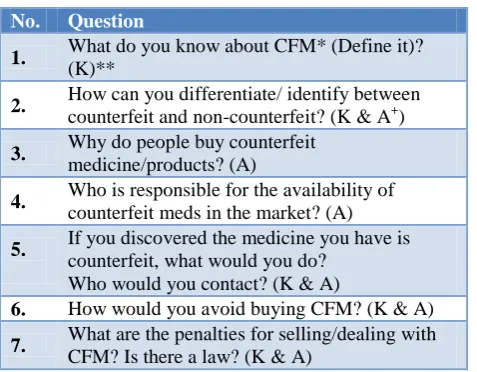
Table 1: Guideline questions for public focus group.
No. Question
1. What do you know about CFM* (Define it)?
(K)**
2. How can you differentiate/ identify between
counterfeit and non-counterfeit? (K & A+)
3. Why do people buy counterfeit
medicine/products? (A)
4. Who is responsible for the availability of
counterfeit meds in the market? (A)
5. If you discovered the medicine you have is
counterfeit, what would you do? Who would you contact? (K & A)
6. How would you avoid buying CFM? (K & A)
7. What are the penalties for selling/dealing with
CFM? Is there a law? (K & A)
CFM=Counterfeit Medicine, (K)**=knowledge, (A+)= Attitude (beliefs, views & experiences).
Table 2: Guideline questions for pharmacist focus group.
No. Question
1. How would you define CFM*? (K)**
2. How would you differentiate CFM from
original? (K)
3.
What measures are you taking to minimize the risk of carrying CFM in your pharmacies? (K & A+)
4. What is your opinion of other pharmacists who
deal with CFM? Are you aware of any? (A)
5. How is the hologram helping the pharmacist
differentiate between medicines? (A)
6. Who is responsible for the availability of CFM
in Lebanon? (A)
7. 8.
Are you aware of a law related to CFM in Lebanon? (K & A)
How would you report a CFM? (K & A)
*CFM = Counterfeit Medicine, (K)**= Knowledge, (A+)= Attitude (beliefs, views & experiences)
Sample
This study was conducted in Lebanon using two public FG with participants from different backgrounds, and two FG for pharmacists from different pharmacy settings.
Public recruitment
Two schools in ML were contacted for permission to use their sites. Schools were considered a convenience sampling method since they offered easy access to members of the public.19 The convenience sample of participants was chosen based on their visits to the principals’ offices. The principals were provided with the following exclusion criteria; any individual who 1) was younger than 18 years old, 2) was not living in Lebanon, 3) did not approve of audiotaping the meeting, 4) not
willing to sign the consent form. The principals’ assistants asked each person if he/she would be interested in participating in the study. Those willing to participate were asked to register their names on a list with the assistant. Once the date was set, they were contacted and informed of the set times, and those able to attend were present.
Pharmacists’ recruitment
The recruitment of pharmacists used the snowball approach since the population was hard to reach, or recruitdue to the sensitivity of the topic, and in order to avoid embarrassing or coercing pharmacists not willing to participate.19 The inclusion criterion was any pharmacist practising in Lebanon.20 The exclusion criteria were pharmacists not living in Lebanon, who did not approve of using the audiotape during the meeting, and not willing to sign the consent form. Once the names were available, each pharmacist was contacted by telephone to explain the purpose behind the FG meetings. The call was followed by a confirmation email.
Data collection
The FG took place in the period between April to June 2014. Before starting each meeting, the moderator reviewed the consent form with participants and encouraged questions before signing the form. At the end of the meeting participants were given a demographic questionnaire to complete, and the moderator’s contact information for any additional questions.
The primary author acted as the moderator for all FG, with the same note-taker. Debriefing and observation discussions took place after each meeting between the moderator and note-taker.
Data analysis
code. The codes were compared and formed into themes and subthemes.18,19,21,23 The interpretation of data was based on the ―intensity of comments‖, ―specificity of comments‖, ―internal consistency‖ and the ―big ideas‖ in link with the research question.14 The validity of the interpretation is linked to the triangulation method mentioned above to minimize distortion.18,19 The relevant quotes were used to support a theme or an observation.
RESULTS
The duration of the discussions for the four FG was between 100-120 minutes.
Public FG
The total number of public participants was 23. Their age ranged between 30 and 60, and 21 were female. Slightly more than one third of participants were between 31- 40 years old. The majority had a university degree, and lived in the ML region. Lack of awareness dominated the discussion, mixed with helplessness and mistrust in the system.
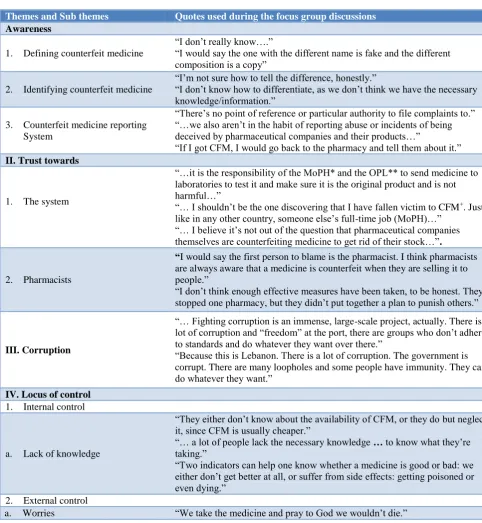
Five main themes emerged from the two public FG discussions detailed in Table 3 with related quotes.
Table 3: Themes and subthemes developed from the two public focus groups.
Themes and Sub themes Quotes used during the focus group discussions
Awareness
1. Defining counterfeit medicine
―I don’t really know….‖
―I would say the one with the different name is fake and the different composition is a copy‖
2. Identifying counterfeit medicine
―I’m not sure how to tell the difference, honestly.‖
―I don’t know how to differentiate, as we don’t think we have the necessary knowledge/information.‖
3. Counterfeit medicine reporting System
―There’s no point of reference or particular authority to file complaints to.‖ ―…we also aren’t in the habit of reporting abuse or incidents of being deceived by pharmaceutical companies and their products…‖
―If I got CFM, I would go back to the pharmacy and tell them about it.‖
II. Trust towards
1. The system
―…it is the responsibility of the MoPH* and the OPL** to send medicine to laboratories to test it and make sure it is the original product and is not harmful…‖
―… I shouldn’t be the one discovering that I have fallen victim to CFM+. Just
like in any other country, someone else’s full-time job (MoPH)…‖ ―… I believe it’s not out of the question thatpharmaceutical companies themselves are counterfeiting medicine to get rid of their stock…‖.
2. Pharmacists
“I would say the first person to blame is the pharmacist. I think pharmacists are always aware that a medicine is counterfeitwhen they are selling it to people.‖
―I don’t think enough effective measures have been taken, to be honest. They stopped one pharmacy, but they didn’t put together a plan to punish others.‖
III. Corruption
―… Fighting corruption is an immense, large-scale project, actually. There is a lot of corruption and ―freedom‖ at the port, there are groups who don’t adhere to standards and do whatever they want over there.‖
―Because this is Lebanon. There is a lot of corruption. The government is corrupt. There are many loopholes and some people have immunity. They can do whatever they want.‖
IV. Locus of control
1. Internal control
a. Lack of knowledge
―They either don’t know about the availability of CFM, or they do but neglect it, since CFM is usually cheaper.‖
―… a lot of peoplelack the necessary knowledge … to know what they’re
taking.‖
―Two indicators can help one know whether a medicine is good or bad: we either don’t get better at all, or suffer from side effects: getting poisoned or even dying.‖
2. External control
Themes and Sub themes Quotes used during the focus group discussions
b. Financial concern
―Financial reasons have a role, too. The price of original medicine determines the decision to buy CFM‖
―Some people need to think about money nowadays, though. Not everyone can afford the luxury of expensive medical services, especially if they have 6 or 7 children.‖
“There is a market because people can’t afford the real thing…‖
3. Political Instability
―We have a lot of other things on our plate and barely have time to even think about this.‖
―… undo all political ties this might have to any political party. Politics and health should be separated.‖
V. Overcoming counterfeit medicine
1. Education
―To limit counterfeiting, awareness is key. It would be creating a barrier for people who are counterfeiting …‖
―Media … conferences … This focus group has helped us a lot…word of mouth, we talk, we discuss, we get more information, we become aware.‖
2. Responsibility and accountability
―… If importers are held accountable and are asked to acquire all the necessary forms and signatures, that would reduce the possibility of the presence of counterfeit medicine drastically.‖
―There should be forms and certificates and sustainable supervision that doesn’t only hold people accountable once a year, but consistently checks for quality and adherence to international standards and local regulations.‖
3. Laws and regulations
―There should be clear laws—which many of them are present—but lack an organized mechanism to be applied.‖
―There should be penalties and organized measures to penalize the ones who counterfeit medicine or those willingly involved in the process.‖
*Ministry of Public health, ** Lebanese Order of Pharmacists, +Counterfeit medicine.
Table 4: Themes and subthemes developed from the two pharmacists’ focus groups.
Themes and sub themes Quotes used during the focus group discussions
I. Awareness
―They might be all aware that there are CFM+
, but many, especially those who don’t deal with them, know nothing about CFM, because I’ve asked some and they all said they knew nothing about CFM. They know ―of‖ them, but as they had never been visited by anyone nor been in a situation, they knew very little.‖
―No one can work in the field and not know. Because if one doesn’t know and suddenly have the counterfeit drugs in their pharmacies, how will they be able to stop it?‖
―Any medicine that’s not coming from the company itself. Anyone can sell it to you. It doesn’t have any effect on the patient maybe, so it’s something illegal you are dealing with. It may cause harm to people, including the pharmacist.‖
1. Prevalence and extent
―These drugs are mainly available where the borders are more open, for example in the North and in the South. But they are also present and active in ML. I don’t know about Beirut, though.‖
―… They are available also in Beirut…‖
2. Identifying counterfeit medicine
―It’s usually through the patient’s response.‖
―They asked us how come you bought CFM. We said how were we supposed to know it’s counterfeit? We got it from a legal source.‖
3. Counterfeit medicine reporting System
―…There is no official reporting system … There is no regulatory agency that takes feedback from the market.‖
―When we have counterfeit products and we discover they are counterfeit because we bought them. What do we do? Who do we call? Would the product be paid back?‖
II. Reasons for availability of counterfeit medicine
1. Pharmacists
a. Business and profit
―…. It’s a business.‖
Themes and sub themes Quotes used during the focus group discussions
b. Professional experience
―…. I have asked multiple pharmacists, they all agreed that they have been visited 10 or 15 years ago by people selling CFM and they have had to refuse more than once.‖
2. Medicine shortages
―This is what they’re taking advantage of…drugs in shortage … and drugs that are really expensive. If … your medicine costs more than 100,000 Lebanese liras, (around USD 66) and someone pops up saying they have the same product for USD 5 … You buy the USD 5 product and you sell it for USD 50. Plenty of people or pharmacists do it…‖
3. Demand
―This is the problem… the rest of the population who are looking to get medication for cheaper prices, which is their right knowing the financial situation in the country…‖
―No, not all are aware. Some are not, some don’t care.‖
4. Control
―Ministry should be responsible for screening CFM but that’s non-existent.‖ ―A pharmacist is not supposed to check for CFM after having received a shipment of products from a supposedly respectable, trustworthy pharmaceutical company.‖
III. Trust towards
1. The system
―…The MoPH*, I’m not supposed to be doing their work. I should be feeling a little safe that this product has been checked and is safe because it’s been through a safety check process in the country.‖
―… there is no trust in our legislative system …‖
Pharmacists
―The scandals are destroying the image of pharmacists. The problem is, it does not highlight the source of CFM, or drug supply chain, but only accuses pharmacists …‖
―…I think we are at risk of losing our status…‖
IV. Corruption
―… look at the people who are bringing this kind of medication. They are all backed up by a politician or somewhere higher up. It’s always like that. And by the way, without naming the company, the company that was bringing CFM is a money laundering company.‖
V. Overcoming counterfeit medicine
Central laboratory
―I think also the MoPH should have a central lab to test drugs. Our role lies in refusing to buy or get some drugs from wholesalers.‖
―… I think also the MoPH should have a central lab to test drugs...‖
1. Dedicated pharmacists ―So I guess as pharmacists, our role is very important on a day-to-day basis. We are solo workers. No one is backing us up.‖
Education
―… I think it is important that us pharmacists need to increase awareness for those people. It is one of our responsibilities which we need to also address at a certain point.‖
2. Laws and regulations
―We need to have not just laws, because we might have laws saying vague sentences like there should be a pharmacist in the MoPH, but what is the role of the pharmacist in the MoPH? We do not have an agreement on the roles. Who should be responsible? The OPL**, the MoPH let’s say who should be responsible. But how should each institution be responsible? In what way?...‖
Pharmacists
―The scandals are destroying the image of pharmacists. The problem is, it does not highlight the source of CFM, or drug supply chain, but only accuses pharmacists …‖
―…I think we are at risk of losing our status…‖
+ Counterfeit medicine, *Ministry of Public health, ** Lebanese Order of Pharmacists.
Pharmacists FG
The total number of participants was 13. Their age ranged between 26 and 60, 11 were females, and two thirds were between 26-30 years old. Participants were mostly from, and practising in, ML and Beirut. Five worked with pharmaceutical companies, five in community, two in
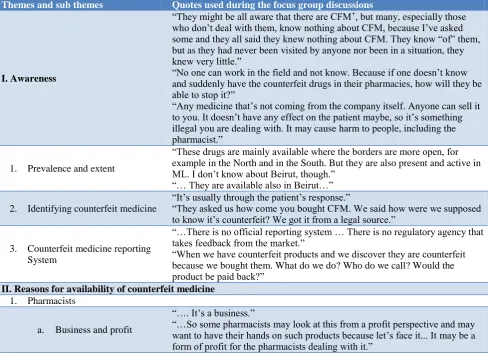
Five main themes emerged from the two pharmacist FG discussions detailed in Table 4with related quotes.
Common themes between the public and pharmacists
FG
Awareness
The discussions demonstrated a gap in participants’ awareness towards CFM: 1) Defining CFM; the majority of public participants were not able to define or provide a meaning to CFM, and either gave false definitions, or did not know. Pharmacist participants were able to define CFMs and were therefore considered aware of CFM. 2) Identifying CFM; a few of public participants were slightly knowledgeable and referred to the hologram, due to recent media reports. The majority of pharmacists expressed difficulty in identifying CFM, as they did not rely on the hologram, rather they relied on assessing patients’ responses to medicine. 3) CFM reporting System; no participants were aware of any reporting system, and were not sure how to report suspected CFM. 4) Prevalence and extent; according to pharmacist participants, CFM were mostly prevalent in the northern and southern parts of the country (away from the capital) and close to the borders where there is less control and implementation of regulations due to the current political situation.
Trust
The four FG participants expressed mistrust and lack of faith towards the system and some pharmacists. 1) The system; all participants believed that the Ministry of Public Health (MoPH) and the Lebanese Order of Pharmacists (OPL) were not carrying out their duties as should be, such as providing safe and effective medicine. Moreover, the public believed that pharmaceutical companies are involved in counterfeiting. According to pharmacist participants, the distribution channels and wholesalers were not well controlled and are not to be trusted. This appeared to originate from an incident in 2010 where CFM were available in some pharmacies through legal channels. Therefore, it would be crucial to control the supply chain. 2) Pharmacists; a few of the public participants believed that going to their trusted pharmacist would be one way to avoid buying CFM, the others distrusted pharmacists and believed they are all involved in the availability of CFM. The majority of pharmacist participants emphasized how the few pharmacists that were involved in CFM incidents affected their image, and how difficult it would be to regain the people’s respect and trust.
Corruption
All participants expressed their dissatisfaction, and believed the government and regulatory authorities were manipulating the affairs for private gains. Furthermore, participants stressed the weak implementation and
enforcement of the law, and in their opinion, led to diminished border and customs control. The systems’ actions were not for the public’s benefit, especially when no measures were taken against offenders. Pharmacists added that working in such conditions was becoming very difficult.
Overcoming counterfeit medicine
Participants suggested that responsible authorities should use different methods to discourage and stop counterfeiters and the public use of CFM. Five subthemes emerged: 1) Education; the discussions and exchange of experiences among public participants demonstrated the need to learn and understand more about CFM and the need for authorities to be more transparent. All pharmacists believed in their need to be educated and to educate patients about CFM. Pharmacists emphasized the importance of knowledge, stressing on the ―know how‖ that is always missing. The majority of pharmacists raised the concern that physicians should also be aware and educated regarding CFM, as there seemed to be a lack of awareness among physicians. 2) Laws and regulations; all participants agreed on the need for laws and regulations to be implemented and enforced. In addition, there is a need to develop a CFM reporting system and a point of reference where the MoPH and OPL can be available and involved. 3) Responsibility and accountability; the public participants believed that naturally the MoPH should be responsible for guaranteeing that safe and effective medicine reach all pharmacies. They suggested using different methods to discourage and stop counterfeiters. 4) Central laboratory; all pharmacists highlighted the need for the MoPH to reactivate the national laboratory, to randomly test samples of medicine in the country. 5) Dedicated pharmacists; the majority of pharmacists believed they could have a major role in controlling the availability of CFM, through organizing and controlling the pharmacy profession, to stop the outliers.
Uncommon themes
Locus of control
counterfeit. b) Financial concern; the high cost of medicine was the reason behind the availability of CFM. Patients would unknowingly go for a cheaper medicine if given a choice. c) Political instability; the majority of participants seemed overwhelmed with the country’s political instability, and did not consider CFM a priority for the government or politicians. Participants considered themselves unworthy of ―good‖ medicine.
Reasons for availability of CFM
The following subthemes emerged while pharmacists’ FGs were describing the reasons for CFM availability: 1) Pharmacists; for the following reasons: a) Business and profit; the majority believed that there are some unethical pharmacists who do not care, and each community has pharmacists that deal with CFM, thus contributing to the mistrust towards pharmacists. Moreover, some pharmacists illegally discounted the medicine priced by the MoPH to appear more compassionate towards patients, when the discounted medicine may be counterfeit. b) Professional experience; participants
shared their experiences about being approached and offered CFM. Participants reported how dealers always checked around and offered CFM to those interested, and would target new pharmacies, young graduates or the inexperienced for their tendency to be more vulnerable than others. Older participants stated they were also approached when they opened their pharmacies, and due to their continuous rejections, were no longer approached. 2) Medicine shortages; the majority believed that counterfeiters took advantage of medicine shortages and offered cheaper alternatives or provided attractive offers for medicine that could only be counterfeit. 3) Demand; the majority reported in believing that patients end up buying CFM due to the high cost of medicine, and the financial situation caused by the political instability. Participants believed that some members of the public may be aware but do not care and choose the cheaper medicine (CFM), and some lack awareness. 4) Control; participants reported that their concerns were due to the MoPH’s lack of control of available medicine and the supply chain. Pharmacists expressed that they had limited control and were under a lot of pressure.
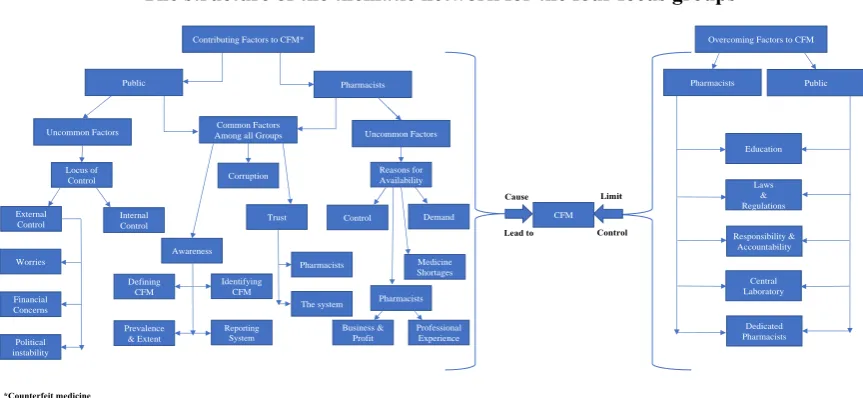
Figure 1: The structure of the thematic network for the four focus groups.
The structure of the thematic network for the four FG is presented in Figure 1.
Figure 1 shows the thematic network for the four focus groups. The themes are divided into contributing factors that cause or lead to the availability of counterfeit medicine, and the overcoming factors that can limit or control their availability.
DISCUSSION
The study explored the views, experiences, and beliefs of the public and pharmacists towards CFM using FG. The
study applied the mixed methods methodology using both quantitative and qualitative research. Four common themes emerged among all participants indicating the similar views and beliefs about CFM, reflecting their own perceptions and experiences. The discussions showed a lack of experience and limited awareness towards CFM among the public, however pharmacists were aware but the level of expertise appeared related to the number of years in practice. The study sample for all groups had an over-representation of females, thus the results might be gender specific, as studies show that males and females do have different views and beliefs.24
The structure of the thematic network for the four focus groups
Contributing Factors to CFM*
Pharmacists
Uncommon Factors Public
Overcoming Factors to CFM
Pharmacists The system Defining
CFM Worries
Identifying CFM
Political instability Financial Concerns
Prevalence & Extent
Reporting System
Trust Awareness
Medicine Shortages Pharmacists Internal
Control External
Control
Common Factors
Among all Groups Uncommon Factors
Demand Control
Professional Experience Business &
Profit Corruption
Locus of Control
Reasons for Availability
Responsibility & Accountability
Laws & Regulations
Central Laboratory Dedicated Pharmacists Education Pharmacists Public
CFM
Lead to
Cause Limit
Control
Contributing factors to CFM
No participants were aware of the CFM reporting system, and considered the pharmacy a reasonable place for reporting suspected CFM. One study expressed the pharmacists’ need for counselling patients about the system and an official CFM reporting system.13,25 Moreover, pharmacists indicated that CFM were more prevalent in the North, South, and Bekaa in accordance with phase one of the study where the extent of CFM ranged from 3% in ML to 12.1% in the South and the Bekaa.11 The difficulty expressed by participants in identifying CFM was supported by other studies on how easy it is becoming to counterfeit.8,11
The mistrust towards the MoPH, OPL, pharmacists, regulatory authorities and pharmaceutical companies was probably due to what participants considered lack of transparency and professional misconduct. The findings were in accordance with the WHO that counterfeiting contributes to damaging the reputation of pharmaceutical companies by destroying public confidence and trust in their medicine, causing the reluctance of some companies to publicize incidents of their products being counterfeited.26
The continuous increase in the number of graduating pharmacists’ year on year was reported to have decreased pharmacists’ minimum wages to $1350/month which might have contributed to some pharmacists being involved in the reported incidents involving CFM.13,27 Many studies have documented the impact pharmacists can play in improving patients’ health outcomes, and decreasing the chances of dispensing CFM.1,5,10,25,28 However, the good or bad headlines do influence the perception of the pharmacy profession, therefore, more efforts are required to enhance the reputation of the profession, and improve pharmacists’ image to regain the public' trust.29
Trust is an important asset the public can give to healthcare professionals when their work is for furthering social justice and public health.30 According to the UK code of ethics, the public need to trust that they are pharmacists’ primary concern, and that pharmacists are honest, trustworthy, and protective of patients from any harm by providing safe and effective medicine.31 To date, there is no known or published code of ethics for pharmacists in Lebanon; consequently, the OPL should consider agreeing on a code that all registered pharmacists must follow.13
The mistrust theme is related to corruption according to a study that measured the degree of trust in societies around the world, which varied considerably and was strongly correlated with views about crime and corruption.32 The study also reported that 67% of the Lebanese respondents disagreed that most people in society are trustworthy, compared to Egypt (40%), Jordan (45%) and Kuwait (71%). Moreover, the Lebanese and
Nigerian’s trust was rare due to respondents’ reported concern about widespread of political corruption. In fact, in countries where people reported trusting each other, there were less worries about crime or corrupt political leaders.32 This study’s participants stated the need for clear laws to be implemented and enforced, although they did not believe that their suggestions would be implemented or would change anything, since corruption is so deeply rooted in the culture.33 Cultures of corruptions will not fade away and according to participants, this is the case in Lebanon.34
Consequently, the belief that corruption had a role in the availability of CFM is also reported in the USA and UK, where corruption among wholesalers and illegal supply chains allowed CFM to enter their legal chain system.6,35 The problem of medicine shortage in Lebanon is also a global concern that counterfeiters take advantage of8 by using original holograms on counterfeits.11 This would explain why pharmacists reported not relying on holograms.13
Furthermore, participants stated that the shortage of medicine increases the demand for cheaper medicine that are highly likely to be counterfeits, which is supported by a number of studies.1,7,10,36 In Poland, people who had low monthly income found the low cost of CFM attractive, and consciously bought them due to their availability and low cost, increasing the demand for CFM.37
Overcoming factors to CFM
Participants also emphasised the need for the government to develop legal frameworks and strong legislations regulating medicine, with severe penalties to deter counterfeiters, as supported by several studies.1,7,10,17 Their suggestions were in support of the OPL with pharmacists being positioned at customs and within hospitals. There were also further suggestions to reactivate the national laboratory to test and control all medicines in the Lebanese market and the supply chain, to ensure safety.5,13,38
All participants indicated that education was key, and considered education the turning point for controlling CFM availability as supported by other studies.1,13,39 Participants demonstrated the need to establish a centralized and standardized reporting system, such as Medwatch to encourage voluntary reporting of suspected CFM.40 The burden of CFM can then be estimated by costs of hospitalizations or ambulatory settings for treating the consequences of CFM use.10
and reporting of CFM, thus reducing their availability/use.
Limitations
When approached, not all pharmacists were enthusiastic or willing to participate in the study. The FG were conducted in ML, the region with the lowest incidences of CFM use. There was bias in the sample of public participants, as the majority had university degrees, were females and were in the same age group.
CONCLUSION
This is the first study to generate insight on awareness among the public, and pharmacists towards CFM in Lebanon. The results were consistent with previous studies on the need for changes related to regulations, enforcement of the law, and updating pharmacists’ CFM knowledge. Additionally, emphasised the role of high prices and the unaffordability of medicines in increasing vulnerability of the public to using CFM. Finally, there is a need for future mixed methods research to assess and confirm the themes suggested in this study.
ACKNOWLEDGEMENTS
The authors would like to thank the members of the public and pharmacists that agreed to take part in this study.
Funding: No funding sources Conflict of interest: None declared
Ethical approval: The School of Pharmacy and Biomolecular Sciences Research Ethics Committee at the University of Brighton approved the study (1303 &1351).
REFERENCES
1. Alfadl AA, Hassali MA, Ibrahim MI. Counterfeit drug demand: perceptions of policy makers and community pharmacists in Sudan. Res Social Adm Pharm. 2013;9(3):302-10.
2. Lai KK, Zaichkowsky JL. Brand imitation: do the Chinese have different views? Asia Pac J Man. 1999;16(2):179-92.
3. Bird RC. Counterfeit drugs: a global consumer perspective. Wake Forest Intellect Prop Law J 2007;8(3):387-406.
4. United Nations Office on Drug and Crime (UNODC) (2006) Counterfeit products. Available at: https://www.unodc.org/documents/data-and-analysis/tocta/8.Counterfeit_products.pdf. Accessed on 9 June 2017.
5. Rajapandian G, Narayanan N, Maheswaran A, Chanchal P. Dangerous world of counterfeit drugs-pharmacist's role and its prevention. I J Pharm Sci Res. 2013;4(5):1709.
6. Besançon L. The role of hospital pharmacists in counterfeit medicines. Eur J Hosp Pharma 2008;14(2):65-66.
7. Al-Worafi YM. Pharmacy practice and its challenges in Yemen. Australas Med J. 2014;7(1):17.
8. Newton PN, Green MD, Fernández FM, Day NP, White NJ. Counterfeit anti-infective drugs. Lancet Infect Dis. 2006;6(9):602-13.
9. Akiny O. Counterfeit drugs in Nigeria: A threat to public health. Afr J Pharm Pharmacol. 2013;7(36):2571-76.
10. Mdege ND, Chevo T, Toner P. Perceptions of current and potential public health involvement of pharmacists in developing nations: The case of Zimbabwe. Res Social Adm Pharm. 2016;12(6):876-84.
11. Sholy LB. Nature, extent, awareness, and attitudes towards counterfeit medicine in Lebanon. Doctoral dissertation. University of Brighton. 2015. Available at: http://eprints.brighton.ac.uk/15755/. Accessed on 3 October 2016.
12. Hadi MA, Closs SJ. Applications of mixed-methods methodology in clinical pharmacy research. Int J Clin Pharm 2016;38(3):635-40.
13. Sholy LB, Gard PR, Williams S, MacAdam A. Pharmacist Awareness and Views Towards Counterfeit Medicine in Lebanon. Int J Pharm Pract 2017.
14. Rabiee F. Focus-group interview and data analysis. Proceedings of the nutrition society. 2004;63(04):655-60.
15. Stewart DW, Shamdasani PN. Focus groups: Theory and practice. Thousand Oaks: Sage Publications. 2014.
16. Krueger RA, Casey MA. Focus Groups: A practical guide for applied research. A practical guide for applied research. 4th ed. Los Angeles: Sage Publication. 2009.
17. Syhakhang L, Freudenthal S, Tomson G, Wahlström R. Knowledge and perceptions of drug quality among drug sellers and consumers in Lao PDR. Health Policy Plan. 2004;19(6):391-401.
18. Long T, Johnson M. Rigour, reliability and validity in qualitative research. Clin Eff Nurs. 2000;4(1):30-7.
19. Profetto-McGrath J, Polit DF, Beck CT. Canadian essentials of nursing research. Lippincott Williams & Wilkins. 2010.
20. Lebanese Order of Pharmacists (1994) Laws and regulations Law 367. Available at: https://secure58.prositehosting.co.uk/site/en/lois.php ?pageId=8&catId=2&sliderId=4&sliderLinkId=19. Accessed on 9 November 2014.
21. Kitzinger J, Barbour R. Developing focus group research: politics, theory and practice. Sage Publications. 1999.
Available at: http://www.who.int/mediacentre/ factsheets/fs275/en/. Accessed on 7 June 2017. 23. Bellamy K, Ostini R, Martini N, Kairuz T. Seeking
to understand: using generic qualitative research to explore access to medicines and pharmacy services among resettled refugees. Int J Clin Pharm 2016;38(3):671-5.
24. Abbey A. Sex differences in attributions for friendly behavior: Do males misperceive females' friendliness? J Pers Soc Psychol. 1982;42(5):830. 25. Jackson G, Patel S, Khan S. Assessing the problem
of counterfeit medications in the United Kingdom. Int J Clin Pract. 2012;66(3):241-50.
26. Kahn U, Kreutzer S, Gill J, Taylor D. Falsified medicines and the global public’s health. Report of Matrix Insight and UCL School of Pharmacy, 2012. 27. Lebanese Order of Pharmacists (2014) Press
conference, 20-06-2014. Available at: http://www. opl.org.lb/newdesign/lawsandregulations.php. Accessed on 3 June 2017.
28. Law E, Youmans SL. Combating counterfeit medications: The California pharmacist perspective. J Pharm Pract. 2011;24(1):114-21.
29. DiPiro JT. Preparing our students for the many opportunities in pharmacy. Am J Pharm Educ. 2011;75(9):170.
30. Kass NE. An ethics framework for public health. Am. J. Pharm Educ. 2001;91(11):1776-82.
31. General Pharmaceutical Council. Standards of conduct, ethics and performance. May 2017. Available at: https://www.pharmacyregulation. org/standards. Accessed on 3 June, 2017.
32. Wike R, Holzwart K. Where Trust is High, Crime and Corruption are Low—Since Communism’s Fall, Social Trust Has Fallen in Eastern Europe. Pew Global Attitudes Project. 2008.
33. Uslaner EM. Trust and corruption. In: The new institutional economics of corruption. 2nd ed. New York: Routledge, 2004;16:76.
34. Tanzi V. Corruption around the world: Causes, consequences, scope, and cures. Staff Papers-International Monetary Fund. 1998;45(4):559-94. 35. Mackey TK, Cuomo R, Guerra C, Liang BA. After
counterfeit Avastin [reg][mdash] what have we learned and what can be done?. Nat Rev Clin Oncol. 2015;12(5):302-8.
36. Fadlallah R, El-Jardali F, Annan F, Azzam H, Akl EA. Strategies and Systems-Level Interventions to Combat or Prevent Drug Counterfeiting: A Systematic Review of Evidence Beyond Effectiveness. Pharmaceut Med. 2016;30:263-76. 37. Binkowska‐Bury M, Januszewicz P, Wolan M,
Sobolewski M, Krauze M, Fijalek ZE. Counterfeit medicines in Poland: Opinions of primary healthcare physicians, nurses and lay persons. J Clin Nurs. 2008;22(3-4):559-68.
38. Lebanon Pharmaceuticals and Healthcare (2010) Report Q2 2010. ReportLinker. Published on March 2010. Report Summary. Available at: http://www.slideshare.net/ReportLinker/lebanon-pharmaceuticals-and-healthcare-report-q2-2010. Accessed on 4 June 2017.
39. El-Jardali F, Akl EA, Fadlallah R, Oliver S, Saleh N, El-Bawab L, et al. Interventions to combat or prevent drug counterfeiting: a systematic review. BMJ open. 2015;5(3):e006290.
40. U.S. Food and Drug Administration (2016) Reporting serious problems to FDA. Available at: http://www.fda.gov/Safety/MedWatch/HowToRepo rt/. Accessed on 5 June 2017.