Original Research Article
Study on consumption of fast food among medical students
of IGIMS, Patna
Vijay Shree
1, R. R. Prasad
2*, Sanjay Kumar
1, Setu Sinha
1, Sanjay Kumar Choudhary
1INTRODUCTION
Fast food is a food that is prepared and served quickly at outlets called fast food outlets. It includes chips, sandwiches, burgers, fried chicken, French fries, chicken nuggets, pizza, ice-cream etc.1 It is high in calorie and lacks in micronutrients. It has been proved that its intake leads to many diseases and disorders like obesity which is likely to cause cardiovascular diseases later on. According to WHO (2003), frequent fast food
consumption is also a health concern because most fast foods are rich in saturated fats, trans fats, simple carbohydrates and sodium-all of which are nutrients associated with hypertension cardiovascular diseases, and type 2 diabetes.2 For those who eat a meal or a snack in a fast food restaurant once a week or so, the effect on the nutritive adequacy of the diet is not that great. But for those who might eat a meal daily at these places the nutritive contributions must be carefully considered.
ABSTRACT
Background: Fast food culture is a vigorously uprising trend among the youngsters and medical students are no exception to it. Stressful life due to increased study load negatively influences the food choices of medical students. Hence the present study was undertaken with objectives to figure out the prevalence of fast food consumption among medical students, to study the fast food consumption pattern by the medical students and to explore various factors contributing to fast food consumption by the students.
Methods: A cross sectional study was done among 120 undergraduate medical students of IGIMS, Patna for a period of 6 months. Data collection was done using pre-tested structured questionnaire and was analysed using SPSS latest version.
Results: The study showed that all the respondents consume fast food sometime or the other and the knowledge of fast food was almost universal among the medical students. Most of the students (48.3%) were taking fast food as an alternative to dinner, 32 (26.6%) as evening snack and 26 (21.6%) as an alternative to lunch. Most preferred beverage was carbonated drinks (56.6%) while most preferred fast food was pizza (45%). 75.6% students were taking fast food 1-2 times a week. Reasons for consumption of fast food were mainly- eating in company (58.3%) and taste factor (55%).
Conclusions: Despite of a majority (88.3%) being aware of the fact that consuming fast food leads to many diseases and disability, all the subjects continue to consume fast food, mostly due to reasons of taste, company and to avoid wastage of time.
Keywords: Fast food, Medical students, Obesity
1Department of Community Medicine, IGIMS, Patna, Bihar, India 2
Department of Microbiology, NMCH, Patna, Bihar, India
Received: 23 April 2018
Revised: 26 May 2018
Accepted: 28 May 2018
*Correspondence:
Dr. R. R. Prasad,
E-mail: [email protected]
Copyright: © the author(s), publisher and licensee Medip Academy. This is an open-access article distributed under the terms of the Creative Commons Attribution Non-Commercial License, which permits unrestricted non-commercial use, distribution, and reproduction in any medium, provided the original work is properly cited.
Fast food culture is a vigorously uprising trend among the youngsters.3 and medical students are no exception to it. Stressful life due to increased study load negatively influences the food choices of medical students. Hence the present study was undertaken with following objectives.
METHODS
A cross sectional study was done among undergraduate medical students of IGIMS, Patna for a period of 6 months. Only those who consented to participate were included in the study. A total of 120 medical students
were interviewed using pre-tested structured
questionnaire. Data collected was analysed using SPSS latest version.
RESULTS
Total of 120 medical students participated in the study. Out of sample of 120, 68 were males and 52 were females. All of them were residing in the hostel within the campus. Mean age of subjects was 22.9±1.5 years. All the respondents consume fast food sometime or the other. Knowledge of fast food was almost universal among the medical students. BMI of all the study subjects were recorded. The mean BMI of the subjects was 20.44%±3.68. It was also found that 6(5%) students were in the pre- obese category (Table 1).
Table 1: BMI of the subjects.
Sex BMI Total
<18 No (%)
18-24.99 No (%)
25-29.99 No (%)
>30 No (%)
Male 4 (5.9) 58 (85.3) 6 (8.8) 0 68
Female 14 (26.9) 38 (73.1) 0 0 52
Total 18 (15) 96 (80) 6 (5) 0 120
Table 2: Patterns of fast food consumption.
Variables Gender Total No (%)
Male No (%) Female No (%)
preferred fast food
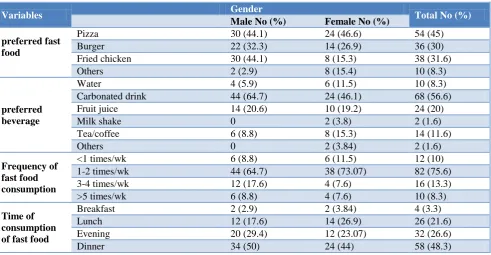
Pizza 30 (44.1) 24 (46.6) 54 (45)
Burger 22 (32.3) 14 (26.9) 36 (30)
Fried chicken 30 (44.1) 8 (15.3) 38 (31.6)
Others 2 (2.9) 8 (15.4) 10 (8.3)
preferred beverage
Water 4 (5.9) 6 (11.5) 10 (8.3)
Carbonated drink 44 (64.7) 24 (46.1) 68 (56.6)
Fruit juice 14 (20.6) 10 (19.2) 24 (20)
Milk shake 0 2 (3.8) 2 (1.6)
Tea/coffee 6 (8.8) 8 (15.3) 14 (11.6)
Others 0 2 (3.84) 2 (1.6)
Frequency of fast food consumption
<1 times/wk 6 (8.8) 6 (11.5) 12 (10)
1-2 times/wk 44 (64.7) 38 (73.07) 82 (75.6)
3-4 times/wk 12 (17.6) 4 (7.6) 16 (13.3)
>5 times/wk 6 (8.8) 4 (7.6) 10 (8.3)
Time of consumption of fast food
Breakfast 2 (2.9) 2 (3.84) 4 (3.3)
Lunch 12 (17.6) 14 (26.9) 26 (21.6)
Evening 20 (29.4) 12 (23.07) 32 (26.6)
Dinner 34 (50) 24 (44) 58 (48.3)
The most preferred fast food was pizza (45%) among both among males (44.1%) and females (46.6) both, followed by burger (30%) and fried chicken (31.6%). While the most preferred beverage was carbonated drinks (56.6%), followed by fruit juice (20%), tea and coffee (11.6%). When asked about frequency of fast food consumption in a week among the students, it was found that 75.6% consumed fast food 1-2 times per week, 13.3% consumed fast food 3-4 times a week while 8.35 were consuming fast food for more than/ equal to 5 times
a week. Only 10% student consumed fast food for less than 1 times a week. The findings were similar for both male and female students. Gender was not different in these relations (Table 2).
mess was closed. other reasons found were “lack of cooking skills” (10%) and “fast food is time saving” (6.6%) (Table 3).
Emotions like happy, sad, anger worry etc. was an important factor for consumption of fast food and 55% of the students agreed with this fact while 23.3% students disagreed (Table 4).
Table 3: Reasons for consuming fast food.*
Sex Mess closed no (%)
Enjoy taste no (%)
Eat in group no (%)
Saves time no (%)
Lack of cooking skills no (%)
Male 24 (35.2) 42 (61.7) 60 (88.2) 6 (8.8) 6 (8.8)
Female 18 (34.6) 24 (46.1) 30 (57.6) 2 (3.8) 6 (11.5)
Total 42 (35) 66 (55) 70 (58.3) 8 (6.6) 12 (10)
Table 4: Does emotion influence fast food consumption?
Sex Agree no (%) Disagree no (%) Don’t know no (%)
Male 34 (50) 20 (29.4) 14 (20.5)
Female 32 (61.5) 8 (15.3) 12 (23.07)
Total 66 (55) 28 (23.3) 26 (21.6)
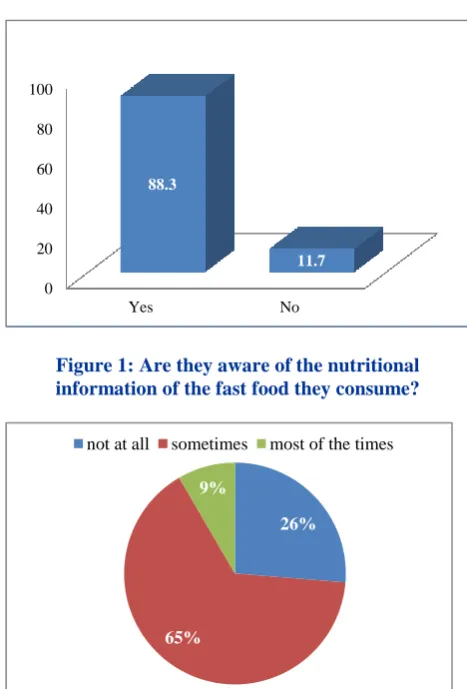
Figure 1: Are they aware of the nutritional information of the fast food they consume?
Figure 2: Influence of nutritional information on the choice of fast food.
Awareness about fast food: several questions were asked to analyse student’s awareness about the fast food facts. 88.3% students said that they were aware of the nutritional information of fast food they consumed while 11.2% were not aware of the nutritional information (Figure 1). It was also found that awareness about the
nutritional information influenced the choice of fast food only sometimes in 65% students and doesn’t influence at all in 9% of the students (Figure 2).
Figure 3: Knowledge regarding fast food disorders and diseases.*
When asked about the diseases and disorders that may occur due to consumption of fast food majority said Obesity followed by heart diseases, dyslipidemia, liver damage stroke and others (Figure 3).
DISCUSSION
Fast food consumption was reported by 97.5% students in a study done in China4, 98% in a study done in Lucknow, India and by all students in a study done in Jammu Kashmir, India which was similar to our observations (100%).1,5 However, in several other studies done worldwide, fast food consumption was seen between 30.3% to 93.5% children, that was lower than our observations.6-10
0 20 40 60 80 100
Yes No
88.3
11.7
26%
65% 9%
not at all sometimes most of the times
52
36
24
14
6 48
24 28
10
6 0
10 20 30 40 50 60
A study conducted by the International Journal of Research in Finance and Marketing revealed that Frankie, burger and pizza were the most preferred fast food items in South Mumbai.11 In the present study Pizza was the most preferred fast food followed by burger and fried chicken.
Driskell et al found that carbonated soda has been reported to be the most frequently ordered beverage with fast food meals by female college students.12 Similar was the finding in the present study. While in a study done in Australia, 25% students usually chose soft drinks instead of water or milk in comparison to the students in this study who preferred carbonated drink (56.6%), fruit juice (20%) and tea/coffee (11.6%).13
In the present study eating in groups with friends and family (58.3%) was found to be the most common reason for consumption of fast food among the medical students.55% of the students consumed fast food because they enjoyed its taste, while 35% of the students consumed fast food because their mess was closed. other reasons found were “lack of cooking skills” (10%) and “fast food is time saving” (6.6%). While In a similar study done on adolescent girls of Saudi Arabia it was found that they eat fast food primarily for enjoying the delicious taste followed by convenience.14 American college students chose to eat fast food for limited time, followed by enjoyment of the taste.13 Peer influence stated as a reason for consumption was also mentioned in other studies done in USA and Iran similar to the finding of our study.16,17 Easy availability of fast foods at any time of the day as reason for fast food usage was mentioned in several studies.1,13,17
Emotions like happy, sad, anger worry etc. was an important factor for consumption of fast food in the present study. 55% of the students agreed with this fact while 23.3% students disagreed.
Musaiger et al found that eating during emotional states such as eating while feeling bored (56.2%), while feeling depressed (28.8%) and while feeling worried (24.7%) were other reasons for fast food consumption among the participants in Syria.18 Therefore, emotional and psychological factors could also play a role in making students habituated with fast food consumption.
In a study it was found that nutritional concerns are of less relevance to most people's food choices than taste19. Similar was the finding in our study where influence of nutritional information on choice of fast food was observed only sometimes (65%).
Awareness of health hazards associated with fast foods use among participants in this study was almost 100% which is greater than that of the study done in Chandigarh, India (64.8%) and at Beijing, China.4,8 We noticed a big gap between knowledge and practice of students in this study. In the present study despite of a very high level of awareness regarding morbidities of fast
food eating majority of the subjects were consuming fast food similar to a study done in Baroda, India where children despite knowing the harmful effects continued to eat fast foods and for reasons like taste preferences, strong desire to do so and quick to eat.20 Nutrition counselling could help to reduce this gap between knowledge and practice.
CONCLUSION
Despite of a majority (88.3%) being aware of the fact that consuming fast food leads to many diseases and disability, all the subjects continue to consume fast food mostly because they found it tasty. Other factors identified were eating in groups, especially with friends, closed mess and also to save time.17% of the students were not even aware of the nutritional information of the fast food they consume.
Recommendations
Our responsibility
1. Sensitize and educate students regarding the nutritional information and health implications of fast foods.
2. Not only nutritional education nutritional counseling of these students is also important to improve their dietry practices.
3. Hostel mess facility should be maintained properly.
Other’s responsibility
1. Healthy snacks can be used to replace deep fried foods at food oulets. Govt.and Media should promote such outlets.
2. Fast food intake among children can be reduced by implementation of stringent laws to regulate the marketing of fast foods in Indian market.
3. Imposing heavy tax on imported and manufactured readymade food items and
4. Nutritional labelling of food might restrict the quantity of food ordered and choice of low fat menu among medical students.
ACKNOWLEDGEMENTS
We gratefully acknowledge the active participation of students, all the faculties and staffs of the Department of Community Medicine, IGIMS, for their co-operation in supporting the study.
Funding: No funding sources Conflict of interest: None declared Ethical approval: Not required
REFERENCES
2. World Health Organization. Life Course Perspective of Coronary Heart Disease, Stroke, Diabetes.
Available at: whqlibdoc.who.int/hq/2001/
WHO_NMH_NPH_01.4.pdf. Accessed 14 July 2010.
3. Kaushik JS, Narang M, Parak A. Fast Food
consumption in children. Indian Pediatr,
2011;48.97-101.
4. Zhu SP, Ding YJ, Lu XF, Wang HW, Yang M, Wang JX. Study on factors related to top 10fast food consumption at 8 to 16years of age, in Haidian District of Beijing. Zhonghua Liu Xing Bing Xue Za Zhi. 2008;29:757-62.
5. Manjunatha S, Mishra S. Fast Food Consumption Pattern and Obesity among School Going (9-13 Year) in Lucknow District. International Journal of Science and Research. 2014;3:1672-74.
6. Brunner MJ, Menomonie, WI. A Comparison of Food Habits of Middle School Students USA: The Graduate School University of Wisconsin-Stout; 2006.
7. Masse LC, de Niet-Fitzgerald JE, Watts AW, Naylor PJ, Saewyc EM. Associations between the school food environment, student consumption and body mass index of Canadian adolescents. Int J Behav Nutri Phys Act. 2014;11(1):1–9.
8. Kotecha PV, Patel SV, Baxi RK, Mazumdar VS, Misra S, Mehta KG, et al. Dietary pattern of school going adolescents in urban Baroda, India. J Health Popul Nutr. 2013;31:490–6.
9. Abuzaid OII. Eating patterns and physical activity characteristics among urban and rural students in Saudi Arabian. Lincoln, Nebraska: The Graduate College at the University of Nebraska; 2012. 10. Abdel-Hady D, El-Gilany A, Sarraf B. Dietary
habits of adolescent students in Mansoura, Egypt. Int J Collaborative Res Int Med Public Health. 2014;6:132-44.
11. Gaikwad SP. An empirical study of consumer buying behaviour towards fast food in south mumbai. IJRFM. 2016;6(7):64-72.
12. Driskell JA, Meckna BR, Scales NE. Differences exist in the eating habits of university men and
women at fast-food restaurants. Nutr Res. 2006;26:524–30.
13. Denney-Wilson E, Crawford D, Dobbins T, Hardy L, Okely AD. Influences on consumption of soft drinks and fast foods in adolescents. Asia Pacific J Clin Nutr. 2009;18:447–52.
14. ALFaris NA, Tamimi JZ, Jobair MO, Al-Shwaiyat NM. Trends of fast food consumption among adolescent and young adult Saudi girls living in Riyadh. Food Nutr Res. 2015;59:26488.
15. Larson NI, Neumark-Sztainer DR, Story MT, Wall MM, Harnack LJ, Eisenberg ME. Fast food intake: longitudinal trends during the transition to young adulthood and correlates of intake. J Adolesc Health. 2008;43:79–86.
16. Sharifirad G, Yarmohammadi P, Azadbakht L,
Morowatisharifabad MA, Hassanzadeh A.
Determinants of fast food consumption among Iranian high school students based on planned behaviour theory. J Obes. 2013;2013:147589. 17. Fung T, Anyan WR. Adolescence: life in the fast
lane. In: Tamborlane WV, ed. The Yale Guide to Children’s Nutrition. New Haven, CT: Yale University Press; 1997: 73.
18. Musaiger A, Kalam F. Dietary habits and lifestyle among adolescents in Damascus, Syria. Ann Agric Environ Med. 2014;21:416–9.
19. Glanz K, Basil M, Maibach E, Goldberg J, Snyder DAN. Why Americans eat what they do:taste, nutrition, cost, convenience, and weight control concerns as influences on food consumption. J Am Diet Assoc. 1998;98:1118–26.
20. Puri S, Bhatia V, Swami H, Rai S, Mangat C. Impact of a diet and nutrition related education package on the awareness and practices of school
children of Chandigarh. Int J Epidemiol.
2007;6(1):1-7.