Original Research Article
Prevalence and causes of low vision among urban
and rural school children
Ritesh Verma*, Manisha Rathi, C. S. Dhull, Sumit Sachdeva, Jitender Phogat
INTRODUCTION
Low vision is a bilateral subnormal visual acuity or abnormal visual field resulting from disorders in the visual system. The World Health Organization‟s (WHO‟s) International Classification of Diseases (ICD)-10 categories of visual loss define low vision as “a corrected visual acuity in the better eye of <6/18 down to and including 3/60 (20/400).”1,2
Visual disabilities in children are more complex as compared to those in adults. Without visual stimulus, the child's overall development suffers, which has a negative effect on the family and the society at large.3 Therefore, the World
Health Organization and its partners in their consorted efforts to eliminate avoidable blindness, „VISION 2020- The Right to the Sight', included childhood blindness.3
Low vision is recognized as an important problem in society, but in school children, it can lead to permanent low vision and visual handicap in later life. The ultimate moulding of a person‟s personality and potential directly corresponds to the quality of sight. Poor vision and the inability to read material written on the blackboard can have a serious impact on a child‟s participation and learning in class and this can adversely affect a child‟s education, occupation and socioeconomic status for life.
ABSTRACT
Background: The objective of this study is to determine the prevalence and the causes of low vision among school
going children in and around Rohtak district of Haryana, India. Such information is important in planning for prevention of low vision and blindness strategies.
Methods: 2028 school children studying in class 1-5 were screened in the school premises. Visual acuity was assessed with snellen‟s chart and colour vision was tested with ishihara colour vision book. Those with vision <6/18 in both eyes were assessed at our tertiary care hospital to determine the cause of low vision.
Results: A total of 2028 children were enrolled in our study. 58 children were found to have uncorrected visual acuity
less than 6/18 (functional low vision) in the better eye. Uncorrected refractive error was the most common cause of functional low vision (51.72%) among the 2028 children enrolled in our study followed by amblyopia (32.7%), cataract (5.1%), corneal opacity (5.1%), retinal dystrophy (5.1%), nystagmus (1.7%) and optic nerve glioma (1.7%).
Conclusions: The overall prevalence of low vision in our study is higher as compared to previous studies. A comparison betweenacademic performances of children with low visionand rest of the children showed that children with low vision tend to perform poor academically. The prevalence of amblyopia was significantly higher in children from the rural background which emphasizes the importance of rural school screening programmes. It was found that amblyopia was significantly higher in females as compared to males in both rural and urban areas.
Keywords: Amblyopia, Low vision, School health
Regional Institute of Ophthalmology, PGIMS, Rohtak, Haryana, India
Received: 20 September 2018
Revised: 24 October 2018
Accepted: 26 October 2018
*Correspondence:
Dr. Ritesh Verma,
E-mail: [email protected]
Copyright: © the author(s), publisher and licensee Medip Academy. This is an open-access article distributed under
the terms of the Creative Commons Attribution Non-Commercial License, which permits unrestricted non-commercial use, distribution, and reproduction in any medium, provided the original work is properly cited.
Further, most school going children are unaware that they are suffering from an ocular disability and they try to compensate it in different ways. They try to sit closer to the blackboard or they hold their books close to their eyes. They try to avoid any work that requires visual concentration thus affecting their performance in school.4 Low vision and blindness have been associated with considerable disability and excess mortality, resulting in heavy socioeconomic consequences.5 Majority of the students with low vision need low vision services in order to perform better. Accurate refraction is important in the students. Early diagnosis and intervention helps in preventing the vision loss which will allow the students to continue their academic activities without any interference.
Strategies to address eye health of children in India have focused on school eye health programme. School eye screening programmes have been a part of district blindness control society activities since 1996.6 However, evidence pertaining to school screening programmes in India is scarce especially when compared to initiatives addressing age related cataracts.7,8
As there is limited data on the prevalence and causes of low vision in school children, the objective of this study is to determine the prevalence and the causes of low vision among school going children in and around Rohtak district. Such information is important in planning for prevention of low vision and blindness strategies.
METHODS
This study was a cross sectional study during the academic year 2016-17 (May 2016 to April 2017). A sample size of 2,028 children, studying in Class I-V, was screened in schools, 5 schools in rural areas and 5 in the urban area in and around Rohtak district of Haryana. As there is no reliable population-based data relating to this study in our area, the above mentioned sample size was being used in planning this study keeping in mind the overall prevalence of low vision.
Screening of school children was done in the school, after taking permission from school principal, using Snellen‟s chart to identify those who had visual acuity less than 6/18. Colour vision was tested by using Ishihara chart.
Children with visual acuity less than 6/18 in both eyes were asked to visit the O.P.D of R.I.O, PGIMS, Rohtak where the necessary tests were done until the vision was corrected by visual aids or the cause for the low vision was documented.
A detailed history including data regarding demographic features, predisposing factors, associated ocular conditions, systemic diseases, family history and visual acuity at the time of presentation were recorded. Within the schools, clinical examination was performed after
taking permission from the concerned school authorities. Visual acuity was measured at 6 m with a Snellen‟s chart.
Refractive error was determined by retinoscopy. Best corrected visual acuity was measured after cycloplegic refraction in all children with uncorrected visual acuity of ≤6/18 in either eye. The external eye and anterior segment (eyelid, conjunctiva, cornea, iris, and pupil) was
examined by slit lamp. Direct and indirect
ophthalmoscopic examination of the media and fundus was done.
The data was collected and entered into the patient proforma. This data was analysed after the desired population had been screened. WHO criteria was used to classify the children in low vision category and the cause of low vision was documented. The data was entered in Microsoft excel spread sheet. The data was analysed using SPSS (Statistical Package for the Social Sciences) version 21.0. Chi square test was applied for comparison. Point of statistical significance was considered if p<0.05.
RESULTS
Our study covered 6 urban and 6 rural schools selected randomly in the Rohtak district of Haryana, India in the academic year 2016-2017. A total of 2028 children, studying in Class I-V, were enrolled in the study.
Table 1: Age distribution of the children. Age group
(years)
Age distribution Total
number %
Rural Urban
5-6 188 241 429 21.2
7-8 258 222 480 23.7
9-10 299 301 600 29.6
11-12 245 237 482 23.8
13-14 37 0 37 1.8
Total 1027
(50.6%)
1001
(49.4%) 2028 100.0
Mean age 8.51 8.84 8.68
The maximum number of children in our study were in 9-10 years age group i.e. 600 (29.6%) followed by 482 (23.8%) in 11-12 years age group. 50.6% of the enrolled children were from rural schools and 49.4% of the children were from urban schools (Table 1). The mean age of children studying in rural schools was 8.51 years as compared to 8.84 years in urban schools and the difference was statistically insignificant (p>0.05).
significant with lower number of females enrolled from the rural schools (p=0.02).
Table 2: Age distribution in children with low vision.
Age (years)
Vision <6/18 in both the eyes
Low vision
Rural (mean age=8.8 years)
Urban (mean age=9.0 years)
5-6 1 1 0
7-8 25 16 9
9-10 21 6 15
11-12 10 5 5
13-14 1 1 0
Total 58 29 29
In the present study, 58 children were found to have uncorrected visual acuity less than 6/18 (functional low vision) in the better eye. The prevalence of functional low vision was found to be 2.85%. Maximum number of children with low vision were in the age group of 7-8 years (43.1%) followed by 36.2% in the age group of 9-10 years (Table 2). The mean age of children with low vision was 8.8 years in rural area and 9.0 years in urban area and there was no statistical difference between the two groups (p>0.05). Out of 29 children with low vision, 22 (75.8%) were females in the rural areas whereas only 15 (51.72%) were females in the urban schools. In our study out of total children with low vision 63.8% were
females and 36.2% were males and the difference was statistically highly significant (p=0.007).
Table 3: Sex distribution according to low vision.
Sex No. of children <6/18 in both
the eyes %
Rural Urban
Female 22 15 37 63.8
Male 07 14 21 36.2
Total 29 29 58 100
P value of female/male=0.007 (highly significant).
Out of 37 females with low vision, 22 were from rural schools as compared to 15 females from urban schools. Even with higher number of boys (1086 boys as compared to 942 girls) enrolled in this study, low vision was significantly higher in girls (63.8%) as compared to boys (36.2%). The prevalence of low vision in girls was found to be 3.92% as compared to 1.93% in boys which was statistically significant (p<0.05) (Table 3).
Refractive error was the most common cause of low vision (51.72%) among the 2028 children enrolled in our study. Refractive error was more prevalent in the urban area as compared to children studying in rural areas.
In our study, amblyopia was the second leading cause of low vision in the school children. Isoametropia was found to be the most common cause of bilateral low vision in amblyopia in our study.
Table 4: Causes of uncorrected visual acuity ˂6/18 in better eye.
Cause of low vision Total number of children
Cause of low vision
Rural Urban
Female Male Female Male
Ref. error 28 8 2 9 9
Amblyopia 19 9 3 4 3
Cataract 3 1 1 1 0
Co. opacity 3 1 1 0 1
Nystagmus 1 1 0 0 0
Optic nerve glioma 1 0 0 0 1
Retinal cause 3 2 0 1 0
Total 58 22 07 15 14
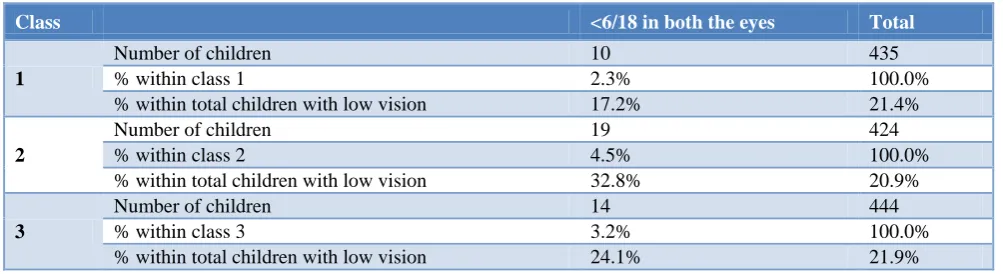
Table 5: Class distribution of the children according to low vision.
Class <6/18 in both the eyes Total
1
Number of children 10 435
% within class 1 2.3% 100.0%
% within total children with low vision 17.2% 21.4%
2
Number of children 19 424
% within class 2 4.5% 100.0%
% within total children with low vision 32.8% 20.9%
3
Number of children 14 444
% within class 3 3.2% 100.0%
Class <6/18 in both the eyes Total
4
Number of children 9 350
% within class 4 2.6% 100.0%
% within total children with low vision 15.5% 17.3%
5
Number of children 6 375
% within class 5 1.6% 100.0%
% within total children with low vision 10.3% 18.5%
Total Number of children 58 2028
% of total children enrolled in study 2.85% 100.0%
Table 6: Correlation of academic performance with low vision.
Academic performance <6/18 in both
eyes Percentage (%)
Females with low vision
Males with low vision
Poor (<60%) 28 48.3 22 6
Average (60-70%) 10 17.2 4 6
Good (70-80% 16 27.6 10 6
Excellent (>80%) 4 1.70 1 3
Total 58 100 37 21
P value of >6/18 and <6/18=<0.01 (highly significant).
Table 7: Correlation of color vision abnormality with academic performance.
Color vision Academic performance Total
Poor Average Good Excellent
Abnormal 2 4 12 5 23
Normal 428 324 1020 233 2005
Other causes of low vision included cataract (5.1%), corneal opacity (5.1%), retinal dystrophy (5.1%), nystagmus (1.7%) and optic nerve glioma (1.7%) (Table 4).
Maximum number of children were from class 3 i.e. 21.9% followed by class 1 (21.4%), class 2 (20.9%), class 5 (18.5%) and class 4 (17.3%) (Table 5).
Spectacle use was present in 10.7% of the parents. The spectacle use was markedly low in rural population with only 6.7% of either parent using spectacles as compared to 14.7% in the urban population and the difference was statistically significant (p=0.01).
23 children in our study had color vision defects and all the affected children were males which was highly statistically significant (p<0.01). The prevalence of color vision defects is 1.1% according to the present study. Out of the 23 children with color vision defects, 14 were from urban schools and 9 from rural schools and there was no statistically significant difference between the urban and rural schools in relation to prevalence of color vision defects (p=0.267).
A comparison between academic performances of children with low vision and rest of the children showed that children with low vision tend to perform poorly academically. 48.3% of children in low vision category were poor in their academic performance as compared to
20.4% of the normal vision children who performed poor academically (Table 6). Children with low vision try not to participate in the activities requiring a sharp visual acuity and usually have a low self-confidence. There was no significant difference between males and females in relation to their academic performance in the low vision group.
It was also found that there is no correlation between the color blindness and the academic performance of the child (Table 7). No comparison can be made with previous studies as this parameter has not been taken up previously in the searched literature.
Table 7 shows the correlation of color vision abnormality with the academic performance of the child. Statistical analysis shows that the difference between the academic performance of the children with color vision defect and those with normal color vision was statistically insignificant (p=0.292).
DISCUSSION
Malaysia to 2.75 in 1000 children in rural southern India.1 A study was conducted by Maul et al and the prevalence of uncorrected, presenting, and best visual acuity 0.50 (20/40) or worse in at least one eye was 15.8%, 14.7%, and 7.4%, respectively; 3.3% had best visual acuity 0.50 or worse in both eyes.9
Refractive error was the most common cause of low vision (51.72%) among the 2028 children enrolled in our study. The prevalence of uncorrected refractive error in urban areas in our study was similar to the previous studies conducted in Delhi, Pune and Andhra Pradesh, in which the prevalence of uncorrected refractive errors was more in urban areas.4,10,11 Sethi et al and Matta et al also observed that urban children had higher risk of developing refractive errors.12,13
Amblyopia was the second leading cause of low vision in the school children. The prevalence of amblyopia was significantly higher in children from the rural background. It was found that amblyopia was significantly higher in females as compared to males in both rural and urban areas. Out of 19 children with amblyopia 13 were females (69.4%). This was in accordance with a study conducted by Yekta et al, in which the prevalence of amblyopia was higher in females as compared to males.14
The educational status of the parents was compared with the prevalence of low vision in both urban and rural schools. Statistical analysis showed no correlation between the two parameters with p>0.05.
The occupational status of the father showed no statistical difference between the two groups but it was found that low vision was more prevalent in children whose mothers were housewives but this cannot be considered significant because more than 90% of the mothers were housewives according to our study which shows a false correlation between the two parameters. In the available literature, no reference was found correlating the educational and occupational status of the parents with low vision.
The spectacle use was markedly low in rural population with only 6.7% of the parents using spectacles as compared to 14.7% in the urban population and the difference was statistically significant (p=0.01). Statistical analysis shows that correlation between the spectacle use among parents and low vision in children was statistically insignificant with p=0.6.
The overall prevalence of color vision abnormality in our study was 1.13%. The prevalence among males, according to our study, was 2.12% which is significantly lower as compared to the study done by Fareed et al, which reported the prevalence of color blindness from 5.26% to 11.36% among males.15 Studies among the populations worldwide depict the significant variation in the prevalence of color vision impairments. The
frequency of red–green color blindness among the males of Libya (2.2%), Saudi Arabia (2.9%), Nepal (3.9%), Singapore (5.3%), Thailand (5.6%), Korea (5.9%), Turkey (7.3%), Iran (8.1%), Jordan (8.7%), and Eastern India (8.73%) were found higher than that among females.15-18
The major limitation of this study is the ability to reach out to children not attending the school. However, this may be addressed by strategies that aim to improve primary education. Although the simplicity of the program has resulted in wide coverage and acceptability, there is no available literature available about the prevalence and causes of low vision in Haryana. Sample size could have been larger in our study for a community based study but keeping in view the time constraint it was limited to 2028 children.
CONCLUSION
Refractive error and amblyopia are both reversible cause of low vision if managed timely. Due to lack of ophthalmic community services, these are still the leading cause of low vision as revealed by our study. The situation is worse in the rural areas where there is limited contact with the health care facilities. Low vision directly affects the academic performance as well as the overall development of the child. The stigma associated with wearing spectacle is also a big factor leading to the increased prevalence of low vision in the rural areas. This issue can be solved with increased awareness through school screening camps which will help in early recognition and restoration of vision. This will eventually help to lower the overall burden of blindness.
ACKNOWLEDGEMENTS
We thank the administration and staff of various schools for their kind cooperation and support to complete this work. We express our deep and sincere gratitude to all the children and their parents who participated in this study.
Funding: No funding sources Conflict of interest: None declared
Ethical approval: The study was approved by the Institutional Ethics Committee,PGIMS, Rohak (Pt. B D Sharma University of Health Sciences)
REFERENCES
1. Gilbert CE, Ellwein LB. The Refractive Error Study in Children Study Group. Invest Ophthalmol Vis Sci. 2008;49(3):877-81.
3. Khanderkar R. Visual disabilities in children including childhood blindness. Middle East Afr J Ophthalmol. 2008;15:129-34.
4. Murthy GV, Gupta SK, Ellwein LB, Munoz SR:
Refractive error in children in an Urban population in New Delhi: Invest Ophthalmol Vis Sci. 2002;43(3):623-31.
5. Frick KD, Foster A. The magnitude and cost of global blindness: An increasing problem that can be alleviated. Am J Ophthalmol. 2003;135:471–6.
6. Padhaye S, Khandekar R, Dharmadhikari S, Dole K,
Gogate P, Deshpande M. Prevalence of uncorrected refractive error and other eye problems among urban and rural school children. Mid East Afr J Ophthalmol. 2009;16:69-70.
7. Limburg H, Kansara HT, Dsouza S. Results of school eye screening of 5.4 million children in India- A five year follow up study. Acta ophthalmol Scand. 1999;77:310-4.
8. Sudan A, Pandey A, Pandey S, Shrivastava P, Pandey K, Jain B. Effectiveness of using teachers to screen eyes of school children in Satna district of Madhya Pradesh, India. Indian J Ophthalmol. 2009;57:455-8.
9. Maul E, Barpsso S, Munoz SR, Sperduto RD,
Ellwein LB. Refractive error study in children: Results from La Florida, Chile. Am J Opbthalmol. 2000;129:445-54.
10. Murthy GVS, Gupta SK, Ellwein LB, Muñoz SR, Pokharel GP, Sanga L, et al. Refractive error in children in an urban population in New Delhi. Invest Ophthalm Visc Sci. 2002;43:615-22.
11. Gupta R. A Clinical survey of the prevalence of Refractive Errors in School Going Children (5-15
years) around the suburban areas of Pune. AIOC Proceedings. 2005: 417–419.
12. Sethi S, Kartha GP. Prevalence of refractive errors among school children of Ahmedabad city. Ind Journ Com Med. 2000;25:181–3.
13. Matta S, Matta P, Gupta V, Dev A. Refractive errors among adolescents attending Ophthalmic OPD. Ind J Comm Med. 2006;31(2):114.
14. Yekta A, Fotouhi A, Hashemi H, Dehghani C, Ostadimoghaddam H, Heravian J et al. The Prevalence of Anisometropia, Amblyopia and Strabismus in Schoolchildren of Shiraz, Iran. Strabismus. 2010;18(3):104-10.
15. Fareed M, Anwar M, Afzal M. Prevalence and gene
frequency of color vision impairments among children of six populations from North Indian region. Genes & Diseases. 2015;2(2):211-8.
16. Adam A, Puenpatom M, Davivongs V, Wangspa S.
Anomaloscopic diagnosis of red- green blindness
amongst Thais and Chinese. Hum Hered
1969;19:509-13.
17. Al-Aqtum MT, Al Qawasmeh MH. Prevalence of
color blindness in young Jordanians.
Ophthalmologica 2001;215:39-42.
18. Chia A, Gazzard G, Tong L, et al. Red-green colour blindness in Singaporean children. Clin Experiment Ophthalmol. 2008;36:464–7.
Cite this article as: Verma R, Rathi M, Dhull CS,