
Constructive spatial criticism on critical spatial construction
9
0
0
Full text
(2) © 2004 ephemera 4(4): 376-384 reviews. Constructive Spatial Criticism Sammy Toyoki. espouses a more indeterminate standpoint where “‘Organisation’ is not seen as being circumscribed by organisational boundaries but is defined more loosely as contexts for action and interaction” (p.1). Through this distinction, Hernes then advances the argument that by letting go of the assumption of ‘boundedness’, and by viewing the organisation, as something emergent, unfinished, multiple and amorphous instead, “we retract from the organisation as a pre-existing entity” (p.8) and hence enable the study of organisation as an evolving phenomena. So far so good. After chapters Two and Three Hernes reaches the point in his overall thesis, where ‘context’ is now established as that semi-construct between the micro and the macro that enables the analysis of action and interaction as they might occur in space and time. However, as Hernes puts it himself, “The term ‘context’ serves primarily to understand how factors influence human actions and interactions. As a term for understanding the dynamics of organisation, however, it is beset with limitations” (p.59). The particular limitations Hernes has in mind are those of ‘inwardness’ and ‘immutability’. The former implies the exclusive focus on internal mechanisms of organisation rather than the potential interplay that might occur across boundaries. The latter, to an extent a consequence of the former, refers to the binding and fixed treatment of ‘context’ – that is, the antithesis to “an entity of emergence and transformation” (p.61). In other words, aside its etymologic and methodical hang-ups, ‘context’ falls short mainly for its inability to demonstrate how organisation is produced and reproduced. So it follows, halfway through the fourth chapter, Hernes gives up on the ability of ‘context’ to explain the ‘evolving organisation’ and sets forth the new proxy – space. A central objective of Henri Lefebvre’s (1991) theory of space, a treatise upon which Hernes’ work relies on heavily, was not to offer a mere discourse of space but rather to produce a holistic knowledge of it. The aim was to expose the actual production processes involved by “bringing the various kinds of space and the modalities of their genesis together with a single theory” (Lefebvre, 1991: 16). In other words, a holistic knowledge of spatial production requires an appreciation of the dialectic dynamics between ontology (what are the types of space), and epistemology (how are these types of spaces known) (See Table 1). Following Aristotle’s lead, Kant insisted on a reason that strictly differentiated form and content, the object of knowledge and faculties of knowledge, or in other words, ontology and epistemology.1 Lefebvre, however, disputed __________ 1. Dating back to the Aristotelian tradition there has been a clear distinction between formal logic and content, that is, the law of the excluded middle affirms that something is either A or not-A, identity or non-identity: “Formal logic is only concerned with the structure and universal, analytic form of propositions and their relation. Where examples are given they are purely for illustrative purposes – they are not relevant in their own terms. Formal logic contents itself with notions of clear identity… The content of such propositions is irrelevant to their formulation and relation” (Elden, 2004: 29). What this argument essentially means is that next to A or not-A there can be no ‘third’ that might signify a relation. Lefebvre, however, disputed that logic can be so definitely separated in form and logic: “In point of fact formal logic never manages to do without the content, it may break a piece of this content and reduce it, or make it more and more ‘abstract’ but it can never free itself from it entirely. It works on determinate judgements, even if it does see their content simply as an excuse for applying the form. As Hegel points out, a completely simple, void identity cannot even be formulated” (Elden, 2004: 29). Consequentially, Lefebvre comes to the conclusion that there is in fact a ‘third’ and that it is within the thesis itself: “A itself is the third term to ‘plus A’ and ‘minus A’. 377.
(3) © 2004 ephemera 4(4): 376-384 reviews. Constructive Spatial Criticism Sammy Toyoki. the idea that logic could be so clearly separated in form and content. By collapsing these two into one integrative yet analytically divided whole, Lefebvre sought a historically informed dialectic logic (‘dialectic materialism’) he could then apply in a theory of spatial production. In this theoretical framework, Lefebvre set out three ontological modes and three epistemological modes of space.2 The ontological ‘level’ consisted of the ‘Physical’, the ‘Mental’, and the ‘Social’, whereas the epistemological consisted of ‘spatial practice’ (‘perceived’), ‘representation of space’ (‘conceived’) and ‘representational space’ (lived) (see Table 1). Table 1: Lefebvre’s framework of spatial modes ______________________________________________________________________ Ontological distinction. The Physical. The Mental. The Social. (How space is?). Nature’s space ‘Real’ space. Planned space Space of the Cartesian cogito. Lived space The imaginary. Epistemological distinction. Spatial Practice. Representation of space Representational space. (How is space known?). The perceived The practiced body. The conceived The scientific body. The lived The fully lived body. ______________________________________________________________________ What is outlined here, albeit in a rather brief manner, is in fact one schema unifying a knowledge of the ontological and the epistemological. It is the contention of the reviewer that these distinctions share a dialectic relationship both vertically (i.e. Ontological distinction – Epistemological distinction), and horizontally (i.e. spatial practice – representation of space – representational space).3 That is to say, ‘how space is’ (ontology of space) both depends and reflects on its relation to ‘how space is known’ and in turn, ‘how space is known’ depends on the dialectic interplay between the subjectively experienced, epistemological modes of space: “Each aspect of this threepart dialectic is in a relationship with the other two. Altogether they make up ‘space’” (Shields, 1999: 161). Ultimately, when aligned together, this schema represents one dialectically driven and unified ‘triad’: “Against the tendency of theorising space in terms of its codes and logic, what is necessary, argues Lefebvre, is an approach that __________. 2. 3. Refuting purely analytical judgement, Lefebvre consequentially contends that formal logic is always tied to its content, to a concrete significance: “A concrete logic, a logic of content is what is needed, of which formal logic is an element within it. This is dialectical logic. Form and content are thus linked, indeed inseparable but still different” (Elden, 2004: 30). For Lefebvre binary thinking was one aspect of orthodox Marxism that needed to be transcended. For him, it was not just ‘the bourgeoisie and the proletariat’ but ‘the bourgeoisie, the proletariat and the nation-state’. In effect what Lefebvre did was spatialise the dialectic (Shields, 1999). This in turn demonstrates how Lefebvre has conjoined Critical Realist structuration with his own formulation of a three-part trialectic. In terms of the former (vertical dialectic) ‘structure’ is taken ontologically and ‘agency’ analytically whereas with the latter (horizontal trialectic) ‘thesis’ and ‘antithesis’ is continued with a ‘synthesis’ based not on negation and eventual halt but on a constant and recursive motion of becoming (Elden, 2004). 378.
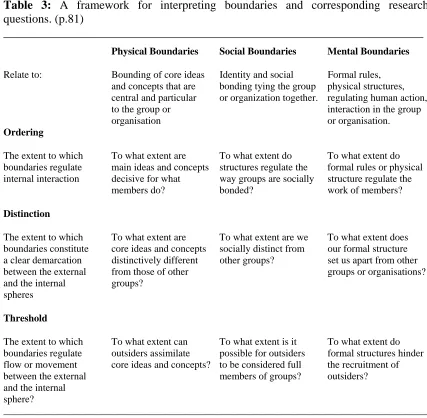
(4) © 2004 ephemera 4(4): 376-384 reviews. Constructive Spatial Criticism Sammy Toyoki. seeks to understand the dialectical interaction between spatial arrangements and social organisation itself” (Shields, 1996: 157). Now, why explain this in such length? Simply put, when offering explanations to how spatial production and reproduction might occur organisationally, Hernes deems the epistemological distinctions as too complex (this is probably why he confuses them badly in p.69) and so he only applies the ontological ‘level’ of Lefebvre’s schema: “Lefebvre’s distinction between spatial practice, representational space and representation of space is by no means a tidy one. It is certainly difficult to apply, although it provides some abstract notions about different epistemologies related to space… We will therefore not attempt to carry on his multidimensional framework but rather take it as a testimony to the multiple conceptualizations and uses of the imagery of space. His distinction between physical, mental and social space, however, will be pursued in the chapters that follow” (p.74). Hernes demonstrates the remaining ontological distinctions and what he understands as their characteristics in Table 2. Table 2: A three-pronged notion of space in relation to organization. (p.72) ______________________________________________________________________ Ontological distinction. Physical space (natural) Social space. Mental space. Examples. Budgets, electronic domains, physical barriers, work schedules, rules. Trust, identity, loyalty, love, dependence, norms of behaviour. Knowledge, meaning, strategies, sensemaking, learning,. Basic element. Tangible structures. Social relations. Thought. Medium. Regulation. Human presence. Cues. Boundary defined by. The allowable. The permissible. The thinkable. ____________________________________________________________________________________. After briefly establishing these three categories of space as a basis for organisation, Hernes takes the next step in attempting to ‘fit’ Lefebvre’s theory to an organization context and introduces the idea of ‘boundaries’. He states, “If we wish to study change, we are well advised to study boundary-related dynamics” (p.77). Briefly put, Hernes sets forth the argument that in order for the observation of space to be possible space must be distinguishable from other spaces. As such a distinction, boundaries of space relate to how the space might be defended, promoted and integrated: “Boundaries are not “by-products” of organisation, but organisation… evolves through processes of boundary setting. Like any social system, an organisation emerges through the processes of drawing distinctions, and it persists through the reproduction of boundaries. The focus is moved from what goes inside the organisation to its margins, where it is produced and reproduced” (p.80). What he presents is a three-part framework of ‘Physical Boundaries’, ‘Social Boundaries’ and ‘Mental Boundaries’ (see Table 3).. 379.
(5) © 2004 ephemera 4(4): 376-384 reviews. Constructive Spatial Criticism Sammy Toyoki. Table 3: A framework for interpreting boundaries and corresponding research questions. (p.81) ______________________________________________________________________. Relate to:. Physical Boundaries. Social Boundaries. Mental Boundaries. Bounding of core ideas and concepts that are central and particular to the group or organisation. Identity and social Formal rules, bonding tying the group physical structures, or organization together. regulating human action, interaction in the group or organisation.. To what extent are main ideas and concepts decisive for what members do?. To what extent do structures regulate the way groups are socially bonded?. To what extent do formal rules or physical structure regulate the work of members?. To what extent are core ideas and concepts distinctively different from those of other groups?. To what extent are we socially distinct from other groups?. To what extent does our formal structure set us apart from other groups or organisations?. Ordering The extent to which boundaries regulate internal interaction. Distinction The extent to which boundaries constitute a clear demarcation between the external and the internal spheres Threshold The extent to which To what extent can To what extent is it To what extent do boundaries regulate outsiders assimilate possible for outsiders formal structures hinder flow or movement core ideas and concepts? to be considered full the recruitment of between the external members of groups? outsiders? and the internal sphere? _____________________________________________________________________________________. In interpreting spatial boundaries Hernes states that “First, boundaries may be grouped according to the substance of the space, which distinguishes between social, physical and mental boundaries. Second, boundaries may be grouped according to how they regulate the space in question” (p.84). What the reviewer believes has happened here is that Hernes has taken the principle format of Lefebvre’s spatial ontology and conflated it with his own boundary-related distinctions. Now this is all fine insofar as long as Hernes can successfully demonstrate how this one, conflated level of ‘boundary’ distinctions explicates spatial production and reproduction. In a Giddensian spirit, Hernes (p.80) states, “boundaries emerge and are reproduced through interactions (Giddens, 1984)”. And in turn, these ‘boundaries’ are what essentially demarcates space(s) into spatial ‘fields’: “A field, as the term is used in the present chapter, is seen through the lens of interactions of the entities that make it up” (p.79). Accordingly, organisation is created by drawing distinctions between boundaries of spatial fields and ‘persists’ through reproducing these boundaries through ‘interaction’. The problem here is that Giddens’ ‘structuration’ theory, although renowned for its explication of social interaction, does not explain spatial production (Urry 1991), and consequentially, nor 380.
(6) © 2004 ephemera 4(4): 376-384 reviews. Constructive Spatial Criticism Sammy Toyoki. does it explain ‘boundary’ production. This is so for two reasons. Firstly, if one were to look through Giddens’ (1984) book ‘The Constitution of Society’ it is riddled with references to how interaction of this structure and that agency occurs across time and space. ‘Across’ but not ‘through’ time and space? Surely this means something? Time and space in this formulation are viewed as given, static backgrounds, not explicit products of interaction. Why? Because structuration theory is in fact based on a dualism (Archer, 1982; Mouzelis, 1989) that is analytically incapable of explaining time-space production. It is founded on a binary relation between structure and agency where the former, although attributable with spatial characteristics, is not viewed in terms of production and symbolisation but only in terms of the structural effects on human agency. As Urry aptly puts it, “Time and space paradoxically remain for him [Giddens] as ‘structural’ concepts demonstrating not the duality of agency and structure but their dualism. No real account is provided as to how human agency is chronically implicated in the very structuring of time and space. They are viewed as essential to the context of human actions but as such they channel or structure such actions from the outside” (1991: 160). Secondly, and related to the above notion of dualism, how can structuration theory, which is based on the principle interplay between two levels possibly be able to explicate the simultaneous interaction of three? Lefebvre’s epistemological level is of three parts and so is Hernes’ level of boundary-distinctions! So, in omitting Lefebvre’s epistemological distinctions of space from his framework, Hernes has effectively dismantled it from the analytic mechanism that actually explains spatial production. But how does Lefebvre’s schema succeed where Hernes’ and Giddens’ fails? Firstly, the dualist arrangement in ‘structuration’ is based on a ‘closed dialectic’ (Adorno and Horkheimer, 1973). That is, “this duality of forces… leaves no room for choices based on free will or the ability to act otherwise” (Sack, 1992: 14) and thus the actor is left imprisoned by the horizons of one’s lifeworld (Habermas, 1987). Because Lefebvre’s epistemological ‘triad’ is in fact based on a three-part dialectic it transcends this dualism by breaking through it. Whereas ‘representation of space (the ‘conceived’) is analogous to ‘structure’ and ‘spatial practice’ (the ‘perceived’) to ‘agency’, they are both transcended by a third dialectic counterpart, ‘representational space’ (‘the lived’). By introducing this third mode or ‘Third-as-Othering’, as Soja (1996) puts it, Lefebvre (1991) has effectively rethought the traditional Hegelian dialectic of ‘thesis-antithesis-synthesis’ that so clearly restricts Hernes. Theoretically speaking, the reason why the Hegelian dialectic is ‘synthetic’ is because in the proposition ‘1+1 = 2’, ‘2’ is not simply a repetition of ‘1’ – there is something new, a synthesis. However, what Lefebvre discovered was that as well as being central for identity; ‘1+1’ also creates difference – because of the repetition (Elden, 2004). Hence, in representing this ‘difference’, it is the third mode, the mode of the ‘lived’ in Lefebvre’s dialectic logic that surpasses and opens up the closed circle in Giddens’ and thence Hernes’ thought. In this way, the three-part epistemological level of spatial modes allows the analysis of not just the simple but also the complex, and in so doing, it surpasses mere categorisation and becomes the analytic for becoming. Or what is in this case more pertinent, the analytic for the production of space. Secondly, by taking the ontological level of spatial modes and ‘conflating’ it with his own boundary-related distinctions, some might argue that Hernes is bringing form and content together in the same way Lefebvre does (the dialectic unity of ontology and 381.
(7) © 2004 ephemera 4(4): 376-384 reviews. Constructive Spatial Criticism Sammy Toyoki. epistemology). In fact, and quite curiously, Hernes states at the end of Chapter 5, “Characteristics of boundaries are likely to influence, not only how people behave in relation to the spaces, but also how spaces interact when brought into contact with one another” (p.84). In other words, what Hernes is implying is a logic of relation reminiscent to that of Lefebvre’s original schema. The crucial difference being, however, that for Hernes spaces affect human behaviour but not the other way around. For Lefebvre on the other hand, there is a dialectic interplay here, ‘how space is’ (ontology of space) depends on its dialectic relation to ‘how space is known’ and in turn, ‘how space is known’ depends on the dialectic interplay between the subjectively experienced, epistemological modes of space. In other words, Hernes seems to be arguing for either a unity between ontology and epistemology, or he is arguing just for ontology by itself (the reviewer is undecided), in which case he is bordering on a kind of structuralism. If he is arguing for a ‘unity’, he is in fact promoting identity: as in ‘1+1=2’ or ‘space is as you think it’. In other words, the ‘‘known’ and the ‘knower’ are the same. If he is arguing for an ontology alone, that is, a sole reliance on ‘form’, then space is merely seen as a predetermined structure that confines the unwitting agent. The distinctions of ‘Physical Boundaries’, ‘Social Boundaries’ and ‘Mental Boundaries’ are suggestive of this latter argument as they relate to the extent to which boundaries might dictate our thoughts, our identities and our bodies through ‘ordering’, ‘distinction’ and ‘thresholds’ (see Table 3). Hardly a fruitful foundation for space production. Now, Lefebvre, on the other hand, argues for a dialectic interplay between ontology and epistemology. This dialectic ‘unity’ is at the same time ‘enabling’: ‘how space is depends on how you see it and vice versa’. Thus it is the emitting of subjectivity into the equation that enables the actor to (analytically) produce space. So how does Hernes’ approach to spatial construction fare compared to the original framework it draws from? Perhaps it’s too early to speculate where it might go with some further refinement. But to strip Lefebvre’s theory from its methodical engine (epistemological triad) and to replace it with ‘boundaries’, an apparently unfinished and alien dynamic to its body, will incur a price. After all, to work a three-part dialectic is not just about having three whatever counterparts and relating them, the overall compilation has to be carefully thought through. Take Lefebvre’s schema for example, the primary object of knowledge in this conceptual ‘triad’ is the fragmented and uncertain connections between representations of space on the one hand and representational space on the other. This relationship in turn implies and explains the subject “in whom lived, perceived and conceived (known) come together within a spatial practice” (Lefebvre, 1991: 230). Through an oscillating motion practice moves between conceived and imaginery space, between mediated reflections and lived experience, dialectically producing and reproducing identities and social organisation on the one hand and new spaces on the other (Lefebvre, 1991). In effect, this ‘triad’ could be seen as “both outcome/ embodiment and medium/ presupposition of social relations and social structure, their material reference… social life must be seen as both spaceforming and space contingent, a producer and product of spatiality” (Soja, 1989: 129). If one were to really pore over Lefebvre’s schemata as a whole, what would also become apparent is how ‘Physical, Mental, Social’ space are in fact products of the epistemological triad (and vice versa of course). Now to separate these three ‘modalities of space’ from their ‘genesis’ (Lefebvre, 1991) and to merely give them labels as Hernes does, is like taking out the engine of a car and selling it as real ‘go-getter’. You 382.
(8) © 2004 ephemera 4(4): 376-384 reviews. Constructive Spatial Criticism Sammy Toyoki. do see the dilemma here? Lefebvre’s schema is the result of a scholarly career spanning over sixty five years. ‘Fitting’ it to any discipline, not just organisational studies, warrants slightly more consideration and care than the current application offered by Hernes. Moreover, saying that Lefebvre’s epistemological level was too ‘untidy and difficult to apply’ while confusing their characteristics completely when defining them (Hernes confuses parts of ‘representation of space’ with that of representational space’ and vice versa on p.69) is suggestive of the possibility that Hernes never took the time to understand Lefebvre’s schema in the first place. In any event, excluding the epistemological level, replacing it with ‘boundaries’ and then using Giddens’ structuration theory to mobilise it doesn’t seem to work. Organisational reproduction through ‘boundary interaction’ is nevertheless a good idea but since the framework does not, at least explicitly, introduce ‘practice’ as a variable, its operationalising remains in the reviewer’s mind slightly unclear. Perhaps if the horizontal dimensions (‘ordering’, ‘distinction’, ‘threshold’) were conceptualised as a kind of ‘doing’ instead of as constructs indicative of the ‘extent’ to which they ‘permit’ something to happen (see Table 3), and if these adjusted practice-orientated constructs were then dialectically juxtaposed as in Lefebvre’s schema, the overall framework would seem in the reviewer’s mind methodically more approachable? What is also curious is how Hernes has dedicated whole chapters to each ontological mode (chapters six, seven and eight) explaining, through terms such as ‘emergence’, ‘reproduction’, ‘history and time’ and ‘subject’ “how each type of space interacts with itself” (p.127) (emphasis mine) whilst overlooking how they might interact with each other! Admitted, Hernes does discuss spatial dynamics in Chapter nine and seems to be quite aware of the significance of the ‘socio-spatial’ dialectic but because he does not explicitly apply its principles in his theoretical framework, or in any other part of the book for that matter, the overall delivery of what Hernes is theoretically trying to pitch to the reader remains obscure. The same critique is levelled to the question whether Hernes has consciously conflated ‘ontology’ with ‘boundaries’ (form and content) or merely regressed to a mild structuralism. Either way, since he leaves the reader guessing at his intentions, the use-value of the book is further deflated. Unfortunately, to critically comment on what is already considered as critical knowledge leaves little manoeuvring space for the reviewer – hence the occasional ‘nitpicking’. Some might ask why the reviewer ignores Hernes’ explicit apologies for the ‘modest’ application and ‘fitting’ of Lefebvre to organization studies and proceeded to do a point-by-point critique? ‘Who cares if Hernes has not applied Lefebvre from word to word?’ Well, that’s not really the point is it! Ultimately, through this partial treatment Hernes is not stretching the boundaries enough to provide insight into what an organisational analysis of space could be!. references. Adorno, T. and M. Horkheimer (1973) Dialectic of Enlightment. New York: Continuum. Archer, M. (1982) ‘Morphogenesis versus Structuration: On Combining Structure and Action’, British Journal of Sociology, 33:455–83. Elden, S. (2004) Understanding Henri Lefebvre: Theory and the Possible. London: Continuum. Giddens, A. (1984) The Constitution of Society. London: Polity Press.. 383.
(9) © 2004 ephemera 4(4): 376-384 reviews. Constructive Spatial Criticism Sammy Toyoki. Habermas, J. (1987) The Theory of Communicative Action. Volume Two, Lifeworld and System: A Critique of Functionalist Reason, trans. T. McCarthy. Cambridge: Polity. Lefebvre, H. (1991) The Production of Space. Oxford: Blackwell Publishing. Mouzelis, N. (1989) ‘Restructuring Structuration Theory’, The Sociological Review, 37(November): 615635. Sack, R. D. (1992), Place, Modernity, and the Consumer’s World: A Relational Framework for Geographical Analysis. London: The Johns Hopkins University Press. Shields, R. (1999) Lefebvre, Love & Struggle: Spatial Dialectics. London: Routledge. Soja, E. (1996) Thirdspace: Journeys to Los Angeles and Other Real-And-Imagined Places. Oxford: Blackwell Publishing. Urry, J. (1991), ‘Time and Space in Giddens’ Social Theory’, in C.G.A. Bryant and D. Jary (eds.) Giddens’ Theory of Structuration: A Critical Appreciation. London: Routledge.. Afterword Now that the critical masturbation is over, it is perhaps timely to say out loud the obvious limitations of this review. Coming from a purely Lefebvrian perspective, it is admittedly narrow in focus and omits a wider commentary on the text’s otherwise purposeful and well-delivered pedagogic whole. The challenges levelled at this text probably flank the originally intended subject-matters, leaving a distorted and necessarily biased exposition. Because mounting such attacks in the name of ‘criticality’ only perpetuates the dilution of this already thinly spread out concept, the reviewer secretly hopes for a response of some form. In good faith of course… Long live the power of debate!. the author. Sammy Toyoki is a second year doctoral student at the Marketing and Strategic Management department of Warwick Business School (WBS). His research interests revolve around consumption, space-time and social rhythms. Address: MSM, Warwick Business School, University of Warwick, CV4 7AL, United Kingdom. Email: [email protected]. 384.
(10)
Figure
Related documents
An on-site garden, used either as wander space or a treatment environment or both, is perceived as improving quality of life, sleep, appetite, stress levels, and mood for
In present research, effect of morphine resulted decrease in abnormal thickness in embryonic unit of experimental group compared to control group in 10 and 14
These two textbooks raise the issue of Soviet support of Egypt and Kissinger is drawn into the discussion: ‘‘Nixon and Kissinger saw this conflict as an opportunity for the
Velik del umetnosti, v Jugoslaviji in Sloveniji, v času socialističnega realizma ni imel trajnostnega značaja, slikarska dela velikokrat niso bila namenjena galerijam, ampak so
Power sav- ings might be attained by making the electronic and network devices more efficient (more than 20 percent of gain can be obtained by considering the first three rows in
Part IX Business Intelligence Systems Their Strategic Role and Organizational Impacts. Enabling Factors for SaaS Business
Teacher guide model of pyramid-based learning model to improve science process skill can help improve teacher performance in implementing science process skill learning
A series of experiments using flavour-aversion learning procedures (e.g., Honey & Hall, 1989) found just this – acquisition of a conditioned aversion was retarded by prior
