SYSTEMATIC MAP
What is the available evidence for the range
of applications of genome-editing as a new tool
for plant trait modification and the potential
occurrence of associated off-target effects:
a systematic map
Dominik Modrzejewski
*, Frank Hartung, Thorben Sprink, Dörthe Krause, Christian Kohl and Ralf Wilhelm
Abstract
Background: Within the last decades, genome-editing techniques such as CRISPR/Cas, TALENs, Zinc-Finger
Nucle-ases, MeganucleNucle-ases, Oligonucleotide-Directed Mutagenesis and base editing have been developed enabling a precise modification of DNA sequences. Such techniques provide options for simple, time-saving and cost-effective applications compared to other breeding techniques and hence genome editing has already been promoted for a wide range of plant species. Although the application of genome-editing induces less unintended modifications (off-targets) in the genome compared to classical mutagenesis techniques, off-target effects are a prominent point of criticism as they are supposed to cause unintended effects, e.g. genomic instability or cell death. To address these aspects, this map aims to answer the following question: What is the available evidence for the range of applications of genome-editing as a new tool for plant trait modification and the potential occurrence of associated off-target effects? This primary question will be considered by two secondary questions: One aims to overview the market-ori-ented traits being modified by genome-editing in plants and the other explores the occurrence of off-target effects.
Methods: A literature search in nine bibliographic databases, Google Scholar, and 47 web pages of companies and
governmental agencies was conducted using predefined and tested search strings in English language. Articles were screened on title/abstract and full text level for relevance based on pre-defined inclusion criteria. The relevant infor-mation of included studies were mapped using a pre-defined data extraction strategy. Besides a descriptive summary of the relevant literature, a spreadsheet containing all extracted data is provided.
Results: Altogether, 555 relevant articles from journals, company web pages and web pages of governmental
agen-cies were identified containing 1328 studies/applications of genome-editing in model plants and agricultural crops in the period January 1996 to May 2018. Most of the studies were conducted in China followed by the USA. Genome-editing was already applied in 68 different plants. Although most of the studies were basic research, 99 different mar-ket-oriented applications were identified in 28 different crops leading to plants with improved food and feed quality, agronomic value like growth characteristics or increased yield, tolerance to biotic and abiotic stress, herbicide toler-ance or industrial benefits. 252 studies explored off-target effects. Most of the studies were conducted using CRISPR/ Cas. Several studies firstly investigated whether sites in the genome show similarity to the target sequence and secondly analyzed these potential off-target sites by sequencing. In around 3% of the analyzed potential off-target
© The Author(s) 2019. This article is distributed under the terms of the Creative Commons Attribution 4.0 International License (http://creat iveco mmons .org/licen ses/by/4.0/), which permits unrestricted use, distribution, and reproduction in any medium, provided you give appropriate credit to the original author(s) and the source, provide a link to the Creative Commons license, and indicate if changes were made. The Creative Commons Public Domain Dedication waiver (http://creat iveco mmons .org/ publi cdoma in/zero/1.0/) applies to the data made available in this article, unless otherwise stated.
Open Access
Background
Technological progress in agriculture and plant breeding has contributed significantly to a stable food supply and formed the basis for high yields as well as the production of high-quality agricultural products [1]. However, in an ever-changing world, new challenges will be encountered within the next decades. Aside the demands of the grow-ing global population and limited fossil resources, climate change is a driver of breeding efforts as it is associated with increased extreme weather events like droughts or floods as well as changing dynamics of pests and dis-eases. Agriculture needs to ensure and increase the world agricultural production to serve extended demands with limited environmental resources like soil and water [2]. In contrast, intensification of agriculture causes consid-erable impact on nature, as naturally diverse landscapes are replaced by arable land for the cultivation of few plant species. Biodiversity is threatened through habitat loss and pesticide use, which in turn is considered to increase disease and pest pressure [1]. Additionally, these impacts of agriculture on the environment are becoming increas-ingly important in societal debates.
To meet all these challenges, improved crop varie-ties may be developed and integrated into a sustainable farming system considering their economic, environ-mental and social impacts [2]. Examples for a sustain-able farming system are the preservation of natural soil fertility through suitable crop rotations, fertilization and plant protection according to the principles of inte-grated cultivation or a balanced and species-appropriate animal husbandry [3]. Additionally, plant breeding is of crucial importance to manage environmental impacts on cultivation systems by providing varieties resistant to plant diseases or pests, tolerant to abiotic stress and more broadly support a “greener production”—in time. This may reduce pesticide use and result in less intense management efforts (e.g. irrigation) [4]. Further yield improvement can increase the yield per hectare and may open land management options e.g. balance with areas for nature conservation [1]. Nevertheless, there is evi-dence that increased yields may lead to a rebound-effect
meaning that yield improvement conserves the rate of land clearance, but the effect is smaller than it could be [5]. One example for the rebound-effect in agriculture is the Green Revolution [6]. As a result of this revolution, yields increased, saving ecosystems from conversion to agricultural land. However, the effect was much smaller than expected. One explanation for this effect may be that increased productivity due to new technologies also increases the profitability of agriculture compared with alternative land use [6].
Plant breeding essentially relies on the utilization of genetic variation within the breeding material that can be used for crossing and selection to develop improved varieties. New genetic variation occurs naturally by spon-taneous mutations that enable some individual plants in a population to adapt to changing environmental con-ditions. However, as the mutation rate is fairly low and random, plant breeders and scientists have artificially induced mutations for several decades [7]. The first gen-eration of mutation breeding used chemical and physical mutagens to generate a plurality of nonspecific muta-tions. The increased mutation rate results in plants with a few positive, a lot of neutral and several negative char-acteristics. Thus, laborious backcrossing and selection steps are necessary in order to select for a target trait in a desired genetic background (maternal variety). Never-theless, to date 3282 mutant varieties from 225 different plant species have been generated through undirected mutagenesis and officially but voluntarily registered [8]. sites, unintended mutations were detected. Only a few studies conducted off-target analyses using unbiased detec-tion methods (e.g. whole genome sequencing). No off-target effects that could be correlated to the genome-editing process were identified in these studies.
Conclusions: The rapid adoption in plant breeding was demonstrated by a considerable number of market oriented
applications (crops and traits) described in publications worldwide. Studies investigating off-target effects are very heterogeneous in their structure and design. Therefore, an in-depth assessment regarding their weight of evidence is mandatory.
Keywords: New plant breeding techniques, Gene editing, Targeted genome modification, Mutagenesis, Unintended
effects, Off-target mutation, Evidence map, Evidence synthesis
Glossary: [1, 9, 10] Backcrossing
Mutagen
A mutagen is an agent that increases the mutation rate within an organism or cell, e.g. X-rays, gamma-rays or chemicals like ethyl methane sulfonate (EMS).
Mutation breeding
A plant breeding approach using mutagens to enhance genetic variation. The resulting random mutations can generate new gene variations with positive traits that can be selected for further breeding. However, several of these mutations are negative and diminish the via-bility of the plant.
Off‑target effect due to genome editing
Unintended cleavage and mutations at untargeted genomic sites with similar but not identical sequences compared to the target site.
Selection
A process in breeding by which the breeder chooses only those individuals that show desired trait(s).
1. No template is added and the DSB is repaired by autochthonous cellular mechanisms [in most cases non-homologous end joining (NHEJ)] resulting in small insertion-deletion (indel) mutations. This approach is defined as SDN1.
2. A repair template is added which, except for a few nucleotides, is identical to the sequences in which the DSB is introduced. Then, the DSB is repaired via homology-directed repair (HDR), causing nucleo-tide substitution or, depending on the template used, targeted indels of a specific size. This approach is defined as SDN2.
3. The repair template harbors a recombinant DNA sequence additional to the homologous sequences in which the DSB is made and the break is repaired via HDR, resulting in more complex alterations, i.e. the insertion of foreign genes. This approach is defined as SDN3.
The Oligonucleotide-Directed Mutagenesis technique does not induce a DSB. Instead the introduced oligonu-cleotide binds to the targeted DNA sequences and this sequence is then modified by the cellular mechanism of mismatch repair [10]. Base editing is a recently developed approach enabling a targeted switch of DNA bases in a given frame into another without any DSB [17].
Genome-editing offers substantial advantages com-pared to previous mutation breeding techniques and conventional genetic engineering in terms of speed and precision. It provides the opportunity to selectively mutate or modify one or a few genes (SDN1, SDN2). In addition, it is now possible to precisely modify or selec-tively replace (SDN3) entire genes from both closely as well as distantly related organisms [10]. By the use of conventional genetic engineering, traces of recombinant DNA, from the used gene shuttle (e.g. bacteria, virus or plasmid), persist in the modified organism leading to clearly characterized genetically modified organisms. In contrast, by applying genome-editing, it is possible to modify crops without inserting foreign DNA sequences at all [18]. Therefore, some countries like USA, Canada, Brasilia, Argentina and others reduced the regulatory burden for plant breeders [19]. Due to the simplicity, time-saving and cost-effective application of genome-editing, it has already been applied in a wide range of cul-tivars. Genome-editing has been used for:
i. Analyzing gene functions (e.g. effect of the RAV2 gene for salt stress in rice [20]).
ii. Improvement of product quality (e.g. improved oil quality in soybean [21]).
iii. Development of disease resistant varieties (e.g. virus resistant cucumber [22]).
In 1983, the first recombinant DNA was delivered to plant cells using Agrobacterium tumefaciens [11, 12]. From this time on, it is possible to work at a single gene level with genetic material from any organism, generat-ing plants that cannot be bred conventionally. Neverthe-less, the induced mutations using chemical and physical mutagens as well as the “classical” transgenic approach show limited efficiencies and unintended side effects due to the random targeting [13].
iv. Developing of herbicide tolerant varieties (e.g. resist-ance to the herbicide chlorsulfuron in canola [23]). v. Improved adaption to abiotic stress, (e.g. drought
tolerance in maize [24]).
Even in plants like hexaploid wheat, that were so far largely inaccessible for targeted genetic alterations, the simultaneous mutation of all six alleles was successfully performed [25]. These successful applications are open-ing up new dimensions for the scientific plant breedopen-ing and agricultural community.
Compared to randomly induced mutations by chemi-cals or irradiation, the number of unintended mutations (off-target effects) is broadly reduced by genome-editing techniques [10]. Nevertheless, their application does not completely or per se exclude the occurrence of off-tar-get effects. Off-taroff-tar-get effects caused by genome editing most likely occur in DNA sequences that are similar (not identical) to the targeted one but are located at another site in the genome. Mainly, they occur due to the lack of exclusiveness and/or length of the recognition site [10]. When analyzing off-target effects, one distinguishes between biased and unbiased detection methods [26]. To date, the predominant approach for identifying off-target effects is the biased approach consisting of two steps: (i) Using sequence alignment programs, sites in the genome with high similarity to the target sequence are identified, which are designated as potential off-target sites. Several different tools like BLAST [27], Cas-OFFinder [28] or CRISPR-P [29, 30] are used to identify these potential off-target sites. (ii) The identified individual DNA sequences (potential off-target sites) are then analyzed for unde-sired mutations (off-target effects) using various detec-tion methods like mismatch-sensitivity endonuclease assays, Sanger sequencing or targeted deep sequencing [31]. All detection methods have their specific advantages and disadvantages which are addressed in several reviews (e.g. [26, 32]). In contrast to the biased detection meth-ods, unbiased ones are used to identify off-target effects in a completely unrestricted way. Therefore, it requires genome-wide sequencing to identify off-target muta-tions anywhere in the genome and de novo define off-target sites [26, 32]. Depending on the detection method being used, the results of identifying off-target muta-tions vary widely. Although genome-editing techniques induce much less off-target effects compared to classical mutagenesis techniques, these are an important point of criticism as they may possibly cause genomic instability, cytotoxicity and cell death [33–35].
This systematic map facilitates an objective debate by informing interested stakeholder communities in a transparent and retraceable manner about the status of research, the progress of genome-editing in plants and
the available evidence for the potential occurrence of associated off-target effects. Furthermore, risk assessors and decision makers are depending on the provision of a reliable body of evidence to support conclusions about potential risks being associated with the application of genome-editing. Thus, an overview of the available evi-dence on the occurrence of off-target effects could be of crucial importance.
Stakeholder engagement
The systematic map question, the secondary questions and the scope was designed by the review team reflecting discussions with policy makers, authorities, regulators and academia requesting a broad overview on the avail-able evidence about the application of genome editing in plants and the potential occurrence of off-target effects. Throughout the review process there was no stakeholder engagement. As indicated in the systematic map proto-col the results of the map were discussed on a confer-ence with different stakeholders from this field, including besides others plant breeders, federal authorities, aca-demia, farmer organizations and processing industry. Stakeholder remarks are taken into account when prepar-ing a systematic review based on the results of this map.
Objectives of the map
As genome-editing techniques are a promising tool to revolutionize plant breeding, they are of particular rele-vance to scientists, breeders, farmers but also to decision and policy makers with regards to the broader agricul-tural management and future challenges. Therefore, we wanted to provide a comprehensive and transparent overview of the available evidence base concerning the effects of genome-editing in plants. The main objectives were:
• Overview of the traits modified by genome-editing in model plants as well as in crops produced for agricul-tural production.
• Overview of the available evidence about the occur-rence of off-target effects due to the use of genome-editing techniques in model plants as well as in crops produced for agricultural production.
• Identification of the geographical distribution of genome-editing activities in plants worldwide.
• Identification of the volume of the available litera-ture, evidence clusters and key characteristics of the evidence base to inform interested stakeholder com-munities.
decision makers which future research might be needed for a risk assessment.
• Assessment whether a specific section of the avail-able evidence base is suitavail-able for an in-depth analyses by a systematic review.
The primary question of the systematic map was: “What is the available evidence for the range of appli-cations of genome-editing as a new tool for plant trait modification and the potential occurrence of associated off-target effects”?
To answer this primary question, it was subdivided into two secondary questions related to (1) the traits modified by genome-editing and (2) the occurrence of off-target effects due to the use of genome-editing.
Secondary question one
“What are the traits modified by genome-editing in model plants as well as in crops produced for agri-cultural production?”
Population: Any model plant or crop produced for agricultural production.
Intervention: One of the following genome-editing techniques was used to induce an altera-tion in the plant genome: Clustered Regularly Interspaced Short Palindro-mic Repeats/CRISPR associated protein (CRISPR/Cas), Transcription Activator-Like Effector Nucleases (TALENs), Meg-anucleases (MN), Zinc-Finger Nucle-ases (ZFN), Oligonucleotide-Directed Mutagenesis (ODM), base editing (BE). Outcome: The alteration of the genome (i.e.
inser-tion, deletion or substitution of nucleo-tides) induced by the use of a genome-editing technique.
Secondary question two
“What is the available evidence for the potential occurrence of associated off-target effects due to the use of genome-editing in model plants as well as in crops produced for agricultural production?”
Population: Any model plant or crop produced for agricultural production.
Intervention: One of the following genome-editing techniques was used to induce an altera-tion in the plant genome: Clustered
Regularly Interspaced Short Palindro-mic Repeats/CRISPR associated protein (CRISPR/Cas), Transcription Activator-Like Effector Nucleases (TALENs), Meg-anucleases (MN), Zinc-Finger Nucle-ases (ZFN), Oligonucleotide-Directed Mutagenesis (ODM), base editing (BE). Outcome: The alteration of the genome (i.e.
inser-tion, deletion or substitution of nucleo-tides) induced by the use of a genome-editing technique. Additionally, the occurrence of off-target effects was assessed.
Methods
The methods used to conduct this systematic map were based on the Collaboration for Environmental Evidence (CEE) systematic review guidelines [36]. Detailed infor-mation about the methods used to perform this system-atic map are presented in the published protocol [37]. A brief summary of these methods is provided here.
Search for articles
The search string was composed of two parts: The first part defined the population of interest comprising less specific terms like crop, plant or seed as well as spe-cific model plants and crops including their English and Latin names. The second part defined the intervention, i.e. the genome-editing technique applied to induce an alteration in the plant genome (CRISPR, TALENs, ZFN, MN, ODM or BE). To test the comprehensiveness of the search strategy a scoping search was carried out and the identified records where tested against an a priori defined test library with articles of known relevance. Details on search settings and subscriptions can be found in Addi-tional file 2. The following bibliographic databases were searched whereby the search string was adapted to the specific needs of each database to which it was applied to:
• Scopus • PubMed • Science direct • Agris
• Web of Science (WoS) • Biological Abstracts • BIOSIS Previews • CAB Abstracts • SciELO Citation Index
In addition, Google Scholar (https ://schol ar.googl
of different (model) plants and genome-editing terms. The first 20 hits organized by relevance, of each search term were examined for relevance. Furthermore, a total amount of 47 web pages of companies working with genome-editing and the USDA database “Am I regu-lated?” (https ://www.aphis .usda.gov/aphis /ourfo cus/ biote chnol ogy/am-i-regul ated) were searched to identify grey literature. Finally, the bibliographies of 107 review articles identified by the literature search were screened to identify further relevant papers. In May 2018, the search string was applied in order to identify articles pub-lished after 1996, when the first study about a genome-editing technique was published.
Article screening and study eligibility criteria Screening process
Before applying the selection criteria at title/abstract and then at full text level, a consistency check was conducted by all four participating reviewers aiming to determine the inter-reviewer agreement. The level of agreement was tested formally using a kappa test [38]. 100 references retrieved by the search were randomly explored at title/ abstract level leading to a kappa value of 0.48. After dis-cussing all disagreements, a second consistency check was carried out using another randomly allocated 100 references resulting in a kappa value of 0.71. After title/ abstract screening, potentially relevant articles were checked at full text level. A list of unobtainable articles (Additional file 3) and articles excluded at full text level with the reason for exclusion (Additional file 4) are pro-vided. For conducting the consistency check as well as for the screening process at title/abstract and full text level the open-access and non-profit database CADIMA was used [39]. Two members of the review team are authors of a few articles retrieved by the review process. How-ever, as none of these papers comprise primary data, their articles were excluded at title/abstract level. Never-theless, the two coauthors routinely screened literature covering the issues addressed in this map.
Eligibility criteria
An article had to meet all the following inclusion criteria in order to enter into the systematic map:
Eligible populations: Any model plant or crop produced for agricultural production as well as higher fungi was used. Eligible interventions: At least one of the
fol-lowing genome-editing techniques was used to induce an alteration in
the plant genome: Clus-tered Regularly Inter-spaced Short Palindromic Repeats/CRISPR associ-ated protein (CRISPR/ Cas), Transcription Acti-vator-like Effector Nucle-ase (TALENs), Zinc-Finger Nuclease (ZFN), Meganuclease (MN), Oligonucleotide-Directed Mutagenesis (ODM), base editing (BE).
Eligible outcome for
secondary question one: An alteration in the plant genome was reported (insertion, deletion or substitution) due to the use of a genome-editing technique.
Eligible outcome
for secondary question two: The occurrence of off-tar-get effects was assessed. Eligible type of data: Only those references
were included which comprise primary data referring to the use of a genome-editing technique to induce a sequence alteration in the plant genome.
Eligible languages: References in German and English languages were included. Articles in other languages were included when besides title and abstract, further parts of the article, like figures or tables, were in English or German and the provided informa-tion allowed for a defi-nite judgment of their relevance.
Study validity assessment
was not assessed. However, in order to facilitate the deci-sion on the potential of a subsequent systematic review, data being indicative for the validity of an included study were extracted.
Data coding strategy
Articles in which several genome-editing techniques were applied, different plants were used or different genes were addressed have been subdivided in distinct stud-ies. While articles were screened for relevance at title/ abstract and full text level, the relevant data were finally extracted at study level.
The data of each included study was extracted in one row in the excel file for the following superordinate categories:
1. Bibliographic information (reference type, authors, year of publication, title, abstract, keywords, peri-odical, issue number, page range, volume, DOI/ISBN, corresponding author and the name of the country the corresponding author is located).
2. Information answering secondary question one about traits modified by genome-editing (genome-editing technique, plant species, sequence identi-fier, trait, type of alteration, progress in research, key topic).
3. Information answering secondary question two about the occurrence of off-target effects due to the use of genome-editing (search for off-target effects, prediction of potential off-target effects (in silico), the prediction method used, identification of potential off-target sites, detection of off-target effects (biased/ unbiased), detection method, amount of identified off-target effects (biased/unbiased).
Data were extracted according to the systematic map protocol [37]. Data from a subset of 20 studies were extracted by two reviewers independently to assess the consistency of the extraction process across the review-ers. Discrepancies were discussed and clarified within the whole review team. Then, the data of the other studies were extracted by one reviewer and cross-checked by a second one to minimize the introduction of human error. In case of missing data, “no information” has been noted under the respective category. If data were in another lan-guage than English or German, it is stated as “lanlan-guage”.
Data mapping method
The overview of research activities is provided in a nar-rative report and visualized in tables and figures. In addition, relevant studies and the extracted data are cata-logued in Additional file 5 (to answer secondary question one) and Additional file 6 (to answer secondary question
two) as well as provided in a searchable database that is freely accessible on the web page https ://www.dialo g-gea. de/de/servi ce/repos itori um.
Deviations from the systematic map protocol
The methods used in this map deviate from the protocol in the following aspects:
i. Contrary to what was stated in the protocol, the recently developed base editing method was not excluded. To identify all base editing studies the second part of the search string (intervention) was extended by the terms “base-editing” and “base editing”.
ii. Articles in other languages than English or Ger-man were included if further parts than title and abstract of the article like figures or tables were in English or German and the provided information allowed for a definite judgment of their relevance. iii. In the course of data extraction we noticed that it
was not possible to properly categorize the pro-gress in research to the three classes indicated in the systematic map protocol [37]. Therefore, we decided to classify the studies as either basic research or market-oriented application. To be flagged as market-oriented, a study had to meet three criteria:
1. Genome-editing was applied in an agricultural crop.
2. A trait was addressed that may be of interest for commercialization (market-oriented trait). 3. The targeted trait is expressed in the edited plant
grown.
All studies that did not meet all three criteria were classified as basic research.
vi. Contrary to what was stated in the protocol, no EndNote database of all studies included in the sys-tematic map was attached to this syssys-tematic map. Instead, one excel file for each secondary ques-tion was provided as addiques-tional file containing all included studies and the extracted data.
Results
Review descriptive statistics
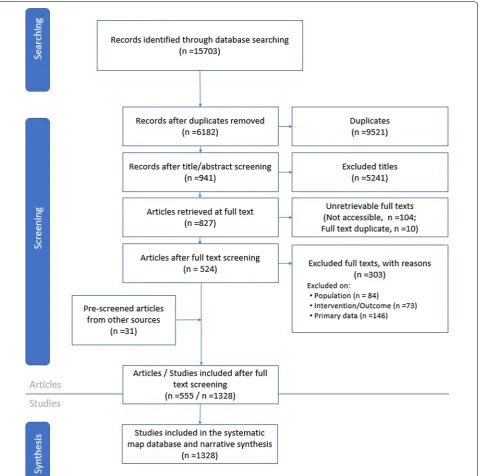
6182 articles remained and were screened on title/ abstract level. Main reasons for exclusion at this stage were the application of genome-editing in animals and the absence of primary data. 941 articles passed the inclusion criteria on title/abstract level or were rated as “unclear” and remained included for full text screen-ing. The application of the inclusion criteria at full text level resulted in 524 relevant articles. Searching for grey
of all studies and the extracted data to answer second-ary question two. A ROSES reporting form is included in Additional file 7.
General overview of the application of genome‑editing in model plants and crops
Studies per year
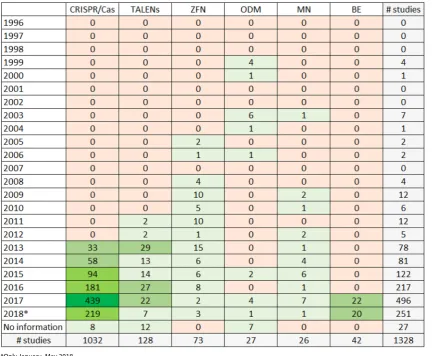
In the mapping period between January 1996 and May 2018, a total amount of 1328 studies were identified. As shown in Fig. 2, the number of studies using TALENs, ZFN, ODM, MN and BE has remained on a relatively low level. In contrast, the number of studies on CRISPR/Cas has risen sharply soon after the system was applied for the first time in plants in 2013. Nearly 85% of the studies were published since 2015 indicating the rapid dissemi-nation and development of these techniques within the last few years.
As shown in Table 1, 26 studies used MN, 27 studies used ODM, 42 studies used BE, 73 studies used ZFN, 128 studies used TALENs and 1032 studies used CRISPR/ Cas. When using CRISPR/Cas, the most frequently used nuclease was Cas9 (n = 986) followed with a large dis-tance by Cas12a (also known as Cpf1) (n = 46).
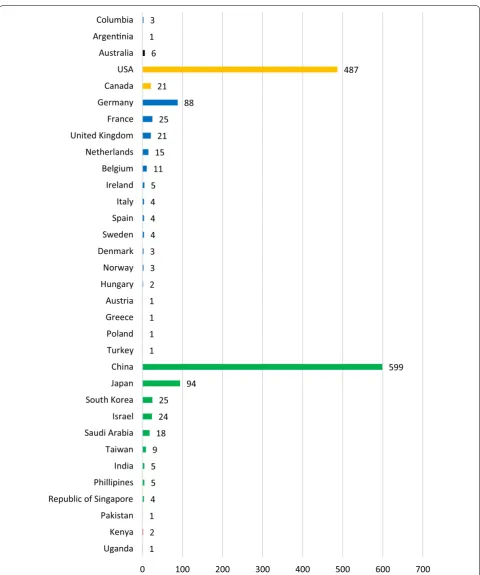
Geographical distribution of genome‑editing studies The number of studies per country was calculated based on the country the corresponding author is located at. In
case of grey literature, the study was accounted based on the country the company is located at. Multiple assign-ments are possible if the corresponding author is affili-ated with institutions in different countries or if more than one author was indicated being corresponding author. Therefore, the sum of studies accounted for differ-ent countries is higher (n = 1494) than the total amount of studies identified (n = 1328). Asia is the leading con-tinent when applying and publicizing genome-editing in plants (n = 784 studies, 53%) followed by North America (n = 508 studies, 34%), Europe (n = 189 studies, 13%), Australia (n = 6 studies, < 1%), South America (n = 4 studies, < 1%) and Africa (n = 3 studies, < 1%) (Fig. 3). In total, publications from 33 countries were identified. As shown in Fig. 3, China has a substantial lead in the num-ber of studies (n = 599 studies, 40%) followed by the USA (n = 487 studies, 33%), Japan (94 studies, 6%) and Ger-many (n = 88 studies, 6%).
Genome‑editing applications in model plants and crops Around two-third of the studies (n = 907; 68%) were con-ducted on agricultural crops and one-third (n = 421; 32%) on model organisms. However, it is worth noting that rice is an important crop plant but it is also used as model species because of its genome size and because embryo-genic rice cultures can be easily prepared, transformed and rapidly regenerated into fertile plants. In total, 51
0 50 100 150 200 250 300 350 400 450 500
1996 - 2012 2013 2014 2015 2016 2017 2018*
CRISPR
TALENs
ZFN
ODM
MN
BE
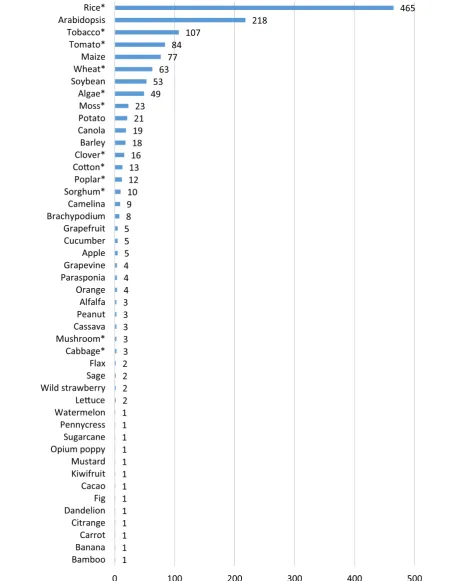
species and subspecies of different agricultural crops and 17 species/subspecies of model plants were under inves-tigation, with the majority of studies focusing on rice (n = 465) followed by the model organisms Arabidopsis (n = 218) and tobacco (n = 107). Besides to these, tomato (n = 84) is most commonly studied followed by maize (n = 77), wheat (n = 63) and soybean (n = 53) (Fig. 4).
Type of alteration in the plant genome
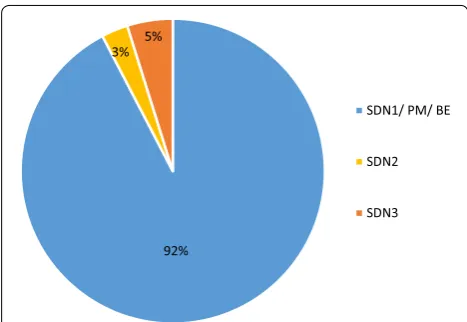
As shown in Fig. 5, the majority of studies (n = 1223; 92%) describe the induction of point mutations or indels comparable to spontaneous mutations or undirected mutagenesis. This was mainly achieved with SDN1 (n = 1154) where no repair template was added and the DSB was repaired by NHEJ. Additionally, the induction of point mutations (PM) using the ODM technique (n = 27) or BE (n = 42) leads to point mutations comparable to SDN1. Only 36 studies (3%) added a repair template that,
except for a few nucleotides, was identical to the targeted sequence in which the DSB was introduced leading to a DSB repair via homology-directed repair (SDN2). In 68 studies (5%), a repair template was added that harbors a recombinant DNA sequence additional to the homolo-gous sequences and the DSB was repaired via homology-directed repair (SDN3).
Secondary question 1: “What are the traits modified by genome‑editing in model plants as well as in crops produced for agricultural production?”
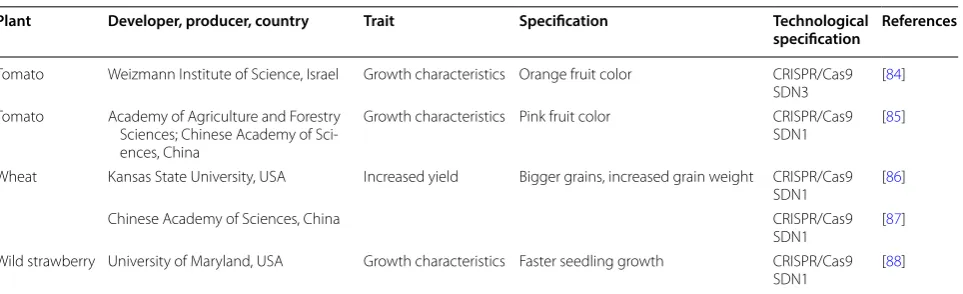
In total, 193 studies were allocated as market-oriented applications. However, different scientists studied the same crop species and trait. Considering this, a total amount of 99 different applications in 28 different plant species remained. These market-oriented applications build the basis to answer secondary question 1. Figure 6 categorizes the market-oriented applications to different Table 1 Heat map showing number of studies performed with the different genome-editing techniques (rows) and the year the studies were published (columns) (1996–May 2018)
*Only January–May 2018
1 2 1 4 5 5 9
18 24 25
94
599 1
1 1 1 2 3 3 4 4 4 5 11
15 21
25 88 21
487 6
1 3
0 100 200 300 400 500 600 700
Uganda Kenya Pakistan Republic of Singapore Phillipines India Taiwan Saudi Arabia Israel South Korea Japan China Turkey Poland Greece Austria Hungary Norway Denmark Sweden Spain Italy Ireland Belgium Netherlands United Kingdom France Germany Canada USA Australia Argennia Columbia
1 1 1 1 1 1 1 1 1 1 1 1 12 2 2 23 3 3 3 34 4 45 5 58
910 1213
1618 1921
23 49
5363 7784
107 218
465
0 100 200 300 400 500
BambooBanana Carrot Citrange DandelionFig Cacao Kiwifruit Mustard Opium poppySugarcane Pennycress WatermelonLeuce Wild strawberrySage Flax Cabbage* Mushroom*Cassava PeanutAlfalfa Orange ParasponiaGrapevine Apple Cucumber Grapefruit BrachypodiumCamelina Sorghum*Poplar* Coon*Clover* Barley CanolaPotato Moss* Algae* SoybeanWheat* Maize Tomato* Tobacco* ArabidopsisRice*
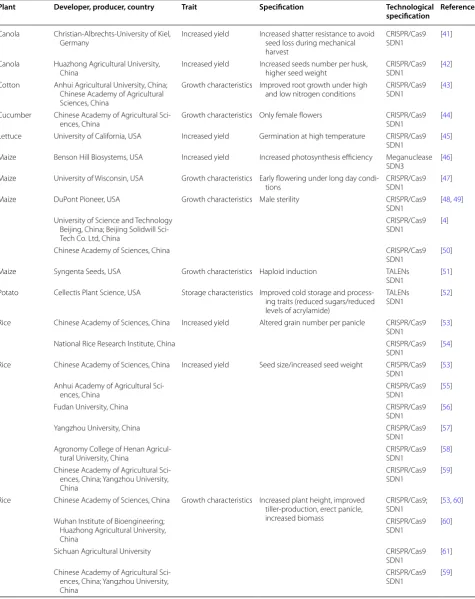
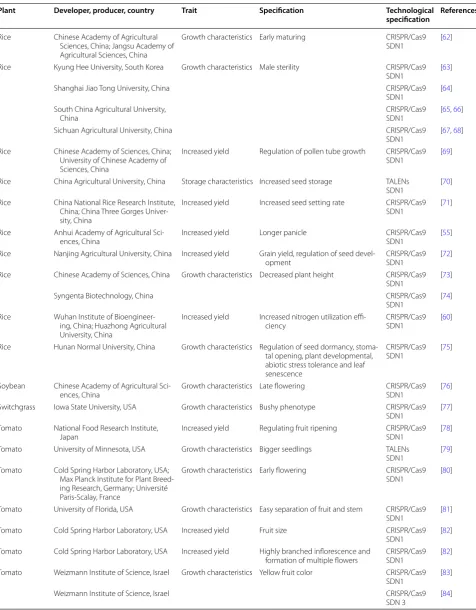
groups of traits. Most of the market-oriented applica-tions (n = 36) are related to an improved agronomic value (Table 2), followed by 28 applications with an improved food and feed quality (Table 3). For biotic stress toler-ance, 16 different applications were identified (Table 4), for herbicide tolerance eight applications (Table 5), for industrial utilization six applications (Table 6) and for abiotic stress tolerance five applications (Table 7). For more detailed information about the analyzed traits, see the respective tables.
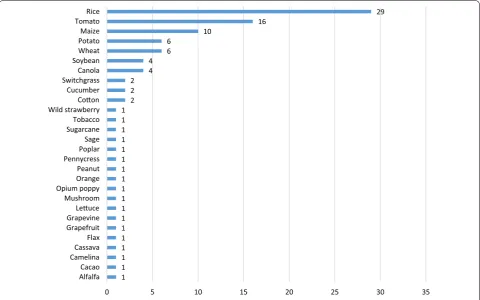
As shown in Fig. 7 most of the market-oriented appli-cations were applied in rice (n = 29), followed by tomato (n = 16), maize (n = 10), potato (n = 6), wheat (n = 6), soybean (n = 4) and canola (n = 4). In 21 other agricul-tural relevant crops, one or two market-oriented applica-tions were identified.
Secondary question 2: “What is the available evidence for the potential occurrence of associated off‑target effects due to the use of genome‑editing in model plants as well as in crops produced for agricultural production?”
In total, 252 studies from 161 articles were identified in which the occurrence of off-target effects was assessed. Table 8 maps the number of analyzed off-target effects for different genome-editing techniques and different plant species. Most of the off-target analyses were conducted in CRISPR/Cas studies (n = 228) followed by TAL-ENs studies (n = 9), BE studies (n = 9) and ZFN studies (n = 4). Solely in one ODM and in one MN study off-tar-get effects were investigated. Most off-taroff-tar-get effects were analyzed in rice (n = 93), followed by tomato (n = 28), Arabidopsis (n = 23) and soybean (n = 15) (Table 8).
Off‑target effects considered for CRISPR/Cas‑systems More than 90% of the studies, in which off-target effects were assessed, were conducted with CRISPR/Cas. Fig-ure 8 provides an overview of the applied approaches to identify off-target effects. In total, 228 CRISPR/Cas ies dealt with the analysis of off-target effects. 205 stud-ies predicted potential off-target sites and 195 of these identified potential off-target sites. Solely in 188 studies, these potential off-target sites were further analyzed for the occurrence of off-target effects using biased detec-tion methods. In addidetec-tion, 23 studies with already known potential off-target sites were assessed using biased detection methods. So, in total, 211 studies analyzed potential off-target sites using biased detection methods. Solely, nine studies searched for off-target mutations in a completely unrestricted way using unbiased detection methods. An overview of all identified CRISPR/Cas stud-ies, in which off-target effects were addressed, is pro-vided in Additional file 6 including all extracted data.
Prediction of potential off‑target sites by CRISPR/Cas Different prediction tools can be used to identify poten-tial off-target sites. All of them have in common that based on sequence alignment programs DNA-sequences are identified in which unintended mutations could occur due to high similarity between the targeted sequence and the potential off-target site. However, the prediction of a potential target site is not equated with a real off-target mutation. It has to be shown in a follow up step by verifying the potential off-target site using biased detection methods. 205 CRISPR/Cas studies searched for potential off-target sites. As shown in Fig. 9, many dif-ferent prediction tools were used to identify these sites. Mainly, three tools were used to predict potential off-tar-get sites. BLAST was used 54 times, CRISPR-P 51 times and CasOFF-Finder 31 times. 12 other prediction tools were used in 31 studies (for detailed information see 92%
3% 5%
SDN1/ PM/ BE
SDN2
SDN3
Fig. 5 Distribution of the type of alteration introduced by the application of genome-editing (January 1996–May 2018). SDN Site directed nucleases, PM point mutation, BE base editing
36
28 16
8
6 5
1 1 1 1 1 1 1 1 1 1 1 1 1 1 1 1 1 1 2
2 2 4
4 6
6 10
16 29
0 5 10 15 20 25 30 35
AlfalfaCacao CamelinaCassava Flax Grapefruit GrapevineLeuce Mushroom Opium poppyOrange Peanut PennycressPoplar Sage SugarcaneTobacco Wild strawberryCoon Cucumber SwitchgrassCanola SoybeanWheat PotatoMaize TomatoRice
Fig. 7 Total amount of genome-editing applications in crops with market-oriented traits (January 1996–May 2018)
Additional file 6). 41 studies did not provide any details about the used tool(s). Three studies used two different prediction tools to identify potential off-target sites.
The number of predicted off-target sites varies widely between studies from zero to 4265. Several reasons for this broad heterogeneity exist, which were not extracted in detail within this map but will be elucidated in the discussion.
Detection of off‑target effects—biased
Targeted sequencing to pre-selected sites was applied in 211 CRISPR/Cas studies to detect off-target effects. As shown in Fig. 8, the predicted off-target sites were fre-quently analyzed for the occurrence of off-target effects using biased detection methods. In a few studies, poten-tial off-target sites were already known and analyzed without using sequence alignment programs a priori. Fig-ure 10 displays the different detection methods applied to identify off-target mutations. In the large majority of studies, off-target effects were detected using a PCR fol-lowed by sequencing (n = 137). Only a few studies used the detection methods RE-PCR assay (n = 16), targeted deep sequencing (n = 15), enzyme mismatch cleavage assay (n = 13) and CAPS analyses (n = 13). In 11 studies,
no information about the used detection method was provided.
Taking all CRISPR/Cas studies together, 1738 differ-ent potdiffer-ential off-target sites were analyzed using targeted sequencing. Off-target effects were identified in 55 of these sites, indicating that in around 3% of the analyzed sequences off-target mutations were detected. In another six studies, no information was provided about the amount of analyzed off-target sites but off-target muta-tions were not identified either.
Considering the different plant species, most of the CRISPR/Cas studies using biased detection methods were conducted in rice (n = 77), followed by tomato (n = 23), Arabidopsis (n =21), different moss spe-cies (n = 13) and soybean (n = 12) (Table 9). In rice, a total amount of 291 potential off-target sites were ana-lyzed and in 25 of these sites, off-target mutations were detected. In contrast, studies conducted in tomatoes solely reported the identification of one off-target muta-tion when analyzing 222 potential off-target sites.
Table 2 Genome-editing in plants for modifying agronomically relevant traits (1996–May 2018)
Plant Developer, producer, country Trait Specification Technological
specification References
Canola Christian-Albrechts-University of Kiel,
Germany Increased yield Increased shatter resistance to avoid seed loss during mechanical harvest
CRISPR/Cas9
SDN1 [41]
Canola Huazhong Agricultural University,
China Increased yield Increased seeds number per husk, higher seed weight CRISPR/Cas9SDN1 [42] Cotton Anhui Agricultural University, China;
Chinese Academy of Agricultural Sciences, China
Growth characteristics Improved root growth under high
and low nitrogen conditions CRISPR/Cas9SDN1 [43] Cucumber Chinese Academy of Agricultural
Sci-ences, China Growth characteristics Only female flowers CRISPR/Cas9SDN1 [44] Lettuce University of California, USA Increased yield Germination at high temperature CRISPR/Cas9
SDN1 [45]
Maize Benson Hill Biosystems, USA Increased yield Increased photosynthesis efficiency Meganuclease
SDN3 [46]
Maize University of Wisconsin, USA Growth characteristics Early flowering under long day
condi-tions CRISPR/Cas9SDN1 [47]
Maize DuPont Pioneer, USA Growth characteristics Male sterility CRISPR/Cas9
SDN1 [48, 49] University of Science and Technology
Beijing, China; Beijing Solidwill Sci-Tech Co. Ltd, China
CRISPR/Cas9
SDN1 [4]
Chinese Academy of Sciences, China CRISPR/Cas9
SDN1 [50]
Maize Syngenta Seeds, USA Growth characteristics Haploid induction TALENs
SDN1 [51]
Potato Cellectis Plant Science, USA Storage characteristics Improved cold storage and process-ing traits (reduced sugars/reduced levels of acrylamide)
TALENs
SDN1 [52]
Rice Chinese Academy of Sciences, China Increased yield Altered grain number per panicle CRISPR/Cas9
SDN1 [53]
National Rice Research Institute, China CRISPR/Cas9
SDN1 [54]
Rice Chinese Academy of Sciences, China Increased yield Seed size/increased seed weight CRISPR/Cas9
SDN1 [53]
Anhui Academy of Agricultural
Sci-ences, China CRISPR/Cas9SDN1 [55]
Fudan University, China CRISPR/Cas9
SDN1 [56]
Yangzhou University, China CRISPR/Cas9
SDN1 [57]
Agronomy College of Henan
Agricul-tural University, China CRISPR/Cas9SDN1 [58]
Chinese Academy of Agricultural Sci-ences, China; Yangzhou University, China
CRISPR/Cas9
SDN1 [59]
Rice Chinese Academy of Sciences, China Growth characteristics Increased plant height, improved tiller-production, erect panicle, increased biomass
CRISPR/Cas9;
SDN1 [53, 60] Wuhan Institute of Bioengineering;
Huazhong Agricultural University, China
CRISPR/Cas9
SDN1 [60]
Sichuan Agricultural University CRISPR/Cas9
SDN1 [61]
Chinese Academy of Agricultural Sci-ences, China; Yangzhou University, China
CRISPR/Cas9
Table 2 (continued)
Plant Developer, producer, country Trait Specification Technological
specification References
Rice Chinese Academy of Agricultural Sciences, China; Jangsu Academy of Agricultural Sciences, China
Growth characteristics Early maturing CRISPR/Cas9
SDN1 [62]
Rice Kyung Hee University, South Korea Growth characteristics Male sterility CRISPR/Cas9
SDN1 [63]
Shanghai Jiao Tong University, China CRISPR/Cas9
SDN1 [64]
South China Agricultural University,
China CRISPR/Cas9SDN1 [65, 66]
Sichuan Agricultural University, China CRISPR/Cas9
SDN1 [67, 68] Rice Chinese Academy of Sciences, China;
University of Chinese Academy of Sciences, China
Increased yield Regulation of pollen tube growth CRISPR/Cas9
SDN1 [69]
Rice China Agricultural University, China Storage characteristics Increased seed storage TALENs
SDN1 [70]
Rice China National Rice Research Institute, China; China Three Gorges Univer-sity, China
Increased yield Increased seed setting rate CRISPR/Cas9
SDN1 [71]
Rice Anhui Academy of Agricultural
Sci-ences, China Increased yield Longer panicle CRISPR/Cas9SDN1 [55] Rice Nanjing Agricultural University, China Increased yield Grain yield, regulation of seed
devel-opment CRISPR/Cas9SDN1 [72]
Rice Chinese Academy of Sciences, China Growth characteristics Decreased plant height CRISPR/Cas9
SDN1 [73]
Syngenta Biotechnology, China CRISPR/Cas9
SDN1 [74]
Rice Wuhan Institute of Bioengineer-ing, China; Huazhong Agricultural University, China
Increased yield Increased nitrogen utilization
effi-ciency CRISPR/Cas9SDN1 [60]
Rice Hunan Normal University, China Growth characteristics Regulation of seed dormancy, stoma-tal opening, plant developmenstoma-tal, abiotic stress tolerance and leaf senescence
CRISPR/Cas9
SDN1 [75]
Soybean Chinese Academy of Agricultural
Sci-ences, China Growth characteristics Late flowering CRISPR/Cas9SDN1 [76] Switchgrass Iowa State University, USA Growth characteristics Bushy phenotype CRISPR/Cas9
SDN1 [77]
Tomato National Food Research Institute,
Japan Increased yield Regulating fruit ripening CRISPR/Cas9SDN1 [78] Tomato University of Minnesota, USA Growth characteristics Bigger seedlings TALENs
SDN1 [79]
Tomato Cold Spring Harbor Laboratory, USA; Max Planck Institute for Plant Breed-ing Research, Germany; Université Paris-Scalay, France
Growth characteristics Early flowering CRISPR/Cas9
SDN1 [80]
Tomato University of Florida, USA Growth characteristics Easy separation of fruit and stem CRISPR/Cas9
SDN1 [81]
Tomato Cold Spring Harbor Laboratory, USA Increased yield Fruit size CRISPR/Cas9
SDN1 [82]
Tomato Cold Spring Harbor Laboratory, USA Increased yield Highly branched inflorescence and
formation of multiple flowers CRISPR/Cas9SDN1 [82] Tomato Weizmann Institute of Science, Israel Growth characteristics Yellow fruit color CRISPR/Cas9
SDN1 [83]
Weizmann Institute of Science, Israel CRISPR/Cas9
successfully mutated despite the mismatch(es) between the sgRNA and the targeted sequence. Additionally, in this study, the off-target patterns between two PAMs (NGG and NAG) were compared. 22 times the sgRNA was designed in a way that it contained one mismatch to the targeted sequence. 15 of these altered sgRNA induced a DSB at the targeted sequence. 14 times the sgRNA con-tained two mismatches to the targeted sequence and four of these sgRNA induced a DSB in the targeted sequence. Moreover, eight times the sgRNA contained three mis-matches. In these cases, no mutation was identified in the targeted sequence [175]. According to the predic-tion of off-target effects, the summary provided here does not allow any conclusions to be drawn due to broad heterogeneity.
Heterogeneity in CRISPR/Cas‑studies
regarding the evidence how to predict and detect potential off‑target effects
The number of potential off-target sites called “identified” by the respective authors varies widely between zero and 4265. Several reasons were identified that could explain this broad heterogeneity:
i. In total, potential off-target sites were investigated in over 30 different plant species and subspecies. The different genome sizes and the different num-ber of chromosome sets of the individual plants vary widely which influence the number of poten-tial off-target sites.
ii. To identify potential off-target sites in CRISPR/ Cas-studies 15 different prediction tools were applied.
iii. For the detection of off-target effects, various methods have been used, but all of them show their
specific advantages and disadvantages and could affect the occurrence of off-target effects [26, 32]. iv. The number of hypothetically tolerated mismatches
between the target sequence and the potential off-target sites which is an exercise in combina-torics. Ali et al. [176] identified a total amount of 4265 potential off-target sites in the model
organ-ism Nicotiana benthamiana for a CRISPR/Cas9
sgRNA. To identify candidate off-target sites, the genome was screened allowing one to seven mis-matches to the target sequence. Hence, the more mismatches are tolerated in prediction the higher is the number of potential off-target sites (in the paper: one, two or three mismatches tolerated: No potential off-target sites, four mismatches toler-ated: One potential off-target site, five mismatches tolerated: 60 potential off-target sites, six mis-matches tolerated: 515 potential off-target sites, seven mismatches tolerated: 3689 potential off-tar-get sites). This indicates that the number of poten-tial off-target sites strongly depends on the number of hypothetically tolerated mismatches. Through-out the available literature, the number of tolerated mismatches predetermined by the researchers was very heterogeneous ranging up to 13 mismatches [177].
v. Individual studies also deviate between different structural assumptions when determining poten-tial target sites. In most studies, a potenpoten-tial off-target was only counted as such if a PAM followed the potential off-target site. However, in some stud-ies, potential off-target sites were assigned as such without being followed by a PAM (e.g. [44, 178]), although at these sites no DSB can be induced with the specific CRISPR-nucleases used.
Table 2 (continued)
Plant Developer, producer, country Trait Specification Technological
specification References
Tomato Weizmann Institute of Science, Israel Growth characteristics Orange fruit color CRISPR/Cas9
SDN3 [84]
Tomato Academy of Agriculture and Forestry Sciences; Chinese Academy of Sci-ences, China
Growth characteristics Pink fruit color CRISPR/Cas9
SDN1 [85]
Wheat Kansas State University, USA Increased yield Bigger grains, increased grain weight CRISPR/Cas9
SDN1 [86]
Chinese Academy of Sciences, China CRISPR/Cas9
SDN1 [87]
Wild strawberry University of Maryland, USA Growth characteristics Faster seedling growth CRISPR/Cas9
SDN1 [88]
Table 3 Genome-editing in plants for improved food and feed quality (1996–May 2018)
Plant Developer, producer, country Trait Specification Technological
specification References
Alfalfa Calyxt, Inc., USA Product quality Reduced lignin content TALENs
SDN1 [89]
Camelina sativa Montana State University, USA Product quality Increased levels of oleic acid and
α-linolenic acid CRISPR/Cas9SDN1 [90] University Nebraska, USA Increased levels of oleic acid, decreased
levels of fatty acids CRISPR/Cas9SDN1 [91] Université Paris-Saclay, France Increased levels of oleic acid, decreased
levels of fatty acids CRISPR/Cas9SDN1 [92]
Kansas State University, USA Lower oil content CRISPR/Cas9
SDN1 [93]
Canola Tamagawa University, Japan Product quality Altered fatty acid composition CRISPR/Cas9
SDN1 [94]
Maize Du Pont Pioneer, USA; Product quality Waxy corn, improved starch production CRISPR/Cas9
SDN1 [95]
Chinese Academy of Agricultural
Sci-ences, China Waxy phenotype, abolition of amylose CRISPR/Cas9SDN1 [96] Maize Agrivida, USA Product quality Higher levels of starch in their leaves
and stalks MeganucleasesSDN1 [97] Maize Dow AgroScience, USA Product quality Reduced phytate production +
herbi-cide tolerance ZFNSDN3 [98, 99] Mushroom Penn State University, USA Product quality Non-browning mushroom CRISPR/Cas9
SDN1 [100]
Opium poppy Cankiri Karatekin University, Turkey;
Dokuz Eylul University, Turkey Product quality Reduced morphine and thebaine content CRISPR/Cas9SDN1 [101] Peanut Guangdong Academy of Agricultural
Sciences, China Product quality Increased oleic acid content, decreased linoleic acid content TALENsSDN1 [102]
Potato Calyxt, USA Product quality Non-browning potato TALENs
SDN1 [103]
Potato Simplot Plant Science, USA Product quality Reduced black spottiness TALENs
SDN1 [104]
Potato RIKEN Center for Sustainable Resource
Science, Japan; Chiba University, Japan Product quality Reduction of harmful ingredients (gly-coalkaloids) TALENsSDN1 [105] Kobe University, Japan Complete abolition of glycoalkaloids
(bitter taste) CRISPR/Cas9SDN1 [106] Rice Chinese Academy of Sciences, China Product quality Fragrant rice TALENs
SDN1 [107]
Chinese Academy of Agricultural Sci-ences, China; Yangzhou University, China
CRISPR/Cas9
SDN1 [59]
Rice Chinese Academy of Agricultural Sci-ences, China; University of California, USA
Product quality Increased contents benefitting human
health (increased amylose content) CRISPR/Cas9SDN1 [108] Rice Huazhong Agricultural University, China Product quality Reduced contents harming human
health (arsenic content) CRISPR/Cas9SDN1 [109]
Sun Yat-sen University, China CRISPR/Cas9
SDN1 [110]
Rice National Agriculture and Food Research
Organization, Japan Product quality Altered fatty acid composition CRISPR/Cas9SDN1 [111] Rice Université Montpellier, France Product quality Reduced contents harming human
health (cesium content) CRISPR/Cas9SDN1 [112] Rice Hunan Agricultural University, Hunan
Hybrid Rice Research Center, Normal University, China
Product quality Reduced contents harming human
health (cadmium content in plants) CRISPR/Cas9SDN1 [113] Rice Chinese Academy of Sciences, Shanghai,
China; Purdue University, West Lafay-ette, USA
Product quality Waxy rice CRISPR/Cas9
vi. In some studies, the sgRNA was selected tak-ing into account that no potential off-target effect should occur. Care was taken that, apart from the target sequence, no other sites in the genome pos-sess a similar sequence that could result in an off-target mutation. Thus, the predicted number of potential off-target sites is lower or zero in these studies compared to studies, in which potential off-target sites were not considered a priori in the sequence selection.
Detection of off‑target effects—unbiased
Nine CRISPR/Cas studies were identified using whole genome sequencing (WGS) as an unbiased detection method to identify genome-wide off-target effects (see Additional file 6). No off-target mutations were detected in any of these studies. One study compared both biased and unbiased detection methods. While using unbiased detection methods, no off-target effects were detected, but biased methods detected one off-target [179]. An explanation for this could be that WGS is able to detect higher frequency off-target effects only, but lacks the sensibility required to detect off-target mutations in bulk population [26].
Off‑target effects considered for TALENs systems
In the period until May 2018, nine TALENs studies were identified addressing off-target effects. Additional file 6 provides an overview of these studies including all extracted data according to the systematic map pro-tocol. Figure 11 maps the different approaches used to analyze off-target effects. Five studies predicted poten-tial off-target sites. Two times, the TAL Effector Nucleo-tide Targeter 2.0 was used and one time each of the tools PROGNONS, kmasker and Arabidopsis Information Resource PatMatch. The number of identified potential off-target sites varies widely between zero and 18. In one study, no precise information was given and it was just indicated that many potential off-target sites were identi-fied. The four studies that identified potential off-target sites investigated these for the occurrence of off-target effects using biased detection methods. In addition, three studies with already known potential off-target sites assessed these sites. Different tools were used to exam-ine whether off-target effects occurred. Two studies used enzyme mismatch cleavage assay and one study each PCR + Sequencing, PCR + CAPS and RE-PCR assay. In two studies, no detailed information about the applied detection method was provided. In total, 31 potential off-target sites were analyzed for the occurrence of off-off-target Table 3 (continued)
Plant Developer, producer, country Trait Specification Technological
specification References
Sage Second Military Medical University,
China Product quality Reduced phenolic acid content CRISPR/Cas9SDN1 [115] Soybean Cellectis plant science Inc., USA/Calyxt,
USA Product quality High oleic content, low linoleic content TALENsSDN1 [21, 116–118] Tomato Agricultural Research Organization,
Israel Product quality Seedless tomato CRISPR/Cas9SDN1 [119]
Tokushima University, Japan CRISPR/Cas9
SDN1 [120]
Tomato University of Tsukuba, Japan Product quality Increased contents benefitting human
health (increased GABA content) CRISPR/Cas9SDN1 [121]
China Agricultural University, China CRISPR/Cas9
SDN1 [122]
Tomato China Agricultural University, China Product quality Increased contents benefitting human
health (increased lycopene content) CRISPR/Cas9SDN1 [123] Tomato Xinjiang Academy of Agricultural
Sci-ence, China Product quality Improved shelf life CRISPR/Cas9SDN1 [124] Wheat Calyxt, Inc., USA Product quality Increased nutritional value TALENs
SDN1 [125]
Wheat Instituto de Agricultura Sostenible (IAS-CSIC), Spain; University of Minnesota, USA
Product quality Reduced gluten content CRISPR/Cas9
SDN1 [126]
Wheat (durum) Instituto de Agricultura Sostenible (IAS-CSIC), Spanien; University of Min-nesota, USA
Product quality Reduced gluten content CRISPR/Cas9
SDN1 [126]
Table 4 Genome-editing in plants for increased resistance to biotic stress (1996–May 2018)
TALENs Transcription Activator-Like Effector Nucleases, CRISPR/Cas9 Clustered Regularly Interspaced Short Palindromic Repeats/CRISPR associated protein 9, SDN Site directed nucleases
Plant Developer, producer, country Trait Specification Technological specification References
Cacao Pennsylvania State University, USA Fungal resistance Resistance to Phytophthora tropicalis CRISPR/Cas9 SDN1
[127]
Cucumber Volcani Center, Israel Virus resistance Immunity to cucumber vein yellow-ing virus (Ipomovirus) infection and resistance to the potyviruses Zucchini yellow mosaic virus and Papaya ring spot mosaic virus-W
CRISPR/Cas9 SDN1
[22]
Grapefruit University of Florida, USA Bacterial resistance Resistance to citrus canker CRISPR/Cas9
SDN1 [128, 129]
Grapevine Northwest A&F University and
Minis-try of Agriculture, China Fungal resistance Resistance to Botrytis cinerea CRISPR/Cas9SDN1 [130] Maize Du Pont Pioneer, USA Fungal resistance Resistance to Northern Leaf Blight
(NLB) CRISPR/Cas9 (Cisgenesis)SDN3 [131] Orange Chinese Academy of Agricultural
Sciences and National Center for Citrus Variety Improvement; South-west University, China
Bacterial resistance Resistance to citrus canker CRISPR/Cas9 SDN1
[132]
Rice Chinese Academy of Agriculture, China
Fungal resistance Resistance to rice blast CRISPR/Cas9 SDN1
[133]
Rice Iowa State University, USA Bacterial resistance Resistance to bacterial blight CRISPR/Cas9 SDN1
[134]
IRD-CIRAD-Université, France TALENs
SDN1
[135]
Iowa State University, USA TALENs
SDN1
[136]
National University of Singapore, Singapore
TALENs SDN1
[137]
Chinese Academy of Sciences, China TALENs
SDN1 [138]
National Center for Plant Gene Research, China; Sichuan Agricul-tural University, China
CRISPR/Cas9
SDN1 [139]
Rice Iowa State University, USA Fungal resistance Resistance to powdery mildew TALENs SDN1
[140]
Rice Shanghai Jiao Tong University, China; Yunnan Academy of Agricultural Sciences, China
Bacterial resistance Resistance to the pathogen Xoc RS105
TALENs SDN1
[141]
Rice Sichuan Agricultural University, China Bacterial resistance/
fungal resistance Resistance to bacterial blight and rice blight CRISPR/Cas9SDN1 [61] Rice International Rice Research Institute
(IRRI), Philippines Virus resistance Resistance to rice tungro disease (RTD) CRISPR/Cas9SDN1 [142] Tomato Max Planck Institute for
Develop-mental Biology, Germany; Norwich Research Park, UK
Fungal resistance Resistance to powdery mildew CRISPR/Cas9 SDN1
[143]
Tomato King Abdullah University of Science
and Technology, Saudi Arabia Virus resistance Resistance to tomato yellow leaf virus CRISPR/Cas9SDN1 [144] Tomato University of California, USA Bacterial resistance Resistance to different pathogens
including P. syringae, P. capsici and
Xanthomonas spp.
CRISPR/Cas9
SDN1 [145]
Wheat Chinese Academy of Sciences, China Fungal resistance Resistance to powdery mildew TALENs SDN1
[25]
Chinese Academy of Sciences, China CRISPR/Cas9
SDN1
[146]
Calyxt, Inc., USA TALENs
effects and one of these sites contained an off-target mutation. In one study, an unbiased search for off-tar-get effects was conducted [180]. Using Whole Genome Sequencing (WGS), three off-target mutations were iden-tified which were not present in the wild-type sample. However, the off-target sequences showed no similarity to the TALENs binding sites. Therefore, the occurrence
of these mutations cannot be ruled out to be spontane-ous ones or sequencing errors [180].
Off‑target effects considered for Zinc‑Finger Nucleases systems
Four studies dealt with the analyses of off-target effects when applying ZFN in plants. Detailed information is Table 5 Genome-editing for generating herbicide tolerant plants (1996–May 2018)
a No detailed breakdown regarding chemical agents
TALENs Transcription Activator-Like Effector Nucleases, CRISPR/Cas9 Clustered Regularly Interspaced Short Palindromic Repeats/CRISPR associated protein 9, ZFN Zinc-Finger Nuclease, ODM Oligo-Directed Mutagenesis, SDN Site directed nucleases, BE base editing
Plants Developer, producer, country Traita Specification Technological specification References
Canola Cibus, Canada; Cibus, USA Herbicide tolerance – ODM [23]
Bayer BioScience N.V., Belgium [148]
Cassava Donald Danforth Plant Science Center, St. Louis, USA Herbicide tolerance – CRISPR/Cas9
SDN3 [149]
Cotton Bayer CropScience N.V., Belgium Herbicide tolerance – Mega-nucleases
SDN3 [150]
Flax Cibus, USA Herbicide tolerance – CRISPR/Cas9 SDN1 [151]
Maize DuPont Pioneer, USA Herbicide tolerance – CRISPR/Cas9
SDN1, SDN2, SDN3 [48, 49]
Dow AgroScience, USA ZFN SDN3 [99, 152]
Pioneer Hi-Bred International, USA ODM [153, 154]
Potato Michigan State University, USA Herbicide tolerance – CRISPR/Cas9, TALENs SDN2 [155] Rice Chinese Academy of Sciences, China Herbicide tolerance – CRISPR/Cas9 SDN2 [156]
Chinese Academy of Sciences, China; Huazhong Agri-cultural University, China; University of California San Diego, USA
CRISPR/Cas9 SDN2 [157]
Zhejiang University, China TALENs SDN2 [158]
Tohoku University, Japan ODM [159]
Kobe University, Japan; University of Tsukuba, Japan BE [160, 161]
King Abdullah University of Science and Technology,
Saudi Arabia CRISPR/Cas9 SDN2 [162]
Soybean DuPont Pioneer, USA Herbicide tolerance – CRISPR/Cas9 SDN2 [163]
CRISPR/Cas9 SDN3 [164]
Table 6 Genome-editing in plants for industrial utilization (1996–May 2018)
CRISPR/Cas9 Clustered Regularly Interspaced Short Palindromic Repeats/CRISPR associated protein 9, TALENs Transcription Activator-Like Effector Nucleases, SDN Site directed nucleases
Plant Developer, producer, country Trait Specification Technological
specification References
Pennycress Illinois State University, USA Product quality Altered oil composition CRISPR/Cas9
SDN1 [165]
Poplar University of Georgia, USA Product quality Stem wood discoloration due
to lignin reduction CRISPR/Cas9SDN1 [166] Potato Swedish University of Agricultural
Sci-ences, Sweden Product quality Improved starch quality CRISPR/Cas9SDN1 [167] Sugarcane University of Florida, USA Product quality Reduced lignin content TALENs
SDN1 [168, 169] Switchgrass Noble Research Institute, USA Product quality Reduced lignin content CRISPR/Cas9 [170] Tobacco North Carolina State University, USA Product quality Reduced nicotine content Meganucleases
provided in Additional file 6. All studies identified puta-tive off-target sites that are most closely related to the target sequences. Two times, the database PLantGDB was used to identify potential off-target sites and two times no detailed information was provided. In total, 10 potential off-target sites were detected which were then screened for the occurrence of target effects. No off-target mutations were detected in any of these analyzed, potential off-target sites.
Off‑target effects considered for Meganuclease systems Solely one MN study was identified that analyzed off-target effects (Additional file 6). In this study, a homolo-gous sequence to the target one was identified that differs solely in two nucleotides. However, when screening this potential off-target site no modification was identified.
Off‑target effects considered for Oligonucleotide‑Directed Mutagenesis systems
One study addressed the occurrence of off-target effects in rice using the ODM technique (Additional file 6). Beside the targeted Acetolactate synthase (ALS) sequence, the whole coding region of ALS gene was sequenced but no further mutation was detected.
Off‑target effects considered for base editing systems In total, nine BE studies analyzed the occurrence of off-target effects (Additional file 6). However, one study could only rarely be evaluated due to language barriers [181]. The approach used to identify off-target effects was similar in all studies (Fig. 12). In a first step, potential off-target sites were predicted using different tools (2× CRISPR-GE tool, 2× CRISPR-P, 1× CasOff-Finder, 3×
no information). According to the other genome-editing techniques, the number of potential off-target sites varies widely between one and nine. In a second step, all pre-dicted potential off-target sites were sequenced for the occurrence of off-target effects using PCR + sequenc-ing method (n = 6), targeted deep sequencing (n = 2) or enzyme mismatch cleavage assay (n = 1). One off-target mutation was identified.
Discussion
Market oriented applications of genome‑editing
This map documents the state of evidence for the applica-tion of genome-editing as a new tool for the modificaapplica-tion of plant traits and the associated potential occurrence of off-target effects. The publication rate of primary research has risen sharply since the CRISPR/Cas tech-nique was first applied in plants in 2013. It is worth men-tioning that in total primary studies from 33 countries were identified but nearly three quarter of these studies originate from either China (40%) or the USA (33%). For comparison, Japan and Germany published around 6% of the studies each and no other country contributed more than 2% of the total. Summarizing the number of pub-lished studies by continent, more than 50% of the studies were conducted in an Asian country (53%), around one-third in North American countries (34%) and only 13% in European countries. As the genome-editing techniques, especially CRISPR/Cas, were just recently developed, the large majority of the existing applications represent basic research. Nevertheless, almost 100 different appli-cations aimed to produce beneficial agricultural traits in 28 different agricultural crops. We determined that the majority of such “market-oriented” applications have Table 7 Genome-editing in plants to improve tolerance to abiotic stress (1996–May 2018)
CRISPR/Cas9 Clustered Regularly Interspaced Short Palindromic Repeats/CRISPR associated protein 9, SDN Site directed nucleases
Plant Developer, producer, country Trait Specification Technological
specification References
Maize Ghent University, Belgium; Center for Plant Systems Biology, Belgium; Jomo Kenyatta University of Agriculture and Technol-ogy, Kenia
Drought tolerance – CRISPR/Cas9
SDN1 [172]
DuPont Pioneer, USA CRISPR/Cas9
SDN3 [24, 164] Rice Anhui Academy of Agricultural Sciences, China Salt tolerance – CRISPR/Cas9
SDN1 [20]
Rice Huazhong Agricultural University, China Arsenic tolerance – CRISPR/Cas9 SDN1 [109]
Sun Yat-sen University, China CRISPR/Cas9
SDN1 [110]
Soybean USDA-ARS, USA Drought and salt tolerance – CRISPR/Cas9
SDN1 [173]
Wheat Montana State University, USA Drought tolerance – CRISPR/Cas9
been carried out in economically important crops such as maize, rice, wheat and soybeans, but less economi-cally important crops such as cucumber, lettuce, peanut or grapefruit have been worked on as well. The market-oriented applications address several breeding objectives including yield improvement, improved growth charac-teristics, improved food and feed quality, tolerances to biotic and abiotic stress, herbicide tolerance and indus-trial utilization. This indicates that genome-editing is able to address beneficial traits for the agricultural value
chain and could contribute to food security and the envi-ronmental management. To confirm this hypothesis a systematic review would be required to quantify such effects.
Off‑target effects of genome‑editing
252 studies investigated the occurrence of off-target effects following a genome-editing application in plants. Most of these studies were performed with the genome-editing technique CRISPR/Cas (n = 228), whereas only a Table 8 Overview of off-target studies in relation to different genome-editing techniques and plant species (January 1996–May 2018)