R E S E A R C H A R T I C L E
Open Access
The contribution of databases to the results
of systematic reviews: a cross-sectional
study
Lisa Hartling
1,2*, Robin Featherstone
2, Megan Nuspl
2, Kassi Shave
2, Donna M. Dryden
2and Ben Vandermeer
2Abstract
Background:One of the best sources for high quality information about healthcare interventions is a systematic review. A well-conducted systematic review includes a comprehensive literature search. There is limited empiric evidence to guide the extent of searching, in particular the number of electronic databases that should be searched. We conducted a cross-sectional quantitative analysis to examine the potential impact of selective database searching on results of meta-analyses.
Methods:Our sample included systematic reviews (SRs) with at least one meta-analysis from three Cochrane Review Groups: Acute Respiratory Infections (ARI), Infectious Diseases (ID), Developmental Psychosocial and Learning Problems (DPLP) (n= 129). Outcomes included: 1) proportion of relevant studies indexed in each of 10 databases; and 2) changes in results and statistical significance of primary meta-analysis for studies identified in Medline only and in Medline plus each of the other databases.
Results:Due to variation across topics, we present results by group (ARIn= 57, IDn= 38, DPLPn= 34). For ARI, identification of relevant studies was highest for Medline (85 %) and Embase (80 %). Restricting meta-analyses to trials that appeared in Medline + Embase yielded fewest changes in statistical significance: 53/55 meta-analyses showed no change. Point estimates changed in 12 cases; in 7 the change was less than 20 %. For ID, yield was highest for Medline (92 %), Embase (81 %), and BIOSIS (67 %). Restricting meta-analyses to trials that appeared in Medline + BIOSIS yielded fewest changes with 1 meta-analysis changing in statistical significance. Point estimates changed in 8 of 31 meta-analyses; change less than 20 % in all cases. For DPLP, identification of relevant studies was highest for Medline (75 %) and Embase (62 %). Restricting meta-analyses to trials that appeared in Medline + PsycINFO resulted in only one change in significance. Point estimates changed for 13 of 33 meta-analyses; less than 20 % in 9 cases.
Conclusions:Majority of relevant studies can be found within a limited number of databases. Results of meta-analyses based on the majority of studies did not differ in most cases. There were very few cases of changes in statistical significance. Effect estimates changed in a minority of meta-analyses but in most the change was small. Results did not change in a systematic manner (i.e., regularly over- or underestimating treatment effects), suggesting that selective searching may not introduce bias in terms of effect estimates.
Keywords:Systematic reviews, Literature searching, Meta-analysis, Knowledge synthesis, Bias
* Correspondence:[email protected]
1Cochrane Child Health, University of Alberta, ECHA4-472, 11405-87 Avenue, Edmonton, AB T6G 1C9, Canada
2Alberta Research Center for Health Evidence (ARCHE), University of Alberta, 11405-87 Avenue, Edmonton, AB T6G 1C9, Canada
Background
The realization of effective and efficient health care ser-vices requires that decisions are informed by the best available evidence. Arguably the best source for such in-formation is high quality knowledge syntheses, such as systematic reviews (SRs). One of the hallmarks of a well-conducted SR is a thorough, objective and reproducible search of a range of sources to identify as many relevant studies as possible, to minimize bias and assist in achiev-ing reliable estimates of effects [1]. Details on the extent of the search, and in particular the number of electronic databases that should be searched, however, are not available. The Cochrane Handbook states that the search should be as extensive as possible and that the Cochrane Central Register of Controlled Trials (CENTRAL), Medline and Embase are the most important sources to search for studies for inclusion in Cochrane reviews [1]. Methodological standards for the conduct of new Cochrane interventions require searches of CENTRAL, Medline and Embase, and reviewers are encouraged to consider subject specific databases (e.g. CINAHL for nursing related topics, or PsycINFO for psychological in-terventions) and regional databases (e.g. LILACS) [2]. Guidance on the contributions of international, national, regional and/or subject specific databases, however, is not specific. Standards for SRs from the Institute of Medicine acknowledge that “little empirical evidence is available to guide the development of an SR biblio-graphic search strategy” ([3], p74). The standards list several bibliographic databases including CENTRAL, the Database of Abstracts of Reviews of Effectiveness (DARE), Embase, Medline, as well as two regional data-bases from Africa and the Caribbean; however, the rec-ommendations are not explicit about which and how many databases must be searched.
Much of the empirical evidence that exists for ques-tions of searching involves examining the sensitivity and precision of different databases and search filters in terms of study identification [4–22]. One important gap is the modest amount of empirical evidence demonstrat-ing the impact on results and conclusions from different approaches to searching. In 2003, Sampson et al. pub-lished a paper investigating the impact of including trials indexed only in Embase on the effect estimate of a meta-analysis [23]. Among 968 randomized controlled trials from 61 meta-analyses, 10 % were found in Embase but not Medline. In 24 meta-analyses, including Embase-unique trials decreased interventions effects by 8 %. The authors recommended further investigation in recognition of ongoing changes to bibliographic data-bases. In an analysis of 44 systematic reviews on diabetes interventions, it was shown that basing a meta-analysis only on the results of a Medline search would miss trials that could affect the result 34 % of the time [24]. In
2015, Halladay et al. investigated the impact of using sources beyond PubMed (Medline) in systematic re-views. The authors randomly selected 50 Cochrane Reviews that searched PubMed and Embase and in-cluded a meta-analysis of≥10 studies. They examined if excluding the studies not found in PubMed affected results, and found that meta-analysis using only PubMed-indexed versus all available studies led to a dif-ferent conclusion in only a single case [25].
The evidence-base on database selection for systematic reviews is limited to showing the impact of searching Medline only, or excluding Embase. To our knowledge, the contribution of a range of databases or the combin-ation of different database selections on the results of meta-analysis has not been reported. Further, advances over recent years, including the increased scope of Medline and Embase, and allied health databases (e.g., CINAHL, PsycINFO), registration of clinical studies, and the increasing reliance on web-based searching to locate grey literature, raise questions about indicators of com-prehensive literature searches. While methodological guidance for SRs encourages comprehensive searching, there are diminishing returns with each additional data-base searched [7] and the impact of searching each add-itional database in terms of the final results and conclusions is not known. Moreover, more serendipitous discovery methods (e.g., cited reference searching) may yield more relevant studies than more database search-ing [6, 10, 13, 19]. In practice, reasonable limits must be placed on the number of sources to be searched, and currently these limits are determined in the absence of any broad agreement around stopping rules for search-ing. The objective of this study was to examine the po-tential impact on the results of existing SRs if searching was restricted to select bibliographic databases.
Methods Sample
from the individual studies for the primary analysis [28]. The register has been updated on a regular basis as part of the ongoing research within Cochrane Child Health. For this project, we included all reviews containing at least one meta-analysis from the three review groups contribut-ing the most reviews: Acute Respiratory Infections (ARI; n= 57), Infectious Diseases (ID; n= 38), and Development, Psychosocial and Learning Problems (DPLP; n= 34). We included reviews regardless of the nature of the outcome, i.e., we included meta-analyses of dichotomous and continuous outcomes.
Analysis
To determine our set of databases for investigation we sampled 50 reviews conducted by three Cochrane review groups (ARI, DPLP and Airways) and developed a preliminary list of 108 information sources. From the preliminary list, we excluded meta-search databases (e.g. SciSearch), citation databases (e.g. Scopus, Web of Science), trial registry databases (e.g. metaRegister of Controlled Trials), regional subsets of Medline (e.g. African Index Medicus), dissertation databases (e.g. Australasian Digital Theses Program), and highly special-ized databases (e.g. Bibliography of Nordic Criminology, European Committee for Homeopathy thesis database). We excluded citation databases (Scopus, Web of Science) as the selected studies from our sample set of Cochrane reviews may have been added to these databases only after the reviews were completed and as a result of being refer-enced in them. CENTRAL was also excluded since all in-cluded trials in published Cochrane reviews are added to CENTRAL. Including CENTRAL, or any citation data-bases, would bias our results in favour of these sources, and we could not assume included studies would have been located in these sources prior to the publication of the Cochrane reviews in our sample.
The remaining information sources were reviewed by our research librarian (RF) and a second author (DMD). We selected the ten databases as those most likely to be searched in SRs of healthcare interventions: Ovid Med-line (1946-Current), BIOSIS Citation Index via Thomson Reuters Web of Knowledge (1926-Current), CAB Direct via CABI (1910-Current), CINAHL Plus with Full Text via EBSCOhost (1937-Current), Ovid Embase (1974-Current), Ovid ERIC (1965-Current), Ovid HaPI (Health and Psychosocial Instruments) (1985-Current), Ovid IPA (International Pharmaceutical Abstracts) (1965-Current), LILACS via BIREME Virtual health Library (inception-Current), and Ovid PsycINFO (1806-Current). Given the high overlap between Ovid Medline and the PubMed interface via NCBI Entrez, and the frequent use of Ovid Medline for Cochrane reviews, we selected the Ovid inter-face for searching studies included in Medline. Similarly, we selected Ovid Embase over Embase.com, in this case
as only the Ovid version of the database was available at our center.
We then listed all of the studies included in the primary meta-analysis for each SR (i.e., our reference standard). We chose the meta-analysis that was designated as the primary outcome by the authors or, if not specified, we se-lected the first meta-analysis presented in the review. We assumed the first meta-analysis presented would be one of the more important outcomes. This also typically con-tained the most studies, providing more data to run our analyses. Our analysis involved five key components:
1) For each meta-analysis, we searched the ten databases listed above to determine the number of trials contained in each. We calculated the mean percentage of trials per meta-analysis contained in each database, as well as the minimum, first quartile, median, third quartile, and maximum.
2) We recorded how many of the studies not indexed in Medline were indexed in each of the additional databases. For the DPLP reviews, we found a relatively lower proportion of studies indexed in Medline and larger proportion in PsycINFO; therefore, we based our analyses on studies found (or not found) in Medline and/or PsycINFO. 3) For each meta-analysis, we re-analyzed the data
4) We recorded the number of times the statistical significance of the result changed and categorized changes as: reference standard significant and Medline or Medline plus additional database not significant, or reference standard not significant and Medline or Medline plus additional database significant. 5) Finally, we examined in more detail the meta-analyses that had changes in effects based on selective database searching to understand the frequency and extent of changes, and whether there were patterns relative to the number of relevant studies and proportion retrieved through selective searching.
Statistical analyses were conducted using SAS 9.3 (SAS institute Inc., Cary, NC USA). Results are pre-sented by Review Group (i.e., ARI, ID, DPLP) due to het-erogeneity in some findings across groups.
Results
Our analyses are based on 57 meta-analyses from ARI, 38 from ID, and 34 from DPLP (See Additional file 1). The median years of publication for the SRs used in our analysis were 2012 (ARI), 2008.5 (ID), and 2011 (DPLP). The median numbers of studies (and participants) in-cluded in the primary or first meta-analysis were 4 (1,031) for ARI, 3 (553) for ID, and 3 (308 for DPLP).
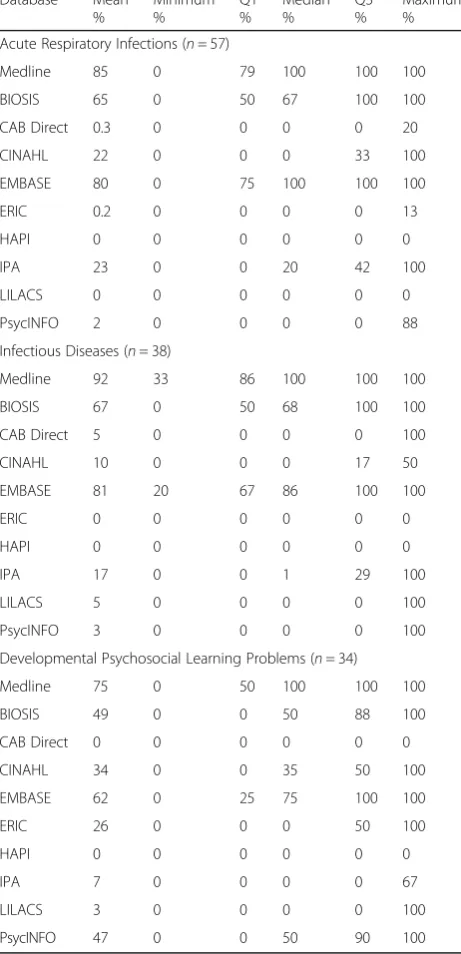
Table 1 shows the mean percent of trials from the ori-ginal meta-analyses that were found in each database. For ARI, a mean of 85 % of trials was identified in Medline (median 100 %), followed by Embase (80 %, median 100 %), and BIOSIS (65 %, median 67 %). The pattern was similar for ID, with a mean of 92 % of trials identified in Medline (median 100 %), followed by Embase (81 %, me-dian 86 %), and BIOSIS (67 %, meme-dian 68 %). Likewise, for DPLP a mean of 75 % was identified in Medline (median 100 %), followed by Embase (62 %, median 75 %), and BIOSIS (49 %, median 100 %).
Table 2 shows the databases where trials were found that were not found in Medline. Eighty-four percent of all trials contained in ARI meta-analyses (333/398) were found in Medline. Among the remaining 65 trials, 20 were found in Embase and 13 were found in BIOSIS. The remaining databases found very few trials that were not identified in Medline. Eighty-seven percent of all trials contained in ID meta-analyses (206/238) were found in Medline. Among the remaining 32 trials, 7 were found in BIOSIS and 6 were found in Embase; the remaining databases only contained 0 or 1 each. Due to the relatively lower proportion of trials found in Medline alone for DPLP, we combined Medline and PsycINFO which together contained 84 % of trials (121/144). Of the remaining 23, 4 were found in ERIC, 2 in Embase and 1 in BIOSIS; the remaining databases contained 0.
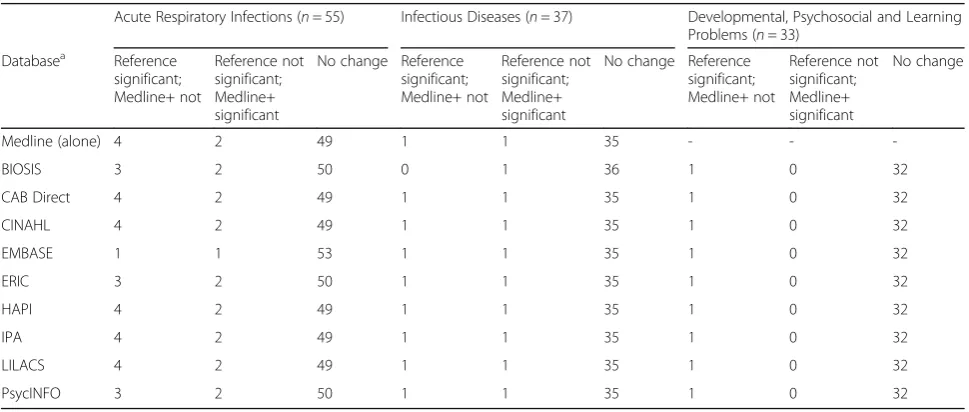
In terms of the impact on the statistical significance of results (Table 3), Medline + Embase yielded the fewest changes for ARI with 53 of the 55 meta-analyses show-ing no change, while one meta-analysis changed from significant to non-significant and one meta-analysis changed from non-significant to significant. For ID, Medline + BIOSIS yielded the fewest changes with only 1 meta-analysis changing from significant to non-significant. All other analyses (Medline alone and Medline + each
Table 1Mean percent of trials from original meta-analysis found in each databasea
Database Mean %
Minimum %
Q1 %
Median %
Q3 %
Maximum %
Acute Respiratory Infections (n= 57)
Medline 85 0 79 100 100 100
BIOSIS 65 0 50 67 100 100
CAB Direct 0.3 0 0 0 0 20
CINAHL 22 0 0 0 33 100
EMBASE 80 0 75 100 100 100
ERIC 0.2 0 0 0 0 13
HAPI 0 0 0 0 0 0
IPA 23 0 0 20 42 100
LILACS 0 0 0 0 0 0
PsycINFO 2 0 0 0 0 88
Infectious Diseases (n= 38)
Medline 92 33 86 100 100 100
BIOSIS 67 0 50 68 100 100
CAB Direct 5 0 0 0 0 100
CINAHL 10 0 0 0 17 50
EMBASE 81 20 67 86 100 100
ERIC 0 0 0 0 0 0
HAPI 0 0 0 0 0 0
IPA 17 0 0 1 29 100
LILACS 5 0 0 0 0 100
PsycINFO 3 0 0 0 0 100
Developmental Psychosocial Learning Problems (n= 34)
Medline 75 0 50 100 100 100
BIOSIS 49 0 0 50 88 100
CAB Direct 0 0 0 0 0 0
CINAHL 34 0 0 35 50 100
EMBASE 62 0 25 75 100 100
ERIC 26 0 0 0 50 100
HAPI 0 0 0 0 0 0
IPA 7 0 0 0 0 67
LILACS 3 0 0 0 0 100
PsycINFO 47 0 0 50 90 100
a
additional database) resulted in only 2 changes (one in each direction). For DPLP, all combinations (Medline + PsycINFO and Medline + PsycINFO + additional database) resulted in only one change (significant to non-significant).
We calculated the mean of the ratios and confidence interval widths for point estimates of Medline alone and Medline + each database relative to the reference stand-ard for dichotomous outcomes. For ARI and ID, the lowest mean ratios were found for Medline + BIOSIS (1.03 ARI, 1.02 ID) and Medline + Embase (1.05 ARI, 1.02 ID), although the ratios were low in all cases. The ratios of the confidence interval widths were consistent with the ratios of the point estimate. For DPLP, all ratios
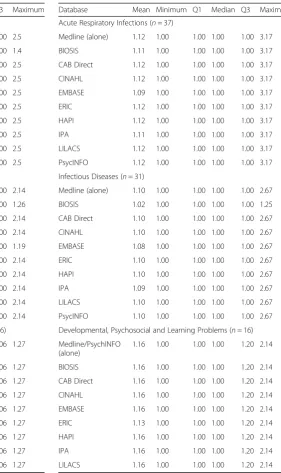
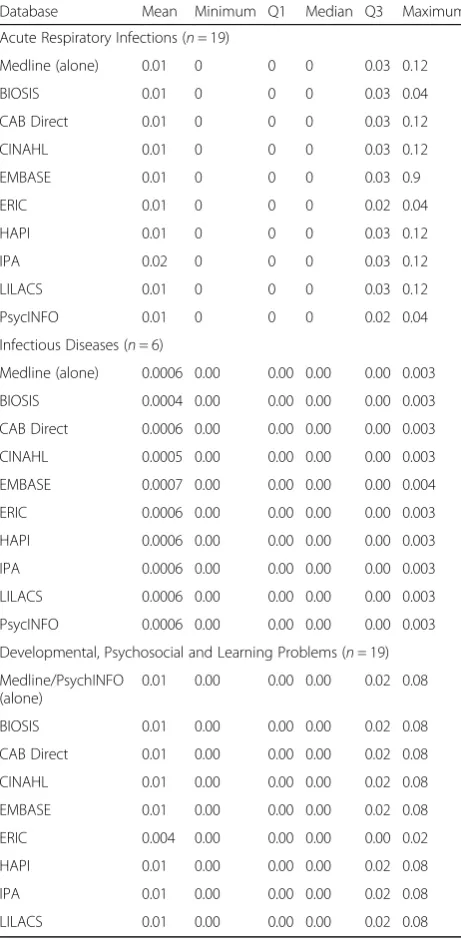
were the same at 1.04 for Medline + PsycINFO and Medline + PsycINFO with each additional database. We conducted similar analyses based on standardized differ-ences of effect sizes for continuous outcomes. The mean of the standardized differences of point estimates was 0.01 for ARI reviews for all analyses except one (Medline + IPA) and the mean of the ratios of confidence interval widths differed little across cases, ranging from 1.15 to 1.17. For ID, the mean of the standardized differ-ences of point estimates showed little variation, ranging from 0.0004 to 0.0006, with the mean of the ratios of confidence interval widths ranging from 1.26 to 1.28. For DPLP, the mean of the standardized differences of
Table 2Databases where trials were found that were not found in Medlinea
Acute Respiratory Infections (n= 57 meta-analyses)
Infectious Diseases (n= 38 meta-analyses) Developmental, Psychosocial and Learning Problems (n= 34 meta-analyses)
Database Total Trials Found (of 398)b
Number found that were not in MedLine (of 65)
Total Trials Found (of 238)b
Number found that were not in MedLine (of 32)
Total Trials Found (of 144)b
Number found that were not in MedLine or PsycINFO (of 23)
Medline 333 (84 %) - 206 (87 %) - -
-BIOSIS 258 13 164 7 72 1
CAB Direct 1 0 4 0 0 0
CINAHL 75 0 32 1 43 0
EMBASE 310 20 178 6 84 2
ERIC 1 1 0 0 32 4
HAPI 0 0 0 0 0 0
IPA 104 3 40 1 13 0
LILACS 0 0 5 0 2 0
PsycINFO 8 3 2 0 121 (84 %)c
-a
Percentages do not match those in Table1; the percentages here are an average across all trials (by review group) b
Number of trials not found in any database was 26 for ARI, 18 for ID, and 12 for DPLP. Number of systematic reviews with≥1 trial not found in any database was 10 for ARI, 9 for ID, and 8 for DPLP
c
Total trials found in Medline and/or PsycINFO
Table 3Impact of selective searching on statistical significance of results
Acute Respiratory Infections (n= 55) Infectious Diseases (n= 37) Developmental, Psychosocial and Learning Problems (n= 33)
Databasea Reference significant; Medline+ not
Reference not significant; Medline+ significant
No change Reference significant; Medline+ not
Reference not significant; Medline+ significant
No change Reference significant; Medline+ not
Reference not significant; Medline+ significant
No change
Medline (alone) 4 2 49 1 1 35 - -
-BIOSIS 3 2 50 0 1 36 1 0 32
CAB Direct 4 2 49 1 1 35 1 0 32
CINAHL 4 2 49 1 1 35 1 0 32
EMBASE 1 1 53 1 1 35 1 0 32
ERIC 3 2 50 1 1 35 1 0 32
HAPI 4 2 49 1 1 35 1 0 32
IPA 4 2 49 1 1 35 1 0 32
LILACS 4 2 49 1 1 35 1 0 32
PsycINFO 3 2 50 1 1 35 1 0 32
a
point estimates was 0.01 for all comparisons except Medline + PsycINFO + ERIC which was 0.004. The mean of the ratios of the confidence interval widths ranged from 1.09 to 1.11. Detailed results from these analyses are available in the Appendix.
We examined the specific meta-analyses in more detail to contextualize the above results. For ARI, the results of only 17 of the 57 meta-analyses changed when restricting included studies to those found in Medline + BIOSIS (12 of 57 for Medline + Embase; Table 4). Therefore, the above results demonstrating changes to point estimates and confidence intervals are driven by a minority of the meta-analyses and cannot necessarily be generalized (or aver-aged) to any specific meta-analysis. Among the 17 meta-a-nalyses, the proportion of relevant studies identified by Medline + BIOSIS ranged from 0 to 93 % (median 66 %). Typically when a low proportion was identified, the ori-ginal meta-analyses had included relatively few studies (i.e., in all cases where less than 50 % of relevant studies were found in Medline + BIOSIS, the original
meta-analysis had 6 or fewer studies). The point estimate chan-ged less than 20 % in most cases (n= 12 of 17). In two cases no studies were found in Medline + BIOSIS; in both cases the original meta-analysis only included 2 studies and both involved complementary medicine interven-tions for influenza (i.e., homeopathic oscillococcinum and Chinese medicinal herbs).[29, 30] The 12 meta-analyses that changed when restricting studies to those found in Medline + Embase were a subset of the 17 analyzed for Medline + BIOSIS and followed the same patterns (see Table 4).
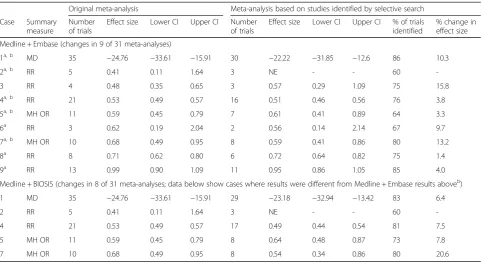
For ID, the results of only 9 of 31 meta-analyses chan-ged when restricting included studies to those found in Medline + Embase (8 of 31 for Medline + BIOSIS; Table 5). Among the 9 meta-analyses, the proportion of relevant studies identified by Medline + Embase ranged from 60 to 86 % (median 75 %). As for ARI, when a lower proportion was identified, the original meta-analyses had included relatively few studies. The point estimate changed less than 20 % in all cases and less
Table 4Impact of selective searching on results of meta-analyses from acute respiratory infections
Original meta-analysis Meta-analysis based on studies identified by selective search
Case Summary measure
Number of trials
Effect size Lower CI Upper CI Number of trials
Effect size Lower CI Upper CI % of trials identified
% change in effect size
Medline + BIOSIS (changes in 17 of 57 meta-analyses)
1a MD 5 −21.29 −29.59 −13 1 −22.9 −41.34 −4.46 20 7.0
2a MD 35 −1.24 −1.54 −0.94 26 −1.42 −1.77 −1.06 74 12.7
3a MD 24 −0.45 −0.96 0.05 19 −0.25 −0.9 0.39 79 44.7
4a RD 2 −0.13 −0.21 −0.05 1 −0.16 −0.26 −0.05 50 18.8
5a RD 3 −0.05 −0.12 0.02 1 −0.04 −0.14 0.06 33 20.0
6 MH OR 6 0.27 0.15 0.50 3 0.19 0.08 0.46 50 29.6
7a, b MH OR 7 0.35 0.12 1.01 6 0.26 0.12 0.6 86 25.7
8a RR 2 0.48 0.17 1.34 0 - - - 0
-9a, b SMD 8 0.49 0.16 0.81 6 0.51 0.1 0.93 75 3.9
10 MD 3 0.5 0.10 0.90 2 0.43 −0.01 0.87 67 14.0
11 RR 6 0.67 0.50 0.89 5 0.75 0.55 1.04 83 10.7
12 RR 25 0.9 0.80 1.01 22 0.91 0.8 1.02 88 1.1
13a RR 6 0.95 0.59 1.51 3 0.96 0.82 1.11 50 1.0
14a, b RR 29 0.95 0.92 0.98 19 0.96 0.94 0.99 66 1.0
15a, b RR 15 1.09 0.64 1.85 13 0.9 0.54 1.49 87 17.4
16a RR 2 1.32 0.87 2.00 0 - - - 0
-17 RR 15 1.82 0.98 3.38 14 1.97 1.06 3.64 93 7.6
Medline + Embase (changes in 12 of 57 meta-analyses; data below show cases where results were different from Medline + BIOSIS results aboveb)
7 MH OR 7 0.35 0.12 1.01 4 0.14 0.04 0.53 57 60.0
9 SMD 8 0.49 0.16 0.81 6 0.4 0.07 0.73 75 18.4
14 RR 29 0.95 0.92 0.98 19 0.97 0.94 1 66 2.1
15 RR 15 1.09 0.64 1.85 14 0.96 0.58 1.57 93 11.9
a
cases where results also changed for Medline + Embase;b
cases where results were different between Medline + BIOSIS and Medline + Embase analyses
than 10 % in 7 of 9 cases. The 8 meta-analyses that changed when restricting studies to those found in Med-line + BIOSIS were a subset of the 9 analyzed for Medline + Embase and are presented in Table 5.
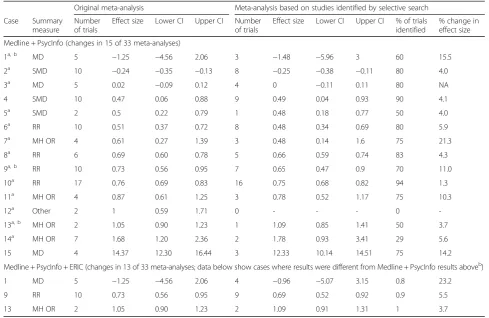
For DPLP, there were 15 of 33 meta-analyses that changed when restricting included studies to those found in Medline + PsycInfo (13 of 33 for Medline + PsycInfo + ERIC; Table 6). Among the 15 meta-analyses, the proportion of relevant studies identified in Medline + PsycInfo ranged from 0 to 94 % (median 75 %). As for ARI and ID, when a lower proportion was identified, the original meta-analyses had included relatively few stud-ies. For example, in the case where there were no studies found in Medline + PsycInfo, the original meta-analysis only had 2 studies and was on a topic not traditionally considered as a healthcare intervention (i.e., restorative justice conferencing for reducing recidivism in young of-fenders) [31]. In two cases the original meta-analyses had 2 included studies and Medline + PsycInfo only identified 1 (50 %); topics were music therapy for autism spectrum disorder and financial benefits for child health and well-being in low income or socially disadvantaged families in developed world countries [32, 33]. The point estimate changed less than 20 % in 13 cases. Data for Medline + PsycInfo + ERIC are presented in Table 6.
Discussion
Systematic reviews are critical for informed, evidence-based decision-making. They have been described as the
cornerstone of knowledge translation and are the foun-dation for key knowledge tools such as clinical practice guidelines and patient decision aids [34]. One of the fun-damental components and initial steps in conducting a SR is the literature search. Best practices recommend ex-tensive searching to ensure comprehensive identification of all studies relevant to the question of interest and to avoid bias in results and conclusions. However, extensive searching contributes substantially to the workload, re-sources, and time required to complete a SR. Moreover, there is limited empiric evidence upon which to base the extent of searching or the potential impact of selective searching on the results of SRs.
This study provides much needed empiric evidence to support prioritizing particular databases to search in SRs. Our results show that the vast majority of relevant studies appear within a limited number of databases. Further, the results of meta-analyses based on the majority of studies (that appear within a lim-ited number of databases) do not differ in the major-ity of cases. In particular, there were very few cases of results changing in statistical significance. The ef-fect estimates changed in a minority of meta-analyses but in the majority of these they changed to a small extent. Finally, results do not appear to change in a systematic manner (i.e., regularly over- or underesti-mating treatment effects), suggesting that searching select databases may not introduce bias in terms of effect estimates.
Table 5Impact of selective searching on results of meta-analysis from infectious diseases
Original meta-analysis Meta-analysis based on studies identified by selective search
Case Summary measure
Number of trials
Effect size Lower CI Upper CI Number of trials
Effect size Lower CI Upper CI % of trials identified
% change in effect size
Medline + Embase (changes in 9 of 31 meta-analyses)
1a, b MD 35 −24.76 −33.61 −15.91 30 −22.22 −31.85 −12.6 86 10.3
2a, b RR 5 0.41 0.11 1.64 3 NE - - 60
-3 RR 4 0.48 0.35 0.65 3 0.57 0.29 1.09 75 15.8
4a, b RR 21 0.53 0.49 0.57 16 0.51 0.46 0.56 76 3.8
5a, b MH OR 11 0.59 0.45 0.79 7 0.61 0.41 0.89 64 3.3
6a RR 3 0.62 0.19 2.04 2 0.56 0.14 2.14 67 9.7
7a, b MH OR 10 0.68 0.49 0.95 8 0.59 0.41 0.86 80 13.2
8a RR 8 0.71 0.62 0.80 6 0.72 0.64 0.82 75 1.4
9a RR 13 0.99 0.90 1.09 11 0.95 0.86 1.05 85 4.0
Medline + BIOSIS (changes in 8 of 31 meta-analyses; data below show cases where results were different from Medline + Embase results aboveb)
1 MD 35 −24.76 −33.61 −15.91 29 −23.18 −32.94 −13.42 83 6.4
2 RR 5 0.41 0.11 1.64 3 NE - - 60
-4 RR 21 0.53 0.49 0.57 17 0.49 0.44 0.54 81 7.5
5 MH OR 11 0.59 0.45 0.79 8 0.64 0.48 0.87 73 7.8
7 MH OR 10 0.68 0.49 0.95 8 0.54 0.34 0.86 80 20.6
CIconfidence interval,MDmean difference,MH ORMantel Haenszel odds ratio,NEnot estimable (all study groups had zero counts);RRrisk ratio a
cases where results also changed for Medline + BIOSIS;b
While our results suggest that the majority of relevant studies appear in a limited number of databases, the choice of databases is topic-specific. We purposefully se-lected three different clinical areas to examine our hypoth-esis. For two of the clinical areas (acute respiratory infections and infectious diseases), we found the highest yield from Medline + Embase or Medline + BIOSIS. Fur-ther, these combinations resulted in the least impact on ef-fect estimates and fewest changes in statistical significance of results. For the third area (Developmental, Psychosocial and Learning Problems), Medline + PsycInfo yielded the most relevant studies, with ERIC contributing more add-itional studies than other databases including Embase or BIOSIS. Further research in these and other topic areas is needed to provide empiric evidence to inform searching and optimize the time and resources that are required to produce SRs. In cases where we found a very low propor-tion of studies in select databases, the original meta-analyses included few studies and topics were often outside of mainstream healthcare interventions (e.g., com-plementary and alternative medicine, financial benefits, re-storative justice). Further, our results are based on SRs that focused on randomized trials; these results may not be generalizable to other study designs or types of data.
For those conducting SRs, it may be appropriate to limit the number of databases being searched for main-stream healthcare interventions. If reviewers anticipate a small number of studies (based on preliminary searches conducted as part of developing the SR protocol and the complete search strategy), they may choose to search a larger number of databases at the outset; if they find a small number of studies having searched few databases, they may choose to search more (e.g., an iterative ap-proach), or supplement with other sources such as those suggested for identification of grey literature (e.g., con-tent experts, relevant websites, conferences, etc.). Our results may be particularly pertinent in the context of rapid reviews. There has been increased attention re-cently to methods for rapid reviews in the interests of producing knowledge syntheses more quickly and effi-ciently to inform end-users’decision-making needs [35– 37]. Searching is one dimension of SRs that is typically altered to streamline processes and produce reviews more quickly [37, 38]. Alterations include limiting the number of databases and extent of grey literature searching, and placing restrictions on date, setting, language and study design. Further, end-users of SRs have indicated that extent of literature searching is
Table 6Impact of selective searching on results of meta-analysis from developmental, psychosocial and learning problems
Original meta-analysis Meta-analysis based on studies identified by selective search
Case Summary measure
Number of trials
Effect size Lower CI Upper CI Number of trials
Effect size Lower CI Upper CI % of trials identified
% change in effect size
Medline + PsycInfo (changes in 15 of 33 meta-analyses)
1a, b MD 5 −1.25 −4.56 2.06 3 −1.48 −5.96 3 60 15.5
2a SMD 10 −0.24 −0.35 −0.13 8 −0.25 −0.38 −0.11 80 4.0
3a MD 5 0.02 −0.09 0.12 4 0 −0.11 0.11 80 NA
4 SMD 10 0.47 0.06 0.88 9 0.49 0.04 0.93 90 4.1
5a SMD 2 0.5 0.22 0.79 1 0.48 0.18 0.77 50 4.0
6a RR 10 0.51 0.37 0.72 8 0.48 0.34 0.69 80 5.9
7a MH OR 4 0.61 0.27 1.39 3 0.48 0.14 1.6 75 21.3
8a RR 6 0.69 0.60 0.78 5 0.66 0.59 0.74 83 4.3
9a, b RR 10 0.73 0.56 0.95 7 0.65 0.47 0.9 70 11.0
10a RR 17 0.76 0.69 0.83 16 0.75 0.68 0.82 94 1.3
11a MH OR 4 0.87 0.61 1.25 3 0.78 0.52 1.17 75 10.3
12a Other 2 1 0.59 1.71 0 - - - 0
-13a, b MH OR 2 1.05 0.90 1.23 1 1.09 0.85 1.41 50 3.7
14a MH OR 7 1.68 1.20 2.36 2 1.78 0.93 3.41 29 5.6
15 MD 4 14.37 12.30 16.44 3 12.33 10.14 14.51 75 14.2
Medline + PsycInfo + ERIC (changes in 13 of 33 meta-analyses; data below show cases where results were different from Medline + PsycInfo results aboveb)
1 MD 5 −1.25 −4.56 2.06 4 −0.96 −5.07 3.15 0.8 23.2
9 RR 10 0.73 0.56 0.95 9 0.69 0.52 0.92 0.9 5.5
13 MH OR 2 1.05 0.90 1.23 2 1.09 0.91 1.31 1 3.7
CIconfidence interval,MDmean difference,MH ORMantel Haenszel odds ratio,NAnot applicable,RRrisk ratio,SMDstandardized mean difference a
cases where results also changed for Medline + PsycInfo + ERIC;b
one of the most acceptable trade-offs to increase re-view efficiencies [39].
Our study had several limitations. First, we focused on a sample of SRs published in the Cochrane Data-base of Systematic Reviews. These were from three clinical areas and focused on healthcare interventions. Results may not be generalizable outside of these clinical areas, for non-conventional interventions, or for SRs examining other types of research questions (e.g., diagnostic, prognostic). Second, our sample was based on SRs that had already been completed; we used the original search strategies and the studies that they yielded as our reference standard. There may have been variability in the comprehensiveness of the original search strategies; however, Cochrane reviews are recognized as high quality (including criterion re-lated to searching) and typically search specialized registers that include studies identified through exten-sive searching activities including hand-searching. Third, we did not evaluate the searches per se, rather we looked to see whether the included studies could be found in each database. Therefore, our results are based on whether the studies were present in the da-tabases but do not reflect the ability of searchers (or a given search strategy) to find those references. Fur-ther, since our study was retrospective, some of the studies may have been deposited into the databases after the original search was run; therefore, our re-sults may overestimate the identification of studies that are published and indexed closer to the time that the search is implemented. Fourth, we focused on analyses on the primary (or first listed) outcome from each review. Results may vary across outcomes; how-ever, our focus on the primary outcome provided the most data with which to examine our hypotheses. Fifth, to avoid biasing our results in favor of sources which included studies referenced in our sample set of Cochrane reviews, we were not able to evaluate the relative contributions from searching CENTRAL and citation databases (Web of Science and Scopus). Sixth, we did not include the PubMed interface via NCBI Entrez for Medline or Embase.com for Embase (https://www.nlm.nih.gov/pubs/factsheets/dif_med_-pub.html). There may be studies located in PubMed or Embase.com that may not have been found in Ovid Medline or Ovid Embase [40]. Finally, we only examined the impact of Medline and Medline plus one other database. Further research examining the contributions of different numbers of databases, ranked according to their potential for identifying relevant studies in a specific topic area, may be beneficial.
This study confirms previous methods studies demon-strating that the majority of SR trials are found in
Medline [7, 25], and that Embase is more likely than other databases to find additional relevant trials not retrieved by Medline [23, 24]. Our study contributes evidence to support the addition of subject-specific database (PsycINFO, ERIC) for specific topics, and the contribution of Biosis in addition to Embase for clinical medicine topics. While this study provides im-portant information, future research in this area is needed to help guide searching in SRs, and to quan-tify the impact of different approaches to searching on the results and conclusions of reviews. As men-tioned above, our results reflect the presence of stud-ies in the different databases but do not reflect the ability of searches to identify those studies. Research evaluating selective searching in a prospective manner and in different topic areas would be beneficial. Moreover, additional empiric research will help pro-vide more solid epro-vidence upon which to base recom-mendations for searching in the future.
Conclusions
This study provides quantitative data regarding the po-tential impact on meta-analysis results of restricting searches to select databases. The vast majority of rele-vant studies appear within a limited number of data-bases. The results of meta-analyses based on the majority of studies (which appear within a limited num-ber of databases) did not differ in most cases; specific-ally, there were very few cases of results changing in statistical significance. Effect estimates changed in a mi-nority of meta-analyses but in most the change was small. Results did not change in a systematic manner (i.e., regularly over- or underestimating treatment ef-fects), suggesting that selective searching may not intro-duce bias in terms of effect estimates. This information may be useful to increase efficiencies in the conduct of SRs and in developing methods guidance for rapid re-views. Future research across different topics will provide additional evidence upon which to base recommendations for searching in evidence reviews.
Appendix
Detailed results data
Table 7Mean of the ratios of point estimate of Medline/database estimate to reference standard point estimate for dichotomous outcomes
Database Mean Minimum Q1 Median Q3 Maximum
Acute Respiratory Infections (n= 37)
Medline (alone) 1.06 1.00 1.00 1.00 1.00 2.5
BIOSIS 1.03 1.00 1.00 1.00 1.00 1.4
CAB Direct 1.06 1.00 1.00 1.00 1.00 2.5
CINAHL 1.06 1.00 1.00 1.00 1.00 2.5
EMBASE 1.05 1.00 1.00 1.00 1.00 2.5
ERIC 1.06 1.00 1.00 1.00 1.00 2.5
HAPI 1.06 1.00 1.00 1.00 1.00 2.5
IPA 1.07 1.00 1.00 1.00 1.00 2.5
LILACS 1.06 1.00 1.00 1.00 1.00 2.5
PsycINFO 1.06 1.00 1.00 1.00 1.00 2.5
Infectious Diseases (n= 31)
Medline (alone) 1.06 1.00 1.00 1.00 1.00 2.14
BIOSIS 1.02 1.00 1.00 1.00 1.00 1.26
CAB Direct 1.06 1.00 1.00 1.00 1.00 2.14
CINAHL 1.06 1.00 1.00 1.00 1.00 2.14
EMBASE 1.02 1.00 1.00 1.00 1.00 1.19
ERIC 1.06 1.00 1.00 1.00 1.00 2.14
HAPI 1.06 1.00 1.00 1.00 1.00 2.14
IPA 1.05 1.00 1.00 1.00 1.00 2.14
LILACS 1.06 1.00 1.00 1.00 1.00 2.14
PsycINFO 1.06 1.00 1.00 1.00 1.00 2.14
Developmental, Psychosocial and Learning Problems (n= 16)
Medline/PsychINFO (alone)
1.04 1.00 1.00 1.01 1.06 1.27
BIOSIS 1.04 1.00 1.00 1.00 1.06 1.27
CAB Direct 1.04 1.00 1.00 1.01 1.06 1.27
CINAHL 1.04 1.00 1.00 1.01 1.06 1.27
EMBASE 1.04 1.00 1.00 1.00 1.06 1.27
ERIC 1.04 1.00 1.00 1.01 1.06 1.27
HAPI 1.04 1.00 1.00 1.01 1.06 1.27
IPA 1.04 1.00 1.00 1.01 1.06 1.27
LILACS 1.04 1.00 1.00 1.01 1.06 1.27
Table 8Mean (on the log scale) of the ratios of confidence interval widths of Medline/database estimate to reference standard point estimate for dichotomous outcomes
Database Mean Minimum Q1 Median Q3 Maximum
Acute Respiratory Infections (n= 37)
Medline (alone) 1.12 1.00 1.00 1.00 1.00 3.17
BIOSIS 1.11 1.00 1.00 1.00 1.00 3.17
CAB Direct 1.12 1.00 1.00 1.00 1.00 3.17
CINAHL 1.12 1.00 1.00 1.00 1.00 3.17
EMBASE 1.09 1.00 1.00 1.00 1.00 3.17
ERIC 1.12 1.00 1.00 1.00 1.00 3.17
HAPI 1.12 1.00 1.00 1.00 1.00 3.17
IPA 1.11 1.00 1.00 1.00 1.00 3.17
LILACS 1.12 1.00 1.00 1.00 1.00 3.17
PsycINFO 1.12 1.00 1.00 1.00 1.00 3.17
Infectious Diseases (n= 31)
Medline (alone) 1.10 1.00 1.00 1.00 1.00 2.67
BIOSIS 1.02 1.00 1.00 1.00 1.00 1.25
CAB Direct 1.10 1.00 1.00 1.00 1.00 2.67
CINAHL 1.10 1.00 1.00 1.00 1.00 2.67
EMBASE 1.08 1.00 1.00 1.00 1.00 2.67
ERIC 1.10 1.00 1.00 1.00 1.00 2.67
HAPI 1.10 1.00 1.00 1.00 1.00 2.67
IPA 1.09 1.00 1.00 1.00 1.00 2.67
LILACS 1.10 1.00 1.00 1.00 1.00 2.67
PsycINFO 1.10 1.00 1.00 1.00 1.00 2.67
Developmental, Psychosocial and Learning Problems (n= 16)
Medline/PsychINFO (alone)
1.16 1.00 1.00 1.00 1.20 2.14
BIOSIS 1.16 1.00 1.00 1.00 1.20 2.14
CAB Direct 1.16 1.00 1.00 1.00 1.20 2.14
CINAHL 1.16 1.00 1.00 1.00 1.20 2.14
EMBASE 1.16 1.00 1.00 1.00 1.20 2.14
ERIC 1.13 1.00 1.00 1.00 1.20 2.14
HAPI 1.16 1.00 1.00 1.00 1.20 2.14
IPA 1.16 1.00 1.00 1.00 1.20 2.14
Table 9Mean of standardized differences of effect sizes for continuous outcomes
Database Mean Minimum Q1 Median Q3 Maximum
Acute Respiratory Infections (n= 19)
Medline (alone) 0.01 0 0 0 0.03 0.12
BIOSIS 0.01 0 0 0 0.03 0.04
CAB Direct 0.01 0 0 0 0.03 0.12
CINAHL 0.01 0 0 0 0.03 0.12
EMBASE 0.01 0 0 0 0.03 0.9
ERIC 0.01 0 0 0 0.02 0.04
HAPI 0.01 0 0 0 0.03 0.12
IPA 0.02 0 0 0 0.03 0.12
LILACS 0.01 0 0 0 0.03 0.12
PsycINFO 0.01 0 0 0 0.02 0.04
Infectious Diseases (n= 6)
Medline (alone) 0.0006 0.00 0.00 0.00 0.00 0.003
BIOSIS 0.0004 0.00 0.00 0.00 0.00 0.003
CAB Direct 0.0006 0.00 0.00 0.00 0.00 0.003
CINAHL 0.0005 0.00 0.00 0.00 0.00 0.003
EMBASE 0.0007 0.00 0.00 0.00 0.00 0.004
ERIC 0.0006 0.00 0.00 0.00 0.00 0.003
HAPI 0.0006 0.00 0.00 0.00 0.00 0.003
IPA 0.0006 0.00 0.00 0.00 0.00 0.003
LILACS 0.0006 0.00 0.00 0.00 0.00 0.003
PsycINFO 0.0006 0.00 0.00 0.00 0.00 0.003
Developmental, Psychosocial and Learning Problems (n= 19)
Medline/PsychINFO (alone)
0.01 0.00 0.00 0.00 0.02 0.08
BIOSIS 0.01 0.00 0.00 0.00 0.02 0.08
CAB Direct 0.01 0.00 0.00 0.00 0.02 0.08
CINAHL 0.01 0.00 0.00 0.00 0.02 0.08
EMBASE 0.01 0.00 0.00 0.00 0.02 0.08
ERIC 0.004 0.00 0.00 0.00 0.00 0.02
HAPI 0.01 0.00 0.00 0.00 0.02 0.08
IPA 0.01 0.00 0.00 0.00 0.02 0.08
LILACS 0.01 0.00 0.00 0.00 0.02 0.08
Table 10Mean of the ratios of confidence interval widths of Medline/database estimate to reference standard point estimate for dichotomous outcomes
Database Mean Minimum Q1 Median Q3 Maximum
Acute Respiratory Infections (n= 19)
Medline (alone) 1.17 1.00 1.00 1.00 1.28 2.22
BIOSIS 1.17 1.00 1.00 1.00 1.28 2.22
CAB Direct 1.17 1.00 1.00 1.00 1.28 2.22
CINAHL 1.17 1.00 1.00 1.00 1.28 2.22
EMBASE 1.15 1.00 1.00 1.00 1.28 2.22
ERIC 1.18 1.00 1.00 1.00 1.28 2.22
HAPI 1.17 1.00 1.00 1.00 1.28 2.22
IPA 1.17 1.00 1.00 1.00 1.28 2.22
LILACS 1.17 1.00 1.00 1.00 1.28 2.22
PsycINFO 1.16 1.00 1.00 1.00 1.28 2.22
Infectious Diseases (n= 6)
Medline (alone) 1.27 1.00 1.00 1.00 1.17 2.46
BIOSIS 1.28 1.00 1.00 1.00 1.17 2.54
CAB Direct 1.27 1.00 1.00 1.00 1.17 2.46
CINAHL 1.27 1.00 1.00 1.00 1.17 2.48
EMBASE 1.26 1.00 1.00 1.00 1.00 2.57
ERIC 1.27 1.00 1.00 1.00 1.17 2.46
HAPI 1.27 1.00 1.00 1.00 1.17 2.46
IPA 1.27 1.00 1.00 1.00 1.17 2.46
LILACS 1.27 1.00 1.00 1.00 1.17 2.46
PsycINFO 1.27 1.00 1.00 1.00 1.17 2.46
Developmental, Psychosocial and Learning Problems (n= 19)
Medline/PsychINFO (alone)
1.11 1.00 1.00 1.00 1.06 2.15
BIOSIS 1.11 1.00 1.00 1.00 1.06 2.15
CAB Direct 1.11 1.00 1.00 1.00 1.06 2.15
CINAHL 1.11 1.00 1.00 1.00 1.06 2.15
EMBASE 1.10 1.00 1.00 1.00 1.06 2.15
ERIC 1.09 1.00 1.00 1.00 1.04 2.15
HAPI 1.11 1.00 1.00 1.00 1.06 2.15
IPA 1.11 1.00 1.00 1.00 1.06 2.15
Additional file
Additional file 1:Description and citations of included systematic reviews. This file includes a description of the included systematic reviews, and the citations for all systematic reviews included in the analysis (57 from Acute Respiratory Infections, 38 from Infectious Diseases, 34 from Developmental Psychosocial Learning Problems). (DOCX 47 kb)
Abbreviations
ARI:Acute respiratory infections; BIOSIS: BioSciences Information Service of Biological Abstracts; CAB: Commonwealth Agricultural Bureau;
CABI: Commonwealth Agricultural Bureau International; CENTRAL: Cochrane Central Register of Controlled Trials; CINAHL: Cumulative Index of Nursing and Allied Health Literature; DARE: Database of Abstracts of Reviews of Effectiveness; DPLP: Developmental Psychosocial Learning Problems; ERIC: Education Resources Information Center; HaPI: Health and Psychosocial Instruments; ID: Infectious diseases; IPA: International Pharmaceutical Abstracts; LILACS: Latin American and Caribbean Health Sciences; SR: Systematic review;
Acknowledgements
The authors gratefully acknowledge the contributions of Katy Moore and Michele Pagliuso who assisted with identifying studies from Cochrane meta-analyses in each of the investigated databases.
Funding
This project was funded in part through the Canadian Institutes of Health Research (CIHR). Dr. Hartling holds a New Investigator Salary Award from CIHR.
Availability of data and materials
The datasets analyzed during the current study are available at http://dx.doi.org/ 10.7939/DVN/10866.
Authors’contributions
LH, RF, DD, BV designed the study. RF, MN and KS collected and managed the data. BV conducted the statistical analyses. LH, RF, DD and BV interpreted results. LH and RF drafted the manuscript. All authors critically reviewed and edited the manuscript and approved the final version for submission. LH is the guarantor of the study and affirms that the manuscript is an honest, accurate, and transparent account of the study being reported, that no important aspects of the study have been omitted, and that there were no discrepancies from the study as planned.
Competing interests
The authors declare that they have no competing interests. All authors are involved in the production of systematic reviews.
Consent for publication
Not applicable (the manuscript does not contain individual data).
Ethics approval and consent to participate
Not applicable (the study did not involve human participants).
Received: 5 July 2016 Accepted: 20 September 2016
References
1. Lefebvre C, Manheimer E, Glanville J. Chapter 6: Searching for studies. In: Higgins JP, Green S, editors. Cochrane Handbook for Systematic Reviews of Interventions Version 5.1.0 [Internet]. The Cochrane Collaboration; 2011 [cited 2016 Jun 7]. Available from: http://handbook.cochrane.org/. 2. Chandler J, Churchill R, Higgins J, Lasserson T, Tovey D. Methodological
Expectations of Cochrane Intervention Reviews (MECIR): Methodological standards for the conduct of new Cochrane Intervention Reviews [Internet]. Cochrane Collaboration; 2013 [cited 2016 Jun 7]. Available from: http:// editorial-unit.cochrane.org/mecir.
3. Institute of Medicine. Finding what works in health care: standards for systematic reviews [Internet]. Washington, DC: The National Academies Press; 2011 [cited 2016 Jun 7]. Available from: http://www.
nationalacademies.org/hmd/Reports/2011/Finding-What-Works-in-Health-Care-Standards-for-Systematic-Reviews.aspx.
4. McDonald S, Taylor L, Adams C. Searching the right database. A comparison of four databases for psychiatry journals. Health Libr Rev. 1999;16(3):151–6. Available from Medline: http://www.ncbi.nlm.nih.gov/pubmed/10620849. 5. Suarez-Almazor ME, Belseck E, Homik J, Dorgan M, Ramos-Remus C.
Identifying clinical trials in the medical literature with electronic databases: MEDLINE alone is not enough. Control Clin Trials. 2000;21(5):476–87. Available from Medline: http://www.ncbi.nlm.nih.gov/pubmed/11018564. 6. Royle P, Milne R. Literature searching for randomized controlled trials used
in Cochrane reviews: rapid versus exhaustive searches. Int J Technol Assess Health Care. 2003;19(4):591–603. Available from Medline: http://www.ncbi. nlm.nih.gov/pubmed/15095765.
7. Royle P, Waugh N. Literature searching for clinical and cost-effectiveness studies used in health technology assessment reports carried out for the National Institute for Clinical Excellence appraisal system. Health Technol Assess. 2003;7(34):iii. ix-x, 1–51. Available from Medline: http://www.ncbi.nlm. nih.gov/pubmed/14609481.
8. Savoie I, Helmer D, Green CJ, Kazanjian A. Beyond Medline: reducing bias through extended systematic review search. Int J Technol Assess Health Care. 2003;19(1):168–78. Available from Medline: http://www.ncbi.nlm.nih. gov/pubmed/12701949.
9. Stevinson C, Lawlor DA. Searching multiple databases for systematic reviews: added value or diminishing returns? Complement Ther Med. 2004;12(4):228–32. Available from Medline: http://www.ncbi.nlm.nih.gov/pubmed/15649836. 10. Betran AP, Say L, Gulmezoglu AM, Allen T, Hampson L. Effectiveness of
different databases in identifying studies for systematic reviews: experience from the WHO systematic review of maternal morbidity and mortality. BMC Med Res Methodol. 2005;5(1):6. Available from Medline: http://www.ncbi. nlm.nih.gov/pubmed/15679886.
11. Lemeshow AR, Blum RE, Berlin JA, Stoto MA, Colditz GA. Searching one or two databases was insufficient for meta-analysis of observational studies. J Clin Epidemiol. 2005;58(9):867–73. Available from Medline: http://www. ncbi.nlm.nih.gov/pubmed/16085190.
12. Ogilvie D, Hamilton V, Egan M, Petticrew M. Systematic reviews of health effects of social interventions: 1. Finding the evidence: how far should you go? J Epidemiol Community Health. 2005;59(9):804–8. Available from Medline: http://www.ncbi.nlm.nih.gov/pubmed/16100321/.
13. Royle P, Bain L, Waugh N. Systematic reviews of epidemiology in diabetes: finding the evidence. BMC Med Res Methodol. 2005;5:2. Available from Medline: http://www.ncbi.nlm.nih.gov/pubmed/15638944/.
14. Whiting P, Westwood M, Burke M, Sterne J, Glanville J. Systematic reviews of test accuracy should search a range of databases to identify primary studies. J Clin Epidemiol. 2008;61(4):357–64. Available from Medline: http://www. ncbi.nlm.nih.gov/pubmed/18313560.
15. Slobogean GP, Verma A, Giustini D, Slobogean BL, Mulpuri K. MEDLINE, EMBASE, and Cochrane index most primary studies but not abstracts included in orthopedic meta-analyses. J Clin Epidemiol. 2009;62(12): 1261–7. Available from Medline: http://www.ncbi.nlm.nih.gov/pubmed/ 19364634.
16. Golder S, Loke YK. The contribution of different information sources for adverse effects data. Int J Technol Assess Health Care. 2012;28(2):133–7. Available from Medline: http://www.ncbi.nlm.nih.gov/pubmed/22559754. 17. Beyer FR, Wright K. Can we prioritise which databases to search? A case
study using a systematic review of frozen shoulder management. Health Info Libr J. 2013;30(1):49–58. Available from Medline: http://www.ncbi.nlm. nih.gov/pubmed/23413793.
18. Bramer WM, Giustini D, Kramer BM, Anderson P. The comparative recall of Google Scholar versus PubMed in identical searches for biomedical systematic reviews: a review of searches used in systematic reviews. Syst Rev. 2013;2:115. Available from Medline: http://www.ncbi.nlm.nih.gov/ pubmed/24360284.
19. Kwon Y, Powelson SE, Wong H, Ghali WA, Conly JM. An assessment of the efficacy of searching in biomedical databases beyond MEDLINE in identifying studies for a systematic review on ward closures as an infection control intervention to control outbreaks. Syst Rev. 2014;3:135. Available from Medline: http://www.ncbi.nlm.nih.gov/pubmed/25387523. 20. Lorenzetti DL, Topfer LA, Dennett L, Clement F. Value of databases other
21. Westphal A, Kriston L, Holzel LP, Harter M, von Wolff A. Efficiency and contribution of strategies for finding randomized controlled trials: a case study from a systematic review on therapeutic interventions of chronic depression. Public Health Res. 2014;3(2):177. Available from Medline: http:// www.ncbi.nlm.nih.gov/pubmed/25343133.
22. Gargon E, Williamson PR, Clarke M. Collating the knowledge base for core outcome set development: developing and appraising the search strategy for a systematic review. BMC Med Res Methodol. 2015;15(1):26. Available from Medline: http://www.ncbi.nlm.nih.gov/pubmed/25888523. 23. Sampson M, Barrowman NJ, Moher D, Klassen TP, Pham B, Platt R, et al. Should
meta-analysts search Embase in addition to Medline? J Clin Epidemiol. 2003;56(10): 943–55. Available from Medline: http://www.ncbi.nlm.nih.gov/pubmed/14568625. 24. Royle PL, Bain L, Waugh NR. Sources of evidence for systematic reviews of
interventions in diabetes. Diabet Med. 2005;22(10):1386–93. Available from Medline: http://www.ncbi.nlm.nih.gov/pubmed/16176201.
25. Halladay CW, Trikalinos TA, Schmid IT, Schmid CH, Dahabreh IJ. Using data sources beyond PubMed has a modest impact on the results of systematic reviews of therapeutic interventions. J Clin Epidemio. 2015;68(9):1076–84. Available from Medline: http://www.ncbi.nlm.nih.gov/pubmed/26279401. 26. Moher D, Tetzlaff J, Tricco AC, Sampson M, Altman DG. Epidemiology and
reporting characteristics of systematic reviews. PLoS Med. 2007;4(3):e78. Available from Medline: http://www.ncbi.nlm.nih.gov/pubmed/17388659. 27. Page MJ, Shamseer L, Altman DG, Tetzlaff J, Sampson M, Tricco AC, et al.
Epidemiology and reporting characteristics of systematic reviews of biomedical research: a cross-sectional study. PLoS Med. 2016;13(5):e1002028. Available from Medline: http://www.ncbi.nlm.nih.gov/pubmed/27218655. 28. Bow S, Klassen J, Chisholm A, Tjosvold L, Thomson D, Klassen TP, et al. A descriptive analysis of child-relevant systematic reviews in the Cochrane database of systematic reviews. BMC Pediatr. 2010;10(1):1–8. Available from Medline: http://www.ncbi.nlm.nih.gov/pubmed/20487565.
29. Mathie RT, Frye J, Fisher P. Homeopathic Oscillococcinum® for preventing and treating influenza and influenza-like illness. Cochrane Database Syst Rev. 2015;28(1):CD001957. doi:10.1002/14651858.CD001957.pub6. 30. Jiang L, Deng L, Wu T. Chinese medicinal herbs for influenza. Cochrane
Database Syst Rev. 2013;28(3):CD004559. doi:10.1002/14651858.CD004559. pub4.
31. Livingstone N, Macdonald G, Carr N. Restorative justice conferencing for reducing recidivism in young offenders (aged 7 to 21). Cochrane Database Syst Rev. 2013;28(2):CD008898. doi:10.1002/14651858.CD008898.pub2. 32. Geretsegger M, Elefant C, Mössler KA, Gold C. Music therapy for people with
autism spectrum disorder. Cochrane Database Syst Rev. 2014;(6):CD004381. doi:10.1002/14651858.CD004381.pub3.
33. Lucas PJ, McIntosh K, Petticrew M, Roberts HM, Shiell A. Financial benefits for child health and well-being in low income or socially disadvantaged families in developed world countries. Cochrane Database Syst Rev. 2008; 16(2):CD006358. doi:10.1002/14651858.CD006358.pub2.
34. Straus SE, Tetroe JM, Graham ID. Knowledge translation is the use of knowledge in health care decision making. J Clin Epidemiol. 2011;64(1):6–10. Available from Medline: http://www.ncbi.nlm.nih.gov/pubmed/19926445. 35. Ganann R, Ciliska D, Thomas H. Expediting systematic reviews: methods and
implications of rapid reviews. Implement Sci. 2010;5:56. Available from Medline: http://www.ncbi.nlm.nih.gov/pubmed/20642853.
36. Khangura S, Polisena J, Clifford TJ, Farrah K, Kamel C. Rapid review: an emerging approach to evidence synthesis in health technology assessment. Int J Technol Assess Health Care. 2014;30(1):20–7. Available from Medline: http://www.ncbi.nlm.nih.gov/pubmed/24451157.
37. Hartling L, Guise J-M, Kato E, Anderson J, Belinson S, Berliner E, et al. A taxonomy of rapid reviews links report types and methods to specific decision-making contexts. J Clin Epidemiol. 2015;68(12):1451–62. Available from Medline: http://www.ncbi.nlm.nih.gov/pubmed/26278023.
38. Tricco AC, Antony J, Zarin W, Strifler L, Ghassemi M, Ivory J, et al. A scoping review of rapid review methods. BMC Med. 2015;13:224. Available from Medline: http://www.ncbi.nlm.nih.gov/pubmed/26377409.
39. Hartling L, Guise JM, Hempel S, Featherstone R, Mitchell MD, Motu’apuaka ML, et al. EPC methods: AHRQ End-user perspectives of rapid reviews. Rockville: Agency for Healthcare Research and Quality (US); 2016. Contract No.: 16-EHC014-EF. Available from NCBI Bookshelf: http://www.ncbi.nlm.nih. gov/books/NBK362003/.
40. Fortier KJ, Kiss N, Tongbram V. What is the optimal search engine for results from embase and medline: ovid or embase.com? Value Health. 2013;1(6):A1–298.
• We accept pre-submission inquiries
• Our selector tool helps you to find the most relevant journal
• We provide round the clock customer support
• Convenient online submission
• Thorough peer review
• Inclusion in PubMed and all major indexing services
• Maximum visibility for your research
Submit your manuscript at www.biomedcentral.com/submit