World Maritime University
The Maritime Commons: Digital Repository of the World
Maritime University
World Maritime University Dissertations
Dissertations
2000
Evaluation of port state control memorandums of
understanding : lessons to be learnt in order to
establish an effective PSC in West and Central
Africa
Ould Mohamed Ahmedou
World Maritime University
Follow this and additional works at:
http://commons.wmu.se/all_dissertations
Part of the
Business Administration, Management, and Operations Commons
This Dissertation is brought to you courtesy of Maritime Commons. Open Access items may be downloaded for non-commercial, fair use academic purposes. No items may be hosted on another server or web site without express written permission from the World Maritime University. For more
Recommended Citation
Ahmedou, Ould Mohamed, "Evaluation of port state control memorandums of understanding : lessons to be learnt in order to establish an effective PSC in West and Central Africa" (2000).World Maritime University Dissertations. 55.
WORLD MARITIME UNIVERSITY
Malmö, Sweden
EVALUATION OF PORT STATE CONTROL
MEMORANDUMS OF UNDERSTANDING:
LESSONS TO BE LEARNT IN ORDER TO
ESTABLISH AN EFFECTIVE PSC IN WEST AND
CENTRAL AFRICA
By
Ahmedou Ould Mohamed
Mauritania
A dissertation submitted to the World Maritime University in partial
fulfilment of the requirements for the award of the degree of
MASTER OF SCIENCE
in
Maritime Administration and Environmental Protection
2000
DECLARATIONS
I certify that all the material in this dissertation which is not my own work has been identified, and that no material is included for which a degree has previously been conferred on me.
The contents of this dissertation reflect my own personal views and are not necessarily endorsed by the University or by my government.
Ahmedou O.M
21 August 2000……….
Supervised by:……….. Name: J.Å. JÖNSSON
Office: Professor
World Maritime University
Assessor:
Name: S-Å WERNHULT Office: Professor
Institution/organisation: World Maritime University
Co-assessor:
Name: Captain W B Rial
Office: The Government of Cayman Islands
ACKNOWLEDGEMENTS
At the end of this work that finalises the Msc course at WMU, a lot of organisations and individuals deserve recognition for the help that they have given me during the preparation of this dissertation.
My initial gratitude goes to the Carl Duisberg Gesellschaft e.V (CGD), The Foundation for International Development, for providing the fellowship.
Sincere thanks also go to the Maritime Administration/ Safety and Environmental Protection (MAEP/MSEP) Professors and lecturers for their guidance and support, not only for this dissertation but also throughout the entire course. A special recognition goes to Prof, J.Å Jönsson for accepting to supervise and direct this work and to Mr Clive Cole for accepting to revise the language.
Special thanks are due to the entire staff of the WMU who contributed directly or indirectly to the achievement of this dissertation, and in particular to the WMU library staff, without whose support the search for valuable material needed for the realisation of this work would have been a burdensome experience.
Finally, thanks are also due to all colleagues of the WMU 2000 Class, particularly to the following friends for their full support and encouragement during the past seventeen months;
ABSTRACT
Title of the dissertation:
Evaluation of Port State Control Memorandums
of Understanding: Lessons to be learnt in order
to establish an effective PSC in West and
Central Africa
.
Degree
MSc
In the recent past, maritime disasters caused a tremendous concern in the development and enforcement of maritime safety and marine pollution prevention regulations. This was one of the main reasons for the establishment of the new system of enforcement via the mechanism known as Port State Control. Despite its need, experience has shown that, this system can not be fully effective and efficient in the absence of regional co-operation.
formulate recommendations that may contribute to the efficient implementation of the newly established WCAMOU.
It is in this regard that the author is addressing this study to government member states and to all entities concerned in the maritime industry. It remains the intention of this writer that these will contribute to the common fight against sub-standard ships in the region.
TABLE OF CONTENTS
DECLARATIONS ... i1
ACKNOWLEDGEMENTS ... iii
ABSTRACT... v
TABLE OF CONTENTS... vii
List of Tables ... ix
List of Abbreviations... x
1
Chapter 1 Introduction ... 1
2
Chapter 2 Mechanisms for eliminating sub-standard ships... 4
2.1 Notion of substandard ships ... 4
2.2 Flag state implementation ... 6
2.3 Legal basis of PSC under international conventions ... 8
2.3.1 Jurisdiction of Coastal State/ Port State over foreign ships outside
its territorial water ... 8
2.3.2 Jurisdiction of the CS/PS over foreign ships in its internal waters 9
2.3.3 The work of IMO ... 11
3
Chapter 3 Enforcement of Port State Control ... 14
3.1 Regional memorandum of understanding on PSC ... 14
3.1.1 The Paris memorandum of understanding ... 15
3.1.1.1 Presentation of the agreement provisions ... 17
3.1.1.2 Basic standards of conduct... 18
3.2 Other MOUs ... 20
3.2.1 The existing MOUs ... 20
3.2.2 Plan for establishing new MOUs... 22
3.3 Evaluation of inspection in the Paris MOU ... 22
3.3.1 Inspections, deficiencies, and detentions ... 23
3.3.2 Case study: “the Erika” ... 26
4
Chapter 4 Memorandum of Understanding in West and Central
Africa ... 30
4.2 The obstacles to establishing an efficient WCAMOU ... 30
4.3 Presentation of the WCAMOU document ... 36
4.3.1 Comparison with other MOU documents... 36
4.3.2 Co-operation, harmonisation of procedures and exchange of
information... 37
4.3.2.1 Co-operation... 37
4.3.2.2 Harmonisation of procedures... 38
4.3.2.3 The exchange of information ... 38
4.3.3 IMO technical assistance and co-operation with the existing
MOUs ... 38
4.3.4 Shipowners point of view... 40
5
Chapter 5 Case study: Mauritania... 42
5.1 Importance of maritime safety and environmental protection ... 42
5.2 Presentation of maritime administration in Mauritania ... 43
5.3 Survey operations:... 46
5.4 Category of ships visiting Mauritania’s ports ... 47
5.5 Constraints of carrying out PSC in Mauritania... 50
6
Chapter 6 Conclusions and Recommendations
...55
6.1 Conclusions... 55
6.2 Recommendations... 57
6.2.1 The role of maritime administrations... 57
6.2.2 The role of Classification Societies... 58
6.2.3 Maritime Infrastructure... 59
6.2.4 Training and education ... 59
6.2.5 Co-operation and communication... 60
6.2.6 The financial issues ... 60
6.2.7 Targeting factors... 60
6.2.8 Harmonisation ... 61
REFERENCES... 62
Appendix A Copy of the WCAMOU ... 65
List of
Tables
Number
Heading
Page
Table 3.1: New adhesions to the Paris MOU ...16
Table 3.2: Number of individual ships inspected ...24
Table 3.3: Number of ships detained and % in number of individual ships inspected ...25
Table 3.4: Number of inspections + detentions in % of inspections...25
Table 3.5: Number of deficiencies observed ...26
Table 4.1: Status of ratification of relevant international instruments (on 31/5/2000)...32
Table 4.2: Official languages of WCAMOU member States ...34
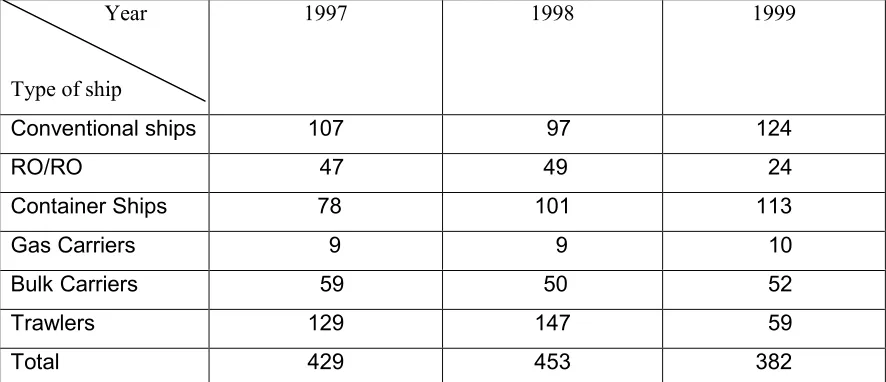
Table 5.1 Number and type of ships visiting the “Port of Friendship”...48
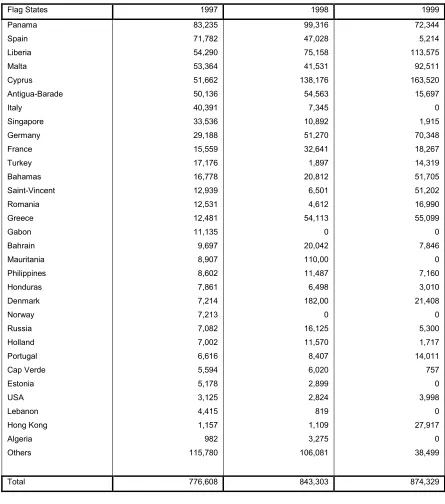
Table 5.2 Distribution of the annual traffic in accordance with the Flag State of the ship. ...49
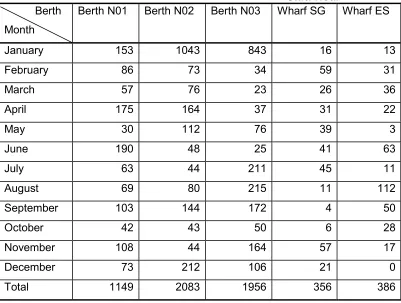
Table 5.3 1997 ships waiting time by berth ...51
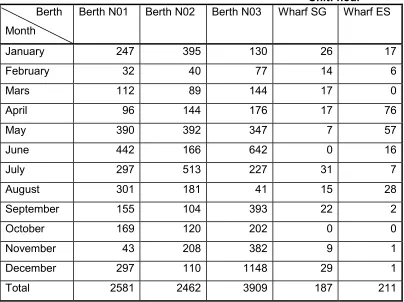
Table 5.4 1998 ships waiting time by berth ...52
List of Abbreviations
CAAM Centre Administartif des Affaires Maritimes
CEMAC Communauté Economique et Monetaire de l’Afrique Central
Cir Circular
CS Coastal State
ECA Commission for Africa
ECOSCO Economic and Social Council
EEZ Exclusive Economic Zone
ES Extension Sud
Gt Gross tonnage
IACS International Association of Classification Societies
ILO International Labour Organisation
IMO International Maritime Organisation
ISM International Safety Management
ITC International Tonnage Convention, 1969
ITF International Transport Federation
LOS Low of the Sea
MARPOL International Convention for the Prevention of Pollution from ships, 1973.
MATEMA Maritime Technical Assistance
MEPC Maritime Environmental Protection Committee MINCOMAR Ministerial Conference of West and Central African
MOU Memorandum of Understanding
MPEM Ministére de Pêche et de l’Economie Maritime
MSC Maritime Safety Committee
NSA Norwegian Shipowners Association
PSC Port State Control
PSCO Port State Control Officer
RINA Registro Italiano Navale
RO/RO Roll on/ Roll off
SAR Search and Rescue
SG Sous Grue
SIRENAC Système Informatisé Relatif aux Navires Controlés SOLAS International Convention for the Safety of life at sea,
1974
STCW International Convention on Standards of Training, Certification and Watchkeeping for Seafarers, 1978, as amended.
TC Technical Co-operation
UASC Union of African Shippers Council
UK United Kingdom
UN United Nations
UNCLOS III United Nations Convention on the Law of the Sea, 1982
UNDP United Nations Development Programme
USA United States of America
WCAMOU West and Central Africa Memorandum of Understanding
1
Chapter 1
Introduction
During the second half of the last century, world shipping underwent a tremendous growth in terms of gross tonnage as well as in the number of merchant ships. The building of very large and ultra large oil tankers, bulk carriers, huge container ships and giant passenger ships created a real threat to safety of life at sea and damage to the marine environment. This development was “The straw that broke the camel’s back”.
In addition, the world fleet had been ageing because owners were no longer renewing their ships as often as they were supposed and used to do. Traditional shipping nations, which generally attached great importance to safety and environmental protection, had given way to “new shipping nations” with little if at all any shipping experience. Furthermore, and, as opposed to the fact that ship sizes increased, the world witnessed reductions in manning levels. Increased technology introduced in the shipping industry played a significant role in this tendency. Owing to increased multinationality of crew on board many vessels, questions were raised as regards the effectiveness and efficiency of communication not only onboard such ships, but also with other communities involved in shipping.
Registration of ships was primarily based on the concept of a “genuine link” between the administration of the country of registry and the shipowner. As a general rule, ships were manned with competent crews, nationals of the country of registry. The combined efforts of all involved, guaranteed compliance with the regulations. All of these values have been eroded, and today it is common to find ships
• Registered in one country,
• Manned by a multinational crew, often provided by a manning agent in some remote corner of the world,
• Operated by a management company established in another country,
• While an international banking consortium most probably is the beneficial owner.
In the late 1970s the awareness of the decline in compliance with generally accepted standards in merchant shipping increased in Europe. As a result, port officials started verifying whether foreign merchant ships calling at their ports complied with generally agreed international standards of maritime safety and pollution prevention. This initiative was emulated regionally and this led to the establishment of the first Memorandum of Understanding on Port State Control (MOU). Similar structures developed around the world. One of these is the West and Central Africa Memorandum of Understanding on Port State Control (WCAMOU). The establishment of the WCAMOU motivated the choice of this topic. To most member states, this is a new and challenging task. For a regional institution of this nature to function properly there is a need that the maritime administrations concerned learn from the experiences of existing MOUs. In this way, it would be easy to avoid administrative and practical errors made by the other institutions.
Paris MOU, as a modest contribution to the establishment of an efficient PSC regime along the West Coast of Africa.
The research methodology will be based on the available relevant literature such as books, hand-outs, conventions, circulars, resolutions, codes, reports, manuals, magazines, newspapers and reviews. Lectures at WMU and lecture notes play a leading role in clarifying the related and relevant issues. In addition to that, field studies to the different Scandinavian maritime administrations provided practical experience by looking at the current situation of PSC in these countries. Furthermore, interviews with personnel responsible for maritime safety activities were carried out at IMO. Discussions with officials of some of the WCAMOU member states, especially those in Mauritania, proved to be particularly helpful for two main reasons:
- As a founding member state it has to play a leading role in the success of the agreement.
2
Chapter 2
Mechanisms for eliminating sub-standard ships
The actual process of exterminating sub-standard ships has its origin in the historical development of shipping. The primary responsibility of such activity should be an obligation of the Flag State. On top of this, other means are used as a complementary action to flag state implementation. In this context, this chapter will cover an overview of these mechanisms under the requirements of international law, in particular under the law of sea, IMO and ILO conventions. Prior to that, it is relevant to give a general outlook of the concept of this category of ships.
2.1 Notion of substandard ships
In the process of development of the maritime industry, it is clearly noted that the paramount priority has been given to making profits at some risk. The high level of competitivity that regulates the shipping business has accelerated this situation. Under these circumstances, shipowners or operators are compelled to run their fleet with minimum revenue. Consequently, ships are maintained and manned in accordance with different standards by different shipowners and operators, resulting in a huge number of casualties over the last few years. According to Dr David Aldwinckle (BIMCO Review, 1999, p120 ):
were damaged by fire or explosion, 13% foundered, and 11% were involved in collisions.
It is relevant to mention that in accordance with these figures the main reasons are the failure of ships to meet required safety standards. However, causes of natural disaster such as act of god or force majeure still occupy a small ratio of maritime casualties.
Substandard and unseaworthy ships are the two sides of the same coin. Both cover more than the physical state of the ship but to a different extent. To be seaworthy, a vessel “must have that degree of fitness which an ordinary, careful and prudent owner would require his vessel to have at the commencement of her voyage, having regard to all probable circumstances of it.”(Shipping Law Eighth Edition, 1987, p187). At the same time, the physical state of the ship, the aptitude, competence, and efficiency of the crew, all overlap.
In any case, profit and substandarness are, unfortunately, correlated in the shipping business. Shipowners and operators need to review their strategies and to realise that profits and safety are not in competition. On the contrary, safety at work is good business. Furthermore, Plaza, Senior Deputy Director of Maritime Safety Division at IMO, stated, in his lecture on July 7, 1999, at the World Maritime University (WMU) “Flag state implementation and Port state control”, that safety must be considered as an investment rather than as a cost factor to the industry, because, undoubtedly, safety pays!
2.2 Flag state implementation
The third United Nations Conference on Law of the Sea (UNCLOS III), 1982, established a wide and comprehensive document of 320 Articles and 125 Articles in eight Annexes, to deal with and cover every aspect of the conduct of nations in the ocean environment. The resulting convention, known as LOS Convention, is the framework of all other international conventions related to maritime aspects, including IMO and the International Labour (ILO) conventions.
Under the LOS convention, Article 94 further specifies that each flag state has the obligation to:
1) Maintain a register of ships authorised to fly its flag. 2) Govern the internal affairs of the ships.
3) Ensure safety at sea with regard to construction, equipment and seaworthiness of ships, labour conditions and the training of crews, the maintenance of communications and the prevention of collisions.
4) Ensure that each ship is surveyed by a qualified ship surveyor and has onboard appropriate charts, natural publications and navigational equipment.
5) Ensure that each ship is manned by a qualified master, officers and crew; and 6) Ensure that the master, officers, and, to the appropriate extent, the crew are fully
conversant and required to observe applicable international regulations regarding the safety of life at sea, the prevention of collisions, the prevention, reduction and control of marine pollution and the maintenance of radio communications.
In general terms, flag state obligations can be outlined in several points covering administrative, technical and social matters. These obligations are: to enact a national legislation in conformity with generally accepted international regulations, procedures and practices, to supervise the ships under its flag in order to make sure that the activity onboard the ship is done correctly and properly; to issue certificates, to follow up of deficiency and pollution reports; to notify to competent international organisation such as IMO; to investigate on accidents and incidents causes and to ensure that personnel are properly trained.
requirements. Other states shall accept these certificates, which shall be regarded as having the same force as certificates issued by them, unless clear grounds exist for believing that a ship is not complying with the requirements stated in the certificates. The same Article authorises the Flag State to investigate any violation of these requirements committed by any of its ships anywhere. If the flag state action is not satisfactory, the port state can appeal to action for remedies against the Flag State under Article 235(1) of the LOSC.
2.3 Legal basis of PSC under international conventions
2.3.1 Jurisdiction of Coastal State/ Port State over foreign ships
outside its territorial water
Port State Control (PSC) can simply be defined as the right of jurisdiction, which a port state exercises over foreign ships in its ports or territorial waters to ensure that the ships comply with the international conventions related to PSC.
As a port state, an administration has powers to ensure that ships visiting its ports comply with regulations and meet the standards laid down by conventions to which the port state government is party. However, it should be emphasized that the Flag State has the prime responsibility to ensure that the provisions of a convention, which applies to its ships, are implemented.
As early as in the 1958 convention on the High Seas, the provisions of Article 22 list certain exceptions to the exclusive jurisdiction of flag states over their ships on the high seas. The convention permits warship crews to board a foreign merchant ship if there is clear suspicion that the ship is engaged in piracy or slave trading. Similarly the International Convention Relating to Intervention on the High Seas in Case of Pollution Casualties, 1969, allows coastal states to interfere, to avoid damage to their coasts or private property, with foreign ships on the high seas.
establishes the freedom of high seas, a right of visit on the high seas and hot pursuit commences when the foreign ship is within the internal waters, the territorial sea or the contiguous zone, as authorized under Article 110 and Article 111 respectively.
In the exclusive economic zone (EEZ), Article 73 of the LOSC, takes into consideration the establishment of sovereign rights of the CS, allowing them to take such measures including boarding, inspection, arrest and judicial proceeding to ensure compliance with the law and regulations adopted by them in conformity with the LOSC.
In the territorial sea CS sovereignty is equivalent to the land territory, subject to the innocent passage of foreign ships that have to comply with generally accepted international rules and standards while carrying out the passage. Other safety requirements are required by Article 21(4) of the same convention that are related to the prevention of collisions at sea by imposing compliance with all such law and regulations.
2.3.2 Jurisdiction of the CS/PS over foreign ships in its internal waters
Usually internal waters, in the sense of the maritime zone, include waters encircled by water lines, bays, estuaries and ports. The CS enjoys full territorial sovereignty over internal waters. Therefore, no rights to innocent passage exists through it, such as through the territorial sea.
By the entrance of foreign ports or internal waters, ships are subject to administrative, civil and criminal jurisdiction of the CS. In accordance with Churchill & Lowe in their book “Law of the Sea (1988), second edition, p.56”:
solely to the internal economy of the ship are left to the authorities of the flag state.
In recent years, particularly with the exploration of oil, the threat of pollution from ships needs more attention from CSs to protect their coast lines and private property. Prior to the LOSC the flag state had the jurisdiction to punish and to prevent marine pollution. “Port state enforcement jurisdiction in the LOSC is an innovative expansion of jurisdiction in international law. Prevention and punishment of marine pollution incidents earlier left exclusively to the Flag State, is now delegated to a universal system.”(Kasoulides, 1993, Port State Control and Jurisdiction, p 126). Moreover, the same writer notes (page 110) that port state jurisdiction was first introduced in 1973 by the IMO conference on pollution prevention for detailed consideration. However, the notion of coastal state jurisdiction was already mentioned in the first SOLAS Convention, 1929. The OIL POL 54 Convention confirmed the right of CSs to refuse the access of foreign vessels to their ports in fear of the risk of pollution.
Nowadays, it is clear that the predominance of CS jurisdiction has started to grow and change. This is the result of the interest given by international organisations, individual states, regional unions, and the world as a whole. Consequently, port state authority (jurisdiction) has been included in the following international legal instruments:
• UNCLOS Part XII: Articles 218, 226 are main provisions, but also in other Articles: 217, 222, 223, 224, 225, 226, and 228.
• MARPOL 73/78: Articles 5(2) and (3), Article 6(2), (3), (4) and (5); Annex I, Regulation 8A; Annex II, Regulation 15; Annex III, Regulation 8; Annex V, Regulation 8.
• SOLAS 74 Chapter 1, Regulation 19
• Load lines 1966, Article 21
• STCW 78, Article X; Regulation I/4; STCW code Section A-I/4, Section B-I/4
• ILO 147, Article 4
• London Convention 1972, Article VII (1) (b)
Other conventions, such as the Oslo Convention 1972, Helsinki Convention 1974 and Barcelona Dumping Protocol, also include provisions dealing with port state jurisdiction.
2.3.3 The work of IMO
The International Maritime Organisation is a specialized agency of the United Nations (UN). Article 57 of the UN charter states that “ specialized agencies established by intergovernmental agreements and having wide international responsibilities, as defined in their instruments, in economic, social, education, culture, health and other related fields, shall be brought into relationships with the UN”. This relationship is defined by individual agreement with the coordinating machinery of the Economic and Social Council “ECOSCO” to which they are bound to report annually.
The mandate of IMO as stated in Article 1 of the Convention establishing IMO is “to provide machinery for co-operation among governments in the fields of governments regulations and practices related to technical matters of all kinds, affecting ships engaged in international trade, to encourage and facilitate the adoption of the highest practicable standards related to maritime safety, efficiency of navigation and prevention and control of marine pollution”. The adoption of the highest practicable standards rather than the highest possible or conceivable standards is the reflection of compromise between the developed and the developing nations.
efficient implementation of IMO instruments such as PSC, survey and certification, casualty statistics and investigations, and technical assistance.
The sub-committee, in the view of the fact that the establishment of its true identity vis-à-vis other sub-committees and even its main objectives is still in the process of restoration, has accomplished a significant contribution to flag state and PSC implementation.
On the one hand, the sub-committee has contributed to elaborate the following instruments for flag state implementation:
• Resolution A 739(18) on Guidelines for the authorisation of organisation acting on behalf of the Administration.
• MSC/Cir.710-MEPC/Circ.307 on Model agreement for the authorization of organizations acting on behalf of the Administration.
• Resolution A 740(18) on Interim guidelines to assist flag states. This Resolution was revoked by Resolution A 847(20) on Guidelines to assist flag states in the implementation of IMO instruments, adopted in 20 November 1997.
• Resolution A 789 (19) on Specifications on the survey and certification functions of recognised organisations acting on behalf of the Administrations.
• Resolution A 788 (19) on Guidelines on implementation of the International Safety Management system (ISM) code by Administration.
• MSC/Cir.771 on Implementation of the International Safety Management (ISM) code.
• Resolution A.848 (20) on Implementation of the International Safety Management (ISM) code.
• MSC/Cir.788-MEPC/Circ.325 on authorisation of recognized organizations acting on behalf of Administrations
• MSC/Cir.889-MEPC/Circ.353 on Self-assessment of flag state performance.
On the other hand, the contribution of the sub-committee in the PSC implementation is the following instruments:
• Resolution A 787(19) on Procedures for PSC as amended by Resolution A882(21)
• MSC/Cir.890-MEPC/Circ.354 on Interim guidelines for PSC related to ISM code.
• Code of conduct for PSC officers
• Training and qualifications requirements for PSC officers.
• Resolution A.682 (17) on Regional co-operation in the control of ships and discharge.
3
Chapter 3
Enforcement of Port State Control
3.1 Regional memorandum of understanding on PSC
At present a considerable portion of the world is covered by the PSC regime through the existing regional memorandums of understanding (MOU) in operation. The growth of such organisations has shown through the years that PSC works better when it is established on a regional basis. It is relevant, however, to emphasise that a MOU on PSC is not an international convention or treaty. Member states wish to retain individual competence and the freedom of decision making. Therefore, the memorandum can be defined as an informal diplomatic communication and multilateral agreement between governments, which summarises a particular diplomatic purpose or point of view.
The choice of MOU on PSC rather than treaties or conventions deserves comment. The positive side of the preference is that MOU, unlike conventions or treaties, does not necessitate a complex ratification procedure and the adoption of a national legislation, which can take a considerable number of years. The negative side, however, is that no obligations are binding parties to any specific requirements; all activity is based only on a moral commitment of the members to co-operate and to take measures to eradicate substandard ships.
Since the PSC exists based on international instruments, as shown earlier, the idea of establishing control on a regional basis was the consequence of the fact that co-operation among member states will contribute positively to minimise substandard shipping not only regionally but globally by reducing the freedom of such a category of ships. This regional co-operation is not only for the benefit of port states but also in the interest of shipowners and operators, which can avoid a duplication of control in the same geographical region for a specific period of time.
3.1.1 The Paris memorandum of understanding
The first memorandum of understanding, known as the Hague memorandum of understanding, was signed by eight European countries on March 2, 1978. Its aim was particularly to ensure that foreign ships entering their ports complied with the requirements of the recently adopted ILO convention relating to merchant shipping (Minimum Standards Convention), 1976 (No. 147). However, just as the memorandum was about to come into effect, in the same month and exactly on March 17, 1978, a massive oil spill occurred off the coast of Brittany (France) as a result of the grounding of the super tanker “Amoco Cadiz”, spilling 230,000 tons of crude oil. Consequently, the disaster caused a reaction of strong disapproval and anger shown by the public and the media, resulting in the necessity to establish more stringent regulations with regard to safety of shipping and pollution prevention from ships calling at European ports.
multilateral agreement that could help to co-ordinate actions to protect European coast lines and property. While this work was taking place in Brussels, European ministers and representatives of the IMO and ILO met in Paris in December 1980 to review the system of eradication of substandard ships.
The Paris memorandum was established, in Paris, one year later; on 26 January 1982 taking into consideration the directives of the European communities, the Hague memorandum and IMO. In these matters Kasoulides, in his book Port State control and jurisdiction, 1993, page145 states that “It was done with the blessing of IMO, which express conditions that PSC will be based on IMO regulations”.
It is relevant to mention, in this context, that the memorandum was seen, at that time, as the only way to strengthen the role of port states within the European community without introducing the UNCLOS III regime that many European countries were strongly opposed to its adoption.
The signatories of this agreement were 14 European nations: Belgium, Denmark, Finland, France, Germany (Federal Republic of), Greece, Ireland, Italy, Netherlands, Norway, Portugal, Spain, Sweden and United Kingdom of Great Britain and Northern Ireland. Today, four other countries have adhered to the memorandum as shown in the following table.
Table 3.1: New adhesions to the Paris MOU
Name of country Date of adhesion Date of taking effect
Canada 3 May 1994 3 May 1994
Croatia 8 November 1996 1 January 1997
Considering the new adhesions to the memorandum, its geographical scope covers the European coastal states and the coastal states of the North Atlantic basin from North America to Europe.
The organizational structure, under the Paris MOU, is composed of the PSC committee, the secretariat and the CAAM (centre administratif des affaires maritimes).
The PSC committee is the executive body. It is composed of the eighteen participating maritime authorities and the European commission. The representatives of IMO and ILO attend as observers in the meetings of the committee, as well as delegates of co-operating maritime authorities and other regional agreements on PSC. The committee is in charge of policy, finance and administration matters. It is supervised by internal specialised technical bodies within the organisation. The committee meets once a year in ordinary session or more if necessary in extra-ordinary session.
The secretariat is composed of the Director, the legal officer and a technical officer. The headquarters of the secretariat is located at the Ministry of Transport and Public Works of the Netherlands in Rijswijsk. The secretariat, which acts under the guidance of the PSC committee, has the duty to arrange for the meetings, formulate the report drafts, prepare the seminars, furnish documentation to interested parties and assume public relations tasks.
The computer centre used in the Paris MOU is located at Saint-Malo, which depends on the CAAM, and provides, on the basis of the particulars entered into the inspection file, the material for the production of statistics. The electronic system used for storing information on PSC inspections carried out in the region is the SIRENAC (Systéme informatisé Relatif aux navires controlés) database system. All member states have a direct connection to the system as an electronic mailbox.
The member states to the MOU agreed to implement a harmonized system of PSC based on the official document that is composed of eight sections and six annexes. The main body includes the commitments of the maritime authorities, the relevant international instruments, the inspection procedures, rectification and detention, the exchange of information, the operational violations, the structure of the organisation and amendment procedures. The six annexes to the main body of the document are the following:
Annex 1:Port State Control Procedures- a detailed guideline for carrying out Port State Control inspections.
Annex 1A: Procedures for investigation under MARPOL 73/78 – a detailed guideline for carrying out an investigation into an alleged violation of the discharge requirements under the annexes I and II to MARPOL 73/78.
Annex 2: Exchange of messages by (Paris MOU) region States in case deficiencies have not been fully rectified or only provisionally repaired, including format of the report.
Annex 3: Report of inspection Form A (standard form), Form B (when deficiencies are found) and list of codes for action taken.
Annex 4: Information system on inspections and a brief outline on the use of the SIRENAC database, which is used for storing information on PSC inspections carried out in the region.
Annex 5: Qualitative criteria for adherence to the Paris MOU - a list of criteria which have to be met by Maritime Authorities applying for full membership of the Paris MOU.
3.1.1.2 Basic standards of conduct
The Paris MOU is based on several fundamental standards of conduct:
• ILO and IMO international conventions are the basis for the inspections.
• Ships, which have been inspected by a participating authority within the prior six months, are exempted unless clear grounds exist for re-inspection.
• In general inspections are not announced.
• Member-states have agreed to achieve individually an annual rate of inspection corresponding at least to 25% of ships entering their ports. They seek to minimize unjustifiable detaining, retaining or delaying of ships.
• No more favourable treatment is given to ships to flying the flag of a state, which is not party to the applicable instrument.
• The agreement states that: “ Inspections will be carried out by properly qualified persons authorized for that purpose by the authority concerned and acting under its responsibilities.”
• The lack of relevant certificates, referred to in section 2 of Annex 1 of the MOU, is prima facie evidence that the ship is substandard. Moreover, the lack, non-conformity or important retrogression of machinery or equipment or the hull is also prima facie evidence that the ship is substandard.
• If detected that the ship does not meet the required international standards, the port state has the duty to take necessary measures to get these deficiencies rectified.
hazard is removed before the ship is allowed to proceed to sea. For this purpose appropriate action will be taken, which may include detention. Exception is made under this section in case of deficiencies that can not be remedied in the port of inspection.
• In the case of ships below convention size, the PSCO ‘s duty is to evaluate if the ship meets the required standards regarding safety, health or the environment.
3.2 Other MOUs
Since the Paris memorandum was established, many other regions have followed the example of such an organisation.
3.2.1 The existing MOUs
• The Acuerdo de Vina del Mar (or Latin-America Agreement) was established during a regional meeting which took place in Vina del Mar (Chile) on November 1992, an agreement for co-operation on PSC was signed by the maritime authorities of Argentina, Brazil, Colombia, Chile, Ecuador, Mexico, Panama, Peru, Uruguay and Venezuela. The agreement follows very closely the Paris MOU, although it was adapted to the special characteristics and particulars of the Latin-American region. According to the agreement, each maritime authority will make every effort to reach a minimum annual level of inspection of 15% of foreign vessels visiting its ports.
• The Caribbean MOU was signed on 9 February 1996 in Christchurch (Barbados) by 20 states, territories and Islands in the Caribbean. The target established was of 15% annual inspection rate per country within three years.
• The Mediterranean MOU was signed in Valletta (Malta) on July 1997 by representatives from the following maritime authorities: Algeria, Cyprus, Egypt, Israel, Malta, Lebanon, Morocco, Tunisia, Turkey and the Palestinian authority. The member states will seek to accomplish a 15% annual inspection rate per country within three years.
• The Indian Ocean MOU was signed in Pretoria (South Africa) on June 1998 by representatives of each of the following maritime authorities: Djibouti, Eritrea, Ethiopia, India, Iran, Kenya, Maldives, Mauritius, Mozambique, Seychelles, South Africa, Sri Lanka, Sudan, Tanzania and Yemen. The authorities will seek to attain a regional annual inspection rate of 10% per country within three years.
• The MOU in West and Central Africa will be covered in more detail in the next chapter.
• Black Sea region: The first preparatory meeting took place in Varna (Bulgaria) on September 1999, with the participation of Bulgaria, Georgia, Romania, Russian Federation, and Turkey. The signatory ceremony took place on April 7, 2000.
3.2.2 Plan for establishing new MOUs
At the moment, IMO is in consultation with the maritime authorities of countries within other regions where the establishment of PSC agreements is projected in the near future. Particular attention is given to the ROMPE (Regional Organisation for the protection of the Marine Environment) sea areas to which the participating countries are the Arabic Gulf States around the Persian Gulf, namely Bahrain, Kuwait, Oman, Qatar, Saudi Arabia and The United Arab Emirates. It is relevant to mention in this context that the Islamic Republic of Iran is not included among the member states of the future MOU. The signatory meeting is to be determined.
It can be seen from the above developments that the “regional approach”, as opposed to an individual-country or “global approach”, is favoured at this stage. By the establishing of the mentioned MOUs, a full global coverage of PSC might occur, either through a globalisation of the system of control (global standarisation), or at least by harmonisation of practices and procedures of inspection in the different regions of the world. In both cases, co-operation among PSCs or MOUs and exchange of information database will be necessary between parties as a preliminary step towards sustainable future development.
3.3 Evaluation of inspection in the Paris MOU
3.3.1 Inspections, deficiencies, and detentions
Inspections procedures under the Paris MOU are presented under the different sections of Annex I of the agreement. Section 1 fixes the type of ships to be considered as priority inspections. The 2000-revised Manual for Surveyors made a more detailed list of priority inspection in comparison with the previous items of the section. The innovation is particular about the establishing of new target factors and the setting up of a list of elements that are relevant for the targeting factors. The certificates to be examined, to the extent applicable, during inspections are presented under section 2 of the annex I to the Paris MOU document. The list of certificates under the new revised Manual is larger than it was in the preceding text. It includes all certificates required plus the following six documents:
• Cargo securing manual
• For passenger ships, a plan for co-operation with SAR services.
• Bulk carrier booklet
• Loading and unloading plan for bulk carriers
• Garbage management plan
• Garbage record book.
ship in case of fire incident. Section 5 provides clarifications and details about more detailed inspections in case of lack of valid certificates or after establishing clear grounds. PSC of the manning of foreign ships, which is carried out based on the ship’s safe manning provisions and requirements of the relevant international conventions, is covered under Section 6 of the agreement’s main body. However, Section 7 sets up the requirements to be inspected by PSCOs in relation to ILO convention provisions. Similarly, expanded inspection of certain ships is established under Section 8, particularly in terms of categories of ships subject to this extraordinary inspection, and the procedures of such inspections. Finally, principles, main criteria and detainable deficiencies governing rectification of deficiencies and detention of ships are largely detailed under the last section of the annex I to the Paris MOU agreement.
In terms of quantification of the work done by the Paris MOU, it is estimated that since the MOU entered into force a total of more than 200,000 inspections of foreign ships have been carried out. The following tables show the number of individual foreign ships inspected, the number of inspections, the number of deficiencies observed and the number of ships detained over the last nine years.
Table 3.2:
Number of individual ships inspected
11991 1992 1993 1994 1995 1996 1997 1998 1999
10,101 10,455 11,252 10,694 10,563 10,256 10,719 11,168 11,248
Table 3.3:
Number of ships detained and % in number of individual ships
inspected
21991 1992 1993 1994 1995 1996 1997 1998 1999
Number 525 588 926 1,597 1,837 1,719 1,624 1,598 1,648
% 5.20 5.62 8.23 14.93 17.39 16.76 15.15 14.31 14,97
Table 3.4:
Number of inspections + detentions in % of inspections
31991 1992 1993 1994 1995 1996 1997 1998 1999
Number 14,739 14,738 17,294 16,964 16,381 16,070 16,813 17,643 18,399
% 3.56 3.98 5.35 9.41 11.21 10.70 9.66 9.06 9.15
In analysing the above tables it is clear that the number of individual ships inspected reached a peak in 1993 and then decreased continually to the minimum level in 1996. This tendency was reversed to start increased continually to 11,168 in 1998 and to 11,248 in 1999.
The number of inspections follows closely this tendency. However, the number of ships detained indicates quite a different penchant. The data reveal a continual increase from 1991 to 1995 in which the peak point of 1,837 detentions was reached, then steadily decreasing from this point to 1,598 detentions in 1998
2
Ibid
and 1,684 in 1999. This inclination is probably a good sign of a gradual compliance with standards and regulations, but it is too early to conclude, due to the short period of time, that there has been any real improvement.
Although there has been a high number of inspections, detentions and other measures taken by the authorities of member states, the number of deficiencies still continues to be relatively high. An increasing of 8% was noted during PSC in 1998 in comparison to 1997. This observation is compatible with the fact that the number of detentions has continually decreased over the last five years only in the case that these deficiencies are minor and do not require any measures for detention. The Paris MOU 1998 annual report presents this situation as a product of more selective targeting of ships for inspection. Basic safety item issues such as life saving appliances, fire-fighting equipment, safety in general and navigation still occupy more than half of the deficiencies noted during PSC in 1998. Table 3.5 shows an increase in the number of deficiencies observed between 1991 and 1995, and a slight decrease in the two following years. The number reached the maximum in 1999 with 60,670 deficiencies.
Table 3.5:
Number of deficiencies observed4
1991 1992 1993 1994 1995 1996 1997 1998 1999
25,930 27,136 43,071 53,210 54,451 53,967 53,311 57,831 60,670
3.3.2 Case study: “the Erika”
The above tables indicate that a relatively high number of inspections, and detentions were carried out in the region covered by the Paris MOU. The data can only be used for the purpose of the quantification of the evaluation of system.
However, the quality of such a regime can be viewed in terms of the real contribution to enhance quality shipping on a regional basis.
In trying to evaluate the accomplishment of the system, it is relevant to mention that PSC is a random control, established not to cover everything in detail. Therefore, it is unfair to blame the entire regime for negligence or for incompleted work of its PSCOs. Nevertheless, it is of great importance to link the failure of the shipping community as a whole to all the parties’ involved, at different levels and responsibilities, in safety and environmental protection. Consequently, the aim of this part is to discuss the case of the Erika disaster from the point of view of the PSC regime only, particularly in the region covered by the Paris MOU.
On December 12, the Malta-registered tanker “Erika” broke in two during a storm and spilled thousands of tons of its heavy fuel oil cargo into the sea. The catastrophe reversed the idea, that 1999 was considered to be one of the cleanest years in terms of oil spills from tankers occurring as a consequence of accidents at sea.
The casualty can simply be viewed as a reminder of what happened after the sinking of the Amoco Cadiz near the coast of the same country twenty-two years ago. The relevance of this comparison in this particular context is that, as mentioned earlier, the Amoco Cadiz casualty was the direct reason for the establishment of the Paris MOU, which was viewed at that time as one of the remedies available and exercised by the port states to protect themselves against such unhappy events. The question to be asked in relation to this situation is whether safety is back to square one as in 1978 and if what has been done so far has not been efficient and useful.
suffered significant structural damage in the past ten years.” According to the same document, “the accident appeared similar to that of the Nakhodka, a Russian vessel that broke in two three years ago, polluting Japan’s coast heavy fuel oil.”
Since April 1996, the Erika was subject to different PSCs in the Paris MOU, resulting in detention on two occasions. On 17 April 1996 it was inspected at Millazzo (Italy) with small deficiencies relating to the emergency embarkation equipment. Three months later the ship was detained in Gdynia (Poland) for deficiencies viewed by PSCO as serious and covering pumps, auxiliary engines, and hygiene and cleanliness of the engine room. Forty days later, the ship was controlled in Ponta Delgada (Portugal) and the inspection confirmed the same deficiencies: toilets, cleanliness of the engine room, auxiliary engines. During the period from 16 August 1996 to 11 December 1997 (about sixteen months) the ship escaped to all PSCs in the region. At the latter date it was inspected and detained in Rotterdam (Holland) for deficient pumps and corrosion found in the bulkheads. Six months later, the ship was detained in Stavanger (Norway) on 20 May 1998. The Norwegian authorities indicated the existence of several deficiencies in relation, particularly, to fire fighting equipment, toilets, freeboard marks, electrical equipment and corrosion of the hull. Consequently, the ship was released under conditions that all these deficiencies would be rectified within the two weeks after the departure of the ship. The next inspection was carried out in Porto Torres (Italy) on May 1999 and ended in a clean report, with nothing to mention as deficiencies. However, the last report that took place in Novorossisk (Russia) on 12 November 1999 (just one month before the disaster) revealed relatively small deficiencies related to freeboard marks (to be rectified within 14 days), immersion suits (rectified before leaving the port), life buoys (to be rectified at the next port) and personal equipment – fire fighting (to be rectified within 14 days).
influenced by many parties involved in the shipping industry. Secondly, deficiencies that are supposed to be corrected within a specific period of time were continually appearing in the subsequent inspections. This circumstance shows that there was no efficient follow-up on the actions taken. Thirdly, although the investigation of the causes of the casualty have not, so far, been concluded, the fact the ship broke into two can be interpreted as a hull strength issue. Nothing in all these seven PSCs mentioned this element, except unusual signs of corrosion in the hull revealed during the inspections in Holland and Norway. The PSCO, therefore, has no efficient means to check parts of the ship, that need more technical equipment such as those available in the dry docks or in the classification societies’ laboratories. Finally, one of the lessons to be learnt from this case is that harmonisation and uniformity of PSC procedures has not yet reached the optimal point. Each port state seems to have its own criteria and priority. This practice, however, is in contradiction with the principles of the Paris MOU that encourage all member states to follow the same process in carrying out PSC.
4
Chapter 4
Memorandum of Understanding in West and
Central Africa
4.1 Member States
This agreement was signed under supervision of the IMO in Abuja (Nigeria) on 22 October 1999 by sixteen Coastal States, that stretch from the coast of Mauritania in the north to the coast of South Africa. The member States consist of Benin, Cape Verde, Congo, Côte d’Ivoire, Gabon, Gambia, Ghana, Guinea, Liberia, Mauritania, Namibia, Nigeria, Senegal, Sierra Leone, South Africa (Already member to the Indian Pacific MOU) and Togo. However, Angola, Cameroon, Equatorial Guinea, who attended the meeting, agreed to sign the MOU at a later date.
The International Labour Organisation (ILO), the Port Management Association of West and Central Africa (PMAWCA) and the Union of African Shippers Council (UASC) also participated in the meeting as well as the International Association of Classification Societies (IACS), The Communauté Economique et Monetaire de l’Afrique Central (CEMAC), The Economic Commission for Africa (ECA), The United Nations Development Programme (UNDP), The International Transport Federation (ITF). The administrative body under which the agreement has been discussed is the Ministerial Conference of West and Central African States on Maritime Transport (MINCONMAR).
4.2 The obstacles to establishing an efficient WCAMOU
certain numbers of difficulties, at different levels, among the member States. These obstacles cover the status of ratification of international instruments, lack of sufficient number of qualified surveyors, linguistic hindrance, economic constraints, lack of adequate infrastructure and the congestion in some ports in the area.
Table 4.1:
Status of ratification of relevant international instruments (on 31/5/2000)
SOLAS Conve ntion 74 SOLAS Protoc ol 78 LOAD LINES Conve ntion 66 TONN AGE Conve ntion 69 COLR EG Conve ntion 72 STCW Conve ntion 78 MARP OL 73/78 (Annex I/II) MARP OL 73/78 (Annex III) MARP OL 73/78 (Annex IV) MARP OL 73/78 (Annex V) ILO No 147
Angola x x x x x
Benin x x x x x x x x x x
Cameroon x x x x
Cape Verde x x x x
Congo x x x
Côte d'Ivoire
x x x x x x x x x x x
Equatorial Guinea
x x x x x x x x x x x
Gabon x x x x x x x x
Gambia x x x x x x x x x
Ghana x x x x x x x
Guinea x x x x x
Liberia x x x x x x x x x x
Mauritania x x x x x x x x x x x
Namibia
Nigeria x x x x x x
Senegal x x x x x x x x x x x
Sierra Leone
x x x
South Africa x x x x x x x x x x
This situation indicates that some countries are still far away from fulfilling the requested ratification. Namibia is, for instance, not party to any of these instruments. Only Côte d’Ivoire, Equatorial Guinea, Liberia, Mauritania, Senegal, South Africa and Togo have ratified the relevant international instruments including ILO No.147 Convention.
The lack of qualified and efficient surveyors is one of the major difficulties facing the majority of WCAMOU states. The IMO resolution A787 (19) states clearly the required qualifications of a PSCO. He should be an experienced officer qualified as flag state surveyor, be able to communicate in English with the key crew and should have the necessary, latest and updated knowledge of the provisions of the applicable conventions, that are relevant in the conduct of PSC. Moreover the resolution specifies that
The PSCO should be qualified as master or chief engineer and have appropriate seagoing experience, or have qualifications from an institution recognised by the administration in a maritime related field and have specialised training to ensure adequate competence and skill, or be a qualified officer of the administration with an equivalent level of experience and training, for performing inspections of the relevant operational requirements.
In practical terms, some countries in the MCAMOU have insufficient inspecting officers to carry out inspections on their national ships and also foreign ships. This is mainly due to the fact that the wages are often low in the administration. The best-qualified personnel are attracted to go elsewhere in order to find a much better financial situation.
The linguistic hindrances stretch beyond the simple problem of language. They take the form of historical and political stature. There are four different official languages in the sub-regions, which are Arabic, English, French and Portuguese. The following table shows the classification of member states according to their official languages:
Table 4.2:
Official languages of WCAMOU member States
Arabic English French Portuguese
Mauritania Gambia, Ghana, Liberia, Namibia, Nigeria, Sierra Leone, south Africa.
Benin, Congo, Côte d’Ivoire, Gabon, Guinea, Senegal, Togo.
Cape Verde
Unfortunately, a spirit of linguistic fundamentalism has been spreading in the region. Although the MOU document has been drafted both in English and French, the English predominance is obvious in such organisations for the simple reason that in the maritime field English has become more and more widely used. This situation may provoke a mutual misunderstanding among the member States.
The economic constraint is the cornerstone of the organisation. Almost all member States face very difficult economic situations. Maritime safety and pollution prevention is generally at the bottom of national priority ranking. The priority is generally granted to more vital and crucial sectors such as food supply, health, education, combating poverty and improvement of country infrastructures.
cover the basic costs such as the wages of the secretariat personel, the communication fees (computer centre or other alternatives means of communication) and costs engendered by regular seminars for PSCOs. In addition to the collective charges of PSC activity, an individual cost by each Member State is to be taken into consideration. This covers essentially the salaries for the PSCOs.
Another complication, that puts at risk the efficiency of PSC in the sub-region, is the inadequate port infrastructure that are necessary to rectify deficiencies if they are founded during inspections. This situation is due to the fact that ports in the area are built to respond to the need of these countries in terms of the import and export of goods. They are still badly equipped in terms of means of repairs and reception facilities as required by international conventions.
4.3 Presentation of the WCAMOU document
4.3.1 Comparison with other MOU documents
Basically, the document does not deviate largely from the provisions of the other MOUs. It is similar to the other regional PSC agreements already established around the world. Their provisions are quite mutatis mutandis. The differences between the WCAMOU and other MOUs, particularly the Paris MOU, can not be found in the content of the documents but in the surrounding factors, that lead to the establishing of such agreements:
1. The Paris MOU was established as a consequence of and response to many accidents, that had occurred in the heavy traffic areas along the European coasts, which created a political will and a public awareness to develop a regime of prevention of such casualties. This factor helped these states to join their forces in combating substandard ships. In the West Coast of Africa the situation is quite different. The idea was born as a response to the pressure of the international community, particularly IMO, to organise a PSC regime on a regional basis. The ignorance of the fact that most maritime administrations in the sub-region are not well prepared to carry out the activity properly may affect the ambitious idea of globalisation of the activity.
2. Although the requirements of inspections are the same under the Paris MOU and the WCAMOU (certificates inspection, more detailed inspections, detention, rectification etc), the gap between the two MOU member states’ maritime administrations in terms of human factor and port infrastructures is extremely large.
ports during the year, within a period of three years after the MOU becomes effective. This percentage is higher than the quota of inspections in the Indian Ocean MOU (10%), similar to the rate in the Caribbean and the Mediterranean MOUs, but less than those in the Paris and Tokyo MOU (25%).
4.3.2 Co-operation, harmonisation of procedures and exchange of
information
4.3.2.1 Co-operation
One of the advantages of entering into multilateral agreement is to prepare the ground for beneficial co-operation between member States. Actually, and according to Yahya Al Jumah in his survey notes “ Regional co-operation on PSC in the west and central Africa p.38”:
Not all the States in the Sub-region exercise PSC, and those that do, do not use the same system of control even though the control of ship could be done according to the relevant international conventions. They have now realised that, in order to attain their development objectives in the maritime sector; it is very essential that they collectively promote self-reliance among themselves. Through Regional co-operation considerable efforts to develop their maritime sector would be attained, as it would straighten relationships among themselves in the various field of shipping and ports issues. These could be done by pooling their resources together and entering into co-operation systems it would at the same time enable them to increase their know-how about other member states in the sub-region by engaging their expertise in the maritime sector.
achieved by these two bodies is, unfortunately, not encouraging. Nothing has been positively achieved regionally since these bodies were instituted.
4.3.2.2 Harmonisation of procedures
The most difficult task in conducting PSC is the harmonisation of procedures as shown earlier in the example of the case of Erika in the Paris MOU. The main reason for that is not only because different administrations establish different priorities and items to be inspected, but also that every PSCO within each administration has his own priorities, based on its own background. Experience has shown that nautical surveyors and engineer surveyors chose different items to check on board ships when carrying out PSC.
4.3.2.3 The exchange of information
The exchange of information is of great importance. It must allow a free flow of information and communications among member States so that substandard ships can be identified and targeted. The optimal and ideal way for this to be achieved is through the setting up of a computer network. This option can be considered as relatively expensive, especially when considering the economic situation of the member States. More objectively, other alternative types of communication system can be developed such as telex, telefax or even telephone as required by the MOU document. The example of the Mediterranean MOU, that still uses alternative means to the computer network since its establishment in 1997, is a clear confirmation of this idea, particularly when considering the relative advanced standing of the Mediterranean member States in comparison to WCAMOU member States.
4.3.3 IMO technical assistance and co-operation with the existing
MOUs
making new and more complex rules. In this sense IMO encourages States to ratify or accept IMO conventions in order to ensure their global application.
The Technical Co-operation (TC) Division of the organisation carries out the technical assistance. Since IMO has 159 member States, the majority of which are developing countries, the assistance is basically oriented to aid these developing countries.
According to David T.Edwards, Director of the TC Division, as contracting parties, developing countries have every right to expect assistance from other contracting parties with the capacity to help, as well as from the UN system through IMO. In order to pursue the mission of assisting developing countries, IMO’s TC strategy is based on establishing partnerships with regional organisations, donors, recipient governments and industry at the local, regional and international levels.
The capacity building for safer shipping and cleaner oceans can not be achieved without focusing on human resource development. From this point of view, IMO assistance in the WCAMOU can cover the following items:
Evaluation and mobilisation of the regional maritime expertise and resources.
Facilitation of the regional co-operation among member States and with the existing MOUs by emphasising the global coverage of PSC. This co-operation can cover the availability and exchange of information about substandard ships and the sharing of experiences.
Funding partnerships through UNDP and bilateral donors.
Strengthening of individual maritime administrations by focusing on responsibilities as flag and port states.
Supporting and assisting maritime training of PSC officers.
multilateral and bilateral providers of development assistance. However, there is no doubt that in the early stage of implementing WCAMOU the emphasis of assistance should be focused on the education and training of PSCOs, particularly in terms of understanding and familiarisation with the requirements of the international conventions.
4.3.4 Shipowners point of view
Not everyone regards the proliferation of PSC authorities to be entirely good news. Mr Alan Cubbin, a senior official at the UK Maritime and Coast Guard Agency, was quoted by Lloyd’s List newspaper recently as saying that some of the newer regimes seemed to be using inspections to raise revenue. He cited the example of six ships, which obtained PSC certificates in southern Europe, only to be declared substandard and detained in northern Europe.5
The Norwegian Shipowners Association’s point of view, concerning particularly the establishment of WCAMOU, is typically identical. Their major concern is, as expressed by the Association spokesman Mr Arne Peder Blix, Head of Division in the NSA, during MAEP/MSEP 2000 field trip to Norway in November 1999, related to the high level of bribery of PSCOs in the region. This situation, in their point of view, is the consequence of the fact that these officers are badly paid. Consequently, and according to the same spokesman, these officers, when conducting inspections, will not issue a clear report to the ship without asking for a bribe, notwithstanding the condition of the ship.
5
Chapter 5
Case study: Mauritania
5.1 Importance of maritime safety and environmental
protection
Despite the fact that maritime safety and environmental protection is of great importance to the national interests of the State, the awareness about the matter is not compatible with the danger that might be caused by an incident to the maritime sector in particular, and to the national economy in general. Mauritania does not, therefore, make an exception to that rule in the maritime domain that stipulates that awareness and prevention measures are always engendered by maritime disasters.
After the independence of the country in 1960, the national economy became more and more dependent on maritime activities.
The national coastline areas provide an exceptional ecosystem equilibrium, that creates “The National Park of Arguin”, which is a national asset of great biological and economic value. The extraordinary rich bird life, fisheries and other marine assemblages, in particular the prevalence of seagrass beds and other productive, shallow-water benthic ecosystems, is significant near shore, upwelling within and around the Park where 40% of the national coast line is situated. The Park also offers protection to the world’s largest concentration of overwintering waders. This was the main reason why the Park was listed under the Ramsar Convention in 1982 and added to UNESCO’s World Heritage List in 1986.6
In addition, the country trade and exchange is largely seaborne trade. The percentage is estimated to be more than 95% of both import and export in terms of value and quantity. On top of fishing products, export is dominated by iron ore shipments; about 12 million tons per year are exported through the mineral quay in the economic capital city (Nouadhibou). However, more than 90% of the import of goods is carried out through the autonomous port of Nouakchott (the capital city), the so-called “ the port of friendship”.
All the above-mentioned maritime activities require that preventive measures must be put in place to hinder the occurrence of unhappy incidents or disasters. This can be done only through the strict application of the international standards both for national ships as a flag state and for foreign ships as a port state.
5.2 Presentation of maritime administration in Mauritania
The maritime administration in every country is the main body dealing with the activities of the maritime sector. The functions of the maritime administration are those assigned to it within the framework of the government’s overall policy. The most important aspect of its duties is to advocate, to improve and to protect the national interests of the State in terms of marine safety, maritime environment protection, training and education, welfare of maritime personnel both on board and