University of Bolton
UBIR: University of Bolton Institutional Repository
Education: Book Chapters Education
2008
Working without a script – rethinking how
academics can work collaboratively in changing
contexts.
Roni Brown
Richard Heatly
John Last
Norwich University College of the Arts
Fiona Powley
Barbara Thomas
University of Bolton, [email protected]
See next page for additional authors
This Book Chapter is brought to you for free and open access by the Education at UBIR: University of Bolton Institutional Repository. It has been accepted for inclusion in Education: Book Chapters by an authorized administrator of UBIR: University of Bolton Institutional Repository. For more information, please [email protected].
Digital Commons Citation
Brown, Roni; Heatly, Richard; Last, John; Powley, Fiona; Thomas, Barbara; Walter, Jo; and Wareing, Shân. "Working without a script – rethinking how academics can work collaboratively in changing contexts.." (2008).Education: Book Chapters.Paper 4.
Authors
Working without a script – rethinking how academics can work
collaboratively in changing contexts
Authors: Roni Brown, Richard Heatly, John Last, Fiona Powley, Barbara
Thomas, Jo Walter, Shân Wareing
Focus: the advantages for institutions, staff and managers of conceiving role
change positively
Abstract
This chapter argues that the scope of the academic role in art, design and media
has shifted in recent years from predominantly teaching, practice and research to
one that places significantly greater emphasis on administration and other tasks,
as a consequence of the wide range of policy, legislative and audit pressures to
which institutions have had to respond. This has resulted in an experience of role
fragmentation for academics, and is particularly accentuated in the context of art,
design and media higher education, where logistical and identity tensions already
exist between the roles of practitioner and academic. The impact of such
increased pressures on the academic role is apparent through the stress levels
documented for employees in the sector.
It is proposed that it is necessary to re-establish congruence between institutional
higher education by individuals and institutions. Potential models for such new
working practices include “co-creation”.
Our audience
Policy formers and makers
Practitioners – people that manage staff, those that develop staff, new entrants,
practitioners and teachers of art and design/and staff undertaking Postgraduate
The Context: complex and rapid change
In the past fifteen years UK Government policy and legislation have exerted
considerable influence on the higher education (HE) sector. All institutions are
now expected to deliver economic and social functions such as knowledge
transfer, widening participation, community and voluntary activities, income
generation and regional development in addition to the traditional activities of
teaching and supervising students and undertaking research. Within those
existing areas of activities there have been obvious changes as well. The
numbers of students in the system has increased substantially over recent
decades without a similar increase in staffing or in many cases a commensurate
increase in teaching space. As Becher and Trowler (2001) note:
…changes in the HE system have meant a growth in the strength and
number of forces acting on academic cultures, enhancing the externalist
rather than internalist character of the influences on them.
(Preface to the 2001edition)
These changes have taken place in a society which Barnett has argued is
“supercomplex”, by which he means that individuals in contemporary society
need to operate with multiple frames of understanding, self-identity and action, all
of which are continually under challenge, and that we do so in a “radically
unknowable world”, due to the rate of change and the complexity of our
Legislative requirements which affect university practices include the need to
comply with statutes related to, in particular, equal opportunities and employment
conditions. Institutions also have to participate in externally driven quality
assurance processes, such as QAA Audit, the National Student Survey (NSS)
and other time consuming and demanding processes within the national quality
assurance and enhancement agenda. This can all be seen to be impacting
significantly on the roles and identities of staff who can feel themselves to be
subject to evaluation and audit in every aspect of their work.
There is additionally an increasing expectation of, and requirement for, the
involvement of academic staff in professional development activities. These are
made explicit through institutional personal and professional development
structures, and managed through staff review and appraisal. Again, this is part of
a national landscape which includes, for example, the Professional Standards
Framework (PSF) developed by the Higher Education Academy (HEA) for staff
with teaching roles in Higher Education. The value that is assigned to
professional practice within art, design and media as underpinning teaching is
articulated through the PSF’s areas of activity, core knowledge and professional
values. While valuable and to be welcomed, it must also be acknowledged that
with every further articulation of expectation and standards, the demands placed
The Impact on Staff and Role Definition
The multiple expectations of an academic role include the elements described as
follows. Despite the complexity of this picture, it is by no means exhaustive.
As stated above, the ‘massification’ of higher education has resulted in greater
workloads, not least due to increased student numbers. Greater specificity
around standards for teaching, learning and assessment has resulted in more
explicit course and session planning; preparation of timetables, project briefs,
handbooks, and written feedback to students on formative and summative
assessment. The incorporation of work based learning and placements into the
curriculum require placement identification and support, building and maintaining
relationships with employers, health and safety training and risk assessments.
Quality assurance and enhancement processes have resulted in more
demanding processes for course development and validation, requiring servicing
by colleagues through peer review. Staff also participate in QAA review and
audit, annual monitoring and self evaluation reports, institutional committee
meetings, programme level committees, gathering, analysing and responding to
student feedback, dealing with student complaints, and identifying and managing
academic misconduct. Research has grown into an expectation in many
academic roles, driven by the Research Assessment Exercise (RAE), which itself
consumes institutional time and resources on a substantial scale. Staff may also
be involved in pedagogic research, investigating their own practice, and
scholarship in order to keep up to date with their subject and contemporary
through community activity, commercial links and special initiatives, and in
income generation and consultancy, through enterprise activities, project
applications, research funding, course development through European Social
Fund and similar initiatives. Projects promoting regional development and
collaboration require staff to understand regional agendas, build partnerships,
develop accord agreements, and contribute to targets. Professional development
courses to support new staff including part time lecturers are a requirement in
most higher education institutions, and increasingly there is an expectation of
continuing professional development. Student recruitment involves interviewing,
open days, schools' visits, further education links and design of marketing
materials. Student admissions include processing paperwork, planning and
delivering induction programmes. Widening participation requires staff to be
familiar with national initiatives such as AimHigher and 14-19 Diplomas, and to
understanding diversity theories and statistics around student diversity. If
undertaken conscientiously, it involves curriculum redesign, changes to delivery
methods and increased study support. Growing internationalisation results in the
need to understand and accommodate cultural diversity in the classroom, and
sometimes to develop and deliver overseas provision. Students’ entitlements to
pastoral support have become increasingly explicit, resulting in many staff
spending more time on giving and documenting tutorials and becoming
increasingly informed about services to which students can be referred. These
new areas of activity all result in an increase in administration, such as
undertaking risk assessments, record keeping, budget management, evaluation
and feedback procedures.
Certainly all these initiatives have some, and in some cases considerable, value;
many potentially contribute to improvements in education and society. However,
they have undoubtedly increased the demands made on staff and the
consequential complexity of individual and institutional roles. This has resulted in
individual experiences of role fragmentation, dissonance and lack of clarity
around what are the definitions and boundaries of academic activity. The
consequences may be loss of engagement, alienation, stressed staff and
inefficient organisations. There has been emerging evidence of employee stress
in the sector, and increased numbers of allegations of bullying and harassment
and contractual challenges by staff. A University and Colleges Union (UCU)
survey of academic staff conducted in October 2006 found that up to 58% of
respondents had experienced symptoms of stress, with long working hours,
increased timetabled contact with students and lack of control over demands
made upon them being cited as key contributors to their anxiety. 50% of
respondents said that their health had been adversely affected by their work, with
bureaucracy cited as a key source of stress. There is in addition growing
evidence of staff being subject to abuse and harassment by students, with Lee
(2006) giving a disturbing account of the levels of this problem and the distress
caused not just to staff within HE.
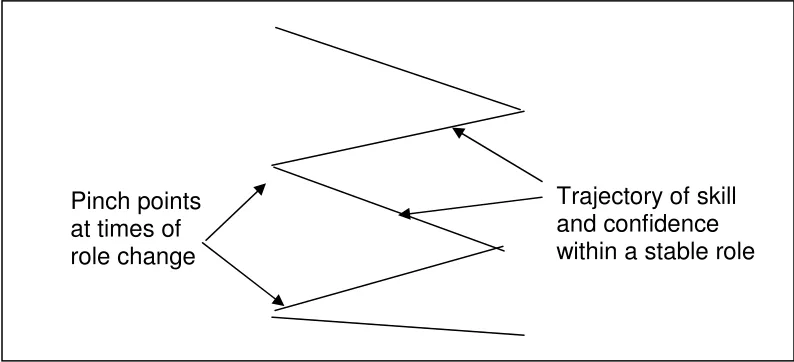
Figure 1: the relationship between skill, confidence and role stability
The straight lines represent the steady gain in skills and confidence someone
experiences when their role remains stable. The pinch points at the turns
represent the sudden pressure generated when a new role is adopted or
assigned, and when the individual has a lack of familiarity with the problems and
issues encountered, new knowledge and skills are required. In time, the new
skills are developed, the context becomes more familiar, and the steady increase
in confidence, knowledge and skills resumes. Due to the demands on
institutions, changes in role expectations of individual staff are likely to happen
more frequently and to more people, with resultant increase in stress and loss of
confidence.
Changes experienced in academic roles are widely recognised. There have
been explicit moves on the part of higher education institutions in recent years to Pinch points
at times of role change
analyse the academic role through systematic processes such as the Higher
Education Role Analysis (HERA). Processes such as HERA attempt to specify
and define the roles undertaken by academics and grade them against a national
framework. Such an approach acknowledges and articulates the breadth of tasks
and responsibilities required of those working in HE, and can assist in ensuring
equal pay for work of equal value across institutions.
The changes and pressures outlined above are in addition to the tensions
created when staff start work in higher education and change from being
primarily a practitioner in art, design and media to a professional role which
encompasses teacher/academic/researcher. Individuals begin to alter their self
definition and to understand the implications of such a transition. This can be a
difficult and uncomfortable process, particularly when the context of higher
education and the academic role is perceived to be in flux. The “psychological
contract” is the term used to describe what staff believe they are employed to do
by their institution; the psychological contract does not necessarily reflect the
detail of the legal contract or job description. This can be a source of particular
dissonance for staff, given the existing tension discussed above between the role
of practitioner and the role of teacher, and inherent instability in the boundaries of
the role of an academic due to sectoral changes. In art, design and media
education, this is exacerbated due to the large numbers of part time and hourly
paid staff who combine practice with teaching. The contribution of part-time staff
professional practice brings to the curriculum. However, it also makes
communication across groups of staff much more difficult and reduces the
opportunities to develop a community and network which can support staff in
their role. Furthermore, due to high numbers of part-time staff in art, design and
media, there is a reciprocally lower proportion of full-time staff to manage the
ever increasing workloads generated by the initiatives discussed above which
are outside the remit of hourly paid staff.
Part-time staff can experience particular stress in their roles because, in addition
to the factors already discussed, they may be provided with lower levels of
support. They may also have limited opportunity to participate in staff
development activities, as a result of their personal working patterns and due to
lack of financial support from the institution to enable that engagement. This
problem was recognised in the work of the 2005 Art and Design: Enabling Part
Time Teachers (ADEPTT) project, supported by the Fund for Development of
Teaching and Learning Phase 4 (FDTL4), which created a website with
structured and practical model for supporting part-time tutors (available at
<http://www.adeptt.ac.uk/>).
There appears to have been little significant analysis of the ways in which
support for academic staff in their more complex and fragmented roles can be
improved, although the 2001 Association of University Teachers (AUT) report
reconsidering the roles of those involved in supporting academics. For example,
where resources permit, the role of administrative staff and their relationship to
academic functions may well be part of the solution to the increasing tensions
within the sector. Further review of the location of administrative and technical
staff and their increasing professionalisation and parity with academic staff within
operational contexts may be essential. Similarly, debates around the role and
responsibilities of technical support staff have been taking place for many years
and the technical demonstrator role can be a vital bridge between support staff
and teaching staff in relation to the student learning experience. However, both of
these solutions assume a staffing budget which enables an increase in the
number and status of administrators and technicians, and in the experience of
many departments, this is unrealistic.
Thinking about Solutions
The purpose of this chapter is to suggest some of the ways in which individuals,
departments and institutions can mediate the negative impact of the changes and
the working context of higher education, and find productive ways of working
which provide personal satisfaction as well as fulfilling the educational, social and
economic functions of higher education. Becher and Trowler note that:
Academics in general, and those in the UK in particular, are struggling to
hold on to values and practices from the past….These will include not only
negativity and resistance…but the enthusiastic adoption of change in
(Becher and Trowler 2001: 16)
We recognise both positions indicated in this quotation, and the rest of this
chapter will be concerned with how to promote ways of working which are
satisfying for individuals and effective and efficient for institutions.
Faced with a working context we have described as “supercomplex”, in which the
range and type of tasks that may be expected of academic staff in any one day
or week can be multiple, diverse and difficult to predict and plan for, what are the
options for action? How are individuals to keep their sense of self?
A number of responses can be seen on the part of academics as a means of
coping with, or making sense of, the role. Where these responses are adaptive
(i.e., the individual tries to cope without aiming to change either the environment
or themselves), these responses can have negative repercussions for the
individual and for the organisation, with a consequent perceived or actual loss of
self-control and self-direction. In these circumstances, individuals feel alienated
from the core values and identities they hold as academic-practitioners and find
themselves in situations that seem to fracture their sense of self identity and to
generate feelings of anger, frustration and loss.
Such reactions are made more understandable when they are put into the
context of what we might call the “utopian perspective” of academic work. This
Utopia is located in a mythical past, when academic life is believed to have
allowed time for practice, reflection, teaching and research and where, in
experience of a small number of staff when only an elite minority of the
population entered higher education. However, if the higher education system
had stayed as it was until the end of the 1960s, it would be of a size that most of
us would not have jobs within it! The juxtaposition of this folk memory of a
simpler, happier life with the current complexity and financial and quality
pressures of higher education adds to feelings of loss of power and
estrangement.
These feelings of loss of power and being unable to recognise ones personal
values in the work of the institution are not minor problems. Fulfilment at work
gives the individual a sense of ownership and effectiveness which is of benefit
both to the individual and the institution. In consequence, positive energy is
generated and available in the working context. We can see examples of how
this ownership concept still engenders a positive experience in HEIs through, for
example, ways that course teams operate effectively together.
However, strategies for survival can resist institutional drivers for change where
dissonance exists. In such circumstances teams can establish a discrete set of
values and shared meanings to secure enjoyment at work at the level of the
team. This is one of the contexts in which “situated learning” occurs, as
described by Lave and Wenger (1991) in their concept of “Communities of
Practice”. Through ‘”legitimate peripheral participation” in a community of
practice, a new member of staff gains the knowledge and practices they need to
Wenger (1998) to be a highly effective and efficient way to share knowledge and
to ensure practices are carried out according to local norms. It also creates a
cohesive, supportive community which can provide individuals with the
companionship and enjoyment in the workplace that they need. Communities of
practice can provide a sense of belonging and be a repository of shared
knowledge, providing individuals with security and identity whilst also enabling
tasks to be undertaken and accomplished more speedily. They can provide a
basis for the rapid exchange of knowledge and ideas (as described in the 2006
report by Knight, Tait and Yorke on professional learning which highlights the
primary role of situated learning).
However, the downside to departmental culture being transmitted through
communities of practice is that existing patterns of behaviour and interpretations
and responses to situations may be reinforced and legitimated, and in times of
rapid social and institutional change these responses may be inherently
conservative and therefore in fact do not help individuals and teams make the
most of the current and future environment. Interpreting a new situation within
known and assumed paradigms can be an effective, if implicit, method of
resisting change. In these ways the stability of the community of practice can be
a way for staff to cope with complexity and stress. However, it can also contribute
to work overload and stress by not enabling individuals to develop productive
new ways of being and working in the higher education environment, contributing
Another coping strategy can be to simply withdraw, with a consequential loss of
individual and institutional energy. This may be seen in a spectrum of
responses, from a pragmatic approach to dealing with issues and problems as
they arise, to a ‘jobsworth’ mentality that throws up a defensive cordon around
the individual who refuses to act outside narrowly set limits. Another recognisable
pattern is for individuals to focus their attention on research, as a task which (at
the time of production though not at the time of evaluation) is relatively free from
institutional interference and in many cases can be conducted independently of
colleagues and away from the office. This route has the added advantage of
also offering a path to promotion and greater independence, so it is very
understandable when staff chose it as a way out of the messiness of institutional
life.
These can be understood as typical responses to situations in which individuals
feel powerless and isolated. As discussed above, the sense of powerlessness
can be mitigated by a re-assertion of control within narrowly drawn or restricted
limits, or even by a partial or complete withdrawal from the perceived space of
conflict and source of stress. The isolation can be dealt with through the creation
and iterative reinforcement of bonds with a smaller community, formed and
focussed around a particular definition or version of practice. Such communities
can negotiate uncertainty and the unknown through the mutual reinforcement of
their own narratives which present versions of the world in which they operate.
divert and dissipate energy within the team and organisation. Staff can feel
disempowered, disengaged and unable to control their own work with a
consequent loss of efficiency to the institution as a whole.
In the academic context this can be played out as a scenario in which, for
example, groups of academic staff perceive certain tasks as falling outside their
role: for example, student recruitment or admissions, writing references,
administrative work such as filing or distributing assessment feedback or tutorial
records including a whole complex of demands often characterised collectively
as ‘admin’. This work can therefore be described in terms that reinforce it to
other members of the group as onerous, additional, time-consuming and
ultimately stressful. Alternatively, certain factors can be recognised and
naturalised as specific sources of difficulty or as irrelevant to the key focus of the
role: perhaps the students are perceived to be not as able or as focused as they
once were; perhaps management, often characterised as “the Other”, is seen to
make ever greater and more unreasonable demands; perhaps legislative
pressures are seen to impose requirements such as Health and Safety
compliance, risk assessments and so on.
There is a need to find new ways of conceptualising working relationships and
structures that distribute the workload of academic staff and find better ways to
share expertise within our institutions. We will consider this from two
perspectives: what can be done by the individual lecturers, and what can be
Action at the Individual Level
The most significant actions an individual can take to be effective, to have a
sense of self-efficacy in an environment, and to be content at work, are to learn
as much as they can about the environment, to identify and undertake routes to
develop the skills necessary for that environment, and to establish support
networks at work. For people already under time pressure these may seem
unhelpful suggestions, but the investment of time in professional development,
learning about the environment and building good relationships at work have a
rapid and profound return in terms of sense of restoration of a sense of control
and autonomy and release of stress, resulting in better motivation and capacity to
manage time and tasks.
For these reasons, it is worth investigating new staff programmes that an
institution runs, such as a Postgraduate Certificate in Learning and Teaching if
one is available. There may be other forms of professional development
available that are relevant to your role, and the department or institution may also
have formal systems to provide you with a mentor. If none exist, building an
informal relationship that provides mentorship is very valuable. The institutional
website is worth searching for information about services available and activities
Ensuring participation in the academic community as much as is possible is
always worthwhile. Communities are sources of considerable amounts of
informally exchanged information, as discussed above, as well as sources of
friendship and support. Getting involved with departmental and institutional
projects is an excellent way to become better known to your colleagues and get
to know them better. All these suggestions are founded on the belief that
personal networks and relationships are key to contentment at work and to
information exchange, that professional development activities increase
confidence and effectiveness and decrease stress and that the more you know
about your environment, the better informed your decision and actions will be.
It is also worth identifying and reflecting on your own values and the extent to
which they coincide with those around you, amongst your immediate colleagues,
in the wider department and in the institution. Finding areas of shared values are
the ground on which to build relationships and trust. Being clear about areas of
divergent values will help you manage these areas, or else focus on a move to
employment or area of practice that is more clearly aligned with your personal
values.
By and large, these actions and pathways are established within institutions and
so provided a staff member can gain access to the necessary services and
resources they are not contentious. The remainder of the chapter will be
accompanying stress experienced by individuals, as here it is far less clear or
straightforward what actions can be undertaken.
Action at the Institutional Level
We will explore the idea of co-creation, a model of organisational learning that
emerged within business settings as a response to the difficulties organisations
face in releasing the creativity and energies of staff working within structured,
hierarchical and complex environments. John Winsor (2006:17) describes
co-creation as ways of working collaboratively and creatively to bring about
innovation, claiming that linear working methodologies and hierarchical structures
are insufficiently organic, flexible and adaptive to respond to the conditions of
change. Co-creation is by no means an original concept. However it does bring
together a number of working models and approaches that challenge
organisational structure, but more importantly, organisational culture. The chief
problem for organisations that Winsor poses is how to innovate, quickly and
effectively. Learning to communicate in qualitatively different ways is perceived
as critical to the innovation process. Winsor discusses the need to develop the
concept of dialogue within organisations: to re-examine communication methods
in such ways as to build open, trusting and intuitive forms of communication.
Winsor suggests this is the only way to increase the likelihood of expertise and
ideas being shared across an organisation. Developing the right kind of
communication and it is also an opportunity to re-think the proximities, types and
range of expertise within an organisation.
Areas such as theatre and community self-build have long histories in using
co-creation to exploit co-operative, performative and improvisation strategies to
fundamentally change the process and arguably, the reception of creative work.
In devised theatre for example, there is only a simple outline structure and core
idea from which actors, director, writer and production team co-write and direct,
allowing the script to emerge as ideas are tried and tested through improvisation.
Self-build schemes such as those pioneered by Segal and Habraken in the
1970s were based on the concept of flexible building systems that enable the
future occupants of the scheme to construct housing in ways that are specific to
their needs. In both examples, traditional professional roles are conceived
flexibly: actors directly assist the writing process, the architect becomes facilitator
and householders become producers rather than passive consumers of the built
environment. In these examples, the co-creation process can be seen as one
which is dependent on specialist skills and knowledge but wherein historical
hierarchical constructs of production (and consumption) are fundamentally
challenged and problems and decisions are owned and distributed within teams.
To return to examples of co-creation used in business, the advertising agency
Mother (www.motherlondon.com) uses the concept of ‘the table’ as a metaphor
a working space for all functions of employee whether copywriter, finance, design
or print production, and all grades of staff, including the partners of the firm.
Although the original concept of the table grew from an evolving and limited
working space, the company saw the table as a vital means to bring about rapid
dialogue between staff and perceived this to be essential for creating an
environment of innovation. ‘In a larger, philosophical sense, when things go
wrong in most companies and departments, it’s usually because people start
thinking that only one thing is their job, like making a rivet. When you sit at one
table, you see the whole picture…you’re making an airplane’ (DeFlorio 2006: 24).
‘The table’ concept might pose significant logistical and cultural difficulties within
many organisations. However, the essence of ‘the table’ concept is that, by
sustaining connectivity and channelling problems through multi-disciplinary
teams, problems can be perceived holistically and solutions conceptualised
simultaneously.
The design firm IDEO (www.ideo.com) provides a very compelling case for the
adoption of multi-disciplinary teams, comprising anthropologists, psychologists,
designers, engineers and business specialists so that a complex understanding
of clients’ needs can be quickly and comprehensively conceived. IDEO
describes its approach as a collaborative methodology that simultaneously
examines desirability, technical feasibility and business viability through the use
A further aspect of co-creation is recognition that little genuinely innovative
activity occurs in isolation and an organisation’s ability to harness new
relationships is likely to increase the chances for, and the quality of, innovation.
In business settings there has been something of a paradigm shift in re-thinking
the relationship of organisations to their customers, perceiving consumers to
have a wealth of cultural and intellectual capital as well as vested interest. The
concept of “value creation” from Prahalad and Ramaswamy (2004:5-14)
describes the shift from a “product or firm-centric” view of value, to one which
places value in the context of the consumers’ experience. “As value shifts to
experiences, the market is becoming a forum for conversation and interactions
between consumers, consumer communities, and firms” (ibid). Such a view
re-conceptualises consumers as having a productive and co-creative role in society
and the economy, acknowledging that expert knowledge is distributed both within
and external to the organisation constituting much untapped capital and potential
for innovation. Many of the organisations that have used the idea of
customer-made successfully are among the creative industries, particularly advertising
agencies and product design companies. The design competitions set up by
Nokia and Electrolux exploit the global capabilities of designers and design
students and have resulted in significant new product development for these
organisations. This approach recognises that consumers have diverse and
extensive intellectual capital and insight into their future needs. Prahalad and
Ramaswamy (2004) describe the affects of this model as “value creation,” a
Co-creation with consumers is not synonymous with DIY or personalisation, as these
involve consumers after production decisions are made. While there are many
examples of companies asking consumers to send in their ideas, others have
used the customer-made approach in a rigorous way to bring about innovation.
The use of design contests for Nokia’s Concept Lounge (2005)
(<www.designawards.nl>) resulted in the wristband phone, the ‘Nokia 888’ and
Electrolux’s Design Lab (<www.electrolux.com/designlab>) now in its 5th edition
receives many thousands of entries each year for new product concepts.
In the context of higher education, co-creation would need to be interpreted as
working much more closely with students, as well as with staff across functions
(academic, administrative, technical, and managerial) in order to develop
solutions and in more time efficient ways. Perhaps the most important way this
would differ from existing committee structures would be to ensure that authority
for decision-making rested with the team that shares a close and comprehensive
insight of the ‘user’ or ‘customer’ perspective (which is unlikely to reside at
committee level). This would require committees and management groups to
sponsor solution-finding groups providing them with the resources, support
structures and reporting opportunities to bring about change. Institutions
accepting the influencing power of such groups would equally consider their
status and value in developing organisational culture and change, alongside
recognition of the professional development opportunities they provide for staff
We would argue that all the illustrations given above already have some parallels
within institutions.
One such example is open source culture, a social and cultural movement
making information accessible across the internet, allowing content to be widely
shared, modified and re-distributed. It can be harnessed within institutions to
improve participation and communication. Wikis, blogs, weblogs and message
boards have stimulated unprecedented peer-to-peer discussion and the sharing
of expertise between communities across the world. Wikipedia
(www.wikipedia.org) provides a first class example of the way in which open
source technology has assisted with the co-creation of the internet based
encyclopaedia which allows expert volunteers to collaboratively create and edit
articles amounting to the 7.2 million articles that exist on the site today. Despite
the concerns that the editorial process of Wikipedia brings with it uneven
consistency and quality, research (Rosenzweig 2006:117-146) suggests that it is
as accurate as other encyclopaedias and ranks among the top 15 most visited
websites.
Other ways co-creation is realised within institutions include informal networks
which spread new ideas and innovative practices organically rather than
hierarchically. The importance of this is recognised by Senge (2001: 17), who
identifies leadership communities within organisations. Similarly, discussing
organisational change, Quinn (2004: 63) sees highly productive communities as
empower themselves leading to what he terms emergent organisations, which
have many leaders rather than one traditional leader.
This is demonstrated in a further example that has been applied in higher
education. World Café is a growing global movement predicated on the
assumption that individuals possess the knowledge and creativity to confront
challenges, to be shared through “a living network of collaborative dialogue”.
The background to the World Café movement, developed by Juanita Brown, is
given on her websitewith resources and case studies
(<http://www.theworldcafe.com/>). The Higher Education Academy’s Change
Academy (http://www.heacademy.ac.uk/ourwork/institutions/change) promotes
this model along with other team-based learning approaches in the belief that
achieving “complex institutional change is a collective enterprise
For our organisations to be effective we need to build relationships with diverse
groups of people to encourage meaningful communication and problem solving.
Complex change requires that we are not afraid to confront problems or
challenges that do not have ready solutions. Change leadership literature puts
relationships and lateral communication at the centre of complex organisations.
In proposing a framework for Leading in a Culture of Change, Fullan
acknowledges that when change initiatives are successful relationships improve
and “if relationships improve, things get better” (Fullan 2001:5). A collaborative
work culture with “purposeful interaction between diverse groups of people”
If fostering genuine relationships and interaction between groups is needed for
successful organisational change, how can the art, design and media sector
contribute to the changing organisational culture within UK Higher Education?
Can the value of working creatively and collaboratively be promoted within a
culture of continuous improvement as our academic learning communities move
away from more formal organisational models?
The cross-disciplinary Creativity or Conformity?: Building Cultures of Creativity in
Higher Education conference (http://www.creativityconference.org/ ) hosted in
January 2007 by Cardiff School of Art and Design at the University of Wales in
Cardiff (UWIC) included specialists from education, psychology, biology,
engineering, literature and health, in addition to art, design and media.
Contributors considered how to promote a creative environment and how to
embed this in HE policy to counteract growing bureaucracy, looking “to defend
academic creativity against the perceived onslaught of red tape and bullying
managers” (Tysome 2007).
Within academic communities, collaborative working and knowledge sharing with
staff from across the institution breaks down barriers and releases energy in an
open and flexible environment. Glasgow School of Art presents itself as a
“creative hothouse” where the diverse community of all staff (including
maintenance, administrative, support, academic and technical staff) and their
The sense of community and emphasis on consultation and dialogue with staff
“to share best practice and find new ways of doing things” are clearly regarded
as key strengths and drivers for change. (www.gsa.ac.uk).
Flow Issue 5 (10-11), (2004) Glasgow: Glasgow School of Art
(http://www.gsa.ac.uk/downloads/publications/Flow%20Issue%205_A3.pdf)
Similarly boundaries are crossed and exciting creative breakthroughs are made
when staff form networks both across institutions and with external agencies and
partners, regionally, nationally and outside the UK. When staff from all the art
and design HEIs in Scotland met to debate enhancement themes, QAA joined
the discussion and responded to innovative developments being reported.
Funded projects are providing alternative opportunities for collaborative working
and creative networks which motivate and engage staff both within and across
institutions. The North West Network Project for research informed teaching and
supporting new academic staff is one example. Formed of six HEIs as part of the
Supporting New Academic Staff (SNAS) strand 3 project based in the HEA, it
specifically focuses on the link between disciplinary research and teaching and in
the context of this project within art, design and media but does not exclude
pedagogic research. The project was an opportunity for a group of staff
interested in research informed teaching to work together and produce sector
wide outcomes. The case Studies can be accessed at:
Writing PAD has proliferated as “a grass-roots movement which has grown and
developed organically” across the UK, principally in 40 institutions in England and
now being extended to Scotland and Wales. This HEFCE funded project has
created a network for staff from across disciplines and roles and provided an
arena for debate and exchange of practice in writing in art, design and media.
Writing PAD has generated a variety of models which can be viewed on:
www.writing-pad.ac.uk
Colleagues in the sector may well recognise some of the working practices
described above within their institutions, drawing on ideas of co-creation and
non-linear organisations discussed here. Task groups, problem-solving sets and
project teams established to work intensively on thematic issues such as
widening participation and sustainability are often cross-departmental and involve
colleagues of differing degrees of seniority. Collaborative projects across HEIs,
and between HEIs, industry and other sectors and agencies, can harness the
potential of working in new team configurations and across traditional subject
boundaries. However, such instances usually arise as a result of a need to take
action on issues that are a source of cross-institutional anxiety, or where the
problem is perceived to reside across a number of departments. Many
institutions remain essentially committed to structures that are reliant on linear
models of communication, including the positioning of students as consumers
rather than active ‘producers’ of the next generation of HE provision. Co-creative
academic teams managing both complexity and bureaucracy. Higher education
should look to the creative industries which are adopting such strategies for
dealing with complexity and change.
Conclusion
Staff in higher education find that expanded roles, rapid change, external
requirements, resourcing pressures and a high level of monitoring contribute to a
stressful working environment. Within art, design and media education, this is
exacerbated by the logistical and identity tensions between being a practitioner
and being an academic, by the high numbers of part time staff which make
communication, developing a staff community and professional development
more difficult, and increase the load on full time members of staff. Some of the
most frequent ways of coping with stress, such as creating an oppositional sub
culture within a team or department, withdrawing from the community or ring
fencing what the individual will and won’t do, increase the difficulties for
individuals and institutions. For individuals, professional development, social
networks at work, and increased understanding of the institution help restore a
sense of autonomy and self-control. For institutions, exploring non-hierarchical
methods of communication, planning and problem resolution across all staff and
students, as adopted by some successful and fast responding creative
Words: 69671
References
ADEPTT <http://www.adeptt.ac.uk/> (accessed 14 August 2007)
Association of University Teachers (2001) Building the Academic Team http://www.ucu.org.uk/media/pdf/h/j/academicteam.pdf
Barnett, R. 2006 Realising the University in an Age of Supercomplexity Oxford University Press, Oxford
Becher, T. and Towler, P (2nd edition 2001) Academic Tribes and Territories:
intellectual enquiry and the culture of disciplines SRHE/OU Press, Oxford
DeFlorio, R (2006) ‘Communication Faster’ in Spark: be more creative through
co-creation,edited by J. Winsor, Chicago: Dearborn Trade Publishing
Fullan, M. (2001). Leading in a Culture of Change, San Francisco: Jossey-Bass
Goffee, Rob and Jones, Gareth (2006) Why Should Anyone Be Led By You?
Harvard University Press
HEFCE (2006) National Student Survey 2006
http://www.hefce.ac.uk/learning/nss/
Henkel, M. (1997) Teaching Quality Assessment, Public Accountability and
Academic Autonomy in Higher Education. Evaluation 3, 1, 9-24
Higher Education Academy (2005) Art and Design: enabling part-time tutors (ADEPTT) 110/02 Final Project Report
http://www.heacademy.ac.uk/3233.htm
Higher Education Academy (200x) Professional Standards Framework for Higher Education http://www.heacademy.ac.uk/professionalstandards.htm
Knight, P.T., Tait, J. and Yorke, M. (2006), The professional learning of teachers in higher education, Studies in Higher Education, 31(4), 319-339.
Lave, Jean and Wenger, Etienne (1991) Situated Learning: Legitimate Peripheral
Participation Cambridge: Cambridge University Press
Lewin, R. and Regine, B. (2000). The Soul at Work. New York: Simon and Schuster
Pascale, R., Millemann, M., and Gioja, L. (2000). Surfing the Edge of Chaos. New York: Crown Business Publishing
Prahalad, C. K. and Ramaswamy, V. (2004) Co-creating Experiences: the next practice in value creation, Journal of Interactive Marketing, vol18, No3, 5-14.
Quinn, R. E., (2004). Building The Bridge As You Walk On It, San Francisco: Jossey-Bass
Rosenzweig, R (2006) Can History be Open Source? Wikipedia and the future of the past. Journal of American History, Vol93 117-146
Seel, R., (2005). Culture and Complexity: New Insights on Organisational
Change. [online] Available at: http://www.heacademy.ac.uk/3870.htm
Senge, P., Kleiner, A., Roberts, C., Ross, R., Roth, G., & Smith, B. (2001). The Dance of Change. The Challenge of Sustaining Momentum in Learning
Organisations. London: Nicholas Brealey Publishing
Trow, Martin (1974) Problems in the transition from elite to mass HE Policies for HE, Paris, OECD
Tysome, T., (2007). ‘Creativity campaign to attack red tape’ in The Times Higher
Education Supplement, 12 January,[online]. Available at:
http://www.thes.co.uk/current_edition/story.aspx?story_id=2034796
[Accessed 5 May 2007]
Universities and Colleges Union (2006) Bureaucracy is killing Higher Education Warns Poll
http://www.ucu.org.uk/index.cfm?articleid=2139&from=1679&start=21
Universities and Colleges Union (2007) High Stress Levels in Colleges and Universities ‘caused by management culture’
http://www.ucu.org.uk/index.cfm?articleid=2325