ISSN: 2334-2986 (Print), 2334-2994 (Online) Copyright © The Author(s). 2014. All Rights Reserved. Published by American Research Institute for Policy Development DOI: 10.15640/jea.v2n2a9 URL: http://dx.doi.org/10.15640/jea.v2n2a9
Energy & Environmental Efficiency with Full Use of the Sun in a Sustainable
Architecture Residence
Miguel Edgar Morales Udaeta1, Claudia Terezinha de Andrade Oliveira2, José Aquiles Baesso Grimoni1 and Fernanda Antonio2
Abstract
The objective in this work is to characterize a zero energy and energy efficient solar-house, demonstrating that it can be the basis for sustainable development, where sustainability particularly is measured by the contribution to mitigate global warming, that’s means reducing GHG emissions. In this sense, the systematization of solar-house appears with guidelines that guide its design under the end-use of electricity, environmental conditioning, application of solar systems and other equipment to ensure energy and environmental efficiency in its operation. Quantitative evidence appears securing the residential sector of Brazil as a case study, analyzing the Brazilian energy system and use of electricity by the residential sector, with concomitant evaluation of associated emissions of greenhouse gases. Moreover, it has been as solar house prototype verification as the EkóHouse identified model. The estimated reduction of GHG emissions is related to the use of electricity, and accounting for these emissions are considered photovoltaic generation to replace the power grid, and the adoption of energy efficiency measures. As a result this study presents a model of solar-house; defining strategies for energy and environmental efficiency in dwellings, the accounting of emissions avoided and the analysis of the benefits obtained by the application of solar-house model on a large scale in Brazil. To estimate impacts of these solutions on a larger scale, it is assumed as part of the case study Southeast of Brazil, and is considered the adoption of energy efficiency measures and PV generation to 50 % of homes in this area. The accounting shows a potential to prevent up to 355 tons of CO2. We conclude that solar-house modeled to have zero annual energy consumption and to be energy efficient, contributes to a low environmental impact and to sustainable development throughout mitigation of global warming by reducing GHG emissions.
Keywords: Solar-house, PV microgeneration, GHG emissions, Energy efficiency, Sustainable development, Zero-energy architecture
1. Introduction
The traditional economic development model considers the environment an inexhaustible source of natural resources and disposal, with unlimited capacity to receive waste generated by human activity. Added to this inefficiency and wasteful use of natural resources, especially energy, which is one of the essential inputs for the provision of the basic conditions of human life. This model and unbalanced operation and use of these resources arise today's environmental problems.
1
GEPEA/EPUSP (Polytechnic School at University of São Paulo). Email: [email protected]
2
It is interesting to emphasize that this study in its broadest sense is put into the context of a development project of larger scope. This project aims to initiate the development of national jurisdiction (in the case of Brazil as a case study of sustainable solar house as the prototype for EkóHouse), the design and construction industry for a Zero Energy Building (ZEB), with technology itself and appropriate to Brazilian climatic conditions. According to Torcellini et al. (2006), ZEBis defined as a building that produces, through local sources, the energy it consumes, considering an annual review (here understood as sustainable energy residence). The ZEB can be connected to the public network and integrate a system of distributed generation of electricity. Preferably, the energy comes from renewable sources and is produced, for example, through the building of integrated water heaters by solar irradiation, small-scale facilities for the production of wind energy, photovoltaic panels among others.
Another concept that is similar to many of the ZEB is Nearly Zero Energy Buildings (NZEB), defined by the European Council for an Energy Efficient Economy, according to which NZEB is a building with a high energy performance. The amount of energy required for its operation must be supplied by energy from renewable sources generated in the building or close to it (ECEEE, 2009). Being that as part of this project, the EkóHouse prototype was developed as housing that uses the sun as a source for power generation and strategies for maintaining environmental comfort and energy efficient operation in environmental terms. This prototype was developed by Team Brazil, a partnership between the University of Sao Paulo and the Federal University of Santa Catarina, to participate in Solar DecathlonEurope (SDE) competition, in 2012.
It is important to highlight that this study aims to determine the contribution of housing oriented to sustainable development in mitigating global warming by reducing GHG emissions.
Therefore, it is theorized a solar-house model which, like the EkóHouse prototype, proposes full use of the sun as much as an energy source as the architecture for the maintenance of environmental quality with high energy efficiency in its operation. Moreover it has been the aim of deepening the analysis and studies on issues concerning the definition of guidelines for housing projects - solar, zero annual energy, and also the GHG emissions that can be avoided by the adoption of energy efficiency measures, full use of the sun and how much power and renewable resource for the planet.
Therefore, it is also a good characterization of focused energy efficiency in the sense that is has to do with the relationship between the amount of energy used in an activity and that available for its completion. Assuming this sense that the promotion of energy efficiency includes optimizing transformations, transport and use of energy resources, since their primary sources to your advantage.However, should it be considered as basic assumptions, the maintenance of conditions of comfort, security and user productivity, contributing additionally to improving the quality of energy services and the mitigation of environmental impacts (MMA, 2013). Moreover, and most simplistic way one can say that energy efficiency is to obtain a service with low-energy. Therefore, a building is more efficient than another when it provides the same environmental conditions with lower power consumption.
On the issue of sun and with respect to its full use, i.e. source and natural and rational appeal, pleasantly and him being the most important environmental reference on earth, it can be anticipated that full use is, for example, the use of solar irradiation for heating consumption and passive space heating water, for electricity, for example, using photovoltaic modules, for natural lighting, and passive space heating by radiation (heating or cooling and fuel production).
2. Context for Analysis in a Country
The buildings consume about 44 % of the electricity generated in Brazil (BRASIL, 2011), and the residential sector is responsible for 26% of total electricity consumption in the country. Brazil is a developing country, and the trend is that the demand for energy grows along with the country. To meet the growing demand for electricity in Brazil, as the Brazilian 2021 energy plan (PDE 202 - Plano Decenal de
Expansão de Energia 2021) forecast (Brasil, 2012), will require a new installation of hydroelectric,
thermoelectric and nuclear Angra III, which will result in significant environmental, social and economic impacts. Measures adopted by the government to minimize the effects of the global economic crisis, such as reducing the Excise Tax and interest has stimulated the purchase of home appliances by the population and contributes to the increase in energy consumption in the residential sector. Furthermore, it is important to pay attention to initiatives like the Light for all programs, which aims to reduce pent-up energy demand in the country. The combination of these factors contributes to the demand for energy will increase in the next years by the residential sector, it shows the need to adopt energy efficiency measures for the population to have access to consumer goods and improve their quality life in an efficient and sustainable manner.
The Brazilian energy matrix is considered clean. The National Interconnected System(SIN), which has approximately 96% of the production capacity of the country's electricity, 67% of electricity is generated from hydropower, and another 12 % are generated in small hydropower (SHP), moved plants biomass and wind. Conventional thermal plants participate with 14 % in electricity generation in the country. Studies of the Energy Research Enterprise (EPE) shows enormous potential for the exploitation of solar energy in the country. The average annual irradiation varies between 1,260 and 1,420 kWh/m²/year (EPE, 2012), values that are significantly higher than most European countries. The solar photovoltaic distributed generation is an alternative for local electricity generation. Solar energy can thus be adopted as an alternative and renewable source to contribute to supply this growing demand for energy expected for future scenarios in Brazil.
Besides generating power through clean, energy efficiency measures can and should be adopted to reduce the expected increase in demand for electricity.
The ProcelEdifica estimates that the reduction in electricity consumption can reach 30% with the implementation of energy efficiency measures in lighting systems, air conditioning and architectural interventions in the envelope with respect to existing buildingsand this reduction may reach 50% in new buildings (BRASIL, 2011). The PDE 2021 points that measures of energy efficiency can contribute to conservation of 9.2% in electricity consumption by the residential sector by the year 2021, considering only replacing equipment with more efficient and Brazilian households (BRASIL, 2012).
3. Sustainable Solar-house Architecture
It is adopted as a benchmark for sustainable housing unit ZEH one that is based on the use of the sun as much to generate the energy needed for its operation as the provision of environmental comfort. In addition, this ZEH incorporate systems and solutions that contributes to an efficient operation, easy maintenance and proper disposal of its components to the end of his useful life. As a definition of an architecture that aims at sustainable development, this study takes the concept adopted the National Action Plan for Energy Efficiency (BRASIL, 2011).
“The architecture that fits into the sustainable development project is one that, from the fundamental precepts of this new paradigm, modifies the natural environment in order to produce a suitable to the local climate, energy efficient and low maintenance cost, comfortable space necessarily causing low environmental impact."
The concept of energy efficiency is adapted to the effect that a building is more efficient than another when it provides the same environmental conditions with lower power consumption (LAMBERTS, 2007). Thus, this study features a ZEH -oriented sustainable development and operating with energy efficiency through the use of the sun for power generation and through passive strategies for environmental conditioning.
The effects of the sun in architecture have a role associated with health, there is a concern about the quality and regularity of heat stroke, and also to allow the sunlight in the cold periods and avoid it during periods of heat. Below, there are some aspects of the use of the sun in architecture, having in mind the energy efficiency exposed. The sun can be used as a resource for passive heat gain, for natural lighting and to facilitate cross ventilation inside buildings. However the incidence of radiation should be controlled so as to occur in good times and be blocked or reduced when necessary.
3.1 Solar Orientation and Geometry
Since the position of the earth relative to the sun changes throughout the year, a building will be exposed to different levels of solar radiation and climate change as the seasons change, this is also an aspect to be considered by architects in project development. Several studies (OLGYAY, 1998; CORBELLA 2003; SERRA, 1999) indicate that geometries that result in more elongated north and south facades with orientation can make better use of the sun throughout the year.This occurs because in the summer, when the sun is more the pin falls with less intensity on the faces of oriented north envelope (for the southern hemisphere) than in oriented east and west sides. In the winter, when the sun is lower, the impact on oriented faces north is higher than the driven east and west sides. Thus, this geometry is more favorable to increase earnings passive heat during cold periods and avoiding this earns in warm periods inside the buildings, as shown in Figure 1.
3.2 Envelopment
Figure 1: Solar Orientation and Geometry
Source: Own source, 2013.
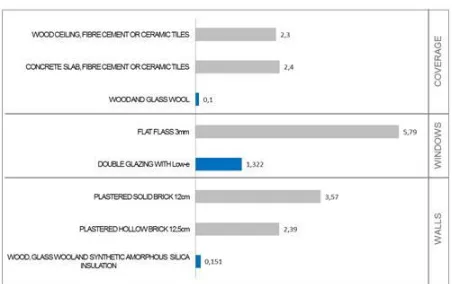
It is important to pay attention to all surfaces of closing a home, to avoid unwanted thermal gains or losses. The heat loss in a house without insulation happen from 25% to 30% in the roof, between 20% and 25% walls, 20% to 25% due to the renewal of the air, between 10% and 15% in the areas of openings between 7% and 10% from the floor and 5% to 10% due to thermal bridges (DURAN, 2011). Figure 2 illustrate the thermal transmittance values for different sealing materials widely used in Brazilian housing units. In that sense the graph of figure 2 indicates the difference in the thermal performance of materials routinely used in the construction of single family dwellings in Brazil and material applied to the prototype taken as reference ZEH for this work (PROJETO EKÓ HOUSE, 2012); (LAMBERTS, 1997). The level of thermal transmittance indicates the property of heat transfer material, so the higher the thermal transmittance, lower the performance of the insulation material.
Figure 2: Materials Thermal Transmittance Values (kW/m²K)
The openings also play key role in natural lighting indoor environment, which in turn plays a key role in the visual comfort of the occupants of a building, and the proper use of sunlight can mean energy savings and visual comfort of the highest quality. Thus, it is important that projects have artificial lighting based on the complementation of artificial light, maximizing sunlight rather than replace it with artificial lighting.
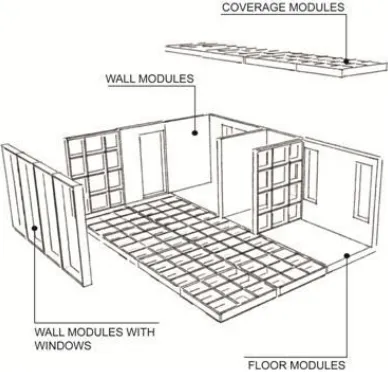
For this study, the envelope of ZEH taken as reference should use pre-made systems, resulting in an assembly process that residence in place of the conventional construction methods. This strategy allows working with a structure bearing panels floors, walls and roof, can be modified to use different materials and strategies, this structure allows an adaptation to different climates. This feature allows the model to be ZEH adaptable. In addition, prefabricated systems tend to generate less waste, streamline the construction phase and to facilitate maintenance.
Preview the stage of demolition or disassembly, proposing solutions that facilitate the separation of different materials also contributes to that they can be properly disposed of, reused or recycled at the end of the useful life of the building. Figure 3 shows the modular system of a solar house.
The use of materials available in nature, near the construction site and do not require industrial processes have low levels of embodied energy and reintegrate easily to nature without causing major impacts to the environment. Materials are low-tech and often do not meet all the technical requirements of a building. It then becomes necessary to use industrial materials, such as concrete, steel, aluminum and glass. In this case one must pay attention to materials and systems that enable a more rational use of resources.
Figure 3: Modular System of Forming an Adaptive Solar House
Source: Own source, 2013.
A ton of dry wood consumes more than 1.7 tons of CO2; Carbon incorporates 0.48 t and 1.22 t return oxygen to the atmosphere (CBCS, 2009). Prioritize the use of materials that may be friendlier to the environment and presenting technical performance suitable for buildings of the size of single family dwellings is a premise of solar-house.
When this material is reincorporated into the production chain, the need to extract raw materials of nature is reduced. Specifics such as these should be considered at the time of opting for certain materials.
4. Aspects of Residential Energy Use of the Sun
The use of the sun, in the vicinity of housing as already evidenced can be varied to give rational forms on either their nature or on indirect effects. In this sense a residency in general and for millennia as the final use for welfare of human being can benefit from solar energy by producing electricity through photovoltaic systems and heating by means of heating systems.
4.1 Solar PV Generation
The solar photovoltaic generation in a single family residence can happen in two ways: through an autonomous system, and in this case a storage system for energy generated is necessary; or form connected to the network, where the excess energy generated is shared in network and, in periods where there is demand for energy but the PV system is not generating, the residence uses energy provided by the network. For model ZEH adopted for this study, we consider the second alternative, where the ZEH connects and exchanges energy with the network.
The generation of the PV system may vary depending on the cell type used (crystalline Silicon, Hydrogenated Amorphous Silicon, Cadmium Telluride, among others), and depending on the levels of radiation to which the system will be exposed.
The architectural design can contribute to greater efficiency by providing for the placement of photovoltaic modules on the faces of the envelope with the highest incidence of sun, or even through the use of devices which adjust the tilt or move the solar photovoltaic system, adapting it to better position over the year. The support and photovoltaic module systems must be integrated into the architectural design. Besides said, the architectural design should also preview spaces suitable for other equipment forming part of the solar photovoltaic system, as inverters - to convert the energy generated from direct current to alternating current - as well as provide space and appropriate protections forthe electrical wiring, terminals fuses and circuit breakers.
The interconnected system network has the advantage of using the envelope of the ZEH to install the photovoltaic system. To generate energy locally, avoiding losses are occurring in steps of transmitting energy distribution generated in centralized plants. Furthermore, the market has provided new ways of integration of photovoltaic systems in buildings, and the photovoltaic modules can, for instance, function as a cover, being integrated with window panes or facade coating.
4.2 Solar Systems for Heating Water
The use of the sun as an energy resource can also happen through the use of solar radiation to heat water in a ZEH. The water heated by the solar collectors is stored in a tank (boiler), which can be used for bathing and also for the thermal conditioning of the environment by, for example floor heating system.
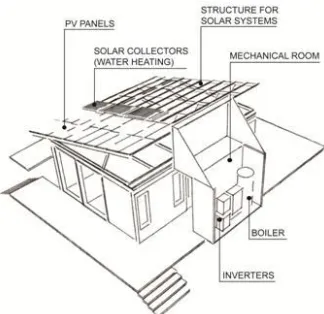
Whenever possible must position the shell and boiler so that the system works by gravity, thus avoiding the need for pumping water and making it more efficient. Figure 4 illustrates the PV and Hot water systems of our solar house model.
Figure 4: Solar Systems for a Solar House
Source: Own source, 2013.
5. Electricity use in Brazilian Household
In Brazil, the residential sector is responsible for about 26% of electricity consumption. The residential evolution energy arises primarily from the growth in the number of households, changes of possession and use of electrical appliances used, the power consumption of each device and the evolution of energy efficiency ratings of the same. In the residential sector, we also highlight the use of liquefied petroleum gas (LPG) and firewood, these being intended mainly for cooking food and heating water for bathing (BRASIL, 2012) services.
By the year 2021 is estimated to increase the stock of equipment in homes due to the increase in the number of new connections to the network and increasing household income and its distribution better. There is also a projection of this stock of equipment will be replaced with more efficient, resulting in a reduction in the average electricity consumption of this stock, as shown in Table 1. In the case of electric shower, we considered the acquisition of more powerful equipment by Brazilians, a result of increased income (BRASIL, 2012).
Table 1: Average Consumption of the Stock of Equipment (kWh/Year)
Equipment 2012 2021 2011-21 (% year)
Air-conditioning 449 414 -0,9
Refrigerator 345 314 -0,9
Fridge 512 450 -1,3
Television 148 144 -0,3
Lamps 38 17 -5,7
Electric shower 483 501 0,4
Laundry machine 484 62 -0,8
Source: BRASIL, 2012
Figure 5: Participation of Equipment in Residential Consumption
Source: Own source based on PROCEL, 2007.
The Brazilian average residential consumption is 158.9kWh/month (EPE, 2013), much lower than in developed countries. A U.S. resident, for example, consumes on average 958kWh/month (EIA, 2011) and average consumption of households in Spain is around 876 kWh/month (IDEA, 2011). This characteristic indicates that there is room for an increase in electricity consumption, which should be driven by the incorporation of home appliances and consumer electronics devices in daily life of Brazilians.
It is important to pay attention to the pent-up demand which contributes to the majority of households surveyed is in the range of lower consumption. With a majority of the population having access to electricity, through government programs like the Light for All program, in addition to the increase in purchasing power, this situation will change and the average consumption of this population should increase.
With respect to water heating, it is estimated a loss of participation of electric showers for water heating, as part of this market will be served by gas heaters and also occur by increased penetration of solar energy for this purpose. In terms of absolute values, there will be growth in consumption from all sources (BRASIL, 2012).
Considering the increase in energy demand by the Brazilian residential sector, it is estimated that consumption will increase by almost 50% from 2012 to 2021, going from 117,088GWh to 173,706GWh. It is also important to note that, in relation to energy losses in the SIN, the reduction is small, from 16.9% in 2012 to 16.1% in 2021. Programs such as the Light for All, through which it intends to pass 63 million homes served by electricity service in 2012 to 76 million in 2021, contributing to the reduction of the suppression for electricity in the country demand (BRASIL, 2012).
5.1 Energy Efficiency in Residential Sector
Taking into account that the efficiency of the equipment inventory steadily increases, thus resulting in greater efficiency in the consumption of electricity, or the replacement of equipment, or dispose of them by the end of its useful life, it is estimated that the residential sector can save up to 17,517GWh, or 9.2% of consumption in 2021 (BRASIL 2012).
Although there is a tendency to increase the power of electric showers, it is considered that there will be replacement of equipment for gas heaters, as well as an increase in the use of solar heating systems, which must be driven by housing programs such as Minha Casa Minha Vida and Energy Efficiency Program by National Electric Energy Agency – AgenciaNacional de EnergiaElétrica (ANEEL). With this, it is estimated that by 2021 the avoided consumption for heating water for bathing can reach 5294GWh. It is expected that by 2014, 1 million households receiving installations of solar collectors, but, as already demonstrated earlier, the largest economy should be the use of gas heaters.
Addition to the expected increase in the efficiency of equipment in residential buildings energy efficiency can also be achieved through design and construction solutions, aimed at the reduction of energy consumption in environmental conditioning and water heating. Projects that adopt passive strategies appropriate, adequate sun exposure and a good use of natural lighting can contribute to the efficient operation of residential buildings and maintaining the comfort of the internal environment, as is found in the ZEH model adopted for this study.
To encourage energy efficiency actions, there are already some mechanisms created by the Brazilian government, such as the Energy Efficiency Law, or Law 10.295/2001, and the increment of PROCEL, and subprogram ProcelEdifica with focus on efficiency of buildings. As goals of Energy Efficiency Act may be cited the development of mechanisms to determine the minimum levels of energy efficiency, and the Constitution, by the Ministry of Mines and Energy, a technical group to adopt procedures for assessing the energy efficiency of buildings and create benchmarks technical indicators of energy consumption of these buildings (BRASIL, 2011).
How ProcelEdifica goals can be pointed out: the training of professionals to the topic of energy efficiency in buildings, expanding the market possibilities in technologies related to energy efficiency; disseminate the theme to sensitize civil construction professionals about the importance of energy efficiency, regulatory the energy Efficiency Act, generating indicators of environmental comfort and energy efficiency for the different sectors, creating standards and support the formation of a database of indicators of energy efficiency in buildings, and promote studies, research and actions to promote housing improvement, especially low-income and hot to include parameters for guidance on energy efficiency in documents such as building codes and master plans (BRASIL 2011).
5.2 Generation and Consumption of Electricity
The SIN is the system of production and transmission of the Brazilian electric power, with a strong predominance of hydroelectric plants. SIN, which holds approximately 96% of the production capacity of the country's electricity. Only 3.4% of the production capacity of electricity is out of SIN, in small isolated systems located mainly in the Amazon region (ONS, 2012).
Hydroelectric plants generate about 67% of the energy of SIN, thermoelectric account for 14%, followed by renewable Biomass, Small Hydro Plants (SHP) and wind parks, which together generate about 12% of energy, nuclear generation participates with 2% and 5% are imported, as shown by the graph in Figure 6. Solar power still has a very low representation in the installed power generation capacity in Brazil, with a generation of 8 MW to approximately 120.973MW generated in total (EPE, 2013).
However, there is a need for exchange of energy between subsystems NIS to meet the demand in different regions of Brazil, as shown in Figure 7, which contributes to the losses in the stages of transmission and distribution of electricity by NIS.
Figure 6: Installed Capacity by Source on 12/31/2011 (MW)
Source: Source: Own source, based on BRASIL, 2012.
Figure 7: Sharing between SIN Subsystems in 2012 (MW)
Source: Prepared from EPE, 2013.
To meet the growing demand for electricity, according to the Ten Year Energy Expansion Plan (EDP) for 2020 forecast expansion of SIN is required. The dams will remain the main source for the generation of electricity in Brazil. However, like most, if not all the water resources of southern and southeastern regions already being exploited, and most of the remaining reserves are in the Amazon, away from population and industrial centers of the country (OECD, 2001), tendency is to build new power plants , plus another nuclear power plant (Angra III).
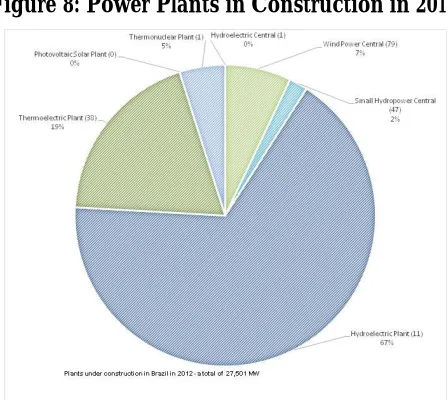
Figure 8: Power Plants in Construction in 2012
This will mean an increase of GHG emissions with their social and environmental impacts. Still, it has been accompanied by pressure from society and NGOs in terms of environmental and social impacts generated by the deployment of new plants, as in the case of Belo Monte Dam. Whereas the logic of sustainable development, future energy demand should be met based strategies focused on energy efficiency measures and the use of renewable sources. The installed capacity of the SIN should increase by 57% from 2011 to 2021, going from 116,498MW to 182,408MW. Figure 8 points out ventures for power generation under construction in Brazil.
It is observed that the main sources in projects under construction in the country continue being hydro and thermal. Among renewables, wind power plants and power plants are the most significant, and there are no new developments for solar photovoltaic generation in construction, and even watching the scene in 2021, follows this source does not appear, even with small participation. Furthermore, the expected generation for projects under construction is currently 27,501MW, and the skyline 2021 the forecast is that consumption will increase by nearly 65 910 MW.
5.3 GHG Emissions Associated with SIN
As already pointed out, it is anticipated that participation in electricity consumption by the residential sector will continue in the coming years. Moreover, the projected increase in energy consumption by this sector indicate that measures of energy efficiency and reduction of GHG emissions from power generation to fuel this sector can contribute significantly to the national scene. Figure 9 illustrates the estimated increase in GHG emissions by the Brazilian residential sector (BRASIL, 2012).
Figure 9: GHG in the Brazilian Residential Sector
This study is based on emissions calculated for the Clean Development Mechanism (CDM) projects approved by UNFCCC factors to be deployed in the country. In Canyon Power Plant project Jararaca Small Hydroelectric, the value obtained from the monitoring system was 0.3273 tCO2-eq/MWh (ATIAIA ENERGIA S. A. CDM-PDD, 2012) for the emission factor of NIS, for the year 2008. In Malagone SHP CDM project, the value obtained for the emission factor of the national power grid is 0.3111 tCO2/MWh (HIDRELÉTRICA MALAGONE S.A., 2012), which is close to the PCH Canyon Jararaca project. For this paper, will be adopted as an average emission factor values calculated for these projects already approved UNFCCC. The value corresponds to 0.3192 tCO2-eq/MWh.
Emissions attributed to solar photovoltaic generation are not from the generation of electricity, but the production of photovoltaic systems. In this case, the study adopts two distinct possibilities, a first in that it assumes that the manufacturer of the PV system will be responsible for offsetting emissions, considering as zero emissions by using this system, and a second in which the end user is liable to compensate the emissions attributable to the production process of these components, and then takes the average value indicated by the IPCC GHG emissions from solar photovoltaic generation.
Brazil presents some advances with respect to solar photovoltaic power generation. The SPC has prepared a technical memorandum intended for the analysis of the insertion of solar generation in the Brazilian energy matrix. In this document the EPE shows huge potential for the exploitation of solar energy in the country and indicates that some incentive mechanisms as discount in income tax and tax exemption for equipment can bring the cost of solar photovoltaic distributed generation to a value equivalent to that practiced by Brazilian electricity distributors. Irradiation over national territory is in favor, with annual average between 1260 and 1420kWh/m²/year. Still, theANEEL approved in April 2012 a resolution establishing rules for mini-generation micro-generation and energy in the country. The purpose is to enable the installation by consumers of solar panels in homes, businesses or industries, and that production from these facilities generate credits, which will be deducted from the bills.
Combining the data obtained from the project to PCH approved as CDM in Brazil provided the data in the report of the IPCC, it is possible to estimate the contribution to mitigating global warming, that energy efficiency measures like those used in solar-house model and generating energy by clean and renewable source can represent when applied on a large scale, thus achieving one of the objectives of this study.
6. Annual Energy Consumption for the Prototype
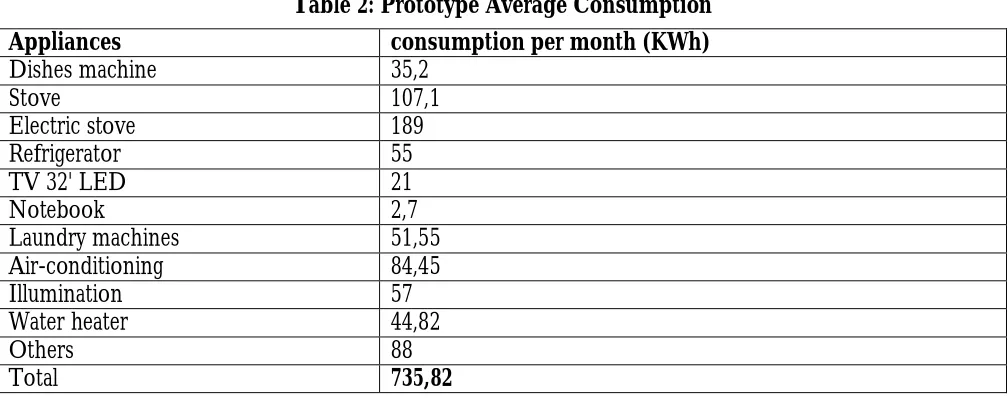
From the data on the NIS of GHG emissions by the same, emission of photovoltaic systems and an overview of energy consumption and GHG emissions from the Brazilian residential sector, you can discuss and analyze the contribution to sustainable development a solar-house as presented in this study. To check this, is taken as a prototype to check the model of the ZEHEkóHouse project. The data of the prototype EkóHouse are academics, coming from computational simulations to estimate values of generation and power consumption that prototype over a year of operation. These simulations were made by team Brazil. Therefore, we set a timetable for the occupation and operation schedule of residence, considering how many people were in the prototype, the frequency of use of equipment, the need for active thermal conditioning and the use of artificial lighting (PROJETO EKÓ HOUSE, 2012).
Table 2: Prototype Average Consumption
Appliances consumption per month (KWh)
Dishes machine 35,2
Stove 107,1
Electric stove 189
Refrigerator 55
TV 32' LED 21
Notebook 2,7
Laundry machines 51,55
Air-conditioning 84,45
Illumination 57
Water heater 44,82
Others 88
Total 735,82
By comparing the simulated average monthly consumption for the prototype, approximately 735kWh, with data on monthly average consumption of households in developed countries - like the United States, which consumes on average 958kWh/month (EIA, 2011) per unit, and Spain where the average monthly consumption is 876kWh (IDEA, 2011), one realizes that even maintaining levels of convenience and comfort that meet the standards of these countries, the prototype proves to be more efficient in energy consumption . Whereas the standard of comfort of Brazilians may be equated to the U.S. in the coming decades, applying strategies for a sustainable solar house, it would be possible with a lower consumption of electricity.
Making a comparison between the prototype and reference data provided by PROCEL relating to energy consumption in homes, considering the replacement of the electric shower with solar heating, the savings in energy consumption could reach about 20% of the total. With respect to artificial lighting, using LED could greatly reduce the energy expenditure for this purpose. According to research PROCEL, in 2005, 62.3% of the municipalities had at least one fluorescent lamp in use. Even assuming that all households possess only fluorescent lamps, energy consumption for lighting could be reduced by five times if it was only used LED. The savings due to the replacement electric shower with solar heating plus the use of artificial lighting to LED could represent a reduction of about 30% in electricity consumption (PROJETO EKÓ HOUSE, 2012); (PROCEL, 2007).
7. ZEH Contribution in the Reduction of GHG
Figure 10: GHG Emissions Avoided in Solar-House
Source: Own source, 2013.
Considering only the replacement of lamps by common economic and trading electric shower for solar collectors for heating water, about 60kWh/month would be saved in each household.
Thus, the avoided emissions due to energy savings could reach 19.2kg and CO2/month for each residence. If this measure were adopted by 50% of single-family housing units in the Southeast, the avoided emissions each month would be between 163 and 192 tons of CO2 for the region in question.
In addition to the emissions reduced by energy efficiency measures and the energy generation from photovoltaic solar power, emissions avoided by excess energy which is generated and returned to the network to meet the demand of other users connected can be estimated. With about 1055kWh/month surplus power generated, the avoided emissions per unit along the lines of solar home would be between 218.7 and 256.4 kg of CO2/month. This surplus energy generated by 10 million housing units could avoid emissions between 2187 and 5264t CO2 per month in the Southeast region of the country, bringing benefits to the environment and the health and welfare of the population.
8. Conclusions
The present study demonstrates that a ZEH to adopt the sun as the main feature can make a decisive contribution to sustainable development, both the rational and efficient use of natural resources and the mitigation of global warming by reducing greenhouse gas emissions. This statement is evident in many aspects of the ZEH model analyzed is the energy efficiency strategies and the use of clean and renewable source to generate its energy, or the full use of a renewable source and free of charge , as is the sun.
The saved energy intensity expressed precisely the efficiency on final consumption of energy, which also contributes to the reduction of GHG emissions to the atmosphere. The share of renewable energy sources is important because, in the long-term dependence on non-renewable sources can be considered unsustainable economically or environmentally. The use of solar energy does not imply social and environmental impacts, as opposed to the installation of hydroelectric and thermoelectric plants.
This study demonstrates that energy efficiency measures help to avoid emissions of greenhouse gases, and the anticipated increase in demand for electricity in the residential sector allows us to perceive the relevance of these measures.
Specifically considering the potential reduction of GHG emissions, which can reach a total of about 3550Mton CO2 in the Southeast region of Brazil by replacing conventional houses modeled on other ZEH and adopting energy efficiency measures, for a horizon 50, it can be said that from the point of view of the CDM, EkóHouse prototype (or its systems if applied alone) could present an additional benefit if applied as CDM. This strategy would help to economically enable its use on a large scale due to carbon credits generated, contributing to Brazil to develop a more sustainable way.
9. Acknowledgements
The institutions that facilitated the execution of the project EkóHouse: Brazilian Electric Central SA - Eletrobrás; Institute of Electrotechnics and Energy, University of São Paulo - IEE / USP; Laboratory of Energy Efficiency in Buildings, Federal University of Santa Catarina - LabEEE / UFSC; Brazilian Team for Solar Decathlon 2012.
10. References
ATIAIA ENERGIA S. A. CDM-PDD. Garganta da Jararaca Small Hydroelectric Power Plant (SHP).Project Activity. Clean Development Mechanism – CDM – Project Design Document – CDD. Version 11.UNFCCC, 2007. BRASIL, Ministério de Minas e Energias. Plano Nacional de Eficiência Energética: Premissas e diretrizes básicas.
Ministério de Minas e Energias, 2011.
BRASIL. Ministério de Minas e Energia. Empresa de Pesquisa Energética. Plano Decenal de Expansão de Energia 2021.Brasília: EPE, 2012.
CBCS. Uso sustentável da madeira na construção civil. São Paulo, 2009.
CORBELLA, O. Em busca de uma arquitetura sustentável para os trópicos–conforto ambiental. Rio de Janeiro: Revan, 2003.
DURAN, S. C. A casa ecológica: ideias práticas para um lar ecológico e saudável. Barcelona: Gustavo Gili, 2011. ECEEE.Net zero energy buildings: definitions, issues and experience:Steering through the maze #2. European
Council for an Energy Efficient Economy, Stockholm, 2009.
EIA.Residential Energy Consumption Survey.U.S.Energy Information Administration.EUA, 2011.
EPE. Anuário Estatístico de Energia Elétrica 2013. Empresa de Pesquisa Energética. Rio de Janeiro: EPE, 2013. HIDRELÉTRICA MALAGONE S.A. MalagoneSmallHydroelectric Power Plant (SHP).CDM Project
DesignDocument. UNFCCC, 2012. IBGE. Censo Demográfico 2010.
IDEA. Análisis del Consumo Energético del Sector Residencial en España. Secretaría General Departamento de Planificación y Estudios – IDEA. Espanha, 2011.
IPCC.Renewable Energy Sources and ClimateChangeMitigation – SpecialReport of theIntergovernmental Panel onClimateChange.IPCC, 2012.
LAMBERTS, Roberto et al. Eficiência Energética na Arquitetura. PROCEL/UFSC. São Paulo: PW Editores, 1997. MMA. Ministério do Meio Ambiente, 2013. (www.mma.gov.br). 2013.
OECD.Economic Surveys: Brazil. Organization for Economic Co-operation and Development.Paris, 2001.
OLGYAY, V. Arquitectura y clima: Manual de diseñobioclimático para arquitectos y urbanistas. Barcelona: Gustavo Gili, 2010. 203p.
ONS.OperadorNacionaldo Sistema Elétrico, 2013.
PROCEL. Pesquisa de Posse de Equipamentos e Hábitos de Usos – Setor Residencial. Rio de Janeiro, 2007. PROJETO EKÓ HOUSE. Project Manual – Relatório Interno. Team Brasil. São Paulo, 2012.
SERRA, R. Arquitectura y climas. Barcelona: Gustavo Gili, 1999.