Counseling and Psychological Services
Dissertations Department of Counseling and Psychological Services
Fall 1-6-2012
A School-Based Intervention for Third Grade Students
A School-Based Intervention for Third Grade Students
Experiencing Test Anxiety
Experiencing Test Anxiety
Laura S. Tenenbaum Georgia State University
Follow this and additional works at: https://scholarworks.gsu.edu/cps_diss
Part of the Student Counseling and Personnel Services Commons
Recommended Citation Recommended Citation
Tenenbaum, Laura S., "A School-Based Intervention for Third Grade Students Experiencing Test Anxiety." Dissertation, Georgia State University, 2012.
https://scholarworks.gsu.edu/cps_diss/69
ACCEPTANCE
This dissertation, A SCHOOL-BASED INTERVENTION FOR THIRD GRADE STUDENTS EXPERIENCING TEST ANXIETY, by LAURA S. TENENBAUM, was prepared under the direction of the candidate’s Dissertation Advisory Committee. It is accepted by the committee members in partial fulfillment of the requirements for the degree of Doctor of Philosophy in the College of Education, Georgia State University. The Dissertation Advisory Committee and the student’s Department Chair, as
representatives of the faculty, certify that this dissertation has met all standards of excellence and scholarship as determined by the faculty. The Dean of the College of Education concurs.
_________________________________ _________________________________ Kristen Varjas, Psy.D.
Committee Chair
Gary E. Bingham, Ph.D. Committee Member
_________________________________ _________________________________ Catherine P. Cadenhead, Ph.D.
Committee Member
Kenneth B. Matheny, Ph.D. Committee Member
_________________________________ Date
_________________________________ Brian J. Dew, Ph.D.
Chair, Department of Counseling and Psychological Services
_________________________________ R. W. Kamphaus, Ph.D.
AUTHOR’S STATEMENT
By presenting this dissertation as a partial fulfillment of the requirements for the
advanced degree from Georgia State University, I agree that the library of Georgia State University shall make it available for inspection and circulation in accordance with its regulations governing materials of this type. I agree that permission to quote, to copy from, or to publish this dissertation may be granted by the professor under whose direction it was written, by the College of Education’s director of graduate studies and research, or by me. Such quoting, copying, or publishing must be solely for scholarly purposes and will not involve potential financial gain. It is understood that any copying from or publication of this dissertation which involved potential financial gain will not be allowed without my written permission.
NOTICE TO BORROWERS
All dissertations deposited in the Georgia State University library must be used in
accordance with the stipulations prescribed by the author in the preceding statement. The author of this dissertation is:
Laura Subbiah Tenenbaum 245 N. Highland Ave. NE
Atlanta, GA 30307 The director of this dissertation is:
Dr. Kristen Varjas
Department of Counseling and Psychological Services College of Education
Georgia State University Atlanta, GA 30303 – 3083
VITA
Laura Subbiah Tenenbaum ADDRESS: 245 N. Highland Ave. NE
Atlanta, GA 30307 EDUCATION:
Ph.D. 2011 Georgia State University School Psychology M.Ed. 2008 Georgia State University
School Psychology B.A. 2004 Emory University
Psychology PROFESSIONAL EXPERIENCE:
2010-Present School Psychology Predoctoral Intern The Atlanta Speech School, Atlanta, GA
2010-2010 Teaching Assistant for CPS 8600: Advanced Play Therapy Georgia State University, Atlanta, GA
2008-2009 School Psychology Advanced Practicum Student City Schools of Decatur, Decatur, GA
2007-2008 School Psychology Practicum Student City Schools of Decatur, Decatur, GA 2006-2010 Graduate Research Assistant
Georgia State University, Atlanta, GA PROFESSIONAL SOCIETIES AND ORGANIZATIONS:
2008-Present Professional Organization of Georgia Educators 2006-Present Student Affiliates in School Psychology,
Georgia State University Chapter
PRESENTATIONS AND PUBLICATIONS:
Tenenbaum, L. S., Varjas, K., Meyers, J., & Parris, L. (2011). Coping strategies and perceived effectiveness in fourth through eighth grade victims of bullying, School Psychology International, 32, 263-287. doi:
10.1177/0143034311402309
Tenenbaum, L. (2011, February). A school-based intervention for test anxious third grade students. Poster presented at the National Association of School Psychologists Annual Convention, San Francisco, CA. Parris, L., Varjas, K., Meyers, J., & Tenenbaum, L. (2011, February).
Investigating suburban and urban high school students’ perceptions of cyberbullying. Presentation presented at the National Association of School Psychologists Annual Convention, San Francisco, CA.
Tenenbaum, L. S. & Parris, L. (2010, March) Coping strategies and perceived effectiveness in fourth through eighth grade victims of bullying. Poster presented at the National Association of School Psychologists Annual Conference, Chicago, IL.
Deming, L., & Tenenbaum, L. S. (2010, January) “Stop, drop, & roll”: An intervention to relieve test anxiety in elementary-aged children. Presented at The City Schools of Decatur Celebration of Professional Learning Conference, Decatur, GA.
Varjas, K., Meyers, J., Tenenbaum, L. S., S., Parris, L., Huddleston, L., Marshall, M., Kim, S., Vanegas, G. & Deming, L. (2010). Glennwood Bullying Intervention Curriuclum 2010. Atlanta, GA: Center for Research on School Safety, School Climate, and Classroom Management, Georgia State University.
Varjas, K., Meyers, J., Tenenbaum, L. S., S., Parris, L., Huddleston, L., Marshall, M., Kim, S., Vanegas, G. & Bolling, H. (2010). Renfroe Bullying
Intervention Curriculum 2010. Atlanta, GA: Center for Research on School Safety, School Climate, and Classroom Management, Georgia State University.
Tenenbaum, L. S., Parris, L., Varjas, K., & Meyers, J. (2009, April). Fourth through eighth grade victims of bullying: Coping. Poster presented at the Counseling and Psychological Services Research Expo, Atlanta, GA. Varjas, K., Meyers, J., Meyers, B., Kim, S., Henrich, C. C., & Tenenbaum, L. S.
(2009). Positive psychology and the prevention of school-based victimization. In R. Gilman, E. S. Huebner, & M. J. Furlong (Eds.), Handbook of Positive Psychology in the Schools (pp. 323-338). Routledge Publishers.
Parris, L., Subbiah, L., Varjas, K., & Meyers, J. (2008) Victims of bullying: Perceptions of victimization and coping. Poster presented at the Student Association of School Psychologists (SASP) Convention, Boston, MA. Subbiah, L. S. & Boudreault, A. (2007, May). The Impact of School Climate on
ABSTRACT
A SCHOOL-BASED INTERVENTION FOR THIRD GRADE STUDENTS EXPERIENCING TEST ANXIETY
by
Laura S. Tenenbaum
With the advent of the No Child Left Behind Act (NCLB, 2001), students are regularly faced with high stakes tests and classroom-based assessments to determine if they are meeting grade level educational standards. Estimates suggest that up to 40% of children may experience significant anxiety surrounding evaluations (e.g., McDonald, 2001; Turner, Beidel, Hughes, & Turner, 1993) and research shows that this test anxiety can negatively impact school performance (e.g., Abu-Rabia, 2004; Putwain, 2008) and mental health (e.g., Barksdale-Ladd & Thomas, Weems et al., 2010). As a result, test anxiety has become a topic of concern for researchers, educators, and mental health practitioners. The construct of test anxiety can be defined as the experience of marked psychological distress when faced with evaluative situations (McDonald, 2001). While researchers have discussed effective methods used to reduce test anxiety symptoms, much of this literature has focused on intervention within clinic settings rather than within the school environment (Gregor, 2005). Research in this area also tends to concentrate on older children and adults instead of elementary-aged students (Gregor, 2005; Weems et al., 2010). To address these gaps within the intervention literature, the purpose of the current pilot study was to develop, implement, and evaluate a school-based small group intervention designed to reduce test anxiety and increase coping skills in third grade students. The intervention was hypothesized to increase students’
confidence in their ability to face evaluative situations. Results of paired-sample t tests indicated that students reported significantly increased knowledge of test anxiety reduction strategies and a greater willingness to implement these strategies. Trend level gains in cognitive flexibility were discovered, though results were not statistically significant. Despite growth in student knowledge and cognitive flexibility, anxiety was not significantly reduced. Quantitative and qualitative findings suggested that the intervention was implemented with integrity and was acceptable to participants and facilitators. Results are discussed and implications for future directions in research and practice are suggested.
A SCHOOL-BASED INTERVENTION FOR THIRD GRADE STUDENTS EXPERIENCING TEST ANXIETY
by
Laura S. Tenenbaum
A Dissertation
Presented in Partial Fulfillment of Requirements for the Degree of
Doctor of Philosophy in
School Psychology in
the Department of Counseling and Psychological Services in
the College of Education Georgia State University
ACKNOWLEDGEMENTS
I would like to thank my committee members, Dr. Kris Varjas, Dr. Catherine Cadenhead, Dr. Kenneth Matheny, and Dr. Gary Bingham for offering their knowledge, guidance, and encouragement throughout this process. I am so grateful for the
TABLE OF CONTENTS
Page
List of Tables ... iv
Abbreviations ... v
Chapter 1 TEST ANXIETY IN ELEMENTARY SCHOOL CHILDREN: PREVENTION AND INTERVENTION STRATEGIES FOR TEACHERS ... 1
Introduction ... 1
Test Anxiety: What Teachers Should Know ... 3
What Can Teachers Do About Test Anxiety? ... 13
Conclusions ... 42
References ... 44
2 A SCHOOL-BASED INTERVENTION FOR THIRD GRADE STUDENTS EXPERIENCING TEST ANXIETY ... 62
Introduction ... 62
Test Anxiety: Theories, Prevalence, and Outcomes ... 63
Interventions ... 67
Rationale ... 72
Method ... 74
Results ... 86
Discussion ... 100
References ... 114
Appendixes ... 129
LIST OF TABLES
Table Page
1 Test Anxiety Symptoms ... 15
2 Test Anxiety Strategies for Teachers: Creating a Positive Classroom Climate ... 18
3 Test Anxiety Strategies for Teachers: Study Skills and Test Taking Strategies ... 25
4 Test Anxiety Strategies for Teachers: Relaxation ... 28
5 Test Anxiety Strategies for Teachers: Physical Activity ... 33
6 Test Anxiety Strategies for Teachers: Building Student Confidence ... 38
7 Test Anxiety Strategies for Teachers: What to do on Test Day ... 40
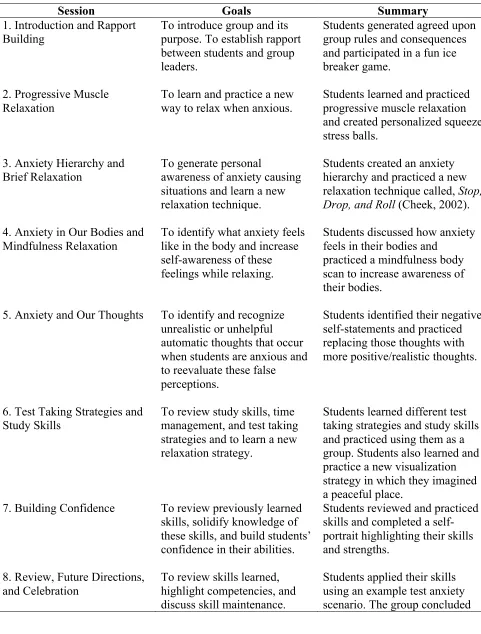
8 Summary of Test Stress Intervention Sessions ... 84
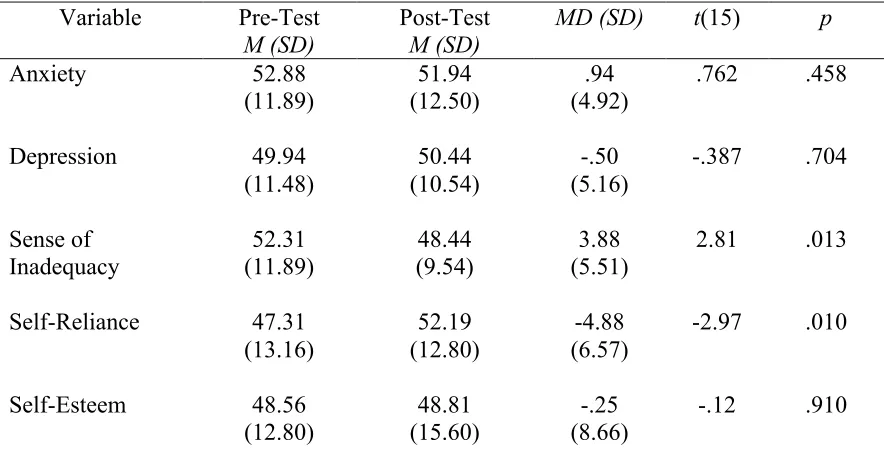
9 Pre-Post Results for the Behavioral Assessment System for Children, Second Edition, Self-Report ... 95
10 Pre-Post Results for the Behavioral Assessment System for Children, Second Edition, Teacher-Report ... 96
11 Pre-Post Results for the Behavioral Assessment System for Children, Second Edition, Parent-Report ... 98
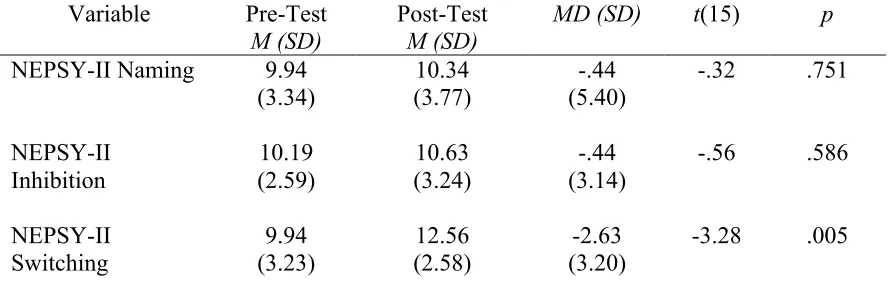
12 Pre-Post Results from the NEPSY-II ... 98
ABBREVIATIONS
AYP Adequate Yearly Progress CBT Cognitive Behavioral Therapy
DSM-IV-TR Diagnostic and Statistical Manual of Mental Disorders, Fourth Edition, Text Revision
NCLB No Child Left Behind Act RTI Response to Intervention
CHAPTER 1
TEST ANXIETY IN ELEMENTARY SCHOOL CHILDREN: PREVENTION AND INTERVENTION STRATEGIES FOR TEACHERS
In virtually all elementary schools within the U.S. today, children are expected to meet educational standards to determine if they are adequately learning grade level material. Student achievement in the classroom can be measured in a variety of ways, including in-class activities, homework assignments, and classroom tests. Student knowledge is often evaluated through state and national standardized assessments designed to measure individual student achievement to meet the requirements of the federal No Child Left Behind Act (NCLB, 2001; Roach & Frank, 2007). The NCLB Act (2001) mandated the use of regular standardized assessment in U.S. public schools to measure student achievement, increase accountability of schools and teachers, and aid in educational research (Roach & Frank, 2007; Vannest, Mahadevan, Mason, & Temple-Harvey, 2009). While the effectiveness of NCLB and the resulting regimen of
address this factor. Elementary school students in the U.S. spend approximately 33 hours a week at school with one primary teacher (Hofferth & Sandberg, 2001) and as a result, teachers play an essential role in preventing, identifying, and intervening with student anxiety (Casbarro, 2005).
The experience of test taking and other performance based evaluations may cause significant anxiety for some children (Kruger, Wandle, & Struzziero, 2007; McDonald, 2001; Putwain, 2009a; Strumpf & Fodor, 1993). Anxiety surrounding evaluative situations is known as test anxiety. Test anxiety can be triggered by situations like classroom-based and high-stakes testing, school presentations, classroom discussions, school plays and performances, and sporting events, to name a few. Test anxiety involves significant emotional, physiological, and cognitive reactions to evaluative situations that can negatively impact both students’ psychological well-being and their school
performance (e.g., Abu-Rabia, 2004; Fengquiang, Peng, Yu, & Shihai, 2006; Putwain & Daniels, 2010; Putwain, Connors, & Symes, 2010; Sena, Lowe, & Lee, 2007; Weems et al., 2010). Numerous studies have suggested that students who experienced test anxiety performed more poorly on examinations than their less anxious peers (e.g., Abu-Rabia, 2004; Putwain, 2008; Putwain, 2010). Because testing is so pervasive within the U.S. school system and is frequently used as a primary method to evaluate student
achievement, it follows that managing student test anxiety is a critical component of their academic success.
focused on interventions within clinic based settings, rather than within the school environment (Gregor, 2005; Weems et al., 2010). Furthermore, research on test anxiety interventions frequently has concentrated on older children and adults, instead of elementary-aged students (Gregor, 2005; Weems et al., 2010). Lastly, information is limited when it comes to examining methods that elementary school teachers can use with their students in the classroom.
The purpose of this article is to discuss the phenomenon of test anxiety as it applies to elementary school children and identify strategies that teachers can use in the classroom to address test anxiety. Theories of test anxiety will be reviewed and test anxiety will be examined within the current school climate. Academic and psychological outcomes associated with test anxiety for elementary-aged children will be discussed. The remainder of the article will review research-based strategies to address test anxiety and will explain how these strategies can be used by teachers within the classroom environment.
Test Anxiety: What Teachers Should Know
Definition and Theories
the psychological diagnosis of social phobia within the Diagnostic and Statistical Manual of Mental Disorders, Fourth Edition, Text Revision (DSM-IV-TR) (American Psychiatric Association, 2000), which involves fear of entering into social situations due to concern about poor performance and embarrassment (McDonald, 2001). It can be understood as a type of state anxiety as opposed to a trait anxiety, in that individuals with test anxiety experience significant stress only under specific states or situations (e.g., when taking a test, giving a class presentation, answering questions in front of others) (Abu-Rabia, 2004). Those who experience trait anxiety feel distress in a more generalized sense and may feel anxious most of the time during their day, rather than during particular types of situations.
There are four primary theories of test anxiety that have provided the greatest contribution to the literature. The first theory, the two factor model, states that test anxiety involves two components, (1) worry, and (2) emotionality (Liebert & Morris, 1967; McDonald, 2001). Worry refers to the distressing and preoccupying thought processes that accompany the experience of test anxiety (McDonald, 2001; Sarason, 1988). For example, cognitions may involve anticipatory thoughts about an upcoming test (e.g., “This is going to be so hard!”), about the judgments of others (e.g., “If I mess up on this presentation, everyone is going to think I’m stupid.”), or negative
physiological component of test anxiety (McDonald, 2001; Sarason, 1988), that is, the way that the body reacts, which may include gastrointestinal upset, increased heart rate and blood pressure, body temperature changes, or tremors (Casbarro, 2005).
The final theories of test anxiety (the skills deficit model and the integrated model) that will be reviewed within this article examine how knowledge and skill play a role in the experience of test anxiety. The skills deficit model suggests that students who experience test anxiety do so because they have learning difficulties and are unable to adequately learn and integrate content material (Birenbaum, 2007; Culler & Holahan, 1980; Tryon, 1980). According to this model, individuals perform poorly not due to test anxiety, but due to their lack of skill and understanding of classroom material
(Birenbaum, 2007; Culler & Holahan, 1980; Naveh-Benjamin et al., 1987; Tryon, 1980). McKeachie, & Lin (1987) suggested an integrated model of test anxiety that incorporates cognitive components while including the understanding that skills deficits may play an important role in the development of test anxiety. This model proposes two types of test anxious students: those with appropriate learning strategies who are unable to retrieve content information during examinations and those with poor learning strategies who do not learn the information during the training process (Naveh-Benjamin et al., 1987). According to this theory, both of these students perform poorly on tests and experience test anxiety, but for different reasons.
driven classroom-based strategies that can be used to address each contributing component of test anxiety.
Test Anxiety in Today’s Schools
As an integral part of the elementary school experience, teachers must monitor student learning to determine if they are understanding concepts, making age appropriate progress, and identify areas of strength and weakness to aid in future educational
planning. However, in the current school climate, much of the process of assessing student learning has been taken out of teachers’ hands (Barksdale-Ladd & Thomas, 2004; Jones, 2007). With the advent of NCLB (2001), federal mandate requires that
standardized assessments be administered to determine student progress and increase the accountability of schools and teachers with regard to student learning (Vannest et al., 2009). So, while teachers still must monitor their student progress as part of their classroom practices, students must also be prepared to be assessed using standardized measures multiple times a year. This can amount to quite a lot of testing! In addition to the sheer volume of assessment within the current school climate, many of these
anxiety for some students (Kruger et al., 2007; McDonald, 2001; Putwain, 2009a; Strumpf & Fodor, 1993).
While research on prevalence of test anxiety is limited due to the lack of test anxiety measures with adequate norms (McDonald, 2001), available studies suggested that test anxiety may impact up to 40% of children (McDonald, 2001; Nottelman & Hill, 1977; Turner, Beidel, Hughes, & Turner, 1993). McDonald (2001) indicated that these estimates may be under representing the full scale of the problem because children with test anxiety may either choose to leave school due to fear of evaluation or may not advance academically as a result of poor performance. Additionally, anxiety related problems like test anxiety may be overlooked because symptoms are often internalized and can be difficult to identify (Fox, Halpern, & Forsyth, 2008; Strumpf & Fodor, 1993).
Research has suggested that test anxiety disproportionally impacts certain populations, including children with a low socioeconomic status (Guida & Ludlow, 1989), minority students (Bryan, Sonnenfeld, & Grabowski, 1983; Hembree, 1988; Turner et al., 1993), English language learners (Hodge, McCormick, & Elliot, 1997), and children with learning disabilities (Sena et al., 2007). All of these students tend to
in these unique populations. Gender has also been identified as a factor influencing the prevalence of test anxiety, with girls reportedly experiencing test anxiety with more frequency than boys (Abu-Rabia, 2004; Chapel et al., 2005; Guida & Ludlow, 1989; Hembree, 1988; Locker & Cropley, 2004; Sena et al., 2007), consistent with the gender differences present in research on anxiety in general (e.g., Costello et al., 2003).
The Impact of Test Anxiety on Elementary School Children
Research has suggested that the experience of test anxiety is associated with negative academic and mental health outcomes for students (e.g., Abu-Rabia, 2004; Fengquiang, Peng, Yu, & Shihai, 2006; Putwain & Daniels, 2010; Weems et al., 2010). Studies on academic outcomes of test anxiety have overwhelmingly found that children with test anxiety perform worse on examinations than their non test-anxious counterparts (e.g., Abu-Rabia, 2004; Meisner & Macki, 2007; Nottelman & Hill, 1977; Putwain, 2008; Stevenson & Odom, 1965). Additionally, it has been found that test anxiety negatively impacts performance during many types of evaluative situations (e.g., testing,
presentations, performances), but even more so when the external evaluative pressure is high (i.e., others will know your performance, your results have implications for your future) (Cassady, 2004a; Hancock, 2001).
significantly more off-task behaviors during evaluative situations than their non-anxious counterparts and Swanson & Howell (1996) confirmed that test anxiety impacts
concentration. Test anxiety has been found to reduce working memory capacity (Hadwin, Brogan, & Stevenson, 2005; Lee, 1999), slow processing speed (Hadwin et al., 2005), and impact reading comprehension (Cassady, 2004a) as well. Additionally, research has revealed that test anxiety impacts the learning process, with test anxious students
experiencing more difficulty encoding, organizing and storing information in their memory for later retrieval (Cassady, 2004a).
Barksdale-Ladd & Thomas’ (2000) research on teacher perceptions of high stakes testing suggested that the negative impact of test anxiety on children is observable in the classroom. One teacher stated:
They [students] hate the assessments. Their best writing . . . has not been with those assessments. They always do so well with in-class stories; that’s when I know what their best writing skills are like. More often than not, I’m disappointed with the assessments (Barksdale-Ladd & Thomas, 2000, p. 391).
Given the research on academic outcomes with regard to test anxious students (e.g., Putwain et al., 2010; Sena et al., 2007), it is clear that these children have difficulty achieving their academic potential. McDonald (2001) hypothesized that students who perform poorly on exams due to test anxiety may be removed from the system due to their failure to advance academically and research has revealed that children with test anxiety have higher rates of grade retention (Hembree, 1988) and school dropout than non-anxious students (Jones, 2007; Spielberger, 1966).
Research has demonstrated that students have experienced significant
(Weems et al., 2010), with one study suggesting that up to 60% of test anxious
elementary school students met the diagnostic criteria for an anxiety disorder (Beidel & Turner, 1988). Children with test anxiety have experienced psychological symptoms including increased feelings of worry, nervousness, and emotionality (Barksdale-Ladd & Thomas, 2000; Sena, et al., 2007), reduced self-esteem, and weak academic self-concept (Miesner & Maki, 2007; Putwain & Daniels, 2010; Wong, 2008). Children with learning disabilities are particularly affected, experiencing test anxiety at a greater rate than their nondisabled counterparts (Peleg, 2009; Sena et al., 2007), while demonstrating
significantly reduced self-confidence and feelings of academic competence (Peleg, 2009). In Barksdale-Ladd & Thomas’ (2000) study on teacher perceptions of high stakes testing, teachers confirmed that self-confidence is impacted by test anxiety:
The pressure is on the kids. I had a learning disabled child who took [the state writing test] last year and got a 2.5. This child was hysterical when she found out. She didn’t come back to school the next day. It knocked all of the self-confidence we’d built up right out of her (p. 391).
Choi (1998) found that children who felt less in control of their schooling
children with test anxiety demonstrated a reduced motivation to achieve, reporting a lesser relationship between their individual efforts and their ultimate performance, particularly in highly evaluative schools and classrooms (Hancock, 2001). The cycle of test anxiety, reduced self-confidence, and poor performance likely serves to perpetuate test anxiety if no intervention is implemented (Russo 1984).
Karpathian, 1991) while facing increased high-stakes and classroom-based assessment (Kruger et al., 2007). Addressing test anxiety during this developmental period can provide these early learners with the coping tools they will need to combat test anxiety and can foster the growth of long term skills that will enable them to embark on successful educational careers.
What Can Teachers Do About Test Anxiety?
The impact of test anxiety is substantial, affecting the emotional and academic well-being of thousands of school-aged children each year. Teachers are on the front lines, serving as the primary educators and mentors for students throughout their formative early academic years (Wentzel, Battle, Russell, & Looney, 2010) and strong student-teacher relationships have been shown to enhance academic performance as well as social adjustment in students (Birch & Ladd, 1996; Wentzel, 1997; Wentzel, 2002; Wentzel et al., 2010) Elementary school children in the U.S. spend approximately six and a half hours per day during the week in a classroom with one primary teacher (Hofferth & Sandberg, 2001). Research has suggested that oftentimes children who do not receive intervention within the school setting may not be able to gain access to necessary services (Weems et al., 2010), highlighting the importance of school-based service provision. Teachers are in the unique position to address test anxiety through classroom-based strategies and affect positive change in their students (Casbarro, 2005). The purpose of this section of the article is to provide elementary school teachers with information to identify test anxiety and the tools to prevent and intervene to reduce test anxiety. The presented strategies discussed are research-based and have been adapted for
Recognizing Symptoms of Test Anxiety
Because the symptoms of test anxiety are often internalized, they can be difficult to recognize (see Table 1). There are several clues to look for when identifying a test anxious child. The most observable symptoms of test anxiety are the physiological reactions and heightened arousal that children may experience (Casbarro, 2005). The body’s stress response is engaged in order to protect an individual from danger, but in the case of test anxiety, the perceived danger is out of proportion to reality (Wood &
McLeod, 2008). In response to the perceived threat of an evaluative situation, a child may experience changes in body temperature, increased breathing rate, muscle tenseness, shakiness, upset stomachs and nausea, headaches, faintness, dizziness, heart palpitations and chest tightening, and changes in eating patterns, for example (Bodas, Ollendick, & Sovani, 2008; Casbarro, 2005; Kuhlman, 1982). In Barksdale-Ladd & Thomas’ (2000) study, one parent discussed her child’s response to a testing experience, stating:
He came in the door, and he just looked horrible; I thought he was sick and put my hand on his head, but he didn’t pay any attention and reached in his bag and pulled out these folded papers . . . (p. 394).
Based on this quotation, it seems that this child felt so anxious and upset about the results of his evaluation that he appeared to be physically ill to his mother.
Emotional responses also are characteristic symptoms of test anxiety (Casbarro, 2005). Children may present with changes in mood and may seem sullen, agitated, or just overall “not themselves today” (Casbarro, 2005, p. 79). Children may seem overly
Table 1. Test Anxiety Symptoms
Category Possible Symptoms
Physiological Changes in body temperature, increased breathing rate, muscle tenseness, shakiness, upset stomachs and nausea, headaches,
faintness, dizziness, heart palpitations, chest tightening, and changes in eating patterns.
(Barksdale-Ladd & Thomas, 2000; Bodas et al., 2008; Casbarro, 2005; Kuhlman, 1982)
Emotional Mood changes like sullenness or oversensitivity, sadness, anger, frustration, nervousness, confusion, and fatigue.
(Barksdale-Ladd & Thomas, 2000; Casbarro, 2005; Sena et al., 2007; Triplett & Barksdale, 2005; Weems et al., 2010)
Cognitive Irrational and negative self-statements about one’s ability or
performance (e.g., “I’m no good at this), reduced self-esteem, feeling of failure, reduced processing speed, difficulty remembering and concentrating.
(Casbarro, 2005; Hadwin et al., 2005; Lee, 1999; Miesner & Maki, 2007; McDonald, 2001; Nottelman & Hill, 1977; Peleg, 2009; Putwain et al., 2010; Putwain & Daniels, 2010; Sarason, 1988; Sena et al., 2007; Stober, 2004; Swanson & Howell, 1996; Wong, 2008)
The kids feel the stress . . . They worry. They say, ‘I’m scared. I don’t want to take this.’ Some of them don’t sleep because they’re so worried, and they cry. Straight-A students are scared that they’re gonna fail (p. 391).
Cognitive symptoms of test anxiety are the most difficult to identify because they involve the internalized thought processes that children experience. Children’s cognitions may involve irrational and negative self-statements about their ability or performance (e.g., “I’m no good at this) (Casbarro, 2005; McDonald, 2001; Sarason, 1988). Children may experience reduced self-esteem and may feel as though they are failures (Casbarro, 2005; Putwain, 2009b; Stober, 2004). While these thoughts and feelings are often internalized, children may sometimes speak up about their anxiety, expressing worry about a test or that they feel nervous about speaking up in class, for example. In
Barksdale-Lad & Thomas’ (2000) research, one parent discussed how testing impacted her child, “I just hated it for her and while it was tearing her apart, it was tearing me apart, too. She just got so worried and was so sure she was going to fail, even though she is a good student and has been all along” (p. 394). Cognitive components can involve difficulty remembering (Casbarro, 2005; Hadwin et al., 2005) and concentrating
(Casbarro, 2005; Nottelman & Hill, 1977; Swanson & Howell 1996) as well, which can impact performance during evaluative situations and may serve to perpetuate the anxiety (Russo, 1984).
Strategies for the Classroom
Creating a positive classroom environment. Research has suggested that children experienced increased test anxiety in highly evaluative classroom environments (Cassady, 2004a; Zatz & Chassin, 1985). Zatz & Chassin (1985) found that children with high levels of test anxiety suffer decreased exam performance, particularly in classrooms with high levels of perceived evaluative threat. A high evaluative threat was defined as an emphasis on academic competition and a high level of teacher strictness and rule
breaking related punishment (Zats & Chassin, 1985). Hancock (2001) found that all students, but test anxious individuals in particular, were impacted by highly-evaluative classrooms, reporting less motivation and reduced performance in this type of learning environment. In order to address the negative impact a highly evaluative classroom can have on children, teachers can create a supportive classroom environment that reduces competition between students (Kruger et al., 2007; Supon, 2004; Wentzel, 2002) (see Table 2). One way to do this is to incorporate cooperative learning strategies (Kruger et al., 2007), which involve placing students in learning groups, encouraging them to work towards shared goals, and fostering independent work skills (Ioannou & Artino, 2010; Johnson & Johnson, 1999; Johnson & Johnson, 2009). Activities like projects,
Table 2. Test Anxiety Strategies for Teachers: Creating a Positive Classroom Climate Reduce competition by including cooperative learning strategies that emphasize shared goals.
• Projects – allow children to learn concepts through group projects. For example,
students can produce a group poster, write a story as a team, or create a collage.
• Discussions – encourage students to discuss new concepts in small groups to
enhance shared learning.
• Role plays – role plays can encourage students to work as a team while helping
them enhance their understanding of stories and lessons. (Ioannou & Artino, 2010; Johnson & Johnson, http://www.co-operation.org/?page_id=65)
Focus classroom evaluations on learning rather than outcomes.
• Students should work toward achievement goals developed to meet each child’s
individual needs, rather than classroom-wide goals.
• Collaborative assessment can be used to reduce evaluative pressure and allow
students to work as a team. Students can be evaluated on team projects and group products (e.g., stories, posters, presentations, artwork)
Use varied forms of assessments that include low-pressure assignments to evaluate student learning:
• Homework, projects, portfolios, class-work
(Abu-Rabia, 2004; Ioannou & Artino, 2010; Reed, 2007)
Provide students with immediate and frequent feedback that supports learning (Marso, 1970)
• Allow students to grow from their feedback by correcting their mistakes on
assignments and tests.
academic achievement, student learning, and student motivation (Ioannou & Artino, 2010; Johnson & Johnson, 1999; Johnson & Johnson, 2009).
students (e.g., everyone in the class should get an A on the test) (Supon, 2004). This approach views each student as unique and requiring individualized goals to foster their development as a learner. Collaborative assessment is another method that can encourage cooperation and increase the emphasis on learning rather than individual achievement in the classroom (Ioannou & Artino, 2010). Teachers can incorporate classroom evaluations that involve small group projects and activities that focus on the current class content (Ioannou & Artino, 2010; Reed, 2007). For example, a small group of two to three students can work together to write and illustrate a story using the weekly vocabulary words and read the story to the class. This type of cooperative learning activity encourages collaboration between the students in the group, while allowing the entire class to learn from one another.
Researchers (Abu-Rabia, 2004; Supon, 2004) have suggested that test anxiety can be reduced by evaluating students using low pressure activities like homework
assignments, daily in-class work products, journal writing, and academic portfolios. Student portfolios allow each child to compile a history of their best work using multiple sources of information (e.g., essays, tests, projects, quizzes, homework, art assignments) as a formative representative of their learning (Supon, 2004) and gives students the chance to take ownership of their own learning outcomes (Abu-Rabia, 2004).
education and allows them to put their best foot forward. Research has indicated that including frequent assessments followed by feedback can reduce test anxiety and increase student learning (Marso, 1970). This finding suggests that rather than including a few big tests a year, teachers should evaluate student learning regularly and provide students with information about strengths and ways to improve areas of weakness, which may be more meaningful than a grade at the top of a test (Supon, 2004).
Teachers also can help create a positive classroom environment by developing supportive relationships with their students. Triplett & Barksdale (2005) suggested that teachers can serve to reduce test anxiety and increase student confidence by acting as “comforters and coaches,” encouraging student success throughout the learning and assessment process. Researchers have suggested that social support, particularly in combination with the use of appropriate coping strategies, can serve as a protective factor against stress (Kruger et al., 2007). Teacher-student relationships characterized by
warmth, nurturance, caring, and support, have been found to be associated with increased student motivation and academic performance as well as improved school adjustment (Birch & Ladd, 1996; Wentzel, 1997; Wentzel, 2002; Wentzel et al., 2010) and notably, negative teacher feedback and lack of support and encouragement coincides with reduced motivation in students (Wentzel, 2002). In the role of comforter and coach (Triplett & Barksdale, 2005), elementary school teachers can help prepare students for difficult testing situations, encourage them to use coping strategies, and provide them with comfort and support as they face challenging evaluative situations.
reduce test anxiety overall and increase students motivation and achievement (e.g., Hancock, 2001; Ioannou & Artino, 2010). Evaluating students using varied forms of assessment (e.g., collaborative assessment, homework, portfolio, in class tests) allows students to express their knowledge in different ways and put their best foot forward. Providing elementary school students with frequent and constructive feedback is more meaningful than grades because it helps children learn and grow from the assessment process. Developing supportive and caring relationships with students will contribute to a positive academic environment in which children feel encouraged and motivated to learn. Teachers can work to incorporate these elements into their classroom routine in order to support both student learning and mental health (see Table 2 as a quick reference for strategies to create a positive classroom environment).
to students can help reduce test anxiety and increase test performance (e.g., Beidel, Turner, & Taylor-Ferreira, 1999; Carter et al., 2005).
Beidel et al. (1999) found that an intervention for test anxious elementary school students that focused on study skill development and test taking strategies helped
decrease feelings of anxiety and increased grade point average. This intervention, called the Testbusters Program, focused on skill acquisition rather than test performance (Beidel et al., 1999), including lessons on the difference between good study habits (i.e. studying for 15-20 minutes before taking a break, finding a quiet place to work, rewarding oneself for hard work, etc.) versus bad study habits (i.e., studying with the television on or in an area with lots of people, taking more break time than study time, etc.) (Beidel et al., 1999). Children also were taught the SQ3R method (Survey, Question, Read, Recite, Review), a strategy that has been shown to improve reading comprehension (Adams, Carnine, & Gersten, 1982; Artis, 2008; Beidel et al., 1999, Martin, 1985), a skill
frequently required on both low and high stakes assessments in elementary school. Other recommendations included teaching test-taking skills like careful reading of instructions, eliminating incorrect answers, underlining key words in questions (e.g., never), and ways to review test results to aid in learning and skill improvement (Beidel, et al., 1999; Supon, 2004), which have been shown to improve test performance (Cankoy, 2005; Scruggs, White, & Bennion, 1986). Teachers should also provide students with
While the Testbusters Program (Beidel et al., 1999) was implemented in small groups, elementary school teachers can easily incorporate this type of instruction into their classroom. For example, teachers may wish to include a weekly study skill bulletin that teaches or reviews a study skill or test-preparation strategy and encourages students to practice this strategy on a particular assignment. Additional test preparation and study skills strategies that teachers can discuss in the classroom to help students improve their skills include direct instruction in classroom note taking and outlining (e.g., Bohay, Blakely, Tamplin, Radvansky, 2011; Casbarro, 2005; Eskrit & McLeod, 2008; Supon, 2004) how to use graphic organizers (e.g., Casbarro, 2005; Crooks, White, & Barnard, 2007; Robinson et al., 2006; Supon, 2004), instruction in memory strategies (e.g., mnemonic devices, visualization) (e.g., Casbarro, 2005; Bellezza, 1996), planning, time management, and organizational skill development (e.g., Casbarro, 2005; Kraus & Beyl, 2007). The use of practice tests, which gives students the opportunity to see what the test will look like and get a sense of the areas in which continued practice is necessary, can also be very helpful in reducing test anxiety and increasing student preparation (Casbarro, 2005; Supon, 2004). Providing practice tests helps children know what to expect and can make them feel more confident as they face an upcoming test (Casbarro, 2005; Supon, 2004).
adequately learn material and effectively demonstrate their knowledge in a variety of evaluative situations, teachers support the development of a learning-focused classroom environment in which evaluations show what students have learned. Including skill building lessons within a supportive and learning centered classroom environment will not only help students in the short term, but will facilitate the development of a skill set that will carry them through their careers as learners (see Table 3 as a quick reference of study skills and test taking strategies).
Using relaxation based stress reduction strategies. Stress reduction strategies are a key element in combating test anxiety, particularly with regard to physiological symptoms associated with the stress response (e.g., Wood & McLeod, 2008). As
mentioned previously, students with test anxiety may experience physiological responses such as changes in body temperature, breathing rate, and heart rate, as well as muscle responses (i.e., shakiness), and gastrointestinal responses (i.e., upset stomach, nausea), to name a few (Casbarro, 2005). Relaxation strategies can help calm the body and reduce the physiological symptoms of anxiety (Matheny & McCarthy, 2000) while stress reduction strategies can address the cognitive components of test anxiety, decreasing negative self-statements and distracting thoughts (e.g., Paul, Elam, & Verhulst, 2007). Studies have found that implementing stress reduction strategies with children can be highly effective in lessening their test anxiety and increasing their academic performance (e.g., Beauchemin, Hutchins, & Patterson, 2008; Cavallaro & Meyers, 1986; Paul et al., 2007; Shao & Skarlicki, 2009).
Table 3. Test Anxiety Strategies for Teachers: Study Skills and Test Taking Strategies Directly teach good study habits.
• Study in a quiet place with limited distraction. • Develop a study plan and ask family for help. • Organize assignments by subject.
• Study for 15-20 minutes before taking a break.
• Time management – schedule enough time, take breaks, very what is studied. • Reward yourself for a good study session (e.g., a game/snack break).
• Provide students with practice tests when possible.
(Beidel, Turner, & Taylor-Ferreira, 1999; Casbarro, 2005) Teach comprehension strategies like SQ3R.
• Survey, Question, Read, Recite, Review
• Practice comprehension strategies so they are internalized.
(Adams, Carnine, & Gersten, 1982; Artis, 2008) Teach classroom learning skills:
• Note taking – using abbreviations, listening for key words, paying attention to the
teacher’s voice and inflection, watching the teacher, reviewing notes. Teachers can help students by stating the purpose of the lesson, introducing content in units, presenting clear points, repeating points, using visuals, and reviewing notes with students.
• Memory strategies – use rhymes and songs, pictures and other visual aids,
mnemonic devices, and acronyms.
• Organization – use graphic organizers in lessons to model for students; help
students organize their notebooks and materials by subject, date, and category; conduct weekly organization checks to keep students on track.
(Casbarro, 2005)
for five minutes is ideal, allowing for full relaxation. However, given time constraints, one minute can be effective as practice prior to a test and even a few seconds of deep breathing during a test can help calm the body. Cheek, Bradley, Reynolds, and Coy (2002) discussed a relaxation strategy that can be quickly implemented and is easy to remember. It is called “Stop, Drop, and Roll” and capitalizes on young children’s knowledge of fire safety techniques (Cheek et al., 2002). When relaxation is needed (before a test, during a test, etc.), children will stop, put their pencils down, drop their heads, take three deep breaths, and roll their head around slowly three times (Cheek et al., 2002). This strategy is easy for children to learn and can be implemented during a testing situation due to its brief nature. Cheek et al. (2002) found that this strategy was helpful to elementary school students as they reported feeling more relaxed during the testing situation and less worried about future tests.
minutes for the class to lie down, take deep breaths, and notice their thoughts and feelings (see Greco & Hayes, 2008, for script example).
Visualization strategies can help children calm their anxious thoughts and feelings (Casbarro, 2005) and enter a peaceful place. Teachers can guide students in a
visualization exercise in which they imagine a place that is relaxing and safe for them (e.g., their bedroom, grandma’s house, the beach). It can be helpful to have students draw a representation of their peaceful place as this can make the activity fun and make the peaceful place more concrete. Progressive muscle relaxation is another technique that can be combined with deep breathing to foster relaxation and increase bodily awareness (Casbarro, 2005; Feldman, Greeson, & Senville, 2010). It involves noticing feelings in the body and systematically tensing and relaxing each muscle group to produce overall relaxation (Casbarro, 2005; Rausch, Gramling, & Auerbach, 2006). Teachers can lead students in a progressive muscle relaxation activity prior to a test or as part of a regular relaxation regimen (see Table 4 for script example). Because it typically takes about 5 to 10 minutes to tense and relax each body part, this strategy works best when additional time is available.
Table 4. Test Anxiety Strategies for Teachers: Relaxation Teach and practice deep breathing in the classroom.
• Script for deep breathing:
o Ask students to sit comfortably in their chairs with their feet flat on the floor.
o Have children close their eyes.
o Instruct them to breathe in slowly and deeply.
o After taking a breath, hold it for three seconds, then exhale and let the body relax.
o This should be implemented for one to five minutes. o (Casbarro, 2005)
• Script for Stop, Drop, and Roll:
o STOP, put your pencil down and place your hands on the desk. Feel the coolness of the desk.
o DROP your head and close your eyes. Take three deep breaths. o ROLL you head around slowly three times.
o This can be implemented at any time. It is very brief so it is a good strategy for kids to use during a test.
(Cheek, 2002)
Implement mindfulness strategies that increase body awareness and encourage students to enter a peaceful place.
• Mindfulness body scans can increase body awareness and reduce stress.
o Instruct students to sit comfortably or lay comfortable on a mat with their eyes closed.
o Ask them to notice each part of their body, attending to how it feels and accepting that feeling. At the conclusion, encourage them to relax deeply and imagine that their body is sinking into the group.
• Example Script:
o Close your eyes and take a deep breath in and out.
o Now, notice your toes. You do not need to move your toes, just notice how they feel. They might be tingly, or warm, or cold, or something else. Just notice how they feel.
o Now notice both your feet. What do they feel like? Notice your heels as they rest on the floor. Notice the top of your foot and how it feels. If you can’t feel anything, that is fine too. Just notice that.
o Now notice your legs. How do they feel? No need to move them, just notice how they feel right now. Notice the front of your leg, or your shins, the back of your leg/your calves, your knees, and your upper leg/thighs. Think about what you are noticing now that you haven’t noticed before. o Now think about your hands and fingers. Notice how they are resting at
your sides/on your lap. Notice if they feel tingly, or warm, or cold, or something else.
o Now notice your belly. (possibly refer to the fact that some people noted that this is where they feel anxiety). Notice if it feels calm or upset, hungry or satisfied, tingly or gurgly, or if it doesn’t feel like much of anything. o Now notice your chest. Notice your heart beating and the rise and fall of
your breathing as you breath in and out. Notice if your chest feels relaxed or tight. Just notice what it feels like right now.
o Notice your shoulders. Sometimes shoulders are places that can feel tight. Notice how yours feel. Do they feel relaxed, tight, or do you not feel anything at all.
o Now notice your back. Notice how it is resting on the floor/your chair. Notice if it feels warm, cold, tingly, tense, etc.
o Now notice your face. What does it feel like? Notice if it is tingly or itchy, if it feels hot or flush, or cool. Just notice how you feel right now.
o When you are ready, you can open your eyes and come back to the circle. (Tenenbaum, et al., 2010).
o For additional script example for children, see Deep Relaxation for Children: http://www.deerparkmonastery.org/community/childrens- program/joyful-and-peaceful-mindfulness-with-children/deep-relaxation-for-children-and-parents/view
• Visiting a peaceful place can allow students to relax in the face of stress. Script
example:
o Close your eyes and take slow and deep breaths.
o Imagine a warm, happy smile in your body. This is your “Still Quiet Place” (Greco & Hayes, 2008, p. 142).
o Your still quiet place is always inside you and you can visit it whenever you like.
o It is helpful to visit your Still Quiet Place when you are feeling anxious or angry or upset or afraid.
o You can talk to your feelings in your still and quiet place and you may realize they are not as big and bad as you thought they were.
o Remember you can visit your Still Quiet Place whenever you need to. (Greco & Hayes, 2008, p. 142)
Teach visualization strategies.
• Encourage children to relax while visualizing a peaceful place. Teachers can
provide and describe examples to help children conceive of their own peaceful place (e.g., bedroom, grandma’s house, the beach, on a boat). Children can make their peaceful place concrete by drawing or painting a representation of it (e.g., Casbarro, 2005).
• See table 6 for an additional visualization strategy.
Practice progressive muscle relaxation, which involves tensing and relaxing each muscle in the body:
• Extend your arms in front of you and point your fingers to the ceiling as though
you are pushing on a wall.
• Touch your fingers to your shoulders so as to tense your arm muscles (biceps). • Shut your eyes tightly and mush your eyes, forehead, and nose together
• Clench your teeth together and make a big smile like you are trying to make the
sides of your mouth touch your ears.
• Put your chin to your chest and at the same time try to pull your head back • Take a deep breath and scrunch your shoulders up to your ears
• Suck your stomach in like you want it to touch your back bone
• Extend your legs in front of you and lift your heels off the floor and tighten your
thigh muscles.
• With your legs still extended, flex your feet so that your toes are pointing to the
ceiling.
• With your legs extended and your heels resting on the floor, point your toes
forward (only hold for three seconds to avoid cramping)
• Take 5 deep breaths and relax
(Casbarro, 2005; Feldman, et al., 2010; Matheny, 2009; Tenenbaum et al., 2010)
• For an additional script example, please see Casbarro, 2005.
Implement systematic desensitization practices.
• This is an effective method that involves relaxing while imagining the feared
stimuli, which can lead to long term reduction of anxiety surrounding the stimuli.
• Once children are familiar and comfortable with the use of relaxation strategies,
they can be encouraged to practice these strategies while imagining something that makes them worried. Teachers can lead students in this activity by asking them to imagine taking the test tomorrow, for example, and then encourage everyone to practice deep breathing or stop, drop, and roll (Cheek, 2002).
• The emphasis should be focused on relaxing in the face of a worrying situation
rather than emphasizing the anxiety provoking situation itself.
studying for the test that is tomorrow, waiting to receive the test on test day, taking a test and not knowing the answer to the first question). While this may seem too time
consuming to implement during a busy school day, the practice can be modified to fit within the classroom schedule. Once children are familiar and comfortable with the use of relaxation strategies, they can be encouraged to practice these strategies while
everyone to practice deep breathing or stop, drop, and roll (Cheek et al., 2002). It is important to note that the emphasis should be focused on relaxing in the face of a worry rather than emphasizing the anxiety provoking situation itself.
Relaxation based stress reduction strategies, like deep breathing, mindfulness, and systematic desensitization, can be implemented in the classroom to help reduce test anxiety. Teachers are encouraged to directly teach and practice relaxation strategies with their students on a regular basis so that they feel comfortable using relaxation in
evaluative situations that make them feel anxious. Incorporating relaxation into the classroom routine will provide students with another tool to use when faced with a stressful situation, like a test (see Table 4 as a quick reference for relaxation strategies).
Incorporating physical activity. There are many health benefits to remaining physically active, one of which is stress reduction (Matheny & McCarthy, 2000; Ratey, 2008). Physical activity, particularly aerobic activity, can have significant stress
reduction benefits (Doan, Plante, Digregorio, & Manuel, 1995; Matheny & McCarthy, 2000; Plante, Marcotte, Manuel, Willemsen, 1996; Ratey, 2008). Stretching exercises like yoga, especially when combined with mindfulness strategies, can provide stress relief as well (Sahajpal & Ralte, 2000; Smith, et al., 2008). Physical exercise has also been shown to prime students for learning and increase the brain’s ability to process and encode new information (Ratey, 2008).
recess and playground time, teachers can add brief exercise activities, like a jumping jack break, during the regular day. Stretching activities and yoga can be included as quick physical activity breaks as well. Casbarro (2005) suggested that students should plan to stretch at least every 20 to 30 minutes during an examination or seated activity and offered some ideas about how to implement this. Students can stretch in their seats by extending their legs and arms forward and stretching them, slowly circling their head using the neck or moving it side to side, rolling the shoulders, and readjusting ones seated position (Cavalarro, 2005). If possible, teachers can incorporate brief stand up and stretch breaks during a testing situation as well. Because physical activity has been shown to be a stress reducer in adults and children (e.g., Doan et al., 1995; Plante et al., 1996; Uechi, Takenaka, & Oka, 2000), it is another method that teachers can use in their classrooms to help students cope with test anxiety (see Table 5 for a quick reference of ways to
incorporate physical activity into the classroom).
Boosting self-confidence. Poor academic self-concept and student self-perception are characteristic of the experience of test anxiety (e.g., Doron, Stephan, Bioche, & Le Scanff, 2009; Goetz, Preckel, Zeidner, & Schleyer, 2008; Putwain, 2009a; Zatz & Chassin, 1985). Children with test anxiety may feel less competent than their peers (Putwain, 2009a) and may experience negative cognitions in the form of self-critical statements and distracting thoughts (Zatz & Chassin, 1985). Research has demonstrated that children with test anxiety also experience significantly fewer positive self-statements (Zatz & Chassin, 1985) and less active coping (Doron et al., 2009) than their non-anxious peers. Additionally, these children often experience reduced performance during
Table 5. Test Anxiety Strategies for Teachers: Physical Activity Incorporate physical activity into each day of school.
• This is often included in the regular schedule through physical education class and
recess.
• Teachers can add additional physical activity experiences through yoga and
stretching and brief exercise breaks.
Practice yoga, stretching, and mindfulness movement activities in the classroom.
• You can guide students in stretching activities typically done before aerobic
exercise (e.g., touching toes, stretching arms above the head, stretching the mid-section) or teach them yoga activities and poses (See http://yogakids.com/ for videos and resources).
• Mindfulness body awareness activities that include movement can help
incorporate physical activity and relaxation into the day.
o Seaweed practice: each child should pretend to be a strand of seaweed anchored to the ocean floor. The class can begin by pretending to be in a strong current in which the seaweed bends and moves a great deal. As the current slowly decreases, encourage children to sway softly until they are still. During this practice, remind children to notice the feeling in their bodies as well as the thoughts and feelings in their mind (Greco & Hayes, 2008, p. 149).
o Mindful walking: have the students walk around the room slowly and softly and pretend that they are stepping on eggshells that they are trying not to break. Encourage them to be aware of their movements, feeling their muscles tense and their feet as they lift on and off the ground. Notice their hands and arms swinging in space. Remind them to bring their
thoughts to their body movements if their mind wanders (Hooker & Fodor, 2008, p. 86). Teachers can practice this activity with different types of walking. For example, the children can pretend that they are stiff tin soldiers, rag dolls, or giants.
Take brief exercise breaks when possible.
• During or after a long, seated activity, guide students in a brief exercise break that
can involve jumping jacks, push-ups, stretching, or even a quick 10 minute game of tag outside.
Guide students in stretch breaks during long tests or lessons.
• Casbarro (2005) suggests stretching at least every 20 to 30 minutes during long
tests or seated activities. Teachers can incorporate stretch breaks into testing or teach students ways to stretch while seated:
o Extend your legs and arms out in front of you and tense and relax them. o Slowly circle your head around the neck.
suggested that efforts should be made to increase student self-confidence and academic self-efficacy (e.g., Lang & Lang, 2010; Locker & Cropley, 2004; Putwain et al., 2010).
One way to increase student confidence and reduce test anxiety is to address the negative and distracting self-statements that children experience when they are anxious (Bistline, Jaremko, & Sobleman, 1980; Casbarro, 2005; Ergene, 2003; Russo, 1984). This method involves recognizing worrying thoughts (e.g., “What if I fail?”), negative or faulty self-statements (e.g., “I’m not smart and everyone knows it.”), and distracting cognitions (e.g., “I only have five minutes left. That’s not enough time. I can’t do this!”), rejecting them, and replacing them with more positive, realistic, and facilitative
cognitions (e.g., “I studied hard and it’s likely that I will pass. If I don’t, I will be disappointed, but I will figure out a plan to handle it) (Burnett, 1994; Casbarro, 2005). Teachers can introduce this concept as positive self-talk. Casbarro (2005) provided a guide for teachers to help their students implement positive self-talk strategies. He suggested a five step method that involves asking students to think about an anxiety producing situation (e.g., test, presentation), think about the negative self-statements that occurred during this situation (e.g., “I’m too nervous. I can’t do this.”), and provide examples, examine how these negative self-statements increase their anxiety, collect the statements as a class and replace them with positive statements, and practice applying the skills to the actual situation (Casbarro, 2005). It will be particularly important for
individually on restructuring their own negative self-statements. To provide students with ownership and make the activity more concrete, this activity can be done as a self-portrait project. Children can draw a representation of themselves, include a negative
self-statement in a thought bubble, and replace that negative self-statement with a positive one by placing a piece of paper with the positive thought over the negative thought bubble (Tenenbaum, Cadenhead, Varjas, & Skillman, 2010). Teachers can display a class self-talk chart that includes a class list of negative self-statements, associated feelings, and replacement positive self-statements to help students visualize and internalize this coping strategy (Casbarro, 2005).
Incorporating positive self-talk with visualization is another way to increase student confidence and reduce test anxiety (Bistline et al., 1980; Russo, 1984). Teachers can lead their class in a visualization activity by first asking them to close their eyes and relax while imagining an evaluative situation, which can be something students think of independently or an example provided by the teacher to help children conceptualize this task (Bistline et al., 1980). Students should then be instructed to imagine themselves successfully addressing the evaluative situation and practice positive self-statements that they will use during the situation (Bistline et al., 1980; Russo, 1984). Art projects can accompany theses visualization strategies, allowing students to translate their successful imagery into a concrete artistic creation like a drawing, collage, or painting.
you can do it and I’m here to help you through this,” can let students know that you are there to be their supporter and coach (Triplett & Barksdale, 2005). Research has
suggested that children experience more anxiety when they perceive their classmates to be more intelligent than they (Goetz et al., 2008). As a result, it may be helpful to encourage students to achieve individual goals and provide them with praise and encouragement for their unique accomplishments (e.g., “I can tell you’ve been working hard on improving your use of exclamation points!”).
Teachers should work to ensure that each student has an opportunity to feel successful. Research has shown that children with test anxiety experience reduced anxiety and increased performance when they are given an opportunity to be successful prior to an evaluation (Lang & Lang, 2010). This can be included within the classroom by allowing children to participate in activities that highlight their individual strengths. Additionally, when creating in-class tests, it may be helpful to begin the test with items that have a greater likelihood of being answered correctly. This will give students a sense of accomplishment at the start of the test that can help give them confidence to carry them through the remainder.
In the role of comforter and coach (Triplett & Barksdale, 2005), caring and supportive teachers can help provide elementary school students with tools to increase their confidence and interest in learning (Wentzel, 2002). Educating students in the use of coping strategies that directly address debilitating cognitions can provide them with an important tool to facilitate positive self-statements and feel more confident and
competent when faced with an evaluative situation. Encouraging students to meet
Additionally, supportive and encouraging statements can make a difference in how children think and feel about their ability to achieve a goal. Finally, providing students with opportunities to experience success can boost confidence, reduce test anxiety, and increase performance (see Table 6 for a quick reference of confidence boosting strategies to use in the classroom).
Table 6. Test Anxiety Strategies for Teachers: Building Student Confidence
Teach and practice positive self-talk, which involves recognizing negative self-statements that facilitate anxiety and replacement them with more positive and realistic statements.
• Ask students to imagine the anxiety producing situation and what thoughts may
come up. Provide examples (e.g., I can’t do this; I’m not smart; What if I fail?)
• Examine how these negative self-statements increase anxiety.
• Collect the negative statements and replace them with positive statements as a
class (e.g., I will try hard and I can do this; I am smart; I probably won’t fail, but if I do, my teacher will help me figure out how to handle it).
• Model this activity and provide examples for the students to learn from. • Possibly display a “self-talk” chart with negative self-statements, associated
feelings, and replacement positive statements. (Burnett, 1999; Casbarro, 2005)
• Teachers can translate this into an art activity by having children create a self
portrait, include a negative self-statement in a thought bubble, and replace that negative statement with a positive one by placing a piece of paper with the positive thought over the negative thought bubble (Tenenbaum, Cadenhead, Varjas, & Skillman, 2010)
Practice positive self-talk with visualization.
• Ask students to close their eyes and relax (e.g., deep breathing exercise) while
imagining an evaluative situation (teachers can provide the example of an upcoming test or encourage students to think of their own).
• Instruct students to then imagine themselves successfully facing the evaluative
situation and practice using positive self-statements while imagining this situation.
(Bistline et al., 1980; Russo, 1984)
Provide students with regular and meaningful encouragement.
• Instead of providing general feedback (i.e., Great job everyone!), give students
specific encouragement (e.g., You really improved your use of introductory phrases on this writing assignment; I see you have been practicing your eight times tables).
• It is helpful to offer encouraging statements prior to a test (e.g., Good luck! I
believe in you.)
(Triplett & Barksdale, 2005)
Give students opportunities to be successful, particularly during an evaluation.
• Start off examinations with an easier question, giving students a feeling of
accomplishment early on.
• Allow students to participate in different activities at school that capitalize on
areas of strength.
allow children to bring something comforting with them to class on test day, like a stuffed animal or a special blanket, to help them feel more relaxed (Flannery, 2008).
On test day, teachers can remind students of the different coping strategies that they can use like positive self-talk, deep breathing, and test taking strategies. Prior to the test, teachers may wish to help students implement their stress management strategies by leading a brief class relaxation activity so that everyone can benefit. When it comes time for students to take the big test, it will be important to provide clear information and instructions and encourage questions, as research has indicated that teacher clarity can improve both motivation and achievement (Rodger, Murray, & Cummings, 2007; Supon, 2004). Providing some words of encouragement before and throughout the testing period can help students feel supported (Triplett & Barksdale, 2005). In the role of both coach and comforter (Triplett & Barksdale, 2005), a teacher can help children navigate stressful testing situations effectively (see Table 7 for a quick reference of classroom-based strategies to reduce test anxiety).