Psychology Dissertations Department of Psychology
Summer 8-7-2012
Gambling and Decision-Making Among Primates: The Primate
Gambling and Decision-Making Among Primates: The Primate
Gambling Task
Gambling Task
Darby Proctor
Georgia State University
Follow this and additional works at: https://scholarworks.gsu.edu/psych_diss
Recommended Citation Recommended Citation
Proctor, Darby, "Gambling and Decision-Making Among Primates: The Primate Gambling Task." Dissertation, Georgia State University, 2012.
https://scholarworks.gsu.edu/psych_diss/108
This Dissertation is brought to you for free and open access by the Department of Psychology at ScholarWorks @ Georgia State University. It has been accepted for inclusion in Psychology Dissertations by an authorized
GAMBLING TASK
by
DARBY PROCTOR
Under the Direction of Sarah F. Brosnan
ABSTRACT
Humans have a tendency to engage in economically irrational behaviors such as gambling, which typically leads to long-term financial losses. While there has been much research on human gambling behavior, relatively little work has been done to explore the evolutionary origins of this behavior. To examine the adaptive pressures that may have led to this seemingly irrational
behavior in humans, nonhuman primates were tested to explore their reactions to gambling type scenarios. Several experiments based on traditional human economic experiments were adapted for use with a wider variety of primate species including chimpanzees and capuchin monkeys. This allowed for testing multiple species using similar methodologies in order to make more accurate comparisons of species abilities. This series of tasks helps to elucidate risky decision-making behavior in three primate species.
GAMBLING TASK
by
DARBY PROCTOR
A Dissertation Submitted in Partial Fulfillment of the Requirements for the Degree of Doctor of Philosophy
in the College of Arts and Sciences Georgia State University
Copyright by Darby Proctor
GAMBLING TASK
by
DARBY PROCTOR
Committee Chair: Sarah F. Brosnan
Committee: Michael J. Beran Michael J. Owren Rebecca A. Williamson
Acknowledgements
This dissertation would not have been possible without the help of a number of people. First, I would like to thank my advisor, Sarah F. Brosnan, who directed me through this process. Because of Sarah’s tireless guidance, I am a much better researcher and writer than when I entered graduate school. I have learned more from her constructive criticism and positive feedback than I can possibly say.
I would also like to thank Mike Beran for his support over the past few years. He inspired me with his dedication, not only to science, but to graduate students. Our “poke” meetings about random articles have made me better able to elucidate my opinions, make scientific arguments for them, and accept when I am wrong. Thank you.
Thanks to everyone in the Cebus Lab who helped me collect data and spray paint more containers than any reasonable human should. I also want to extend my gratitude to everyone in the Living Links Center for our endless conversations about methodology and chimpanzees.
On a more personal note, thanks to Kate Talbot and Carrie Holtzman for sharing meals and wine while talking about science. I also want to thank Alex Rodriguez and Tashia Gregston for distracting me when I needed a break from work. I am also very grateful to my parents, Cort and Lona Proctor, who have supported me through my student career, which is finally finished. I am not going back to school again and I really mean it this time.
Table of Contents
Acknowledgements ... iv
List of Tables ... viii
List of Figures ... ix
1 Introduction and Literature Review ... 1
1.1 Why Study Nonhuman Primates? ... 2
1.2 What is Risk? ... 4
1.3 Gambling in Humans ... 7
1.4 Risky Decision-Making in Nonhumans ... 10
1.5 IGT in Nonhumans ... 12
1.6 Challenges of Comparative Research ... 13
1.7 The Primate Gambling Task ... 16
1.8 Hunger and Decision-Making ... 18
1.9 Social Influences on Gambling Behavior ... 19
1.10 The Ultimatum Game ... 21
1.11 Overview of this Dissertation ... 23
1.12 References ... 24
2 The Primate Gambling Task ... 38
2.1 Subjects ... 45
2.2 General Methods ... 47
2.3 Results ... 52
2.5 References ... 69
3 The Effect of Satiation on Risk Preferences in the Primate Gambling Task ... 76
3.1 Subjects ... 80
3.2 Methods ... 81
3.3 Results ... 83
3.4 Discussion ... 84
3.5 References ... 92
4 The Social Primate Gambling Task ... 97
4.1 Subjects ... 101
4.2 General Methods ... 102
4.3 Results ... 105
4.4 Discussion ... 107
4.5 References ... 114
5 Chimpanzees Play the Ultimatum Game ... 119
5.1 General Method ... 122
5.2 Chimpanzee Results ... 123
5.3 Children Results ... 124
5.4 General Discussion ... 124
5.5 References and Notes ... 130
5.8 Supplemental Online Materials ... 136
6 Children and the Primate Gambling Task ... 143
6.1 Methods ... 144
6.3 Discussion ... 146
6.4 References ... 149
7 Conclusion ... 151
7.1 Why the Primate Gambling Task is Useful ... 151
6.2 Risk Preferences of Humans, Chimpanzees, and Capuchin Monkeys ... 152
7.3 Are Risk Preferences Static? ... 155
7.4 Future Directions ... 158
List of Tables
Table 2.1: Sample Reward Distribution by Condition ... 64
Table 2.2: Potential Strategies in the Primate Gambling Task ... 65
Table 2.3: Individual Results by Condition in Experiment 1 ... 66
Table 2.4: Individual Performance by Condition of Capuchin Monkeys in Experiment 2 ... 68
Table 3.1: Summary of Conditions and Possible Risk Strategies ... 88
Table 3.2: Sample Reward Distribution by Condition ... 89
Table 3.3: Summary of Findings ... 90
Table 3.4: Individual Performance After Eating and After Fasting Overnight ... 91
Table 4.1: Payout Structure ... 111
Table 4.2: Individual Binomial Results of the First Condition ... 112
Table 5.1: Chimpanzee choices of equitable token by pair ... 127
List of Figures
1 Introduction and Literature Review
The gambler is apparently the last optimist; he is a creature totally unmoved by experience. His belief in ultimate success cannot be shattered by financial loss, however great. He did not win today? So what? Tomorrow will be lucky. He’s lost again? It doesn’t prove a thing; someday he’s bound to win.
Edmund Bergler (1957)
Gamblers make decisions that are often difficult to explain. This is because gambling decisions are often based on feelings, irrational thoughts, and a
misunderstanding of odds rather than being based on the probability of earning a net profit (Bergler, 1957; Rogers, 1998). Due to these factors, gambling often leads to the economically irrational decision to keep gambling in spite of mounting losses. This phenomenon occurs worldwide, in a wide variety of settings and across cultures (see the following as examples: Bechara et al., 1997; Bechara, 2005; Hills et al., 2001;
Blaszczynski & Silove 1995; Walker et al., 2005; Cotte 1997; Williams & Wood 2007; Malloy-Diniz et al., 2008). Why, then, are some people willing to risk it all for an economic windfall? Gambling is, in essence, a decision-making context where potential benefits must be weighed against the risk of engaging in the behavior. Understanding why emotional reactions overrule accurate cost/benefit analyses in certain risk scenarios may help to elucidate this seemingly irrational human behavior. For instance, it may be that there was an evolutionary benefit to having strong emotional reactions to possible winning scenarios, even if they appear irrational in some contexts (Frank, 1988; Rogers, 1998; Bechara et al., 1997; Bechara, 2005).
contexts, I conducted a phylogenetic analysis of risky decision-making in the primate lineage. This dissertation explores three specific research questions through the use of the Primate Gambling Task (PGT), a modified version of the Iowa Gambling Task (IGT; Bechara et al., 1997). The first is how nonhuman primates (NHPs) negotiate the conflict between potential immediate rewards and long-term payoffs in gambling situations. Second, I explored gambling decisions as a function of satiation levels in NHP
populations, as behavioral ecology studies suggest that species’ risk preferences may shift with their energetic demands. Third, since primates are social animals and gambling decisions in humans are often made in front of others (for instance, in casinos), I used a social gambling task to determine if NHPs make different types of decisions in a social context in which another individual was rewarded, but could not influence outcomes. Finally, I used another experimental economics game, the Ultimatum Game (UG), to explore how decision-making is affected if a partner could influence payouts for both individuals, as is the case in many human gambling scenarios. This series of comparative studies begins to answer some of the questions regarding the evolution of risky decision-making in gambling scenarios across the primates.
1.1 Why Study Nonhuman Primates?
Comparing multiple species of primates, including humans, can elucidate
of two reasons. First, animals may have some phylogenetic continuity with closely related species. That is, due to shared common ancestry, species may exhibit similar traits. For example, all primates have opposable thumbs because the ancestor of all living primates had opposable thumbs. However, other factors, such as environmental
conditions, can also lead to similarities, which arise through convergent evolution. Convergent evolution occurs when some selective pressure leads two species with dissimilar ancestries to develop similar traits. Complex eyes, for example, seem to have evolved many times in many different animal groups (Land & Nilsson, 2002). This is because sight is a useful tool for such activities as navigating the environment and acquiring food. Thus, primates and flies both have complex eyes, not because of shared ancestry, but because eyes are evolutionarily useful. Recognizing convergences can help in identifying which selective pressures encouraged a trait to evolve. It is important to understand the distinction between phylogenetic continuity and convergent evolution, as an understanding of whether common descent or common selective pressures led to the trait in question can help to elucidate the evolutionary function of a given behavior, as behavioral traits are subject to similar evolutionary influences as anatomical adaptations (Darwin, 1859).
capuchin monkeys (Cebusspp). Chimpanzees are of clear interest due to their close evolutionary relationship with humans, as they shared a common ancestor as recently as ~6 million years ago (Steiper & Young, 2006). Capuchins have been used in past research because of their convergences with chimpanzees and humans in the realm of cooperation and social behavior (de Waal & Davis, 2003), but they diverged from the ape lineage over 40 million years ago (Steiper & Young, 2006), allowing for a comparison of humans to a more distantly related primate. Thus, because of these similarities both of these nonhuman primate species were used in the series of PGT experiments.
1.2 What is Risk?
A critical component of any gambling scenario is risk. Gamblers must stake their own wealth in order to participate, even though the risk of losing their stake is higher than the probability of winning. The amount of risk involved in gambling often
unknown probabilities of payouts (e.g., Kacelnik & Bateson, 1996; MacLean et al., 2012; Shafir, 2000). One option always contains a small, minimally variable reward, while the other option is typically much more variable, with different payouts on each choice. The average payouts of both options are held constant, so all that varies is the way the payoff is received. If animals chose the less variable reward they are classified as risk averse, while if they chose the more variable option they are classified as risk seeking.
However, in such choice tasks and in gambling scenarios there are components of both ambiguity and risk. Initially, participants are not aware of the probabilities involved in each option, so ambiguity dominates. But, risk becomes the dominant feature as probabilities become apparent over the course of the task. Here, I was less interested in ambiguous decision-making than strategic behavior during the course of interacting with variable reward structures. Thus, I followed the animal literature and used the term risk to refer the amount of variability in potential reward outcomes, even if initially the
probabilities associated with that variability were unknown.
1.3 Why Gambling?
There are three main reasons why gambling is a useful topic to study. First, while we typically think about gambling in terms of casino-style games, the basic components of gambling apply to a much wider variety of contexts. In the most basic form, gambling can be defined as an “activity that involves an element of risk or chance whereby money or a valued object is either won or lost” (Ladouceur et al., 2000). Note that in this
gains the resource, while the other individual has lost the potential benefit of that resource. In this view of gambling, situations such as food or mate competition are also types of gambling decisions. That is, when animals compete over a resource there is an element of risk, such as possible injury or forgoing other resources, which must be weighed against the probability of success.
Often, animals, including humans, make optimal decisions based on their
assessment of these odds. Male red deer (Cervus elaphus), for example, most often avoid fights when they are likely to loose, but will fight when the potential benefits, such as mating access, are high (Clutton-Brock & Alba, 1979; Clutton-Brock et al., 1979). They use roar contests to assess the size of their competitor, as size is a fairly accurate
predictor of who will win the fight. If an individual realizes through a roar contest that he is the smaller individual, the potential costs (e.g., injury or death) would likely outweigh the benefits of pursuing the conflict. Thus, red deer make fighting decisions based on fairly accurate assessments of their competitor. Studying other risk scenarios, such as gambling, can aid in elucidating the pattern of decisions that animals make in risky situations.
Second, studying gambling type behaviors across species can help determine what social and environmental pressures influence risky decision-making. For example, the social system of a species may influence how much risk they are willing to accept in mate acquisition and foraging decisions. It is probable that promiscuous species, such as
theoretically, enough mates for each individual. Similarly, species that live in large social groups may have a higher tolerance for risk in food acquisition relative to a solitary species due to within group competition. The environment can also influence foraging decisions, as species with less overall food availability, such as desert-living lemurs, may be more risk prone in order to find sufficient food relative to a species with more plentiful food resources. Comparing the decision-making patterns of a variety of species could aid in parsing what factors influence the evolution of risk-taking strategies.
The final reason that gambling is a particularly interesting area to study is that animals do not always accurately assess probabilities of success. One of the areas in which this is most apparent is in human gambling behavior, where accurate assessments of the probability of winning do not drive gambling decisions (Bergler, 1957; Rogers, 1998). Thus, gambling is an exemplar of when accurate cost/benefit analyses fail to influence behavior and can be used to assess when and why deviations from optimal strategies occur. Researching other primates’ decisions in risky contexts may help to elucidate the evolutionary pressures that resulted in human gambling behaviors.
1.4 Gambling in Humans
with the goal of making as much money as possible. Participants are presented with four decks of cards and are free to choose a card from any deck. Each card will indicate a winning or losing amount. Unbeknownst to the subjects, two decks are arranged so that they are advantageous and lead to the most overall earnings ($4500), but have no large payouts on any one card. The other two decks are disadvantageous and lead to overall losses (negative $500), but include some very large payouts. However, they are more variable and also include more frequent and larger losses. The decks are set up such that participants cannot predict which individual card will have a payout or penalty, although they can develop strategies for interacting with the deck as a whole. However, selecting a advantageous deck does not necessarily indicate risk aversion because the advantageous decks also leads to the greatest overall earnings. One problem with this reward structure is that a person who was risk averse and a person motivated by maximizing their rewards would both select the advantageous decks. Thus, risk aversion and reward maximization strategies are confounded in this payout structure. However, it was not the intent of the IGT to parse these influences.
The initial study done with the IGT (Bechara et al., 1997) was conducted with typical adults as well as with patients with prefrontal damage and associated decision-making deficits. Bechara and colleagues explored whether decision-decision-making in this gambling task was the result of overt reasoning or whether it was preceded by a
strategy. Thus, while initially attracted to the potential of larger payouts on a trial-by-trial basis, typical participants rapidly developed a preference for the advantageous decks (see for example; Wood et al., 2005; Sevy et al., 2007; Bowman & Turnbull, 2003; Turnbull et al., 2005). However, despite this, in normal participants, approximately one-third could not inhibit their preference for a disadvantageous deck (Bechara & Damasio, 2002). Nonetheless, amongst patients with impaired decision-making abilities, virtually all continued to choose decks with high risk and low payout. This pattern holds true whether participants were playing for facsimile money or real money (Bowman & Turnbull, 2003).
Bechara and colleagues (1997; 2002) conclude that two separate processes occur in parallel during the IGT. First, participants develop a sensory representation that holds non-declarative knowledge, which is why skin conductance responses begin before participants are able to verbalize the payoff structure of the decks. Second, participants develop a strategy based on overt reasoning where they recall prior wins and losses and plan how to interact with the decks on subsequent trials. Thus, while strategies based on a more complex understanding of the task can and do develop, they are not a prerequisite for participants to respond to the contingencies of the task. This suggests that a similar task would be successful with NHPs, as individuals do not need to develop declarative knowledge about the decks, but instead may rely on feelings and impressions.
The IGT (Bechara et al., 1997) launched an entire literature of work using similar methodologies, including widespread use among human clinical populations. It has been used to study people suffering from schizophrenia (Sevy et al., 2007),
and substance abuse and dependence (Goldstein et al., 2007; Bechara & Martin, 2004; Martin et al., 2004), among others. The general findings indicate that these clinical populations are more prone to risk taking behaviors than typical adults. However, this literature is beyond the scope of this dissertation as I focus on typical populations of humans and NHPs.
1.5 Risky Decision-Making in Nonhumans
Gambling behaviors have been studied in a variety of species from pigeons to various species of primates. Although there are few studies specifically addressing the IGT in nonhumans (which is discussed in the following section), there are studies that address similar questions, albeit with different methodologies. In a meta-analysis of 59 studies on risky decision-making in relation to foraging (covering 28 species including mammals, insects, fish and birds), most animals were either consistently indifferent or averse to risk. However, at times, a single species (e.g., pigeons) was classified as having different risk preferences in different studies, with no clear indication of why this would occur.
A possible explanation for the lack of clear risk preferences in some animals is that the various methodologies used may be driving risk preferences (Kacelnik & Bateson, 1996). Many studies included in Kacelnik and Bateson’s meta-analysis
period, the rats tend to pick the less risky choice, indicating risk aversion (Roche et al., 1997). There are many other methodological differences that may also be driving factors in how risk preferences are instantiated (Shafir, 2000). Unfortunately, as all of those studies varied not only with respect to outcomes, but also methodologies, it is difficult to compare them with each other and to the existing literature on human risky decision-making.
Similarly, outcomes of decision-making studies that assess risk taking and risk aversion with NHPs are varied, with no coherent picture emerging as to how species’ risk preferences are expressed. With regard to the nonhuman apes, chimpanzees and
1.6 IGT in Nonhumans
Unfortunately, there has been little headway into testing the IGT in nonhumans (Potenza, 2009), although there are a few studies that address the IGT in rats and mice using paradigms similar to human experiments (Rivalan et al., 2009; Zeeb et al., 2009). For the typical studies, test enclosures were built with holes aligned on one wall, representing the decks of cards in the human experiments. The rodents had to select a hole by touching it with their nose. Rewards were then provided based on the payout structure of the hole. Another variant involved mazes with different paths leading to different reward outcomes, such that each maze path was equivalent to a deck of cards (van den Bos et al., 2006).
In all of these studies, most rodents successfully learned which options were most profitable and preferentially selected those options (van den Bos et al., 2006; Rivalan et al., 2009; Zeeb et al., 2009). The authors suggested the rats behaved similarly to humans, such that individuals were able to inhibit choosing the highly variable option in order to maximize rewards over the long-term. However, as in human IGTs, this design
confounds risk aversion and reward maximization, as both strategies would result in the same decision-making pattern.
Additionally, Zeeb et al. (2009) found that while the most advantageous deck was the most preferred by rats, the second most preferred was the highest variability deck. Thus, like humans, rodents generally choose the low variability, high overall reward option, but some individuals are nonetheless temped by the high-variability option with the potential for large payouts on one trial. Unfortunately, studies with humans have not specified what deck was the second most preferred. It would be interesting to see if the majority of humans, like rats, are also tempted by the high-risk, high-payoff option. Again, this highlights the need to study multiple species with similar paradigms so that these types of comparisons are possible.
1.7 Challenges of Comparative Research
However, it would be equally inaccurate to test a species using a paradigm in which there was a minimal chance of success due to some characteristic of the species or their ecology (Rumbaugh, 1970). It can be necessary and appropriate to adjust a
paradigm based on a species specific trait. As an example, monkeys are often trained to interact with computers for cognitive testing (e.g., Evans et al., 2008). The vast majority of monkeys do this by using their hands to manipulate the computer, similar to how humans use computers. However, lemurs, whose lineage split from monkeys and apes ~ 77 million years ago (Steiper & Young, 2006), are more reliant on their nose rather than their hands for interacting with the environment. Thus, when lemurs are asked to do computerized testing, they often manipulate the computer with their nose rather than their hands (e.g., Merritt et al., 2007). While lemurs and monkeys may interact with computers in different way (i.e., nose versus hands), the same experimental methods can be used with either response method. But, if lemurs were forced to use their hands like monkeys, there may have been performance differences that were attributed to species differences whereas in reality they were the result of a methodological advantage given to the monkeys.
I designed the series of experiments in this dissertation using suggestions from Boesch (2007; 2010) regarding how to make experiments species appropriate and to avoid giving any species an advantage. First, I attempted to avoid designing tasks from an anthropocentric point of view. That is, I tried to design the tasks so they would be
accessible to a broad range of primate species, not just humans. For example, the PGT experiments do not require any training. This means that I did not have to give detailed verbal instructions to humans. Instead, humans and NHPs alike had to interpret the task through the course of the experiment. Thus, no one species had an advantage due to a better understanding of the contingencies of the tasks. Additionally, I tested my tasks on multiple populations of a species when possible. Boesch (2010) suggested that due to the specialized cognitive training of some captive animals, they may not be representative of the species as a whole (Note that this is also an issue in human research which is
primarily conducted in Western, educated, industrialized, rich, and democratic countries;
Henrich et al., 2010). When possible, I used chimpanzees from two research facilities
with very different rearing and testing experiences to get a broader representation of the abilities of these animals. Although it was not possible to remove all potential species advantages or confounds, these steps should have made my experiments better able to address species differences that were not due to methodological variation and not due to specific rearing or testing histories of the subjects.
Of particular interest is how researchers have modified the IGT to be appropriate for nonhuman animals. In the IGT, cards may contain losses, which researchers take from the human’s earnings. However, it is difficult to take earned rewards away from
colleagues (2006) used rewards treated with quinine (a bitter but edible substance) in the highly variable option. In contrast, Rivalan et al. (2009) and Zeeb et al. (2009) used time-out periods that varied in length depending on the selected option, with longer time-time-outs being associated with higher rewards and short time-outs with lower, but more consistent payouts.
However, changing the IGT in the manner described above results in potential confounds. For example, when using quinine treated rewards (van den Bos et al., 2006), the rewards varied both on quality and quantity. There are no IGT studies in humans that combine these reward factors. It is possible that variation in the quality of rewards could lead animals to make different choices than if only quantity was variable. Thus, van den Bos and colleagues’ study may (or may not) be testing slightly different motivations in the rodents than in humans. If a similar task had been run with humans and performance was similar to a traditional IGT, confidence that this design was equivalent to the human literature would increase. Thus, testing nonhuman versions of tasks with humans is needed to make a more accurate species comparison.
1.8 The Primate Gambling Task
similar methodology with all three species in order to be able to directly compare the results among the different members of the primate lineage. Additionally, in Chapter 6, I discuss preliminary results of this task with human children.
1.9 Hunger and Decision-Making
As discussed earlier, Kacelnik and Bateson (1996) classified most animals in their meta-analysis as risk averse or indifferent to risk. However, in some studies this
preference varied depending on the animal’s energy budget (Caraco, 1981; Caraco et al., 1980; Stephens, 1981). That is, depending on energy requirements sometimes it may be in an animal’s best interest to opt for a riskier or more reliable food source depending on the ecology of the species in question. For example, juncos (a small bird) prefer a
consistent reward to a variable one. However, in colder temperatures, where the birds need more energy than is typical to keep warm and food is less available, they prefer a highly variable food source, as a big payout is the only way for them to meet their energetic needs (Caraco, 1981). Yet, chimpanzees appear to have the opposite strategy, hunting (a risky prospect, as success is not certain) only when plentiful plant-based food sources are available (Gilby & Wrangham, 2007). This may occur because even if the hunt fails, the chimpanzees have enough energy resources to cope with potentially missing a meal and the energetic expenditures of the hunt. Thus, a species’ ecology and the individual’s current situation clearly impact risk preferences, but not always in the same way.
However, these examples were due to large-scale food availability, either deprivation or abundance. What is unknown is whether risk preferences vary as a
variations, in this case relative hunger levels or circadian rhythms, affect gambling decisions in NHPs. To do so, I retested the NHPs using the same methodology as in Experiment 1, but I tested them after the typical short-term hunger that results from fasting overnight, as is typical in diurnal animals (Anderson, 1998). This was presumably when the NHPs were the hungriest as their last meal was ~12 hours prior when they were fed their evening meal. I then compared these data to their performance in Experiment 1, where animals always had received food prior to testing (~20% of their daily caloric intake). This allowed me to test whether these animals’ sensitivity to risk changed in response to a typical short-term fluctuation in their state (e.g., satiation). This may provide a more naturalistic understanding of how hunger, rather than a drastic reduction in food availability, alters animals’ decision-making. No animal was ever food deprived for this study and received their typical caloric intake regardless of performance on this task. Humans were not included in this study as I could not manipulate their hunger.
1.10 Social Influences on Gambling Behavior
The majority of research on the IGT involves solitary subjects (Orford et al., 2010). However, humans outside of the laboratory typically gamble around or with other people. For example, in the U.S. in 2007 (the most recent year with available data), 65% of total gaming revenue came from casinos, which are inherently social (American Gaming Association, 2011). Unfortunately, statistics from other social gambling
legalized gambling in the U.S. takes place in social settings, which influences gambling behavior (Rockloff, 2010; Rockloff & Dyer, 2007; Rockloff et al., 2010).
Evidence of social influences in competitive situations can be traced to Triplett (1897), who found that participants in bicycle races performed at higher speeds when there were other participants racing with them compared to individual time trials, despite both being competitive events. This same phenomenon is seen in gamblers (Rockloff, 2010; Rockloff & Dyer, 2007; Rockloff et al., 2010). In studies with simulated electronic gambling machines where participants were told that there were other players in different rooms, players made more bets and lost more money (Rockloff & Dyer, 2007; Rockloff, 2010) compared to those who were not told that anyone else was playing. Crowds also influenced participants to make smaller bets but gamble longer (Rockloff et al., 2010), an effect more pronounced in people with gambling disorders (Rockloff, 2010). These studies indicate that social contexts increase the persistence of gambling and lead to greater long-term losses. While there are no studies on how social situations may affect gambling in NHPs, there is evidence that their strategic behavior can be influenced by the presence of other individuals (Bräuer et al., 2007; Brosnan et al., 2006; Brosnan et al., 2010; Hare et al., 2000; Hare et al., 2003; Hare et al., 2006; Hare & Tomasello 2004; Melis et al.,2006;).
given the reward from the deck the subject did not choose, in order to draw the subject’s attention to the partner, prior to the subject being rewarded.
However, in the social PGT prepotent responses may influence decision-making more so than in solitary tasks, where other reward outcomes are unknown. That is, animals that see another individual receive a larger payoff than themselves may have a prepotent response to select that option on future trials, even if inhibiting that response would net them a larger overall reward (Lansbergen et al., 2007). Inhibiting such prepotent responses are particularly challenging for NHPs (Boysen & Bernston, 1995; Vlamings et al., 2006; Kralik et al., 2001; Silberberg & Fujita, 1996). In Experiments 1 and 2, animals could not see any reward except for the one they received, suggesting that prepotent responses were not driving choices. In contrast, in the social PGT, where a more direct comparison of rewards was possible, seeing another individual receive a larger payout may have altered the individuals’ decision-making, even though the partner could not influence the reward distribution. In order to control for this effect, I also included a control condition where the rewards were removed, but there was no partner present.
1.11 The Ultimatum Game
proposed split. If the respondent rejects the offer then neither player is rewarded. In other words, the UG is a simplified “bet” where the proposer has to decide whether to take the “safe” bet of an equal split of the reward, which is unlikely to be refused, or “gamble” that the partner will accept an unequal split, benefiting the proposer. Therefore, the difference between the UG and the social PGT is that the partner was able to influence reward distributions in the UG but cannot in the social PGT.
A previous UG was tested on chimpanzees, in which the animals had to wait 30 seconds in order to refuse to participate in a trial (Jensen et al., 2007). In that experiment, chimpanzees rarely refused the offer, a contrast to human results that led the authors to conclude that the chimpanzees were acting based on different motivations than humans. However, using a paradigm with humans that also included a delay in order to refuse, humans also rarely declined to participate (Smith & Silberberg, 2010). Thus, because of a slight methodological variation chimpanzee’s performance initially appeared different than humans, but once that methodological difference was controlled for, both species responded similarly to the task. These examples highlight the need to test nonhuman versions of tasks on human subjects, not just adapt human tasks to nonhumans. Without that type of control it is not clear whether performance on a given task was different because of a species difference or because of a methodological variation
rewarded according to the proposed split, or not return the token indicating a refusal of the offer. Thus, the respondent had direct control over the rewards of the proposer, as in many human gambling games. Note that capuchin monkeys were not included in this experiment due to the complexities of the task, which included a number of controls that eliminated half of our chimpanzee population from being tested, suggesting the task would have been challenging for the monkeys.
1.12 Overview of this Dissertation
There are many unresolved questions with regard to gambling behavior and risky decision-making in the primate lineage. This dissertation was designed to begin
addressing these questions through the use of a novel paradigm, the PGT, and a more established paradigm, the UG. Here, I used the PGT to address baseline gambling preferences in primates (Chapter 2), the effect of short-term hunger on gambling
1.13 References
American Gaming Association. (2011). Gaming revenue: Current year data. Retrieved Feb. 21, 2011.
http://www.americangaming.org/Industry/factsheets/statistics_detail.cfv?id=8 American Psychological Association. (2012). American Psychological Association
ethical principles of psychologists and code of conduct. Retrieved February 25, 2012, from http://www.apa.org/science/leadership/care/guidelines.aspx
Anderson, J. R. (1998). Sleep, sleeping sites, and sleep-related activities: awakening to their significance. American Journal of Primatology, 46(1), 63-75.
Bechara, A. (2005). Decision making, impulse control and loss of willpower to resist drugs: a neurocognitive perspective. [10.1038/nn1584]. Nat Neurosci, 8(11), 1458-1463.
Bechara, A., & Damasio, H. (2002). Decision-making and addiction (part I): impaired activation of somatic states in substance dependent individuals when pondering decisions with negative future consequences. Neuropsychologia, 40(10), 1675-1689. doi: 10.1016/s0028-3932(02)00015-5
Bechara, A., & Martin, E. M. (2004). Impaired decision making related to working memory deficits in individuals with substance addictions. Neuropsychology, 18(1), 152-162.
Bechara, A., Damasio, H., Tranel, D., & Damasio, A. R. (1997). Deciding
advantageously before knowing the advantageous strategy. Science, 275(5304), 1293-1295. doi: 10.1126/science.275.5304.1293
Bergler, E. (1957). Psychology of Gambling. New York: Hill & Wang. Blaszczynski, A., & Silove, D. (1995). Cognitive and behavioral therapies for
pathological gambling. Journal of Gambling Studies, 11(2), 195-220. doi: 10.1007/bf02107115
Boesch, C. (2007). What makes us human (Homo sapiens)? The challenge of cognitive cross-species comparison. Journal of Comparative Psychology, 121(3), 227-240. doi: 10.1037/0735-7036.121.3.227
Boesch, C. (2010). Away from ethnocentrism and anthropocentrism: Towards a scientific understanding of what makes us human. Behavioral and Brain Sciences, 33(2-3), 86-87. doi: doi:10.1017/S0140525X10000051
Bowman, C. H., & Turnbull, O. H. (2003). Real versus facsimile reinforcers on the Iowa Gambling Task. Brain and Cognition, 53(2), 207-210. doi: 10.1016/s0278-2626(03)00111-8
Boysen, S. T., & Berntson, G. G. (1995). Responses to quantity: Perceptual versus
cognitive mechanisms in chimpanzees (Pan troglodytes). Journal of Experimental Psychology: Animal Behavior Processes, 21(1), 82-86. doi:
10.1037/0097-7403.21.1.82
Bräuer, J., Call, J., & Tomasello, M. (2007). Chimpanzees really know what others can see in a competitive situation. Animal Cognition, 10(4), 439-448. doi:
10.1007/s10071-007-0088-1
Brosnan, S. F., Houser, D., Leimgruber, K., Xiao, E., Chen, T., & de Waal, F. B. M. (2010). Competing demands of prosociality and equity in monkeys. Evolution and Human Behavior, 31, 279-288.
Brosnan, S. F., Parrish, A., Beran, M. J., Flemming, T., Heimbauer, L., Talbot, C. F., . . . Wilson, B. J. (2011). Responses to the assurance game in monkeys, apes, and humans using equivalent procedures. Proceedings of the National Academy of Sciences, 108(8), 3442-3447. doi: 10.1073/pnas.1016269108
Brosnan, S. F., Wilson, B. J., & Beran, M. J. (2012). Old World monkeys are more similar to humans than New World monkeys when playing a coordination game. Proceedings of the Royal Society B: Biological Sciences, 279(1733), 1522-1530. doi: 10.1098/rspb.2011.1781
Browne, B. A., & Brown, D. J. (1994). Predictors of lottery gambling among American college students. The Journal Of Social Psychology, 134(3), 339-347.
Bunch, K. M., Andrews, G., & Halford, G. S. (2007). Complexity effects on the children's gambling task. Cognitive Development, 22(3), 376-383. doi: 10.1016/j.cogdev.2007.01.004
Campbell, M. C., Stout, J. C., & Finn, P. R. (2004). Reduced autonomic responsiveness to gambling losses in Huntington's disease. Journal of the International
Neuropsychological Society, 10, 239 - 245. doi: 10.1017/S1355617704102105 Caraco, T. (1981). Energy budgets, risk and foraging preferences in dark-eyed juncos
(Junco hyemalis). Behavioral Ecology and Sociobiology, 8(3), 213-217. doi: 10.1007/bf00299833
risk-sensitive foraging preferences. Animal Behaviour, 28, 820-830.
Cauffman, E., Shulman, E. P., Steinberg, L., Claus, E., Banich, M. T., Graham, S., & Woolard, J. (2010). Age differences in affective decision making as indexed by performance on the Iowa Gambling Task. Developmental Psychology, 46(1), 193-207.
Clutton-Brock, T. H., & Albon, S. D. (1979). The roaring of red deer and the evolution of honest advertisement. Behaviour, 145-170.
Clutton-Brock, T. H., Albon, S., Gibson, R., & Guinness, F. E. (1979). The logical stag: adaptive aspects of fighting in red deer (Cervus elaphus). Animal Behaviour, 27, 211-225.
Cotte, J. (1997). Chances, trances, and lots of slots: Gambling motives and consumption experiences. Journal of Leisure Research, 29, 380-406.
Coups, E., Haddock, G., & Webley, P. (1998). Correlates and predictors of lottery play in the United Kingdom. Journal of Gambling Studies, 14(3), 285-303. doi:
10.1023/a:1022009726406
Crone, E. A., & van der Molen, M. W. (2004). Developmental changes in real life
decision making: performance on a gambling task previously shown to depend on the ventromedial prefrontal cortex. Developmental Neuropsychology, 25(3), 251-279.
Crone, E. A., & Van Der Molen, M. W. (2007). Development of decision making in school-aged children and adolescents: Evidence From heart rate and skin
Darwin, C. (1859/2003). The Origin of Species by Means of Natural Selection of the Preservation of Favoured Races in the Struggle for Life. New York: Signet Classic.
Dawkins, M. S. (1990). From an animal's point of view: Motivation, fitness, and animal welfare. Behavioral and Brain Sciences, 13, 1-9.
de Waal, F. B. M., & Davis, J. M. (2003). Capuchin cognitive ecology: Cooperation based on projected returns. Neuropsychologia, 41, 221-228.
Evans, T., Beran, M., Chan, B., Klein, E., & Menzel, C. (2008). An efficient
computerized testing method for the capuchin monkey (Cebus apella): Adaptation of the LRC-CTS to a socially housed nonhuman primate species. Behavior
Research Methods, 40(2), 590-596. doi: 10.3758/brm.40.2.590
Frank, R. H. (1988). Passions within Reason: The Strategic Role of the Emotions. New York: WW Norton.
Gallup, G. G. (1970). Chimpanzees: Self-recognition. Science, 167(3914), 86-87. doi: 10.1126/science.167.3914.86
Garon, N., & Moore, C. (2004). Complex decision-making in early childhood. Brain and Cognition, 55(1), 158-170. doi: 10.1016/s0278-2626(03)00272-0
Gilby, I., & Wrangham, R. (2007). Risk-prone hunting by chimpanzees (Pan troglodytes schweinfurthii) increases during periods of high diet quality. Behavioral Ecology and Sociobiology, 61(11), 1771-1779. doi: 10.1007/s00265-007-0410-6
American Journal of Psychiatry, 164(1), 43-51. doi: 10.1176/appi.ajp.164.1.43 Gomes, C. M., & Boesch, C. (2009). Wild chimpanzees exchange meat for sex on a
long-term basis. PLoS ONE, 4(4), e5116.
Hardoon, K. K., & Derevensky, J. L. (2001). Social influences involved in children's gambling behavior. Journal of Gambling Studies, 17(3), 191-215. doi:
10.1023/a:1012216305671
Hare, B., & Tomasello, M. (2004). Chimpanzees are more skillful in competitive than in cooperative cognition tasks. Animal Behaviour, 68(3), 571-581.
Hare, B., Addessi, E., Call, J., Tomasello, M., & Visalberghi, E. (2003). Do capuchin monkeys, Cebus apella, know what conspecifics do and do not see? Animal Behaviour, 65(1), 131-142. doi: 10.1006/anbe.2002.2017
Hare, B., Call, J., & Tomasello, M. (2000). Chimpanzees know what conspecifics do and do not see. Animal Behaviour, 59, 771-785.
Hare, B., Call, J., & Tomasello, M. (2006). Chimpanzees deceive a human competitor by hiding. Cognition, 101(3), 495-514. doi: 10.1016/j.cognition.2005.01.011
Haun, D. B. M., Nawroth, C., & Call, J. (2011). Great apes' risk-taking strategies in a decision making task. PLoS ONE, 6(12), e28801. doi:
10.1371/journal.pone.0028801
Hayden, B. Y., & Platt, M. L. (2007). Temporal discounting predicts risk sensitivity in rhesus macaques. Current Biology, 17(1), 49-53. doi: 10.1016/j.cub.2006.10.055 Heilbronner, S. R., Rosati, A. G., Stevens, J. R., Hare, B., & Hauser, M. D. (2008). A
Henrich, J., Heine, S. J., & Norenzayan, A. (2010). The weirdest people in the world. Behavioral and Brain Sciences, 33(2-3), 61-83.
Herrmann, E., Hernandez-Lloreda, M. V., Call, J., Hare, B., & Tomasello, M. (2010). The structure of individual differences in the cognitive abilities of children and chimpanzees. Psychological Science, 21(1), 102-110. doi:
10.1177/0956797609356511
Hooper, C. J., Luciana, M., Conklin, H. M., & Yarger, R. S. (2004). Adolescents' performance on the Iowa Gambling Task: Implications for the development of decision making and ventromedial prefrontal cortex. Developmental Psychology, 40(6), 1148-1158.
Horner, V., & Whiten, A. (2005). Causal knowledge and imitation/emulation switching in chimpanzees (Pan troglodytes) and children (Homo sapiens). Animal
Cognition, 8(3), 164-181. doi: 10.1007/s10071-004-0239-6
Huettel, S. A., Stowe, C. J., Gordon, E. M., Warner, B. T., & Platt, M. L. (2006). Neural signatures of economic preferences for risk and ambiguity. Neuron, 49(5), 765-775.
Jensen, K., Call, J., & Tomasello, M. (2007). Chimpanzees are rational maximizers in an ultimatum game. Science, 318(5847), 107-109. doi: 10.1126/science.1145850 Kacelnik, A., & Bateson, M. (1996). Risky Theories—the effects of variance on foraging
decisions. American Zoologist, 36(4), 402-434. doi: 10.1093/icb/36.4.402 Kerr, A., & Zelazo, P. D. (2004). Development of "hot" executive function: The
Knight, F. H. (1921). Risk, uncertainty and profit. Hart, Schaffner & Marx prize essays, XXXI, Houghton Mifflin Company, Boston.
Kralik, J. D., Hauser, M. D., & Zimlicki, R. (2002). The relationship between problem solving and inhibitory control: cotton-top tamarin (Saguinus oedipus)
performance on a reversed contingency task. Journal of Comparative Psychology, 116(1), 39-50.
Ladouceur, R., Bouchard, C., Rhéaume, N., Jacques, C., Ferland, F., Leblond, J., & Walker, M. (2000). Is the SOGS an accurate measure of pathological gambling among children, adolescents and adults? Journal of Gambling Studies, 16(1), 1-24. doi: 10.1023/a:1009443516329
Land, M. F., & Nilsson, D. E. (2002). Animal Eyes. Oxford: Oxford University Press. Lansbergen, M. M., Kenemans, J. L., & Engeland, H. v. (2007). Stroop interference and
attention-deficit/hyperactivity disorder: a review and meta-analysis. Neuropsychology, 21, 251 - 262. doi: urn:nbn:nl:ui:22-2066/53204
Luce, R. D., & Raiffa, H. (1957). Games and decisions: Introduction and critical survey. New York: Wiley.
MacLean, E., Mandalaywala, T., & Brannon, E. (2012). Variance-sensitive choice in lemurs: constancy trumps quantity. Animal Cognition, 15(1), 15-25. doi: 10.1007/s10071-011-0425-2
Martin, E. M., Pitrak, D. L., Weddington, W., Rains, N. A., Nunnally, G., Nixon, H., . . . Bechara, A. (2004). Cognitive impulsivity and HIV serostatus in substance dependent males. Journal of the International Neuropsychological Society, 10(07), 931-938. doi: doi:10.1017/S1355617704107054
McCoy, A. N., & Platt, M. L. (2005). Risk-sensitive neurons in macaque posterior cingulate cortex. [10.1038/nn1523]. Nat Neurosci, 8(9), 1220-1227.
Melis, A. P., Call, J., & Tomasello, M. (2006). Chimpanzees (Pan troglodytes) conceal visual and auditory information from others. Journal of Comparative Psychology, 120(2), 154-162. doi: 10.1037/0735-7036.120.2.154
Merritt, D., MacLean, E. L., Jaffe, S., & Brannon, E. M. (2007). A comparative analysis of serial ordering in ring-tailed lemurs (Lemur catta). Journal of Comparative Psychology, 121(4), 363.
Mizerski, D., Miller, R., Mizerski, K., & Lam, D. (2004). The stochastic nature of purchasing a state's lottery products. Australasian Marketing Journal (AMJ), 12(3), 56-69. doi: 10.1016/s1441-3582(04)70106-8
Morgan, K. N., & Tromborg, C. T. (2007). Sources of stress in captivity. Applied Animal Behaviour Science, 102(3), 262-302. doi: 10.1016/j.applanim.2006.05.032
North American Association of State and Provencial Lotteries. (2011). Lottery sales and profits. Retrieved Jan. 4, 2011.
http://www.naspl.org/index.cfm?fuseaction=content&PageID=3&PageCategory= 3
[Article]. Community, Work & Family, 13(3), 257-271. doi: 10.1080/13668803.2010.488101
Parker, S. T., & Gibson, K. R. (1979 ). A developmental model for the evolution of language and intelligence in early hominids. Behavioral and Brain Sciences, 2, 367-408.
Pollick, A. S., Gouzoules, H., & de Waal, F. (2005). Audience effects on food calls in captive brown capuchin monkeys, Cebus apella. Animal Behaviour, 70(6), 1273-1281.
Potenza, M. N. (2009). The importance of animal models of decision making, gambling, and related behaviors: Implications for translational research in addiction.
Neuropsychopharmacology, 34(13), 2623-2624.
Premack, D. (1988). "Does the chimpanzee have a theory of mind" revisited. In R. Byrne & A. Whiten (Eds.), Machiavellian intelligence: Social expertise and the
evolution of in monkeys, apes and humans (pp. 160-179). Oxford: Oxford University Press.
Proctor, D. P., Lambeth, S. P., Schapiro, S. J., & Brosnan, S. F. (2011). Male chimpanzees' grooming rates vary by female age, parity, and fertility status. American Journal of Primatology, n/a-n/a. doi: 10.1002/ajp.20964
Rivalan, M., Ahmed, S. H., & Dellu-Hagedorn, F. (2009). Risk-prone individuals prefer the wrong options on a rat version of the Iowa Gambling Task. Biological Psychiatry, 66(8), 743-749. doi: 10.1016/j.biopsych.2009.04.008
Roche, J. P., Timberlake, W., & McCloud, C. (1997). Sensitivity to variability in food amount: Risk aversion is seen in discrete-choice, but not in free-choice trials. Behaviour, 134(15/16), 1259-1272.
Rockloff, M. (2010). The impact of an audience and venue size on poker machine
gambling. Melbourne: The Office of Gaming and Racing, Victorian Government Department of Justice.
Rockloff, M., & Dyer, V. (2007). An experiment on the social facilitation of gambling behavior. Journal of Gambling Studies, 23(1), 1-12. doi: 10.1007/s10899-006-9042-4
Rockloff, M., Greer, N., & Fay, C. (2010). The social contagion of gambling: how venue size contributes to player losses. Journal of Gambling Studies, 1-11. doi:
10.1007/s10899-010-9220-2
Rogers, P. (1998). The Cognitive Psychology of Lottery Gambling: A Theoretical Review. Journal of Gambling Studies, 14(2), 111-134. doi:
10.1023/a:1023042708217
Rosati, A. G., & Hare, B. (2011). Chimpanzees and bonobos distinguish between risk and ambiguity. Biology Letters, 7, 15-18. doi: 10.1098/rsbl.2010.0927
Sevy, S., Burdick, K. E., Visweswaraiah, H., Abdelmessih, S., Lukin, M., Yechiam, E., & Bechara, A. (2007). Iowa Gambling Task in schizophrenia: A review and new data in patients with schizophrenia and co-occurring cannabis use disorders. Schizophrenia Research, 92(1-3), 74-84. doi: DOI: 10.1016/j.schres.2007.01.005 Shafir, S. (2000). Risk-sensitive foraging: the effect of relative variability. Oikos, 88(3),
663-669. doi: 10.1034/j.1600-0706.2000.880323.x
Silberberg, A., & Fujita, K. (1996). Pointing at smaller food amounts in an analogue of Boysen and Bernston's (1995) Procedure. Journal of Experimental Analysis of Behavior, 66(1), 143-147.
Smith, P., & Silberberg, A. (2010). Rational maximizing by humans (Homo sapiens) in an ultimatum game. Animal Cognition, 13(4), 671-677. doi: 10.1007/s10071-010-0310-4
Steelandt, S., Broihanne, M., & Thierry, B. (2011). Are monkeys sensitive to the
regularity of pay-off? International Journal of Comparative Psychology, 24, 272-283.
Steiper, M. E., & Young, N. M. (2006). Primate molecular divergence dates. Molecular Phylogenetics and Evolution, 41, 384-394.
Stephens, D. W. (1981). The logic of risk-sensitive foraging preferences. Animal Behaviour, 29, 628-629.
Triplett, N. (1897). The dynamogenic factors in pacemaking and competition. American Journal of Psychology, 9, 507-533.
intuition and the Iowa Gambling Task. Brain and Cognition, 57(3), 244-247. doi: 10.1016/j.bandc.2004.08.053
van den Bos, R., Lasthuis, W., den Heijer, E., van der Harst, J., & Spruitj, B. (2006). Toward a rodent model of the Iowa Gambling Task. Behavior Research Methods, 38(3), 470-478.
Vlamings, P. H. J. M., Uher, J., & Call, J. (2006). How the great apes (Pan troglodytes, Pongo pygmaeus, Pan paniscus, and Gorilla gorilla) perform on the reversed contingency task: The effects of food quantity and food visibility. Journal of Experimental Psychology: Animal Behavior Processes, 32(1), 60-70. doi: 10.1037/0097-7403.32.1.60
Walker, G., Hinch, T., & Weighill, A. (2005). Inter- and intra-gender similarities and differences in motivations for casino gambling. [Article]. Leisure Sciences, 27(2), 111-130. doi: 10.1080/01490400590912042
Warneken, F., Chen, F., & Tomasello, M. (2006). Cooperative activities in young children and chimpanzees. Child Development, 77(3), 640-663. doi: 10.1111/j.1467-8624.2006.00895.x
Welte, J. W., Barnes, G. M., Wieczorek, W. F., Tidwell, M.-C., & Parker, J. (2002). Gambling Participation in the U.S.—Results from a National Survey. Journal of Gambling Studies, 18(4), 313-337. doi: 10.1023/a:1021019915591
Williams, R. J., & Wood, R. T. (2007). Internet gambling: A comprehensive review and synthesis of the literature. Report prepared for the Ontario Problem Gambling Research Center, Guelph, Ontario, Canada, Aug. 30, 2007.
Wood, S., Busemeyer, J., Koling, A., Cox, C. R., & Davis, H. (2005). Older adults as adaptive decision makers: evidence from the Iowa Gambling Task. Psychology and Aging, 20(2), 220-225. doi: 10.1037/0882-7974.20.2.220
2 The Primate Gambling Task
Humans have a propensity to engage in gambling activities, as evidenced by gaming revenue. For example, in Macau, Philippines, the largest gaming zone in the world, casino revenue was over $33 billion in 2011 (as a comparison, the Las Vegas strip had revenue of $6 billion; O’Keeffe, 2012). But, gambling is more than big business. There are also social issues that go along with gaming, such as problem gambling, which affects up to 5% of the population in some regions (Welte et al., 2002). Rogers (1998) reports that cognitively, decisions to gamble are often based on feelings, irrational thoughts, and a misunderstanding of odds rather than being based on probabilities of earning a net profit. Thus, humans often behave in economically irrational ways when faced with gambling decisions. That is, they act on feelings rather than what impartial logic would suggest as the optimal strategy to maximize their net gain. This leads to a conflict between the chance of an immediate payout from a bet and the long-term economic consequences (losses) of overall gambling behavior. This phenomenon is not unique to one population of humans, but occurs in a wide variety of settings and across cultures (see the following as examples: Bechara, 2005; Bechara et al., 1997;
Blaszczynski & Silove, 1995; Cotte, 1997; Hills et al., 2001; Malloy-Diniz et al., 2008; Walker et al., 2005; Williams & Wood, 2007).
The sound of the roar is an honest indicator of the size of each animal. Since the larger deer is most likely to win, smaller deer often withdraw from the encounter as the risk of injury outweighs the benefit of winning the fight. Thus, they make an accurate
assessment of their probability of being stronger than their rival.
Why, then, does the ability to accurately assess risk and probabilities fail in human gambling scenarios? Studying humans alone is insufficient to answer this question. Instead, a phylogenetic comparison of gambling behavior across the other primates is needed to understand what adaptive pressures may have led to the evolution of human gambling decisions. For instance, there may have been some evolutionary benefit to having strong emotional reactions to the mere possibility of some benefit even if the likelihood was low and the risk was high, such as an economic windfall or a particularly nutritious food source. It is also possible that emotional reactions represent rules of thumb that were, on average, beneficial, even if the outcomes were irrational in some situations or contexts (Bechara, 2005; Bechara et al., 1997; Frank, 1988; Rogers, 1998). Alternatively, it may be that risk-taking behavior is beneficial in some
circumstances, such as acquiring mates, in which case gambling may be a side effect of this selective pressure. In order to explore the phylogeny of the behavior, we developed a methodology that can address gambling preferences in a variety of species, including humans, and be compared to the existing human literature.
traditional economic definition of risk. In the economic literature, ‘risk’ typically refers to a decision between options with known probabilities (Knight, 1921; Luce & Raiffa, 1957), while ‘ambiguity’ refers to a decision between options with unknown probabilities (Huettel et al., 2006; Rosati & Hare, 2011). However, animals are typically classified as either risk seeking or risk averse based on results of choice tasks in which they are given a choice between options that all include unknown probabilities of payouts, which economists would classify as ambiguity (MacLean et al., 2012). In such choice sessions, there are, ultimately, components of both ambiguity and risk. During initial trials, participants in these tasks are not aware of the probabilities involved in each option, so ambiguity dominates. But over the course of the session, risk becomes the dominant feature as probabilities become apparent. Here, there was less interest in the initial ambiguous decisions than in the longer term strategy for dealing with risk. Thus, in keeping with the animal and gambling literatures the term risk was used to refer to the level of variability in potential reward outcomes, including the possibility of not earning a reward, even when subjects may not have been fully aware of the probabilities of each outcome.
Participants drew a card that contained either wins or losses. The decks differed in payoff structure, such that two decks resulted in net losses, but had some cards that gave high (and presumably tempting) payouts, while the other decks had no large payouts, but consistently led to larger net gains. Thus, these decks differed in both the variability of individual payouts and the overall payout. Participants could not predict which card would have a payout or penalty on individual trials, although they could develop strategies for interacting with the deck as a whole based on the average payouts of each deck.
winnings, as both strategies would result in selecting the low variability, high reward deck. The animal literature on risk preferences illustrates potential methodologies that may allow researchers to distinguish between decisions made as a result of an aversion to risk and those made to maximize winnings.
Generally, in animal choice tasks, animals are given a choice between two options with the same average payoffs: one option is a low variability option that pays out small quantities of rewards, while the other option has more variability, including a chance of zero or negative payoffs (see for example: Kacelnik & Bateson, 1996; MacLean et al., 2012; Shafir, 2000). However, since the average payouts of both options are held constant in animal choice tasks and lead to the same quantity of rewards overall, all that varies is the way the payoff is received (i.e., a low or high variability reward
distribution). If animals chose the less variable option they are classified as risk averse, while if they chose the more variable option they are classified as risk seeking. In this way, typical animal choice tasks assess risk at the level of the individual trial, but do not assess risk strategies when overall payouts vary.
Although the general method described above is common, the way those options are presented to animals across studies can vary dramatically. Differences in
methodology are known to make a difference in subjects’ responses, making it critical for comparisons between species to utilize methodologies that are as similar as is possible. These variations lead to conflicting reports of whether some species are risk prone or averse. For example, in a meta-analysis of 59 risk preference studies in nonhumans, with 28 species represented, the studies varied substantially in how they measured risk
others used time delays to the reward and some used both of these different risk scenarios simultaneously. When risk was measured by variability in the amount of rewards,
animals were generally either risk averse or indifferent. However when risk was measured by delay to rewards, animals were “universally risk prone.” Perhaps not surprisingly, utilizing different methodologies resulted in different risk preferences even within the same species.
This holds true both across species and in studies on nonhuman primates (NHP). For example, two studies assessed risk preferences in bonobos (Pan paniscus) and
two or five options, or 3) the apes’ inability to inhibit preferences for a larger versus smaller piece of food. Similarly contrasting results between studies of the same species using disparate methodologies have been found in other primates (Behar, 1961; Hayden & Platt, 2007; McCoy & Platt, 2005; Steelandt et al., 2011).
We wanted to design a methodology that could be used as an analog of human gambling situations and across multiple primate species, including humans, to assess risk preferences in a uniform way to enable more accurate comparisons across species and studies. Here, we follow Ladouceur et al. (2000) and define gambling as an activity in which a valued resource can be gained or lost due to some risk or chance. Note that ownership of the valued resource prior to the gamble is not required. Thus, when two individuals compete over a resource, the winning individual gains the resource, while the other individual has lost the potential benefit of that resource.
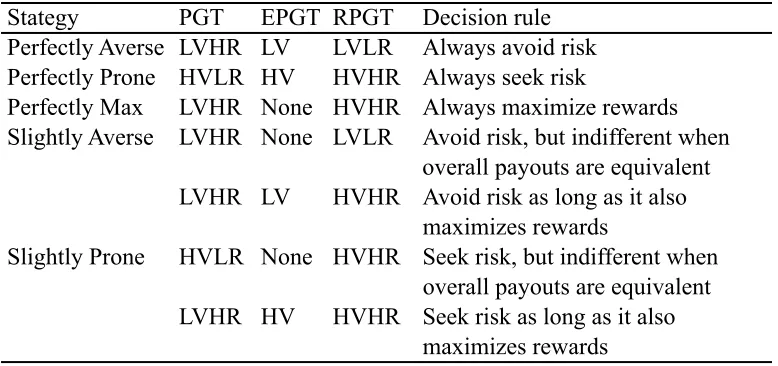
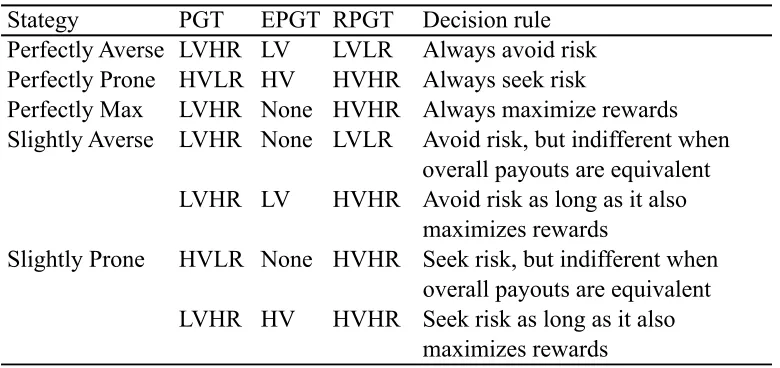
Here, we present the Primate Gambling Task (PGT), which is based on a simplified IGT designed for human children (Kerr & Zelazo, 2004), as a methodology that can be used across multiple primate species and that disentangles the issues of risk preferences and reward maximization. To parse these two potentially competing
the low variability deck. This allowed us to fully disentangle risk from overall reward maximization.
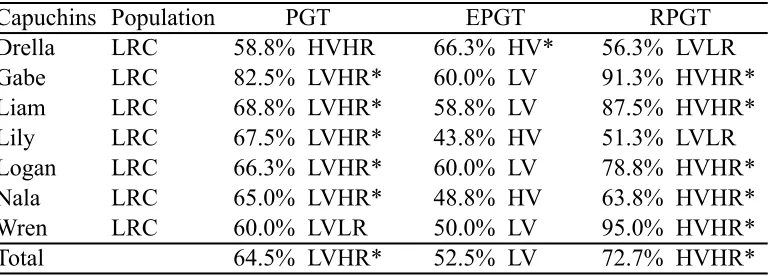
We tested two species of NHPs, chimpanzees (Pan troglodytes) and capuchin monkeys (Cebus apella), as well as human adults (18 years old or older) on the Primate Gambling Task. We predicted that all three species would develop preferences for the low variability option in the PGT condition, as that option both minimized risk and maximized overall rewards. In the EPGT, we predicted that none of the three species would form preferences for one option over the other because although the options differed in the way rewards were distributed (high or low variability), the mean payouts of both options were equivalent and many animals appear indifferent to risk with this payout structure (Kacelnik & Bateson, 1996; Shafir, 2000). Finally, in the RPGT condition, when reward maximization and risk aversion were in conflict, we predicted that humans would be risk averse, as they are in many gambling tasks (e.g., Bechara et al., 1997). However, because of the disparate methodologies used in the nonhuman literature and the entanglement of these two strategies, we were unable to make directional predictions for NHPs.
2.1 Subjects
2.1.1 Human Subjects
We tested thirty undergraduate students (21 females, 9 males, age range: 18 to 26; mean age: 19.8) in the Learning and Development Laboratory at Georgia State
received course credit in introductory psychology courses for participation. Participants could choose to withdraw at any time with no penalty and were debriefed after the experiment. The Institutional Review Board at Georgia State University approved all testing procedures.
2.1.2 Nonhuman Primate Subjects
We tested nine chimpanzees from two research centers (Yerkes National Primate Research Center Field Station (YFS): N = 6 females, age range = 19 to 39 years, mean age = 29.00 years; Language Research Center (LRC): N = 3, 1 female, 2 males, age range = 25 to 41 years, mean age = 35.00 years) and eight capuchin monkeys from the LRC (3 females, 5 males, age range = 7 to 22 years, mean age = 12.75 years). All primates were socially housed and received chow, fresh fruits and vegetables several times per day. All primates had ad libitum access to water and were never food deprived. At YFS the chimpanzees had access to large (over 500 m2 or 41.7 m2 per chimpanzee) outdoor enclosures with wooden climbing structures and enrichment devices as well as an indoor area with multiple rooms. These chimpanzees lived in social groups of 12 individuals. Chimpanzees at the LRC also had access to outdoor areas (288 m2 or 72 m2 per
chimpanzee) with multiple story climbing towers and enrichment devices as well as an indoor area with multiple rooms. Similarly, capuchin monkeys lived in indoor/outdoor enclosures with six individuals in each of two groups (Group 1: 38.79 m2 or 6.47 m2 per monkey, Group 2: 39.29 m2 or 6.55 m2 per monkey).
previously been trained to voluntarily enter individual test chambers where they tested (see Evans et al., 2008). All primates could choose whether or not to enter the testing area and participate in the study. The Institutional Animal Care and Use Committee of each facility approved all procedures.
2.2 General Methods
Each species was tested with the same procedure except when a species
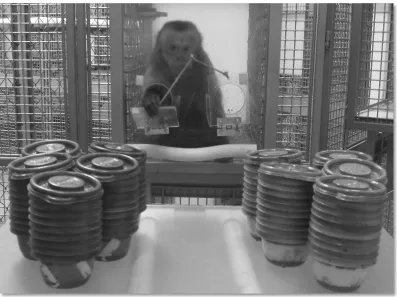
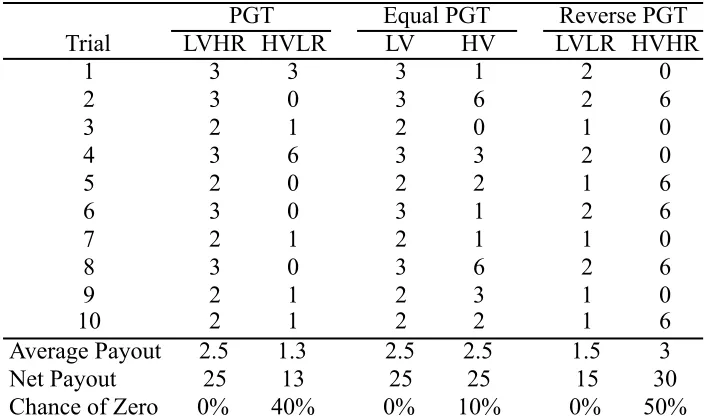
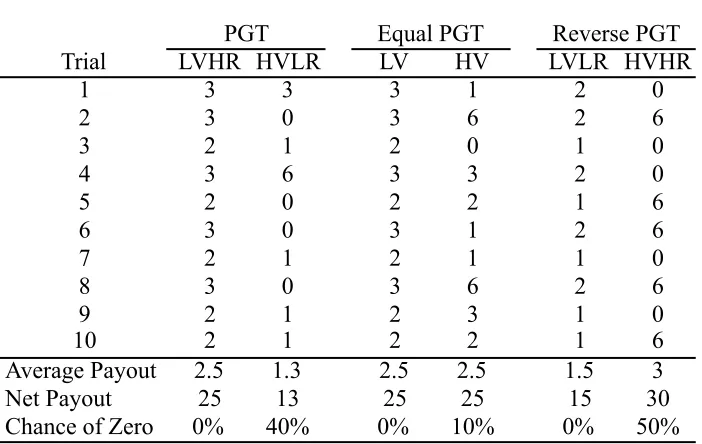
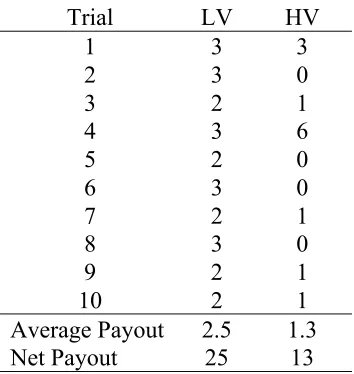
appropriate adjustment (noted below) had to be made. In lieu of decks of cards, subjects chose between two “decks” of small (118 mL) stackable containers. Each deck consisted of fifty opaque containers with the same color and pattern (which differed between decks and conditions). The decks were presented in 5 stacks of 10 containers (See Figure 2.1). Each stack of containers was topped with an opaque lid, so that rewards were hidden from view. One deck was a “safe” deck that gave a minimally variable reward
distribution (low variability option, LV). The other deck was a “risky” deck, in which the rewards were more variable and included both larger individual payoffs than the safe deck and low and zero payoffs (high variability option, HV; see Table 2.1). Note that in this context, ‘safe’ and ‘risky’ refer to the variability in reward presentation rather than the average payoffs associated with the decks. In the PGT and RPGT conditions these decks also varied on the overall quantity of rewards (highest overall rewards, HR; lowest overall rewards, LR).