Psychology Dissertations Department of Psychology
Summer 8-8-2011
Using Q Methodology to Explore College Students'
Using Q Methodology to Explore College Students'
Conceptualizations of Sexual Consent
Conceptualizations of Sexual Consent
Elizabeth R. Anthony
Georgia State University
Follow this and additional works at: https://scholarworks.gsu.edu/psych_diss
Part of the Psychology Commons
Recommended Citation Recommended Citation
Anthony, Elizabeth R., "Using Q Methodology to Explore College Students' Conceptualizations of Sexual Consent." Dissertation, Georgia State University, 2011.
https://scholarworks.gsu.edu/psych_diss/94
This Dissertation is brought to you for free and open access by the Department of Psychology at ScholarWorks @ Georgia State University. It has been accepted for inclusion in Psychology Dissertations by an authorized
administrator of ScholarWorks @ Georgia State University. For more information, please contact
USING Q METHODOLOGY TO EXPLORE COLLEGE STUDENTS’
CONCEPTUALIZATIONS OF SEXUAL CONSENT
by
ELIZABETH RUTH ANTHONY
Under the Direction of Dr. Sarah L. Cook
ABSTRACT
The high prevalence of sexual violence warrants continued research into its prevention.
Understanding consensual sexual experiences holds promise for sexual violence prevention;
however, sexual consent is a surprisingly understudied phenomenon. Existing research focuses
on the tactics used to coerce consent and the ways in which college students initiate and indicate
consent. Research that begins to articulate a theory of consent may help engineer situations
antithetical to sexually violent experiences. This study is a first step toward that objective. This
paper presents findings from an exploratory research study on college students’
conceptualizations of sexual consent. The purpose of this study was twofold: To investigate how
college students define consent and to understand how context influences the consent process. To
explore these research questions, quantitative and qualitative data were collected using Q
conceptualize consent differently. One group focuses on the importance of consent to rape
prevention, the other to healthy sexuality promotion. Qualitative interview data suggest
contextual variables such as definition of consent and relationship type influence consent to a
lesser extent than alcohol use, personal sexual experience, discrepant levels of sexual experience
between partners, and feelings for a potential sexual partner. Results support replacing the
current model of consent, in which consent is a contractual obligation between sexual partners,
with one of sexual communication, where consent is woven into a broader conversation about
healthy sexuality. The strengths and limitations of doing so are discussed and directions for
future intervention research are presented.
INDEX WORDS: Sexual consent, Q methodology, College students, Sexual experiences, Sexual
USING Q METHODOLOGY TO EXPLORE COLLEGE STUDENTS’
CONCEPTUALIZATIONS OF SEXUAL CONSENT
by
ELIZABETH RUTH ANTHONY
A Dissertation Submitted in Partial Fulfillment of the Requirements for the Degree of Doctor of
Philosophy
in the College of Arts and Sciences
Georgia State University
Copyright by Elizabeth Ruth Anthony
USING Q METHODOLOGY TO EXPLORE COLLEGE STUDENTS’
CONCEPTUALIZATIONS OF SEXUAL CONSENT
by
ELIZABETH RUTH ANTHONY
Committee Chair: Sarah L. Cook
Committee: Lisa Armistead
Dominic Parrott
Laura Salazar
Sharon Smith
Electronic Version Approved:
Office of Graduate Studies
College of Arts and Sciences
Georgia State University
DEDICATION
This dissertation is dedicated to anyone who has ever muddled through the murky terrain
between consensual sex and rape, struggling without language, to recognize and make sense of
ACKNOWLEDGEMENTS
I would like to acknowledge the considerable contributions made, not only to this project, but
also to my training as a feminist researcher by my mentor and chair, Dr. Sarah Cook. More than
anything, I have benefited from Sarah’s willingness to care for her graduate students as people
first and students second. Without her holistic mentorship, the cockroaches would have sent me
back North! I would also like to thank my committee, Drs. Armistead, Parrott, Salazar, and
Smith, for their participation in this work. This project benefitted greatly from their diverse
expertise. I have enjoyed thinking about sexual consent from their lenses. Lastly, I want to
recognize my graduate student mentor, Doyanne Darnell. Doyanne’s attention to detail and
passion for following the rules has made me a much stronger researcher and scholar than I would
have been without her guidance. I realize now how rare it is to find someone with whom you
have both fulfilling personal and professional relationships. Never have I had such fun working
TABLE OF CONTENTS
ACKNOWLEDGEMENTS v
LIST OF TABLES ix
LIST OF FIGURES x
1 INTRODUCTION 1
1.1 Prevalence of Sexual Violence 1
1.2 Legal Conceptions of Consent 3
1.3 The Affirmative Consent Standard 5
1.4 Alcohol Use among College Students 10
1.5 Alcohol and Sexual Violence 11
1.6 Alcohol and the Affirmative Consent Standard 13
1.7 Conceptualizing Sexual Consent 14
1.8 Research Questions 18
2 OVERALL DESIGN 22
3 STUDY I METHOD 25
3.1 Sample 25
3.2 Measures 25
3.3 Procedure 26
4 STUDY I RESULTS 27
4.1 Descriptive Data 27
4.2 Qualitative Data 28
5 STUDY I DISCUSSION 32
6.1 Sample of Statements 35
6.2 Sample of Participants 36
6.3 Q-sort Stimulus 37
6.4 Procedure 38
7.1 Exploratory Factor Analysis 42
7.2 Factor 1: Healthy Sexuality Promotion 44
7.3 Factor 2: Rape Prevention 45
8 STUDY II DISCUSSION 47
9 STUDY III METHOD 54
9.1 Sample 54
9.2 Interview Guide 54
9.3 Procedure 54
9.4 Analysis of Qualitative Data 56
10 STUDY III RESULTS 57
10.1 Influence of Definition of Consent 57
10.2 Influence of Relationship Type 57
10.3 Influence of Alcohol 60
10.4 Other Contextual Factors 62
11 STUDY III DISCUSSION 63
12 CONCLUSION 67
REFERENCES 69
Appendix A: Sexual Offense Statues and Definition of Consent by State 79
Appendix C: Study I Materials 106
Appendix D: Study II Materials 114
LIST OF TABLES
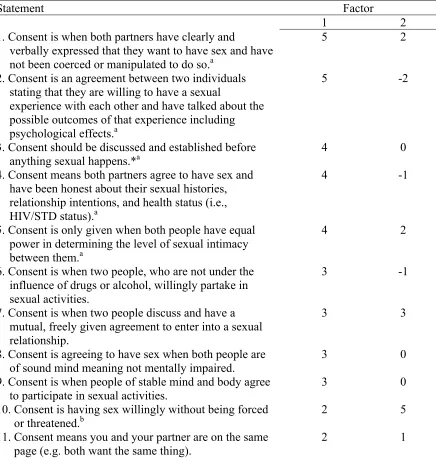
Table 6.1 List of statements about consent and scores for each factor 69
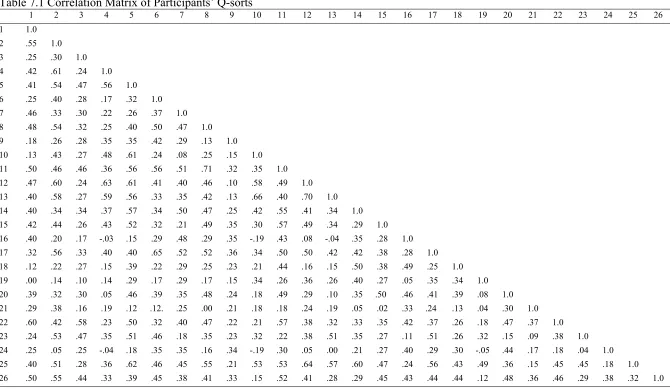
Table 7.1 Correlation matrix of participants’ Q-sorts 72
LIST OF FIGURES
Figure 1.1 Westen’s (2004) categorical framework organizing legal definitions of sexual consent 74
Figure 1.2 Hierachy of Westen’s (2004) categories of legal consent 75
1 INTRODUCTION
Sexual consent is a surprisingly understudied phenomenon given its centrality to human
sexual interactions. Consent distinguishes between criminal and non-criminal sexual behavior
(Westen, 2004). Sexual violence researchers pay considerable attention to the definition and
measurement of tactics used to coerce consent, yet they have not defined sexual consent or
developed theories to understand its antecedents and consequences. The frequency with which
coercive tactics are reported in survey research supports the need to improve rape prevention
efforts (Kolivas & Gross, 2007). Understanding positive behaviors related to sexual experiences,
such as consent, may help illuminate sexual violence and its prevention (Borges, Banyard, &
Moynihan, 2008). The purpose of this study is to describe college students’ conceptualizations of
sexual consent by collecting quantitative and qualitative data using Q methodology.
This study explores two broad questions: How do college students conceptualize sexual
consent and how does context influence consent negotiations? Three specific contextual factors
are examined: 1) definition of consent; 2) relationship type; and 3) drug and alcohol
consumption. The descriptive data from this study can be used to develop theories on sexual
consent. My long-term objective is to produce knowledge that informs sexual violence
prevention interventions for diverse college student populations.
1.1 Prevalence of Sexual Violence
Sexual victimization is a common experience in college women’s lives. Over 25 years
ago, Koss and Oros (1982) conducted the first national study to measure self-reported sexual
victimization experiences among college women. Using the Sexual Experiences Survey (SES),
roughly 15% of the women sampled reported having been raped at least once since the age 14.
same timeframe (Koss, Gidycz, & Wisniewski, 1987). Research conducted with various versions
of the SES since 1987 consistently demonstrates that 15% of college women experience rape
(see Kolivas & Gross, 2007 for a review of several prevalence studies).
National probability samples do not exist in studies of men’s sexual victimization;
however, we know that college men are also victims of sexual violence. Approximately 4% of
men from a large Midwestern university sample reported that a partner initiated attempted
intercourse at least once against his will (Stets & Pirog-Good, 1989). Other data double and
quadruple the estimated scope of the problem. For example, 8.3% of men from a sample of 1,215
students attending Southern colleges and universities reported being threatened or forced to
engage in vaginal, anal, or oral sex (Tewksbury & Mustaine, 2001). Struckman-Johnson (1988)
reports the highest prevalence of male sexual victimization among a college population; 16% of
men from a sample of University of South Dakota students said they had been forced to engage
in sexual intercourse while on a date at least once in their life.
Sexual violence exists on a continuum of intrusiveness and severity. Situated at one end
are rape and other forms of sexual assault. At the other are noncontact forms of sexual violence
including street and sexual harassment. These forms of sexual violence can become assaultive,
but more often involve unsolicited comments about a woman’s body, sexual jokes, sexually
insinuating gestures, leering, stalking, and obscene phone calls (Quinn, 2002). Somewhere in the
middle of the continuum is “rape by acquiescence,” or women’s experiences of unwanted sex
with their long-term male partners (Basile, 1999).
Basile (1999) conducted interviews with 41 women who reported experiencing some
form of unwanted sex in a long-term intimate relationship in a national telephone survey. Using
acquiescence to unwanted sex, two of which meet legal definitions of rape in many states due to
the partners’ use of force or threatened use of force. The remaining ways wives “give in” to sex
are seemingly more innocuous. “Unwanted turns to wanted” most often captured experiences of
acquiescence among women in self-defined happy, noncoercive partnerships. Giving in to
unwanted sex because of “perceived marital duty” or the desire to “avoid an argument” also
emerged from women’s descriptions of their experiences.
Several women from Basile’s (1999) study did not categorize their experiences as rape
even when the law would have. However, where the law would be silent (i.e., unwanted turns to
wanted, perceived marital duty, avoid an argument), sexual violence researchers would see
coercion. The data from Basile’s study illustrate that rape is not considered a crime when it looks
like sex. As a result, sexually violent experiences often go unpunished because the law says
“consensual sex” can involve a bit of coercion or force (MacKinnon, 1989). Given this reality, a
continuum of sexual violence creates a false dichotomy between consensual sex and rape when
in fact there are often more or less subtle forms of violence inherent in “consensual” sexual
experiences.
1.2 Legal Conceptions of Consent
As consent is a critical concept in rape law, the legal community has devoted
considerable attention to its definition. All 50 states define rape in one of two ways: sexual
intercourse without consent or sexual intercourse with an individual who is incapable of giving
consent (see Appendix A for state-by-state definitions of rape and consent). Physical
“helplessness,” mental “disability,” and age are the most commonly recognized factors that
render an individual incapable of giving consent. In addition, many states recognize specific
obtain sex (e.g., Iowa), administration of drugs and/or alcohol to an individual without his/her
knowledge for the purpose of engaging in sexual behavior (e.g., Hawaii), and engagement in
sexual intercourse with someone who is asleep or unconscious and subsequently unable to give
consent (e.g., Delaware).
While consent is a critical component of all 50 states’ sexual offense statutes,
jurisdictions around the country interpret consent differently. The law defines consent in general
and specific terms (Westen, 2004). Generally, all 50 states agree that consent means
acquiescence to sexual intercourse; however, states interpret ‘acquiescence’ in several different
ways. To organize states’ specific definitions of consent, Westen (2004) developed a categorical
framework with three dimensions of consent: 1) factual versus legal; 2) attitudinal versus
expressive; and 3) actual versus imputed (see Figure 1.1). These dimensions are not mutually
exclusive; states’ definitions of consent often encompass more than one category. In fact, some
categories of consent are nested within others (see Figure 1.2). For example, an individual can
factually consent in attitude or expression (explained below).
Factual consent refers to an individual’s decision to engage in sexual intercourse
(Westen, 2004). Legal consent refers to specific circumstances under which an individual’s
factual consent is invalid (i.e., could not be used as a legal defense to rape; Westen, 2004). For
example, a 10-year-old girl living in the state of Georgia may factually consent to sexual
intercourse with a 20-year-old man. Her “consent,” however, is deemed invalid by Georgia law
because 10-year-olds lack the competence to make such decisions. As a result, the 20-year-old
man could not use the girl’s factual consent as a legal defense to rape. All 50 states’ sexual
offense statutes contain an element of legal consent, as they recognize certain circumstances that
The attitudinal/expressive dichotomy refers to the ways in which an individual can
factually consent (Westen, 2004). As an attitude, factual consent is defined as a subjective
decision to engage in sexual intercourse (Westen, 2004). As an expression, factual consent is
defined as an outward demonstration of a subjective decision (Westen, 2004). As such,
attitudinal consent is a state of mind that can only be inferred by an individual’s expressive
behavior. Sexual offense statutes in many states recognize consent as both an attitude and an
expression. For example, the state of California defines consent as “positive cooperation in act or
attitude pursuant to an exercise of free will.” While many states do not articulate “acceptable”
ways to consent, no state defines consent solely as an attitude.
The law recognizes yet a third interpretation of consent. To say that an individual
consented to sex can refer to instances of actual consent in which s/he factually, legally,
attitudinally, or expressively chose to engage in sexual intercourse (Westen, 2004). Or, it can
refer to instances in which the law imputed an actual choice to her/him (Westen, 2004). The
marital rape exemption clauses in California, Ohio, and Oklahoma’s sexual offense statutes are
examples of imputed consent. By entering into the institution of marriage, the law in these three
states asserts that a woman consents to all future sexual experiences with her husband. As a
result, a husband cannot be charged with raping his wife in California, Ohio, and Oklahoma
because all sex in marriage is considered consensual.
1.3 The Affirmative Consent Standard
The limited social science literature on sexual consent largely examines the ways men
initiate and women indicate consent. In Westen’s (2004) framework, this literature falls within
the attitudinal/expressive dichotomy. Consent negotiations became the spotlight of popular and
affirmative consent policy that required all members of the college community to obtain verbal
consent before engaging in each and every sexual behavior during a sexual interaction
(Humphreys & Herold, 2003). Spurred by the occurrence of sexual violence and Tannen’s
miscommunication model of rape (reviewed later), Antioch College attempted to prevent rape by
requiring initiators of sexual contact to assume nonconsent until the recipient of the sexual
advance said ‘yes’ to each and every initiated behavior.
The affirmative consent standard generated three lines of research. The first explored
college students’ reception of Antioch College’s sexual offenses policy. Humphreys and Herold
(2003) mailed a questionnaire to a stratified random sample of 1,200 Canadian undergraduates.
Just over 40% of the original sample returned the survey. Undergraduate women and men rated
Antioch’s policy negatively, calling it unrealistic, unenforceable, difficult to implement, and
awkward. To explain their findings, Humphreys and Herold suggested that college students’
negative responses might be the result of incongruence between affirmative consent and
normative sexual behavior.
Three studies address Humpheys and Herold’s (2003) incongruence hypothesis and
represent the second line of research related to the affirmative consent standard. Hickman and
Muehlenhard (1999) conducted focus groups with Midwestern college students to identify how
young adults communicate consent. Focus group participants identified 34 verbal and nonverbal
means through which they obtain and indicate consent. Hickman and Muehlenhard surveyed
another sample of college students about how indicative each behavior was of their own consent
in a hypothetical dating situation and how frequently they actually used each of the 34 behaviors.
encounter by making no response. Participants rarely reported saying ‘no’ to indicate nonconsent
(Hickman & Muehlenhard, 1999).
Byers and Lewis (1988) studied heterosexual dating couples’ disagreements over desired
levels of sexual intimacy in their relationships. Using a self-monitoring technique, Byers and
Lewis collected data from a sample of self-identified heterosexual college students in dating
relationships over a four-week period. Thirty-one women and 25 men reported at least one
disagreement with their partner over sexual intimacy. When disagreements occurred because the
man in the relationship wanted to engage in sexual activity and the woman in the relationship did
not, the man most often initiated the unwanted sexual activity with nonverbal behavior (Byers &
Lewis, 1988).
Only one study examined Westen’s (2004) attitudinal/ expressive dichotomy within
same-sex relationships (Beres, Herold, & Maitland, 2004). Exploratory factor analysis of sexual
consent behaviors in a sample of 257 young adults from the United States and Canada identified
four initiating and four reciprocating factors. Sexual consent initiating factors included nonverbal
behaviors involving touch, no resistance behaviors, verbal behaviors, and nonverbal behaviors
without touch. Sexual consent responding factors were no resistance behaviors, verbal behaviors,
nonverbal behaviors, and undressing behaviors. Beres et al. found that both men who have sex
with men and women who have sex with women used nonverbal behaviors such as touching and
not resisting more frequently than verbal behaviors to initiate and indicate consent.
Antioch College’s affirmative consent policy assumed verbal behavior provides the best
indication of sexual consent. However, findings from these studies suggest college students use
nonverbal behaviors more frequently than verbal behaviors to initiate and acquiesce to sexual
also with the way in which we express positive emotions. For example, among a sample of 77
married and cohabitating college students, positive responses to sexual initiations were more
often expressed nonverbally (Byers & Heinlein, 1989). Further, roughly 50% of college women
and men believe nonverbal messages are more reflective of people’s sexual intent than verbal
messages (Sawyer, Desmond, & Lucke, 1993). These findings lend support to Humphreys and
Herold’s (2003) incongruence hypothesis; however, research investigating perceived ability to
enact affirmative consent is needed. Though it may not be typical, perhaps affirmative consent is
feasible with normative change.
The final line of research related to the affirmative consent standard concerns the
occurrence of gendered miscommunication about consent to sex. According to the
miscommunication model, heterosexual date and acquaintance rape are extreme instances of
miscommunication between women and men over desired levels of sexual intimacy (Hansen,
O’Byrne, & Rapley, 2010). As discussed by Edwards and Hamilton (2004), Tannen (1990)
asserts that communication between women and men is essentially cross-cultural. That is,
women and men speak fundamentally different languages. Therefore, heterosexual sexual
encounters are high-risk situations because men could fail to recognize and interpret women’s
verbal and nonverbal cues of nonconsent. The miscommunication explanation has contributed to
the popularity of assertiveness and refusal skills training as methods of date rape prevention
(Kidder, Boell, & Moyer, 1983). These programs teach women how to say ‘no’ to unwanted
sexual experiences (Kitzinger & Frith, 1999).
Two studies speak to the plausibility of miscommunication as a cause of sexual violence.
Kitzinger and Frith (1999) used conversation analysis to explore how women say ‘no’ in
whereas accepting an invitation very often involves a simple ‘yes,’ refusing an invitation almost
never involves a simple ‘no.’ Instead, refusals are typically softened by delays, promises of
future acceptance, pauses, hesitations, hedges, and palliatives (i.e., appreciations and apologies –
That’s so nice of you to offer, but unfortunately, I already have plans). Furthermore, when
refusing an invitation, the women sampled said they needed to explain their refusal to make clear
they were willing, but unable to accept the offered proposal.
Kitzinger and Frith’s (1999) research not only highlights the difficulty of refusing an
invitation in a nonsexual context, but also women’s sophisticated ability to convey and
comprehend refusals that do not include the word ‘no.’ For example, the women sampled
recognized a brief pause of no more than two-tenths of a second and weak acceptances (e.g.,
umm, okay) as indications of refusal. Refusing an invitation is difficult and uncomfortable in any
context (Kitzinger & Frith, 1999). We rarely ‘just say no’ because doing so violates cultural
norms and social etiquette (Kitzinger & Frith, 1999). Therefore, expecting women to use the
word ‘no’ to refuse a sexual advance requires considerable normative change.
O’Byrne, Rapley, and Hansen (2006) extended Kitzinger and Frith’s (1999) work to men.
Young, heterosexual male college students in their focus groups also recognized that refusing a
sexual invitation has potentially negative consequences. To avoid negative reception, male
respondents similarly reported softening a sexual refusal by saying that they were unable, rather
than unwilling to accept an invitation. The men also demonstrated a sophisticated ability to
comprehend women’s verbal refusals to sex in the absence of the word ‘no’ as well as the ability
to recognize and understand subtle non-verbal sexual refusals (O’Byrne et al., 2006). For
example, the men reported that if a woman says she has to get up early the next morning, she is
sophisticated understanding of sexual refusals, given that they were able to infer ‘no’ in the
complete absence of the word.
These studies suggest that heterosexual date and acquaintance rape are not the result of
miscommunication between women and men. However, both studies are contextually limited;
they fail to consider how other factors might contribute to sexual miscommunication. One such
factor is alcohol. Alcohol is often consumed in the context of dating (O’Hare, 1990). In fact,
drinking alcohol while on a date is so common that it is part of the heterosexual dating script.
Approximately 25% of women and men include alcohol in both hypothetical and actual dating
scripts (Rose & Frieze, 1993). Slightly more than 50% of individuals report either they or their
partner consumed alcohol on their most recent first date (Mongeau & Johnson, 1995).
Communication about sexual consent may be hampered by the use of alcohol.
1.4 Alcohol Use among College Students
The majority of college students consume alcohol (SAMHSA, 2009). Specifically, 63.9%
of full-time college students between the ages of 18-22 reported having at least one drink in the
past month (SAMHSA, 2009). Perhaps more problematic is the percentage of college students
engaging in binge drinking, defined as consuming five or more drinks on the same occasion.
Approximately 44% of college students reported binge drinking at least once during the past
month and 16% reported binge drinking five or more times during the same timeframe
(SAMHSA, 2009).
Data from the Harvard School of Public Health College Alcohol Study highlight the
increasing frequency of binge drinking (defined in this study as consuming at least five drinks in
a row for men or four drinks in a row for women at least three times in the past two weeks).
rose from 19.8% to 22.7% (Wechsler & Nelson, 2008). Men, members of Greek organizations,
and Caucasian students were among the college students most likely to engage in frequent binge
drinking (Wechsler & Nelson, 2008).
1.5 Alcohol and Sexual Violence
Heavy alcohol use is associated with a variety of negative outcomes (Wechsler, Lee,
Kuo, & Lee, 2000), one of which is sexual victimization. Though never the victim’s fault,
self-report data suggest that approximately half of all sexual violence victims were drinking alcohol
prior to their assault (Abbey, Zawacki, Buck, Clinton, & McAuslan, 2001). Drinking frequency
is positively correlated with experiencing unwanted attempted or completed kissing, fondling, or
sexual touching (Banyard et al., 2007); unwanted anal, oral, or vaginal penetration (Kilpatrick,
Resnick, Ruggiero, Conoscenti, & McCauley, 2007; Lawyer, Resnick, Bakanic, Burkett,
Kilpatrick, 2010; Tyler, Hoyt, & Whitbeck, 1998); and sexual re-victimization (McCauley,
Calhoun, & Gidycz, 2010).
Heavy alcohol use is also a significant predictor of sexual aggression (Parkhill, Abbey, &
Jacques-Tiura, 2009; Koss & Gaines, 1993; Muehlenhard & Linton, 1987). Men who have been
drinking alcohol perpetrate roughly 50% of all incidents of sexual violence (Abbey et al., 2001).
Ullman, Karabatos, and Koss (1999) explored the relationship between alcohol and sexual
aggression using a national sample of college men. Of the 694 men who self-reported
perpetrating some form of sexual violence, 44% admitted they were using alcohol at the time of
the assault and 41.9% reported that the woman they assaulted was also using alcohol.
Alcohol myopia and alcohol expectancy theories explain how alcohol contributes to
sexual violence. Both theories are empirically supported and offer important opportunities for
otherwise do (Norris & Nurius, 1996), alcohol myopia and expectancy theories do not
completely dismiss the possibility that perpetrators use alcohol to justify their sexually violent
behavior. In fact, several studies highlight the use of alcohol as a means to obtain sex (Greer &
Buss, 1994; Tyler et al., 1998). For example, approximately 23% of undergraduate men from a
sample of 541 Caucasian college students admitted to getting a date drunk or stoned to engage in
sexual intercourse (Tyler et al., 1998).
Alcohol myopia theory emphasizes the pharmacological effects of alcohol and consists of
two components: attention allocation and inhibition conflict (Steele, 1988; Josephs & Steele,
1990). Attention allocation refers to the narrowing of an intoxicated individual’s attentional
capacity, which causes the individual to notice only a fraction of the information s/he would
normally be capable of processing (Steele, 1988; Josephs & Steele, 1990). When attention is
restricted, only those cues that are most salient to the intoxicated individual receive attention
(Steele, 1988; Josephs & Steele, 1990).
The inhibition conflict component of alcohol myopia theory predicts when restricted
attentional capacity will lead to negative outcomes. Negative effects of alcohol occur only in
situations with equally strong instigatory (i.e., go) and inhibitory cues (i.e., stop; Dermen &
Cooper, 2000; Cooper, 2006). For example, if a situation contains only ‘go’ cues, an individual
will most likely act regardless of alcohol consumption. Similarly, if a situation contains only
‘stop’ cues, an individual will most likely not act regardless of alcohol consumption. However, if
a situation contains both ‘go’ and ‘stop’ cues, an intoxicated individual with limited attentional
capacity will attend only to those cues that he/she finds most salient. ‘Go’ cues are often more
Alcohol expectancy theory emphasizes the psychological effects of alcohol (Cooper,
2006). Alcohol expectancies are beliefs about how alcohol affects the self and others, which
influence post-drinking behavior (George, Stoner, Norris, Lopez, & Lehman, 2000). The belief
that alcohol enhances, stimulates, or disinhibits sexual experiences is a common alcohol
expectancy (George et al., 2000; Morr & Mongeau, 2004; White, Fleming, Catalano, & Bailey,
2009). Combining alcohol expectancy and myopia theories provides an explanation for the
co-occurrence of sexual violence and alcohol use. Sexual experiences can be high conflict situations
with strong ‘go’ and ‘stop’ cues operating simultaneously. If an individual initiates a sexual
experience while intoxicated and believes that alcohol enhances sexuality, s/he will likely focus
exclusively on this instigatory cue. Though the recipient of the sexual advance may exhibit
inhibitory cues of sexual refusal, the initiator will likely pursue sexual interaction because s/he
fails to recognize ‘stop’ cues.
1.6 Alcohol and the Affirmative Consent Standard
Lim and Roloff’s (1999) research highlights the particularly problematic combination of
affirmative consent and alcohol consumption. Lim and Roloff examined consent and sexual
context among a sample of 100 undergraduate women and men at a Midwestern university.
Using a mixed factorial design, students were randomly assigned to verbal or nonverbal consent
conditions where they encountered 12 randomly ordered sexual scenarios involving Tom and
Sue. In the verbal conditions, Tom asks Sue if she wants to have sex and Sue says ‘yes.’ In the
nonverbal conditions, Tom and Sue begin kissing and then proceed to have sex. The 12 scenarios
reflected sexual situations in which alcohol or coercion were present. After reading each
scenario, participants were asked to rate Sue’s level of impairment from alcohol and whether
judgment was significantly less impaired by alcohol than when Sue demonstrated her consent
nonverbally (i.e., by kissing Tom). When Sue had been drinking, respondents were significantly
less likely to think she had been raped if she verbally, as opposed to nonverbally, consented to
sex.
Antioch College’s affirmative consent policy presumed verbal consent was the best way
to prevent sexual violence. However, Lim and Roloff’s (1999) results suggest that the
affirmative consent standard may discourage an individual who initiates sexual behavior from
attending to nonverbal and contextual information that may contradict a verbal ‘yes.’ Apparently,
if Sue can say ‘yes,’ Tom can have sex with her regardless of her level of intoxication. The
results of Lim and Roloff’s study also highlight participants’ lack of awareness of legal
definitions of rape. Sexual offense statutes in 24 states define rape as sexual intercourse with an
individual who is incapable of giving consent due to intoxication, mental incapacity, or
impairment. According to these statutes, Sue’s consumption of alcohol may have negated her
factual consent. Results from Lim and Roloff’s study suggest individuals should consider more
than a verbal ‘yes’ when determining whether they have obtained their partner’s consent to sex.
1.7 Conceptualizing Sexual Consent
The psychological literature typically conceptualizes consent as a single, isolated event in
a linear sequence of heterosexual sexual engagement. Conceptualized as such, sex is a series of
ever-increasingly intimate behaviors that culminate in penile-vaginal penetration. This
conceptualization of sex resides in our collective psyche as the traditional sexual or heterosex
script. A popular explanation for gender differences in human sexual behavior, the traditional
sexual script prescribes markedly different roles for women and men (Wiederman, 2005); men
controlling and confining male sexual desire (Masters, Norris, Stoner, & George, 2006). The
heterosex script has heavily influenced the psychological study of consent. Within this limited
body of research, many researchers operationally define consent as something men get and
women give.
The scripted approach to understanding human sexual behavior is the intellectual
innovation of sociologists Simon and Gagnon (1986). According to their theory, just as
television and stage actors follow scripts, individuals use scripts in daily life to guide their own
behavior and interpret the behavior of others (Simon & Gagnon, 1986). Scripts are shaped by
cultural, interpersonal, and intrapsychic sources (Simon & Gagnon, 1986; Lenton & Bryan,
2005; Rose & Frieze, 1993). Cultural sources originate at institutional and organizational levels
and are disseminated to individuals through their interactions with these systems (Lenton &
Bryan, 2005). Cultural messages, however, are relatively generic; individuals must tailor them to
the specific contexts of interpersonal interactions (Simon & Gagnon, 1986). To prepare for
interaction with others, individuals rehearse their initiating and responding behaviors as well as
the initiating and responding behaviors of others (Simon & Gagnon, 1986). In other words,
individuals rehearse a script.
Sexual behavior is influenced by many cultural messages. In fact, scripting theory
maintains that “sexuality is learned from culturally available messages that define what ‘counts’
as sex, how to recognize sexual situations, and what to do in sexual encounters” (Frith &
Kitzinger, 2001, p. 210). One such cultural message is heteronormativity. “Widely used as
shorthand for the numerous ways in which heterosexual privilege is woven into the fabric of
social life, pervasively and insidiously ordering everyday existence” (Jackson, 2006, p. 108),
inequality, and the mainstream media. As a result, some forms of sexuality – those practiced by
the dominant culture – become socially ‘acceptable’ while all others become ‘deviant’ (Gilbert,
Walker, McKinney, Snell, 1999).
While scripting theory provides a social alternative to essentialist understandings of
human sexual behavior, scripts are problematic for a number of reasons. First, scripts render
invisible all behaviors that fall outside of proscribed bounds. For example, rape scripts portray
sexual violence as penile-vaginal penetration perpetrated by a violent, weapon-yielding male
stranger against an innocent, physically resistant White woman. This conceptualization of rape is
inconsistent with rape victims’ self-reported experiences in many respects. For example,
according to data from the National College Women Sexual Victimization study, 9 out of 10
female victims of completed or attempted rape knew their assailant (Fisher, Cullen, & Turner,
2000). Defining rape as a violent attack by a stranger limits our ability to recognize what has
become known as date and acquaintance rape and other forms of sexual violence. Similarly, the
heterosex script overlooks same-sex and transgender sexuality and fails to incorporate the
infinite ways in which race, class, and (dis)ability status differentially pattern heterosexual sexual
experiences.
Second, because it is embedded within heteronormative discourses on gender and
sexuality, the heterosex script reinforces the hierarchical organization of these social identities,
situating masculinity and heterosexuality over femininity and homosexuality (Nielson, Walden,
& Kunkel, 2000; Brickell, 2006). Given these limitations, this study employs additional social
constructionist perspectives on gender and sexuality, specifically historicism, ethnomethodology,
and symbolic interactionism, to explore the existence of multiple meanings of sexual consent
Incorporating historicism, ethnomethodology, and symbolic interactionism into the study
of consent replaces the traditional ‘initiating and responding’ conceptualization of consent with a
more complex understanding of the phenomenon. Historicism focuses on stability and change
over time (Brickell, 2006). A historicist approach asserts that social identities, such as gender
and sexuality, hold different meanings over time and place because they are situated within
varied economic conditions, racial and ethnic identities, and dynamic family structures (Brickell,
2006). This study incorporates historicism by exploring consent as a dynamic process influenced
by varied contextual factors such as one’s definition of consent, type of sexual relationship, and
drug/alcohol consumption.
Ethnomethodology and symbolic interactionism focus on the experience of ‘being’ a
social identity. According to these phenomenological approaches, the categories of male and
female take on meaning only through the performative process of social interaction (Brickell,
2006). Much like explanations for women’s use of token resistance (described below;
Muehlenhard & Hollabaugh, 1988), this study incorporates ethnomethodology and symbolic
interactionism by suggesting that one’s conceptualization of consent speaks to one’s identity. As
such, consenting is a “negotiation of social expectations, a way of expressing a social identity, or
of fitting into a certain world” (Beres, p. 99).
From a symbolic interactionism perspective, token resistance provides women with a way
to conform to the sexual gatekeeper role outlined by the heterosex script. Token resistance is
defined as “indicating that [you do] not want to have sex even though [you have] every intention
to and [are] willing to engage in sexual intercourse” (Muehlenhard & Hollabaugh, 1988, p. 872).
Approximately 40% of a sample of 610 undergraduate college women reported engaging in
reasons for engaging in this behavior returned three factors: practical (e.g., not wanting to seem
promiscuous), inhibition-related (e.g., moral concerns or discomfort with one’s body), and
manipulative (e.g., desiring to be in control; Muehlenhard & Hollabaugh, 1988), all of which
relate to the heterosex script.
1.8 Research Questions
In response to calls for a more thorough understanding of consensual sex (Beres, 2007),
this study explores two broad questions: How do college students conceptualize consent in 2011
and how do several contextual factors influence consent negotiations? To my knowledge, no
studies exist that explore 1) how one’s definition of consent influences one’s negotiation of
consent, 2) how consent negotiations differ across different types of relationships, or 3) how
drugs/alcohol influence consent. The absence of these comparisons suggests consent is a static
process. This study interrogates this assumption by exploring consent in three different types of
relationships (first consensual sexual experience ever, first consensual sexual experience with a
new dating partner, a consensual sexual experience in a long-term dating relationship) and in the
presence of drugs/alcohol.
Several assumptions guide my work. First, I anticipate college students’ definitions of
consent will conform to Westen’s (2004) categorical framework, given that consent is often
equated with legal responsibility. Second, I anticipate one’s definition of consent to influence
one’s negotiation of consent. For example, if an individual believes consent is an attitude, I
would not expect him/her to actively seek an expressive indication of consent from his/her sexual
partner. Finally, I believe type of relationship and the presence of drugs/alcohol will influence
consent negotiations. I expect participants to place less emphasis on establishing consent for each
consensual sexual encounter ever or a consensual sexual experience with a new sexual partner. I
Figure 1.1 Westen’s (2004) categorical framework organizing legal definitions of sexual consent. *States rarely adopt a single specific definition of consent. Instead, definitions usually
State's Definition of Consent** Example State*
Specific Definitions of Consent General Definition
of Consent
Acquiescence to sex
1Actual vs. 2Imputed
2Ohio conduct with another who is not the no person shall engage in sexual spouse of the offender without that
person's consent
1Washington indicating freely given agreement actual words or conduct to have sex
1Attitudinal
vs.
2Expressive
2Alabama expressly acquiesce to the actor's conduct
1California positive cooperation in attitude
1Factual vs. 2Legal
2Florida must be 12 years of age or older to consent
1Minnesota
!words or actions indicating a freely given agreement to perform a particular sexual act
Attitudinal Expressive Factual Legal
2 OVERALL DESIGN
I collected data with Q methodology. Q methodology combines quantitative and
qualitative approaches to reveal social perspectives on a particular phenomenon of interest
(McKeown & Thomas, 1988). In Q methodology, participants’ opinions about the topic under
investigation are collected using a sorting technique where respondents rank-order a series of
statements according to their point of view (van Exel & de Graaf, 2005). Sorted data are
synthesized using correlation and factor analytic techniques. Whereas traditional factor analysis
groups items according to shared variance to reveal underlying latent constructs, when used in Q
methodology, factor analysis clusters participants to reveal groups of individuals who share a
common perspective about the phenomenon under investigation (Webler, Danielson, & Tuler,
2009).
To meet the objectives of Q methodology, I collected data in three separate, but
overlapping studies; data from Study I informed Study II and data from Study II informed Study
III. The purpose of Study I was to identify the range of college students’ opinions about consent.
To obtain statements for rank ordering in Study II, I gathered college students’ opinions about
consent online with open- and close-ended questions in Study I. I coded participants’ opinions
using inductive and deductive categories. Thus, both anticipated and unanticipated categories
were documented. Using a manual, iterative, exhaustive coding process, I organized participants’
responses into categories, stratified by category, and randomly sampled within category to draw
a representative sample for sorting in Study II. In Study II, participants rank-ordered statements
about consent, which I then correlated and factor analyzed. In Study III, I interviewed a
sub-sample of respondents from Study II to collect contextual information about consent in the
3 STUDY I METHOD
3.1 Sample
I collected data from a convenience sample of 95 undergraduate students enrolled in
introductory psychology courses at Georgia State University (GSU; M age = 21.3 years, SD =
5.4 years). Women comprised 82.2% of the sample. The vast majority of participants (87.2%)
self-identified as heterosexual/“straight.” The remaining self-identified their sexual orientation as
bisexual (10.6%), gay (1.1%), and transgender (1.1%). Approximately 44% of participants were
in a committed dating relationship, 36.8% were single, 13.7% were casually dating, 5.3% were
married, 4.2% were cohabitating, and 2.1% were divorced at the time of the study.
Participants were able to self-identify as a member of up to nine racial and ethnic groups
(i.e., Black/African American, Pacific Islander/Native Hawaiian, White/European
American/Caucasian, Hispanic/Latino(a), Central Asian, South East Asian, Middle Eastern/West
Asian, Native American/Alaska Native, biracial/multiracial). I re-categorized participants who
selected more than one racial/ethnic identity as biracial/multiracial. As such, 45.7% of the
sample identified as Black/African American, 29.3% identified as White/European
American/Caucasian, 5.4% identified as South East Asian, 2.2% identified as
Hispanic/Latino(a), 2.2% identified as Central Asian, and 15.2% self-identified or were
categorized as biracial/multiracial.
3.2 Measures
College students’ opinions about sexual consent were gathered using an instrument I
created for this study. First, participants defined sexual consent in their own words. To ensure
that all subsequent information they provided regarding sexual consent was rooted in personal
following questions about it: What was the nature of your relationship with this person
(open-ended)? Was this your first sexual experience with this individual (yes/no)? What behaviors did
you engage in during this experience (kissing, touching/petting, dry humping, digital
sex/finger/fisting, masturbation, oral sex, anal sex, vaginal sex, other)? Did you think about
getting or giving consent during this experience (yes/no)? If a participant answered, “yes” to the
previous question, he/she was also asked what specifically about sexual consent he/she thought
about.
Next, participants answered two dichotomous gated questions about whether they gave or
received consent during the experience they described. If respondents answered, “yes” to one or
both questions, additional information was obtained. Participants indicated to what they
consented or received consent (a particular sexual act, my partner, other) how they gave/received
consent (open-ended), what it meant to give/receive consent (open-ended), and when they
gave/received consent (before anything physical happened, while kissing, during foreplay,
during a previous sexual experience with their partner, before each new sexual act, other).
Additionally, participants who reported receiving consent were asked how they knew their
partner consented.
I used a five-item questionnaire that asked participants to identify their race/ethnicity,
relationship status, sexual orientation, gender, and age to gather demographic information.
3.3 Procedure
GSU’s Institutional Review Board (IRB) approved all procedures for this study. I
recruited students through SONA, GSU’s web-based research participant management system.
Data were collected online through PsychData, an internet-based survey host specifically
SONA, participants received an online informed consent form. The consent form explained the
nature of the study, what participants would be asked to do, costs and benefits of the study, and
respondents’ rights as participants. Students consented by typing their first and last names in text
boxes at the bottom of the consent form and clicking continue. After consenting, students
completed the questionnaire and demographic form. All students received an online debriefing
statement explaining the full nature of the study and were also given the option of receiving
consent and debriefing forms through email. The debriefing statement also included contact
information for the principle investigator (PI) and student PI. Participation did not exceed 30
minutes. Students received one research credit for their involvement. No student reported an
adverse reaction to the research procedure.
4 STUDY I RESULTS
4.1 Descriptive Data
Just over 60% of the sample described their first sexual experience with a new partner.
During this experience, 97% of participants reported engaging in kissing, 92.5%
touching/petting, 76.3% vaginal sex, 57.0% oral sex, 50.5% digital sex, 30.1% dry humping,
11.8% masturbation, and 3.2% anal sex.
Most participants (65.6%) said they thought about giving or getting consent during the
experience they described. In fact, the vast majority of participants did both; 84.6% of the sample
reported giving consent and receiving consent from their partner during the sexual experience
they described. Of those participants who gave consent, 78.0% said they consented to their
partner whereas 17.1% reported consenting to a particular sexual act. Of those participants who
received consent, 82.7% reported their partner consented to them and 14.8% reported their
Just over 33% of participants reported consenting before anything physical happened,
31.0% consented while kissing, 25.0% during foreplay, 3.6% did so during a previous sexual
experience with their partner, and 3.6% consented before each new sexual act. Due to an online
survey error, participants were able to report obtaining consent at multiple times. Approximately
50% of participants who said they received consent reported doing so before anything physical
happened, 54.3% received consent while kissing or during foreplay, 12.3% during a previous
sexual experience with their partner, and 14.8% before each new sexual act.
4.2 Qualitative Data
Responses to open-ended questions returned a total of 235 statements about sexual
consent. According to Webler et al. (2009), researchers using Q methodology should draw their
Q-sample from a population of between 100 to 300 statements. Therefore, 95 participants
produced enough statements from which to draw the Q-sample for Study II. As expected, college
students’ opinions reflected Westen’s (2004) legal framework. However, only 5 of his 6
categories emerged from the qualitative data; participants did not report opinions consistent with
imputed consent. Most common were opinions categorized as legal consent (see Appendix B).
Statements that made reference to specific circumstances that influence a person’s ability to
make rational decisions, such as coercion, pressure, manipulation and force, age, substance use,
power inequality, and mental impairments were categorized as legal. For example, one
participant reported, “Sexual consent is when both parties are willing and agree to engage in a
sexual experience with each other and there is no force or coercion involved.” Another said,
“Each participant must be of sound mind, meaning each individual must not be mentally
Opinions that echoed Westen’s (2004) notion of expressive consent were also common.
Many participants reported consent must be given verbally. For example, one participant said,
“sexual consent is the act of verbally giving permission for someone to engage in sexual acts
with you.” For others, verbal consent from one partner was insufficient. These participants
suggested consent only occurs “when both parties involved have clearly and verbally expressed
that they want to have sex.” Only one participant endorsed a gendered notion of expressive
consent suggesting that consent occurs “when a girl has said ‘yes,’ that she is willing to have
sex.”
Less common, but still represented were statements consistent with Westen’s (2004)
notion of consent as an attitude. These respondents defined consent as “a mutual feeling between
two individuals” an “expression of desire” or an “indication of wanting to engage in sexual
intercourse.” Though somewhat rare on its own, consent as an attitude was often an element of a
more comprehensive definition. In fact, much like states’ legal definitions of consent,
participants’ opinions typically reflected multiple categories in Westen’s (2004) framework. For
example, one participant’s definition stated, “Sexual consent is giving your ‘okay’ for a sexual
relationship to take place if you are of age.” Depending on how this respondent defines ‘okay,’
this statement includes both expressive or attitudinal consent and legal consent.
Qualitative data were also categorized according to Cook and Parrott’s (2009) taxonomy
of aggression against women. Opinions reflective of this framework were not anticipated, but
rather emerged inductively from the data. According to Cook and Parrott, the purpose of their
taxonomy is to organize forms of aggression against women. Form is conceptualized along two
dimensions: active vs. passive and direct vs. indirect. Active aggression is defined as harm
response. For example, according to their taxonomy, if a perpetrator were to physically assault
his girlfriend, his behavior would constitute active aggression. On the other hand, if a perpetrator
failed to intervene while someone else physically assaulted his girlfriend, his lack of response
would constitute passive aggression.
Qualitative data suggest college students similarly think about consent according to its
form. Cook and Parrott’s (2009) active vs. passive dimension can be used to describe
individuals’ roles during consent negotiations. The individual who initiates consent implicitly
adopts an active conceptualization of consent. Consent is passive from the perspective of the
individual who gives consent. Several participants’ opinions reflected active consent. In fact,
some respondents suggested that consent is implied when one initiates sexual behavior. For
example, one participant said, “He made the first move giving me the impression that he wanted
sexual intercourse with me.” Some women reported actively obtaining consent by initiating
“kissing which led him to believe that I was giving him my consent to sexual activity” or by
asking their male partner if “it was ok for me to touch him.”
According to participants, passive consent can be expressed verbally or nonverbally. For
example, several respondents said they consented by “just let[ting] things happen” or “giving my
partner permission” to engage in sexual behavior with me. One participant said, “I let him
continue what he was doing without denying or rejecting him” to indicate her consent while
another participant said, “He asked and I said ‘yes’.” Qualitative also data highlight the fluidity
of active and passive roles. As illustrated by the following quotations, roles appear to blur as
partners engage in discussions about sex: “Over the course of several weeks the act was
discussed and just before the act, it was discussed again.” “We talked about it and learned what
Active and passive consent can be direct or indirect. Cook and Parrott (2009) define
direct aggression as harm delivered through face-to-face interaction between perpetrator and
victim. Indirect aggression results in harm to the victim, but that harm is delivered through a
third party. Pushing your partner down the stairs constitutes direct aggression while spreading
hurtful rumors about your partner constitutes indirect aggression. Presumably, your partner will
be harmed by the hurtful rumors; however, your partner will experience that harm through
others’ gossiping.
As illustrated by the following quotation, many participants reported obtaining consent
by asking for it directly: “I asked him if he wanted to have sex with me.” A smaller number of
respondents reported obtaining consent indirectly “by asking if he had a condom” or “by asking
her to spend the night with me.” These statements reflect direct and indirect forms of verbalized
consent, respectively. Direct and indirect forms of nonverbal consent were also reported.
Reciprocating sexual behavior “by kissing him back and not telling him to remove his hands
from my breasts and lips” or believing “my body language let him know that I was a willing
partner” were categorized as indirect behavioral consent. Participants who reported consenting
by initiating sexual behavior were categorized as endorsing a direct behavioral notion of consent.
Though not included in their taxonomy of forms of aggression against women, Cook and
Parrott (2009) contrast proactive and reaction functions of aggression. Proactive aggression
facilitates control over one’s partner whereas reactive aggression is often used to resolve conflict.
I also categorized college students’ opinions about consent along this dimension. Statements
such as, “I think generally consent is given unless you resist (say ‘no’, stop etc.),” “I didn’t tell
him to stop,” and I participated “in a sex act without verbal or physical indications of resistance”
partner indicates otherwise. I categorized these statements as reactive consent. Statements
indicative of proactive consent suggest just the opposite; consent must be actively established
before engaging in sexual behavior. For example, one participant said consent is secured when
“two parties have discussed what they want sexually and do not push the other's boundaries or
make them participate in something they are not willing to do.”
5 STUDY I DISCUSSION
The primary purpose of this study was to collect a population of statements about sexual
consent. In addition to gathering stimulus material for Study II, this study also captured
informative details about college students’ consensual sexual experiences. Contrary to
affirmative consent policies, which require individuals to obtain verbal consent for each and
every sexual act during a sexual encounter, participants overwhelmingly associated consent with
their sexual partners as opposed to specific sexual behaviors. These data lend support to
Humphries and Harold’s (2003) hypothesis that college students evaluated Antioch’s affirmative
consent policy negatively because it was inconsistent with normative sexual behavior among this
population. Qualitative data, however, highlight an exception to this rule. One participant
reported, “My boyfriend always asks when he feels like doing something different than usual,”
suggesting sexual partners obtain consent for specific sexual acts if they deviate from an
established routine or agreed upon set of sexual behaviors.
Results from this study suggest that college students equate sexual consent with their
sexual partners as opposed to sexual acts. However, as illustrated by the quotation in the
previous paragraph, consenting to your partner is not without boundaries. Therefore, to what are
college students giving their partners consent? That is, what do they expect to happen when they
touching, petting (approximately 90%) and vaginal intercourse (approximately 75%) during the
sexual experience they described, suggests college students may actually be giving their partners
consent to participate in these behaviors. Perhaps sexual partner and sexual behavior cannot be
teased apart. Given the low reported prevalence of masturbation and anal sex, engaging in these
behaviors may require additional consent.
Data on when participants obtained or gave consent provides insight into college
students’ conceptualization of sexual behaviors. Of all the response options provided, “before
anything physical happened,” “while kissing,” and “during foreplay” were endorsed most
frequently by participants who reported giving and getting consent. This finding suggests college
students may not consider these sexual acts “serious” enough to require consent. Consent may be
negotiated when engaging in behaviors more “serious” than kissing and fondling. However,
these data, particularly data from participants who reported receiving consent, may be artificially
inflated by social desirability bias. Similar to the sizable discrepancy between reports of sexual
victimization and sexual perpetration (with reports of perpetration considerably lower than
reports of victimization; Kolivas & Gross, 2007), students who received consent reported doing
so more and sooner than students who gave consent. As admitting to perpetrating a
nonconsensual sexual experience is socially undesirable, future research is needed that more
subtly assesses the timing of consent to interpret these preliminary findings.
One question was inadvertently administered differently based on whether a participant
reported giving or receiving sexual consent. In response to, “When did you give/get consent in
this experience,” participants who received consent were able to select multiple responses (i.e.,
before anything physical happened; while kissing; during foreplay; during a previous sexual
consent were only able to select one. However, error in the administration of this question
returned preliminary evidence suggesting that consent is a recurring event in a sexual experience.
Comparing data from these questions reveals participants selected more than one response option
when they could. According to college students in this sample, consent is obtained multiple times
throughout the course of a single sexual experience.
Applying Cook and Parrott’s (2009) taxonomy to categorize participants’ opinions
created two ambiguous categories of consent, indirect and passive. These categories emerged as
ways college students give and get consent. Contrary to the heterosex script, which equates
sexual activity with masculinity and sexual passivity with femininity, women reported obtaining
consent indirectly and men reported giving consent passively in this largely heterosexual sample.
However, asking your partner to spend the night, an example of indirect consent, or consenting
by physically responding to your partner’s sexual initiations, an example of passive consent,
could lead to unwanted sexual experiences. Agreeing to spend the night is not the same as
agreeing to partake in a sexual experience just as kissing your partner back in no way implies a
willingness to do more than kiss. Though reported use of these categories suggests active and
passive roles are not statically bounded by gender, indirect and passive consent require the
ability to put these ambiguous messages in a broader context as passively participating in a
sexual experience could just as easily result from genuine desire as it could fear of resisting.
Future research is needed to explore when these categories are interpreted as consensual.
The types of categories and the frequency with which they were documented
preliminarily support the existence of two groups of college students who think about consent
differently. College students most often expressed opinions consistent with legal and expressive
consent is encompassed within legal consent if verbal consent is used as a means to avoid
charges of rape and other forms of sexual violence. Given the ubiquity of sexual assault
programming on college and university campuses (Potter, Krider, & McMahon, 2000), which
typically equate consent with legal responsibility, these data suggest some college students are
listening to this message.
A second group of college students appear to think about consent as something loosely
resembling Westen’s (2004) notion of attitudinal consent. I say ‘loosely’ because in contrast to
Westen’s definition of attitudinal consent as a state of mind, college students reported a mutual
component such that consent is a mutual feeling shared between sexual partners. As such,
consent is not just about what ‘I’ want to do, but rather what ‘we’ want to do. As a mutual
feeling, consent becomes more of a relational or interpersonal process, the purpose of which may
be to ensure mutual enjoyment, connectedness, and increased satisfaction during a sexual
experience. It appears these college students are not focused on warding off legal ramifications
as much as they are on working to ensure “that you are on the same page as your partner.” These
preliminary interpretations will be interrogated in Study II.
6 STUDY II METHOD
6.1 Sample of Statements
According to van Exel and de Graaf (2005), the Q-sample must represent of the breadth
of communication about the topic under investigation. To obtain a representative Q-sample of
statements for sorting, researchers can use unstructured or structured sampling methods
(McKeown & Thomas, 1988). Unstructured samples are likened to samples of convenience
where little effort is made to ensure coverage of all possible themes or issues related to the topic
emergent from the data or imposes hypothetical categories in a deductive fashion (McKeown &
Thomas, 1988; van Exel & de Graaf, 2005; Webler et al., 2009).
I used a structured sampling technique to draw the Q-sample. Statements were selected
from the 235 reported in Study I using a stratified random sampling technique. Statements
consistent with Westen’s (2004) legal framework of consent and Cook and Parrott’s (2009)
taxonomy of aggression against women were numbered within each category and sampled using
a random numbers generator. To ensure a representative sample, I added seven statements about
consent to the Q-sample that are common throughout the literature but were absent from the data
collected in Study I (see Table 6.1). Statements that were grammatically incorrect or difficult to
understand were modified to improve readability. Most Q methodological guidelines suggest
researchers select no more than 50 statements from the population for the Q-sample (Webler et
al., 2009; van Exel & de Graaf, 2005). The final Q-sample for this study consisted of 52
statements.
6.2 Sample of Participants
The sample size for any Q-sort is based on two competing guidelines: 1) the number of
participants should not exceed the number of Q statements, a ratio of 3 statements to 1
participant is recommended; 2) 4 to 6 participants are needed to define each anticipated factor,
rarely more than six factors are extracted (van Exel & de Graaf, 2005). Given these guidelines, I
estimated a sample of between 15 to 30 participants would be sufficient for the Q-sort. To ensure
the ability to identify a maximum of six factors, I collected data from a convenience sample of
26 GSU undergraduates (M age = 21.6 years, SD = 1.86 years).
Women comprised 69.2% of the sample. Approximately 80% of the sample