8473
PERFORMANCE COMPARISON BETWEEN BABY-STEP
GIANT-STEP METHOD AND POLLARD RHO WITH BRENT
CYCLE DETECTION METHOD IN CAUSING TOTAL BREAK
TOWARD DIGITAL SIGNATURE ALGORITHM SCHEME
1RULLY SOELAIMAN, 2MUHAMMAD GHAZIAN
1Lecturer, Department of Informatics, Faculty of Information Technology and Communication, Institute of Technology Sepuluh Nopember, Surabaya, Indonesia
2Student, Department of Informatics, Faculty of Information Technology and Communication, Institute of Technology Sepuluh Nopember, Surabaya, Indonesia
E-mail: 1[email protected], 2[email protected]
ABSTRACT
This paper compares the speed of Baby-step Giant-step method and Pollard Rho with Brent Cycle Detection method to cause Total Break, which in turn is used to attack Digital Signature Algorithm i.e. forging a signature. This paper also finds out how the free parameter of Digital Signature Algorithm can affect the performance of the two method. This paper will present an empirical result on how the two method would perform under signature forgery scenario. Furthermore, an analysis of how close both method's performance is presented. Also, this paper provides an analysis regarding how the size of free parameter of DSA may affect the overall performance of the two methods. These analysis can provide useful basis for DSA’s parameter security analysis. Moreover, the result presented in this paper can extend to other discrete logarithm problem.
Keywords: Cryptography, DSA, Discrete Logarithm, Number Theory, Security
1. INTRODUCTION
Digital Signature is a protocol mainly used as means to protect from source repudiation. In other words, it protects from a sender denying that he is the one who send a certain message. Digital Signature plays an important role in many practical aspect. Take for example, banking.
There has been several digital signature algorithm, such as ElGamal Digital Signature and Schnorr Digital Signature. One particular digital signature algorithm is published by NIST as a standard with the name Digital Signature Algorithm. This algorithm uses asymmetric key to work. What makes this algorithm enticing is that this algorithm uses the hardness of discrete logarithm problem as its security measure. Digital Signature Algorithm (DSA) follows a certain parameter specification.
Goldwasser et al. has made a work to determine the secureness of digital signature scheme against adaptive-chosen message attacks [1]. In the same work, Goldwasser et al stated four kind of attacks against digital signature scheme—one of them is called total break where the user's private key is
compromised. This paper is interested to dwelve deeper into this type of attack.
The idea of total break is to find out the private key from the cryptosystem. Various algorithm has been developed to solve discrete logarithm. There are two general-purpose algorithm that can be utilized, namely Baby-step Giant-step and Pollard Rho. These two algorithms have very broad application due to both can be used for any algebraic structure and not only for integer domain. Due to this fact, these algorithms are very good candidate as the method to cause total break.
8474 This paper is interested in finding out how free parameter in DSA can affect the performance in causing total break. As stated before, Baby-step Giant-step and Pollard Rho is a potential means to cause total break, so the two method is to be used as a control method. The two method is to be run with various values following the DSA's specification, and see how well both method can tackle the chosen parameters.
1.1. Contribution
The outcome of this research is two fold.
1.1.1. Empirical evidence of how DSA's
parameter may affect two method's performance
This research will introduce the effect of various DSA parameter towards the time needed for Baby-step Giant-Baby-step and Pollard Rho method to cause total break. This research focuses on as many free DSA parameter as possible, following the standard protocol. While there are many works, especially student guidebook, which already explained a certain DSA parameter's effect to the two method's performance, this research is to give an empirical result of what effect they would produce. Hopefully, this can serve as a good basis for future work regarding the secureness of DSA.
1.1.2. Provide a comparison between two
method on classical computer in term of
causing total break
This paper is interested in discovering how Baby-step Giant-Baby-step and Pollard Rho would compare in term of their speed in causing total break when faced with Digital Signature Algorithm—one of the digital signature scheme. And as such, both method will be used to simulate signature forgery, the type of attack which Digital Signature Algorithm can fall victim into. The knowledge of how DSA can fall vulnerable to each method can serve as starting point for further development of DSA.
While this is the main objective, the finding resulted from this research can be extended to any context, as long they are related to discrete logarithm problem, ran on classical computer.
2. THEORETICAL REFERENCE
In this paper, two methods will be introduced. 1. Baby-step Giant-step.
2. Pollard Rho (using Brent Cycle Detection). Along these two methods, a Digital Signature Algorithm explanation also will be presented.
2.1. Digital Signature Algorithm
Digital Signature Algorithm is a standard digital signature method issued by NIST as the first version
of Digital Signature Standard [6]. Digital Signature Algorithm works as follow. Given a hashed message
𝐻 𝑀 :
1. Determine the global public key component. a) A prime number 𝑝 where 2 𝑝
2 for 512 𝐿 1024 and 𝐿 is a multiple of 64.
b) A prime number where 𝑞| p 1 and
2 𝑞 2 .
c) A generator gthat can be obtained using
𝑔 ℎ / 𝑚𝑜𝑑 𝑝. ℎ can be set
arbitrarily where 1 ℎ 𝑝 1
2. Determine the keypair
a) An integer 𝑥 determined randomly with
0 𝑥 𝑞
b) An integer 𝑦 where 𝑦 𝑔 𝑚𝑜𝑑 𝑝
3. Signature generation follows this procedure.
a) 𝑟 𝑔 𝑚𝑜𝑑 𝑝 𝑚𝑜𝑑 𝑞
b) 𝑠 𝑘 𝐻 𝑀 𝑥𝑟 𝑚𝑜𝑑 𝑞
c) Signature is 𝑟, 𝑠
4. Signature verification follows this procedure.
a) 𝑤 𝑠 𝑚𝑜𝑑 𝑞
b) 𝑢 𝐻 𝑀 𝑤 𝑚𝑜𝑑 𝑞
c) 𝑢 𝑟𝑤 𝑚𝑜𝑑 𝑞
d) 𝑣 𝑔 𝑦 𝑚𝑜𝑑 𝑝 𝑚𝑜𝑑 𝑞
e) Signature is valid if 𝑣 𝑟
2.2. Baby-step Giant-step
Baby-step Giant-step is a method proposed by Shank to solve discrete logarithm problem [7]. This method is known to have time complexity of 𝑂 √𝑛
by having time-space tradeoff with space complexity of 𝑂 √𝑛 . This method works as shown in algorithm 1
Algorithm 1 Baby-step Giant-step
Input: Four integers: 𝑔, 𝑦, 𝑜 and 𝑚 where 𝑜 is the
multiplicative order modulo 𝑚 of 𝑔
Output: An integer 𝑒 that satisfies 𝑔 ≡
𝑦 𝑚𝑜𝑑 𝑚 or "Not Exist"
1 Let 𝕋 be a set of tuples in form of
⟨𝑖𝑛𝑑𝑒𝑥, 𝑣𝑎𝑙𝑢𝑒⟩
2 for𝑖 ← 0 to𝑜 1 do
3 𝐺 ← 𝑔√ 𝑚𝑜𝑑 𝑚
4 𝕋 ← 𝕋 ∪ 𝑖√𝑜, 𝐺
5 endfor
6 for𝑗 ← 0to𝑜 1 𝒅𝒐
7 𝑌 ← 𝑦 ∗ 𝑔 𝑚𝑜𝑑 𝑚
8 Find a tuple 𝒕 ∈ 𝕋 where 𝒕. 𝑣𝑎𝑙𝑢𝑒 𝑌
9 if such t exist then
10 return 𝒕. 𝑖𝑛𝑑𝑒𝑥 𝑗 𝑚𝑜𝑑 𝑚
11 endif 12 endfor
8475 Implementation of this algorithm may require effective searching method to do line 8. In fact, poor choice searching algorithm may worsen the time complexity of Baby-step Giant-step. One well known good method is to use binary search, a 𝑂 √𝑛
speed searching method, with some overhead cost to sort the table resulted from step 2–5. When this algorithm is used, the search is to be done on the index.
Another way to do the searching is using hash table, with 𝑂 1 for searching. The hash table uses the value as the hash key, and the index as the hash value. Algorithm 2 illustrates how it is done. This version of Baby-step Giant-step is used during testing.
Algorithm 2 Baby-step Giant-step
Input: Four integers: 𝑔, 𝑦, 𝑜 and 𝑚 where 𝑜 is the
multiplicative order modulo 𝑚 of 𝑔
Output: An integer 𝑒 that satisfies 𝑔 ≡
𝑦 𝑚𝑜𝑑 𝑚 or "Not Exist"
1 Let ℍ be a hash table
2 for𝑖 ← 0 to𝑜 1 do
3 𝐺 ← 𝑔√ 𝑚𝑜𝑑 𝑚
4 Store 𝑖√𝑜 to ℍ with 𝐺 as its hash key 5 endfor
6 for𝑗 ← 0to𝑜 1 𝒅𝒐
7 𝑌 ← 𝑦 ∗ 𝑔 𝑚𝑜𝑑 𝑚
8 Check whether ℍ has an entry whose its key is Y
9 if such t exist then
10 return ℍ 𝑌 𝑗 𝑚𝑜𝑑 𝑚
11 endif 12 endfor
13 return”Not Exist”
2.3. Pollard Rho
Pollard Rho method is originally designed to solve integer factorization problem [8]. A slight modification of Pollard Rho's element can be done so that this method can solve discrete logarithm. This method has expected time complexity of 𝑂 √𝑛 [7].
2.3.1. Pollard Rho’s Component
Pollard Rho consists of several element.
1. A random function 𝑓 𝑥 . This function can be set arbitrarily with certain limitation so as to make sure the value produced by 𝑓 𝑥
seemed random [7].
2. Two pointers, 𝑝 and 𝑝 . To avoid misconception, the term pointer used here is not the same as the term used in programming (i.e. a variable storing a memory address). When pointer is stated, it means a value 𝑓 𝑥
for some 𝑥.
3. A step function 𝑠𝑡𝑒𝑝 𝑥 . This function determines how the pointer will behave for every iteration. This function is different than the random function 𝑓 𝑥 . Each pointer will have one step function i.e. 𝑠𝑡𝑒𝑝 𝑥 and
𝑠𝑡𝑒𝑝 𝑥 .
2.3.2. General Pollard Rho Algorithm
Algorithm 3 shows how Pollard Rho works in general.
Line 9 might seem undetailed. This is intentional due to how Pollard Rho can achieve various thing depending on how it is implemented. The detail of line 9 will follow later on. Also notice on line 2 that a value nis used. This value can be set to whatever value desired. It functions as the initial value for both pointer.
Algorithm 3 Pollard Rho – Generic
1 Let 𝑝 and 𝑝 be two different pointers 2 Let nbe an arbitrary value
3 𝑝 ← 𝑛
4 𝑝 ← 𝑛
5 repeat
6 𝑝 ← 𝑠𝑡𝑒𝑝 𝑝
7 𝑝 ← 𝑠𝑡𝑒𝑝 𝑝
8 until 𝑝 𝑝
9 Infer the desired information from 𝑝 and 𝑝
Algorithm 3 shows how step function and the pointer interacts, but not the random function. In fact, algorithm 3 does not state about the random function at all. The explanation of random function will follow because its detail relies on how Pollard Rho is implemented.
2.3.3. Random Function
Since the Pollard Rho method is going to be used to solve discrete logarithm problem, the random function used is as follow.
𝑓 𝑥
𝛽 ∗ 𝑥 𝑚𝑜𝑑 𝑚 𝑥 ∈ 𝑆 𝑥 ∗ 𝑥 𝑚𝑜𝑑 𝑚 𝑥 ∈ 𝑆
𝛼 ∗ 𝑥 𝑚𝑜𝑑 𝑚 𝑥 ∈ 𝑆 1
Consequently, f(x) can be written as (2).
𝑓 𝑥 𝛼 ∗ 𝛽 𝑚𝑜𝑑 𝑚 for arbitrary 𝑎 and 𝑏 2
8476 During implementation, the three sets are defined using the explanation in Handbook of Cryptography [7].
𝑆 𝑥 ∶ 𝑥 ≡ 1 𝑚𝑜𝑑 3
𝑆 𝑥 ∶ 𝑥 ≡ 0 𝑚𝑜𝑑 3
𝑆 𝑥 ∶ 𝑥 ≡ 2 𝑚𝑜𝑑 3
Therefore, (2) can be written into (3).
𝑓 𝑥
𝛽 ∗ 𝑥 𝑚𝑜𝑑 𝑚 𝑥 ≡ 1 𝑚𝑜𝑑 3 𝑥 ∗ 𝑥 𝑚𝑜𝑑 𝑚 𝑥 ≡ 0 𝑚𝑜𝑑 3
𝛼 ∗ 𝑥 𝑚𝑜𝑑 𝑚 𝑥 ≡ 2 𝑚𝑜𝑑 3 3
2.3.4. Brent’s Cycle Detection
Pollard in his original paper uses Floyd's cycle detection as the cycle detection method [9], [8]. Later on 1980, Brent improves Pollard Rho's speed up to 24% by implementing different cycle detection [8]. This paper will utilize Brent's cycle detection. His method works as follow.
Algorithm 4 Baby-step Giant-step
1 Let 𝑠and 𝑡be two different pointers 2 Let 𝑖be iteration counter
3 Let 𝑙𝑖𝑚𝑖𝑡be current iteration limit
4 𝑖 ← 0
5 𝑙𝑖𝑚𝑖𝑡 ← 𝑞
6 repeat
7 if 𝑖 𝑙𝑖𝑚𝑖𝑡 then
8 𝑡 ← 𝑠
9 𝑖 ← 0
10 𝑙𝑖𝑚𝑖𝑡 ← 𝑙𝑖𝑚𝑖𝑡 ∗ 𝑞
11 else
12 𝑖 𝑖 1
13 end if 14 𝑠 ← 𝑓 𝑠
15 until 𝑠 𝑡
Algorithm 4 speaks about how two pointers behave. Basically, it has a pointer (e.g. s) to do the step process for every iteration (line 14), and another pointer (e.g. t) to do the step process for roughly every 𝑞 iteration with increasing 𝑥(line 7–13).
Notice the difference between the pointers on how they do the step process. At line 14, pointer
suses a random function to move, whereas at line 8 pointer tmove by setting its value with pointer s. Additionally, each time tmoves, the time needed for
tto move next increases.
Algorithm 4 uses one additional information, namely q. Brent in his paper stated that 𝑞is a free parameter i.e. it can be chosen with any value. 𝑞 is also utilized to determine the initial value (𝑞 ) using
𝑞 𝑞 for 𝑢 ∈ 0,1 , 𝑢 is chosen using uniform distribution. Commonly these parameter would be set to 𝑞 2 and 𝑢 0 [8]. This paper will follow said parameter but with 𝑢 1. That means, twill step for every 2 iteration with 𝑥begins at 1 and 𝑥
increases overtime.
2.3.5. Step function
Combining algorithm 3 and 4, the Pollard Rho’s step function this paper will use is as follow.
𝑠𝑡𝑒𝑝 𝑓 𝑝 4
𝑠𝑡𝑒𝑝 𝑝𝑝 otherwise𝑐 𝑙 5
𝑠𝑡𝑒𝑝 has to remember at least two states to function:
1. Current iteration, namely 𝑐.
2. 𝑙 2 for given 𝑖and 𝑖increases overtime.
Additionally, one might want to memorize 𝑖, although it can be avoided.
2.3.6. Value of 𝜶and 𝜷
In line 9 of algorithm 3, the information that will be inferred is the discrete logarithm. To do so, 𝛼and
𝛽in (1) and (2) will be set to 𝑔and 𝑦respectively. That means (2) and (3) can be rewritten into (6) and (7)
𝑓 𝑥 𝑔 ∗ 𝑦 𝑚𝑜𝑑 𝑚 for arbitrary 𝑎 and 𝑏 6
𝑓 𝑥
𝑦 ∗ 𝑥 𝑚𝑜𝑑 𝑚 𝑥 ≡ 1 𝑚𝑜𝑑 3 𝑥 ∗ 𝑥 𝑚𝑜𝑑 𝑚 𝑥 ≡ 0 𝑚𝑜𝑑 3 𝑔 ∗ 𝑥 𝑚𝑜𝑑 𝑚 𝑥 ≡ 2 𝑚𝑜𝑑 3
7
Equation (6) implies that two pointers will be in form of (8) and (9)
𝑝 𝑔 ∗ 𝑦 𝑚𝑜𝑑 𝑚 8
𝑝 𝑔 ∗ 𝑦 𝑚𝑜𝑑 𝑚 9
Then, the inference can be done using equation (10)
log 𝑦 𝑎 𝑎
𝑏 𝑏 𝑚𝑜𝑑 𝑜𝑟𝑑 𝑔 10
where 𝑜𝑟𝑑 𝑔 is multiplicative order modulo mof
g.
While there is no certain restriction on how to initialize 𝑝 and 𝑝 , in this paper both pointer will be set to 1 at first. That means for both pointer,𝑎 0
8477
𝑏 , 𝑜𝑟𝑑 𝑔 1, causing (10) to be unsolvable.
In such scenario, the Pollard Rho method will be redone but using different initial value. The reinitialization is done in the following manner.
𝑝 𝑝 𝑔 ∗ 𝑦 𝑚𝑜𝑑 𝑚 11
for 𝑎 and 𝑏 are integers, 𝑎 ∈ 1, 𝑜𝑟𝑑 𝑔 and 𝑏 ∈
1, 𝑜𝑟𝑑 𝑔 , both chosen randomly.
2.3.7. Implementable Algorithm
Algorithm 5 sums up all stated explanation. In algorithm 5, 𝑝 will move at iteration 2, 4, 8, … . While this is correct, in practice this paper uses a slightly modified version of algorithm 5 where 𝑝
moves at iteration 2, 2, 4, 8, 16, …. Said modification is considered minor.
Algorithm 5 Baby-step Giant-step
Input: Four integers: 𝑔, 𝑦, 𝑜 and 𝑚 where 𝑜 is the
multiplicative order modulo 𝑚 of 𝑔
Output: An integer 𝑒 that satisfies 𝑔 ≡
𝑦 𝑚𝑜𝑑 𝑚 or "Not Exist"
1 Let 𝑝 be a pointer in form of ⟨𝑎, 𝑏, 𝑣𝑎𝑙𝑢𝑒⟩
2 Let 𝑝 be a pointer in form of ⟨𝑎, 𝑏, 𝑣𝑎𝑙𝑢𝑒⟩
3 Let 𝑖be iteration counter
4 Let 𝑙𝑖𝑚𝑖𝑡be current iteration limit
5 𝑖 ← 0
6 𝑙𝑖𝑚𝑖𝑡 ← 2
7 𝑝 ← ⟨0,0,1⟩
8 𝑝 ← ⟨0,0,1⟩
9 repeat
10 if 𝑖 𝑙𝑖𝑚𝑖𝑡 then 11 𝑝 ← 𝑝
12 𝑖 ← 0
13 𝑙𝑖𝑚𝑖𝑡 ← 𝑙𝑖𝑚𝑖𝑡 ∗ 2
14 else
15 𝑖 𝑖 1
16 end if
17 if 𝑝 𝑚𝑜𝑑 3 ≡ 1then 18 𝑝 . 𝑏 ← 𝑝 . 𝑏 1
19 𝑝 .value ← 𝑝 .value ∗ 𝑦 𝑚𝑜𝑑 𝑚
20 else if 𝑝 𝑚𝑜𝑑 3 ≡ 0then 21 𝑝 . 𝑎 ← 𝑝 . 𝑎 ∗ 2
22 𝑝 . 𝑏 ← 𝑝 . 𝑏 ∗ 2
23 𝑝 .value ← 𝑝 .value ∗ 𝑝 .value 𝑚𝑜𝑑 𝑚
24 else
25 𝑝 . 𝑎 ← 𝑝 . 𝑎 1
26 𝑝 .value ← 𝑝 .value ∗ 𝑔 𝑚𝑜𝑑 𝑚
27 end if
28 until 𝑝 𝑝
29 if gcd 𝑝2. 𝑏 𝑝1. 𝑏, 𝑜 1 or 𝑝 . 𝑏 𝑝 . 𝑏
then
30 Let 𝑠 ∈ 1, 𝑜𝑟𝑑 𝑔
Algorithm 5 Baby-step Giant-step (cont.)
31 Let 𝑡 ∈ 1, 𝑜𝑟𝑑 𝑔
32 𝑝 ← ⟨𝑠, 𝑡, 𝑔 ∗ 𝑦 𝑚𝑜𝑑 𝑚⟩
33 𝑝 ← 𝑝
34 Get back to line 9
35 end if
36 Let 𝑏 ← 𝑝 . 𝑏 𝑝 . 𝑏 𝑚𝑜𝑑 𝑜
37 return 𝑝 . 𝑎 𝑝 . 𝑎 ∗ 𝑏 𝑚𝑜𝑑 𝑜
3. RESEARCH METHODOLOGY
This section will present a detailed explanation of how the research is done.
3.1. Dataset Preparation
Every dataset is designed to follow the parameters given in Digital Signature Algorithm. Each dataset will contain seven values; five comes from following the Digital Signature Algorithm, and the extra two are the free parameters.
1. 𝑁, a free parameter denoting how long parameter 𝑞will be in bit.
2. 𝐿, a free parameter denoting how long parameter 𝑝will be in bit.
3. 𝑞, a public key component. 𝑞must be a prime and must be a divisor to 𝑝 1 .
4. 𝑝, a public key component. 𝑝must be a prime. 5. 𝑔, a public key component. 𝑔will serve as the
generator of the exponentiation.
6. 𝑦, a public key component. 𝑦is obtained by
𝑦 𝑔 𝑚𝑜𝑑 𝑝 where 𝑥is the user’s private
key.
7. 𝐻 𝑚 , a hashed message.
Since this paper is interested in comparing the speed of Baby-step Giant-step and Pollard Rho towards achieving total break in Digital Signature Algorithm, there will be two group of datasets.
1. Dataset group which have fixed 𝑁 and increasing L. There will be in total 475 datasets that fall in this group. There will be at most 10 different datasets for every distinct
L. The 𝑁parameter is to be set at 10 and 𝐿is designed to not exceed 60.
2. Dataset group which have fixed 𝐿 and increasing 𝑁. There will be in total 480 datasets that fall in this group. There will be 10 different datasets for every distinct 𝑁. The
𝐿 parameter is to be set at 60 and 𝑁 is designed not to exceed 57.
8478
3.2. Testing
There will be two versions of the program that will be executed. One with Baby-step Giant-step implementation, and one with Pollard Rho with Brent cycle detection implementation. Each program is to be run with the two group of datasets as the input. Each dataset group is to be run separately. That is, there will be four executions: (1) Baby-step Giant-step with fixed 𝑁 datasets, (2) Baby-step Giant-step with fixed 𝐿 datasets, (3) Pollard Rho with fixed 𝑁datasets, and (4) Pollard Rho with fixed
𝐿datasets.
Each execution will be run in the following manner.
1. Receive a dataset from the corresponding group.
2. Note down the time prior to forgery. 3. Forge a signature.
4. Note down the time after forgery.
5. Output the running time by taking the difference between two times.
When handling the dataset group with fixed N, some adjustment needs to be done. Due to the time needed to do the forgery using dataset with fixed N
is very small, step 3 is to be repeated 10000 times to magnify the result.
3.3. Result Evaluation
The running time for each dataset is to be aggregated according to their non-fixed free parameter. For example, in group with fixed 𝑁, the results which come from the dataset with the same 𝐿
will be aggregated together. The results will be aggregated to their mean and standard deviation.
The result will be presented according to the dataset group. First, the graphic representation of each method performance is to be presented. Then the explanation regarding the graphic will follow. The evaluation will be ended with graphic comparison of both method, along with few comments concluding the explanation in the section.
4. RESULT
This section will discuss and evaluate the result of the research. This section will be mostly separated into two parts: (1) the result of methods using datasets with fixed 𝑁as the input, and (2) the result of methods using datasets with fixed 𝐿as the input.
4.1. Fixed NDatasets
[image:6.612.317.510.103.298.2]4.1.1. Baby-step Giant-step
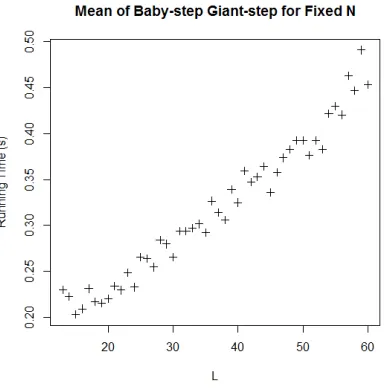
Figure 1: Running time mean of Baby-step Giant-step with fixed N datasets
Figure 1 shows that as 𝐿 increase, so does the expected time needed. The increase happens linearly, though by minuscule factor i.e. around 0.01
second. When 𝐿reaches 50 and beyond however, the increase seemed to happen with slightly bigger factor.
Figure 2: Running time standard deviation of Baby-step Giant-step with fixed N datasets
[image:6.612.315.511.413.600.2]8479
[image:7.612.92.289.113.307.2]4.1.2. Pollard Rho–Brent
Figure 3:Running time mean of Pollard Rho with fixed N datasets
[image:7.612.315.510.139.330.2]Figure 3 shows that as 𝐿 increase, so does the Pollard Rho’s expected running time. The increase happens in linearly fashion. The increase factor is higher than Baby-step Giant-step i.e. around 0.1 second per 10 𝐿. Also, the increase is not really stable as can be seen when 𝐿reaches 50: some point peaks very high.
Figure 4: Running time standard deviation of Pollard Rho with fixed N datasets
When fed with fixed 𝑁 datasets, Pollard Rho’s standard deviation (figure 4) have similar property with its mean, that is, both scatters considerably although the standard deviation seems more irregular. It is difficult determine whether the standard deviation has linear growth function or
quadratic growth function. As such, its growth function is yet to be determined.
4.1.3. Remark
Figure 5: Running time mean of both method with fixed N datasets
Both method shows that as L increase, the time needed to solve the problem also increases in linearly fashion, albeit with different reliability. Baby-step Giant-step method has tendency to solve the problem with running time near the mean, whereas Pollard Rho has more randomness toward the time needed.
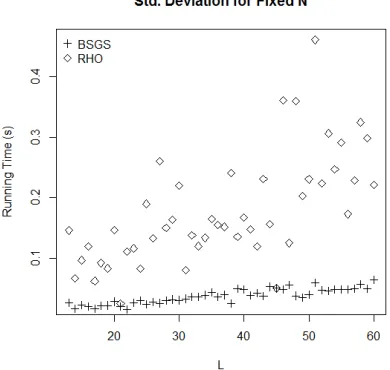
Figure 6:Running time standard deviation of both method with fixed N datasets
[image:7.612.102.296.442.623.2] [image:7.612.314.509.447.632.2]8480 deviation of Pollard Rho method is strikingly high compared to Baby-step Giant-step.
4.2. Fixed LDatasets
[image:8.612.316.510.111.306.2]4.2.1. Baby-step Giant-step
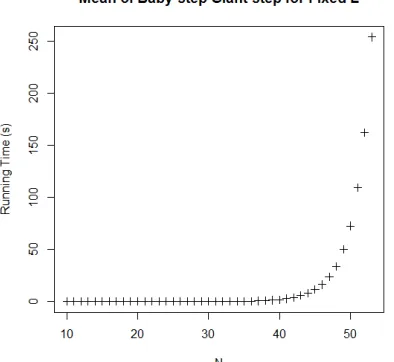
Figure 7: Running time mean of Baby-step Giant-step with fixed L datasets
Figure 7 shows that the expected running time grows with polynomial growth function. The growth becomes apparent when N goes over 40.
Figure 8: Running time standard deviation of Baby-step Giant-step with fixed L datasets
The standard deviation (figure 8) also follow the same growth function as the expected running time i.e. polynomial. The standard deviation starts to grow considerably when N goes over 40.
[image:8.612.92.289.166.347.2]4.2.2. Pollard Rho–Brent
Figure 9: Running time mean of Pollard Rho with fixed L datasets
[image:8.612.323.518.422.609.2]Pollard Rho with Brent cycle detection has expected running time that follows polynomial growth function as seen in figure 9. Just like its mean, its standard deviation also has polynomial growth function (figure 10).
Figure 10: Running time standard deviation of Pollard Rho with fixed L datasets
On both figure, the growth starts to be noticeable once Nreaches slightly below 40 and after that point the graphic pikes considerably.
4.2.3. Remark
[image:8.612.101.296.443.620.2]8481 expected running time than Pollard Rho, but has significantly lower standard deviation compared to Pollard Rho.
Figure 11: Running time mean of both method with fixed L datasets
[image:9.612.91.289.141.326.2]Figure 11 and 12 shows the mean and standard deviation comparison of both method respectively. It can be seen that both method’s mean have relatively similar growth function and that Pollard Rho’s standard deviation rockets quicker than Baby-step Giant-step.
Figure 12: Running time standard deviation of both method with fixed L datasets
4.3. Coefficient of Variation’s Comparison
The dispersion of running times which has been previously obtained is highly variable. It was taken into account that a different data distribution could have the same degree of dispersion, and to quantify
this degree of dispersion, Coefficient of Variation is deemed to be able to handle this issue very well.
As a way to illustrate how close the performance of the two methods, Coefficient of Variations value will be calculated. This section will briefly explain about how Coefficient of Variation is calculated, and then how two method’s Coefficient of Variation would compare.
4.3.1. Coefficient of Variation
The Coefficient of Variation is calculated using the following formula.
𝑐 𝑠
𝑥̅ 12
where 𝑠is the data’s standard deviation and 𝑥̅is the data’s mean.
4.3.2. Coefficient of Variation for Fixed L
Dataset
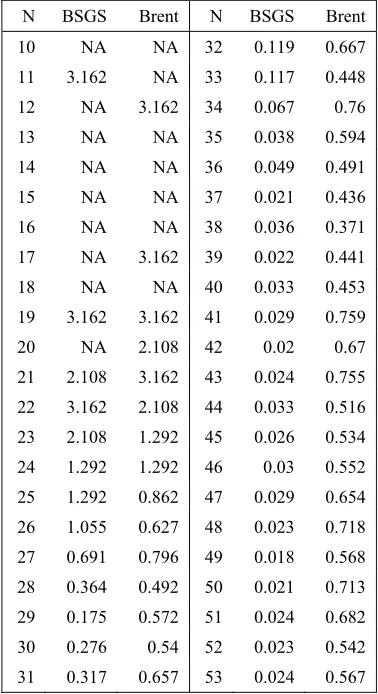
Table 1 provides tabular result of the 𝑐 for fixed L dataset.
Table 1: Coefficient of Variation - Fixed L Dataset
[image:9.612.323.512.361.708.2] [image:9.612.92.288.448.630.2]8482 Notice there are few NAs in the table. This was obtained due to these entries have 𝑠 0 and 𝑥̅ 0. That means these entries have very small running time that the obtained result records the running time as 0.
Values in table 1 are presented graphically on figure 13. In the figure, the NAs are not plotted which explains why there are gaps on few first N. From the figure, both method’s 𝑐 converges very quickly somewhere near 𝑁 30. At that point, both method’s 𝑐 is relatively stable with Pollard Rho’s 𝑐
[image:10.612.315.509.103.280.2]being slightly higher than Baby-step Giant-step’s.
Figure 13: Coefficient of Variation plotting for fixed L dataset
The reason values with 𝑁 26 have very high 𝑐
is that the score it derived from is very low, accompanied with the fact that the recorded result do not have enough precision. This in turn caused the score to be discretized into a score with lower precision. These values are considered as outlier.
Figure 14 shows the boxplot diagram for values in table 1. The median of Pollard Rho with Brent Cycle Detection’s 𝑐 is slightly higher than Baby-step Giant-Baby-step’s. It is as expected since Pollard Rho is a probabilistic algorithm. Also, the Pollard Rho with Brent Cycle Detection’s upper hinge and lower hinge is higher compared to Baby-step Giant-step’s. Overall, different N parameter contributes to dispersion 10for a small factor, just about less than 1
4.3.3. Coefficient of Variation for Fixed N
Dataset
Table 2 shows the 𝑐 for all tested Lparameter and Nparameter being constant. A major difference between these values with those of Lfixed dataset’s
𝑐 is that these values does not have NAs. These values then are considered to have no outlier.
Figure 14: Coefficient of Variation boxplot for fixed L dataset
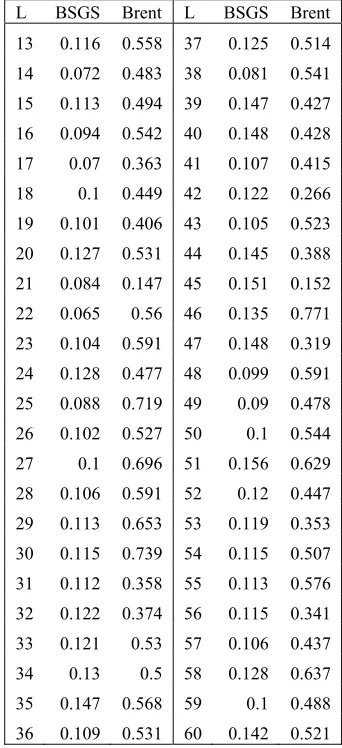
Table 2: Coefficient of Variation - Fixed N Dataset
[image:10.612.92.286.253.440.2] [image:10.612.331.502.357.731.2]8483 The values in table 2 is presented graphically in figure 15. The figure shows that most of the time Pollard Rho with Brent Cycle Detection’s 𝑐 is higher than Baby-step Giant-step.
[image:11.612.90.289.499.667.2]Figure 15: Coefficient of Variation plotting for fixed N dataset
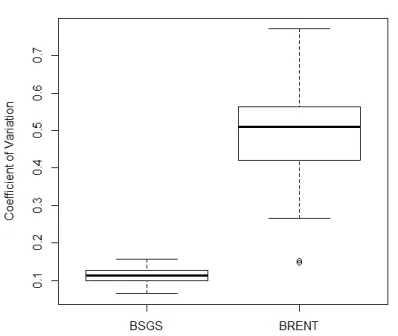
Figure 16 gives insight on how the 𝑐 illustrated in figure 15 is distributed. The boxplot of Baby-step Giant-step’s 𝑐 is lower than Pollard Rho with Brent Cycle Detection. It is interesting to notice that Baby-step Giant-Baby-step boxplot has significantly smaller size than Pollard Rho with Brent Cycle Detection, both the box and the whiskers. This shows how reliable Baby-step Giant-step is with regard to various L
parameter
Figure 16: Coefficient of Variation plotting for fixed N dataset
4.3.4. Remark
It has been shown that both method has relatively low degree of dispersion i.e. 𝑐 1. Even so, Pollard Rho with Brent Cycle Detection has higher 𝑐 than Baby-step Giant-step. Unfortunately, due to small sample size, deriving conclusion using these 𝑐 is a risky task as they could be a biased estimator. However, it can be narrowed down that on average, the Pollard Rho with Brent Cycle Detection’s 𝑐 is higher than Baby-step Giant-step with factor of at least 0.2.
Another thing worth of note is that 𝑁parameter gives Baby-step Giant-step method minuscule degree of dispersion compared to 𝐿parameter. The
𝑁 and 𝐿 parameter gives a comparable degree of dispersion towards Pollard Rho with Brent Cycle Detection method with both parameter seemed to contributes equally.
5. CONCLUSION
The finding can be narrowed into two points.
5.1. The Effect of DSA Parameter
Two parameter of interest is the length of a prime modulus 𝑝, and the multiplicative order of the generator 𝑞. From the observation, the length of 𝑞
contributes to both method’s running time in linearly fashion with expected gradient less than 1 second for both method, whereas the length of 𝑝contributes to both method’s running time in polynomial fashion.
Unsurprisingly, the length of 𝑝contributes higher than the length of 𝑞. After the length of 𝑝hits 50, the expected time difference between 𝑝 and 𝑝 1 is very noticable: about over 50 seconds. For DSA’s security interest, increasing the size of 𝑝 would be very desirable.
5.2. Two Method Comparison
From the finding, it can be concluded that both method has the same growth function. Even so, there is a high chance that Baby-step Giant-step takes time longer compared to Pollard Rho. The main factor that causes Baby-step Giant-step to be slower is the multiplicative order of the generator (i.e. 𝑞). In this experiment, it is when the multiplicative order of the generator is on around 40-bit long (i.e. 𝑁 40) that Pollard Rho’s expected run time begins to seemed better.
8484 The two method is also compared in term of how close their performance are. One characteristic that is inspected is the degree of dispersion. From observation, both method has degree of dispersion of less than 1, with Pollard Rho with Brent Cycle Detection is placed slightly higher than Baby-step Giant-step. The expected degree of dispersion’s difference between the two method is over 0.2, i.e.
Δ𝑐 0.2. This degree of dispersion is consistent when the length of prime modulus 𝑝is constant, and when the length of multiplicative order of the generator 𝑞is constant.
This comparison provides an insight on how a variant of Pollard Rho would match to Baby-step Giant-step. As expected, Pollard Rho (specifically with Brent Cycle Detection) is outmatched. However, the difference between the two does not deemed to be that far. It is believed that for other variant of Pollard Rho, the difference between them and Baby-step Giant-step would be even smaller.
The author suggested that it would be interesting for future work to suppress the difference between Pollard Rho and Baby-step Giant-step as small as possible. The difference dimension used in this work can be utilized as a reference for further improvement in Pollard Rho’s development.
It is worth to note however, that in this paper, the size of the value used is considered small in cryptography context. For future work, it might be interesting to see the behavior for even bigger number and find out how the growth of the execution time looks like.
6. ADDENDUM
6.1. Proof for equation (10)
It has been stated that given two pointers, namely
p1 and p2 where
𝑝 𝑔 ∗ 𝑦 𝑚𝑜𝑑 𝑚
𝑝 𝑔 ∗ 𝑦 𝑚𝑜𝑑 𝑚
if 𝑝 𝑝 , the discrete logarithm of ycan be known. The procedure to infer the discrete logarithm is as follow.
𝑝 ≡ 𝑝 𝑚𝑜𝑑 𝑚
𝑔 ∗ 𝑦 ≡ 𝑔 ∗ 𝑦 𝑚𝑜𝑑 𝑚
𝑦
𝑦 ≡
𝑔
𝑔 𝑚𝑜𝑑 𝑚
𝑦 ≡ 𝑔 𝑚𝑜𝑑 𝑚
Then apply logg to both side. 𝑚𝑜𝑑 𝑚will turn to
𝑚𝑜𝑑 𝑜𝑟𝑑 𝑔 because of this.
log 𝑦 ≡ log 𝑔 𝑚𝑜𝑑 𝑜𝑟𝑑 𝑔
𝑏 𝑏 log 𝑦 ≡ 𝑎 𝑎 𝑚𝑜𝑑 𝑜𝑟𝑑 𝑔
𝑙𝑜𝑔 𝑦 ≡𝑎 𝑎
𝑏 𝑏 𝑚𝑜𝑑 𝑜𝑟𝑑 𝑔
∎
According to Euler’s Theorem, the following equation holds if aand nis coprime.
𝑎 ≡ 1 𝑚𝑜𝑑 𝑛
Since the multiplicative inverse of 𝑏 𝑏
needs to be found, the Euler's Theorem has to apply. As the consequence, 𝑏 𝑏 needs to be coprime with 𝑜𝑟𝑑 𝑔 . This raises an implicit constraint
from equation log 𝑦 ≡ 𝑚𝑜𝑑 𝑜𝑟𝑑 𝑔
that gcd 𝑏 𝑏 , 𝑜𝑟𝑑 𝑔 1. Therefore, before solving the equation, it has to be checked
whether or not gcd 𝑏 𝑏 , 𝑜𝑟𝑑 𝑔 1
holds. In case of 𝑏 𝑏 0, the equation will also deemed unsolvable.
REFERENCES
[1] S. Goldwasser, S. Micali and R. L. Rivest, "A Digital Signature Scheme Secure Against Adaptive Chosen-Message Attacks," Society for Industrial and Applied Mathematics, vol. 17, 1988.
[2] Bailey et al., "The Certicom Challenges ECC2-X".
[3] Bos et al., "PlayStation 3 computing breaks 2
barrier 112-bit prime ECDLP solved," [Online]. Available:
https://lacal.epfl.ch/articles/112bit_prime/. [Accessed 14 November 2018].
[4] Bernstein et al., "Faster elliptic-curve discrete logarithms on FPGAs," 2016.
[5] P. C. van Oorschot and M. J. Wiener, "Parallel Collision Search with Cryptanalytic Applications," 1996.
[6] W. Stallings, "Digital Signatures," in Cryptography and Network Security Principles and Practice, 5th Edition, 5th ed., 2011. [7] A. Menezes, P. var Oorschot and S. Vanstone,
8485 [8] R. P. Brent, "An Improved Monte Carlo
Factorization Algorithm," BIT Numerical Mathematics, vol. 20, 1980.