Antimicrobial and Anticancer Activity of
Curcumin on HEPG2 Cells
Akalya.V1, Rajeshwari. M2, Sivasurya. R3 ,V .Manivasagan4, N .G . Ramesh Babu5, S .Karthikeyan6 1,2,3,4,5,6
Department of Biotechnology, Adhiyamaan College of Engineering (Autonomous), Hosur-635126, Tamilnadu, India
Abstract: Plant extract has antimicrobial and anticancer activities. Curcuma longa (turmeric) was subjected to extraction process with the help of soxhlet apparatus. Curcuma longa was extracted with ethyl acetate as solvent, this extracted product curcumin was tested for its antimicrobial & anticanceractivity. Five different bacteria (Vibrio parahaemotyticus, Shigella flexneri, Pseudomonas aeroginousa, Seratia marcescens and Microciccus leutus) and fungal organism (Rhizopus microspores, Candida albanicans, Trichoderma viride, Aspergillus niger and Pencillium griesiferum) were used for antimicrobial assay by agar disc diffusion method. Curcumin was subjected to anticancer activity against human liver cancer cell lines by MTT assay. The purpose of this study is to test antimicrobial and in-vitro anticancer activities of the ethyl acetate extracts of Curcuma longa against human liver cancer cell lines.
Keywords: MTT assay, Curcumin, plant extract, antimicrobial, cytotoxicity.
I. INTRODUCTION
Plants are natural sources of antibacterial agents. Plant derived medicines have been a part of our traditional healthcare system, and the antimicrobial properties of plant derived compounds are well documented. Herbal medicines are more effective and less harmful as they have negligible side effects. They exhibit low mammalian toxicity and can be handled easily (Evans., 2002; Ahmad I., 1998). In addition, antibiotics are sometimes associated with adverse effects on the host including hypersensitivity, immune-suppression and allergic reactions. Therefore, there is a significant demand to develop alternative antimicrobial drugs for the treatment of infectious diseases using medicinal plants (Clark., 1996; Cordell., 2009)
Turmeric is a spice derived from the rhizomes of the plant Curcuma longa, which is a member of the ginger family Zingiberaceae. Rhizomes are horizontal underground stems that send out shoots as well as roots. The bright yellow color of turmeric comes mainly from fat-soluble, polyphenolic pigments known as curcuminoids. Curcumin, chemically known as diferuloylmethane , the principal curcuminoid found in turmeric. Other curcuminoids found in turmeric include demethoxycurcumin and bisdemethoxycurcumin (Sharma et al., 2005).
The curcuminoids are polyphenols and are responsible for the yellow color of turmeric. Curcumin can exist in atleast two tautomeric forms, keto and enol. The enol form is more energetically stable in the solid phase and in the form of a solution. Curcumin can be used for boron quantification in the so-called curcumin method. It reacts with boric acid forming a red colored compound, known as rosocyanine. Curcumin is brightl yellow and may be used as a food coloring. As a food additive, its Enumber is E100.
Curcumin has antioxidant, anti-inflammatory, antiviral and antifungal activities. Studies have shown that curcumin is not toxic to humans. Curcumin exerts anti-inflammatory activity by inhibition of a number of different molecules that play an important role in inflammation. Turmeric is effective in reducing post-surgical inflammation. Turmeric helps to prevent
atherosclerosis by reducing the formation of bloods clumps. Curcumin inhibits the growth of Helicobacter pylori, which causes gastric ulcers and has been linked with gastric cancers. Curcumin can bind with heavy metals such as cadmium and lead, thereby reducing the toxicity of these heavy metals. This property of curcumin explains its protective action to the brain. Curcumin acts as an inhibitor for cyclooxygenase, 5-lipoxygenase and glutathione S-transferase. It is a common spice, known mostly for its use in Indian dishes as a common ingredient in curries and other ethnic meals. Turmeric has also been used for centuries in Ayurvedic medicine, which integrates the medicinal properties of herbs with food. This
extraordinary herb has found its way into the spotlight in the west because of its wide range of medicinal benefits. Turmeric is a potent antioxidant (Akram et al.,2010).
such as bursitis, arthritis and back pain. Turmeric’s anti-inflammatory action is likely due to a combination of three different properties.
The Extensive studies suggest that curcumin has the great potential in the prevention and treatment of cancer. Invitro and invivo preclinical and clinical studies have shown that curcumin has positive effects in cancer treatment (Aggarwal et al., 2003). Curcumin has been shown to promote apoptosis in certain cancer cell lines and to inhibit telomerase activity, an important factor in tumorigenesis. One possible mechanism for the induction of tumor cell death is through the generation of reactive oxygen intermediates (Aggarwal et al., 2003). Curcumin polyphenolic substance has antiproliferative effects. It is reported that curcumin suppresses the proliferation of a wide variety of cancer tumor cells containing breast carcinoma, colon carcinoma, renal cell carcinoma, hepatocellular carcinoma, T cell leukaemia, B cell lymphoma, melanoma and prostate carcinoma, acute myelogenous leukaemia, basal cell carcinoma (Aggarwal et al., 2003).
The discovery of novel natural compounds with low toxicity and high selectivity for killing cancer cells is an important area in cancer research (Lv et al., 2014). To date, chemotherapy has been the most frequently used treatment for breast cancer and other cancers. However, this method of treatment also destroys some normal cells as well. Curcumin or diferuloylmethane is the major yellow pigment extracted from turmeric (Curcuma longa) and is commonly used as a flavoring agent in food ( Kizhakkayil J et al.,2010).
Cancer is one of the most serious health problems worldwide, affecting individuals from different sexes, ages, and races. In 2005, cancer was the second leading cause of death among both men and women and accounted for 13% of the total 58 million deaths worldwide. In 2006, about 10.9 million new cancer cases are expected to be diagnosed worldwide and more than 7.8 million cancer patients may die. Cancer is also a problem of economical dimensions with a very high level of expenses associated with it. For example the National Institute of Health, USA estimates that an overall of $209.9 billion were invested worldwide in 2005, for the sake of cancer research and management (Liu et al., 2013).
The discovery of novel natural compounds with low toxicity and high selectivity for killing cancer cells is an important area in cancer research (Lv et al., 2014). Chemotherapy has been the most frequently used treatment for breast cancer and other cancers. However, this method of treatment also destroys some normal cells as well. Curcumin or diferuloylmethane is the major yellow pigment extracted from turmeric (Curcuma longa) and is commonly used as a flavouring agent in food (Kizhakkayil et al., 2010). The present study aimed to evaluate the possible antimicrobial and cytotoxic activity of the rhizomes of Curcuma longa against human liver cancer cell lines.
II. MATERIALS AND METHODS
A. Sample Extraction
The sample was washed with distilled water to remove any adherent particles, shade dried and powdered. 25 g of each sample was weighed and extracted with 300 ml of Ethyl acetate by continuous hot percolation with the help of soxhlet apparatus for 10 hrs. On completion, the extracts were filtered and concentrated using a rotary evaporator under reduced pressure and controlled temperature of 50 0C – 60 0 C. The concentrates were stored in the refrigerator for.
B. Antibacterial Activity Assay
Antibacterial activity of curcumin by agar diffusion method against bacteria viz., Pseudomonas aeruginosa, Vibrio parahaemolyticus, Shigella flexineri, Serratia marcescens, Micrococcus leuteus using Ampicillin (20µl/disc) as a standard have been carried out.
C. Preparation of Innoculum
Stock cultures were maintained at 4º C on nutrient agar slant. Active cultures for experiments were prepared by transferring a loop full of culture from the stock cultures into the test tubes containing nutrient broth, that were incubated for 24 hrs for 37º C. The assay was performed by agar disc diffusion method.
D. Agar Disc Diffusion Method
E. Antifungal Activity Assay
Antifungal activity of curcumin by Agar diffusion method against different fungal viz., Candida albicans, Aspergillus niger, Trichoderma viride, Penicillium crysogenum, Dermatophyte Amphotericin-B (20µl/disc) as a standard have been carried out.
F. Preparation of Innoculum
Stock cultures were maintained at 4° C on Sabouraud Dextrose agar Slant. Active cultures for experiments were prepared by transferring the stock cultures into the test tubes containing Sabouraud Dextrose broth and these were incubated for 48 hrs at room temperature. The assay has been carried out by agar disc diffusion method.
G. Agar Disc Diffusion Method
Antifungal activity of the extracts was determined by disc diffusion method on Sabouraud Dextrose agar (SDA). Sabouraud Dextrose agar (SDA) is poured into the petriplate. After the medium solidified, the inocula were spread on the plates with sterile swab moistened with the fungal suspension. Amphotericin-B was taken as the positive control. Samples and positive control of 20 µl each were added in sterile discs and placed in SDA plates. The plates were incubated at 28º C for 24 hrs. Then antifungal activity was determined by measuring the diameter of zone of inhibition.
H. Anticancer Activity
1) Cell Line and Culture: Cell line was obtained from National Centre for Cell Sciences, (NCCS) Pune. The cells were maintained in Dulbecco’s Modified Eagle’s Medium supplemented with 10 % FBS, penicillin (100 U/ml), and streptomycin (100 μg/ml) in a humidified atmosphere of 50 μg/ml CO2 at 37° C.
2). In Vitro Assay for Anti-Cancer Activity (MTT Assay) : Cells (1 × 10⁵/well) were plated in 24-well plates and incubated at 370 C with 5% CO2. After the cell reaches the confluence, the various concentrations of the samples were added and incubated for 24 hrs.
After incubation, the sample was removed from the well and washed with phosphate-buffered saline (pH 7.4) or DMEM without serum. 100 µl/well (5 mg/ml) of 0.5% 3-(4, 5-dimethyl-2-thiazolyl)-2,5-diphenyl--tetrazolium bromide (MTT) was added and incubated for 4 hours. After incubation, 1 ml of DMSO was added into all the wells. The absorbance values at 570nm were measured with UV- Spectrophotometer using DMSO as the blank. Measurements were performed and the concentration required for a 50% inhibition (IC50) was determined graphically. The % cell viability was calculated using the following formula % Cell viability = A570 of treated cells / A570 of control cells × 100
Graphs were plotted using the % of Cell Viability on the Y-axis and concentration of the sample on the X-axis. Cell control and sample control is included in each assay to compare the full cell viability assessments.
III. RESULTS AND DISCUSSIONS
[image:4.612.50.562.502.652.2]A. Antimicrobial Effect of Curcumin
Table 1: The antibacterial activity for Ethyl acetate extract of Curcumin
Organisms
Zone of inhibition (mm)
Antibiotic (1mg/ml) Concentration of Curcumin (µg/ml)
1000 750 500
Pseudomonas aeroginosa 8 7 7 21
Vibrio parahaemolyticus 18 12 11 19
Shigella flexneri 14 14 12 24
Serratia marcescens 22 17 15 30
Figure 1: The antibiogram of Ethyl acetate extract
Pseudomonas aeroginosa Serratia marcescens
Micrococcus leuteus
Shigella flexineri
Figure 2: The antifungal activity of Ethyl acetate extract
Table 2: The antifungal activity for Ethyl acetate extract of Curcumin
Organisms
Zone of inhibition(mm)
Antibiotic (1mg/ml) Concentration of Curcumin (µg/ml)
1000 750 500
Candida albicans,
10 9 8 21
Aspergillus niger,
11 9 8 13
Trichoderma viride,
8 6 4 24
Dermatophyte
8 7 5 9
[image:6.612.65.549.501.725.2]Penicillium crysogenum 15 12 9 25
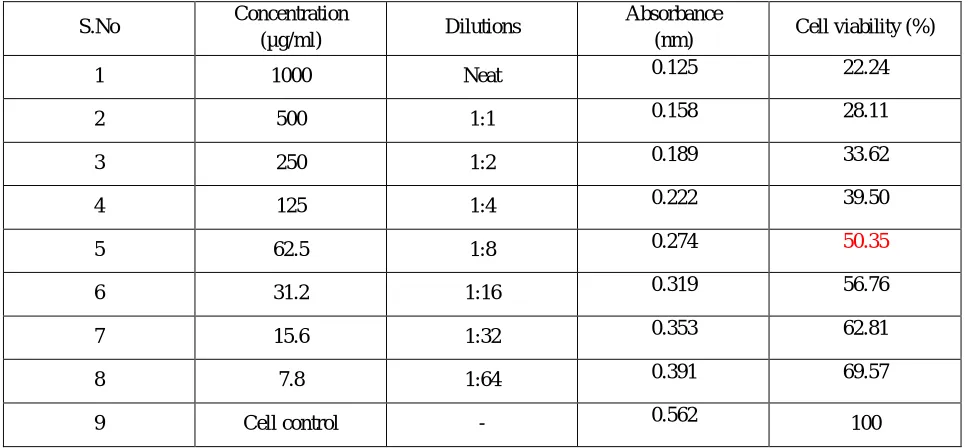
Table 3: Anticancer effect of Curcumin on HepG2 cell line
S.No Concentration
(µg/ml) Dilutions
Absorbance
(nm) Cell viability (%)
1 1000 Neat 0.125 22.24
2 500 1:1 0.158 28.11
3 250 1:2 0.189 33.62
4 125 1:4 0.222 39.50
5 62.5 1:8 0.274 50.35
6 31.2 1:16 0.319 56.76
7 15.6 1:32 0.353 62.81
8 7.8 1:64 0.391 69.57
9 Cell control - 0.562 100
Figure 4: Anticancer effect of Curcumin on HepG2 cell line
IV. CONCLUSION
Thus the study concludes that Curcumin exhibited very good antimicrobial activities (zone of inhibition in mm) against bacteria Serratia marcescens and against fungal Penicillium crysogenum.Curcuma longa extract exhibited anticancer activity and acts as a potent growth suppressive agent against Human liver cancer HepG2.
REFERENCES
[1] Aggarwal B.B, Kumar A, Bharti A.C, Anticancer Potential of Curcumin: Preclinical and Clinical Studies. Review. Anticancer Research, 23, 363-398, 2003. [2] Ahmad I, Mehamood Z, Mohammad F. Screening of some Indian medicinal plants for their antimicrobial properties. Ethnopharmacol, 62: 183-193, 1998. [3] Akram Shahab-Uddin M, Afzal AhmedKhan UsmanghaniAbdul Hannen E. Mohiuddin M. Asif, Curcuma Longa and Curcumin: A Review Article, 2010. [4] Basu A., Suresh Kumar G., Interaction of the dietary pigment curcumin with hemoglobin: energetics of the complexation. Vol 5, Food Funct, 1949-1955,
2014.
[5] Bar-Sela, G Epelbaum R and Schaffer M Curcumin as an Anti-Cancer Agent: Review of the Gap Between Basic and Clinical Applications Current Medicinal Chemistry, 2010.
[6] Clark A.M., Natural products as resource for new drugs. Phar. Res., 13:1133-1141, 1996.
[7] Cordell G.A. Biodiversity and drug discovery asymbiotic relationship. Phytochemistry, 55:463-480, 2009. [8] Sharma, R.A., Gescher A.J, Steward, W.P. Curcumin: The story so far. Eur. J. Cancer, 41, 1955-68, 2005.
[9] Evans, C.E., A. Banso and O.A. Samuel. Efficacy of some medicinal plants against Salmonella typhi: an in vitro study. J. Ethnopharmacology, 80:21-24, 2002. [10] Karin, M., Nuclear factor-kappaB in cancer development and progression, Nature, 441, 431–436, 2006.
[11] Kizhakkayil J, Thayyullathil F, Chathoth sssssS, Hago A, Patel M, Galadari S. Modulation of curcumin-induced Akt phosphorylation and apoptosis by PI3K inhibitor in MCF-7 cells. Biochem Biophys Res Commun ; 394(3):476–481, 2010.
[12] Lal. B, Kapoor, A. K., Agrawal, P. K., Asthana, O. P., Srimal, R. C., Role of curcumin in idiopathic inflammatory orbital pseudotumours, Phytother. Res., 14, 443 –447, 2000.
[13] Lal, B., Kapoor, A. K., Asthana, O. P., Agrawal, P. K., et al., Efficacy of curcumin in the management of chronic anterior uveitis, Phytother. Res, 13, 318–322, 1999.
[14] Liu D, Chen Z. The effect of curcumin on breast cancer cells. J Breast Cancer. x; 16(2): 133–7, 1999.
[15] Lv ZD, Liu XP, Zhao WJ, Dong Q , Li FN, Wang HB, et al. Curcumin induces apoptosis in breast cancer cells and inhibits tumor growth In vitro and In vivo. Int J Clin Exp Pathol.,7(6): 2818–24, 2014.
Normal HepG2cell line Toxicity-1000 µg/ml
[17] Najah A. Mohammed, Neama Y. HabiEvaluation of antimicrobial activity of Curcumin against two oral bacteriaAutomation, Control and Intelligent Systems; 3(2-1): 18-21, 2015.
[18] Ozem Tokusoglu, Alkan Simsek, Murtaza Parvizi,Dilvin Eymen: Turmeric curcuminoid polyphenolics as antioxidant and anticarcinogenic agents ,Natural Science and Discovery; 1(3): 56-61, 2015.
[19] Prasanthi Donipati and Dr. S. Hara Sreeramulu, InvitroAnticancer Activity Of Curcuma Longa Against Human Breast Cancer Cell Line MCF-7, World journal of Pharmacy and Pharmaceutical sciences Volume 4, Issue 11, 1188-1193, 2010.
[20] Ramachandran, C.,You,W.,Differential sensitivity of human mammary epithelial and breast carcinoma cell lines to curcumin, Breast Cancer Res. Treat .,54, 269-278, 2015.
[21] Rana Pratap Singh and D.A. JainEvaluation of antimicrobial activity of curcuminoids isolated from turmeric International Journal Of Pharmacy & Life Science, 2012.
[22] Ruby A.J., Kuttan G., Dinesh B., Rajasekharan K.N., Kuttan R, Antitumor and antioxidant activity of natural curcuminoids. Cancer Lett., 94, 79-83, 1995. [23] Satoskar, R. R., Shah, S. J., Shenoy, S. G., Evaluation of anti-inflammatory property of curcumin (diferuloyl methane) in patients with postoperative
inflammation, Int. J. Clin. Pharmacol. Ther. Toxicol, 24, 651–654, 1998.