Technology (IJRASET)
The Influence of Performance Management System
on the Employee Turn over- an Empirical Study
V.S.Planiammal
#1, P.Rajeswari
#2# 1, #2
Assistant Professor, Department of Management Studies, D.K.M. College for Women, Vellore-1
Abstract: This paper is an outcome of empirical study conducted at Sutherland Global Services Chennai in order to examine whether unsatisfactory performance management system is one among the root cause for employee turnovers happening at the IT sectors. Sequentially the researchers have approached 150 samples for the study with a pre-defined questionnaire. The research paper also furnishes details as to the fairness of work measurement, recognizing the highest contributor and variable pay mechanism has anything to do with retaining upper hand employee at the firm. The findings disclose that the factors in charge for unsatisfactory Performance Management System namely unfair employee assessment, lack of transparency of communication, appraiser-appraisee relationships were agreed by the samples. As part of the study, certain suggestion has been made by the researcher as an attempt to reduce employee turnover. The paper concluded that winning employee’s satisfaction requires merit pay system and computerized appraisal style being followed in the organizations.
Keyword: Performance Management System (PMS), Employee turnover, Fair assessment, Employee satisfaction, Merit pay system, KRA.
I. INTRODUCTION
Performance Management System (PMS) is a whole process which is approached differently by different organizations. But the phase of PMS is predominantly the same irrespective of the style applied in the concerns. In accordance with the history, PMS has started gaining momentum in 1980 yet the design of the same is upgraded every now and then with the intention of adapting to the dynamic work environment. The phases of PMS are quintessential in all kinds of organization that starts from defining the objectives of the firm until rewarding the highest contributor. During the process of defining the objectives the employer should have target employees with along in order to set goals as SMART goals (Specific, Measurable, Achievable, Result and Target), the new emergence in defining phase is fixing the KRA (Key
Result Areas) together by the key players of the organization, the other consecutive phases includes monitoring, developing, actual appraisal, rating and rewarding the individual performer.
During the phase of development the employees go through paramount of training to meet the individual expectations set by the employers. The successful organizational performance is achieved when the expectations are attained by individual performers in a team. The effective implementation of the planned goals entails the synchronization of appraiser and appraisee all through the PMS process. The key performance management is the systematic process of planning, monitoring, developing, rating and rewarding.
II. OBJECTIVES OF THE STUDY
A. To define the process of PMS at SGS from Planning until reward.
B. To understand the KRA (Key Result Areas) fixed by SGS.
C. To know employees satisfaction towards procedural fairness and transparency of communication.
D. To analyze the efforts of SGS in routing through barriers and reaching the desired outcomes.
E. To study the administrative decisions of SGS and its existing reward mechanisms.
III. SCOPE OF THE STUDY
A. This paper is informative about individual goal setting using SMART process.
B. Provides details of the appraiser-appraisee working relationship during the PMS process.
Technology (IJRASET)
A. Limitations of the study1) The mail survey took ample of time in receiving quality response from the Information Technology Enabled Service respondents.
2) Contacting respondents demanded much effort as all the respondents shift time are not the same.
IV. REVIEW OF LITERATURE
Franco-Santos,Monica,Et Al(2007) has simplify entire business performance management system roles in basic five categories viz., measure performance, strategy management, communication, influence behavior and learning and development.[4] “Measuring performance” role takes in the process of monitoring and assessing the performance; similarly “strategy management” role is meant for formulating the strategy and implementing the same besides paying attention towards the alignment of planning and execution; further the role “communication” covers setting benchmarks and concordance with policy regulations; the next role “influence behavior” is intended for rewarding the promising behaviors also managing the relationships with control over it ;lastly “learning and development” role has been designed for improving the performance, providing double loop learning and presenting the feedback.
Aubrey Daniels (2000) has defined performance management system as data oriented management system. It is defined as data oriented because the management system encompasses of measurement, feedback and positive reinforcement.[2] The measurement includes collecting the data and computing the current performance of the individual so as to set standards for the future, in turn the assessment are communicated to the concern individual during the feedback process ,additionally the work of positive reinforcement is to identify the performance that can be improved in frequent and meaningful manner among the employees.
Charles D. Kerns (2008) pointing out that the happy and unhappy performers have the capacity of spread positivity and negativity inside the organization.[1] He is further elaborating four matrix of performers as happy high performer, unhappy high performer, happy low performer and unhappy low performer. Within this four matrix the happy high and low performers would spread confidence among the others whereas the unhappy high and low performers suffer with negativity and passes the same through their behaviors.
Ghalayini and Noble(1996) were expressing that the objectives of performance management are no longer the same as it was in past.[6] Accordingly, traditional performance assessment based on productivity of employees has no much needed information that are essential for today’s competitive business environment. They further explained that for a development in performance management system to go hand in hand with the improving world class performance, reviewing the drawbacks faced during traditional approach should be done .There by bringing changes to the characteristics of the emerging trends in PMS that would be relevant for current global market.
Olsen et al., (2007), “The author criticize that the availability of research or empirical study on the ways to design, implement and evolution of PMS are very less. He says more that there is an existence of gap still between methodology of designing PMS and implementing a balanced performance management system.[13] He further describes that the complex process of the entire PMS is designing and implementation”.
Srimai.,et.al(2011) has explained another style of stages for development of PMS over the last decades in their research. The four stages through which PMS development occurs are 1)transition from operations to strategic,2)transition from measurement to management,3) transition from static and dynamic.4)transition from being economic-profit focus to stakeholder focus.[15]
ManoochehrNajmi(2005) has enlighten couple of reviews as strategy for performance management. The first strategy is “Business performance” which may influence the design and implementation of PMS.As the name suggest the concept is to assess the performance of the business either as ongoing review, periodic review or reviewing entire business at a time. Secondly “PMS performance” is another strategy which checks out the extend a PMS assessment is felt to be efficient or effective for measuring company’s performance.[10] This package includes exactness of business mapping until proper designing of PMS process.
Technology (IJRASET)
downside which is disagreement among global team especially during review, reward, evaluation and training process.
Furnham(2004),The author feels that the concept of PMS was not taken in right spirit by any of the key player of the organizations. He further argues that the basic management requirements are common in all kinds of organizations yet the performance management is out looked poorly and negatively global managers.[5] The possible reasons spelled by the author for poor understanding of PMS are complexity, subjectivity and poor review of existing performance management system going unnoticed among top heads and so on.
Martin David C, Bartol K.M (1998), The authors together providing suggestions to make the monitoring process of PMS as effective. For effective monitoring of performance management system the appraiser have to make certain that the performance standards set at the organization is of good quality, the employee appraisal reviews are done at regular intervals, there is transparency in the appraisal results, constant tracking of raters are ensured during the process at last ensuring the quality of rating by means of frequent monitoring.[11]
Joyce T and StiversB(2000) have suggested that an effective PM system meant to be flexible enough to modify ,add or delete whenever change in environment occurs irrespective by the factor viz., internally or externally.[7] They are defining PMS as dynamic behavioral tool and should be constantly upgraded, reviewed in correspondence with the change in strategy of the firm or whenever the organization faces new challenges and intervention programs. Additionally the authors saying that PMS is not just assessment of employees work but providing feedback to the individuals that could redirect employee in new direction. Hence the performance management system can be customized according to the organizational culture and needs.
Srinivasa Rao A (2007) prefers the support of new technology for an effective performance management system .He further made a comparative study among traditional and technological performance assessment and found traditional approach as less effective. The author feels that the effectiveness of performance management could be affected by internal and external factors of the organization.[14] The 360 degree feedback is considered as one of the factor that is not yielding better result as expected while planning the appraisal style that included this feedback process especially in Indian organizational context.
Bob Lavigna(2010) explains that the objective of improving performance management system is to improve employee performance. The effectiveness of PMS has two dimensions namely training, communication, appraisal tools and feedback are all one side to achieve effective PMS where as employee satisfaction and employee engagement are other side of the building blocks of good PM system.[9] He is acknowledging the fact that the successful PMS can be visualized only when the employee satisfaction and engagement of employee during appraisal planning happens at right time. The effective performance management system occurs only when the discretionary energy of all employees are converted into results.
Kaplan and Norton (1996) are the contributors of Balanced Score card method have said that the use of performance management system is well understood during recognizing the performers by means of rewarding. Yet the authors have viewed discrepancy between personal objectives and reward mechanisms as reasons for issues arise during implementation of BSC method.[8] In addition, to accept any pay for performance the authors says that such should be rated as credible performance management system out of the pool followed among many organizations.
Neely(1999), “The author has depicted few stages of development by consolidating few researchers ideology into five stages namely, problem identification phase, developmental phase, application phase, investigation phase and validation phase.[12] The problem identification phase checks on the scarcity of financial resources, the developmental phase is to introduce new developments that takes place in PMS namely BSC, SMART goals and so on, the next phase is to apply the developments that has been planned in previous phase and rest two phases investigation and validation is meant to check on the result whether it is desired or out of range.
Hulkund,V.L (2012) analysed the most important task for HR to planning performance for role clarity, accountability and effectiveness in performance. Planning individual performance through performance appraisal which gives opportunity for performance planning. Also this article explained task analysis, key performance areas, key results areas, task and target identification, activity planning and goal setting exercise. Planning the performance fixed accountability, sets role boundaries helps better time management. It also help the manager for understand and analyse his contribution and increase his responsibility for continuous performance.[16]
Technology (IJRASET)
The researchers applied descriptive research design in order to know the ITES employees knowledge and opinion towards their firm PMS process. The quantitative research approach was applied as it is an empirical study that comprises sample size of 150.The mail survey was the method was used to approach the respondents for the study who are accessible and conveniently available. The primary data for the study was collected using questionnaire as instrument. The questionnaire was pre defined with structured 30 queries besides demography. The secondary data was collected through books, journals and various websites. Analysis and interpretation has been done using semi tabular format and bar, pie, line, scatter diagrams so on. Anova, chi square and Pearson’s correlation coefficient were the test statistics applied to test the relationship between the variables and the level of significance was tested at 5%.TABLE 1: Demographic Characteristics of the Respondents ( N= 150)
SOURCE : PRIMARY DATA
VI. RESULT AND DISCUSSION
A. Analysis and Interpretation
The following are the test statistic applied for the research study.
B. Hypotheses calculations
1) H0: There is no significant relationship between gender and the identification of excellent contributor during work
measurement.
[image:5.612.34.574.645.709.2]2) H1: There is a significant relationship between employee turnover with satisfaction of employee towards reward mechanism. 3) H2: There is a significant relationship between qualification of the employee and putting MBO into practice at firm.
TABLE 2: RELATIONSHIP BETWEEN GENDER AND THE IDENTIFICATION OF EXCELLENT CONTRIBUTOR DURING WORK MEASUREMENT
Response Male Female Row total
Never 20 10 30
Always 65 55 120
Column total 85 65 150
Characteristics Sub Categories Number Percentage Age 21-30 Years
31-40 Years Total 125 25 150 83.33 16.67 100
Gender Male
Female Total 85 65 150 56.67 43.33 100 Qualification Under Graduate
Post Graduate Professionally Qualified Diploma Total 85 25 17 23 150 56.67 16.67 11.33 15.33 100 Designation Level 1
Level 2 Total 99 51 150 66 34 100 Experience Less than 1 Year
2-4 Years 5-7 Years Total 51 82 17 150 34 54.67 11.33 100
Income Low
Technology (IJRASET)
Source: Primary Data D.f =(r-1 * c-1) =1
The table value at 5% level of significance is 3.84 The calculated value of is 1.5
VII. CONCLUSION H0 → Accept
[image:6.612.88.513.229.435.2]There is no significant relationship between gender and the identification of excellent contributor during work measurement.
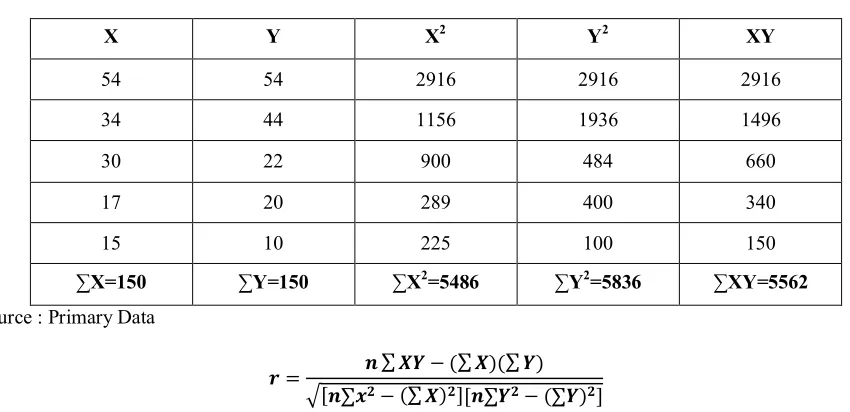
TABLE 3: RELATIONSHIP BETWEEN EMPLOYEE TURNOVERS WITH SATISFACTION IN REWARD MECHANISM
X Y X2 Y2 XY
54 54 2916 2916 2916
34 44 1156 1936 1496
30 22 900 484 660
17 20 289 400 340
15 10 225 100 150
∑X=150 ∑Y=150 ∑X2=5486 ∑Y2=5836 ∑XY=5562
Source : Primary Data
= ∑ − (∑ )(∑ )
[ ∑ − (∑ ) ][ ∑ − (∑ ) ]
r =0.925301
The “r” value is lying between -1 to +1. From the above table it is concluded that the “r” value 0.93 indicates a strong positive relationship between employee turnover and satisfaction of employee towards reward mechanism
= −
−
= .
Degree of freedom= n-2 =3
The table value at 5% level of significance is 3.18
The calculated value of is 4.35
4.35 > 3.18
Conclusion
H1 → Accept
Technology (IJRASET)
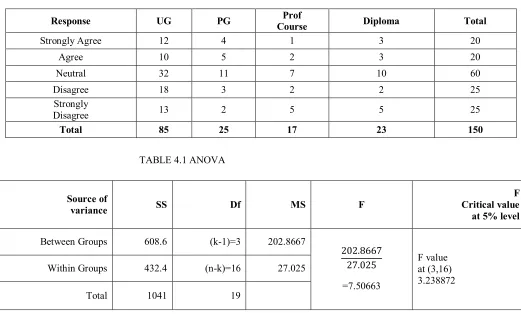
TABLE 4: QUALIFICATION AND MBO IN PRACTICE AT FIRM
Response UG PG Prof
Course Diploma Total
Strongly Agree 12 4 1 3 20
Agree 10 5 2 3 20
Neutral 32 11 7 10 60
Disagree 18 3 2 2 25
Strongly
Disagree 13 2 5 5 25
Total 85 25 17 23 150
TABLE 4.1 ANOVA
The table value at 5% level of significance is 3.24
The calculated value is 7.51
Conclusion:
H1 → Accept
[image:7.612.45.566.91.405.2]There is a significant relationship between qualification of the employees and MBO in practice at firm.
TABLE - 5 Effective way of SMART goals and qualification
Degree of freedom = 1
The table value at 5% level of significance is 3.84
The calculated value is 5.86
There is a significant relationship between qualification of the respondents and the effective way of SMART goals individually. Source of
variance SS Df MS F
F Critical value at 5% level
Between Groups 608.6 (k-1)=3 202.8667
202.8667 27.025
=7.50663
F value at (3,16) 3.238872 Within Groups 432.4 (n-k)=16 27.025
Total 1041 19
Response Degree Professional courses Total
Never 27 18 45
Technology (IJRASET)
VIII. FINDINGS OF THE STUDY
The research study finds that sometimes the appraisers are helping in writing KRA and there is a relationship between unsatisfactory PMS which could be due to unfair assessment, lack in transparency of communication, over rated individual expectations. On the other hand the informal team outings, pay for performance, work autonomy are formulated as strategy to reduce turnovers.
IX. SUGGESTIONS
A. The participative planning should exercise at the firms during decision-making.
B. The neutrality during spotting high performer is wanted by many respondents.
C. Exit interview should conduct to identify whether unsatisfactory PMS is the reason behind employee turnover.
D. The administrative decisions as to the variable pay should be fair enough to gain the belongingness of the employee.
E. Frequent meeting and appointing multiple appraisers may help in eliminating one-way communication error.
X. CONCLUSION
The study has attempted to educate about the performance assessment is in practice recently at IT firms. The work measurement of individuals can be a success only with the cooperation of the individuals as a team member and as employee of the firm as well. The higher chances for favoritism are existing at all sorts of organizations during assessment period. Nevertheless, of late this is eradicated by implementing computerized methods of performance evaluation where the personal biases are gradually being reduced at IT firms. The administrative decisions made by the top heads after reviewing the performance are having a greatest impact on retaining the employees where the same should not let down the potential employees opinion about the firm.
REFERENCES
[1]. Charles D. Kerns.(2008), “Putting Performance and Happiness Together in the Workplace”, GBR A Peer Reviewed Journal,11(1). [2]. Daniels Aurbey.(2000),“What Is Performance Management”, PM ezine: A Performance Management Magazine,
[3]. Fletcher C.(2001), “Performance Appraisal and Management :the developing research agenda”, Journal of Occupational and Organizational Psychology, Vol
74,pp 474-483.
[4]. Franco-Santos.,et.al.(2007),“Towards a Definition of a Business Performance Measurement System”, International Journal of Operations & Production
Management, 27(8), pp:781-801.
[5]. Furnham,A.(2004),“Performance management systems”,European Business Journal, vol.16,pp.83-94
[6]. Ghalayini, A.,et.al.(1997), “An Integrated Dynamic Performance Measurement System for Improving Manufacturing Competitiveness”, International Journal
of Production Economics, 48(3), pp:207-225.
[7]. Joyce T and Stivers B.(2000), “Building a Balanced Performance Management”, Advanced Management Journal,65(2)
[8]. Kaplan, R. and Norton, D.(1992),“The Balanced Scorecard-Measures That Drive Performance”,Harvard Business Review, 70(1), pp:71-79. [9]. Lavigna Bob.(2010),“Driving Performance by Building Employee Satisfaction and Engagement”, (US)Government finance Review [10].Manoochehri,G.(1999),“Overcoming obstacles to developing effective performance measures”, Work Study, 48(6), pp:223-229.
[11].Martin David C. and Bartol K.M.(1998),“Performance Appraisal: Maintaining System Effectiveness”,Public Personnel Management,27(2).
[12].Neely, A.(1999),“The Performance Measurement Revolution: Why Now and what next?”, International Journal of Operations & Production Management,
19(2),pp: 205-228.
[13].Olsen,et.al.(2007),“Performance Measurement System and Relationships with Performance Results: A Case Analysis of a Continuous Improvement Approach to PMS Design”, International Journal of Productivity and Performance Management, 56(7), pp:559-582.
[14].Srinivasa Rao A.(2007), “Effectiveness of performance management system: an empirical study in Indian companies”, International Journal of Human
Resource Management18(10), pp 1812-1840
[15].Srimai,et.al.(2011),“Evolutionary Paths of Performance Measurement: An Overview of Its Recent Development”, International Journal of Productivity and
Performance Management, p607, pp:662-687.