comment
reviews
reports
deposited research
interactions
information
refereed research
Research
Optimality of the genetic code with respect to protein stability
and amino-acid frequencies
Dimitri Gilis*, Serge Massar
, Nicolas J Cerf
and Marianne Rooman*
Addresses: *Biomolecular Engineering, and Ecole Polytechnique, Université Libre de Bruxelles, ave F D Roosevelt, 1050 Bruxelles, Belgium. Service de Physique Théorique, Université Libre de Bruxelles, Boulevard du Triomphe, 1050 Bruxelles, Belgium.
Correspondence: Dimitri Gilis. E-mail: [email protected]
Abstract
Background: The genetic code is known to be efficient in limiting the effect of mistranslation errors. A misread codon often codes for the same amino acid or one with similar biochemical properties, so the structure and function of the coded protein remain relatively unaltered. Previous studies have attempted to address this question quantitatively, by estimating the fraction of randomly generated codes that do better than the genetic code in respect of overall robustness. We extended these results by investigating the role of amino-acid frequencies in the optimality of the genetic code.
Results:We found that taking the amino-acid frequency into account decreases the fraction of random codes that beat the natural code. This effect is particularly pronounced when more refined measures of the amino-acid substitution cost are used than hydrophobicity. To show this, we devised a new cost function by evaluating in silicothe change in folding free energy caused by all possible point mutations in a set of protein structures. With this function, which measures protein stability while being unrelated to the code’s structure, we estimated that around two random codes in a billion (109) are fitter than the natural code. When alternative codes are restricted to
those that interchange biosynthetically related amino acids, the genetic code appears even more optimal.
Conclusions:These results lead us to discuss the role of amino-acid frequencies and other parameters in the genetic code’s evolution, in an attempt to propose a tentative picture of primitive life.
Published: 24 October 2001
GenomeBiology2001, 2(11):research0049.1–0049.12
The electronic version of this article is the complete one and can be found online at http://genomebiology.com/2001/2/11/research/0049 © 2001 Gilis et al., licensee BioMed Central Ltd
(Print ISSN 1465-6906; Online ISSN 1465-6914)
Received: 19 June 2001 Revised: 6 September 2001 Accepted: 28 September 2001
Background
One of the tantalizing questions raised by molecular biology is whether the basic structures of life as we know them arose through a Darwinian evolutionary process and, if so, what were the evolutionary pressures acting on them? One such structure that could have changed during evolution is the genetic code. The genetic code was initially believed to be universal throughout all living things [1], even though some variations in both nuclear and mitochondrial systems have
recently been found (see [2] for a review). These variations are, however, limited and correspond essentially to the reas-signment of one or a few codons to another amino acid. The genetic code may thus be considered as fairly universal.
number of amino acids coded in the genetic code increased as the code evolved [4-7]. Several hypotheses have been put forward to explain the evolution of the genetic code to its present form, and to find out what the genetic code is opti-mized for [6,8-17]. One possible scenario is that the genetic code evolved so as to minimize the consequence of errors during transcription and translation [9,10-13,18]. To test this hypothesis, some researchers have tried to estimate the percentage of optimal achievement of the natural code by quantifying the cost of single-base changes [19-21].
More recently, Haig and Hurst [22] and Freeland and Hurst [23] improved that approach by comparing the natural code with random codes. To this end, they defined a fitness func-tion, F, that measures the efficiency of the code in limiting the consequences of transcription and translation errors. This function F supposedly evolved towards a minimum through evolution. To measure how close the natural code is to the actual minimum of F, they generated random genetic codes, and computed the fraction of those that are better -that is, have a smaller value of F - than the natural code. They found that only a very small fraction of the random codes are better than the natural code, and concluded that the natural code is therefore optimal in that it minimizes the effect of translation and transcription errors.
Haig and Hurst [22] tested several fitness functions, F, based on different physicochemical parameters, and found that single-base changes in the natural code had the smallest average effect when using, as a cost measure, the change in polarity or hydropathy between the corresponding amino acids. These parameters, although not unique, are clearly biologically relevant, as they are related to hydrophobicity, a property known to be important in protein conformation (see, for example, [24,25] for reviews). Changing, through a transcription or a translation error, a nonpolar amino acid into a polar one at some strategic position in the sequence of a protein can have dramatic consequences on its conforma-tion. Using these parameters, and assuming that all point mutations occur with the same frequency, Haig and Hurst [22] found that the fraction of random codes that beat the natural code is of the order of 10-4.
It has been shown experimentally that individual translation errors occur more frequently at the first and third codon positions than at the second [10,26,27], and that there are transition/transversion biases [28-31]. Taking this into account, Freeland and Hurst [23] proposed a modified fitness function F, which models more accurately the proba-bility of translation errors. They found that with this improved modeling, the fraction of random genetic codes that are better than the natural one decreases from 10-4to
10-6. They retrieved from their calculations a well known
property of the genetic code: single-base substitutions in the first and third codon position are strongly conservative with respect to changes in polarity [10,32]. Here, we highlight the
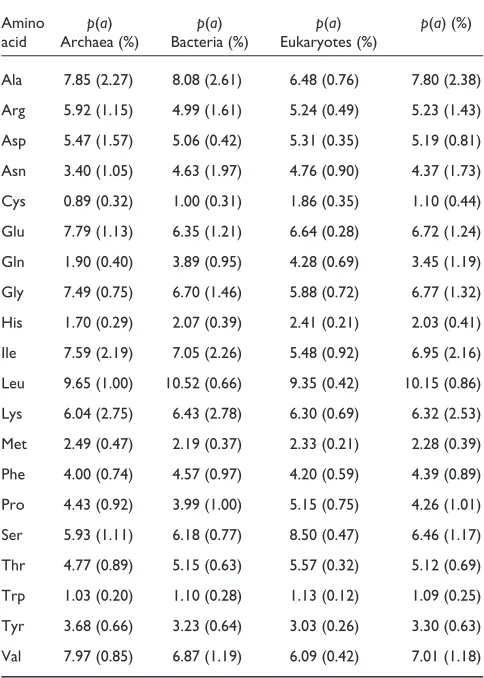
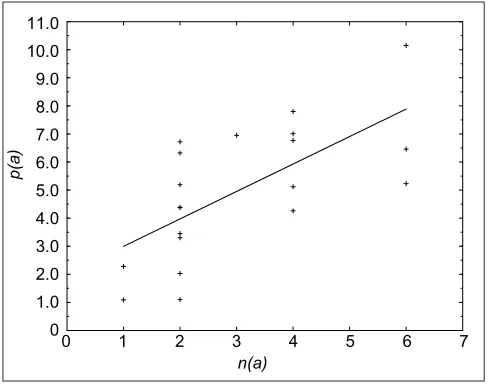
[image:2.609.314.556.251.590.2]importance of another parameter in the optimization of the genetic code, namely the frequency at which different amino acids occur in proteins. This frequency differs from protein to protein, and even from species to species, but there is a general pattern that prevails (Table 1). In Figure 1, we have plotted the number of codons coding for the same amino acid (synonyms) versus the amino-acid frequency. The cor-relation between these two quantities, first noted by King and Jukes [33], led us to suspect that the amino-acid
Table 1
The mean frequencies of the individual amino acids (p(a)) in the genomes of living organisms
Amino p(a) p(a) p(a) p(a) (%) acid Archaea (%) Bacteria (%) Eukaryotes (%)
Ala 7.85 (2.27) 8.08 (2.61) 6.48 (0.76) 7.80 (2.38) Arg 5.92 (1.15) 4.99 (1.61) 5.24 (0.49) 5.23 (1.43) Asp 5.47 (1.57) 5.06 (0.42) 5.31 (0.35) 5.19 (0.81) Asn 3.40 (1.05) 4.63 (1.97) 4.76 (0.90) 4.37 (1.73) Cys 0.89 (0.32) 1.00 (0.31) 1.86 (0.35) 1.10 (0.44) Glu 7.79 (1.13) 6.35 (1.21) 6.64 (0.28) 6.72 (1.24) Gln 1.90 (0.40) 3.89 (0.95) 4.28 (0.69) 3.45 (1.19) Gly 7.49 (0.75) 6.70 (1.46) 5.88 (0.72) 6.77 (1.32) His 1.70 (0.29) 2.07 (0.39) 2.41 (0.21) 2.03 (0.41) Ile 7.59 (2.19) 7.05 (2.26) 5.48 (0.92) 6.95 (2.16) Leu 9.65 (1.00) 10.52 (0.66) 9.35 (0.42) 10.15 (0.86) Lys 6.04 (2.75) 6.43 (2.78) 6.30 (0.69) 6.32 (2.53) Met 2.49 (0.47) 2.19 (0.37) 2.33 (0.21) 2.28 (0.39) Phe 4.00 (0.74) 4.57 (0.97) 4.20 (0.59) 4.39 (0.89) Pro 4.43 (0.92) 3.99 (1.00) 5.15 (0.75) 4.26 (1.01) Ser 5.93 (1.11) 6.18 (0.77) 8.50 (0.47) 6.46 (1.17) Thr 4.77 (0.89) 5.15 (0.63) 5.57 (0.32) 5.12 (0.69) Trp 1.03 (0.20) 1.10 (0.28) 1.13 (0.12) 1.09 (0.25) Tyr 3.68 (0.66) 3.23 (0.64) 3.03 (0.26) 3.30 (0.63) Val 7.97 (0.85) 6.87 (1.19) 6.09 (0.42) 7.01 (1.18) The frequencies p(a) were computed as averages over the frequencies observed in genomes of archaea (Aeropyrum pernixK1, Archaeoglobus fulgidus, Halobacterium sp. NRC-1, Methanococcus jannaschii,
Methanobacterium thermoautotrophicum, Pyrococcus abyssi, Pyrococcus horikoshiand Thermoplasma acidophilum), bacteria (Aquifex aeolicus, Bacillus halodurans, Bacillus subtilis, Borrelia burgdorferi, Buchnera aphidicola,
Campylobacter jejuni, Chlamydia trachomatis, Deinococcus radiodurans,
Escherichia coliK-12, Haemophilus influenzae, Mycobacterium leprae,
Mycobacterium tuberculosis, Mycoplasma genitalium, Mycoplasma pneumoniae,
Pasteurella multocida, Pseudomonas aeruginosa, Rickettsia prowazekii,
Thermotoga maritima, Treponema pallidum, Ureaplasma parvum, Vibrio choleraeand Xylella fastidiosa) and eukaryotes (Arabidopsis thaliana,
Caenorhabditis elegans, Drosophila melanogaster, Homo sapiensand
comment
reviews
reports
deposited research
interactions
information
refereed research
frequency is an important parameter in the optimization of the genetic code, which should also be taken into account in the fitness function F. Our calculations indeed confirm that the genetic code is even more optimal with respect to trans-lation errors if the amino-acid frequencies of Table 1 are properly incorporated in F.
In addition, we bring further improvements to Fby using quantities other than polarity to measure the roles of the dif-ferent amino acids in protein conformation and stability. It should be stressed that the biological relevance of the para-meters used in Fis crucial in the estimation of the relative robustness of the natural code. Indeed, one can always con-struct an artificial fitness function Fsuch that the natural biological structure apparently lies at its minimum. Clearly, the hydrophobicity parameters used by Haig and Hurst [22] are biologically motivated, but we would like to do better by refining our cost measure. In particular, we have devised a mutation matrix describing the average cost of single amino-acid substitutions in protein stability, obtained by computer experiments. This mutation matrix combines many different physicochemical properties of the amino acids. For instance, it takes into account that mutating cysteine into any other amino acid may be very costly as it may break a disulfide bond. Such an effect would not be apparent if only a single property, say hydrophobicity, was taken into account. We show that, with a fitness function F depending on this mutation matrix and the amino-acid frequencies, only about two out of 109 randomly generated codes are better
than the natural code. This suggests that the genetic code is even better optimized to limit translation errors than was previously thought.
Results
Fitness of the genetic code with respect to translation errors
Consider the natural genetic code. It is built out of 64 codons, each consisting of three consecutive DNA bases (A, G, C, T) or RNA bases (A, G, C, U). These 64 codons are divided into 21 sets of synonyms, which each code for one of the 20 natural amino acids or correspond to a stop signal; hence, to each codon, c,an amino acid (or stop signal) ais assigned through a function a(c). Consider now an error during transcription from DNA to RNA or during translation from RNA to protein, in which codon cis mistaken for codon c¢. This error thus results in amino acid a(c) being replaced by amino acid a¢= a(c¢). The associated cost is estimated by a function g(a,a¢), which measures the difference between the amino acids aand a¢with respect to their physicochemi-cal properties or their role in (de)stabilizing protein struc-tures; when a or a¢ corresponds to a stop codon, we set
g(a,a¢) = 0. Different cost functions gwill be discussed in the next section. Following Freeland and Hurst [23], the fitness
Fof a code is measured by the average of the cost g over all codons cand all single-base errors c ®c¢
FFH= 1
64
64
c= 1
64
c¢= 1pc¢úc ga(c),a(c¢) (1)
where p(c¢|c) is the probability of misreading codon c as codon c¢. If one focuses on transcription errors only, as do Haig and Hurst in [22], then all p(c¢|c) values must be taken as equal. But here we consider translation errors, as do Free-land and Hurst in [23], and hence p(c¢|c) changes according to whether cand c¢differ in the first, second or third base, and lead to a transition or a transversion. A transition is the substitution of a purine (A, G) into another purine, or a pyrimidine (C, U/T) into another pyrimidine, whereas a transversion interchanges purines and pyrimidines. On the basis of experimental data indicating that transitions are more common than transversions [28-31], and that errors on the third base are more frequent than errors on the first base, which are themselves more frequent than errors on the second base [10,26,27], Freeland and Hurst [23] have chosen the following values of p(c¢|c) , which we also use here:
p(c¢|c) = 1/N if c and c¢differ in the 3rd base only,
p(c¢|c) = 1/N if c and c¢differ in the 1st base only and cause a transition,
p(c¢|c) = 0.5/N if c and c¢differ in the 1st base only and cause a transversion,
p(c¢|c) = 0.5/N if c and c¢differ in the 2nd base only and cause a transition,
p(c¢|c) = 0.1/N if c and c¢differ in the 2nd base only and cause a transversion,
[image:3.609.53.298.87.280.2]p(c¢|c) = 0 if c and c¢differ by more than 1 base.
Figure 1
The relative frequency p(a) (in %) of amino acid a (right-hand column of Table 1), as a function of the number of synonyms n(a) that code for it. The linear regression line is indicated; the correlation coefficient is equal to 0.66.
n(a)
p(a)
0 1 2 3
0 1.0 2.0 3.0 4.0 5.0 6.0 7.0 8.0 9.0 10.0 11.0
where Nis a normalization factor ensuring that Sc¢p(c¢|c) = 1.
Obviously, these probabilities only roughly approximate the true transition/transversion and base position biases. However, the computed fitness of the genetic code has been shown to be relatively insensitive to their precise values [34].
Incorporating amino-acid frequencies in the fitness function
Let us now return to the correlations between the number of codons coding for an amino acid and the frequency of this amino acid (see Figure 1). King and Jukes [33], who first noted this correlation, suggested that most of the amino acids in genomes have arisen by random mutations that do not affect the properties and function of the proteins. As a consequence, the number of synonymous codons determines the frequency of amino acids.
An alternative interpretation, assuming a very different chain of causality, is that the amino-acid frequencies are fixed by their physicochemical properties. For instance, tryp-tophan would be a rare amino acid because its specific prop-erties are seldom needed in proteins or because it is difficult to synthesize. The correlation between the amino-acid fre-quencies and number of synonymous codons (Figure 1) would then be interpreted as being due to an adjustment of the natural genetic code to the frequency of the amino acids. The conclusions reached using these two opposite interpre-tations are addressed in the Discussion.
Independent of the assumed chain of causality, it is natural to expect that a codon error replacing a frequent amino-acid type with another leads to more absolute errors and thus has more consequences, at least on average, than an error affect-ing a rare amino acid. The frequencies with which the differ-ent amino acids occur in proteins, which are similar in different organisms (Table 1), are only imperfectly taken into account in the fitness function FFH given by Equation (1),
because of the imperfect correlation between amino-acid fre-quency and number of synonymous codons (Figure 1). To account properly for the amino-acid frequencies, we propose a modified fitness function Ffaa:
pa(c)
Ffaa=
64c= 1
64
c¢= 1 pc¢úc ga(c),a(c¢) (2) n(c)
where p(a) is the relative frequency of amino acid a, and
n(c) is the number of codons in the block to which c
belongs. In other words, n(c) is the number of synonyms coding for the amino acid a(c) that ccodes for. Note that Equation (2) supposes that there is no codon bias, that is, the different synonyms of a given amino acid appear with the same frequency.
To measure the effect of the amino-acid frequency on the value of the fitness function Ffaa, we define, for the sake of
comparison, another fitness function Fequifwhere all the
amino acids are supposed equally frequent, that is, p(a) = 1/20:
Fequif= 1
20
64
c= 1
1
n(c)
64
c¢= 1 pc¢úc ga(c),a(c¢) (3)
Cost of substituting an amino acid with another
The function g(a,a¢) in Equations (1) and (2) measures the cost as far as protein stability and structure is concerned -of substituting amino acid a by a¢. This cost depends on several physicochemical and energetic factors. Hydrophobic interactions are known to constitute a dominating energetic contribution to protein stability. Hence, a natural choice for
gconsists of taking the squared difference in hydrophobicity
hof the amino acids aand a¢:
ghydro(a,a¢) = h(a)h(a¢)2 (4)
There exist various hydrophobicity scales for amino acids. We have tested two of them. The first is the polarity scale defined by Woese et al. [35], which is the one used by Haig and Hurst [22] and Freeland and Hurst [23]. In the second scale, h(a) is the average solvent accessibility of amino acid a
derived from a set of 141 well resolved and refined protein structures with low sequence identity (see Methods); solvent accessibilities are computed using SurVol [36]. We denote the associated cost functions as gpol and gaccess, respectively.
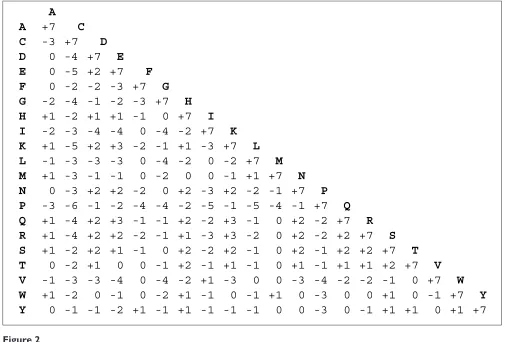
Although hydrophobic forces dominate in proteins, other types of interactions also contribute to protein stability (see [24,25] for reviews). We therefore also attempted to devise a better cost function g(a,a¢), measuring more accurately the difference between amino acids aand a¢. This new function is inspired by recent computations of the change in free energy of a protein when a single amino acid is mutated [37-39]. It is obtained by mutating in silico, in all proteins of the aforementioned set of 141 protein structures and at all positions, the wild-type amino acids into the 19 other possi-ble ones, and evaluating the resulting changes in folding free energy with mean force potentials derived from the same structure dataset. The matrix elements M(a,a¢) are obtained as the average of all the computed folding free-energy changes, which correspond to a substitution a®a¢. Details on the procedure and the value of the matrix elements
M(a,a¢) are given in the Methods section. This matrix is taken as a cost function:
gmutate(a,a¢) = M(a,a¢) (5)
For the purpose of comparing gmutatewith a reference matrix
that exclusively reflects the structure of the genetic code, we define the cost function:
where D(a,a¢) is zero when aand a¢coincide, and otherwise equal to the minimum number of bases that must be changed to transform a codon coding for a into a codon coding for a¢.
As a last cost function, used only for comparison with earlier work [34,40], we consider the point accepted mutations 74-100 (PAM74-100) substitution matrix [41], one of the most
commonly used matrices in the context of protein-sequence alignment:
gPAM(a,a¢) = PAM
74100(a,a¢) (7)
This matrix is derived from the pattern of amino-acid substi-tution frequencies observed within naturally occurring pairs of highly diverged homologous protein sequences. However, the use of this matrix for measuring the genetic codes fitness [34,40] has been criticized [42], as matrices derived from substitution patterns observed in homologous proteins reflect not only the similarity between amino acids with respect to their physicochemical and energetic properties, but also the facility with which one amino acid is mutated into another and thus their proximity in the genetic code. However, as the PAM74-100 matrix is derived from highly
diverged protein sequences, this effect can be expected to be relatively limited. This is indeed the case, as the linear corre-lation coefficient between the nondiagonal entries of gPAM
and gcode is only 0.43. Nevertheless, the correlation
coeffi-cient between gmutate and gcode is still much lower, namely
0.19, so that gmutatemay in no way be suspected to include
information on proximity in the genetic code. Finally, note that the correlation coefficient between gmutate and gPAM is
equal to 0.60; these matrices thus share common features but contain also different information. This is not surprising considering that their derivations use very different starting points (protein three-dimensional structures in one case, sequence similarity in the other).
The genetic code versus random codes
To evaluate the robustness of the natural genetic code with respect to translation errors, we computed the fitness functions
FFH, Fequifand Ffaausing Equations (1) to (3) for the natural
genetic code, and compared it to the corresponding fitnesses of random codes. The random codes are obtained by maintaining the codon block structure of the natural genetic code, where each block corresponds to synonyms coding for the same amino acid (or stop signal). When generating a random code, the stop signal is kept assigned to the same block as in the natural genetic code, whereas the different amino acids are randomly interchanged among the 20 remaining blocks. Thus, each random code is simply specified by a different function
a(c) in Equations (1) to (3). This is the procedure previously used by Haig and Hurst [22] and Freeland and Hurst [23].
Thus, in a first stage, we computed the fitness functions
Fequifand Ffaa for the natural genetic code and for 109
randomly generated codes, using the three cost functions
gpol, gaccessand gmutate. We then calculated the fraction fof
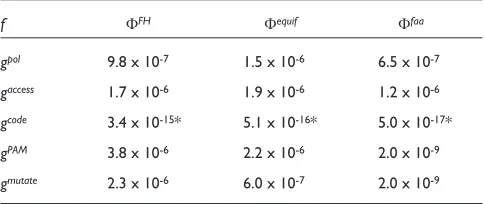
random codes whose value of F is lower than that of the natural code. This fraction is supposedly a good estimate of the relative merit of the natural genetic code comparative to other codes. The results are given in Table 2. It appears that this fraction fis always smaller for Ffaathan for Fequif. This is
especially true for the cost function gmutate, where f is 300
times smaller. This result indicates that the natural code appears to be better optimized with respect to translation errors if the amino-acid frequencies are taken into account.
To investigate this further, we have analyzed which of the cost functions gpol, gaccessor gmutatethe genetic code appears
to be best optimized for. We compared the fraction f of better codes for each of the cost functions using the fitness function Ffaa. For the hydrophobicity functions gpol and
gaccess, the result is roughly the same: fis about 0.5-1.0 in
106. The relative statistical error on this value is of the order
ofN-1/2, where Nis the number of random codes better than
the natural one that were found in our sample of 109random
codes; thus, Nis about 650-1,200, and the error is insignifi-cant. For the mutational cost function gmutate, f is several
orders of magnitude lower, namely 2 in 109.
This result shows that the natural genetic code appears even more optimal if the cost function gmutate is used than if
hydrophobicity-based cost functions are considered. As
gmutate has been computed from protein stability changes
effected by point mutations, we may conclude that the genetic code is optimized in such a way as to limit the effect of translation errors on the three-dimensional structure and stability of the coded proteins. Note that the improvement brought by the choice of gmutateresults from the fact that it
probably better accounts for the cost of a mutation than a mere difference of hydrophobicity; for example, glycine, proline and cysteine have close neighbors in hydrophobicity, whereas the cost of their mutation as accounted for by gmutate
comment
reviews
reports
deposited research
interactions
information
[image:5.609.312.554.582.684.2]refereed research
Table 2
Fraction of random codes that are fitter than the genetic code
f FFH Fequif Ffaa
gpol 9.8 x 10⁻⁷ 1.5 x 10⁻⁶ 6.5 x 10⁻⁷
gaccess 1.7 x 10⁻⁶ 1.9 x 10⁻⁶ 1.2 x 10⁻⁶
gcode 3.4 x 10-15* 5.1 x 10-16* 5.0 x 10-17*
gPAM 3.8 x 10⁻⁶ 2.2 x 10⁻⁶ 2.0 x 10⁻⁹
is high. This is due to their special role in determining protein structure: glycine and proline can adopt backbone torsion angles essentially inaccessible to other amino acids, and cysteine can form disulfide bonds.
To check the significance of this result, we have computed the fraction f of random codes that beat the natural one for
random choices of the amino-acid frequencies, distinct from
the natural frequencies p(a). We have generated 102sets of
random p(a) values, and, for each of them, estimated the frac-tion f(out of a sample of 106random codes). The percentage of
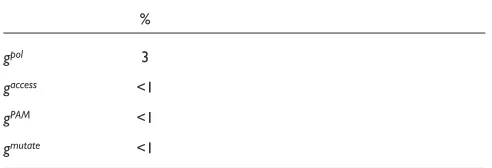
random amino-acid frequency sets that result in a lower frac-tion fthan the natural frequencies is shown in Table 3. We find that a random assignment of the amino-acid frequencies does not decrease fin most (at least 97%) of the cases, and this tendency persists for all cost functions g. Thus, the probability that the decrease of f, observed in Table 2, when passing from
Fequif to Ffaa, was due to chance is quite limited. We may
therefore conclude that the genetic code is optimized so as to take into account the natural amino-acid frequencies.
We also investigated whether the result that the natural code is better optimized if amino-acid frequencies are taken into account does not depend crucially on the amino-acid fre-quencies used. For this purpose, we calculated the fraction f
of random codes with lower Ffaavalue than the genetic code
for the four sets of amino-acid frequencies listed in Table 1, which are computed from genomes of eukaryotes, archaea, bacteria and from all these genomes together. The results turn out to be essentially insensitive to the chosen frequency set: the fractions f differ at most by a factor of two, which leaves all conclusions unchanged.
We have also included in Table 2 the results based on the fitness function FFH. It can be argued that this function
partly takes, but imperfectly, the amino-acid frequencies into account. Indeed, for this fitness function each codon is assigned the same weight, which corresponds to each amino acid being assigned a frequency proportional to the number of synonyms n(a) coding for it. In the case of the natural genetic code, this frequency corresponds approximately to the amino-acid frequency as there is a correlation between
n(a) and p(a), as shown in Figure 1. But for random codes, where the amino acids are randomly interchanged between the codon blocks, this correspondence breaks down. Thus, the way in which FFH takes amino-acid frequencies into
account depends on the code considered. This explains why the fraction fof random codes better than the natural one is roughly of the same order using FFH and Fequif. Note that fis
always larger for FFH than for Ffaa, indicating again the
importance of the amino acid frequencies in the optimality of the genetic code.
For sake of comparison, we have added in Table 2 the values of the fraction f of random codes with a lower Ffaavalue than
the natural one, using the cost functions gPAM and gcode,
which include information about the structure of the genetic code. With gPAM, the fraction f is the same as with gmutate,
whereas with gcode, we did not find any random code better
than the natural one among the 109random codes tested. To
estimate fwithout having to generate a larger ensemble, we used the following procedure. We computed, from the values of Ffaa for the 109 random codes, the probability function
p(F)faato have a given value of Ffaa. We fitted log(p(F)faa) to
a polynomial of fourth degree, and extrapolated this curve down to the value of Ffaafor the natural code. This provides
an estimate of the fraction f of random codes that have a lower Ffaa value. Note that this estimate is essentially
insen-sitive to the degree of the polynomial. We found with this procedure that fis of the order of 10-17with gcode, and thus
about 108times smaller than with gPAM and gmutate.
It is not surprising that the fraction fof random codes that does better than the natural code is extremely small for gcode,
as this matrix exclusively reflects the proximity of amino acids in the genetic code and renders the issue of the codes fitness tautologous. This has been suspected for the gPAM
cost function too [42]. It can indeed be argued that gPAM
contains information on the proximity of amino acids in the genetic code, superimposed on the desired measure of their similarity in preserving protein structure, because it is com-puted from amino-acid substitutions in families of evolu-tionarily related proteins, which are more frequent between amino acids that are closer in the genetic code. The fact that
gPAMandgmutate yield similar fvalues (see Table 2) can be
taken to indicate that this is not the case, and thus that both these cost functions can reliably be used to estimate the codes fitness against translation errors. This interpretation supports previous analyses that used the gPAM matrix
[34,40]. It could, however, also be argued that gPAM
[image:6.609.55.301.561.645.2]describes protein structure less well than gmutate and includes
Table 3
Percentage of random amino-acid frequency assignments yielding lower fractions fthan the natural one
%
gpol 3
gaccess <1
gPAM <1
gmutate <1
Percentage of the sets of random amino-acid frequency assignments for which the fraction fof random codes that beat the natural code is lower than the corresponding fraction computed with the natural frequency p(a) values. This percentage is estimated for the four cost functions - gpol,
somewhat more information about the genetic code (as monitored by correlation coefficients of 0.43 and 0.19 of
gPAM and gmutate with respect to gcode). These two effects tend
to compensate each other, and could be expected to yield similar fvalues for gPAMand gmutate. It therefore seems safer
to use gmutate as cost function, because, owing to its very
defi-nition, it seems to capture important structural information and to be independent of the codes structure.
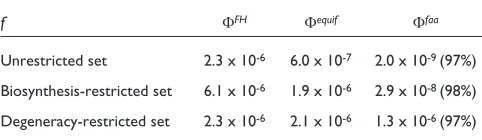
We also investigated how optimal the genetic code is with respect to amino-acid interchanges that do not affect codon degeneracy. We exhaustively generated all alternative codes that preserve the amino-acid degeneracy and computed the fraction fof these codes that do better than the natural code with respect to mistranslation. We found that f is of the order of 10-6for the three fitness functions Ffaa, Fequifand
FFH(Table 4). It is thus similar to thefvalue computed on
the unrestricted set of alternative codes for Fequif and FFH,
and much larger for Ffaa. This result simply reflects the
cor-relation between the codon degeneracy and the amino-acid frequency (Figure 1). Indeed, this correlation implies that a much larger proportion of the better codes maintain the degeneracy, if the frequency of the amino acids is taken into account in the fitness function, as in Ffaa. In contrast,
in Fequifand FFH the amino-acid frequency is not
consid-ered and f is of the same order with the restricted and unrestricted sets.
It has been proposed that the genetic code has evolved from a simpler ancestral code, encoding only a few amino acids present at early times, and that new amino acids appearing as biosynthetic derivatives of the original ones were incorporated by subdivision and reassignment of their synonymous codons [4-7]. This so-called coevolution hypothesis is supported by the observation that biosyn-thetically related amino acids are close within the genetic code [6,43]. To investigate the optimality of the genetic code in the coevolution framework, we computed the frac-tion f of alternative codes that perform better than the natural code against translation errors and that differ from the natural code by shuffling amino acids belonging to the same biosynthetic pathway [34,44]. The allowed shufflings are given in the legend of Table 4. We found that fis equal to 2.9 x 10⁻⁸, whereas it is equal to 2 x 10⁻⁹
for the unrestricted set allowing all shufflings (Table 4). This means that the fraction fof better codes is somewhat larger in the biosynthesis-restricted set than in the com-plete set, and thus that the optimality rate is slightly lower. This result can also be viewed differently. When considering the total number of codes in the two sets (which are of the order of 108 and 1018), it means that
there are only six codes that beat the natural code in the restricted set, whereas there are 109 such codes in the
unrestricted set. This is particularly striking given that our definitions of cost functions and sets of biosynthetically related amino acids only constitute approximations [45].
We can thus conclude that the genetic code is quite robust against mistranslation in the space of all alternative codes, and is close to being fully optimal if historical biosynthetic constraints are taken into account.
A complementary measure of the optimality of the genetic code is its percentage of optimization, defined as 100%(Fcode
- Fmean)/(Fbest - Fmean), where Fcode is the fitness of the
genetic code, Fbestthe fitness of the best of all possible codes
and Fmeanthe average fitness over all codes [20,21,46]. This
measure indicates how close the fitness value of the genetic code is to the fitness value of the optimal code. Note however that this optimality measure has no absolute meaning and may not be compared among fitness functions Fdefined on the basis of different cost functions g; to illustrate this, con-sider the following example: if ghydro is defined by |h(a)
-h(a¢)| instead of (h(a)-h(a¢))2(see Equation (4)), the fraction
f of better codes remains unchanged but the percentage of optimality does change [34]. It is, however, meaningful to compare the percentage of optimization of the genetic code in the unrestricted and biosynthesis restricted sets with a same g function. For Ffaa, we find that this percentage is
equal to 97% and 98% in the two sets, respectively. This indicates that the fitness value of the genetic code is not very far from that of the best possible code, whether focusing on the subset of alternative codes preserving biosynthetic prox-imities, or considering all possible codes.
comment
reviews
reports
deposited research
interactions
information
[image:7.609.312.553.127.197.2]refereed research
Table 4
Fraction ffor different sets of allowed amino-acid interchanges in the alternative codes
f FFH Fequif Ffaa
Discussion
Our results confirm and specify those of Freeland and Hurst [22]: the genetic code seems structured so as to minimize the consequences of translation errors on the three-dimensional structure and stability of the coded proteins. We have shown that, using the cost function gmutate, which best reflects the roles
of various amino acids in protein structures, and taking amino-acid frequencies into account, about 2 out of 109random codes
do better than the natural code. But we have to keep in mind that there exist 20! » 2 x 10¹⁸possible codes preserving the
codon block structure, which means that we can expect about 109 better codes overall [47]. Moreover, if the codon block
structure is not preserved [46], the number of possible codes is larger by orders of magnitude, and therefore the number of codes better than the natural one will certainly be much larger.
However, if we preserved the block structure and in addition restricted the space of alternative codes by interchanging only amino acids belonging to the same biosynthetic pathway, we found that there are only six codes performing better than the natural code. The genetic code thus seems quite robust with respect to mistranslation compared to alternative codes, and almost fully optimal if the constraint is imposed that biosyn-thetically related amino acids are encoded in codons that are close within the genetic code. This does not prove, but is in agreement with, the coevolution hypothesis, which assumes that the genetic code has evolved from an simpler ancestral code of only a few amino acids, by subdivision and reassign-ment of synonymous codons [4-7], and that the present genetic code has kept imprints of this evolution.
So we can assert from our analysis that the genetic code has been optimized through evolution up to a certain point, even though it is probably not fully optimal, at least with respect to the parameters considered here [16], except perhaps if historical, biosynthesis-related, constraints are imposed. Our analysis does not, however, give us much information about the mechanism of this evolution as there is unfortu-nately no trace left of evolution of the code or amino-acid frequencies in early times. For instance, we do not know whether the relative frequency of occurrence of amino acids in proteins adapted so as to increase the optimality of the genetic code with respect to translation errors, or, on the contrary, whether the genetic code evolved to take into account pre-existing amino-acid frequencies. We can, however, argue that if the amino-acid frequencies adapted to the genetic code, as assumed by King and Jukes [33], a dis-crepancy in amino-acid composition between frequently and infrequently expressed genes might be detectable today (unless the period during which evolution took place was long enough for this discrepancy to vanish). If, alternatively, the genetic code adapted to the amino-acid frequencies, and thus if these frequencies acted as an evolutionary pressure, one can imagine two scenarios. Either the code optimized to take into account the prebiotic frequencies of the amino acids that became involved in it, or it optimized for the
amino-acid frequencies of already formed proteins (or of a subset of them) that were important for life and maybe linked to the codes control. Perhaps can we assume, more realistically, that the genetic code and amino-acid frequen-cies evolved together during some evolutionary period, thereby approaching an optimal code/amino-acid relation.
More generally, the parameters that acted as evolutionary pres-sure on the genetic code probably included all the mechanisms that encode and maintain the genetic information, and were not just restricted to the frequency of amino acids and the preservation of protein structure. For example, the genetic code is obviously related to the translation apparatus, com-posed of the ribosomes and tRNAs, whose action we described schematically here by the probabilities p(c¢|c) to misread codon
cas c¢. This apparatus was certainly less reliable at the begin-ning of evolution. All these mechanisms probably evolved together with the genetic code during the early stages of life.
Although the code still evolves today, as reflected by its departure from universality in some organisms, its evolution is very limited and concerns only the reassignment of a few codons [2]. As the same change sometimes recurs in different lineages, the code seems to have reached the bottom of a funnel in the evolutionary landscape that contains several roughly equivalent optimal codes. But apart from such restricted modifications, the code no longer evolves signifi-cantly, and has not undergone important modifications since an early stage in the development of life. This stability proba-bly arose because even small modifications in the code would have entailed loss of functionality of genes that were already being expressed. Moreover, the advent of more sophisticated transcription/translation control mechanisms, which involve huge protein systems, could have decreased the evolutionary pressure on the genetic code. Even though our present infor-mation on the genetic code is insufficient to discriminate between evolutionary scenarios, our analysis enables us to put some constraints on the situation at the time when evolu-tion of the code was pretty much frozen. In particular, it appears that the frequencies of the amino acids that were used in proteins synthesized at that time were similar to the present frequencies. We do not know what determines the present amino-acid frequencies, but presumably they result, at least in part, from the amino acids physicochemical prop-erties. For instance, the ratio of hydrophobic to hydrophilic amino acids is intrinsically related to the globular structure of proteins and certainly contributes to the pressure on amino-acid frequencies. Also, amino amino-acids that are easily synthesized may be used more often. Thus, we can assert that some of the pressures that determine the present amino-acid frequencies were already present at the time the code took on its defini-tive form. In addition, the increased optimality of the genetic code with respect to gmutate implies that the
determines its function, this suggests, more generally, that the protein function acted as a main evolutionary pressure on the code structure. Consequently, at the time when the genetic code took its present form, primitive life was presum-ably already synthesizing complex proteins. This provides a tentative picture of primitive life at that time: the translation apparatus was similar to the present one, and organisms were made of complex proteins whose amino-acid frequencies were comparable to the present ones.
Materials and methods
Derivation of the mutation matrix
The derivation is based on a dataset of 141 high-resolution protein structures determined by X-ray crystallography and listed in [48]. To avoid bias, these 141 proteins are chosen to present either less than 20% sequence identity or less than 25% sequence identity and no structural similarity.
The protein main chains are described by their heavy atoms, and each side chain is represented by a pseudo-atom Cm. For
a given amino-acid type, the Cmhas a well defined position
relative to the main chain, corresponding to the geometric average of all heavy side-chain atoms of this type in the dataset [49]; for glycine, the Cmpseudo-atom is positioned
on the Ca. Side-chain degrees of freedom are thus neglected.
Each residue, at each position of each of the 141 proteins, is mutated in turn into the 19 non-wild-type amino acids. The mutations are made by keeping the main-chain structure unchanged, and substituting the Cmof the given amino acid
by that of the mutant amino acid. For each of these muta-tions, the change in folding free energy is evaluated using the database-derived potentials and the procedure detailed below. For each substitution of amino acid a into a¢, the average of all computed changes in folding free energy, at all protein positions, is computed and defined as minus the matrix element M(a,a¢). We then symmetrize M by setting
M(a,a¢) = [M(a,a¢)+M(a¢,a)]/2 and only consider the lower half of M(a<a¢). This procedure does not define the diago-nal elements of M. On the basis of the principle that the structural role of a given amino acid is fulfilled by no other amino acid better than by itself, we assign to all the diagonal element the same maximum value: M(a,a) = Max[M(a¢,a¢¢)]
+1. Then, to simplify Mwithout modifying its structure, we center it around its mean value:
M(a,a¢) ® M(a,a¢) <M> with <M> =2101
a¢ £aM(a,a¢) (8)
Finally, we multiply all matrix elements M(a,a¢) by 2 and replace them by the closest integer. The resulting half matrix is given in Figure 2.
Database derived potentials
The potentials we use to evaluate the protein conformations are derived from observed frequencies of sequence and
structure patterns in the aforementioned dataset of 141 pro-teins. We consider two types of potentials, called torsion [50,51] and Cm-Cm[49] potentials.
Torsion potentials describe only local interactions along the sequence. They take into account the propensities of single residues and residue pairs to be associated with a (j, y, w) backbone torsion angle domain. Seven (j, y, w) domains are considered, defined in [50]. We use two variants of the torsion potential, called torsionshort-rangeand torsionmiddle-range.
Both are computed from propensities of a (j, y, w) domain ti,
at position ialong the sequence, or pairs of domains (ti, tj), at
positions iand j, to be associated with an amino acid ak at
position k. But we have k - 1 £i,j£k + 1 for the torsionshort-range
potential and k - 8 £ i,j £ k + 8 for the torsionmiddle-range
potential. The folding free energy DG(S,C) of a sequence Sin the conformation C computed from these propensities is expressed as [52,53]:
P(ak,ti,tj)
DGtorsion(S,C) = kT
Ni,j,k = 1
1 z
k
ln (9)
P(ti,tj)P(ak)
where P are normalized frequencies, N is the number of residues in the sequence S, kis the Boltzmann constant and
Tis a conformational temperature taken to be room temper-ature [54]. The normalization factor zkensures that the
contri-bution to DG(S,C) of each residue in the window [k - 1, k + 1] for the torsionshort-rangepotential or [k - 8, k + 8] for the
tor-sionmiddle-range potential is counted once. It is equal to the
window width, except near the chain ends.
The Cm-Cm potentials are distance potentials dominated by
nonlocal, hydrophobic interactions. They are based on propensities of pairs of amino acids (ai,aj) at position iand j
along the sequence to be separated by a spatial distance dij,
calculated between the pseudo-atoms Cm. We consider two
variants of Cm-Cm potentials. The first one, called Cm
-Cm
long_rangepotential, describes purely nonlocal interactions
along the sequence, and only takes into account residues separated by at least 15 residues along the sequence, that is j
³ i + 16. The second one, simply called Cm-Cm potential,
though dominated by nonlocal interactions, possesses a local interaction component. The nonlocal component is obtained by considering together the frequencies of all residues sepa-rated by seven sequence positions and more, thus with
j³i+ 8. The local component is obtained by computing sep-arately the frequencies of residues separated by one to six positions along the sequence, for i+ 1 <j<i+ 8. Consecu-tive residues along the sequence are not considered. The folding free energies are expressed as:
Pj-i(a i,aj,dij)
DGCmCm(S,C) = kT
Ni < j ln Pj-i(ai,aj)Pj-i(dij) (10)
comment
reviews
reports
deposited research
interactions
information
with j³i+ 16 and the normalized frequencies Pj-iindependent
of j - ifor the Cm-Cm
long_rangepotential, and i+ 1 <jand the
normalized frequencies Pj-iindependent of j - ifor j³i+ 8 for
the Cm-Cmpotential. The discretization of the spatial distances
dij is performed by dividing the distances between 3 and
8 Å into 25 bins of 0.2 Å width and merging the distances greater than 8 Å. To increase the reliability of the statistics, these bins are smoothed by combining the counts in each bin with those of the 10 flanking bins at each side. The predomi-nance of the central bin is preserved by weighting the counts from each flanking bin by a factor 1/n, where nis the posi-tion relative to the central bin; n is equal to 1 for the two closest bins and to 10 for the two most distant bins.
The so-defined folding free energies are reliable for common amino acids and structure motifs, but not for less common ones. To correct for the sparse data, we substitute the sequence-specific frequencies P(c,s), where s denotes a sequence pattern and c a structure motif, which appear in expressions (9) and (10) immediately above defining the torsion and Cm-Cmfolding free energies, by a linear
combina-tion of these frequencies and the product of the separate fre-quencies of sand c, denoted P(s) and P(c) respectively [55]:
P(c,s) ® s+1mS [sP(c)P(s)+mSP(c,s)] (11)
where ms is the number of occurrences of the sequence
pattern sin the dataset, and sa parameter. This expression ensures that the sequence-specific contribution dominates for rare sequence patterns and tends to zero for frequent ones. This behavior is modulated by the parameter s, which we consider here equal to 50.
Evaluation of folding free energy changes
To estimate the stability changes caused by a single-site mutation, we compute the folding free energy changes as:
DDG(Sm,Cm;Sw,Cw) =DG(Sm,Cm) DG(Sw,Cw) (12)
where Cmand Cware the mutant and wild-type
conforma-tions andSmand Swthe mutant and wild-type sequences,
respectively. With this convention, DDG is positive when the mutation is destabilizing, and negative when it is stabiliz-ing. The conformations Cmand Cw of the mutant and
[image:10.609.54.559.87.429.2]wild-type protein are assumed to be nearly identical. More precisely, the backbone conformations are taken as identi-cal and only the position of the Cm pseudo-atom, which is
Figure 2
Mutation matrix M.
A
A
+7
C
C
-3
+7
D
D
0 -4 +7
E
E
0 -5 +2 +7
F
F
0 -2 -2 -3 +7
G
G
-2 -4 -1 -2 -3 +7
H
H
+1 -2 +1 +1 -1 0 +7
I
I
-2 -3 -4 -4 0 -4 -2 +7
K
K
+1 -5 +2 +3 -2 -1 +1 -3 +7
L
L
-1 -3 -3 -3 0 -4 -2 0 -2 +7
M
M
+1 -3 -1 -1 0 -2 0 0 -1 +1 +7
N
N
0 -3 +2 +2 -2 0 +2 -3 +2 -2 -1 +7
P
P
-3 -6 -1 -2 -4 -4 -2 -5 -1 -5 -4 -1 +7
Q
Q
+1 -4 +2 +3 -1 -1 +2 -2 +3 -1 0 +2 -2 +7
R
R
+1 -4 +2 +2 -2 -1 +1 -3 +3 -2 0 +2 -2 +2 +7
S
S
+1 -2 +2 +1 -1 0 +2 -2 +2 -1 0 +2 -1 +2 +2 +7
T
T
0 -2 +1 0 0 -1 +2 -1 +1 -1 0 +1 -1 +1 +1 +2 +7
V
V
-1 -3 -3 -4 0 -4 -2 +1 -3 0 0 -3 -4 -2 -2 -1 0 +7
W
W
+1 -2 0 -1 0 -2 +1 -1 0 -1 +1 0 -3 0 0 +1 0 -1 +7
Y
amino-acid dependent, is different in the mutant and wild-type structures.
The folding free energies of the wild-type and mutant pro-teins are computed with linear combinations of the torsion and Cm-Cmpotentials described in the previous section.
Pre-vious analyses [37-39] have shown that the combination that gives the best evaluation of the DDG values depends on the solvent accessibility, Aof the mutated residue; Ais defined
as the solvent-accessible surface in the protein structure, computed by SurVol [36], multiplied by 100 and divided by its solvent-accessible surface in an extended tripeptide Gly-X-Gly [56]. These analyses have revealed that the mutations can be divided in three subsets. When the mutated residue is at the surface, with a solvent accessibility Aequal to or larger
than 50%, the optimal folding free-energy change has been shown to be equal to:
DDGA³50%= 1.14 ´ DDGtorsionshort_range+ 0.27 (13)
When the mutated residue is half buried, half exposed to the solvent, with a solvent accessibility between 20 and 40%, the optimal folding free energy is:
DDG20 < A £40%= 1.39 ´ DDGtorsionshort_range+ (14)
0.97 ´ DDGCmCm+ 0.21
Finally, when the mutated residue is totally buried in the protein core, with a solvent accessibility less than or equal to 20%, the optimal folding free energy is:
DDGA £20%= 1.44 ´ DDGtorsionmiddle_range+ (15)
1.70 ´ DDGCmCmlong_range+ 1.44
When the mutated residue has a solvent accessibility com-prised between 40 and 50%, we do not evaluate its folding free energy. We have indeed observed that in this case, the solvent accessibility of the mutated residue is not a good measure to guide the choice of the optimal potential.
Acknowledgements
We are grateful to J. Reisse and S. Freeland for useful discussions and comments. D.G., S.M. and M.R. are supported by the Belgian National Fund for Scientific Research.
References
1. Woese CR: The Genetic Code: The Molecular Basis for Genetic Expres-sion. New York: Harper and Row; 1967.
2. Knight RD, Freeland SJ, Landweber LF: Rewiring the keyboard: evolvability of the genetic code.Nat Rev Genet2001, 2:49-58. 3. Vogel G: Tracking the history of the genetic code. Science
1998, 281:329-331.
4. Orgel LE: A possible step in the origin of the genetic code.
Israel J Chem1972, 10:287-292.
5. Dillon LS: The origins of the genetic code.Bot Rev1973, 39: 301-345.
6. Wong JT: A co-evolution theory of the genetic code.Proc Natl Acad Sci USA1975, 72:1909-1912.
7. Eigen M, Winkler-Oswatitsch R: Transfer-RNA, an early gene?
Naturwissenschaften1981, 68:282-292.
8. Speyer JF, Lengyel P, Basilio C, Wahba AJ, Gardner RS, Ochoa S:
Synthetic polynucleotides and the amino acid code. Cold Spring Harbor Symp Quant Biol1963, 28:559-567.
9. Sonneborn TM: Degeneracy of the genetic code: extent, nature and the genetic implications.In Evolving Genes and Pro-teins. Edited by Bryson V, Vogel HJ. New York: Academic Press; 1965, 377-397.
10. Woese CR: On the evolution of the genetic code.Proc Natl Acad Sci USA1965, 54:1546-1552.
11. Pelc SR: Correlation between coding-triplets and amino acids.Nature1965, 207:597-599.
12. Epstein CJ: Role of the amino-acid “code” and of selection for conformation in the evolution of proteins. Nature 1966,
210:25-28.
13. Goldberg AL, Wittes RE: Genetic code: aspects of organiza-tion.Science1966, 153:420-424.
14. Woese CR, Dugre DH, Saxinger WC, Dugre SA: The molecular basis for the genetic code.Proc Natl Acad Sci USA1966, 55: 966-974.
15. Maeshiro T, Kimura M: The role of robustness and changeabil-ity on the origin and evolution of genetic codes.Proc Natl Acad Sci USA1998, 95:5088-5093.
16. Judson OP, Haydon D: The genetic code: what is it good for? An analysis of the effects of selection pressure on genetic codes.J Mol Evol1999, 49:539-550.
17. Ronneberg TA, Landweber LF, Freeland SJ: Testing a biosynthetic theory of the genetic code: fact or artifact?Proc Natl Acad Sci USA2000, 97:13690-13695.
18. Crick FHC: The origin of the genetic code. J Mol Biol 1968,
38:367-379.
19. Salemne FR, Miller MD, Jordan JR: Structural convergence during protein evolution.Proc Natl Acad Sci USA1977, 74: 2820-2824.
20. Wong JT-F: Role of minimization of chemical distances between amino acids in the evolution of the genetic code.
Proc Natl Acad Sci USA1980, 77:1083-1086.
21. Di Giulio M: The extension reached by the minimization of the polarity distances during the evolution of the genetic code.J Mol Evol1989, 29:288-293.
22. Haig D, Hurst LD: A Quantitative measure of error minimiza-tion in the genetic code.J Mol Evol1991, 33:412-417.
23. Freeland SJ, Hurst LD: The genetic code is one in a million.
J Mol Evol1998, 47:238-248.
24. Dill KA: Dominant forces in protein folding.Biochemistry1990,
29:7133-7155.
25. Pace CN, Shirley BA, McNutt M, Gajiwala K: Forces contributing to the conformational stability of proteins. FASEB J 1996,
10:75-83.
26. Friedman SM, Weinstein IB: Lack of fidelity in the translation of ribopolynucleotides.Proc Natl Acad Sci USA1964, 52:988-996. 27. Parker J: Errors and alternatives in reading the universal
genetic code.Microbiol Rev1989, 53:273-298.
28. Collins DW: Rates of transition and transversion in coding sequences since the human-rodent divergence. Genomics
1994, 20:386-396.
29. Kumar S: Patterns of nucleotide substitution in mitochondr-ial protein-coding genes of vertebrates. Genetics 1996,
143:537-548.
30. Moriyama EN, Powell JR: Synonymous substitution rates in
Drosophila: mitochondrial versus nuclear genes. J Mol Evol
1997, 45:378-391.
31. Morton BR: Neighbouring base composition and transversion transition bias in a comparison of rice and maize chloroplast non coding regions.Proc Natl Acad Sci USA1995, 92:9717-9721. 32. Alf-Steinberger C: The genetic code and error transmission.
Proc Natl Acad Sci USA1969, 64:584-591.
33. King JL, Jukes TH: Non-Darwinian evolution. Science 1969,
164:788-798.
34. Freeland SJ, Knight RD, Landweber LF, Hurst LD: Early fixation of an optimal genetic code.Mol Biol Evol2000, 17:511-518. 35. Woese CR, Dugre DH, Dugre SA, Kondo M, Saxinger WC: On the
fundamental nature and evolution of the genetic code.Cold Spring Harbor Symp Quant Biol1966, 31:723-736.
comment
reviews
reports
deposited research
interactions
information
36. Alard P: Calculs de surface d’énergie dans le domaine des macro-molécules. PhD thesis 1991.
37. Gilis D, Rooman M: Stability changes upon mutation of solvent-accessible residues in proteins evaluated by data-base-derived potentials.J Mol Biol1996, 257:1112-1126. 38. Gilis D, Rooman M: Predicting protein stability changes upon
mutation using database-derived potentials: solvent accessi-bility determines the importance of local versus non-local interactions along the sequence.J Mol Biol1997, 272:276-290. 39. Gilis D, Rooman M: Prediction of stability changes upon
single-site mutations using database-derived potentials.
Theor Chem Acc1999, 101:46-50.
40. Ardell DH: On error-minimization in a sequential origin of the standard genetic code.J Mol Evol1998, 47:1-13.
41. Benner SA, Cohen MA, Gonnet GH: Amino acid substitution during functionally divergent evolution of protein sequences.Protein Eng1994, 7:1323-1332.
42. Di Giulio M: Genetic code origin and the strength of natural selection.J Theor Biol 2000, 205:659-661.
43. Taylor FJR, Coates D: The code within the codons. Biosystems
1989, 22:177-187.
44. Freeland S, Hurst LD: Load minimization of the genetic code: history does not explain the pattern.Proc Roy Soc Lond B1998,
265:2111-2119.
45. Amirnovin R: An analysis of the metabolic theory of the origin of the genetic code.J Mol Evol 1997,44:473-476.
46. Goldman N: Further results on error minimization in the genetic code.J Mol Evol1993, 37:662-664.
47. Di Giulio M: The origin of the genetic code.Trends Biochem Sci
2000, 25:44-44.
48. Wintjens RT, Rooman MJ, Wodak SJ: Automatic classification and analysis of aaaa-turn motifs in proteins.J Mol Biol 1996,
255:235-253.
49. Kocher J-PA, Rooman MJ, Wodak SJ: Factors influencing the ability of knowledge-based potentials to identify native sequence-structure matches.J Mol Biol1994, 235:1598-1613. 50. Rooman MJ, Kocher J-PA, Wodak SJ: Prediction of protein
back-bone conformation based on 7 structure assignments: influ-ence of local interactions.J Mol Biol1991, 221:961-979. 51. Rooman MJ, Kocher J-PA, Wodak SJ: Extracting information on
folding from the amino acid sequence: accurate predictions for protein regions with stable conformation in absence of tertiary interactions.Biochemistry1992, 31:10226-10238. 52. Rooman MJ, Wodak SJ: Are database-derived potentials valid
for scoring both forward and inverted protein folding?Protein Eng1995, 8:849-858.
53. Rooman M, Gilis D: Different derivations of knowledge-based potentials and analysis of their robustness and context-dependent predictive power.Eur J Biochem1998, 254:135-143. 54. Pohl FM: Empirical protein energy maps.Nature1971, 234:
277-279.
55. Sippl M: Calculation of conformational ensembles from potentials of mean force. An approach to the knowledge based prediction of local structures in globular proteins.J Mol Biol1990, 213:859-883.
56. Rose GD, Geselowitz AR, Lesser GJ, Lee RH, Zehfus MH:
Hydrophobicity of amino acid residues in globular proteins.