The London School of Economics and Political Science
Citizen Attitudes of Political Distrust:
Examining Distrust through Technical, Ethical and Interest-Based
Evaluations
Eri Bertsou
A thesis submitted to the Department of Government of the London School of
Economics for the degree of Doctor of Philosophy
DECLARATION
I certify that the thesis I have presented for examination for the MPhil/PhD degree of the London School of Economics and Political Science is solely my own work other than where I have clearly indicated that it is the work of others (in which case the extent of any work carried out jointly by me and any other person is clearly identified in it).
The copyright of this thesis rests with the author. Quotation from it is permitted, provided that full acknowledgement is made. This thesis may not be reproduced without my prior written consent.
I warrant that this authorisation does not, to the best of my belief, infringe the rights of any third party.
ACKNOWLDEGMENTS
The completion of this PhD would not have been possible without the support and guidance of many individuals in the past four years. Firstly, I would like to express my gratitude to my supervisor Michael Bruter for his expert guidance and continuous support over the past years. My fascination with the world of research and return to academia, as well as the realization of this research project, would have never taken place without his encouragement and inspirational influence.
I would also like to thank the Onassis Public Benefit Foundation for their generous financial support of my doctoral studies through their scholarship for Hellenes (F ZI 041-1). I am also grateful to the family of Baroness Birk and the Government Department at the London School of Economics for the scholarship in support of doctoral students. My research experience as a PhD student was also greatly enriched through my work at ECREP conducting research in Electoral Psychology, with Michael Bruter, Sarah Harrison and Sophie Lecheler. I thank them for the opportunities they provided and all their useful instructions over the past years.
I am also grateful to Sofie Marien for her comments on chapters of this thesis and Marc Hooghe for numerous insightful discussions and exchanges on the issue of political trust and distrust. I would also like to thank my old friend and colleague Spyros Kosmidis for his mentoring and advice, both on my research and broader academic development. I am especially grateful to many professors and colleagues at the LSE, whose comments and feedback in research workshops and conferences helped me develop my research and refine this thesis.
My doctoral journey would certainly not be the same without the stimulating discussions, plentiful exchanges of ideas and cherished friendship of fellow researchers at the LSE’s Government Department. My thanks go to Giulia Pastorella, Ellie Knott, Nicola Mastrorocco, Jack Blumenau, Laura Bromley and Kara Akkoyunlu for the many intellectually stimulating debates and great deal of laughter they have offered over the past years. I would also like to thank Gisela Calderon, Anahi Wiedenbrug, Marta Wojciechowska, Randi Soljhell, Paola Romero, Jose Olivas Osuna, Kenneth Bunker, Stefan Bawchowitz, Ignazio De Ferrari, Feline Freier and Johannes Wolf. Their friendship, collegial support and pool of knowledge has greatly contributed to my time at the LSE.
ABSTRACT
Citizen orientations towards their political leaders, institutions and political systems sits at the heart of political science and political behaviour, yet despite the potential challenges distrusting citizenries pose for the operation and stability of democratic systems, there has been no consensus on what political distrust really is, what it means for the citizens that express it, what its implications are for political systems and how to best capture it across established democracies. The dissonance between empirical observations of citizen distrusting attitudes and the analytical concepts used to study political orientations, which have mainly focused on trust, make this the right time to ask “What is political distrust?” and to investigate how this attitude area can help social scientists better understand current phenomena of political behaviour across democratic systems. This thesis postulates that we cannot conclusively interpret the significance of plummeting trust indicators nor apprehend their consequences for democratic politics without a clear understanding of citizens’ political distrust, defined in its own right and separated from competing notions, such as cynicism or the lack of trust.
TABLE OF CONTENTS
Acknowledgements p.3
Abstract p.4
Table of Contents p.5
List of Tables and Figures p.7
Chapter 1: Introduction p.9
1.1 The puzzle of political distrust and motivation for the thesis
1.2 A problem of definition: Theoretical framework and review of current research 1.3 Summary of case selection and methodology
1.4 Main findings and contribution of the thesis 1.5 Chapter summaries
Chapter 2: Theoretical Framework and Conceptual Model for the Study
of Political Distrust p.37
2.1 What is so special about political distrust? 2.2 State of current research
2.3 Analytical approaches to the study of distrust
2.4 The conceptual model of political distrust based on technical, ethical and interest-based evaluations
2.5 Dimensions and spill-overs of political distrust
2.6 Towards conceptual clarity: Political distrust and related concepts
Chapter 3: Research Design and Methodology p.71
3.1 Overarching research design: Mixed methodological approach 3.2 Case selection, language and national context
3.3 Qualitative research: Exploring the meaning of political distrust
3.4 Quantitative research: Operationalisation, measurement and the analysis of survey data 3.5 Summary of methodologies and conclusion
Chapter 4: What Do Citizens Mean and Think When Claiming to Distrust
Political Institutions and Politicians? p.106
4.1 Themes of political distrust in popular narrative interviews 4.2 Meaning of political distrust
4.3 Three evaluative dimensions of distrust: Technical, ethical and incongruent interests 4.4 The ‘political’ in political distrust
4.5 Emotive responses and behavioural intentions
Chapter 5: The Internal Structure of Political Distrust: New Quantitative
Evidence p.144
5.1 New distrust measure: Survey items and description of data
5.2 The internal structure of political distrust I: Dimensions and scaling
5.3 The internal structure of political distrust II: Identifying respondent groups 5.4 Implications for the conceptual model of political distrust
5.5 Discussing about validity and conclusion
Chapter 6: Political Distrust through Technical, Ethical and Congruence
Evaluations: What Evaluations Matter? p.190
6.1 Examining association of distrusting attitudes with related political concepts 6.2 Examining associations of distrusting attitudes with behavioural intentions 6.3 Investigating the distrust heuristic
6.4 Discussion of the new measures’ contribution and conclusion
Chapter 7: Discussion of the Thesis’ Contribution and Concluding Remarks p.232 7.1 Discussing key findings
7.2 Contribution of the conceptual model and survey measure of distrusting attitudes: Implications for future research
7.3 Concluding remarks
Bibliography p.247
Appendices p.266
List of Tables and Figures
Chapter 1
(No tables or figures)
Chapter 2
Figure 2.1: Conceptual model of political distrust p.60
Chapter 3
Figure 3.1: Methodological integration of the project following a sequential mixed
methods design p.76
Figure 3.2: Percentage of citizens that 'tend not to trust' their national government p.79 Figure 3.3: Percentage of citizens that 'tend not to trust' their national parliament p.79
Table 3.1: Seven steps of qualitative analysis p.88
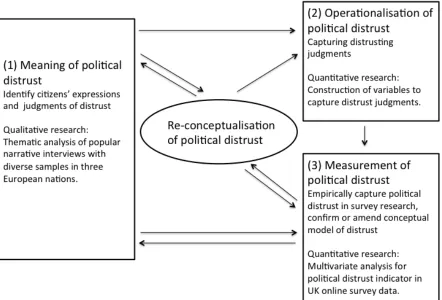
Table 3.2: Map for the conceptualisation, operationalization and measurement of
political distrust p.92
Chapter 4
(No tables or figures)
Chapter 5
Table 5.1: Item phrasing and descriptive statistics p.148
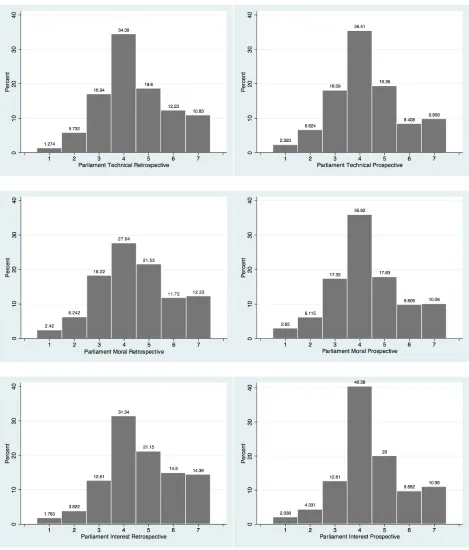
Figure 5.1: Distributions of distrust items for national parliament p.151
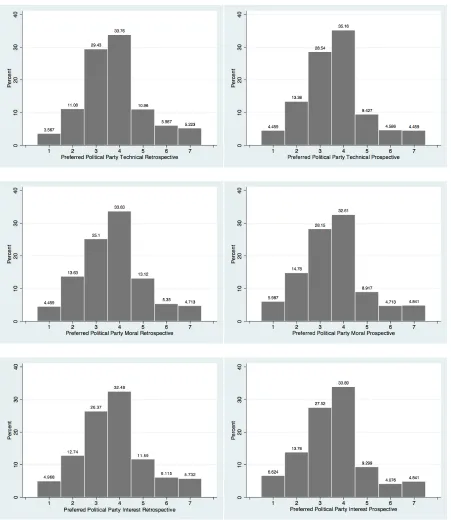
Figure 5.2: Distributions of distrust items for preferred political party p.152
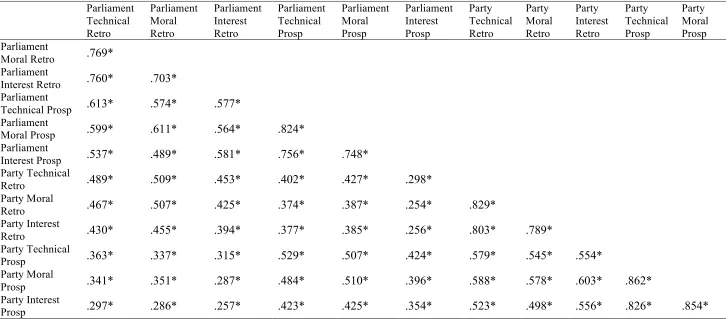
Table 5.2: Inter-item correlations p.154
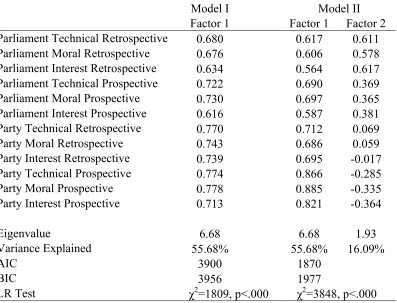
Table 5.3: Factor analysis of 12 political distrust items p.159
Figure 5.3: Factor loading plot for two-factor solution without rotation p.161
Table 5.3.1: Two factor rotated models for 12 political distrust items p.162
Figure 5.3.1: Factor loading plot for two-factor solution with orthogonal and oblique
rotations p.163
Table 5.4: Reliability analysis for 12 items p.164
Table 5.5: Mokken scale analysis for distrust of parliament items p.167
Table 5.5.1: Mokken scale analysis for distrust of preferred party items p.167
Table 5.5.2: Mokken scale analysis of 12 political distrust items p.168
Figure 5.4: Latent class analysis using a three-class model for all items p.171
Figure 5.4.1: Latent class analysis using a four-class model for all items p.172
Figure 5.4.2: Latent class analysis using a five-class model for all items p.173
Table 5.6: Latent class analysis model selection criteria p.174
Table 5.7: Bivariate correlations between distrust measures and external variables p.186 Table 5.7.1: Correlation coefficients for trust measures, Great Britain ESS6, 2012 p.187
Chapter 6
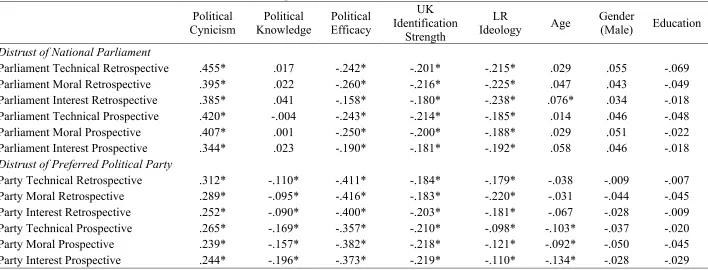
Table 6.1: Bivariate correlations between distrust indicators, political attitudes and
citizen characteristics p.194
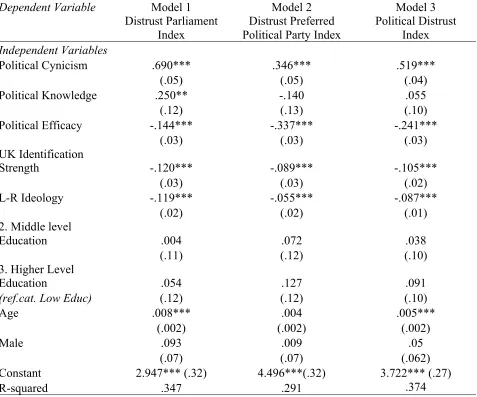
Table 6.2: Regression results showing partial associations of political characteristics
and distrust indices p.197
Table 6.3: Bivariate correlations between distrust items political attitudes and citizen
characteristics p.201
and distrust in parliament items p.204 Table 6.5: Regression results showing partial associations of political characteristics
and distrust in preferred party items p.206
Table 6.6: Bivariate correlations of distrust indices with behavioural intentions p.212 Table 6.7: Regressions explaining behavioural intentions using political distrust
Indices p.215
Table 6.8: Binary Logistic Regression for behavioural intentions using distrust of
parliament and distrust of preferred party indices. p.216
Table 6.9: Bivariate correlations of distrust items with behavioural intentions p.219
Table 6.10: Regression coefficients for distrust in parliament items explaining active
and disruptive political participation p.220
Table 6.11: Regression coefficients for distrust in preferred party items explaining active
and disruptive political participation p.221
Table 6.12: Odds ratios from binary logistic regression for distrust in parliament
items explaining behavioural intentions p.222
Table 6.13: Odds Ratios from binary logistic regression for distrust in preferred party
items explaining behavioural intentions p.223
Chapter 7
Chapter 1: Introduction
1.1 The puzzle of political distrust and motivation for the thesis
1.2 A problem of definition: Theoretical framework and review of current research 1.3 Summary of case selection and methodology
1.4 Main findings and contribution of the thesis 1.5 Chapter summaries
1.1 The puzzle of political distrust and motivation for the thesis
The concept of political trust has received considerable attention in the academic literature. Scholars have theorised about and empirically researched the benefits of citizens’ trust in politicians, political institutions and governments since the 1960s. Theoretical accounts on the importance of political trust in democracies reach as far back as texts from classical
Greece and the treatises of John Locke.1 Political trust has been identified as a key
component of diffuse support for democratic systems and is considered necessary for their survival (Easton, 1965; 1975; Norris, 2011; Braithwaite and Levi, 1998). Given its significance, political scientists have been using mass surveys and frequent polling to closely monitor citizen attitudes towards government, political institutions and the political system in general, first in the US and Britain, and subsequently across other European democracies. Yet, what we observe in most established democracies with more and more regularity are citizen attitudes towards politicians and institutions that can be best characterised as attitudes of distrust, not trust. One can easily notice such widespread negative orientations to politics
across mass media, social media and critical commentaries of current affairs.2 It is not only
the recent financial meltdown that has triggered waves of protests across the US and Europe, nor the Euro-zone crisis that has strained citizens’ support for their political systems in peripheral European countries. A wide range of phenomena, such as the London riots of 2011 or the rise in extreme-right voting and success of anti-systemic fringe parties throughout
1 John Locke, “Second Treatise on Government” (1982) and the ‘‘Anonymous Iamblichi’’ (Gagarin and
2 Some recent examples include the London riots of 2011 (Monde Diplomatique, 2012; Independent, 2012), the
European countries, have been interpreted as manifestations of political distrust (Jennings and Stoker, 2015; Hartleb, 2015).
Survey trends also paint a rather negative picture. In the latest Eurobarometer survey conducted in May 2015, over 62% of all Europeans claim not to trust their national
parliament and national government.3 There are significant cross-country differences of
course, but even among Scandinavian countries, around 30% of citizens claim not to trust their representative political institutions. A recent OECD report tracing the state of political trust among its 34 members also shows on average 60% of citizens distrust their political
systems.4 Similarly, in the US, 75% of Americans claim that they ‘never’ or ‘only some of
the time’ trust their government to do what is right. Such negative responses have been the norm rather than the exception in the US since the 1970s, and negative trends have ensued in
other established democracies.5 Public and academic debate has focused largely on the
interpretation of these trends and their implications for the health of democratic systems, bypassing the question of what political distrust really is and what it entails for citizens that express it.
Some scholars highlighted the prevalence of negative attitudes towards politics and people involved in government prior to the 1970s, even in nations considered to exhibit civic culture virtues (Hart, 1978; Norris 1999). A recent British study dedicated to negative citizen orientations replicated a question polled in 1944 and 1972, asking citizens whether they believed British politicians were out for themselves, their party or the good of the country (Jennings and Stoker, 2015). In 1944 only one in three respondents believed their politicians were doing what is best for the country, while 70 years later this ratio has shrunk to one in ten. The worsening image of politicians is evident, yet at the same time this early poll shows that two out of three people asked in 1944 still believed their politicians were either out for themselves or for their party, hardly a sturdy basis for a positive orientation towards those who legislate and govern.
3 Eurobarometer 83 available at http://ec.europa.eu/public_opinion/archives/eb_arch_en.htm.
4 OECD Restoring Trust in Government Forum, available at
http://www.oecd.org/general/focus/focus-restoring-trust-in-government.htm.
5More than 50% of Americans have registered distrust towards their government since the 1970s, with only a
The purpose of this thesis is not to address the debate on the timing or extent of the rise in political distrust. Rather, it highlights a puzzle that results from the dissonance between empirical observations of citizen attitudes of distrust and the analytical concepts used to study attitudes towards politics, which have focused on trust. The fact that citizens express primarily negative affective and cognitive orientations towards the people that govern them, their political institutions and processes has been well documented and studied by a series of prominent scholars in the field (Norris, 2011; Dalton and Welzel, 2014; Nye, 1997; Crozier et al., 1975; Almond and Verba, 1980). This new pattern of political orientations has been assigned various labels, such as ‘dissatisfied democrats’ (Klingemann, 2014) ‘critical citizens’ (Norris, 1999; 2011) or ‘emancipated citizens’ (Welzel, 2007; 2013), emphasising critical attitudes combined with strong democratic values. Nevertheless, this field of research is still missing a clear conceptualisation of political distrust and systematic study of such attitudes as expressed by citizens in democratic contexts. We believe that the challenges posed by plummeting indicators of political trust and confidence cannot be fully understood nor accurately interpreted when ‘political distrust’ has not been conceptually defined in a clear way, distinguished from competing notions and studied in its own right.
The recent surge in theoretical and empirical work that attempts to conceptualise and understand negative citizen orientations, such as ‘anti-politics’ (Jennings and Stoker, 2015) or ‘counter-democracy’ (Rosanvallon, 2011), further showcases the need for a change of focus and for clearly delineated concepts in the study of citizen attitudes towards politics. In this context, the present thesis argues that given the prominence of distrusting attitudes in the realm of politics and the fundamental threat political distrust may pose to democratic governance and stability, this is the right time to ask: “What is political distrust?” In this sense, we claim that we do not really know how citizens think about or express their distrust in politics, how they judge the untrustworthiness of political agents and whether different political objects are evaluated along similar lines. Finally, we ask whether different evaluations of untrustworthiness can illuminate the function of distrust, its association to other key political attitudes and its consequences for political behaviour.
used as indicators of ‘trust in government’ or ‘political trust’ and lower values have been assumed to reflect distrusting attitudes. However, this approach has raised question marks and has given rise to diverse criticisms on both sides of the Atlantic. When a citizen claims she only trusts the government to do what is right “some of the time”, is it a true indication that she distrusts her government and the system of governance? Or when citizens report that they “tend not to trust” their national parliament, should this be interpreted as an expression of distrust towards parliament? Indeed, scholars such as Margaret Levi and Laura Stoker have highlighted that “we have yet to question whether all of this research is really about trust” (200: 483), referring in particular to the American National Election Study questions used as the ‘trust in government’ indicator; others have questioned whether such measures can provide an indication of distrusting citizen attitudes (Cook and Gronke, 2005; Miller, 1974a, 1974b; Larry, 2002; Stokes, 1962). Similar limitations have plagued indicators that aim to capture trust and distrust ‘by intuition’, that is, by asking survey respondents how much they trust various political institutions, essentially leaving trust and distrust open to the interpretation of each individual citizen. These approaches are suitable for monitoring trends and comparing levels of ‘trust’ across time, but unfortunately, they tell us very little about citizens’ rationale for distrust and the kinds of evaluations they follow when judging political agents to be untrustworthy (Fisher et al., 2010; Mishler and Rose, 1997).
These debates have yet to be conclusively resolved, yet the widespread utilisation of such indicators in political research (this thesis is no exception, having already used such data for motivating reasons) and empirical studies of effects and determinants of political distrust has left a perceptible gap in the field. This gap concerns the nature of the concept of political distrust, its meaning and the underlying evaluations entailed in a distrusting judgment. For all the empirical analyses carried out, there is still no comprehensive conceptual account of citizens’ political distrust that scholars agree upon. On the contrary, the notion of political distrust has been conflated with other concepts, such as ‘cynicism’ or ‘lack of trust’, resulting in a contested term. We believe this is the right time to take a step back, rethink the conceptual status of political distrust, examine the nature of distrusting attitudes and contribute to the existing literature. To this end, the present study focuses on political distrust and aims to address some of the fundamental questions about this type of citizen orientations.
political trust, and especially distrust and the lack of trust. This ambivalence relates to the two points mentioned above about the limitations in interpreting and understanding the phenomenon of distrusting attitudes in modern democracies without a clear conceptualisation of political distrust. The relationship between trust, the lack of trust and distrust is not a minute etymological detail. It is important both conceptually and empirically. Equating the lack of trust with distrust is equivalent to equating ‘something’ with the ‘absence of something else’ and assumes trust and distrust are symmetrical notions. In less abstract terms, this research affirms that political distrust denotes citizens’ negative expectations relating to interactions with political agents. Negative expectations are by definition ‘something’, which can and should be explored in more depth, and hence cannot be assumed to signify the ‘lack of something’. If we take attitudes of trust to encapsulate positive expectations citizens formulate in response to political agents, then the lack of trust is the absence of such positive expectations. And similarly, lack of distrust should denote the absence of negative expectations. In some cases, political scientists have attempted to distinguish between the three states conceptually and empirically by examining the possibility of skeptical citizens, unconvinced citizens or citizens that both trust and distrust political agents, yet these distinctions did not give rise to studies dedicated to the exploration of distrusting attitudes (Cook and Gronke, 2005; Levi and Stoker, 2000; Braithwaite and Levi, 1998).
Recent advances in evolutionary biology, neurobiology and psychology investigating the roles of trust and distrust in human behaviour further support this argument and provide motivation for the need to examine these concepts separately. Studies in neurobiology have shown that trust and distrust are associated with completely different neurotransmitters in the human brain, operating through different mechanisms and motivating different behaviours
(Zak et al., 2005; Fehr, 2009).6 From this alternative scientific perspective of human
behaviour we learn that the experience and implications of distrust are particular to that state and cannot be understood simply as the lack of trust. Furthermore, work carried out as part of this thesis on distrusting attitudes in the realm of politics brought to light the particular psychological and emotive state citizens manifest when they distrust political actors and
6 According to a series of replicated experimental studies with human subjects, the experience of trust and
institutions. Expressions of extreme distrust entail the anticipation of harmful outcomes from interactions with political agents, triggering feelings of anger, fear and insecurity and an attempt to shield one’s self from vulnerability by not engaging in any form of citizen-state interactions. We argue that such reactions are particular to distrusting attitudes, that they are significant for better understanding citizens’ political behaviour and should not be overlooked by political attitude research.
Structuring theoretical and empirical work solely around the concept of political trust has resulted in much scholarly confusion and a dissonant tool to study actual citizen attitudes towards political systems, which are based on negative affective and cognitive orientations. Scientific understanding of citizen actions such as abstention, anti-systemic party voting, protest, support or opposition to government policies or support for political alternatives to representative democracy can benefit from a clear conceptual account of political distrust. We therefore summarise the arguments motivating the present thesis as follows: increasingly, observations of citizen attitudes in Western democracies point to negative orientations and distrust towards politicians, institutions and political processes. The most widely used theoretical and empirical tools available to study these trends are not appropriate: they are not tailored to investigate the concept of distrust and cannot tell us what citizens are thinking about when they express political distrust. We believe political distrust is an attitude that entails specific evaluations and further, that these evaluative dimensions can provide important insights into the operation of distrust and its role for democratic citizenries.
1.2 A problem of definition: Theoretical framework and review of current research
Many scholars have highlighted the theoretical importance of political and institutional trust for the effective governance and legitimacy of democratic regimes (Gambeta et al., 1988; Miller, 1974a; Hetherington, 1998; Gibson and Caldeira, 1995; Inglehart, 1999; Warren, 1999). Empirical studies have linked trust with law compliance and support for governmental policies, while distrust has been associated with anti-systemic party voting, electoral abstention, protest and political disaffection (Hetherington, 2005; Schul et al., 1998; Bélanger and Nadeau, 2005; Peterson and Wrighton, 1998; Rosanvallon, 2008). Scholarly interest in political trust and distrust reaches back to Easton’s influential distinction between specific and diffuse support, which identified political trust as a component of diffuse democratic support (Easton 1965, 1975). According to the Eastonian model, diffuse support is necessary for institutional legitimacy; it is what arms citizens with a ‘reservoir of good-will’ towards the political regime that can sustain it throughout times of poorer performance. Similarly, in their study of civic culture, Almond and Verba (1963, 1980) consider an allegiant or positively oriented citizenry towards political agents to be an integral part of civic culture that is conducive to effective and stable democratic governance.
idea of ‘liberal distrust’ is motivated by the need for vigilance, but at the same time demands the existence and flourishing of trust in a political community in order to achieve collective goods and effective governance (Lenard, 2008). We therefore believe that citizen attitudes of distrust towards their politicians and institutions can be a cause for concern in democratic communities, following the theoretical framework of studies in system support.
Still, political distrust has often been conflated with political cynicism and alienation (Abramson, 1983). Miller wrote that political distrust or cynicism “refers to the degree of negative affect toward the government and is a statement of the belief that the government is not functioning and producing outputs in accord with individual expectations” (1974a: 952). His definition was criticised for not distinguishing between the disapproval of specific incumbent authorities and a diffuse attitude of dwindling support for democratic governance, giving rise to lengthy subsequent debates (Citrin, 1974; Miller, 1974b; Norris, 1999; Cook and Gronke, 2005). It also led a group of scholars to focus on the target of citizens’ negative orientations and question whether the increase in levels of political distrust stems from an increase in citizens’ democratic expectations (Klingemann, 2014). Higher democratic aspirations and the rise of a critical citizenry should benefit democracies, and despite the fact that this leads citizens to report lower levels of trust and lower satisfaction with the way democracy functions in their country, these scholars argue that there is no systemic trend that shows eroding support for democracy as a regime (Norris, 1999, 2011; Nye et al., 1997). Nevertheless, these debates have resurfaced and the role of political distrust in democratic societies is far from having been put to rest. The role of citizen aspirations and the changes in the environment of political information further complicate the study of political distrust, but we argue that decreasing trends of political trust cannot inform us further about what is happening at the citizen level, the evaluations entailed in citizen judgments, their implications and whether they indeed reflect political ‘distrust’. In their review of research on political trust and trustworthiness, Margaret Levi and Laura Stoker (2000) urged researchers to re-evaluate their concepts and measures, yet despite the prominent place of political distrust attitudes in current research, there has not yet been a systematic examination of what citizens mean when they ‘distrust their political institutions’ (Hooghe and Dassonneville, 2014; Catterberg and Moreno, 2005; Hakhverdian and Mayne, 2012).
approach to trust and expanded this to encompass distrust as a tripartite relation: A (dis)trusts B to do X. This conceptual understanding of trust and distrust as ‘encapsulated interest’ maintains that individual trusters rationally calculate the possibility of their own interest being encapsulated in the interest of the trusted. That is, I will trust or distrust you if I have reason to
believe that “you have an interest to attend to my interests because, typically, you want our
relationship to continue” (Hardin, 2004: 5). This strategic approach has influenced the way scholars have thought about citizen attitudes of political trust, reflecting a calculation of the possibility political agents will act in a benefiting manner (Gambetta, 1988; Hetherington, 2005; Fisher et al., 2010). Despite the heavy burden of knowledge and information requirement this approach places on citizens and the inability to distinguish between reasons for withholding trust or extending distrust, subsequent studies have attempted to identify what citizens could perceive as their own ‘interest’. They have often focused on performance-based measures of government, especially as economic output, but also other policy domains such as control of crime, international affairs and security.
outside the scope of this thesis, as it is specifically aimed at unravelling citizen attitudes of distrust towards political agents, yet we do consider some of the conceptual and empirical insights from this literature in our effort to understand citizen judgments and to definite the concept of political distrust.
From the aforementioned approaches we recognise the important role that experiences can play in fostering attitudes of trust and distrust, as well as the necessity that political distrust must entail aspects additional to the calculation of performance evaluation or encapsulated interest. Furthermore, we also highlight the need for a conceptual approach to political distrust that separates it from the lack of trust. We know that distrusting judgments entail a certain degree of vulnerability and risk in relation to a political agent (Scheidegger and Staerklé, 2011; Marková and Gillespie, 2008), and although they might be a normatively appropriate response in cases of untrustworthy political agents, they set in motion an elaborate cognitive and behavioural response mechanism that researchers are still investigating (Marien and Hooghe, 2013; Schul et al., 2008; Tyler, 2006). Recent advances in social psychology and neurobiology have brought to light links between distrusting or trusting states with emotive and cognitive responses that motivate human behaviour (Zak et al., 2005; Merolla et al., 2013; Yamagishi et al., 1998; Fehr, 2009; Lu, 2014). What Margaret Levi called “lack of trust, in the sense of standing back and failing to trust until given sufficient evidence or reasons for trusting” (1998: 96) has a different meaning and behavioural implications than distrust.
As a final note, the empirical study of political distrust has been further complicated due to the separate paths taken by macro and micro-level research. Judgments of distrust have often been approached by analysing the trustworthy qualities of the political targets, macro-level characteristics of the political regime, such as government and economic performance, institutional characteristics and political culture theories (Nye et al., 1997; Hooghe, 2011, Newton, 1999; Mishler and Rose, 1997). At this point it is important to note that although ‘untrustworthiness’ and ‘distrust’ are conceptually distinct, empirical research shows most citizens refer to ‘untrustworthy politics’ when giving their account of political distrust. Untrustworthiness and trustworthiness are attributes of the political object being evaluated –
not of citizens – yet individuals decide to distrust based on their perception of
or institutional characteristics that contribute to perceptions of political untrustworthiness and testing macro-level theories about its determinants. However, these studies are unable to investigate the individual-basis for political distrust. Distrust is an attitude of negative orientation towards one’s political system, which is formed and expressed by each individual citizen. If we are to address the question of what political distrust really is, what it means and how it functions for citizens, we need to redirect our focus from the macro-level characteristics of institutional (un)trustworthiness towards individual perceptions and evaluations.
1.3 Summary of case selection and methodology
The research design of the thesis follows a mixed methodological approach in order to address the substantive questions that relate to the meaning and functioning of political distrust attitudes for citizens. A sequential mixed methods design allows the incorporation of findings from exploratory research into the conceptualisation of political distrust and subsequent data collection and quantitative analysis of distrusting attitudes. Relying solely on quantitative survey data for this study would not have allowed the researcher to investigate the meaning and conceptual status of political distrust. Existing survey indicators are responsible for a large part of the current confusion and gaps in the social scientific understanding of this attitude area. In this case, the appropriate methodological approach is empirical qualitative research tailored to address questions of meaning and able to access people’s evaluative frameworks. Recognising the strengths of this research approach is as important as acknowledging its limitations in addressing the subsequent goals of the thesis: to examine the structure and functioning of distrusting attitudes. The overarching research question of the thesis renders qualitative and quantitative evidence necessary, and the chosen sequential mixed methods research design provides stronger support for the conceptual model of political distrust proposed in the thesis.
use to explain their distrust to a third party. It allows the researcher to identify common themes and patterns in the underlying evaluative dimensions employed by citizens, while at the same time remaining open to the possibility of discovering new aspects of this attitude area that have been overlooked or run against assumptions made in the relevant literature. Findings from this part of the research are used, in conjunction with theoretical knowledge about citizens’ political attitudes, to formulate a conceptual model for citizen attitudes of political distrust. Our conceptual model marks a contribution to the field of research and captures the dynamic, reciprocal and evaluative aspects of political distrust, specifically citizen assessments of technical, moral and incongruent political conduct.
The purpose of case selection for this part of the research concerns: (a) countries where interviews were conducted; and (b) participants that were interviewed. Three countries were selected in order to obtain empirical evidence not solely confined to one individual political culture and national context that could lead to a conceptualisation of distrusting attitudes, which could potentially travel across national borders (albeit with the caveat that the initial focus was placed on established European democracies). Our aim was, firstly, to conduct research in countries where attitudes of political distrust are commonplace. Given our goal of conceptualising political distrust, being able to find expressions of distrust in the population was a necessary requirement. Secondly, it was important for the empirical data to be gathered from national contexts experiencing different political developments, with diverse historical trajectories and institutional set ups, but belonging to the relatively homogenous group of established democracies. This helps boost the generalisability of findings beyond the three national contexts of the thesis while maintaining the relevance of our analysis to citizen attitudes of political distrust in the context of established democracies. Greece, Italy and the UK were chosen as suitable countries to conduct narrative interviews and a diversified participant group was recruited in each nation, based on citizens’ geographical residence, age and socioeconomic status (N=48). We provide more information regarding the national contexts where research was conducted, as well as the recruitment process and details of interview participants in Chapter 3.
explore the internal structure of distrusting attitudes as they are captured by the new multiple items, and to supplement or revise the conceptual model of political distrust through quantitative data analysis. We further examine how the different aspects of distrusting attitudes interact with other individual-level attitudes, such as political cynicism, efficacy or knowledge in an effort to unravel some of the existing conundrums regarding the association of political attitudes. Similarly, we take advantage of the subcomponents of distrusting attitudes captured through the multiple item indicator and re-examine the effect of distrust on citizens’ behavioural intentions. The link between distrust and political participation has also been contested in theoretical and empirical studies, and our aim is to contribute to these debates with novel evidence more detailed analysis.
This part of the study provides the opportunity to carry out statistical analysis that further adds to our understanding of the underlying structures and functions of political distrust attitudes and brings new evidence based on an empirically grounded conceptual model of citizens’ distrust. For the purposes of the study we opted for an online survey design that allows the inclusion of a more diverse sample of respondents than the widely used college or university student samples in similar studies of political attitudes. We carried out this part of the research in the UK (using a specialised online survey provider) as one of the original national contexts studied in the earlier part of the research. Although the quantitative data are derived from a single national context, we believe they provide a meaningful contribution to the analysis of political distrust and further studies can easily reproduce our research and expand on it on various directions.
1.4 Main findings and contribution of the thesis
question of what really constitutes political distrust and how it varies between individuals. Ultimately, political distrust is an attitude, and as such it is inevitably attached to the individual that formulates it in response to some aspect of her world (Krech and Crutchfield, 1948). We therefore offer an individual-level study that emphasises the role of personal evaluations and perceptions of the political system that shape distrusting attitudes. We argue that unlocking the underlying evaluations on which distrust is based is the best way to answer the key questions surrounding the ontological status of political distrust. These two approaches, individual-level and distrust-focused, inform the research design of the thesis, resulting in the collection of original empirical evidence of citizens’ distrusting political attitudes. This methodological approach constitutes a further novelty in the study of political distrust, which for the most part has rested on either conceptual work or the analysis of existing survey data. The research design is of course necessitated by the key questions this thesis set out to address. Empirical qualitative evidence is collected to tackle the puzzle of meaning in expressions of political distrust and to examine the evaluative processes entailed in distrusting attitudes. The analysis of quantitative data based on this conceptual model of political distrust reveals the internal structure of such attitudes and the way this structure relates to intentions of political participation.
individuals, different occasions and in judging different parts of the political system. Yet we find they are omnipresent in some combination in expressions of distrusting attitudes.
We also conceptualise distrust as dynamic, meaning that it entails a retrospective and prospective temporal dimension. Evaluations of untrustworthy political conduct are based on perceptions of past events, interactions and information related to the citizen’s political life, as well as on calculations regarding future outcomes and expectations. This dynamic aspect allows citizens to consider new evidence and information when formulating perceptions and expectations of political untrustworthiness given any change in circumstances. In this way attitudes of distrust are built over the citizen’s political life experience, but are also responsive to political performance and political changes. Past evaluations of political untrustworthiness undoubtedly influence future expectations, yet we argue that the two time projections tap into slightly different aspects of distrusting attitudes. Retrospective evaluations are grounded more strongly in current and past perceptions of political conduct, whereas prospective evaluations entail a bigger role for citizens’ belief in the political system and the political agents.
with a state of anxiety, fear and even despair, which are equally important emotive states for political behaviour.
Although political distrust stems from evaluations of political agents, it builds up and spills over from one part of the political system to another. The precise point where spill-over occurs is difficult to identify, as it appears to be different for each individual. For example, for some citizens in the UK, the parliamentary expenses scandal reinforced their view of the political class as ‘out-of-touch’ and ‘out-for-themselves’ without a willingness to address the real problems of the country, and this was projected onto the entire political system. For others these evaluations were confined to the specific individual politicians who misbehaved, were caught and disciplined and the operation of the controlling mechanisms ring-fenced the trustworthiness of the system. Similarly, for some citizens their perception of a manipulation offensive surrounding the Iraq war was strong enough to stain the normative standing of all British politicians, while for others it was confined to Tony Blair and the New Labour administration. We therefore also find evidence of political distrust acting as a cognitive heuristic mechanism and spilling over to colour subsequent evaluations of political agents and different parts of the political system.
across all items makes a stronger case for the predominance of politically distrusting attitudes. It could be possible – although less likely – for some citizens to hold more negative evaluations of their preferred political party, and by consequence all political parties in the system, than of the institutions and processes of the political system. We do not find any evidence for this pattern of evaluations in our sample and would argue that distrust in political parties, and particularly in a citizen’s preferred party, can only be a bad omen for attitudes towards the democratic system, which is built on the premise of representation and elections. If political distrust is not extended to political institutions, it is arguably a matter of time before citizens’ reservoir of good-will runs out and they begin to perceive political processes as equally untrustworthy.
Using the multiple items indicator we can disentangle the notion of political distrust little by little and map its structure and operations. We find that all of the identified evaluative dimensions are part of a single underlying concept of distrust and can be considered as indispensable components of distrusting attitudes. We also find that citizens resort to retrospective assessments of untrustworthiness as much as they formulate prospective expectations for political conduct, although beliefs about future conduct are consistently less negative than those of the past. This difference may reflect genuine political changes, such as replacement of politicians, newly introduced processes or reforms. However, we argue that the due to the timing of our data collection and the consistency in these disparities, which hold for all types of evaluations and political targets and for all subgroups in our study, including the most cynical individuals, can be better understood in terms of a basic psychological tendency and prospective assessments tapping more strongly into the level of one’s faith about future political conduct and institutional performance. Maintaining some degree of hope and the belief in a more favourable future – or at least no worse than past indicators would suggest – also emerges across some narratives of political distrust.
An additional key finding of this thesis concerns roles different aspects of distrusting attitudes can play in citizens’ reaction to politics. Above, we commented briefly on the particular emotional responses and psychological states associated with political distrust, as well as the advances of research in political psychology that highlight the effect emotional-psychological states have on citizen’s behaviour. We further find that negative evaluations of the political party one considers closest to them act in a demotivating fashion and lead citizens to think less about actively participating in politics through existing avenues and political groups. Such attitudes also help us better understand the decision to abstain in an election. Both retrospective and prospective negative evaluations of the political party citizens consider closest to their preferences should make it harder for them to lend their support to that party on election day; this increases the incentives for abstention and in this instance past evidence of untrustworthy political conduct is more informative for citizens’ intention to abstain. At the same time, radical or extreme-party voting, which has attracted considerable attention due to prominent and considerable electoral gains across European democracies, is also linked to political distrust.
These findings pertain to some of the behavioural intentions that we begin to identify in the first stage of our research into distrusting attitudes and investigate further in the latter part of our analysis. They offer initial evidence that in some cases distrust, and not trust, is more informative as a political attitude to understand citizens’ behavioural intentions, such as in the case of electoral abstention and active political participation. Furthermore, distrust targeted at different parts of the political system (partisan or institutional actors) can have different motivating influences. Evidence suggests that the former proves motivating for active political engagement through political organisations, interest groups and activism, while the latter appears to be motivating for types of behaviour that disrupt democratic political processes. Considering these differences can help us make further contributions to the debates on the role of political distrust for participation and democratic political behaviour.
Finally, the thesis contributes to the academic study of political distrust by addressing the issue of dimensionality, both conceptually and empirically. We believe that a considerable part of the scholarly debates surrounding political distrust and conflicting research findings have emerged as a result of a double function of attitudes of political distrust. We argue that political distrust can and should be understood as a unified concept. We find consistent evidence that all evaluative dimensions tap into the same latent trait of political distrust, despite certain differences in the responses registered along retrospective or interest-based evaluations. All citizens tend to assess the untrustworthiness of political targets across evaluative dimensions and time-projections in a consistent manner. There is no evidence of any respondent group that systematically provides very negative evaluations along certain lines and very positive evaluations along others. Evaluations of different political agents, usually along different evaluative dimensions, move in tandem.
political system, we can investigate in more detail the aspects of distrust that are associated with behavioural intentions and related political attitudes and further, we can identify the reasons why citizens may update their perceptions of untrustworthiness. When considering the similarities, we can observe that distrust of different political objects are still part of an overarching political attitude and can rarely be developed in isolation. This overarching attitude of political distrust can act as a cognitive shortcut and guide perceptions of any potential political agent. Empirical evidence, both quantitative and qualitative, points to this double function of citizens’ political distrust.
1.5 Chapter summaries
The final section of this introductory chapter presents an overview of the upcoming chapters. It briefly outlines the main question each chapter sets out to address, the way it fits within this thesis and the key points and contribution it brings in answering the overarching research question of what is political distrust.
conceptual model of political distrust, which marks this research project’s first contribution to our understanding of this attitude area. This conceptualisation is also grounded in the findings of empirical qualitative work carried out as part of the thesis. The analysis is presented in more detail and discussed thoroughly in Chapter 4.
The conceptual model describes political distrust as a process whereby citizens assess the prospective behaviour of political agents, as well as evaluations of past behaviour, to formulate expectations of negative outcomes from interaction with that agent. Although the particular actions and political attributes that form the basis of untrustworthiness between different institutional agents, the government, political figures, such as the prime minister, and political parties may differ, they invariably follow the same three evaluative dimensions: a technical dimension, where citizens assess incompetence in ability, outcomes or processes; a moral dimension, where citizens evaluate the ethics, fairness or injustices perceived in the actions and intentions of political agents; and an interest-based dimension, where citizens evaluate the interests political agents are set to fulfil as diverging from their own. These three evaluative dimensions, alone or – more often than not – in combination, lead citizens to formulate judgments of political distrust and set in motion a series of emotive and cognitive responses, which in turn influence citizens’ future actions and decisions. This conceptual model establishes political distrust as a relational attitude which is therefore grounded in evaluations of a political entity and does not stand in isolation. At the same time, such evaluations abound in the political lives of citizens and are habitually synthesised in an overall attitude based on the estimated trustworthiness or untrustworthiness of the political system as a whole. We affirm that citizens are able to make individual evaluations and that the two functions are not incompatible. It is precisely this double function of political distrust that renders it such a potent attitude for political behaviour and democratic support and simultaneously allows it to be updated or reversed in response to institutional changes and new experiences. The detailed conceptualisation of political distrust also enables us to disentangle the notion from competing concepts and develop a line of inquiry tailored specifically to distrust.
popular research method. The qualitative research component serves the purpose of re-examining political distrust judgments inductively, putting citizens and their expressions and perceptions at the centre of the research endeavour. It is a necessary step for a project that seeks to investigate the meaning of distrust judgments and to unearth the way such judgments operate for citizens, before it can proceed to propose a conceptual model that claims to capture the meaning, function and ontological status of political distrust. Qualitative empirical work was conducted in more than one European country to allow for multiple political culture inputs and increase potential generalisability of findings outside a single national context. The choice of countries where research was conducted was motivated primarily by the aforementioned research question, i.e. the availability of distrusting citizen attitudes and the flexibility of citizens to express such views freely. Forty-eight popular narrative interviews were conducted in three European established democracies (the UK, Italy and Greece). Narrative content was transcribed and translated, undertaking a seven-step thematic analysis to derive common threads of meanings and lines of evaluations in citizens’ expressions of political distrust. The analysis of qualitative evidence informs the conceptual model of political distrust presented in Chapter 2 and guided succeeding choices on the operationalisation of political distrust through survey measures.
Given the central role of political distrust attitudes for citizens’ political behaviour and support for democracy, scholarly interest is not only theoretical and conceptual, but expands to the identification and measurement of these attitudes in large-scale quantitative surveys. The second part of the methodology chapter maps the process of operationalisation and measurement of political distrust attitudes through a multi-item survey indicator. The new measure was employed in an online survey of English respondents and provided quantitative evidence to further investigate the structure and function of distrusting attitudes. This quantitative part of the thesis makes a second contribution to the study of distrust by proposing a new survey measure and exploring the dimensionality and structure of distrust. The statistical analysis carried out adds further strength to the proposed conceptual model of political distrust, examining construct validity and addressing the final question of this research project, which concerns the relationship between political distrust, related political attitudes and citizens’ political behaviour.
core of the thesis, presenting and analysing the findings from the narrative interviews carried out and survey data collected. Chapter 4 provides a detailed exploration of citizen expressions of political distrust as these emerge through narrative accounts from Greece, Italy and the UK. It identifies the main themes citizens resort to when evaluating their political systems and uncovers the meaning they ascribe to distrusting attitudes across national contexts. The findings from popular narratives give rise to the conceptual model for the study of political distrust described in Chapter 2, defined as expectations of harmful outcomes from interactions with political agents, based on retrospective and prospective evaluations. Expressions of distrust entail three evaluative dimensions based on technical incompetence, ethics or unfairness, and perceived incongruent interests. The evaluative aspect of distrusting judgments appears to operate similarly for different study participants and the various parts of the political systems being evaluated. Other key issues that emerge from the study of expressions of distrust are presented and discussed in detail with the aid of interview extracts. Firstly, although distrust is identified as relational (established between the citizen and a state agent), dynamic and cyclical (sensitive to past experiences and influencing one’s approach to future interactions), it can also spill-over from specific evaluations to systemic attitudes and vice-versa. We argue that this double function of attitudes of political distrust sits at the core of its significance for democratic citizenship, as well as its difficulty to be captured empirically through survey measures. This chapter attempts to address this issue, firstly, by articulating the two processes in a clear way, and secondly, by discussing the particular expressions, emotive and cognitive responses accompanying citizen distrusting judgments, to gain a better understanding of the two functions. It concludes with a discussion of the most important political actors citizens use to relate to their political system and as key targets for political distrust. In this discussion we identify the national parliament as a key institutional player that represents a symbolic aspect of representative democracy and consider the variation in citizen interpretations of, and the political party citizens feel closest to, as a partisan player integral to one’s feeling of representation and point of contact with politicians, policies, elections and political outcomes.
respondents’ assessments of the two political objects. In this chapter we explore the way in which the different evaluations of untrustworthiness associate with each other, the underlying response structures that are formed and the ways in which respondents are grouped together based on their response patterns. We also investigate the reliability, dimensionality and validity of the new political distrust indicator.
We find that the three dimensions of technical, ethical and interest-based evaluations identified through earlier qualitative work capture aspects of political distrust attitudes on a single dimension. Retrospective and prospective assessments of untrustworthy political conduct are also important aspects of distrusting attitudes, and we observe that across our sample of respondents prospective evaluations are consistently less negative than retrospective ones, possibly pointing to a positive prospective bias. We also find that evaluations of untrustworthiness are lower for respondents’ preferred political parties than for the national parliament. This is considered more a validation of our research design than a surprising finding of political distrust attitudes. The survey items touching on one’s assessments of their preferred political party capture the lower boundary of political distrust. Respondents differentiate between evaluative assessments of their preferred parties and questions asking about national parliament along all evaluative dimensions. We also find that for assessments of national parliament extreme negative responses are more frequent than extreme positive responses, especially regarding considerations of incongruent-interests, which is the easiest item for respondents to register negative evaluations. We believe this further highlights the relevance of examining negative political attitudes and investigating the underlying evaluations of untrustworthy political conduct.
Chapter 6 is the final empirical chapter of the thesis and focuses on the insights our measure of political distrust provides to the relation of distrust with other political attitudes, citizen characteristics and political behaviour. It investigates the association of the new measure of political distrust attitudes with external variables identified in the literature and in conceptual work to be related to distrust. We have included in our survey measures of political cynicism, political efficacy, strength of identification with the UK, political knowledge, ideological orientation and demographic characteristics, as well as other measures of democratic support: satisfaction with democracy and a traditionally phrased institutional trust item for national parliament. The latter offers an additional comparison for the political distrust scale, as well as for the two separate indices of distrust in national parliament and in one’s preferred political party. We find that for certain related variables such as political efficacy and political knowledge the new measure of distrust is better able to capture the link between the two and to highlight the nuanced relationship identified by theoretical investigations. Using the two indices of political distrust in national parliament and preferred party we show that the relationship between these variables is not uniform for all types of distrusting attitudes.
demotivating effect on active political participation, such as joining a peaceful demonstration. Finally, we also find evidence, in line with previous analyses of the new measure of distrust, to support that certain components of distrusting attitudes are more important than others in motivating behavioural intentions. Perceptions of untrustworthiness for national parliament that are based on diverging interests are not enough to motivate actions such as abstaining or leaving the country. On the contrary, distrust based on moral evaluations, especially retrospective ones, is influential. We discuss the implications of this analysis for our model of political distrust and the contribution it makes to our understanding of distrusting attitudes in general.
Chapter 2: Theoretical Framework and Conceptual Model for the
Study of Political Distrust
2.1 What is so special about political distrust? 2.2 State of current research
2.3 Analytical approaches to the study of distrust
2.4 The conceptual model of political distrust based on technical, ethical and interest-based evaluations
2.5 Dimensions and spill-overs of political distrust
2.6 Towards conceptual clarity: Political distrust and related concepts
The study of political distrust presents multiple puzzles to the willing political science researcher. There is a lack of consensus on the theoretical status of the concept, its meaning and its relation to trust. Empirical and often conceptual discussions have been overshadowed by the notion of trust, and a primary aim of this thesis is to conceptualise and investigate political distrust in its own right. At the same time, many of the aforementioned problems also plague the study of political trust resulting in a lot of confusion in the way theories about the causes and consequences of political distrust are formulated and tested. This thesis does not claim to conclusively address all of these issues. Instead, it focuses on providing a clear concept of political distrust based on empirical exploratory work and a survey measure of distrusting attitudes, which can advance our understanding of citizen attitudes and citizen behaviour. In this way it hopes to act as a solid step towards addressing some of the many puzzles political scientists face when studying citizen political orientations.
parts of political distrust and a common cause of confusion in the operationalisation and interpretation of empirical evidence. Finally, we present key concepts in the study of political behaviour that have been associated with attitudes of political distrust and are also used in subsequent parts of this study exploring the structure and operation of distrusting attitudes.
2.1 What is so special about political distrust?
Despite the recent increase in scholarly work and public discussions on citizens’ distrust of their governments, politicians and political systems, the academic literature is still ambivalent towards the concept of political distrust. Most existing theoretical work has focused on the definition and function of trust, which is considered to promote cooperation, facilitate social and economic exchanges, enable rule compliance and, therefore, to contribute towards stable democratic processes, economic growth and human development (Fukuyama, 1995; Hardin, 2002; Braithwaite and Levi, 1998; Blind, 2006; Schul et al., 2008). As a result, the theoretical and conceptual framework of political trust has overshadowed most of the discussion around distrust, as well as the quantitative measurement and empirical study of the causes and implications of distrust. Yet, political distrust was the object of much scholarly investigation carried out in the 1970s and 1980s, as political scientists became alarmed by the mounting evidence of alienated citizens and attempted to understand the phenomenon of disaffection and its implications for the stability of democratic values and political systems (Hart, 1978; Parry, 1976; Sigelman and Feldman, 1983; Craig, 1980; Gamson, 1968).