0
The London School of Economics and Political Science
The long-term economic impact of migration and its
significance for US prosperity
Viola Konstanze Sitta Freiin von Berlepsch
A thesis submitted to the Department of
1
Declaration
I certify that the thesis I have presented for examination for the PhD degree of the
London School of Economics and Political Science is solely my own work other than
where I have clearly indicated that it is the work of others (in which case the extent of
any work carried out jointly by me and any other person is clearly identified in it).
The copyright of this thesis rests with the author. Quotation from it is permitted,
provided that full acknowledgement is made. This thesis may not be reproduced
without my prior written consent.
I warrant that this authorisation does not, to the best of my belief, infringe the rights
of any third party.
I declare that my thesis consists of 62.828 words.
Statement of conjoint work
I confirm that chapter 5 was jointly co-authored with Andrés Rodríguez-Pose (LSE,
Geography & Environment) and Chapter 6 was jointly co-authored with Andrés
Rodríguez-Pose and Neil Lee (LSE, Geography & Environment). In both these works
I contributed a minimum of 50%.
2
Abstract
Does past migration matter for economic development in the long-term? Does an
area’s history in migration affect economic performance long after the initial
migration shock has faded away? And – does it matter what type of immigrant settles
in a territory for the economic impact of migration to persist in time? This dissertation
examines the long-term economic impact of migration, connecting migrant settlement
patterns at the turn of the 19th to the 20th century to present day levels of income per
capita. It firstly estimates the effect of different compositional features of the historical
migrant stock on long-term economic development levels in the United States (US), a
country founded and essentially formed by migrants. Secondly, it tests whether there
is a link between past European and recent Latin American migration to the US to
identify whether one potential transmission mechanism could be at play in transferring
the migrants’ economic impact across time.
The results of the analyses conducted using a variety of methods – OLS, IV, and panel
data estimation techniques – provide three novel insights. Firstly, historical migrant
stock is one of the very few historical county features that still explain current levels
of development. In contrast to other factors, such as past income and education levels
or industry structure, the influence of past migration on economic development does
not seem to fade over the very long-term.
Secondly, compositional aspects related to the historical migrant stock remain highly
decisive for economic development outcomes more than 100 years later. The diversity
of the migrant population, the gender balance, as well as the average distance travelled
3
development levels today. All three features have growth-enhancing implications over
the short as well as over the long-term.
Lastly, past migration – irrespective of the presence of family connections, ethnic ties,
or migration networks – shapes the geographical patterns of successive migration
waves spanning multiple decades and even generations. An area’s migration history
acts as a crucial pull factor for future migrants and is at the root of the formation of
migration-prone and migration-averse regions. Consequently, previous migration
contributes to ‘rework’ the places of destination, making them more attractive for
future generations of migrants.
All in all, the findings show that migration not only matters for economic
development, but that its economic influence determines the success and prosperity of
4
Acknowledgements
There are a range of people to whom I would like to express my deepest gratitude. It is them who made this PhD possible, who kept me going, challenged me, cheered me on, and supported wherever they could.
First and foremost, I wish to thank my parents and sister who have always been there for me, turned me into the person I am today and always supported my – sometimes maybe not always straight forward – choices in life. Thank you for all your encouragement, inspiration, your never-ending support and love. Mama, Papa and Pia – Danke für alles.
My second ‘thank-you’ is to my supervisor Andrés Rodríguez-Pose. Andrés, about eight years ago, you started to guide me with your professional, academic and personal advice. In all this time, you have become a mentor and great friend. Thank you for always challenging me and pushing me to my limits. This PhD would have been impossible without you.
I also want to thank my second supervisor, Neil Lee. Neil, I am very grateful for your support and valuable feedback over the years. Many thanks for always having your door open to answer questions, to challenge my thoughts and to encourage me.
I am also deeply grateful to my PhD colleagues and London friends who have turned these past years into such an enjoyable, rewarding and fun ride. No matter the day, hour or moment, you guys have always listened, laughed, celebrated, travelled or worked out with me, keeping me on track and, most of all, sane! You have become incredible friends. Thank you for everything – I will miss you!
5
T
ABLE OFC
ONTENTS1 Introduction ... 13
1.1 References ... 21
2 Structure ... 26
2.1 Population diversity and its long-term impact for economic development ... 27
2.2 A woman’s touch? Female migration and long-term economic development ... 29
2.3 Internal migration and its long-term impact for economic development ... 31
2.4 Migration-prone and migration-averse places: Path dependence in long-term migration ... 34
2.5 References ... 37
3 The economic impact of migration – a brief sketch ... 39
3.1 References ... 47
4 Migration to the US ... 56
4.1 The Age of Mass Migration to the US ... 58
4.2 Contemporary migration - the Latinos’ case ... 74
4.3 References ... 87
5 Population diversity and its long-term impact for economic development ... 92
5.1 Introduction ... 92
5.2 Mass migration to and within America – a short overview ... 95
5.3 Diversity and economic development ... 101
5.4 Empirical Approach ... 109
5.4.1 Model 1 – Population heterogeneity: The case for diversity ... 111
6
5.4.3 Variables of interest – Measures of diversity and concentration ... 112
5.4.4 Controls – Factors influencing county development ... 117
5.4.5 The data ... 118
5.4.6 Instrumental Variable Estimation ... 120
5.5 Analysis... 123
5.5.1 The long-term impact of diversity ... 123
5.5.2 The dynamic impact of diversity ... 129
5.6 Conclusion ... 136
5.7 References ... 141
5.8 Appendix 5A ... 151
6 A woman’s touch? Female migration and long-term economic development ... 153
6.1 Introduction ... 153
6.2 Migrant women during the Age of Mass Migration ... 155
6.3 Migrant women and economic development ... 164
6.3.1 Gender and the economic impact of migration ... 164
6.3.2 Migrant women and their long-term impact for economic development ... 166
6.4 Empirical Approach ... 170
6.4.1 Model 1: The direct impact ... 172
6.4.2 Model 2: The indirect impact ... 173
6.4.3 The Data ... 174
6.4.4 Instrumental Variable (IV) Estimation ... 177
6.5 Analysis... 180
7
6.5.2 The indirect impact of migrant women ... 188
6.6 Conclusion ... 192
6.7 References ... 196
6.8 Appendix 6A ... 207
6.9 Appendix 6B ... 208
6.10 Appendix 6C ... 209
6.11 Appendix 6D ... 211
7 Internal migration and its long-term impact for economic development ... 212
7.1 Introduction ... 212
7.2 Internal migration at the turn of the 19th to the 20th century ... 215
7.3 Internal migration and economic development ... 220
7.4 Empirical Approach ... 227
7.4.1 The model ... 227
7.4.2 The data ... 229
7.4.3 Instrumental variable estimation ... 233
7.5 Analysis... 235
7.6 Conclusion ... 246
7.7 References ... 250
7.8 Appendix 7A ... 262
7.9 Appendix 7B ... 263
7.10 Appendix 7C ... 264
7.11 Appendix 7D ... 266
8
7.13 Appendix 7F ... 269
7.14 Appendix 7G ... 270
7.15 Appendix 7H ... 271
8 Migration-prone and migration-averse places: Path dependence in long-term migration 272 8.1 Introduction ... 272
8.2 US migration patterns – a brief sketch ... 274
8.3 Why do migrants end up in particular places and not in others? ... 283
8.4 Model and data ... 289
8.4.1 Econometric specification ... 289
8.4.2 Data ... 292
8.4.3 Instrumentation strategy ... 294
8.5 Analysis... 296
8.6 Conclusion ... 306
8.7 References ... 309
8.8 Appendix 8A ... 318
8.9 Appendix 8B ... 319
8.10 Appendix 8C ... 321
9 Conclusion ... 322
9
L
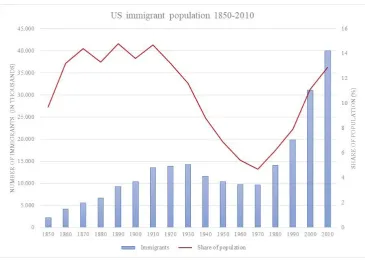
IST OF FIGURESFigure 4-1 US migrant population (absolute and share of total population), 1850-2010 ... 57
Figure 4-2 Migrant Stock by county, 1880 ... 61
Figure 4-3 Migrant Stock by county, 1910 ... 63
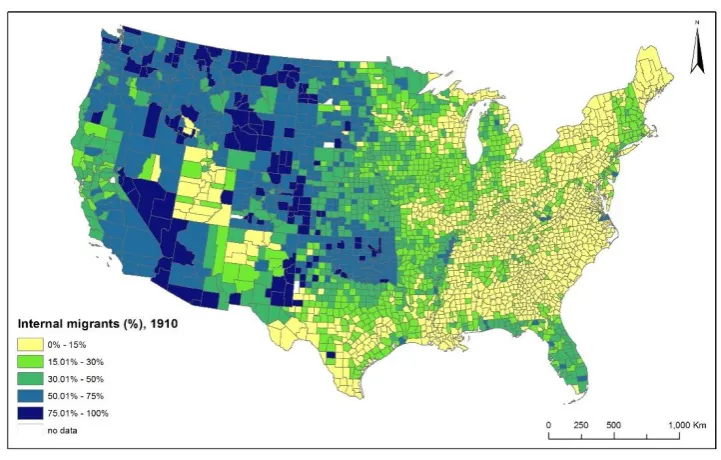
Figure 4-4 American-born internal migrants by county, 1880 and 1910 ... 69
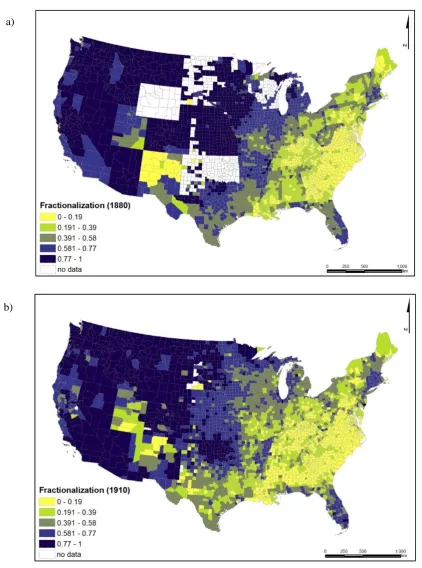
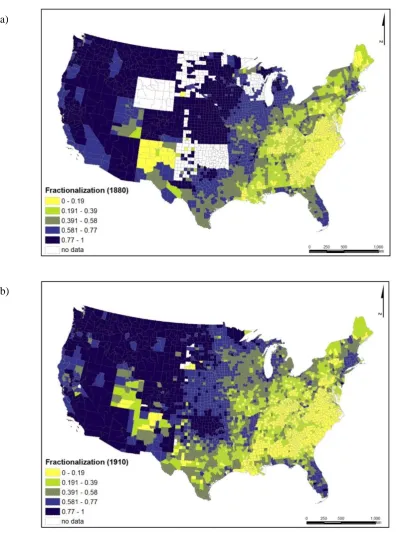
Figure 4-5 Population diversity by county, 1880 and 1910 ... 72
Figure 4-6 Persons obtaining legal permanent resident status, 1880-1999 ... 78
Figure 4-7 Latino foreign-born population as share of total population, 1980 and 2010 ... 81
Figure 5-1 International migrants and their children, 1910 ... 97
Figure 5-2 American-born internal migrants as share of population by county, 1910 ... 98
Figure 5-3 Diversity in the composition of the population by county, 1880 and 1910 ... 100
Figure 5-4 Fractionalisation versus Polarisation for all three base years ... 116
Figure 5-5 Evolution of coefficients for fractionalisation, polarisation and concentration over time (IV, base year 1880) ... 133
Figure 6-1 US foreign-born population by gender, 1870-1930 ... 155
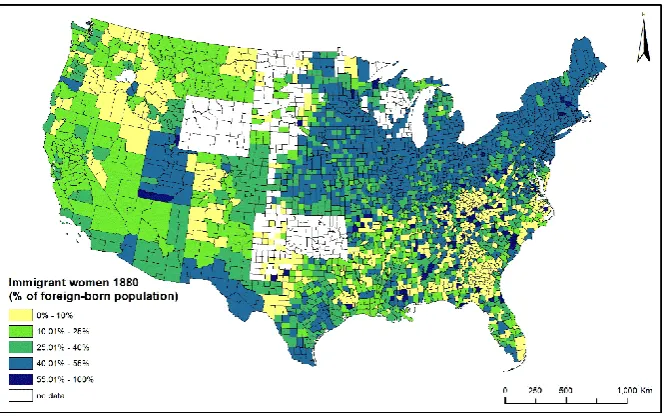
Figure 6-2 Settlement pattern of migrant women (% of total foreign stock), 1880 ... 159
Figure 6-3 Settlement pattern of migrant men (% of total foreign stock), 1880 ... 160
Figure 6-4 Official employment female population 15 years+ by marital status, 1900 ... 162
Figure 6-5 Gender ratio of female to male migration, 1880 and 1910... 207
Figure 6-6 Female & male migrant settlement pattern (% of total foreign-stock), 1910 ... 208
Figure 7-1 Average distance travelled by American-born migrants (in km), 1880 ... 218
Figure 7-2 American-born internal migrants by county, 1880 ... 262
Figure 7-3 Average migration distance radius from Houston, New York, San Francisco, 1880 ... 263
Figure 8-1 US migrant population (absolute and share of total population), 1850-2010 .... 275
Figure 8-2 Persons obtaining legal permanent resident status, 1880–1999 ... 276
11
L
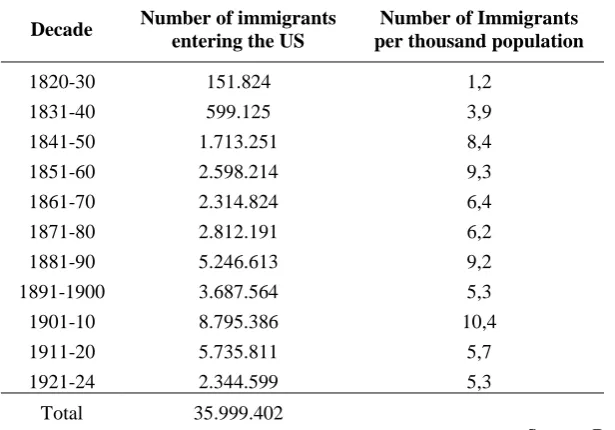
IST OF TABLESTable 4-1 Migration to the US, 1820-1924 ... 59
Table 4-2 Latin Americans obtaining legal permanent resident status, 1960-69, 2000-09.... 80
Table 5-1 US population composition (in % of total population), 1840 – 1920 ... 96
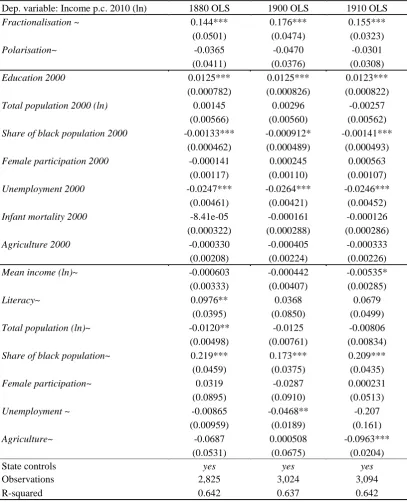
Table 5-2 The long-term impact of diversity, OLS 1880, 1900, and 1910 ... 125
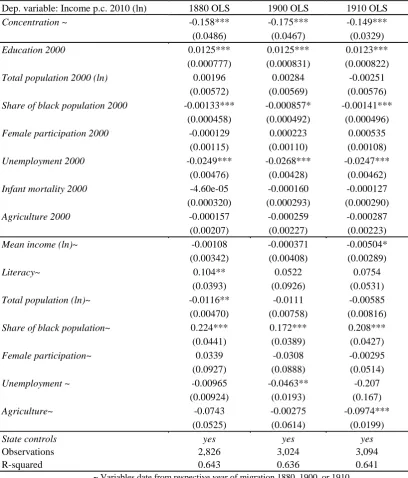
Table 5-3 The long-term impact of concentration, OLS 1880, 1900, 1910 ... 127
Table 5-4 The long-term impact of diversity and concentration, IV 1880, 1900, 1910 ... 129
Table 5-5 The dynamic effect of diversity and concentration, OLS ... 134
Table 5-6 The dynamic effect of diversity and concentration, IV ... 135
Table 5-7 Variable descriptions and sources ... 151
Table 6-1 US foreign-born population by gender and national origin (in %) ... 157
Table 6-2 Foreign-born white females in gainful employment by age (in %), 1890, 1900 . 161 Table 6-3 White female foreign-born workers in major occupational categories, 1900 and 1910 ... 163
Table 6-4 The direct impact of migrant women in the short-term, OLS 1880 and 1910 ... 183
Table 6-5 The direct impact of migrant women in the long-term, 1880 ... 185
Table 6-6 The indicrect impact of migrant women in the long term, 1880 and 1910 ... 190
Table 6-7 Variable descriptions and sources ... 209
Table 6-8 The direct impact of migrant women in the long-term, 1910 ... 211
Table 7-1 Population by region (in thousands), 1790-1910 ... 217
Table 7-2 19th century geographic mobility of white, native-born men (% of cohort) ... 219
Table 7-3 The long-term impact of internal migration, OLS 1880 ... 238
Table 7-4 The long-term impact of internal migration, IV 1880 ... 242
Table 7-5 The long-term impact of average migration distance, 1880 ... 244
Table 7-6 Descriptive statistics dependent and main independent variables of interest ... 264
Table 7-7 Descriptive statistics control variables ... 265
12
Table 7-9 US land surface topography codes ... 268
Table 7-10 The long-term impact of internal migration, OLS 1910 ... 269
Table 7-11 The long-term impact of internal migration, IV 1910 ... 270
Table 7-12 The long-term impact of average migration distance, 1910 ... 271
Table 8-1 Latin Americans obtaining legal permanent resident status, 1960-69, 2000-09.. 279
Table 8-2 The impact of historical migration on Latino settlement patterns, OLS 1880... 299
Table 8-3 The impact of historical migration on Latino settlement patterns, IV 1880, 1910 ... 302
Table 8-4 HT estimation exploiting quasi-panel structure, 1880 and 1910 ... 305
Table 8-5 Variables descriptions and sources ... 319
13
1
INTRODUCTION
Migration is increasingly becoming the centre of policy discussions, political
discourse, and the scientific research agenda. From prehistoric times until today,
humans have spread across the globe. Moving to a different region, territory or country
has always been a natural consequence of factors such as climate, violence, poverty or
population change. Yet, in recent decades, the size of the total worldwide migrant
community has skyrocketed to levels unknown since the beginning of recorded global
migration numbers. During the past 55 years, worldwide migrant stock has more than
tripled from about 72 million in 1960 to 244 million in 2015. While the number of
migrants grew at around one percent per year between 1960 and 1985, its growth rate
picked up speed and increased to, on average, three to five percent per year between
1985 and 2015. A 71 million absolute increase in the size of global migrant stock was
recorded in the 2000s alone (United Nations, 2012). Thus, the volume of international
migration has grown faster than the world’s population as a whole, resulting in migrant
communities representing often more than 10 percent of the population in the
receiving countries (United Nations, 2016). Consequential to these global population
movements across space and – more importantly – across international borders, the
question of how inward migration affects a country’s economy has re-emerged at the
top of the political agenda. Policy makers and scientific researchers alike have been
prompted to react.
A vast amount of literature has been developed to assess the economic effect of
migration on the receiving country’s economy, responding to old-established fears that
14
native population from the labour market. Some voices do indeed consider migration
as growth-deteriorating and a fiscal burden on the native population. They refer to
increasing welfare costs, skill alterations on the labour market, lower native wages,
rising inequality and crime (i.e. Card, 2001, 2009; Borjas, 2003; Storesletten, 2003;
Dustman et al., 2004; Barrett and McCarthy, 2008; Alonso-Borrego, Garoupa and
Vázquez, 2012).
The vast majority of studies, however, tends to adopt a contrasting view. Inward
migration is generally believed to be growth-enhancing, boosting levels of innovation,
technology, and productivity (i.e. Clemens, 2011; Kennan, 2013; Di Giovanni,
Levchenko and Ortega, 2015). Over the years, inward migration has been connected
to higher total GDP levels (Ortega and Peri, 2009), rising (or unchanged) native wages
(Dustman et al., 2004; Card, 2005; Ottaviano and Peri, 2012; Dustmann, Frattini and
Preston, 2013), higher productivity (Hirschman and Mogford, 2009; Hunt and
Gauthier-Loiselle, 2010), rising employment (Card, 1990; Ortega and Peri, 2009; Peri
and Sparber, 2009), increased innovation (Partridge and Furtan, 2008; Özgen,
Nijkamp and Poot, 2012), accelerated technology formation (Alesina, Harnoss and
Rapoport, 2016; Bove and Elia, 2017), rising efficiency levels (Kennan, 2013), and
higher entrepreneurial activity (Wadhwa et al., 2007; Clark and Drinkwater, 2010;
Fairlie and Lofstrom, 2015). Restricting migration would therefore entail profound
economic losses, significantly lowering the receiving region’s economic growth
prospects.
The aforementioned studies have one factor in common: The impact of migration on
economic development outcomes is generally analysed over the short- to
medium-term. The economic and social consequences of inward migration on the aggregate
15
be estimated just for a few election cycles or only one generation, respectively –
usually a maximum timeframe of 25 years. The potential far-reaching implications of
migration over longer periods of time after the initial arrival of the migrant, are either
completely ignored or regarded as irrelevant.
The often-used metaphor of the melting pot in conjunction with immigration and
assimilation in heterogeneous societies would support this lack of interest in the
long-term consequences of migration. Borjas (1992: 123) explains the melting pot theory
in the context of immigration to the United States (US): “Over time the children and
grandchildren of immigrants moved out of ethnic enclaves, discarded their social and
cultural background, and […] became indistinguishable from the native population”.
Thus, large numbers of inflowing migrants would lead to rising dynamism, increased
economic activity, and ultimately higher growth rates only as long as they are
significantly different from the native population. Once skill complementarities,
different cultural perspectives, ideas and distinctive cultural identities fade away with
time – or, in other words, once migrant groups ‘melt’ with their host society –
migration would turn into a simple population redistribution mechanism, making the
long-term analysis of migration meaningless.
Contenders of the melting pot idea, however, support the view of cultural pluralism
emphasising a multicultural, pluralistic population where each ethnic or cultural group
preserves their culture, tradition, and national heritage forming a society embedded in
a particular cultural mosaic (i.e. Glazer, 1970, 2000; Alba, 1999). A growing number
of scientific studies support the idea that cultural characteristics, ethnic capital, or a
cultural institutional framework do not fade away with time but survive over decades
and even centuries (i.e. Borjas, 1992; Acemoglu, Johnson and Robinson, 2001;
16
2010). Borjas (1992: 124), for example, finds that “if the external effect of ethnicity is
sufficiently strong, ethnic differences […] are likely to persist for many generations
(and may never disappear)”. He estimates that they survive at least four generations
or about 100 years (Borjas, 1994). Acemoglu et al. (2001) and Duranton et al. (2009)
extend this time frame. They show that cultural differences established in colonial
times (the former) or even in medieval times (the latter) persist and influence
socioeconomic outcomes to this very day. Thus, if indeed cultural capital, ethnic
institutions, or ancestral characteristics survive over multiple generations affecting
socioeconomic outcomes over very long timeframes, should migrants from a
multitude of countries not generate economic consequences that last longer than 25
years, potentially affecting regional economic growth levels for decades to come?
Studies on the long-term impact of migration, however, are few and far between. Only
recently, researchers have started to analyse the impact of migration extending the
time dimension after the initial arrival of the migrant. Rodríguez-Pose and von
Berlepsch (2014) were the first to evaluate questions such as: Does inward migration
entail long-term implications for future generations? Do migrant stocks generated in
historical times explain current disparities in economic development? Evaluating the
United States at the turn of the 19th to the 20th century, they find that migrants leave
an undeniable imprint on economic development for more than 100 years. Regions
that received a large number of inward migrants 130 years ago are significantly more
prosperous today than those which were largely bypassed by migration routes. These
results are confirmed by Sequeira et al. (2017).
The strength of these findings triggers a number of additional questions: Why and how
does migration leave such a long-lasting, growth enhancing legacy for regional
17
migrant stock? What are the mechanisms that transfer the undeniable imprint of
historical migration across decades? How is it possible that the migrants’ trace left in
historical times still affects regional growth levels despite high internal migration rates
and assimilation mechanisms within the new society? This work intends to answer
these questions.
The first part of this dissertation treats the composition of the regional migrant
community and its implications for economic development over long time periods.
Evaluating different characteristics of migrant communities in historical times, I seek
to ascertain if a specific set-up of the migrant stock is more beneficial in terms of
regional economic development than others. In particular, I look at three different
compositional features: diversity, gender, and distance.
The diversity of the migrant stock is highly likely to be a decisive element determining
the impact of migration on economic development outcomes. A large amount of
literature has been developed over the past decades, going back to the works by Jane
Jacobs (1961, 1969), identifying diversity as central driver of creativity, and thus,
innovation. With a diverse migrant stream, a multitude of ideas, abilities and
perspectives convene, creating a fertile soil for creativity, boosting innovation levels
and consequently, economic activity. The question that remains is if the economic
benefits of this ‘diversity buzz’ apply only to the short-term or extend over longer time
frames. Are high diversity levels, generated in a region’s population more than 100
years ago, still relevant for present-day levels of economic development?
The second compositional feature studied in this thesis is gender. When analysing the
economic impact of migration, most academic research pools female as well and male
18
movers’ or economic dependents following their husbands’ migration decision. If
gender enters the equation, its role is the one of a control variable, rather than a variable
of interest (Pfeiffer et al., 2008). The fact that female migrants could possibly have a
different macroeconomic impact on their receiving region than their male
counterparts, is – in most cases – simply ignored. This dissertation tries to fill this gap.
Does gender affect the long-term impact of migration? Do female migrants leave a
different trace for long-term economic development than the migrant in general? Does
the gender composition of migrant stocks matter?
The last compositional aspect evaluated in this thesis is the distance travelled by
migrants. Generally, migrant streams are made up of both foreign-born as well as
native-born populations. While the former cross international borders, the latter cross
provincial, state, or regional lines. As all originate from the same country, internal
migrants, are predominantly regarded as one homogenous group. I question this fact.
I seek to determine whether long distance internal migrants affect long-term economic
development outcomes differently than those which travelled only over short
distances. Does the migrants’ covered distance between outset and destination matter
for the impact of migration on economic development over long time frames?
In the evaluation of the different compositional features of migration and its long-term
impact for economic development, I assume the transmission mechanism across time
to be the very territory of the migrants’ settlement. I presume circumspectly that the
positive impact of inward migrants created via the dynamic, creativity-sparking,
risk-seeking, and entrepreneurial characteristics generally associated to the migrant
population have become embedded in the territory where they settled in large numbers.
As they rework the territory itself, the growth stimulating features of the migrant
19
that territories that receive large influxes of migrants would end up incorporating a
‘buzz’ of migration1, while others, largely bypassed by migration over time, would
lack this feature. A clear separation of counties into prone and
migration-averse regions would be the logical result. Consequently, migrant flows arriving to the
US today would be more likely to be settling in migration-prone regions or, in other
words, in the areas where huge numbers of migrants around the turn of the 19th to the
20th century took up residence. This implies a path dependency between old and
contemporary migration. The quest for evidence supporting this theory provides the
focus of the second part of this work.
Seemingly predestined for the analysis of the long-term impact of migration is the US
– a country essentially founded and formed by migrants. Built by pilgrims and settlers,
colonists and slaves, Europeans, Asians, Latin Americans, and Africans, the US is the
country which understands itself as a nation of migrants. Millions went to the United
States in the past, trying to make a better life for themselves and their family whilst
escaping from war, prosecution, draught, famine or political unrest, searching for
freedom, democracy, economic opportunity, or religious liberty. Today, “more than
99 percent of the current U.S. population can at least theoretically trace its ancestry
back to people who came […] from somewhere else” (Spickard, 2007: 4). Migration,
thus, lies at the very core of the identity of the United States, shaping its past, present,
and future.
This dissertation is therefore placed in the US context within the era of mass migration
to the US (around the turn of the 19th to the 20th century). Connecting the migration
settlement pattern generated in the 19th century to current levels of economic
1 We use the word ‘buzz’ here in analogy to the path-breaking work by M. Storper and A. Venables
20
development, I seek to ascertain whether historical migration to the US in its different
forms and compositions still impacts economic development of US counties today.
Understanding the economic effect of large migration waves on regions 20 to 130
years after migrants first set foot on the new grounds will complement and advance
the current body of research on the economics of migration and lead to improvements
in our knowledge of how migration affects the long-term economic prospects of
21
1.1
REFERENCES
Acemoglu, D., Johnson, S., and Robinson, J. A. (2001): The colonial origins of comparative development: An empirical investigation. American Economic Review, 91(5), 1369– 1401.
Alba, R. (1999): Immigration and the American realities of assimilation and multiculturalism.
Sociological Forum, 14(1), 3–25.
Alesina, A., Harnoss, J., and Rapoport, H. (2016): Birthplace diversity and economic prosperity. Journal of Economic Growth, 21(2), 101–138.
Algan, Y., and Cahuc, P. (2010): Inherited trust and growth. American Economic Review,
100(5), 2060–2092.
Alonso-Borrego, C., Garoupa, N., and Vázquez, P. (2012): Does immigration cause crime? Evidence from Spain. American Law and Economics Review, 14(1), 165–191.
Barrett, A., and McCarthy, Y. (2008). Immigrants and welfare programmes: exploring the interactions between immigrant characteristics, immigrant welfare dependence, and welfare policy. Oxford Review of Economic Policy, 24(3), 543–560.
Borjas, G. J. (1992): Ethnic capital and intergenerational mobility. The Quarterly Journal of Economics, 107(1), 123–150.
Borjas, G. J. (1994): Long-run convergence of ethnic skill differentials: The children and grandchildren of the great migration. Industrial & Labor Relations Review, 47(4), 553– 573.
22 Bove, V., and Elia, L. (2017): Migration, diversity and economic growth. World Development,
89, 227–239.
Card, D. (1990): The impact of the Mariel Boatlift on the Miami labor market. Industrial & Labor Relations Review, 43(2), 245–257.
Card, D. (2001): Immigrant inflows, native outflows, and the local labor market impacts of higher immigration. Journal of Labor Economics, 19(1), 22–64.
Card, D. (2005): Is the new immigration really so bad? Economic Journal, 115(507), F300– F323.
Card, D. (2009): Immigration and inequality. The American Economic Review, 99(2), 1–21. Clark, K., and Drinkwater, S. (2010): Patterns of ethnic self-employment in time and space:
Evidence from British Census microdata. Small Business Economics, 34(3), 323–338. Clemens, M. (2011): Economics and Emigration: Trillion-Dollar Bills on the Sidewalk?
Journal of Economic Perspectives, 25(3), 83–106.
Di Giovanni, J., Levchenko, A., and Ortega, F. (2015): A global view of cross-border migration. Journal of the European Economic Association, 13(1), 168-202.
Duranton, G., Rodríguez‐Pose, A., and Sandall, R. (2009): Family types and the persistence of regional disparities in Europe. Economic Geography, 85(1), 23–47.
Dustmann, C., Fabbri, F., Preston, I. and Wadsworth, J. (2004): The local labour market effects of immigration in the UK. Home Office Online Report 06/03, London, Home Office.
Dustmann, C., Frattini, T., and Preston, I. P. (2013): The effect of immigration along the distribution of wages. The Review of Economic Studies, 80(1), 145–173.
23
Migration, Vol. 1, 877–911. North-Holland.
Glazer, N. (1970): Beyond the melting pot: the Negroes, Puerto Ricans, Jews, Italians, and Irish of New York City. D. P. Moynihan (Ed.), 2nd ed. Cambridge, Mass.: M.I.T. Press. Glazer, N. (2000): On beyond the melting pot, 35 years after. The International Migration
Review, 34(1), 270–279.
Hirschman, C., and Mogford, E. (2009). Immigration and the American industrial revolution from 1880 to 1920. Social Science Research, 38(4), 897–920.
Hunt, J., and Gauthier-Loiselle, M. (2010): How much does immigration boost innovation?
American Economic Journal: Macroeconomics, 2(2), 31–56.
Jacobs, J. (1961): The death and life of great American cities. New York, NY: Random House. Jacobs, J. (1969): The economy of cities. New York, NY: Random House.
Kennan, J. (2013): Open borders. Review of Economic Dynamics, 16(2), L1–L13.
Ortega, F., and Peri, G. (2009): The causes and effects of international migrations: Evidence from OECD countries 1980-2005. NBER Working Paper, No. 14833.
Ottaviano, G., and Peri, G. (2012): Rethinking the effect of immigration on wages. Journal of the European Economic Association, 10(1), 152–197.
Özgen, C., Nijkamp, P., and Poot, J. (2012): Immigration and innovation in European regions. In P. Nijkamp, J. Poot, and M. Sahin (Eds.), Migration Impact Assessment: New Horizons. Cheltenham, UK: Edward Elgar Publishing.
Partridge, J., and Furtan, H. (2008): Increasing Canada’s international competitiveness: Is
there a link between skilled immigrants and innovation? American Agricultural
Economics Association Annual Meeting. Retrieved from https://core.ac.uk/download/pdf/6563849.pdf
24
Economic Journal: Applied Economics, 1(3), 135–69.
Pfeiffer, L., Richter, S., Fletcher, P., and Taylor, J. E. (2008): Gender in economic reserach on international migration and its impacts: A critical review. In A. R. Morrison, M. Schiff, and M. Sjöblom (Eds.), The International Migration of Women. New York: Palgrave Macmillan.
Rodríguez-Pose, A., and von Berlepsch, V. (2014): When migrants rule: The legacy of mass migration on economic development in the United States. Annals of the Association of American Geographers, 104(3), 628–651.
Sequeira, S., Nunn, N., and Qian, N. (2017): Migrants and the making of America: The short- and long-run effects of immigration during the Age of Mass Migration. National Bureau of Economic Research Working Paper Series, No. 23289.
Spickard, P. R. (2007): Almost all aliens: immigration, race, and colonialism in American history and identity. New York: Routledge.
Storesletten, K. (2003): Fiscal implications of immigration - A net present value calculation.
Scandinavian Journal of Economics, 105(3), 487–506.
Storper, M. and A. Venables (2004): Buzz: Face-to-face contact and the urban economy,
Journal of Economic Geography, 4(4), 351-370.
Tabellini, G. (2010): Culture and institutions: Economic development in the regions of Europe. Journal of the European Economic Association, 8(4), 677–716.
United Nations. (2012): Trends in Total Migrant Stock: 2012 Revision. New York, NY. United Nations. (2016): International Migration Report 2015. New York, NY.
Wadhwa, V., Saxenian, A., Rissing, B., and Gereff, G. (2007): America’s new immigrant
26
2
STRUCTURE
The research is structured in 9 chapters. Chapter 3 and 4 lay out the foundations for
the four main parts of the thesis. While chapter 3 provides a short review of the
literature on the economic impact of migration in the receiving country, chapter 4
summarises the historical background of immigration to the United States covering
the Age of Mass Migration around the turn of the 19th to the 20th century, as well as
features of contemporary migration. The bulk of the empirical analysis is spread
between chapters 5 and 8, covering different aspects of historical migration and its
connection to long-term economic development. While chapter 5, 6, and 7 focus on
different compositional elements of the migrant stock (diversity, gender, and distance
travelled) and relate these to income per capita more than 100 years later, chapter 8
seeks to find evidence supporting the potential transmission channels of path
dependency assumed to preserve the impact of mass migration of the 19th century
across time.
Chapter 5, co-authored with Andrés Rodríguez-Pose, examines the economic impact
of population diversity on US county wealth for a time frame covering 20 to 100 years.
Both fractionalisation and polarisation indices are incorporated into the analysis to
create a holistic measure of population diversity. Chapter 6 is a co-authored chapter
together with Andrés Rodríguez-Pose and Neil Lee. It focuses on the gender element
of migration flows and examines the short- and long-term economic impact of female
migration on US county prosperity. Chapter 7, focuses on internal migrants and
concludes the sequence of chapters treating different characteristics of the migrant
27
development and evaluates if the distance travelled by the migrant is crucial for the
determination of the aggregate economic returns of internal migration across a
time-frame of more than a century. In the eighth chapter the focus shifts from the migrant
stock composition to the validation of path dependency in migration flows. This
chapter examines whether migrant waves from different backgrounds, origins and
ethnicities, separated by several generations, settle in the same places thereby
establishing a permanent separation between migration-prone and migration-averse
areas. Chapter 9 concludes and provides policy implications.
2.1
POPULATION DIVERSITY AND ITS LONG-TERM IMPACT
FOR ECONOMIC DEVELOPMENT
With growing migrant stocks and accelerating migrant flows around the globe,
population diversity in territories attracting large numbers of migrants is increasing
drastically. Formerly rather homogenous societies turn ‘multicultural’ in the space of
a few years, being confronted with issues such as new language barriers, cultural and
ethnic differences, or religious disparities. Transforming this diversity into economic
activity has turned into a major task for national governments. Thus, population
diversity and its link to economic development has become a prominent field in
scientific research. Two opposing strands dominate the debate: On the one hand,
diversity is regarded as central driver of innovation which in turn generates
technological progress enhancing economic growth (i.e. Jacobs, 1961, 1969; Florida,
2002; Saxenian, 2006; Özgen, Nijkamp and Poot, 2012; Bove and Elia, 2017). On the
other hand, diversity is regarded as destabilising factor within a society creating
28
(i.e. Esteban and Ray, 1994, 2008; Easterly and Levine, 1997; Alesina et al., 2003;
Montalvo and Reynal-Querol, 2005; Kemeny, 2012; Gören, 2014). Studies commonly
refer to two measures of diversity: fractionalisation, placing the emphasis on the
number of groups in a society, and polarisation, stressing the distance between them.
The focus of these studies, however, has generally been short-term. We simply do not
know if population diversity levels generated in historical times have an impact on
economic outcomes over more than a 20-year time frame. Chapter 5 intends to fill this
gap.
Two research questions are evaluated: Firstly, we examine if initial population
diversity – measured as fractionalisation and polarisation – generated during the Age
of Mass Migration across US counties, matters for economic development in the
long-run. Secondly, we evaluate whether the influence of diversity on economic
development has changed over time. Employing US census data from 1880, 1900, and
1910, the settlement pattern of migrants across the counties of the 48 continental states
is mapped, building county-level indices of both population fractionalisation and
polarisation. Employing OLS as well as IV methods, we regress current economic
development, proxied by income per capita in 2010 on county level, on past diversity
levels generated around the turn of the 19th to 20th century. Factors which may have
determined the attractiveness of a county to migrants at the time as well as those that
can impact economic development today, are controlled for.
The results of the analysis show that strong initial levels of fractionalisation, generated
more than one hundred years ago, leave a highly significant and positive trace for
economic development across time. Polarisation, on the other hand, is found to
significantly deteriorate economic development. Hence, counties with a more
29
today, while counties which were strongly polarised during the Age of Mass Migration
have endured persistent negative economic implications. Despite a significantly
stronger impact on income levels over the short- rather than the long-term, the effect
never fades away but remains measurable in terms of higher average income levels to
this very day.
2.2
A WOMAN’S TOUCH? FEMALE MIGRATION AND
LONG-TERM ECONOMIC DEVELOPMENT
Previous findings in chapter 5 on the long-term impact of population diversity trigger
further questions related to the structure of the migrant stream and its connection to
long-term economic development. Does the composition of the migrant stock in a
county matter for the preservation of the short-term impact of inward migration over
the long term? Previous studies have looked at only one of these compositional
characteristics, namely national origin. They confirm that the nationality of the
migrant is unrelated to variations in long-term economic outcomes (Rodríguez-Pose
and von Berlepsch, 2015). The long-term effect of migration seems, thus, not be linked
to the national origin composition of the migrant stock.
A different compositional characteristic potentially determining the economic legacy
of mass migration to the US is the migrants’ gender and the resulting gender balance
within the county’s migrant stock. Do migrant women trigger a different economic
impact over the long-term than migrants in general? Gender, usually regarded purely
as control variable, has, in recent decades, moved more closely to the core of academic
30
that individual characteristics, settlement patterns, the effect on sending countries, the
integration into the destination’s labour market, or the reasons behind the migration
decision distinctively differ from those of their male counterparts (i.e. Ravenstein,
1889; Pessar, 1986; Hondagneu-Sotelo, 1994; Massey;, 2001; Pessar and Mahler,
2003; Oishi, 2005; Andall, 2013). Due to a focus on the individual migrant,
macroeconomic approaches on an aggregated level taking the gender component into
consideration are rare to find. In the few cases where the economic development aspect
of female migration was investigated, studies focused on the short-term impact rather
than looking beyond a maximum 10-year timeframe (i.e. Blau, Kahn and Moriarty,
2003; Smith and Bailey, 2006; Riaño and Baghdadi, 2007; Collins and Low, 2010).
Chapter 6 seeks to make up for these two shortcomings by investigating the impact of
female migration on US economic development over both the short-term as well as a
timeframe of more than 100 years.
Using US census data of 1880 and 1910, we map the settlement pattern of migrant
women across the counties of the 48 continental US states and calculate female
migrant concentration shares. We connect these to current levels of economic
development, proxied by GDP per capita in 2010 at county level, while controlling for
a multitude of factors which might have influenced both the economic attractiveness
of the county at the time of migration as well as the economic development level today.
In a second step, we examine the indirect effect of female migrants when analysing
the first generation born on American soil and their imprint on long-term economic
growth. Challenging the view of the migrant mother as ‘cultural carrier’ of the
migrants’ ethnic and institutional baggage, we seek to ascertain if the long-term
economic impact of children born to migrant mothers differs from those born to
31
The results of the analysis, conducted using both ordinary least squares and
instrumental variable estimations, underline that a) while large shares of migrant
women in a county’s population have led to significantly lower levels of economic
development in US counties both in the short- and long-term, b) immigrant women
have left a positive trace for local economic development via their children. Counties
with a larger share of children born to migrant mothers have been more economically
dynamic over the long term than those with a large share of children born to either
foreign-born fathers or both American-born parents.
2.3
INTERNAL MIGRATION AND ITS LONG-TERM IMPACT
FOR ECONOMIC DEVELOPMENT
Migration around the turn of the 19th to the 20th century within the United States did
not solely consist of international, that is foreign-born migrants, but also
American-born, domestic migrants. Internal migration within the US led to an even larger
population redistribution phenomenon at the time than the foreign-born inflow from
Europe. The analysis of the internal migrant and the distance covered between outset
and destination lies at the heart of chapter 7, treating therefore yet another
compositional characteristic of a county’s migrant stock.
Even though the vast majority of global geographical mobility movements is located
within and between regions of the country of birth, a large strand of literature argues
internal migration to have received significantly less attention in scientific research
than its international counterpart (Skeldon, 2006; Ellis, 2012; Bell et al., 2015).
32
and far between (White and Lindstrom, 2005). Moreover, the few contemporary
studies delving into this link deliver inconsistent results (e.g. Yap, 1976; White and
Lindstrom, 2005; Rodríguez Vignoli, 2008; Berker, 2011; Molloy, Smith and
Wozniak, 2011; Kuhn, 2015).
Two dimensions that may significantly shape the returns of internal migration have,
in particular, been overlooked: time and geographical distance. While internal
migration research has tended to put the emphasis on the short- to medium-term
(thereby rarely covering more than two decades), geographical distance, and its effect
on the economic impact of internal migration does not seem to be covered by the social
science literature at all. If anything, distance was studied in the context of long distance
migration drawing international comparisons across countries (i.e. Long, Tucker and
Urton, 1988) or evaluating dynamics, characteristics of migrants and causes of
migration (i.e. Biagi, Faggian and McCann, 2011; Pendakur and Young, 2013;
Niedomysl and Fransson, 2014).
This chapter intends to cover both of the aforementioned shortcomings in the literature
by first, evaluating the effect of US internal migration on long-term economic
development and second, examining whether the distance covered by American-born
migrants of the late 19th and early 20th centuries matters for the long-term economic
impact of domestic migration. Do large shares of internal migrants leave a long-lasting
trace for economic development on the territory where they settle in large numbers?
Are internal migrants from a faraway county economically more beneficial for
long-term economic development than those from next door? Does the distance travelled
between outset and destination matter for the impact of internal migrants on
33
These research questions are analysed using US Census data from 1880 and 1910. The
individual data are allocated to the county of residence of the migrant and subsequently
aggregated to retrieve internal migrant shares at county level. The settlement pattern
of domestic migrants across the 48 continental states is then linked to the average
distance travelled by a given county’s migrant stock and to current levels of county
development proxied by per capita GDP at county level in 2010.
Both ordinary least squares and instrumental variable estimation techniques are
employed in order to regress income per capita levels in 2010 on, firstly, the share of
internal migrants and secondly, on the average distance travelled by the local migrant
stock. Factors which significantly influenced a county’s prosperity, both at the time of
migration as well as today, are controlled for.
Internal migrants are found to have a highly significant, positive and long-lasting
impact on economic development at county level over the very long time frame.
Counties which received large numbers of internal migrants in historical times are
significantly more prosperous today than those that were largely bypassed.
Furthermore, distance is revealed as decisive element for the relevance of internal
migration for long-term economic outcomes. The greater the average distance
travelled by the migrant stock of a given county, the larger the influence on the
34
2.4
MIGRATION-PRONE AND MIGRATION-AVERSE PLACES:
PATH DEPENDENCE IN LONG-TERM MIGRATION
Chapters 5 to 7 show that historical migration in its different compositional
dimensions leaves a long-lasting legacy for economic development which can still be
traced more than 100 years later. The transmission mechanism assumed to be at work
for transferring the positive impact of migration across decades is the territory itself,
or to be more exact, the institutional constructs associated to past ‘migration buzz’
shocks. Chapter 8 seeks to find evidence supporting this potential transmission
channel. Connecting recent to past migration stocks, it evaluates if both migrant waves
have settled in the same places despite having different backgrounds, origins,
traditions, and customs, and being separated in time by at least three to five
generations. Thus, it seeks to prove the assumption of an institutional division,
established over a century ago, into migration-prone and migration-averse areas.
Scientific research has identified a multitude of regional factors as decisive for a
migrant’s settlement decision. Next to regional characteristics such as employment
opportunities, wages, social welfare spending, public goods endowment, the
educational system, as well as urban and natural amenities (i.e. Ritsilä and
Ovaskainen, 2001; Zimmermann, 2005; Rappaport, 2007; Partridge, 2010; Biagi,
Faggian and McCann, 2011; Ketterer and Rodríguez-Pose, 2015), the existing stock
of migrants is considered a crucial factor in determining the attractiveness of a region
to incoming population (i.e. Daniels, 1990; Carrington, Detragiache and Vishwanath,
1996; McGovern, 2007; Radu, 2008; Jewell and Molina, 2009; Bodvarsson, Simpson
and Sparber, 2014). However, previous and newly arriving migrants have often been
35
which, in turn, has significantly determined not only the direction of the migrant
stream, but also its volume. A crucial factor in reaping the benefits of these migrant
networks was sharing a common origin. As 19th century migrants (mostly Europeans)
and current US migrant stock (mostly Latinos)2 neither share a common background
nor ethnicity, customs, or traditions, the current academic literature seems to
contradict the assumption of path dependency across migration waves.
Analysing US Census data from 1880, 1910 and 1960-2010, aggregated at the county
level, I regress current Latino migrant stock on European migrant shares within a
county’s population generated during the Age of Mass Migration. Controlling for
push- and pull factors determining size and direction of past and current migration
flows, I employ ordinary least squares, instrumental variable, and panel data
estimation methods to ascertain if historical migration created a path-dependence
determining the direction and size of current Latino population settlement patterns in
the US.
The results of the analysis, underline the importance for historical migration for
location-decisions of future migrants. Counties which attracted a large number of
European migrants at the end of the 19th century are more appealing to migrants from
Latin America 90 to 130 years later. Despite fundamental differences in background,
ethnicity, origin and a separation in time of three to five generations, historical
migration stocks act as magnet for current foreign-born population serving as an
influential pull factor increasing a county’s attractiveness. The results therefore
provide evidence supporting the hypothesis of the presence of a mark transferred by
historical migrants onto their receiving territories. Their legacy created a perpetuating
2 I am aware of debates regarding the use of the term Latinos vs the term Hispanics (Taylor et al., 2012).
36
path dependency, permanently differentiating regions into migration-prone and
migration-averse areas. A division which seems to persist for centuries even after the
37
2.5
REFERENCES
Biagi, B., Faggian, A., and McCann, P. (2011): Long and short distance migration in Italy: The role of economic, social and environmental characteristics. Spatial Economic Analysis, 6(1), 111–131.
Bodvarsson, Ö., Simpson, N., and Sparber, C. (2014): Migration theory. In B. Chiswick and P. Miller (Eds.), Handbook of the Economics of International Migration, 3–51. Burlington: Elsevier Science.
Carrington, W., Detragiache, E., and Vishwanath, T. (1996): Migration with endogenous moving costs. American Economic Review, 86(4), 909–930.
Daniels, R. (1990): Coming to America: A history of immigration and ethnicity in American life. New York, NY: Harper Perennial.
Jewell, R., and Molina, D. (2009): Mexican migration to the US: A comparison of income and network effects. Eastern Economic Journal, 35(2), 144–159.
Ketterer, T., and Rodríguez-Pose, A. (2015): Local quality of government and voting with one’s feet. The Annals of Regional Science, 55(2), 501–532.
McGovern, P. (2007): Immigration, labour markets and employment relations:
Problems and prospects. British Journal of Industrial Relations, 45(2), 217–
235.
Partridge, M. (2010): The duelling models: NEG vs. amenity migration in explaining US engines of growth. Papers in Regional Science, 89(3), 513–536.
Radu, D. (2008): Social interactions in economic models of migration: A review and appraisal.
Journal of Ethnic & Migration Studies, 34(4), 531–548.
38 375–398.
Ravenstein, E. (1889): The Laws of Migration. Journal of the Royal Statistical Society, 52(2), 241-305.
Ritsilä, J., and Ovaskainen, M. (2001): Migration and regional centralization of human capital.
Applied Economics, 33(3), 317–325.
39
3
THE ECONOMIC IMPACT OF MIGRATION – A BRIEF
SKETCH
The rising number of migrants and their increased visibility has triggered a shift in the
scientific research agenda, bringing the analysis of the economic implications of
migration into the fore. A vast amount of scientific research has since been published
focusing on a wide variety of topics ranging from the determinants of the migration
decision or the individual characteristics of those likely to move, to the evaluation of
the economic effect on the host and sending regions as well as the push- and pull
factors determining a region’s attractiveness to migrants. Within the context of this
work, I will be focusing primarily on the economic effects of migration on the host
economy, that is, on the region receiving the migrant. In this field, a range of studies
has emerged systematically assessing the implications of inward migration for
economic growth. Research fields include, among others, the labour market (e.g.
wages, jobs, employment), public finances (e.g. welfare services, social benefits),
innovation and entrepreneurship (e.g. patents, innovation in products and processes,
ethnic firms, competition), and population (e.g. diversity, gender). In general,
immigration is confirmed as a growth-enhancing factor, generating substantial
economic gains to the global economy in general, but particularly to the receiving
country (Ortega and Peri, 2009; Clemens, 2011; Kennan, 2013; Di Giovanni,
Levchenko and Ortega, 2015).
Probably the largest concern for policy makers and therefore potentially one of the
most controversially discussed research fields, is the impact of migration on local
40
Triggered by the often-held opinion that immigration may reduce the wealth of local
inhabitants, research in this area focuses on both the actual effect on native incomes
via altering the level of labour supply and the compositional effect related to the
skill-set of migrants changing the distribution of skills among a country’s residents
(LaLonde and Topel, 1991; Borjas et al., 1997; Borjas, 2003; Card, 2005, 2009;
Dustmann, Fabbri and Preston, 2005; Cohen-Goldner and Paserman, 2011; Glitz,
2012; Ottaviano and Peri, 2012; Dustmann, Frattini and Preston, 2013). While some
find evidence of a lowering of wages and an increase in wage inequality linked to
migrant inflows (Card, 2001, 2009; Borjas, 2003), the big majority of studies confirms
that despite altering the skill-composition on the local labour market, neither the wages
of local citizens nor the wage distribution are significantly negatively affected by these
supply shocks. Whenever a negative effect was found, they were regarded as almost
negligible (i.e. Friedberg and Hunt, 1995; Longhi, Nijkamp and Poot, 2005; Okkerse,
2008). In fact, a significantly positive effect on the wages of local citizens has been
detected when using aggregate production function approaches, meta-analytic
analysis, or evaluating cross-region/industry datasets (Card, 2005; Özgen, Nijkamp
and Poot, 2010; Ottaviano and Peri, 2012; Dustmann, Frattini and Preston, 2013).3
Migration is also believed to increase both the labour supply of local women and of
local high-skilled labour (Furtado and Hock, 2010; Cortés and Tessada, 2011). Hence,
the impact of migrants on the local, native labour force is not considered negative.
Migrants were found to displace native labour, if at all, only in the short-term (Glitz,
2012; Cattaneo, Fiorio and Peri, 2015) and do not seem to be connected to negative
effects on the unemployment or employment rates of native labour (Altonji and Card,
1991; Longhi, Nijkamp and Poot, 2008). If anything, migrants often lead to local
41
employment booms (Card, 1990; Ortega and Peri, 2009; Peri and Sparber, 2009).
“Even those natives who should be the closest substitutes with immigrant labour have
not been found to suffer significantly as a result of increased immigration” (Friedberg
and Hunt, 1995: 42). Growing unemployment or a crowding-out effect of natives due
to increased migrant numbers has been ruled out by Ortega and Peri (2009), whose
results show that migration causes a rise in GDP, without decreasing labour
productivity.
Inward migration also affects public finances4. The migrants’ usage of welfare
services and other social benefits is a controversially discussed field within political
science as well as economic research as it is often used as justification for tighter
restrictions on immigration. Depending on the country, the migrant age group, their
gender, and skill-level analysed, conclusions vary greatly (i.e. Baker and Benjamin,
1995; Hu, 1998; Gustman and Steinmeier, 2000; Crossley, McDonald and Worswick,
2001; Büchel and Frick, 2005; Blume and Verner, 2007; Barrett and McCarthy, 2008;
Pedersen, 2013). Long-term immigrants, for example, were confirmed as highly
beneficial as their life-time tax payment greatly outbalances their public sector cost
(i.e. Ablett, 1999; Bonin, Raffelhüschen and Walliser, 2000; Moscarola, 2003). Older,
female, and short-term immigrants, however, were shown to be a slight fiscal burden
to their receiving country (i.e. Hu, 1998; Gustman and Steinmeier, 2000; Sinn and
Werding, 2001). Storesletten (2000, 2003) provides an aggregate calculation of the
total fiscal burden of a model economy. The costs of immigration are estimated to
slightly outweigh its benefits. Similar results are reported for the Netherlands
(Roodenburg, Euwals and TerRele, 2003) and Germany (Sinn and Werding, 2001).
42
However, Rowthorn (2008) estimates the net fiscal impact (if positive or negative) to
be no larger than 1 percent of the respective country’s GDP.
Migrants arriving from diverse locations are depicted as an important input factor in
the process of technological progress. Bringing their skillsets, ideas, experiences, and
abilities to host regions, inward international migration is more and more regarded as
knowledge-generating and -diffusing element, raising innovation at the regional level,
and linking it directly to higher economic growth outcomes. Özgen et al. (2012)
evaluate the innovativeness of the European receiving regions with respect to size,
skills, and diversity of the regional migrant stock. More than the sheer size of the
migrant inflow, they find especially the composition in skills and backgrounds to be
the decisive element for innovation. Skilled immigrants can boost knowledge creation,
efficiency levels, and, therefore, productivity (Hirschman and Mogford, 2009; Hunt
and Gauthier-Loiselle, 2010). A more diverse migrant base is considered to spur new
ideas and new technology, leading to innovation (Partridge and Furtan, 2008; Lee and
Nathan, 2010; Özgen, Nijkamp and Poot, 2012, 2013; Alesina, Harnoss and Rapoport,
2016; Bove and Elia, 2017). Moreover, according to Jacobs (1961, 1969) and Florida
(2002), diversity in the cultural composition of the population represents a fertile soil
for new ideas, innovation, and economic growth. Further channels generating an effect
of migration on innovation, summarized by Özgen et al. (2013), include the positive
self-selection of migrants (being more risk-seeking, entrepreneurial and creative),
their youthfulness (implying higher mobility, progressivity and creativity), their
resilience (enhancing decision making) and their volume (allowing firm expansion,
reducing shortages or vacancies of key personnel).
Closely linked to innovation is the migrants’ impact on entrepreneurship. Since
43
population, they have been shown to start a large number of new companies boosting
economic activity in their destination areas. This has been the case, among others, in
the UK, the US or Australia. Migrant entrepreneurs in these countries have on average
founded more firms than locals (i.e. Borjas, 1986; Lofstrom, 2002; Wadhwa et al.,
2007; Clark and Drinkwater, 2010; Fairlie, Zissimopoulos and Krashinsky, 2010).
They are thus vital for both new job creation as well as for the emergence of business
start-ups. They bring vibrancy, diversity, and economic dynamism, enriching the
neighbourhoods and benefitting the local population (Sahin, Nijkamp and Rietdijk,
2009; Audretsch, Dohse and Niebuhr, 2010). Various empirical analyses support these
views characterising the migrants as “a highly motivated and qualified entrepreneurial
group” (Brunow, Nijkamp and Poot, 2015: 1065) who substantially contribute to
knowledge formation, technological progress, business income, and employment (see
Fairlie and Lofstrom, 2015).
A diverse compositional structure of the migrant inflow is not solely regarded as
growth enhancing element. Diversity in the migrant composition can also be seen as a
destabilising factor within a society enhancing the potential for polarisation in its
population leading to social unrest and conflict. Migrant inflows can result, under
certain circumstances, to the formation of cultural, religious, or language barriers. This
can generate tension, communication problems, and lower trust, which, in turn, lead
to decreasing productivity and lower efficiency (i.e. Easterly and Levine, 1997;
Alesina et al., 2003; Montalvo and Reynal-Querol, 2005; Özgen, Nijkamp and Poot,
2013; Churchill and Smyth, 2017).
Closely connected to migrant diversity is the gender composition of the migrant inflow
– an aspect of the economic impact of migration on the host country which has been
44
shown that women migrants indeed differ from their male counterparts. Not only
individual characteristics of those who decide to migrate differ along gender lines, the
settlement patterns, the impact on sending regions as well as the effect on host labour
markets was shown to be significantly different for both men and women (i.e. Pessar,
1986; Hondagneu-Sotelo, 1994; Massey;, 2001; Pessar and Mahler, 2003; Oishi, 2005;
Andall, 2013).
Female migration may influence economic development in a number of (sometimes
indirect) ways, such as increasing the country’s labour force (i.e. Lechman and Kaur,
2015; Cuberes and Teignier, 2016), improving gender equality (i.e. Berik, Rodgers
and Seguino, 2009; Klasen and Lamanna, 2009), or via the empowerment of women
(i.e. Duflo, 2012). Nevertheless, we still know very little about the specific direct
effects of large numbers of female migrants on regional growth in the receiving region.
The few studies analysing the gender effects of migration reach diverging results:
Some studies hint at a positive economic impact of a strong presence of women
migrants in the labour force (see Blau, Kahn and Moriarty, 2003 for the case of the
US) and highlight their contribution to entrepreneurial activity (see Collins and Low,
2010 for the case of Australia). Others, however, have pointed in the opposite
direction. Female migration has been linked to negative economic outcomes when
evaluating gender gaps in the labour market participation of natives and foreign-born
population in the UK (Smith and Bailey, 2006). Riaño and Baghdadi (2007) link a
potential negative economic contribution of female migrants to a poorer assimilation
into local labour markets than men and provide evidence of their underused economic
potential. According to their findings, most female migrants, when entering the
receiving country’s labour market, seem to end up in jobs well below their actual
45
Lastly, when evaluating the composition of migrant stocks and its impact on economic
growth in the host region, scientific research strongly differentiates migrants
according to their birthplaces. The biggest division of inward migration by origin is
between external (foreign-born) and internal (native-born) migrants. Whether the
migran