International Journal of Emerging Technology and Advanced Engineering
Website: www.ijetae.com (ISSN 2250-2459, ISO 9001:2008 Certified Journal, Volume 8, Issue 2, February 2018)
267
Analysis on Impact of Various Parameters for LHR Diesel
Engine using Biodiesel and its Additives
V. Siva Rama Krishna
1, Dr. K. Vijaya Kumar Reddy
2, Dr. B Durga Prasad
31Research Scholar, Department Of Mechanical Engineering, JNTUA, Ananthapuramu, India. 2Professor, Department Of Mechanical Engineering, JNTUH College of Engineering, Hyderabad, India. 3Professor, Department Of Mechanical Engineering, JNTUA College of Engineering, Ananthapuramu, India .
Abstract—The dependency on diesel engine is more due to its less cost when compared to petrol fuels. Using of fossil fuels in a larger quantities will leads to the scarcity in future, to overcome this problem alternative fuels are introduced. Biodiesel is one of the alternative sources for diesel fuel in CI Diesel engines due to its significant performance and Environmental concern. From previous researches it is learnt that neem biodiesel was used as an alternate fuel with different proportions like B10, B20 etc. In this work an attempt is made to use neem biodiesel as alternative fuels in low heat rejection engine (LHR). In this work two different piston configurations i.e. Hemispherical Combustion Chamber (HCC) and Shallow depth Combustion Chamber (SDCC) are used. Usage of neem biodiesel alone may not solve in fulfill the requirement as alternate fuel because it contains high viscosity, density and low calorific value. In order to overcome the above said parameters nano fluid additive is added with LHR concept. Calcium carbonate is chosen as a nano additive due to its suitable properties. An experimental investigation are carried out on a single cylinder, four stroke, naturally aspirated, direct injection and water cooled diesel Engine. The engine displacement volume is 661 cc, compression ratio (CR) 17.5:1 and rated power output 5.2 kW at 1500 rpm. Using neem biodiesel and CaCO3 additive fluid with two proportions (3gm/l and 5gm/l) are used to maintain less density, higher % of oxygen and lower % of carbon content. The performance and emissions characteristics are computed for diesel, neem biodiesel and neem biodiesel with CaCO3 blends. The test results shown that neem biodiesel with calcium carbonate are a promising alternative fuel having characteristics closure to diesel fuel.
Keywords— Neem biodiesel, LHR, Calcium Carbonate Nano fluid additive, combustion chambers.
I. INTRODUCTION
CI engines are designed to withstand the high pressures and thus tend to be heavier than SI engines. Diesel engine plays an important role in, transportation power generation and industrial sectors. due to its properties of ease handling, inexpensive and higher efficiency, diesel engines are of high interest in light duty vehicles.
Even though it has good advantages and there is also having a drawbacks of diesel, The fuel in diesel engine is ignited by the heat of the compressed air It results in fact that fuel had no time to fully mix with the air and then it produces hydro carbons, NOX and
carbon black during the combustion process to decrease emissions required a catalytic converter this is one of the drawback. Diesel engines are becoming more popular due to its on condition of quality oil fueling and maintenance on the regular base diesel engine can operate up to half-million kilometers without capital repair.
Evaluation of performance & emission of neem oil methyl ester in a DI diesel engine. They observed that indicated lower brake thermal efficiency for B30, mainly due to its high viscosity compared to diesel. Higher brake thermal efficiency for NOME & B20 due to improved
lubricity, reduced friction. Brake specific energy
consumption of B30 is higher than diesel because of its lower calorific value, higher viscosity, density and boiling point. NOx emissions at full load for NOME, B20 & B30 were higher than diesel. Higher values of NOx are due to higher bulk modules of NOME (Bio-diesel) resulting in dynamic injection advance, changes in the composition, viscosity, density, oxygen content, calorific value of the fuel and combustion temperature .[1].
International Journal of Emerging Technology and Advanced Engineering
Website: www.ijetae.com (ISSN 2250-2459, ISO 9001:2008 Certified Journal, Volume 8, Issue 2, February 2018)
268
B1 showed lower smoke emission than B2 sample at all loads. Decrement in smoke emission was observed with preheating of fuels [2].
Performance, emission and combustion characteristics of a semi-adiabatic diesel engine using cotton seed and neem kernel oil methyl esters. They reported that cotton seed oil methyl ester (CSOME) operation, neem kernel oil methyl
ester (NKOME) resulted in better performance
characteristics in LHR engine. How- ever, compared with diesel in normal engine, the performance of the LHR engine with methyl esters is observed to be lower. The brake thermal efficiency values of SOME and NKOME in LHR engine are lower than that of diesel fuel in normal engine by 6.88% and 6.48%. At rated load, the brake specific fuel consumption values of CSOME and NKOME in LHR engine are higher compared to that of fuel in conventional engine by 28.57% and 10.71% [3].
Comparative Experimental Investigation of Combustion, Performance and Emission in a Single Cylinder Thermal Barrier Coated Diesel Engine using Diesel and Neem Biodiesel. They observed that The maximum efficiency obtained in the case of LHR engine fueled with biodiesel was lower than the LHR engine operated with diesel fuel. However the efficiency of the LHR engine with biodiesel fuel is well within the expected limits. The specific fuel consumption of LHR engine with biodiesel was higher than LHR engine fueled with diesel. The higher consumption of fuel due to low calorific value and high viscosity. Even though it could be expected to the offset by the cost of biodiesel [4].
From the Synthesis of Neem Biodiesel experiment test results are 100% bio diesel reduces carbon dioxide emissions by more than 75% compared to petroleum diesel. Using a blend of 20% bio-diesel reduces carbon dioxide emissions by 15%.• Biodiesel is an oxygenated fuel, so it contributes to a more complete fuel burn and a greatly improved emissions profile. Hence, it is safe to handle, store, and transport. These are clean burning, renewable, and non-toxic fuels that can be used in neat form or in blends with petroleum derived diesel in diesel engines[5].
II. EXPERIMENTAL PROCEDURE
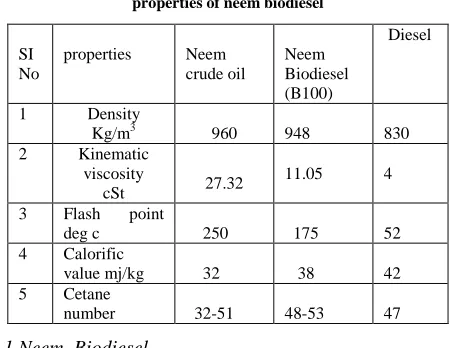
The investigation is carried out by using neem biodiesel (B100) which is brought from plant and it is in the form of crude oil. By using transesterification process using Sodium hydroxide and ethanol. The measured properties are mentioned below.
Table 2.1 : properties of neem biodiesel
SI No properties Neem crude oil Neem Biodiesel (B100) Diesel
1 Density
Kg/m3 960 948 830
2 Kinematic viscosity
cSt 27.32
11.05 4 3 Flash point
deg c 250 175 52 4 Calorific
value mj/kg
32 38 42 5 Cetane
number
32-51 48-53 47
2.1 Neem Biodiesel
Neem oil is a vegetable oil pressed from fruits and seeds of Neem, an evergreen tree which is widespread to the Indian Subcontinent and in many tropical areas.
2.2 Nano Fluid Additives
Nano fluids are prepared by colloidal suspensions of nano particles in a base fluid. The common base fluids include water, ethylene glycol and oil.
Types of nano fluids
Metallic solids (Copper, Al, Silver, Gold, Iron and calcium carbonate (caco3))
Non-metallic solids (silicon, alumina, silicon carbide, carbon nano tubes, Cuo and Tio2).
2.3 Calcium carbonate nano fluid additive
Calcium carbonate nano particles are synthesized through the precipitation of calcium nitrate and saturated sodium carbonate solution. The chemical properties of caco3 that contains Calcium (40%), carbon (12%) and
oxygen (48%). The physical and thermal properties are
Table2.2
Properties of caco3 nano fluid additive
Melting point 825 °C
density 2.93 g/mL at 25 °C(lit.) refractive index 1.6583
storage temp. Store at RT.
solubility 5 M HCl: 0.1 M at 20 °C, clear, colorless
form random crystals
color White-beige to slightly beige-gray
[image:2.612.330.555.148.322.2]International Journal of Emerging Technology and Advanced Engineering
Website: www.ijetae.com (ISSN 2250-2459, ISO 9001:2008 Certified Journal, Volume 8, Issue 2, February 2018)
269
It is a fluffy powder with a low solubility in water and It decomposes to give carbon dioxide when heated up to 1200K.
2.4 preparation of blends
In this work for preparation of blends followed a two step method where direct mixing of base fluid with the nano material. In Biodiesel nano fluid or powder is mixed and stirred with rotor which is connected to motor kept in a bowl for proper mixing.
In the first blend Caco3 additive (i. e 3gm) is
blended with neem biodiesel (B100) of 1litre on mass basis .
The second blend contains caco3 nano fluid additive
[image:3.612.367.523.187.332.2]of 5gm is blended with neem biodiesel of 1 liter (5gm/l).
Table 2.3 Properties of blended fuels
Parameters
(B100) Pure Neem
B100 + 3gm/l Caco3
B100 + 5gm/l Caco3
Density Kg/m3 948 940 930
Kinematic Viscosity cSt
13.05
9.50 11.51 Flash Pt Deg
C 175 120 95 Calorific
Value MJ/Kg 35 40 42
Cetane number
48-53 56 68
III. EXPERIMENTAL SETUP
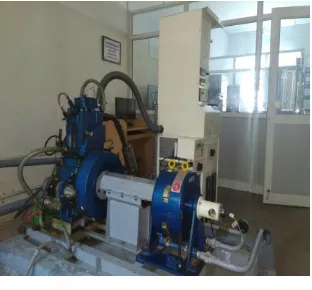
The research engine setup has a Stand alone panel box consisting of air box, fuel tank, manometer, fuel measuring unit, transmitters for air and fuel flow measurements, process indicator and Engine indicator Rotameters are provided for ―cooling water‖ and ―calorimeter water‖ flow measurement. Engine is directly coupled to an eddy current dynamometer that permit Engine motoring either fully or partially.
[image:3.612.78.260.317.551.2]The Engine and the dynamometer are interfaced to a control panel. By using Sensors which are connected to engine to show readings in a ―engine soft‖ software To obtain performance and combustion characteristics.
Fig 3.1 Experimental Engine
Specifications Of Engine
Make and model : Kirloskar, TV1
General details : 4 stroke, CI engine water Cooled direct injection system
Number of cylinders : one
Orientation : Vertical
Bore and Stroke : 87.5 mm and 110 mm
Swept volume : 661 cc
Compression ratio : 17.5:1
Rated output : 5.2 kW at 1500 rpm
Rated speed : 1500 rpm
Nozzle opening pressure : 180 bar
Fuel injection timing : 23o CA bTDC
Type of combustion chamber: HCC
Fuel: Neem biodiesel and diesel used.
Mars Exhaust five gas analyzer is used to find carbon monoxide (CO), carbon dioxide (CO2), oxygen
(O2), hydro carbons (HC) and oxides of nitrogen (NOx)
International Journal of Emerging Technology and Advanced Engineering
Website: www.ijetae.com (ISSN 2250-2459, ISO 9001:2008 Certified Journal, Volume 8, Issue 2, February 2018)
[image:4.612.58.561.49.519.2]270
Fig 3.1 Mars Five Gas Analyzer
[image:4.612.66.267.111.524.2]Fig 3.2 line diagrams of HCC and SDCC
Fig: 3.3 inside part of a cylinder head when combustion chamber is changing
IV. RESULTS AND DISCUSSION
The performance parameters like BP, BTE, BSFC, Mechanical efficiency have been evaluated . CO, HC, CO2, O2 and NOX emissions from exhaust are recorded.
The above mentioned all neem biodiesel properties are compared with neem biodiesel blends and with diesel properties.
4.1.Break Specific Fuel consumption vs Brake power
From fig.4.1.It is observed that the specific fuel consumption is decreased at full load conditions. The specific fuel consumption is decreased about 3.73% using
sdc with 3gm CaCO3 compared to hcc with 3gm CaCO3 at
[image:4.612.331.557.135.288.2]full load conditions.
Fig: 4.1. BSFC Vs Brake Power
[image:4.612.328.557.296.473.2]4.2 Brake Thermal Efficiency (ηbth) vs Brake power
Fig: 4.2 BTE Vs Brake Power
From fig 4.2, Brake thermal efficiency increases with increase an Brake power with rated load. From the graph it is concluded that the maximum Brake thermal efficiency is obtained for sdc with 5gm CaCO3 is 9.37 % more than sdc with 3gm CaCO3 at full load.
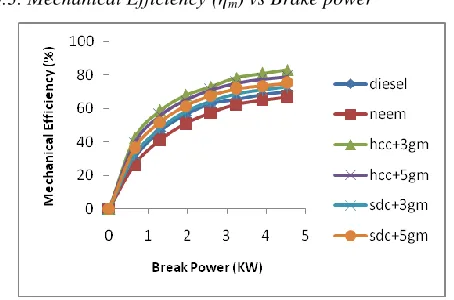
[image:4.612.328.555.547.697.2]4.3. Mechanical Efficiency (ηm) vs Brake power
International Journal of Emerging Technology and Advanced Engineering
Website: www.ijetae.com (ISSN 2250-2459, ISO 9001:2008 Certified Journal, Volume 8, Issue 2, February 2018)
271
From fig 4.3 Mechanical efficiency increases with increase in brake power. From the graph it is observed that maximum Mechanical efficiency is obtained for hcc with 3gm CaCO3 is 18.57% more than the diesel fuel.
4.4. Oxides of Nitrogen Vs Brake power
Fig: 4.4. Nox Emission Vs Brake Power
In general it is known that NOx increase with increase in cylinder temperature of the combustion chamber. From the experimental results it is predicted that NOx is increase in coated engine compared with standard engine due to increase in combustion temperature. The main cause for increase in combustion temperature is due to better airfuel mixture in TBC coated engine and NOx emissions are mainly increased due to increase in after combustion temperature.
4.5. CO Emissions Vs Brake power
Fig: 4.5.CO Emissions Vs Brake Power
From fig 4.5 shows that CO emissions will increase when there is a insufficient oxygen and incomplete combustion process occurs. If unburnt particles are less then CO emissions will be less.
4.6. Carbon Dioxide Emission Vs Brake power
Fig: 4.6. CO2 Emission Vs Brake Power
Figure4.6 shows CO2 variations with respect to various
Brake power conditions. CO2 emission from diesel engine
is related to the fuel properties as well as combustion characteristics. It is well known that better fuel combustion increases the O2 and hence carbon di-oxide emission is
higher in coated Engine. It is found that CO2 emissions are
decreased by 4.25% when using sdc with 5gm CaCO3
compared to diesel fuel.
4.7. Unburnt HC Emission Vs Brake power
Fig: 4.7.Unburnt HC Emission Vs Brake Power
It is formed due to un burnt hydrogen and carbons in fuels. In shallow depth chamber the combustion taken place completely and there is very low un burnt emissions for fuels with shallow depth chamber.
V. CONCLUSION
International Journal of Emerging Technology and Advanced Engineering
Website: www.ijetae.com (ISSN 2250-2459, ISO 9001:2008 Certified Journal, Volume 8, Issue 2, February 2018)
272
The specific fuel consumption is decreased about 3.73% using sdc with 3gm CaCO3 compared to hcc
with 3gm CaCO3 at full load conditions.The reason is
better air fuel mixing in sdc was taken, where swirl motion is increased.
The BTE increases with the increase in brake power. The BTE for sdc with 5gm CaCO3 is 9.37 %more
than sdc with 3gm CaCO3. It is because of the
oxygenated molecule of the biodiesel, which leads to excess oxygen molecule responsible for complete combustion.
The combustible properties of biodiesel are enhanced
with additives, for which mechanical efficiency of hcc
with 3gm CaCO3is increased about 18.57% compared
to diesel.
CO emissions are decreased using sdc compared to hcc. This is due to adequate combustion.
It is found that CO2 emissions are decreased by 4.25%
when using sdc with 5gm CaCO3 compared to diesel
fuel. Because of biodiesel molecular structure.
REFERENCES
[1] P.Tamil Porai, N.Nagarajan,‖ Evaluation of performance & emission of neem oil methyl ester in a DI diesel engine‖, Asian Journal Of Computer Science And Information Technology 3 : 4 (2013) 50 - 55. [2] 2.Muneeswaran Ramakrishnan,Thansekhar Maruthu Rathinam,
Karthickeyan Viswanathan, “Comparative studies on the performance and emissions of a direct injection diesel engine fueled with neem oil and pumpkin seed oil biodiesel with and without fuel preheater‖, Environmental Science and Pollution Research, August 2017.
[3] Basavaraj M. Shrigiri,, Omprakash D.Hebbal, K. Hemachandra Reddy,‖ Performance, emission and combustion characteristics of a semi-adiabatic diesel engine using cotton seed and neem kernel oil methyl esters‖, Alexandria Engineering Journal,Volume 55, Issue 1, March 2016, Pages 699-706.
[4] M C Navindgi,Dr. Maheswar Dutta,Dr. B. Sudheer Prem Kumar,‖ Comparative Experimental Investigation of Combustion, Performance and Emission in a Single Cylinder Thermal Barrier Coated Diesel Engine using Diesel and Neem Biodiesel‖, International Journal of Engineering Research and Development, volume 3, Issue 2(August 2012), PP. 12-20.
[5] K. KalyaniRadha, S. Naga Sarada, K. Rajagopal and E.L. Nagesh ―Performance and emission characteristics of ci engine operated on vegetable oils as alternate fuels‖ . International Journal of Automotive and Mechanical Engineering (IJAME)ISSN: 1985-9325(Print); ISSN: 2180-1606 (Online); Volume 4, pp. 414-427, July-December 2011.
[6] A Siva Kumar, Dr.DMaheswar, Dr. K Vijaya Kumar Reddy ―Analysis of lhr extended expansion engine with variable speed operation for different compression ratios‖. International journal advanced engineering sciences and technologies of vol no. 11, issue no. 1, 121 – 128 -2011.
[7] A Siva Kumar, Dr.DMaheswar, Dr. K Vijaya Kumar Reddy ―Analysis of lhr extended expansion engine with variable speed operation for different compression ratios‖. International journal advanced engineering sciences and technologies of vol no. 11, issue no. 1, 121 – 128 -2011.
[8] V.V.R.SeshagiriRao,T.K.K.Reddy, M.V.S.MuraliKrishna, P.V.K.Murthy ―Performance evaluation of a high grade low heat rejection diesel engine with carbureted methanol and crude jatropha oil‖.International journal of advanced engineering sciences and technologies Vol No. 10, Issue No. 2, 368 –387.
[9] N. Venkateswara Rao, M.V.S. Murali Krishna, P.V.K.Murthy ―Effect of injector opening pressure and injection timing on exhaust emissions and combustion characteristics of high grade low heat rejection diesel engine with tobacco seed oil based biodiesel‖. International Journal of Recent Technology and Engineering (IJRTE) ISSN: 2277-3878, Volume-2, Issue-4, September 2013.PP 1-12.
[10] M.V.S. Murali Krishna, N. DurgaPrasada Rao, A. Anjeneya Prasad and P.V. K. Murthy ―Performance evaluation of rice brawn oil in low grade low heat rejection diesel engine‖ International Journal of Engineering and Science ISSN: 2278-4721, Vol. 1, Issue 5 (October 2012),
[11] Lovekush Prasad and Dr. Alka Agrawal , ―Experimental Investigation of Performance of Diesel Engine Working On Diesel and Neem Oil Blends,‖IOSR Journal of Mechanical and Civil Engineering (IOSRJMCE) ISSN:2278-1684 Volume 1, Issue 4 (July -August 2012), PP 48-.51.