A Strategic Approach to Emergency Preparedness
in the UAE
Hamdan Rashid Alteneiji
A strategic Approach to Emergency Preparedness
in the UAE
Hamdan Rashid Alteneiji
School of the Built Environment
College of Science and Technology
University of Salford, Salford, UK
I
TABLE OF CONTENT
TABLE OF CONTENT ... I LIST OF TABLE ... V LIST OF FIGURES ... VI DEDICATION ...VII ACKNOWLEDGEMENT ... VIII DECLARATION ... IX LIST OF ABBREVIATIONS ... X ABSTRACT ...XII
CHAPTER ONE INTRODUCTION AND BACKGROUND ... 1
1.1 INTRODUCTION ... 1
1.2 RESEARCH RATIONALE AND PURPOSE ... 4
1.3 RESEARCH AIM, OBJECTIVES AND QUESTIONS ... 7
1.4 RESEARCH APPROACH ... 8
1.5 CONTENT/STRUCTURE OF THESIS ... 9
CHAPTER TWO EMERGENCY MANAGEMENT STANDARDS IN DEVELOPED COUNTRIES AND THE UAE ... 12
2.1 INTRODUCTION ... 12
2.2 WHAT IS EMERGENCY MANAGEMENT? ... 12
2.3 GLOBAL EFFORTS IN EMERGENCY MANAGEMENT ... 16
2.3.1 United Nation Strategies ... 17
2.3.2 EU – The Community Mechanism for Civil Protection ... 20
2.4 EMERGENCY MANAGEMENT STANDARDS IN DEVELOPED COUNTRIES .. 21
2.4.1 Modern Emergency Management—A Four-Phase Approach ... 22
2.4.2 Principles of Emergency Management Standard ... 24
2.4.3 EM Standards in Developed Countries ... 25
2.5 EMERGENCY MANAGEMENT STANDARD IN THE UAE ... 39
2.5.1 NCEMA Goals and Objectives ... 41
2.5.2 The Structure of the UAE Emergency Management Standard ... 42
2.5.3 Command Structure ... 44
2.5.4 Levels of Responsibility and Intervention ... 46
2.6 A summary of Emergency Management Standards ... 48
II
CHAPTER THREE EMERGENCY PREPAREDNESS MODELS AND FRAMEWORKS 54
3.1 INTRODUCTION ... 54
3.2 DEFINITION OF EMERGENCY PREPAREDNESS... 54
3.3 ANALYSIS OF VARIOUS FRAMEWORKS OF PREPAREDNESS ... 56
3.3.1 Pelfrey’s Model ... 56
3.3.2 United States (US) Model ... 58
3.3.3 United Kingdom (UK) Model ... 60
3.3.4 The Australian Model ... 63
3.4 ELEMENTS OF EMERGENCY PREPAREDNESS ... 65
3.4.1 Risk Assessment ... 66
3.4.2 Planning ... 72
3.4.3 Exercise and Training ... 75
3.4.4 Organise and Equip ... 78
3.4.5 Early Warning System and Information System ... 79
3.4.6.Public Education ... 81
3.4.7.Similarities and Differences of Approach ... 85
3.5 SUMMARY AND CONCLUSION ... 86
CHAPTER FOUR RESEARCH METHODOLOGY ... 88
4.1 INTRODUCTION ... 88
4.2 DEFINITION OF RESEARCH METHODOLOGY ... 88
4.3 RESEARCH PHILOSOPHY ... 89
4.3.1 Ontology ... 90
4.3.2 Epistemology ... 90
4.3.3 Axiology ... 91
4.4 RESEARCH APPROACH ... 92
4.5 RESEARCH STRATEGIES ... 93
4.5.1 Documentation ... 94
4.5.2 Case Study Strategy ... 95
4.6 RESEARCH CHOICES ... 99
4.6.1Sampling ... 100
4.7 TIME HORIZONS ... 103
4.8 DATA COLLECTION AND DATA ANALYSIS ... 103
4.8.1 Data Collection... 104
III
4.8.3 Interview Translation ... 109
4.9 RELIABILITY AND VALIDITY ... 110
4.10 ETHICAL APPROVAL ... 111
4.11CONCLUSION ... 112
CHAPTER FIVE PILOT STUDY AND DOCUMENTATION ... 113
5.1 INTRODUCTION ... 113
STAGE I- Pilot Study ... 113
STAGE II- Documentation ... 116
5.2 Summary and Conclusion ... 124
CHAPTER SIX DATA ANALYSIS AND DISCUSSION OF FINDINGS ... 126
6.1 INTRODUCTION ... 126
6.2 STAGE I- DATA COLLECTION AT FEDERAL LEVEL (NCEMA) ... 126
6.2.1 Profile of Interviewees ... 126
6.2.2 Data Analysis of Federal Level Interviews ... 127
6.2.3 Main Finding ... 169
6.2.4 Summary ... 170
6.3 STAGE II- DATA COLLECTION AT LOCAL LEVEL (LTCEM) ... 171
6.3.1 Profile of Interviewees ... 171
6.3.2 Data Analysis of Local Level Interviews ... 173
6.3.3 Main Finding ... 185
6.3.4 SUMMARY ... 185
6.4 STAGE III- BARRIERS RANKING WITHIN THE UAE ... 186
6.4.1 Profile of the Federal level Interviewees ... 186
6.4.2 Profile of the local level Interviewees ... 188
6.4.3 Data Analysis of the Barriers Ranking... 190
6.4.4 Discussion of Findings ... 193
6.4.5 Recommendations of Implementing EP in the UAE ... 195
6.5 Summary and Conclusion ... 210
CHAPTERSEVEN DISCUSSION AND CONCLUSION ... 211
7.1 INTRODUCTION ... 211
7.2 DISCUSSION ... 211
IV
7.2.2 Objective II - To Examine the Emergency Management Standards and
Preparedness Frameworks Applied in the US, UK, Australia and the UAE. ... 213
7.2.3 Objective III - To Identify and Evaluate the Existing Emergency Preparedness Elements in the US, UK, Australia and UAE. ... 214
7.2.4 Objective IV - To explore and identify the Barriers Associated with Emergency Preparedness in the UAE. ... 216
7.2.5 Objective V - To Draw Recommendations for Effective Emergency Preparedness Strategy for the UAE. ... 218
7.3 MAIN FINDINGS ... 218
7.3.1 General Findings ... 218
7.3.2 Findings relating to Key elements of the Preparedness strategy ... 219
7.4 LIMITATION OF THE RESEARCH ... 220
7.5 RESEARCH CONCLUSION ... 220
7.6 RECOMMENDATIONS ... 221
7.6.1. Recommendation for Policy and Practice ... 222
7.6.2 Recommendation for Future Research ... 223
7.7 CONTRIBUTION TOKNOWLEDGE ... 224
REFERENCES ... 226
APPENDIX - A ... 239
APPENDIX - B ... 240
APPENDIX - C ... 241
APPENDIX - D ... 244
APPENDIX - E ... 248
V
LIST OF TABLE
Table 2.1 Tasks of DRR (Adapted from UNHCR, 2007) ... 18
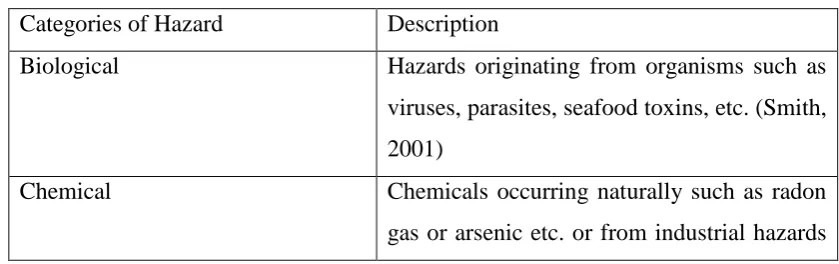
Table 2.2 Categories of Hazards in the US ... 28
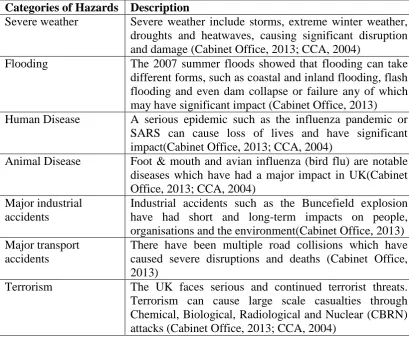
Table 2.3 Categories of Emergencies in the UK ... 34
Table 2.4 Types of Hazards in Australia ... 38
Table 2.5 Different Approaches to EM in Four Different Countries ... 51
Table 3.1The Key Elements Which Effect the Preparedness Stage ... 85
Table 4.1 Distinction between Deductive and Inductive. Source (Saunders et al., 2009) ... 92
Table 4.2 Relevant situations for different research designs Source: Yin (2009, p.8) ... 94
Table 4.3Interview Elements and Description ... 101
Table 4.4 Research Strategies and Relevance of Triangulation ... 102
Table 4.5 the Profile for the Key People in the NCEMA. ... 106
Table 5.1 Profile of the International Experts ... 114
Table 6.1 Profile for the Key People in the (LTCEM) ... 173
Table 6.2 the Profile for the Key People in the (NECMA) ... 188
Table 6.3 Profile for the Key People in the LTCEM ... 190
Table 6.4 Result and Rating Given by the Interviewees ... 191
Table 6.5 The Final Result and the Percentages Given by the Interviewees ... 192
VI
LIST OF FIGURES
Figure 1.1The cycle of EM. Source: U.S. Department of Education (2010) ... 3
Figure 1.2 Tropical Storm Gonu (Source: Dubai and Sharjah TV, 2007) ... 5
Figure 1.3 The Research Approach ... 11
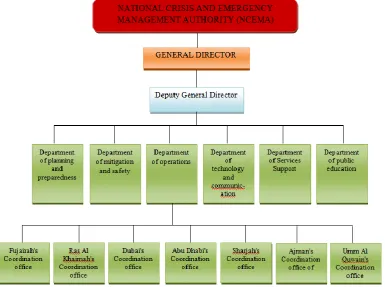
Figure 2.1Organisation Structure for the NCEMA (NCEMA, 2007) ... 42
Figure 2.2 Organisation Structure for the LEMT (2007,LEMT) ... 44
Figure 2.3 Command Structure Source: Emergency Planning College (EPC, 2015). ... 45
Figure 3.1 Elements of the Cycle of Preparedness (Pelfrey, 2005) ... 57
Figure 3.2 The Preparedness Cycle (FEMA, 2012) ... 59
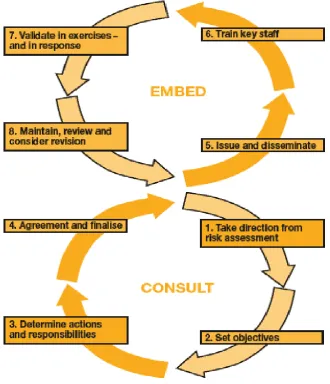
Figure 3.3 The UK emergency planning cycle (extracted from CCA, 2004:54) ... 61
Figure 3.4 Preparedness Elements of Australian EM (EMA, 2004) ... 64
Figure 3.5 Risk Management Framework (Salter, 1997) ... 68
Figure 3.6 Risk Management Process (CCA, 2004: 39) ... 69
Figure 3.7 Location of Risk Assessment in the EPP (CCA, 2004: 40) ... 70
Figure 3.8. Public Communications Timeline (Extracted from CCA, 2004:97) ... 82
Figure 4.1 The Research Process. Source (Saunders et al., 2009, P. 138) ... 89
Figure 4.2 Classification of Case Study designs (Yin, 2009) ... 97
Figure 4.3 Unit of Analysis for Case Study ... 98
Figure 4.4 Organisation Structure for the NCEMA (NCEMA, 2007) ... 105
Figure 4.5 Organisation Structure for the Federal level (NCEMA, 2007) ... 107
Figure 4.6 Relationship between Validity and Reliability ... 111
Figure 6.1 Structure of the LTCEM (LTCEM, 2008) ... 172
VII
DEDICATION
VIII
ACKNOWLEDGEMENT
It is without a shadow of a doubt that my first and most significant expression of my
appreciation is to God. It is only through the will of the Almighty that this research endeavour
has taken place.
My profound appreciation goes to my supervisor Prof Vian Ahmed, who devoted her valuable
time in the past three years to guide me to achieve this enviable academic work. Your
valuable advice, counsel and support through the most challenging period of documenting this
research have contributed to the successful completion of this thesis.
I am greatly indebted to the ruler of emirates of Sharjah, H.H. Sheikh Sultan bin Mohammed
al Qasimi and to the crown prince of emirates of Sharjah, H.H. Sheikh Sultan be Mohamed
ben Sultan al Qasimi, who set me on this path of knowledge acquisition and self-development
in the United Kingdom (UK). Thank you very much for giving me the opportunity to
contribute to the advancement of our country, United Arab Emirates (UAE).
Thanks are due to the School of the Built Environment for the support during this course of
study which has been a turning point in my life. I would like to extend my gratitude to the
staff and experts in the National Crisis and Emergency Management Authority (NCEMA) and
the Ministry of Interior, UAE.
Lastly, I would like to express my appreciation to all my family members, brothers and
sisters. In addition, I would like to express my grateful thanks to my wife for her patience, and
my beautiful children for their understanding and support during the demanding years of my
study in the UK. You have provided me with motivation to finish my studies and add to my
IX
DECLARATION
I certify that this thesis is the result of my own work. This work has been submitted based on
the regulations of the University of Salford in order to obtain a PhD degree. In addition, some
X
LIST OF ABBREVIATIONS
Abbreviation Meaning
AIIMS Australian Inter-service Incident Management System
CCA Civil Contingencies Act
CCS Civil Contingencies Secretariat
CDA Civil Defence Act
CEIS Common Emergency and Information System
CEM Comprehensive Emergency Management
CMCP Community Mechanism for Civil Protection COCCS Cabinet Office Civil Contingencies Secretariat DCBA Disaster Countermeasures Basic Act
DHS Department of Homeland Security
DM Disaster Management
DMG Disaster Management Glossary
DRR Disaster Risk Reduction
EC Executive Committee
ECOSOC Economic and Social Council
EM Emergency Management
EMA Emergency Management Australia
EMI Emergency Management Institute
EMS Emergency Management Standard
EOC Emergency Operation Centre
EP Emergency Preparedness
EU European Union
EUC European Union Committee
EWS Early Warning System
GFNR General Framework of National Response
HFA Hyogo Framework for Action
HNSC Higher National Security Council
HSPD Homeland Security Presidential Directive 8 IAEM International Association of Emergency Managers IDP Internally Displaced Persons
IEM Integrated Emergency Management
IFRC International Federation of Red Cross and Red Crescent Societies ISDR International Strategy for Disaster Reduction
LRF Local Resilience Forum
LTCEM Local team of crisis and emergency management MCM Mitigation Consequence Management
MCP Mechanism for Civil Protection MIC Monitoring Information Centre
MPRR Mitigation, Preparedness, Response and Recovery NCEMA National Council of Emergency Management Authority NCM National Centre for Meteorology
NDRF National Disaster Recovery Framework NGA National Governors’ Association
NGO Non-Governmental Organisation
XI
NMF National Mitigation Framework
NPF National Prevention Framework NPF National Protection Framework
NPIA National Policing Improvement Agency NPS National Preparedness System
NRF National Response Framework
NRP National Response Plan
PDCA Plan, Do, Check, Act
PPRR Prevention, Preparedness, Response and Recovery
RA Risk Assessment
RM Risk Management
SEMC State Emergency Management Committee
UAE The United Arab Emirates
UCPM Union Civil Protection Mechanism
UHNSC Under the Higher National Security Council
UN United Nations
UN ISDR United Nations International Strategy for Disaster Reduction UNDP United Nations Development Program
UNEP United Nations Environment Programme
UNHCR United Nations High Commissioner for Refugees
UNISDR United Nations International Strategy for Disaster Reduction WCDR World Conference on Disaster Reduction
XII
ABSTRACT
Disasters experienced in recent years have had significant impact on people, property and the
environment, and this widespread impact has informed the review of policies, measures and
approaches in managing them. Despite response arrangements such as multi-agency response,
military efforts and various other international efforts, disasters still continue to have a
negative impact on communities across the world. While response approaches and
arrangements are not incorrect, they are at times not grounded in the minimal response
strategies from the preparedness phase. This gap emphasises the related concepts of practices
in emergency management, its phases, and the role of strategic preparedness in ensuring that
the impacts of emergencies are better managed.
However, review of existing practices and literature shows that there are various explanations
and operations for the preparedness phase which do not actually result in effective response to
and mitigation of emergency/disaster impacts. The preparedness phases as operational in the
United States of America (USA), the United Kingdom (UK) and Australia were all examined
to identify best practice and effective preparedness cycles and systems. This approach to the
research proved useful in identifying the main gaps and problems in the preparedness phase in
the United Arab Emirates (UAE), which is the research case study.
Therefore, this research aims to investigate the state of emergency preparedness in the UAE,
identify limitations and provide recommendations for the UAE government to adopt strategic
approach for improving emergency preparedness in the UAE. Following examination of the
National Response Framework (NRF), a series of interviews was carried out in the UAE
which confirmed that no preparedness system, framework or cycle existed. Qualitative
methods of data collection and documentation were adopted to examine the current
preparedness practice in the UAE, its application and effectiveness. Content analysis was used
to analyse these data which helped to identify barriers to the current deployment of the
preparedness phase in the UAE. The findings of this research show that the eight elements for
emergency preparedness are missing in the UAE emergency management system. This
finding affirms the need for a strategic approach which combines all eight elements of
emergency preparedness in the UAE. Therefore, both barriers to deployment of the
preparedness phase and the lack of elements of preparedness provided the basis for the
recommendation made in order to strategically improve the emergency preparedness phase in
1
CHAPTER ONE
INTRODUCTION AND BACKGROUND
1.1 INTRODUCTION
Disasters have always been present in human history (Haddow et al, 2011). History records
disasters that have happened in the past and provides us with lessons on those that will happen
in the future. However, the world has reacted, and since the Second World War governments have created acts to reduce and prevent disasters (O’ Brien, 2005). As a result, great efforts
have been made in this regard, on the one hand by international organisations such as the
United Nations (UN) and European Union (EU) and on the other hand by developed countries
such as the United States of America (USA), United Kingdom (UK) and Australia. These
efforts will be covered in detail in the next chapter.
The United States (US) Federal Emergency Management Authority (FEMA) explained that
disaster occurs when an extreme event exceeds the ability of a country or community to cope
with that event. Although many developing countries have found it necessary to request
assistance in responding to disaster events in recent decades, it seems even developed
countries have begun to suffer similar impacts of disasters (Ball and Ball-King, 2013).
Many of these disasters or occurrences of unprecedented scale of emergency have found their
cause in climate change, globalisation, human-activity, and rapid urbanisation (Perrow, 2011).
As such, there is a global sense of duty for countries and international institutions to seek
means of developing more effective frameworks for managing emergencies. In addition, the
need to be better prepared for incidents such as disaster or emergency of any scale has risen
significantly in the last few decades. This is due to the impact of emergencies and disasters
such as the 9/11 attack of 2001, the Asian tsunami in 2004, Hurricane Katrina (2005), and the
Japan earthquake and tsunami (2011). All these events have demonstrated that disasters can
occur with little warning and minimal time to prepare, which suggests that countries need to
begin planning in advance to manage any type or level of hazard, risk, emergency or disaster
to which they are prone.
Having said this, authors such as Perrow (2011) have explained that preparing for unforeseen
or foreseen disasters can be challenging. Preparedness efforts can also be influenced by
2
and Tierney, 2007). However, the devastation that disasters and emergencies cause has
enforced the need to persist in seeking ways to improve how disasters and emergencies are prepared for and responded to, so that their impacts can be minimised or prevented (Smith
and Fischbacher, 2009). This continues to be an ongoing and joint process which at times
involves the intervention of international institutions such as the United Nations (UN). While
the UN mostly intervenes during disaster events in developing countries and in supporting
disaster risk reduction projects, developed countries have also learnt to pool resources to
facilitate response to disaster events (Fagel, 2011). One example of recent UN intervention is
the April 2015 earthquake in Nepal, with a death toll of more than four thousand (The
Telegraph, 2015). This pooling of resources has become necessary because many developed
countries such as the USA, UK and Australia, to mention a few, have been experiencing
disasters or emergencies of differing magnitudes which are now affecting lives and livelihood,
quite apart from the large scale destruction taking place in these countries in the last decade.
Lessons learnt from these countries have inspired research, articles and academic work to
seek explanation for the problems experienced during response to various incidents, and to
seek answers for their occurrence on such a scale. Further, the quest for better understanding
of emergency and disaster management has seen the phases of emergency management
subjected to review and analysis.
While some reviews and analysis have provided better understanding of how the response and
recovery phases can be improved (Coppola, 2011), the preparedness phase seems to require
more in-depth investigation since response to major events continues to be challenging (Berke and Campenella, 2006). As a whole, it is generally acknowledged that the emergency
management phases are essential in order to understand and to ensure ability to mitigate,
prepare for, respond to and recover from any form of disaster or emergency (Coppola, 2011).
3
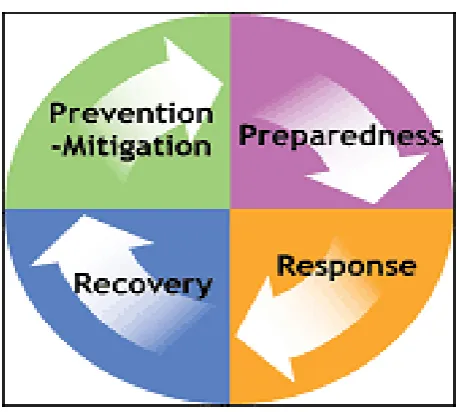
Figure 1.1The cycle of EM. Source: U.S. Department of Education (2010)
This cycle shows the relationship between the phases of emergency management without
necessarily emphasising the importance of one over the other. The prevention/mitigation
phase links to the preparedness phase which then connects with the recovery phase followed
by the prevention/mitigation phase. This cycle means that all the phases of emergency
management are a continuous process which link with one another, and the activities that take
place in a phase affect the immediately following phase and subsequent phases (Blanchard,
2007). Thus, a good understanding of emergency management phases is considered important
for developing programmes, measures and activities for any of the phases illustrated in figure
1.1. The emergency management cycle is widely used in several developed countries, as well
as developing countries, to manage emergencies and disasters, and has been considered useful
to a great extent.
However, throughout the emergency management sector, approaches that are sufficiently
comprehensive to allow a general planning process to be applied to prepare for the occurrence
of an emergency are being investigated and suggested. Some of these approaches include an ‘all-hazard’ approach, comprehensive emergency, all stakeholder approach, multiagency
approach, etc (FEMA, 2007), and are examined within the context of usage in different
countries in chapter two. By way of introduction, the current chapter establishes the rationale
and purpose for undertaking this research. To achieve the purpose, a research aim, sets of
objectives and research questions are set out and outlined in subsequent sections in this
chapter. The approach taken for the research will be outlined in stages while an attempt is
4
1.2 RESEARCH RATIONALE AND PURPOSE
As discussed in the introduction, no country is exempt from the occurrence or impacts of disasters and emergencies. Even the most developed countries in the world have suffered
significant loss of lives, property, or both during one disaster, crisis, emergency or another
(Kumar, 2013) and this includes the United Arab Emirates (UAE). The UAE is one of the
Arab countries; it shares its borders with Oman to the east and Saudi Arabia to the south, as
well as with Qatar and Iran. At the south-east of the Arabian Peninsula on the Persian Gulf,
the UAE, as the name suggests, is a federation of seven emirates, each governed by a
hereditary emirate but operating under a single national president (UAE Interact, 2013).
As noted by Dhanhani et al (2010), the natural disaster risk for the UAE is surprisingly high. Taking Fujairah as an example, “the following rapid onset natural hazard events have
occurred in the period 1995-2009: Masafi earthquake 2002, Al Qurayah flood 1995, Al
Tawaian landslide 2005, tropical storm Gonu 2007 and Sharm flash flood 2009.” A second
major potential threat is that of tsunamis. The 2004 event in Indonesia affected the entire
Indian Ocean basin and, although it did not have a significant impact on the UAE, the tsunami
did produce small waves of up to 30 cm in height along UAE coasts (Kowalik et al., 2005). It
is also clear from historical records that the threat can be much higher than that, depending on
the location of the quake.
According to Jordan et al. (2010), “in November of 326 B.C. Alexander the Great was hoping
to return to Greece by taking a sea route from what is now the Pakistani Indus delta region.
However, a large wave, believed to be a tsunami, destroyed the Macedonian Fleet in this area…….the Arabian Sea which borders the eastern coasts of the UAE is a large potential
source area for tsunamis that could seriously affect the UAE.” The 2007 tropical storm Gonu
lashed the eastern cost of the UAE, as can be seen in figure 1.2. This illustrates that tropical
storms do not only have a historical reference in the Gulf region, but rather that history seems
5
Figure 1.2 Tropical Storm Gonu (Source: Dubai and Sharjah TV, 2007)
In addition, it was recently reported by the seismic network of the National Center of Meteorology and Seismology that, “an earthquake in the eastern off shore of UAE, about 10
km into the Omani sea and at a depth of 4 km, occurred on Sunday 9 March 2014, with
magnitude 3.1 earthquake on the Richter scale, or about 3 on the Mercalli scale at 23:46:29 pm (local time). Although weak, it was felt in the Diba areas” (Emirates, 2014).
Setting aside past disasters, the UAE will certainly face significant challenges in dealing with
hazards, whether environmental or man-made, not least due to the fact that, since
independence in 1971, the UAE is using considerable oil resources. The economic growth of
the UAE has been striking and impressive, but it is this very development that could
potentially cause an increase in crisis, emergency and disasters, as explained by Bankoff et al.
(2004).
As one of the most dramatically growing nations in the world, the UAE is at particular risk of
emergencies such as traffic accidents of any scale, terrorist attacks, flooding, tremor, fire,
sand storm, tropical storms to mention a few. For example, over 500 UAE skyscrapers have
panels composed of flammable material (Gulf News, 2012), which significantly increases the
potential for serious fire damage, loss of life, property and investments, should an accident
occur. However, the nature of construction in the UAE is just one factor. The UAE has a huge
amount of air traffic due to its status as a popular tourist destination, centre for trade and
international travel hub; thus the busy air traffic in Dubai and Abu Dhabi also bears a risk for
air accidents. Indeed, there have been notable air accidents in Dubai and Sharjah in recent
years (Li et al., 2007). Equally, economic growth has brought with it immigration issues,
hostage situations and political upheaval and, as Suter (2006) points out, ethnic and labour
6
However, although disasters or emergencies have occurred in the past and are likely to occur
in the future, there is no well-defined strategic plan on how to deal with these events. Inadequate response to past emergencies in the country has led to loss of lives and insurance
claims worth millions of US dollars (Kumar, 2013). Such losses and the potential impact of
continued occurrence of emergencies in the UAE has the potential to threaten its vibrant
economy and investment in development. Hence, this need for better preparedness for
disasters or emergencies has motivated research in this area. Furthermore, it is generally
observed by practitioners in the public safety sector in the UAE that existing emergency
management standards are not as well advanced as the economic status of the country.
According to Dhanhani (2010), an interview with the Director-General of the National
Council of Emergency Management Authority (NCEMA) explained that, as recently as 2010,
progress was still ongoing in order to improve the capacity of the UAE to deal with all kinds
of threat, natural or man-made emergencies. Furthermore, it has been recommended by Jordan
et al, (2005) that any construction along the eastern coast of the UAE should involve tsunami
mitigation planning, including public education. While evidence of global risk, evolving risks
and recommendations for improvement reinforced the rationale for this research, the main
reason for undertaking this research is based on the gaps identified during several years of
work experience in the emergency sector in the UAE. The need to improve the preparedness
phase became increasingly evident from the ineffective response witnessed during the researcher’s work experience.
While these ineffective responses reflect problems with the preparedness phase, the vision of
His Highness; Khalifa bin Zayed Al Nahyan to ensure excellence in managing crises,
emergencies and disasters (NCEMA, 2012) further justifies the rationale for this research.
The national mission regarding emergency, crisis and disaster management is to minimize the
effects of emergencies and crises, save lives, and preserve property and assets by improving the UAE’s capabilities in coordinating national efforts (NCEMA, 2012). Hence all these
factors form the rationale behind conducting this research. Therefore, this research examines
the UAE standard for emergency management in general and the preparedness phase in
particular to determine the suitability for the level of preparedness in the UAE. By so doing,
the research findings will help to propose a strategic approach, depending on the result of the
findings. This will help to ensure the effective implementation of emergency management in
the UAE, taking into consideration existing practice, policies and regulations for improved
7
1.3 RESEARCH AIM, OBJECTIVES AND QUESTIONS
1.3.1 Research Aim
The aim of this research is to investigate the state of emergency preparedness in the UAE,
identify limitations and provide recommendations for the UAE government to adopt a
strategic approach for improving emergency preparedness in the UAE.
The following objectives have been drawn from this aim to achieve the purpose of the
research:
1.3.2 Research Objectives
1. To provide a historical overview of emergency management up to present day
practice, including a review of emergency management frameworks
established by national governments.
2. To examine the emergency management standards and preparedness
frameworks applied in the US, UK, Australia and the UAE.
3. To identify and evaluate the existing emergency preparedness elements in the
US, UK, Australia and UAE.
4. To explore and identify the barriers associated with emergency preparedness in
the UAE.
5. To draw recommendations for effective emergency preparedness strategy for
the UAE.
1.3.3 Research Questions
Two main questions will be asked to ensure that valid and reliable data are collected, from
which effective recommendations can be drawn to inform effective policy and practice in
emergency management in the UAE, particularly with a view to improving emergency
preparedness. These two questions are:
1. What are the key elements that can influence the formation of appropriate
Emergency Preparedness (EP) in the UAE?
2. What are the barriers that hinder the formation and implementation of UAE's
8
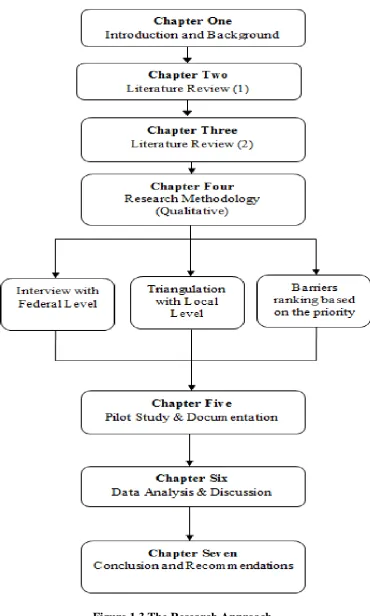
1.4 RESEARCH APPROACH
The following tasks were undertaken as a means to achieving the research aim, objectives and research questions, via the stages shown below:
STAGE I – Literature Review
A comprehensive literature review was carried out in order to:
- Develop an understanding of emergency management concepts and standards used
in developed countries
- Review existing emergency preparedness standards and frameworks and models in
the body of knowledge in order to identify the key elements which effect
emergency preparedness.
- Study the profile of the UAE as one of the Gulf countries vulnerable to disasters
and examine the current standards adopted by the country to manage disasters,
emergencies and crisis.
STAGE II – Research Methodology
Study was made of the relevant methodological philosophies and approaches in order to
identify the suitable methods of data collection for this research. As a result, the research will
adopt the pure qualitative method of data collection since the researcher is looking for
meaning, views and attitudes rather than figures or statistics, which will help to explore the
barriers and deficiencies facing emergency preparedness in the UAE.
This will be achieved via the following methodological steps:
A. The first step will be a pilot study using input from international experts in the
field of emergency management in order to further confirm and examine key
elements affecting emergency preparedness identified from the literature
review.
B. The second step will be the primary data collection at federal level (NCEMA)
via semi-structured interviews, in order to gain a deep understanding of the
current situation of emergency preparedness in the UAE, which will help to
provide suitable recommendations for the UAE government.
C. Thirdly, the responses from the primary data gathered at federal level
9
Emergency Management) (LTCEM) in order to confirm the validity of the
responses from the federal level and understand how their input can be applied to the local level.
D. Finally, the barriers identified in stage B that contribute to emergency
preparedness will be evaluated and ranked in the order of their importance with
both federal and local levels.
1.5 CONTENT/STRUCTURE OF THESIS
This thesis is divided into seven chapters, as described below:
CHAPTER I - Introduction
This introductory chapter is divided into four main parts. Part 1: Background to the
subject of emergency management; Part 2: Description of the aims, objectives and
research questions; Part 3: Research approach; Part 4: Content of thesis.
CHAPTER II - Literature Review (1)
This chapter offers a description of the literature review from a variety of secondary
sources. It starts with evaluating the definition of emergency management, then
highlighting international efforts in the area of emergency management provided by the
UN and EU and a discussion of international standards of emergency management,
focusing on the world's most economically developed countries. Then it reviews
emergency management standards in the United Arab Emirates (UAE).
CHAPTER III – Literature Review (2)
This chapter will be the second literature chapter which will concentrate on the
preparedness phase by defining preparedness, then exploring the key elements which
affect emergency preparedness through several standards and frameworks from the
available literature, in order to identify the key elements affecting the emergency
preparedness stage.
CHAPTER IV - Methodology
This chapter provides an overview of the approaches and methodology that will guide
the research. It aims to justify the selection of different approaches. This study will use
10
collect views and the attitudes from the interviews aiming to explore and investigate the
current situation for emergency preparedness in the UAE based on the eight elements discovered from the literature.
CHAPTER V – Pilot Study and Documentation
This chapter provides an overview of the international experts’ feedback in terms of
whether the eight elements are sufficiently comprehensive to be used as a basis for the emergency preparedness stage. Having received the experts’ feedback for these
elements, it is necessary to investigate these elements in the UAE's emergency
management documentation, in terms of the extent to which they are all covered, if at
all.
CHAPTER VI – Data analysis and Discussion
This chapter discusses the outcomes of the data collection and reviews the findings. It
gives background information on the participants in the study and outlines their roles
and relationships within the field of emergency management. Data collection was
conducted via three stages: The first was at federal level and aiming to examine the
current situation/practice of emergency preparedness based on the eight elements
discovered from the literature and confirmed by the experts. The second stage will be at
local level and aiming to confirm the findings at federal level. The third stage will be
with experts at both federal and local level and aiming to rank the barriers discovered
from the federal level and confirm with the local level. In addition, this chapter will
discuss the findings from literature. Based on this, it will draw up recommendations for
emergency preparedness in the UAE.
CHAPTER VII - Conclusion and Recommendations
The final chapter brings the research to a conclusion. It assesses the success of the study
and discusses the limitations of the research as well as the recommendations for UAE
emergency management in general and emergency preparedness in particular.
Furthermore, the study's contribution to the topic of emergency management and its
usefulness for future research will also be considered. This process is illustrated in
11
12
CHAPTER TWO
EMERGENCY MANAGEMENT STANDARDS IN DEVELOPED
COUNTRIES AND THE UAE
2.1 INTRODUCTION
This chapter is an extended literature review on emergency management concepts, principles
and standards. It is written with special consideration as to the meaning of emergency
management, in order to evaluate its various definitions, its principles and phases used to
ensure the effectiveness of emergency management standards. Therefore, sections in this
chapter examine global efforts and involvement of international organisations and institutions,
as well as national government, in emergency management. To achieve the objectives of this
research, standards and frameworks used in countries such as the United States (US), United
Kingdom (UK) and Australia are examined, and compared with the emergency management
standard in the UAE. Since emergency management practice in the UAE is modelled after
those used in the aforementioned countries, the chapter aims to critically review emergency
management standards in these countries in order to identify problems and gaps in the UAE
system. This chapter is key to achieving both the first and second research objectives, and is
central in drawing recommendations for the fifth objective: an effective emergency
preparedness strategy for the UAE. Therefore the purpose of this chapter is to help achieve
three of the five research objectives.
2.2 WHAT IS EMERGENCY MANAGEMENT?
Emergency Management (EM) is an area which involves a number of actors and dimensions.
The actors could be government institutions, non-government or academic institutions.
Although there is a common understanding of emergency management, each actor has its own
way of defining emergency management and hence it can become a confusing concept. To
establish a unique concept of emergency management, the researcher has examined a range of
literature on its definition, as well as extracting definitions from international institutions such
as the United Nations International Strategy for Disaster Reduction (UNISDR), from
governmental organisations such as the Federal Emergency Management Agency (FEMA),
and from academic institutions that carry out research on various aspects of EM. The aim is to
13
In reviewing extensively the literature, it can be seen at first glance that there is an overlap between the terms ‘emergency’ and ‘disaster’. In fact, there is a slight difference between
these two terms, the criteria being the scale of disruption, number of fatalities and capacity of
communities to deal with the event. Therefore, it is necessary to clarify this by defining the
two terms, starting with disaster.
According to Moore and Lakha (2006) management and response to disaster may be a
challenge if appropriate mechanisms are not in place and if the risk to which the public is
exposed is not anticipated. This is because disaster is a sudden event which may cause human,
material and economic or environmental loss, seriously disrupt the functioning of a society, and exceed the society’s ability to cope using its own resources (IFRC, 2014). Authors such
as Perry and Quarantelli (2005) also argued that disasters are events which occur on a large
scale and cause widespread impact, leading to severe loss of lives, property and devastating
impact on the society or community. This description emphasizes a scale leading to loss of
lives at least in the hundreds. The IFRC would consider incidents such as the 2004 Asian
tsunami a disaster since support and help were required from all over the world.
According to Perry and Quarantelli (2005), the 9/11 attack can also be considered as a disaster
due to the number of deaths recorded and the widespread destruction, although response
support was not requested from other countries, as was the case with the Asian disaster. However, the term ‘emergency’ is also used to refer to incidents which can or do cause
disruption to the community, and various countries have similar definitions of an emergency. According to the UK’s Civil Contingency Act (CCA) (2004), an emergency is an “event or
situation which threatens serious damage to human welfare in a place and to the environment
of a place, or war, or terrorism which threatens serious damage to security requiring
implementation of special arrangements by one or more category 1 responders” (CCA,
2004:217). This definition is similar to that used in Australia, where emergency is considered
as an event, actual or imminent, which endangers or threatens to endanger life, property or the
environment, and which requires a significant and coordinated response (EMA, 1998). So
hazardous events may be known as 'accidents', 'incidents', 'emergencies', and 'disasters';
according to the scale of the event, the number of organisations involved and their ability to
14
Therefore, in this research, the word ‘emergency’ will be used to mean events or incidents which can be managed within a country using that country’s resources, organisations and within manageable scale. The term ‘disaster’, on the other hand, will be used to mean events
which exceed capacity, and which occur on a large scale, claiming many lives and losses. Despite this overlap between the terms, this research will use both ‘disaster’ and ‘emergency’
to describe types of hazard, since the principal of EM deals with all kind of hazards - see
section 2.2.1. In other words, regardless of whether the threat is an emergency or a disaster,
the principle of emergency management considers it as a threat for which it is necessary to be
prepared. The principle of EM will be explained later in section 2.4.2. However, this research
will not use the term disaster management, but rather the term emergency management, with
specific focus on the emergency preparedness phase. As a result the next section will evaluate
the different definitions of EM in order to select the appropriate definition for this research.
2.2.1 Evaluation of Definition of Emergency Management
According to Haddow et al., (2011) EM as practiced in several countries involves, “planning
and institutional arrangements to engage and guide the efforts of government,
non-government, voluntary and private agencies in comprehensive and coordinated ways to
respond to the entire spectrum of emergency needs.” This definition describes EM by
outlining the cooperation of process, procedures and organizations. The need for cooperation
between all elements of EM is also emphasized in the definition of the International
Association of Emergency Managers (IAEM). IAEM defines EM as "the managerial function
charged with creating the framework within which communities reduce vulnerability to
hazards and cope with disasters" (IAEM, 2013).
The above definition goes further by describing cooperation as a managerial function but
includes the need for creating a framework for communities to reduce their exposure to
hazards. However, EM is not limited to simply procedures and processes; it is considered as a
process which operates based on a comprehensive principle. This comprehensive principle -
also called a systematic approach - guides all the phases of EM and its standard (Coppola,
2011). This standard and four phases are illustrated in Figure 1.1 in Chapter 1. The four
phases are central to the comprehensive principle of EM which is widely used at national
level in many countries (Coppola 2011), and is significant because it helps with the
decision-making process and mobilizing of resources required for meeting the needs of people during
15
EM; FEMA, states that “Emergency Management is an organised analysis, planning,
decision-making, and assignment of available resources to mitigate (lessen the effect of or prevent), prepare for, respond to, and recover from the effects of all hazards (FEMA, 1995).
According to FEMA, the goal of EM is to save lives, prevent damage, and protect property and
the environment if an emergency occurs. Some academic definitions of EM also consider it as
the whole process of planning and intervention for rescue and relief to decrease the impact of
emergencies as well as the response and recovery measures that should be taken so as to
mitigate significant consequences for the country and its people, be they economic, social, or
environmental, usually through an Emergency Operation Centre (EOC) (Nimpuno, 1998).
This definition focuses on the potential impacts (social, economic and environmental
consequences) of emergencies on the community, and helps to emphasize the importance of
planning and an adequate preparedness framework for reducing these and any potential
impacts. Waugh (2000) states that EM is the management of risk so that societies can live
with environmental and technological hazards and deal with the disasters that they cause. It is clear that Waugh’s view here is based on management of risk as well as on the
acknowledgement that risks are part of human societies and therefore risk management is
essential to their survival. While this is true, people and the society as a whole can only be
confident to live with risk when there are preparedness measures in place in which they have
confidence.
In relation to the social calamity resulting from past disasters, and to mitigate catastrophic
events, modern societies have set up structures to manage natural and technological hazards and decrease their impact on human life and material property (Wilson, 2001). Wilson’s view is to some extent similar to Waugh’s view and both authors emphasize technological hazards.
However, Wilson and Oyola-Yemaiel (2001) argued that EM is a process of managing the
hazards which have potential impacts on the social community, a definition which does not
specify the preference of any type of hazard over the other, but rather raises cautiousness
about the need to ensure a process for managing their impacts. These definitions are crucial to
this study area in emphasizing that irrespective of the hazard, its impacts can be mitigated
through adequate preparedness measures. While risks are part of living, as inferred by Waugh
(2000), they still need to be managed, their impact reduced and mitigated. This can only be
16
Therefore, it is clear from this review that emergency management is a complicated area,
requiring significant resources and effort. Moreover, levels of perception, argument and explanations can vary significantly as professionalism varies significantly across the globe,
and views are influenced by culture and religion among communities. It also seems that there
is lack of coordination and agreement about a generic definition among international and
national organisations. Hence, for the purposes of this study, the Michigan Department of State Police’s definition of EM will be adopted: “a comprehensive system of policies,
practices, and procedures designed to protect people and property from the effects of
emergencies or disasters. It includes programs, resources, and capabilities to mitigate against,
prepare for, respond to, and recover from effects of all hazards” (Michigan DOSP, 1998).
This definition is adopted because it provides a comprehensive, clear and practical
understanding of what EM is from a holistic perspective of practice and theory. Furthermore,
it provides a general framework for all kind of hazards as well as the four phases of EM as
presented in section 2.4.1. Moreover, the definition aligns with the main aim of this research.
Having chosen the definition of EM used for this research, the next section provides an
overview of emergency management. This starts with global efforts and the inception of the
strategies used by international organizations and institutions. Other sections examine the EM
standards used in developed countries such as the US, UK, and Australia, and that of the
UAE.
2.3 GLOBAL EFFORTS IN EMERGENCY MANAGEMENT
This section aims to discuss the global effort regarding emergency and disaster management
which guides international support provided by one country to another during disaster
situations. The impact of disasters, particularly when they occur in developing countries, has
inspired the need to develop strategies, structures, plans and methodologies aimed at helping
to deal with such disasters or complex emergency situations. While it is the legislative duty of
government to protect, guide and ensure the safety of the public as well as preserve assets and
development from the impact of disasters, when this fails or is insufficient, international
efforts are requested (Coppola, 2011). This may take the form of assistance from other
countries or of international organizations or institutions such as the United Nations (UN) or
the European Union (EU) in planning, responding or recovering from identified risks or
17
disaster relief intervention in countries that require assistance (Coppola, 2011).This section
briefly discusses the interventions, guidelines and strategies used by the UN for emergency management across the globe, and applies from an international perspective from which many
countries operate when they have to provide assistance in another country.
2.3.1 United Nation Strategies
The UN as an international organization uses various agencies, programmes, funds and
subsidiary bodies to provide support, relief and empowerment to countries affected by the
impact of disasters or major emergencies. For example, the United Nations High
Commissioner for Refugees (UNHCR) has responded to a wide range of emergencies
resulting from movement of the population from one country to another due to devastating
emergency such as an earthquake, flood or a man-made disaster such as war (UNHCR, 2007).
One of the major responsibilities of UNHCR in relation to EM is to coordinate the response of
the UN system to the plight of refugees (UNHCR, 2007, p-7).
UNHCR also promotes a multi-functional team approach that involves delivering a
community-based response with regard to emergency situations (UNHCR, 2007, p-12). This
is particularly required during complex emergencies which lead to internal displacement of
people. Another UN organization, the UN International Strategy for Disaster Reduction
(UNISDR) deals with Disaster Risk Reduction (DRR). UNISDR describes DRR as an action
which aims to reduce the damage caused by natural hazards such as earthquakes, droughts,
floods and cyclones, through an ethic of prevention (UNISDR,2014). DRR is considered
according to four major tasks: coordinate, campaign, advocate and inform, as shown in Table
18
Table 2.1 Tasks of DRR (Adapted from UNHCR, 2007)
DRR Tasks Description
Coordinate Coordinate international efforts and monitor, guide and report regularly on progress of the implementation of the Hyogo Framework for Action.
Organize a twice-yearly global platform with leaders and decision makers to progress risk reduction policies and support the establishment of national, regional and thematic platforms
Campaign Campaign to create global awareness of benefits of DRR and empower people to reduce their vulnerability to hazards. Campaigns currently focus on safer hospitals, schools and resilient cities
Advocate Advocate for greater investment in risk reduction actions for protection of lives and assets. Focus includes DRR education, climate change adaptation, and increased participation in the decision making process. Inform Inform and connect people through practical services and tools such as
publications on good practices, the risk reduction website Prevention web, country profiles and the Global Assessment Report on DRR
The major difference between UNHCR and UNISDR is that UNHCR holds the responsibility
to participate in the response and recovery stages in the emergency management cycle
whereas UNISDR covers two additional stages, namely mitigation and preparedness. There
are several UN commissions and agencies involved in EM at varying degrees depending on the scale of the emergency situation, but they are generally coordinated by UNHCR and
UNISDR. Among these are the World Food Programme (WFP), the Economic and Social
Council (ECOSOC) and the United Nations Environment Programme (UNEP). In addition to
this, the UN has supported world conferences to advance the strategies of disaster
management. A few examples of this are the Yokohama strategy and the Hyogo framework.
In May 1994, the UN member states met at the World Conference on Natural Disaster
Reduction (WCDR) in Yokohama, Japan, to assess the progress achieved by the International
Strategy for Disaster Reduction (ISDR).This framework forms the basis for any operation or
interventions provided by the UN or any country willing and able to provide humanitarian
assistance or foreign aid.
As a global recognition of the need for disaster management, the Yokohama strategy
emphasized the importance of disaster prevention, mitigation, preparedness, and relief as the
four elements that contribute to and gain from sustainable development policy
implementation. In addition to environmental protection and sustainable development, these
elements were considered to be closely interrelated. As result of this world conference,
19
ensure effective follow-up measures at community, national, sub-regional, and international
levels. Chiefly, disaster prevention, mitigation and preparedness were considered as more important for disaster reduction than response. This is because prevention helps to improve
safety in the long term and is fundamental to integrated disaster management (Coppola,
2011:7).
Held in Hyogo, Japan, in 2005, the WCDR was attended by more than 4000 participants, with
delegates representing 168 governments, 78 UN observers and specialized agencies and
organisations, 161 Non-Governmental Organisations (NGOs), and journalists from 154 media
companies (UNISDR, 2005). The recommendations of the conference were presented in what is called the “Hyogo Framework for Action” (HFA). The HFA emphasized the determination
to work for a substantial reduction in loss of life and in the social, economic and
environmental material properties of communities and countries in a period of 10 years
ranging from 2005 to 2015. The Hyogo framework was reviewed in March 2015 to reflect a
15-year action plan, called the Sendai framework. Taking into account the limitations of the
HFA, the Sendai framework (2015) focuses action in and across sectors at local, national,
regional and global levels by prioritising the following areas:
1) Understanding disaster risk: by promoting the collection, analysis, assessment, and management of disaster risks, of capacity, exposure and hazard characteristics, and the
use of relevant data and practical information at local, national, regional and global
levels (p.10).
2) Strengthening governance to manage disaster risk: through integration of disaster risk reduction within and across all sectors and by assessing technical, financial and
administrative disaster risk management capacity (p.12). It is important to do this by
guiding actions, collaborating and actively engaging to promote mutual learning and
exchange of good practice and information (p.12).
3) Investing in disaster risk reduction for resilience: by allocating the necessary resources such as logistics and finance where appropriate at all administrative levels
(p. 15). It is also important to protect disaster risk resilience in work places through
structured and non-structured measures. (p. 15)
4) Enhancing disaster preparedness for effective response, and in recovery, rehabilitation and reconstruction: To achieve this, there needs to be regular review of policies, plans and programmes, as well as establishment of community centres for
20
disaster risk. The priority emphasises the importance of training the existing
workforce and voluntary workers responsible for disaster response as well as ensuring continuity of operations and planning (p.18).
In addition to this, the Sendai framework emphasised the roles of stakeholders in
implementing these actions and the need for cooperation and clarity of roles in implementing
the priorities. All four priorities are also closely connected to reducing related risk factors and
reinforcing disaster preparedness measures in order to respond effectively at all levels
(UNISDR, 2005; Coppola, 2011).The Sendai framework, Hyogo and Yokohama strategy
provide guidelines for international institutions and countries to use in reducing risks to
disaster and for preparing to respond to disasters when they occur. The frameworks also serve
as guidelines for international institutions to use whenever international interventions are
required in a country (Sendai Framework, 2015).
It can be inferred from the above that the frameworks and strategies recommended by the UN
are aimed at ensuring that risks are mitigated, eliminated or prevented. However, in the event
that risk is unavoidable, it is important for countries vulnerable to hazards and events which
can lead to disasters to embark on disaster risk reduction as a preparedness measure. This
emphasizes the importance of capacity development, decentralized planning and community
participation (UNISDR, 2014). The global strategies recommended by the UN indicate the
significant role played by the UN in supporting countries across the world to be more
proactive in emergency management. The next section examines the mechanism used by the
European Union (EU) as a regional institution which develops, initiates and supports projects
and policies that influence other countries in the world in the provision of emergency support.
2.3.2 EU – The Community Mechanism for Civil Protection
The European Union (EU) has several mechanisms and strategies to manage obligations
towards European countries and countries outside of the region. The Community Mechanism
for Civil Protection (CMCP) is a European Union Committee (EUC) established in 2001
whose main role is to facilitate co-operation in civil protection assistance interventions when
urgent response actions are required for an emergency/disaster. The CMCP has established
four tools through which it facilitates both adequate preparedness and effective response to
21 1. Monitoring Information Centre (MIC)
2. Common Emergency and Information System (CEIS) 3. Training programs
4. Civil protection modules (EU, 2014)
The MIC is the operation centre of CMCP, and gives participating countries (whether within
or outside the EU) access to civil protection When a major disaster occurs, a country may
appeal for help through the MIC, which acts as a communication hub between participating
states and the affected country. It provides useful and updated information on the actual status
of an on-going emergency and plays a coordinating role by matching offers of assistance from
participating states to the needs of the disaster-affected country (EU, 2014).
The review of strategies, standards, guidelines, structures and plans used by the UN and EU
has highlighted and emphasized the role of international organizations and their agencies,
subsidiaries and commission in seeking solutions to disaster and emergency management
problems. It also highlights the persistent problems that continue to plague emergency
management across the world, although some countries seem to do better than others. This
review has also emphasized the importance of preparedness, prevention and mitigation to
reduce the impact of disaster and emergency on people and community. These pre-incident
measures and phases are crucial for response to be effective or in order to be able to mitigate
the impact of any emergency or disaster.
To evaluate the importance of preparedness and comprehensive emergency management
standards, subsequent sections in this chapter will examine the application of phases of emergency management and standards or frameworks used in the US, UK, Australia and the
UAE. The selection of these countries is based on the fact that the UAE has adapted the
framework and standards they use to develop and influence its emergency management
standards. Examining the standards used in these counties is also strategic in identifying gaps
in the UAE EM arrangement and standards.
2.4 EMERGENCY MANAGEMENT STANDARDS IN DEVELOPED COUNTRIES
This section examines the national EM standards used in developed countries. Many
developed countries figure significantly in the field of EM, countries such as Japan,
Singapore, Germany, and Sweden to mention a few. However, this research uses the UK, US
22
the UAE EM standards. The reason for choosing these countries out of all the countries in the
world is because the UAE has already adapted emergency management standards from the UK and concepts of EM administration from the US, while there is an ongoing agreement on
emergency management with Australia (NCEMA, 2013). In June 18, 2013, Australia and the
UAE signed a Memorandum of Understanding (MOU) through the National Emergency
Crisis and Disaster Management (NCEMA), the national emergency authority in the UAE.
Before starting to explore the EM standards in the countries from which the UAE adopts its
standard, it is important to examine the context of the four-phase approach as well as the
principles of EM, as a means of understanding how the EM standard is applied in these
countries.
2.4.1 Modern Emergency Management—A Four-Phase Approach
As briefly mentioned in Chapter 1 and previously in section 2.2, emergency management is a
process which comprises four phases. These phases are explained as the comprehensive
principle of EM which is widely used across the world for emergency management or disaster
management (Coppola, 2011). These four distinct components are: mitigation, preparedness,
response, and recovery. Although a wide range of terminology is often used to describe them,
effective emergency management utilises each component in the following manner:
Mitigation: involves mitigating or eliminating either the likelihood or the consequences of a hazard, or both. Mitigation seeks to “treat” the hazard in such a way that it does not impact
society to a higher degree. Mitigation involves structural and non-structural measures (Waugh
and Tierney, 2007).
Preparedness: involves equipping people (the community) who may be impacted by a disaster and agencies and organisations that may be able to help those affected with the tools
to optimise their chance of survival and to minimise any financial and other losses. This phase
involves several stakeholders and thus has some essential elements which are designed to
make the preparedness phase more result driven (Alexander, 2005). The preparedness phase is
the focus of this research because it is critical for helping community, emergency agencies
and organisations to be ready for any emergency (Dillon et al., 2009). It is also the focus of
this research because it determines what is done during the response phase, so if the
preparedness phase is inadequate, response to the emergency will also be inadequate or