2019 International Conference on Computation and Information Sciences (ICCIS 2019) ISBN: 978-1-60595-644-2
Application of Project-driven Teaching
Methods in Information Technology
Curriculum
Zeng Jing
ABSTRACT
With the development of modern technology, information technology becomes an emerging field, which is changing. For the teaching of information technology course, we should combine its typicality with teaching based on its own characteristics. To solve some existing problems in the teaching of information technology, this paper puts forward a series of reforms and innovations. In the course, students are guided to take projects as a starting point, analyze and solve practical problems. As a result, the comprehension of students on information technology is significantly improved.
1. INTRODUCTION
The application of information technology has penetrated into every field of our life. It is almost difficult to find any field without the trace of information technology. It is also in constant development and change with the development of modern technology. In the process of information technology course of teaching, we through long-term exploration and practice, have based on the education idea of "solid foundation, pays attention to practice". The main courses of information technology have carried on the reform and innovation, which are based on the teaching mode of the project, namely project oriented, through the model of "learning through research" and "learning through practice". The students are guided to start from the overall situation of the project, making comprehensive use of multidisciplinary knowledge and modern test equipment to solve practical problems in the project. The comprehensive quality of students has been improved.
2. APPLICATION OF PROJECT-DRIVEN TEACHING METHOD
Project-driven teaching method is a teaching mode with "task-oriented, teacher-led and student-centered". Its application in information technology courses is mainly reflected in the following aspects:
2.1 Construct a Comprehensive Engineering Talent Cultivation System of "Theory and Practice"
(1) Combine classroom teaching with practical operation, and conduct knowledge teaching and experiment operation in the form of project. Start with simple sub-projects and work on them. Do it little by little, do it well, Students discuss with each other, find out where the problem is, and then repeatedly improve. Find the feeling in the simulation. The best way to learn information technology courses is to learn in practice. It is necessary to inform students that learning cannot stay at the theoretical level. Only through continuous improvement in practice can students truly master this course.
(2) In the design and selection of the project, we should pay attention to the gradual progress from simple to complex, single to comprehensive project, and to cultivate students' interest for knowledge of information technology. They are guided to read more magazines, BBS, website technical articles. A comprehensive understanding of the field of information technology. Knowing what problems can be solved by what kinds of method, which is a good method for students to go to work in the future, to solve practical problems.
(3) In accordance with the needs of the society for talents and the direction of professional development, timely revision of personnel training programs. The training plans are according to "basic theory - technology - project" curriculum system of engineering disciplines characteristics to optimize the integration of curriculum content, build the "knowledge + ability + quality" comprehensive training system, building "the theory, technology, engineering" successive progressive curriculum system, build "basis, integrated, innovative" three levels of the organic link a multiple-layered practice teaching system, pay attention to the cultivation of high quality engineering applied talents, strengthen the practice teaching.
2.2 To Build a Practical Teaching System that Organically Connects The Practice In School and Practice Outside School.
computer laboratory of the college. This can reduce the consumption of hardware resources effectively and improve efficiency.
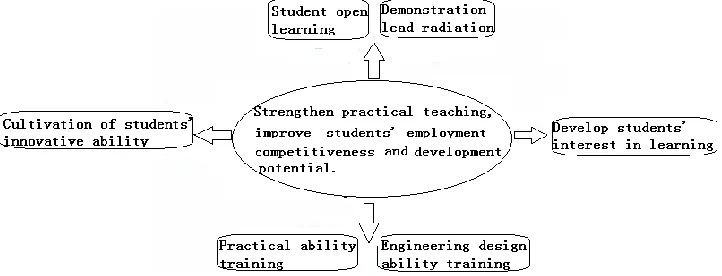
[image:3.612.128.489.201.339.2](2) According to different professional courses, the construction of special laboratories are matching with the courses. Such as principles of single-chip microcomputer, high-frequency circuit, principles of communication, DSP technology, embedded technology and so on. The college has its own dedicated laboratories for students, which are mainly used to deepen students' understanding of basic theories and further study and research.
Figure 1. Practice and training base construction concept block diagram.
(3) Build comprehensive laboratories with enterprises. In order to meet the needs of students for the development environment of practical engineering, the college has built a comprehensive, professional and advanced comprehensive laboratory with enterprises. The laboratory is jointly funded by the school and enterprises, and equipped with advanced instrumentation equipment, router equipment, switch equipment, communication equipment and so on. This laboratory takes the actual engineering project as the carrier, which organizes the student to carry on the project development and the practice.
After training in virtual engineering projects on campus, students go to off-campus enterprises for actual combat. The school and the enterprise select the tutor to conduct the practical engineering practice training in the mode of master and apprentice, which can cultivate and highlight the engineering quality of students.
2.3 Establish Diversified Engineering Practice Training System
provincial and national competitions. They guide students to apply for provincial and national innovative training programs for college students, and cultivate students' ability to discover, analyze and solve practical engineering problems by using existing technologies, tools or emerging technologies.
Corresponding to the theoretical courses of information technology, the college also formulates the specific practice links specially as follows:
(1) Basic skills training: including basic tests for information technology majors, such as the use of general instruments, identification, measurement and application of common components; In the process of basic training, students can according to their own interests, to attend a college or school of science and technology activities, join the school founded by electronic information association, the association for computing machinery and other kinds of communities, to carry out all kinds of gadgets, small production activities, so as to arouse the students' enthusiasm, this professional and improve their practice ability.
(2) Professional skills training: focusing on professional and modular practical content, it guides students to independently complete the design of a certain function module, laying a good foundation for comprehensive design, such as the design of MCU minimum system, power module design, input and output system design, data acquisition module design, etc.
(3) Comprehensive design training: The project-driven teaching method enables each student to carry out experiments with the theory of project learning, deepen the understanding and mastery of theoretical knowledge during the implementation of the project, and improve the application ability, so as to greatly improve the confidence and ability of students to participate in college students' innovation projects and science and technology competitions. We based on the characteristics of the students themselves and interest, encourage students to participate in all kinds of different competition of science and technology, such as welding components, program design competition, the robot game, the province and the national electronic design competition, all kinds of competitions, further arouse the enthusiasm of students, make students actively to contact and understanding to create value, scientific value and innovative research projects, to further develop the students' engineering consciousness and practice ability.
2.4 Implement The Excellent Engineer Education and Training Program.
According to the students' professional ability, the college has set up the "excellent engineer class".
The selected criteria for the distinguished engineer class are:
(1) Students have good ideological quality, healthy body, strong sense of time and organizational discipline.
(3) Students love information technology, with innovative and entrepreneurial spirit, strong organizational management ability, strong communication and coordination ability, determined to become an excellent engineer in information technology.
For the "excellent engineer class", the school is equipped with a class teacher, a professional instructor and an enterprise instructor. Students who take part in the elite class of excellent engineers must study in strict accordance with the objectives of the excellent program and carry out assessment.
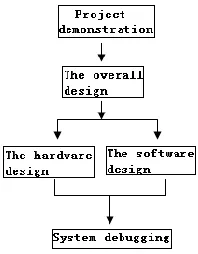
[image:5.612.254.353.199.326.2]Figure 2. Flow chart of system design.
At present, the students of "excellent engineer class" have independently completed the independent development and design of intelligent car design, weak signal detection circuit design, intelligent home design, embedded Internet of things comprehensive design and other projects. During the completion of the project, students' practical ability has been significantly improved, most students respond well, and their enthusiasm for learning has been significantly improved.
2.5 Encourage Students to Move From Technological Innovation to Entrepreneurship.
3. IMPLEMENT EFFECTIVE
At present, the college has completed the revision and reform of the training plan, revised the teaching outline, experiment outline, experiment instruction and practice teaching links of all courses. After severd years of practice, it has been proved that the designing of talent training program is correct, the curriculum system is also set up properly, and it can meet the needs of electronic information talent training. The implementation results are as follows:
3.1The Quality of Personnel Training has Been Greatly Improved, Students' Comprehensive Practical Ability is Strong, and The Employment Rate of Graduates is High
The project-driven teaching methods have been applied in all majors of our college for many years. The feedback on the quality of graduate training shows that the project-driven teaching model and the practice system are successful. The employment rate of our hospital keeps rising steadily. The comprehensive quality and ability of graduates are well received by employers.
3.2Students Have Solid Professional Basic Knowledge and Strong Comprehensive Application Ability
Under the guidance of project driven teaching personnel training mode, the college has formed a three-dimensional and multi-level extracurricular practice activities represented by "national college students electronic design competition", "lanqiao cup youth programming competition", "electronic professional talent design and skills competition", "school experimental skills competition", and "college science and culture festival and activity". This kind of competition lasts from 3 days to 30 days, which has a good effect on the improvement of students' will and thinking innovation ability, and it is also a good training opportunity for team teachers. These students after graduation who have competition experience generally found a content job unit.
3.3 Remarkable Achievements Have Been Made in Professional Development
4. CONCLUSIONS
Years of practices have shownthat the talent cultivation mode of project-driven teaching methods provide a mature and operable talent cultivation mode for information technology majors. Through the practical training of the project, the students' learning mode of simply accepting knowledge changes and their interests in learning are stimulated. Their practical experience is accumulated and enriched, and their innovative spirit is cultivated by practicing the project. This mode of talent cultivation will be widely used and popularized in a long period of time.
ACKNOWLEDGEMENTS
This work was supported in part by the Talent Fund Project, Project number(463001)
REFERENCES
1. Xiaoqing Long. 2008. “curriculum reform and practice of electronic technology based on ‘project-driven method’,” public science and technology, 2008/05.
2. Yizhu Lin. 2016. “analysis of teaching reform of high-frequency electronic circuit,” education
science, 2016/03.
3. Huaibing Qi. 2012. “exploration and practice of practical teaching system of applied electronic technology education specialty,” science and technology information, 2012/05.
4. Yi Wu. 2007. “on the teaching system and reform plan of network engineering practice link,”
journal of electrical and electronic teaching, 2007/06.
5. Feng Nan, Mengzhen Liang. 2017. “theory and practice of project-driven teaching,” science and
technology information, 2017/16
6. Xuejie Wang, Ying Lou, “project-driven classroom teaching reform,” education, 2013/17 7. Sanbin Wu, Sanping Wu. 2016. “teaching research of project-based teaching method in basic
courses of computer application in higher vocational colleges,” value engineering, 2016/10 8. Yabin Xu, Weizhen Zhou. 2011. “research and practice of project-driven teaching model,”