www.impactjournals.com/oncotarget/
Oncotarget, Vol. 7, No. 33
Cancer subtypes classification using long non-coding RNA
Ronan Flippot
1,*, Gabriel G. Malouf
1,*, Xiaoping Su
2, Roger Mouawad
1, Jean-Philippe
Spano
1and David Khayat
11 Groupe Hospitalier Pitié-Salpêtrière, Department of Medical Oncology, University Pierre and Marie Curie (Paris VI), Institut Universitaire de Cancérologie, AP-HP, Paris, France
2 Department of Bioinformatics and Computational Biology, University of Texas MD Anderson Cancer Center, Houston, TX, USA
* The authors have contributed equally as co-first authors
Correspondence to: Gabriel G. Malouf, email: [email protected] Keywords: long non-coding RNAs, lncRNAs, cancer, classification, prognosis
Received: November 08, 2015 Accepted: May 30, 2016 Published: June 21, 2016
AbstrAct
Inter-tumor heterogeneity might explain divergent clinical evolution of cancers bearing similar pathological features. In the last decade, genomic has highly improved tumor subtypes classification through the identification of oncogenic or tumor suppressor drivers. In addition, epigenetics and long non-coding RNAs (lncRNAs) are emerging as new fields for investigation, which might also account for tumor heterogeneity. There is growing evidence that modifications of lncRNA expression profiles are involved in cancer progression through epigenetic regulation, activation of pro-oncogenic pathways and crosstalks with other RNA subtypes. Consequently, the study of lncRNA expression profile will be a key factor in the future for charting cancer subtype classifications as well as defining prognostic and progression biomarkers. Herein we discuss the interest of lncRNA as potent prognostic and predictive biomarkers, and provide a glimpse on the impact of emerging cancer subtypes classification based on lncRNAs.
IntroductIon
The attempts to classify cancer subtypes answer
the need for better patients’ management. Indeed, the
identification of different prognostic groups, predictive
factors of response to therapy, or specific oncogenic
mechanisms help the clinician to better monitor patients,
to personalize treatments at an individual scale, and
to avoid the harm caused by a useless regimen. These
classifications were historically based on clinical,
pathological, and laboratory markers. Among them, the
IMDC (international metastatic renal cell carcinoma
database) prognostic classification for renal cell
carcinoma, based on clinical and laboratory markers,
defines the prognosis and therapeutic options for patients
in the first-line setting [1]; the pathological subtyping
of breast cancer identifies the patients that will mostly
benefit from endocrine or anti-HER2 therapy [2]; the
identification of deficient mismatch repair in colon cancer
categorizes a subset of patients that will less likely benefit
from adjuvant chemotherapy [3].
In the last decade, predictive markers of tumor
recurrence have benefited from the increasing accessibility
of molecular biology and the arrival of next-generation
sequencing technologies, that allow for more accurate
depiction of genomic and epigenetic alterations in cancer.
In breast cancer, the transcriptomic profiling of 50 genes
has identified four distinct subtypes of breast cancer with
specific ontogeny [4], and a recurrence score based on the
expression of 21 genes has been validated to determine
the patients who will benefit from adjuvant treatment [5].
Another example is the CpG island methylator phenotype
(CIMP), initially discovered in colon cancer that has
since been reported to be associated with
IDH1
and
IDH2
mutations in glioblastoma [6] and associated with
improved prognosis. The latter association is explained by
epigenetic reprogramming mediated by
IDH1
and
IDH2
alterations [7] which are putative targets of experimental
treatments [8]. Thus, it is impressive to see that molecular
medicine has entered clinical practice and led to a better
tumor subtype characterization, with new emphasis on the
interplay between genetic and epigenetic aberrations in
solid tumors, and new developments in targeted therapies.
However, despite these advances, many questions
remain unsolved. Indeed, primary resistance to targeted
therapies might occur despite of the presence of a
targetable alteration: response rates reach a ceiling at 65%
in
BRAF
-mutated melanoma treated by
BRAF
inhibitors
[9], and 71% in
EGFR
-mutated lung cancer [10]. In
addition, similar genetic alterations in different cancers
are not always associated with identical outcomes [11].
These differences indicate that other mechanisms account
for tumor progression and resistance to treatments, among
which non-coding genome might be strongly involved.
Functional non-coding genome encompass DNA
sequences that do not lead to protein coding products,
which include ribosomal RNAs, transfer RNAs, micro
RNAs, piwi-interacting RNAs and long non-coding RNAs
[12]. Among them, long non-coding RNAs (lncRNAs)
are key regulators of cellular processes, and are currently
emerging as drivers for tumor aggressiveness and
patients’ outcome [13]. Herein we will provide insights
of their oncogenic properties, discuss the interest of new
classifications involving lncRNAs expression in clinical
practice and introduce their contribution for optimal
patient management.
overvIew of long non-codIng
rnA lAndscApe
LncRNAs are eukaryotic RNAs > 200 nucleotides
that do not have protein-coding capacity. Their expression
is distinct from protein-coding genes and depends on
the tissue and cellular context [14]. Most lncRNAs are
intergenic or antisense transcripts that share transcription
similarities with messenger RNAs. For instance, they lack
an extended open reading frame and their transcription is
dependent on the RNA polymerase II and are under the
control of the transcriptional activators of the SWI/SNF
complex. Finally, most of of the transcripts are capped
and polyadenylated [15]. LncRNAs can be present in
each cell compartment, where they interact with proteins
and chromatin thanks to secondary structures such as stem
loops and hairpins, acquired through post-transcriptional
modifications. These secondary structures allow them to
perform various functions. LncRNAs can act as scaffolds
to bring protein complexes together, can guide proteins
such as transcription factors to their DNA targets, bend
chromatin to act as transcriptional enhancers, or act as
decoys to wash out proteins from chromatin (Figure 1)
[16]. These functions allow lncRNAs to have a crucial role
on various cellular processes [17].
LncRNA comprehension has been greatly enhanced
by whole human genome analyses that provided a
comprehensive dataset of human lncRNAs, detailing
their expression, function, and distribution in the human
genome (Figure 2) [18]. Still, the classification of lncRNAs
remains to be unified, as they can be sorted according
to various features: their structure, their sequence, their
function, their metabolism, and their interaction with
protein-coding genes or other known DNA elements [19].
Recent studies have highlighted the implication
of lncRNAs in cancer progression, mainly through
epigenetic regulation, activation of oncogenic pathways
and crosstalks with other RNA subtypes [20,19].
Consequently, lncRNAs seem to be natural candidates as
novel cancer biomarkers.
oncogenIc processes AssocIAted
wIth lncrnA AlterAtIons
Epigenetic modifications
LncRNAs are able to interact with chromatin
remodeling complexes, leading to modifications in
the expression of target genes in
cis
, on the vicinity of
the lncRNA sequence, or in
trans
, at independent loci
[image:2.612.70.555.577.681.2]throughout the genome [21]. HOTAIR was one of the
first oncogenic lncRNA reported to be involved in
cancer progression through genome-wide epigenetic
reprogramming [22, 23, 24], through the interaction
with polycomb repressive complex 2 (PRC2) subunits,
a key chromatin remodeling complex involved in gene
Figure 1: Main mechanisms of action of lncRNAs.
Adapted from Rinn et al. [16]. A. LncRNAs can guide proteins to DNAsilencing [25]. In a cancer setting, HOTAIR recruits PRC2
subunits in promoter regions of tumor suppressor genes,
which leads to their transcriptional repression and favours
tumor progression. Accordingly, numerous lncRNAs are
involved in regional or genome wide chromatin state
regulation, such as MALAT-1 or ANRIL, among the most
frequently expressed lncRNA in tumors [26, 27].
Oncogenic signaling pathways
LncRNAs have a crucial role in the activation
of oncogenic signaling pathways that drive the cancer
phenotype [28]. The oncoproteins
MYC
and p53,
frequently deregulated in cancers, are under the influence
of lncRNA regulations.
MYC
gene alterations consist
mostly in amplifications, as a result of copy gains of
8p24. It has been reported by Tseng et al [29] that lncRNA
PVT1 is needed for MYC dependent oncogenesis. PVT1
is indeed localized in the same locus, and coamplified with
MYC
in 98% of
MYC
amplified tumors. Other lncRNAs
are involved in the regulation of
MYC
expression, such as
lncRNA XLOC_010588, downregulated in bladder cancer
[30]. Conversely, transcriptional activation of oncogenic
lncRNAs are directly mediated by MYC, such as
CCAT-1 in colon cancer [3CCAT-1] and HCCAT-19 in gastric cancer [32].
Regarding p53, it has been reported to be regulated by
numerous non-coding RNAs [33]. Notably, lincRNA-p21,
a downstream target of p53, links to ribonucleoprotein
hnRNP-k to induce global p53 target gene repression
and inhibition of apoptosis in lung cancer models [34].
MALAT-1 is also reported to inhibit
p53
gene expression
and its target genes in various tumors [33]. In contrast,
other lncRNAs increase apoptosis and are thus thought to
be tumor suppressors, notably GAS5 in prostate cancer
[35] and breast cancer cell-lines [36].
Among key oncogenic drivers, PI3K/MTOR/AKT
and MAP kinases pathways are frequently promoted by
lncRNAs alterations. ANRIL in gastric cancer represses
miRNAs directed against mTOR [37]. LncRNA RMEL3
in necessary for the activation of BRAF and AKT in
melanoma cell lines [38]. LncRNA PTENpg1 represses
PTEN expression by recruiting DNMT3A and EZH2 to
PTEN promoter region [39]. In contrast, PTENP1 acts
as a decoy for regulators miRNAs that leads to increased
PTEN function [40]. Similarly, KRAS1P also acts as a
decoy for negative regulators of KRAS, thus enhancing
KRAS function [40]. Other deregulations in proliferation
pathways include the NFKB pathway, activated by
BANCR in gastric cancer [41], and the lipid signaling
molecules sphingosine kinases, activated by HULC in
hepatocellular carcinoma [42].
Some lncRNAs are strongly associated with
epithelial-mesenchymal transition (EMT) and cell
migration. LncRNA-ATB in hepatocellular carcinoma
[43] and MALAT-1 in bladder cancer [44] are positive
regulators of TGF-β signaling, a key pathway for of
EMT. Oncogenic lncRNAs GAPLINC in gastric cancer
[45] and MVIH in non small cell lung cancer [46]
upregulate CD44 and MMP2/9, proteins involved in cell
migration. HOTAIR up-regulation is also associated with
EMT, inducing downregulation of E-cadherin and high
expression of Vimentin and Metalloproteinase 9 (MMP9)
in colon cancer [47]. Conversely, BANCR acts as an
anti-oncogene in non small cell lung cancer [48], as it impairs
cell invasion through upregulation of E-cadherin, and
downregulation of Vimentin and N-cadherin.
Other pathways notably regulated by lncRNAs
include hormone signaling, cell cycle progression, or
[image:3.612.58.554.525.695.2]reactivation of development genes. In prostate cancer,
NEAT1 [49] and PRNCR1 [50] are key elements of
estrogen and androgen signaling, respectively. LncRNAs
MIR31HG [51] and ANRIL are associated with cell cycle
progression through the regulation of cyclin-dependent
kinases inhibitors [52]. LncRNAs such as HOTTIP in
hepatocellular carcinoma and TUG1 in lung cancer
interact with
HOX
development genes, namely
HOXA13
and
HOXB7
[53, 54], involved in numerous oncogenic
processes, such as proliferation, motility and angiogenesis.
The importance of lncRNAs in oncogenic
mechanisms is such that various new implications will
undoubtedly be unveiled in the years to come. The
association of driver oncogenic alterations with lncRNA
deregulations opens the way to integrative classifications
using coding and non-coding genome.
LncRNA and anticancer treatments
The importance of lncRNAs in the management of
anticancer treatment is supported by their participation in
drug resistance in cancer. In prostate cancer, numerous
lncRNAs are associated with resistance to hormonal
therapy: the oncogenic lncRNA NEAT1 is a transcriptional
activator downtream of estrogen receptor α (ERα) and
thus independent from androgen signaling [49], while
lncRNAs PRNCR1 and PCGEM1 interact with and
activate truncated androgen receptors, leading to androgen
independent activation of androgen receptors [50]. In
bladder cancer, the lncRNA UCA-1 induce resistance to
cisplatin-based chemotherapy by upregulating the
Wnt/β-catenin pathway [55]. In ovarian cancer, expression of
HOTAIR, evaluated in 309 patients, is reported to be
associated with resistance to carboplatin-based regimens,
of unknown mechanism [56].
Conversely, expression of some lncRNAs might
be predictors of response to anticancer treatments. This
is the case with CCAT-1, a superenhancer of MYC in
colon cancer, which transcription is highly sensitive to
bromodomain inhibitors
in vitro
[57].Thus, it becomes
clear that future biomarker studies will have to focus on
lncRNAs to tailor individual treatments and to identify and
overcome therapeutic resistance.
Crosstalks with the RNA machinery
LncRNAs interactions include crosstalks with other
RNA subtypes, such as messenger and micro-RNAs,
creating a network of interactions that can be involved
in cancer mechanisms. Notably, lncRNAs are involved
in miRNA regulation: the lncRNA ANRIL interacts
negatively with the micro-RNAs miR99A and miR449A
to promote mTOR and E2F1 expression [37]. Conversely,
miRNAs can regulate lncRNAs activity, such as
miRNA141, which suppresses HOTAIR expression [58].
Interactions between RNA subtypes have been notably
explored in esophageal squamous cell carcinomas, where
it has been reported that defined sets of lncRNAs, miRNAs
and mRNAs encompass similar oncogenic features, such
as apoptosis inhibition, cell cycle activation, proliferation,
invasion and metastasis [59]. This suggests that diverse
RNA subtypes work in cooperation for the acquisition
of cancer properties. As lncRNAs encompass 25% of
total RNAs in the human cell (Figure 3), their interaction
network must be further studied to better grasp the full
[image:4.612.102.516.440.689.2]role of RNA crosstalks in pathology [60].
These data underscore the dramatic importance of
lncRNAs in cancer. Interactions between lncRNAs and
major oncogenic pathways support the role of lncRNAs
in early steps of cancer development and their interest
for more accurate cancer classifications. In addition, the
unveiling of novel crosstalks between lncRNA and
micro-RNAs raises the importance of epigenetic regulations in
cancer, an expanding field of study.
lncrnAs profIlIng IntegrAtIon
In cAncer clAssIfIcAtIons
LncRNAs as prognostic biomarkers
As a result of the activation of oncogenic processes,
lncRNA deregulations are associated with a more
aggressive phenotype and drug resistance in cancer [13].
One of the first evidence of lncRNA involvement in cancer
progression has been reported in breast cancer, where
HOTAIR expression was being systematically increased
compared to normal tissue. High expression of HOTAIR
was associated with increased vascular invasion, advanced
tumor stage, metastasis and poor prognosis [22]. In
[image:5.612.59.557.66.382.2]addition to breast cancer, overexpression of HOTAIR has
been reported to be a marker for poor prognosis in various
cancer types [61], including gastro-intestinal cancers [62,
63, 64, 65], urologic cancers [66, 67], gynecologic cancers
[68, 69, 70], lung cancers [71, 72] and undifferentiated
carcinoma of nasopharyngeal type [73]. So far, numerous
lncRNA have been associated with poor prognosis in
subsets of tumors, such as SCHLAP1 in prostate cancer
[74], HOTTIP in hepatocellular carcinoma [53], gastric
cancer [75] and colon cancer [76], or FAL1 in ovarian
cancer [77]. Other are associated with good prognosis,
such as NBAT-1 in neuroblastoma [78] or NKILA in
breast cancer [79]. The most striking evidence of their
prognostic impact come from a large-scale pan-cancer
analysis conducted on 15 cancer types, which reported
that 32 to 310 lncRNAs in each tumor had prognostic
relevance [80].
Thus, lncRNAs might be considered as putative
relevant prognostic markers for the clinic. As such,
high expression of the lncRNA ENSG00000261582
is an independent marker of poor overall survival in
lung and ovarian cancer in multivariate analysis [81].
Other robust studies indicate that high expression of
HOTAIR in estrogen receptor negative breast cancer
independently associated with lower overall survival in
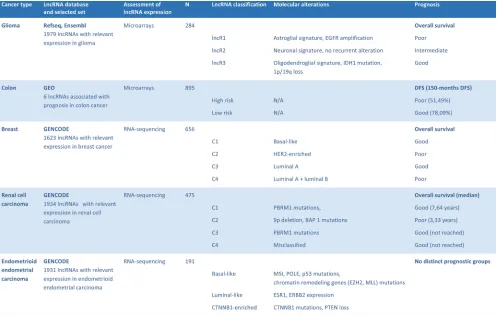
Table 1: Cancer subtype classifications based on lncRNA expression profiles.
multivariate analysis [22, 82]. These observations provide
the proof of concept that lncRNAs might be potent and
discriminative prognostic markers, which can bring
independent information from genomic, proteomic or
clinicopathological features.
Thus, it seems crucial to take into account lncRNAs
profiling to improve current cancer classifications,
and conduct integrative analyses with known clinical,
pathological and molecular features of cancers [83, 84].
Integrative classifications
Du et al. report the first study assessing the role of
lncRNAs in subtype classifications of 1,300 tissue samples
among 4 different subtypes of cancer: ovarian, prostatic,
lung SCC and glioma [81]. In this study, microarrays
analyses have been performed to determine the lncRNAs
expression profiles, with probes covering more than
10,000 lncRNAs identified through Ensembl and RefSeq
sequence databases spanning the entire genome. LncRNAs
were shown to display a specific expression pattern
that correlated with established genomic classification
in ovarian cancer, glioma, and lung squamous cell
carcinoma. In ovarian cancer, unsupervised lncRNAs
clustering identifed four groups of tumors matching
with immunoreactive, mesenchymal, proliferative, and
differentiated genomic profiles. In glioma, four groups
were correlated with the classical, neural, proneural and
mesenchymal profiles. In lung squamous cell carcinoma,
lncRNA expression matched with basal, primitive,
classical, and secretory-type gene expression profiling.
The association between coding genome and lncRNAs
points the relevance of lncRNA profiling to establish
cancer subtypes classification. As lncRNA profiles can be
established using RNAseq data that tend to be increasingly
accessible, we believe that lncRNA profiling will be of
great importance in the coming future.
Already, several reports explored the impact of
lncRNA in cancer subtype classifications in different
localizations including glioma, colon, breast, renal
and endometrial cancers (Table 1). In glioma, the most
frequent subtype of primitive brain tumors, consensus
clustering of lncRNAs using 425 cases revealed three
molecular subtypes: lncR1, lncR2 and lncR3 [85].
LncR1 subtype was associated with astroglial gene
signature, epidermal growth factor (EGFR) amplification
and patients displayed poor overall survival. On the
contrary, lncR3 subtype correlated with oligodendritic
gene signature,
IDH1
mutation, 1p/19q chromosomal
deletions and patients had good prognosis. Finally, lncR2
represented an intermediary subtype regarding prognostic,
with neuronal gene signature. Interestingly, this lncRNA
classification correlates with various molecular prognostic
factors, but it is still unknown whether lncRNA alterations
are bound to specific genetic mutations such as IDH1, or
chromatin remodeling genes alterations.
In colon cancer, a prognostic signature for
disease-free survival has been established from six lncRNA which
expression was strongly correlated with prognosis. This
signature has been validated in 459 patients using the
Gene Expression Omnibus (GEO) database [86]. This
signature divides the population into two subgroups: high-
and low-risk, according to lncRNA expression. However,
stratification using the combination of both clinical staging
(stages I/II
v
stages III/IV) and lncRNA signature
(high-risk
v
low-risk) was capable to subdivide the patients
into 4 groups with significantly distinct disease-free
survival. This indicates that patients’ stratification might
be improved using integrative analysis of lncRNAs and
clinical data. This study does not specify the presence of
associated alterations, such as a deficient mismatch repair
(dMMR) or a methylator phenotype (CIMP). Considering
that lncRNAs act as broad epigenetic regulators,
exploration of interactions between CIMP and lncRNA
should be of great interest for the next future of colon
cancer management.
In invasive breast cancer, we recently reported the
lncRNAs portrait of 658 tumors and compared the data
with the genomic PAM50 classification [87]. PAM50 is a
molecular classification that identified four breast cancer
subgroups, based on transcription profiling: basal-like,
HER-2 enriched, luminal A, and luminal B. As PAM50
classification, we identified four clusters of lncRNAs
clusters of lncRNAs have been identified. Those clusters
correlated with PAM50 classification. Of note, while the
three lncRNA clusters C1, C2 and C3 associated with
basal-like, HER-2 enriched and luminal A groups and
were highly correlated with their relative PAM50 mRNA
classification, cluster C4 was not. Indeed, although C4
lncRNA cluster was associated with luminal signature
and estrogen receptor (ER) expression, C4 cluster was not
clearly capable of differentiating luminal A and luminal
B subgroups. Thus, future studies are needed to explore
the links between lncRNAs and estrogen receptors in
breast cancers, as it is the case for H19 and HOTAIR [88,
89]. In addition, the relevance of lncRNA for prognostic
classifications in breast cancer must be confronted to
validated genomic classifications for the prediction of
recurrence and prognosis in use in clinical routine [90].
Another cancer where lncRNA is important in
defining tissue-specificity is clear-cell renal cell carcinoma
(ccRCC). In 2010, ccRCCs have been classified in two
molecular subgroups, type A and B, with distinct
disease-free survival [91]. Effort form the TCGA working group
helped identify four distinct subgroups with different
prognostic value of lncRNA profiling was found to be
independent from pathological grade and TNM stage.
Cluster 2 was enriched for tumors harboring mutations
in the chromatin-remodeling gene
BAP1
, and was
strongly associated with high tumor grade and poor
prognosis. In contrast, two clusters with better prognosis
displayed
PBRM1
mutations, a component of
SWI/SNF
transcriptional activator. This suggests that ccRCCs
subtypes have different epigenetic landscape alterations,
which are closely linked with their lncRNA expression
profile. However, how those lncRNAs are interacting
with
PBRM1 and BAP1
remains to be explored. Of note,
one subgroup was composed of misclassified tumours
(chromophobe RCC and translocation RCC), suggesting
the importance of lncRNAs in defining cell ontogeny.
Recent work focused on endometrioid endometrial
carcinoma, the most frequent subtype of endometrial
adenocarcinoma and usually associated with good
prognosis. Unsupervised clustering of 1,931 lncRNAs
significantly expressed in endometrioid endometrial
carcinoma identified 3 subgroups: basal-like, luminal-like
and CTNNB1-enriched [94]. Basal-like and luminal-like
subgroups shared similarities for lncRNAs expression
compared to their equivalent breast cancer subtype.
The luminal subgroup was associated with expression
of progesterone (PGR) and estrogen receptor (ESR1)
genes, while the
CTNNB1
subgroup involved mutations
in the β-catenin gene and PTEN loss. There was a trend
towards poorer survival in the basal-like subgroup, which
included more aggressive tumors that were enriched for
p53 mutations and mutations of the
MLL
genes family.
The interplay between lncRNA subtyping and alterations
of chromatin remodeling genes might be an interesting
area for the development of innovative therapies in this
indication.
These studies suggest that lncRNA expression
profile is correlated with genomic, genetic, pathological
and clinical features of diverse neoplasms, but also brings
independent prognostic value in various subsets of tumors.
As such, lncRNAs are likely to be integrated in cancer
classifications during the next decades.
perspectIves
LncRNAs represent a new class of cancer cell
regulators involved in diverse mechanism of oncogenesis,
with new implications unveiled continuously. In the largest
study to date, transcriptomic analysis of 91,013 expressed
human genes in more than 7,256 tissue samples have
shown that lncRNA may represent nearly 70% of human
transcripts [95]. This number is considerably higher
than expected, as lncRNA represented only 25% of the
transcriptome in other series. This indicates that lncRNAs
might outnumber coding RNAs by a large margin,
which suggests that their importance in human biology
is underestimated. In addition, precise understanding of
the mechanisms involved in genome-wide epigenetic
regulation is not fully fleshed out. Common patterns might
be responsible for epigenetic regulation associated with
different RNA systems [96]. To better understand these
associations, integrative analysis of non-coding RNAs
localizations and chromatin-RNA interactions across the
tumor genome are needed. Further investigations are also
underway to better understand the networks involving
both coding and non-coding RNA machinery, regulating
cellular processes [97]. International efforts are being
made with the creation of participative RNA databases and
computer-based simulations for molecular interactions,
such as RNAbase [98], lncRNATor [99], and Cupid [100]
projects, that will help further encompass the complexity
and the promising potential of lncRNAs.
LncRNAs are relevant and potent biomarkers for
cancer subtype analyses and prognostic stratifications
with tissue-specific expression. Their implementation in
clinical practice is around the corner, pending validation
studies to assess the reproducibility of those classifications
and the input of their integration in patient’s management.
Development of therapies targeting lncRNAs will be a
major challenge. Previous attempts at RNA targeting
faced difficulties for treatment distribution in the tumor
site, which remain to be resolved [101]. The concurrent
development of biomarkers will be of great interest
in the fields of diagnosis, prognosis assessment, and
prediction to identify the population eligible to future
treatments targeting lncRNAs. New insights might be
provided through the emergence of liquid biopsies.
Indeed, HOTAIR, HULC and H19 expression levels
in plasma have been demonstrated to correlate with
outcome in series of patients with metastatic colon cancer
[102], hepatocellular carcinoma [103] and gastric cancer
[104], respectively. This is of high interest considering
the possibilities of using lncRNAs as potent circulating
biomarkers.
As lncRNA profiling represents an exciting tool
in cancer management, its implementation will be a
key player in the integration of molecular medicine into
clinical practice and personalized care.
conflIcts of Interests
The authors declare that they have no competing
interests.
references
2. Viale G. The current state of breast cancer classification. Ann Oncol. 2012 Sep 1;23:x207-10.
3. Sargent DJ, Marsoni S, Monges G, Thibodeau SN, Labianca R, Hamilton SR, French AJ, Kabat B, Foster NR, Torri V, Ribic C, Grothey A, Moore M, et al. Defective mismatch repair as a predictive marker for lack of efficacy of fluorouracil-based adjuvant therapy in colon cancer. J Clin Oncol Off J Am Soc Clin Oncol. 2010 Jul 10;28:3219-26. 4. Parker JS, Mullins M, Cheang MCU, Leung S, Voduc D,
Vickery T, Davies S, Fauron C, He X, Hu Z, Quackenbush JF, Stijleman IJ, Palazzo J, et al. Supervised Risk Predictor of Breast Cancer Based on Intrinsic Subtypes. J Clin Oncol. 2009 Mar 10;27:1160-7.
5. Sparano JA, Gray RJ, Makower DF, Pritchard KI, Albain KS, Hayes DF, Geyer CE, Dees EC, Perez EA, Olson JA, Zujewski J, Lively T, Badve SS, et al. Prospective Validation of a 21-Gene Expression Assay in Breast Cancer. N Engl J Med. 2015 Nov 19;373:2005-14. 6. Turcan S, Rohle D, Goenka A, Walsh LA, Fang F, Yilmaz
E, Campos C, Fabius AWM, Lu C, Ward PS, Thompson CB, Kaufman A, Guryanova O, et al. IDH1 mutation is sufficient to establish the glioma hypermethylator phenotype. Nature. 2012 Mar 22;483:479-83.
7. Yang H, Ye D, Guan K-L, Xiong Y. IDH1 and IDH2
Mutations in Tumorigenesis: Mechanistic Insights
and Clinical Perspectives. Clin Cancer Res. 2012 Oct 15;18:5562-71.
8. IDH1 inhibitor shows promising early results. Cancer Discov. 2015 Jan;5:4.
9. Shaw AT, Kim D-W, Nakagawa K, Seto T, Crinó L, Ahn M-J, De Pas T, Besse B, Solomon BJ, Blackhall F, Wu Y-L, Thomas M, O’Byrne KJ, et al. Crizotinib versus
Chemotherapy in Advanced ALK-Positive Lung Cancer. N Engl J Med. 2013 Jun 20;368:2385-94.
10. Gridelli C, De Marinis F, Di Maio M, Cortinovis D, Cappuzzo F, Mok T. Gefitinib as first-line treatment for patients with advanced non-small-cell lung cancer with activating epidermal growth factor receptor mutation: Review of the evidence. Lung Cancer Amst Neth. 2011 Mar;71:249-57.
11. Nagaraja AK, Bass AJ. Hitting the Target in BRAF-Mutant Colorectal Cancer. J Clin Oncol. 2015 Oct 12;JCO.2015.63.7793.
12. Xue B, He L. An expanding universe of the non-coding genome in cancer biology. Carcinogenesis. 2014 Jun;35:1209-16.
13. Prensner JR, Chinnaiyan AM. The emergence of lncRNAs in cancer biology. Cancer Discov. 2011 Oct;1:391-407. 14. Alam T, Medvedeva YA, Jia H, Brown JB, Lipovich L,
Bajic VB. Promoter Analysis Reveals Globally Differential Regulation of Human Long Non-Coding RNA and Protein-Coding Genes. PLoS One. 2014 Oct 2;9:e109443. doi: 10.1371/journal.pone.0109443. eCollection 2014.
15. Quinn JJ, Chang HY. Unique features of long non-coding
RNA biogenesis and function. Nat Rev Genet. 2016 Jan;17:47-62.
16. Rinn JL, Chang HY. Genome regulation by long noncoding RNAs. Annu Rev Biochem. 2012;81:145-66.
17. Guttman M, Rinn JL. Modular regulatory principles of large non-coding RNAs. Nature. 2012 Feb 15;482:339-46. 18. Derrien T, Johnson R, Bussotti G, Tanzer A, Djebali S,
Tilgner H, Guernec G, Martin D, Merkel A, Knowles DG, Lagarde J, Veeravalli L, Ruan X, et al. The GENCODE v7 catalog of human long noncoding RNAs: Analysis of their gene structure, evolution, and expression. Genome Res. 2012 Sep;22:1775-89.
19. St. Laurent G, Wahlestedt C, Kapranov P. The Landscape of long noncoding RNA classification. Trends Genet. 2015 May;31:239-51.
20. Calin GA, Liu C, Ferracin M, Hyslop T, Spizzo R, Sevignani C, Fabbri M, Cimmino A, Lee EJ, Wojcik SE, Shimizu M, Tili E, Rossi S, et al. Ultraconserved Regions Encoding ncRNAs Are Altered in Human Leukemias and Carcinomas. Cancer Cell. 2007 Sep 11;12:215-29. 21. Fatica A, Bozzoni I. Long non-coding RNAs: new players
in cell differentiation and development. Nat Rev Genet. 2014 Jan;15:7-21.
22. Gupta RA, Shah N, Wang KC, Kim J, Horlings HM, Wong DJ, Tsai M-C, Hung T, Argani P, Rinn JL, Wang Y, Brzoska P, Kong B, et al. Long non-coding RNA HOTAIR
reprograms chromatin state to promote cancer metastasis.
Nature. 2010 Apr 15;464:1071-6.
23. Lu L, Zhu G, Zhang C, Deng Q, Katsaros D, Mayne ST, Risch HA, Mu L, Canuto EM, Gregori G, Benedetto C, Yu H. Association of large noncoding RNA HOTAIR expression and its downstream intergenic CpG island methylation with survival in breast cancer. Breast Cancer Res Treat. 2012 Dec;136:875-83.
24. Sørensen KP, Thomassen M, Tan Q, Bak M, Cold S, Burton M, Larsen MJ, Kruse TA. Long non-coding RNA HOTAIR is an independent prognostic marker of metastasis in estrogen receptor-positive primary breast cancer. Breast Cancer Res Treat. 2013 Dec;142:529-36.
25. Beckedorff FC, Amaral MS, Deocesano-Pereira C, Verjovski-Almeida S. Long non-coding RNAs and their implications in cancer epigenetics. Biosci Rep. 2013;33. 26. Mercer TR, Mattick JS. Structure and function of long
noncoding RNAs in epigenetic regulation. Nat Struct Mol Biol. 2013 Mar;20:300-7.
27. Pasmant E, Sabbagh A, Vidaud M, Bièche I. ANRIL, a long, noncoding RNA, is an unexpected major hotspot in GWAS. FASEB J Off Publ Fed Am Soc Exp Biol. 2011 Feb;25:444-8.
28. Schmitt AM, Chang HY. Long Noncoding RNAs in Cancer Pathways. Cancer Cell. 2016 avril;29:452-63.
dependence in cancer with MYC copy-number increase. Nature. 2014 Aug 7;512:82-6. doi: 10.1038/nature13311. 30. Liao L-M, Sun X-Y, Liu A-W, Wu J-B, Cheng X-L, Lin
J-X, Zheng M, Huang L. Low expression of long noncoding XLOC_010588 indicates a poor prognosis and promotes proliferation through upregulation of c-Myc in cervical cancer. Gynecol Oncol. 2014 Jun;133:616-23.
31. He X, Tan X, Wang X, Jin H, Liu L, Ma L, Yu H, Fan Z. C-Myc-activated long noncoding RNA CCAT1 promotes colon cancer cell proliferation and invasion. Tumour Biol J Int Soc Oncodevelopmental Biol Med. 2014 Dec;35:12181-8.
32. Barsyte-Lovejoy D, Lau SK, Boutros PC, Khosravi F, Jurisica I, Andrulis IL, Tsao MS, Penn LZ. The c-Myc oncogene directly induces the H19 noncoding RNA by allele-specific binding to potentiate tumorigenesis. Cancer Res. 2006 May 15;66:5330-7.
33. Zhang A, Xu M, Mo Y-Y. Role of the lncRNAp53 regulatory network in cancer. J Mol Cell Biol. 2014 Apr 9;mju013.
34. Huarte M, Guttman M, Feldser D, Garber M, Koziol MJ, Kenzelmann-Broz D, Khalil AM, Zuk O, Amit I, Rabani M, Attardi LD, Regev A, Lander ES, et al. A Large Intergenic Noncoding RNA Induced by p53 Mediates Global Gene Repression in the p53 Response. Cell. 2010 Aug 6;142:409-19.
35. Pickard MR, Mourtada-Maarabouni M, Williams GT. Long non-coding RNA GAS5 regulates apoptosis in prostate cancer cell lines. Biochim Biophys Acta BBA - Mol Basis Dis. 2013 Oct;1832:1613-23.
36. Pickard MR, Williams GT. Regulation of apoptosis by long non-coding RNA GAS5 in breast cancer cells: implications for chemotherapy. Breast Cancer Res Treat. 2014 May 1;145:359-70.
37. Zhang E, Kong R, Yin D, You L, Sun M, Han L, Xu T, Xia R, Yang J, De W, Chen J fei. Long noncoding RNA ANRIL
indicates a poor prognosis of gastric cancer and promotes
tumor growth by epigenetically silencing of miR-99a/miR-449a. Oncotarget. 2014 Apr 30;5:2276-92. doi: 10.18632/ oncotarget.1902.
38. Goedert L, Pereira CG, Roszik J, Plaça JR, Cardoso C, Chen G, Deng W, Yennu-Nanda VG, Jr WAS, Davies MA, Espreafico EM, Goedert L, Pereira CG, et al. RMEL3, a novel BRAF V600E -associated long noncoding RNA, is required for MAPK and PI3K signaling in melanoma. Oncotarget. 2016 May 4. doi: 10.18632/oncotarget.9164 39. Johnsson P, Ackley A, Vidarsdottir L, Lui W-O, Corcoran
M, Grandér D, Morris KV. A pseudogene long-noncoding-RNA network regulates PTEN transcription and translation in human cells. Nat Struct Mol Biol. 2013 avril;20:440-6. 40. Poliseno L, Salmena L, Zhang J, Carver B, Haveman WJ,
Pandolfi PP. A coding-independent function of gene and pseudogene mRNAs regulates tumour biology. Nature. 2010 juin;465:1033-8.
41. Zhang Z-X, Liu Z-Q, Jiang B, Lu X-Y, Ning X-F, Yuan C-T, Wang A-L. BRAF activated non-coding RNA (BANCR) promoting gastric cancer cells proliferation via regulation of NF-B1. Biochem Biophys Res Commun. 2015 Sep 18;465:225-31.
42. Lu Z, Xiao Z, Liu F, Cui M, Li W, Yang Z, Li J, Ye L, Zhang X. Long non-coding RNA HULC promotes tumor angiogenesis in liver cancer by up-regulating sphingosine kinase 1 (SPHK1). Oncotarget. 2016 Jan 5;7:241-54. doi: 10.18632/oncotarget.6280.
43. Yuan S-X, Yang F, Yang Y, Tao Q-F, Zhang J, Huang G, Yang Y, Wang R-Y, Yang S, Huo X-S, Zhang L, Wang F, Sun S-H, et al. Long noncoding RNA associated with microvascular invasion in hepatocellular carcinoma promotes angiogenesis and serves as a predictor for hepatocellular carcinoma patients’ poor recurrence-free survival after hepatectomy. Hepatol Baltim Md. 2012 Dec;56:2231-41.
44. Fan Y, Shen B, Tan M, Mu X, Qin Y, Zhang F, Liu Y. TGF--induced upregulation of malat1 promotes bladder cancer metastasis by associating with suz12. Clin Cancer Res Off J Am Assoc Cancer Res. 2014 Mar 15;20:1531-41. 45. Hu Y, Wang J, Qian J, Kong X, Tang J, Wang Y, Chen H, Hong J, Zou W, Chen Y, Xu J, Fang J-Y. Long noncoding RNA GAPLINC regulates CD44-dependent cell invasiveness and associates with poor prognosis of gastric cancer. Cancer Res. 2014 Dec 1;74:6890-902.
46. Nie F-Q, Zhu Q, Xu T-P, Zou Y-F, Xie M, Sun M, Xia R, Lu K-H. Long non-coding RNA MVIH indicates a poor prognosis for non-small cell lung cancer and promotes cell proliferation and invasion. Tumour Biol J Int Soc Oncodevelopmental Biol Med. 2014 Aug;35:7587-94. 47. Wu Z-H, Wang X-L, Tang H-M, Jiang T, Chen J, Lu S,
Qiu G-Q, Peng Z-H, Yan D-W. Long non-coding RNA HOTAIR is a powerful predictor of metastasis and poor prognosis and is associated with epithelial-mesenchymal transition in colon cancer. Oncol Rep. 2014 Jul;32:395-402. 48. Sun M, Liu X-H, Wang K-M, Nie F, Kong R, Yang J, Xia R, Xu T-P, Jin F-Y, Liu Z-J, Chen J, Zhang E-B, De W, et al. Downregulation of BRAF activated non-coding RNA is associated with poor prognosis for non-small cell lung cancer and promotes metastasis by affecting epithelial-mesenchymal transition. Mol Cancer. 2014;13:68. 49. Chakravarty D, Sboner A, Nair SS, Giannopoulou E, Li
R, Hennig S, Mosquera JM, Pauwels J, Park K, Kossai M, MacDonald TY, Fontugne J, Erho N, et al. The oestrogen receptor alpha-regulated lncRNA NEAT1 is a critical modulator of prostate cancer. Nat Commun. 2014 Nov 21;5:5383. doi: 10.1038/ncomms6383.
50. Yang L, Lin C, Jin C, Yang JC, Tanasa B, Li W, Merkurjev D, Ohgi KA, Meng D, Zhang J, Evans CP, Rosenfeld MG. lncRNA-dependent mechanisms of androgen-receptor-regulated gene activation programs. Nature. 2013 Aug 29;500:598-602.
J, Agrawal-Singh S, Hansen K, Helin K, van de Werken HJG, Pedersen JS, Lund AH. The lncRNA MIR31HG regulates p16INK4A expression to modulate senescence. Nat Commun. 2015 avril;6:6967.
52. Aguilo F, Zhou M-M, Walsh MJ. Long noncoding RNA, polycomb, and the ghosts haunting INK4b-ARF-INK4a expression. Cancer Res. 2011 Aug 15;71:5365-9.
53. Quagliata L, Matter MS, Piscuoglio S, Arabi L, Ruiz C, Procino A, Kovac M, Moretti F, Makowska Z, Boldanova T, Andersen JB, Hämmerle M, Tornillo L, et al. Long noncoding RNA HOTTIP/HOXA13 expression is
associated with disease progression and predicts outcome
in hepatocellular carcinoma patients. Hepatol Baltim Md. 2014 Mar;59:911-23.
54. Zhang E, Yin D, Sun M, Kong R, Liu X, You L, Han L, Xia R, Wang K, Yang J, De W, Shu Y, Wang Z. P53-regulated long non-coding RNA TUG1 affects cell proliferation in human non-small cell lung cancer, partly through epigenetically regulating HOXB7 expression. Cell Death Dis. 2014;5:e1243.
55. Fan Y, Shen B, Tan M, Mu X, Qin Y, Zhang F, Liu Y. Long non-coding RNA UCA1 increases chemoresistance of bladder cancer cells by regulating Wnt signaling. FEBS J. 2014 Apr 1;281:1750-8.
56. Teschendorff AE, Lee S-H, Jones A, Fiegl H, Kalwa M, Wagner W, Chindera K, Evans I, Dubeau L, Orjalo A, Horlings HM, Niederreiter L, Kaser A, et al. HOTAIR and its surrogate DNA methylation signature indicate carboplatin resistance in ovarian cancer. Genome Med. 2015;7:108.
57. McCleland ML, Mesh K, Lorenzana E, Chopra VS, Segal E, Watanabe C, Haley B, Mayba O, Yaylaoglu M, Gnad F, Firestein R. CCAT1 is an enhancer-templated RNA that predicts BET sensitivity in colorectal cancer. J Clin Invest. 2016 Jan 11;126:639-52.
58. Chiyomaru T, Fukuhara S, Saini S, Majid S, Deng G, Shahryari V, Chang I, Tanaka Y, Enokida H, Nakagawa M, Dahiya R, Yamamura S. Long non-coding RNA HOTAIR is targeted and regulated by miR-141 in human cancer cells. J Biol Chem. 2014 May 2;289:12550-65.
59. Li S-Q, Li F, Xiao Y, Wang C-M, Tuo L, Hu J, Yang X-B, Wang J-S, Shi W-H, Li X, Cao X-F. Comparison of long non-coding RNAs, microRNAs and messenger RNAs involved in initiation and progression of esophageal squamous cell carcinoma. Mol Med Rep. 2014 Aug;10:652-62.
60. Atianand MK, Fitzgerald KA. Long non-coding RNAs and control of gene expression in the immune system. Trends Mol Med. 2014 Nov;20:623-31.
61. Cai B, Wu Z, Liao K, Zhang S. Long noncoding RNA HOTAIR can serve as a common molecular marker for lymph node metastasis: a meta-analysis. Tumour Biol J Int Soc Oncodevelopmental Biol Med. 2014 Sep;35:8445-50.
62. Niinuma T, Suzuki H, Nojima M, Nosho K, Yamamoto H, Takamaru H, Yamamoto E, Maruyama R, Nobuoka T, Miyazaki Y, Nishida T, Bamba T, Kanda T, et al. Upregulation of miR-196a and HOTAIR drive malignant character in gastrointestinal stromal tumors. Cancer Res. 2012 Mar 1;72:1126-36.
63. Kogo R, Shimamura T, Mimori K, Kawahara K, Imoto S, Sudo T, Tanaka F, Shibata K, Suzuki A, Komune S, Miyano S, Mori M. Long noncoding RNA HOTAIR regulates polycomb-dependent chromatin modification and
is associated with poor prognosis in colorectal cancers.
Cancer Res. 2011 Oct 15;71:6320-6.
64. Lv X-B, Lian G-Y, Wang H-R, Song E, Yao H, Wang M-H. Long noncoding RNA HOTAIR is a prognostic marker
for esophageal squamous cell carcinoma progression and
survival. PloS One. 2013;8:e63516.
65. Kim K, Jutooru I, Chadalapaka G, Johnson G, Frank J, Burghardt R, Kim S, Safe S. HOTAIR is a negative prognostic factor and exhibits pro-oncogenic activity in pancreatic cancer. Oncogene. 2013 Mar 28;32:1616-25. 66. Yan T-H, Lu S-W, Huang Y-Q, Que G-B, Chen J-H, Chen
Y-P, Zhang H-B, Liang X-L, Jiang J-H. Upregulation of the long noncoding RNA HOTAIR predicts recurrence in stage Ta/T1 bladder cancer. Tumour Biol J Int Soc Oncodevelopmental Biol Med. 2014 Oct;35:10249-57. 67. Wu Y, Liu J, Zheng Y, You L, Kuang D, Liu T. Suppressed
expression of long non-coding RNA HOTAIR inhibits
proliferation and tumourigenicity of renal carcinoma cells.
Tumour Biol J Int Soc Oncodevelopmental Biol Med. 2014 Dec;35:11887-94.
68. He X, Bao W, Li X, Chen Z, Che Q, Wang H, Wan X-P. The long non-coding RNA HOTAIR is upregulated in
endometrial carcinoma and correlates with poor prognosis.
Int J Mol Med. 2014 Feb;33:325-32.
69. Qiu J, Lin Y, Ye L, Ding J, Feng W, Jin H, Zhang Y, Li Q, Hua K. Overexpression of long non-coding RNA HOTAIR
predicts poor patient prognosis and promotes tumor
metastasis in epithelial ovarian cancer. Gynecol Oncol. 2014 Jul;134:121-8.
70. Huang L, Liao L-M, Liu A-W, Wu J-B, Cheng X-L, Lin J-X, Zheng M. Overexpression of long noncoding RNA HOTAIR predicts a poor prognosis in patients with cervical cancer. Arch Gynecol Obstet. 2014 Oct;290:717-23. 71. Liu X, Liu Z, Sun M, Liu J, Wang Z, De W. The long
non-coding RNA HOTAIR indicates a poor prognosis and promotes metastasis in non-small cell lung cancer. BMC Cancer. 2013;13:464.
73. Nie Y, Liu X, Qu S, Song E, Zou H, Gong C. Long non-coding RNA HOTAIR is an independent prognostic marker for nasopharyngeal carcinoma progression and survival. Cancer Sci. 2013 Apr;104:458-64.
74. Prensner JR, Zhao S, Erho N, Schipper M, Iyer MK, Dhanasekaran SM, Magi-Galluzzi C, Mehra R, Sahu A, Siddiqui J, Davicioni E, Den RB, Dicker AP, et al. RNA biomarkers associated with metastatic progression in prostate cancer: a multi-institutional high-throughput analysis of SChLAP1. Lancet Oncol. 2014 Dec;15:1469-80. 75. Chang S, Liu J, Guo S, He S, Qiu G, Lu J, Wang J, Fan L, Zhao W, Che X. HOTTIP and HOXA13 are oncogenes associated with gastric cancer progression. Oncol Rep. 2016 Jun;35:3577-85.
76. Ren Y-K, Xiao Y, Wan X-B, Zhao Y-Z, Li J, Li Y, Han G-S, Chen X-B, Zou Q-Y, Wang G-C, Lu C-M, Xu Y-C, Wang Y-C. Association of long non-coding RNA HOTTIP with progression and prognosis in colorectal cancer. Int J Clin Exp Pathol. 2015;8:11458-63.
77. Hu X, Feng Y, Zhang D, Zhao SD, Hu Z, Greshock J, Zhang Y, Yang L, Zhong X, Wang L-P, Jean S, Li C, Huang Q, et al. A functional genomic approach identifies FAL1 as an oncogenic long noncoding RNA that associates with BMI1 and represses p21 expression in cancer. Cancer Cell. 2014 Sep 8;26:344-57.
78. Pandey GK, Mitra S, Subhash S, Hertwig F, Kanduri M, Mishra K, Fransson S, Ganeshram A, Mondal T, Bandaru S, Östensson M, Akyürek LM, Abrahamsson J, et al. The Risk-Associated Long Noncoding RNA NBAT-1 Controls Neuroblastoma Progression by Regulating Cell Proliferation and Neuronal Differentiation. Cancer Cell. 2014 Nov 10;26:722-37.
79. Liu B, Sun L, Liu Q, Gong C, Yao Y, Lv X, Lin L, Yao H, Su F, Li D, Zeng M, Song E. A cytoplasmic NF-B interacting long noncoding RNA blocks IB phosphorylation and suppresses breast cancer metastasis. Cancer Cell. 2015 Mar 9;27:370-81.
80. Wang Z-L, Li B, Piccolo SR, Zhang X-Q, Li J-H, Zhou H, Yang J-H, Qu L-H. Integrative analysis reveals clinical phenotypes and oncogenic potentials of long non-coding RNAs across 15 cancer types. Oncotarget. 2016 Apr 27; doi: 10.18632/oncotarget.9037.
81. Du Z, Fei T, Verhaak RGW, Su Z, Zhang Y, Brown M, Chen Y, Liu XS. Integrative genomic analyses reveal clinically relevant long noncoding RNAs in human cancer. Nat Struct Mol Biol. 2013 Jul;20:908-13.
82. Gökmen-Polar Y, Vladislav IT, Neelamraju Y, Janga SC, Badve S. Prognostic Impact of HOTAIR Expression is Restricted to ER-Negative Breast Cancers. Sci Rep. 2015 Mar 5;5:8765. doi: 10.1038/srep08765.
83. Zhou S, Wang J, Zhang Z. An emerging understanding of long noncoding RNAs in kidney cancer. J Cancer Res Clin Oncol. 2014 Dec;140:1989-95.
84. Zhang H, Chen Z, Wang X, Huang Z, He Z, Chen Y. Long
non-coding RNA: a new player in cancer. J Hematol OncolJ Hematol Oncol. 2013 May 31;6:37.
85. Li R, Qian J, Wang Y-Y, Zhang J-X, You Y-P. Long noncoding RNA profiles reveal three molecular subtypes in glioma. CNS Neurosci Ther. 2014 Apr;20:339-43. 86. Hu Y, Chen H-Y, Yu C-Y, Xu J, Wang J-L, Qian J, Zhang
X, Fang J-Y. A long non-coding RNA signature to improve prognosis prediction of colorectal cancer. Oncotarget. 2014 Apr 11;5:2230-42. doi: 10.18632/oncotarget.1895. 87. Su X, Malouf GG, Chen Y, Zhang J, Yao H, Valero V,
Weinstein JN, Spano J-P, Meric-Bernstam F, Khayat D, Esteva FJ. Comprehensive analysis of long non-coding RNAs in human breast cancer clinical subtypes. Oncotarget. 2014 Sep 8;5:9864-76. doi: 10.18632/oncotarget.2454. 88. Bhan A, Hussain I, Ansari KI, Kasiri S, Bashyal A, Mandal
SS. Antisense-transcript long noncoding RNA (lncRNA) HOTAIR is transcriptionally induced by estradiol. J Mol Biol. 2013 Oct 9;425:3707-22.
89. Sun H, Wang G, Peng Y, Zeng Y, Zhu Q-N, Li T-L, Cai J-Q, Zhou H-H, Zhu Y-S. H19 lncRNA mediates 17-estradiol-induced cell proliferation in MCF-7 breast cancer cells. Oncol Rep. 2015 Apr 3;
90. Cronin M, Sangli C, Liu M-L, Pho M, Dutta D, Nguyen A, Jeong J, Wu J, Langone KC, Watson D. Analytical Validation of the Oncotype DX Genomic Diagnostic Test for Recurrence Prognosis and Therapeutic Response Prediction in Node-Negative, Estrogen Receptor-Positive Breast Cancer. Clin Chem. 2007 Jun 1;53:1084-91. 91. Brannon AR, Reddy A, Seiler M, Arreola A, Moore DT,
Pruthi RS, Wallen EM, Nielsen ME, Liu H, Nathanson KL, Ljungberg B, Zhao H, Brooks JD, et al. Molecular Stratification of Clear Cell Renal Cell Carcinoma by Consensus Clustering Reveals Distinct Subtypes and Survival Patterns. Genes Cancer. 2010 Feb;1:152-63. doi: 10.1177/1947601909359929.
92. The cancer genome atlas research network. Comprehensive
molecular characterization of clear cell renal cell carcinoma.
Nature. 2013 Jul 4;499:43-9.
93. Malouf GG, Zhang J, Yuan Y, Compérat E, Rouprêt M, Cussenot O, Chen Y, Thompson EJ, Tannir NM, Weinstein JN, Valero V, Khayat D, Spano J-P, et al. Characterization of long non-coding RNA transcriptome in clear-cell renal cell carcinoma by next-generation deep sequencing. Mol Oncol. 2015 Jan;9:32-43. doi: 10.1016/j. molonc.2014.07.007
94. Jiang Y, Malouf GG, Zhang J, Zheng X, Chen Y, Thompson EJ, Weinstein JN, Yuan Y, Spano JP, Broaddus R, Tannir NM, Khayat D, Lu KH, et al. Long non-coding RNA profiling links subgroup classification of endometrioid endometrial carcinomas with trithorax and polycomb complex aberrations. Oncotarget. 2015 Nov 24;6:39865-76. doi: 10.18632/oncotarget.5399.
al. The landscape of long noncoding RNAs in the human transcriptome. Nat Genet. 2015 Mar;47:199-208.
96. Holoch D, Moazed D. RNA-mediated epigenetic regulation of gene expression. Nat Rev Genet. 2015 Feb;16:71-84. 97. Tay Y, Rinn J, Pandolfi PP. The multilayered complexity
of ceRNA crosstalk and competition. Nature. 2014 Jan 16;505:344-52.
98. Murthy VL, Rose GD. RNABase: an annotated database of RNA structures. Nucleic Acids Res. 2003 Jan 1;31:502-4. 99. Park C, Yu N, Choi I, Kim W, Lee S. lncRNAtor: a
comprehensive resource for functional investigation of long non-coding RNAs. Bioinforma Oxf Engl. 2014 Sep 1;30:2480-5.
100. Chiu H-S, Llobet-Navas D, Yang X, Chung W-J, Ambesi-Impiombato A, Iyer A, Kim HR, Seviour EG, Luo Z, Sehgal V, Moss T, Lu Y, Ram PT, et al. Cupid: simultaneous reconstruction of microRNA-target and ceRNA networks. Genome Res. 2014 Nov 5;gr.178194.114.
101. Chen Y, Zhu X, Zhang X, Liu B, Huang L. Nanoparticles Modified With Tumor-targeting scFv Deliver siRNA and miRNA for Cancer Therapy. Mol Ther. 2010 Sep;18:1650-6.
102. Svoboda M, Slyskova J, Schneiderova M, Makovicky P, Bielik L, Levy M, Lipska L, Hemmelova B, Kala Z, Protivankova M, Vycital O, Liska V, Schwarzova L, et al. HOTAIR long non-coding RNA is a negative prognostic
factor not only in primary tumors, but also in the blood
of colorectal cancer patients. Carcinogenesis. 2014 Jul;35:1510-5.
103. Xie H, Ma H, Zhou D, Xie H, Ma H, Zhou D. Plasma HULC as a Promising Novel Biomarker for the Detection of Hepatocellular Carcinoma, Plasma HULC as a Promising Novel Biomarker for the Detection of Hepatocellular Carcinoma. BioMed Res Int BioMed Res Int. 2013 May 22;2013, 2013:e136106.
![Figure 1: Main mechanisms of action of lncRNAs. Adapted from Rinn et al. [16]. sequences, such as chromatin remodeling proteins](https://thumb-us.123doks.com/thumbv2/123dok_us/8201043.815617/2.612.70.555.577.681/figure-mechanisms-lncrnas-adapted-sequences-chromatin-remodeling-proteins.webp)

![Figure 3: Distribution of RNA subtypes in human genome. Adapted from Atianand et al. [60]](https://thumb-us.123doks.com/thumbv2/123dok_us/8201043.815617/4.612.102.516.440.689/figure-distribution-rna-subtypes-human-genome-adapted-atianand.webp)