S T U D Y P R O T O C O L
Open Access
The Ghent Psychotherapy Study (GPS) on
the differential efficacy of
supportive-expressive and cognitive behavioral
interventions in dependent and self-critical
depressive patients: study protocol for a
randomized controlled trial
Reitske Meganck
1*, Mattias Desmet
1, Claudi Bockting
2, Ruth Inslegers
1, Femke Truijens
1, Melissa De Smet
1,
Rosa De Geest
1, Kimberly Van Nieuwenhove
1, Vicky Hennissen
1, Goedele Hermans
1, Tom Loeys
3,
Ufuoma Angelica Norman
1, Chris Baeken
4and Stijn Vanheule
1Abstract
Background:Major depressive disorder is a leading cause of disease burden worldwide, indicating the importance of effective therapies. Outcome studies have shown overall efficacy of different types of psychotherapy across groups, yet large variability within groups. Although patient characteristics are considered crucial in understanding outcome, they have received limited research attention. This trial aims at investigating the interaction between therapeutic approach (pre-structured versus explorative) and the personality style of patients (dependent versus self-critical), which is considered a core underlying dimension of depressive pathology.
Methods/design:This study is a pragmatic stratified (dependent and self-critical patients) parallel trial with equal randomization (allocation 1:1) conducted in Flanders, Belgium. One hundred and four patients will be recruited and randomized to either 16–20 sessions of cognitive behavioral therapy for depression (pre-structured approach) or 16–20 sessions of short-term psychodynamic psychotherapy for depression (explorative approach) conducted by trained psychotherapists in private practices. The primary outcome is the severity of depression as measured by the Hamilton Rating Scale for Depression at completion of therapy. Secondary outcome measures include self-reported depressive and other symptoms, interpersonal functioning, idiosyncratic complaints, and the presence of the diagnosis of depression. Additional measures include biological measures, narrative material (sessions, interviews), and health care costs. Discussion:This trial presents the test of an often-described, yet hardly investigated interaction between important personality dimensions and therapeutic approach in the treatment of depression. Results could inform therapists on how to match psychotherapeutic treatments to specific personality characteristics of their patients.
Trial registration:Isrctn.com, ISRCTN17130982. Registered on 2 February 2015.
Keywords:Major depressive disorder, Cognitive behavioral therapy, Short-term psychodynamic psychotherapy, Personality styles
* Correspondence:[email protected];[email protected]
1Department of Psychoanalysis and Clinical Consulting, Faculty of Psychology
and Educational Sciences, Ghent University, Henri Dunantlaan 2, Ghent 9000, Belgium
Full list of author information is available at the end of the article
Background
Major depressive disorder (MDD) is the leading cause of disability worldwide and a major contributor to the over-all global burden of disease [1]. This implies that further development of effective therapies is essential for public health. Therapies for MDD promoted as evidence-based are antidepressant medication and different types of psy-chotherapy, including cognitive behavioral therapy (CBT) and psychodynamic therapy (PDT) [2, 3]. While outcome studies demonstrate overall efficacy of these therapies across groups, they also reveal substantial vari-ability within groups between individual patients [4]. Consequently, identifying patient-treatment interaction effects in outcome research is a major challenge in opti-mizing the efficiency of psychotherapy.
There is preliminary evidence suggesting that the pa-tient’s global personality structure in terms of dependency
andself-criticismpredicts differential treatment response to the basic nature of the therapy in terms of being directive
or explorative. A vast amount of empirical research from both psychodynamic [5] and cognitive behavioral [6] points of view identified two personality traits—dependency and self-criticism — that both render a person vulnerable to MDD [7]. Persons with predominantly dependent personal-ities are characterized by interpersonal dependency and strong wishes to be loved and protected. Depressive com-plaints are marked by feelings of helplessness, weakness, and intense fears of being abandoned. Persons with a pre-dominantly self-critical personality on the other hand are more focused on achievement and living up to their own high standards and expectations. Depressive complaints are more related to the experience of failure to live up to these standards and feelings of inferiority and guilt [5, 6, 8]. It was demonstrated that, depending on the dominant under-lying personality traits, patients with MDD are susceptible to specific life stressors and show distinct depressive symp-tom patterns [9, 10]. Furthermore, recent naturalistic out-come research [4, 7, 11–13] suggests that dependent and self-critical MDD patients respond differently to directive versus explorative therapies. Directive therapies such as cognitive behavioral therapy, as the most studied directive approach, are more “structured, present-oriented psycho-therapies directed toward solving current problems and teaching clients skills to modify dysfunctional thinking and behavior [14]”. In explorative approaches, such as most psy-chodynamically oriented psychotherapies, therapeutic inter-ventions are tuned to the spontaneous way in which patients present new material (for example narrative de-scriptions of thoughts, emotions, and complaints) and their broader (interpersonal and historical) context. Although ex-plorative approaches withhold from directive interventions, they are compatible with the use of a manual that pre-scribes the set of theoretical principles and therapeutic techniques that are used during the explorations [15, 16].
Post hoc analyses suggest that different mediators of change are at work in dependent and self-critical patients. Directive interventions seem to alleviate depressive symp-toms in dependent patients because the structure and support positively affect the interpersonal functioning of the patients; explorative interventions appear to alleviate depressive symptoms in self-critical patients because they promote intrapersonal insight [4, 7, 10, 12, 13]. Further post hoc analysis [4] even suggested that explorative ap-proaches mightinhibittherapeutic progress in dependent patients, because they experience the lack of directedness as a lack of support. Similarly, directive approaches might
inhibit progress in self-critical patients, because they ex-perience the therapist’s directedness and structure as coer-cive [4, 7, 10, 12, 13].
With the increasing emphasis on directive and struc-tured treatment approaches, it might be of major clinical importance to explore the way more directive and more open treatment styles suit different personality styles. In existing research on differential efficacy of interventions in dependent and self-critical patients, researchers al-ways re-analyzed data from previously executed psycho-therapy research (see descriptions above). Judges first distinguished between dependent and self-critical MDD patients on the basis of pre-treatment case formulations and subsequently studied in which types of therapy the highest efficacy was achieved [4, 10]. Post hoc method-ology is a valuable tool for generating new ideas; how-ever, it lacks internal consistency to yield a firm evidential basis [17]. Rather, this topic requires a design in which patients are assigned to a controlled experi-mental treatment procedure.
Methods/design Study aims
The primary aim is to present an experimental test of the main hypothesis deduced from the post hoc observa-tions discussed above concerning differential efficacy of directive (CBT) and explorative treatment (PDT) for dif-ferent personality types. In this trial, the central hypoth-esis that is tested is that there is a significant interaction effect between type of patient (dependent versus self-critical) and type of therapy (directive versus explorative) in predicting outcome. More specifically, we expect that directive treatment will yield significantly better out-come in terms of observer-rated depression severity in dependent compared to self-critical patients, while ex-plorative treatment will yield significantly better out-come in terms of observer-rated depression severity in self-critical compared to dependent patients.
processes of change, clinical predictors, patient perspec-tives on change and helpful elements, impact of research on therapists and patients, biomarkers of depression, and long-term outcomes among others will be explored in a number of consecutive studies following the main trial.
Study design
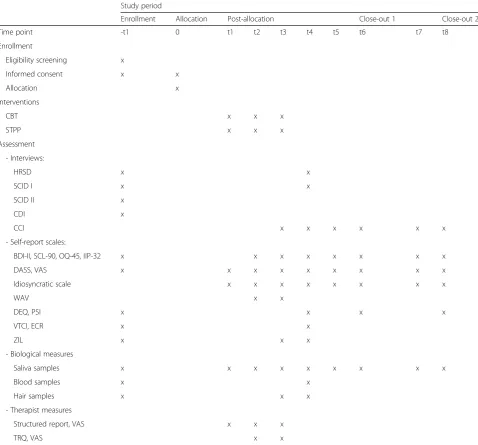
The study will be a pragmatic stratified (dependent and self-critical patients) parallel trial with equal randomization (allocation ratio 1:1) conducted in Flanders, Belgium. The study compares a predominantly explorative and a pre-dominantly directive intervention, namely short-term psy-chodynamic psychotherapy for depression (STPP, [15, 18]) and cognitive behavioral therapy for depression (CBT-D, [19, 20]) respectively. The study design as described here adheres to the Standard Protocol Items: Recommendations for Interventional Trials (SPIRIT) guidelines [21, 22], in-cluding a SPIRIT flow diagram (Fig. 1), SPIRIT schedule (Table 1), and checklist (Additional file 1).
Participants/eligibility criteria
We will recruit adult patients living in Flanders, Belgium with a depressive disorder who meet the following inclu-sion criteria:
– Current diagnosis of MDD according to Diagnostic and Statistical Manual of Mental Disorders, 4th Edition (DSM-IV)
– Hamilton Rating Scale for Depression (HRSD, [23]) total score >14
– Age between 18 and 65 years old
– Sufficient knowledge of the Dutch language
– Dominance of either dependent or self-critical personality characteristics (prototype matching procedure [24])
Patients on antidepressant medication can still meet inclusion criteria and can participate in the study if they have been on a stable dose for 4 weeks or more. All medication use and changes will be monitored in detail throughout the study.
We aim for a representative sample (to maximize ex-ternal validity) by keeping the exclusion criteria to a minimum. Exclusion criteria are any of the following:
– Current diagnosis of psychosis, delusions or bipolar disorder
– Acute suicidal risk
– Primary diagnosis of substance abuse/dependence
– Evidence of at least one clinically significant medical condition (e.g., brain damage, degenerative
neurological condition) causing cognitive or physical impairments that might prevent full participation in the treatments
– Participation in another ongoing psychotherapeutic treatment
– Explicit preference for a specific type of therapy or a male or female therapist (which implies participants cannot consent to the procedure of random allocation to treatment)
Recruitment and baseline assessment
The participant flow throughout the study is shown in Fig. 1.
Participants are recruited both by means of referrals from general practitioners and mental health care cen-ters, and by self-referral. Recruitment information is spread via posters, folders, local media, and online publi-cations (social media, etc.). All recruitment information is focused on potential participants who experience de-pressive complaints and have a voluntary motivation to start psychotherapeutic treatment. Participants apply for the study via email or telephone. After application, an initial phone screening takes place in which the patient is informed about the study procedure and relevant inclusion and exclusion criteria. When there are indica-tions of depressive complaints and the possible partici-pant consents to the research intake procedure, baseline assessment starts.
at least 3 on a scale of 1 to 5 for one of the person-ality dimensions and a minimum of 2 points differ-ence with the score on the other personality dimension are required. When no agreement can be reached, the difference in consensus scores between dependent and self-critical personality dimensions is less than 2 points, or there is no score of at least 3 on either dimension, patients are excluded from the trial. The HRSD and SCID-I depression module are used to assess severity of depressive symptoms and the diagnosis of MDD, respectively. The SCID-I and II are also used to assess co-morbidity and exclusion criteria. The baseline procedure finally yields the
collection of a hair sample and a blood sample. To-gether with the saliva samples, these form the base-line for the biological component of the study.
When eligible for the study, patients receive further written and oral information about the interventions and the full research procedure and again sign the in-formed consent form before being randomized into one of the treatment conditions. They also indicate whether they can be contacted again after the study to allow de-signing additional waves in the study and extending the follow-up period.
Patients who are not eligible for the study (either by not meeting inclusion criteria or meeting exclusion
[image:4.595.59.537.87.546.2]criteria), yet have a request for psychotherapy, are re-ferred to appropriate care.
Study setting
The study is carried out by the University of Ghent, Fac-ulty of Psychology and Educational Sciences, Department of Psychoanalysis and Clinical Consulting (Prof. Dr. Mat-tias Desmet, Prof. Dr. Reitske Meganck) in collaboration with the University of Utrecht (Prof. Dr. Claudi Bockting)
[image:5.595.59.538.100.545.2]and Ghent University Hospital (Prof. Dr. Chris Baeken). The intake procedure, peri-, post- and follow-up assess-ments all take place at Ghent University. The psycho-therapeutic treatments take place in private practices in the area of Ghent, a medium-sized city in Flanders, Belgium, and are carried out by clinical psychologists with psychotherapy training who have been additionally trained to conduct specific treatments for the purpose of this study. Prof. Dr. Mattias Desmet from Ghent University is Table 1SPIRIT schedule of enrollment, interventions, and assessments
Study period
Enrollment Allocation Post-allocation Close-out 1 Close-out 2
Time point -t1 0 t1 t2 t3 t4 t5 t6 t7 t8
Enrollment
Eligibility screening x
Informed consent x x
Allocation x
Interventions
CBT x x x
STPP x x x
Assessment
- Interviews:
HRSD x x
SCID I x x
SCID II x
CDI x
CCI x x x x x x
- Self-report scales:
BDI-II, SCL-90, OQ-45, IIP-32 x x x x x x x x
DASS, VAS x x x x x x x x x
Idiosyncratic scale x x x x x x x x
WAV x x
DEQ, PSI x x x x
VTCI, ECR x x
ZIL x x x
- Biological measures
Saliva samples x x x x x x x x x
Blood samples x x
Hair samples x x x
- Therapist measures
Structured report, VAS x x x
TRQ, VAS x x
t1: sessions 2–3, 5–7, 9–11, 13–15, 17–19; t2: sessions 1, 12, 16, 20; t3: session 8; t4: post; t5: 3 month follow-up; t6: 6 month follow-up; t7: 12 month follow-up; t8: 24 month follow-up
HRSDHamilton Rating Scale for Depression,SCID IStructured Clinical Interview for DSM-IV-TR Axis I Disorders,SCID IIStructured Clinical Interview for DSM-IV-TR Axis II Disorders,CDIClinical Diagnostic Interview,CCIClient Change Interview,BDI-IIBeck Depression Inventory II,SCL-90Symptom Checklist -90,OQ-45Outcome Questionnaire-45,IIP-32Inventory of Interpersonal Problems-32,DASSDepression Anxiety Stress Scales,VASVisual analogue scale,WAVWorking Alliance Inventory,
DEQDepressive Experiences Questionnaire,PSIPersonal Style Inventory,VTCIShort Temperament and Character Inventory,ECRExperiences in Close Relationships,
responsible for the training of the psychodynamic thera-pists. Prof. Dr. Claudi Bockting from the University of Ut-recht is responsible for the training of cognitive behavioral therapists. Statistical analyses are supported by independ-ent statisticians from the Departmindepend-ent of Data Analysis at Ghent University.
Interventions
Cognitive behavioral therapy (CBT)
The CBT condition consists of 16–20 sessions of CBT for MDD based on the CBT treatment as described by Beck [20]. Specifically, the three-phase protocol elabo-rated by Bockting and Huibers [19] is implemented. This CBT is structured and teaches clients skills to modify dysfunctional thinking and behavior. The therapeutic ap-proach encompasses a collaborative apap-proach as a basis for a good working alliance. Each therapy session starts with an agenda setting; that is, the therapist helps the client to select the problems they want to discuss. They then focus on cognitions and beliefs that might contrib-ute to the emotional reaction and/or problems. Socratic questioning will be taught to examine potential cata-strophic/negative reasoning. Behaviors that have inter-fered with the ability to solve problems will be identified, and alternative potential ways of coping with these situa-tions will be explored. Usually, in most sessions they de-velop an action plan for the following week, focused on cognitions and/or behavior. In CBT, clients themselves are taught the skills and tools to deal with day-to-day problems in their lives and to enhance emotion regula-tion. In this CBT protocol the main focus in the first phase is on behavioral activation interventions (mainly based on the model of Lewinsohn et al. [28]). The sec-ond phase introduces cognitive interventions focused on the identification of negative thoughts (in the here and now) and challenging techniques (such as Socratic ques-tioning). The third phase also encompasses identification of dysfunctional beliefs, challenging techniques, and for-mulating a personal prevention strategy.
The techniques that are used throughout the three phases are directive interventions partly sequenced (es-pecially the cognitive interventions) according to stand-ard CBT techniques [19, 20, 28].
Short-term psychodynamic psychotherapy (STPP)
The STPP condition consists of 16–20 sessions and fol-lows the unified psychodynamic protocol for depression (UPP-depression, [18]). The UPP-depression is a principle-based psychodynamic time-limited treatment integrating the most effective disorder-specific treatment components of empirically supported psychodynamic interventions for depression. It is mainly based on the supportive-expressive intervention continuum outlined by Luborsky [15] and Connolly Gibbons and colleagues [16]. It has a modular
format comprising seven integrated modules and aims at a flexible application concerning both sequence and dosage in line with the individual patient’s needs.
The first three modules can be mainly situated in the first phase of therapy. They respectively focus on prepar-ing the patient for psychotherapy, i.e., presentprepar-ing a ra-tionale and familiarizing the patient with the treatment process; motivating the patient and setting treatment goals, including a discussion of possible ambivalence to-wards treatment and change; and educating and empow-ering the patient to become an active participant in treatment.
The two main treatment modules comprise the two dominant treatment principles: supportive interventions on the one hand and expressive interventions on the other. Therapists use the techniques in response to the spontaneous material brought up by the patient, show-ing the explorative rather than directive nature of the treatment approach. Supportive interventions mainly foster a good working alliance. Specific supportive inter-ventions are described [15] that can be used in a differ-entiated way depending on the amount of support specific patients need. Expressive techniques, on the other hand, focus on identifying, interpreting, and work-ing through unresolved conflicts [15, 18]. The focus is on the central relationship pattern (core conflictual rela-tionship theme [15, 29]) and understanding symptoms within this relational context.
Finally, in the third treatment phase, attention is paid to termination and relapse prevention.
Therapists
Four clinical psychologists with 3 to 8 years of clinical experience and postgraduate training in psychodynamic psychotherapy receive 2 days of training according to the UPP-depression [18] based on the Supportive-Expressive Time Limited (SETL) manual for MDD pro-posed by Luborsky [15]. Four clinical psychologists with 4 to 8 years of clinical experience and postgraduate training in CBT receive 2 days of training in pre-structured CBT according to the cognitive behavioral protocol for depression by Bockting and Huibers [19], based on the manual proposed by Beck et al. [20].
Both groups of therapists receive regular supervision sessions (bi-weekly group supervision of 2 hours) by ex-perienced therapists in the respective disciplines.
All therapists are blind to the research hypotheses and the outcome of the screening measures and interviews (see below). In both conditions, therapy length is fixed at 16 to 20 sessions (45 minutes each).
Intervention fidelity
investigated in a number of ways. First, therapists deliver only the specific intervention that aligns with their basic psychotherapy training; i.e., cognitive behavioral therapists deliver only the CBT protocol for depression and psycho-dynamic therapists deliver only STPP. Furthermore, the training and regular supervision sessions aim at sufficient competence in and adherence to the respective treatment manuals. Each therapist also had a“training case”that is not included in the trial that was closely supervised, so that they could get used to both the manual and the re-spective research procedures. All sessions were audiotaped and thus allow explicit adherence checks. Specifically, the Comparative Psychotherapy Process Scale [30] will be used to reliably assess characteristics of cognitive behav-ioral and psychodynamic-interpersonal treatments in the respective treatments. Therapist adherence/fidelity to the specific protocols will also be assessed.
Outcomes and study measures Procedure
There are measurement points at intake, before the start of therapy, at every session (limited self-report battery), at every fourth session (extended self-report battery), post-treatment, and at follow-up at 3 and 6 months. In the sec-ond wave of the study, additional follow-up is planned at 12 and 24 months, which can be extended if research means are available and if participants consent to pro-longed follow-up. All interviews and therapy sessions are recorded on audiotape. Therapists write semi-structured reports of every session including an appreciation of their ability to work along the principles of the respective man-uals, a description of the content of the session, and self-report scales. An overview of the full procedure and the respective measures that are used is presented in Table 1 according to SPIRIT guidelines [21, 22].
Primary outcome
The primary outcome is the post-treatment assessment with the HRSD [23], which is the most widely used interview-based measure in depression studies [31]. The interview assesses depression severity. Outcome HRSD interviews are conducted by trained researchers who are blind to the research hypothesis, blind to the status of the patient (pre- or post-therapy), and thus also blind to treatment group. These researchers also conduct the post-treatment SCID-I interview.
Secondary outcomes
Self-report depression severity is measured by means of the Beck Depression Inventory (BDI-II [32]), which con-sists of 21 items and shows excellent reliability and valid-ity. The presence of a diagnosis of depression (percentage of patients in remission) and other Axis I disorders is assessed post-treatment by means of the SCID-I interview
[26] conducted by the researchers who also conduct the post-treatment HRSD interviews and thus are blind to treatment group and treatment status.
Global symptom severity and functioning are repeatedly measured by means of the Symptom Checklist-90 (SCL-90-R [33]), the shortened Depression Anxiety and Stress Scale (DASS [34]), and the Outcome Questionnaire-45 (OQ-45 [35]). Problems in interpersonal functioning are assessed by means of the Inventory of Interpersonal Problems-32 (IIP-32 [36]).
In line with recent recommendations [37], one to five idiosyncratic complaints are mapped during baseline as-sessment and rated by the participant at each session on a visual analogue scale (VAS) of 0–10.
Other measures
In addition to the prototype matching, commonly used measures for personality styles are included in the study. These are the Personal Style Inventory (PSI [38]) and the Depressive Experiences Questionnaire (DEQ [39]). Because of validity issues [9, 40], these are not used to categorize patients in one of the per-sonality styles, but their administration allows further studies on convergence of different approaches to assess personality and compare results with other studies.
A number of additional measures are administered to provide more context to the other (self-report, inter-views, and biological) measures, namely the Self-rating Inventory for Post Traumatic Stress Disorder (ZIL [41]), measuring trauma-related symptoms; the revised version of the Experiences in Close Relationships questionnaire (ECR [42]) designed to assess individual differences with respect to related anxiety and attachment-related avoidance; and the Short Temperament and Character Inventory (VTCI [43]), providing a compre-hensive assessment of personality. These are adminis-tered a limited number of times (see Table 1). At every session, all participants rate ten emotions on a VAS of 0–10 [44].
To map the therapeutic relationship, which is consid-ered a crucial variable in explaining outcome [45, 46], both therapists and patients fill out the Working Alli-ance Inventory-Short Revised (WAI-SR [47, 48]) every fourth session. Therapists additionally fill out the Ther-apist Response Questionnaire (TRQ [49]), and at each session a shortened version representing the seven main dimensions of the TRQ on a VAS of 0–10.
Biological measures
Biological measures comprise saliva, hair, and blood samples collected at different time points throughout the study (see Table 1). They will be used to assess corti-sol levels as an indicator of stress and to explore bio-markers for depression in a broader way.
Saliva samples are a standard and well-validated way to measure hormonal fluctuations. They are administered before the first intake interview, before the first therapy session, before every fourth session, post-treatment, and at follow-up. Each time samples are administered early morning and late evening for 4 consecutive days [51]. Sal-iva samples are stored at–80° until analysis.
Hair samples are a more innovative method assumed to capture long-term systemic cortisol and consequently long-term stress, rather than momentary cortisol levels [52]. This relatively new method is thus less well vali-dated than standard methods such as saliva samples. Samples are collected before treatment, around the 8th session, and post-treatment. A lock of about 4 mm diameter and 1–3 cm length is collected non-invasively by cutting it at the base of the vertex posterior of the head. Hair samples are stored in a dark and dry place until analysis. Cortisol concentrations in 1 cm of hair provide an indication of average cortisol level over the course of 1 month.
Blood samples are collected pre- and post-treatment. An independent lab administers them before 10 a.m. from a sober participant. Six tubes are collected: two 8-ml serum tubes, one 2-8-ml fluoride tube, one 2-8-ml EDTA tube, and one 9-ml EDTA tube. Screening of control variables is conducted within 12 hours after administra-tion using a serum subsample, the 2-ml fluoride tube, and the 2-ml EDTA tube. The 9-ml EDTA tube is proc-essed within 48 hours to extract DNA material, which will be stored at−80° for possible later (epi-)genetic ana-lyses. Three other serum subsamples are stored at −80° for later analyses of biomarkers.
Mass spectometry techniques will be used for analyses of the different biological measures. For saliva samples, biomarker levels are averaged across the eight samples (4 days) to reduce daily variations.
Health care costs
The cost-effectiveness of therapy is assessed by means of health care cost information retrieved via the Inter-mutualistic Agency (http://www.nic-ima.be), covering a period starting 3 years pre-treatment until 2 years post-treatment (which is one of the only ways to gather ob-jective information for a longer period before the patient entered the therapy; furthermore, it can be used to get an objective picture of antidepressant medication use). As these data are only useful when considered across a longer period and they can only be retrieved in the
second wave of the study, they cannot be discussed in the primary results of the trial, but will be discussed in the second wave study on long-term outcome.
Randomization and concealment
A (stratified) blocked randomization procedure with per-muted blocks and allocation concealment to distribute dependent and self-critical patients evenly across the two types of treatment is used. An independent statisti-cian from the Free University in Amsterdam (The Netherlands) generated the allocation sequence using the R package “Block Tools” [53]. Six trained research assistants who are blind to the allocation sequence con-duct intake assessment. Only after the decision concern-ing eligibility is reached, will another researcher, unaware of any information on the patient, be contacted. This researcher handles the assignment to a treatment condition using the pre-generated allocation sequence. The peri- and post-interviews and follow-up assessments are conducted by the same research assistant who con-ducted the intake assessment, to minimize drop-out of the study. An independent researcher who is blind to the interventions and the study hypotheses conducts the primary outcome assessment (HRSD, SCID-I) immedi-ately after treatment termination and before the post-interview (extended CCI) by the research assistant.
Determination of sample size
Based on the literature, it can be expected that a wrong match between personality style and treatment approach can produce adverse treatment effects [4, 7, 10, 12, 13]. Therefore, we expect a large interaction effect between intervention type and personality size on the primary outcome of size 1.1 (Cohen’sd). To detect such an effect at the 5% significance level with at least 80% power, about 26 participants are needed in every intervention group in both strata (i.e., about 104 participants in total).
Data analysis
Continuous variables will be summarized with means and standard deviations, median and interquartile ranges, and categorical variables with frequency tables.
be included in the analysis. The proposed mixed model approach is valid under the missing at random (MAR) assumption.
Secondary outcomes based on interviews (SCID and CCI) will be analyzed similarly to the primary outcome. Secondary outcomes based on self-reports (BDI, SCL, OQ, DASS, and idiosyncratic complaints), which are ob-tained at multiple sessions, will be analyzed using a mixed effects model approach with fixed effects of type of therapy, personality style, and its interaction at every time point; and a random effect for every therapist. The three-way interaction between therapy type, personality style, and time will be assessed to corroborate the pri-mary hypothesis. The estimated evolution over time in each therapy group for each stratum will be graphically displayed. Effect sizes, reliable change indices (RCIs), and clinically significant change will be reported when possible for primary and secondary outcomes.
Ethical principles
The ethical committee of Ghent University Hospital ap-proved the entire study design and informed consent forms. Participants receive extensive written and oral ex-planation of all research procedures, the implications of their participation, and consent forms for both the research procedures and publishing of results. An elab-orate data management plan safeguards the careful handling of confidential data in all stages of the research process.
If a serious adverse event (SAE, e.g., critical suicide risk) manifests, a Data Safety Monitoring Plan (DSMP) will be activated to decide whether or not the patient must be re-ferred for additional interventions (e.g., antidepressant or other medication, residential care). Participants requiring mental health care in any of the follow-up measurements will be referred to adequate care.
Data management and dissemination plan
The handling of the rich data gathered within this study is carefully planned in line with ethical considerations of privacy and confidentiality. Contact details of partici-pants are kept in an Excel spreadsheet together with the study identifier in a separate locked location and are never used to communicate to any third party other than the researchers who require contact details to con-tact the participants. Quantitative data are entered into SPSS matrices throughout the study. A postdoctoral re-searcher conducts a biweekly control of data input. After full completion of data gathering for a participant, an additional check is performed. All data are stored on a secured university server, and back-ups are kept on encrypted USB drives. Therapists use a secured server facilitation to transfer audio files of therapy sessions to the researchers.
The features of the study and any changes to the study design are reported on Open Science Framework [54]. Quantitative data matrices without any identifying infor-mation will be made available through OSF as well. All data that imply confidentiality considerations will not be shared publicly, but are saved on the above-mentioned secured university server and can be accessed under spe-cific conditions upon request.
This study results in a wealth of data allowing the in-vestigation of research questions far beyond the primary hypothesis. Consequently, after the primary publication of trial results using primary and secondary outcomes, a number of studies are planned focusing, among other things, on triangulation (comparing different ways of mapping personality style), process clinical predictors (e.g., therapeutic relationship), first-person experiences (e.g., qualitative study of the CCIs), and biomarkers for depression.
Discussion
Depressive problems are the most widely diagnosed and most widely investigated psychological problems. Nu-merous outcome studies have indicated the efficacy of psychotherapy and in some cases psychotherapy with medication for depressive disorders [55]. Effect sizes found in these countless randomized controlled trials comparing different interventions or interventions with no treatment are remarkably similar across studies. Moreover, the famous Dodo bird verdict, stating that there is no difference in efficacy between different types of treatment, especially holds in the context of depres-sion [56, 57]. Nevertheless, efficacy remains limited [58], relapse rates remain rather high [59], and, most import-antly, there is huge within-group variability observed in outcome research [60, 61]. Despite these important ob-servations, little research aims at disentangling this vari-ability within groups. In this study we want to analyze the effect of an important client variable in depression theory—namely, the personality style—and contribute to the adaptation of therapy to patient characteristics. These patient characteristics are shown to explain a large part of therapy outcomes [62, 63]; thus, the im-portance of exploring possibly important patient charac-teristics is beyond doubt. As Cuijpers [55] indicated, “more knowledge on who benefits from which treatment are important goals for future research (p. 292).”
Before designing the current trial, extensive piloting (naturalistic setting, 28 cases followed throughout the whole phase of therapy and follow-up) was done to test and perfect research procedures that are feasible both for participants and therapists. Also, concerning data collection and storage, the pilot study allowed us to con-struct a detailed manual on all the steps in the whole re-search process to guarantee that all rere-search assistants can be trained and follow exactly the same procedures.
Recruitment is proceeding as planned, and several strategies (e.g., managing social media, communication with referrers) are implemented to manage recruitment in a timely manner. Recruitment is expected to last one and one-half years.
Trial status
Recruitment is ongoing.
Additional file
Additional file 1:SPIRIT checklist. (PDF 134 kb)
Abbreviations
BDI-II:Beck Depression Inventory II; CBT: Cognitive behavioral therapy; CCI: Client Change Interview; CDI: Clinical Diagnostic Interview; DASS: Depression Anxiety Stress Scales; DEQ: Depressive Experiences Questionnaire; ECR: Experiences in Close Relationships questionnaire; HRSD: Hamilton Rating Scale for Depression; IIP-32: Inventory of Interpersonal Problems-32; OQ-45: Outcome Questionnaire 45; OSF: Open Science Framework; PDT: Psychodynamic therapy; PSI: Personal Style Inventory; RCI: Reliable Change Index; SCID-I: Structured Clinical Interview for DSM-IV-TR Axis I Disorders; SCID-II: Structured Clinical Interview for DSM-IV-TR Axis II Dis-orders; SCL-90: Symptom Checklist -90; SPIRIT: Standard Protocol Items: Recommendations for Interventional Trials; STPP: Short-term psychoanalytic psychotherapy; TRQ: Therapist Relationship Questionnaire; VAS: Visual analogue scale; VTCI: Short Temperament and Character Inventory; ZIL: Self-rating Inventory for Post Traumatic Stress Disorder
Acknowledgements Not applicable.
Funding
The project was funded by Ghent University Special Research Fund (BOF; [email protected]) (basic trial; ref: BOFSTA2015002501) and by the Research Foundation - Flanders (FWO; [email protected]) (qualitative part of the study; ref: FWO3FO2015001901). Both funding sources peer-reviewed and approved the project but have no role or authority in any part of the design, conduct, or reporting of the study.
Availability of data and materials
Analyses of data will be conducted in the future. Data that are completely anonymous will be made available through Open Science Framework and as additional material in publications when journals allow such procedures. Other data can be accessed under specific conditions (in line with informed consent principles) and in agreement with the primary researchers (RM and MD).
Authors’contributions
MD and RM conceived the study. RM, MD, and CB developed the study design. RI, FT, RDG, MDS, KVN, and SV contributed to the design of the study. MD and RM reviewed relevant literature. FT registered the trial. RM drafted the manuscript. MD, CB, RI, FT, RDG, MDS, KVN, VH, GH, UN, and SV contributed to drafting of the manuscript. RI is responsible for daily supervision of activities. FT, RDG, MDS, KVN, VH, GH, and UN are responsible for conducting research procedures. RM is responsible for randomization of
participants. TL is responsible for designing statistical procedures and drafting this part of the manuscript. All authors read and approved the final manuscript.
Authors’information Not applicable.
Competing interests
The authors declare that they have no competing interests.
Consent for publication
All participants provide consent to publish results, both on a group level and individually, given adequate anonymization. All data are analyzed with respect for confidentiality. This information is included in the informed consent forms and signed accordingly.
Ethics approval and consent to participate
The Ethical Committee of Ghent University Hospital approved the full study description and the final version of the written informed consent letters (ref: B670201523446) in May 2015. An amendment was approved in September 2015 for the expansion of the biological part of the study (ref:
B670201523446). Participants receive oral and written information on the full research procedure before intake and before randomization. They sign informed consent on these two occasions for the intake procedure and full therapy and research procedure, respectively.
Author details
1Department of Psychoanalysis and Clinical Consulting, Faculty of Psychology
and Educational Sciences, Ghent University, Henri Dunantlaan 2, Ghent 9000, Belgium.2Department of Clinical Psychology, Social and Behavioral Sciences,
Universiteit Utrecht, Heidelberglaan 1, Utrecht 3584 CS, Netherlands.
3Department of Data Analysis, Faculty of Psychology and Educational
Sciences, Ghent University, Henri Dunantlaan 1, Ghent 9000, Belgium.
4Department of Psychiatry and Medical Psychology, Faculty of Medicine and
Health Sciences, Ghent University, De Pintelaan 185, K12, Ghent 9000, Belgium.
Received: 7 January 2017 Accepted: 27 February 2017
References
1. World Health Organization. Depression fact sheet. Geneva: WHO; 2016. http:// www.who.int/mediacentre/factsheets/fs369/en/. Accessed 14 Sept 2016. 2. Abbass AA, Hancock JT, Henderson J, Kisely S. Short-term psychodynamic
psychotherapies for common mental disorders. Cochrane Database Syst Rev. 2006;4:CD004687.
3. Driessen E, Cuijpers P, de Maat S, Abbass AA, De Jonghe F, Dekker JJM. The efficacy of short-term psychodynamic psychotherapy for depression: a meta-analysis. Clin Psychol Rev. 2010;30:25–36.
4. Blatt SJ, Shahar G. Psychoanalysis: with whom, for what, and how? Comparison with psychotherapy. J Am Psychoanal Assoc. 2004;52:393–447. 5. Blatt SJ. Levels of object representation in anaclitic and introjective
depression. Psychoanal Study Child. 1974;29:107–57.
6. Beck AT. Cognitive therapy of depression: new perspectives. In: Clayton PJ, Barett JE, editors. Treatment of depression: old controversies and new approaches. New York: Raven; 1983. p. 265–90.
7. Blatt SJ. The patient’s contribution to the therapeutic process: a Rogerian-psychodynamic perspective. Psychoanal Psychol. 2013;30:139–66. 8. Blatt SJ. Experiences of depression: theoretical, clinical, and research
perspectives. Washington, DC: American Psychological Association; 2004. 9. Desmet M, Vanheule S, Groenvynck H, Verhaeghe P, Vogel J, Bogaerts S. The
Depressive Experiences Questionnaire: an inquiry into the different scoring procedures. Eur J Personal Assess. 2007;23:89–98.
10. Zuroff DC, Mongrain M, Santor DA. Conceptualizing and measuring personality vulnerability to depression: comment on Coyne and Whiffen (1995). Psychol Bull. 2004;130:489–511.
12. Vermote R, Fonagy P, Vertommen HJ, Stroobants R, Vandeneede B, Corvelyn J, et al. Outcome and outcome trajectories of personality disordered patients. J Personal Disord. 2009;23:294–307.
13. Vermote R, Lowyck B, Luyten P, Vertommen H, Corveleyn J, Verhaest I, et al. Process and outcome in psychodynamic hospitalized-based treatment for patients with a personality disorder. J Nerv Ment Dis. 2010;198:110–5. 14. Beck Institute for Cognitive Behavior Therapy. What is cognitive behavior
therapy (CBT)? https://www.beckinstitute.org/get-informed/what-is-cognitive-therapy/. Accessed 12 Sept 2016.
15. Luborsky L. Principles of psychoanalytic psychotherapy. A manual for supportive-expressive treatment. New York: Basic Books; 1984. 16. Connolly Gibbons MB, Thompson SM, Scott K, Schauble LA, Mooney T,
Thompson D, et al. Supportive-expressive dynamic psychotherapy in the community mental health system: a pilot effectiveness trial for the treatment of depression. Psychotherapy. 2012;49:303–16.
17. Chambless DL, Hollon SD. Defining empirically supported therapies. J Consult Clin Psychol. 1998;66:7–18.
18. Leichsenring F, Schauenburg H. Empirically supported methods of short-term psychodynamic therapy in depression—towards an evidence-based unified protocol. J Affect Disord. 2014;169:128–43.
19. Bockting C, Huibers M. Protocollaire behandeling van patiënten met een depressieve stoornis. In: Keijsers G, van Minnen A, Hoogduin H, editors. Protocollaire behandelingen voor volwassenen met psychiatrische klachten, vol. 1. Amsterdam: Boom; 2011.
20. Beck AT, Rush AJ, Shaw BF, Emery G. Cognitive therapy of depression: a treatment manual. New York: Guilford Press; 1979.
21. Chan AW, Tetzlaff JM, Altman DG, Laupacis A, Gøtzsche PC, Krleža-JerićK, et al. SPIRIT 2013 statement: defining standard protocol items for clinical trials. Ann Intern Med. 2013;158:200–7.
22. Chan AW, Tetzlaff JM, Gøtzsche PC, Altman DG, Mann H, Berlin J, et al. SPIRIT 2013 explanation and elaboration: guidance for protocols of clinical trials. BMJ. 2013;346:e7586.
23. Hamilton M. Development of a rating scale for primary depressive illness. Br J Soc Clin Psychol. 1967;6:278–96.
24. Werbart A, Forsström D. Changes in anaclitic-introjective personality dimensions, outcomes and psychoanalytic technique: a multi-case study. Psychoanal Psychother. 2014;28:397–410.
25. Westen D. The clinical diagnostic interview. Atlanta: Emory University; 2007. 26. First MB, Spitzer RL, Gibbon M, Williams JBW. Structured Clinical Interview
for DSM-IV-TR Axis I Disorders, Research Version, Patient Edition. (SCID-I/P). New York: Biometrics Research, New York State Psychiatric Institute; 2002. 27. First MB, Gibbon M, Spitzer RL, Williams JBW, Benjamin LS. Structured
Clinical Interview for DSM-IV Axis II Personality Disorders, (SCID-II). Washington, DC: American Psychiatric Press; 1997.28. Lewinsohn PM, Munoz RF, Youngren MA, Zeiss AM. Control your depression. 2nd ed. Englewood Cliffs: Prentice-Hall; 1986.
28. Lewinsohn PM, Munoz RF, Youngren MA, Zeiss AM. Control your depression. 2nd ed. Englewood Cliffs: Prentice-Hall; 1986. 29. Luborsky L, Crits-Christoph P. Understanding transference: the core
conflictual relationship theme method. 2nd ed. Washington, DC: American Psychological Association; 1998.
30. Hilsenroth MJ, Blagys MD, Ackerman SJ, Bonge DR, Blais MA. Measuring psychodynamic-interpersonal and cognitive-behavioral techniques: development of the comparative psychotherapy process scale. Psychotherapy. 2005;42:340–56.
31. Nezu AM, Ronan GF, Meadows EA, McClure KS. Practioner’s guide to empirically based measures of depressions. Dordrecht: Kluwer Academic Publishers; 2000.
32. Beck AT, Steer RA, Brown GK. Beck Depression Inventory. 2nd ed. San Antonio: Harcourt Assessment; 1996.
33. Derogatis LR. SCL-90-R Administration, scoring and procedures manual. 2nd ed. Towson: Clinical Psychometric Research; 1992.
34. Lovibond SH, Lovibond PF. Manual for the Depression Anxiety Stress Scales. Sydney: Psychology Foundation of Australia; 1995.
35. Lambert MJ, Kahler M, Harmon C, Burlingame GM, Shimokawa K. Administration and scoring manual for the Outcome Questionnaire-45.2. Salt Lake City: OQMeasures; 2011.
36. Horowitz LM, Alden LE, Wiggins JS, Pincus AL. Inventory of Interpersonal Problems. London: The Psychological Corporation; 2000.
37. Hill CE, Lambert MJ. Methodological issues in studying psychotherapy processes and outcome. In: Lambert MJ, editor. Bergin and Garfield’s
handbook of psychotherapy research and behavior change. 5th ed. New York: Wiley; 2004.
38. Bagby RM, Gilchrist EJ, Rector NA, Dickens SE, Joffe RT, Levitt A, Levitan RD, Kennedy SH. The stability and validity of the sociotropy and autonomy personality dimensions as measured by the Revised Personal Style Inventory. Cogn Ther Res. 2001;25:765–79.
39. Zuroff DC, Moskowitz DS, Wielgus MS, Powers TA, Franko DL. Construct validation of the dependency and self-criticism scales of the Depressive Experiences Questionnaire. J Res Pers. 1983;17:226–41.
40. Desmet M. Hysterical and obsessive-compulsive depression: a psychometric study. 2007. https://biblio.ugent.be/publication/471796. Accessed 10 Oct 2014. 41. Hovens JE, Bramsen I, van der Ploeg HM. Zelfinventarisatielijst posttraumatische
stressstoornis. Amsterdam: Pearson Assessment and Information BV; 2009. 42. Fraley RC, Waller NG, Brennan KA. An item-response theory analysis of
self-report measures of adult attachment. J Pers Soc Psychol. 2000;78:350–65. 43. Duijsens IJ, Spinhoven P. Handleiding van de Nederlandse Verkorte
Temperament en Karakter vragenlijst. Leiderdorp: Datec; 2001.
44. van Rijsbergen GD, Burger H, Hollon SD, Elgersma HJ, Kok GD, Dekker J, et al. How do you feel? Detection of recurrent major depressive disorder using a single-item screening tool. Psychiatry Res. 2014;220:287–93.
45. Falkenström F, Granström F, Holmqvist R. Therapeutic alliance predicts symptomatic improvement session by session. J Couns Psychol. 2013;60:317–28. 46. Horvath AO, Del Re A, Fluckiger C, Symonds D. Alliance in individual
psychotherapy. Psychotherapy. 2011;48:9–16.
47. Horvath AO, Greenberg LS. Development and validation of the working alliance inventory. J Couns Psychol. 1989;36:223–33.
48. Hatcher RL, Gillaspy JA. Development and validation of a revised short version of the working alliance inventory. Psychother Res. 2006;16:12–25. 49. Zittel C, Westen D. The Therapist Response Questionnaire. Atlanta: Emory
University, Departments of Psychology and Psychiatry Behavioral Science; 2003. 50. Elliott R, Slatick E, Urman M. Qualitative change process research on
psychotherapy: Alternative strategies. Psychologische Beiträge. 2001;43:69–111. 51. Douglas JL, Harmer CJ. Early morning cortisol response and emotional
processing in adults exposed to postnatal depression in infancy. Eur Psychiatry. 2011;26:479–81.
52. Russel E, Koren G, Rieder M, Van Uum S. Hair cortisol as a biological marker of chronic stress: current status, future directions and unanswered questions. Psychoneuroendocrinology. 2012;37:589–601.
53. Moore RT, Schnakenberg K. Package‘Block Tools’. 2015. https://cran.r-project. org/web/packages/blockTools/blockTools.pdf. Accessed 15 Aug 2015. 54. Open Science Framework. The Ghent Psychotherapy Study (GPS). https://
osf.io/mf2d7. Accessed and updated regularly.
55. Cuijpers P. The future of psychotherapy research: stop the waste and focus on issues that matter. Epidemiol Psychiatr Sci. 2016;25:291–4.
56. Barth J, Munder T, Gerger H, Nüesch E, Trelle S, Znoj H, et al. Comparative efficacy of seven psychotherapeutic interventions for patients with depression: a network meta-analysis. PLoS Med. 2013. doi:10.1371/journal. pmed.1001454.
57. Cuijpers P, van Straten A, Andersson G, van Oppen P. Psychotherapy for depression in adults: a meta-analysis of comparative outcome studies. J Consult Clin Psychol. 2008;76:909–22.
58. Cuijpers P, Smit F, Bohlmeijer ET, Hollon SD, Andersson G. Is the efficacy of cognitive behaviour therapy and other psychological treatments for adult depression overestimated? A meta-analytic study of publication bias. Br J Psychiatry. 2010;196:173–8.
59. Steinert C, Hofmann M, Kruse J, Leichsenring F. Relapse rates after psychotherapy for depression—stable long-term effects? A meta-analysis. J Affect Disord. 2014;168:107–18.
60. Stiles WB, Barkham M, Mellor-Clark J, Connell J. Effectiveness of cognitive-behavioral, person-centered, and psychodynamic therapies in UK primary-care routine practice: replication in a larger sample. Psychol Med. 2008;38:677–88. 61. Hollon SD. The efficacy and acceptability of psychological interventions for
depression: where we are now and where we are going. Epidemiol Psychiatr Sci. 2016;25:295–300.
62. Lambert MJ. Psychotherapy outcome research: implications for integrative and eclectic therapists. In: Norcross JC, Goldfried MR, editors. Handbook of Psychotherapy Integration. New York: Basic Books; 1992. p. 94–129. 63. Cuijpers P, Driessen E, Hollon SD, Van Oppen P, Barth J, Andersson G. The