
R E S E A R C H
Open Access
Baseline characteristics, analysis plan and
report on feasibility for the Prevention Of
Decline in Cognition After Stroke Trial
(PODCAST)
Polly Scutt
1†, Dan Blackburn
2†, Kailash Krishnan
1, Clive Ballard
3, Alistair Burns
4, Gary A. Ford
5, Jonathan Mant
6,
Peter Passmore
7, Stuart Pocock
8, John Reckless
9, Nikola Sprigg
1, Rob Stewart
10, Joanna M. Wardlaw
11and Philip M. Bath
1*Abstract
Background:
A common complication after stroke is development of cognitive impairment and dementia.
However, effective strategies for reducing the risk of developing these problems remain undefined. Potential
strategies include intensive lowering of blood pressure (BP) and/or lipids. This paper summarises the baseline
characteristics, statistical analysis plan and feasibility of a randomised control trial of blood pressure and lipid
lowering in patients post-stroke with the primary objective of reducing cognitive impairment and dementia.
Methods:
The Prevention Of Decline in Cognition After Stroke Trial (PODCAST) was a multi-centre prospective
randomised open-label blinded-endpoint controlled partial-factorial internal pilot trial running in secondary and
primary care. Participants without dementia were enrolled 3
–
7 months post ischaemic stroke or spontaneous
intracerebral haemorrhage, and randomised to intensive versus guideline BP lowering (target systolic BP <125
mmHg versus <140 mmHg); patients with ischaemic stroke were also randomised to intensive or guideline lipid
lowering (target LDL cholesterol <1.4 mmol/L versus <3 mmol/L). The primary outcome was the Addenbrooke
’
s
Cognitive Examination-Revised; a key secondary outcome was to assess feasibility of performing a large trial of one
or both interventions. Data are number (%) or mean (standard deviation). The trial was planned to last for 8 years
with follow-up between 1 and 8 years. The plan for reporting the main results is included as Additional file 2.
Results:
83 patients (of a planned 600) were recruited from 19 UK sites between 7 October 2010 and 31 January
2014. Delays, due to difficulties in the provision of excess treatment costs and to complexity of follow-up, led to
few centres taking part and a much lower recruitment rate than planned. Patient characteristics at baseline were:
age 74 (SD 7) years, male 64 (77 %), index stroke ischaemic 77 (93 %), stroke onset to randomisation 4.5 [SD 1.3]
months, Addenbrooke
’
s Cognitive Examination-Revised 86 (of 100, SD 8), Montreal Cognitive Assessment 24 (of 30,
SD 3), BP 147/82 (SD 19/11) mmHg, total cholesterol 4.0 (SD 0.8) mmol/L and LDL cholesterol 2.0 (SD 0.7) mmol/L,
modified Rankin Scale 1.1 (SD 0.8).
Conclusion:
Limited recruitment suggests that a large trial is not feasible using the current protocol. The effects of
the interventions on BP, lipids, and cognition will be reported in the main publication.
Trial registration:
ISRCTN85562386 registered on 23 September 2009
* Correspondence:[email protected] †Equal contributors
1
Stroke Trials Unit, Division of Clinical Neuroscience, University of
Nottingham, City Hospital campus, Hucknall Road, Nottingham NG5 1 PB, UK Full list of author information is available at the end of the article
Background
Post-stroke cognitive decline and dementia are common,
and potentially devastating for both patients and carers.
Although lowering blood pressure (BP) and lipids and
the use of antithrombotic therapy are known to reduce
recurrence after ischaemic stroke [1–6], the effect of
these and other interventions on cognition is unclear
[7]. The trial designated Prevention Of Decline in
Cogni-tion After Stroke Trial (PODCAST) was designed to
assess the safety and tolerability of intensive versus
guideline BP and lipid lowering in ischaemic stroke and
intensive BP versus guideline in haemorrhagic stroke
and the feasibility of performing a large trial on whether
intensive treatment reduces cognitive decline and
dementia post stroke (Protocol, Additional file 1) [8].
Aims
Start-up phase
To determine the initial safety and the tolerability
of intensive versus guideline BP and lipid lowering
therapy.
To determine the feasibility of recruiting and
retaining sites and participants in a long-term
dementia prevention trial involving patients with
a previous stroke.
To determine the feasibility of reaching and
maintaining target BP and lipid levels and identify
any barriers to achieving and maintaining BP and
lipid targets.
To determine the feasibility of performing recurrent
cognitive assessment in clinic and by telephone.
Main phase
To determine if
‘
intensive
’
blood pressure lowering
therapy and/or
‘
intensive
’
lipid lowering therapy
after stroke reduces cognitive decline and dementia.
To determine if
‘
intensive
’
blood pressure lowering
therapy and/or
‘
intensive
’
lipid lowering therapy
after stroke reduces poor quality of life, poor
function, depression, stroke recurrence, vascular
events, and death.
Methods
PODCAST was a multi-centre prospective randomised
open-label blinded-endpoint controlled partial-factorial
phase IV trial in secondary and primary care.
Partici-pants from 30 UK Stroke Research Network sites who
were post ischaemic stroke or intracerebral haemorrhage
by 3–7 months were included. All patients gave
in-formed consent.
Interventions
All patients were randomised (1:1) to intensive versus
guideline blood pressure lowering (target systolic <125
mmHg versus <140 mmHg). Patients with an ischaemic
stroke were also randomised (1:1) to intensive versus
guideline lipid lowering (target low density
lipoprotein-cholesterol <1.4 mmol/L versus <3 mmol/L). As a result,
patients were randomised to one of six groups:
Intensive BP lowering and intensive lipid lowering
(ischaemic stroke only)
Intensive BP lowering and guideline lipid lowering
(ischaemic stroke only)
Guideline BP lowering and intensive lipid lowering
(ischaemic stroke only)
Guideline BP lowering and guideline lipid lowering
(ischaemic stroke only)
Intensive BP lowering only (intracerebral
haemorrhage only)
Guideline BP lowering only (intracerebral
haemorrhage only)
Intensive interventions were delivered in a secondary
care/hospital research clinic; guideline interventions
were delivered in primary care according to local
practice.
Primary outcome
Addenbrooke’s Cognitive Examination-Revised. This
was assessed at each clinic visit and its analysis and
presentation is described in the outline data tables
(Additional file 2). It is a brief cognitive screening
tool that was selected because it has greater
sensitiv-ity in detecting Alzheimer’s disease and is more
sensi-tive than the Mini-Mental State Examination (MMSE)
[9] and has been shown to be sensitive at detecting
mild cognitive impairment (MCI) in post-stroke
popu-lations [10]. It is good at detecting visuospatial,
flu-ency and executive dysfunction [11].
Secondary outcomes
Feasibility of recruitment and retention of participants,
tolerability and safety of the interventions, achieving and
maintaining the blood pressure and lipid targets,
main-taining differences in systolic blood pressure (>10
mmHg) and low density lipoprotein cholesterol (>1
mmol/L) between the treatment groups, and performing
clinic and telephone follow-up of cognition measures.
Additional tests of cognition were used:
predict development of dementia and mortality
[12
–
15].
Montreal Cognitive Assessment (MoCA). This
is widely used in post-stroke populations with
reasonable sensitivity for detecting MCI and
dementia [10,
16
–
18].
Telephone MMSE (t-MMSE). This has been
compared to the MMSE and has shown strong
correlation. A score of 16 on the t-MMSE equates to
a score of 19 on the MMSE. A score of 26 on the
MMSE equates to a score of 23 on the t-MMSE [19].
Telephone Interview for Cognitive Status (TICS). This
has been validated in a post-stroke population [20].
Blinding
Participants received open-label management. Cognition
was assessed both unblinded (in clinic) and blinded (by
telephone) to treatment. Adjudication of events
(demen-tia, vascular, serious adverse events) was blinded to
man-agement. Recruitment of 600 participants was planned
(300/BP group, about 270/statin group) to be sufficient
to demonstrate whether sufficient on-treatment
differ-ences in BP and lipids can be obtained and maintained,
and whether cognition can be assessed satisfactorily.
More details of methodology can be found at the
pub-lished protocol [8].
The study was conducted according to the principles of
the Declaration of Helsinki and the International
Confer-ence on Harmonisation of Good Clinical Practice. The
study was approval by the national research ethics
com-mittee (NRES Comcom-mittee East Midlands
–
Nottingham 1,
approval 09/H0403/71, date 12/11/2009).
Eligibility
The full inclusion and exclusion criteria are given in the
published protocol [8] and were designed to include a
population who did not have known dementia but who
were at higher risk of developing cognitive impairment
and dementia on the basis of recent stroke and age, and
who were likely to be able to attend follow-up for 5
years. Adult patients were eligible if they fulfilled all of
the following criteria:
Age >70 years and telephone MMSE (t-MMSE) >16
° or age >60 and t-MMSE 17
–
20 (that is, indicator
of impairment).
Previously independent (mRS 0
–
2)
Index event was ischaemic stroke (IS) or
spontaneous intracerebral haemorrhage (ICH)
Systolic blood pressure between 125
–
170 mmHg
Total cholesterol 3
–
8 mmol/L
3
–
7 months post stroke onset
Ability to give written informed consent prior to
enrolment
Had two informants who could support them if
cognitive impairment developed
Consent
Informed consent was obtained to undertake a screening
cognitive assessment at 8–26 weeks using a telephone
version of the MMSE; initially this was done by
tele-phone but was later delivered in clinic. If screened
posi-tive, informed consent for the trial was obtained and the
clinician used the secure web-based randomisation
sys-tem to enter a patient into the study between 12 and 30
months post stroke.
Randomisation
To reduce bias and optimise baseline matching
be-tween treatment groups, randomisation incorporated
stratification (index event), minimisation (on baseline
prognostic factors, as highlighted in Table 3), and
simple randomisation (in 5 % of patients).
Stratifica-tion and minimisaStratifica-tion allow for improved matching
at baseline, minimisation increases statistical power
[21], and simple randomisation reduces predictability.
The stratification and minimisation variables will be
used for adjustment of the primary and secondary
analyses. Following randomisation, the investigator
was informed of the patient’s treatment allocation.
Data entry during treatment used the same website
and similar range and logic checks.
Trial governance
The trial was supervised by a Trial Steering
Commit-tee, and run by a Trial Management Committee
(based in Nottingham UK). An independent Data
Monitoring Committee met and assessed safety and
efficacy
on
three
occasions.
Experts,
who
were
blinded to treatment assignment, adjudicated
cogni-tive and dementia outcomes, vascular events, brain
scans, and serious adverse events.
Internet trial
The trial was designed as an electronic trial and was
accessible via the following links:
Trial website:
http://www.podcast-trial.org
Secure website for real-time data entry, validation
and randomisation:
https://www.nottingham.ac.uk/~
nszwww/podcast/podcasttrialdb/podcast_login.php
Demo website for investigators to practise data
entry:
https://www.nottingham.ac.uk/~nszwww/
podcast/podcasttrialdb-demo/podcast_login.php
(log-in: demoinv1, password: nottingham; pin: 8888)
Resource website for investigators with all trial
Stroop test website:
https://www.nottingham.ac.uk/~
nszwww/stroop_demo
Data were entered via a secure Internet site. However,
some NHS sites could not access certain features, in
par-ticular the Stroop application that ran as a Java applet.
Problems arose because of hospital firewalls and issues
with Java updates on PC and Mac computers.
Progress with the study and modifications to the design
The trial was designed to have two phases of
recruit-ment and funding:
Start-up phase (36 months, 2010
–
2013):
Recruitment of 600 patients from 30 sites over 24
months with minimum follow-up of at least 12
months. In reality, 83 patients were recruited with
the target reduced to 100 patients.
Main phase (60 months): New funding to be sought
for recruitment of 2,800 patients from 100 sites.
Funding was never sought since the trial failed to
recruit sufficient sites or patients at a rate that was
feasible to support a large study.
Several protocol amendments were made, these
cover-ing the followcover-ing issues:
August 2010
1. Addition of twice yearly email reminders to
investigators to highlight the need to achieve targets
in BP and lipid lowering in patients randomised to
intensive treatment. This was done because the
difference between intensive and guideline BP and
lipid levels was not reaching target (>1 mmol/L LDL
cholesterol and >10 mmHg systolic).
May 2012
1. Reduction in target lipid level: The level of target
lipid concentration for intensive arm was reduced
from LDL cholesterol <2.0 mmol/L to <1.3 mmol/L.
This amendment was required because 50 % of
patients were at or below the original target at
baseline of 2.0 mmol/L, in part reflecting the high
usage of statin therapy in this post-stroke
population.
2. Revision of suggested guideline lipid lowering
therapy (to simvastatin 10
–
40 mg, pravastatin 10
–
40
mg, fluvastatin 10
–
80 mg), and intensive group
statins (to atorvastatin > 20 mg, any dose of
rosuvastatin). This was due to revised NICE
guidelines on lipid management (CG 67, 2008).
3. Addition of monitoring of serum glucose and
HbA1c because some BP and lipid drugs may
reduce, or cause, diabetes mellitus.
4. Introduction of
‘
floating
’
clinic appointments to
follow planned regular research appointments if a
patient randomised to one or both intensive arms
had BP and/or lipid readings above target levels.
These floating appointments allowed earlier/more
aggressive treatment escalation.
5. Clarification that a standing blood pressure
measurement should be done in clinic to detect
postural hypotension.
6. Addition of NYHA levels 3 or 4 as an exclusion
criterion
7. Removal of dementia-specific health-related Quality
of Life (DEMQOL) as an outcome
8. Addition/inclusion of patients with posterior
circulation infarcts (POCI). POCI was an original
exclusion criterion because this group was
felt unlikely to develop cognitive impairment.
[image:4.595.58.541.546.720.2]However cerebellar and brain stem infarcts are
known to cause cognitive impairment.
9. Follow-up visits in clinic increased from once a
year to every 6 months (with interval blinded
telephone follow-up). Low recruitment meant that
long-term follow-up in a large trial was unlikely,
and so more and earlier visits were necessary to
assess and escalate treatment for blood pressure
and/or lipid.
June 2013
1. Reduction in sample size for the start-up phase
from 600 to 100 patients.
2. Addition of an on-treatment CT scan at or after
1 year of treatment to assess potential changes in
white matter disease and cerebral atrophy from
pre-baseline.
Key milestones occurred as follows:
January 2008: Trial planning commenced.
July 2008: Joint funding application submitted to
Alzheimer
’
s Society and Stroke Association.
January 2009: Funding awarded.
April 2009: Confirmation from UK Medicines
and Healthcare products Regulatory Agency that
trial is not a Clinical Trial of an Investigational
Medical Product (CTIMP) and does not fall
under the remit of the European Clinical trials
Directive.
November 2009: Approval by UK National Research
Ethics Service (Nottingham Research Ethics
Committee 1).
September 2010: Commencement of funding.
October 2010: Recruitment of first patient.
September 2012: One year no-cost extension
sought and obtained from funders because of low
recruitment.
November 2013: Protocol published [8].
January 2014: Recruitment of last patient (that is,
recruitment over 39 months).
[image:5.595.54.545.97.268.2]October 2014: Final follow-up of last patient. End of
funding.
Table 2
Summary of screen failures and reasons
Reason for ineligibility Number
Age 60–70 and t-MMSE > 20 45
Average systolic BP readings <125 mmHg 20
Vascular territory unknown 10
Clinical need for high dose statin 8
Too late: screening should be done before 26 weeks 8
Average systolic BP readings >170 mmHg 7
Too early: screening should be done after 8 weeks 6
Fasting total cholesterol <3 mmol/L 5
Age > 70 and t-MMSE < 17 5
Brain scan >10 days after index event (so precluding differentiation of ischaemic and haemorrhagic stroke)
4
Chronic renal failure/eGFR < 45 4
Modified Rankin Scale > 2 3
Clinical need for intensive BP 3
Consent could not be given 2
No informant available 1
Age 60–70 and t-MMSE < 17 1
[image:5.595.305.540.471.732.2]Total 132
Table 1
Recruitment issues with the trial
Issue Explanation Result/response
Insufficient sites recruited. Primary Care Trusts refused to fund excess treatments costs, perceiving that some drugs, especially atorvastatin, would be too expensive. This was in spite of atorvastatin becoming generic midway through the trial.
Failure to recruit 30 hospital sites in start-up phase.
Insufficient patients recruited Insufficient sites recruited. Failure to recruit 600 patients in start-up phase, this precluding moving onto the main phase. The patient target was reduced to 100.
Some sites only identified screen-negative patients (Table2). Protocol amended to allow inclusion of posterior circulation strokes.
Exclusion criteria limited some recruitment; see screen failures (Table2).
Follow-up of patients every 6 months meant that sites reached steady state of follow-up and, to maintain recruitment in other trials, ceased recruiting further patients into PODCAST.
Table 3
Baseline clinical characteristics. Data are number (%), median [interquartile range] or mean (standard deviation)
With valid data All/BP IS/lipids ICH
Number 83 83 77 6
Age (years) + 83 74.0 (6.8) 74.3 (6.6) 70.8 (8.4)
>75 (%) 83 42 (50.6) 39 (50.6) 3 (50.0)
Sex, male (%) + 83 64 (77.1) 61 (79.2) 3 (50)
Time to randomisation [months] + 83 4.5 [1.3] 4.5 [1.2] 3.8 [1.7]
<4 (%) 83 21 (25.3) 17 (22.1) 4 (66.7)
Medical history (%)
Memory problem 77 34 (44.2) 30 (42.3) 4 (66.7)
If yes, length (months) 34 4.8 (2.7) 4.9 (2.9) 4.3 (1.5)
Depression, recent 83 4 (4.8) 4 (5.2) 0 (0.0)
Hypertension, treated
Pre-index stroke 83 51 (61.4) 47 (61.0) 4 (66.7)
Post-index stroke 83 18 (21.7) 16 (20.8) 2 (33.3)
Neither 83 14 (16.9) 14 (18.2) 0 (0.0)
Hypertension treated with
Life style measures only 69 0 (0.0) 0 (0.0) 0 (0.0)
Medications only 69 36 (52.2) 34 (54.0) 2 (33.3)
Both 69 30 (43.5) 26 (41.3) 4 (66.7)
Neither 69 3 (4.3) 3 (4.8) 0 (0.0)
Hyperlipidaemia 83 73 (88.0) 68 (88.3) 5 (83.3)
Life style measures only 73 1 (1.4) 0 (0.0) 1 (20.0)
Medications only 73 46 (63.0) 44 (64.7) 2 (40.0)
Both 73 24 (32.9) 22 (32.4) 2 (40.0)
Neither 73 2 (2.7) 2 (2.9) 0 (0.0)
Diabetes mellitus 83 17 (20.5) 16 (20.8) 1 (16.7)
Atrial fibrillation 83 15 (18.1) 15 (19.5) 0 (0.0)
Stroke 83 8 (9.6) 8 (10.4) 0 (0.0)
Transient ischaemic attack 83 16 (19.3) 15 (19.5) 1 (16.7)
Ischaemic heart disease 83 20 (24.1) 19 (24.7) 1 (16.7)
Myocardial infarction 83 11 (13.3) 11 (14.3) 0 (0.0)
Angina 83 18 (21.7) 17 (22.1) 1 (16.7)
Peripheral artery disease 83 5 (6.0) 5 (6.5) 0 (0.0)
Young stroke in first degree 83 10 (12.0) 10 (13.0) 0 (0.0)
Relative smoking (%)
Current 83 5 (6.0) 5 (6.5) 0 (0.0)
Past 83 51 (61.4) 48 (62.3) 3 (50.0)
Never 83 27 (32.5) 24 (31.2) 3 (50.0)
Alcohol (%)
>21 83 3 (3.6) 3 (3.9) 0 (0.0)
<21 83 56 (67.5) 52 (67.5) 4 (66.7)
None 83 24 (28.9) 22 (28.6) 2 (33.3)
Table 3
Baseline clinical characteristics. Data are number (%), median [interquartile range] or mean (standard deviation)
(Continued)
BP tablets (%) +0 83 14 (16.9) 14 (18.2) 0 (0.0)
1 83 28 (33.7) 25 (32.5) 3 (50.0)
2 83 29 (34.9) 28 (36.4) 1 (16.7)
3 83 11 (13.3) 9 (11.7) 2 (33.3)
> = 4 83 1 (1.2) 1 (1.3) 0 (0.0)
Median [IQR] 83 1 [1, 2] 1 [1, 2] 1.5 [1, 3]
Lipid tablets (%)
Any statin + 83 79 (95.2) 75 (97.4) 4 (66.7)
Atorvastatin 79 21 (26.6) 19 (25.3) 2 (50.0)
Fluvastatin 79 1 (1.3) 1 (1.3) 0 (0.0)
Rosuvastatin 79 2 (2.5) 2 (2.7) 0 (0.0)
Simvastatin 79 55 (69.6) 53 (70.7) 2 (50.0)
Pre-morbid mRS (%) + mRS 0 83 20 (24.1) 18 (23.4) 2 (33.3)
mRS 1 83 40 (48.2) 37 (48.1) 3 (50.0)
mRS 2 83 19 (22.9) 18 (23.4) 1 (16.7)
mRS > 2 ^ 83 4 (4.8) 4 (5.2) 0 (0.0)
Mean (SD) 83 1.08 (0.8) 1.10 (0.8) 0.83 (0.8)
Hand dominance (%) Right 83 76 (91.6) 70 (90.9) 6 (100.0)
Left 83 6 (7.2) 6 (7.8) 0 (0.0)
Both 83 1 (1.2) 1 (1.3) 0 (0.0)
Side of weakness, left (%) 63 32 (50.8) 30 (50.0) 2 (66.7)
NIHSS (%) Mean (SD) + 83 0.77 (1.1) 0.78 (1.1) 0.67 (0.8)
Median [IQR] 83 0 [0,1] 0 [0,1] 0.5 [0,1]
OCSP classification (%) Total anterior + 83 6 (7.2) 6 (7.8) 0 (0.0)
Partial anterior 83 36 (43.4) 32 (41.6) 4 (66.7)
Lacunar 83 34 (41.0) 32 (41.6) 2 (33.3)
Posterior 83 7 (8.4) 7 (9.1) 0 (0.0)
Addenbrooke's Cognitive Exam-R + 83 86.1 (7.7) 86.0 (7.6) 87.5 (9.9)
MMSE 83 27.9 (2.0) 27.9 (1.9) 27.7 (2.7)
Telephone MMSE 83 20.4 (1.8) 20.4 (1.7) 20.3 (2.7)
Montreal Cognitive Assessment 83 24.0 (2.6) 24.1 (2.6) 22.7 (2.5)
TICS-M 83 24.1 (4.2) 24.3 (4.2) 22.2 (2.6)
Stroop: Part 1 time (sec) 83 54.7 54.6 (20.5) 55.5 (23.6)
Stroop: Part 1 score 83 (20.6) 0.97 (0.0) 0.97 (0.0) 0.99 (0.0)
Stroop: Part 2 time (sec) 83 46.1 46.0 (19.9) 46.6 (31.5)
Stroop: Part 2 score 83 (20.7) 0.97 (0.0) 0.97 (0.0) 0.96 (0.1)
Stroop: Part 3 time (sec) 83 66.9 67.3 (34.8) 62.2 (32.9)
Stroop: Part 3 score 83 (34.5) 0.83 (0.2) 0.83 (0.2) 0.79 (0.3)
Stroop: Interference time (Parts 3-2) (sec) 83 20.9 21.3 (22.3) 15.6 (21.2)
Stroop - Interference score (Parts 32) 83 (22.1) -0.14 (0.2) -0.14 (0.2) -0.17 (0.3)
Trail making A time (sec) 83 57.1 58.1 (30.7) 43.7 (12.0)
Trail making A score 83 (30.0) 24.6 (2.8) 24.6 (2.9) 25.0 (0.0)
Trail making B time (sec) 83 155.5 151.5 207.2
Results
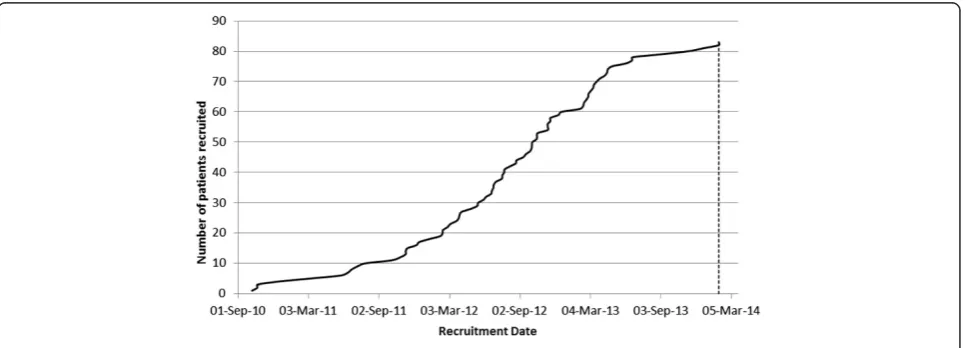
Only 83 participants were recruited (Fig. 1). The
start-up phase did not recruit sufficient numbers to go to the
full trial (planned recruitment of 600). A no-cost
exten-sion was requested with the aim of recruiting 100
partic-ipants. Funding for the main phase of the trial was never
sought since the trial failed to recruit at a rate that was
feasible to support a large study. Multiple reasons
explain poor recruitment of both hospital sites and
patients (Table 1). A key problem was the cost of
inten-sive treatment, largely related to atorvastatin, which was
proposed in the protocol for use in the intensive lipid
control arm [8]. In many cases, the then primary care
trusts (now clinical commissioning groups) refused to
pay for atorvastatin. Nevertheless, none of these
impedi-ments damaged data integrity or validity.
Baseline characteristics
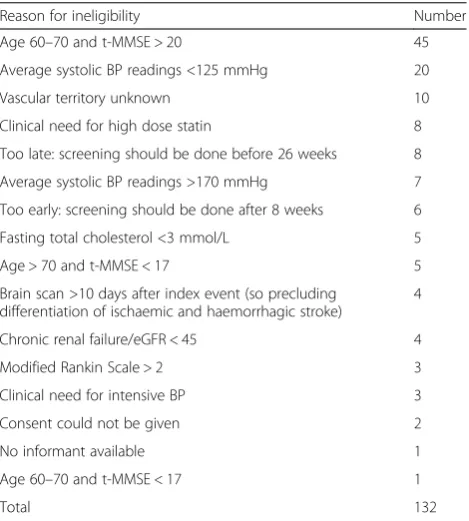
106 patients failed screening with some patients
hav-ing multiple reasons for screen failure (Table 2).
Be-tween 1 October 2010 and 31 January 2014, 83
patients were recruited from 19 sites in the UK; a
further 5 sites screened patients but did not recruit a
patient.
Patient characteristics at baseline are shown in Table 3;
key baseline data included, given as number (%) or mean
(standard deviation): age 74.0 (6.8) years, male 64 (77.1 %),
index stroke ischaemic 77 (92.8 %), stroke onset to
ran-domisation 4.5 [1.3] months, Addenbrooke’s Cognitive
Examination-Revised 86.1 (7.7, maximum score 100),
Montreal Cognitive Assessment 24.0 (2.6, maximum
score 30), modified Rankin Scale 1.1 (0.8), blood
pres-sure 147.1/82.1 (18.6/11.1) mmHg, total cholesterol
4.0 (0.8) mmol/L and LDL cholesterol 2.0 (0.7)
mmol/L. All but one participant had one informant
and a majority had two informants (Table 4).
Reporting of results by allocated treatment
[image:8.595.58.538.102.301.2]The database was locked and the trial unblinded and an
interim analysis performed in November 2014, as per the
SAP. Interim main results were reported at the UK Stroke
Forum in early December 2014. Full results (presented in
Additional file 2) will be submitted for publication once
the final analysis has been performed. Summary and
Table 3
Baseline clinical characteristics. Data are number (%), median [interquartile range] or mean (standard deviation)
(Continued)
IQCODE (from informant) 83 3.0 (0.5) 3.0 (0.5) 3.2 (0.2)
Systolic BP (mmHg) + 83 147.1 147.7 139.8
<140 (%) 83 (18.6) 32 (38.6) (18.6) 30 (39.0) (18.3) 2 (33.3)
<125 (%) 83 9 (10.8) 8 (10.4) 1 (16.7)
Diastolic BP (mmHg) 83 82.1 (11.1) 82.3 (11.1) 80.1 (13.1)
Heart rate (bpm) 83 71.5 (14.2) 71.7 (14.1) 69.5 (16.7)
Lipids (mmol/L)
Total cholesterol + 83 4.0 (0.8) 4.0 (0.8) 4.3 (1.2)
Triglycerides 82 1.3 (0.6) 1.3 (0.6) 1.6 (0.6)
HDL cholesterol 81 1.4 (0.5) 1.4 (0.5) 1.5 (0.5)
LDL cholesterol 80 2.0 (0.7) 2.0 (0.7) 1.9 (1)
Non-HDL cholesterol 81 2.6 (0.8) 2.6 (0.8) 2.8 (0.8)
Estimated GFR (ml/min) 79 67.5 (11.6) 68.0 (11.3) 60.8 (13.7)
Glucose (mmol/L) 77 5.6 (1.6) 5.6 (1.6) 5.7 (2.0)
Percentages are calculated from the number of patients with data for that particular variable
+ Minimisation variable - from June 2013 limited to age, ACE-R, systolic blood pressure and total cholesterol because of low recruitment ^ Protocol violation BP: blood pressure; bpm: beats per minute; HDL: high density lipoprotein; IS: ischaemic stroke; ICH: intracerebral haemorrhage; LDL: low density lipoprotein; MMSE: Mini-Mental State Examination; MoCA: Montreal Cognitive Assessment; NIHSS: National Institutes of Health Stroke Scale; OCSP: Oxfordshire Community Stroke Project; TICS-M: Telephone Interview for Cognitive Status-modified
Memory problem: As reported by patient or informant in response to direct questioning, and information from hospital records
MoCA: Estimated from ACE-R with addition of missing questions for attention (reading list of digits forwards and backwards, reading list of letters and tap with hand at each letter A) and abstraction (similarity between banana and orange, similarity between train and bicycle) and use of the ACE-R, not MoCA, picture of an animal. Non-HDL cholesterol = total cholesterol–HDL cholesterol
Table 4
Identity of first and second informants in 83
participants
Informant 1 2
Wife/partner 52 3
Husband/partner 14 0
Daughter/step-daughter 11 16
Son/step-son 4 12
Friend/neighbour 2 5
Sibling 0 2
Other 0 4
[image:8.595.306.538.608.732.2]individual patient data from PODCAST will be shared
with relevant Cochrane and other systematic reviews.
Discussion
Having recruited 83 patients, PODCAST did not
achieve its adjusted recruitment target of 100 patients.
As a result, the aim of assessing the feasibility of
delivering the main phase was not met. Other aims,
including the ability to obtain and then maintain
dif-ferences in BP and lipid levels between intensive and
guideline groups, ability to collect cognition scores
during regular clinic and telephone follow-up, and
in-cidence rates of cognitive impairment and dementia,
will be reported in the main results.
Conclusions
Future trials of dementia prevention in post-stroke
popula-tions are required because 20
–
30 % of stroke survivors will
have dementia [22], but >50 % of patients will have
cogni-tive impairment [13, 14]. Cognicogni-tive impairment, especially
executive dysfunction, results in impaired function, distress
to patients and carers and is associated with worse
progno-sis [23
–
25]. However, the post-stroke population is very
heterogeneous. Also rates of dementia at or before 1 year
post-stroke range from 41.3 % in hospital series without
ex-cluding prior dementia to 7.4 % in community series of first
ever stroke where prior dementia was excluded [23].
Im-portantly, participants appear to be keen to take part in this
type of study, as post-stroke cognitive impairment is one of
the silent unmet needs in >40 % of stroke survivors at 1
year [26].
Additional files
Additional file 1:Trial protocol.(PDF 2304 kb)
Additional file 2:Plan for reporting the main results.(DOCX 117 kb)
Abbreviations
ACE-R:Addenbrooke’s Cognitive Examination-Revised; BP: blood pressure; BPM: beats per minute; EQ-5D: EuroQoL-5 dimensions; EQ-VAS: EuroQoL-Visual Analogue Scale; HUS: Health Utility Status (derived from EQ-5D); ICH: intracerebral haemorrhage; MMSE: Mini-Mental State Examination; MoCA: Montreal Cognitive Assessment; mRS: Modified Rankin Scale; NIHSS: National Institutes of Health Stroke Scale; PODCAST: Prevention Of Decline in Cognition After Stroke Trial; SAP: statistical analysis plan; SBP: systolic BP; TICS: Telephone Interview Cognition Scale; TOAST: Trial of ORG 10172 in Acute Stroke Treatment; ZDS: Zung Depression Scale.
Competing interests
The following authors report having received recent research or personal funding:
P. Bath–Lundbeck, Phagenesis, ReNeuron R. Stewart - J&J, Lundbeck, Pfizer, Roche.
The remaining authors have no relevant declarations.
Authors’contributions
PS performed statistical analysis. PS, DB and PB wrote the manuscript. JMW and DB analysed neuroimaging. AB, CB and GF advised on dementia management and diagnosis of neurodegenerative or vascular dementia. PB and GF designed the research, and PS and PB analysed the results. KK, JMW, PP, SP, JR, NS and RS helped design the study and analyse results. All authors read and approved the final manuscript.
Acknowledgements
We thank all the patients, and their informants, for participating in the trial. We also thank the funders: the Alzheimer’s Society and the Stroke Association. The sponsor was the University of Nottingham. Finally, we thank the members of the independent Data Monitoring Committee who supervised safety from the beginning to end of the trial. Chief Investigator(s)
P. M. W. Bath (trial, and lipid arm), G. Ford (BP arm) Trial Steering Committee
Independent members:John O’Brien (Chair, Newcastle/Cambridge), Stephen
Ball (Leeds)
Grant holders:Philip M. W. Bath (Chief Investigator, Nottingham), Gary Ford (Co-Chief Investigator, Newcastle/Oxford), Nikola Sprigg (Deputy Chief Investigator, Nottingham), Clive Ballard (London), Alistair Burns (Manchester), Jonathan Mant (Cambridge), Peter Passmore (Belfast), Stuart Pocock (Consultant Statistician, London), John Reckless (Bath), Rob Stewart (London), Joanna M Wardlaw (Neuroradiologist, Edinburgh).
Patient & Carer representatives:Dave Hanbury, John Murray, Shirley Nurock Funders' representative:Suzanne Sorensen (Alzheimer’s Society,−2011), James Pickett (Alzheimer’s Society, 2011–), Peter Coleman (Stroke Association, 2010–14), Kate Holmes (2014–).
Sponsor representative:Angela Shone (University of Nottingham). Independent Data Monitoring Committee
John Geddes (Oxford, Chair), Jan Staessen (Leuven), Chris Weir (Glasgow, Statistician).
Trial Management Committee Trial Managers:S. Utton (−2014). Assistant Trial Manager:H. Foster (2012–).
Medics:Sandeep Ankolekar (−2011), K. Krishnan (2012–).
Coordinators:L. Stokes (−2012), M. Mangoyana (2012–13), K. Whittamore (2013–14), M. Stringer (2014–).
Outcome Coordinators:J. Saunders (−2012), L. Wilkins (2011–12), L. Cobane (2012–13), J. Keeling (2013–).
Data managers:T. Jones (−2013), D. Hazle (2012–), M. Sampson (2013–). Finance:W. Clarke.
Secretaries:Y. Smallwood, L. Dunn (2013–14). Cognition/Dementia Adjudicators:
Alistair Burns (Chair, Manchester), Clive Ballard (London), Gary Ford (Newcastle).
Vascular Events Adjudicators:
Peter Passmore (Chair, Belfast), Amit Mistri (Leicester, 2013–14), Robert Henderson (Nottingham, 2013–14).
Serious Adverse Events Adjudicators Tim England (Derby).
Neuroimaging Adjudicators
Joanna M. Wardlaw (Chair, Edinburgh), Dan Blackburn (Sheffield, 2014). Health economics
Paul McCrone (London), Martin Knapp (London) Statistical Analysis
L. Fox (2012–13), P. Scutt (2013–), Lisa Woodhouse (2014–). Data Management and Programming
Liz Walker, L. Haywood (2011–), Richard Dooley (2013–14) Recruiting sites (patients recruited/screened): PI, Investigators Aberdeen Royal Infirmary (6/14): Dr M. J. MacLeod, A. Joyson, H. Gow, J. Furnace
Aintree Hospitals NHS Foundation Trust (5/9): Dr R. Durairaj, C. Cullen, D. Dickinson, M. Ashkar, T. Ingram, V. Sutton, Z. Mellor
Birmingham, Heart of England NHS Foundation Trust–Solihull Hospital (2/9): Dr K. Elfandi, U. Kahn, S. Stafford
Bradford Teaching Hospitals NHS Foundation Trust (1/5): Dr C. Patterson, B. Hairsine, L. Johnston, R. Bellfield
Chesterfield Royal Hospital NHS Foundation Trust (2/9): Dr M. Sajid, M. Ball Cornwall, Royal Hospitals NHS Trust, Truro (9/17): Dr F. Harrington, A. Mate, C. Schofield, G. Courtauld, M. Drake
Doncaster & Bassetlaw Hospitals NHS Foundation Trust (1/2): Dr M. Kini, D. Walstow, M. Hanna
Inverness, Raigmore Hospital (1/3): Dr P. F. Findlay, A. Macaden, I. Shread Margate, QEQM Hospital (1/1): Dr G. Thomas, S. A. Jones
Mid Cheshire Hospitals NHS Foundation Trust (3/10): Dr A. Kalathil, N. Gautam, R. Miller
Newcastle-upon-Tyne Hospitals NHS Foundation Trust (6/15): Dr S. Louw, A. Barkat, G. Kennedy, M. Fawcett, T. Thompson, V. Hogg
North Tees & Hartlepool NHS Foundation Trust (2/4): Dr B. Kumar, D. Bruce, M. Platton
Nottingham University Hospitals NHS Trust (22/27): Dr A. K. Shetty, Prof P. Bath, Dr K. Krishnan, F. Shelton, J. Clarke, L. Wilkins, Z. Rose, K. Whittamore
Scarborough General Hospital (1/1): Dr J. Paterson, K. Deighton
South Tyneside NHS Foundation Trust (1/4): Dr J. Scott, J. Graham, M. Duffy West Cumberland Hospital, Whitehaven (1/1): Dr E. Orugun, H. Crowther, R. Jolly
Yeovil District Hospital NHS Foundation Trust (3/17): Dr K. Rashed, C. Buckley, C. Vickers, D. Hayward, E. Keeling, S. Board
York Hospitals NHS Foundation Trust (10/11): Dr J. Coyle, A-M Porteous, M. Keeling, N. Dyer, P. Willcoxson
Sites that screened but did not recruit:
Bath, Royal United Hospital NHS Trust (4): Dr J. Reckless, B. Madigan, D. Button Derby Hospitals NHS Foundation Trust (1): Dr K. Muhiddin, M. Mangoyana Leicester, University Hospitals (2): Dr D. Eveson, S. Khan
Poole Hospital NHS Foundation Trust (7): Dr S. Ragab, C. Dickson South Tees Hospitals NHS Foundation Trust (2): Dr D. Broughton, K. Chapman
Author details
1
Stroke Trials Unit, Division of Clinical Neuroscience, University of
Nottingham, City Hospital campus, Hucknall Road, Nottingham NG5 1 PB, UK. 2
Sheffield Institute for Translational Neuroscience, University of Sheffield, 385A Glossop Road, Sheffield S10 2HQ, UK.3Wolfson Center for Age-Related Diseases, Wolfson Wing, Hodgkin Building, King’s College London, Guy’s Campus, London SE1 1UL, UK.4Faculty of Medical and Human Sciences, Institute of Brain, Behavior and Mental Health, University of Manchester, Grafton Street, Manchester M13 9NT, UK.5Medical Sciences Division, University of Oxford, John Radcliffe Hospital, Headley Way, Oxford OX3 9DU, UK.6General Practice & Primary Care Research Unit, University of Cambridge, Addenbrooke’s Hospital, Forvie Site, Cambridge CB2 0SR, UK.7Institute of Clinical Sciences, Queens University, Belfast, Royal Victoria Hospital, Block B, Belfast BT12 6BA, UK.8Department of Medical Statistics, London School of Hygiene and Tropical Medicine, Keppel Street, London WC1E 7HT, UK. 9
Department of Endocrinology, Royal United Hospital, Combe Park, Bath BA1 3NG, UK.10King’s College London (Institute of Psychiatry, Psychology and Neuroscience), Department of Psychological Medicine (Box 63), De Crespigny Park, London SE5 8AF, UK.11Centre for Clinical Brain Sciences, Western General Hospital, Crewe Rd, Edinburgh EH4 2XU, UK.
Received: 18 May 2015 Accepted: 27 October 2015
References
1. Algra A, van Gijn J. Aspirin at any dose above 30 mg offers only modest protection after cerebral ischaemia. J Neurol Neurosurg Psychiatry. 1996;60(2):197–9.
2. EAFT (European Atrial Fibrillation Trial) Study Group. Secondary prevention in non-rheumatic atrial fibrillation after TIA or minor stroke. Lancet. 1993;342:1255–62.
3. Halkes PH, Gray LJ, Bath PM, Diener HC, Guiraud-Chaumeil B, Yatsu FM, et al. Dipyridamole plus aspirin versus aspirin alone in secondary prevention after TIA or stroke: a meta-analysis by risk. J Neurol Neurosurg Psychiatry. 2008;79(11):1218–23.
4. Leonardi-Bee J, Bath PM, Bousser MG, Davalos A, Diener H-C, Guiraud-Chaumeil B, et al. Dipyridamole for preventing recurrent ischemic stroke and other vascular
events: a meta-analysis of individual patient data from randomized controlled trials. Stroke. 2005;36(1):162–8.
5. Manktelow BN, Potter JF. Interventions in the management of serum lipids for preventing stroke recurrence. Cochrane Database Syst Rev.
2009;8(3):CD002091.
6. Rashid P, Leonardi-Bee J, Bath P. Blood pressure reduction and the secondary prevention of stroke and other vascular events: a systematic review. Stroke. 2003;34:2741–9.
7. Ankolekar S, Geeganage C, Anderton P, Hogg C, Bath PM. Clinical trials for preventing post stroke cognitive impairment. J Neurol Sci. 2010;299(1–2):168–74. 8. Blackburn D, Krishnan K, Fox L, Ballard C, Burns A, Ford G, et al. Prevention
of Decline in Cognition after Stroke Trial (PODCAST): a study protocol for a factorial randomised controlled trial of intensive versus guideline lowering of blood pressure and lipids. Trials J. 2013;14:401.
9. Mioshi E, Dawson K, Mitchell J, Arnold R, Hodges JR. The Addenbrooke's Cognitive Examination Revised (ACE-R): a brief cognitive test battery for dementia screening. Int J Geriatr Psychiatry. 2006;21(11):1078–85. 10. Pendlebury ST, Mariz J, Bull L, Mehta Z, Rothwell PM. MoCA, ACE-R, and
MMSE versus the National Institute of Neurological Disorders and Stroke-Canadian Stroke Network Vascular Cognitive Impairment Harmonization Standards Neuropsychological Battery after TIA and stroke. Stroke. 2012;43(2):464–9.
11. Morris K, Hacker V, Lincoln NB. The validity of the Addenbrooke's Cognitive Examination-Revised (ACE-R) in acute stroke. Disabil Rehabil. 2012;34(3):189–95.
12. Melkas S, Vataja R, Oksala NK, Jokinen H, Pohjasvaara T, Oksala A, et al. Depression-executive dysfunction syndrome relates to poor poststroke survival. Am J Geriatr Psychiatry. 2010;18(11):1007–16.
13. Nys GM, van Zandvoort MJ, de Kort PL, Jansen BP, Kappelle LJ, de Haan EH. Restrictions of the Mini-Mental State Examination in acute stroke. Arch Clin Neuropsychol. 2005;20(5):623–9.
14. Nys GM, van Zandvoort MJ, de Kort PL, van der Worp HB, Jansen BP, Algra A, et al. The prognostic value of domain-specific cognitive abilities in acute first-ever stroke. Neurology. 2005;64(5):821–7.
15. Wiberg B, Kilander L, Sundström J, Byberg L, Lind L. The relationship between executive dysfunction and post-stroke mortality: a population-based cohort study. BMJ Open. 2012;2:3.
16. Dong Y, Slavin MJ, Chan BP, Venketasubramanian N, Sharma VK, Collinson SL, et al. Improving screening for vascular cognitive impairment at three to six months after mild ischemic stroke and transient ischemic attack. Int Psychogeriatr. 2014;26(5):787–93.
17. Dong Y, Yean Lee W, Hilal S, Saini M, Wong TY, Chen CL, et al. Comparison of the Montreal Cognitive Assessment and the Mini-Mental State Examination in detecting multi-domain mild cognitive impairment in a Chinese sub-sample drawn from a population-based study. Int Psychogeriatr. 2013;25(11):1831–8.
18. Pendlebury ST, Mariz J, Bull L, Mehta Z, Rothwell PM. Impact of different operational definitions on mild cognitive impairment rate and MMSE and MoCA performance in transient ischaemic attack and stroke. Cerebrovasc Dis. 2013;36(5–6):355–62.
19. Newkirk LA, Kim JM, Thompson JM, Tinklenberg JR, Yesavage JA, Taylor JL. Validation of a 26-point telephone version of the Mini-Mental State Examination. J Geriatr Psychiatry Neurol. 2004;17(2):81–7.
20. Barber M, Stott DJ. Validity of the Telephone Interview for Cognitive Status (TICS) in post-stroke subjects. Int J Geriatr Psychiatry. 2004;19(1):75–9. 21. Weir CJ, Lees KR. Comparison of stratification and adaptive methods for
treatment allocation in an acute stroke clinical trial. Stat Med. 2003;22:705–26.
22. Pendlebury ST, Rothwell PM. Prevalence, incidence, and factors associated with pre-stroke and post-stroke dementia: a systematic review and meta-analysis. Lancet Neurol. 2009;8(11):1006–18. 23. Oksala NK, Jokinen H, Melkas S, Oksala A, Pohjasvaara T, Hietanen M, et al.
Cognitive impairment predicts poststroke death in long-term follow-up. J Neurol Neurosurg Psychiatry. 2009;80(11):1230–5.
24. Tatemichi TK, Paik M, Bagiella E, Desmond DW, Pirro M, Hanzawa LK. Dementia after stroke is a predictor of long-term survival. Stroke. 1994;25(10):1915–9.
25. Wiberg B, Lind L, Kilander L, Zethelius B, Sundelof JE, Sundstrom J. Cognitive function and risk of stroke in elderly men. Neurology. 2010;74(5):379–85. 26. McKevitt C, Fudge N, Redfern J, Sheldenkar A, Crichton S, Rudd AR, et al.
![Table 3 Baseline clinical characteristics. Data are number (%), median [interquartile range] or mean (standard deviation)](https://thumb-us.123doks.com/thumbv2/123dok_us/9039427.975111/6.595.60.532.106.704/table-baseline-clinical-characteristics-number-interquartile-standard-deviation.webp)
![Table 3 Baseline clinical characteristics. Data are number (%), median [interquartile range] or mean (standard deviation) (Continued)](https://thumb-us.123doks.com/thumbv2/123dok_us/9039427.975111/7.595.58.531.105.732/table-baseline-clinical-characteristics-interquartile-standard-deviation-continued.webp)
![Table 3 Baseline clinical characteristics. Data are number (%), median [interquartile range] or mean (standard deviation) (Continued)](https://thumb-us.123doks.com/thumbv2/123dok_us/9039427.975111/8.595.306.538.608.732/table-baseline-clinical-characteristics-interquartile-standard-deviation-continued.webp)
