http://dx.doi.org/10.4236/ajmb.2014.44020
How to cite this paper: da Silva Freitas, E.H., et al. (2014) Leptin Signaling Modulates Expression of Polycomb and Trithorax Complexes in the Brain of Fat Tissue Implanted Polycystic Ovarian Sindrome Mice. American Journal of Molecular Biology, 4, 177-192. http://dx.doi.org/10.4236/ajmb.2014.44020
Leptin Signaling Modulates Expression of
Polycomb and Trithorax Complexes in the
Brain of Fat Tissue Implanted Polycystic
Ovarian Sindrome Mice
Eduardo Henrique da Silva Freitas
1,2, Samuel Marcos Ribeiro de Noronha
3,
Maria Nazareth Gamboa Ritto
1,4, Carlos Fernandes Baptista
1,4,
Ismael Dale Cotrim Guerreiro da Silva
1, Silvana Aparecida Alves Correa-Noronha
1,3*,
Ivaldo da Silva
11Gynecology Department, Federal University of Sao Paulo, Paulista School of Medicine (UNIFESP-EPM), Sao
Paulo, Brazil
2General Medicine Department, Federal University of Rio de Janeiro State (UNIRIO), Rio de Janeiro, Brazil 3Translacional Surgery Division, Surgery Department, Federal University of Sao Paulo, Paulista School of
Medicine (UNIFESP-EPM), Sao Paulo, Brazil
4General and Specialized Surgery Department, Federal University of Rio de Janeiro State (UNIRIO),
Rio de Janeiro, Brazil
Email: [email protected], [email protected], [email protected],
[email protected], [email protected], *[email protected], [email protected]
Received 12 August 2014; revised 10 September 2014; accepted 8 October 2014
Copyright © 2014 by authors and Scientific Research Publishing Inc.
This work is licensed under the Creative Commons Attribution International License (CC BY).
http://creativecommons.org/licenses/by/4.0/
Abstract
The Polycystic Ovary Syndrome (PCOS) is the most common androgenic disorder in women during reproductive life. PCOS may also be accompanied by metabolic syndrome and recent studies point to leptin as playing a role in disrupting infertility and in changing the energy balance in obese mice through its action on the hypothalamus. The aim is to assess the expression of the Polycomb & Trithorax Complexes genes in brain of mice transplanted with fat tissue from normal mice, in order to better understand the neuronal mechanisms underlying the reversion of PCOS. Three B6 V-Lepob/J mouse groups: Normal weight, obese and seven-day-treatment obese had their brain RNA extracted and submitted to an 84 Polycomb & Trithorax Complexes genes PCR Array plate and MetacoreTM pathways localization. Genomic profiles obtained were compared to the ones of
the normal-weight-mice group. Differentially expressed genes were 13% and 26% respectively to control and treatment. Major changes were in genes: Snai1/31; Smarca1/−17; Dnmt3b/4.7; Ezh1/ 15. Altered genes were associated to canonical pathways and provided 3 networks related to epi-
1. Introduction
The Polycystic Ovary Syndrome (PCOS) is the most common androgenic disorder in women during reproduc- tive life [1]. PCOS may also be accompanied by metabolic syndrome and recent studies point to leptin as play- ing a role in disrupting infertility and in changing the energy balance in obese mice through its action on the hypothalamus [2] [3].
It is known that epigenetic mechanisms times the initiation of female puberty in rats and regulates the re- lease of kisspeptins, gonadotropin releasing hormone (GnRH), follicle stimulating hormone (FSH) and luteining hormone (LH) in mouse [4]. DNA methylation is involved in the regulation of many genes expressed in a tissue, playing a crucial role in determining cells fate [5] and it is closely related to chromatin structure [6] [7]. Cellular differentiation involves various genome-wide histone (H) modifications that have been directly linked to active and inactive structures of the chromatin [8] [9]. Acetylation of lysine (K) residues is a prevalent and reversible posttranslational modification and diminishes the interaction between histone and DNA molecules facilitating the binding of non-histone proteins to targeted regions of the DNA [10]. It is also known that nonhistone me- thylation may function as a fingerprint that establishes repressive and active chromatin configuration at target loci causing heritable changes in gene expression [11]. The histone code tightly controls DNA packaging and chromatin remodeling, which leads to repression or activation of gene transcription [12].
Proteins of the polycomb group exert their function by forming three multi-protein complexes that act as transcriptional repressors, PRC1, PRC2 and PhoRC [11]. The PRC2 complex trimethylates H3K27, a well- known mark for silenced chromatin associated with promoters and regulatory elements of PcG target genes [13]-[15]. Furthermore the PhoRC interacts with H3K27 upstream of PcG target genes and PRC1 complex maintains the chromatin in a silenced state by binding to H3K27me3 [16].
Trithorax group (TrxG) proteins form multi-subunit complexes to exert their functions as well. Three com- plexes have been purified in mammalian cells so far, SET1-like, BRM and the MLL supercomplex [11]. The SET1-like complex contains HMTase activities and also methylates lysine 4 of histone 3, which is highly asso- ciated with promoter regions of transcription active loci [17]-[19]. The BRM complex contains the SWI/SNF chromatin-remodeling ATPase BRM [20] and the MLL supercomplex has got HMTase and chromatin remode- ling activities [21].
The objective of this study is to assess the expression of the Polycomb & Trithorax Complexes genes in the brain of mice transplanted with fat tissue from normal mice, in order to better understand the neuronal mechan- isms underlying the reversion of PCOS.
2. Methods
2.1. Experimental Groups
B6.V-Lepob/J mice with 2 and 3 months of age were divided into three groups: normal weight control (lean), obesity control and obese seven days mice transplanted with adipose tissue from lean mice. After treatment, these mice were sacrificed and their brains were used to total RNA extraction.
2.2. RNA Extraction
cording to the manufacturer’s protocol. Total RNA was purified with Qiagen RNeasy Mini Kit and treated with DNase A. The quantity and quality of extracted RNA were measured by espectrophotometer (Nanodrop Tech- nologies Inc., Rockland, DE).
2.3. Real Time PCR Array
According to the manufacturer’s (Qiagen) methodology, reverse transcriptase (RT) was carried out for the syn- thesis of cDNA. For each sample we used a PCR array plate containing 84 different pairs of primers as a tem- plate in order to study the expression of genes related to the Polycomb & Trithorax Complexes (RT² Profiler™ PCR Array; SABiosciences).
2.4. Analysis of Relevant Biological Processes and Networks by MetaCore
The MetaCore software (GeneGo, St. Joseph, MI) is a computational resource that uses logic operations for identifying biological processes that are altered because of changes in gene expression. Genes with altered ex- pression were mapped to Gene Ontol’ogy (GO) using MetaCore algorithm. GO annotations were used as indi- cators of the biological functions. GO describes gene products in terms of their associated biological processes, cellular components, and molecular functions. The GO entries are hierarchically linked, thus allowing construc- tion of cluster genes of crossed pathways.
2.5. Statistical Analysis
These results were analyzed by descriptive statistics (means and standard deviation) and inferential statistics through the Student’s t-test, with significance level of 5% (p < 0.05). Real-time PCR array reactions were pro- cessed through the online software RT2 Profiler™ PCR Array Data Analysis (SABiosciences).
3. Results
3.1. Experimental Results for Treatment with Implant of Gonadal Adipose Tissue during
Seven Days
[image:3.595.230.398.559.708.2]The results presented in this subsection is relate to the treatment for seven days with implantation of gonadal fat in obese ob/ob mice.
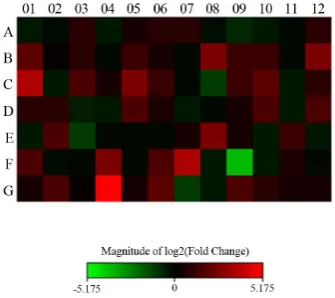
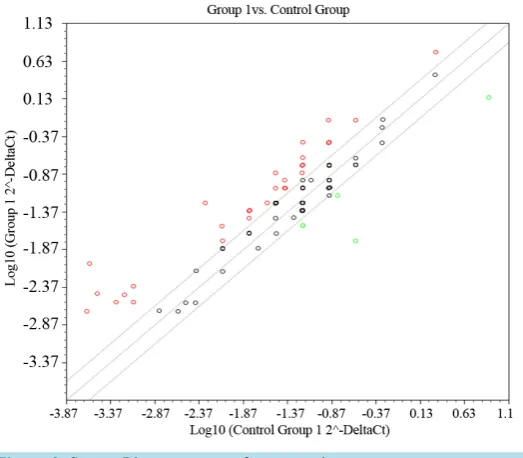
Figure 1andFigure 2 show the gene expression of all genes by the PCR array plate of genes related complex Polycomb and Trithorax genes in the form of heat or dispersion points graph, respectively.
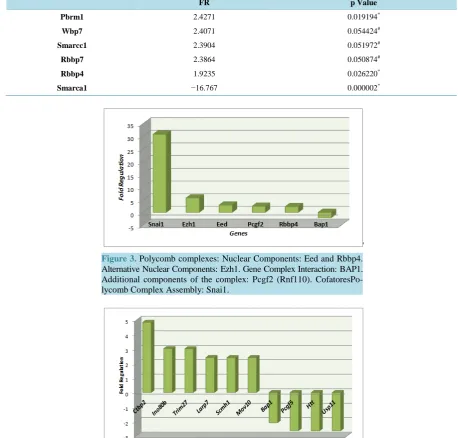
After treatment for seven days with the implantation of gonadal fat from lean mices, we performed the analy- sis of gene expression data. The treated mice were compared to untreated controls. And, after this comparison, the values of Fold Regulation (FR), which expresses how many times increase (hyper-regulation) or decreased (hypo-regulating) the expression of a specific gene occurs with which build Tables 1-3were obtained and the respective Figures 3-5, shown immediately.
The increase in gene expression was determined when the RF is greater than 2.0 or less than −2.0. Only con-
Figure 2. Scatter Plott treatment after seven days.
Table 1. Polycomb complexes: Nuclear Components: Eed and Rbbp4. Alternative Nuclear Components: Ezh1. Gene Com-plex Interaction: BAP. Additional components of the comCom-plex: Pcgf2 (Rnf110). CofatoresPolycomb ComCom-plex Assembly: Snai1.
FR p Value
Ezh1 5.6584 0.013714*
Eed 2.8655 0.028566*
Rbbp4 2.2595 0.018420*
Bap1 −2.0851 0.020469*
Snai1 30.7590 0.018652*
Pcgf2 2.4044 0.052437#
FR = Fold Regulation; *p < 0.05; #p for trend.
Table 2.Polycomb cofactors: Genes Complex Interaction: Bap1, Ctbp2, Htt, Ino80b, Larp7, Mov10, Pcgf5, Trim27, Usp11. Nuclear Complex: Scmh1.
FR p Value
Ctbp2 4.8470 0.007365*
Ino80b 3.0283 0.001128*
Trim27 3.0178 0.001059*
Larp7 2.4170 0.012660*
Scmh1 2.4077 0.052471#
Mov10 2.4068 0.051891#
Bap1 −2.0851 0.020469*
Pcgf5 −2.6338 0.000035*
Usp11 −2.6368 0.067188#
Htt −2.6422 0.057305#
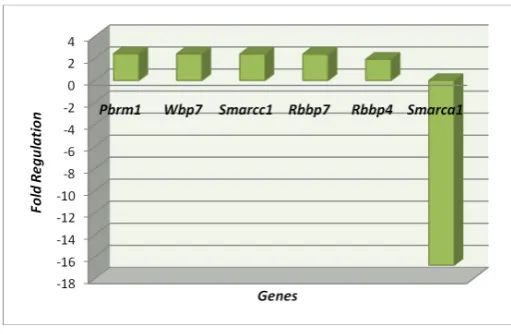
[image:4.595.87.537.532.708.2]Table 3. Trithorax Complexes: Nuclear Components: Rbbp4, Rbbp7, Smarca1, Wbp7. Genes Complex Interaction: Smarcc1.
FR p Value
Pbrm1 2.4271 0.019194*
Wbp7 2.4071 0.054424#
Smarcc1 2.3904 0.051972#
Rbbp7 2.3864 0.050874#
Rbbp4 1.9235 0.026220*
[image:5.595.183.446.410.568.2]Smarca1 −16.767 0.000002*
Figure 3. Polycomb complexes: Nuclear Components: Eed and Rbbp4. Alternative Nuclear Components: Ezh1. Gene Complex Interaction: BAP1. Additional components of the complex: Pcgf2 (Rnf110). CofatoresPo-lycomb Complex Assembly: Snai1.
Figure 4. Polycomb cofactors: Genes Complex Interaction: BAP1, Ctbp2, Htt, Ino80b, Larp7, Mov10, Pcgf5, Trim27, and Usp11. Nuclear Com-plex: Scmh1.
sider the values on which the p value was less than 0.05 and significant.
Table 1, Table 2, Figure 3andFigure 4 are on the Polycomb genes in Complex and Table 3 and Figure 5 is on the data to Trithorax complex.
Most genes are presented hyper-regulated (71%); furthermore, most belong to the Polycomb complex (71%) than to Trithorax complex (21%).
3.2. Experimental Results for Treatment with Implant of Gonadal Adipose Tissue during
45 Days
Figure 5.Trithorax Complexes: Nuclear Components: PBRM1, Rbbp4, Rbbp7, Smarca1, Wbp7. Genes Complex Interaction: Smarcc1.
ob/ob mice.
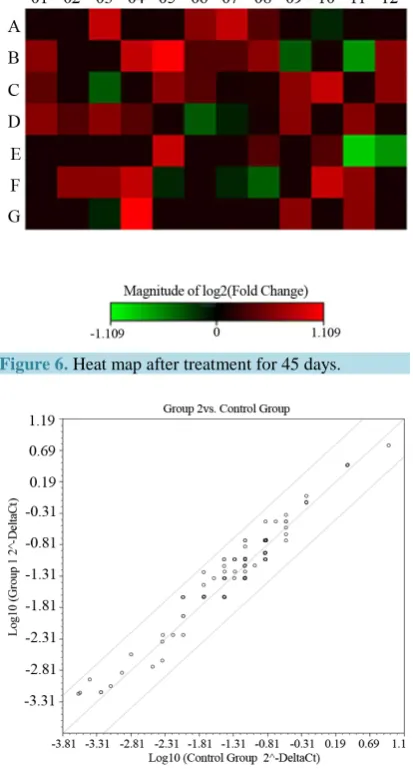
Figure 6 and Figure 7 show the gene expression of all genes in the PCR array plate of genes related complex Polycomb and Trithorax maps in the form of heat or dispersion points respectively graph.
After treatment for 45 days with the implantation of gonadal fat from lean rats, we performed the analysis of gene expression data. The treated mice were compared to untreated controls. And, after this comparison, the values obtained Fold Regulation (FR), which expresses how many times increase (hyper-regulation) or de- creased (hypo-regulating) the expression of a specific gene occurs, and build Table 4 and corresponding Figure 8, soon displayed. In this table and figure genes related to the Polycomb Complex Complex Trithorax are pre- sented. All hyper-regulated genes were most genes (89%) belong to the Polycomb complex.
Figure 9shows the comparison between 45 and 7 days treatment of obese mice with gonadal adipose tissue from lean mice.
3.3. Metacore Analysis
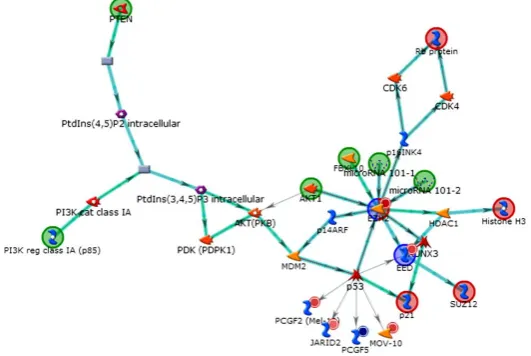
In Figures 10-12 we can see the pathways constructed by the genes in the program Metacore® (Thonson Reuters) for the genes related to Polycomb and Thritorax that presented with differential expression.
4. Discussion
Polycomb (PcG) proteins were originally identified as part of an epigenetic cellular memory system that controls gene silencing via chromatin structure. However, recent reports suggest that they are also involved in controlling dynamics and plasticity of gene regulation, particularly during differentiation, by interacting with other compo- nents of the transcriptional apparatus [22].
Enhancer of zeste homolog 1 (Ezh1) is a gene that encodes a PcG protein that initiates repressionin certain chromatin domains and regulates developmental genes expression, which is closely related to cell proliferation [23]. This gene is up-regulated after 7 days of treatment
Others genes related to transcription factors, DNA methyltransferases and chromatin remodeling proteins member were also studied. Snail homolog 1 (SNAl1) proteins are zinc-finger that play important roles in deter- mining cell-fate [24]. This gene isup-regulated after 7 days of treatment.
DNA methyltransferase 3B (Dnmt3b) dynamically regulate chromatin remodeling and gene expression. DNA methyltransferases contribute to the establishment and maturation of cell fate during retinal development [25]. This gene is also upregulated after 7 days of treatment.
Figure 6. Heat map after treatment for 45 days.
[image:7.595.88.538.537.710.2]Figure 7. Scatter Plott after treatment for 45 days.
Table 4. Polycomb cofactors: Genes Complex Interaction: Cbx7, Ctbp1, INO80, Ino80b, L3mbtl2. Complex Assembly: Snai1. Genes Complex Interaction: Trim27. Polycomb complex: Alternative Nuclear Components: Ezh1. Trithorax Com-plexes: Nuclear Components: Wdr5.
Fold Regulation p Value
Cbx7 3.1463 0.0221*
Ino80b 2.5308 0.00019*
Ezh1 2.5181 0.0002*
Wdr5 2.514 0.0002*
Ctbp1 2.4937 0.0002*
Ino80 2.4980 0.0002*
Trim27 2.4821 0.0002*
Snai1 2.4512 0.0001*
L3mbtl2 2.0035 0.0261*
Figure 8. Polycomb cofactors: Genes Complex Interaction: Cbx7, Ctbp1, INO80, Ino80b, L3mbtl2. Complex Assembly: Snai1. Genes Complex Interaction: Trim27. Polycomb complex: Alternative Nuclear Components: Ezh1. Trithorax Complexes: Nuclear Components: Wdr5.
Figure 9. Comparison between 45 and 7 days of treatment with gonadal adipose tissue from lean mice.
[image:8.595.181.447.507.685.2]Figure 11. Second network obtained by Metacore analysis of control vs 7- day treatment: SUZ12, EZH2, AKT1, microRNA 101-2, microRNA 101-1. Main GO Process related: covalent chromatin modification (66.7%). Or-ganic (Hub-centric).
Figure 12. Third network obtained by Metacore analysis of control vs. 7- day treatment: Plakoglobin, Beta-catenin, C (HCV), Somatotropin, DNM- T3B. Main GO Process related: response to oxygen-containing compound (100%). Organic (Hub-centric).
In summary, exogenous leptin drives the phisyological variables related to POS to a normal status (glycemia, ovulation and fertility, body weight and food intake) only after a 45-day treatment period. Exogenous leptin reestablishes a normal pattern of ovarian cycle controlling hormones release after a 7-day treatment period. Un- derlying neuronal changes caused by leptin in obese mice brain, there is an important role being played by the histone code. Here there is evidence that leptin drives the chromatin packing to a more condensed pattern. Upregulation of methyltransferase genes, like Ezh1, favors this thought. In summary the Polycomb & Trithorax complexes might answer for the silencing of some downregulated genes in the obese mice brain when exposed to leptin, like Neu4 and Scg2.
15 genes (68%) of that differentially expressed were related to polycomb and seven genes (32%) were related to trithorax.
[image:9.595.180.450.332.531.2]creased in UN offspring, whereas pituitary GR was altered in a sex-specific manner. In peripheral polymor- phonuclear leukocytes there were no changes in GR methylation or protein, indicating that this epigenetic analysis did not predict changes in the brain. Overall, these results suggest that moderate changes in maternal nutrition, around the time of conception, signal life-long and tissue-specific epigenetic alterations in a key gene regulating energy balance in the hypothalamus [27].
De Giorgio et al. (2009) investigated the modifications in the hypothalamic gene expression induced by high-fat (HF) and low-fat (LF) meal ingestion in mice, in order to identify the signals rapidly mediating the hy- pothalamic control on energy intake. The hypothalamus was sampled and the serial analysis of gene expression method was performed. Approximately 254,588 tags, which correspond to 65,548 tag species, were isolated from the 3 groups. The data showed twelve transcripts regulated by food intake. Among these, 2 transcripts have mitochondrial functions (MtCo1, Ppid), 3 are involved in protein transport and regulation (Ube2q2, Mup1, Sec13), 1 in cellular pH control (Slc4a3) and another 1 has a role in the epigenetic control of gene expression (Setd3). In addition, 5 potentially novel transcripts were differentially modulated. So, these authors identified genes that may regulate hypothalamic circuits governing the early response to food intake 3 genes were specifically mod- ulated by high-fat intake [28].
Makedonski et al. (2005) hypothesize that part of the Rett syndrome (RS), a neurodevelopmental disorder, phenotype is due to MeCP2-associated silencing of UBE3A. Indeed, UBE3A mRNA and protein are shown here to be significantly reduced in human and mouse MECP2 deficient brains. This reduced UBE3A level was asso- ciated with biallelic production of the UBE3A antisense RNA. In addition, MeCP2 deficiency resulted in ele- vated histone H3 acetylation and H3 (K4) methylation and reduced H3 (K9) methylation at the PWS/AS im- printing center, with no effect on DNA methylation or SNRPN expression. We conclude, therefore, that MeCP2 deficiency causes epigenetic aberrations at the PWS imprinting center. These changes in histonemodifications result in loss of imprinting of the UBE3A antisense gene in the brain, increase in UBE3A antisense RNA level and, consequently reduction in UBE3A production [29].
There are no studies in the literature reporting the study of epigenetic modifications in brain of mice PCOS, diabetic or infertile. This present work is the first to study the alterations of genes related to these changes.
The genes of the Polycomb Complexes and cofactors that changed were: CBX2, Ctbp2, DNMT3B, Eed, EzH1, INO80B, JARID2, Larp7, Mov10, Pcgf2, Pcgf5, RNase I, Scmh1, Snai1 and Trim27.All genes in this group were up-regulated, except for Pcgf5. The most over-expressed genes were Snai1, Ctbp2, DNMT3B, and Ezh1 RnaseI.
Cromobox 2 (CBX2) is a component of Polycomb repressive complex 1 (PRC1) [30].
C-terminal binding protein 2 (CTBP2), in mammals, are among the best characterized transcriptional core- pressors [31]. CtBPs were suggested to regulate neuronal differentiation and they were implied in the control of gene expression during epileptogenesis. However, the expression patterns of CtBP family members in specific brain areas and their subcellular localizations in neurons in situ are largely unknown. It is a component trans- criptional repressor complex.
Alternatively spliced transcript variants encoding multiple isoforms have been observed. Genetic variation in DNMT3B and increased global DNA methylation [32].
Embryonic ectoderm development (EED) is related to chromatin modification and histone mthylation. Preventing the eviction of EED from the Kiss1 promoter disrupted pulsatile gonadotropin-releasing hormone release, delayed puberty and compromised fecundity. This results identify epigenetic silencing as a mechanism underlying the neuroendocrine control of female puberty [4] [33].
Enhancer of zeste homolog 1 (EZH1) belongs to PcG complex in promoting mRNA transcription [34]. INO80 complex subunit B, is a Component of INO80 complex. A multisubunit protein complex that contains the Ino80p ATPase; exhibits chromatin remodeling activity and 3' to 5' DNA helicase activity. INO80 is impor- tant for efficient damage repair or replication-fork stabilization in actively transcribed regions [35].
Jumonji AT rich interactive domain 2 (JARID2) gene is an ortholog of the mouse Jarid2 gene, which encodes a nuclear protein essential for mouse embryogenesis, including neural tube formation. Overexpression of the mouse gene negatively regulates cell proliferation. The jumonji proteins contain a DNA-binding domain, called an AT-rich interaction domain (ARID), and share regions of similarity with human retinoblastoma-binding pro- tein-2 and the human SMCX protein. Many proteins in the jumonji family may regulate chromatin and gene ex- pression, and control development through various signaling pathways. Then, we can highlight the roles of jmj and jumonji family proteins in chromatin regulation and development [36].
La ribonucleoprotein domain family, member 7 (LARP7) is related to process: RNA processing, germ cell pro- liferation, negative regulation of chromatin binding, negative regulation of transcription from RNA polymerase II promoter and positive regulation of G1/S transition of mitotic cell cycle. Larp 7 is related to regulating euka- ryotic transcription [37].
Moloney leukemia virus 10 (MO10) or homeobox A3 (Hoxa3), has a helicase activity and the integration pattern of murine leukemia virus appears to be largely driven by regions that have high enrichment for multiple marks of active chromatin [38].
Polycomb group ring finger 2 (Pcgf2) is a component of PRC1 complex and PcG protein complex. Polycomb group ring finger 5 (PCGF5) is a component of PcG protein complex. Polycomb-group RING finger homologs (PCGF1, PCGF2, PCGF3, PCGF4, PCGF5, and PCGF6) are critical components in the assembly of distinct Po-lycomb repression complex 1 (PRC1)-related complexes [39].
Sex comb on midleg homolog 1 (Scmh1) is related to process of chromatin remodeling, multicellular orga-nismal development and negative regulation of transcription, DNA-dependent. These reveal a previously un-known mechanism of neuroprotection that involves gene repressors of the PcG family [40].
Snail homolog 1 (SNAII), Over expression of Snail inhibits adipogenesis in vivo[41].
Tripartite motif-containing 27 (TRIM 27), related to process of negative regulation of transcription from RNA polymerase II promoter. TRIM27 forms a complex with and ubiquitinates the ubiquitin-specific protease USP7, which deubiquitinates receptor-interacting protein 1 (RIP1), resulting in the positive regulation of TNF-α-in- duced apoptosis. Our findings indicate that the ubiquitination-deubiquitination cascade mediated by the TRIM27- USP7 complex plays an important role in TNF-α-induced apoptosis [42].
The genes related to Trithorax Complexes were Pbrm1, Rbbp4, Rbbp7, Smarca 1, Smarcc1 e Wbp7. Also, most of the genes were hyper-regulated, except for the gene Smarca, which was the most drastic change in the expression.
Polybromo 1 (PBRM1) has a function of chromatin binding and is related to process of chromatin modifi- cation and regulation of transcription, DNA-dependent. PBRM1 is envolved in inhibition of cell proliferation [43].
Retinoblastoma binding protein 4 (Rbbp4) has a function of histone deacetylase binding, and related to pro- cess of chromatin assembly, chromatin modification and chromatin remodeling. Retinoblastoma binding protein 7 (Rbbp7), has a function of histone deacetylase binding, and related to process of chromatin assembly, chroma- tin modification and chromatin remodeling. Pregnancy-induced noncoding RNA (PINC) associates with poly- comb repressive complex 2 and regulates mammary epithelial differentiation [44].
dicate a specialized biological role for Wbp7 in macrophage function and antimicrobial response [46].
The Polycomb group (PcG) and Trithorax group (TrxG) of proteins have long been recognized as regulators that maintain the gene expression pattern established during development [47]. Moreover, PcG and TrxG pro- teins perform opposing functions by safeguarding the silenced or active transcriptional states, respectively [47] [48].
Three families of complexes containing PcG proteins have been identified in Drosophila to date: Polycomb Repressive Complex 1 and 2 (PRC1 and PRC2) and PhoRC. PRC2 is composed of four core components, the mammalian counterparts of which are: Ezh2, Suz12, RbAp46/48 and Eed. Ezh2 is the catalytic subunit and har-bors histone lysine methyltransferase activity within its SET domain that gives rise to di- and tri-methylated ver-sions of lysine residue 27 within histone H3 (H3K27me2/3) [47]. The other core components are required for such Ezh2 enzymatic activity. However, whether they play additional roles independent of Ezh2 remains unclear. The core components of Polycomb Repressive Complex 1 (PRC1) include HPC, HPH, Bmi1/Mel18 and Ring1A/ B [49]. PRC1 prevents the ATP dependent remodeling activity of Swi/Snf in vitro [50] and is able to condense chromatin in the absence of histone tails [51]. In addition, PRC1 has a mono-ubiquitylase activity directed to- wards lysine residue 119 of histone H2A (H2AK119) and this is mediated by the E3 ligase activity of its RING1B component [52]. Of note, HPC and its mammalian homologs contain a chromodomain that specifically binds the product of PRC2-catalysis, H3K27me2/3 [53]-[55]. Given this, PRC1 was proposed to act downstream of PRC2 [55]. Yet this scenario does not seem to be universal as Xist RNA can recruit PRC1 in the absence of PRC2 and chromatin regions depleted of H3K27me3 can be bound by PRC1 [56]. Finally, a third polycomb group complex, PhoRC was characterized recently in Drosophila, however its exact function and mammalian counterpart are not yet clear.
PcG proteins bind to Polycomb Response Elements (PRE) that have been identified and characterized in
Drosophila. Several DNA binding proteins were shown to be required for PcG recruitment such as GAF, Pips- queak, Zeste or PHO. Surprisingly, no mammalian counterparts were found for these recruiters and, despite ex- tensive searches, PREs have not been identified to date in mammals [47]. Nonetheless, genome-wide analyses identified genes targeted by PRC2 in a variety of cell lines and animal models [57] [58]. As expected, a strong overlap between PRC2, PRC1 and H3K27me2/3 was observed [59]. Moreover, PRC target genes were found to extend far beyond the historically recognized HOX loci. Gene ontology of the target genes revealed a strong enrichment for developmental factors as perhaps expected, although glycoprotein and immunoglobulin related genes were also identified depending on the cell model analyzed [60].
With few exceptions, invertebrates such as Drosophila or sea urchins have only one copy of PcG genes [61]. However, vertebrates have several paralogs of most PcG genes. Interestingly, among the PRC2 components two genes were not duplicated: Suz12 and Eed. However, different isoforms of Eed do arise from alternative transla- tion start sites [62] and these might play an important role in creating diversity among the PRC2 complexes [14]. Although Drosophila E (z) and its closest mammalian homolog Ezh2 have been well characterized, very little is known about mammalian Ezh1 although it was the first Ez homolog to be cloned. The RNA levels of Ezh1 and Ezh2 appear to be inversely correlated in that Ezh1 is highly expressed in kidney, brain and skeletal muscle tis- sues where Ezh2 RNA is barely detectable [63]. However, two other studies analyzing Ezh1 expression in tis- sues reported slightly divergent results [64]. Ezh1 was also shown to interact with Eed in vitro [65] [66].
quite similar to the one containing Ezh2 and they share an overlapping set of target genes that they appear to co-occupy. Yet surprisingly and in contrast to PRC2-Ezh2, PRC2-Ezh1 exhibits low levels of histone methyl- transferase (HKMT) activity. On the other hand, PRC2-Ezh1 efficiently represses transcription and compact chromatin, in contrast to PRC2-Ezh2. These distinct functional roles for PRC2-Ezh1 and PRC2-Ezh2 in repres- sion might pertain to their differential expression and to sub-functionalization of Ez during evolution.
5. Conclusion
Altogheter, our results show that the Leptin can change molecularly the expression of genes related to Polycomb group (PcG) and Trithorax group (TrxG) in the brain of mice transplanted with fat tissue from normal mice. This work can help us to better understand the neuronal mechanisms underlying the reversion of PCOS.
Acknowledgements
To Sao Paulo Research Foundation (FAPESP) for Research Grants number 2008/54383-0.
References
[1] Pasquali, R. and Gambineri, A. (2013) Insulin Sensitizers in Polycystic Ovary Syndrome. Frontiers of Hormone Re- search, 40, 83-102. http://dx.doi.org/10.1159/000341837
[2] Hahn, S., Bering van Halteren, W., Roesler, S., Schmidt, M., Kimmig, R., Tan, S., Mann, K. and Janssen, O.E. (2006) The Combination of Increased Ovarian Volume and Follicle Number Is Associated with More Severe Hyperandr Ogenism in German Women with Polycystic Ovary Syndrome. Experimental and Clinical Endocrinology & Diabetes,
114, 175-181. http://dx.doi.org/10.1055/s-2006-924063
[3] Premoli, A.C., Santana, L.F., Ferriani, R.A., Moura, M.D., DeSa, M.F. and Reis, R.M. (2005) Growth Hormone Secre- tion and Insulin-Like Growth Factor-1 Are Related to Hyperandrogenism in Nonobese Patients with Polycystic Ovary Syndrome. Fertility and Sterility, 83, 1852-1855. http://dx.doi.org/10.1016/j.fertnstert.2004.10.057
[4] Lomniczi, A., Loche, A., Castellano, J.M., Ronnekleiv, O.K., Bosch, M., Kaidar, G., Knoll, J.G., Wright, H., Pfeifer, G.P. and Ojeda, S.R. (2003) Epigenetic Control of Female Puberty. Nature Neuroscience, 16, 281-289.
[5] Yagi, S., Hirabayashi, K., Sato, S., Li, W., Takahashi, Y., Hirakawa, T., Wu, G., Hattori, N., Hattori, N., Ohgane, J., Tanaka, S., Liu, X.S. and Shiota, K. (2008) DNA Methylation Profile of Tissue-Dependent and Differentially Me- thylated Regions (T-DMRs) in Mouse Promoter Regions Demonstrating Tissue-Specific Gene Expression. Genome Research, 18, 1969-1978. http://dx.doi.org/10.1101/gr.074070.107
[6] Hattori, N., Nishino, K., Ko, Y.G., Hattori, N., Ohgane, J., Tanaka, S. and Shiota, K. (2004). Epigenetic Control of Mouse Oct-4 Gene Expression in Embryonic Stem Cells and Trophoblast Stem Cells. Journal of Biological Chemistry,
279, 17063-17069. http://dx.doi.org/10.1074/jbc.M309002200
[7] Ikegami, K., Ohgane, J., Tanaka, S., Yagi, S. and Shiota, K. (2009) Interplay between DNA Methylation, Histone Mo- dification and Chromatin Remodeling in Stem Cells and during Development. International Journal of Developmental Biology, 53, 203-214. http://dx.doi.org/10.1387/ijdb.082741ki
[8] Ohgane, J., Hattori, N., Oda, M., Tanaka, S. and Shiota, K. (2002) Differentiation of Trophoblast Lineage Is Asso- ciated with DNA Methylation and Demethylation. Biochemical and Biophysical Research Communications, 290, 701- 706. http://dx.doi.org/10.1006/bbrc.2001.6258
[9] Shiota, C., Larsson, O., Shelton, K.D., et al. (2002) Sulfonylurea Receptor Type 1 Knock-Out Mice Have Intact Feed- ing-Stimulated Insulin Secretion Despite Marked Impairment in Their Response to GlucoseJournal of Biological Chemistry, 277, 37176-37183.
[10] Shogren-Knaak, M., Ishii, H., Sun, J.M., Pazin, M.J., Davie, J.R. and Peterson, C.L. (2006) Histone H4-K16 Acetyla- tion Controls Chromatin Structure and Protein Interactions. Science, 311, 844-847.
http://dx.doi.org/10.1126/science.1124000
[11] Baskind, H.A., Na, L., Ma, Q., Patel, M.P., Geenen, D.L. and Wang, Q.T. (2009) Functional Conservation of Asxl2, a Murine Homolog for the Drosophila Enhancer of Trithorax and Polycomb Gene Asx. PLoS ONE, 4, e4750.
http://dx.doi.org/10.1371/journal.pone.0004750
[12] Escargueil, A.E., Soares, D.G., Salvador, M., Larsen, A.K. and Henriques, J.A. (2008) What Histone Code for DNA Repair? Mutation Research/Reviews in Mutation Research, 658, 259-270.
http://dx.doi.org/10.1016/j.mrrev.2008.01.004
[18] Bernstein, B.E., Kamal, M., Lindblad-Toh, K., Bekiranov, S., Bailey, D.K., Huebert, D.J., et al. (2005) Genomic Maps and Comparative Analysis of Histone Modifications in Human and Mouse. Cell, 120, 169-181.
http://dx.doi.org/10.1016/j.cell.2005.01.001
[19] Schneider, R., Bannister, A.J., Myers, F.A., Thorne, A.W., Crane-Robinson, C. and Kouzarides, T. (2004) Histone H3 Lysine 4 Methylation Patterns in Higher Eukaryotic Genes. Nature Cell Biology, 6, 73-77.
http://dx.doi.org/10.1038/ncb1076
[20] Yoo, A.S. and Crabtree, G.R. (2009) ATP-Dependent Chromatin Remodeling in Neural Development. Current Opi- nion in Neurobiology, 19, 120-126. http://dx.doi.org/10.1016/j.conb.2009.04.006
[21] Nakamura, T., Mori, T., Tada, S., Krajewski, W., Rozovskaia, T., Wassell, R., et al. (2002) ALL-1 Is a Histone Me- thyltransferase That Assembles a Supercomplex of Proteins Involved in Transcriptional Regulation. Molecular Cell, 10, 1119-1128. http://dx.doi.org/10.1016/S1097-2765(02)00740-2
[22] Prezioso, C. and Orlando, V. (2011) Polycomb Proteins in Mammalian Cell Differentiation and Plasticity. FEBS Let- ters, 585, 2067-2077.
[23] Margueron, R., Li, G., Sarma, K., Blais, A., Zavadil, J., Woodcock, C.L., Dynlacht, B.D. and Reinberg, D. (2008) Ezh1 and Ezh2 Maintain Repressive Chromatin through Different Mechanisms. Molecular Cell, 32, 503-518.
[24] Zhuge, X., Kataoka, H., Tanaka, M., Murayama, T., Kawamoto, T., Sano, H., Togi, K., Yamauchi, R., Ueda, Y., Xu, Y., Nishikawa, S., Kita, T. and Yokode, M. (2005) Expression of the Novel Snai-Related Zinc-Finger Transcription Factor Gene Smuc during Mouse Development. International Journal of Molecular Medicine, 15, 945-948.
[25] Nasonkin, I.O., Lazo, K., Hambright, D., Brooks, M., Fariss, R. and Swaroop, A. (2011) Distinct Nuclear Localization Patterns of DNA Methyltransferases in Developing and Mature Mammalian Retina. Journal of Comparative Neurology,
519, 1914-1930.
[26] Lazzaro, M.A. and Picketts, D.J. (2001) Cloning and Characterization of the Murine Imitation Switch (ISWI) Genes: Differential Expression Patterns Suggest Distinct Developmental Roles for Snf2h and Snf2l. Journal of Neurochemis- try, 77, 1145-1156.
[27] Begum, G., Davies, A., Stevens, A., Oliver, M., Jaquiery, A., Challis, J., Harding, J., Bloomfield, F. and White, A. (2013) Maternal Undernutrition Programs Tissue Specific Epigenetic Changes in the Glucocorticoid Receptor in Adult Offspring. Endocrinology, 154, 4560-4569.
[28] De Giorgio, M.R., Yoshioka, M. and St-Amand, J. (2009) Feeding Induced Changes in the Hypothalamic Transcrip- tome. Clinica Chimica Acta, 406, 103-107.
[29] Makedonski, K., Abuhatzira, L., Kaufman, Y., Razin, A. and Shemer, R. (2005) MeCP2 Deficiency in Rett Syndrome Causes Epigenetic Aberrations at the PWS/AS Imprinting Center That Affects UBE3A Expression. Human Molecular Genetics, 14, 1049-1058.
[30] Vincenz, C. and Kerppola, T.K. (2008) Different Polycomb Group CBX Family Proteins Associate with Distinct Re- gions of Chromatin Using Nonhomologous Protein Sequences. Proceedings of the National Academy of Sciences of the United States of America, 105, 16572-16577.
[31] Zhao, L.J., Subramanian, T. and Chinnadurai, G. (2006) Changes in C-Terminal Binding Protein 2 (CtBP2) Corepre- ssor Complex Induced by E1A and Modulation of E1A Transcriptional Activity by CtBP2. The Journal of Biological Chemistry, 281, 36613-36623.
[32] Murphy, T.M., Mullins, N., Ryan, M., Foster, T., Kelly, C., McClelland, R., O’Grady, J., Corcoran, E., Brady, J., Reilly, M., Jeffers, A., Brown, K., Maher, A., Bannan, N., Casement, A., Lynch, D., Bolger, S., Buckley, A., Quinlivan, L., Daly, L., Kelleher, C. and Malone, K.M. (2013) Genetic Variation in DNMT3B and Increased Global DNA Me- thylation Is Associated with Suicide Attempts in Psychiatric Patients. Genes, Brain and Behavior, 12, 125-132.
tify Regulatory Pathways Underlying the Neuroendocrine Control of Femalepuberty in Rats and Nonhuman Primates. Hormones and Behavior, 64, 175-186. http://dx.doi.org/10.1016/j.yhbeh.2012.09.013
[34] Mousavi, K., Zare, H., Wang, A.H. and Sartorelli, V. (2012) Polycomb Protein Ezh1 Promotes RNA Polymerase II Elongation. Molecular Cell, 45, 255-262.
[35] Seo, J., Kim, K., Chang, D.Y., Kang, H.B., Shin, E.C., Kwon, J. and Choi, J.K. (2014) Genome Wide Reorganization of Histone H2AX toward Particular Fragile Sites on Cell Activation. Nucleic Acids Research, 42, 1016-1025.
[36] Takeuchi, T., Watanabe, Y., Takano-Shimizu, T. and Kondo, S. (2006) Roles of Jumonji and Jumonji Family Genes in Chromatin Regulation and Development. Developmental Dynamics, 235, 2449-2459.
[37] Peterlin, B.M., Brogie, J.E. and Price, D.H. (2012) 7SK snRNA: A Noncoding RNA That Plays a Major Role in Regu- lating Eukaryotic Transcription. Wiley Interdisciplinary Reviews: RNA, 3, 92-103.
[38] LaFave, M.C., Varshney, G.K., Gildea, D.E., Wolfsberg, T.G., Baxevanis, A.D. and Burgess, S.M. (2014) MLV Inte- gration Site Selection Is Driven by Strong Enhancers and Active Promoters. Nucleic Acids Research, 42, 4257-4269.
http://dx.doi.org/10.1093/nar/gkt1399
[39] Junco, S.E., Wang, R., Gaipa, J.C., Taylor, A.B., Schirf, V., Gearhart, M.D., Bardwell, V.J., Demeler, B., Hart, P.J. and Kim, C.A. (2013) Structure of the Polycomb Group Protein PCGF1 in Complex with BCOR Reveals Basis for Binding Selectivity of PCGF Homologs. Structure, 21, 665-671.
[40] Stapels, M., Piper, C., Yang, T., Li, M., Stowell, C., Xiong, Z.G., Saugstad, J., Simon, R.P., Geromanos, S., Langridge, J., Lan, J.Q. and Zhou, A. (2010) Polycomb Group Proteins as Epigenetic Mediators of Neuroprotection in Ischemic Tolerance. Science Signaling, 3, ra15.
[41] Lee, Y.H., Kim, S.H., Lee, Y.J., Kang, E.S., Lee, B.W., Cha, B.S., Kim, J.W., Song, D.H. and Lee, H.C. (2013) Trans- cription Factor Snail Is a Novel Regulator of Adipocyte Differentiation via Inhibiting the Expression of Peroxisome Proliferator-Activated Receptor γ. Cellular and Molecular Life Sciences, 70, 3959-3971.
[42] Zaman, M.M., Nomura, T., Takagi, T., Okamura, T., Jin, W., Shinagawa, T., Tanaka, Y. and Ishii, S. (2013) Ubiquiti- nation-Deubiquitination by the TRIM27-USP7 Complex Regulates Tumor Necrosis Factor α-Induced Apoptosis. Mo- lecular and Cellular Biology, 33, 4971-4984.
[43] Xiao, X., Tang, C., Xiao, S., Fu, C. and Yu, P. (2013) Enhancement of Proliferation and Invasion by MicroRNA-590- 5p via Targeting PBRM1 in Clear Cell Renal Carcinoma Cells. Oncology Research Featuring Preclinical and Clinical Cancer Therapeutics, 20, 537-544. http://dx.doi.org/10.3727/096504013X13775486749335
[44] Shore, A.N., Kabotyanski, E.B., Roarty, K., Smith, M.A., Zhang, Y., Creighton, C.J., Dinger, M.E. and Rosen, J.M. (2012) Pregnancy-Induced Noncoding RNA (PINC) Associates with Polycomb Repressive Complex 2 and Regulates Mammary Epithelial Differentiation. Plos Genetics, 8, e1002840.
http://dx.doi.org/10.1371/journal.pgen.1002840
[45] Marei, H.E,. Ahmed, A.E., Michetti, F., Pescatori, M., Pallini, R., Casalbore, P., Cenciarelli, C. and Elhadidy, M. (2012) Gene Expression Profile of Adult Human Olfactory Bulb and Embryonic Neural Stem Cell Suggests Distinct Signaling Pathways and Epigenetic Control. PLoS ONE, 7, e33542. http://dx.doi.org/10.1371/journal.pone.0033542
[46] Austenaa, L., Barozzi, I., Chronowska, A., Termanini, A., Ostuni, R., Prosperini, E., Stewart, A.F., Testa, G. and Nato- li, G. (2012) The Histone Methyltransferase Wbp7 Controls Macrophage Function through GPI Glycolipid Anchor Synthesis. Immunity, 36, 572-585.
[47] Kingston, R.E. and Tamkun, J.W. (2014) Transcriptional Regulation by Trithorax-Group Proteins. Cold Spring Harbor Perspectives in Biology, 6, pii: a019349.http://dx.doi.org/10.1101/cshperspect.a019349
[48] Ringrose, L. and Paro, R. (2007) Polycomb/Trithorax Response Elements and Epigenetic Memory of Cell Identity. De- Velopment, 134, 223-232. http://dx.doi.org/10.1242/dev.02723
[49] Levine, S.S., Weiss, A., Erdjument-Bromage, H., Shao, Z., Tempst, P. and Kingston, R.E. (2002) The Core of the Po- lycomb Repressive Complex Is Compositionally and Functionally Conserved in Flies and Humans. Molecular and Ce- llular Biology, 22, 6070-6078. http://dx.doi.org/10.1128/MCB.22.17.6070-6078.2002
[50] Kia, S.K., Gorski, M.M., Giannakopoulos, S. and Verrijzer, C.P. (2008) SWI/SNF Mediates Polycomb Eviction and Epigenetic Reprogramming of the INK4b-ARF-INK4a Locus. Molecular and Cellular Biology, 28, 3457-3464.
http://dx.doi.org/10.1128/MCB.02019-07
[51] Francis, N.J., Kingston, R.E. and Woodcock, C.L. (2004) Chromatin Compaction by a Polycomb Group Protein Com- plex. Science, 306, 1574-1577.
[52] Wang, H., Wang, L., Erdjument-Bromage, H., Vidal, M., Tempst, P., Jones, R.S. and Zhang, Y. (2004) Role of Histone H2A Ubiquitination in Polycomb Silencing. Nature, 431, 873-878. http://dx.doi.org/10.1038/nature02985
[58] Bracken, A.P., Dietrich, N., Pasini, D., Hansen, K.H. and Helin, K. (2006) Genome-Wide Mapping of Polycomb Tar- get Genes Unravels Their Roles in Cell Fate Transitions. Genes & Development, 20, 1123-1136.
http://dx.doi.org/10.1101/gad.381706
[59] Lee, T.I., Jenner, R.G., Boyer, L.A., Guenther, M.G., Levine, S.S., Kumar, R.M., Chevalier, B., Johnstone, S.E., Cole, M.F., Isono, K., et al. (2006) Control of Developmental Regulators by Polycomb in Human Embryonic Stem Cells. Cell, 125, 301-313. http://dx.doi.org/10.1016/j.cell.2006.02.043
[60] Squazzo, S.L., O’Geen, H., Komashko, V.M., Krig, S.R., Jin, V.X., Jang, S.W., Margueron, R., Reinberg, D., Green, R. and Farnham, P.J. (2006) Suz12 Binds to Silenced Regions of the Genome in a Cell-Type-Specific Manner. Genome Research, 16, 890-900. http://dx.doi.org/10.1101/gr.5306606
[61] Whitcomb, S.J., Basu, A., Allis, C.D. and Bernstein, E. (2007) Polycomb Group Proteins: An Evolutionary Perspective. Trends in Genetics, 23, 494-502. http://dx.doi.org/10.1016/j.tig.2007.08.006
[62] Cao, Q., Wang, X., Zhao, M., Yang, R., Malik, R., Qiao, Y., Poliakov, A., Yocum, A.K., Li, Y., Chen, W., Cao, X., Jiang, X., Dahiya, A., Harris, C., Feng, F.Y., Kalantry, S., Qin, Z.S., Dhanasekaran, S.M. and Chinnaiyan, A.M. (2014) The Central Role of EED in the Orchestration of Polycomb Group Complexes. Nature Communications, 5,Article No. 3127. http://dx.doi.org/10.1038/ncomms4127
[63] Ho, L. and Crabtree, G.R. (2008) An EZ Mark to Miss. Cell Stem Cell, 3, 577-578.
[64] Blumenberg, M., Gao, S., Dickman, K., Grollman, A.P., Bottinger, E.P. and Zavadil, J. (2007) Chromatin Structure Regulation in Transforming Growth Factor-β-Directed Epithelial-Mesenchymal Transition. Cells Tissues Organs, 185, 162-174. http://dx.doi.org/10.1159/000101317
[65] Han, Z., Xing, X., Hu, M., Zhang, Y., Liu, P. and Chai, J. (2007) Structural Basis of EZH2 Recognition by EED. Struc- ture, 15, 1306-1315. http://dx.doi.org/10.1016/j.str.2007.08.007
[66] MuhChyi, C., Juliandi, B., Matsuda, T. and Nakashima, K. (2013) Epigenetic Regulation of Neural Stem Cell Fate du- ring Corticogenesis. International Journal of Developmental Neuroscience, 31, 424-433.