© 2016, IRJET | Impact Factor value: 4.45 | ISO 9001:2008 Certified Journal | Page 151
STUDY ON EFFECT OF HEAT TREATMENT FOR AL-CU METAL MATRIX
COMPOSITES FABRICATED BY STIR CASTING METHOD
Aneeshkarthik R H
1, B T Ramesh
2& Vinayak Koppad
31
PG- Student, Mechanical Engineering dept. Stjit – Ranebennur – 58115, Karnataka
2
Asst.Prof. Mechanical Engineering dept. Stjit – Ranebennur – 58115, Karnataka
3
Asst.Prof. Mechanical Engineering dept. Stjit – Ranebennur – 58115, Karnataka
---***---Abstract -
Metal matrix composites are the compositematerial which includes the reinforcing mixture of aluminium, other metal and a ceramic material. Now days it is widely found in aircraft, sports kits, medicals, electrical items, and in military field application. . But my intension is to find the effect of heat on the hardness, compact strength, and wear resistance of the metal matrix composites. In this experiment a prescribed quantity of aluminium (85%) is reinforced with copper (10%) & alumina (5%) is prepared with stir casting and machined to make cavity into required dimensions as per ASTM standards. The 3 set of specimens (compression, hardness (Rockwell and brinell)) and wear tests are carried out with 3 different specimens.
Key Words: Al alloy, Stir casting, Hardening , Mechanical
properties, etc
1.INTRODUCTION
We knew that the composite material that consists of mixture and it includes the combination of two or more individual materials that has specific structural properties.Composite materials play an important role in the manufacturing of aerospace structures. Aircraft spares are like, fuselage, wing structures, etc. Before they were used aluminium weight savings. In the new generation composites are heavily used in aircraft spares. The saying here instances are the steel – concrete reinforcement, Gr – epoxy reinforcement and so on. An advancing conposite is manufactured by fibrous material which is embedded in the resin matrix, commonly laminated with fibers oriented in different directions to increase the material strength. The fibres are generally having many different types that commonly includes are Glass fibers, Carbon Fiber, Aramid Fiber, Natural Fiber.
1.1 Aluminium
Aluminium was not used earlier because it is difficult to extract from ore. But recently aluminium has got an engineering application at the end of 19th century as an
aluminium competitor. Innitially IC Engines was introduced.
Aluminium plays an automotive material role. Before wright brothers our Indian Togere Subbaraya Shastree writes an constructional designs about the safe construction of aeroplanes. By referring shashtree’s design sketch wright brothers developed aeroplanes. At this time aluminium industry starts growing.
1.2 Copper
Copper is an initially available in the form of natural ores. And is also we got alloys at rocks and soil. Before 600 B. C, the pure copper was found in reddish brown stone as a pure metal in the Mediterranean area and it is hammered into utensils Weapons and tools. Around 4000 B. C casting and smelting of copper developed. Last 20 years during the technical innovation of copper industry the open pit mining, flotation concentration, and the reverberatory smelter were adopted for copper ores.
1.3 Alumina
Alumina consist chemical compounds of aluminium and oxygen. Its chemical formula is Al2O3. In time of ancient
days, aluminium is related with alum, where it found in alumina. And it is a mixture of potassium trisulphide and sulphuric acid also moves to contact with it. And it results in sulphurated minerals or gas. Sumerians, Egyptians were also used it for wide range of applications in medicals, woollen, anti inflammatory products.
2. MATERIAL SELECTION AND MANUFACTURING
© 2016, IRJET | Impact Factor value: 4.45 | ISO 9001:2008 Certified Journal | Page 152
Aluminium is a light weight and low density and its [image:2.595.67.256.228.377.2]corrosion resistance is very high as compared to steel and other metals. It is a strong to mass ratio, and high reflective. Aluminium exhibits high strength at room temperature. For electrical power, and heating coil, aluminium is used because it is agood electrical and thermal conductor. Because of non-ferromagnetic behaviour exerted by aluminum, the application is widely usages in electrical and electronic industries. Because of no poisonous behaviour exerted by aluminium, it is also usedin medical, food, and other carriage items.
Fig 2: Copper
It exhibits behavior in softness, malleability and ductility characteristics. Copper turns into white colour when it undergoes oxidation. The important properties of copper are copper is a excellently conducting electricity, heat carrier. It is characterized with good resistance of corrosion, and excellent machining, and has highstiffness. And it is characterized with good and easily we can fabricate material.Copper is a nonferrous material, so it cannot behave like a magnet.Copper is a soft material so copper is used as a welding, brazing andsoldering.
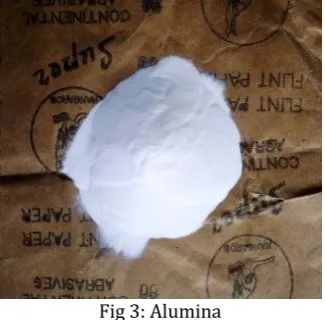
Fig 3: Alumina
Alumina is formed by the oxides of aluminium. It is also available in the form of corundum, diaspare and bauxite. Alumina is used in gas tubes, seal rings, ballisticrmor, laboratory instruments and sample tubes. The main property of aluminium is it exhibits different characteristics in physical and chemical. It exhibits excellent hard, as compared to diamond. The property of alumina is leads to
using in the field of abrasive tool material and it is having high melting point (upto 2000oC).
[image:2.595.336.531.298.454.2]HEAT TREATMENT: Heat treatment is carried out to change microstructures and mechanical properties of steels. Commonly, heat treatment operation is utilized to transform from one phase to another and cooled to change the microstructures in solid state. To change the properties of physical and mechanical by authorizing their heating and cooling of specimen with the method of heat treatment and no changes instructure. Steels are best suited for heat treatment, so it is excellently responsive toany type of heat treatment.By heat treatment process, the strength of metal can be increased, and it improvesmachining characteristics, forming ability, and other properties. And theefficiency of the product can be can also be improved by heat treatment method.
Fig 4: Stir casting
STIR CASTING: Stir casting is the procedure that involves the process of liquid state aluminiummetal is fabricated with ceramic, and fibers with the help of mechanical stirrer. Normal casting process is used to get the molten state of MMCs. Here few factors that affects in the preparation of MMCs using stir casting system considered arean uniformly distribution in a metal matrix reinforcement is achieved withthe method of stir casing usage. And theWettability between 2 important substrate individual metal matrixes isachieved with the method of stir casing usage.Metal casting has various forms like sand castings, investment casting, and steelcastings. In this process the metal’s meltingpoint is higher than 1000 degree Fahrenheit, of 550 degrees Celsius so any onewho works with this must follow security and safety instruction.
3. EXPEMENTS AND RESULTS DISCUSSIONS
[image:2.595.81.244.519.679.2]© 2016, IRJET | Impact Factor value: 4.45 | ISO 9001:2008 Certified Journal | Page 153
Table – 1: Specimen ingredients with %geThen by using this composition, the specimens are prepared with using stir casting method. After specimen preparation, make 3 specimens for each 3 tests that are compression, hardness (brinnel and Rockwell) and wear tests. And in that 3 specimens, each one specimen maintain at room temperature for 3 tests. And other remaining specimen are subjected to heat treatment with different temperature as given in table below.
Compression test (Stir Casting)
In Compact test we took 3 specimens (1 Room temperature, one at Heat treated 300oC, one at 400oC) of specimen of
20mm diameter and 20mm length and this specimen is placed between the table and lower cross heads of the universal testing machine. Apply the load gradually make simultaneous observation of load and compress meter reading. After this measure the diameter and final length of the specimen. Finally the graph stress v/s strain for different temperature of specimens obtained.
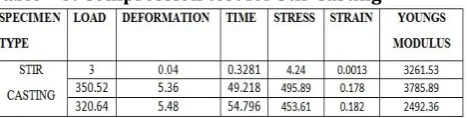
Table – 3: Compression test for Stir Casting
From the above table it shows that the specimen of room temperature, the load increases with increasing deformation. Here deformation does not changes but load increasing and decreasing at some point. And at load value 350.52 KN and 5.36 deformation values is a maximum load and from this value load starts decreasing but deformation never decreases. At load value 320.64 KN, and deformation 5.48 the specimen breaks.
TABLE4: Compression test for heat treated 300oC
From the above table it shows that the specimen of heat treated 300oC, here load increases up to deformation value
[image:3.595.314.538.364.471.2]of 4.1 and its load is 324 KN. After this load decreases gradually. And at 261.42KN specimen break. And its deformation was 5.01. this heat treated 300oC shows that heat treated specimen exhibits highest stiffness and has high strength.
TABLE 5 : Compression test for heat treated 400oC
From the above table it shows that the specimen of heat treated 400oC, here load increases up to deformation value
of 4.02 and its load is 246.3 KN. After this load decreases gradually. At load 220.17 KN specimen breaks. And its deformation was 6.34. This heat treated 400oC shows that
heat treated specimen of highest temperature having higher stiffness than above two materials.
Fig 5 Graph of Stress v/s strain
Confirmations: In strain v/s stress, stress is lower in heat treated specimens where as stress is higher in room temperature specimens. In heat treated stress is lower in 400oC andas heat treated temperature increases stress value decreases.
In Rockwell hardness testing using diamond indenter (1.6mm or 1/6” diameterand 120odegree apex angle) with
[image:3.595.41.275.523.582.2]© 2016, IRJET | Impact Factor value: 4.45 | ISO 9001:2008 Certified Journal | Page 154
Table – 5: Rockwell Hardness tests for 3 type specimensConfirmations: By the Rockwell hardness tests, After Rockwell hardness test by seeing the alues after test, wecame to know that hardness of specimen increases with increase in emperature ofspecimen. The aluminium MMC changes its internal molecular structure uponincrease in temperature of specimen. At zero temperature aluminium is smooth innature. Upon increase in temperature and sudden cooling aluminium lost theirductility nature. And at 400oC aluminium became very hard in nature.
Brinnel hardness testing uses Ball indenter of 5mm diameter with an applied load of 250 Kg for 30 seconds. 3 different specimen of different heat treated MMCs are to be taken from each sample at different sections for testing to ensure the validity of results.
TABLE 6 : Brinell Hardness tests for 3 type specimens
Brinnel hardness testing uses Ball indenter of 5mm diameter with an applied load of 250 Kg for 30 seconds. 3 different specimen of different heat treated MMCs are to be taken from each sample at different sections for testing to ensure the validity of results.
By wear test, the wear rates of the testing specimens were calculated by the weight loss technique. Pin – on – apparatus is used to conduct wear test (dry sliding) wear test apparatus of cylindrical pin specimens of 10mm diameter and 30mm length against a steel disc at different load with constant load and speed.
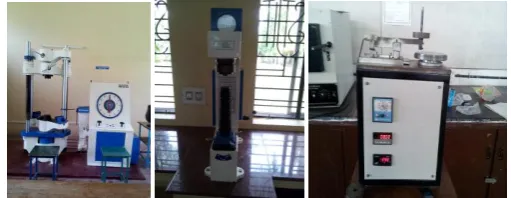
[image:4.595.305.561.182.281.2]Fig 6: Testing Machines for varies test
TABLE 7: Wear tests for 3 type specimens
From above table we see that the highest heat treated specimen exhibit more wear resistance than room temperature and in 300oC exhibit little bit improved wear
resistance. And 400oC has highest wear resistance.
Fig7: Graph of Load v/s Wear rate
© 2016, IRJET | Impact Factor value: 4.45 | ISO 9001:2008 Certified Journal | Page 155
ductility nature. And at 400o C aluminium became very hardin nature. And wear resistance is more.
3. CONCLUSIONS
By this experiment, it shows that stir casting is a good fabricating method for aluminum MMCs, Then the copper and alumina is mixed with aluminium matrix composites are developed by Stir casting. And heat treatment shows that the strength, hardness, stiffness and wear resistance of material increases with increase in temperature upon sudden cooling.
REFERENCES
1. The Prevention Op Sticking In Bright-Annealing Sheet Steel,by Thomas Jefferson Daniels(1994)
2. Activated atmosphere case hardening of steels. XiaolanWang(2001)
3. Annealing of Wire Products: Atmospheres by: Daniel H. Herring(2001)
4. Effects of annealing process on microstructure and electrical properties of cold-drawn thin layer copper cladding steel wire,byHongjuan Li, et al (2002)
5. Oxygen-induced segregation during batch annealing of industrial steel coils ,By Etienne Wurth (2006)
6. Mack, J., Advanced polymer composites, Mater. Edge, 18, January 1988.
7. Meetham, G.W., Design considerations for aerospace applications in Handbookof Polymer–Fiber Composites, Jones, F.R., Ed, Longman Scientific and Technical, Essex, England, Chap. 5, 1994.
8. Eager, T.W., Whither advanced materials? Adv. Mater. Processes, 25, June 1991.
9. Ashby, M.F., On engineering properties of materials, Acta Metallurgica, 37, 1273, 1989.
10. Buchanan, G.R., Mechanics of Materials, HRW Inc., New York, 1988.
11. Lamotte, E. De and Perry, A.J., Diameter and strain-rate dependence of the ultimate tensile strength and Young’s modulus of carbon fiber, Fiber Sci. Technol., 3, 159, 1970.
12. Schwartz, M.M., Composite Materials Handbook, McGraw– Hill, New York, 1984.
13. Allen, L., A limber future, Popular Sci., 36, August 2004.
14. Partridge, I.K., Advanced Composites, Elsevier Applied Science, New York, 1989.
15. Cooks, G., Composite resins for the 90s, M.C. Gill Doorway, 7, 27, Spring, 1990.
16. Hergenrother, P.M. and Johnston, N.J., Polymer Mater. Sci. Eng. Proc., 59, 697,
1988.
17. Mallick, P.K., Fiber-Reinforced Composites Materials, Manufacturing, and Design,
18. Marcell Dekker, Inc., New York, Chap. 2, 1988.