The Value of Information in Organisations:
A Study of Information Use Situations as
Contexts of Value
M ohamed A bdul Sheriff
D epartm ent of Information Systems
London School of Economics and Political Science
H oughton Street, London WC2A 2AE, England
May 2000
Dissertation subm itted in fulfilment of the requirem ents
For the aw ard of the degree of Doctor of Philosophy in the faculty of
UMI Number: U142352
All rights reserved
INFORMATION TO ALL USERS
The quality of this reproduction is dependent upon the quality of the copy submitted.
In the unlikely event that the author did not send a complete manuscript and there are missing pages, these will be noted. Also, if material had to be removed,
a note will indicate the deletion.
Dissertation Publishing
UMI U142352
Published by ProQuest LLC 2014. Copyright in the Dissertation held by the Author. Microform Edition © ProQuest LLC.
All rights reserved. This work is protected against unauthorized copying under Title 17, United States Code.
ProQuest LLC
789 East Eisenhower Parkway P.O. Box 1346
Abstract
The notion that the value of information is significantly dependent on the
context of use is widely accepted in information systems research. Context is
how ever often conceived as given and exogenous to the use activity and
hence beyond the control of the user.
This study takes a dynamic and holistic view of context in which the
purposes, processes and effects of information use are seen as inextricable
from the structural and environm ental factors that m ediate such use in
organisations. The concept of Information Use Situation (IUS) is employed to
represent this view of context. An IUS fram ework is developed and used as a
guide to explore, describe, and interpret a num ber of information use
situations in four organisations in the service sector. The study draw s on
several context studies in information systems, w ork m otivation and self-
interest theories in social psychology, and a num ber of philosophical
propositions on the nature of information and value, in highlighting the key
features of the situations studied.
The findings suggest that, in general, inform ation use situations affect
the value-in-use of information in at least three ways, by acting as filters, as
m ediators of use behaviour and as frames of reference for evaluating
informational activities. The m ain contribution of this thesis to information
systems research is in proposing and exploring the concept of information use
situation as a more holistic view of context w hen studying the value of
information in organisation.
The thesis concludes that organisations need to recognise the diversity
of information use situations they feature and to appreciate th at the value of
information depends significantly on the nature of the situation in which it is
used. This requires m anagers to pay as m uch attention to the processes by
which employees experience and appropriate information as to the quality of
the formal information used if they are to realise the optim um value of their
Acknowledgements
I w ould like to express my sincere thanks to Dr James Backhouse for his
supervision and guidance through out this work. I also w ish to say thank you
to Dr Jonathan Liebenau, Dr Lucas Introna and the entire academic staff of the
inform ation systems departm ent at LSE for their various contributions to this
w ork through encouragement, comments and suggestions given at the
departm ental seminars.
This w ork w ould not have been completed w ithout the invaluable
contributions of all my student colleagues in the inform ation systems
departm ent, especially Ayse Bener and Narisa C hauvidul who kindly
arranged for me to do some empirical w ork at Citibank and Landm ark Hotel
respectively.
Finally I w ish to thank my family - my wife Esther, and children
Table of Contents
Abstract...2
Acknowledgements...3
Chapter One: The Research Question...9
1.1 Introduction...9
1.2 The need fo r information valuation...10
1.3 A dynamic model o f information value...13
1.4 The role o f context...14
1.5 The individual information user...17
1.6 Objectives o f the research...17
1.7 The research question...18
1.8 Scope o f the research...19
Chapter Two: The Research Domain...22
2.1 Value...22
2.11 Objective versus subjective value... 24
2.12 Value as a relational phenomenon... 25
2.13 The nature o f values...26
2.14 Values, value systems and needs... 28
2.15 Economic value... 29
2.2 Information...32
2.21 Synthesis o f notions o f information...42
2.3 The value o f information...45
2.31 Pragmatic contexts o f information valuation...45
2.32 The dual nature o f the value o f information... 49
2.33 Some information valuation methods...50
2.4 The organisation...57
2.41 Models and theories o f organisational change...58
2.42 Other conceptions o f organisation... 61
2.43 Information systems in organisations today... 63
2.44 IS evaluation in organisation...64
Chapter Three: Research Methodology... 71
3.1 Philosophical position...72
3.11 The interpretive paradigm... 73
3.12 Phenomenology... 73
3.13 Hermeneutics... 76
3.14 Social cognition... 80
3.15 Social theory position...81
3.2 Research strategy...82
3.21 Multimethodology...82
3.22 Case study research...84
Chapter Four: The IUS Framework...98
4.1 Developing the fram ework...98
4 .11 What is a situation?... 99
4.12 Situation theory... 100
4.13 Entities o f the IUS framework...104
4.2 The IUS fram ework...113
4.21 Contributing studies and propositions...115
4.22 Unpacking the IUS framework... 117
Chapter Five: Exploring Information Use Situations... 124
5.1 Tower Hamlets Council...124
5.11 The external environment... 126
5.12 The internal environment... 129
5.13 The information systems environment...131
5.14 Information use situations in Tower Hamlets Council... 132
5.2 Landmark Hotel....142
5.21 The environment... 143
5.22 Information use situations in Landmark Hotel... 146
5.3 The British Library o f Political and Economics Science...154
5.31 The environment... 154
5.32 Information use situations in the BLPES... 157
5.4 Categories o f IUS in three organisations...163
5.41 Insights...174
Chapter Six: Describing Information Use Situations... 176
6.1 Citibank...177
6.11 The environment... 178
6.12 Information use situations at Citibank...182
6.13 Categorising IUS at Citibank... 201
Chapter Seven: Interpreting Information Use Situations... 211
7.1 Generic categories o f IUS...213
7.2 Different notions o f information...222
7.3 Generic effects o f IUS....223
7.31 Three characterisations o f IU S...223
7.4 Relating the IUS categories with the generic roles...234
7.5 Information value indicators...235
7.6 Implications fo r IS theory and practice...238
7.61 Main findings... 239
7.62 Implications... 240
Chapter Eight: Conclusion...246
8.1 Review o f the study...247
8.2 Main findings and contribution to IS....250
8.3 Limitations o f the study...256
Appendix A...261
Appendix B...263
Appendix C...267
List of Figures
Figure 1: The value of Information: An Outcome-oriented V iew ...13
Figure 2 Information Use: The Dynamic Value Cycle... 13
Figure 3 Context and the value of inform ation... 15
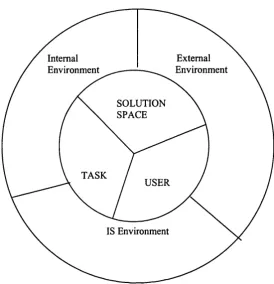
Figure 4 Information Use Situation Fram ework...113
Figure 5 Tower Hamlets Council: Administrative Structure... 130
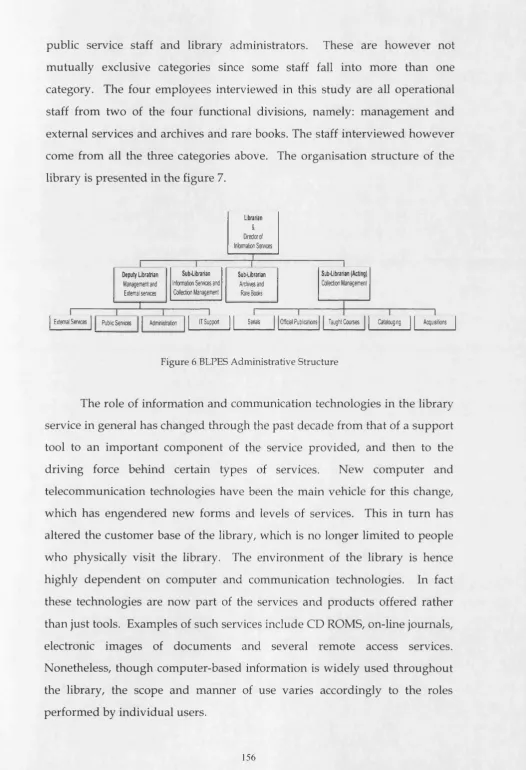
Figure 6 BLPES Administrative Structure...156
List of Tables
Table 1 Elements of the IUS Framework...114
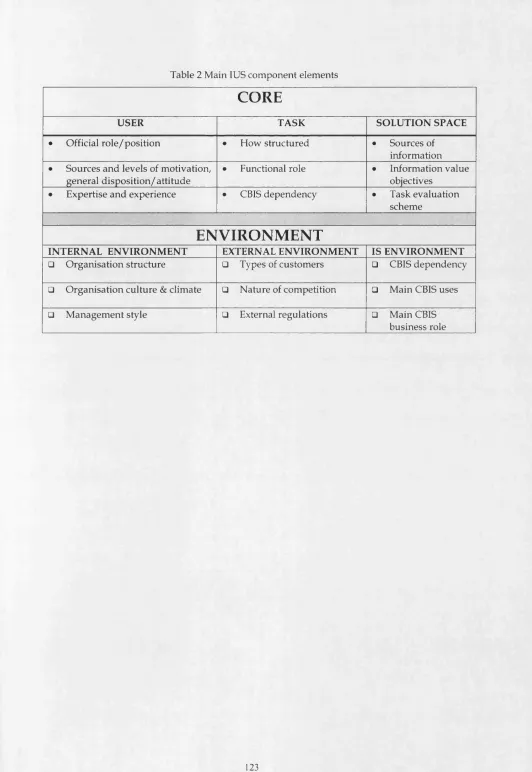
Table 2 Main IUS com ponent elem ents...123
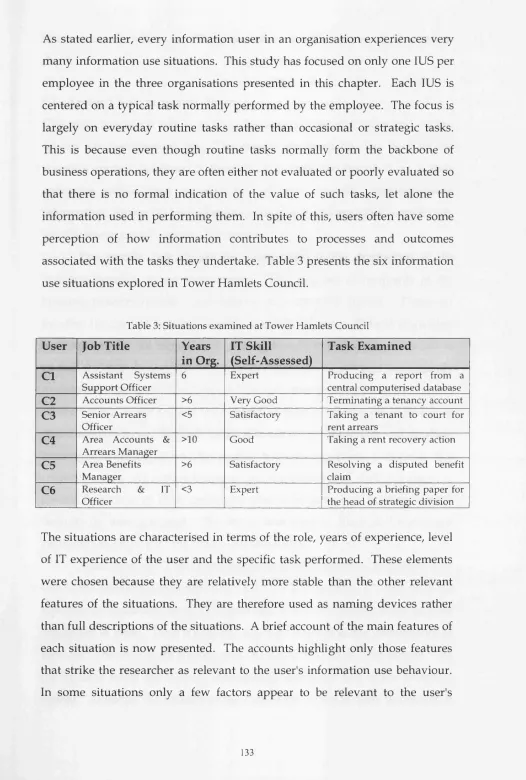
Table 3: Situations exam ined at Tower Hamlets C ouncil...133
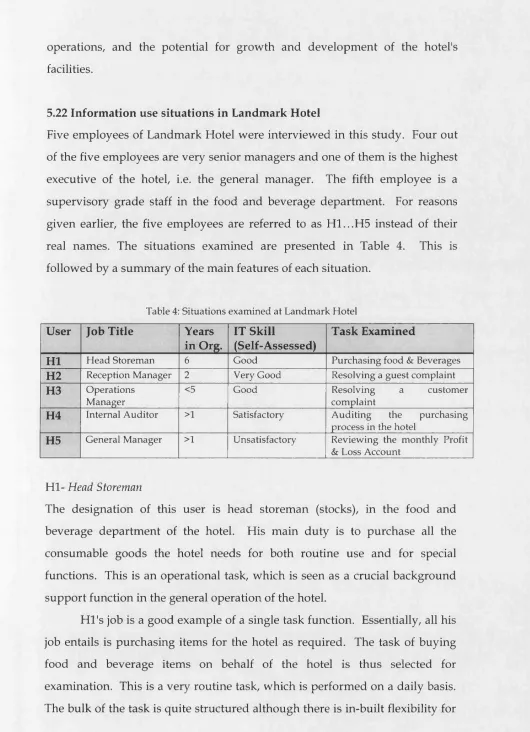
Table 4: Situations exam ined at Landmark H otel...146
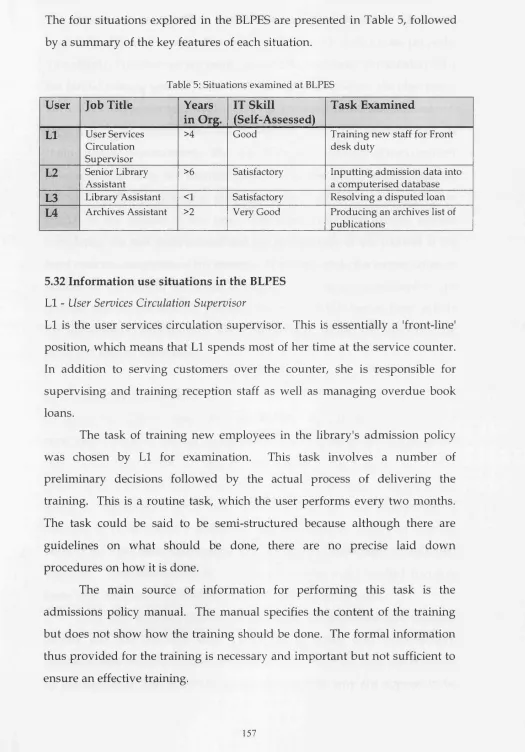
Table 5: Situations exam ined at BLPES...157
Table 6 Summary of organisational environm ents... 166
Table 7 Categories of IUS across the three organisations...172
Table 8 User intentionalities in the three organisations...173
Table 9: Situations exam ined at Citibank...182
Table 10: Categories of IUS at Citibank...209
Table 11: User's perception of their p ow er/p osition ratio at Citibank... 210
Table 12: N otions of information by functional r o le ... 222
Table 13: IUS categories and generic roles... 235
Table 14: IS-related context variab les... 261
Chapter One
The Research Question
1.1 Introduction
This research started w ith the objective of investigating the efficacy and
effectiveness of contem porary information systems security audit theory and
practice. The researcher's interest in this area arose from the feeling that
current inform ation systems audit principles and practices are borrowed
largely from the accounting discipline and that these principles are not
necessarily always effective in the information systems domain. A couple of
m onths into the study, the researcher became increasingly convinced that
inform ation [systems] security is inevitably linked w ith inform ation value.
That is, in the ideal situation, the level and form of security applied to
inform ation systems in organisations should reflect the am ount and type of
value derived from them. Therefore to evaluate information systems security,
one needs to understand and appreciate the kind and am ount of value
involved. This line of thinking redirected the focus of the research from
inform ation systems security audit to the value of inform ation in
organisation.
A survey of several definitions and characterisations of both
inform ation and value revealed that both concepts are not only ambiguous
b u t also highly context dependent. This m eans that notions of information
and value, and by extension the value of information, are only meaningful
w ith reference to the context of application. Therefore to be able to identify
and appreciate the value of information, we need to understand the context of
its use. This study is an attem pt to discern and describe that context from the
perspective of the individual information user in order to have a better insight
into the notion of value-in-use of inform ation in organisation.
The rest of this chapter examines the need for inform ation valuation in
nature and m anifestation of the value of information, and the role of context.
The chapter concludes by stating the objective of the study, the m ain research
questions, and the scope of the study.
1.2 The need for information valuation
There are m any claims (e.g. Machlup, 1962; Porat, 1977; Drucker, 1969) and
counter claims (e.g. Webster, 1995) about w hether w e now live in an
inform ation society. While the argum ents about the definition and reality of
the inform ation society are still unresolved, there is general agreem ent
regarding the quantity of information evident in society today. "Almost
everyone can recognise and acknowledge the extraordinary expansion of the
informational content of m odern life [as] contem porary culture is manifestly
m ore heavily information laden than any of its predecessors" (Webster, 1995).
W hether this evident quantitative increase in information, rather than its
qualitative effect on society constitutes a credible indicator of an information
society is not particularly relevant to this research. However, this explosion
of informational activity and the corresponding increase in the cost of
information, has focussed the attention of business organisations on the role,
importance, and hence value of information.
The history of information technology (IT) developm ent and utility in
the past 3 - 4 decades is a relevant backdrop in justifying the current emphasis
on the value of information. The m uch-heralded prom ise of IT that
engendered massive investm ents in these technologies in the past did not
m aterialise for m any organisations. Yet organisations continue to spend vast
am ounts of money on information technologies. Thomas D avenport (1999)
reports that "we spend over a trillion dollars a year on information
technology, yet economists have found little correlation betw een companies'
IT expenditure and financial performance". Furtherm ore, "company
executives are confused by m uch of the advice they receive on how to manage
and use their information systems and are often disappointed by the payback
dem and in the current economic climate to determ ine the value of
inform ation in organisations. It is no longer acceptable to invest in IT or any
inform ation related project purely on the basis of unsubstantiated
technological promises.
The desire to m easure the value of information is not a new
phenom enon b u t the upsurge in interest and practice over the past decade or
so coincides w ith the increasing dem and for efficiency in business operations
and the general competitive tendencies which have characterised this period.
In this climate, all investm ents including those on inform ation related
functions m ust be justified in economic terms. However, the economic value
of any organisational process, activity or product seems to be defined
exclusively in term s of the quantifiable contribution it m akes tow ards
corporate survival and profit, and especially to w hat is commonly referred to
as the 'bottom line'. M any information valuation models, fram eworks and
approaches (e.g. Glazer, 1993; McPherson, 1994) reflect this quantitative view
of the value of information. In this view, the value of inform ation is largely
seen as objective and quantifiable, and almost exclusively in terms of
m onetary value. This m onetary value approach to inform ation valuation is
no longer restricted to the business sector. Even public and charity status
organisations like local and national libraries that traditionally considered
their services in term s of a public good are now attem pting to evaluate the
services they provide in m onetary term s (see, for example, Griffiths, J and
King, D.W. 1990,1991).
The value of information is how ever norm ally m anifested in forms that
are both difficult to quantify and seemingly inappropriate to convert
completely into objective m onetary value. In spite of this, the three m ain
reasons for evaluating the use of information in organisations today derive
from economic dem ands, which are firmly focused on the m onetary value of
information. The need for cost justification, efficiency of business operations
and the unrelenting quest for competitive advantage, which are all anchored
both the emphasis on information valuation and the drive tow ards
quantitative measures. Other reasons include the need to m arket information
as an economic commodity and the increasing call - at least in the USA and
the UK - for the capitalisation of information as an intangible asset in
accounting.
The difficulty w ith this quantitative view of the value of information
arises from the absence of an objective m eans of identifying and quantifying
such value. Many m easurem ents of information value are largely subjective
and only applicable in specific situations. Consequently, inform ation m arkets
and processes cannot be expected to reflect faithfully norm al economic
principles, such as dem and and supply, for exchange purposes. Nonetheless,
inform ation is being traded increasingly either as a commodity, a product or
as a service. Some of the am ounts paid for such inform ation constitute
abstract quantitative representations of the value of information, which m ay
not necessarily reflect the value-in-use. Such abstract notions of inform ation
(value) are "apt to m ean little unless applied in specific contexts and for
specific uses" (Sillince, 1995). This is w hy the concept of value of information
in organisations needs a w ider perspective, in which inform ation is regarded
as fundam entally intangible and very difficult to quantify into discrete units.
In this perspective, the value of information depends considerably on the
situational factors that determine and m ediate its use since "criteria and
values w e apply to information vary from one context to another" (Badenoch
et al 1994). Put another way, the social setting in w hich inform ation is
encountered determines its value (Chun Wei Choo, 1999).
Some researchers suggest that information w ithout a definable purpose
(Scarrott, 1994) or information that is not used (Badenoch et al, 1994) is not
inform ation at all. How ever individuals and organisations often pay large
am ounts of m oney for information even before they receive it and these
am ounts do not necessarily reflect the value realised from using the
information. The value of information is therefore often regarded in two
In spite of this duality, the common business notion of information
value concerns the potential or actual contribution of the inform ation to
outcomes associated w ith its use. This notion of value denotes an outcome-
oriented view of the value of information as illustrated in Figure 1.
INFORMATION- > USE > EFFECT OF USE
VALUE OF INFORMATION
Figure 1: The value of Information: An Outcome-oriented View
1.3 A dynamic model of information value
While the outcome-oriented notion of information value is prevalent in the
business environm ent, it is not the only form of value. The value of
information can be m anifested in other ways that m ay not be directly
reflected in the observed or perceived outcome at a particular time. In order
to account for such manifestations, we need to adopt broader notions of both
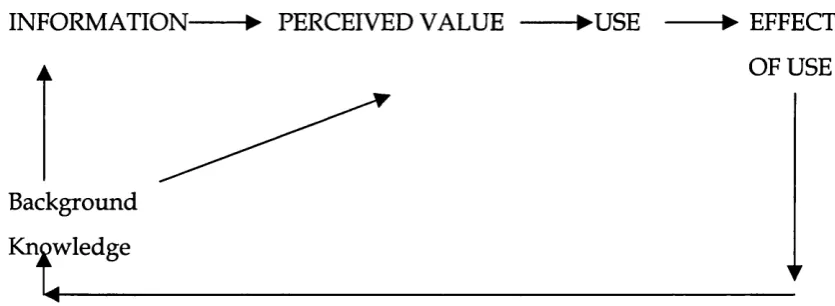
the phenom ena of information use and information value. Figure 2 presents a
conceptual m odel of the information use process, w hich is based on a
dynamic 'purpose-process-effect' view of the value-in-use of information.
INFORMATION-Knowledge
> PERCEIVED VALUE -►USE
Background
> EFFECT
[image:15.595.54.472.563.716.2]OF USE
The above characterisation of the information use process stipulates
that the value of information is manifested in all stages of the dynamic use
cycle and that the perceived effect of use, at a particular time, accounts for
only p art of the value attributable to the information. To appreciate the
various dimensions of this value, we need to understand the context in which
the inform ation is used.
1.4 The role of context
This research conceives of the context of information use in organisation in
term s of the dynamic interaction of information w ith organisation, in which
the purposes, processes, and outcomes of the interaction all become dynamic
features of context. This notion of context is based on an interpretivist view of
the inform ation use process rather than the traditional rational and functional
view, w hich denotes context as som ething exogenous or peripheral to the
object of concern.
The m ain premise of the study is that the context of inform ation use is
a greater determ inant of the value of information than the inherent attributes
of either information or organisation. Klobas (1995) suggests that the quality
of electronic information resources is only one of several influences on their
use1 and that use is better explained as a function of 'fitness for purpose'.
Klobas defines fitness for purpose as the extent to which the inform ation
resource is of appropriate quality for the situation in w hich it is to be used.
Hence use depends on the situation or context and for effective use, we need
to understand the situations that characterise the use. By describing and
interpreting the situations that characterise the use of information in
organisations this research aims to gain useful insights into the complex
processes of information use and evaluation in business organisations.
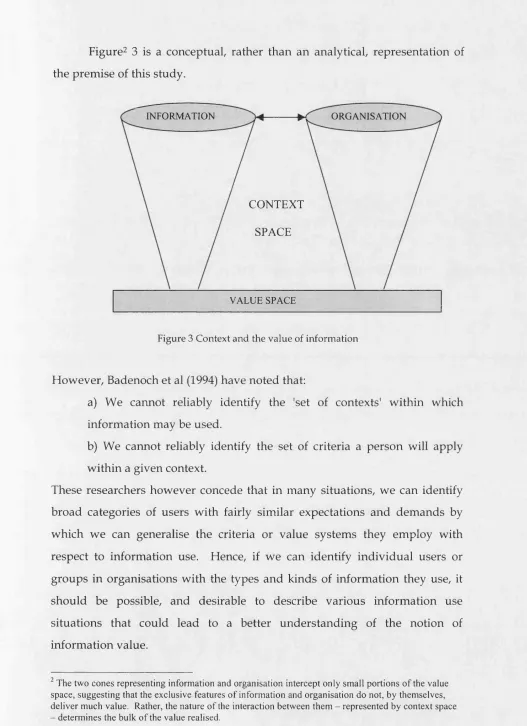
Figure2 3 is a conceptual, rather than an analytical, representation of
the premise of this study.
INFORMATION ORGANISATION
CONTEXT
SPACE
VALUE SPACE
Figure 3 Context and the value of information
However, Badenoch et al (1994) have noted that:
a) We cannot reliably identify the 'set of contexts' within which
information may be used.
b) We cannot reliably identify the set of criteria a person will apply
w ithin a given context.
These researchers however concede that in many situations, we can identify
broad categories of users with fairly similar expectations and dem ands by
which we can generalise the criteria or value systems they employ with
respect to information use. Hence, if we can identify individual users or
groups in organisations with the types and kinds of information they use, it
should be possible, and desirable to describe various information use
situations that could lead to a better understanding of the notion of
information value.
[image:17.595.27.554.28.754.2]Instead of seeking exclusive quantitative representations of inform ation value,
we should be able to describe information use situations (IUS) that w ould
point to qualitative indicators of the value of information relevant to those
situations.
It is understandable that ultimately, m onetary value is norm ally more
significant than other forms of value in business organisations since money
signifies some form of objective value, which is easier to process. Money as a
surrogate of value m ay however not always be the m ost realistic or
representative of the value of inform ation in organisations. For example,
Oliver, Roos and Victor (1999) argue that organisations have value that does
not appear on any balance sheet. They point out that w hen IBM bought
Lotus, it paid seven times Lotus' published value because of considerations of
the com pany's intangible assets or 'intellectual capital'. A good proportion of
that capital relates to information in various forms. There are m any other
examples of take-overs and mergers w here the money involved does not
m atch balance sheet figures. While this research does not discount the
usefulness of quantitative m easures of the value of information, it argues that
a thorough qualitative analysis of the value of inform ation is both useful and
necessary in today's business environment.
As the quantity and variety of information available to organisations
continues to grow, it should become more apparent that certain
m anifestations of information value cannot be reliably quantified or
converted into m onetary value. Those aspects of the value that can be
quantified will rem ain very useful and probably continue to be the accepted
referents to the value of information in certain contexts, b u t even those need
to be based on discernible qualitative indicators of value. There is need
therefore to discern the value of inform ation by m atching its qualitative
1.5 The individual information user
A lthough the attainm ent of formal organisational goals constitutes the
ultim ate objective of organisational activity, the satisfaction of end-user needs
is recognised as an im portant element in the effective use of information
systems and hence the realisation of the value of information. Accordingly,
some researchers have suggested that "the value of an organisation's
inform ation systems is ultim ately realised through the activities of single end-
users or small workgroups" (Hemingway, 1998). The concept of information
use situation (IUS), which focuses on the individual inform ation user in a
functional role in organisation, is based on this view.
Despite the focus on the individual, this study is not directed
exclusively at the subjective experiences of people. Rather an information use
situation includes the totality of formal and informal organisational features
and occurrences as perceived and realised by individuals in their functional
roles in organisation. This focus on the user accords well w ith the increasing
realisation in information systems research that the hum an dimension
constitutes the m ost im portant factor in the effective use of information
(systems). Thomas D avenport (1999) argues that "regardless of the pow er of
the technology, success above all depends on the hum an dim ension ... after
all it is hum ans who add the context, m eaning and value that transform s data
into information". O ther researchers such as C hun Wei Choo (1999) posit that
inform ation does not reside in artefacts b u t in individual m inds and that such
inform ation is created through individual thoughts, actions and feelings. The
crucial role of the individual information user in the realisation of the value of
inform ation in organisation is hence widely recognised.
1.6 Objectives of the research
The objective of this study is to investigate and describe the nature of
inform ation use situations in business organisations. By describing such
situations the research hopes to provide some insight into how the complex
and reactions to the value-in-use of information. To do this, an IUS
fram ew ork is developed and used as a guide to explore, describe, categorise
and interpret the situations. The situations are based on everyday work
activities in various functional roles in four different organisations in the
service sector. The focus on 'real everyday w ork activities' is m eant to
distinguish this study from those that regard inform ation use almost
exclusively in terms of decision making. This study takes the view that
depending on the situation, inform ation could be used to either take a
decision, trigger an action, or very often a combination of the two.
Inform ation m ay also be used to simply clarify or reinforce some previously
held views or suspicions, and sometimes it is used, correctly or incorrectly, to
justify or defend predeterm ined decisions or actions. In certain cases,
inform ation m ay also be used for entirely symbolic purposes. In all of these
situations some value could be associated w ith the information, w hether it is
negative or positive. The notion of information value is hence not necessarily
lim ited to decision making.
1.7 The research question
The m ain research question of the study is: H ow can we describe information
use situations in organisations so as to gain useful insights into the notion of
value-in-use of information?
This question could be decomposed into the following two interrelated
sub-questions.
1) H ow do users in different situations conceive of the value of the
information they use, i.e. w hat is the underlying essence of the value-
in-use of information in organisation?
2) W hat major situational features affect inform ation use in organisations
and how do these features relate to notions of inform ation value held
The IUS fram ework is m eant to facilitate the answ ering of the above
questions, which are based on the following assumptions:
a) The value of information in organisations is largely a function of the
situations that occasion its use.
b) Information use situations can be sufficiently described so as to
discern those characteristics of the situations that enhance value-in-
use.
c) Because some aspects or dimensions of the value of information in
organisations are difficult, if not impossible, to quantify and convert
into m onetary value; it is necessary to understand the qualitative
dim ension of the value of information in order to use it effectively.
1.8 Scope of the research
The dom ain of this research is restricted to contem porary business
organisations. This includes both profit and not for profit organisations in the
public and private sectors. Owing to the very complex and fluid nature of the
concept of information, this research will focus m ainly on one form of
inform ation i.e. electronic information or com puter-based information. This
does not necessarily exclude the consideration of other form s of information
(e.g. oral or mental and paper-based), since they are inter-convertible w ith the
electronic form. The rationale for this restriction derives from the ever-
increasing importance of electronic information in today's organisations as
well as pragm atic considerations of the limitations of this research.
Furtherm ore, the boundaries between electronic inform ation and the other
forms in the practical use situation are considerably blurred as pieces of
inform ation can easily, and often do exist in all three forms. The very
technologies, especially computers, in today's organisations however justifies
the focus on electronic3 information.
In this study, the term information refers principally to inform ation as
content. How ever, it is appreciated that certain forms of information,
especially electronic information, are virtually inextricable from the
technology through which they are processed, delivered and utilised. This
m eans that very often, value objectives associated w ith such inform ation are
as m uch a function of the technology as they are of inform ation as content.
The value of such information therefore often reflects a combination of the
functional capabilities and potential of the relevant inform ation technologies,
the context of use and the quality of information as content.
This chapter has outlined some of the reasons and rationale behind the
current w ave of interest in evaluating the role of inform ation in organisation.
It has also highlighted the output-oriented notion of value reflected in many
inform ation evaluation approaches, which do not address the full dim ension
of the value of information in organisation. To redress this anomaly, a
dynamic m odel of the information use process, as a cognitive activity, is
proposed. This m odel stipulates that the value of inform ation is manifested at
all stages of the purpose-process-effect cycle of information use and not just at
the o u tp u t stage. The chapter also discussed the role of context, in general
and of the individual information user in particular, in the information use
process. The objectives of the study, the research questions and the scope of
the study were also outlined.
The next chapter examines the theoretical foundations of a num ber of
fundam ental concepts relevant to the research question. These concepts
essentially define the research domain. By examining and relating them,
chapter tw o aims to provide a comprehensive background and theoretical
support for the research approach, m ethodology, techniques and findings
Chapter Two
The Research Domain
In this chapter, the m ain theoretical and conceptual foundations of this study
are presented. The chapter explores, examines and discusses four major
concepts that bear directly on the research question. This includes the notions
of inform ation and value adopted in the study as conceptual tools for
interpreting the situations studied. The four concepts examined in the
chapter are:
• Value
• Information
• The value of information
• Organisation
2.1 Value
According to the Encyclopaedia Britannica, the term 'Value' originated in
Economics. Originally, it m eant the w orth or exchange value of something, as
held in the w ork of the 18th century political economist, A dam Smith. Both
the term and concept of value have how ever been applied to a w ider area of
philosophical interest since the 19th century. This inevitably resulted in an
extension of m eaning as evidenced by the w orks of a num ber early 20th
century thinkers and researchers including Rodolf H erm ann Lotze, Friedrich
Nietzsche, Eduard Von Hartm ann, W ilbur M arshall U rban and Ralph Barton
Perry. Perry, for example, theorised, in his book General Theory o f Value (1926)
that a value is "any object of any interest". He later explored eight realms of
value: Morality, Religion, Art, Science, Economics, Politics, Law and Custom.
This broadening of application area engendered as m uch interest in the
In the late 19th century, the political economist, John Arm sden, com m ented
on value as follows:
The ambiguity of the word 'value' contributes no small share to the confusion
w e see accompanying it in all its aspects; yet it is one of the m ost expressive
of everyday use, w hile nearly all the energy of mankind is, consciously or
unconsciously, directed towards the establishment of its equation.
This is one of the m ost salient articulations of both the fundam ental
im portance and difficulty of pinning dow n value as a unique expressive
socio-economic and political concept. More than half a century later, the
philosopher Charles Morris rem arked that the term value is one of the great
w ords, and like other such w ords (Science, Religion, Morality, Philosophy), its
m eaning is m ultiple and complex. Morris did not give a generic definition of
value b u t distinguished three ways in which the term is com m only employed.
The three w ays signify different manifestations of value, w hich he called
operative value, conceived value and object value.
Morris defined operative value as "the tendency or disposition of living
beings to prefer one kind of object4 rather than another". He further
suggested that reference to value in this sense "is simply a w ay of referring to
the actual direction of preferential behaviour tow ards one kind of object
rather than another". In contrast to operative value, conceived value restricts
the concept of value to "those cases of preferential behaviour directed by an
anticipation or foresight of the outcome of such behaviour". Conceived value
thus refers to preference for a symbolically or conceptually indicated object.
Morris concedes that the above two forms of value are not necessarily
m utually exclusive as hum an beings hardly, if ever, adopt fully either or both
types of value. Some interaction and some incompatibility betw een conceived
and operative values is the common state (Morris, 1956). The third form of
value i.e. object value, is concerned w ith w hat is preferable (or desirable)
regardless of w hether it is in fact preferred or conceived as preferable. The
m ain indicator of object value is the property of the object, w hich m ay not
necessarily coincide w ith personal preferences and judgem ents of individuals
th at interact w ith the object. Charles Morris' three forms of value all depend
on the term prefer and could be sum m arised as value as the preferred, value as a
conception of the preferable, and value as the preferable.
2.11 Objective versus subjective value
According to Rokeach (1973), the value concept has been em ployed in two
distinctly different ways in hum an discourse. One suggests that hum ans
possess value and the other attributes value to objects as a function of their
properties. Many researchers including Perry (1954), Lewis (1962), Katz and
Scotland (1959), Hilliard (1950) and Campbell (1963) have approached the
problem of value from the object side. To these writers, all objects are
conceived as having a one-dim ensional property of value ranging from
positive to negative. More recently, the behaviourist, B.F.Skinner (1971)
vigorously opposed the notion that hum ans possess value by arguing that
"the reinforcing effects of things are the province of behavioural science,
w hich to the extent that it is concerned w ith operand reinforcement, is a
science of values" (Quoted in Rokeach, 1973, p.104).
On the other hand, w riters like Kluckhohn (1951), Maslow (1954,1964),
Charles Morris (1956), Brewster Smith (1969) and Robin W illiams (1968) have
approached value analysis from the view that value m anifestations are
properties of hum ans, or of living organisms in general, as opposed to objects.
Williams further suggests that a person's values serve as criteria, or standards
in term s of which evaluations are made.
The above seemingly diam etrically opposite positions on the nature of
value poses some fundam ental philosophical questions about the nature of
value and value judgem ents. For example:
1) Is an object valuable because it exhibits certain real properties in
itself or because w e (living organisms) confer value on it by our
2) Is an object of value because it is desired (subjectivist) or is it
desired because it has value (objectivist)?
3) Are there other ways of defining value w ithout refuting the validity
of claims m ade by either of the two camps?
2.12 Value as a relational phenomenon
Despite the objective/subjective divide on the nature of value, both sides
agree that value judgem ents have a cognitive status. While the objectivist
hold, in their general epistemology, that things exist independently of our
thinking, they accept that whatever value things have is validated through the
cognition of living beings. In other w ords there is objective being, b u t no
absolute objective value.
In an attem pt to reconcile the opposing view s on value, H illiard (1950),
proposed the following definition of value, w hich em phasises not so m uch
the properties or characteristics of the object or organism, b u t the affectivity
that results from the interaction betw een them in a specific context.
Value is affectivity occurring in the relational contexture determined by the reaction
of an organism5 to a stimulus object.
Like Charles Morris, Hilliard defined object in the w idest possible sense to
include: "a thing, situation, action, occurrence, symbol, even symbol of non
existent objects, figment of the im agination - in fact any stim ulus or stimuli
w hatsoever that we find convenient to delim it and call an object". Hilliard
m aintains that there is no question of inherent affectivity present in an
organism other than by a reaction (response) to an object; if there is, it does
not constitute value. Every affectivity therefore signifies some reaction to
some stim ulus and positive, indifferent and negative affectivities exhaust the
affective possibilities of all reactions. Hence indifference to a stim ulus (object)
by an organism constitutes a reaction to the object rather than inaction. The
reaction of an organism to an object therefore constitutes the necessary and
sufficient condition for value to occur. H illiard rejects the com m on linguistic
notion that equates objective w ith good or correct and subjective w ith bad or
wrong. He proposes that objective and subjective values can each be positive
or negative depending on the context. Nonetheless, Hilliard accepts that
some values refer to relatively stable features and experiences, com m on to a
num ber of organisms and hence fairly predictable in given contexts
(objective?), while others relate to m ore random and varied occurrences that
are highly unpredictable (subjective?).
In stressing the importance of the relational context rather than the
discrete properties of either the object or subject in determ ining value,
Hilliard postulates that:
a) Value occurs or is capable of occurring in every case w here an
organism is able to respond, directly or indirectly, to an object (my
emphasis).
b) In general, two or more organisms can never experience an
identical relational context, for if they did, they w ould no longer be
tw o organisms but the same one.
An object-subject interaction therefore constitutes both the antecedent and
m anifestation of value and that value is in essence an individual experience.
H illiard's propositions set out the necessary and sufficient conditions
for value to occur but they do not tell us how and w hy hum ans appropriate
notions of value. We therefore need to examine further the nature of values
and how they relate to hum an needs.
2.13 The nature of values
Rokeach (1973) has suggested that any conception of hum an value should
clearly distinguish the value concept from other concepts w ith w hich it m ight
be confused. He cites concepts such as attitudes, social norm s and needs
which are somehow related to value but not synonym ous w ith it. Rokeach
defines value as follows:
A value is an enduring belief that a specific m ode of conduct or end-state of existence
is personally or socially preferable to an opposite or converse m ode of conduct or
He further defines a value system as:
A n enduring organisation of beliefs concerning preferable m odes of conduct or
end-states of existence along a continuum of relative importance.
Deconstructing the above definitions leads us to the following observations
on the nature of values:
a) A value is enduring: this implies that values are neither completely stable
nor completely unstable. Rokeach argues th at "if they were, neither
change, individual and social, nor continuity of hum an personality and
society w ould be possible". Values are thus both enduring and changing
in character.
b) A value is a belief: A value is a belief of the prescriptive or proscriptive
type, i.e. a belief w herein some m eans or ends of action is judged to be
desirable or undesirable. Like all beliefs, Rokeach m aintains that values
have cognitive, affective and behavioural components. O n the cognitive
com ponent he suggests that a value is cognition about the desirable,
equivalent to w hat Charles Morris (1956) called conceived value and to
w hat Kluckhohn (1951) term ed "a conception of the desirable". In respect
of affectivity, value is affective in so far as one can feel emotional about it
and approve or disapprove of positive or negative instances of it
respectively. In terms of the Charles Morris typology, this is operative
value. Finally the behavioural com ponent of value constitutes an
intervening variable that leads to action w hen activated6
c) A value refers to a m ode of conduct or end-state of existence: Beliefs
concerning m odes of conduct or desirable end-states of existence have
long been identified as value in one form or another. To some researchers,
(e.g. Kluckhohn, 1951; Lovejoy, 1950; Hilliard, 1950; English & English,
1958) value exhibited through means should be distinguished from value
realised as an end. These two kinds of value are commonly referred to as
instrum ental and term inal values respectively.
Further classification of the two kinds of value postulated by Rokeach include
tw o kinds of term inal values: personal and social, and tw o kinds of
instrum ental values: moral and competence values. The classification of
value as instrum ental or terminal is just one of m any dim ensions of the value
concept.
According to Hilliard, value as a generic concept can be classified
according to four bipolar criteria, each being exhaustive of all possible cases in
that category. N ine adjectives are offered as qualifiers of the term to represent
the four sets of criteria as given below:
Actual Direct Positive Terminal
Indifference
Potential Indirect Negative Instrum ental
Thus depending on the circumstances that determ ine or mediate its
occurrence, value could be actual or potential; direct or indirect; positive,
indifferent or negative, and term inal or instrumental.
The nine adjectives represent four independent criteria for classifying
value and are together exhaustive of all occurrences of value. These could be
variously com bined to describe a m axim um of twenty-four discrete modes of
value actualisation. This array of value manifestation ranges from 'actual-
direct-positive-terminal value' at one end to 'potential-indirect-negative-
instrum ental value' at the other. The diversity of m odes of value in this array
gives an indication of the complexity of the value concept. Nonetheless, the
above characterisations could be used as a basis for understanding aspects of
hum an value systems and how they relate to hum an needs an d wants.
2.14 V alues, value system s and needs
One w ay of establishing the relationship betw een values, value-systems and
could be thought of as standards that guide hum an activities, and that value
systems are general plans employed to resolve conflicts and to make
decisions. Values could also be thought of as giving expression to hum an
needs, although we m ust be cautious in how we infer needs from values since
values are not isomorphic w ith needs. Nonetheless it is reasonable to propose
that values are cognitive representations of individual hum an needs bounded
by institutional and w ider societal demands. These dem ands arise from a
variety of factors, including sociological and psychological forces acting upon
the individual. Therefore the cognitive representation of needs as values
relates as m uch to societal dem ands as to individual needs (Rokeach, 1973).
In the context of business organisations, this suggests that the notion of value
m ust not refer exclusively to formal organisational objectives since these are
not necessarily always incompatible w ith individual or subjective notions of
value. How ever the prevailing notion of value in business organisations
tends to focus on the formal organisational view of value, commonly referred
to as economic value.
2.15 Economic value
Before proceeding to examine the nature of economic value, it is necessary to
first define the closely related concept of utility, and to distinguish between
the two. Economists generally define utility as the satisfaction of hum an
wants or desire. This definition is too general to be useful in valuation
studies. H ow ever the concept of utility so defined is so close to the general
notion of value that some w riters treat them as synonym ous. Sinden and
Worrel (1979) for example, suggest that utility as defined above is "virtually
synonym ous w ith a capacity to make a favourable difference to someone's
life" which, according to Baier (1969), is the m eans to the ultimate
desideratum : a worthw hile life. People therefore value things that have the
capacity to make favourable differences to their lives, or from the point of
value in this respect b u t not equivalent to it. Sinden & Worrell illustrate this
relationship in the following equation:
Value = f (Utility, environm ental conditions, circumstance of
evaluator at time of valuation).
Value is hence a function of utility m ediated by environm ental, circumstantial
and tem poral variables w ith respect to an evaluator.
According to Hilliard, the m ain differences betw een utility and value are:
a) Unlike value, utility does not imply affectivity.
b) Utility and value have no necessary relation to one another; i.e. an object
may have utility and not be valued, or not valued in the w ay of its utility.
Conversely, an object may be valued but not have utility or utility
corresponding to the value.
The difference betw een terminal and instrum ental value is of particular
importance in considering the concept of economic value. Hilliard observes
that "if aesthetic value is roughly coextensive w ith term inal value, then
economic value is correspondingly so w ith instrum ental value". That is to
say, economic value is concerned w ith instrum ental value since "no object is
considered to possess economic value unless it is believed to serve some
purpose, to be useful in realising some end; to further some hum an
satisfaction - in short, to have utility" (Hilliard, 1950).
Economic value is further defined w ithin the broader field of
instrum ental value by characterising it as pertaining to "those values that
have to do w ith objects and actions in so far as they affect the production,
distribution, or exchange of w ealth7". Thus economic value is principally
concerned w ith the means to an end rather than an end in itself. Two
im portant activities in the economic process are thus choice and exchange.
The concept of value plays a central and crucial role in these tw o activities.
First values as indicators of relative importance are used as guides in making
choices betw een alternatives and second, value systems are em ployed as
standards on w hich economic exchange activities are based.
In m odern societies, the m ost im portant feature of such exchanges is the use
of money as a universal m edium of exchange. The am ount of m oney paid for
an item is taken to indicate the comparative value of that item as seen by the
people involved in the exchange. This am ount of m oney is commonly
referred to as the price of the item, which by and large, is a compromise
betw een the valuations of the seller and buyer. Economists have employed
various theories to explain the behaviour of the tw o parties in m arket
exchanges. Using these theories, they hold m arket price to represent the
value of the particular item exchanged as well as all other items similar to it.
This value is also supposed to hold for other people w ho w ere not involved in
the exchange. But Sinden & Worrell argue that "neither of these
extrapolations of value may be valid. The only sure value information
conveyed by a m arket price is for the specific transaction in w hich it was
involved, and even then it m ay only represent value to one party under
peculiar circumstances". M arket value m ay therefore not be as objective as
economists w ould like us to believe. As such m oney m ight be a very
convenient and useful m edium of exchange but not necessarily a guarantor of
objectivity.
2.18 Money as a surrogate of value
H um ans exchange goods and services for other items of value to satisfy needs
and wants. The nature of values however makes it very difficult for certain
types of values to be directly com pared w ith each other. This makes direct
exchange of items betw een people rather problematic. Money as a
universally accepted m edium of exchange alleviates this problem by serving
as a surrogate for various types and levels of value. It enables people to
exchange items of similar and dissimilar value types. H ow ever certain types
of value in certain situations, m ay not be exchanged for m oney, irrespective of
the amount. This m eans that in spite of its universality, m oney cannot be
used as a m easure for all kinds of value in all situations. Exchange value,
above limitations of the m edium of money. This is especially im portant in the
valuation of intangibles, like information.
The key points in the foregoing characterisation of value could be
sum m arised as follows:
• Values are both personal and social.
• Values are both enduring and changing.
• Values refer to m odes of conduct as well as states of existence.
• The antecedents of hum an values can be traced to culture, society and its
institutions and personalities.
• Economic value, especially m onetary value, is im portant and very useful
in contem porary hum an interactions but it has limitations in representing
certain aspects and forms of value. This is particularly relevant to value
associated w ith intangible elements such as information.
• Value derives from the interaction betw een a subject and an object, and
that value is a function of the nature of the interaction rather than the
discrete properties of the subject or the object. The next sub-section
examines the nature of information.
2.2 Information
W hat do w e m ean by information or w hat do we call information? Is it a
universally shared concept, a physical artefact, a subjective construct or a
combination of these and other forms? This subsection examines a num ber of
characterisations of information, in the IS literature and related fields, which
attem pt to answ er some of the questions posed above. These characterisations
are im portant in understanding the practical notions of inform ation value that
prevail in organisations. For example, w hen inform ation is conceived as a
physical artefact or a thing, the corresponding notion of value tends to focus
principally on the quality of the 'thing'. W hen we regard information in
term s of shared concepts, then value often depends on and is reflected in
inter-subjective agreements. Likewise characterising information as a
characteristics of the user. It is hence im portant to examine various notions of
information and to see how they influence practical notions of inform ation
value in organisations.
Many researchers on information (e.g. Fox, 1983; Stonier, 1991;
Badenoch et al, 1994; Metcalfe & Powell, 1995; etc) have noted w ith concern
that there is no unique or universally accepted definition of information. This
does not necessarily make the study and analysis of inform ation undesirable,
only perhaps m ore difficult. The logical starting point for one to study any
aspect of information therefore is to establish and articulate clearly one's
conception of w hat constitutes information.
The inform ation systems literature is full of various definitions of the
term 'information'. Many of these definitions are either contradictory or non-
complem entary w ith each other. The suggestion that there is a commonly
held view on the nature of information (Metcalfe & Powell, 1995), which
states that the debate on [the nature of] information is som ehow closed m ay
be true w ithin certain narrow ly defined inform ation-related disciplines but
not necessarily across disciplines. It is not very difficult to see, for example,
that a comm unication engineer's notion of inform ation is radically different
from that of a systems analyst's and even more different from a linguist's.
Information as represented in electromagnetic signals for transm ission has
very little in common, if anything at all, w ith data definition diagram s and
data dictionaries or w ith patterns of natural language structures in printed
text. W ithin the information systems discipline, which is itself not easy to
define or demarcate, the debate on w hat constitutes inform ation is still far
from closed despite the tendencies tow ards certain dom inant conceptual
themes or m etaphors. Thus the relative dearth of research in this area may
not be entirely due to lack of recognition that the nature of inform ation is not
fully established (Metcalfe & Powell, 1995). Instead, it seems that
contem porary research in inform ation systems proceeds on the basis of
the research tools, concepts and techniques in use and to the overriding
business and technical paradigm s which pervade current research thinking.
The business and telecommunications dom ains have in the past 2-3
decades been largely dom inated by information technology application
research. It is thus not surprising that "though hum an and organisational
issues are at the forefront of current IS research, the focus is m ore on the
systems rather than on the information" (Metcalfe & Powell, 1995). Notions of
the character of information compatible w ith the systems concept have thus
inadvertently dom inated the IS and IT research literature.
In order to appreciate the extent of the variety of characterisations of
information, even w ithin the IS discipline, - in spite of the prom inence of the
systems view and its associated m etaphors - a review of a num ber of
characterisations from several research interests is undertaken below.
One of the earlier and m uch quoted definitions of inform ation came
from Shannon (1948) and Shannon & W eaver (1949). In his fam ous book, the
mathematical theory o f communication, Shannon defined inform ation in term s of
the difficulty in transm itting sequences from an inform ation source. The
principal object of Shannon's w ork was not to describe the nature of
information but to establish theories governing the transm ission of signs and
signals as carriers of messages. Nonetheless, the som ew hat machine-oriented
m etaphor - depicting information as something that flows from one point to
another - that em erged from this work has influenced m any aspects of
information studies for many years. This notion of inform ation has not been
w ithout criticism however. One of the m ain criticisms is that this
characterisation of information is content (meaning) free. The mathematical
probability of transm itting certain signs from one location to another m ay be
accurately determ ined in Shannon's theory b u t how those signs relate to
hum ans sending and receiving messages w ith m eaning is not accounted for.
The absence of consideration of the part played by hum ans is thus the
principal criticism against information being characterised in term s of the
widely recognised that Shannon's theory is an im portant contribution to the
developm ent of hum an comm unication in the last five decades.
A closely related characterisation of information to the Shannon & W eaver
model is given by Stonier (1991). In his proposal for a new theory of
information, Stonier postulates a mathematical, albeit non-linear, relationship
betw een entropy and information. His theory is based on tw o fundam ental
assum ptions on the character of information. These are:
• Information, like m atter and energy, is a basic property of the universe8.
• Any system that exhibits organisation contains information.
Based on the above assum ptions, Stonier derived a num ber of
propositions as further insights into the nature of information. These include:
1) In spite of the ability of hum ans to create and transm it information,
inform ation has existed since long before the appearance of hum an
beings.
2) Like energy, information m ay exist in a variety of forms, may be
transm itted from one system to another and m ay undergo a series of
transformations.
3) The m ore intricately organised a system is, the m ore information has
accum ulated within that system.
Stonier's postulates as presented above share the same criticism as that
levelled against Shannon's; i.e. that no account of the hum an role and hence
m eaning is considered. But Stonier m aintains that inform ation can and does
exist w ithout meaning. Information, he argues, "is an intrinsic property of
various systems (in fact the universe itself) which exists irrespective of
w hether any hum an or other forms of intelligence perceive or utilise it".
Meaning on the other hand is a function of perception w ith respect to context.
This is a revolutionary, if not radical, characterisation of inform ation that
has not found m uch favour in contem porary research. Some researchers have
criticised it as content free (e.g. Glazer, 1993) or entirely systemic (e.g.
Banedoch et al, 1994).
G ordon Scarrott (1989) proposed a similar, albeit limiting
characterisation of information. Scarrott's characterisation of
information is based on the proposition that the essential function of
information in nature is to control and operate the recursive
organisation of life at all levels; from micro organisms to international
and m ultinational hum an organisations. Scarrott argues that
information exists in order to co-ordinate the physical activities of the
components of the organisation "so that their collective behaviour is
organised for a purpose - ultim ately the survival either of the
individual, or of a group, or the species".
Scarrott emphasises that control and purposefulness are the core
requirem ents for defining information. A purposeful organised system is
implied to be active due to its recursive nature. This is the lim iting condition
of Scarrott's definition on Stonier's. While Stonier propose that any system
that exhibits organisation contains information, Scarrott suggests that no
inanim ate natural system satisfies the definition (of an organised system and
hence information), since inanim ate systems do not incorporate a control
feature or exhibit a purpose. Inanimate artificial systems, like com puter
systems, are how ever covered by Scarrott's definition since they exhibit
control features and they relate to hum an purposes. The emphasis on
purposefulness and control in this characterisation of inform ation suggests a
functional perspective rather than an ontological characterisation as proffered
by Stonier.
Like Scarrott, m any other researchers have approached the definition of
inform ation from a functional perspective. Often these definitions relate
knowledge and uncertainty w ith information and are generally problem
oriented. This approach to defining information has also been criticised by a
num ber of researchers. Badenoch et al (1994) for example, suggest that