Available online www.jocpr.com
Journal of Chemical and Pharmaceutical Research, 2012, 4(3):1833-1841
Research Article
CODEN(USA) : JCPRC5
ISSN : 0975-7384
Optimization of spray drying process parameters of Piper betle L.
(Sirih) leaves extract coated with maltodextrin
Tee, L. H.
1*, Luqman Chuah, A.
1,2,, Pin, K. Y.
3, Abdull Rashih, A.
3, Yusof, Y. A.
41
Department of Chemical and Environmental Engineering, Faculty of Engineering, Universiti
Putra Malaysia, Selangor,Malaysia
2
Institute of Tropical Forestry and Forest Product, Universiti Putra Malaysia,
Selangor,Malaysia
3
Natural Products Division, Herbal Technology Centre, Forest Research Institute Malaysia
(FRIM), Kepong, Selangor, Malaysia
4
Department of Process and Food Engineering, Faculty of Engineering, Universiti Putra
Malaysia, Selangor, Malaysia
_________________________________________________________________________________________
ABSTRACT
Piper betle L., more commonly known as betel or local name of Sirih, belongs to the family Piperaceae. Previous researches had shown that the leaves of P. betle possess tremendous beneficial effects including antimicrobial, antioxidant, anti-diabetic, wound healing and gastro-protective properties. This is due to the present of the two bioactive component; propenylphenols; which is the Hydroxychavicol and Eugenol. In this study, betel leaves extract was dried by spray drying for easy handling and the preservation of bioactive compounds. The process parameters of spray drying were inlet hot air temperature, pump flow rate and aspirator rate. Maltodextrin acted as carrier in the spray drying process. The properties of dried powder were investigated in terms of bioactive compound, hydroxychavicol (HC) content, particle size distribution, moisture content, powder yield and hygroscopicity. The experimental run and optimization work were designed using Box-Behnken method of Response Surface Methodology. The optimum operation conditions for the highest HC content with the lowest moisture content; the smallest particle size; highest powder yield and lowest hygroscopicity were obtained at inlet drying temperature of 159.52 °C; feed flow rate of 10.5 ml/min and aspirator rate of 98.33 %. The optimal properties of spray-dried powder obtained from this study were 229.29 ppm of hydroxychavicol, 5.48 µm in size; 6.99% in moisture content; 10.53 g of powder yield and 28.88% of hygroscopicity.
Keywords : Spray drying, Piper betle L., Maltodextrin, Optimization, hydroxychavicol.
_________________________________________________________________________________________
INTRODUCTION
Betel (Piper betle L.) is generally found in Peninsular Malaysia and locally known as Sirih. It is also cultivated in Sri Lanka, India, Indonesia, Philippine Islands and East Africa. [5,6]. In India, it is associated with many religious and social practices [7]. The edible betel leaves are used most extensively for chewing. Betel leaves are often chewed with areca nut, lime together with tobacco.
The betel leaves extract are used as traditional medicine to treat throat inflammation, alleviating coughs and indigestion, and as breath freshener and antiseptic for wounds.
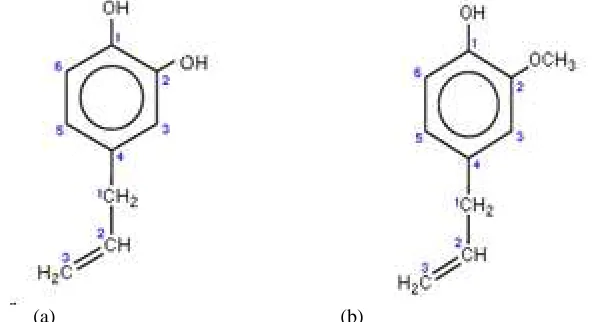
Two bioactive phytochemicals that found in betel leaves are hydroxychavicol (HC) and eugenol (EU) contribute to the beneficial bioactivity of betel leaves. IUPAC name of HC is 3,4
EU is 3-methoxy-4-hydroxyallylbenzene hydroxychavicol and eugenol.
[image:2.595.158.456.202.363.2](a) (b)
Figure 1: The chemical structure of (a) Hydroxychavicol;
Currently, there are abundant scientific findings had been report on the bioactivity and beneficial effects of betel leaves including antioxidant [8,9], anti
diabetic [8] as well as aphrodisiac properties. There is a growing worldwide interest in the application and processing of herbal and phytochemical towards ac
However, the current herbal products commercialized in local market are not adequate to meet the consumers’ demand. Therefore, there is a need to further expand the research to introduce new produ
Spray drying involves atomization of feed into a spray and contact between the spray and drying medium resulting in moisture evaporation [14]. Spray drying has been used extensively in pharmaceutical and food industries in dehydration of fluid foods such as coffee and fruit juices. Spray drying will result in powders with low water activity and ease in transportation and storage. The physicochemical properties of spray
process variables such as the characteristic of liquid
term of pressure and temperature as well as the type of atomizer. Therefore, it is crucial to optimize the spray drying process to obtain powders with better yield, nutritional and physicochemi
In this study, the aim is to determine the optimum spray drying process parameters including inlet air temperature; pump flow rate and aspirator rate of spray drying of betel leaves extract on powder quality. The spray
was analyzed for its HC content, moisture conten, particle size distribution, powder yield and hygroscopicity.
The Box behnken method (BBD) was chosen as design of experiment and the experiental runs of BBD serves as inputs in determining the mathematical model
of spray-dried powder. The mathematical model can be generated by using the statistical technique such as response surface methodology. The most commonly use approximating functions in
quadratic polynomials. The polynomial equation can also be used to construct a response surface showing the effect of Independent Parameters on Dependent Parameters [15].
Materials
Betel leaves were obtained from a chosen supplier to make sure of its continuous supply. Food grade maltodextrin with 9.0 < DE < 12.0 was used as coating agent.
Betel (Piper betle L.) is generally found in Peninsular Malaysia and locally known as Sirih. It is also cultivated in Sri a, Philippine Islands and East Africa. [5,6]. In India, it is associated with many religious and social practices [7]. The edible betel leaves are used most extensively for chewing. Betel leaves are often chewed with areca nut, lime together with tobacco. As a masticatory, it is aromatic, digestive, stimulant and carminative [7]. The betel leaves extract are used as traditional medicine to treat throat inflammation, alleviating coughs and indigestion, and as breath freshener and antiseptic for wounds.
bioactive phytochemicals that found in betel leaves are hydroxychavicol (HC) and eugenol (EU) contribute to the beneficial bioactivity of betel leaves. IUPAC name of HC is 3,4-dihydroxyallylbenzene while IUPAC name of hydroxyallylbenzene. HC is also named as allylpyrocatechol. Figure 1 shows the structure of
(a) (b)
The chemical structure of (a) Hydroxychavicol; 3,4-dihydroxyallylbenzene and (b) Eugenol; 3 methoxy-4-hydroxyallylbenzene
Currently, there are abundant scientific findings had been report on the bioactivity and beneficial effects of betel antioxidant [8,9], anti-carcinogenic [10,11], anti-inflammatory [9], antimicrobial [12,13], anti diabetic [8] as well as aphrodisiac properties. There is a growing worldwide interest in the application and processing of herbal and phytochemical towards achieving a sustainable and environmental friendly lifestyle. However, the current herbal products commercialized in local market are not adequate to meet the consumers’ demand. Therefore, there is a need to further expand the research to introduce new products.
Spray drying involves atomization of feed into a spray and contact between the spray and drying medium resulting in moisture evaporation [14]. Spray drying has been used extensively in pharmaceutical and food industries in such as coffee and fruit juices. Spray drying will result in powders with low water activity and ease in transportation and storage. The physicochemical properties of spray-dried powders depend on the process variables such as the characteristic of liquid feed including feed viscosity, flow rate and the drying air in term of pressure and temperature as well as the type of atomizer. Therefore, it is crucial to optimize the spray drying process to obtain powders with better yield, nutritional and physicochemical properties.
In this study, the aim is to determine the optimum spray drying process parameters including inlet air temperature; pump flow rate and aspirator rate of spray drying of betel leaves extract on powder quality. The spray
lyzed for its HC content, moisture conten, particle size distribution, powder yield and hygroscopicity.
The Box behnken method (BBD) was chosen as design of experiment and the experiental runs of BBD serves as inputs in determining the mathematical model that correlates the spray drying process parameters and the properties dried powder. The mathematical model can be generated by using the statistical technique such as response surface methodology. The most commonly use approximating functions in the model building stage of RSM are quadratic polynomials. The polynomial equation can also be used to construct a response surface showing the effect of Independent Parameters on Dependent Parameters [15].
EXPERIMENTAL SECTION
were obtained from a chosen supplier to make sure of its continuous supply. Food grade maltodextrin with 9.0 < DE < 12.0 was used as coating agent.
Betel (Piper betle L.) is generally found in Peninsular Malaysia and locally known as Sirih. It is also cultivated in Sri a, Philippine Islands and East Africa. [5,6]. In India, it is associated with many religious and social practices [7]. The edible betel leaves are used most extensively for chewing. Betel leaves are often chewed As a masticatory, it is aromatic, digestive, stimulant and carminative [7]. The betel leaves extract are used as traditional medicine to treat throat inflammation, alleviating coughs and
bioactive phytochemicals that found in betel leaves are hydroxychavicol (HC) and eugenol (EU) contribute to dihydroxyallylbenzene while IUPAC name of . HC is also named as allylpyrocatechol. Figure 1 shows the structure of
dihydroxyallylbenzene and (b) Eugenol;
3-Currently, there are abundant scientific findings had been report on the bioactivity and beneficial effects of betel inflammatory [9], antimicrobial [12,13], anti-diabetic [8] as well as aphrodisiac properties. There is a growing worldwide interest in the application and
hieving a sustainable and environmental friendly lifestyle. However, the current herbal products commercialized in local market are not adequate to meet the consumers’
cts.
Spray drying involves atomization of feed into a spray and contact between the spray and drying medium resulting in moisture evaporation [14]. Spray drying has been used extensively in pharmaceutical and food industries in such as coffee and fruit juices. Spray drying will result in powders with low water activity dried powders depend on the feed including feed viscosity, flow rate and the drying air in term of pressure and temperature as well as the type of atomizer. Therefore, it is crucial to optimize the spray drying
In this study, the aim is to determine the optimum spray drying process parameters including inlet air temperature; pump flow rate and aspirator rate of spray drying of betel leaves extract on powder quality. The spray-dried powder
lyzed for its HC content, moisture conten, particle size distribution, powder yield and hygroscopicity.
The Box behnken method (BBD) was chosen as design of experiment and the experiental runs of BBD serves as that correlates the spray drying process parameters and the properties dried powder. The mathematical model can be generated by using the statistical technique such as response the model building stage of RSM are quadratic polynomials. The polynomial equation can also be used to construct a response surface showing the effect
Tee, L. H. et al
J. Chem. Pharm. Res., 2012, 4(3):1833-1841
______________________________________________________________________________
Preparation of betel leaves extract
The betel leaves extraction was carried out using an industrial extractor (EETF-1600, Exta, Malaysia). The dried betel leaves were placed in the extractor and distilled water was added with the ratio of solvent to solid ratio was 30:1 (ml:g). The extraction was carried out at 60°C to avoid degradation of the phytochemicals. The extraction process duration was one hour. The extract was then concentrated using an evaporator (EETF-950, Exta, Malaysia) until 10° Brix concentration was reached. 5% w/v of maltodextrin was used in this study. 100 ml of feed solution wasprepared with the ratio of the betel leaves extract to the 5% w/v maltodextrin solution of 1:1. Spray drying with maltodextrin as additive can promote the protection of the HC against adverse conditions like heat and reduce the hygroscopicity of powder.
Spray drying
Spray drying process was performed in a laboratory scale spray dryer (B-290, Buchi, Switzerland). The mixture was fed into the main chamber through a peristaltic pump and the feed flow rate was controlled by the pump rotation rate. The pressure of the compressed air was maintained at 4 bar throughout the experiment. Inlet air temperature varied from 120 to 160°C, the aspirator rate varied from 80 to 100% while the feed rate varied from 5 to 15 ml/min according to an experimental design.
Hydroxychavicol content
The HC content of the mixture and the spray-dried powder were analyzed using high performance liquid chromatography (HPLC). The HPLC system consists of Waters 600E System controller, Waters 996 Photodiode Array Detector and a column oven. The flow rate of the mobile phase was 1 ml/min. The detection wavelength chosen was 200.0 nm because the detection of HC and EU was more sensitive at the wavelength. The standard of HC was provided by Medicinal Plants Division, FRIM.
Moisture content
The moisture content of the spray-dried powders were determined gravimetrically by drying in an oven at 105°C for overnight.
Particle size distribution
The particles size distribution was analyzed using the laser diffraction particle size analyzer (Hydro 2000MU, Malvern Mastersizer, United Kingdom).
Powder yield
[image:3.595.168.448.509.676.2]Process yield was calculated at the relationship between the total solid content in the resulting powder and the total solid content in the feed mixture.
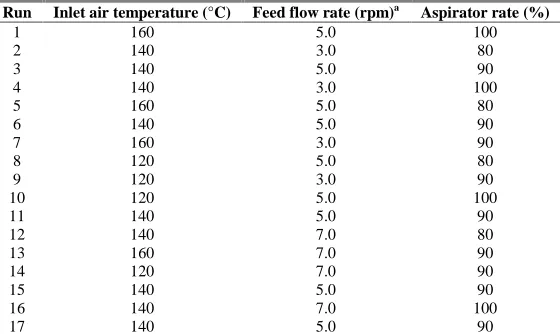
Table 1: Experimental design for spray drying tests
Run Inlet air temperature (°C) Feed flow rate (rpm)a Aspirator rate (%)
1 160 5.0 100
2 140 3.0 80
3 140 5.0 90
4 140 3.0 100
5 160 5.0 80
6 140 5.0 90
7 160 3.0 90
8 120 5.0 80
9 120 3.0 90
10 120 5.0 100
11 140 5.0 90
12 140 7.0 80
13 160 7.0 90
14 120 7.0 90
15 140 5.0 90
16 140 7.0 100
17 140 5.0 90
aThe feed flow rate is to the scale where 3rpm is 5 ml/min and 7rpm is 15 ml/min.
Hygroscopicity test
Experimental design
The experimental design was done with the aid of the Design Expert software which uses the Response Surface Methodology, Box-Behnken design to determine the number of runs needed in this study. In Box-Behnken design, each numeric factor which is theprocess parameter was varied over 3 levels giving a total of 17 combinations (Table 1).
RESULTS AND DISCUSSION
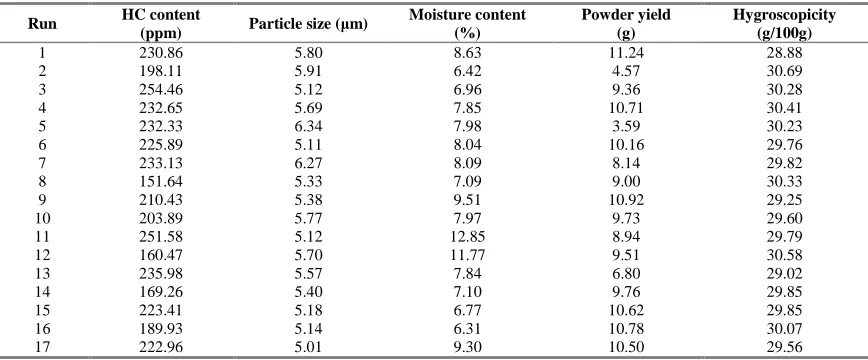
[image:4.595.90.524.232.412.2]The experimental result of percentage of HC content, moisture content, particle size distribution, powder yield and hygroscopicity of the powders are shown in Table 2.
Table 2: Percentage of HC content, moisture content, particle size distribution, powder yield and hygrosocpicity for the 17 runs of the experimental design
Run HC content
(ppm) Particle size (µm)
Moisture content (%)
Powder yield (g)
Hygroscopicity (g/100g)
1 230.86 5.80 8.63 11.24 28.88
2 198.11 5.91 6.42 4.57 30.69
3 254.46 5.12 6.96 9.36 30.28
4 232.65 5.69 7.85 10.71 30.41
5 232.33 6.34 7.98 3.59 30.23
6 225.89 5.11 8.04 10.16 29.76
7 233.13 6.27 8.09 8.14 29.82
8 151.64 5.33 7.09 9.00 30.33
9 210.43 5.38 9.51 10.92 29.25
10 203.89 5.77 7.97 9.73 29.60
11 251.58 5.12 12.85 8.94 29.79
12 160.47 5.70 11.77 9.51 30.58
13 235.98 5.57 7.84 6.80 29.02
14 169.26 5.40 7.10 9.76 29.85
15 223.41 5.18 6.77 10.62 29.85
16 189.93 5.14 6.31 10.78 30.07
17 222.96 5.01 9.30 10.50 29.56
A statistical analysis was performed on the experimental results to obtain the regression models. ANOVA was used to evaluate the significance of each variable on the resulted model. From ANOVA, linear model for moisture content response was significant. For HC content, powder hygroscopicity and particle size distribution responses, quadratic model were significant. For yield, 2FI model was significant.The linear model for all the responses in terms of coded factors are shown in equation below:
HC content
=
+
235
.
66
+
24
.
64
A
−
14
.
83
B
+
14
.
35
C
−
7
.
04
A
2−
16
.
42
B
2BC
AC
AB
C
11
.
01
13
.
43
1
.
27
94
.
23
2+
−
−
−
(1)Moisture content
=
+
7
.
43
+
0
.
082
A
−
0
.
31
B
−
0
.
41
C
(2)Particle size
=
+
5
.
11
+
0
.
26
A
−
0
.
18
B
−
0
.
11
C
+
0
.
37
A
2+
0
.
17
B
2BC
AC
AB
C
0
.
18
0
.
25
0
.
084
33
.
0
2−
−
−
+
(3)Powder yield
=
+
9
.
08
−
1
.
20
A
+
0
.
31
B
+
1
.
97
C
−
0
.
045
AB
+
1
.
73
AC
−
1
.
22
BC
(4)Hygroscopicity
=
+
29
.
85
−
0
.
13
A
−
0
.
083
B
−
0
.
36
C
−
0
.
52
A
2+
0
.
43
B
2BC
AC
AB
C
0
.
35
0
.
15
0
.
06
43
.
0
2−
−
−
Tee, L. H. et al
J. Chem. Pharm. Res., 2012, 4(3):1833-1841
______________________________________________________________________________
Where;
A = Inlet drying temperature B = Pump flow rate or feed rate C = Air flow rate
Percentage of HC loss
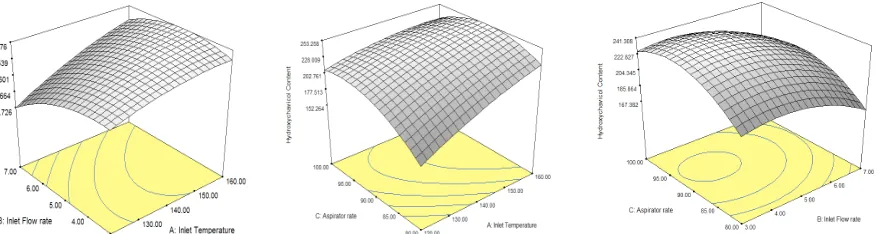
[image:5.595.92.530.338.455.2]The influence of inlet drying temperature to the HC content is illustrated in Figure 2. The HC content increases with increasing inlet drying temperature. This observable fact is related to the particle size of the powder. Goula et al. [18] reported that during beginning stages of drying, the droplets have a free liquid surface and evaporation from this surface was quick. The evaporation of liquid will cause the solute to be more concentrated at the surface. Due to the rise in concentration, solids will emerge out of the solution at the surface of the solution first, which consecutively led to the formation of a crust or shell around a hollow particle. Thus, higher inlet drying temperature caused higher initial drying rate, which will produce larger particles with thin shells. When the size of spray droplets become larger, the inside component that can be shielded by the external shell also increases and thus contribute to higher bioactive content [19]. As shown in Figure 2, when aspirator rate increased, the HC content increased. As the airflow rate increased, the residence time of the spray droplets in the drying chamber was shorter and the resulting particles were carried away out of the drying chamber quickly. Hence, the particle was only subjected to high temperature in the drying chamber for a short period of time resulting in reduced HC degradation. The HC content of the powder decreased as the feed flow rate increased. The HC degradation occurred initially due to high temperature, which was subjected to the feed. However, HC evaporation decreased as feed rate increased, because increasing feed caused temperature in the drying chamber to be reduced. Hence, HC degraded slightly when feed flow rate increased.
Figure 2: Response surface for HC content for (a) aspirator rate of 90%, (b) feed rate of 5 rpm and (c) inlet drying temperature of 140°C
Moisture content
Figure 3: Response surface for powder moisture content for (a) aspirator rate of 90%, (b) feed rate of 5 rpm and (c) inlet drying temperature of 140°C
Particle size distribution
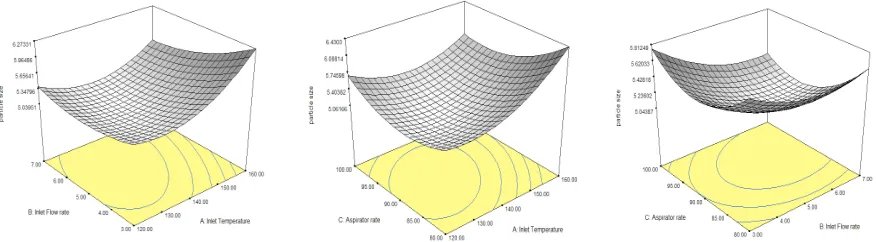
[image:6.595.77.515.403.524.2]As presented in Figure 4, the particle size increases with the increase of inlet drying temperature. Research work by Chegini and Ghobadian [25] also stated that particle size increased with increasing inlet drying temperature. This phenomenon was explained by Goula et al. [18] that in the early stages of drying, the droplets have a free liquid surface and evaporation from this surface was rapid. The evaporation of liquid will cause the solute to be more concentrated at the surface and this depended on the rate of evaporation and the rate which the liquid can be replenished form the core of the droplet. Thus, higher inlet drying temperature caused higher initial drying rates which will produce larger particles with thin shells. While the low initial drying rate produced smaller particles with thick shells. The particle size decreases with increasing aspirator rate. This phenomenon was explained by Stahl et al., [26] that an increased of atomization nozzle flow which is equivalent to the increase in inlet air flow rate which reduced the particle size. This is because the higher the atomization flow or air flow rate, the more energy is supplied for breaking up the liquids into droplets during the atomization step, resulting in smaller droplets formed [27]. The particle size decreased slightly and almost not affected by the increased of feed rate.
Figure 4: Response surface for particle size distribution for (a) aspirator rate of 90%, (b) feed rate of 5 rpm and (c) inlet drying temperature of 140°C
Powder yield
Tee, L. H. et al
J. Chem. Pharm. Res., 2012, 4(3):1833-1841
[image:7.595.73.535.58.192.2]______________________________________________________________________________
Figure 5: Response surface for powder yield for (a) aspirator rate of 90%, (b) feed rate of 5 rpm and (c) inlet drying temperature of 140°C
Hygroscopicity
[image:7.595.92.523.339.460.2]From Figure 6, the lowest powder hygroscopicity values were observed with decreasing inlet temperature, increasing feed flow rate and decreasing aspirator rate. All these variables were also the variables that affected the powder moisture content in an opposite way. This indicates that the powder was more hygroscopic when it had lower moisture content. This is because the powder with lower moisture content had greater capacity to absorb ambient moisture. The lower the powder moisture content, there is a greater water concentration gradient between the powder and the surrounding water and aids in the powder hygroscopicity. Tonon et al. [16]who carried out spray drying on acai also observed the same trend. Research work done by Goula et al. [18] also reported that the powder hygroscopicity increased inversely with powder moisture content.
Figure 6: Response surface for powder hygroscopicity for (a) aspirator rate of 90%, (b) feed rate of 5 rpm and (c) inlet drying temperature of 140°C
Optimization of process parameters on spray drying process
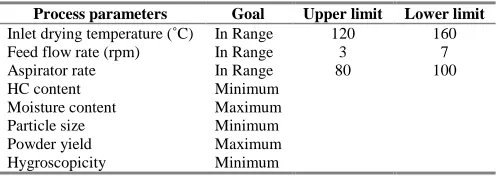
Optimization of the three process variables; inlet drying temperature, feed rate and air flow rate was performed using the Response Surface Methodology (RSM) of Design Expert Software 6.0. The objective of the optimization is to obtain the combinations of the three process parameters, which will produce the desired powder quality.Table 3 shows the process parameters and responses achieved from RSM.
Table 3: The process parameters and responses achieved from RSM
Process parameters Goal Upper limit Lower limit
Inlet drying temperature (˚C) In Range 120 160 Feed flow rate (rpm) In Range 3 7 Aspirator rate In Range 80 100 HC content Minimum
Moisture content Maximum Particle size Minimum Powder yield Maximum Hygroscopicity Minimum
CONCLUSION
[image:7.595.183.432.597.685.2]a. The HC content increased with an increase in the inlet drying air temperature and with a decrease in inlet airflow rate and pump flow rate.
b. The powder moisture content decreased with an increase in the inlet drying air temperature and inlet airflow rate but a decrease in the feed flow rate.
c. The powder particle size decreased with a decrease in the inlet drying air temperature and airflow rate. However, particle size decreased slightly with an increase of feed flow rate.
d. The powder hygroscopicity increased with an increase in the inlet drying air temperature, inlet airflow rate, and a decrease in the feed flow rate; which is opposite to moisture content.
e. The process yield increased with an increase in the inlet drying air temperature, aspirator rate and a decrease in the feed flow rate.
From RSM, it revealed that the optimum operation conditions for the highest HC content with the lowest moisture content; the smallest particle size; highest powder yield and lowest hygroscopicity were obtained at inlet drying temperature of 159.52 °C; feed flow rate of 10.5 ml/min and aspirator rate of 98.33 %. The optimal properties of spray-dried powder obtained from this study were 229.29 ppm of hydroxychavicol, 5.48 µm in size; 6.99% in moisture content; 10.53 g of powder yield and 28.88% of hygroscopicity
Acknowledgement
The authors would like to thank all staff of Medicinal Plants Division of FRIM, Faculty of Engineering and Faculty of Food Technology and Food Science, UPM for their support and technical assistance.
REFERENCES
[1] S Gopalakrishnan; R Rajameena; E Vadivel. Journal of Chemical and Pharmaceutical Research, 2012, 4(1), 788-794.
[2] M Chitra; V Muga; S Dhanarasu; AM Al-hazimi. Journal of Chemical and Pharmaceutical Research, 2011, 3(6), 110-114.
[3] HK Dhamija; B Parashar; J Singh. Journal of Chemical and Pharmaceutical Research, 2011, 3(5), 725-735. [4]NR Farnsworth. Ethnopharmacology and Drug Development. In: Ethnobotany and the search for new drugs, Wiley, 1994, 42-59.
[5]DMA Jayaweera.Medicinal Plants Used in Ceylon, Vol. 5, Colombo, 1982;201.
[6] MD Dassanayake&FR Fosberg. A Revised Hand Book to the Flora of Ceylon. Amreind. New Delhi, 1987. [7] KV Peter. Handbook of Herbs and Spices, Volume 2, Woohhead publishing Limited, Abington, 2000.
[8] L Arambewela; M Arawwawala; D Rajapaksa. International Journal of Food Science and Technology,2006, 41 (Supplement 1), 10–14.
[9] S Sharma; IA Khan; IAF Ali; M Kumar; A Kumar; RK Johri; ST Abdullah; S Bani; A Pandey; KA Suri; BD Gupta; NKSatti, P Dutt, and GN Qazi. American Society for Microbiology, 2009, 216–222.
[10] PR Padma; VS Lalitha; AJ Amonkar; SV Bhide. Cancer Letters, 1989, 45(3), 195–202.
[11] S Bandyopadhyay; KC Roy; M Ray; G Bandyopadhyay; BC Pal; T Biswasm; S Bhattacharya; Herbal based composition for treating acute and chronic myeloid leukemia, US/2004/0043086, 2004.
[12] AR Fathilah; MM Bakri; ZHA Rahim. Proceeding of Third National Symposium Health Sciences, Universiti Kebangsaan Malaysia,2000, 216-219.
[13] T Nalina; ZHA Rahim. American Journal of Biotechnology and Biochemistry, 2007, 3 (1), 10-15. [14] AM Goula; KG Adamopoulos.Journal of Food Engineering, 2005, 66, 25-34.
[15] M Khan; KM Tripathi.Journal of Chemical and Pharmaceutical Research, 2011, 3(5), 281-289. [16] RV Tonon; C Brabet; MD Hubinger. Journal of Food Engineering, 2008, 88(2008), 411-418. [17] YZ Cai; H Corke.Journal of Food Science, 2000, 65(6), 1248-1252.
[18] AM Goula; KG Adamopoulos; NA Kazakis. Drying Technology, 2004, 22 (5),1129–1151. [19] X Zhou; S Chen; Z Yu. Biosystem engineering,2004, 88(2), 193-199.
[20] SY Quek; NK Chok; P Swedlund.Chemical Engineering and Processing, 2007, 46, 386–392. [21] S Ersus; U Yurdagel. Journal of Food Engineering, 2007, 80 (2007), 805–812.
[22] SE Papadakis; C Gardeli; C Tzia. Drying Technology, 2006, 24,173-180.
[23] K Masters. Spray drying fundamentals: Process stages and layouts. In Spray drying handbook. Halsted Press, New York,1979;21–53.
[24] DE Oakley; RE Bahu. Spray/gas mixing behaviour within spray dryers. In AS Mujumdar & I Filkova (Eds.), Drying . Elsevier, Amsterdam, 1991; 303–313.
[25] GR Chegini; B Ghobadian.World Journal of Agricultural Sciences,2007, 3(2), 230-236.
[26] K Stahl; M Claesson; P Lilliehorn; P Linden; K Backstrom.International Journal of Pharmaceutics, 2002, 233, 227-237.