Language Technology Applications
Stephan Schl¨ogl
Thesis submitted for the Degree of Doctor of Philosophy
School of Computer Science & Statistics
Trinity College
University of Dublin
Declaration
I declare that this thesis has not been submitted as an
exercise for a degree at this or any other university and it is entirely my own work. Wherever there is published or
unpublished work included, it is duly acknowledged in
the text.
I agree to deposit this thesis in the University’s open
ac-cess institutional repository or allow the library to do so on my behalf, subject to Irish Copyright Legislation and
Trinity College Library conditions of use and
Summary
Wizard of OZ (WOZ) is a well-established method used by researchers and product designers
to simulate the functionality and user experience of future systems. Using a human wizard to
mimic possible operations is particularly useful in situations where extensive engineering effort would otherwise be required to explore a given design space. The method has been widely used
in connection with speech and language technologies, but advances in sensor technology and
pattern recognition as well as new application areas such as human-robot interaction have made WOZ increasingly relevant to the design of interactive systems.
Even though it is recognised as a valuable prototyping technique, surprisingly little effort
has been devoted to exploring WOZ from a wizard perspective. The goal of this thesis is to ex-pand upon the existing knowledge by presenting a systematic investigation and analysis of the
potential design space for WOZ prototyping as well as an empirical exploration of appropriate
support features for wizards through an iteratively developed web-based prototyping platform. The presented research employed a systematic analysis approach in which the construction
and consequent evaluation of a maturing system created new insight into WOZ support and
some of its challenges. As part of these evaluations, WOZ characteristics such as wizard work-load, wizard consistencies as well as the creation of WOZ experiments, were analysed. The
results show that wizards gradually adapt to their task, as would be expected, resulting in faster
response times. Consistency, however, is more difficult to achieve and therefore requires addi-tional support. Furthermore, it was found that researchers/designers are generally able to create
WOZ experiments, even without upfront training, validating our efforts of providing a platform for more generic support.
In summary, this thesis expands the existing body of knowledge on WOZ prototyping by
presenting a structured analysis of the method. Informed by both the literature and a set of investigations (including a series of interviews with researchers from industry and academia),
it demonstrates the multitude of motivations for using WOZ, highlights its challenges and
in-vestigates potential solutions. Being undertaken alongside the development of a new WOZ prototyping tool, this thesis furthermore explores technical problems and presents possibilities
for more generic tool support. Even though the presented work has a strong focus on evaluating
language technologies, we believe that the generated insight is applicable to the whole domain of WOZ prototyping, and therefore should be seen as a substantial contribution to the field of
Human-Computer Interaction.
Acknowledgement
First I would like to thank all those who took part in the different experimental studies I
con-ducted as part of this research agenda. This concerns colleagues from Trinity College Dublin
as well as researchers from University College Dublin and Dublin City University. In particular I would like to thank Alfredo, Erwan, Gerard, Hector, Ilana, Lilly, Martin, Oscar, and Roman
for their contributions. I really appreciate their commitment as I know how hard it is to find the
time and motivation to take part in other research projects when one’s own work is piling up. Next, I would like to thank those researchers from industry and academia who were so
kind to talk to me about their experience with Wizard of Oz prototyping, and the problems they
had to solve when running their own experiments. A lot of what they said is usually excluded from scientific publications, and so I am very grateful for their honesty. Their feedback and
advice really helped in shaping this work. A big thank you goes furthermore to Jo˜ao and Anne
who’s actions I was able to analyse over the course of several experiments. Anne’s contribution needs to be especially highlighted as she was not only an observed study participant but also
an amazing colleague and friend throughout the 4 years we spent together in Dublin. We went
through bad times and good ones, always being aware of the fact that our office was the nicest in the building.
Three of those four years we were accompanied by two other colleagues I would also like
to give kudos to. Dr. Ielka van der Sluis and Dr. Nikiforos Karamanis were both mentors and friends without whom my path of exploring research would have been a really stony one.
Thank you both for inspiring discussions, helpful advice and numerous acts of motivation and support. Also, I would like to thank Hilary for her valuable feedback on the thesis, and of course
the Centre for Next Generation Localisation (CNGL) for essentially funding my research. A
special thank you goes to my two supervisors, Dr. Gavin Doherty and Dr. Saturnino Luz. They both had always time for me when I needed help, and made me look at things from
different perspectives when I was stuck. A supervision meeting was never a pain but always
enlightening, and usually brought me a significant step further in my work. And last but not least I would like to thank my parents as well as my sister. Without their support, both mentally
and financially, I probably would not have been able to finish this doctoral degree.
Related Publications
• Cabral, J. P., Kane, M., Ahmed, Z., Sz´ekely, ´E., Zahra, A., Ogbureke, K. U., Cahill, P., Carson-Berndsen, J., & Schl¨ogl, S. (2012). Using the Wizard-of-Oz Framework in
a Pronunciation Training System for Providing User Feedback and Instructions.
Pro-ceedings of the IS ADEPT International Symposium on Automatic Detection of Errors in
Pronunciation Training. Stockholm, Sweden: June 6-8 (Demo Paper).
• Cabral, J. P., Kane, M., Ahmed, Z., Abou-Zleikha, M., Sz´ekely, ´E., Zahra, A., Ogbureke, K., Cahill, P., Carson-Berndsen, J., & Schl¨ogl, S. (2012). Rapidly Testing the Interaction Model of a Pronunciation Training System via Wizard-of-Oz.Proceedings of the LREC
International Conference on Language Resources and Evaluation. Istanbul, Turkey:
May 23-25 (Full Paper).
• Schl¨ogl, S. (2011). Sketching Language: User-Centered Design of a Wizard of Oz Prototyping Framework. Proceedings of the IFIP INTERACT Conference on Human-Computer Interaction, Lecture Notes in Computer Science, 2011, Volume 6949/2011,
pp. 422-425. Lisbon, Portugal: September 5-9 (Doctoral Consortium Paper).
• Schl¨ogl, S., Schneider, A., Luz, S., & Doherty, G. (2011). Supporting the Wizard: Inter-face Improvements in Wizard of Oz Studies. Proceedings of the BCS HCI Conference on Human-Computer Interaction. Newcastle, UK: July 4-8 (Work in Progress Paper).
• Schl¨ogl, S., Doherty, G., Karamanis, N., Schneider, A., & Luz, S. (2010). Observing the Wizard: In Search of a Generic Interface for Wizard of Oz Studies. Proceedings of the
Irish HCI Conference, pp. 43-50. Dublin, Ireland: September 2-3 (Full Paper).
• Schl¨ogl, S., Doherty, G., Karamanis, N., & Luz, S. (2010). WebWOZ: A Wizard of Oz Prototyping Framework. Proceedings of the ACM EICS Symposium on Engineering
Interactive Systems, pp. 109-114. Berlin, Germany: June 19-23 (Late Breaking Results
Paper).
• Schl¨ogl, S. (2010). Sketching Experiences with Language Technology. Interfaces 85, pp. 22-23 (Magazine Article).
Contents
1 Introduction 1
1.1 The Wizard of Oz Prototyping Method . . . 2
1.1.1 Exploring the Design Space . . . 3
1.1.2 Probing User Actions . . . 4
1.1.3 Tuning Technologies . . . 5
1.1.4 Collecting Data . . . 7
1.2 Drawbacks of Wizard of Oz Prototyping . . . 7
1.3 Motivation of this Thesis . . . 9
1.4 Contributions of this Thesis . . . 10
1.5 Structure of this Thesis . . . 11
2 Related Work 12 2.1 The History of Wizard of Oz Prototyping . . . 12
2.2 Areas of Application . . . 13
2.2.1 Wizard of Oz and (Spoken) Natural Language . . . 14
2.2.2 Wizard of Oz and Multi-modal Interaction . . . 17
2.2.3 Wizard of Oz and Agents . . . 20
2.2.4 Wizard of Oz and Sensor Technology . . . 22
2.2.5 Wizard of Oz and Robots . . . 24
2.3 The Consolidation of Language Technologies . . . 25
2.3.1 Dealing with Language Technologies . . . 26
2.3.2 Making a Case for Wizard of Oz . . . 27
2.3.3 Challenges of Prototyping Language Technologies . . . 29
2.4 Summary . . . 29
3 Methods 31 3.1 Systems Development Methodology . . . 31
3.2 User-Centred Design Methodology . . . 34
3.2.1 Personas . . . 36
3.2.2 Scenarios . . . 36
3.2.3 Prototypes . . . 36
3.3 Integration of Methodologies . . . 37
3.4 Constructing a Tool . . . 38
3.4.1 Learning from Existing Tools . . . 39
3.4.2 Learning from Previous Experiments . . . 40
3.4.3 Learning from Building Prototypes . . . 40
3.5 Exploring Wizard of Oz Experimentation . . . 41
3.5.1 The User Perspective . . . 42
3.5.2 The System Perspective . . . 44
3.5.3 The Interaction Perspective . . . 46
3.6 Combining Methods . . . 48
3.7 Other Related Research Methodologies . . . 49
3.7.1 Action Research . . . 49
3.7.2 Grounded Theory . . . 50
3.7.3 Other Schools of Thought . . . 51
3.8 Summary . . . 52
4 Basic Requirements for Wizard of Oz Experimentation 53 4.1 Existing Tools . . . 53
4.1.1 Dialogue Management Tools . . . 54
4.1.2 Pure Wizard of Oz Tools . . . 55
4.1.3 Generic Tools . . . 57
4.1.4 Existing Tool Support . . . 59
4.2 Previous Experiments . . . 60
4.2.1 Basics . . . 60
4.2.2 Preparation . . . 61
4.2.3 The Wizard . . . 62
4.2.4 Pilot Tests . . . 62
4.3 Building Prototypes . . . 63
4.3.1 Identifying Potential Scenarios . . . 63
4.3.2 Learning from Existing Tools . . . 64
4.3.3 Learning from Low-fidelity Prototyping . . . 68
4.3.4 Learning from Sketching . . . 74
4.4 Summary . . . 77
5 Generic Support for Wizard of Oz Experimentation 78 5.1 User Requirements . . . 78
5.1.1 Potentially Interested Parties . . . 78
5.1.2 Talking to Experts . . . 80
5.2 System Requirements . . . 84
5.2.1 Role-dependent Requirements Gathering . . . 84
5.3 Integrating Requirements . . . 96
5.4 Summary . . . 97
6 A Platform for Wizard of Oz Experimentation 99 6.1 A Multi-component Research Approach . . . 99
6.2 Exploring Wizard Workload . . . 100
6.2.1 General Results . . . 101
6.2.2 Designing a New Wizard Interface Layout . . . 104
6.3 Constructing a Generic Platform for Wizard of Oz . . . 104
6.3.1 Platform Architecture . . . 104
6.3.2 Interface Elements . . . 105
6.3.3 Integration of Language Technology Components . . . 106
6.3.4 Evaluation of Features . . . 108
6.4 Analysing Wizard Performance . . . 109
6.4.1 Evaluation Method . . . 109
6.4.2 Study A . . . 110
6.4.3 Study B . . . 110
6.4.4 Results . . . 111
6.4.5 Meta-analysis of Wizard Consistency . . . 114
6.5 Supporting Experiment Construction . . . 119
6.5.1 Evaluation Method . . . 119
6.5.2 Covering the Design Space . . . 119
6.5.3 Testing Expert Wizards . . . 122
6.5.4 Testing Naive Wizards . . . 125
6.6 Summary . . . 129
7 Conclusion 131 7.1 Wizard of Oz Prototyping . . . 132
7.2 Wizard of Oz Tool Support . . . 133
7.3 The Task of the Wizard . . . 134
7.4 Challenges and Future Work . . . 135
A Talking to Experts: Interview Guide 138
B Running Experiments: Test Script 139
C Constructing Experiments: Tasks and Questions 141
List of Tables
4.1 Summary of recommendations for WOZ found in the literature. . . 63
4.2 Potential scenarios inspired by situations in previous WOZ studies and research
interest expressed by our partners. . . 64 4.3 Summary of tool-based recommendations for WOZ found in the literature. . . . 68
5.1 Potential users of WOZ and their interests in the method. . . 80
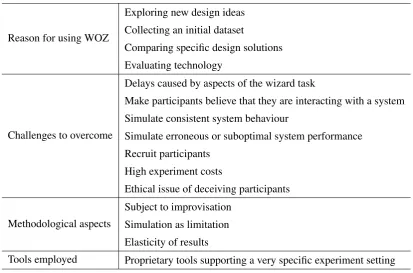
5.2 Summarised results of 20 phone interviews conducted with interviewees from industry and academia who have experience with WOZ experimentation . . . . 81
5.3 General requirements for supporting WOZ experimentation. . . 85
5.4 Design Space for WOZ studies with LTCs and associated application exam-ples. For the input stage we find text for cases where user input comes from a
physical input modality such as a keyboard or a touchscreen and ASR where the user would speak to the system. For the processing stage we find,
depend-ing on the tested scenario, MT either before, after or on both sides of the DM.
Finally, at the output stage we find either spoken output provided by a TTS or text-based output in case a visual interaction modality is simulated. . . 89
5.5 Existing WOZ Tools and the technology platform that was used to implement
them. . . 92 5.6 Some examples from the literature showing possible component/state
combi-nations. . . 95
5.7 The tool prototypes used to explore different aspects of Wizard of Oz experi-mentation. . . 97
List of Figures
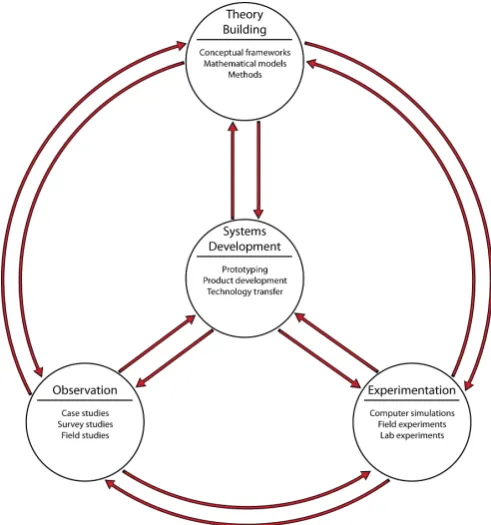
3.1 The multi-methodological approach of Systems Development Research
de-scribed by Nunamaker et al. [1991]. . . 32
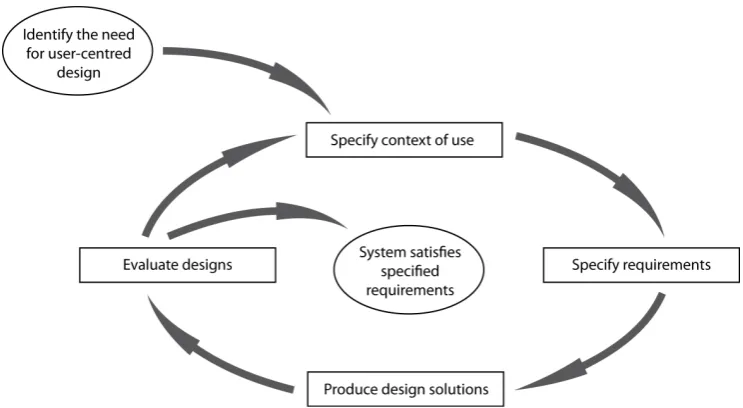
3.2 The process of System Development Research based on Nunamaker et al. [1991]. 33 3.3 The iterative design process of UCD based on the ISO 9241-210 standard. . . . 35
4.1 An initial wizard interface. . . 69
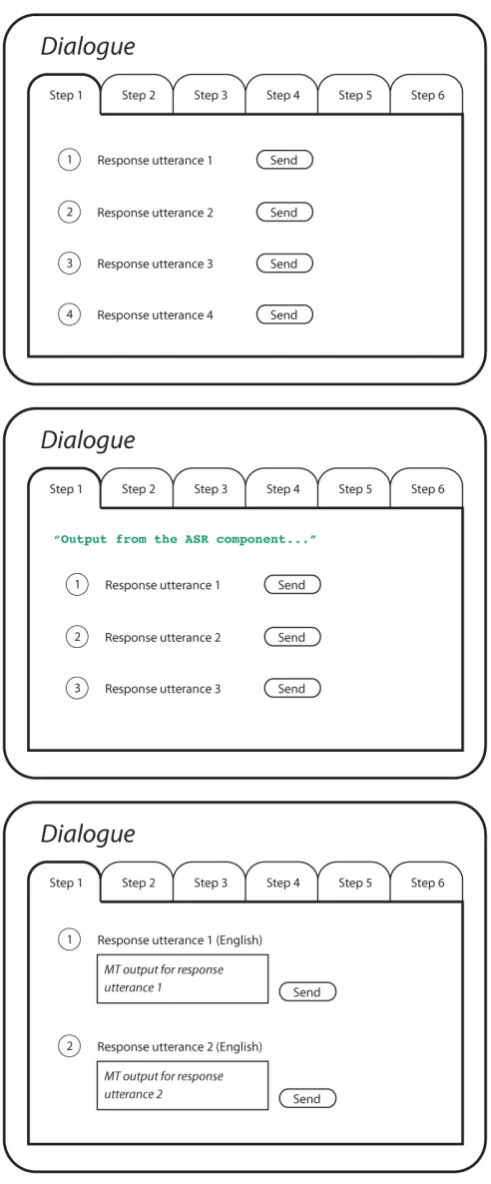
4.2 The interface that was used to display response utterances to subjects playing the roles of customers. If the German translation was incomprehensible they could see the English source by clicking the button labelled ‘Englischer Orig-inaltext’. . . 71
4.3 A tab structure representing the dialogue and its stages may help the wizard to choose from a predefined set of response utterances. . . 75
4.4 A seperate area for repair utterances should permit the wizard to act sponta-neously. . . 76
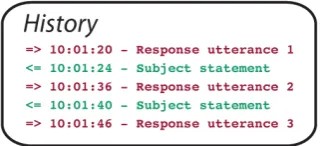
4.5 A history using different symbols and colours to differentiate between wizard and subject statements might support the wizard’s task. . . 76
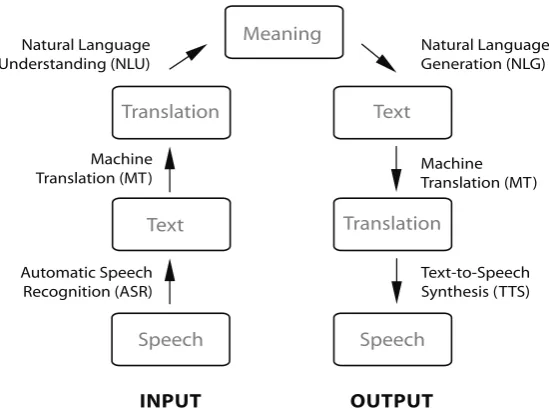
5.1 The Interaction Pipeline of Language Technology. . . 87
5.2 Using different LTCs changes the layout of the wizard interface. . . 90
6.1 A wizard’s variations (IQR values) of estimating a test customer’s reading speed over the course of 11 experiment trials. . . 103
6.2 Architecture of a new WOZ platform. . . 105
6.3 A wizard interface based on a generic application framework. . . 106
6.4 A tab-layout to make it easier to distinguish different dialogue stages. . . 106
6.5 Area for frequently used utterances. . . 107
6.6 Function to add utterances. . . 107
6.7 Chat function to provide more freedom when interacting with test participants. 107 6.8 Configurable filter mechanism for domain-data-based utterances. . . 107
6.9 History showing already sent and received utterances. . . 108
6.10 Notification system informing a wizard of a test participant’s availability. . . . 108
6.11 Area for time-stamped notes. . . 108
6.12 Field for wizard instructions. . . 109
6.13 Average times for a dialogue turn in the different trial runs of Study A including the time a test customer needed to read or listen to a sent utterance and respond. 111 6.14 Types of utterances used to confirm customer (i.e. test participant) input over the course of 17 experiment trials. . . 112
6.15 IQR of the measured response time per trial, average number of words pro-duced in an utterance per trial, and 90th percentile of the measured response time per trial. While initially the response time decreases, more words per utterance reverses the effect later on. . . 114
6.16 Interquartile Range (IQR) Values for Text-based Interaction in Initial Study. . . 115
6.17 Interquartile Range (IQR) Values for Text-based Interaction in Study A. . . 116
6.18 Interquartile Range (IQR) Values for Text-based Interaction in Study B. . . 116
6.19 A wizard’s differences in consistency (IQR value) when dealing with speech-based utterances (continuous line) compared to dealing with text-speech-based ones (dotted line). . . 118
6.20 Comparing experts and non-experts on the complexity (average words per ut-terance) of created utterances. . . 127
6.21 Comparing experts and non-experts on the number of created utterances. . . 127
D.1 Add and Edit WebWOZ Experiments. . . 145
D.2 Default Wizard Interface. . . 146
D.3 WebWOZ Edit Mode. . . 147
D.4 Add Utterance. . . 148
D.5 Add Tabs. . . 149
D.6 Frequently Used Utterances. . . 150
D.7 Taking Notes. . . 150
D.8 Settings. . . 151
D.9 Area for Domain Utterances. . . 153
D.10 Add Filters. . . 154
D.11 Setting Filter Values for Domain Utterances. . . 154
D.12 No Filter Values Selected. . . 155
D.13 Reduced Number of Domain Utterances through filtering. . . 155
D.14 Edit Experiment Settings. . . 156
D.15 General Experiment Settings. . . 156
D.16 Activated Free Text Interaction. . . 156
List of Abbreviations
ASRAutomatic Speech Recognition
ARAction Research
ATActivity Theory
CSCWComputer-Supported Collaborative Work
DMDialogue Management
ECAEmbodied Conversational Agent
GTGrounded Theory
GUIGraphical User Interface
HCIHuman-Computer Interaction
LTCLanguage Technology Components
MTMachine Translation
NLGNatural Language Generation
NLPNatural Language Processing
NLUNatural Language Understanding
SDMSystems Development Methodology
SUSSystem Usability Scale
TTSText-to-Speech Synthesis
WERWord Error Rate
WOZWizard of Oz
UCDUser-Centred Design
Introduction
“There’s a cyclone coming, Em, I’ll go
look after the stock”
– Uncle Henry
Early and ongoing feedback is important for building high quality interactive systems.
Gould and Lewis [1985] list ‘Iterative Design’ as one of their three key principles for de-veloping usable products and argue that problems and design faults can be discovered and
consequently fixed through early and ongoing user testing. Prototypes, either physical or in
the form of software, are valuable instruments for eliciting this sort of user feedback. Exam-ples include paper prototypes (e.g. Bailey et al. [2008]), sketches (e.g. Kieffer et al. [2010]),
and wire-frames (e.g. Li et al. [2010]) as well as 3D prototypes (e.g. S´equin [2005]) and more
advanced mock-ups (e.g. Aleksy et al. [2010]).
Combining novel speech and language technologies into systems across diverse domains
poses significant software engineering challenges. Assuring the usability of the resulting
ap-plications is an important, and somewhat under-researched, issue in this area. The use of Lan-guage Technology Components (LTC), i.e. for example Automatic Speech Recognition (ASR),
Machine Translation (MT) and Text-to-Speech Synthesis (TTS), has significantly increased in
recent years as their performance has improved. Examples include speech-based interaction in cars to keep a driver’s attention on the road and the use of web-based translation tools such as
GOOGLE TRANSLATE1and MICROSOFT BINGTRANSLATOR2to understand text written in a
foreign language.
Due to the fallible nature of the technologies involved in such applications (e.g. the low
recognition accuracy of an ASR system triggering the wrong system action, an ambiguous MT
result due to context-free interpretation of a source text, or the metallic sounding voice of a TTS function mixed with pronunciation errors that lead to misunderstandings), one must ensure that
usability and human factors are adequately accounted for. As with applications based on a
1http://translate.google.com/ [Accessed: July 16th2012]
2http://www.microsofttranslator.com/ [Accessed: July 16th2012]
Graphical User Interface (GUI), software using LTCs needs to be tested early in the design
process. Whereas low-fidelity prototypes assessing GUI applications such as sketches and wireframes can be built relatively quickly and inexpensively, the development of prototypes
evaluating the usage of LTCs can be both cost and time intensive. In order to be able to obtain
basic user feedback on an envisioned interaction, those systems would usually require at least several hours of recorded speech, valid transcriptions, an implemented framework of rules as
well as a solid error-recovery strategy. Hence, a more efficient way of prototyping this type of technology is desirable.
One technique that has been used to test applications involving LTCs is Wizard of Oz
(WOZ), where a human, the so called ‘wizard’, mimics the functionality of a system. Since the technical requirements for such a prototype can be reduced to a minimum, this technique
is particularly useful for early stage evaluations and thus a good candidate for addressing the
lack of low-fidelity prototyping methods supporting the use of LTCs. However, the task of the wizard is highly demanding, thus supporting it through a usable wizard tool seems crucial.
While several wizard tools have been built to date, most of them were designed with specific
experiments in mind. The more general issue of understanding the task of the wizard so as to provide a generic WOZ prototyping platform has remained largely unexplored. In order to
change this the goal of this thesis has been to gain a better understanding of the purpose of WOZ
prototyping and the types of analysis it is used for, and then furthermore explore the task of the wizard and some of its challenges. The research was conducted alongside the development
of a new, web-based WOZ prototyping platform, whose goal is to support language-based and
audio-visual WOZ experimentation in a more flexible and scenario independent fashion.
1.1
The Wizard of Oz Prototyping Method
Wizard of Oz (WOZ) constitutes a prototyping method that is used by researchers and de-signers to obtain feedback on functionalities that would require significant resources to be
implemented. In a so called ‘WOZ experiment’ a human ‘wizard’ mimics the functions of a
system, either entirely or in part, which makes it possible to evaluate potential user experiences and interaction strategies without the need for building a fully functional product first (Gould
et al. [1983]). The application area of WOZ prototyping ranges from very low-fidelity, where
researchers might refer to paper prototyping as being a form of WOZ, to high-scaled simula-tions in which the wizard only takes over a very distinct functionality of an envisioned system.
Similarly, the types of experiments may vary. On the one hand we find set-ups where a test par-ticipant is openly aware of the simulation, sometimes even taking over the task of the wizard in
order to better convey a constructive argument, on the other hand it is often of high importance
that participants believe that they are interacting with a real system, so that their actions and consequently their feedback is just as real. Hence, in a way WOZ experimentation can be used
to elicit user feedback throughout the entire development cycle of a new system. It helps at the
story-boards, throughout the development process by simulating missing functionality and offering
a way to compare different design solutions, as well as towards the end of a development cy-cle when it can be used to augment system components whose quality levels are not sufficient
and therefore would require additional algorithm training and fine tuning. In addition to these
three application levels, which focus mainly on the development and improvement of a system, WOZ is also used as a tool to collect various types of corpus data. The field of computational
linguistics, in particular, makes extensive use of the method in order to gather the relevant speech and language corpora underpinning their services. The following sections discuss these
different motivations for employing the WOZ prototyping method in more detail and highlight
their distinct characteristics.
1.1.1 Exploring the Design Space
While the general idea of WOZ experimentation remains the same no matter at what point of system development it is used, the set-up may vary at different development stages. At the very
beginning, for example, the most basic form of the method can use a wizard to interpret mouse
clicks and keyboard entries, where the actual setting can be as simple as flipping through a collection of user interface sketches. Here a user would touch on a sheet of paper (to simulate
a button press) and the wizard would present the follow-up screen associated with this button
press. In a similar experiment, Liu and Khooshabeh [2003] used sketches and post-it notes to represent screens of their envisioned KITCHEN-NET system. The wizard manually updated
these artefacts based on spoken user input. Even though in this very basic form of WOZ
prototyping a user is aware of the simulation, important feedback can be gathered. In fact, often it is this improvised and rough setting that allows for unconstrained reactions. That is,
users might be reluctant to criticise a product which is, at least to some extent, functional and
therefore has consumed a certain (undefined) amount of development time. In the case of a paper-based sketch, however, most people would provide unconstrained feedback, since the
effort that has been put into building this prototype is perceived as rather low. Similarly a
developer would be more likely to make radical changes to an envisioned system functionality if the time and resources spent on building the prototype were low. While one could argue
that simple sketches or storyboards would achieve the same result without the effort of running
an actual ‘experiment’, it is rather this interactive aspect of WOZ which makes the method so valuable. It helps researchers and designers to better understand an envisioned design space
and reflect upon it. That is, it permits them to explore various possible design options and allows for optimisation with respect to functionality, user experience or cost. The user input
in this situation serves both, direct feedback on an anticipated functionality as well as a new
perspective on an overall concept. Sch¨on [1984] states that a designer ‘reflects-in-action’ when interacting with a sketch or paper-prototype. He argues that the actual process of creating such
an artefact already influences and changes initial thoughts. Observing a third person using this
system design. In this respect early stage WOZ experimentation can be seen as a form of what
Soegaard [2010] calls ‘Explorative Prototyping’ which serves as a communication medium between users and designers. It provides an artefact that is used to discuss pros and cons of
an envisioned design idea. The designer in that situation is not necessarily searching for the
approval of the presented idea but rather seeks to understand whether the concept is workable. However, the fact that any actual functionality is missing allows, sometimes even asks, for
alternative solutions. A participating user is able to freely express his/her thoughts and question the product’s functionalities. As the simulation is visible and fully integrated in the discussion it
is furthermore possible to adapt to a user’s propositions. Alternatives can be explored without
changing the test protocol. From an analysis perspective ‘Explorative Prototyping’ does not aim to collect data for statistical analysis. It seeks the dialogue with the user in the early stages
of product design. Not forcing participants into the boundaries of a controlled interaction
with a premature prototype (given that at this stage of product development most solutions need to be regarded as untested and premature) following a defined test procedure, creates the
stage for this discussion, where the simulation of functionalities can be seen as an instrument.
Similar to pen and paper it allows both parties to interact with a medium and to exchange ideas. In such a situation it is not unusual that at some point the participant takes on the
role of the simulator, explaining the favoured way of interaction to the designer. As with
other ‘Participatory Design’ instruments (cf. Schuler and Namioka [1993]) the user becomes an integrated part of the development team, where several of these types of discussions eventually
help to collect and better understand user requirements. Furthermore theses discussions might
trigger awareness of hitherto unconsidered aspects of the design. Hence, without investing a great amount of time and resources, exploratory WOZ prototyping is able to provide valuable
insights at the very early stages of product development.
1.1.2 Probing User Actions
In a more advanced product development stage the simulation conducted by the wizard is
of-ten hidden from a test participant, so that, at least to some exof-tent, the illusion of a working system is created. With this approach users think they are interacting with an actual
prod-uct, responses, however, are produced by the wizard who might be sitting in a different room
connected through audio, video, and/or different sorts of screen-sharing technologies. Usually this set-up requires a dedicated wizard application interface to be built so that it is possible to
simulate envisioned system functions. The resources that are put into building this interface should, however, be kept to a minimum. At this stage the actual product is still a prototype
and hence should be treated as such. High development costs at this point may otherwise lead
to reluctance in making necessary changes to the design. One might argue that it would be better to save the time and resources that go into building this - what Soegaard [2010] calls
an ‘Experimental Prototype’ - and instead invest the effort into working on the actual product.
that an already taken design path would be left after a considerable amount of resources had
been spent on it. Treating this WOZ supported prototype as a separate (low-fidelity) system that solely functions as a tool for gathering user feedback, however, cuts the direct connection
with the final product, reducing reluctance to implement changes, and consequently acts as an
information source based on which design decisions can be taken. On the other hand one might argue that similar information could also be gathered by simply interviewing potential users.
While, interviews are a useful and valid instrument for defining the requirements of a future product, they fail when it comes to eliciting non-declarative or tacit knowledge. In other words
users would fail to report on actions they are not aware of since they happen unconsciously.
Interacting with a (simulated) prototype helps to bring this knowledge to the surface. Further-more it tackles the so called ‘say-do problem’ (Goguen and Linde [1993]) which describes the
difference between what users say they are doing and what they actually do. Again, the
mis-match here is usually not caused by a user’s intention but rather linked to the fact that routine tasks are predominantly controlled by tacit knowledge, and so it is difficult to describe these
activities in great detail. Observing users interacting with a prototype, however, allows for the
probing of certain actions and consequently may provide the designer with relevant insight. As the simulation in this sort of WOZ experimentation is hidden, real user actions can be expected.
While one of the problems of experimental user testing, namely the missing context, usually
still remains, the gathered data can be used for both qualitative (e.g. user satisfaction, user feedback, etc.) as well as quantitative (e.g. task completion rates, task completion times, etc.)
analysis. Compared to traditional prototype evaluations this form of analysis lets the designer
also test ’what if’ scenarios. That is, while with traditional prototypes the gathered feedback is limited to what the tested technology is capable of, with WOZ it is possible to evaluate better
performance. For example, while perfect automatic speech recognition is still not achievable
with current technological solutions, WOZ can be used to simulate such a case. Potential inter-action scenarios can therefore be sufficiently explored which allows for resources to be spent
in a goal-oriented fashion. In summary, this second form of WOZ prototyping can be seen as a
valuable tool, not only for designing the product but also for steering the distribution of future resources.
1.1.3 Tuning Technologies
Finally, WOZ experimentation is often employed towards the end of a product development
cycle. Here it may be integrated with the actual product and be used to simulate or augment a system function that is either not yet implemented or needs considerable improvement in order
to convey the quality that is intended. Similar to WOZ used within the experimental stage,
it is usually necessary to build a dedicated interface for the wizard to simulate the envisioned system function. Often this interface is more sophisticated than during earlier stages and its
functions are tightly integrated with the test system. Furthermore, as at this point the rest of
already working system. Additional training for the human wizard, therefore may be needed
in order to assure for correct and consistent wizard actions. While WOZ experimentations in earlier stages of product development serve the exploration of a design space and help to choose
the right design path, evaluations towards the end of the development cycle are rather used to
fine-tune system functions and evaluate technology components. Novel features, in particular, whose necessary quality level is often hard to judge, can benefit from this type of evaluation.
The wizard can be used to augment the system function, which allows for the evaluation of potential user experiences with different levels of quality. Such may help to decide on whether
it is necessary to invest additional time in improving the function or if these improvements are
not needed as users might not perceive a significant difference (e.g. it can be evaluated which error level is acceptable for a recognition system to be used in a certain context).
In the late stages of the development cycle, where the wizard task at that stage is usually
tightly integrated with the rest of the system, the goal of the experiment is to convince a partic-ipant that he/she is interacting with a final product. Signs of simulation should not be spotted
by the user. While some product development teams might be able to recruit professionals
to act as a wizard, it is usually one of the team members who is entrusted with this delicate task. Compared to WOZ conducted early in the development cycle the potential for generating
additional design insight is smaller. As the task is more defined it shows less room for
cre-ativity and consequently may even be experienced as relatively monotonous. Nevertheless, the added value can be found in the ability to collect sufficient data to be able to deduce significant
results. Hence, ground-breaking conceptual changes may not be discovered, but
researcher-s/designers might aim at validating an already taken design path and seek to find those aspects that still need improvement. To do so, WOZ experimentation at this stage usually requires a
significantly greater number of participants. In order to be able to produce the relevant data
it is furthermore necessary to control for different experimental effects that could potentially bias experiment results. While such a strict experiment design is less important with more
exploratory WOZ evaluations where the goal often is to map the design space and search for
alternative solutions, here too much flexibility would have the opposite effect. If one, for ex-ample, looks for quantifiable results, he/she does not only need to conduct experiments with
numerous test participants, but it is also important that these experiments provide a consistent user experience. Otherwise the resulting data may not be valid. However, with more
partici-pants the cost of the evaluation increases. While WOZ experimentation at the beginning of a
development cycle can be regarded as a cheap design method, using it later in the cycle means dealing with significantly higher costs. Nevertheless, compared to the amount of resources that
might be wasted without conducting appropriate system evaluations, the price of WOZ
proto-typing can be seen as reasonably small. Hence, in summary this third type of WOZ evaluation, which is conducted towards the end of a product development cycle, does help to define the
amount of additional improvement that is needed for a function to be acceptable. Furthermore
1.1.4 Collecting Data
In addition to using WOZ to simulate currently missing system functions, researchers/designers also employ the method to gather various types of interaction data. In most cases this concerns
speech and language corpora, which are considered essential components for building
natu-ral language-based applications (e.g. Life et al. [1996]). Other examples include corpora of gestures and movements (e.g. Zobl et al. [2001]) or facial expressions (e.g. Bevacqua et al.
[2010b]). Similar to exploratory studies described earlier, experiments that aim to collect
cor-pora usually happen without having an actual working technology available. Nevertheless the simulation needs to be convincing and possibly consistent as the collected data constitutes the
foundation, on which future technologies are built and trained. The quality of the resulting system depends on the number but also on the naturalness of the collected interactions. Hence,
the main requirement for WOZ employed as a corpus gathering instrument is to trigger realistic
user behaviour. While the previously discussed use cases often focus on the qualitative analysis of experiment results, where interaction strategies and user experiences play a crucial role, for
corpus collection the main goal is to generate a sufficient number of iterations so that eventually
a mathematical model of the interaction can be built. In other words, while in the previously discussed types of WOZ experimentation the actual product and its state of development is the
focus of an experiment, for corpus gathering this direct relation between simulation and final
product is not compulsory. The method is rather used as an instrument to elicit natural user data, which is consequently analysed and used to train different sorts of intelligent systems.
1.2
Drawbacks of Wizard of Oz Prototyping
As explained above, WOZ is a valuable prototyping method that can be employed throughout
all the different stages of product development. Yet, despite its advantage of simulating
func-tionality and obtaining feedback without upfront investment into building the relevant technol-ogy, it should not be regarded as a particularly cheap evaluation method. In particular, the need
for a dedicated person that simulates functionality (i.e. the wizard) increases labour cost. While
in the early stages of product design, where WOZ is usually employed as an exploratory eval-uation method, the designer can take on this role (reducing costs), more advanced simulations
might require specialised skills. But even if the designer/researcher performs the simulation
task, the effective experimentation costs might still remain high. Throughout an exploratory evaluation phase WOZ serves as a direct design instrument in which the participating parties
(i.e. the designer/researcher and an experiment participant) define the frontiers of the potential
application space. Hence, at this point it can be regarded as a typical design task. Later on, however, conducting an experiment that realistically simulates a system function with the aim
of obtaining user feedback, needs to be seen as a separate task happening in parallel to the ac-tual design process. Here the goal is to effectively produce measurable data from which, after
development therefore serves as a direct design instrument. Similar to a pen sketching
differ-ent solutions on a sheet of paper, the wizard can simulate varying system functions and discuss with a user their potential. During a realistic simulation, however, the designer’s role is limited
to passive observation (in case he/she is acting as the wizard the interaction is usually bound
by a predefined set of of rules on how to interact with a test participant, which in most cases does not include a direct discussion about the tested design) which constitutes additional time
resources spent outside the actual design task. Hence, one could argue as the development of a product advances so the experiment costs for WOZ prototyping increase, with costs arriving
at their peak at the end where perfect and consistent simulation requires a highly qualified and
trained wizard operating a usually rather elaborated wizard interface, and where furthermore the aim for statistically significant results demands a qualifying number of test participants.
The latter aspect can generally be seen as a drawback of experiment-based prototyping. As
with other experimental analysis (e.g. usability testing, A/B testing, etc.), WOZ experimen-tation results heavily depend on the number of participants tested. While in the early stages
of design insight is usually generated through exploration and discussion, in later stages it is
preferable to base design decisions on (more or less) hard numbers. Also in the case of a corpus collection task the number of participants represents an important factor, directly influencing
the validity of the derived interaction model. Yet, WOZ testing with high numbers of
partic-ipants seems difficult. It is true that the recruitment of suitable people is a challenge shared by all user testing methods, however, WOZ also needs to deal with restricted flexibility when
it comes to time and place. While other test settings are sometimes able to significantly
in-crease the number of participants by employing remote testing services or by simply looking at log files, the complexity of a WOZ set-up usually requires people to travel to a dedicated
lab. This furthermore highlights the challenge of organising time-slots, as also the schedule
of the wizard (being a separate member of the experiment team) needs to be integrated into the test cycle. New technologies might allow for more flexibility, for example by using
web-based WOZ tools, yet the amount of necessary coordination remains high. Furthermore, the
wizard, especially during the later stages of system development, needs to be considered as an additional recruitment factor.
A final drawback of WOZ can be found in the general aspects of human simulation. Again the early stages of product development are less affected as here the simulation is visible and
rather used as an instrument for probing discussion. Experiments in which the wizard’s actions
are hidden, however, heavily depend on this simulation aspect. Varying as well as unrealistic wizard behaviour can lead to biased experiment results. That is, on the one hand the wizard
faces the task of mimicking a system function which at this point has not been built and for
which therefore a clear definition is missing, on the other hand he/she also faces the problem of running the simulation consistently. While sufficient training may help to deal with the
latter, it can be difficult to develop the necessary set of rules in order to always mirror realistic
throughout the more advanced stages of product design, where the decisions should be based
on measurable results, such variations can lead to incorrect interpretations.
In summary, the main challenge WOZ prototyping is facing can be found in its
human-centred nature. The dependency on human participants and the accompanying recruitment
process significantly increases experiment costs while decreasing flexibility. Also, the human wizard constitutes an additional cost factor on the researcher side of an experiment and he/she
also represents a potential weakness when it comes to controlling for possible side effects. Hence, gathered results are often regarded as less meaningful when compared to those
pro-duced by computer-driven experimentations.
1.3
Motivation of this Thesis
While there are surely challenges to overcome, overall WOZ experimentation can be seen as
a flexible evaluation method that is applicable in different forms throughout the development process of a new product or service. In the early stages its value lies mainly in exploring the
design space by observing users interacting with an unfinished, sketch-like representation of a
system. Further along the development road, it is used to ‘realistically’ simulate system func-tionality, which prevents the investment of too much time and effort into building something
that might not work. Finally, towards the end of the development cycle WOZ can be employed
to fine-tune components and evaluate their required level of quality. At all stages the method needs to be seen as an instrument to elicit user feedback, which can be used to eventually build
a better product.
Yet, similar to other user-centred evaluation methods, it is often exposed to criticisms as it can require significant amounts of time and resources to be used. WOZ prototypes are usually
not part of any final product and here the cost of building them needs to be justified by the
design team. Furthermore evaluation results, as with other user-based experimental analysis, heavily depend on the number of participants that can be recruited. Having to source,
coordi-nate and brief participants involved in user-based experiments not only requires time (which
can be directly transformed into labour costs) but also a certain amount of flexibility. Having an additional human, i.e. the wizard, being an integral part of the the experimentation further
in-creases the complexity level of the evaluation method. Also, this human element is often seen
as a weakness as the produced performance and especially its consistency can vary without sufficient upfront training, leading to unreliable experiment results.
Despite this criticism, numerous examples have shown that the WOZ method is an ef-fective and valuable instrument for informing the design of novel technologies (e.g. Kelley
[1983], Gould et al. [1983], Fraser and Gilbert [1991], Salber and Coutaz [1993a], Maulsby
et al. [1993], Andersson et al. [2002], H¨oysniemi et al. [2004], Serrano and Nigay [2010], etc.), and therefore should not be neglected when it comes to building and evaluating systems
that heavily depend on complex technology components. In order to improve our
structured analysis of previously conducted WOZ studies as well as the tools and frameworks
that have been used to support them. The goal was to identify context specific requirements and explore how more generic tool support might be achieved. Following a methodology which
integrated theoretical analyses with system development, the aim was to construct a WOZ tool
that reduces the earlier outlined complexity and increases experiment flexibility. Furthermore we wanted to better understand the task of the wizard and its different roles. While the
sim-plicity of its human simulation is generally regarded as the main strength of WOZ, it has also been identified as its biggest challenge, and so we believe that a closer examination of this
aspect is required. Consulting with researchers and designers who have experience with WOZ
prototyping was one way to collect relevant insight, looking at wizard actions and how they may change over time, was another. In summary the motivation for this work was to expand
the body of knowledge on the WOZ prototyping method and decrease its overhead costs by
de-veloping a tool that better supports the wizard task and furthermore may be employable beyond the frontiers of a single experimental setting.
1.4
Contributions of this Thesis
This thesis methodically explores previous work in the area of WOZ experimentation as well
as the tools that have been employed. In doing so we specifically look for challenges involved
in the design and conduct of a study. The goal is not to criticise previous experiments and solutions but rather to highlight how distinct motivations have led to a variety of different tools
whose features may to some extent be overlapping.
The main contributions of the first part of this thesis is therefore an extensive discussion of existing WOZ tools, with a special emphasis on language technologies, and how they have
been used in the past. Sub-contributions include a derived set of requirements for generic tool
support as well as a list of recommendations for successfully running experiments. As such the objective of this part of the thesis is mainly concerned with answering the following question:
“What is the nature and application area of WOZ with respect to language technologies
and for which concrete scenarios can it be used as a low-fidelity prototyping method?”
In a next step the gained understanding is used to build a WOZ prototyping platform whose main contribution is to reduce the costs of building a new WOZ tool every time a new use case
is to be evaluated. A critical sub-contribution of this platform is a generic and highly flexible
architecture for WOZ prototyping that not only offers a way of integrating existing technology components but also handles the different roles a wizard can play when interacting with them.
Thus this part of the thesis tackles the following question:
“How can the role of the wizard be supported and what features can be implemented into
Finally the main contribution of the last part of this thesis is a set of evaluations that employ
different releases of the WOZ prototyping platform in order to explore distinct aspects of the wizard task, namely wizard workload, wizard consistency and experiment construction. As
such it focuses on answering the following question:
“How does wizard performance vary over time and what experience is necessary to
suc-cessfully design and run experiments?”
In summary this thesis is concerned with improving our understanding of the field of WOZ
prototyping and how it varies between application areas. In doing so our analysis puts a strong
emphasis on the simulation of language technologies but also includes other types of WOZ settings. The goal is to provide a structured overview of the method and generate a summary
of rules and best-practices for successfully conducting WOZ studies; an aspect that has not
been explored so far. The generated results are furthermore used to better understand the task of the wizard as well as the given design space for WOZ experimentation. In particular we
are investigating WOZ tool support and how it can be improved. This is mainly motivated by
the current lack of software programs and applications that let researchers/designers simulate technology but also by our own demand for a more generic solution. Finally, our initial analysis
of the literature has furthermore shown that the task of the wizard and its specific challenges
are rarely subject to investigation. Hence a fundamental part of this thesis also explores various aspects of the wizard task (i.e. wizard workload, wizard consistency and the construction of
WOZ experiments) and how they may be better supported.
1.5
Structure of this Thesis
The structure of this thesis is as follows: Chapter 2 starts the path of exploration with an exten-sive analysis of previous work on WOZ. Chapter 3 describes the methodology used to tackle
the above listed research questions. Chapter 4 describes the initial analysis and prototyping
ef-forts. Chapter 5 elaborates on the wizard task, its different roles and their influence on a generic tool architecture, and Chapter 6 discusses the final WOZ prototyping platform and reports on
a set of evaluations with respect to wizard workload, wizard consistency and experiment
Related Work
“Who are the wizards?
– Dorothy
Wizard of Oz experiments have previously been applied in a variety of different research
areas and it is worth highlighting some of this work in order to demonstrate the quality of
the WOZ method. We start our exploration of the field by first going back to its very origin and discussing the history of WOZ prototyping (cf. 2.1). From there we more closely look at
the various application areas (cf. 2.2) before eventually focusing on Language Technologies
(cf. 2.3) and the challenges involved in prototyping this natural form of interaction.
2.1
The History of Wizard of Oz Prototyping
Borrowing its name from the famous novel by Baum [1900], the Wizard of Oz (WOZ) proto-typing method was introduced in 1983 by Kelley [1983] who initially referred to it as ‘The OZ
Paradigm’. At the time ‘OZ’ was also taken as an acronym for ‘Offline Zero’ which referred to
the fact that a wizard is interpreting a user’s input in real time1. In his paper Kelley argues that human simulation can be an efficient empirical method for developing user-friendly natural
language applications and he supports this argument by showing that only a small number of
experiments (i.e. in his study he used 15 participants) and an iterative development methodol-ogy (i.e. results were integrated iteratively after every experiment run) are needed to capture
most of the vocabulary and dialogue structures required to successfully operate a calendar
pro-gram using natural language input. Even though Kelley coined the name Wizard of Oz (with respect to prototyping), several researchers before him, used simulation as a means of
explor-ing interactions. Two important examples include Erdmann and Neal [1971] and Bobrow et al.
[1977], both of whom tested early concepts for interacting with a flight booking system. While Kelley and his predecessors mainly focused on text-based natural language interaction, Gould
1http://www.musicman.net/oz.html [Accessed: April 25th2012]
et al. [1983] explored the possibilities of a computer processing spoken input. Using a highly
trained secretary they simulated an intelligent system that would understand any English sen-tence and display it on a terminal screen. Unlike earlier studies, Gould and colleagues were,
however, mainly interested in the experiences of users and how they felt about using speech as
a means for operating a computer system, and therefore they did not build an actual working prototype. Thereafter several researchers employed this new way of simulating interaction.
Good et al. [1984], for example, used WOZ to elicit natural user behaviour, based on which they built a user-derived command language. In 1984 the method was the centrepiece for
pro-totyping a multi-lingual message system for the Olympic games (Gould et al. [1987]) where
it was used to define appropriate help messages and also used to obtain early feedback on the envisioned system interface. Around the same time Landauer [1987] highlighted its strength
as a quick and cheap usability evaluation technique that can be used very early in the
devel-opment cycle, before Chignel [1990] listed WOZ as a dedicated type of formative evaluation. Subsequently Hill and Miller [1988] and then Carroll and Aaronson [1988] employed it to
explore more closely the use of intelligent advisory interfaces. More specifically looking at
speech-based interaction, J¨onsson and Dahlb¨ack [1988] used WOZ to point at distinct differ-ences between talking to a computer and talking to a human. Additionally Fraser and Gilbert
[1991], who coined the expression ‘Pay No Attention to the Man Behind the Curtain
(PNAM-BIC)’ proposed a taxonomy for the simulation of speech systems. Extending the application of WOZ from text- and speech-based interaction to other modalities first Hauptmann [1989]
and then later De Marconnay et al. [1993] used it to evaluate gestures and face recognition.
This expansion in scope continued with Salber and Coutaz [1993b] who looked at multi-modal interaction, leading to the introduction of multiple wizards. Finally, Dahlb¨ack et al. [1993] as
well as Bernsen et al. [1994] presented general analyses of the WOZ method and Wooffitt et al.
[1997] dedicated a complete textbook to the subject. In the following sections we highlight some of that work in more detail.
2.2
Areas of Application
In previous years WOZ experiments have been used for a variety of purposes, including
pro-totyping multi-modal information retrieval (Rajman et al. [2006]), testing speech-based flight
booking systems (Karpov et al. [2008]) and simulating a virtual doorman (M¨akel¨a et al. [2001]). Exploring rather open interaction spaces, Bradley et al. [2009] used WOZ to evaluate a user’s
experience when interacting with a web-based social companion, Goldstein et al. [1999] em-ployed it to investigate navigation in voice-controlled dialogues, and Davis [1998] tested the
advantages of active help for the use of an unfamiliar software application. In terms of scope,
the application area of WOZ ranged from designing dialogues (e.g. Howell et al. [2005]) to collecting text and speech corpora (e.g. Benzm¨uller et al. [2003]) and exploring interaction
strategies (e.g. Yang et al. [2000]). As with low-fidelity prototyping methods for software
and helped to improve the naturalness of an interaction. The method supported designers in
producing appropriate dialogue models as well as allowing them to improve their understand-ing of a domain. A final area in which WOZ was found to be helpful is the exploration of
emotions (e.g. Scherer and Schwenker [2008]) and social aspects of human-machine
interac-tions (e.g. Deruyter et al. [2005]).
In order to discuss WOZ examples in a more structured way the remainder of this chapter
tries to categorize them in different application domains. While these domains are chosen based on our studies of the literature we would like to note that they are neither exclusive nor clearly
defined. Rather, we see the borders between them blurred for which it is not always entirely
clear where to place an example. Furthermore we understand that other researchers might use a different classification scheme. However, the purpose of clustering WOZ examples into
different application domains is to show the different perspectives of WOZ prototyping and
consequently the variety of interests that need to be understood when one seeks to explore the method, rather than to define an analytic classification scheme for WOZ.
2.2.1 Wizard of Oz and (Spoken) Natural Language
From the beginning, WOZ experimentation has been used to study human language and how
it can be used as a means to interact with computers. Ever since Kelley highlighted its benefits
as part of an iterative design methodology for natural language applications (Kelley [1984]), researchers have employed WOZ simulations to study different aspects of language-based
human-machine interaction. The universal understanding at the time was that human-computer
dialogues should be modelled after their human-human counterparts, and in order to test this assumption Carbonell [1983], for example, explored discourse pragmatics and ellipsis and
Guindon et al. [1987] conducted a WOZ study to compare grammatical structures of text-based
human-machine interactions with the ones of human-human dialogue. Dialogue studies contin-ued by putting a great emphasis on identifying different classes of discourse (Stenton and
Whit-taker [1989]) and how they are best represented by natural language interfaces (e.g. Dahlb¨ack
and J¨onsson [1989]; Dahlb¨ack and J¨onsson [1992]). It was then Dahlb¨ack et al. [1993] who first presented a holistic description of WOZ prototyping with respect to the study of
human-machine discourse, further emphasising the argument that people do change their behaviour
when they know they interact with a system rather then a human being, and that the method needs to account for that.
At the same time first studies were reported which aimed at expanding the method towards spoken dialogue analysis (e.g. Pilkington [1992]). Here initial results showed that the influence
of using distortion mechanisms such as a vocoder to help deceive and make people believe that
they are interacting with a machine (i.e. a vocoder transforms a human voice into slowly varying electronic signals which lets the output sound rather metallic) was found to be less
influential than, for example, the background knowledge of the people that were hired for the
Lamel [1998] discovered the benefits of using WOZ experiments to collect the spoken input
of test participants and used this initial corpus as a source to bootstrap the development of the first domain-specific Automatic Speech Recognition (ASR) systems. Alternative methods
to build a working system were mainly based on complex algorithms and machine learning
processes such as the ones described by Gorin et al. [1997]. However, before these algorithms could have collected sufficient data, a considerable number of real users needed to be exposed
to a poorly working system, which sometimes restricted the application of the approach in a business context. By using WOZ in the initial stage of data collection, researchers were able to
solve this problem.
In an attempt to feed more knowledge to their spoken dialogue system Ammicht et al. [1999] then moved away from just using WOZ in the early stages of system development and
started employing it through all stages of design. From here on in, efforts were mainly devoted
to exploring dialogue strategies in different domains and how the insight gained could be used in system design. Pirker et al. [1999] specifically looked at ordering event tickets (in their
research they were focusing on cinema), while Whittaker et al. [2002] explored more complex
information seeking domains, which led to the development and testing of the first user models. On a different front Hajdinjak and Mihelic [2003] looked at accessing weather information
and Krebber et al. [2004] at controlling a smart home. Studies also investigated multi-user
environments and how they potentially change the dialogue models (Strauß et al. [2006]), at different entropy levels of the presented information (Winterboer and Moore [2007]), and at
the use of referring expressions in situated dialogue tasks (Janarthanam and Lemon [2009]).
Moving the context of interaction from the computer into the car Geutner et al. [2002] fo-cused on using spoken language for navigation as well as context-specific information retrieval
while driving. Expanding on this work Lathrop et al. [2004] looked at variations in speech data
caused by contextual changes and Cheng et al. [2004] analysed driver utterances in order to find more realistic in-car dialogue behaviour. Similarly, Bertomeu et al. [2006] used a corpus
gathered through WOZ experimentation to explore discourse changes influenced by contextual
phenomena.
Looking more closely at goal-orientation and the influence recognition errors would have
on task completion rates Williams and Young [2004], studied assisted way-finding (i.e. they used a map task scenario in which two dialogue partners one being an intelligent system
-are given two partially incomplete maps, each of which misses different elements. One of
the interlocutors then acts as an advisor who helps the other person find the fastest way to a specific target location. The resulting dialogue is used to fill each others missing elements on
the map). A wizard mimicked the system and provided for different levels of mis-recognition.
A similar setting was used by Koulouri and Lauria [2009] to explore miscommunication and collaborative behaviour. How people change their prosody in a grounding process, as well
as how they recover from mis-recognitions were both the focus of additional WOZ studies
the interaction with them.
From a more task-focused point of view Lyons and Skeels [2005] studied the way we inter-act with digital calendar programs. To do so, they used a wizard to simulate an always-on
as-sistant application. The goal was to create a system that would not depend on direct commands
but rather run in the background and act upon conversational cues. Trying to push language technologies to a new level, B¨alter et al. [2005] used a trained speech therapist as a wizard for
a simulated speech training system for children with language disorders. A similar set-up was recently used by Cabral et al. [2012] to help non-native speakers with their pronunciation of
English sentences. This brings us to another language-related aspect that has increasingly been
explored through WOZ, namely the use of Machine Translation (MT). Explorations in this area range from comparing different MT architectures (Starlander [2007]) to studying the
re-phrasing and grounding processes achieved through back-translation (Bederson et al. [2010]).
Eventually, leaving the goal-oriented dialogue structure Gandhe and Traum [2007], were in-terested in analysing role-play and what can be learned from that to inform the design of open
dialogue systems. Lee et al. [2010] took a similar approach when they used a wizard to control
the narrative of a computer game and Dow et al. [2005b] extended the application into the real world by conducting a proof-of-concept study that explored spatial narratives for visitors of a
cemetery.
While aspects of speech-recognition as well as speech synthesis have been the focus of some studies, the majority looked at improving natural language understanding and the
con-sequent generation of appropriate output. WOZ experimentations seem particularly helpful in
cases where existing technological solutions need to adapt to human behaviour. Skantze and Hjalmarsson [2010], for example, used a wizard to simulate an incremental dialogue manager
that adapts its goals whilst a user is talking (i.e. plan-based dialogue management). Others
looked at wizards interacting with test participants to construct models of human behaviour which were then used to deduce reinforced learning strategies for dialogue managers (Rieser
et al. [2010]). Finally, WOZ was also used to quickly test some of the developed components.
For example, Meguro et al. [2011] compared the efficiency of seven different dialogue models by replacing the language understanding part of a spoken dialogue system by a wizard.
To address some challenges of WOZ experimentation, namely the often small experiment size (i.e. experiments usually consisted of one wizard interacting with 10-15 test participants)
as well as the dependency on a human wizard, researchers used different approaches. Fabbrizio
et al. [2005], for example, used an automated wizard that was modelled to reject or re-prompt user queries with vague or undefined content. Wir´en et al. [2007] on the other hand, worked
with 10 professional wizards (i.e. call centre employees) over the time-span of 5 weeks to
collect a corpus for a potential call-routing application. 42,000 dialogues were recorded. While the number of utterances that were recorded was certainly important for training the system,
the author also highlighted that the WOZ method was equally valuable for informing the actual
product design2. Another example that clearly illustrates the power of WOZ prototyping for
designing a product based on natural language can be found in ‘Aardvark’, a company that had
the idea to develop a system where people could ask questions using a sort of instant messaging service. These questions would then be routed to their friends, or friends of friends, who might
be able to answer them. As the Wall Street Journal reports3 the Aardvark team used a WOZ
set-up over a period of nine months to test their idea before investing any time or money into building an actual system. During this time they not only learnt whether people would be
interested in such a service, but also gained insight into the whole process of dealing with people and how to efficiently route questions.
Lessons Learned
The goal for WOZ prototyping employed in the area of Natural Language Processing (NLP) is to build and improve technology that is able to replace a human dialogue partner. Following
this motivation WOZ is mainly used for collecting an initial corpus of language, either spoken
or text-based, and for exploring dialogue strategies. To a certain extent it is also employed to evaluate user experiences, although the majority of studies would see this as a secondary
goal. As the focus in this area lies on producing reliable quantitative data, based on which
valid algorithms may be derived, NLP-based WOZ experiments are usually highly controlled. Wizards should be experts, being trained to the point where they act consistently, and bound
to a strict test protocol. Employed tools should further improve consistency and control for
other confounding factors such as spelling mistakes in utterances or irregular delays. While the method is generally regarded as a low-fidelity approach, it is not perceived as particularly
cheap. Training and experiment costs are high, which sometimes may require from
researcher-s/designers to clearly justify them. From a participant’s perspective literature has shown that people interact with a system differently than they do with a human interlocutor (e.g. J¨onsson
and Dahlb¨ack [1988]), even if their linguistic capabilities were equal (as in theory it is the
case in a WOZ setting). They adapt their language similar to when talking to a child or to a foreigner, they use a smaller set of words, and they are more inclined to wait for responses
(Dahlb¨ack et al. [1993]). Researchers designing WOZ experiments should be aware of these
aspects so that they take them into account when interpreting results. In summary it can be argued that in NLP the WOZ methods represents an important method for initial data
collec-tion whose improvisacollec-tional aspects should be restricted by a rigorous experimental design and a strict test protocol.
2.2.2 Wizard of Oz and Multi-modal Interaction
While speech and other forms of language-based human-machine communication remains an
important area of exploration, in recent years researchers have shown an increased interest in
multi-modal interaction paradigms, which gradually expanded the potential application area
3
![Figure 3.2 – The process of System Development Research based on Nunamaker et al. [1991].](https://thumb-us.123doks.com/thumbv2/123dok_us/8800859.913967/45.595.261.347.81.304/figure-process-development-research-based-nunamaker-et-al.webp)