Citation:
Christian, MS and Evans, CE and Nykjaer, C and Hancock, N and Cade, JE (2015) Measuring diet in primary school children aged 8-11 years: validation of the Child and Diet Evaluation Tool (CADET) with an emphasis on fruit and vegetable intake. European journal of clinical nutrition, 69 (2). 234 -241. ISSN 0954-3007 DOI: https://doi.org/10.1038/ejcn.2014.160
Link to Leeds Beckett Repository record: http://eprints.leedsbeckett.ac.uk/1265/
Document Version: Article
The aim of the Leeds Beckett Repository is to provide open access to our research, as required by funder policies and permitted by publishers and copyright law.
The Leeds Beckett repository holds a wide range of publications, each of which has been checked for copyright and the relevant embargo period has been applied by the Research Services team.
We operate on a standard take-down policy. If you are the author or publisher of an output and you would like it removed from the repository, please contact us and we will investigate on a case-by-case basis.
Measuring fruit and vegetable intake in primary school children:
validation of the CADET Diary in children aged 8-11 years
Meaghan S Christian1,2§, Charlotte E L Evans1, Camilla Nykjaer1, Neil Hancock1, Janet E Cade1
§
Corresponding author
Email addresses:
MSC: [email protected] CELE: [email protected] CN: [email protected] NH: [email protected] JEC: [email protected]
1
Nutritional Epidemiology Group, School of Food Science and Nutrition, University of Leeds, Leeds, LS2 9JT
2
Abstract
The Child And Diet Evaluation Tool (CADET) diary designed by the Nutritional
Epidemiology Group at the University of Leeds is a 24-hour food diary that measures the nutrition intake of children aged 3-7 years old, with a focus on fruit and vegetable
Introduction
Dietary assessment attempts to accurately estimate habitual intake for a group of individuals of interest. However, measuring food intake is difficult due to the wide variation that can occur daily, weekly, or even seasonally(1). The importance of accurately measuring food intake in children is a concern, as dietary habits formed in early life can have a serious impact on long term health status(2). Measuring food and nutrient intake in children is more
challenging than in adults. Until children are eight years or older, they are not aware of the food they are consuming or do not have the cognitive abilities to identify their own food intake(3). This means parents play a vital role in reporting their child’s food intake.
Epidemiological research involving primary school aged children tends to rely on parents or field workers to report children’s food intake. Evidence suggests that parents can be reliable reporters of their child’s food intake using either dietary recalls or 24-hour food diaries in the home environment(4). This reliability is strengthened when both parents are involved in the reporting process(3). Food eaten outside the home is less reliable, and often a major source for possible bias. When children are absent from their parent’s care for four or more hours of the day, their parents ability to accurately recall their child’s dietary intake dramatically
decreases(4). Therefore using field workers to complete the children’s recall at school reduces this risk of bias. Another area of measurement error is portion sizes in both adult and child studies. There are mixed views as to whether children can estimate the quantities of food they have consumed. Some studies state children aged 8-15 years can estimate within ten percent the food they actually consumed when measures such as household items are used to help aid quantification(5). It is accepted that there is no perfect way of measuring habitual intake in children(6). For large population studies it is essential that the dietary assessment method is easy to complete.
For children, the validity of a 24-hour recall compared to a more complex food diary has been shown to accurately reflect energy intake of the sample population, however, they are generally not precise enough to accurately measure individual intake(7). The most likely cause of overestimation or underestimation of energy intake is associated with the portion sizes assigned to different foods. Misreporting in dietary questionnaires is a major problem in adult studies let alone in paediatric populations that rely on information from parents and children. It is vital that all studies built in validation methods to critically examine evidence of
measurement error in the reporting.
Whilst the CADET diary has been previously validated in children aged 3-7 years, this study involves children aged 8-11 years(8). Using the age specific portion sizes based on research from the children’s NDNS(9)
, the CADET diary was up-dated for children aged 8-11. This study aims to evaluate whether a modified version of CADET has the potential to measure the diet of children aged 8-11 years by validating it against a reference method. A sample of primary school children were asked to complete the CADET diary whilst at the same time completing a weighed food diary(10, 11).
Method
Subjects
Eight schools surrounding the Leeds and the West Yorkshire area were asked to participate in the study. Five schools were recruited, and a total of 67 children from years 3-6 (aged 8-11 years old) agreed to take part in the study.
Design
Data collection was carried out between November 2010 and June 2012. The children received a consent letter to take home to their parents a week before the day of data collection. All parents who gave consent attended an information session at the end of the school day.
Dietary Assessment Method: CADET
CADET diary comprises a list of 115 separate food and drink types, divided into 15 categories. The categories of foods are cereals (5 items); sandwich/bread/cake/biscuit (10 items); spreads/sauces/soup (7 items); cheese/egg (6 items); chicken/turkey (3 items); meat other (9 items); fish (5 items); vegetarian (3 items); pizza/pasta/rice (8 items);
desserts/puddings (3 items); sweets/crisps (4 items); vegetables and beans (18 items); potato (2 items); fruit (13 items); and drinks (9 items). The CADET diary for this study was split into a School Food Diary and a Home Food Diary. Both diaries included the same food items, with different meal time options. The School Food Diary had the meal time options of
morning break, lunch time, afternoon break, whereas the Home Food Diary had the following options: after school/before tea, evening meal/tea, after tea/during night, and breakfast/before school. To complete the School and Home Food diary participants tick each item consumed, under the appropriate meal time heading within the 24-hour period.
The School Food Diary was completed by a trained fieldworker at school for all school time meals, whilst the children were given the Home Food Diary to take home for their home food, their evening snacks and meals, as well as breakfast the next day. The following day the fieldworker would go back to the school to collect the Home Food Diary, and check that it had been completed accurately. If a child forgot to return their Home Food Diary the fieldworker did a retrospective recall for the after school dietary intake, including snacks, evening meals and breakfast that morning.
Comparison Method: Weighed Food Diary
The method used for comparison with the School and Home Food Diaries was a semi-weighed food diary. This diary is again a prospective food diary, administrated on the same day as the School and Home Food Diaries. Similar to the School and Home Food Diaries it involves two sections, one to be completed by field workers at school, the other to be taken home to be completed by the parents.
Researchers asked the parents to weigh all food their child ate using standard kitchen scales. Children who brought a packed lunch to school had their food weighed in the morning, and then their left-overs were collected at the end of lunchtime, weighed and recorded again. For children who received a school meal, the administrator recorded on a tick list what the
Parents were asked to weigh and record all food consumed after school as well as the left-overs from each meal. They were also required to weigh and record the breakfast that the child consumed the next day. Scales were provided if the parents required them. The diaries and scales were then returned to the fieldworker the following day, and checked for
completeness.
Data Coding
The dietary information from the School and Home Food Diaries was converted to an MS Access spreadsheet using the established in-house software, based on the composition of foods(12) and using standard predefined algorithms to convert weights of composite foods into total daily nutrient values for each child. The weighed food diary data was entered using MS Access spreadsheet based on the DANTE software.
Ethical Approval
Ethical approval was obtained through the Leeds Institute of Health Sciences and Leeds Institute of Genetics, Health and Therapeutic Joint Ethics Committee (Reference number: 09/012).
Statistical Analysis
All statistical analysis was performed using Stata IC version 12(13). The results from the two methods were compared using Bland-Altman plots, Pearson’s correlation coefficients, and paired t-test or Wilcoxon signed rank test for non-parametric data to identify any significant differences between the two methods(8). Correlation coefficients (r) determine any significant correlations between the CADET tick list and weighed food diary. Correlation coefficients measure the strength of the relationship between the two dietary methods(14). Paired t-tests were used to assess significant differences between the two methods of assessment.
A sub-analysis exploring the mean differences between fruit and vegetables was conducted to explore whether a particular fruit or vegetable was affecting the overall accuracy of the CADET diary. Paired t-tests were used to determine whether there was a significant difference between individual fruit and vegetables.
Results
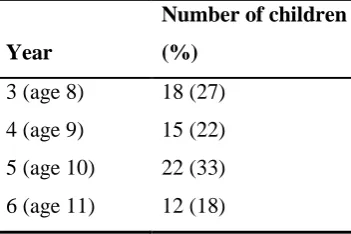
The total sample consisted of 67 children who completed the questionnaires, with a mean age of 9.3 years old (SD: +/- 1.4) and of whom 51% were girls. Table 1 shows the number of children from each year group.
INSERT TABLE 1
Accuracy of the CADET Diaries compared to the Weighed Food Diary
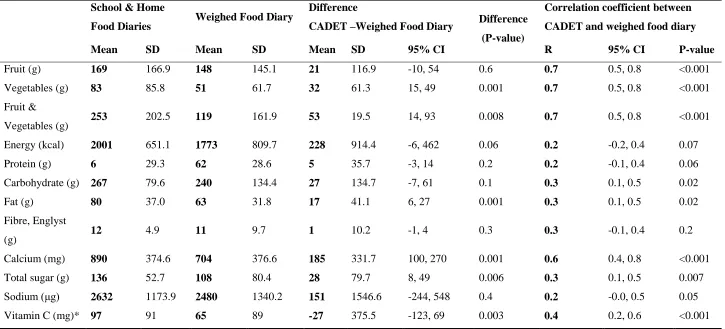
Table 2 shows the mean and standard deviation of the daily intake of fruit (g), vegetables (g) fruit and vegetables combined (g) and key nutrient intakes as recorded by the CADET Food Diaries and the Weighed Food Diary. As the outcome for this data was found to be normally distributed, paired t-tests were conducted, which showed no statistically significant
differences for protein, carbohydrates, fibre, and sodium. However, there was a statistically significant difference between the CADET Diaries and the Weighed Food Diaries for combined fruit and vegetable intake, vegetable intake, fat calcium vitamin C and sugar. The CADET Diaries recorded higher fruit and vegetable intake and macronutrient intake values than the Weighed Food Diary. The CADET diary correlates well with the Weighed Food Diary for fruit, vegetables and combined fruit and vegetable intake. However, for the micronutrient intake it there was a poor correlation between the CADET Diary and the Weighed Food Diary.
INSERT TABLE 2
Agreement between the two methods
C h a p t e r 3 V a l i d a t i o n o f C A D E T D i a r y | 2
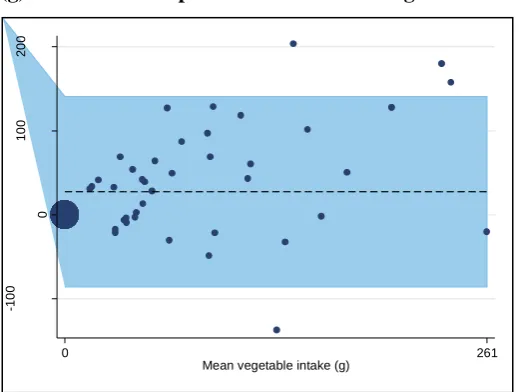
difference between the methods increases. The large cluster on the scatter plots for fruit and vegetable intake represent the number of children who had no fruit or no vegetable intake. From the sample of 67 children 5 did not consume any vegetables and 14 did not consume any fruit.
INSERT FIGURES 1-6
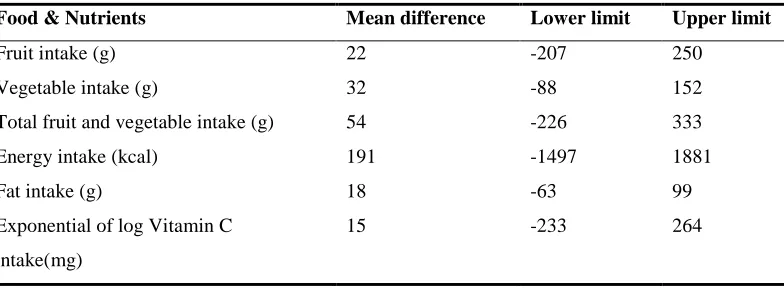
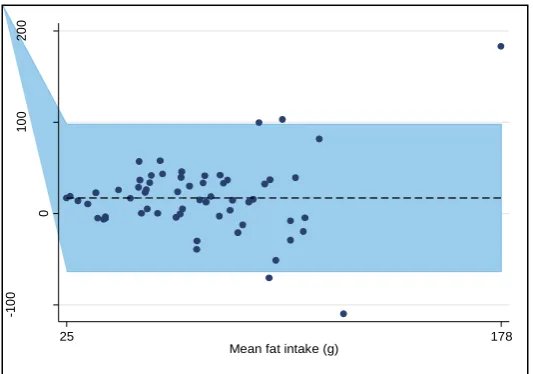
The results of the Bland-Altman analyses for figures 4 to 9 are summarised in Table 3. The difference between the CADET Diary and Weighed Food Diary is relatively small for fruit (22g) and vegetable (32g) intake measured separately. However, when combined it does increase the mean difference between the two methods to 54g which is over half a portion. There is a mean difference of 191 kcal in the two methods for energy intake. The mean differences for fat intake and vitamin C were relatively small. The 95% limits of agreement were moderately wide for fruit and vegetable intake. The 95% limits of agreement for fat intake were much smaller at -63 g to 99 g. However, there was more variation in the 95% limits of agreement for energy intake from -1497 to 1881 kcal, and vitamin C intake -233 to 264 mg.
INSERT TABLE 3
Sub-analysis of fruit and vegetables – reviewing age/gender portion sizes
There were significant differences in the mean intake of fruit and vegetables between recordings taken with CADET and those with the Weighed Food Diary; to explore the possible causes for these results a sub-analysis assessing the mean differences for individual fruit and vegetable was conducted. From conducting this analysis it was evident that
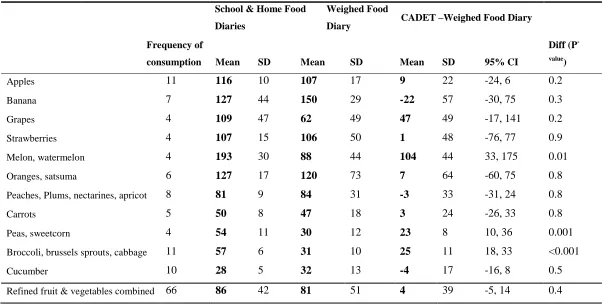
The results revealed small non-significant differences for apples (mean difference 9 g, 95%CI: -24, 6); bananas (mean difference -22 g, 95%CI: -30, 75); strawberries (mean
difference 1 g, 95%CI: -76, 77); oranges and satsuma (mean difference 7 g, 95%CI: -60, 75); peaches, plums, nectarines and apricot (mean difference -3 g, 95%CI: -31, 24). Whilst for grapes the paired t-tests revealed there was no significant differences in portion sizes (mean difference 47 g, 95%CI: -24, 6). Melon and watermelon on the other hand did have a significant difference in the mean weight between the weighed food diary and the CADET diaries with a mean difference of 104 g (95%CI: 33, 175) - suggesting that the portion sizes for melon and watermelon might be reducing the accuracy of the CADET diary to measure fruit intake. For vegetables there was no significant differences between mean intake for carrots (mean difference 3 g, 95%CI: -26, 33), cucumber (mean difference -4 g 95%CI: -16, 8). However, there were significant differences between peas and sweetcorn (mean difference 23 g, 95%CI 10, 36) and broccoli, brussels sprouts and cabbage (mean difference 25 g, 95%CI: 18,33). Again the differences in these vegetable items might be reducing the accuracy of the CADET diary to measure vegetable intake.
It was noted that melon and watermelon, peas and sweetcorn, broccoli, brussels sprouts and cabbage were all consumed both at home and at school. To explore how these items were affecting the mean differences they were removed from the analysis and paired t-tests were conducted again on combined fruit and vegetable intake. These results revealed that after removing the above mentioned items the mean difference between combined fruit and vegetable intake was only 4 g (95%CI: -5, 14).
INSERT TABLE 4
Discussion
demonstrated that for children aged 3-11 years old CADET is an effective method of capturing fruit and vegetable intake.
Fruit and vegetables intake combined
From the sample of 67 children 5 did not consume any vegetables and 14 did not consume any fruit. The mean daily intake in the CADET Diary was 253 g and in the Weighed Food Diary 119 g, with the CADET measuring similar intakes to the NDNS (2008/9 – 2010/11) of 2.8 portions for boys and 3 portions for girls(16). The CADET Diary generally reported higher values than the Weighed Food Diary for mean fruit, vegetables and total fruit and vegetables consumption. The Bland-Altman plot showed that the mean difference for combined fruit intake was 53 g. Overall the Bland-Altman plots had fairly wide 95% limits of agreement. The mean difference in fruit and vegetable intake was larger for the age group 8-11 years than in the previous validation study which reported a difference of 42 g(8). This indicates that the CADET diary overestimates intakes compared to the Weighed Food Diary, a common problem with tick list food frequency questionnaires. The correlation coefficients were strong for fruit and vegetable intake, all equalling 0.7 and were statistically significant. Compared to the previous validation of CADET(8), overall the results from this study have slightly higher r correlations for combined fruit and vegetable intake, and vegetables and fruit intake
measured separately. As the tool is often used in trials that have a primary outcome of fruit and vegetable intake, these results indicate that it is a valid method for measuring fruit and vegetable intake, one of the fundamental aims of the questionnaire. This suggests that the CADET tool is suitable to measure children’s fruit and vegetable intake.
Sub-analysis exploring portions sizes for fruit and vegetables
grams, which is a considerably smaller difference. Further work should be conducted to reduce the error in this reporting method by modifying the CADET portions slightly for these commonly consumed fruits and vegetables. Of course a limitation of this analysis is it is only using small frequency of consumption per fruit or vegetables, however, these numbers are similar to those used in the NDNS data.
Nutrients
The comparison between the CADET Diary and the Weighed Food Diary for nutrient intakes shows a similar trend. The CADET diary had higher mean intakes for every nutrient (kcal, protein, carbohydrate, fat fibre, calcium total sugar and sodium) compared to the weighed intake, apart from vitamin C intake, with correlation results of 0.2 to 0.6, equivalent to other food frequency recall questionnaires(1, 8). There were however three nutrients that did have statistically significant results for the correlations; these were kcal, protein and fibre. The Bland-Altman plots showed that the mean difference for kcal, vitamin C and total fat were small with reasonably small 95% limits of agreement, demonstrating that the CADET diary can provide valid nutrient data for the whole diet.
Validity of tick list questionnaires to assessment of children’s dietary intake
Nevertheless, the CADET diary does avoid the issues with child self-reported food intake, and is less of a burden on the participants than the most commonly used alternative, a
weighed 4 day food diary(18). Also, academic research suggests that a one day food frequency questionnaire can be as useful as a multiple day food diary(19). Furthermore, the CADET has been used in large intervention trials where measuring food intake is a difficult task in terms of time, funding and resources(20). The sub-analysis which explores individual items on the CADET also revealed that parents ticked more items on the CADET diary than they entered in the weighed food diary. This could be partly due to combining mixed vegetables or fruit salad being recorded as one item in the weighed food dairy, but as separate items in the CADET diary. It also supports the contention that completing a food frequency questionnaire is easier therefore more items are recorded. With the additional development of the DVD to help explain how to complete the CADET to parents, CADET is one of the few diary assessment tools that can be quickly implemented by non-professionals.
Conclusion
Trial registration
ISRCTN11396528
Funding
This project was funded by the National Institute for Health Research Public Health Research (NIHR PHR) programme (project number PHR Project 09/3001/19). Visit the PHR
programme website for more information.
Department of Health disclaimer
The views and opinions expressed therein are those of the authors and do not necessarily reflect those of the PHR programme, NIHR, NHS or the Department of Health.
Ethics Approval
Ethical approval was obtained through the Leeds Institute of Health Sciences and Leeds Institute of Genetics, Health and Therapeutic joint ethics committee (Reference number: 09/012).
Contributors
MSC managed the project, the statistical analysis the data and wrote the initial draft of the manuscript. JEC secured funding and was guarantor of the project. Both JEC and CELE supervised the project, the interpretation of the data and the preparation of the manuscript. CN was the research assistant for the project. NH was the database manager for the project. All authors contributed to the final version of the paper.
Trial Steering Committee
The chairperson was Dr Cindy Cooper (Director, Sheffield Clinical Trials Research Unit Senior Research Fellow University of Sheffield). Graeme Slate (Learning Mentor – Forster Park Primary School, London) and Deirdre Walton (RHS Regions Manager) were the
Competing interests
None to declare.
Acknowledgements
References
1. Cade J, Thompson, R. Development, validation and utilisation of food-frequency questionnaires-a review. Public Health Nutr. 2002;5:567-87.
2. Maynard M, Gunnell D, Emmett P, Frankel S, Davey Smith G, Maynard M, et al. Fruit, vegetables, and antioxidants in childhood and risk of adult cancer: the Boyd Orr
cohort.[erratum appears in J Epidemiol Community Health. 2007 Mar;61(3):271]. J Epidemiol Community Health. 2003;57(3):218-25.
3. Livingstone M, Robson, PJ. Measurement of dietary intake in chidlren. . Proceedings of the Nutrition Society. 2000;59:279-93.
4. Baranowski T S-MB. Dietary and physical activity assessment in school-aged children: Measurement issues. Journal of School Health. 1991;61:195-7.
5. Murray DM, Phillips, G. A., Bimbaum, A. S., Lytle, L. A. Intraclass correlation for measures from a middle school nutrition intervention study: estimates, correlates, and applications. Health Education & Behavior, 28, 666-79. 2001.
6. Frobisher, Maxwell. The estimation of food portions sizes: a comparison between using descriptions of portion sizes and a photographic food atlas by children and adults. Journal of Human Nutrition Diet. 2003;16:181-8.
7. Johnson B, Hackett, A. F. Trends in fruit, vegetable and salad intakes in 9-10-year-old schoolchildren living in Liverpool. Public Health Nutr. 2006;10(3):252-5.
8. Cade JE, Frear L, Greenwood DC. Assessment of diet in young children with an emphasis on fruit and vegetable intake: using CADET--Child and Diet Evaluation Tool. Public Health Nutr. 2006;9(4):501-8.
9. Wenlock R, Farron M. Report of the Diet and Nutrition Survey vol. 1, National Diet and Nutrition Survey: Young People Aged 4 to 18 Years. The London Stationery Office, 2000. 10. Nelson M, et al. Low income diet and nutrition survey. 2007.
11. Molag ML, et al. Design characteristics of food frequency questionnaires in relation to their validity. Am J Epidemiol. 2007;166(12):1468-78.
12. Holland B, Welch, A., et al. . McCance and Widdowson’s The composition of foods. Cambridge, Royal Society of Chemistry.2002.
13. StataCorp. Statistical software 11 ed. College Station: Stata Corporation; 2005.
15. Christian MS EC, Ransley, JK, Greenwood DC, Thomas, JD, Cade, JE Process evaluation of a cluster randomised controlled trial of a school-based fruit and vegetable intervention: Project Tomato. Public Health Nutr. 2011;15(03):459-65.
16. Health Do. National Diet and Nutrition Survey: Headline results from Years 1 and 2 (combined) of the rolling programme 2008/9 - 2009/10. London: 2011.
17. Serra-Majem L. Evaluating the quality of dietary intake validation studies. Br J Nutr. 2009:102 S3-9.
18. Hackett A, Gibbon, M., Sratton, G. and Hamill, L. . Dietary intake of 9-10-year-old and 11-12-year-old children in Liverpool. Public Health Nutr. 2002;5:449-56.
19. Rockett HR BM, Frazier AL, Witschi J, Wolf AM, Field AE, et al. . Validation of a youth/adolescent food frequency questionnaire. Prev Med. 1997;26:808-16.
Table 1 The number of children from each year group
Year
Number of children
(%)
3 (age 8) 18 (27)
4 (age 9) 15 (22)
5 (age 10) 22 (33)
Table 2 CADET Diary vs. weighted food diary (n=56)
School & Home
Food Diaries Weighed Food Diary
Difference
CADET –Weighed Food Diary Difference
(P-value)
Correlation coefficient between
CADET and weighed food diary
Mean SD Mean SD Mean SD 95% CI R 95% CI P-value
Fruit (g) 169 166.9 148 145.1 21 116.9 -10, 54 0.6 0.7 0.5, 0.8 <0.001
Vegetables (g) 83 85.8 51 61.7 32 61.3 15, 49 0.001 0.7 0.5, 0.8 <0.001
Fruit &
Vegetables (g) 253 202.5 119 161.9 53 19.5 14, 93 0.008 0.7 0.5, 0.8 <0.001
Energy (kcal) 2001 651.1 1773 809.7 228 914.4 -6, 462 0.06 0.2 -0.2, 0.4 0.07
Protein (g) 6 29.3 62 28.6 5 35.7 -3, 14 0.2 0.2 -0.1, 0.4 0.06
Carbohydrate (g) 267 79.6 240 134.4 27 134.7 -7, 61 0.1 0.3 0.1, 0.5 0.02
Fat (g) 80 37.0 63 31.8 17 41.1 6, 27 0.001 0.3 0.1, 0.5 0.02
Fibre, Englyst
(g) 12 4.9 11 9.7 1 10.2 -1, 4 0.3 0.3 -0.1, 0.4 0.2
Calcium (mg) 890 374.6 704 376.6 185 331.7 100, 270 0.001 0.6 0.4, 0.8 <0.001
Total sugar (g) 136 52.7 108 80.4 28 79.7 8, 49 0.006 0.3 0.1, 0.5 0.007
Sodium (μg) 2632 1173.9 2480 1340.2 151 1546.6 -244, 548 0.4 0.2 -0.0, 0.5 0.05
Vitamin C (mg)* 97 91 65 89 -27 375.5 -123, 69 0.003 0.4 0.2, 0.6 <0.001
Table 3 Results of the Bland Altman analyses comparing the agreement between CADET and the Weighed Food Diary.
Food & Nutrients Mean difference Lower limit Upper limit
Fruit intake (g) 22 -207 250
Vegetable intake (g) 32 -88 152
Total fruit and vegetable intake (g) 54 -226 333
Energy intake (kcal) 191 -1497 1881
Fat intake (g) 18 -63 99
Exponential of log Vitamin C
intake(mg)
C h a p t e r 3 V a l i d a t i o n o f C A D E T D i a r y | 72
Table 4 CADET Diary vs. Weighed food diary by fruit and vegetables
School & Home Food
Diaries
Weighed Food
Diary CADET –Weighed Food Diary
Diff (P
-value)
Frequency of
consumption Mean SD Mean SD Mean SD 95% CI
Apples 11 116 10 107 17 9 22 -24, 6 0.2
Banana 7 127 44 150 29 -22 57 -30, 75 0.3
Grapes 4 109 47 62 49 47 49 -17, 141 0.2
Strawberries 4 107 15 106 50 1 48 -76, 77 0.9
Melon, watermelon 4 193 30 88 44 104 44 33, 175 0.01
Oranges, satsuma 6 127 17 120 73 7 64 -60, 75 0.8
Peaches, Plums, nectarines, apricot 8 81 9 84 31 -3 33 -31, 24 0.8
Carrots 5 50 8 47 18 3 24 -26, 33 0.8
Peas, sweetcorn 4 54 11 30 12 23 8 10, 36 0.001
Broccoli, brussels sprouts, cabbage 11 57 6 31 10 25 11 18, 33 <0.001
Cucumber 10 28 5 32 13 -4 17 -16, 8 0.5
Figure 1 Differences between CADET Diary and Weighed Food Diary mean fruit intake (g).
[image:22.595.72.332.349.545.2]Shaded area represents 95% limits of agreement
Figure 2 Differences between CADET Diary and Weighed Food Diary mean vegetable intake
(g). Shaded area represents 95% limits of agreement
Figure 3 Differences between CADET Diary and Weighed Food Diary mean total fruit and
vegetable intake (g). Shaded area represents 95% limits of agreement
-4 0 0 -2 0 0 0 2 0 0 4 0 0 D if fe re n ce i n f ru it i n ta ke (g ) C AD ET -W F D 0 537
Mean fruit intake (g)
-1 0 0 0 1 0 0 2 0 0 D if fe re n ce i n ve g e ta b le i n ta ke (g ) C AD ET -W F D 0 261
Figure 4 Differences between CADET Diary and Weighed Food Diary mean energy intake
[image:23.595.71.338.310.505.2](kcal). Shaded area represents 95% limits of agreement
Figure 5 Differences between CADET Diary and Weighed Food Diary mean fat intake (g).
Shaded area represents 95% limits of agreement
-2 0 0 0 2 0 0 4 0 0 D if fe re n ce i n f ru it a n d ve g e ta b le i n ta ke (g ) C AD E-W F D 0 777
Mean fruit and vegetable intake (g)
-4 0 0 0 -2 0 0 0 0 2 0 0 0 D if fe re n ce i n e n e rg y in ta ke (k ca l) C AD ET - W F D 655 3340
Mean energy intake (kcal)
-1 0 0 0 1 0 0 2 0 0 D if fe re n ce i n f a t in ta ke (g ) C AD ET - W F D 25 178
[image:23.595.72.339.574.761.2]Figure 6 Differences between CADET Diary and Weighed Food Diary exponential of the log of
vitamin C intake (mg). Shade area represents 95% limits of agreement
-4
0
0
-2
0
0
0
2
0
0
4
0
0
D
if
fe
re
n
ce
i
n
vi
ta
mi
n
C
i
n
ta
ke
C
AD
ET-W
F
D
11 401