(4). pp. 486-499. ISSN 0363-0234 DOI: https://doi.org/10.1111/sltb.12232 Link to Leeds Beckett Repository record:
http://eprints.leedsbeckett.ac.uk/1808/
Document Version: Article
The aim of the Leeds Beckett Repository is to provide open access to our research, as required by funder policies and permitted by publishers and copyright law.
The Leeds Beckett repository holds a wide range of publications, each of which has been checked for copyright and the relevant embargo period has been applied by the Research Services team.
We operate on a standard take-down policy. If you are the author or publisher of an output and you would like it removed from the repository, please contact us and we will investigate on a case-by-case basis.
Empirically derived subgroups of self-injurious thoughts and behaviour: Application of latent class analysis
Katie Dhingra, PhD, Daniel Boduszek, PhD,E.David Klonsky, PhD
Version accepted for publication in Suicide and Life-threatening Behavior
Author Note
No financial support was received for this research.
Abstract
Latent class analysis was applied to the data to identify homogenous subtypes or classes of self-injurious thoughts and behaviour (SITB) based on indicators indexing suicide ideation, suicide gesture, suicide attempt, thoughts of nonsuicidal self-injury (NSSI), and NSSI behaviour. Analyses were based on a sample of 1,809 healthy adults. Associations between the emergent latent classes and demographic, psychological, and clinical characteristics were assessed. Two clinically relevant subtypes were identified, in addition to a class who reported few SITBs. The classes were labelled: ‘low SITBs’ (25.8%), ‘NSSI and ideation’ (25%), and ‘suicidal behaviour’ (29.2%). Several unique differences between the latent classes and external measures emerged. For instance, those belonging to the ‘NSSI and ideation’ class compared with the ‘suicidal behaviour’ class reported lower levels of entrapment,
burdensomeness, fearlessness about death, exposure to the attempted suicide or self-injury of family members and close friends, and higher levels of goal disengagement and acute
agitation. SITBs are best explained by three homogenous subgroups that display quantitative and qualitative differences. Profiling the behavioural and cognitive components of suicidal and non-suicidal self-injury is potentially useful as a first step in developing tailored intervention and treatment programmes.
Empirically derived subgroups of self-injurious thoughts and behaviour: Application of latent class analysis
Self-injury remains a significant behavioural health concern for adolescents and young adults. One impediment to progress with respect to the understanding and treatment of self-injury has been the lack of consistency in how these behaviours are conceptualised, defined, and classified (Nock, 2010). Central to this lack of clarity is debate regarding
whether self-injurious behaviour (SIB) is most accurately conceptualised as a dimensional or categorical construct, and whether self-injury with suicidal intent (suicide attempts) differs in aetiology and prognosis from behaviours performed with an absence of suicidal intent (i.e., non-suicidal self-injury [NSSI]) (Mars, Heron, & Crane, 2014). Thus, accurately delineating the relationship between NSSI and suicidal behaviour (ideation, plans, gestures, and attempts) — both their distinctiveness and overlap—is essential for research and intervention efforts (Klonsky, May & Glenn, 2013).
Several important differences have been found between suicide attempts and NSSI including differences in prevalence, frequency, lethality of methods, and attitudes towards life and death (e.g., Klonsky & Muehlenkamp, 2007; Mars et al., 2014; Muehlenkamp & Kerr, 2010). Moreover, studies have shown that suicidal self-injurious behaviours are associated with greater levels of psychological and psychosocial impairment compared with NSSI alone (e.g., Claes, Muehlenkamp, & Vandereycken et al., 2010; Jacobson,
number of similarities in the risk factors and correlates of suicide attempts and NSSI
(Andover et al., 2012; Mars et al., 2014). Furthermore, in prospective studies, NSSI has been found to predict future suicide ideation and attempts beyond the effects of other risk factors (e.g., Asarnow, Porta, & Spirito et al., 2011; Bryan & Bryan, 2014; Guan, Fox, & Prinstein, 2012). For these reasons, some researchers have regarded all forms of self-injurious
behaviour as falling along a continuum regardless of intent (e.g., Kapur, Cooper, O’Connor, & Hawton, 2013; Stanley, Winchel, & Molcho, et al., 1992).
As Nock, Borges, and Bromet et al. (2008) noted, further research is warranted on how to best classify self-injurious thoughts and behaviour. Statistical modelling in the form of latent class analysis (LCA) offers a particularly promising avenue for pursuing this agenda. LCA is a person-centred approach which assumes that heterogeneous individuals from a population can be ‘‘typed’’ or grouped into smaller relatively homogenous subgroups with similar patterns of behaviours or trait endorsements. Subtyping has potential implications for guiding research on aetiology, enhancing clinical management by improving diagnostic practices and prevention approaches, and developing tailored or differential treatment
strategies. The identification of meaningful typologies is particularly appealing in this context given the public health significance and economic burden of self-injurious thoughts and behaviour (Knapp, McDaid, & Parsonage, 2011). LCA has been widely used in psychiatric nosology to empirically derive subtypes of disorders including posttraumatic stress
Klonsky and Olino (2008) identified four classes of self-injurers based on severity of NSSI method, descriptive features and functions of self-injury. These classes were labelled ‘‘experimental NSSI’’, ‘‘mild NSSI’’, ‘‘multiple functions/anxious NSSI’’, and ‘‘automatic functions/ suicidal NSSI’’, with the most severe symptoms and behaviours seen in the fourth latent class. Similar findings have been reported in subsequent studies (Bracken-Minor et al., 2012; Somer et al., 2015). Whitlock et al. (2006) defined three subgroups in terms of
frequency, forms, and severity of NSSI behaviour. Hamza and Willoughby (2013) used characteristics of NSSI (e.g., lifetime frequency, most recent engagement) and suicidal behaviour (e.g., lifetime suicidal ideation and suicidal attempts) as class indicators to define three subgroups. The classes were labelled as “an infrequent NSSI/not high risk for suicidal behavior group”, “a frequent NSSI/not high risk for suicidal behavior group,” and “a frequent NSSI/high risk for suicidal behavior group”. Dhingra et al. (2014) identified two classes of self-injurers (high and low self-injury risk classes) based on Data from the MacArthur Violence Risk Assessment Project and the following items: thoughts of hurting the self, attempt to hurt the self, self-injured alone, acts to gain help during or after self-injury, final acts in anticipation of death, and writing a self-injury note.
The current research
As most prior research on SITBs has focussed on one-dimensional outcomes, e.g., NSSI behaviour vs. suicide attempt, or suicide ideation vs. suicide attempt, thus neglecting more complex patterns, this study aims to examine whether distinct, homogenous subtypes of SITBs can be defined. The second aim is to validate the emergent typology by reference to key risk factors cited in the extant literature (O’Connor & Nock, 2014). As this is the first study to examine latent classes of a full range of SITBS, we did not have specific hypotheses about the number of subgroups that would be derived from the data or predictors of class membership.
Method
Sample
Participants were N = 1,809 (476 male and 1,333 female) university students recruited from various faculties from three UK universities. Participants were aged between 18 and 66 years (Mage = 24.05; SD = 8.09). Most students identified themselves as White (80.9%), were currently in a relationship (52.6%), and described their sexual orientation as heterosexual /straight (84.4%).
Materials
Defeat. Feelings of defeat were assessed using the Defeat Scale (Gilbert & Allan, 1998). This is a 16 item self-report measure of perceived failed struggle and loss of rank (e.g. ‘I feel defeated by life’). Respondents indicate on a five point Likert-type scale the extent to which each item describes their feelings (0 = not at all to 4 = extremely) over the past 7 days. This scale has been found to have good psychometric properties (Gilbert & Allan, 1998; Gilbert, Allen, & Brough et al., 2002).
Entrapment. Entrapment represents a sense of being unable to escape feelings of
16 item self-report measure assesses motivation to escape (e.g., “I am in a situation I feel trapped in”) (Gilbert & Allan, 1998). Items are rated on a five-point scale; higher scores indicate more feelings of entrapment. The Entrapment Scale has good psychometric properties (Gilbert & Allan, 1998; Gilbert et al., 2002).
Brooding rumination. Brooding, defined as the extent to which individuals passively
focus on the reasons for their distress (e.g., “Think, ‘Why can’t I handle things better?’”), was measured using the five items from the Response Styles Questionnaire (RSQ;
Nolen-Hoeksema, 1991). Treynor, Gonzalez, and Nolen-Hoeksema (2003) have reported the internal reliability and discriminant validity of this brooding ruminative response style scale.
Perceived burdensomeness and thwarted belongingness. Perceived
burdensomeness and thwarted belongingness were measured with the 12-item version of the Interpersonal Needs Questionnaire (INQ; Van Orden, Witte, & Gordon et al., 2008). The INQ assesses respondent’s current beliefs about feeling connected to others (i.e., thwarted belongingness; e.g., “I feel disconnected from other people”) and feeling like a burden on the people in their lives (i.e., perceived burdensomeness; e.g., “The people in my life would be better off if I were gone”). Seven items measure belongingness, and five items measure burdensomeness. Items are rated on a Likert-type scale ranging from 1 (‘‘not at all true of me’’) to 7 (‘‘very true for me’’), with higher scores reflecting higher levels of thwarted
belongingness and burdensomeness. The two subscales correlate in the expected directions with measures of mood, psychological symptoms, and social connectedness, and
incrementally predict past and current suicidal ideation and behaviours above and beyond other risk factors for suicide (Bryan, Morrow, Anestis, & Joiner, 2010; Van Orden et al., 2008).
disengagement (4 items) and, (ii) goal reengagement (6 items). Goal disengagement measures one's perceived difficulty in reducing effort and relinquishing commitment toward
unobtainable goals (e.g., “It’s easy for me to reduce my effort toward the goal” [reverse scored]). The goal reengagement subscale taps one's perceived ability to reengage in other new goals if they face constraints on goal pursuits (e.g., “I think about other new goals to pursue”). Items are scored on 5-point Likert-type scales ranging from 1 (not at all) to 5 (certainly).
Hopelessness. Hopelessness was measured using the 20-item Beck Hopelessness
Scale (BHS; Beck, Weissman, Lester, & Trexler, 1974). Respondents are asked to indicate either agreement or disagreement with statements that assess pessimism for the future. This is a reliable and valid measure that has been shown to predict eventual suicide (e.g., Beck & Steer, 1989). Confirmatory factor analysis (Boduszek & Dhingra, in-press) supported Beck et al.’s (1974) three-factor solution: Factor 1 (Feelings about the future), Factor 2 (Loss of
Motivation), and Factor 3 (Future Expectations).
Discomfort intolerance. The Discomfort Intolerance Scale (DIS; Schmidt, Richey, Cromer, & Buckner, 2007) is a five-item self-report index of the degree to which individuals tolerate physical discomfort, including pain (e.g., “I can tolerate a great deal of physical discomfort” [reverse scored]). Participants rate the questions on a scale ranging from 0 (“not at all like me”) to 6 (“extremely like me”). The scale has demonstrated adequate
psychometric properties in other research (e.g., Ribeiro, Witte, Van Orden et al., 2014). Fearlessness about Death. The Acquired Capability for Suicide Scale (ACSS; Van
the ACSS-FAD subscale was utilised as a measure of FAD. Items were rated on a 5-point scale, with higher scores indicating greater FAD. The scale showed good reliability, discriminant and convergent validity (Van Orden et al., 2008).
Exposure to suicidal behaviour. Respondents were asked the following two
questions about self-harm by close friends and family: ‘Has anyone among your close friends [your family] attempted suicide or deliberately harmed themselves?’ Items were drawn from research by O’Connor, Rasmussen, and Hawton (2012).
Acute agitation. The Brief Agitation Measure (BAM; Ribeiro, Bender, & Selby et
al., 2011) is a brief 3-item self-report measure designed to index subjective agitation levels.
Items are rated on a seven-point likert scale from 0 (“not at all true for me”) to 6 (“very much true for me”). Higher total scores indicate greater severity of agitation. The measure has
demonstrated solid psychometrics with respect to reliability and validity in both young adults and clinical outpatients (Ribeiro et al., 2011).
Anxiety and Depression. The Hospital Anxiety and Depression Scale
(HADS; Zigmond & Snaith, 1983) was employed to measure anxiety (e.g., “I feel tense or 'wound up'”) and depression (e.g., “I feel as if I am slowed down”). It consists of 14
questions, seven each to measure depression and anxiety. The HADS is a reliable and valid measure of affect (Bjelland, Dahl, Haug & Neckelmann, 2002).
Self-injurious thoughts and behaviour. Participants’ history of SITBs was assessed using items drawn from the self-report version of the Self-Injurious Thoughts and Behaviors Interview (SITBI; Nock, Holmberg, Photos, & Michel, 2007). These items asked participants to indicate the presence of the following: (a) suicide ideation (“Have you ever had thoughts of killing yourself?”), (b) suicide plan (“Have you ever actually made a plan to kill
(“Have you ever made an actual attempt to kill yourself in which you had at least some intent to die?”), (e) NSSI thoughts (“Have you ever had thoughts of purposely hurting yourself without wanting to die? (for example, cutting or burning)”, (f) NSSI behaviour (“Have you ever done something to purposely hurt yourself without intending to die?”).
Procedure
The research protocol was reviewed and approved by the institutional ethics panels of all three participating universities. Participants were recruited via an email invite to
participate in a study of suicide. Within this email it was made clear to potential participants that they did not need to have experienced suicidal thoughts and behaviours to take part. The study was also advertised on the websites of two of the participating university’s websites. Participants completed the study online using Qualtrics, a Web interface that allows for secure remote data collection through the distribution of anonymous secure links to the protocol. Participants were required to consent before the survey was presented online. Participation in the current study was voluntary and no inducements or obligations were used. All participants were debriefed and given phone numbers for local mental health services. Analysis
Data were analysed using Mplus version 6 (Muthen & Muthen, 2007). Latent class analysis (LCA) is a statistical method used to identify homogeneous groups (or classes) from categorical multivariate data. Frequently described as a categorical variant of factor analysis, LCA assumes that associations among a set of observed categorical variables can be
Currently there is no consensus regarding a single statistical index that identifies the most appropriate number of classes within a given population (Nylund, Asparouhov, & Muthén, 2007). Consequently, through an iterative process, models with a successive number of classes are specified. Extraction of latent classes ceases when there is little empirical or substantive support for the inclusion of a further class. Model fit is evaluated on the basis of goodness of fit statistical and parsimony considerations. Statistical indices reported here include: Akaike Information Criterion (AIC; Akaike, 1974); Bayesian Information criterion (BIC; Schwarz, 1978); sample size adjusted BIC (SSABIC; Sclove, 1987); Lo–Mendell– Rubin likelihood ratio test (LMR-LRT; Lo, Mendell, & Rubin, 2001); and entropy (Ramaswamy, DeSarbo, Reibstein, & Robinson, 1993).
AIC, BIC and SSABIC are goodness of fit indices commonly used for comparison across competing models: lower values reflect better-fitting models and, accordingly,
extraction of latent classes should cease when these indices reach their lowest values. Recent simulation studies indicate that BIC is one of the most reliable indicators of the correct number of latent classes (Nylund et al., 2007). Another useful tool for class enumeration is the LMR-LRT, which assesses the improvement in fit between competing models: a non-significant value (p > .05) suggests that the model with one fewer class provides a more parsimonious fit to the data. Based on the posterior class membership probabilities, entropy evaluates how well each of the classes is separated and represented by the data; values range from 0 to 1, with high values preferred. Finally, selection of the best-fitting model was based on whether the model reflected coherent, distinct, and conceptually meaningful subgroups and adequately accounts for the heterogeneity in the sample.
burdensomeness, thwarted belongingness, exposure to self-injurious behaviours of friends and family members, and gender) were included in the model to help describe the
heterogeneity in self-injurious thoughts and behaviour and to substantiate the validity of the emergent classes or subtypes. Muthén’s (2003) recommends that, “The estimated prediction of class membership is a key feature in examining predictions of theory. If classes are not statistically different with respect to covariates that, according to theory, should distinguish classes, crucial support for the model is absent” (p. 373). Odds ratios (ORs) and
Results
Descriptive Statistics and Correlations
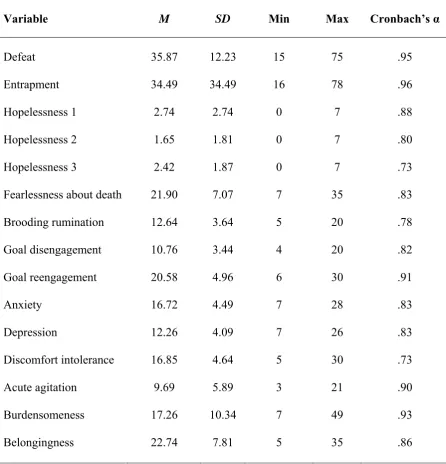
[image:14.595.74.521.233.698.2]Descriptive statistics, including means (M) and standard deviations (SD) for all measures are presented in Table 1, along with Cronbach’s alphas.
Table 1: Descriptive statistics for all continuous variables.
Variable M SD Min Max Cronbach’s α
Defeat 35.87 12.23 15 75 .95
Entrapment 34.49 34.49 16 78 .96
Hopelessness 1 2.74 2.74 0 7 .88
Hopelessness 2 1.65 1.81 0 7 .80
Hopelessness 3 2.42 1.87 0 7 .73
Fearlessness about death 21.90 7.07 7 35 .83
Brooding rumination 12.64 3.64 5 20 .78
Goal disengagement 10.76 3.44 4 20 .82
Goal reengagement 20.58 4.96 6 30 .91
Anxiety 16.72 4.49 7 28 .83
Depression 12.26 4.09 7 26 .83
Discomfort intolerance 16.85 4.64 5 30 .73
Acute agitation 9.69 5.89 3 21 .90
Burdensomeness 17.26 10.34 7 49 .93
Belongingness 22.74 7.81 5 35 .86
Note: Hopelessness 1 = Feelings about the Future, Hopelessness 2 = Loss of Motivation,
Prevalence of the SITB indicators
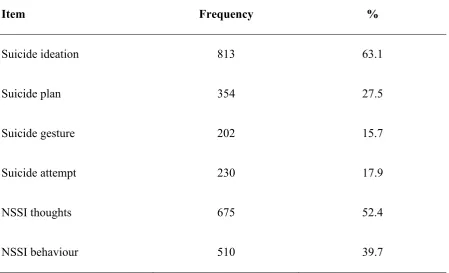
[image:15.595.76.526.281.554.2]The proportion of participants endorsing each of the six SITB items is presented in Table 2. The majority of participants reported a lifetime history of suicide ideation (63.1%) and NSSI thoughts (52.4%). The remaining indicators were endorsed by between 15.7% and 39.7% of participants.
Table 2: Endorsement rates of SITB items
Item Frequency %
Suicide ideation 813 63.1
Suicide plan 354 27.5
Suicide gesture 202 15.7
Suicide attempt 230 17.9
NSSI thoughts 675 52.4
NSSI behaviour 510 39.7
Estimation of the number of latent classes
Three latent class models were fitted to the data, beginning with the most
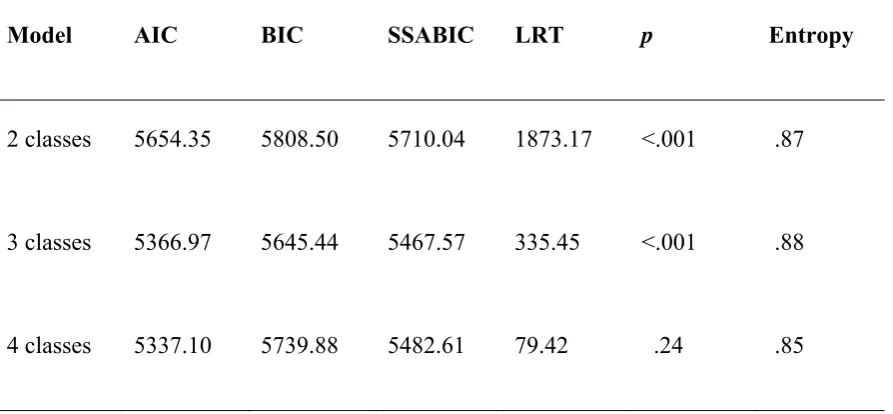
significant improvement over the three-class model. The entropy measure (0.88) similarly suggests that the data was well defined by a three-class solution.
Table 3: Fit indices for the latent class analysis of self-injurious thoughts and behaviour
Note: AIC = Akaike information criterion, BIC = Bayesian information criterion, SSABIC = sample
size adjusted BIC, LRT = Lo-Mendell-Rubin’s adjusted likelihood ratio test.
Latent profiles
A comparison of profile plots suggested the three-class solution was more
conceptually meaningful. Individuals were assigned to each of the three latent classes on the basis of their response profile and the estimated probabilities of endorsing the six items indexing self-injurious thoughts and behaviour. To facilitate interpretation, Figure 1 depicts the endorsement probabilities associated with the three-class model; these are useful for adding substantive meaning to the latent classes (Nylund et al., 2007). As these profiles indicate, the three latent classes are primarily characterised by qualitative differences, suggesting they do not simply reflect a spectrum of severity.
Latent class one (29.9% of participants) comprised of individuals who highly endorsed five of the six items, with item-response probabilities ranging from .62 for suicide attempts to .86 for both suicide plan and NSSI thoughts. Item-response probabilities are the
Model AIC BIC SSABIC LRT p Entropy
2 classes 5654.35 5808.50 5710.04 1873.17 <.001 .87
3 classes 5366.97 5645.44 5467.57 335.45 <.001 .88
probability of a particular observed response on a particular variable conditional on latent class membership. Item three (suicide gesture) was endorsed by few participants in this class (probability of .27). Consequently, this class is best characterised as a ‘suicidal behaviour’ class. Members of the second class (25.0% of participants), had high item-response
probabilities of endorsing suicide ideation (.75), NSSI thoughts (.99), and NSSI behaviour (.71) and a low probability of endorsing a suicide plan (.03), gesture (.19), or suicide attempt (.01). This class was thus considered the ‘NSSI and ideation’ group. The third class (45.8% of participants) was characterised by participants who reported relatively low endorsement of all SITB items (conditional probabilities are all below .06, apart from suicide ideation (item-response probability of .34) and, as such, this class was considered as a ‘low SITB’ class. Validity of the latent classes
To validate the measurement model and to help describe the heterogeneity in SITBs, associations between the emergent latent classes and defeat, entrapment, hopelessness (3 factors), fearlessness about death, brooding rumination, goal reengagement and
disengagement, anxiety, depression, acute agitation, discomfort intolerance, perceived burdensomeness, thwarted belongingness, exposure (2 items), and gender were examined using multinomial logistic regression.
The first column in Table 4 has the outcome of class one membership (‘suicidal behaviour’) compared to the reference category (class three; ‘low SITB’). Results indicate that those participants who reported lower levels of belongingness (OR = .93) and higher levels of entrapment (OR = 1.05), fearlessness about death (OR = 1.06), perceived
Figure 1: Latent profile plot of self-injurious thoughts and behaviour.
Note: Class 3 = low SITB (45.8% of participants); Class 2 = NSSI and ideation (25% of participants); Class 1 = suicidal behaviour (29.2% of
participants). 0
0.1 0.2 0.3 0.4 0.5 0.6 0.7 0.8 0.9 1
Suicide Ideation Suicide plan Suicide gesture Suicide attempt NSSI thoughts NSSI behaviour
Pr
obability
Items
Table 4. Associations between SITB classes and covariates.
Variable
Class 1 with 3
OR (95% CI)
Cohen’s d Class 2 with 3
OR (95% CI)
Cohen’s d Class 2 with 1
OR (95% CI)
Cohen’s d
Gender 2.42** (1.32/4.43) .49 2.13** (1.28/3.54) .42 .86 (.46/1.62) -
Defeat 1.03 (.97/1.07) - 1.00 (.97/1.03) - .98 (.94/1.01) -
Entrapment 1.05*** (1.02/1.08) .03 1.01 (.99/1.04) - .97** (.94/.99) .02
Brooding rumination 1.03 (.95/1.11) - 1.06 (.98/1.13) - 1.02 (.95/1.11) -
Burdensomeness 1.06*** (1.03/1.10) .03 1.03 (.99/1.07) - .97* (.94/1.00) .02
Belongingness .93*** (.90/.97) .04 .95** (.92/.99) .03 1.02 (.99/1.06) -
Goal disengagement 1.00 (.94/1.07) - 1.08* (1.01/1.15) .04 1.08* (1.01/1.15) .04
Goal reengagement .99 (.95/1.05) - .99 (.96/1.04) - 1.01 (.96/1.05) -
Hopelessness 1 1.11(.95/1.30) - 1.08 (.93/1.26) - 1.01 (.85/1.21) -
Hopelessness 2 .93 (.79/1.11) - .86 (.73/1.02) - .91 (.79/1.06) -
Hopelessness 3 .86 (.72/1.04) - 1.02 (.87/1.19) - 1.18 (.96/1.45) -
Distress tolerance 1.01 (.96/1.06) - 1.03 (.98/1.07) - 1.01 (.97/1.06) -
Fearlessness about death 1.06*** (1.03/1.10) .03 1.01 (.98/1.04) - .95*** (.92/.98) .03
Exposure (friend) 5.30*** (3.18/8.83) .92 3.09*** (2.03/4.71) .62 .58* (.34/.98) .30
Exposure (family member) 2.32*** (1.48/3.62) .46 1.19 (.76/1.85) - .50*** (.33/.75) .38
Acute agitation .98 (.93/1.04) - 1.03 (.98/1.08) - 1.06* (1.00/1.12) .03
Anxiety 1.05 (.98/1.12) - 1.10** (1.03/1.17) .05 1.05 (.98/1.12) -
Depression .98 (.91/1.05) - .96 (.89/1.03) - .98 (.91/1.06) -
Note. Class 1 =‘suicidal behaviour’ class, Class 2 = ‘NSSI and ideation’ class, Class 3 = ‘low SITB’ class, Gender - female is reference category, Hopelessness
1 = Feelings about the Future, Hopelessness 2 = Loss of Motivation, Hopelessness 3 = Future Expectations. OR = Odds Ratio, 95% CI = Confidence Interval. * p
Discussion
This study aimed to empirically derive and validate a typology of SITBs based on endorsement of six items indexing a range of self-injurious thoughts and behaviours (i.e., suicide ideation, suicide plan, suicide gesture, suicide attempt, NSSI thoughts, and NSSI behaviour). The LCA identified two clinically relevant homogeneous subgroup of SITBs, as well as a third subgroup of respondents that reported few SITBs. The ‘suicidal behaviour’ subgroup comprised respondents who exhibited high endorsement rates across all items, apart from suicide gestures. The second subgroup (‘NSSI and ideation’) was characterised by high endorsement of suicide ideation, NSSI thoughts, and NSSI behaviour. Finally, respondents belonging to the ‘low SITBs’, the largest subgroup, reported low endorsement of all SITBs.
The parallel profiles of the three latent classes, and the fact that the odds ratios did not always decline from class 1 to class 3 in the regression analysis, indicates that the groups are not distinguished primarily by the extent of item endorsement. In other words, the latent classes are not differentiated by their location along a continuum of severity linking a broad range of thoughts and behaviour but instead by unique profiles. This result complements recent findings of important difference in the predictors of a range of suicidal and non-suicidal behaviour (e.g., Dhingra, Boduszek, & O’Connor, 2015; Klonsky & Muehlenkamp, 2007; Mars et al., 2014; Muehlenkamp & Kerr, 2010; Nock et al., 2008) and argues against incorporating a dimensional conceptualisation. Importantly, however, the results do not preclude the possibility that for some individuals, NSSI and suicidal behaviour exist concurrently, and potentially on the same dimension.
the attempted suicide or self-injury of family members and close friends and lower levels of belongingness, than individuals belonging to the ‘low SITBs’ class. Those belonging to the ‘NSSI and ideation’ class were significantly more likely to report higher levels of anxiety, goal disengagement, and exposure to the attempted suicide or self-injury of a close friend as well as lower levels of perceived belongingness than the ‘low SITBs’ class. These findings are consistent with prior research (e.g., Asarnow et al., 2011; Claes et al., 2010) which suggests that adults who report both NSSI and suicidal behaviour may be a more severe group and are at greater risk for psychopathology and psychosocial impairment than individuals who engage in NSSI only. Finally, those belonging to the ‘NSSI and ideation’ class compared with the ‘suicidal behaviour’ class reported lower levels of entrapment, burdensomeness, fearlessness about death, exposure to the attempted suicide or self-injury of family members and close friends, and higher levels of goal disengagement and acute
agitation. The magnitude of the differences between these two classes was very small, however, except for the two exposure variables. This suggests that these two groups are largely the same on traditional suicide risk factors (e.g., anxiety, depression, and
hopelessness), and supports the growing literature that suggests that the factors associated with suicidal ideation formation are distinct from those factors concerned with behavioural enaction (e.g., Klonsky & May, 2014; O’Connor, 2011; O’Connor & Nock, 2014).
Clinically, our results suggest that individuals belonging to class two (the ‘NSSI and ideation’ class) would benefit from interventions that highlight the importance relinquishing commitment to particular goals in the face of adversity (i.e., goal disengagement). This may be particularly true for those individuals who struggle with re-engaging with new goals (O’Connor, O’Carroll, Ryan, & Smyth, 2012), although the interaction between goal
belonging to class 1 (the ‘suicidal behaviour’ class), our results suggest that more intensive intervention is needed. In particular, cognitive and behavioural strategies designed to reduce the desire for suicide (Joiner, Van Orden, Witte, & Rudd, 2009; O’Connor, 2011) despite increased acquired capability (e.g., fearlessness about death) and exposure to the attempted suicide or self-injury of family members and close friends warrant further consideration.
represent a random sample of those affected in the population and are likely to display greater symptom severity. It follows that such typologies may not generalise to the wider population, thereby limiting their utility in terms of public health initiatives. Finally, there were variations in the assessment periods between the different measures (i.e., over the previous 7 days, lifetime, and so on), thus there is greater potential for recall bias for constructs considered over a lifetime, and a possibility that different findings would emerge in studies that assess current or more recent SITBs.
References
Akaike, H. (1974). A new look at the statistical model identification. Automatic Control, IEEE Transactions on, 19(6), 716-723.
Andover, M. S., Morris, B. W., Wren, A., & Bruzzese, M. E. (2012). The co-occurrence of non-suicidal self-injury and attempted suicide among adolescents: distinguishing risk factors and psychosocial correlates. Child and Adolescent Psychiatry and Mental Health, 6(11), 1-7.
Asarnow, J. R., Porta, G., Spirito, A., Emslie, G., Clarke, G., Wagner, K. D., ... & Brent, D. (2011). Suicide attempts and nonsuicidal self-injury in the treatment of resistant depression in adolescents: findings from the TORDIA study. Journal of the American Academy of Child & Adolescent Psychiatry, 50(8), 772-781.
Beck, A. T., Weissman, A., Lester, D., & Trexler, L. (1974). The measurement of pessimism: the hopelessness scale. Journal of Consulting and Clinical Psychology, 42(6), 865.
Bjelland, I., Dahl, A. A., Haug, T. T., & Neckelmann, D. (2002). The validity of the Hospital Anxiety and Depression Scale: an updated literature review. Journal of
Psychosomatic Research, 52(2), 69-77.
Boduszek, D., & Dhingra, K. (in-press). Construct validity of the Beck Hopelessness Scale (BHS): A multitrait–multimethod approach. Psychological Assessment.
Bracken-Minor, K. L., McDevitt-Murphy, M. E., & Parra, G. R. (2012). Profiles of non-suicidal self-injurers and associated patterns of alcohol use. Journal of
Psychopathology and Behavioral Assessment, 34(4), 552-563.
Military Personnel and Veterans. Suicide and Life-threatening Behavior, 45(3), 325.
Bryan, C., & Bryan, A. (2014). Nonsuicidal Self‐Injury among a Sample of United States Military Personnel and Veterans Enrolled in College Classes. Journal of Clinical Psychology, 70(9), 874-885.
Bryan, C. J., Morrow, C. E., Anestis, M. D., & Joiner, T. E. (2010). A preliminary test of the interpersonal-psychological theory of suicidal behavior in a military
sample. Personality and Individual Differences, 48(3), 347-350.
Claes, L., Muehlenkamp, J., Vandereycken, W., Hamelinck, L., Martens, H., & Claes, S. (2010). Comparison of non-suicidal self-injurious behavior and suicide attempts in patients admitted to a psychiatric crisis unit. Personality and Individual Differences, 48, 83–87.
Cohen, J. (1988). Statistical power analysis for the behavioral sciences (2nd ed.). Hills-dale, NJ: Erlbaum.
Dhingra, K., Boduszek, D., & O'Connor, R. (2015). Differentiating Suicide Attempters from Suicide Ideators using the Integrated Motivational-Volitional Model of Suicidal Behaviour. Journal of Affective Disorders, 166, 211-218.
Dhingra, K., Boduszek, D., & Kola-Palmer, S. (2015). A Latent Class Analysis of
Psychopathic Traits in Civil Psychiatric Patients: The Role of Criminal Behaviour, Violence, and Gender. The Howard Journal of Criminal Justice, 54(3), 237-249. Dhingra, K., Boduszek, D., Palmer, D., & Shevlin, M. (2014). Psychopathy and self-injurious
Elklit, A., Hyland, P., & Shevlin, M. (2014). Evidence of symptom profiles consistent with posttraumatic stress disorder and complex posttraumatic stress disorder in different trauma samples. European Journal of Psychotraumatology, 5(10).
Gilbert, P., & Allan, S. (1998). The role of defeat and entrapment (arrested flight) in
depression: an exploration of an evolutionary view. Psychological Medicine, 28(03), 585-598.
Gilbert, P., Allan, S., Brough, S., Melley, S., & Miles, J. N. V. (2002). Relationship of anhedonia and anxiety to social rank, defeat and entrapment. Journal of Affective Disorders, 71(1), 141-151.
Guan, K., Fox, K. R., & Prinstein, M. J. (2012). Nonsuicidal self-injury as a time-invariant predictor of adolescent suicide ideation and attempts in a diverse community
sample. Journal of Consulting and Clinical Psychology, 80(5), 842-849.
Hagenaars, J. A., & Halman, L. C. (1989). Searching for ideal types: The potentialities of latent class analysis. European Sociological Review, 5(1), 81-96.
Hamza, C. A., & Willoughby, T. (2013). Nonsuicidal self-injury and suicidal behavior: a latent class analysis among young adults. PloS one, 8(3), 1-8.
Jacobson, C. M., Muehlenkamp, J. J., Miller, A. L., & Turner, J. B. (2008). Psychiatric impairment among adolescents engaging in different types of deliberate harm. Journal of Clinical Child & Adolescent Psychology, 37(2), 363-375.
Joiner Jr, T. E., Van Orden, K. A., Witte, T. K., & Rudd, M. D. (2009). The interpersonal theory of suicide: Guidance for working with suicidal clients. Washington, D.:
American Psychological Association.
Klonsky, E. D., & Olino, T. M. (2008). Identifying clinically distinct subgroups of self-injurers among young adults: a latent class analysis. Journal of Consulting and
Clinical Psychology, 76(1), 22-27.
Klonsky, E. D., & May, A. M. (2014). Differentiating suicide attempters from suicide ideators: a critical frontier for suicidology research. Suicide and Life-threatening Behavior, 44(1), 1-5.
Klonsky, E. D., May, A. M., & Glenn, C. R. (2013). The relationship between nonsuicidal self-injury and attempted suicide: Converging evidence from four samples. Journal of
Abnormal Psychology, 122(1), 231-237.
Klonsky, E. D., & Muehlenkamp, J. J. (2007). Self‐injury: A research review for the practitioner. Journal of Clinical Psychology, 63(11), 1045-1056.
Klonsky, E. D., Oltmanns, T. F., & Turkheimer, E. (2003). Deliberate self-harm in a
nonclinical population: Prevalence and psychological correlates. American Journal of Psychiatry, 160, 1501–1508.
Knapp, M., McDaid, D., &Parsonage, M. (2011). Mental health promotion and prevention: the economic case. London UK: Personal Social Services Research Unit, London School of Economics and Political Science.
Lo, Y., Mendell, N. R., & Rubin, D. B. (2001). Testing the number of components in a normal mixture. Biometrika, 88(3), 767-778.
McBride, O., Adamson, G., & Shevlin, M. (2010). A latent class analysis of DSM-IV pathological gambling criteria in a nationally representative British
sample. Psychiatry Research, 178(2), 401-407.
McBride, O., Adamson, G., & Shevlin, M. (2010). A latent class analysis of DSM-IV pathological gambling criteria in a nationally representative British
sample. Psychiatry research, 178(2), 401-407.
Muehlenkamp, J. J., & Kerr, P. L. (2010). Untangling a complex web: How non-suicidal self- injury and suicide attempts differ. Prevention Researcher, 17(1), 8-10.
Muthén, L. K., & Muthén, B. O. (2008-2010). Mplus (Version .1). Los Angeles, CA: Muthén & Muthén.
Muthén, B. O. (2003). Statistical and substantive checking in growth mixture modeling: Comment on Bauer and Curran (2003). Psychological Methods, 8, 369-377. Nock, M. K. (2010). Self-injury. Annual Review of Clinical Psychology, 6, 339-363. Nock, M. K., Holmberg, E. B., Photos, V. I., & Michel, B. D. (2007). Self-Injurious
Thoughts and Behaviors Interview: development, reliability, and validity in an adolescent sample. Psychological Assessment, 19, 309 –317
Nock, M. K., Borges, G., Bromet, E. J., Cha, C. B., Kessler, R. C., & Lee, S. (2008). Suicide and suicidal behavior. Epidemiologic Reviews, 30(1), 133-154.
Nock, M. K., Borges, G., Bromet, E. J., Alonso, J., Angermeyer, M., Beautrais, A., ... & Williams, D. (2008). Cross-national prevalence and risk factors for suicidal ideation, plans and attempts. The British Journal of Psychiatry, 192(2), 98-105.
Nock, M. K., Holmberg, E. B., Photos, V. I., & Michel, B. D. (2007). Self-Injurious Thoughts and Behaviors Interview: development, reliability, and validity in an adolescent sample.Psychological Assessment, 19(3), 309-317.
depressive episodes. Journal of Abnormal Psychology, 100(4), 569-582.
Nylund, K. L., Asparouhov, T., & Muthén, B. O. (2007). Deciding on the number of classes in latent class analysis and growth mixture modeling: A Monte Carlo simulation study. Structural equation modeling, 14(4), 535-569.
O'Connor, R. C., & Nock, M. K. (2014). The psychology of suicidal behaviour. The Lancet Psychiatry, 1(1), 73-85.
O’Connor, R. C. (2011). The integrated motivational-volitional model of suicidal behavior. Crisis. 32(6), 295–298
O'Connor, R.C., O'Carroll, R.E., Ryan, C., & Smyth, R. (2012). Self-Regulation of
Unattainable Goals in Suicide Attempters: A Two Year Prospective Study. Journal of
Affective Disorders, 142, 248-255.
O'Connor, R.C., Rasmussen, S., & Hawton, K. (2012). Distinguishing adolescents who think about self-harm from those who engage in self-harm. British Journal of Psychiatry, 200(4), 330-335.
Ramaswamy, V., DeSarbo, W., Reibstein, D., & Robinson, W. (1993). An empirical pooling approach for estimating marketing mix elasticities with PIMS data. Marketing
Science, 12, 103-124.
Ribeiro, J. D., Witte, T. K., Van Orden, K. A., Selby, E. A., Gordon, K. H., Bender, T. W., & Joiner Jr, T. E. (2014). Fearlessness about death: The psychometric properties and construct validity of the revision to the Acquired Capability for Suicide
Scale. Psychological Assessment, 26(1), 115-126.
Ribeiro, J. D., Bender, T. W., Selby, E. A., Hames, J. L., & Joiner, T. E. (2011).
Schmidt, N. B., Richey, J. A., Cromer, K. R., & Buckner, J. D. (2007). Discomfort intolerance: Evaluation of a potential risk factor for anxiety psychopathology. Behavior Therapy, 38(3), 247-255.
Sclove, S. L. (1987). Application of model-selection criteria to some problems in multivariate analysis. Psychometrika, 52(3), 333-343.
Schwarz, G. (1978). Estimating the dimension of a model. The annals of statistics, 6(2), 464.
Somer, O., Bildik, T., Kabukçu-Başay, B., Güngör, D., Başay, Ö., & Farmer, R. F. (2015). Prevalence of non-suicidal self-injury and distinct groups of self-injurers in a
community sample of adolescents. Social Psychiatry and Psychiatric Epidemiology, 50(7), 1163-1171.
Stanley, B., Winchel, R., Molcho, A., Simeon, D., & Stanley, M. (1992). Suicide and the self- harm continuum: Phenomenological and biochemical evidence. International Review of Psychiatry, 4, 149 –155.
Treynor, W., Gonzalez, R., & Nolen-Hoeksema, S. (2003). Rumination reconsidered: A psychometric analysis. Cognitive Therapy and Research, 27, 247–259.
Van Orden, K. A., Witte, T. K., Gordon, K. H., Bender, T. W., & Joiner Jr, T. E. (2008). Suicidal desire and the capability for suicide: tests of the interpersonal-psychological theory of suicidal behavior among adults. Journal of Consulting and Clinical
Psychology, 76(1), 72-83.
Whitlock, J., Muehlenkamp, J., & Eckenrode, J. (2008). Variation in nonsuicidal self-injury: identification and features of latent classes in a college population of emerging adults. Journal of Clinical Child & Adolescent Psychology, 37(4), 725-735.
regulation of unattainable goals: Goal disengagement, goal reengagement, and subjective well-being. Personality and Social Psychology Bulletin, 29(12), 1494-1508.