Marno, H. and Davelaar, Eddy J. and Csibra, Gergely (2016) An object
memory bias induced by communicative reference. Acta Psychologica 163 ,
pp. 88-96. ISSN 0001-6918.
Downloaded from:
Usage Guidelines:
Please refer to usage guidelines at or alternatively
Running head: Communication biases object memory
An object memory bias induced by communicative reference
Hanna Marno a,b,c*, Eddy J. Davelaar c, Gergely Csibra a,c
a Department of Cognitive Science, Central European University, Nádor u. 9., Budapest 1051,
Hungary
b Language, Cognition and Development Lab, SISSA, Via Bonomea 265, 34136 Trieste, Italy
c Department of Psychological Sciences, Birkbeck, University of London, Malet Street,
London WC1E 7HX, UK
* Correspondence should be addressed to Hanna Marno, Language, Cognition and
Development Lab, SISSA, Via Bonomea 265, 34136 Trieste, Italy. Telephone: +3932891496.
Abstract
In humans, a good proportion of knowledge, including knowledge about objects and object
kinds, is acquired via social learning by direct communication from others. If communicative
signals raise the expectation of social learning about objects, intrinsic (permanent) features
that support object recognition are relevant to store into memory, while extrinsic (accidental)
object properties can be ignored. We investigated this hypothesis by instructing participants
to memorise shape-colour associations that constituted either an extrinsic object property (the
colour of the box that contained the object, Experiment 1) or an intrinsic one (the colour of
the object, Experiment 2). Compared to a non-communicative context, communicative
presentation of the objects impaired participants’performance when they recalled extrinsic
object properties, while their incidental memory of the intrinsic shape-colour associations
was not affected. Communicative signals had no effect on performance when the task
required the memorisation of intrinsic object properties. The negative effect of
communicative reference on the memory of extrinsic properties was also confirmed in
Experiment 3, where this property was object location. Such a memory bias suggests that
referent objects in communication tend to be seen as representatives of their kind rather than
as individuals.
Highlights
• The effect of communicative reference on the memory for object properties was tested.
• Intrinsic properties were automatically encoded.
• The encoding of extrinsic properties was impeded by communicative signals.
• This bias could support social learning by communication.
Classification:
• 2300 Human Experimental Psychology
An object memory bias induced by communicative reference
1. Introduction
Visual object perception is partially guided by the intention we bear towards the
objects in question. This is well documented by studies on the contrast between the two
visual pathways, where the ventral pathway processes information related to the identity of
objects while dorsal pathway takes care the location and/or action-relevant properties of
objects (Mishkin, Ungerleider, & Macko, 1983; Milner & Goodale, 1995; Shmuelof &
Zohary, 2005). If an object is the potential target of a motor action, its location, orientation
and other action-relevant properties get special attention (Jeannerod, 2006). These properties
tend to be temporary and accidental, i.e., extrinsic to the object, and are processed by the
dorsal visual pathway. In contrast, if the object is to be recognised or categorised, its intrinsic
and permanent properties are more relevant to pay attention to. Object features such as shape,
colour, texture, and their conjunctions are among these properties, and are primarily
processed by the ventral visual pathway.
Whereas intrinsic features are involuntarily processed during object recognition, the
storing of extrinsic features in memory usually requires voluntary access. This is shown by
findings that intrinsic object features mainly influence their familiarity, while extrinsic
features have an impact on episodic recollection (Ecker, Zimmer & Groh-Bordin, 2007). That
the encoding of extrinsic object features is not automatic but requires voluntarily attention is
also supported by experiments showing that when location is irrelevant, it gets encoded only
for approximately 1000 msec, but it is not retained in the more stable short term visual
dissociation between memory for extrinsic and intrinsic properties: while older adults had a
specific and disproportionate deficit in recognition memory for location, in the case of item
or colour information their performance remained intact (Chalfonte & Johnson, 1996). Thus,
even though spatial attention is required for feature binding (Treisman, 1998), it seems that
the encoding of location information for long-term storage requires voluntary attention
(Naveh-Benjamin, 1988).
However, object perception is not only determined by voluntary intentions but is also
influenced by contextual factors. For example, compared to non-communicative contexts, the
location (an extrinsic property) of objects presented as potential referents of non-verbal
communication tends to be ignored, while the encoding of their visual features is not affected
and may even be facilitated. This has been shown in change detection studies, in which
attention was drawn to objects by communicative or non-communicative means, and then
change detection performance was measured after either the location or the visual features of
the objects (or neither) were modified (Marno, Davelaar, & Csibra, 2014; Yoon, Johnson, &
Csibra, 2008). These studies revealed that both infants and adults were less likely to detect
the location change of an object that served as the referent of previous communication, but
communication did not impair, and in some cases did facilitate, the detection of identity
change. This effect is explained by a theory according to which ostensive communication
automatically triggers readiness to learn generic information about potential referents
embedded in communication (Csibra & Gergely, 2009). The content of human
communication extends well beyond the ‘here and now’ in several respects (Csibra &
Gergely, 2011). It can express information about distant or absent events and entities, and
about past, future, and hypothetical states of affairs (Deacon, 1997). Crucially, it can also
in generic linguistic expressions (Carlson & Pelletier, 1995). It has been suggested that such
statements about kinds of entities can also be expressed non-verbally using an exemplar as a
medium (Csibra & Shamsudheen, 2015). Such communication about kinds allows those who
are addressed to learn, for example, a property of a whole class of objects by revealing this
property in a single exemplar.
When someone learns about a kind of object from experiencing an exemplar, only
those properties of the object are relevant to encode that support subsequent recognition of
objects of the same kind. These properties tend to be the permanent, non-accidental, intrinsic
properties of the object. In contrast to these, the properties that only apply to the exemplar
(for example, its location) are irrelevant and could be ignored. Thus, if communication about
an object elicits the expectation of learning something about its kind, attention to its intrinsic
properties should be prioritised over attention to extrinsic properties in communicative
compared to non-communicative contexts (Marno et al., 2014; Yoon et al., 2008).
However, the above studies demonstrated only that communicative contexts modulate
the attention to certain object features. If the function of this modulatory influence is to
facilitate learning, the effect has to last longer than a few seconds and should also be evident
in long-term object memory. The present study tested this prediction by exposing participants
to a series of objects in a communicative or non-communicative context and instructing them
to memorise an extrinsic or intrinsic property of them. We have developed a paradigm in
which the objects are individuated by shape, and the to-be-memorised intrinsic and extrinsic
properties represented by the same quality: colour. We chose colour as the property to be
associated with shapes because it can serve as an intrinsic property (the colour of the object
individuated by its shape) and an extrinsic property (the colour of the box hiding the shape).
associations between these shapes and the colour of the box from which they emerged (an
extrinsic property, Experiment 1), or the colour of the shapes themselves (an intrinsic
property, Experiment 2). This design intended to overcome the shortcoming of earlier studies,
in which the relevant intrinsic and extrinsic properties were realised in different visual
features (appearance vs. location), which are processed by distinct visual streams (ventral vs.
dorsal). After completing the instructed task, we asked participants to identify, as an
unexpected ‘surprise’ task, the other type of colour-shape association to test whether they had
incidentally encoded it. By using an instructed as well as a surprise task, we measured what
information the participants encoded both voluntarily and incidentally in order to test the
prediction that communicative signals modulate the encoding of only the intrinsic
colour-shape associations when if these associations were irrelevant. Given that our focus was to
show a processing trade-off due to the context of the presentation, both sides of this trade-off
function needed to be measured.
In addition, Experiment 3 tested whether communicative reference has the same effect
on memorising object location (an extrinsic object property) as does a colour associated with
this location.
All experiments were performed by two groups of participants. One group observed
the shapes in a communicative context, while the other had the same amount of exposure to
the shapes but without communicative signals. We predicted that establishing communicative
reference to an object would automatically draw attention away from extrinsic object features
and hence would impair memory performance when the task required remembering such
properties. We also predicted that communicative reference would facilitate the forming of
shape-colour bindings within objects, hence better memory for intrinsic object properties
2. Experiment 1: Memorising an Extrinsic Object Property
2.1. Methods
2.1.1. Participants. Forty volunteers (25 females; mean age = 20.5 years) participated
in the experiment. The sample size was chosen on the basis of our previous study (Marno et
al., 2014), which investigated of a different effect of the same underlying process we targeted
in this experiment. Half of the subjects participated in the Communicative Condition, and
half of them were assigned to the Non-Communicative Condition. All of them had normal or
corrected to normal visual acuity.
2.1.2. Stimuli. Sixteen video clips were created for both the Communicative and the
Non-Communicative conditions (see Fig 1A). Each clip showed an event sequence, in which
an actress took a sheet of paper, depicting a coloured shape, from one of 5 coloured boxes,
and then returned it to the same location. The actress sat behind a table with the 5 boxes
arranged horizontally next to each other. The boxes were coloured blue, green, yellow, red,
and pink, and were arranged in different orders in each clip. Within each condition, every clip
included a different shape, which was coloured in one of the same 5 colours used for the
!
In the Communicative condition, the actress first looked into the camera (establishing
eye contact with the participant), waved her hands and smiled (5 s), looked at the boxes and
then chose one (2 s), took a sheet from it and lifted it such that the viewer could see the shape
(5 s), looked at the shape (2 s), looked again into the camera (2 s), put the sheet back into the
same box (3 s), and finally looked down to the table (1 s). In the Non-communicative
condition, the actress first rubbed her chin while looking at the boxes (indicating that she was
hesitating about her choice, 5 s), looked at the boxes and chose one (2 s), took a sheet from it
and lifted it such that the viewer could see the shape (5 s), looked at the shape (2 s), put the
sheet back into the same box (5 s), and finally looked down to the table (1 s). Thus, clips in
both conditions lasted 20 s, and provided the same amount of exposure to the shapes and the
boxes. The difference between conditions was whether the actress sent communicative
signals towards the viewer before (eye contact, waving) and after (looking back at the
viewer) revealing the shape drawn onto the sheet. These signals were intended to convey her
referential intention to the viewer, while nothing more was expressed about the object and
2.1.3. Procedure. The experiment consisted of two phases. Before the exposure
phase, participants were instructed to watch the clips and attempt to memorise which shape
would come from which box. They were explicitly told that the location of the boxes would
be shuffled in each clip and they should identify the boxes by their colour. They were
presented with 16 clips in a row on a 15" touch-screen with 2 s break in between.
Immediately after the exposure phase, the participants' memory for shape-box colour
associations was probed in the test phase. During the test trials, they were presented with one
of the 16 shapes they had been exposed to, but in black colour, and a row of 5 coloured
squares (colours corresponding to box colours in the exposure phase). To the question “What
was the colour of the box this shape was drawn from?”, participants responded by touching
the square with the colour of their choice without time constraints (Fig 1B). The order of the
shapes in the test trials was different from that of the exposure phase and was randomised for
each participant.
After completing the test phase, participants were told by the experimenter that there
would be another, "surprise" task to test whether they could identify the colours of the shapes
themselves, which they were not instructed to memorise. They were presented with another
16 trials similar to the test phase, but this time with the question ”What was the colour of this
shape?”and they were requested to respond the same way as in the previous test phase (Fig
1B). The order of the presentation was randomised each time. The whole experiment lasted
approximately fifteen minutes (depending on the speed of the responses).
2.1.4. Data analysis. We measured two types of dependent variable: (i) the percentage
of correct colour identification in the test phase and in the surprise task, and, (ii) within the
incorrect responses, the percentage of intrusions —responses that picked the other colour
colour in the surprise task).
[image:12.595.76.471.574.733.2]2.2. Results
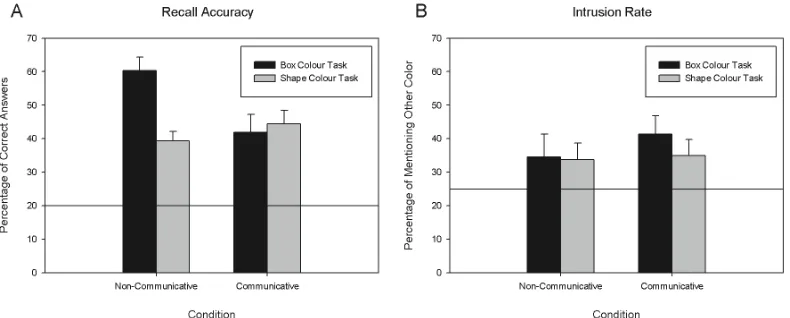
Fig 2A shows the average performance of the two groups in the instructed task (box
colour task) and in the surprise task (shape colour task). We analysed these data in a 2x2
ANOVA with Task (box colour vs. shape colour) as a within-subject factor and Condition
(communicative vs. non-communicative) as a between-subject factor. We found that Task had
a significant main effect [F(1, 38) = 5.829, p = .021, η2 = .133], due to the better overall
performance in the instructed task than in the surprise task. The interaction between Task and
Condition was also significant [F(1, 38) = 9.419, p = .004, η2 = .199], suggesting that the
presence of communicative cues modulated colour associations differently in the two tasks.
In particular, this interaction was due to the fact that participants in the non-communicative
condition performed better in the instructed task than in the surprise task [t(19) = 4.500, p < .
001], while in the communicative condition no such difference was found [t(19) = 0.413, p
= .684]. Conversely, participants in the non-communicative condition outperformed those in
the communicative condition in the instructed box-colour task [t(38) = 2.771, p = .009] but
not in the surprise shape-colour task [t(38) = 1.019, p = .314].
Fig 2B shows the average amount of intrusions as a function of task and condition. An
ANOVA with the same design as we used on performance data yielded no significant effects.
However, we also compared the proportion of intrusions to the theoretical chance level (25%)
with the assumption that incorrect answers could have come from any of the four additional
colours. These analyses indicated that only the participants in the communicative condition,
and only in the instructed box-colour task, produced more intrusions than what would have
been expected by chance [t(19) = 2.995, p = .007 with Bonferroni corrected alpha-level of .
0125]. Thus, when participants were instructed to memorise associations between shapes and
box-colours, they tended to form associations between a shape and its own colour —but only
in the communicative context.
2.3. Discussion
Our study required the participants to form shape-colour associations, but these
associations represented an extrinsic object property (location) rather than an intrinsic one.
We found that forming these associations was much more difficult when the objects in
question were potential referents of participant-directed communication. However, in the
surprise task, in which participants were requested to report colour-shape associations that
represented an intrinsic property, the communicative context did not impair the formation of
these associations. In fact, participants in the communicative condition did not perform better
in the instructed task, which required recalling accidental shape-colour associations, than in
the surprise task, in which they recalled permanent, object-bound links between shapes and
colours.
Our other prediction, according to which communicative reference would facilitate
confirmed by the results: The performance in the surprise task was not better in the
communicative than in the non-communicative condition. We will return to a possible
explanation of this negative result in the General Discussion. The absence of such facilitative
effect of communicative signals would suggest that these signals exerted only a negative
effect on memory. However, the errors that the participants produced suggest that the
communicative signals also had a slight positive effect on the formation of associations
between shapes and their colours. When the participants answered incorrectly in the
non-communicative condition, their choice of colour was evenly distributed among the four
incorrect colours, whether they attempted to identify the colour of the shape or of the box.
This suggests random guessing of some information not encoded in their memory. We found
a similar pattern of guessing in the communicative condition when the task was the
identification of the colour of the shape. However, when the participants performed the
instructed task in the communicative condition, they responded with the colour of the shape
at a higher level than chance. We interpret this intrusion of the irrelevant colour information
as indicating that the communicative context made the participants encode the colour of the
shapes even in trials in which they failed to pay attention to the task-relevant box-colour
information. Note, however, that this effect was only evident when compared to chance level
but was not significantly different from the intrusion rates in the other conditions. This should
make us cautious in interpreting this effect as specific to the association to be formed and to
the context in which these associations are presented.
Nevertheless, while the intrusion rates might have indicated that the communicative
context facilitated the encoding of intrinsic object properties even when they were not
task-relevant, the stronger, and even striking, effect was the negative influence of communication
according to which communicative signals, rather than shifting attention from extrinsic to
intrinsic properties, simply prevented the participants from focusing on the task. In order to
test such an interpretation of the results, we conducted another experiment, in which we
instructed the participants to memorise the colours of the shapes.
3. Experiment 2: Memorising an Intrinsic Object Property
3.1. Methods
The methods of Experiment 2 were identical to Experiment 1 in all respects, except
that we instructed participants to memorise the colours of the shapes, and the surprise task
required them to identify the colours of the boxes associated with the shapes.
3.1.1. Participants. Forty volunteers (23 female; mean age = 25.0 years) participated
in the experiment. Half of them participated in the Communicative Condition, and half of
them were assigned to the Non-Communicative Condition. All of them had normal or
corrected to normal visual acuity.
3.1.2. Procedure. In the exposure phase, we instructed the participants to memorise
the colour of each of the shapes. In each of the test trials, they were presented with one of the
16 shapes in black colour and a row of 5 coloured squares (colours corresponding to shape
colours in the exposure phase). Participants were requested to answer the question “What was
the colour of this shape?”by touching the square with the colour of their choice. After
completing the test phase for the instructed task, we told the participants that there would be
another task to test whether they could identify the colours of the boxes from which each
shape had been drawn. They were presented with a further 16 trials similar to the test phase,
but this time with the question ”What was the colour of the box this shape was drawn from?”
3.2. Results
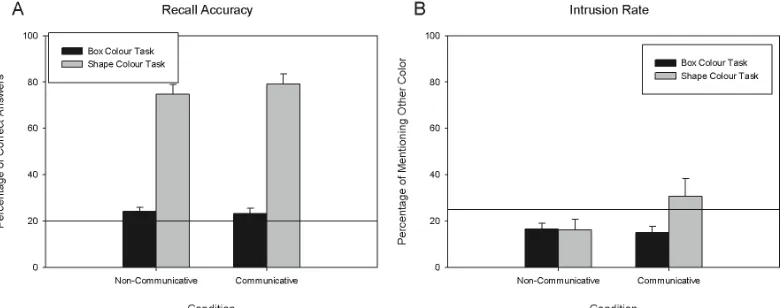
Fig 3A shows the average performance of the two groups in the instructed task (shape
colour task) and in the surprise task (box colour task). We analysed these data in a 2x2
ANOVA with Task (shape colour vs. box colour) as a within-subject factor and Condition
(communicative vs. non-communicative) as a between-subject factor. We found that Task had
a significant main effect [F(1, 38) = 294.775, p < .001, η2 = .886], due to the better overall
performance in the instructed task than in the surprise task. Neither the effect of Condition
nor the interaction between Task and Condition had a significant effect on performance,
suggesting that the presentation context did not modulate colour associations in either task. In
effect, performance in the instructed (shape colour) task was very good (approaching 80% hit
rate), and in the surprise (box colour) task was close to chance level (20% hit rate).
[image:16.595.78.470.428.582.2]!
Fig 3B shows the average amount of intrusions as a function of task and condition in
Experiment 2. An ANOVA with the same design as we used on performance data yielded no
significant effects, although both the effect of Task [F(1, 38) = 3.366, p = .074, η2 = .081] and
the interaction between Task and Condition [F(1, 38) = 3.653, p = .064, η2 = .088]
chance level (25%), these analyses indicated that when the task was to identify the colour of
the box associated with the shapes, participants produced intrusions of shape colours
significantly below chance level both in the Communicative [t(19) = 3.662, p = .002] and in
the Non-Communicative [t(19) = 3.304, p = .004] conditions (with Bonferroni corrected
alpha level of .0125). On the other hand, intrusion rates in the box colour task were not
different from chance level in either condition [Communicative Condition: t(19) = 0.758, p
= .458; Non-Communicative Condition: t(19) = 1.935, p = .068].
3.3. Discussion
Unlike in Experiment 1, communicative signals had no effect on memory
performance in the instructed task, which required the encoding of intrinsic shape-colour
associations. Although the facilitation of the forming of these associations by communicative
reference might be predicted by our hypothesis, the absence of such influence is explained by
excellent performance in this task. Even in the non-communicative condition, the participants
correctly identified the colour of 12 out of 16 shapes after a single exposure to each, and so
the communicative context could exert only a non-significant increase on this performance.
However, the fact that the communicative signals did not impair the performance in this task
indicates that the poor performance in the communicative condition of Experiment 1 was not
due to an unspecific distracting effect of communicative signals on memorising task-relevant
associations.
Communicative signals did not have an effect on the intrusion rates either. Rather, we
found that the intrusion rates were below the chance level when the box colours had to be
identified. This is explained by the fact that the participants almost always remembered the
avoided choosing these colours when they guessed the colour of the corresponding boxes.
Such an effect suggests that, although they did not encode the specific colours of the boxes
from which the shapes were drawn, the participants incidentally noticed the implicit rule that
the colour of the shape and the colour of the corresponding box never matched. Thus, the
participants did pay attention to the boxes, but in the absence of explicit instruction, they
were not compelled to encode the relation between their colour and the shape they were
hiding.
4. Comparison Across Experiments 1 and 2
In two experiments, we manipulated the communicative context and employed a
surprise memory test. The experiments differed in terms of the instruction of the
to-be-memorised property (extrinsic vs. intrinsic). According to the position advanced here, we
expected a bias to encode intrinsic object properties irrespective of instruction, and that this
bias would get accentuated in a communicative context. We also expected that a
communicative context would make it difficult to encode extrinsic object properties, even
when this is the explicit task.
For ease of comparison, Fig 4 shows the accuracy in both the instructed and the
surprise memory tasks as a function of communicative context and explicit instruction. In the
instructed tasks (Fig 4A), we found an overall advantage for encoding shape colour over box
colour [F(1,76) = 32.564, p < .001, η2 = .300], and this advantage was much larger in the
communicative context [interaction: F(1,76) = 6.374, p = .014, η2 = .077]. Performance for
the surprise tasks (Fig 4B) shows that the memory for shape-colour was better than for
!
These cross-experiment analyses suggest a general bias for encoding intrinsic features
irrespective of communicative context in both intentional and incidental memory. Extrinsic
object features were only encoded when participants were explicitly instructed to do so, but
communicative reference interfered with this task.
One can, however, object to the conclusion that the locus of the effect of interference
of communicative reference is the encoding of extrinsic features on the basis that the colour
of the box containing an object is not an extrinsic feature of the object. Indeed, this colour is
identified only via first identifying the location of the object in question, and as such, it is a
property (colour) of a property (location) of the object, which may not normally be bound
directly to the object. It is thus possible that communicative reference interferes with the
process of this second-order binding process and not with the binding of an extrinsic feature
to the object.
To resolve this ambiguity, we decided to contrast memory for intrinsic colour
information directly to memory for location. While location is thought to be crucial for initial
perceptual binding (Logie, Brockmole & Jaswal, 2011), the encoding of location information
(Naveh-Benjamin, 1988). Thus, if we predict that communication facilitates the encoding of
generalisable, inherent object properties, and that this facilitatory effect is produced in the
expense of memorising extrinsic features, then remembering of the location of objects should
be relatively impaired when the objects are presented in a communicative context, as opposed
to when they are shown in a neutral context. Experiment 3 tested this prediction.
5. Experiment 3: Memorising the Location of Objects
5.1. Methods
The methods of Experiment 3 were identical to Experiment 1 in all respects, except
that the boxes were all black, and that the participants were instructed to memorise the
location of the boxes from which the shapes were taken.
5.1.1. Participants. Forty volunteers (28 females; mean age = 23.0 years) participated
in the experiment. Half of them participated in the Communicative Condition, and half of
them were assigned to the Non-Communicative Condition. All of them had normal or
corrected to normal visual acuity.
5.1.2. Stimuli. Twenty video clips were created for both the Communicative and the
Non-Communicative conditions (see Fig 5A). Each clip showed an event sequence, in which
an actress took a sheet of paper, depicting a coloured shape, from one of 5 black boxes
arranged in a row, and then returned it to the same location. Within each condition, every clip
included a different shape, which was coloured either green, or yellow, or red, or pink or
5.1.3. Procedure. In the exposure phase, we instructed the participants to memorise
the location of the boxes from which the shapes were taken. In each of the test trials, they
were presented with one of the 20 shapes in black and a row of 5 black squares, indicating the
positions of the boxes during the exposure phase. Participants were requested to answer the
question “Where was the box this shape was taken out?”by touching the corresponding
square. After completing the test phase for the instructed task, we told the participants that
there would be another task to test whether they could identify the colours of the shapes.
They were presented with a further 20 trials similar to the test phase of Experiment 1, with
the question ”What was the colour of this shape?”and they were requested to respond by
touching the square with the corresponding colour (Fig 5B).
5.1.4. Data analysis. We measured the percentage of correct identification of box
location in the test phase and the correct shape colour identification in the surprise task. As
the information requested in the two tasks differed in nature (location vs. colour), we were
5.2. Results and Discussion
Fig 6 shows the average performance of the two groups in the instructed task (box
location task) and in the surprise task (shape colour task). We analysed these data in a 2x2
ANOVA with Task (box location vs. shape colour) as a within-subject factor and Condition
(communicative vs. non-communicative) as a between-subject factor. We found that Task had
a significant main effect [F(1, 38) = 25.376, p < .001, η2 = .400], due to the better overall
performance in the instructed task than in the surprise task. The interaction between Task and
Condition was marginally significant [F(1, 38) = 3.486, p = .070, η2 = .084]. However, while
in both groups participants performed better in the instructed task than in the surprise task
[t(19) = 2.306, p = .033, and t(19) = 4.753, p < .001 in the communicative and
non-communicative condition, respectively], participants in the non-non-communicative condition
remembered significantly better the locations of the boxes than those in the communicative
condition [t(38) = 2.733, p = .009]. In the non-instructed shape colour task, however, we
found no significant difference between the two conditions [t(38) = 0.994, p = .326].
In a further analysis, we investigated whether Experiments 1 and 3 produced the same
results. We entered memory performance into a three-way ANOVA with Experiment (1 vs. 3)
and Condition (communicative vs. non-communicative) as between-subjects factors, and
Task (box location vs. shape colour) as a within subject factor. We obtained significant main
effects of all the three factors [Experiment: F(1,76) = 6.048, p = .016, η2= .074; Condition:
F(1, 76) = 6.426, p = .013, η2 = .078; Task: F(1, 76) = 35.988, p < .000, η2 = .321], and a
significant interaction between Task and Condition [F(1, 76) = 8.578, p = .004, η2 = .101].
The main effect of Task trivially shows that the participants performed better in the instructed
task than in the surprise task in both experiments, and the main effect of Condition indicates
that the communicative one. The interaction between Task and Condition demonstrates the
predicted differential effect that communicative reference exerted on memorisation of
intrinsic and extrinsic object properties. Crucially, while the main effect of Experiment
indicates that remembering box locations is easier than remembering the colour of boxes (and
it also interferes less with the incidental encoding of shape colours), this factor did not
interact with the other factors, suggesting that the two experiments uncovered similar effects.
Thus, the results of Experiment 3 replicated the main findings of Experiment 1 by
showing that communicative reference interferes with the encoding of extrinsic object
properties, whether these properties manifest in location or colour information.
6. General Discussion
Objects do not usually change their colour or shape, and so these features, and their
combinations, tend to be permanent, intrinsic properties of objects. This might be one of the
reasons for why forming and remembering associations between shapes and colours are
easier when they appear on the same object than when they belong to different ones
participants to memorise the colour of the shapes presented to them (Experiment 2), they
performed this task easily (80% hit rate), while they displayed more difficulties when they
had to associate shapes with box colours (Experiment 1: 60% hit rate). Note, however, that
communicative presentation of the shapes modulated further this pre-existing preference for
forming certain kinds of associations. Our participants tended to remember the colour of the
shapes even when this was not task relevant (Experiment 1), and their memory could
prioritise the formation of associations between shapes and box colours when this was their
task and communication signals were not present. The communicative context, however,
dramatically impaired the ability to perform this task (Experiment 1) as well as the ability to
form shape-location associations (Experiment 3), while it had no effect on performing the
other task that required identifying the colour of shapes (Experiment 2).
Because the tasks in Experiment 1 and 2 required memory for the same type of
associations between shapes and colours, the effect of communication could not have been
due to preferential processing, or ignorance, of certain visual features or feature
combinations. Rather, the communicative context must have desensitised participants’
attention, and consequently their memory, to the accidental association between the shapes
and the colours designating locations, while leaving intact the (spontaneous and
task-irrelevant) binding of the colours to the shapes themselves (in Experiment 1). The fact that
Experiment 3 replicated the results of Experiment 1, i.e., that associating shapes to locations
was similarly impaired by communicative reference as associating shapes to the colour of
these locations, corroborates this conclusion.
Could it be that it was not the presence of the communicative signals in one condition,
but the addition of different cues to the other condition, that produced the difference between
to choose from might have increased attention to boxes in the non-communicative condition.
However, at this point of the event the shape was not yet revealed, and the corresponding box
colour could not have been linked to it. Also, this hesitation was present the same way in
Experiment 2, where it did not produce an increased performance in incidental learning of
box colours.
That communication would impair the memory of associations relevant only to the
particular object present in the context had been predicted by a hypothesis about the
expectations that communicative signals elicit in the addressee (Csibra & Gergely, 2009). The
focus of this hypothesis is how addressees represent the referent: less likely as the object
about which they are supposed to learn something, and more likely as an exemplar of a kind
of object (Csibra & Shamsudheen, 2015). Note that further information embedded in the
communication could clarify this point: some predicates are more applicable to particular
objects than to object kinds. For example, if the actor had had two sheets with the same
shapes on them, pointing to one of them could have invited a contrastive interpretation
implying reference to the particular object rather than its kind. Our stimuli did not contain
such information, and the intention of the communicator remained ambiguous. The stronger
version of our hypothesis states that when the referent is ambiguous because the context or
the predicate does not clarify its nature, people are biased to interpret the communicator’s
intention as using the object in the scene as a mere medium to refer to the kind it represents.
In this case, the communicative signals might have implicitly suggested to the participants
that the actor’s communicative intention was to convey something about the shapes that was
independent of where (from which box) they came from, which made them less attentive to
the very information their task required them to memorise.
than specifying the referent as the object kind, simply keep this option open when other
aspects of the context leave the referent ambiguous. Thus, while keeping track of an object in
a non-communicative setting (even if it is handled by a human agent, as in our study) is the
easiest by its location, communicative reference raises the potential of receiving information
that is relevant beyond the here-and-now and is unlikely to be linked to the particular location
of the object. In this case, all potentially relevant features of the objects may be memorised,
which makes it more likely that the task-relevant information (the colour of the box) becomes
lost in the communicative condition than when this information is sufficient to individuate
the object in the non-communicative condition.
Alternatively, one could hypothesise that communicative signals exert their effect by
increasing the expected relevance of acquired information (Sperber & Wilson, 1995), rather
than biasing the encoding and the memory of various object properties. However, in
Experiment 1 the instruction explicitly defined an extrinsic object property (location) as
relevant, whereas the intrinsic property of object colour was irrelevant to the task. Thus, the
communicative principle of relevance would only account for our results if intrinsic object
properties are always more relevant in communication than extrinsic ones, whatever
information is sought by the addressee while performing a task. We find this interpretation
unlikely, since it is quite common that extrinsic object properties (for example, the location of
objects) become relevant, and are frequently communicated about (for example, when
specifying the whereabout of objects) in everyday situations.
Our hypothesis predicted that communicative reference would not only interfere with
the encoding of extrinsic object properties but would also facilitate the encoding of intrinsic
ones. This prediction was not confirmed: the performance of identifying shape colours was
when this was the surprise task in Experiment 1 or when this was the instructed task in
Experiment 2. Although the intrusion data in Experiment 1 indicated a tendency in the
predicted direction, this was a weak effect to support any firm conclusion. We speculate that
the absence of such an effect was due to the fact that colour is rarely a kind-generalisable
object property. Indeed, colour is irrelevant for the categorisation of most human-made
artefact types, while shape is usually sufficient to identify exemplars (cf. the so-called ‘shape
bias’, Landau, Smith, & Jones, 1988). Thus, by hindsight, if communicative reference
facilitates the encoding of objects as exemplars of their kind, their colour may not be the most
important information to include it in their representation. It is possible that another type of
visual feature, such as object shape, which is usually more informative regarding object kind,
could have resulted a stronger facilitatory effect of communicative signals in these
experiments. However, if we had used shape as the critical feature to be encoded, some
additional visual feature would have been needed to serve as a cue in the memory test. This
design would have inevitably led to what is referred to as the cue-overload effect (Watkins &
Watkins, 1976), which is the decrease in memory performance when more cues are added.
This effect was shown to be so powerful that it could overshadow the effect of encoding/
retrieval match, which is the route through which cues exert their memory benefits. This
effect has been discussed (Nairne, 2002) and demonstrated (Goh & Lu, 2011; Poirier, et al.,
2012) in recent literature. Thus, choosing colour as the critical feature to remember was a
trade-off between investigating our hypothesis and being able to create an experimental
design that was likely to produce the desired effect.
While our finding demonstrates a negative effect of communication on the memory of
extrinsic object properties, such as location or properties of location, we do think that this
from communication. Relevant findings pointing to this direction are available in
developmental psychology, where many recent studies have found better learning in
communicative than in observational contexts (e.g., Butler & Markman, 2012; Egyed, Kiraly,
& Gergely, 2013; Kiraly, Csibra, & Gergely, 2013). Future studies will clarify whether these
positive effects of communication on learning extend to adult populations.
We have shown that ostensive communication modulates not only the attention to
(Marno et al., 2014), but also the memory of, referent objects in a way that is conducive of
learning about them. Note that we did not (and did not intend to) test what participants learnt
in this study, only whether communicative signals interfere with long-term representation of
object properties in a specific manner. While the positive side of this interference was only
weakly confirmed by the elevated intrusion rates, the poor memory of extrinsic features of
referent objects was a striking effect. The fact that such an effect is found even in a situation
that explicitly solicits memorisation of extrinsic object properties suggests that humans are
strongly tuned to receive generic information from each other in the context of
communication. We believe that such bias may serve as a basis of acquiring cultural
knowledge from others (Csibra & Gergely, 2011).
Acknowledgement
This work was supported by an Advanced Investigator Grant (OSTREFCOM) from the
European Research Council. During the preparation of the manuscript Hanna Marno was also
supported by the European Research Council under the European Union's Seventh
References
Butler, L. P., & Markman, E. M. (2012). Preschoolers use intentional and pedagogical cues to
guide inductive inferences and exploration. Child Development, 83, 1416–1428.
Carlson, G. N, & Pelletier, F. J. (Eds., 1995).. The Generic Book. University of Chicago
Press.
Chalfonte, B. L. & Johnson, M. K. (1996). Feature memory and binding in young and older
adults. Memory & Cognition, 24(4), 403-416.
Csibra, G., & Gergely, G. (2009). Natural pedagogy. Trends in Cognitive Sciences, 13,
148-153.
Csibra, G., & Gergely, G. (2011). Natural pedagogy as evolutionary adaptation.
Philosophical Transactions of the Royal Society B: Biological Sciences, 366, 1149-1157.
Csibra, G., & Shamsudheen, R. (2015). Non-verbal generics: Human infants interpret objects
as symbols of object kinds. Annual Review of Psychology, 68, 689-710.
Deacon, T. W. (1997). The Symbolic Species: The Co-evolution of Language and the Brain.
New York: Norton.
Ecker, U. K., Zimmer, H. D., & Groh-Bordin, C. (2007). Color and context: An ERP study on
intrinsic and extrinsic feature binding in episodic memory. Memory & Cognition, 35(6),
1483-1501.
Egyed, K., Király, I., & Gergely, G. (2013). Communicating shared knowledge in infancy.
Psychological Science, 24, 1348–1353.
Jaswal, S., & Logie, R. H. (2011). Configural encoding in visual feature binding. Journal of
Jeannerod, M. (2006). Motor Cognition: What Actions Tell the Self. Oxford University Press.
Király, I., Csibra, G., & Gergely, G. (2013). Beyond rational imitation: Learning arbitrary
means actions from communicative demonstrations. Journal of Experimental Child
Psychology, 116, 471–486.
Landau, B., Smith, L. B,, Jones, S. S..(1988). The importance of shape in early lexical
learning. Cognitive Development, 3(3), 299–321.
Lloyd-Jones, T. J., & Nakabayashi, K. (2009). Independent effects of colour on object
identification and memory. The Quarterly Journal of Experimental Psychology, 62,
310-322.
Logie, R. H., Brockmole, J. R., & Jaswal, S. (2011). Feature binding in visual short-term
memory is unaffected by task-irrelevant changes of location, shape, and color. Memory
& cognition, 39(1), 24-36.
Marno, H., Davelaar, E. J., & Csibra, G. (2014). Non-verbal communicative signals modulate
attention to object properties. Journal of Experimental Psychology: Human Perception
and Performance, 40(2), 752-762.
Milner, A. D., & Goodale, M. A. (1995). The Visual Brain in Action. New York: Oxford.
Mishkin, M., Ungerleider, L. G., & Macko, K. A. (1983). Object vision and spatial vision:
two cortical pathways. Trends in Neurosciences, 6, 414-417.
Naveh-Benjamin, M. (1988). Recognition memory of spatial location information: Another
failure to support automaticity. Memory & Cognition, 16(5), 437-445.
Shmuelof, L., & Zohary, E. (2005). Dissociation between ventral and dorsal fMRI activation
during object and action recognition. Neuron, 47, 457-470.
Sperber, D., & Wilson, D. (1995). Relevance: Communication and Cognition. Second
Treisman, A. (1998). Feature binding, attention and object perception. Philosophical
Transactions of the Royal Society B: Biological Sciences, 353(1373), 1295-1306.
Walker, P., & Cuthbert, L. (1998). Remembering visual feature conjunctions: visual memory
for shape-colour associations is object-based. Visual Cognition, 5, 409-455.
Xu, Y. (2002). Encoding color and shape from different parts of an object in visual short-term
memory. Perception & Psychophysics, 64, 1260-1280.
Yoon, J. M., Johnson, M. H., & Csibra, G. (2008). Communication-induced memory biases in
Figure captions
Fig 1. Stimuli used in Experiments 1 and 2. A: representative frames from the videos
presented to participants in the two conditions of the exposure phase. B: Examples of
test trial displays presented on a touch-screen during the two tasks.
Fig 2. The results of Experiment 1. A: Average correct identification as a function of
condition and tasks. B: Average amount of intrusion of irrelevant colour information as
a function of condition and task. Error bars indicate SEM, and horizontal lines mark the
theoretical chance level on both panels.
Fig 3. The results of Experiment 2. A: Average correct identification as a function of
condition and tasks. B: Average amount of intrusion of irrelevant colour information as
a function of condition and task. Error bars indicate SEM, and horizontal lines mark the
theoretical chance level on both panels.
Fig 4. Average correct identification as a function of communicative context and task
instruction for the instructed task (A) and the surprise task (B). Error bars indicate
SEM, and horizontal lines mark the theoretical chance level on both panels. Note that
these data repeat those presented on Figures 2 and 3.
Fig 5. Stimuli used in Experiment 3. A: representative frames from the videos
test trial displays presented on a touch-screen during the two tasks.
Fig 6. The results of Experiment 3. Average correct identification as a function of
condition and tasks. Error bars indicate SEM, and horizontal lines mark the theoretical