A ROBUST HUMAN FACE DETECTION ALGORITHM
BASED ON SKIN COLOR SEGMENTATION AND EDGE
DETECTION
1ALI SHARIFARA, 2MOHD SHAFRY MOHD RAHIM, 3HAMED SAYYADI
1, 2Department of Computer Graphics and Multimedia Faculty of Computing, Universiti Teknologi
Malaysia (UTM).81310 Skudai Johor, Malaysia.
3
Department of Computer Systems and Communications, Faculty of Computing, University Technology Malaysia (UTM), 81310 Skudai Johor, Malaysia.
Email: [email protected] , [email protected] , [email protected]
ABSTRACT
Automatic face detection is one of the interesting and challenging tasks in the field of computer vision. Face detection is the first and main step in many applications, especially in surveillance systems. In the present paper, a hybrid method is proposed to detect human face under different lighting conditions and complex backgrounds of color images. The proposed method have used skin color segmentation methods as well as edge detection to detect face in color images. In addition, a template matching process is applied based on a linear transformation in order to detect face for the selected regions. Thus, the process can be helpful in reducing false selected regions, which have same color as face.
Keywords: Human Face Detection, Skin-Color Face Detection, Edge Detection, Image Color Analysis.
1. INTRODUCTION
Over the last decades, human face detection has been researched widely due to the recent advances of its applications such as video surveillance system, security access control, and advanced Human Computer Interaction (HCI). Human face detection is a computer technology that locates human face in digital images or video frame (in real-time applications) in order to ignore the background of images [15]. The background of images may contain of some other objects, which is not human face such as building, road, tree, car etc.
Researches shows that skin color is an important feature of human face. Therefore, skin color based algorithms have been used for a variety of face detection methods [18]. In addition, processing of color is much faster than processing of other features such as nose, eyes, ears etc. Furthermore, color is orientation invariant under certain lighting conditions and it can help face detectors to locate face in different lighting conditions [13]. In addition, color detection plays a vital role for the medical applications such as estimation of the excess
incidence for skin cancer from space radiation exposure.
color model is described and section 6 aims to
provide information about the skin color segmentation. In section 7, the proposed method has been provided and the initial result and conclusion of study have been explained in section 8 and 9, respectively. Finally, section 10 presents future work of study for the researchers in this filed to extend the proposed method.
2. RELATED WORKS
Many face detection algorithms based on the face model, have been proposed to cope with different conditions, which can be considered for the human face images such as complicated background, different lighting conditions, face rotation etc. Yanjiang and Baozong [16] presented human face detection by using color images based on complicated conditions, especially for the background of face images. In order to cluster skin color pixels and for segment each face-like region, they proposed an evolutionary calculation method. For detecting possible facial component, they applied wavelet decomposition after locating the face-like features and the algorithms looking for presence of eye in the region. In addition, the regions which include the facial components are detected for further processing steps.
Rein-Lien et al. [10] established a human face detection based on color images in the existence of complicated background as well as occurrence of varying illumination conditions. They have used a nonlinear transform technique to convert image into YCbCr color space. The proposed method has deployed an innovative lighting compensation. The first step in their method is detecting skin regions and the next steps include the other features (such as eyes, mouth and lips) are verified.
Hongxun and Wen [2] also presented a face detection approach based on chrominance of lips and skin to cope with complex background and varying pose of objects. The proposed method is kind of coordinate transformation that can improve the chrominance in the color of both skin and lips in human faces.
Brown et al., [1] trained a couple of SOM (Self Organizing Map) that is based on competitive, unsupervised learning., towards non-skin color and skin color pixel distributions on a dataset that consisted of 500 test images. The used numerous color spaces (XS, XY, TS) in order to evaluate SOMs and GMMs. Their results indicated that SOMs performed more effective
than GMM about consistency and selecting the sort of color space can have more effects on
GMMs in comparison to the SOMs
performance.
3. IMAGE SEGMENTATION
Segmentation is the process of dividing an image into some meaningful regions [6]. In order to get better result in face detection methods, skin segmentation has been deployed to help in detecting the regions which can
contain face(s). The main purpose of using skin
segmentation is to decrease the search space due to the fact which not all of the segmented regions are face regions. Hence, color based segmentation is considered among variety of segmentation methods. The most important phase to get effective detection as well as efficient localization of face in skin color images depends on the accurate segmentation of the given image.
Skin color detection is one of the most useful methods in face detection systems [6]. There are many methods which used skin color regions for locating face in the images. However, most of the input images are in RGB format, they can use color components in the color space to transfer into the other color spaces such as YUB, HSV and YCbCr.
The main purpose of skin color
classification is verifying whether the given pixel is human skin color or not [6]. On the other hand, this kind of classification methods has issues with variety of skin colors as well as
differentiating between skin color and
background. Also, illumination is another important factor which can effect on the result of skin color classification.
The skin color(s) of people are different and it gets more apparent when it comes to dealing with different races. In addition, this difference has more effect on the intensity than chrominance [8]. Hence, the chrominance invariance of the skin makes it achievable to apply a consistent color segmentation scheme. Therefore, applying skin pixel properties for the purpose of segmentation in face detection techniques can make smaller search space for further processing and subsequently can decrease its execution time. For this reason, a number of researchers use skin properties as a primary step in their proposed methods.
However, since most of the devices generate
RGB information, all of them can be converted to other color spaces for further processing.
3.1. RGB Color Space
The RGB (Red, Green, and Blue) is a common color space in computer graphic applications. It represents by a 3-Dimentional Cartesian coordinate system as can be seen from Figure 1.
Figure 1: RGB color cube.
The RGB Color space is the most relevant option for computers due to color displays that use the three main colors (Red, Green, and Blue) to generate other colors [13]. Hence, the selection of RGB color space can simplify the design of system. On the other hand, RGB color space is not very efficient when dealing with the real-world images. For example, lighting conditions can make major influence on this color space and subsequently it can have negative effect on the face detection system.
3.2. YUV Color Space
YUV color space is another color space which is different from the others. One of the features of YUV is that U and V can be dropped to achieve a gray-scale image [4]. Meanwhile, the human eye is more subject to brightness than it is to color, many Lossy image compression formats eliminate half Chroma channels without making crucial effect on the quality of image to decrease the amount of data which they need to deal with.
The black-and-white systems only applied luma(Y) data. Color data (U and V) is additional in the manner of black-and-white receiver which can receive black-and-white images, meanwhile color receivers decode the extra color data to display color images. In Equitation 1, the conversion of RGB to YUV color space has been illustrated. In addition, the YUV color space has been utilized in the NTSC (National Television
System Committee), PAL (Phase Alternation Line), and SECAM (Sequential Color with Memory).
Y = 0.299 R + 0.587G+0.114B
U = -0.114R-0.289G+0.436B=0.492(B-Y) (1) V = 0.615R-0.515G-0.100B = 0.877(R-Y)
R = Y+1.140V
G = Y+0395U-0.581V (2)
B = Y+2.032U
Furthermore, for RGB values with the range between 0 and 255, Y is in the range of
between0 and 255, U is in the range of 0 to
±
112, and V is get between 0 and
±
157.The YIQ (The "I" stands for "In-Phase" and "Q" Stands for "Quadrature") is also another color space design which is derived from YUV and has been used in NTSC composite color video standard.
3.3. YCbCr Color Space
The YCbCr is another color space, which divides images into a chrominance and component components. In the color space, the chrominance data contained Cb and Cr, and the luminance information is in Y component. The following formula proves the conversion of RGB to YCbCr color space.
B G
R
Y =0.299 +0.587 +0.114
B G
R
Cb =−0.169 −0.332 +0.500 (3)
B G
R
Cr =0.500 −0.419 +0.081
Furthermore, during the processing an image, the influence of luminosity can be eliminated. Hence, the luminance information can be either eliminated or embedded.
4. EDGE DETECTION
Edge is one of the most significant features of images in the computer vision. Edge can make a boundary around the objects by keeping the information related to the shapes of them which can easily distinguish between the object and its background [1].Hence, edge detection methods can play a significant role in the analysis of quality and modality of images.
including Red, Green, and Blue, which represents
as R, G, and B, respectively. In addition, color images can provide much more data rather than greyscale images. Subsequently, a lot more information that is detailed is expected to extract from the color images in color images edge detection, meanwhile in the greyscale images the discontinuity in the gray level function is considered as an edge.
Over the past several years, numerous image edge detections have been proposed which the basic methods including: Canny, Prewitt, Sobel,
Kirsch, Robert intercross algorithms etc.
[12].Canny algorithm uses the fixed threshold values for detecting edges. However, the performance of Canny algorithm is high in the step of detecting edges and in case of removing the noises, but using the fixed threshold can decrease its performance especially when fuzzy edges are detected. Prewitt algorithm is first-order differential algorithm which can carry on average filtering to image. This algorithm also has better effect especially in the images with low noises, but it is not perfect when it deals with images with complex noises. Sobel algorithm is similar to the Prewitt algorithm. The only difference is to carry on weighting average filter to the image and the detected edge might be
greater than 2 pixels. Robert`s intercross
algorithm has precise localization, but since it lacks smoothing effect, it is sensitive to noises. Research shows that Kirsch algorithm is able to adjust the threshold values automatically to acquire the most accurate marginal point of images. In the next section the Kirsch algorithm has been explained in detail.
4.1. Kirsch Algorithm
Kirsch proposed an edge detection algorithm which utilizes eight templates to resolve gradient and direction of gradient [16].Every single pixel of image deploy these eight masking for making convolution. Also, each masking has important reaction for a specified edge direction. Furthermore, the highest value for all of the eight directions is set to output of this point. The masking sequence of best response generates the code of edge direction. For example, imagine the original sub-image of 3×3 is defined as following:
7 6 5
0 4
1 2 3
)
,
(
a
a
a
a
j
i
a
a
a
a
Whereas the size of edge gradient is
( )
i
,
j
=
max
(
1
,
max
(
5
S
−
3
T
)
)
k
=
0
,
1
,...
7
m
K K2
1 +
+
+
+
=
k k kk
a
a
a
S
(4)
7 4
3 +
...
++
+
+
=
k k kk
a
a
a
T
Where, k = 0,1,..7
Figure 2 : Three Neighborhoods Of Pixels.
If the upper subscripts are beyond 7, divide by 4 to get a reminder. The algorithm extracts the edges and the prior templates are multiplied by 3×3 regions of image and the algorithm selects a template with the highest value.
The Kirsch algorithm can adjust the threshold values automatically to gain the best possible edge points of images. Hence, it can absolutely be separated from the manual participation. Kirsch edge algorithm works perfectly with high performance, especially
when there is much contrast between
4.2 Sobel Algorithm
The Sobel operator is a cluster of direction operators, which detects edge of image from different directions. The operator calculates the gradient of the image for each pixel position in the image, which emphasizes edge, and transitions [9].In fact, the Sobel algorithm is used to locate the estimated absolute gradient magnitude for each point in an input image. Generally, Sobel algorithm has two operators; one of them detects the level of edge and the other detects vertical flat edge.
( )
,
(
1
,
1
)
2
(
,
1
)
'
=
−
+
+
+
y
x
f
y
x
f
y
x
f
x
+
f
(
x
+
1
,
y
+
1
) (
−
f
x
−
1
,
y
−
1
)
(
,
1
) (
1
,
1
)
2
−
−
+
−
−
f
x
y
f
x
y
( )
x
y
f
(
x
y
)
f
(
x
y
)
f
y,
1
,
1
2
1
,
'
=
−
−
+
−
(
−
1
,
+
1
) (
−
+
1
,
−
1
)
+
f
x
y
f
x
y
(5)(
1
,
) (
1
,
1
)
2
+
−
+
+
−
f
x
y
f
x
y
( )
[
f
x
y
]
f
( )
x
y
f
( )
x
y
G
,
x,
y,
'
'
+
=
(6) Where,
( )
x
y
f
x,
'
Is differential for direction x,
( )
x
y
f
y',
Is differential for direction y,( )
[
f
x
y
]
G
,
Is gradient of Sobel operator,( )
x
y
f
,
Is coordinates of pixel in the inputimage.
In Equation 3, the operators find the gradient with regarding to the threshold. If the result is greater than T, marks it as a boundary point and sets the values of pixels between 0 and 255. Then, it adjusts the value of threshold to find the accurate result.
5. SKIN COLOR MODEL
Even though people from different races have different skin colors, the evaluations prove that skin colors of individuals can be cluster in the color space. Moreover, experiments have revealed that color of human faces has much more difference in intensity than in chrominance. Hence, for reducing the illumination conditions in the image the V component can be discarded
and H and S can be used to construct a 2D model for skin color.
The method can be divided into two main steps. In the first step, skin regions detach from the non-skin regions. So, a Chroma chart can be obtained, which displays likelihoods of skin colors. By using this Chroma chart, gray scale level of image can be generated from the original color image. Hence, the generated gray-scale image has values which represent the likelihood of the pixel that represents the skin. Another segmentation process will be done within the gray-scale image to divided regions from non-skin regions. In the second step, the location of frontal human face(s) will be identified inside the skin regions which extracted already from the first step. The luminance factor also used along with template matching to decide whether the certain skin region represents a human face or not. Therefore, a consistence skin color method is needed for segmentation of human skin regions from the non-skin regions based on the skin color and it must be extendable to different people with different skin colors as well as different illumination conditions.
Researches show that the RGB color space (which is described in the previous section) is not an appropriate color space for the skin color. Also, in this color space three components R, G, and B represent color including luminance which this may vary across an individual's face and it is not a consistent factor to segment a skin from non-skin region.
In the chromatic color space, the luminance can be eliminated and chromatic colors are defined by a normalization process which generates pure colors as following equation:
B
G
R
B
b
B
G
R
R
r
+
+
=
+
+
=
(6)
Based on the color histogram for skin colors,
allocationsof skin color for different people are
clustered in the chromatic color space and a skin color allocation represents in a Gaussian model N(m,C).
Where,
Mean:
m
=
E
{ }
x
Wherex
=
( )
rb
T (7)Covariance:
C
=
E
{
(
x
−
m
)(
x
−
m
)
T}
(8)The Gaussian fitted skin color can help to achieve the likelihood for the skin in the pixels of the image. Hence, if with the transformation from RGB color space to chromatic color space, the value of (r,b) can be obtained and the likelihood for the skin of each pixel calculates by following: Likelihood=
( )
r
b
[
(
x
m
)
C
(
x
m
)
]
P
,
=
exp
−
0
.
5
−
T −1−
(9)Where, x = (r, b);
Therefore, we have transformation of a color image to grayscale image and the pixel values of the transformed image confirm whether the likelihood of the pixel related to the skin or not. Later, with choosing accurate threshold, the transformed gray-level image can be converted to a binary image which differentiates the skin regions from the non-skin regions.
6. SEGMENTATION USING SKIN COLOR
[image:6.595.306.499.461.519.2]The first step in segmentation is transferring image into a color space. The YCbCr is the simplest color space due to the fact that it only implies a matrix multiplication. Also, the easiest way to segment image is choosing threshold for each channel and it causes the skin color be separated from the background. The accurate threshold will be chosen by getting several skin color samples and subsequently, getting the histogram for the each channel of the given samples. Table 1 shows the selected threshold for some color spaces.
Table 1: Chosen Threshold For Selected Color Spaces.
Color
Model Threshold
HSI 0<H<25
RGB 100<R<160, 80<G<,50<B<120
YCbCr 104<Cb<139;133<Cr<144
CIELab 128< a*
<143,127<b*<158
The process of segmentation initials with a comparison between the threshold and each pixel. The process subtracts the given threshold from each pixel and verifies whether the result is negative or positive. In case which the result is negative, then the threshold is greater than the
certain pixel. The process will be continued
with 2s complement number and an AND gate is deployed to compare the most significant bits of each pixel. The implementation of this method is simple in comparison to other color models which divide images from the intensity and brightness.
For RGB, YCbCr, CIELab color spaces only two thresholds for each channel are needed to achieve skin color segmentation. Furthermore, YCbCr color space model can be segmented with only one channel (Cr) to gain a good result. Also, there is a balance between the number of channels and amount of the operation. If the number of channels increased, the number of operations also will be increased consequently. Furthermore, the threshold can cause in decreasing the number of bits which are needed
for comparison and subsequently the
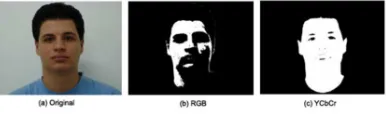
[image:6.595.87.290.641.732.2]computation time will be decreased. Figure 6 illustrates the result of segmentation for two selected color spaces including RGB and YCbCr.
Figure 6: Face segmentation using RGB and YCbCr color spaces .
As the choice of the thresholds must be much more robust when it deals with different lighting conditions, then the threshold can be adapted.
7. PROPOSED APPROACH
scheme in a few steps. By this assumption which
only there is one face in the sense.
Step-1: Firstly, we need to find out the chromatic distance values for the input image. The chromatic distance values help to illustrate the intensity of image and subsequently we can get the value of Cr and Cb to display in a graph. Step-2: Secondly, in order to get filtered image, a low pass filter need to be applied. In addition, RGB input images need to covert to YCbCr color space by using the Equation 3 which is described in previous sections.
Step-3: In the third step, there is a conversion of input color image to a gray-scale image. Then, edge detection by using Sobel operators will be done to achieve the edges of image by an initial threshold .Since there is only one face in the image, we can have improvement in the execution time. The improvement can be achieved by applying a down scale factor and image can be shrunk without losing data. Hence, the algorithm executes on less pixel values. The shrinking process can be achieved by analyzing each nM column and row, where M is n - 0, 1, 2 ...S and M is the downscale factor. Another enhancement is applied to remove the noise of such holes in the result. Therefore, a closure morphological method can be utilized. Finally, after performing some operations like converting image into grayscale and grayscale into binary image, we can obtain the final segmented image. Step-4: Input of this step is a segmented image and this step is proposed to avoid holes and false selected regions that have same color as face, a face template database is used to match the selected regions with the face templates. The result of this step is selected region, which has face color, and its shape satisfies the template matching process.
Step-5: In the last step, the output of previous steps will be given to evaluate the performance parameters. The evaluation is done for Rand Index (RI), Global Consistency Error (GCE), Variation of Information (VI), Peak Signal to Noise Ratio (PSNR), Mean Square Error (MSE), manually calculated false acceptance rate (FAR), and False Rejection Rate (FRR). After that, we plot the evaluation parameters in a graph as can be seen from Figure 7 and 8.
8. RESULTS
The implementation of proposed method has been done on 30 training images in our database with different poses, and different
[image:7.595.305.503.192.318.2]lighting conditions. Table 2 shows the result of implementation for 5 selected training images which include different evaluation factors as well as their execution time.
Table 2: Performance Evaluation
RI GCE VI MSE Y Elapsed
time(Sec)
0.57 0.24 1.45 1.2163e+
004 7.28 18.3613
0.50 0.27 1.64 7.6747e+
003 9.28 16.3177
0.50 0.35 1.77 9.2501e+004 7.72 14.8981
0.68 0.19 1.11 1.2393e+
004 7.19 15.6001
0.54 0.34 1.68 9.1266e+003 8.52 15.3505
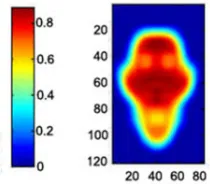
[image:7.595.344.449.430.522.2]The initial results show that relying only on the color information; it's not enough to detect face from images especially when the background is complex. Also, in our result we had the experience of selecting false objects which have same color as face such as arms, neck, etc. To avoid the mentioned problem a template matching method has been used as shown in Figure 9.
Figure 9: face Template.
Figure 10: Edge Detection Result (a) Original Image (b) Detected edges by Sobel 3x3 (c) Detected edges by Kirsch.
Figure 11: Execution process of input image for face detection.
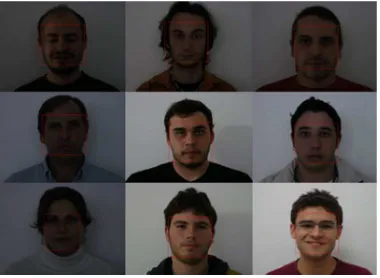
[image:8.595.91.281.439.578.2]Also, to verify the accuracy of the proposed method, we have selected several face images from a database (FEI face database) with different lighting conditions and all of them had satisfactory results as can be seen from Figure 12.
Figure 12: Detected face of proposed method with different lighting conditions
9. CONCLUSION
The proposed method is a combination of skin color segmentation and edge detection algorithm (Sobel 3x3). Also, to make the algorithm more accurate we have used several face templates to avoid selecting the objects which have same color as face like neck. Moreover, the proposed method can detect faces
from image including different lighting
conditions and also with complex backgrounds.
In addition, the method has improvement in terms of execution time in comparison to the selected existing methods.
10. FUTURE WORK
Face detection is a challenging and interesting problem, which needs to be solved with 100% accuracy. Even though, in the current paper we have aimed to make the method better than existing methods, but the face detection method still need to be extended to work under full variation in some factors such as orientation, poses, presence of glasses ,partial occlusion, different lighting conditions and other factor that can have an impact on its result. The next step in our research is the detection of facial features and the use of additional information about face structure to validate or reject the candidate regions and build a complete face detection system as well as detecting more than one face in the scene.
ACKNOWLEDGEMENT
This research was funded by the Universiti
Teknologi Malaysia through Research
University Grant (RUG) and manage by
Research Management Centre, Universiti
Teknologi Malaysia under Vot No.
Q.J130000.2528.09H69.
REFERENCES:
[1] Brown D., Craw I., and Lewthwaite J. 2001. “A som based approach to skin detection with application in real time
systems.” In Proc. of the British Machine
Vision Conference, 2001
[2] Hongxun Y. and Wen G., "Face locating and tracking method based on chroma
transform in color images," Signal
Processing Proceedings. WCCC-ICSP 2000. 5th International Conference, vol.2, pp.1367-1371, 2000
[3] Jian Y., Chengjun L., and Lei Zh., “Color
space normalization: Enhancing the
discriminating power of color spaces for
face recognition”, Pattern Recognition,
Volume 43, Issue 4, pp. 1454-1466, 2010. [4] Kamarul B. Gh. H., Jie M., Rui X., and
[5] Lakshmi H. C. V. and PatilKulakarni S.,
"Segmentation Algorithm for Multiple Face Detection for Color Images with Skin Tone
Regions," International Conference
on Signal Acquisition and Processing, ICSAP '10. vol., no., pp.162-166, 2010. [6] Liangyan G., Yuan L., Shengjin W., and
Xiaoqing D., "Accurate face segmentation based on fusion of improved GrabCut and
ASM," Image and Signal Processing
(CISP), 4th International Congress on , vol.3, pp.1175-1179, 2011.
[7] Lopez-Molina C., De Baets B., and Bustince H., “A framework for edge detection based on relief functions”, Information Sciences, vol. 278, pp. 127-140. 2014.
[8] Mohamed A. S. S., Ying W., Ipson S. S., and Jianmin J., "Face detection based on
skin color in image by neural
networks," International Conference on
Intelligent and Advanced Systems. (ICIAS), vol., no., pp.779-783, 2007.
[9] Qu Y., Cui Ch., Chen S., and Li J., “A fast sub pixel edge detection method using Sobel”Zernike moments operator, Image and Vision Computing, vol. 23, no. 1, 1, pp. 11-17,2005.
[10] Rein-Lien H., Abdel-Mottaleb M., and Jain, "Face detection in color images," IEEE Transactions on Pattern Analysis and Machine Intelligence, vol.24, no.5, pp.696-706, 2002.
[11] Sharifi M., Fathy M., and Tayefeh M. M., "A classified and comparative study of edge
detection algorithms," International
Conference on Information Technology: Coding and Computing, 2002. Proceedings, vol., no., pp.117-120, 2002.
[12] Shemshaki M., “Face Detection Using Fuzzy Granulation and Classifier Fusion in
Color Images,” International Arab Journal
of Information Technology,vol. 11, no. 3, 2012.
[13] Vadakkepat P., Lim P., De Silva L. c., Liu J., and Li L. L., "Multimodal Approach to
Human-Face Detection and
Tracking," IEEE Transactions on Industrial Electronics, , vol.55, no.3, pp.1385-1393,2008.
[14] Xin Ch. and Houjin Ch., "A novel color edge detection algorithm in RGB color
space," 10th International Conference
on Signal Processing (ICSP), 2010 IEEE, vol., no., pp.793-796, 2010.
[15] Xinjun M., Hongqiao Zh., and Xin Zh., "A
face detection algorithm based on
modified skin-color model," Control
Conference (CCC), 2013 32nd Chinese, vol., no., pp.3896-3900, 2013
[16] Yanjiang W. and Baozong Y., “A novel approach for human face detection from color images under complex background”, Pattern Recognition, vol. 34, no. 10, pp. 1983-1992, 2001.
[17] Yu W. and Du Z., "An improved Kirsch human face image edge-detection method based on canny algorithm,"International Conference on Consumer Electronics, Communications and Networks (CECNet), 2011, vol., no., pp.4740-4743, 2011. [18] Yuseok B., Sang-Ki K., Sooyeon K.,
Kar-Ann T., and Sangyoun L., “Face detection
based on skin color likelihood”, Pattern