Abstract—Materials selection was carried out for the
identification of best materials for use as interlayer in laminated glass windshield and windows. The application of the windows and windshield would be in a fuel efficient concept vehicle, with maximization of safety and fuel economy as the primary objectives. The Complex Proportional Analysis (COPRAS) multi-criteria decision making (MCDM) with digital logic method (DLM) was used for the materials selection. There were five materials being considered and these include poly-vinyl butyral (PVB), ethylene-vinyl acetate (EVA), SentryGlas (SG), poly-ethylene terephthalate with EVA (XLAB) and a PVB derivative named HG/MD interlayer film. Based on the five key criteria used for the assessment of these alternatives, the XLAB can be the best candidate followed by EVA for glass interlayer materials. Both have the two highest Qi values that indicate having a maximized beneficial criteria.
Index Terms—laminated glass, interlayer material, complex
proportional analysis, multi-criteria decision making
I. INTRODUCTION
ASSENGER vehicles contribute a significant amount of pollution and greenhouse gases [1]. Moreover, the cost of petroleum products needed to fuel internal combustion engines has steadily increased over the past two decades, as a result of market forces, and government regulation. Researchers have proposed various ways to address the issues discussed, but a possible way to investigate innovations that minimize fuel consumption is the assessment of a vehicle as an entire system [2]. Idealized vehicular systems have been seen to result to dramatic improvement in fuel-efficiency [2]. Such fuel-efficient vehicles employ various innovations including renewable energy, low rolling friction tires, use of appropriate materials for every part of the vehicle, and among others.
Materials selection is a method that can be used in the design and development of products for various engineering applications. In order to proceed with materials selection for this particular system, it is necessary to establish the notion
Manuscript received March 5, 2018; revised April 10, 2018.
M.G. Manalo is a BS Materials Engineering student from the Department of Mining, Metallurgical and Materials Engineering,
University of the Philippines, 1101 Diliman, Quezon City, Philippines (e-mail: [email protected]).
E.R. Magdaluyo, Jr. is an Associate Professor from the Department of Mining, Metallurgical and Materials Engineering, University of the Philippines, 1101 Diliman, Quezon City, Philippines (email: [email protected]).
of a fuel-efficient concept vehicle. Other factors that are usually considered in vehicle design, such as aesthetic appeal, comfort, performance, etc., if at all considered, are given relatively less importance than the primary objective of fuel-efficiency. The exception to this is safety, due to the fact that the key aspect to consider in the feasibility of a concept vehicle is the safety it can provide to its users.
Considering what has been established about a fuel-efficient concept vehicle, it is important to identify sets
of baseline standards that the system will conform with. The standards established by the rules and regulations of a global competition that specifically aims to maximize fuel efficiency in an idealized vehicle system will be used [2]. This investigation shall consider the rules and regulations in the Urban Concept design class, and internal combustion energy category [2]. The system under consideration is all body externals and components, in particular, this investigation deals with the different materials for laminated glass interlayer for windshield and windows applications.
The windshield and windows comprise only a small part of the overall mass and cost of the vehicular system. Nevertheless, they are critical primarily to the safety that the vehicle offers to its driver. The importance of the windshield to the overall safety of the system is such that the rules and regulations explicitly state minimum compliance requirements for some of their properties. On the subject of the windows, the rules and regulations state that, in the event of strong impact and failure, the window material should not shatter into sharp shards [4]. This is for obvious safety reasons, as shatter at impact can lead to cuts or, at least, tire punctures arising from debris. Moreover, the safety aspect of the windows component cannot be discounted, as it serves as the sole barrier between the driver and any projectile in the immediate vicinity. The need for high impact strength means that the use of lightweight glass alternatives, like plexiglass, is discouraged [4].
Keeping the windows and windshield lightweight is of dual importance in minimizing vehicular mass, and also keeping the center of gravity of the system low. Considering the relatively high location of these components, they will have a significant impact on the center of gravity. There are arrays of strong and lightweight glasses under the umbrella category of laminated glass, effectively a composite glass of
Integrated DLM-COPRAS Method in Materials
Selection of Laminated Glass Interlayer for a
Fuel-Efficient Concept Vehicle
Mark Vincent G. Manalo and Eduardo R. Magdaluyo, Jr.,
Member, IAENG
glass and interlayer film combinations. These can be optimized for cost, availability, sustainability, workability, load bearing capability, and deflection. [5]
The objective of this study is to determine the best interlayer material for laminated glass in a fuel-efficient concept vehicle. A literature review was first done in order to investigate the different interlayer materials currently being used in the market and other advanced materials being studied. The different criteria for the selection process include the cost, failure load, deflection, load ratio and specific weight. The relevant characteristics of each alternative will be subjected to Complex Proportional Analysis (COPRAS), with Digital Logic Method employed to determine the relative importance of each criterion.
II. LITERATURE REVIEW
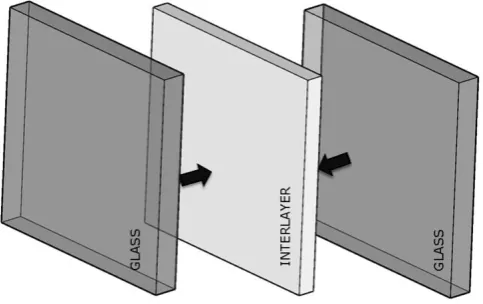
Laminated glass entails the sandwiching of a tough polymeric interlayer between two panels of silicate glass. This structure is shown in Figure 1. There is a wide variety of laminated glass, aimed at various specialized applications, such as architectural, structural, automotive, and many others. The types of glass vary according to the interlayer used and the thermal processing that is applied. The automotive industry widely uses tempered glass because it breaks into small square pieces that do far less harm than other kinds of glass, which break into sharp shards, owing to their ceramic nature [6].
Tempered glass entails a process which subjects origin materials to a tightly controlled thermal and/or chemical process, inducing balanced internal stresses, which give the glass its strength, and also inhibit fracture into undesirable large shards.
While thermal treatments are critical to the post-breakage behavior of laminated glass, it is widely established that the mechanical properties of the overall laminated glass is largely dictated by the mechanical properties and thickness of the interlayer material [6]. Indeed, among tempered
glasses, there exist a wide variety of specific types, distinguished by the polymeric film that is used to sandwich the glass particles. Such an interlayer material is regarded as the differentiating factor among tempered glasses [6]. The polymeric film is of utmost importance because it provides
the overall glass structure with some flexibility, as well as acting as the critical barrier to environmental agents [7]. The industry standard in automotive and other tempered glass applications has been the use of poly-vinylbutyral (PVB) as the material for polymeric film. The PVB films exhibit high strength and long life, easy workability, and smooth surface finish [6]. However, PVB performance deteriorates significantly with prolonged exposure to ambient moisture, both in processing and in-use. This may prove particularly a problem in tropical countries with high ambient humidity of at least 80% [7]. Nevertheless, because PVB is already widely used and accepted as the industry standard, it enjoys benefits of relatively low cost due to economies of scale [6].
Various alternative materials to PVB have been investigated and implemented in order to address its performance or sustainability shortcomings. These include ethylene-vinyl acetate (EVA) and SentryGlas (SG) [8]. The SG interlayer, a thermoplastic polymer developed by DuPont Corporation, claims to have significantly better load bearing and far lower deflection at loading, than the industry standard PVB interlayer [9]. These performance claims have been independently investigated [10], and the result is summarized in Table 1. The investigation considered the mechanical properties of glasses with different interlayer materials, with all samples undergoing a standard four-point bending test. SG interlayer was determined to have the second highest load-bearing capacity within the elastic limits of the glass, and the lowest deflection, among a group that also consisted of PVB, EVA, and poly-ethylene terephthalate with EVA (XLAB).
The XLAB interlayer material was found to result to glass with the highest load bearing capacity in a standard four-point bending test, yet, also have the highest deflection both at the elastic limit, and upon fracture of the glass at the maximum limit. Such deflection at the maximum limit is an important consideration for safety, since it addresses the post-breakage behavior of glass, in such a way that lower deflection is desirable. In this aspect, EVA interlayer outperformed with the lowest deflection at both elastic and maximum limits [9]. The EVA interlayer is a thermoplastic copolymer which has emerged as an alternative to PVB interlayer. EVA interlayer was produced primarily to improve performance of glass subjected to adverse environmental conditions such as elevated temperature, humidity, or ultraviolet (UV) radiation exposure. Such environmental factors can detrimentally affect the performance of PVB glass through creep, delamination due to reduced adhesion, and embrittlement, respectively [7].
[image:2.595.45.287.536.688.2]There has been an investigation conducted to observe the change in properties of glass in adverse conditions [7]. The environmental factors of temperature, humidity, and UV radiation were simulated according to standard ISO 12543-4:2011. The set-up analyses consist of 1000oC temperature for two hours, 100% humidity for 336 hours, and UV lamp exposure for 1000 hours. The investigation found that the SG interlayer has the best properties, having the lowest deflection using a standard four-point bending test.
However, the investigators noted that the difference in performance between EVA and SG interlayers was negligible, observing a deflection difference of only 1mm between glasses containing these interlayers. Notably, glass with PVB interlayer had deflection up to thrice that of EVA and quadruple of SG.
In order to address the emerging deficiencies of the PVB
interlayer, researchers have developed and investigated a so-called “strong formulation PVB”, also known as the
HG/MD interlayer film [10-11]. Studies have shown that this interlayer material can render stiffer bending properties, due to significantly higher load bearing and far lower deflection than found in previous investigations that considered PVB. These findings were verified by further studies, using better destructive and non-destructive tests, as well as more accurate theoretical models for prediction. Additionally, the investigation also found more optimal distribution of shear stresses and principle tensile stresses in the case of the HG/MD interlayer [11].
TABLE I
MECHANICAL PROPERTIES AND COST OF VARIOUS INTERLAYER MATERIALS
III. SELECTION METHODOLOGY
The Complex Proportional Assessment (COPRAS) method, integrated with the Digital Logic Method (DLM) has been put forward as a potential method for materials selection in this investigation. The COPRAS method is the most favored variety of multi-criteria decision making (MCDM) techniques for materials selection problems [13]. Two preliminary steps of data treatment was carried out before proceeding with the COPRAS MCDM itself. These steps pertain to treatment of the data and an assessment of the importance of a given criterion with respect to the other criteria. The first step in COPRAS, as with most MCDM methods, is normalization. This step entails the division of a given value by sum of values within a data set. Normalization has been carried out and rounded to three decimal places.
The other step is the Digital Logic Method (DLM). The objective of DLM in materials selection is to determine , or the weighting factor of a given criterion, in such a way that the determination can be said to be sufficiently systematic [16] and rational, rather than arbitrary. DLM entails the comparison of two criteria, assigning a more important factor with a positive decision, 1, and the less important factor with 0. Given n criteria, there are n*(n-1)/2 possible decisions to be made.
The COPRAS methodology proceeds from the preliminary steps, first with the determination of weighted normalized criteria. This step involves a direct multiplication of each weighting factor arrived at using DLM, with the normalized values for each alternative. The determination of weighted normalized criteria has been carried out and rounded to three decimal places.
The next step in the selection methodology groups criteria into beneficial and non-beneficial, and considers the sum of weighted normalized values for both groups. Criteria are beneficial when a higher value for them reinforces the objectives of materials selection. Meanwhile, criteria are non-beneficial when a higher value for them is said to be
detrimental to the objectives of materials selection. Arriving at appropriate groupings for beneficial and non-beneficial criteria is done by considering independently each criterion in relation to the overall objectives, and the influence that each would make on the objectives if values for the criterion were to increase. The determination of sums of beneficial and non-beneficial criteria has been carried out.
Finally, COPRAS methodology arrived at values for relative significance for each alternative, Qi. The complexity of the operation required to determine Qi merits further discussion in the succeeding section.
IV. INTEGRATED DLM-COPRASMCDM FOR INTERLAYER
MATERIAL SELECTION
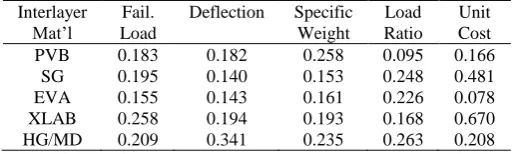
Table 2 shows the normalized values for each data set of material properties. Normalization allows a uniform scale by which all data can be assessed. The results for normalization are expected to be proportional to the values on Table 1, since the raw values serve as the basis for the normalized values. In general, the failure load and deflection properties of XLAB is highest among the alternatives. When it comes to specific weight, PVB is the highest. The SG has the highest load ratio while the EVA is the cheapest material.
TABLE II
NORMALIZED DATA FOR INTERLAYER MATERIALS
Interlayer Mat’l
Fail. Load
Deflection Specific Weight
Load Ratio
Unit Cost
PVB 0.183 0.182 0.258 0.095 0.166
SG 0.195 0.140 0.153 0.248 0.481
EVA 0.155 0.143 0.161 0.226 0.078
XLAB 0.258 0.194 0.193 0.168 0.670
HG/MD 0.209 0.341 0.235 0.263 0.208
The next operation involved in this materials selection is the DLM, and the results for the operation are found on Table 3. The DLM procedure performed resulted to failure load – the strength of the material – having the highest relative significance with of 0.4. This is to be expected, as having a stronger interlayer material leads to a higher degree
Interlayer Mat’l Failure Load (N) Deflection (mm) Sp. Weight [12] Load Ratio [9] Cost (USD/kg.) [14] PVB 1104 17.996 1.60 0.13 6.16
[image:3.595.298.556.624.701.2]of critical thickness of glass. That is to say, the same strength of laminated glass can be attained using less glass when the interlayer material is stronger [6]. Using less glass can mean a lighter laminated glass, which is one of the primary objectives of this selection. Moreover, the influence of failure load on the weight of the overall laminated glass is
greater than that of the specific weight of the interlayer, since the interlayer only constitutes a small part of the overall weight of laminated glass. The DLM also confirms this by giving specific weight a lower importance than failure load.
TABLE III
DIGITAL LOGIC METHOD FOR INTERLAYER MATERIALS SELECTION
The DLM also assigned the lowest importance to cost. While cost minimization is a primary objective of the overall project, it is well established that the cost of laminated glass only makes up a small part of the overall cost of any vehicle. Together with cost is the factor of load ratio. It has been given low importance because it describes the failure behavior of laminated glass, and failure is not a desired outcome for the laminated glass. Nevertheless, it is given some importance because of its implications on safety and structural integrity [9]. Meanwhile, at of 0.2, deflection has been given a higher importance than load ratio, and this can be explained by the more direct impact that this mechanical property has on overall safety [9].
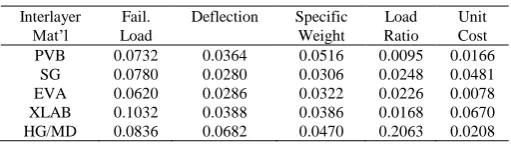
Table 4 shows the weighted normalized criteria, where the contribution of the DLM method is being integrated in the COPRAS. The influence of DLM can clearly be seen with these results, as values for failure load, the criteria with the highest are now the highest values among all criteria, for all alternatives. Meanwhile, the values for load ratio and cost are among the lowest. These were not always the case for normalized values that did not consider the weighting factor. Such changes between normalized and weighted normalized results verify the success of this operation.
TABLE IV
WEIGHTED NORMALIZED CRITERIA Interlayer
Mat’l
Fail. Load
Deflection Specific Weight
Load Ratio
Unit Cost PVB 0.0732 0.0364 0.0516 0.0095 0.0166
SG 0.0780 0.0280 0.0306 0.0248 0.0481 EVA 0.0620 0.0286 0.0322 0.0226 0.0078 XLAB 0.1032 0.0388 0.0386 0.0168 0.0670 HG/MD 0.0836 0.0682 0.0470 0.2063 0.0208
The next step in the COPRAS method separates criteria between beneficial and non-beneficial. Failure load, and load ratio have been assigned as beneficial criteria. The benefits of a higher failure load have been discussed earlier. Meanwhile, a higher load ratio suggests that the strength loss of glass due to cracking, for a given interlayer material, is smaller relative to the maximum load bearing indicated by the failure load [9]. The remaining three criteria – deflection, specific weight, and cost per unit have been deemed
non-beneficial. The succeeding data treatment will get the sum beneficial, and non-beneficial criteria, of weighted normalized data for a given interlayer material. These are denoted as S+i and S-i, respectively. Table 5 shows the results of this operation. These results suggest that XLAB is having the highest sum of beneficial criteria, while EVA is having the lowest sum of non-beneficial criteria. These results, alone, suggest the benefits of using either material, but are not conclusive, because they still consider beneficial and non-beneficial criteria independently. An operation is needed to consider the relationship of beneficial and non-beneficial groupings for a given alternative, and this is appropriately considered in the final step of the COPRAS methodology.
TABLE V
SUMS OF BENEFICIAL AND NON-BENEFICIAL CRITERIA Interlayer Mat’l S+i S-i
PVB 0.0827 0.1046 SG 0.1027 0.1067 EVA 0.0846 0.0686 XLAB 0.1200 0.0841 HG/MD 0.1099 0.1360
The final step of the COPRAS method determines the relative significance for each of the interlayer material alternatives. This quantity is denoted by Qi. The operation for Qi is shown on equation (1).
(1)
It can be seen that this final operation considers the relationship between beneficial and non-beneficial groupings. The higher the Qi denotes a better alternative, as it implies either, or both, maximized beneficial criteria, and/or minimized non-beneficial criteria.
Table 6 shows the Qi value for each alternative. The results affirm that by using the COPRAS method, and with digital logic method used to determine the weighted importance of each criterion, the top two interlayer materials among the possibilities are XLAB and EVA.
Goal 1 2 3 4 5 6 7 8 9 10 Total
F.Load 1 1 1 1 4 0.4
Deflection 0 0 1 1 2 0.2
Sp. Wt. 0 1 1 0 2 0.2
Ld. Ratio 0 0 0 1 1 0.1
[image:4.595.41.297.586.658.2]TABLE VI
RELATIVE SIGNIFICANCES FOR EACH ALTERNATIVE Interlayer Material Qi
PVB 0.173 SG 0.191 EVA 0.223 XLAB 0.233 HG/MD 0.179
It can be seen that Qi for XLAB is only slightly above that of EVA, with a difference of 0.01. Meanwhile, the other alternatives are far lower. This outcome is not unexpected, given that one of the constituent materials of XLAB is EVA, as XLAB is an interlayer system composed of a PET film sandwiched between two layers of EVA. Studies showed that XLAB has superior mechanical properties prior to failure, while EVA has superior mechanical properties post-failure [9].
Based on the application conditions of the laminated glass for a fuel-efficient concept vehicle, its pre-failure mechanical properties is very important. Moreover, it was clearly established earlier in this discussion that great significance would be placed on the failure load that could be sustained by the laminated glass. Considering that researchers have empirically determined XLAB interlayer to result to a laminated glass with the highest failure load, the results of this materials selection in finding XLAB to be the best interlayer material alternative can be further contextualized and seen to be valid. However, if the cost is also a big consideration, the use of EVA can be an alternative.
V. CONCLUSION
Materials selection has been carried out for interlayer material in laminated glass for windshield and windows. The selection methodology employed was the Complex Proportional Assessment (COPRAS), with Digital Logic Method (DLM) employed to determine relative significance and weights of each assessment criterion. For the interlayer material, polyethylene terephthalate-polyvinyl butyrate copolymer (XLAB) was found to be the best alternative. However, the ethylene vinyl-acetate (EVA) can be also an option in case of limited availability, or cost constraints.
REFERENCES
[1] O. Edenhofer, R.P. Madruga, and Y. Sokona, Climate Change 2014:
Mitigation of Climate Change, Cambridge, England: Cambridge
University Press, 2014, pp. 365-367.
[2] Royal Dutch Shell Corporation, About the Shell Eco-Marathon, accessed on 21 March 2017 via URL https://www.shell.com/energy-and-innovation/shell-ecomarathon/about.html.
[3] S. Simmons, Shell Eco-Marathon 2018 Official Rules Chapter I,
Foreword, p. iii.
[4] Shell Eco-Marathon Official Rules Chapter I, 1st ed., Royal Dutch
Shell Corporation, London, U.K., 2018, p. 14.
[5] M. Zang, and S. Chen, Wiley Encyclopedia of Composites:
Laminated Glass, Hoboken, N.J., John Wiley and Sons, 2011
[6] R. Quenett, The Mechanical Behavior of Laminated Safety Glass
under Bending and Normal Stresses, Manuskript-Eing., Wurzburg,
DE, Forgetragenaufdem DVM-Tag, 1967.
[7] T. Serafinavicius, J.P. Lebet, C. Louter, T. Lenkimas, and A. Kuranovas, “Long-term Laminated Glass Four Point Bending Test with PVB, EVA and SG Interlayers at Different Temperatures,”
Procedia Engineering vol. 57 pp. 996-1004, 2013.
[8] Strength Characteristics of Laminated Glass, 1st ed., Wilmingtion,
DE, Dupont Corporation, 2008.
[9] G. Castori, and E. Speranzini, “Structural Analysis of Failure Behavior of Laminated Glass,” Composites Part B vol. 125, pp. 89-99, 2017.
[10] A. Abarca, “Tests Performed on Laminated Glass Bonded with a New Interlayer Composition,” M.S. Thesis, Graduate Faculty of Civil Engineering, Texas Tech University, Lubbock, TX, 2003.
[11] M. El Shami, S. Norville, and Y.E. Ibrahim, “Stress Analysis of Laminated Glass with Different Interlayer Materials,” Alexandria
Engineering Journal vol. 51, pp. 61-67, 2012
[12] “MatWeb, Your Source for Materials Information,” Accessed 25 February 2018 via URL http://www.matweb.com, Automation Creations, Inc., 2009
[13] S. Nasab, and A. Anvari, “A Comprehensive MCDM-based Approach using TOPSIS, COPRAS and DEA as an Auxiliary Tool for Material Selection Problems,” Materials and Design vol. 121, pp. 237-253, 2017
[14] “Import Data,” Bangalore, India, Zauba Technology & Data Services Pvt. Ltd. Accessed 23 February 2018 via URL https://www.zauba.com/import-
[15] B.Dehghan-Manshadi, H. Mahmudi, A. Abedian and R. Mahmudi, “A novel method for materials selection in mechanical design: Combination of non-linear normalization and a modified digital logic method,” Materials and Design vol. 28, pp. 8-15, 2005 [16] N. Min’ko, and V. Nartsev, “Factors affecting the Strength of
Laminated Glass (Review),” Middle East Journal of Scientific