RESEARCH SERIES NUMBER 16
JUNE 2010
Designing
Primary
Schools
for the
future
Merike Darmody Emer Smyth Cliona Doherty
RESEARCH SERIES NUMBER 16 SEPTEMBER 2010
D
ESIGNING
P
RIMARY
S
CHOOLS
FOR THE
F
UTURE
MERIKE DARMODY,EMER SMYTH AND CLIONA DOHERTY
This paper is available online at www.esri.ie
The Economic and Social Research Institute (Limited Company No. 18269). Registered Office: Whitaker Square,
Merike Darmody is a Research Officer, Emer Smyth is a Research Professor, Cliona Doherty was a Research Analyst at the Economic and Social Research Institute.
RESEARCH SERIES NUMBER 16 SEPTEMBER 2010
D
ESIGNING
P
RIMARY
S
CHOOLS
FOR THE
F
UTURE
MERIKE DARMODY,EMER SMYTH AND CLIONA DOHERTY
© THE ECONOMIC AND SOCIAL RESEARCH INSTITUTE DUBLIN, 2010
IV
ACKNOWLEDGEMENTS
T
he research described in this study was supported by a grant from the Research and Development Committee of the Department of Education and Skills. The authors of this report are grateful to the steering committee of the Department of Education and Skills for invaluable input into, and ongoing support for, this research. Thanks go to John Dolan (Senior Engineer, Building Unit), Larry McEvoy (Technical Manager, Building Unit), Pat O’Neill (Primary Divisional Inspector, Inspectorate) and Tony Sheppard (Technical Manager, Building Unit). The authors would also like to thank internal reviewers and the publishing team in the Economic and Social Research Institute, as well as Professor Philip O’Connell, Head of the ESRI Social Research Division and Professor Frances Ruane, Director of the ESRI. Special and heartfelt thanks are due to the pupils and teachers of the six case-study schools who gave generously of their time and to key informants from a number of educational organisations.V
CONTENTS
Chapter Page
List of Tables and Figures viii
Executive Summary xi
CHAPTER 1: CONTEXT FOR THE STUDY 1
CHAPTER 2: REVIEW OF EXISTING RESEARCH 4
2.1 SCHOOL ENVIRONMENTS 4
2.1.1 School Size 5
2.1.2 Class Size 6
2.1.3 School Buildings and Classroom Practice 7
2.2 CLASSROOM DESIGN, TEACHING AND LEARNING 13
2.2.1 Classroom Layout and Seating Arrangements 13
2.2.2 Use of Information and Communications Technology (ICT) in Schools 14 2.3 INDIVIDUAL ENVIRONMENTAL FACTORS, TEACHING AND
LEARNING 17
2.3.1 Density (Schools and Classrooms) 17
2.3.2 Lighting 17
2.3.3 Noise 18
2.3.4 Colour 19
2.3.5 Air Quality and Temperature 20
2.3.6 Using Student Artwork to Boost Belonging 20
2.3.7 Classroom Furniture 21
2.3.8 Facilities and Teachers 21
2.4 THE FUTURE OF PRIMARY SCHOOLING 22
2.5 CONSULTING PUPILS 25
2.6 SUMMARY 26
CHAPTER 3: DATA AND METHODOLOGY 28
3.1 DATA SOURCES AND METHODOLOGY 28
3.1.1 Case-Studies of Primary Schools 28
3.1.2 Interviews with Interest Groups and Stakeholders 31
3.1.3 Survey of School Inspectors 32
3.2 THE IMPORTANCE OF CONSULTING PUPILS 32
VI
CHAPTER 4: PERCEPTIONS OF PRIMARY SCHOOL DESIGN AMONG
EDUCATION STAKEHOLDERS AND INTEREST GROUPS 34
4.1 DEVELOPMENTS IN SCHOOL DESIGN 34
4.1.1 The Perceived Importance of School Design 34
4.1.2 Trends in School Design 35
4.2 INDOOR SPACE IN PRIMARY SCHOOLS 37
4.2.1 School Size and Layout 37
4.2.2 Classroom Size and Layout 39
4.3 OUTDOOR SPACE IN PRIMARY SCHOOLS 41
4.4 TEACHING AND LEARNING IN PRIMARY SCHOOLS 42
4.4.1 Class Size 42
4.4.2 Teaching Approaches and Methodologies 43
4.4.3 Using Technology in Primary Classrooms 44
4.5 FACTORS TO CONSIDER WHEN BUILDING A NEW PRIMARY SCHOOL 46
4.6 CONCLUSIONS 48
CHAPTER 5: TEACHER PERCEPTIONS OF SCHOOL DESIGN AND
TEACHING AND LEARNING IN PRIMARY SCHOOLS 49
5.1 SPACE IN PRIMARY SCHOOLS 51
5.2 FACILITIES IN THE SCHOOLS 55
5.2.1 Facilities for Pupils 55
5.2.2 Facilities for School Staff 59
5.2.3 Facilities for Parents and the Wider Community 59
5.3 OUTDOOR SPACE 61
5.4 TEACHING AND LEARNING 62
5.4.1 Trends in Teaching Methods 62
5.4.2 Approaches to Teaching in the Case-study Schools 63 5.4.3 The Use of ICT and Audio-visual Equipment in Primary Schools 64 5.5 ENVIRONMENTAL FACTORS THAT INFLUENCE TEACHING AND
LEARNING 66
5.5.1 Noise 66
5.5.2 Temperature 67
5.5.3 Light 67
5.5.4 Air Quality 68
5.6 SIGNIFICANT FACTORS IN DESIGNING PRIMARY SCHOOLS 68
5.7 TEACHER EDUCATION AND TRAINING 69
5.8 CONCLUSIONS 70
CHAPTER 6: SCHOOL DESIGN – THE PUPIL PERSPECTIVE 71
6.1 INTRODUCTION 71
6.2 GENERAL PERCEPTIONS OF SCHOOL SPACE 71
VII
6.2.2 The Classroom 72
6.2.3 Common Areas in the School 74
6.2.4 School and Class Size 75
6.2.5 Pupils’ Favourite Places 76
6.3 LEARNING IN THE CLASSROOM 82
6.4 LEARNING AND PLAYING OUTDOORS 84
6.5 CONCLUSIONS 91
CHAPTER 7: ISSUES IN SCHOOL DESIGN – A SYNTHESIS OF
RESEARCH FINDINGS 92
7.1 THE IMPORTANCE OF SPACE – SOCIAL AND SPATIAL
DENSITY IN SCHOOLS 93
7.2 CLASSROOM LAYOUT AND ARRANGEMENT – IMPLICATIONS
FOR TEACHING APPROACHES 94
7.2.1 Seating Arrangement 94
7.2.2 Toilets 95
7.2.3 Display and Storage 96
7.3 ENVIRONMENTAL FACTORS 97
7.3.1 Lighting 97
7.3.2 Noise 98
7.3.3 Colour 99
7.3.4 Air Quality, Temperature and Heating 99
7.4 OUTDOOR SPACES 100
7.5 TEACHING AND LEARNING 101
7.6 SUMMARY 104
CHAPTER 8: A BRIEF FOR FUTURE SCHOOL DESIGN 105
8.1 SCHOOL SIZE AND LOCATION 106
8.2 CLASS SIZE AND LAYOUT 107
8.3 OTHER INDOOR SPACES 108
8.4 OUTDOOR SPACE 109
8.5 TEACHER EDUCATION AND TRAINING 109
8.6 FURTHER RESEARCH 109
REFERENES 111
APPENDIX I: DESIGNING SCHOOLS FOR THE FUTURE –
QUESTIONNAIRE FOR INSPECTORS 126
APPENDIX II: FURTHER REFERENCE MATERIAL ON SCHOOL DESIGN
VIII
LIST OF TABLES AND FIGURES
Page
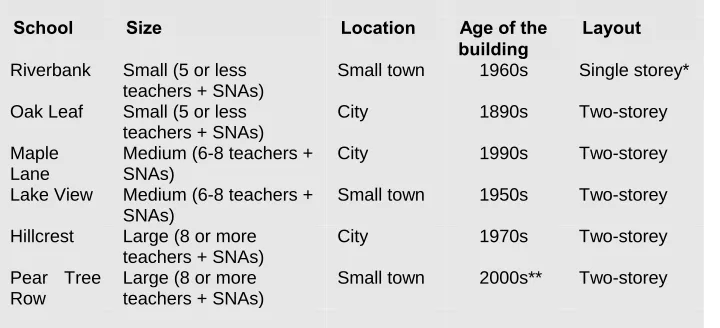
Table 3.1: Profile of the Case-study Schools 29
Table 3.2: Participants in the Study 30
Table 5.1: Profile of the Case-study Schools 50
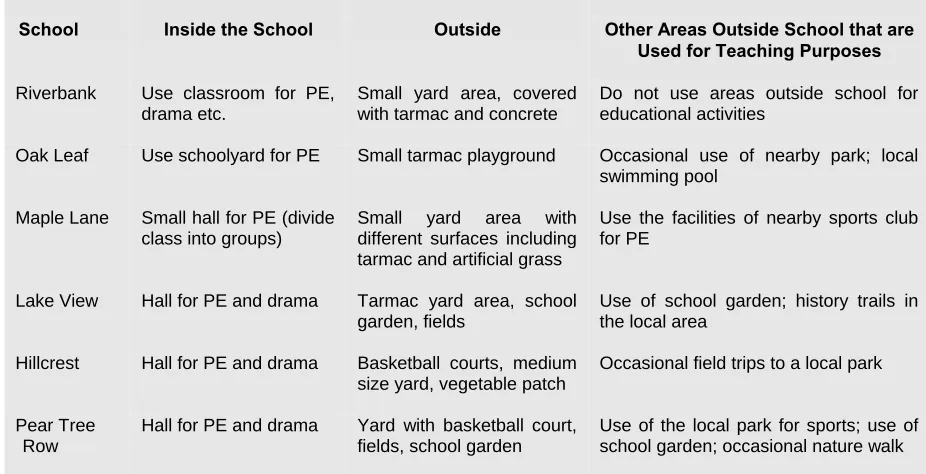
Table 5.2: Facilities in the Case-study Schools 56
Table 5.3: The Use of Indoor and Outdoor Facilities for
Teaching and Learning 61
Figure 6.1: My Favourite Place, Pear Tree Row School 77
Figure 6.2: My Favourite Place, Oak Leaf School 78
Figure 6.3: My Favourite Place, Lake View School 79
Figure 6.4: My Favourite Place, Riverbank School 80
Figure 6.5: The School I Would Like, Oak Leaf School 81
Figure 6.6: My Favourite Place, Lake View School 87
Figure 6.7: My Favourite Place, Oak Leaf School 88
Figure 6.8: My Favourite Place, Hillcrest School 89
IX
ACRONYMS AND ABBREVIATIONS
DES Department of Education and Science
GRD Generic Repeat Design
PIRLS Progress in International Reading Literacy Study
STAR Student Teacher Achievement Ratio
LGA Local Government Association, UK
DfES Department of Education and Skills, UK
NCCA National Council for Curriculum and Assessment
INTO Irish National Teachers’ Organisation
IPPN Irish Primary Principals’ Network
NCTE National Centre for Technology in Education
DEIS Refers to Schools Designated as Disadvantaged Under the DEIS School Support Programme
HSE Health Service Executive
XI
E
XECUTIVE
S
UMMARY
I
nternational research has indicated the importance of school design for pupil engagement, learning and achievement. Aspects of the school environment, including school and classroom density, class size, quality of lighting, ventilation and absence of noise, have been found to significantly enhance pupil experiences and outcomes. However, many commentators have argued that trends in school design have not kept pace with changes in teaching and learning, with many classroom settings remaining teacher-focused rather than child-centred and insufficiently flexible to accommodate new technology.There has been very little empirical research in the Irish context on the implications of school design for teaching and learning in primary schools, in spite of revisions to the guidelines for school design in 1978 and 2000, culminating in the current guidelines which date from 2007. National population projections indicate that the number of enrolments into primary schools will continue to rise in coming years. This will require new school buildings and it is, therefore, timely to consider the nature and quality of these schools. This study, Designing Primary Schools for the Future, explores the perceptions of students, teachers and key stakeholders of the interaction between school design and teaching and learning in the Irish context, specifically focusing on primary schools. In particular, the study draws on interviews with key stakeholders along with detailed case-studies of six primary schools. The research encompasses perceptions on existing primary schools, covering the range from older buildings to those built according to current design guidelines. This summary presents the main findings of our research and indicates the implications for the future design of primary schools.
The Primary Curriculum (1999) is seen as having contributed to a greater diversity in teaching methodology and the use of more active learning approaches within the classroom. In keeping with previous research, however, our study indicates a persistence of teacher-focused approaches and scope for greater usage of group work and play-based learning in order to enhance pupil engagement. School design is seen by education stakeholders as playing an important role in potentially facilitating or constraining the effective delivery of the primary curriculum. In the remainder of this summary, we discuss the role of school design in terms of: school and classroom size; indoor space within the school; use of new technologies; outdoor space; and the implications for future design.
School and Classroom Size
XII DESIGNING PRIMARY SCHOOLS FOR THE FUTURE
schools, which were viewed as allowing for more personal interaction among members of the education community and a greater sense of ownership over school life, in line with international research. Class size and classroom density were seen as of even greater importance than school size. Smaller classes were seen as allowing for the use of more active learning methods and for more individual attention to pupils. In contrast, larger class sizes were seen as contributing to more directive, teacher-focused methods. Opinions on the optimal class size varied (with estimates ranging from 16 to 25 pupils); having a higher proportion of pupils with special educational or language needs was seen as requiring smaller class sizes than the norm. In keeping with international research evidence, stakeholders indicate that the success of smaller classes depends on an array of other factors, including the kind of teaching approach taken.
Significant variation was found across the case-study schools in the physical size of classrooms, with classrooms in the newer schools, especially the school built according to current DES guidelines (Pear Tree Row), being the largest. Variations in physical size combined with variations in the number of pupils per class have obvious implications for the amount of space available for each child. In the older schools, restricted space was seen as constraining the range of teaching methodologies, particularly group work, while in the newer school, staff and pupils were more satisfied with the space available for teaching and for storage. From the perspective of stakeholders, the ideal classroom layout is comprised of seating in small groups (with the flexibility to move furniture if required) with various activity areas within the room for different learning activities. Again, constrained space in the older schools meant that many pupils were seated in rows facing the teacher, thus hindering the possibility of group work.
Indoor Space Within the School
The nature of pupil intake to primary schools has changed in recent years, with a move towards mainstreaming pupils with special educational needs and immigration patterns resulting in a significant number of pupils with language needs. In older schools, rooms for resource/supplementary teaching were often adapted from other spaces, and staff criticised their lack of suitability and failure to provide a stimulating environment for those pupils who need it most. Even in the newer school model, such spaces were seen as too small to allow for active learning methods. The DES enrolment audit indicates significant variation across schools in the proportion of pupils with learning disabilities, pupils with language needs and Traveller children, thus indicating the importance of flexibility within schools in providing designated spaces for supplementary teaching.
In terms of other aspects of the school environment, staff and pupils in the newer school (Pear Tree Row) built to current DES design guidelines were more satisfied with the use of natural lighting and ventilation, flexibility in temperature control and lack of noise travelling between rooms, than those in older schools, where noise in particular could disrupt pupil concentration.
EXECUTIVE SUMMARY XIII
their lunch in their classroom (or outside, weather permitting), an arrangement with which they were dissatisfied in terms of comfort and hygiene.
The design template provides the ‘shell’ for the school but it is important to note that the way in which the school community interacts with its environment varies across schools. In particular, pupils value having their work displayed and such display enhances their sense of ownership over the school. Similarly, the perceived suitability of classroom furniture varies across schools, with many pupils reporting that their seats and desks are uncomfortable. International research has indicated an issue with the suitability of classroom furniture for the (changing) physical dimensions of children, even in countries like Finland seen as to be at the forefront of school design.
Use of New Technologies
Stakeholders, principals, teachers and pupils were critical of available computer facilities in their school, findings which echo those presented in a number of other reports on the topic. Criticisms centred on the small number of computers available in each class, the outdated nature of the equipment, lack of suitable software, and the absence of technical support. School design has moved away from stand-alone computer rooms to within-classroom provision, although many older schools continue to have separate computer rooms. This is also likely to be more common with larger primary schools (DES, 2008). However, ICT has not generally been integrated into day-to-day teaching and learning. This is the case despite the fact that pupils themselves are very positive about the potential contribution of computers and other ICT tools to their engagement and learning. The more effective integration of ICT into the curriculum would require a combination of improved equipment, teacher professional development and curriculum planning (see ICT Strategy Group, 2008).
Outdoor Space
Our study indicates the central importance of outdoor space in children’s experience of school. However, outdoor spaces attracted the most criticism, with respondents highlighting inadequate space, the lack of variation in surfaces, the absence of play equipment and the lack of shelter during inclement weather. As a result, outdoor space is currently only very rarely used for teaching and learning. The findings clearly suggest the potential for increasing the use of outdoor spaces in day-to-day teaching, for using play as a tool for learning, and for engaging pupils in the learning process through the use of school gardens and other habitats.
Implications for the Future Design of Schools
Our study indicates that schools built according to the current design guidelines are seen more positively than older school types in terms of classroom size, accessibility, lighting, heating, ventilation and storage, while incorporating principles of environmental sustainability. However, the research findings suggest a number of amendments which would enhance pupil experiences and contribute to more effective delivery of the primary curriculum:
XIV DESIGNING PRIMARY SCHOOLS FOR THE FUTURE
be located on sites large enough to permit the use of the outdoor space for teaching and learning as well as play and sports. The size of the site should also allow for future expansion to reflect population growth.
• Schools are an important part of the local community and so should be located close to the centre of the community. Parental involvement in school life should be facilitated by providing space for parents to meet within the school during and after the school day. Building on the DES Primary Circular 16/05, schools should be encouraged to share facilities with the local community. The potential to move towards an ‘extended school’ model with early childhood care and education along with local social and community services provided within, or close to, the school should be explored.
• The full integration of ICT into teaching and learning requires adequate access to up-to-date computers (especially laptops for flexibility), appropriate software, broadband services, data projectors or interactive whiteboards, and technical support and maintenance services (see NCTE, 2008). Such provision should be underpinned by continuing professional development for teachers regarding the effective use of ICT in teaching.
• The increased diversity and fluidity of the pupil population requires the allocation of more and larger rooms (on a flexible basis) for supplementary teaching activities to support special educational and language needs.
• Greater attention should be paid by school management to the fit-out of schools, especially in providing ergonomic and age-appropriate furniture age-appropriate to differing pupil needs.
• A designated space should be provided for pupils to eat their lunches. Any practical difficulties in using General Purpose rooms for such a function should be investigated.
• Adequate storage space for pupil books and belongings should be provided within the classroom.
• Since schools and school populations change over time, on-going consultation with teachers, parents and pupils is a vital component in future planning of schools.
The study points to the potential role of teacher education and training in enhancing the use of space for educational and social development. It is, therefore, recommended that attention should be given to the creative use of indoor and outdoor space in initial and continuous professional development.
1
1.
C
ONTEXT FOR THE
S
TUDY
I
n the developed world, building new schools is taking place at a time of considerable changes in the societal context as well as in the field of education (Heppell et al., 2004; OECD, 1996). Kirkeby (2002) from Finland notes that extensive changes have taken place within schools during the last decade, involving new curricula and the introduction of new ways of approaching teaching and learning. The author also argues that increasingly schools are considered responsible for laying the foundation for lifelong learning. Furthermore, teaching and learning methods have changed in recent years and new technologies have been introduced into educational settings (Heppell et al., 2004). These factors must be taken into account when designing the physical environment of a school. New developments are also taking place in terms of partnerships between education and industry, concern for the environment and the school as a focus for community development. Schools today are increasingly expected to be flexible and to fulfil additional functions by, for example, offering sporting and cultural activities, and specific programmes for local or regional industrial apprenticeships (OECD, 1996).Growing interest in school design and the recognition that built environments have an impact on children’s experiences have given rise to numerous international research studies and reports (see, for example, OECD, 2000; 2001a; 2001b; 2003a; 2003b; 2004a; 2005; 2006). However, in some countries, like Ireland, relatively little empirical research exists about how the architectural design and layout of schools impacts on students. Within the international research community, there seems to be a general consensus that knowledge about children and their interaction with the built environment can be used to improve the design of children’s settings (Weinstein and David, 1987). However, existing international research on children’s environments has tended to be fragmented and isolated (Weinstein and David, 1987), despite the fact that globally there has been much good work exploring the future shape and design of schools (Heppell et al., 2004). The main reason for this fragmentation is the lack of attention to a ‘joined up’ analysis of the views of the different stakeholders, including educationalists, architects, policymakers, children and teachers:
2 DESIGNING PRIMARY SCHOOLS FOR THE FUTURE
Furthermore, apart from international reports, principally from the OECD, on school design and recent documents related to the Building Schools for the Future movement in the UK, very little empirical research has been conducted internationally in this area in recent years outside the UK and the US. The Scandinavian countries in particular have produced sparse empirical evidence with regard to effective school design, despite the fact that Finland has been in the forefront in innovative design, as is evident in reports in the public domain.
Existing international research has shown that the physical dimensions of the school environment have important effects on students’ behaviour and attitudes to learning (Weinstein and David, 1987; Tanner 2000). Research has shown that the quality of indoor environments can affect the health and development of children and adults (BICE, 2006). A number of factors, including light, colour, density, noise and general physical environment as well as design of the school have been found to have an impact on pupils’ experiences at school (Maxwell 2003; Killeen et al.,, 2003; Tanner, 2000). However, some research shows that, despite changes taking place in society in general and educational practices in particular, schools have often remained unappealing buildings designed for easy supervision and maintenance rather than offering an inspiring environment for children (Wolfe and Rivlin, 1987). In addition, Proshansky and Fabian (1987) note that, while there has been some variability over time in the physical characteristics of the school, there has been remarkably little change in both popular and professional conceptions of what constitutes an appropriate classroom learning environment.
Design issues are closely associated with teaching and learning practices in school settings. While teaching environments can be innovative, traditional modes of instruction and outdated practices can still be carried out there (Weinstein and David, 1987; Tanner, 2000), hence diminishing the potential benefit of innovative and pupil-centred design. Dimmock (2000) argues that school design and re-design should be based on the concept of the learning-centred school. It follows that, in order to design schools for the future, one must consider innovative child-centred design that encourages learning as well as innovative curriculum and teaching approaches. In addition, Proshansky (1978) suggests that a changed physical environment, in this case a flexible classroom design, cannot improve the quality of education without corresponding changes in curriculum, teaching strategies, and methods of evaluation. The latter in turn requires a shift in educational philosophy and goals.
CONTEXT FOR THE STUDY 3
Being exploratory in nature, the study does not seek to offer a specific ‘model’ for future school design. Rather, it addresses the gap in existing research with regard to bringing together teachers’, students’ and stakeholders’ perspectives on existing primary school buildings in Ireland. Combining these different perspectives by involving pupils and teachers is particularly important as lay and expert perceptions and opinions about architecture vary, necessitating the involvement of ordinary users (see Dudek, 2000 and Clark, 2002).
The issue of school design will remain relevant for the foreseeable future. Over the period 2000-2006, 63 new primary schools were built in total. However, more recently school building has accelerated dramatically, in response to changing demographic patterns. In 2008, 48 new primary schools were completed, with the bulk concentrated in ‘rapidly developing areas’. For 2009, a total of €613.5 million was allocated for the primary and post-primary school building and modernisation programme. Total enrolment at primary level for 2008/2009 reached just under 500,000, and high birth rates are expected to have consequences for future enrolment. Overall, children of primary school age are expected to increase in number by at least 10 per cent, and possibly even higher, by 2025 (CSO, 2008). As a result, primary school enrolment is expected to increase significantly to a peak of between 554,000 and 624,000 in 2018/19 (DES, 2010). Such population trends are likely to require an on-going programme of new school building in years to come, an issue which motivated the Department of Education and Science to commission this study. Our study is, therefore, extremely timely in providing an evidence base for the design of on-going and future school buildings. Well-designed schools have the potential to enhance children’s school experiences, thus promoting adult life-chances; the importance of planning and designing school buildings cannot, therefore, be underestimated.
4
2.
R
EVIEW OF
E
XISTING
R
ESEARCH
T
his chapter outlines the main findings of existing research on school design and its impact on pupil experiences and outcomes. The first section explores the effects of school size and class size on educational experiences, issues which have been subject to a good deal of debate in the educational community. The second section focuses on classroom layout and the use of information technology within schools. The third section examines the impact of specific environmental factors, such as lighting, noise and colour, on teaching and learning. The fourth section of the chapter explores the future for primary schooling while the fifth section looks at ways in which pupils have been consulted in designing schools.N
umerous research studies on school and learning environments carried out over a number of decades demonstrate the salience of the topic. These studies have focused on different aspects of the school environment, including school size (see Cotton, 1996, 2001; Wasley et al., 2000; Lamdin 1995) and classroom size (see Blatchford et al., 2006; Molnar et al., 1999; Anderson, 2000). Other researchers have dealt with specific aspects of the physical environment of the school, namely density (Maxwell 2003), seating arrangements (Marx et al., 2000), air quality (Rosen and Richardson, 1999), lighting (Benya, 2001), noise (Haines et al., 2001), and colour (Read et al.,1999). Weinstein and David (1987) point out the importance of school environments since exposure to a variety of group and institutional settings leads to new understandings for children about social roles and norms in the world beyond the home. They argue that built environments have both direct and symbolic impacts on children. In other words, these elements have an impact on children’s sense of well-being, behaviour and academic outcomes.
However, some studies note that the physical characteristics of the school and classroom have changed relatively little over the years. Proshansky and Fabian (1987) in the United States argue that:
The school is in general the most predictable and most rigidly structured socio-physical setting in the child’s early experience … the concept of rows of desks and chairs facing the teacher’s desk in the front and centre of the room has prevailed. … It is the school’s emphasis on control of the behaviour and experience of the child that establishes the institutional nature of its physical setting. … The most widely adopted strategy for teaching a large group is to match the uniformity of the physical setting with uniformity in behaviour so
2.1
School
REVIEW OF EXISTING RESEARCH 5
that the children can be dealt with as a manageable unit rather than as a collection of very different individuals (ibid., pp. 33-34).
They thus argue that it is the school’s emphasis on control of the behaviour and experience of the child that results in the institutional nature of its physical setting.
2.1.1
S
CHOOLS
IZEIn recent decades, numerous studies have examined the issue of school size (see, for example, Cotton, 1996). Although there is a vast body of literature on the topic, comparatively few high quality empirical studies exist which systematically compare student outcomes in schools of different sizes (Noden et al., 2006). The studies that exist, however, consistently show that small schools are safer, more personalised, and more equitable than larger schools. In smaller schools, students have been found to make greater academic progress and they have a greater opportunity to participate in a variety of activities in which they can further develop themselves (Cotton, 1996). In an earlier study in the US context, Lindsay (1982) found that schools with 100 pupils or fewer in both urban and rural areas had higher extra-curricular participation rates, student satisfaction and attendance, controlling for socio-economic status and ability.
Researchers have set slightly different thresholds for defining small schools. Existing studies that have looked at student performance and school size have found that school size in small (under 200) and medium-sized (400-600) elementary schools had little impact on student performance; however, performance declined significantly as enrolment increased to 800 students (see Eberts et al., 1984). Wendling and Cohen (1981) found that high-achieving elementary schools had a mean size of 447 students and low-achieving schools had a mean size of 776 students; controlling for social background, school size had a negative effect on achievement. In the US report, Small School Great Strides: A Study of New Small Schools in Chicago, it was specified that school settings should support ‘…a small number of students, [no] more than 100 to 350 in elementary schools and 500 in secondary schools’ (Wasley et al., 2000, p.15). Other sources suggest different cut-offs in student numbers as being appropriate: the National Forum to Accelerate Middle Grades Reform (2004) in the US suggested that small schools are constructed to support a maximum of 900 students.
6 DESIGNING PRIMARY SCHOOLS FOR THE FUTURE
dropout rates from larger schools. In another US study, Andrews and co-authors (2002) found that moderately sized elementary schools (with 300-500 pupils) may be in an optimal position to balance costs and benefits, compared to larger schools. In Canada, Leithwood and Jantzi (2009) examined 57 post-1990 empirical studies of school size effects on a variety of student and organisational outcomes. They found that students who traditionally struggle at school and students from disadvantaged social and economic backgrounds particularly benefit from attending smaller schools. The authors argue that elementary schools with large proportions of such students should be limited in size to not more than about 300 students; while those serving economically and socially heterogeneous or relatively advantaged students should be limited in size to about 500 students.
European countries differ with regard to the size of primary schools. According to the PIRLS 2001 survey, most pupils in their fourth year of primary education across Europe attend schools that cater for between 200 and 400 pupils. However, in some countries (such as the Baltic countries) primary school children were much more likely to attend large schools compared to other countries. For example, in France, primary school pupils attend schools whose average (enrolment) size is 216 pupils, whereas in Lithuania it is 741 pupils, mainly due to the differences in the structure of provision and whether pupils at different levels are taught in separate schools (e.g. in the Baltic countries, most schools offer both primary and secondary education, which accounts for their very considerable size) (Eurydice, 2005).
2.1.2
C
LASSS
IZEThe impact of class size (that is, the number of children in a class) on student performance has been subject to much debate internationally. Some commentators (such as Hanusek, 1999) have argued that ‘resources do not matter’ since a decline over time in average class size in the United States has not resulted in overall performance gains. This work has been interpreted in the McKinsey Report, a review of the ‘best-performing’ school systems internationally, as meaning that class size is less important than other factors such as teacher quality (McKinsey and Company, 2007). However, looking across schooling systems, it is often difficult to disentangle size from class allocation policies since less academically able students may be allocated to smaller groups.
REVIEW OF EXISTING RESEARCH 7
More recent studies have stressed the importance of examining the relationship between class size and other variables such as the age level of students, the subject matter taught and the teaching methods used. For example, Blatchford and co-authors (2006) in the UK, exploring the effects of class size on teaching pupils aged 7 to 11 years, found that there was more individual attention, a more active role for pupils and beneficial effects on the quality of teaching in smaller classes. A further study of pupils aged 4-7 years of age (see Blatchford 2003; Blatchford, Moriarty, Edmonds and Martin, 2002) indicated that whole-class instruction was more prevalent in larger classes. Hunn-Sannito and colleagues in the US (2001) also found that teacher workloads become more manageable and students received more individualised attention in smaller classes. Other studies consider it likely that bigger classes will decrease the amount of time that can be spent on instruction and dealing with individual children (see Bennett, 1996; Molnar et al., 1999).
Meyenn (2005) in Australia explored the Class Size Reduction Program that was introduced in NSW Government (Australia) schools on a state-wide basis in 2004. Under this programme, by 2007, average classes were to be reduced to 20 to 24 pupils, depending on the year group. Teachers and principals reported an increase after programme implementation in the frequency of certain teaching practices, especially behaviour management, literacy and numeracy instruction, and group work. They reported that students spent more time ‘on-task’ and were generally more attentive in smaller classes.
In sum, there has been considerable debate about the impact of class size on pupil outcomes. The Project STAR findings indicate significant benefits from smaller class sizes, especially in the early years of primary education. However, later studies using ‘real life’ variation across schools in average class sizes have failed to replicate these findings. It would appear, therefore, that the success of smaller classes depends on broader factors such as the kind of teaching approach taken (Milesi and Gamoran, 2006).
2.1.3
S
CHOOLB
UILDINGS ANDC
LASSROOMP
RACTICEBurke and Grosvenor (2003) argue that school buildings reflect processes within the broader society. In Britain, a significant number of schools were erected in the 1960s and 1970s in order to accommodate increasing numbers of students. In order to respond to this need, architects often used prefabricated assembly systems to help reduce costs and most new schools in the UK at the time ‘tended to resemble factories in their construction and style’ (Burke and Grosvenor, 2003, p.18) whereas design aesthetics and comfort were usually given less priority than costs.
8 DESIGNING PRIMARY SCHOOLS FOR THE FUTURE
throughout the educational sector have increased the requirements for physical space as the framework for education.
Brief Overview of Classroom Practices and Environment Historically
‘Traditional’ images of the school and classroom environment have been found to guide design. In their influential work on school design, Weinstein and David (1987) in the US note that this reliance on traditional approaches has resulted at times in inappropriate design of childcare centres for preschool children, as the developmental needs of very young children were not taken into account. Lippmann (2007) has argued that in the past school buildings were often perceived as settings ‘…where information is obtained, rather than where knowledge is acquired’. In addition, schools were often ‘teacher-centred’ (in terms of the teaching methods used) and were structured to support passive (rather than active) learning. This was also reflected in rigid and ‘traditional’ classroom layouts. The teacher position was typically at the front of the room, leading the lesson, while students were seated in rows, listening and recording what they were being told (Oliver, 2004).
In the same vein, in the UK Galton (1995) notes that in the past the teacher’s desk dominated the class (positioned at the front, or in the centre on a raised platform), symbolising both the authority of the teacher and a particular style of teaching. This positioning afforded an uninterrupted view of the class, so that pupils were aware that they could be observed at all times. These arrangements reflected the prevailing ideology of the time influencing the way the teacher functions in the classroom, their ‘…system of ideas, beliefs, fundamental commitments or values about social reality’ (Apple 1979, p.20). According to Galton et al.’s (1980) study, whole-class teaching became the norm in English schools approximately one hundred years ago (when it was known as the ‘Prussian’ system). According to this system, the class teacher had sole responsibility for organising and controlling the activities of a large number of children within the teaching space (or hall). This system allowed the head to supervise all activities in the school directly, including those of the pupil-teachers and uncertified (and so unqualified) teachers who then formed the bulk of the staff in primary schools (ibid., p. 52). Whole-class teaching involved specific skills relating to classroom management with regard to monitoring time and discipline. Elsewhere, Galton (1995) notes that teachers in the UK in earlier decades continued to emphasise memorisation through rote learning. A large proportion of time was spent on the ‘three Rs’, the attainment of which, along with the general intelligence test, were the major determinants of successful entry into grammar school.
REVIEW OF EXISTING RESEARCH 9
monitoring their activities. At the time, the carpet area was introduced into primary classrooms for common activities such as sitting and listening to stories (Galton et al., 1999). Children now mostly sat together in groups around desks or tables to form larger working areas (ibid). This form of organisation reflected the philosophy of the time which emphasised the child as being at the ‘heart of education’ (Plowden, 1967, paragraph 1) and which ‘…extolled the principle of individualisation, while recognising the educational and social virtues of collaborative learning’ (Galton et al., 1999, p.39). Other changes that had taken place were reflected in the fact that children no longer sat in single-sex groups, but engaged in work in small mixed groups (Galton and Williamson, 1992). Open plan areas were introduced where children are taught in a single general area without dividing walls; in some areas, withdrawal spaces are provided where a class, or part of a class, may be to some extent separated from the rest. Such an arrangement facilitates team teaching, where two, three, or more teachers work together, grouping the children in different ways for different areas for the curriculum. Classes can also be grouped vertically, that is, comprise more than one year group, a pattern which is quite common in infant schools and in small junior schools with insufficient teachers to form one class for each year (Galton et al., 1980). Although this research points to more innovative and flexible classroom layout, the introduction of standardised assessment at the various ‘key stages’ in the UK has been seen as impacting on the nature of teaching and learning. Webb and Vulliamy (2007) indicate that, in the light of such reforms, there has been a dramatic increase in the use of whole-class teaching within primary schools and a move in some schools towards seating pupils in rows rather than groups.
Unfortunately, the historical evolution and implications of school design has not been systematically documented in the Irish context. However, Coolahan’s (1981) historical account of the educational system indicates that concerns about school design and conditions have been evident for a long period. The Powis Report of 1868, for example, commented on the condition of some schoolhouses. It was noted that only two-thirds of the schools were in good physical condition, and less than half had a playground and enclosing walls. Several hundred did not have sufficient number of desks and had poor lighting, ventilation and heating. In many cases, teachers looked after the repairs and provided teaching materials such as maps and wall charts (Coolahan, 1981; INTO, 1980). The 1960s and 1970s saw an increase in the building of new schools. It also saw the emergence of non-cellular classrooms, a consequence of curricular changes, largely influenced by Rousseau, Piaget, and Bruner (INTO, 1984). The 1971 curriculum highlighted more child-centred education and learning and play (INTO, 1995). The new emphasis on the acquisition of knowledge by subjective, activity-based learning also influenced internal classroom layout and design, with the introduction of interest areas, wet areas, display facilities and non-fixed seating. There was also an increase of classroom floor space per pupil, inclusion in the school design of storerooms, and assembly halls, en-suite toilets, improved lighting and several other features (INTO, 1984).
Changed Perceptions of Teaching and Learning and the Role of School Design
10 DESIGNING PRIMARY SCHOOLS FOR THE FUTURE
or ‘personalised’ learning. According to the authors, the nature of learning in the future can be conceptualised in terms of three main dimensions of change:
• The characteristics and expectations of future learners;
• The demands that will be placed on future learners;
• New approaches, foci and contexts of learning.
In this regard, the notion of ‘lifelong learning’ is becoming increasingly important. It has also been argued that ‘…education in the future is redesigned to help children develop the problem-solving skills and creative abilities necessary to participate in the knowledge economy and play a full part in society as well as being fun and relevant to the learners’ (Local Government Act, 2000, p.1). It is also envisaged that pupils will have increasing control over what and how they learn (ibid., p. 4). In the same vein, Bentley and co-authors (2001) consider two crucial foci for learning in the future to be ‘creativity’ and ‘community’. The authors argue that possessing knowledge in the information age is not enough. Individuals need to be able to apply their knowledge in new and valued ways in order to be able to respond effectively to the changes taking place in the wider society. Communities become increasingly important as they provide a wider context from which learners can draw guidance, motivation and meaning for what they are trying to learn. In addition, the author notes that the communities surrounding schools can provide resources for learning which are frequently untapped.
REVIEW OF EXISTING RESEARCH 11
Two reports by the Department for Education and Skills (DfES) (2002; 2003) in the UK acknowledge the importance of design and architecture as contributors to the learning environment since the physical environment can stimulate and encourage educational activity. A positive environment is seen to contribute to improved student retention and a reduction in discipline problems. Furthermore, the report of the Teaching and Learning in 2020 Review Group (2006) highlights the importance of personalised teaching and learning in the future. Such an approach means focusing in a more structured way on each child’s learning in order to enhance progress, achievement and participation. The report states that, while there is no single blueprint for a school designed for personalised learning, previous experiences have shown that schools should be flexible in order to enable a variety of learning and teaching approaches to be used, accompanied by greater diversity in the size and age mix of pupil groupings, as well as improving links with parents and the wider community in order to encourage participation and collaboration. In addition, the schools should be ‘…open, safe and inviting; support interaction, knowledge sharing and learning amongst teachers and support staff; use technology – both within and outside classrooms – to enhance learning’ (ibid., p. 25).
The UK DfES report on Building Schools for the Future (2007) notes that schools today are expected to offer extended services in addition to their traditional role. In fact, by 2010 it is envisaged that primary schools will provide access to high quality year-round childcare and that secondary schools will provide a range of activities, such as homework clubs and study support, sports, music tuition, dance and drama, arts and crafts; parenting support, including family learning; swift and easy referral to specialist support services (such as speech and language therapy) and intensive behaviour support – possibly delivered at school; and wider community access to ICT, sports and arts facilities, including adult learning. It is noted in the report that some British schools already offer access to multi-disciplinary teams from health, social care and youth services, and that many have used their school grounds to provide recreational facilities, play areas, recycling facilities, youth clubs, and local produce areas (ibid., p. 22). These ideas echo sentiments put forward by Brubaker et al. (1989) who noted that the key words describing the schools of the future are flexibility and adaptability. They note that: ‘When thoughtfully planned, constructed, and managed, schools will be places where individuals and whole families learn basic skills, learn about occupations, business and history, and art and languages’ (ibid., p.36). They note that schools need flexible facilities that can, at a minimal cost, be converted from classrooms to seminar rooms, to individual study spaces or into study areas for a few students. Furthermore, they also suggest that ‘…the school of the future will look more like an office and laboratory environment where small teams study, discuss, and create with the assistance of technology’.
12 DESIGNING PRIMARY SCHOOLS FOR THE FUTURE
In Ireland, developments in school design are reflected in a number of DES technical reports (1978; 2000; 2007). The recent primary school design guidelines make a number of recommendations for the design of indoor and outdoor areas, acknowledging the revised primary school curriculum that embraces new developments in teaching approaches and methodologies. The guidelines also take note of various environmental factors such as the importance of use of natural daylight, good ventilation in classrooms, and noise reduction. In addition, the Department have an award winning research and development programme in the area. of sustainable energy efficiency in school buildings (DART Approach – see www.energyeducation.ie). The programme focuses on four key areas, namely: design, awareness, research and technology (Department of Education and Science, 2009). It is argued that all schools designed and built in line with the above policy and the technical guidance documents can have an energy performance that is more than twice as efficient as international best practice (ibid).
Outdoor Spaces
Relatively few international studies deal with the use of outdoor space in schools. In fact, Blatchford (1989) describes the schoolyard and outside play areas as the ‘forgotten spaces’ of the school (see also Blatchford and Sumpner, 1998). Yet Tanner (2000, p.313) notes that ‘…outdoor learning environments are becoming more popular as curriculum innovation seeks to involve students in the study of ecology and greener environments’. While school grounds are becoming more significant sites for children's environmental learning (Malone and Tranter, 2003), often overlooked considerations for schools include the design and development of green areas, natural quiet areas, and play areas (see also McIntyre, 2006). Historically, play areas have been a part of all schools. Burke and Grosvenor (2003) observe that children’s time in the playground is sometimes perceived by adults (including teachers) as a source of anxiety since this space is often associated in their minds with misbehaviour. In the 2001 ‘The School I’d Like’ competition in the UK, younger children wanted more space and more equipment in the playground, including mazes, ponds, swings, gardens and slides. Other research on play shows that children prefer and use playgrounds that are challenging, novel and complex (Fjortoft and Sageie, 2000). The school must include places for indoor and outdoor play, since it is through play that children acquire social, cognitive, and physical skills as well opportunities for fun and a break from school work (Gaunt, 1980; Burke and Grosvenor, 2003).
REVIEW OF EXISTING RESEARCH 13
Within the Building Schools for the Future (BSF) movement in Britain, attention has also been paid to promoting school sports. The plans focus on developing both outdoor and indoor school sport facilities and creating flexible spaces for sport open not just for pupils but also for others. The DfES (2007) notes that Building Schools for the Future offers an opportunity to provide imaginative PE and sport facilities and attractive playgrounds. It is noted in the report that the existence of good quality PE and sports facilities may help tackle student inactivity, boredom and misbehaviour while boosting their well-being and achievement. It is hoped that providing such facilities will encourage previously resistant pupils to engage in new and different activities, including dance, trampoline, fitness studios, climbing walls and short tennis (ibid., p. 24).
2.2.1
C
LASSROOML
AYOUT ANDS
EATINGA
RRANGEMENTS The previous section dealt with changes in school design and teaching approaches over time. In this section, we will discuss the implications of these changes for children’s learning. In recent years, it has increasingly been recognised that sitting in groups enables children to share facilities as well as ideas. However, some studies in the British context focusing on primary classrooms show that verbal exchanges between pupils are much rarer in this setting than one might have supposed (Galton et al., 1980; Mortimore et al., 1988). In fact, the authors have found that, in many primary classrooms, children, although seated together, work alone. In their study, Galton et al. (1980) distinguish between different groups whereby: (a) a group of children work on a similar theme or curricular area at their own space; although children sit in groups, they do not work as a group; and (b) a group of children work on the same task because they are at approximately the same stage of learning but they work as individuals with a minimum of co-operation. The main purpose here is to use the teacher’s time more efficiently by allowing him/her to introduce topics, give directions and guide subsequent activity. Galton et al., argue that groups function best when they are of mixed ability. The authors also note that, if children sit in groups, they are likely to achieve more if they are encouraged to co-operate. Such groupings seem to improve pupils’ self-esteem and increase motivation.Moving away from the ‘traditional’ classroom layout where children sit in rows to open plan areas in classrooms has become increasingly common. Galton et al. (1980, p. 98) found that the ‘typical’ pupil co-operates on his/her task less in the ‘open plan’ situation than in the ‘box’ (or discrete) classroom. Teacher and pupils are seen to initiate less interaction together – consequently, there is less pupil-teacher interaction in open plan classes. The authors also found that teachers in open plan areas ask fewer questions (and particularly fewer ‘higher cognitive level’ questions); and that they make fewer statements (including higher order statements, relating to ideas). They spend more time in checking over and monitoring (‘marking’) pupils’ work but otherwise give less feedback. However, in the open plan situation the pupil has more opportunities to observe and learn from other pupils’ work or activities. Conversely, in box classrooms all such interactions comprised nearly 82 per cent of the time (ibid). Other studies, such as that of Wheldall and Lam (1987), showed that, where children were required to be sitting down and engaged in individual work, the level of on-task work was substantially higher when seated in rows than when grouped around tables. Hastings et al. (1996) note that, in order to
2.2
14 DESIGNING PRIMARY SCHOOLS FOR THE FUTURE
encourage effective learning, teachers need to use a variety of organisational approaches to ensure that ‘seating organisation reflects teaching intentions and task demands’. Kirkeby (2002) in Finland notes that in the Nordic countries there is a common tendency towards an increasingly open school and more places for individual and group work.
Montello (1992) notes that to date there are few studies of classrooms as physically structured interaction settings. Marx et al.’s (1999) study on German children investigated the relationship between classroom seating arrangements (the positioning of students relative to teacher in the classroom space) and the question asking of 10-year-old German children. Children were assigned to sit in a semicircle and then in a row-and-column seating arrangement. Student-teacher interaction in the class was systematically observed and it was found that children asked more questions in the semicircle than in the row-and-column arrangement. The authors conclude that social interaction is encouraged when individuals are able to establish face-to-face contact. Furthermore, psychologists have stressed the importance of question-asking as part of children’s problem-solving skills (King, 1995). Questions serve many important educational functions, enabling individuals to seek information, obtain clarification, and receive information (Good et al., 1987).
The previous section mentioned vertically grouped or multi-grade classes – that is, classes that comprise more than one year group. Galton (1998) notes that organising children in this way in a class results in certain difficulties for the teacher as he/she needs to ‘match’ tasks with children’s developmental level. Teachers are also seen to spend more time interacting with pupils in vertically grouped rather than in single age classes, perhaps a reflection of the increased demands made on the teacher.
2.2.2 U
SE OFI
NFORMATION ANDC
OMMUNICATIONST
ECHNOLOGY(ICT)
INS
CHOOLSREVIEW OF EXISTING RESEARCH 15
learners. In the same vein, Heppell et al. (2004) note that new pedagogies are emerging globally. They argue that ICT has been both a catalyst for change and a key tool to bring about that change in learning as indeed it has been in the social and economic infrastructure.
In Britain, the Becta report (2001), Primary Schools of the Future – Achieving Today, investigates the link between ICT and educational standards using a variety of data sources. In recent years, there has been a significant expansion in the use of ICT in British schools. Statistical data on schools showed that schools with good ICT resources tended to have better achievement at Key Stage 2 than schools with unsatisfactory resources. Schools that use ICT to support a subject tended to have better achievement in that subject than schools that did not make such use. Head-teachers of ‘high ICT’ schools identify ICT as having an impact on factors known to have a direct impact on learning, including: pupil motivation, subject knowledge teaching, pupil effectiveness, school effectiveness, and home-school relations.
Hall and Higgins (2005) in the UK explored primary school students’ perceptions of interactive whiteboards (IWBs) using twelve focus groups. In general, IWBs were viewed very favourably by the children. They liked the fact that they incorporate an assortment of previous educational technologies, that is, chalkboard, plain whiteboard, television, video, overhead computer and personal computer but with the added advantage of being able to interact with various elements of these media. Furthermore, Walker-Tileston (2004) argues that children learn best through their dominant senses, seeing, hearing and touching. As a result, IWBs make learning more enjoyable and fun. The authors warn, however, that a balance must be struck between structured and meaningful uses and unstructured uses purely for the purposes of gratification, such as games. What the students did not like were technical problems that caused disruption, delay and frustration. Other issues that emerged included teachers’ and students’ ICT skills and access to technology. Other studies sound a note of caution in indicating the importance of the use to which new technologies are put. Smith and co-authors (2006) indicate that used uncritically interactive whiteboards may, in fact, result in a move towards a greater use of whole-class teaching with less time being spent on group work.
A recent report by the DfES (2007) in the UK notes that ICT encourages pupils to collaborate with one another and take responsibility for their own learning; it helps to nurture individual talent, independence and a strong sense of self-worth and confidence; it inspires pupils to use their imagination and sparks creativity; and it develops enquiry and communication skills, creating appropriate contexts for critical thinking, decision making and problem-solving activities (ibid., p. 30). However, shortage of computers may mean that not all children have access to these learning opportunities. While technology has radically changed our everyday lives, the potential of computing has yet to be fully realised in school-based learning (Cuban, 2001).
16 DESIGNING PRIMARY SCHOOLS FOR THE FUTURE
services for ICT development and use in schools. According to NCCA (2004), specific aims for ICT use in the primary school include:
• to enable the child to use a range of ICT tools in a relevant curriculum context,
• to enable the child to develop and use ICT skills in the attainment of curriculum learning objectives,
• to foster the child’s confidence in his or her use of ICT, through enjoyable learning experiences,
• to develop the child’s understanding and practice of the safe use of ICT,
• to enable the child to overcome barriers of access to learning resources caused by geographic location, culture, or language,
• to enable the child to use ICT to support his or her learning effectively and creatively,
• to inform the child’s attitudes regarding the role of ICT in society, including the benefits and challenges of ICT use,
• to support the development of the child’s social skills through co-operative learning and problem-solving. (ibid p.2).
DES (2004a) Information and Communication Technology (ICT) Infrastructure Guidelines for Primary Schools recommend integration of the infrastructure needs of Information and Communication Technology (ICT) with the building structure. The guidelines reflect recent changes in the educational system in Ireland and changes in ICT technology and standards.
With regard to research in the Irish context, Shiel and O’Flaherty (2006) found that the pupil-computer ratio in primary schools had fallen from 11.6 in 2001 to 11.3 in 2002 to 9.1 in 2005, with designated disadvantaged primary schools faring somewhat better in terms of the pupil-computer ratio. Surveys in 2001 and 2006 have indicated fewer computers in Irish primary schools compared with the European average (Eurydice, 2001; European Commission, 2006). In 2006, there were 9.2 computers per 100 pupils in Ireland compared with an average of 11.3 in the EU 25; similarly, there were fewer computers with internet access in Irish compared with European primary schools (7.0 compared with 9.9 per 100 pupils). Furthermore, teacher dissatisfaction with ICT facilities was greater in Ireland than in other countries. Current DES (2007) guidelines recommend that each primary classroom should have a computer area with five workstations to enable the use of IT in teaching and learning.
REVIEW OF EXISTING RESEARCH 17
primary, and across all technologies) showed that the broadband service was judged by schools to have had a positive impact on schools and has facilitated the introduction of ICT-based delivery of education to pupils. However, the evaluation also identified a number of areas that needed attention, including the quality of the service.
A
n increasing number of studies have focused on the effect of individual environmental factors on pupils’ school experiences and academic outcomes. These studies have discussed the effect of density, air quality, light, colour, noise and other factors. While some researchers find that there is no conclusive evidence that better school design has a positive effect on pupil outcomes (Picus et al., 2005), other studies that investigated possible relationships between individuals and groups in their physical environment indicated a significant link between better educational facilities and improved pupil achievement (see BICE, 2006; Schneider, 2002). This section will give a short overview of international empirical research on environmental factors.2.3.1
D
ENSITY(S
CHOOLS ANDC
LASSROOMS)
Maxwell (2003) in the US notes that students’ self esteem and identity may be influenced by density, noise and the general physical environment. She explored classroom spatial density effects on elementary school children (second and fourth grades in urban public schools). Her findings indicate that the amount of space per child in the classroom may be just as important in terms of their academic learning and behaviour as the number of children in the classroom. Girls’ academic achievement was negatively affected by less space per student while boys’ classroom behaviour was negatively affected by spatial density conditions. She notes that previous research shows that chronic exposure to high density for children has generally negative effects, including increased aggression and hostility, poor academic performance, poor family social interaction, and social withdrawal (Evans et al., 2001). Maxwell notes that:
In an elementary school where students spend a large amount of time in one classroom, a child’s experience in a large school may be positively affected by being in a classroom that allows ample room per child. Likewise, a child in a smaller school with smaller class group sizes may be in a high spatially dense classroom and not benefit from the positive effects of a smaller school. An individual child’s experience is tied directly to a specific classroom. (p. 574)
With regard to boys, Maxwell suggests that boys’ response to the crowded classroom may be to try and claim space for themselves by acting out. This finding held for classrooms that had less space per child, not necessarily more students. Overall, both girls and boys are vulnerable to the negative effects of high classroom density, particularly spatial density. Previous studies have noted that decreasing the amount of space per child from 25 to 15 square feet was accompanied by increased aggressive behaviour, more parallel play in large groups and less group play (see Smith and Connolly, 1980 for UK context).
2.3.2
L
IGHTINGJago and Tanner (1999) cite the results of a number of previous studies that find that appropriate lighting improves test scores, reduces off-task
2.3
Individual
Environmental
Factors,
18 DESIGNING PRIMARY SCHOOLS FOR THE FUTURE
behaviour, and plays a significant role in the achievement of students. Benya (2001) notes recent changes towards introducing energy-efficient windows and skylights and a renewed recognition of the positive psychological and physiological effects of daylight. In the same vein, Lemasters’s (1997) synthesis of 53 studies pertaining to school facilities, student achievement, and student behaviour reports that daylight fosters higher student achievement. In addition, the Heschong Mahone Group (1999) indicates that students with the most classroom daylight progressed 20 per cent faster in one year on Mathematics tests and 26 per cent faster on reading tests than those students who learned in environments that received the least amount of natural light.
In the Irish context, the Department’s (Primary and Post-Primary) General Design Guidelines for Schools (2007) propagates the use of natural daylight where possible and notes that the amount of light, among other factors, influences how pupils learn. Another DES (2004a) document recommends that all teaching spaces and habitable rooms should have natural daylight as the principal source of light with artificial lighting used only to supplement available daylight. An average daylight factor recommended by the Department is in the range of 4.5 to 5.5 per cent, which means that classrooms achieving this standard will have natural light for 70-80 per cent of teaching hours.
2.3.3
N
OISEThe ways in which classroom noise can impact on children’s learning and attainment have been relatively neglected in educational research. The existing literature documents the adverse impacts of loud, ambient noise exposure on reading acquisition in children (see Berglund and Lindvall, 1995; Kryter, 1994). A major part of the research has focused on the effects of transportation noise, such as aircraft and road-traffic noise (see Haines et al., 2001). Studies on other types of noise are relatively rare. However, Lundquist et al. (2000) found that chatter was rated as the most disturbing noise in school, and their study showed a relationship between perceived annoyance and the estimated negative effect on schoolwork.
The research linking acoustics to learning is consistent and convincing: good acoustics are fundamental to good academic performance. Earthman and Lemasters (1998, p.18) report three key findings: that higher student achievement is evident in schools that have less external noise, that outside noise causes increased student dissatisfaction with their classrooms, and that excessive noise causes stress in students, in line with Evans and Maxwell’s (1999) findings. An Austrian study by Lercher et al. (2003) focuses on attention and memory among primary school children (grade 4) chronically exposed to ambient noise levels. They found that chronic noise exposure was significantly related to memory. As a result, the authors warn that even modest elevations in noise exposure in typical residential areas could be affecting developing memory systems. Excessive noise can interfere with learning by affecting memory (Hygge, 2003). Children attending schools near an airport were found to have significantly more errors on a standardised reading test and their reading comprehension deteriorated compared to students from quieter communities (Hygge et al.,
REVIEW OF EXISTING RESEARCH 19
moderate the annoyance reaction in school environments. They note that studies concerning pupils’ annoyance in school are rare, with almost all studies in this area based on adults. Boman and Enmarker (2004) found that students considered chatter as the most disturbing sound in school. Students felt that noise induced a feeling of stress, including irritation, tension, headache, tiredness, energy loss; this affected their behaviour, making it difficult to concentrate and slowing down their work. The researchers also found that the methods used by the teachers and teachers’ authority were important for performance during noise or for the prevention of noise. Blondeau et al. (2005) in France further highlight the importance of school site location. They argue that schools next door to heavy traffic areas may have higher levels of outdoor pollutants being drawn indoors. Anderson (2004) argues that although the importance of classroom acoustics to educational outcomes is well supported in the research literature, it is frequently ignored by school officials and by those designing schools. In the Irish context, the DES (2007) guidelines note that good acoustic separation is required for all teaching spaces and noise-sensitive rooms.
2.3.4
C
OLOURRead and co-authors (1999) in the US report that empirical studies that examine features of the physical environment, such as colour, wall surfaces, and vertical space, lighting and acoustics, and how they affect development, are sparse. Focusing on pre-school children, the authors found that differentiation in ceiling height or wall colour was related to higher levels of co-operative behaviour among preschool children. They note that:
The process through which children gain knowledge and learn from their environments is perception. Children are inherently active perceivers, motivated to discover, explore, attend, extract information, and differentiate objects within their environments. They are stimulated by the rich source of information present within their environments, which extend over time and space, continually leading them to perceive and learn at still higher levels. Environments, therefore, are characterised by affordances, referring to what environments offer, provide, furnish, or afford children that are perceived and learned (p. 414).
Read et al., found that the physical space that was the least differentiated was the environment in which preschool children displayed the lowest levels of co-operative behaviour; where the ceiling height and wall colours were differentiated, children displayed the highest levels of co-operative behaviour. Other studies on colour in learning environments focus on its physiological (i.e. blood pressure, brain activity, pulse and respiration rates) and psychological (i.e. affect) effects rather than social effects (Norman and Scott, 1952; Olds, 1989). Moore et al. (1995) suggested that warm colour tones be used in quiet areas to create a calmer atmosphere. Olds (1989) also suggested the use of warm tones to control activity in highly active areas, and cool tones for quiet and soothing areas.