Breaking NLP: Using Morphosyntax, Semantics, Pragmatics and World
Knowledge to Fool Sentiment Analysis Systems
Taylor Mahler, Willy Cheung, Micha Elsner, David King, Marie-Catherine de Marneffe,
Cory Shain, Symon Stevens-Guille and Michael White
The Ohio State University [email protected]
Abstract
This paper describes our “breaker” sub-mission to the 2017 EMNLP “Build It Break It” shared task on sentiment analy-sis. In order to cause the “builder” systems to make incorrect predictions, we edited items in the blind test data according to linguistically interpretable strategies that allow us to assess the ease with which the builder systems learn various compo-nents of linguistic structure. On the whole, our submitted pairs break all systems at a high rate (72.6%), indicating that sen-timent analysis as an NLP task may still have a lot of ground to cover. Of the breaker strategies that we consider, we find our semantic and pragmatic manipulations to pose the most substantial difficulties for the builder systems.
1 Introduction
This paper describes our submission to the 2017 EMNLP “Build It Break It” shared task on senti-ment analysis, in which we constructed minimal pairs of sentences designed to fool sentiment anal-ysis systems that would participate in the task. One member of the pair existed in the blind test data, and the other member was a minimally edited version of the first member designed to cause the systems to make an incorrect prediction on exactly one of the two. The edits were made according to four broad, linguistically interpretable strate-gies: altering syntactic or morphological structure, changing the semantics of the sentence, exploit-ing pragmatic principles, and includexploit-ing content that can only be understood with sufficient world knowledge. Some of our changes were designed to fool bag-of-words models, others used more com-plex structures to try to fool more sophisticated
systems relying on parsing and/or compositional methods. Our submitted pairs broke the builder systems at a high rate (72.6%) on average, and our overall weighted F1score as defined by the shared task (28.67) puts us in second place out of the four breaker submissions.
2 Strategies
Our edits to the original sentences can be catego-rized under four broad categories: morphological and syntactic change, semantic change, pragmatic change, and use of world knowledge to determine the meaning. This categorization scheme draws on the definitions used across the field of linguistics; we give a more precise definition of each category below.
In each example, we indicate how our team judged the sentence in terms of sentiment (‘+’ for positive sentiment and ‘–’ for negative sentiment); these labels were viewed as “gold” by the organiz-ers. In each pair, the first sentence is the original one, the second our constructed test case. The test cases highlighted below were especially effective at breaking builders’ systems (i.e., most or all of the systems predicted the wrong sentiment, where superscripts‡, †, and?indicates that all but 2, 1, and 0 systems predicted the wrong sentiment).
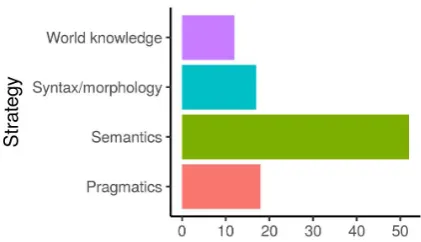
Figure1shows a histogram of minimal pairs by strategy in our submission.
2.1 Morphological and Syntactic Strategies
Figure 1: Number of submitted test pairs by strat-egy.
does in our edited version of the sentence precisely because not imposes a co-occurrence restriction on the VP rather than vice versa. Moreover, ex-cept in sentence-final emphatic cases,notimposes linear order restrictions, appearing prior to the VP.1 Although there is some dialectical variation, our edited version of the sentence that uses quite without negation is slightly degraded, frequently judged as archaic or pretentious, and would also receive some level of additional phonological em-phasis on quite, which is unavailable from text alone.2By contrast,not quiteis a common expres-sion arguably far less subject to judgment varia-tion.
(1) - In the structure of his screenplay Ross has taken a risk, and he hasnotquite brought it off.
+ ‡In the structure of his screenplay Ross has taken a risk, and has quite brought it off.
Comparatives also impose co-occurrence restric-tions, subcategorizing for both an object to be compared and another to be compared to. In the literature on comparatives, the -er morpheme is often taken to affect scopal relations beyond its surface position; moreover,-eris taken to be anal-ogous tomorein its semantics and to likewise sub-categorize for a(n expression of) degree (Kennedy,
1
Compare with an emphatic case, which is also usually accompanied by emphatic phonological stress on the expres-sion of negation:
He quite brought it off, not!
2
By dialectical variation we have in mind the differences between e.g., certain American and Canadian dialects of En-glish, as opposed to British dialects, for which some of the present authors have personal attestation of such sorts of ut-terance.
2002;Bhatt and Takahashi, 2011). Nonetheless, the present case is still morphological insofar as it is the distribution of -er, as opposed to less, that distinguishes the members of the pair—the former must morphologically compose with an-other expression, the latter need not.3 Removing an adjective for the morpheme to compose with is then predicted to produce different corresponding semantic–and consequently sentiment—effects, as in(2):
(2) + School of Rock made me laugh
harderthan any movie I’ve seen this year.
– ?School of Rock made me laughless
than any movie I’ve seen this year.
Finally, we introduced negation morphologically, by the addition of derivational morphemes, as in
(3)and(4):
(3) + [A] great big ball of entertainment ... – ‡[A] great big ball of
anti-entertainment ...
(4) + A remarkably convincing examina-tion of heroism, hero worship, and the seductive allure of villainy.
– ‡A remarkably unconvincing exami-nation of heroism, hero worship, and the seductive allure of villainy.
We hypothesized that minimal edits to these constructions could introduce semantic scope res-olution difficulties for NLP systems and cause them to mis-classify the overall sentiment. Our in-tuition is that NLP applications can perform senti-ment analysis reasonably well on the original sen-tences. By only editing words which carry seman-tic operators, a sentiment analysis system with no model of semantics or the scope of semantic op-erators would be unable to capture the change in sentiment.
3Compare:
*School of Rock made me laugh lesser than any movie I’ve seen this year.
School of Rock gave me fewer laughs than any movie I’ve seen this year.
2.2 Semantic Strategies
Semantic edits are those that affect the truth con-ditions of the expression. One might object that all of the examples in the other strategies have a semantic component.4 This is true, but our semantics-specific strategy targets semantic infor-mation that is independent of the morphology or the syntax of the expressions, while the other strategies explicitly exploit morphological and se-mantic information that may e.g., alter scope in-formation.
Most edits involving semantic changes altered the sentiment by introducing or modifying an op-erator that is not straightforward negation, such as too, enough and only. Since these words shift a sentiment’s polarity without altering the rest of the sentence, we hypothesized that sentiment analysis systems that are not sensitive to these shifts would mislabel sentences with these edits:
(5) – Aiming to join the Jerry Bruck-heimer/Michael Bay school of Amer-ican movie war games, Stealth is just
toodumb to make the grade.
+ †Aiming to join the Jerry Bruck-heimer/Michael Bay school of Amer-ican movie war games, Stealth is just dumbenoughto make the grade.
Another strategy that shifts sentiment polarity without modifications to the original sentence in-volves embedding clauses or predicates under var-ious semantic operators. In(6), for example, em-bedding the original clause under telldiminishes the author’s commitment to that clause. Further, addingI simply can’t see whyreverses the positive sentiment of that original clause.
(6) + An exceptional science fiction film. – †Many have told me this isan
excep-tional science fiction film, but I sim-ply can’t see why.
In(7), changing the modalcould toshouldsubtly reverses the sentiment.
(7) – This quirky, snarky contemporary fairy tale could have been a family blockbuster.
+ †This quirky, snarky contemporary
4This also goes some way to explaining the success of the
semantic strategies in general, since they are in part exploited by the other strategies.
fairy tale should have been a family blockbuster.
In(8), we embedded the verb phrase from the orig-inal sentence underkeep trying, thus implying that the event described by the complement ofkeep try-inghas not happened.
(8) + The two featured females offset these distractions by having so much appar-ent fun that it becomes contagious. – ‡The two featured femaleskeep
try-ing tooffset these distractions by hav-ing so much apparent fun that it be-comes contagious.
Finally, some edits were purely lexical and thus belong to the domain of lexical semantics. In these cases, a single word or multi-word expression car-rying the sentiment was changed, as in(9)where we used an antonym.
(9) – This movie plays like they were read-ing [Roger Ebert’s] little movie glos-sary and they took every cliche in there.
+ ?This movie plays like they were reading [Roger Ebert’s] little movie glossary and they avoided every cliche in there.
In some cases where the genre of the film was mentioned, we simply changed it. Since differ-ent genres are intended to have differdiffer-ent effects, what counts as positive and negative depends on the genre of the movie. For instance, in(10), the description of the experience of the film does not match the intended effects of a romantic comedy, but it does match those of a horror film.
(10) – The Break-Up, a grim excuse for a romantic comedy, is basically an hour and 45 minutes spent in the company of two unpleasant peo-ple during a miserable time in their lives.
+ †The Break-Up, a grimly com-pelling horror film, is basically an hour and 45 minutes spent in the company of two unpleasant peo-ple during a miserable time in their lives.
genre is a world knowledge strategy, since the sen-timent of these sentences depends crucially on un-derstanding the lexical meaning of the word that indicates the genre, we classify genre manipula-tion as a semantic strategy.
2.3 Pragmatic Strategies
Pragmatic strategies make use of inferences which go beyond the literal compositional meaning of the words, relying on knowledge of general prin-ciples of human communication, butnoton extra-linguistic and contextual knowledge. Since most NLP applications lack the information necessary to make use of pragmatics as robustly as humans do, we exploited a variety of pragmatic principles to either create or convey an impression of sar-casm. In the simplest case, we used scare quotes to convey sarcasm, changing the sentiment from positive to negative, as in(11).
(11) + Russell is terrific as coach Herb Brooks.
– ?Russell is “terrific” as coach Herb Brooks.
This seemingly simple manipulation actually proved quite difficult for the builder systems. Both pairs we submitted that used this strategy broke all six builder systems.
In other examples, we created Gricean conver-sational implicatures (Grice,1975). For instance, our constructed sentence in(12)flouts the Gricean maxim of quantity by providing too little infor-mation, implicating that a more informative state-ment praising the film could not be made because it would be false, and violate the maxim of quality. While there’s nothing overtly negative in our con-structed sentence in(12), it nonetheless conveys a negative sentiment.
(12) + I think it’s a sweet film. – †I think it’s a film.
Our edited sentence in(13)flouts the maxim of re-lation by providing information that is not relevant in a movie review, implicating that a relevant, pos-itive statement could not be made because it would be false (again violating the maxim of quality).
(13) + The performances are uniformly superb.
– ?The marketingwas uniformly su-perb.
A final pragmatic strategy involved cases where two phrases were conjoined with but. Often the sentiment of the second conjunct is also the sen-timent of the entire sentence. In such cases, re-versing the order of the conjuncts can also reverse the sentiment of the entire sentence, as in the con-structed example in(14).
(14) – The sentiments are right on the money, but the execution never quite filled me with holiday cheer.
+ ‡The execution never quite filled me with holiday cheer, but the senti-ments are right on the money.
2.4 World Knowledge Strategies
Most NLP applications have a limited understand-ing of world knowledge. To exploit this short-coming, we edited sentences so that world knowl-edge crucially affected the sentiment of the sen-tence. Arguably, the world knowledge strategies are pragmatic in nature since pragmatics is typi-cally taken to involve meaning that is contributed by context (Dawson and Phelan,2016) . However, we categorize these strategies separately since the inferences exploiting world knowledge strategies crucially rely on extra-linguistic knowledge.
Many of the sentences we edited using this strat-egy involved a comparison. We edited such sen-tences so that knowledge about the standard of comparison was crucial for determining the sen-timent. In some cases, the standard of comparison was a named entity, such as a film or an actor. In
(15), the negative sentiment arises as a result of the comparison to a Jim Carrey film, which is not intended to be creepy and calibrated:
(15) + Unfolds with the creepy elegance and carefully calibrated precision of a Dario Argento horror film.
– ?Unfolds with all the creepy ele-gance and carefully calibrated preci-sion of a Jim Carrey comedy film.
In other cases, the comparison was metaphorical, and we manipulated the sentiment by altering the nature of the comparison itself. For instance, un-derstanding that the constructed sentence in (16)
is negative requires knowledge about the weight of bricks.
Figure 2: Percent break (out of all submitted pairs) by system.
– †As pretty and light as abrickon the wind.
We also manipulated the perspective from which a particular sentiment is conveyed. If the review praises something as being valued by individuals that are held in poor regard, then the sentiment is likely to be negative, despite the apparent praise. For example, understanding that the second sen-tence in (17) is negative requires knowing that racists are (generally) not well regarded.
(17) + An inspiring story forteens and up. – ?An inspiring story forracists.
Since most NLP applications do not know, for ex-ample, that Jim Carrey films are not intended to be creepy and calibrated, that bricks are heavier than feathers, and that one should not blindly follow the recommendations of racists, we predicted that computers would show lower performance when analyzing sentiment in these cases.
3 Results
Following the shared task’s definition, a minimal pair is considered to “break” a builder system if the system makes a correct prediction for one member of the pair and an incorrect prediction for the other. The shared task also defines a weighted F1score for breaker teams as the F1 of the builder system on the original sentences of the blind test set, multiplied by the percent of builder sentences on which the breaker team made an incorrect pre-diction.
We submitted 99 breaker pairs in total. We obtained a mean percent break across systems of 72.6%,5and the mean weighted F1across systems
5I.e., the percent of all submitted pairs (99) that resulted
[image:5.595.77.285.65.186.2]Figure 3: Weighted F1 score by builder system on our 99 pairs.
Figure 4: Raw F1by system on original vs. edited examples
on our pairs was 28.67, placing us second in terms of this metric out of the four breaker teams in the shared task. Figures2and3shows percent break and weighted F1respectively by system. System 5 had the lowest percent break on our submitted test cases, while system 3 had the highest.
In figure4, we also present the raw F1scores by system on original vs. edited sentences. As is clear in the figure, our edits dramatically compromise classification accuracy across all systems.6 Note that while Teams 5 and 6 perform well in terms of percent break shown in Figure2, they have some of the lowest raw F1 scores shown in Figure 4. This suggests that the strong break rate scores for these systems are driven by pairs in which both items are incorrectly classified, which are not con-sidered to be breaks by the task definition.
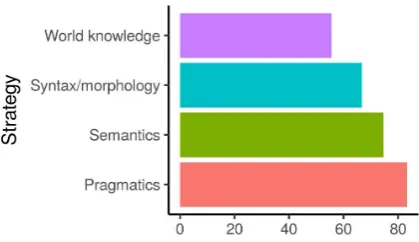
Figure5provides overall percent break by strat-egy. Our pragmatic manipulations had the highest percent break while our world-knowledge-based manipulations had the lowest.
in a break for that system as defined by the shared task. 6Although in principle breaker teams were allowed to
[image:5.595.312.519.242.362.2]Figure 5: Percent break (out of all submitted pairs) by strategy.
In addition to breaks, there were also pairs on which the systems got both sentences wrong. For the most part, these appear to have been “neu-tral” labels (neither negative nor positive) used by the neural network teams (systems 5 and 6). Since neutral sentiment is not part of the gold la-bel space, this appears to have been an error on the part of these systems. Note that as a consequence, the percent break for systems 5 and 6 was lower than it might have been otherwise.
We did not significance test differences in per-formance between systems or strategies because (1) the same items were shared across builder systems and were therefore not truly independent and (2) we were unsure whether our examples constituted a representative sample of naturally-occurring hard cases. Thus, while our findings are suggestive of the kinds of linguistic phenom-ena that pose difficulties for automatic sentiment analysis, we are unable to draw firmer conclusions based on this limited sample.
4 Ineffective test cases
In §2, we presented examples of test cases that tended to break the builder systems; here we briefly analyze theineffectivetest cases (i.e., test cases that most or all of the systems got right) in hopes of evaluating where our test cases failed to break systems and/or where existing systems tended to predict the correct sentiment.
As shown in §3, our test cases yielded a gen-erally high break rate across systems. In fact, of the 99 test cases we submitted, 72 broke more than half of the systems. Of the remaining 27 test cases on which at least half of the systems did not break, 12 were same-sentiment pairs (out of 12 total in our submission). In general these in-volved attempts to use one of the strategies
dis-cussed above to make a positive or negative clas-sification more difficult. However, we appear to have left enough residual evidence of the source sentiment in the edited cases to allow most sys-tems to make the correct decision. In addition, 8 of the 27 test cases involved lexical semantic ma-nipulations, and 7 involved world knowledge, sug-gesting that these kinds of nuances may not have been as difficult for sentiment analysis systems as we had hypothesized.
The four cases below failed to break any sys-tem:
(18) – Unlike Raiders of the Lost Ark, which this movie wants so desper-ately to be, there’s nothing here to engage the brain along with the eye-balls.
– This movie is not like Raiders of the Lost Ark, which this movie wants so desperately to be.
(19) – This is one of the worst movies of the year.
– This is not one of the worst movies of the year.
(20) – Big on slogans, but low on personal-ity.
– Low on personality, but big on slo-gans.
(21) + The less you know about this movie before seeing it — and you really should see it — the better.
– The less you know about this movie, the better.
5 Discussion
Our results, and those of the shared task in gen-eral, serve to highlight the distance which even sophisticated, modern sentiment analysis systems have yet to cover, particularly in terms of semantic and pragmatic analysis. Moreover, changes that broke the systems were often comparatively slight; just as image classification systems can be vulner-able to adversarial examples that look very simi-lar to the originals (Szegedy et al., 2014), senti-ment analysis systems may be fooled by changes to single words or morphemes. In many cases, of course, our strategies for constructing these exam-ples drew on previous knowledge about hard prob-lems, for instance in parsing (Kummerfeld et al.,
2012) and the detection of irony in text (Wallace et al., 2014). Nonetheless, a concrete set of ex-amples of these problems may help developers to create more robust systems in the future.
For sets of constructed examples like ours to be useful, they should contain enough instances of each construction to reliably indicate a system’s capabilities. Looking towards the future, we hope that the next iteration of the contest will use a larger test section so that more examples can be created. Many of our strategies targeted particular constructions or idioms (for instance, right-node raising or concrete metaphors), and it was difficult to create many instances of these due to sparsity in the 521-example dataset. We found it difficult to create 100 examples as requested; in fact, two other breaker teams (including the one with the winning F-score) created only half as many.
A related issue is that of naturalness. Although we tried to make our examples sound like real sen-tences from movie reviews, we had no empirical way to check how well we did. It is probably eas-ier to break NLP algorithms withunnaturalor out-of-domain examples; although we hope we have not done so, in future, we would like to find better ways to make sure.
Acknowledgments
We would like to thank Julia Papke, Ramon Reyes-Padilla, and Marten van Schijndel for con-tributing minimal pairs, as well as three anony-mous reviewers for helpful feedback and sugges-tions.
References
Rajesh Bhatt and Shoichi Takahashi. 2011. Reduced and unreduced phrasal comparatives. Natural Lan-guage&Linguistic Theory29(3):581–620.
Hope C. Dawson and Michael Phelan, editors. 2016. Language Files. The Ohio State University Press, 12th edition.
H. Paul Grice. 1975. Logic and conversation. In P Cole and J Morgan, editors,Syntax and Semantics 3: Speech Acts, Academic Press, New York, pages 64–75.
Christopher Kennedy. 2002. Comparative deletion and optimality in syntax. Natural Language& Linguis-tic Theory20(3):553–621.
Jonathan K Kummerfeld, David Hall, James R Cur-ran, and Dan Klein. 2012. Parser showdown at the wall street corral: An empirical investigation of error types in parser output. InProceedings of the 2012 Joint Conference on Empirical Methods in Natural Language Processing and Computational Natural Language Learning. Association for Computational Linguistics, pages 1048–1059.
Christian Szegedy, Wojciech Zaremba, Ilya Sutskever, Joan Bruna, Dumitru Erhan, Ian Goodfellow, and Rob Fergus. 2014. Intriguing properties of neural networks.ICLRhttps://doi.org/abs/1312.6199.