CHIMPANZEES (PAN TROGLODYTES): IMPLICATIONS
FOR THE EVOLUTION OF CUMULATIVE CULTURE
Sarah Jayne Davis
A Thesis Submitted for the Degree of PhD
at the
University of St Andrews
2017
Full metadata for this thesis is available in
St Andrews Research Repository
at:
http://research-repository.st-andrews.ac.uk/
Please use this identifier to cite or link to this thesis:
http://hdl.handle.net/10023/16297
This item is protected by original copyright
This item is licensed under a
Creative Commons Licence
The Context of Behavioural Flexibility in
Chimpanzees (Pan troglodytes): Implications
for the Evolution of Cumulative Culture
Sarah Jayne Davis
This thesis is submitted in fulfilment for the degree of
PhD at the
University of St Andrews
ACKNOWLEDGEMENTS
I would like to thank Andy Whiten for the endless support he has shown throughout my PhD. I’m extremely grateful to Andy for not only giving me the opportunity to pursue a PhD in a field I’ve been fascinated by for years, but for all the guidance and encouragement that he has given. I could not have asked for a better supervisor and can honestly say that Andy and his research are part of the reason I decided to come back to St Andrews and embark on this path.
I would like to thank all the care and research staff at the National Center for Chimpanzee Care, with a special thanks to Gillian Vale, who was an excellent mentor, a constant source of advice and encouragement, to Will Nyberg, who spent many hours repurposing and repairing apparatus, to Lisa Reamer, Susan Lambeth, Steven Schapiro, Mary-Catherine Mareno, Jenny Bridges, Mike Myers, Amanda Ott, Heather Webb and Erica Thiele. The dedication and love the NCCC staff have for the chimpanzees is truly reflected every day, and it was an absolute pleasure to work alongside both the staff, and of course, the chimpanzees. Many of whom became great friends.
I am grateful to Cristine Legare, who welcomed me into her lab when I was living in Austin, and who is not only a great person to work with, but a fantastic advisor. It was a pleasure to work with Cristine, Jennifer Clegg and Rachel-Watson Jones, with special thanks to Adam Alcott and Nicole Wen. I also thank Keith Haynes, Rob Mackinzie and Andy Burnley for their excellent craftsmanship in constructing chimp-proof apparatus.
I would like to thank my friends, especially Louise Campbell and Naomi McReynolds, who’ve been with me at St Andrews since 2008, and Sarah Pope, who first introduced me to the word Einstellung, and encouraged me to be more adventurous. Finally, I am so grateful to my family, and to my mother, who was always there for me. In fact, I only happened upon this PhD opportunity scrolling through the St Andrews Newsletter while bored in a waiting room as my mum underwent a root canal. Every cloud.
the record of work carried out by me, or principally by myself in collaboration with others as acknowledged, and that it has not been submitted in any previous application for a higher degree.
I was adm itted as a research student in September, 2013 and as a candidate for the degree of psychology in September, 2013 ; the higher study for which this is a record was carried out in the Univers ity of St Andrews between 2013 and 2017.
2. Supervisor’s declaration:
I hereby certify that the candidate has fulfilled the conditions of the Resolution and Regulati ons appropriate for the degree of Psychology in the University of St Andrews and that the candidate is qualified to submit this thesis in application for that degree.
3. Permission for publication:
In submitting this thesis to the University of St Andrews I understand that I am giving permission for it to be made available for use in accordance with the regulations of the University Library for the time being in force , subject to any copyright vested in the work not being affected thereby. I also understand that the title and the abstract will be published, and that a copy of the work may be made and supplied to any bona fide library or research worker, that my thesis will be electronically accessible for personal or research use unless exempt by award of an embargo as requested below, and that the library has the right to migrate my thesis into new electronic forms as required to ensure continued access to the thesis. I have obtained any third-party copyright
permissions that may be required in order to allow such access and migration, or have requested the appropriate embargo below . The following is an agreed request by candidate and supervisor regarding the publica tion of this thesis:
PRINTED COPY
a) No embargo on print copy ELECTRONIC COPY
a) No embargo on electronic copy
ABSTRACT AND TITLE EMBARGOES
An emb argo on the full text copy of your thesis in the electronic and printed formats will b e granted auto matically in the first instance. This emb argo includes the ab stract and title except that the title will b e used in the graduation b ooklet.
If you have selected an embargo option indicate below if you wish to allow the thesis abstract and/or title to be published. If you do not complete the section below the title and abstract will remain embargoed along with the text of the thesis.
a) I agree to the title and abstract being published YES b) I require an embargo on abstract NO c) I require an embargo on title NO
Please note initial emb argos can b e requested for a maximum of five years. An emb argo on a thesis sub mitted to the Faculty of Science or Medicine is rarely granted for more than two years in the first instance, without good justification. The Lib rary will not lift an emb argo b efore confirming with the student and supervisor that they do not intend to request a continuation. In the ab sence of an agreed response from b oth student and supervisor, the Head of School will b e consulted. Please note that the total period of an emb argo, including any continuation, is not expected to exceed ten years.
CONTENTS
CHAPTER 1: GENERAL INTRODUCTION
1. Culture, Cultural Transmission And Cumulative Culture 1
1. 1 Attributing culture 2
1. 2 Why have culture? 3
1. 3 Social learning mechanisms 3
1. 4 Social learning heuristics 6
1. 5 Cumulative culture 6
2. Culture in Humans 7
2. 1 Social learning mechanisms 8
2. 2 Social learning heuristics 9
2. 3 Cumulative culture 11
2. 4 Human culture: conclusion 12
3. Culture In Chimpanzees 12
3. 1 The encultured chimpanzee 14
3. 2 Can we rule out ecological and genetic explanations? 15
3. 3 social learning mechanisms 15
3. 4 Social learning heuristics 18
3. 5 Do chimpanzees’ possess culture? 19
3. 6 What is limiting cultural evolution in chimpanzees? 20 CHAPTER 2: BEHAVIOURAL FLEXIBILITY
1. Perseveration, Functional Fixedness and Set 23
1. 1 Functional fixedness and set 24
1. 2 Perseveration 25
2. Behavioural Flexibility And Executive Functions 26
2. 1 What do we mean by limited cognitive resources? 28
2. 2 Executive function in chimpanzees 28
3. Behavioural Flexibility in Chimpanzees 30
3. 1 Behavioural inflexibility 32
3. 2 Behavioural flexibility 38
3. 3 Summary 41
4. Conclusion
3. Analyses 46 CHAPTER 4: A NOT B
1.Introduction 53
1. 1 Inhibition in chimpanzees 53
1. 2 A not b: what causes perseveration? 54
2. Present study 55
2. 1 Methods 55
2. 2 Results 57
3. Discussion 62
3. 1 conclusion 63
CHAPTER 5: BIWAYS AND PITFALL 1. Introduction
1. 1 Behavioral inflexibility in humans and chimpanzees 67
1. 2 Cognitive accounts of behavioral inflexibility in humans 67
1. 3 Cognitive account of behavioral inflexibility in chimpanzees 68
1. 4 The present study 69
2. Biways: Study 1.1 70
2. 1 Study 1.1 methods 70
2. 2 Study 1.1 results 74
2. 3 Study 1.1 discussion 76
3. Biways: Study 1.2 76
3. 1 Study 1.2 methods 77
3. 2 Study 1.2 results 78
3. 3 Study 1.2 discussion 78
4. Pitfall: Study 2.1 79
4. 1 Study 2.1 methods 79
4. 2 Study 2.1 results 83
4. 3 Study 2.1 discussion 84
5. Pitfall: Study 2.2. 84
5. 1 Study 2.2 methods 85
5. 2 Study 2.2 results 86
7. General Discussion 89
7. 1 Habit formation and chunking 90
7. 2 Behavioral complexity and cumulative culture 90
7. 3 Conclusion 91
CHAPTER 6: SERIALBOX
1. Introduction 94
2. Experiment 1: Relinquishing a Highly Inefficient Solution 98
2. 1 Experiment 1: Methods 98
2. 2 Experiment 1: Results 101
2. 3 Experiment 1: Discussion 103
3. Experiment 2: Relinquishing a Highly Inefficient Solution 103
3. 1 Experiment 2: Methods 104
3. 2 Experiment 2: Results 105
3. 3 Experiment 2: Discussion 107
4. Experiment 2 Modifying, Inhibiting and Building on Existing Behaviours 110
4. 1 Experiment 3: Methods 110
4. 2 Experiment 3: Results 110
4. 3 Experiment 3: Discussion 112
5. General Discussion 113
CHAPTER 7: DISCUSSION
1. Summary of findings 115
2. Causes of suboptimal behaviour 117
2. 1 Explore versus exploit decision heuristics 117
2. 2 Explore versus exploit and executive functions 119
2. 3 Summary 122
3. Expertise and habit formation 123
3. 1 Summary 125
4. The development of cognitive control 126
5. The evolution of cognitive control 129
6. Conclusion 130
REFERENCES 134
CHAPTER 1: GENERAL INTRODUCTION
1. CULTURE, CULTURAL TRANSMISSION AND CUMULATIVE CULTURE
The unparalleled achievements and evolutionary success of humans is widely attributed to our ability for cumulative culture: to take the discoveries, behaviours and technologies of others and further building on these, to create complex reserves of socially heritable knowledge and technology. Broadly speaking, culture may be termed as “group-typical behaviour patterns shared by members of a community that rely on socially learned and transmitted information” (Laland & Hoppitt, 2003, pg151). Without accumulation, culture will be limited to simple behaviours which are within the innovative capabilities of at least some individuals (Tomasello, Kruger & Ratner, 1993; Tennie, Call, & Tomasello, 2009; Whiten, McGuigan, Marshall-Pescini, & Hopper, 2009). Such simple culture may confer survival or reproductive benefits over and above genetic endowment (Boyd & Richerson, 1985) but the ability to build upon, or ratchet up on (Tomasello et al., 1993), existing behaviours can often lead to substantial gains in productivity or efficiency (Boyd & Richerson, 1996). Whilst the ability to socially learn behaviours (defined as “learning that is influenced by observation of, or interaction with another animal (typically a conspecific) or its products” (Heyes, 1994, p. 207) may be common across taxa (Heyes & Galef, 1996; Hoppitt & Laland, 2013; Reader & Biro, 2010; Zentall & Galef, 1988) the ability to build on existing socially acquired behaviours is limited or absent in non-human animals. Seemingly, the most powerful form of this ‘second inheritance system’ (Whiten, 2005), cumulative culture, is uniquely highly developed in humans (Boyd & Richerson, 1996; Tomasello et al., 1993). This is most striking when we compare our culture to that of arguably the second most cultural species, our closest living relative, the chimpanzee (Pan troglodytes) (Whiten et al., 1999; Whiten, 2011).
Chapter 1 2
A large corpus of work examining the origins of culture utilises both modelling and the experimental study of agents in simulated environments. In these two kinds of virtual worlds, the emergence, evolution and adaptiveness of behaviours are tracked, and the ensuing fitness of the agents assessed. Models thus act to reconstruct the environments that select for the correlates of culture, such as particular social learning mechanisms and strategies. However, modelling is, by necessity, over-simplified; to capture the processes underlying the evolution of one trait, noise within the environment must be drastically reduced to allow the systematic investigation of how specific environmental variables impact upon selection. In reality, agents are faced with an extremely complex environment, with many variables likely impacting upon their behaviours. It is therefore important that through the study of animals who share varying degrees of relatedness to us, we can examine the selection pressures and cognition that promote the emergence and maintenance of adaptive correlates of culture within complex and relatively ecologically valid environments. Much of my thesis will draw on comparative methodology to examine the cognition and cultural capacities of one of our two most closely related primate cousins, the chimpanzee. Given that we have shared much of our ancestral past with chimpanzees, comparison allows us to determine shared characteristics that may have been present in our common ancestors, and potentially phylogenetically endowed. It may also help delineate the origins of inter-species differences which impact profoundly on complex cognition and cultural capabilities.
1.1 ATTRIBUTING CULTURE
& Matthews, 2010). In sum, culture may be thought of as the existence of multiple and diverse traditions and which are socially transmitted with a sufficiently high level of fidelity.
1.2 WHY HAVE CULTURE?
The cognition underlying the propagation and maintenance of culture is expensive, involving a substantial investment of resources (Isler & Van Schaik, 2014). However, the ability to learn from others may reduce or circumvent the costs of innovation, and endow some species with a ‘second inheritance system’ (Boyd & Richerson, 1985; Whiten, 2005, pg 52). Although behaviours may be transmitted through genetic inheritance, this system may be informationally limited (Enquist & Ghirlanda, 2007) and, in many circumstances, slow to facilitate adaptation to relatively rapid changes in the local environment (Boyd & Richerson, 1985). Whilst in stable environments, genetically guided behaviour alone may suffice, the ability to both innovate and socially learn can afford an individual an adaptive advantage to adjust and survive in more variable environments (Boyd & Richerson, 1985, 1995, 1996). Culture has thus been proposed to underlie encephalization in the most intelligent animals, with expensive socio-cognitive mechanisms affording the perpetuation and acquisition of cultural knowledge (van Schaik & Burkart, 2011; Whiten & Erdal, 2012; Whiten & van Schaik, 2007; Whiten & van de Waal, 2017). However, dependence on cultural knowledge can also be non-adaptive or maladaptive (Rogers, 1988), whereby, for example, a suboptimal variant may spread through a population via social learning processes. To optimise utility in an information rich environment, we must implement mechanisms and heuristics which guide our behaviour and decisions (Boyd & Richerson, 1995; Enquist & Ghirlanda, 2007; Laland, 2004).
1.3 SOCIAL LEARNING MECHANISMS
Social learning may be accomplished through various mechanisms, each likely involving differing levels of socio-cognitive complexity. When attempting to define a specific social learning mechanism, there is a plethora of definitions to be found within the literature. This issue has been addressed in depth elsewhere (e.g. Whiten, Horner, Litchfield, & Marshall-Pescini, 2004), so I will briefly operationalise social learning mechanism based on previous discussions.
Chapter 1 4
foraging site which individual A then picks up and through personal exploration, learns how to forage successfully. Further along the spectrum lies emulation, where the learner observes and replicates outcomes; A does not copy the actions performed by B to achieve their goal, but only the end result of those actions. Although this social learning mechanism may result in the re-enactment of processes that the original practitioner (B in this case) was using to achieve the same outcome (Caldwell & Millen, 2009; Zwirner & Thornton, 2015) A will be effectively re-inventing (or reverse engineering) the process through personal exploration and trail-and error learning. However, when tasks are not constrained in the number of different ways an outcome can be realised, it is very likely that much variation will be seen in the processes utilised by individuals in a population (Caldwell, Schillinger, Evans, & Hopper, 2012; Derex, Godelle, & Raymond, 2012). This variation typically means that behaviours will be transmitted through a population with relatively low fidelity, which is considered a constraining factor on the spread, maintenance and advancement of complex culture (Enquist, Strimling, Eriksson, Laland, & Sjostrand, 2010; Galef, 1992; Lewis & Laland, 2012; van der Post, Franz, & Laland, 2017; Tomasello et al., 1993). Much information may be lost if the process underlying the outcome of interest is not replicated, and the behaviour is thus unlikely to be maintained in a population (Enquist 2012). In turn this affords less opportunity for the behaviour to be modified in a cumulative fashion (Lewis & Laland, 2012 but see Youn, Strumsky, Luis, Bettencourt & Lobo, 2015 who found use of a variant in modern humans was not correlated with how long that technology has been registered in the patent system); that is, modified to become more productive or efficient (Flynn, 2008). However, even if accumulation was to occur, this more productive or efficient innovation is unlikely to spread within the population due to a lack of process copying. As behaviours become increasingly more complex, they become difficult to re-invent and are practiced by only the innovator, disappearing from the population once the innovator emigrates or dies.
difficult to remember every witnessed component of an observed behaviour, but the learning environment may be too noisy to allow extraction of all the relevant information needed (Brass & Heyes, 2005; Nehaniv & Dautenhahn, 2002; Subiaul & Schilder, 2014). The observer may thus rely on either repeated learning attempts (Enquist et al., 2010; Whiten, 2015) incorporating both social and trial-and error learning (Boyd & Richerson, 1996; Galef, 2015; Henrich & McElreath, 2003; Whalen, Cownden, & Laland, 2015), and/or pedagogical cues from the practitioner, signalling the need to learn, and the salience of particular actions (Csibra & Gergely, 2011). This sensitivity to pedagogy, as opposed to an ability to imitate per se, has been suggested to account for the high levels of fidelity in the learning and practice of complex human behaviour (Castro & Toro, 2014; Csibra & Gergely, 2011; Morin, 2016), and is often synonymously used with ‘teaching’. Caro & Hauser (1992) attribute teaching when i) individual B changes its behaviour in the presence of individual A; ii) B receives no benefit from their own behaviour; iii) A acquires relevant knowledge that it otherwise would not have acquired or acquires this knowledge at a faster rate than would otherwise be expected (a much broader view has been offered by Kline, 2014). However, teaching, while perhaps the most faithful and effective form of transmission (Morgan et al., 2015), reflects the sophisticated psychology of the teacher, whilst relying on potentially quite simple learning mechanisms within the learner (Thornton and Katherine McAuliffe, 2006; Franks & Richardson, 2006; Hoppitt et al., 2008).
1.4 SOCIAL LEARNING HEURISTICS
Although social learning capabilities are a vital prerequisite for culture, they are not sufficient to produce culture in itself. Indiscriminate social learning is unlikely to be adaptive in the long run and can lead to sub-optimal, if not maladaptive, behaviours (Boyd & Richerson, 1995; Enquist & Ghirlanda, 2007; Giraldeau, Valone, & Templeton, 2002; Mesoudi, 2011; Rogers, 1988). It is for this reason that social learning is most likely under the influence of certain biases (or strategies) such as from whom to copy and when to do so (Boyd & Richerson, 1995; Laland, 2004). Although there are a host of potential social learning biases that are employed across the animal kingdom (Rendell et al., 2011), I will here focus on those which have received much attention in developmental, comparative and model based investigations.
Chapter 1 6
behaviours within populations, creating community specific behavioural patterns (Boyd & Richerson, 1985). Whilst the former of these two functions suggests a learning strategy employed by naïve individuals to avoid the costs of individual learning, the latter function may emerge from a desire to conform, and thus serves some social function (Deutsch and Gerard, 1955).
Other biases that may be employed, although not mutually exclusive of majority biases, include copy-successful-individuals or copy-the-most-successful behaviour (Henrich & Boyd, 2001; Nakahashi et al., 2012). The former may be linked to prestige or dominance biases whereby the most prestigious or dominant individual is used as a model from whom others copy (Henrich & Gil-White, 2001; Laland, 2004). Intuitively, it would make sense to copy such individuals as their success may be an indicator of specialised knowledge (e.g. Mesoudi, 2008; Mesoudi & Brien, 2008); however, it is not always clear why an individual is successful and this could potentially lead to pitfalls (Laland, 2004; Mesoudi, 2011). Alternatively, one could employ the copy-the-most-successful-behaviour strategy which, although it avoids the incidental spread of sub-optimal behaviours and may be highly adaptive, would require the observer to evaluate behavioural pay-offs, a cognitively sophisticated capability (Laland, 2004; Nakahashi et al., 2012; Schlag, 1998).
As highlighted above, the types of learning biases employed may have a major impact on the cultural evolution of a species (Caldwell, 2015; Enquist & Ghirlanda, 2007; Laland, 2004; Marshall-Pescini & Whiten, 2008; Mesoudi, 2015; Schlag, 1998). For example, Mesoudi (2011) found that a strategy that biased learning towards copying the most successful behaviour led to the greatest levels of cultural complexity.
1.5 CUMULATIVE CULTURE
2009). It is because of this increasing complexity that imitation (and/or teaching) is necessary to allow other individuals to adopt the additional processes resulting in cumulative behaviours or artefacts. Cumulative culture is thus dependent on a multitude of factors: innovative capability, high fidelity social transmission, appropriate social learning mechanisms, and ultimately, the behavioural flexibility needed to relinquish, modify or build upon behaviour.
2. CULTURE IN HUMANS
As our ancestors moved out of their ancestral habitats, selection likely favoured the evolution of the psychology needed to occupy what has been dubbed the “socio-cognitive niche”, and ultimately culminated in the hunter gatherer way of life (Tooby & Devore, 1987; Whiten, 1999a). The transition to hunting and gathering would have required not only selection for increased cognitive capabilities, but also the advancement of the social capabilities beyond that of our shared ancestors with extant great apes, likely inclusive of heightened group co-operation and tolerance, along with theory of mind advancement (Herrmann, Call, Hernández-lloreda, Hare, & Tomasello, 2007; Whiten & Erdal, 2012).
The trajectory of the socio-cognitive path our ancestors carved is evidenced by the artefacts they left behind (see Whiten, 2015 for a recent review). Historically, the manufacture of stone tools dates back to around 2.5 million years ago (Semaw et al., 2003), or potentially even further (de la Torre, 2011; Harmand et al., 2015; Lewis et al., 2016; McPherron et al., 2010). Although these Oldowan artefacts show stone knapping skill beyond that of other great apes there is little evidence of further accumulation in technology until the Acheulean phase some 1.6 million years ago (Stout, 2011). Although in relatively recent years our species has grown exponentially in population size and now exhibits a vast amount of cultural behaviours and artefacts, it must be considered that most of humans’ evolutionary history took place before the advent of agriculture and settlements; it is the hunter-gatherer way of life that our genetic systems have primarily evolved to perpetuate and it is this endowment that we still likely capitalise on today.
Chapter 1 8
literature on the extent to which genes and developmental processes affect the maturing phenotype, from a gene-culture perspective, it seems likely that modern humans, born amongst the most altricial of primates, inherit a unique potential to learn complex knowledge (Herrmann et al., 2007; Hopkins, Russell, & Schaeffer, 2014; van Schaik & Burkart, 2011; Karmiloff-Smith, 1998; Wobber, Herrmann, Hare, Wrangham, & Tomasello, 2014). Thus whilst many animals must rely on domain-specific cognition that emerges in relatively deterministic developmental processes, humans are born with the ‘expectation’ that they will be culturally inducted, acquiring extraordinarily complex knowledge and technology throughout development (although see Cosmides & Tooby, 2013).
The extent of such preparedness of the human mind for culture is unclear. Evidence from atypical developing populations suggests that emerging modularity in the adult brain is underlain by what may originally have been domain-general mechanisms (or building blocks), which were then co-opted by many brain functions (Baron-Cohen, 1998; Karmiloff-Smith 2009a, 2009b). This indicates that modularity emerges over development and is likely heavily influenced by the developmental environment. This is most vividly shown by cases of extreme neglect (such of that of Genie), where children show severe learning difficulties not easily explained through any genetic abnormality. Cross-cultural comparisons between developing children also hint at differences between the social-cognition of human populations, and warn on the pitfalls of ascribing culturally relevant behaviours as universal in humans (Berl & Hewlett, 2015; Clegg & Legare, 2016; Legare & Nielsen, 2015; Nielsen & Tomaselli, 2010). Whilst it may be that humans are born with some basic preparedness, it should be considered that from almost the moment humans are born, they are engaged by cultural agents who interact with them in ways atypical of any other species, marking the beginning of their enculturation. This makes it very difficult to disentangle the extent to which gene-culture co-evolution has prepared the brain to acquire culture through a propensity to employ certain social learning mechanisms and heuristics (Tomasello, 2016), or through the potential to allow the cultural environment to reliably influence the development of these skills (Barrett and Kurzban, 2006).
2.1 SOCIAL LEARNING MECHANISMS
Imitation is apparent in human social learning from an early age, with preverbal infants showing imitative abilities (Gergely, Bekkering, & Király, 2002). With development, the degree of imitation exhibited by children (and adults) becomes even more pervasive such that is has been termed ‘overimitation’ (Horner & Whiten, 2005; McGuigan, Makinson, & Whiten, 2011; Nielsen & Tomaselli, 2010). When presented with novel tasks and shown how to solve these by adults, children are prone to copying not only relevant behaviours demonstrated but also functionally redundant ones as well, despite task transparency. In attempting to understand why children employ this apparently inefficient and ostensibly maladaptive learning strategy, it has been proposed that overimitation might be an extension of a typically adaptive learning process which allows the acquisition of complex culture without high cognitive demands (Kenward, Karlsson, & Persson, 2011; Lyons, Damrosch, Lin, Macris, & Keil, 2011; Lyons, Young, & Keil, 2007; McGuigan, Gladstone, & Cook, 2012; McGuigan et al., 2011).
Linked to high fidelity transmission, and children’s impressive acquisition of knowledge and skills, is ‘natural pedagogy’ (Csibra & Gergely, 2011). These authors noted that children are very sensitive to cues which indicate an opportunity (or expectation) that they should attend to and learn the actions of another. This substantially reduces the noise in the learning environment, allowing more targeted learning. Notably, reports from modern hunter-gatherers suggest that transmission of skills relies heavily on observational learning, with the inference that natural pedagogy may guide the learning process (Hewlett, Fouts, Boyette, & Hewlett, 2011; Kline, 2014). However, in many countries, as children get older, they are in modern times provided with a ‘formal education’, where they are actively taught by members of the community. Given the opaque and increasingly complex cultural world we occupy, explicit teaching may be necessary to ensure that we acquire skills such as reading, writing and mathematics, inherent to modern Western culture.
2.2 SOCIAL LEARNING HEURISTICS
Social learning heuristics are the rules, biases and strategies used by the learning individual to guide when, and from whom to copy (Boyd and Richerson, 1985; Laland, 2004). Given the complexity and vastness of human cultural behaviour, we expect both modern humans, and our ancestors to have employed adaptive learning heuristics.
Chapter 1 10
projectile points, Mesoudi & Brien (2008) found that the pattern of transmission suggested in Nevada’s archaeological record was most likely generated from a copy-successful-individuals social learning bias. It was found that such a bias offered significant benefits over individual learning (Mesoudi & Brien, 2008) in environemnts were there were no costs to social learning, when participants flexibly switched between social and asocial learning, and where there existed several optimal projectile designs (Mesoudi, 2008). This is supported by Chudek, Heller, Birch and Henrich, (2012) who found children had a preference for more prestigious models (see also Wood, Kendal, & Flynn, 2012), as well as by Muthukrishna, Shulman, Vasilescu and Henrich (2014), who found that when multiple models existed in the population, individuals preferentially copied the most successful model’s aretefact design. Interestingly though, participants here (Muthukrishna et al.) were observed to additionnally copy some aspects of other, less-successful models’ behaviours, indicating that individuals may have been combining elements of multiple designs to generate their own novel ones (Derex et al., 2012; Enquist & Ghirlanda, 2007; Morgan, Rendell, Ehn, Hoppitt, & Laland, 2012).
Human social learning and decision-making appears to be heavily suscepetible to majority influences (Asch 1956), and interestingly Tomlin, Nedic, Prentice, Holmes and Cohen (2013) found that neural activity in the brain increased in areas typically associated with response uncertainty when human adults detected their behaviour differed from others. In line with models which predict the evolution of majority influences in virtual environments potentially reflective of those of our ancestors (e.g. Henrich & Boyd, 2001), experiments with children also suggest that we may have a culturally and/or genetically endowed tendency towards conformity (that is, adopting the views or behaviours of the majority despite contradictory personal information) (Haun and Tomasello (2011). That children are engaging in conformity as opposed to majority biased learning (that is, expressing responses based on perceived social expectations as opposed to responses based on true personal belief) is supported by Corriveau and Harris (2010), who found that children showed discrimination in the adoption of adult responses on a task depending on the consequences of their answers: no child adopted the incorrect adult response if the result was the drowning of a toy rabbit due to an inappropriately sized bridge. This is in line with Morgan, Rendell, Ehn, Hoppitt and Laland (2012), who found that conformity was also context dependent in adults.
et al., 2012; Whiten et al., 2004). It may be that this diverse repertoire, as opposed to reliance on any one social learning mechanism or rule, afforded our ancestors the capacity to maintain and build on their knowledge and technology.
2.3 CUMULATIVE CULTURE
The high fidelity social transmission processes of humans, along with the social learning strategies we employ, are thought to be responsible for allowing us to continually build upon the innovations of previous generations (Boyd & Richerson, 1996; Laland, 2004; Lewis & Laland, 2012; Mesoudi, 2011). When and how our ancestors acquired the ability to ratchet is still unclear. Although Oldowan technology exceeded the capabilities of extant wild great apes (cf Toth, Schick, Savage-Rumbaugh, Sevcik & Rumbaugh, 1993), it was not for another million years that we began to see significant advances in technology, with the advent of Acheulean technology. Yet still, it was not until around 160,000 to 40,000 years ago that we really see an explosion, at an unprecedented speed, in cumulative culture (e.g. Bar-Yosef, 2007; d’Errico & Stringer, 2011). It is likely that before this time, our ancestors, although perhaps capable of simple ratcheting, had reached some technological ceiling. What, then, changed?
Chapter 1 12
opportunities to learn from innovators, via increasing the pool of innovators available (e.g. Henrich, 2004), as well as to share and collaborate on knowledge and technology (Tomasello, Melis, Tennie, Wyman, & Herrmann, 2012). Recent work suggests that partially connected networks, perhaps typical of our nomadic ancestors (Hill et al., 2014), increase the variation in problem solving strategies (Derex, Feron, Godelle, & Raymond, 2015). In tightly connected groups, once one idea is converged on, this idea may be perfected to a local optimum; however, this reduces the likelihood of continued exploration to find the best possible solution, or global optimum (Mason, Jones, & Goldstone, 2008; Selman, Kautz & Cohen, 1994). In loosely connected groups, there is less efficient transfer of information, such that groups are likely to converge on different local optimums. When these groups come together, through social transmission and collaboration, solutions may be moved closer towards the global optimum (Derex & Boyd, 2015; Lazer & Friedman, 2007 but see Mason & Watts, 2012), either through abandonment of sub-optimal solutions in favour of better ones, or through combining different components of each group’s local solution (Boyd, Richerson, & Henrich, 2011). Indeed, multiple lines of evidence suggest that recombination of solutions from multiple models may be a key driving force behind cultural advancement (Derex et al., 2015; Youn et al., 2015). As such, demographic changes, increasing access to innovators, as well as increasing collaboration amongst different groups of hominids, could explain the explosion of cumulative culture seen in modern humans (Derex et al., 2013; Pradhan et al., 2012).
2.4 HUMAN CULTURE: CONCLUSION
Our ability to maintain, propagate and continually build on complex knowledge, skills, and technology has afforded our species with a highly advanced ‘second inheritance system’ (Whiten, 2005, pg 52). Our ability for cumulative culture has allowed us to far exceed the general intelligence of any other known species, to cultivate resources in an unprecedented way, and to modify our environment to fit our needs and convenience.
While this chapter has so far explored the basic facets of human culture, and speculated on how and why culture emerged in our ancestors, I have thus far commented little on the growing research that suggests social learning, and culture itself, are far from unique to humans ( Whiten, 2017 for a recent review). While correlates of culture can be observed across a wide range of animals, the remainder of this thesis will focus on what we can learn from an animal with whom (along with the bonobo) we share our most recent animal ancestry: the chimpanzee.
Attributing behaviours to culture in non-humans is often controversial. Some have argued that even if we accept that culture exists in other animals, these behaviours may be dependent on different governing processes and any similarities with human culture may be superficial (Galef, 1992). For example, it has been advocated that human culture is primarily transmitted through high fidelity social learning mechanisms, which may be dependent on uniquely complex cognitive capacities, such as theory of mind and an understanding of the goals of agents (Tomasello et al., 1993; Galef, 1992). Other species capable of social learning are typically thought to use lower fidelity social learning mechanisms such as emulation or enhancement, which constrain the spread and maintenance of cultural behaviours (Enquist et al., 2010; Lewis & Laland, 2012), making animal culture qualitatively different from our own. Further, even if a species is capable of high fidelity social transmission, humans may be unique in their reliance on certain social learning heuristics, such as copying the most successful behaviours or conspecifics, or being susceptible to majority influences.
It is perhaps by no coincidence that amongst the strongest of the candidate species to exhibit culture is one of our closest living relatives, the chimpanzee (Whiten et al., 1999). It may even be parsimoniously concluded that if chimpanzees display similar cultural correlates with us, or indeed any similarity with us in terms of cognition, developmental trajectories or brain functioning, that these may have been shared with, and potentially inherited in some form, from a common ancestor. The extent to which that form is genetically constrained in nature, or an inherited potential that with the right developmental environment, reliably emerges, remains to be seen. Importantly, comparative research with chimpanzees allows us to investigate the extent to which social and/or cognitive differences may have impacted upon our cultural capabilities, and specifically why humans may be unique in our capacity for cumulative culture; whilst evidence for culture in non-human species continues to grow, there are few candidate examples of cumulative culture outside of humans’ distinctively complex achievements.
Chapter 1 14
Horner & Whiten, 2005), these observations are often made of chimpanzees in captive conditions. This has led some to argue that when chimpanzees do display similarities with humans, it is most likely because they have been encultured by humans, and as such, their behaviour or cognition is not representative of a wild chimpanzee (Tomasello & Call, 2004). Additionally, although many accept that chimpanzees have group-specific behaviours, some have challenged whether these are underlain by culture, and argue that genetic or ecological underpinnings cannot be ruled out (Humle & Matsuzawa, 2002; Koops, McGrew, & Matsuzawa, 2013; Langergraber & Vigilant, 2011). Finally, unlike human culture, chimpanzees do not appear to possess significant cumulative culture. I will address each of these issues, and conclude that although there are differences between chimpanzee culture and our own, chimpanzees do possess culture, but their ability for cumulative culture is limited. I will discuss the multi-faceted reason as to why this is, before homing in on one major limiting factor: chimpanzees are behaviourally inflexible.
3.1 THE ENCULTURED CHIMPANZEE
shared socio-cognitive abilities are the studies which do focus on ‘enculturated’ chimpanzees, those who have been raised in environments as similar as possible to that of a human child. As Boesch (2007) highlights, interspecies comparisons should only be made when the participants have faced the same “ecological-imprint”. Given that many developmental theories stress the importance of experience dependent organisation of the human brain, and ensuing cognitive functions (Baron-Cohen, 1998; Bishop, 1997; Karmiloff-Smith, 1998; 2009), it would seem unjust to call into question what studies on captive chimpanzee populations can really tell us about the origins of our own capabilities whilst selectively ignoring the effects of our own even more potent enculturation processes on children.
3.2 CAN WE RULE OUT ECOLOGICAL AND GENETIC EXPLANATIONS FOR REGIONAL DIFFERENCES IN BEHAVIOUR?
The attribution of culture is not only dependent on sufficiently advanced social learning mechanisms and strategies, but also through the ruling out of both ecological and genetic explanations of behaviour (Laland & Hoppitt, 2003; Laland & Janik, 2006; Langergraber et al., 2011). As van Schaik (2012) highlights, behaviours that are shared within communities but divergent between communities, may be due to independent but convergent genetic predispositions and/or behavioural plasticity in response to ecological cues. Whilst there are those who argue that genetic explanations cannot be ruled out when comparing chimpanzee populations (Langergraber & Vigilant, 2011; Langergraber et al., 2011), there is evidence to suggest that genetic explanations do not seem to be able to explain divergent behaviours between populations (Gruber et al., 2011; Luncz & Boesch, 2014; Luncz, Mundry, & Boesch, 2012). However the ruling out of subtle ecological causes of behaviour is perhaps more difficult (Humle & Matsuzawa, 2002; van Schaik, 2012a). That being said, there is evidence to suggest that at least some behaviours are also not explicable in terms of ecological influences alone and that some behaviours may be shaped by both ecological and cultural processes (Humle, Snowdon, & Matsuzawa, 2009; Koops et al., 2013); for example, migrating chimpanzees will sometimes adopt the local nut-cracking technique of their new group, relinquishing their own variant despite availability of the appropriate tools (Luncz & Boesch, 2014; Luncz et al., 2012). Overall, it would appear that an account of behaviour that incorporates culture may have more explanatory power than a genetic or ecological one alone.
Chapter 1 16
chimpanzees imitating the somewhat redundant method of using a liana to scratch their backs (instead of their hands) after observing a paralysed adult male using this technique to overcome his handicap.
Imitation, although thought to be one of the primary modes of cultural transmission in humans, is not the only high fidelity transmission mechanism available to us: we also teach. The occurrence of teaching in chimpanzees is limited and controversial. It has been suggested that young apes are already well equipped with other forms of social learning that negate the need for teaching (Hoppitt et al., 2008; Whiten, 1999b). That being said, there have been some putative cases of rare teaching displays in the wild; for example, Boesch (1991) reports cases in which a mother demonstrates correct technique after having noticed her infant struggle with nut cracking (see also Musgrave, Morgan, Lonsdorf, Mundry, & Sanz, 2016). Perhaps whilst not routine educators, some apes may have the socio-cognitive capabilities required for teaching (Whiten 1999b). Although such teaching may not fall strictly within Caro and Hauser’s (1992) definition of teaching, Byrne and Rapaport (2011) have argued that it is this intentional, targeted teaching that is most insightful in understanding the evolution of teaching in humans.
Another consideration is that chimpanzees do not rely on social information as much as humans do ( van Leeuwen, Call, & Haun, 2014 but see Clement, Koenig, & Harris, 2004; Ma & Ganea, 2010). For example, Horner and Whiten (2005) showed that while chimpanzees can copy actions, they chose not to do so when they could instead emulate. Children on the other hand, copied wholesale all relevant and ostensibly irrelevant actions. This may due to childrens heavy reliance on social information (cf Haun, Rekers, & Tomasello, 2014), with children potentially employing an adaptive learning rule, such as copy-all/refine later (Horner and Whiten, 2005). This reliance/over reliance on social information to guide actions may be linked to children’s sensitivity to pedagody (discussed in section 2.1). Chimpanzees may not be as susceptible to cues signalling an opportunity to learn as children are (although see Buttelmann et al., 2007), and are thus faced with a far noisier learning environment. If this is the case, the ability to parse relevant actions from social information may be harder for chimpanzees, which may explain that even if they are capable of imitation, emulation may be a more reliable form of learning.
Chapter 1 18
humans having a greater tendency to not only use social information (Haun et al., 2014; van Leeuwen et al., 2014), but to predominantly rely on high fidelity mechanisms, such as imitation.
3.4 SOCIAL LEARNING HEURISTICS
The strategies employed by chimpanzees with respect to when and from whom they learn may also reveal important inter-species differences. Given the importance of majority based learning in the maintenance of cultural behaviours (Henrich & Boyd, 1998), it may be of significance that chimpanzees do appear to exhibit conformity to what may be perceived of as group norms, both within captivity (Bonnie, Horner, Whiten, & de Waal, 2007; Hopper, Schapiro, Lambeth, & Brosnan, 2011; Whiten, Horner, & de Waal, 2005) and in the wild (Luncz & Boesch, 2014; Luncz et al., 2012). For example, migrant females have recently been observed to relinquish their established nut cracking technique in lieu of a variant used by their new group to (Luncz & Boesch, 2014). However, this view of the conforming chimpanzee is not unchallenged (Vale et al., 2017; van Leeuwen & Haun, 2013); for example, when looking at the behaviour of a ‘minority’ group of chimpanzees after being exposed to an alternative ‘majority’ behaviour, van Leeuwen, Cronin, Schütte, Call and Haun (2013) found no evidence of conformity on a token deposit task. Although this may appear at odds with prior findings, it is worth noting that the behaviour of the majority was essentially the same technique as that of the minority. The majority either deposited tokens in a spatially separate location, a dimension within foraging where we might expect some necessary variability in group living animals who compete for resources, or the majority used visually different types of tokens. The visual differences between tokens may have been quite arbitrary to chimpanzees, who may not initially sub-categorise different types of tokens. This task may also be considered to be quite simple in nature. As such, a lack of conformity may draw parallels with findings in humans which suggest conformity is more likely to be seen on difficult tasks (Morgan et al., 2012). Also of note is that in humans the strength of conformity is positively correlated with the degree of consensus amongst demonstrators (Morgan et al., 2012). As chimpanzees in the minority group were exposed not only to majority behaviours but also the token solutions of other minority group members, we might expect a weakened propensity to conform.
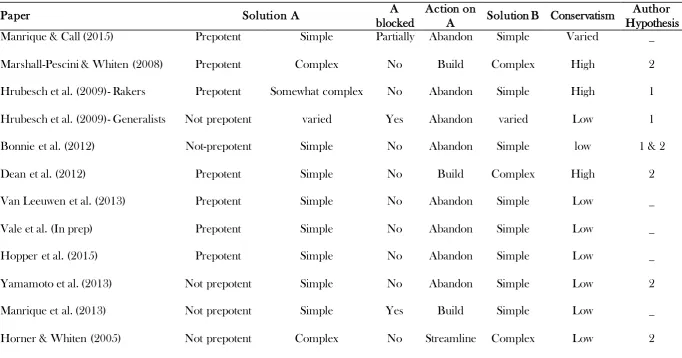
Whiten (2008) speculated that chimpanzees might employ a copy-when-dissatisfied social learning strategy (cf Laland, 2004; Schlag 1988), after finding chimpanzees did not build on their behaviours to achieve greater rewards when they had a simpler solution which produced some payoff. However, recent studies have found contrary evidence that chimpanzees will relinquish a working solution (i.e. one that reliably produces reward) to adopt an alternative, higher pay-off solution (Hopper, Kurtycz, Ross, & Bonnie, 2015; van Leeuwen & Call, 2016; van Leeuwen et al., 2013; Vale, Flynn, Hopper, Lambeth, Shapiro & Kendal, in prep). Another explanation for Marshall-Pescini and Whiten’s findings is that chimpanzees are conservative learners; that is, when chimpanzees have mastered a sufficiently rewarding behaviour, they lack the behavioural flexibility to modify that solution. This would have far reaching consequences for the cumulative capabilities of chimpanzees.
3.5 DO CHIMPANZEES’ POSSESS CULTURE?
Chapter 1 20
unmodified tools were the precursors of more complex tools with design features such as brush tips. Further, complex tool kits are also employed by wild chimpanzees involving the use of several, multi-functional tools in sequential order, indicative of some form of cumulative build up (Boesch, Head, & Robbins, 2009; Sanz, Schöning, & Morgan, 2010). However, there is a lack of direct evidence that modern chimpanzees’ forebears used any less elaborate methods than those seen today and thus this argument remains speculative (Dean, Vale, Laland, Flynn, & Kendal, 2013). Further, experiments attempting to look directly at the cumulative capabilities of chimpanzees have also not found promising evidence of such abilities (Dean, Kendal, Schapiro, Thierry, & Laland, 2012; Marshall-Pescini & Whiten, 2008). What is then constraining the evolution of chimpanzee culture?
3.6 WHAT IS LIMITING CULTURAL EVOLUTION IN CHIMPANZEES?
Section 1.2.4 provides something of an ultimate explanation as to why humans have cumulative culture: the choice undertaken in our evolutionary past to leave the familiarity of our ancient habitats, introducing the need to adapt to varied and novel environments. Unlike our own nomadic hominin ancestors, chimpanzees (and likely their own distinct ancestors) live in relatively stable environments, perhaps mitigating against the pressures needed for the expensive cognitive machinery underlying complex cultural evolution (Boyd & Richerson, 1996; Henrich & McElreath, 2003). However given that the beginning of cumulative culture in hominins may not have been due to changes in socio-cognitive capabilities per se (e.g. Pradhan et al., 2012) it may be that simple cumulative abilities were already within the socio-cognitive capacities of an ancestor shared with chimpanzees (Whiten et al., 2009). The question as to why chimpanzees have no or limited cumulative culture may, in this sense, be better addressed from a proximate perspective.
Flynn, & de Waal, 2006), and adaptive biases for using social information (Van Leeuwen et al., 2013), it is likely that they employ these under far more limited circumstances than humans, with less intrinsic motivation to engage in social learning on the whole (Dean, Kendal, Schapiro, Thierry, & Laland, 2012; Haun, Rekers, & Tomasello, 2014; Herrmann, Call, Hernández-lloreda, Hare, & Tomasello, 2007; Horner & Whiten, 2005; can Leeuwen, Call, & Haun, 2014; Nishida et al., 2009; Tennie, Call, & Tomasello, 2012; Tomasello et al., 1993). As such, the persuasiveness of the argument that chimpanzee culture is constrained by how they use social information is a powerful one. However, it is unlikely to be the whole story.
I end this chapter by highlighting what may be an important consideration when examining the limitations of cultural evolution. Notwithstanding the constraining impact of other core-prerequisites on chimpanzee culture, with relatively limited social learning mechanisms and heuristics resulting in a lack of behavioural upgrading, cumulative culture ultimately requires the ability to change established behaviours in order to adopt more efficient or productive ones; that is, in order to upgrade solutions, an individual must possess the behavioural flexibility to relinquish, modify and build on prior solutions. Behavioural flexibility has been defined as “the continued interest in and acquisition of new solutions to a task, through either innovation or social learning, after already having mastered a previous solution” (Lehner, Burkart, & Schaik, 2011, pg 447). Behavioural inflexibility (or conservatism) may therefore in and of itself limit the evolution of culture. For example, imagine an agent solves a problem using Solution A. However, there is a better, more optimal way to solve the same problem by using Solution B. Solution B may be a completely different solution, a variant of solution A, or may build upon solution A. Despite the availability of B, the agent continues to use A. We can form two principal hypotheses as to why this might be:
Hypothesis 1: behavioural optimisation (use of Solution B) is hindered by having knowledge of a prior solution (A) i.e. behavioural inflexibility limits cultural evolution
Hypothesis 2: behavioural optimisation (use of solution B) is hindered by some other factor that prevents learning of solution B, but not solution A i.e. another factor limits cultural evolution
Chapter 1 22
social learning strategy. Similarly Dean et al. (2012) concluded that a lack of accumulation in chimpanzees was because of limited or absent socio-cognitive adaptations. While these accounts do have explanatory power, they also tend to be used in what is essentially a mediated relationship with behavioural inflexibility (Dean et al., 2013), overlooking that conservatism can be a cause in and of itself of sub-optimal behaviour (Hypothesis 1).
In order to distinguish between these two hypotheses, there needs to be some baseline measure of what behaviours we would observe if an individual had no prior experience of Solution A. Say our experimental group is trained to use Solution A. In subsequent testing, the more optimal Solution B is open to innovation, or may be socially learnt, but the experimental group continue to use Solution A. Here, we can reasonably say this group has failed to optimise their behaviour. This could be explained by Hypothesis 1 or 2. However, if we have a control group, who are not initially trained on Solution A, but are exposed to the same testing conditions as our experimental group, then we can infer some effect of having a prior solution on behaviour (as this is the only manipulated variable). If our control group all converge on A, the control group and the experimental group will be indistinguishable from one another, and thus we cannot say there was an effect of having a prior Solution A. Instead, we must attribute behavioural conservatism as an outcome of another factor which is affecting the adoption of solution B, for example, lack of innovation or social learning abilities (Hypothesis 2 supported). However, if our control group all converge on B, then we can conclude that there was an effect of prior solution A (Hypothesis 1 supported).
CHAPTER 2: BEHAVIOURAL FLEXIBILITY
Behavioural flexibility has been defined as “the continued interest in and acquisition of new solutions to a task, through either innovation or social learning, after already having mastered a previous solution” (Lehner, Burkart, & Schaik, 2011, pg 447). In chapter 1 I proposed: -
Hypothesis 1: behavioural optimisation (use of Solution B) is hindered by having knowledge of a prior solution (A) i.e. behavioural inflexibility limits cultural evolution
Hypothesis 2: behavioural optimisation (use of solution B) is hindered by some other factor that prevents learning of Solution B, but not Solution A i.e. another factor limits cultural evolution
Given the clear adaptive advantage of behavioural flexibility in solution optimization, that is, convergence on the best available solution, it remains something of a mystery as to why any species would exhibit highly conservative tendencies. Strikingly though, inflexibility in action or thought is not at all unique to chimpanzees, and is well documented in various forms and in varied degrees in human children (e.g. Carr et al., 2015; Defeyter & German, 2003; Jordan & Morton, 2012; Kirkham, Cruess, & Diamond, 2003; Zelazo, Müller, Frye, & Marcovitch, 2003), as well as in human adults (e.g. Bilalić, McLeod, & Gobet, 2008a; Bilalić, McLeod & Gobet, 2008b; Chrysikou et al., 2013; Diamond, 2005; German & Barrett, 2005; Gopnik, Griffiths, & Lucas, 2015; Luchins, 1942; Pope, Meguerditchian, Hopkins, & Fagot, 2015; Wiley, 1998). More often though, within the human literature, it is referred to as perseveration, functional fixedness or mental set (aka Einstellung). Notably, more distantly related species have at times shown greater flexibility in their behaviour than both chimpanzees (e.g. Huebner & Fichtel, 2015; Lehner et al., 2011), and humans (e.g. Pope et al., 2015; Vlamings et al., 2009).
1. PERSEVERATION, FUNCTIONAL FIXEDNESS AND SET
Chapter 2 24
referred to as cognitive set or Einstellung), may be more closely linked with innovation and creative thinking, specifically getting ‘stuck’ on the common usage of a tool or behaviour pattern, blocking solutions which would otherwise be easily generated (Defeyter & German, 2003); however this blockage should be overcome once knowledge of an alternative becomes available. The key distinction I draw is thus that cases of conservatism/perseveration involve information that a prior solution (A) is suboptimal, and there exists a specific solution (B), which is optimal. I will expand on these different types of flexibility below, and how we might relate this research to primate behaviour and cumulative culture. I will conclude that much research within the human literature indicates that behavioural conservatism, or perseveration with Solution A despite B, may be underlain by at least two determinants: availability of cognitive resources and heuristics guiding decisions.
1.1 FUNCTIONAL FIXEDNESS AND SET
Functional fixedness refers to becoming stuck (‘fixated’) on one common use of an artefact or tool. This fixedness blocks the creative thinking needed to innovate a new way of using the artefact, which without prior knowledge of function, would be easily discovered (Knoblich, Ohlsson, & Raney, 2001). Defeyter and German (2003) noted that this emerged during development in children (around age six), and was linked to children’s maturing ability to conceive of objects as having a design. Cross cultural evidence suggests this ‘design stance’ may reliably emerge in humans, with evidence of functional fixedness in ‘technologically sparse’ cultures (German & Barrett, 2005; Margolis, Laurence, & Barrett, 2008). While usually this reliance on function may be adaptive when solving problems for which the artefact is relevant (cf DiYanni & Kelemen, 2008), when faced with situations where novel uses of an artefact must be generated, it can become a hindrance.
task itself may have been rather difficult. This finding of fixedness is somewhat mirrored in the wild, where Gruber, Muller, & Reynolds (2011) found chimpanzees unfamiliar with using sticks for ‘dipping’ were unable to innovate this foraging strategy to dip for honey. In contrast, chimpanzees who were already adept at dipping with stick tools solved the problem readily. It was argued that chimpanzees’ cultural knowledge shaped their foraging behaviour. This could tentatively support the hypothesis that functional fixedness is phylogenetically endowed in some form from a common ancestor, who may have also used tools and benefitted from this adaptation in some way.
Functional fixedness draws parallels with another type of fixedness, often referred to as ‘set’ or less commonly, ‘Einstellung’. Here, knowledge of a prior solution (not necessarily of a prior function of a tool or artefact), prevents the creative thinking required to generate alternative solutions. Luchins (1942) originally studied this using a water jug task, where participants (adult humans) had to use three different sized water jugs to obtain a specific quantity of water. Having been previously exposed to a complex strategy for solution, participants rigidly stuck to this, as opposed to adopting a relatively simple alternative solution. Although Luchins (1942) originally reported that extensive practice does not contribute to the inability to flexibly think of new solutions, Crooks and McNeil (2009) found evidence to the contrary, with a correlation between response practice and flexible responding. Similarly, prior knowledge has been found to stall or delay convergence on the best game solution in chess experts (Britton & Tesser, 1982; Wiley, 1998), who become stuck on a local optimum. This curtails exploration of the problem space (see also Selman, Kautz & Cohen, 1994 for related discussions in artificial intelligence). Novices on the other hand, are able to outperform experts when global optima are easily found.
1.2 PERSEVERATION
Perseveration is a term widely used within the developmental literature, often referring to young children who having learnt one method of solving a task (Solution A), are encouraged or instructed to use another method (Solution B), but yet persevere with their initial solution (A). This mirrors the general methodology used when investigating cumulative abilities in apes (e.g. Marshall-Pescini & Whiten, 2008), with the exception that primates are necessarily provided with information of the alternative solution through visual demonstrations.
Chapter 2 26
to sort the cards along another dimensions, such as “sort cards by shape” (Solution B). When the participant fails to relinquish Solution A, and switch to using the appropriate Solution B, they are classed as perseverating. Importantly, this is not because perseverators cannot learn solution B. In fact, when asked what the new sorting rule is, perseverators can correctly identify it immediately before proceeding to sort cards incorrectly. This finding is robust when counterbalancing for solution presentation. This strongly suggests that Hypothesis 2 cannot account for perseveration with solution B in these instances; rather there appears to be an effect of having a prior solution to the task (Hypothesis 1). Most telling though is that perseveration is associated with age. Quite robustly, three year olds perseverate with their old solution A, but five year olds are typically successful in switching to using solution B (Carlson, 2005; Zelazo, 2006; Zelazo et al., 2003). This is mirrored in another task designed to measure perseveration: Go/No-go. Here, individuals learn to respond to stimuli presented on a screen (go trials). On a minority of trials, generally after a string of go trials, a stimulus is presented which indicates that a response should be withheld (no go). Again, children commit more perseverative errors on this task than adults do (e.g. Cragg & Nation, 2008). It is this developmental trajectory that strongly indicates that perseveration is underlain by limited cognitive resources in key executive functions (Diamond, 2013).
2. BEHAVIOURAL FLEXIBILITY AND EXECUTIVE FUNCTIONS
Executive functions are “a set of general-purpose control mechanisms, often linked to the prefrontal cortex of the brain, that regulate the dynamics of human cognition and action” (Miyake & Friedman, 2012, pg 2). Changing behaviour is a multi-faceted cognitive process dependent on these functions, requiring attention to appropriate extrinsic or intrinsic cues indicating a change is required, the inhibition of the now outdated or inappropriate response, and the ability to switch from the old to the new response, which must be held in working memory; that is, information held in mind (For a review see Bari & Robbins, 2013; Diamond, 2013). While there is some disagreement concerning both the nature and distinctiveness of executive functions, commonly identified components within the literature include inhibition, working memory and switching (definitions are from Diamond, 2013, pg137):
Working memory: “holding information in mind and mentally working with it (e.g., relating one thing to another, using information to solve a problem)”
Switching/shifting: “changing perspectives or approaches to a problem, flexibly adjusting to new demands, rules, or priorities (as in switching between tasks)”
Chapter 2 28
cognitive resources in key executive functions, with high demands on working memory likely detracting from the resources needed for inhibition.
This ties in with a long running debate about how separable some executive functions are (Collette et al., 2005; Herd et al., 2014; Miyake et al., 2000; Miyake & Friedman, 2012; Munakata et al., 2011), and whether inhibition reflects a separable component of executive function, or whether inhibitory failures are a result of limited working memory. This can be roughly summarised as whether inhibition involves the active suppression of irrelevant information (i.e. an inhibition mechanism) versus the amplification of relevant information in working memory (i.e. inhibition as an expression of working memory) (see Bari & Robbins, 2013; Best & Miller, 2010 for reviews). For example, Miyake and Friedman (2012) examined inhibition, working memory and switching on a series of nine tasks which are thought to tap into each of these. These authors found that variability in tasks was underlain by three components: ‘Common EF’, ‘Updating-Specific’, and ‘Shifting-Specific’. Here, there is no specific component unique to inhibition. Note that while perseveration is most often associated with inhibition problems (either through poor suppression or amplification of information), the lack of creative problem solving inherent to set and fixedness is more closely linked to the shifting, or task-switching, component of executive functions (Diamond, 2013).
2.1 WHAT DO WE MEAN BY LIMITED COGNITIVE RESOURCES?
comparatively greater activity in frontal regions (see also Bunge, Dudukovic, Thomason, Vaidya, & Gabrieli, 2002). Taken together, much of this research suggests that children have less cognitive control than older adults, with differential patterns of neural activity, especially in the PFC (Baird et al., 2002; Bell, Wolfe & Adkins, 2007).
Interestingly, increased cognitive control is likely associated with a reduced ability to generate novel ideas to problems. For example, Chrysikou et al. (2013) while asking adult participants to state aloud uncommon uses of artefacts, used inhibitory transcranial direct current stimulation over the PFC to disrupt neural activity. Those with diminished PFC activity (and thus cognitive control) were better at generating novel uses, displaying less functional fixedness than those with fully functional PFCs. This fits well with the developmental trajectory of functional fixedness (Defeyter & German, 2003) and set (Pope et al., 2015), with increasing cognitive control likely responsible for directing problem solving strategies through reliance on prior knowledge (see also Mölle, Marshall, Wolf, Fehm, & Born, 1999; Reverberi, Toraldo, D’agostini, & Skrap, 2005). This delayed maturation of cognitive control may be a highly adaptive strategy, allowing for flexible learning (Gopnik et al., 2015; Thompson-schill et al., 2009); for example statistical learning, that is extracting information from the environment or detecting patterns, although typically inefficient, may allow fluid thought and the flexible acquisition of extensive bodies of knowledge, such as is required for language (Romberg & Saffran, 2010). In line with this trade-off between increased cognitive control and flexible learning, Doll, Hutchison, & Frank (2011) found human adults were overly influenced by prior instructions about the reward contingencies of a task, and would have performed better had they evaluated the outcome of their solutions without these biases. Importantly, evidence suggested the PFC likely guided learning through a confirmation bias, such that decisions were not made by overriding accurate encoded information, but by the disproportionate encoding of information that accorded with their prior beliefs.
2.2 EXECUTIVE FUNCTION IN CHIMPANZEES