DRINK AND THE FIRST WORLD WAR
Robert R. G. Duncan
A Thesis Submitted for the Degree of PhD at the
University of St Andrews
2008
Full metadata for this item is available in Research@StAndrews:FullText
at:
http://research-repository.st-andrews.ac.uk/
Please use this identifier to cite or link to this item:
http://hdl.handle.net/10023/558
This item is protected by original copyright
I, Robert Duncan, hereby certify that this thesis, which is approximately 80,000 words in length, has been written by me, that it is the record of work carried out by me and that it has not been submitted in any previous application for a higher degree.
Date 27 February 2008 Signature of Candidate
I was admitted as a research student in September 2004 and as a candidate for the degree of Ph.D. in September 2004; the higher study for which this is a record was carried out in the University of St Andrews between 2004 and 2008.
Date 27 February 2008 Signature of Candidate
I hereby certify that the candidate has fulfilled the conditions of the Resolution and Regulations appropriate for the degree of Ph.D. in the University of St Andrews and that the candidate is qualified to submit this thesis in application for that degree.
Date 27 February 2008 Signature of Supervisor
In submitting this thesis to the University of St Andrews I understand that I am giving permission for it to be made available for use in accordance with the regulations of the University Library for the time being in force, subject to any copyright vested in the work not being affected thereby. I also understand that the title and abstract will be published and that a copy of the work may be made and supplied to any bona fide library or research worker, that my thesis will be electronically accessible for personal or research use, and that the library has the right to migrate my thesis into new electronic forms as required to ensure continued access to the thesis. I have obtained any third party copyright permissions that may be required in order to allow such access and migration.
List of Illustrations i
Acknowledgements iv
Introduction 1
Chapter One: A Tale of Temperance and Drink 1870-1914 19
Chapter Two: Vodka, Absinthe and Drunkenness on 64
Britain’s Streets in 1914: A Tale of Fear and Exaggeration?
Chapter Three: Best Laid Plans? Lloyd George and the 98
Drink Question
Chapter Four: Restrictive or Constructive? The Early 129
Stages of the Central Control Board
Chapter Five: The Carlisle Experiment: Lord D’Abernon’s 162
‘Model Farm’
Chapter Six: ‘Helping our weaker sisters to go straight’ – 201
Women and Drink during the War
Chapter Seven: Reforming the Working Man 218
Chapter Eight: State Purchase and the Waning of the 235
Central Control Board
Conclusion: The End of the Central Control Board 270
Illustrations
Title page illustration: ‘The Place for Deadly Foes’, File of Temperance Cartoons, Alliance House Archive.
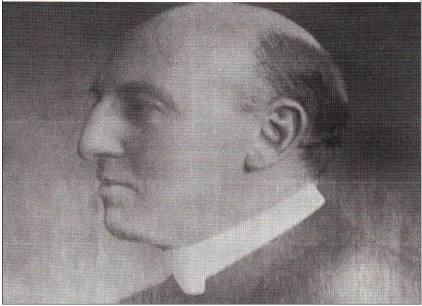
Figure 1, p. 3: Photograph of Reverend Henry Carter, Alliance House Archive.
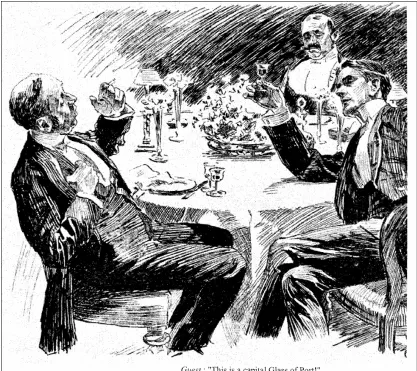
Figure 2, p. 38: Punch Cartoon, 27 June 1900.
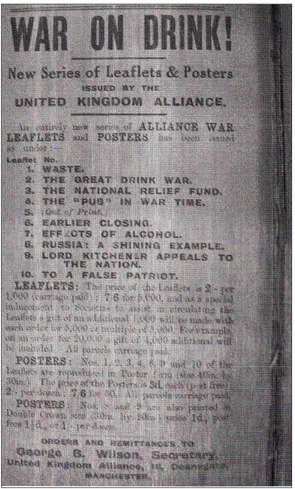
Figure 3, p. 67: United Kingdom Alliance advertisement, Alliance House Archive.
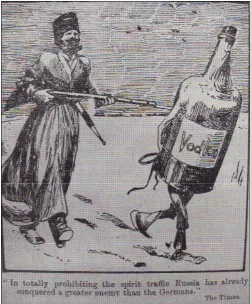
Figure 4, p. 72: Prohibition of Vodka cartoon, File of Temperance Cartoons, Alliance House Archive.
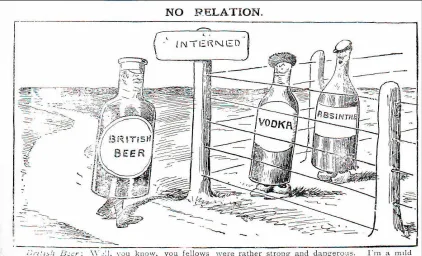
Figure 5, p. 77: ‘Vodka and Absinthe Interned’, The Brewers’ Gazette 29 April 1915.
Figure 6, p. 77: ‘On Account of the War’, File of Temperance Cartoons, Alliance House Archive.
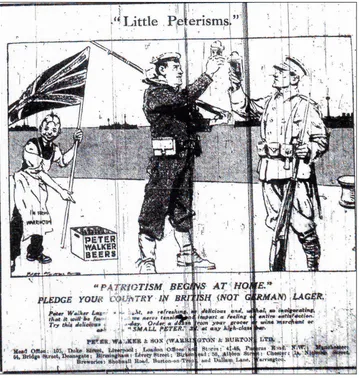
Figure 7, p. 79: Peter Walker Advert ‘Patriotism Begins at Home’, The Daily Mail 2 October 1915.
Figure 8, p. 80: ‘Drunken Germans’, The Daily Mirror and The Daily Express 28 September 1914.
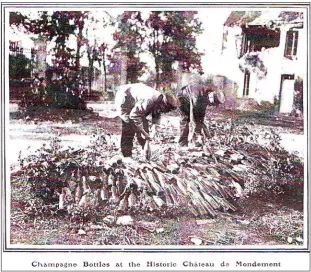
Figure 9, p. 83: Champagne Bottles at the Chateau, The Sphere 10 October 1914.
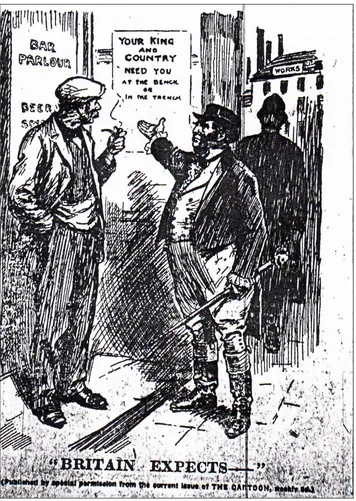
Figure 10, p. 88: ‘Britain Expects’, St Andrews Citizen 13 March 1915.
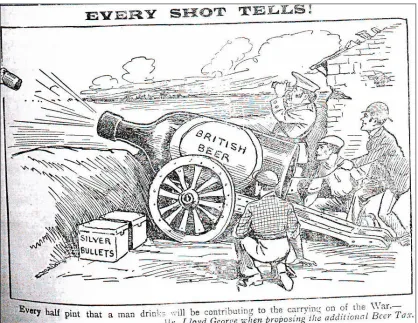
Figure 11, p. 92: ‘Every Shot Tells’, The Brewers’ Gazette 18 March 1915.
Figure 12, p. 93: ‘The Bogus Patriot’, File of Temperance Cartoons, Alliance House Archive.
Figure 13, p. 111: ‘Total Prohibition and Mr Lloyd George’s Letter Bag’, Manchester Guardian 12 April 1915.
Figure 14, p. 112: ‘Drink: The Subject that Interests Everybody’, The Daily Mirror 12 April 1915.
Figure 15, p. 116: ‘When water is our only drink’, The Daily Mirror 8 April 1915.
Figure 17, p. 157: Photograph of British and French soldier sharing a drink, Imperial War Museum Photograph Archive, A2742.
Figure 18, p. 158: ‘The Cup that Cheers’, Imperial War Museum Documents Library, Miscellaneous 213, Item 3099.
Figure 19, p. 159: ‘One Thing Our Soldiers Will Learn In France’, The Daily Mirror 1 October 1914.
Figure 20, p. 164: Gretna Munitions Factory, Imperial War Museum Photograph Archive, A30558.
Figure 21, p. 173: Offices of the Central Control Board in Carlisle, Tullie House -Carlisle, State Management Pictures.
Figure 22, p. 179: The Gretna Tavern in 1917, The Carlisle Journal 14 July 1916.
Figure 23, p. 180: The Gretna Tavern in 2006, Personal Photograph.
Figure 24, p. 181: The restaurant in the Gretna Tavern, Tullie House – Carlisle, State Management Pictures.
Figure 25, p. 182: Royal Visit to the Gretna Tavern, The Carlisle Journal 14 July 1916.
Figure 26, p. 185: Photograph of Harry Redfern, Tullie House – Carlisle, State Management Pictures.
Figure 27, p. 187: Carlisle Pub Interior, Tullie House – Carlisle, State Management Pictures.
Figure 28, p. 193: Cartoons from Wilson Stuart’s Pamphlet, Wilson Stuart, The Carlisle and Annan Experiment in State Purchase and Liquor Nationalisation by the CCB.
Figure 29, p. 214: Young female workers bottling beer, Imperial War Museum Photograph Archive, A28330.
Figure 30, p. 227: New Kitchens, Feeding the Munition Worker.
Figure 31, p. 228: Lunchtime Service, Feeding the Munition Worker.
Figure 32, p. 237: Strength of Britain Newspaper Advert, Alliance House Archive.
Figure 33, p. 242: ‘Temperance via Alternative means’, Imperial War Museum Photograph Archive, HO108.
Figure 35, p. 246: ‘We risk our lives to bring you food’, Imperial War Museum Photograph Archive, A80143.
Figure 36, p. 250: ‘All Hands to the Plough’, The Daily Express 19 January 1917.
Acknowledgements
First of all, I must thank my supervisor, Professor Jerry DeGroot, who has been an invaluable source of inspiration and advice from the start of my postgraduate career. He has helped me throughout these last four years whenever needed. He has read and commented on several drafts and I have enjoyed working with him immensely. I must also acknowledge several members of the University of St Andrews History Department, notably Dr Frank Muller, Dr James Nott and Dr Stephen Tyre. My fellow postgraduates Dr Peter Kushner, Claire Eldridge and David Meeres have become valued friends and I thank them for some light-hearted relief at difficult times. Thanks also to Professor David Gutzke and Dr John Greenaway for some early encouragement.
The Carnegie Trust for the Universities of Scotland, The Masonic Trust for Girls and Boys and the University of St Andrews kindly provided valuable financial assistance and accommodation without which this thesis would not have been possible.
Many thanks to the archivists of the National Archives, the House of Commons Archives, the British Library, Alliance House, Carlisle Record Office, Tullie House, Collindale Newspaper Library, Reading University, Modern Records Centre, Imperial War Museum and St Andrews University Library, particularly the Inter Library Loan staff.
Outside of University life I must thank all my friends and colleagues, especially at Luvians, who have accompanied me on this long road and helped me greatly without probably realising. I am also grateful to Lisa, Emily, Peter, and Bex for putting up with the occasional Ph.D. related rant and being great friends and flatmates. Special thanks must go to Caroline.
My partner Sarah has been especially understanding and I thank her for her patience and love.
Introduction
A pint of beer in the First World War was a controversial thirst quencher. One
contemporary noted ‘when the history of the present great and terrible war comes to
be written, it will be found that alcohol has had a not inconspicuous part, both actively
and passively, in its progress and final issue.’1 Attacked by temperance critics, whilst
being the livelihood of those involved in the trade, drink was the subject of much
acrimonious debate throughout the tumultuous years of 1914-1918. Lloyd George
wrote in his war memoirs that ‘during the first five months of the war drink became a
serious element in the struggle to avert defeat . . . on the home front alcoholic
indulgence shared with professional rigidity the dishonour of being our most
dangerous foe’.2 The war politicised the issue of drink and drinking, polarising
society. For some a liking for beer became symbolic of the nation’s drift to defeat
whilst to others it remained one of life’s pleasures, a quiet respite from the strains of
war at home.
The drink controversy resulted in the formation of the Central Control Board
(CCB): a government organisation whose remit was to oversee a radical overhaul of
drink provision throughout Britain and ensure that national efficiency was not
threatened by the continued popularity of the pint or whisky chaser. This was the first
time a government organisation had been founded with this explicit reform agenda.
Every aspect of drinking culture came under scrutiny, from pub layout, to the strength
of drinks sold within hostelries nationwide.
The ‘crisis’ over drink reveals much about British society during the war,
whilst simultaneously shedding light on the political and social repercussions of
drinking alcohol. During the Second World War the drink issue was similarly
1Sir James Crichton Browne in Rev. Mathias Lansdown, Our Allies, Ourselves and the Drink Problem (London, 1915), p. 25.
controversial. In 1939 John Atkins urged people to ‘recall the remarkable experiments
and discoveries which were made in the war of 1914-1918 by the Central Control
Board’ whose principles ‘became the basis of our present licensing reform in the
Licensing Act of 1921’.3 Atkins speculated that ‘a general knowledge paper would
probably reveal hardly anyone, apart from politicians and social workers, who could
say accurately what the Board did’.4 This dissertation intends to broaden the general
understanding of the actions of the Board and examine the plethora of varied concerns
and events that constituted the drink problem during the First World War.
The control of drink during the First World War has already been subject to
some scholarly inquiry. Three books were written on the management of drink during
the war and in its immediate aftermath.5 Each share fundamental similarities in
argument and the type of evidence used to substantiate claims. They are united by a
‘top down’ approach which emphasised the role of government agencies, notably the
CCB, in reducing drinking to the detriment of other societal factors. The books are
guileless in their analysis of the nature and extent of the ‘drink problem’ and are all
written without the benefit of private records and correspondence from the period.
Furthermore, these books are each idiosyncratic in their origins.
Reverend Henry Carter in The Control of the Drink Trade: A Contribution to
National Efficiency 1915-1917, published in mid-1918, argued that action was
essential as drink impaired industrial efficiency leading to a loss of life abroad.6 He
suggested that:
3John Atkins, Drink in the Last War: A Study in Licensing Reform (London, 1939), p. 3. 4Ibid. p. 3.
5 Henry Carter, The Control of the Drink Trade: A Contribution to National Efficiency 1915-1917 (London, 1918), Thomas Nixon Carver, Government Control of the Liquor Business in Great Britain and the United States (New York, 1919), Arthur Shadwell, Drink in 1914-1922: A Lesson in Control (London, 1923).
Indulgence in liquor directly caused broken time and wastage of the national resources for work and war . . . it acted with and accentuated, other causes of lessened industrial output, such as physical exhaustion; a man, for instance, could not give his best in work if his free hours were spent in close and crowded liquor bars, or if his home were wrecked by the drinking habits of an intemperate wife . . . because of the interdependence of the processes of modern industry the intemperate habits of a minority might, and not infrequently did, delay a much larger body of workers.7
Carter felt that the government’s actions concerning drink were of benefit and
represented ‘a great experiment which has been efficacious, in a notable degree, in
[image:11.595.88.510.280.586.2]repressing intemperance, advancing efficiency and bettering the social lot’.8
Figure 1: Reverend Henry Carter
According to Carter, the actions of the state, and in particular the Central
Control Board, brought about ameliorated social conditions, principally the reduction
of intemperance. It is unsurprising that he held such a viewpoint, given he was a
member of the CCB and an active temperance campaigner. His positive and self
7
laudatory appraisal of the CCB’s performance was justified by his view that the state
‘in its modern role of physician can – if it will – restore and keep in health the body
politic’.9 Carter’s temperance convictions call into question the fairness and
rationality of his assessment, especially since members of the Board actually co-wrote
and edited the book. Despite these deficiencies, his account offers much valuable
factual information, much of which will be discussed later.
Carter’s acclamations concerning the success of the CCB were moderate in
comparison to the ecstatic proclamations of Lord D’Abernon, who wrote the Preface
to Carter’s book. He had been Chairman of the Central Control Board and hoped to
continue his programme of reform after the war. To a degree Carter’s book can be
interpreted as a promotional publication aimed towards this end. D’Abernon believed
that action was justified to improve national efficiency:
Drink control is admittedly a problem of vital importance to our industrial future and to our national efficiency. But it is more than that. Throughout the world Drink Control is recognised as one of the most arduous questions which have hitherto baffled statesmanship. This has been notoriously so in Great Britain, where up to 1914, despite great enthusiasm and sincerity of purpose on the part of reformers, aided by the support of able statesmen, progress was precarious and disappointing . . . a return to pre-war conditions of Licensing and Drink Control cannot be contemplated with equanimity. It would certainly mean an increase of drunkenness, involving the sacrifice of many lives, the ruin of many homes, and a reversion of conditions conducive to crime and ill health.10
D’Abernon believed that from the ‘irredeemable’ pre-war conditions, the actions of
the CCB had facilitated a fundamental reversal of fortune in the battle against drink.
He proposed that ‘the measures taken have been followed by a progressive decline of
alcoholic excess so rapid that it appears difficult to account for it on any other
hypotheses than that it is in large part the result of the regulations applied’.11 As with
Carter, it is difficult to distinguish the true value of D’Abernon’s brief introduction as
9Ibid. p. 11. 10
he too was, in effect, attempting to validate the continuation of the Board’s legacy and
establish his own particular place in history. Autobiographical writing aimed at
keeping oneself in a job cannot be considered an objective historical source. However,
this does not wholly denigrate the undoubted historical value of his work, in particular
his review of the legislative changes introduced by the Board and their consequent
effect. D’Abernon’s introduction indicates his perception of the drink problem and the
actions he believed were necessary to resolve the issue.
Less tainted by association, and by participation in government agencies, is
the work of Thomas Nixon Carver, who produced a comparative piece concerning
Government Control of the Liquor Business in Great Britain and the United States
during the First World War.12 It was a preliminary economic study of the war,
produced in 1919. Carver’s contention that efficiency and prevention of waste were
the prime motivations behind the implementation of legislation concurs with both
Carter and D’Abernon. He argues, with perverse simplicity, that:
In the midst of all the controversies over the question, and of all the uncertainties with which it is surrounded, two facts are at least certain and beyond controversy. One is that starch and sugar are used in the production of alcohol. The other is that large numbers of people get drunk on alcohol.13
After establishing these eternal truths, he identifies the ‘three conspicuous forms of
waste’ that drinking caused:
First, the food materials used up in the production of alcoholic liquor; second, the prosperity and the man power used in dispensing the liquor to the drinking public after it is produced, and third, the impaired efficiency of those guilty of over indulgence.14
The drive for efficiency was necessary given the circumstances of war, as Carver
recounted:
12Thomas Nixon Carver, Government Control of the Liquor Business in Great Britain and the United States.
13
If, in facing what might have been their last fight, they had not taken active measures to conserve every resource which might aid in the winning of the war, and to prevent every form of waste which might decrease their fighting power, they would not have shown that capacity for self discipline upon which, alone, the salvation of democracy depends.15
Carver also discussed public opinion, in all its guises, far more than Carter or
D’Abernon, contending that ‘Public opinion (concerning alcoholic liquor), as
expressed through its constituent organs, the newspapers, seems to have been very
much divided . . . the only thing which seemed clear was that the government must do
something about it’.16His discussion of ‘public opinion’ is somewhat limited, though,
as he used only The Times newspaper in his analysis.
Carver’s book is very useful. It differs from Carter’s in that it informs the
historian of an outsider’s viewpoint of the government’s actions. The bibliography of
his book is a veritable goldmine of pamphlets and articles produced on the issue
during the war. Many of them are highly propagandistic and unscientific in their
approach to the issue, but nevertheless highlight the controversies and misperceptions
relevant to the problem. His utilisation of statistics and hard evidence benefits the
modern investigator immeasurably, as does his focussed review of the issue
throughout the war.
Overall, a consensus emerges from contemporary commentators that a desire
for improved national efficiency precipitated new drink legislation. This viewpoint
was supported by the final contemporary review of the drink issue, Arthur Shadwell’s
Drink in 1914-1922: A Lesson in Control, published in 1923. Shadwell was an author,
lecturer and avid social reformer. He argued that:
The war searched out every weak spot in national character and conduct as nothing had ever done before . . . this habit of excess was so plainly revealed
15
as a weak spot that extraordinary measures for dealing with it were adopted with general approval and acquiesced in by the community at large.17
He believed that ‘the need and effectiveness of control were convincingly shown and
one of the catchwords of the day was ‘‘trust the people’’ but the truth was that there
were too many people who could not be trusted.’18Like Lord D’Abernon, he believed
that the applied regulations were responsible for the reduction in consumption since
elements of society, particularly the lower orders, were incapable of exerting control
over their desire for drink. The assumed impact of duty and Licensing Laws play a
prominent part in this interpretation.
The voluminous records of the Central Control Board provide the greatest
scope for new historical investigation. These records, held at the national archives in
Kew, consist of some 250 boxes of material dealing with the drink issue in all its
manifestations. The documents touch upon every aspect of the drink debate and their
historical value is prodigious as they provide a window on attitudes and sources
distinctly different from the more partisan viewpoints of both the various temperance
bodies and the trade, even though these sources remain of significant historical
interest. In particular, the trade archives provide insight into the relative patriotism of
the industry during wartime and the manner in which cooperation, rather than
hostility, greeted many of the Board’s actions. This divergence in opinion between the
CCB, the trade and temperance movements provides an interesting insight into the
practicalities and difficulties of solving the drink problem.
The Board’s archives have been examined previously, though not
comprehensively, on three occasions. Michael Rose uses them in an article arguing
that the Board provides a demonstration of ‘how control of an important and sensitive
17
area of social life in wartime was carried out in a positive, purposeful, and generally
acceptable fashion.’19 He highlights the positive social reforms implemented by the
Board and assesses their relative success. While he provides a valuable exposition of
this aspect of the Board’s success, the article is necessarily limited in scope.20This too
could be said of Dr John Greenaway’s scholarly examination of Drink and British
Politics. His book, which will be considered in detail later, is a broad review of the
issue since 1830, culminating in an assessment of the impact of more modern
discourses on drink. Due to the nature of his work he only discussed certain aspects of
the Board’s policy, and in his introduction lamented the lack of historical research
done on drink in the First World War.21 Much more recently David Gutzke in his
book Pubs and Progressives: Reinventing the Public House in England 1896-1960, an
ambitious review of the ‘progressive’ nature of pub reformers, has highlighted the
reforms undertaken by the Board in Carlisle during the war.22His book chronicles the
development of a transatlantic progressive movement which he contends affected pub
reform in Britain. His account illustrates how many reform schemes had a longer-term
history than has previously been appreciated.
More generally, Brian Harrison, in his much-lauded book Drink and the
Victorians: The Temperance Question in England 1815-1872, considered the general
impact of temperance on British society and the general role of alcohol in Victorian
life.23 The book brought attention to the multi-faceted approach to sources that could
be utilised for this purpose. His account ends in the early 1900s but has shaped the
19
Michael E. Rose, ‘The Success of Social Reform? The Central Control Board (Liquor Traffic) 1915-1921’ in Foot, M.R.D, (ed.), War and Society (London, 1973), p. 84.
20Rose himself admitted that the review was based on a ‘fairly cursory survey’ of the CCB’s records which ‘deserve more detailed investigation and analysis.’ Ibid. p. 300.
21
John Greenaway, Drink and British Politics since 1830: A Study in Policy Making (Basingstoke, 2003), p.3.
22D. Gutzke, Pubs and Progressives: Reinventing the Public House in England 1896-1960 (Dekalb, 2006).
23
nature of drink investigation and the inherent techniques required of historians of
alcohol since its publication. Apart from the obvious government records, Harrison
utilised trade records, temperance publications and association accounts, newspapers,
criminal and judicial records, personal recollections and cultural productions to show
the intimate relationship of drink to society. Harrison’s approach informs the analysis
this thesis undertakes.
A discussion of social reform undertaken by the CCB will feature prominently
in this thesis and it is my intention to maximise the potential of the Board’s records
and root the bulk of this dissertation in new sources. Material such as ‘working class’
newspapers, temperance and trade journals, trade records, trade defence association
meetings, journals, personal recollections, brewery records, poetry and music hall
lyrics, which have so far proved elusive to historical investigation with regard to this
subject, will be utilised for the first time. This thesis will consider the reaction of
British society towards the Board and its work and assess how the CCB managed its
relations with both trade and temperance groups. Notable problems, such as the
relationship of women to alcohol and the perceived impact on the familial structure,
together with arguments over the use of foodstuffs in the production of alcohol, will
be investigated in detail. Other records, such as the voluminous holdings of the
Brewers’ Society, held at the Modern Records Centre at Warwick University, and the
local records of state run areas, such as Carlisle, have also divulged much of interest.
Paradoxically the mere absence of sources at certain times can tell the historian a
great deal about the nature of the drink debate. For example, the lack of interest in the
question in 1918 in comparison to the earlier years of the war suggests that the
by the population at large, or that the issue had at least become less newsworthy and
elicited less hysteria.
This thesis is unique as it is the first academic dissertation to consider the
drink question and the First World War as its primary focus. To be sure, much work
has been undertaken on various subsections of the overall debate and these have
informed this study. John Greenaway has covered the high politics aspect of the drink
question briefly, but admirably, in his chapter on drink and the First World War.24He
deals with some of the reasons why drink became an issue of political controversy
during the war, the work of the Central Control Board and the issue of state purchase
of the liquor industry. But in his work there is, necessarily due to the scope of his
book, a lack of interaction with broader cultural attitudes and practices of the period.
In a review of his work, Matthew Hilton comments:
Politicians do not operate in a vacuum, as Greenaway would agree, but just how wide should we understand the social, political, cultural, economic and intellectual space within which they operate to be? Greenaway admits the influence of war, Europe, science and social and cultural changes such as the decline of nonconformity and the greater participation of women in the leisure industry, but these are treated as externalities rather than intrinsic means to understanding changing high political beliefs and reform agendas.25
This dissertation attempts to place the debates and decisions that occurred during the
war into the context of the social world in which they were taken. Most importantly,
how did class presuppositions affect the formation of drink policy? As G.B. Wilson, a
contemporary member of the United Kingdom Alliance (UKA)26, a prohibitionist
temperance group, and later historian on the subject, commented, ‘the drink problem
is one of great complexity in which the investigator who relies solely on statistical
24See J. Greenaway, Drink and British Politics, pp. 91-113. 25
Matthew Hilton, review of Drink and British Politics since 1830: A Study in Policy Making, by John Greenaway, Institute of Historical Research, January 2004.
www.history.ac.uk/reviews/paper/hiltonM2.html.
evidence and ignores the human factor may find himself committed to conclusions
which are contrary to common experience.’27It is of critical importance to know how
drink was perceived, or as Hilton suggests, to recognise ‘the ideologies of drinking
practices’, so that a greater understanding of the social world in which political
decisions were taken is garnered.28 This study will explore in detail the relationship
between the two explanatory models of the social linkage between elites and drinkers.
Central to a discussion of this relationship is the aforementioned notion of
‘moral panic’. This is a sociological notion which concerns societal fear of a threat
which far outweighs the true extent of that danger. It is best summarised by the
leading theorist of this concept, Stanley Cohen, who, in his book concerning Teddy
Boys and Mods entitled Folk Devils and Moral Panics,29argued:
Societies appear to be subject, every now and then, to periods of moral panic. A condition, episode, person or group of persons emerges to become defined as a threat to societal values and interests; its nature is presented in a stylised and stereotypical fashion by the mass media; the moral barricades are manned by editors, bishops, politicians and other right thinking people, socially accredited experts pronounce their diagnoses and solutions; ways of coping are evolved or (more often) resorted to; the condition then disappears, submerges or deteriorates and becomes more visible. Sometimes the object of the panic is quite novel and at other times it is something which has been in existence long enough, but suddenly appears in the limelight. Sometimes the panic passes over and is forgotten, except in folklore and collective memory, at other times it has more serious and long lasting repercussions and might produce such changes as those in legal and social policy or even in the way society conceives itself.30
27 G.B. Wilson, Alcohol and the Nation: A Contribution to the Study of the Liquor Problem in the United Kingdom from 1800 to 1935 (London, 1940), p. xi.
28
M. Hilton, review of Drink and British Politics by John Greenaway, p. 9. Greenaway refutes Hilton’s criticism: ‘implicit in his review is the assumption that they (moral frameworks and cultural attitudes to the policy process) impact clearly upon political reforms and policy making and influence the beliefs of decision makers. In my study I aim to show how such factors are indeed significant but also that they were continually mediated, in complicated wars, by political elites, both bureaucratic and party political. Institute of Historical Research, January 2004
www.history.ac.uk/reviews/paper/greenawayJ.html.
29Stanley Cohen, Folk Devils and Moral Panics: The Creation of the Mods and Rockers (St Albans, 1973).
This dissertation argues that the drink issue during the First World War exhibited
clear traits of a societal moral panic, in which the perception and extent of the
problem was vastly over exaggerated. Drink was politicised to previously unimagined
levels of controversy. It cannot be denied that there were issues of concern to the
government that required its intervention, for example, the issue of industrial drinking
in relation to the quest for national efficiency, but major misconceptions, or conscious
exaggerations, of the true extent and nature of the problem severely coloured the issue
from the outset. Opinion makers and arbiters viewed the problem through
preconceived filters of interpretation as opposed to undertaking a rational appraisal of
the true situation.
The old historiographical discourse on the drink issue, as illustrated by Carter,
Carver and Shadwell, proposes that policies originated from persistent governmental
anxiety concerning the debilitating effects of alcohol on the population. This shared
interpretation is a classic ‘top down’ or ‘social control’ appraisal of the potentiality of
governmental policy. This explanatory model, as Jack Blocker, a leading historian of
drink, has suggested:
Tends to portray mass drinking behaviour as a product of more or less deliberate action by an elite or elites. Within this framework, political elites (government officials, for example), economic elites (liquor manufacturers or other businessmen with an interest in social control), or social elites (aristocratic trend setters, for example) define the conditions under which everyday drinking takes place. Ordinary drinkers exercise the choices left to them only within the constraints – on type of beverage or container, timing or site of drinking, or amount consumed – thus imposed. Alternatively, their choices are channelled or moulded by advertising or by advice from above.31
This model neglects to mention those upon whom the regulations were enforced and
their complicit role in the success of such policies. The proactive concerns of the
people are lost in an interpretation which overlooks the social world in which these
31
policies operated. This alternative can be called the cultural, bottom up or demand
model whereby the power of group norms in determining individual drinking
behaviour is emphasised, whether the group is defined by gender, nationality, social
class, ethnicity or race.32
A more fluid interpretation is also possible: it allows for the coexistence, or at
least a malleable flux, of both models. The social control paradigm ignores the
manner in which legislation was viewed and implemented at the everyday level
whereas the bottom up model denigrates the importance of policy in establishing the
legal frameworks which establish systems of liquor control, or the effect of law in
moulding, implicitly or explicitly, group norms. For example, it is doubtful whether a
policy that had absolutely no support could be introduced in peacetime, but in
wartime the process was less controversial due to the assumed necessities of total war.
In this respect the extraneous circumstances of conflict are of equal importance as the
desires of the governing elite, as they shape the reactions and responses of the nation
toward policy. This is an issue that will be discussed throughout this study as it
emphasises the ‘communicative’ process concerning the drink issue that occurred
throughout the war. This process was of the utmost importance, yet has been
somewhat neglected in the more recent historiography of the period. The story of
drink control involves many of the leading figures of the time. It was an important
concern of many leading political actors, central to many relationships and an
important political and social issue over which relationships were formed and broken.
The debate provides a fascinating insight into the machinations of a society at war, its
morals and its attitudes to leisure whilst being the culmination of eighty years of
previous drink agitation.
Opinions toward drink form part of the overall history of moral attitudes. As
Virginia Berridge has argued, contemporary thoughts regarding drunkenness are not
simply an ‘arbitrary figment of man’s unreason for which history provides some
insight, they are the product of a social structure and the social tensions of that
time.’33 The debate about drink control provides insight into broader historiographical
contingencies, particularly as to whether the war brought about massive social change
or merely reinforced continuities that had been evident in the Victorian period. During
this period the consumption of ‘a pint’ became a contentious leisure pursuit as the
intermixing of political and social debate produced explosive results.
The study of drinking opens a window of opportunity to the social historian. A
worthwhile investigation of drink has to consider the question from a variety of
angles. Primarily the historian of alcohol has to explain historical patterns of beverage
use and the social response to drinking that occurred. Drink was a ubiquitous aspect
of everyday life during this period and it was difficult for someone to escape either
the product itself or not to hold an opinion concerning its societal worth. Drink was a
political issue in 1914 because primarily it was a social problem.
In this respect drink affected both the personal and the political life of many
people, operating at an individual and communal level. For some, drinking was no
more than social habit, a leisure pursuit essential to the enjoyment of life and nothing
more. To others, it was a cancerous tumour sapping the health of the local community
and the nation. As Susanna Burrows and Robin Room highlight in their excellent
introductory comments to Drinking Behaviour and Belief in Modern History:
The task for a social historian of responses to problematic drinking is to look beyond the political struggles over prohibition or alcohol control and medical ideologies of the treatment of inebriety and to comprehend the undercurrents
33
of problem definition and response as they shaped family, work, and community life.34
Furthermore, an examination of how cultural values, gender roles, economic patterns,
and the actions of government can be explored by a consideration of drinking patterns
and attitudes is worthwhile.35 In effect, a study of the drink question involves the
discussion of causes, consequences and control of popular drinking behaviour.
Looking beyond the individual and moving towards an investigation of the perception
of drink can broaden our understanding of the drink crisis during the First World War.
The war provoked an unparalleled interest in the consumption of alcohol and the
social issues attached to this perceived problem inspiring a unique governmental
appraisal of how this leisurely, yet intoxicating, pursuit should be handled in the
exigencies of conflict.
Chapter One of this dissertation deals with the drink issue prior to the First
World War. It provides general context on the issue from the mid-nineteenth century
up to 1914 and considers the history of the drink question, how it was formed, which
parties developed an interest in its resolution and what impact the temperance
movement had on the perception of the problem. It serves to establish a clear
foundation for my own research and intends to provide an historical context for the
temperance movement which will aid the development of ideas present in later
chapters. This chapter establishes that subsequent problems and tendencies
concerning drink that emerged during the war were developed in these earlier years.
Chapter Two highlights the growing development of the drink problem from
August 1914 to March 1915. The chapter details press, public and political reactions
to drinking in wartime and how drink became synonymous with waste. How the
34 Susanna Burrows and Robin Room, (eds.), Drinking Behaviour and Belief in Modern History (Berkeley, 1991), p. 17.
problem was comprehended by government was of the utmost significance, but the
formation of opinion ‘from below’ and its relationship with the ‘high politics’ of the
decision-making procedure also demands investigation. By considering how broader
currents of social debate affected the governmental consciousness with regard to
drink, new light can be cast upon the familiar tale of governmental control over the
issue during the war.
A consideration of the circumstances leading up to the creation of the Board is
undertaken in Chapter Three, which details the heightening panic over the drink
problem. This includes an examination of the criticisms made towards drinkers by
leading figures of the time, including Lloyd George, considering whether the
accusations stemmed from political concerns about the anti-patriotic effect of drinking
during the war or resulted from religious, temperate and class anxieties about the
workingman being an ungodly, drink sodden, beast of burden.
Chapter Four details the formation of the Central Control Board, and considers
the initial actions taken to nullify the impact of drink upon the efficiency of the war
effort to the end of 1915. Chapter Five discusses one of the most notorious
experiments undertaken by the CCB, the state purchase of the drink trade in Carlisle.
This highlights the measures that the Board would have taken if they had been able to
bring about nationwide state purchase. Chapter Six details the debate surrounding
female intemperance during the war whilst Chapter Seven considers the Board’s ideas
concerning the reform of the workingman and the relationship between food and beer,
dealing specifically with the introduction of canteens and food taverns. Continuous
tax increases on alcohol and a propagandistic campaign concerning the continued
validity of utilising barley, wheat and sugars in the making of alcohol during wartime,
of consumers. This in turn nearly led to the attempt to nationalise the drink trade, an
issue considered in Chapter Eight which details the final actions of the Board until the
end of the war. In the conclusion an assessment of the Central Control Board’s brief
life after the war is undertaken together with an overview of the Board’s work and
historical significance.
The effect of this study is to rehabilitate the reputation of the ‘drinking
community’, who were condescendingly believed to be unable to control their
consumption habits.36It will be proposed that an innate patriotic determination not to
endanger the successful prosecution of the war was present not only amongst those
who drank, but also amongst those who stood to lose economically – the trade. It will
be argued that a fundamental misreading of normal working class social habits shaped
the government’s attitude. This misperception was caused by a moral panic which
engulfed the issue and by the extraneous circumstance of war, factors that caused
latent anti-drink hostility to erupt once more.
The vast majority of drinkers were adept at policing themselves. Attitudes to
drink were determined by an overriding sense that naturally principled and
appropriate action was required in a time of war to guarantee victory. It will be
contended that the creation of drink legislation was an organic operation during which
the impetus for change was created from below, by an efficacious section of the
community concerned with curbing unacceptable social excess, as well as from
above. This ‘pressure from above’ was created by a government and state body
confronted with a situation that seemingly threatened the successful prosecution of the
war effort. Furthermore, a discussion of the motives behind some of this legislation
reveals that the rationale for action was not as clear-cut as contemporaries led people
to believe. This process involved the construction of a political, social and cultural
debate about the role of drink in Britain during the First World War, elements of
which have been previously unappreciated in relevant historiography.
This contention emphasises the continuity of the drinks issue between the
years prior to and during the war. Temperance debates had increased the belief that
alcohol was detrimental to the nation and its people. Far from being a period of
impressive innovation in drink legislation, the governmental response to the problem
was in accordance with much pre-war temperance conjecture. Its success was also
purely dependent upon the consent of the people. Without an enduring commitment
towards and acceptance of these policies within the local sphere no progress could
have been made. It will be argued that the political and social controversy surrounding
the drinks issue was merely a self-fulfilling prophecy in which the socially malevolent
predictions of temperance ideology crystallized around perceived failures in the
execution of total war. Preconceptions of those who drank reflected prevalent class
biases and the undisputed class divisions prevalent throughout society at the time,
obscured by the camouflaged cloak of national efficiency. Lastly, it will be suggested
that it is inconsequential as to whether a drink problem actually did exist; statistically
it is difficult to prove. The importance of this issue stems from the perception of over
exuberant social activity acting as a possible hindrance to the war effort. Fanciful
folklores morphed into false realities. This conviction was widely held and valid
enough to reinvigorate a far-reaching debate about the role of alcohol in society
Chapter One: A Tale of Temperance and Drink 1870-1914
This chapter will first outline how drink, via the temperance movement, was
conceptualised as a social problem. The development of Liberal social theory and the
evolution of a new form of social investigation will be examined as contributing
factors to the renewed interest in the potentiality of an abstemious society. The
influence of governmental intervention and legislation in this period will also be
considered. Finally, an analysis as to whether these societal warnings were justifiable,
given the magnitude of their malevolent predictions in relation to the actual situation,
will be undertaken. By juxtaposing the two, contemporary misconceptions will be
evident. This section will examine alcohol consumption figures and the problems
facing the drink trade prior to the outbreak of conflict. It will be argued that the trade,
in terms of overall consumption of its product, was actually undergoing a period of
relative decline in the early 1900s. The extent of this decline is contentious, but the
impression that the industry faced an uncertain future is overwhelming. It will be
argued that drink was perhaps not the omnipresent social cancer that popular opinion
believed it to be.1Contemporary debates, perceptions and opinions on the drink issue,
though, are the primary concern of this dissertation. Arguments during this period
coloured the judgement of those in power for the foreseeable future and, more
importantly, those in charge of leading Britain through the most demanding conflict
the world had seen.
The domestic situation of a century ago is perplexing and reveals a British
society preoccupied with the same social problems that linger today. ‘Binge drinking’
has become a ‘national disease’, and has come to encapsulate an entire framework of
attitudes, behaviours, lifestyle and philosophy common to those who engage in this
act of ‘wasteful leisure’. Far from being a golden age of order and sobriety,
Edwardian Britain, like contemporary Britain, was seemingly under the duress of a
supposed drinking epidemic. In 1936, the eminent historian, R.C.K. Ensor, recalling
the Edwardian period, detailed ‘the monstrous evil of intemperance – how monstrous,
it is perhaps difficult for the present generation to realise’.2 Recent debates
surrounding drinking culture echo those of the Victorian and Edwardian eras in that
society as a whole, or at least certain sections of that society, are believed to drink far
more than is appropriate for personal health and social well-being. In both cases,
appropriate notions of conduct are allegedly ripped asunder by the consumption of
alcohol.
A debate about the type of society that Edwardian Britain was, and what could
be done to halt the waste associated with drink, precipitated an unprecedented
increase in the amount of societal introspection in the early 1900s. It was believed that
a route to a more abstinent and sober future could be found. Millennial optimism
gripped the chattering classes. As one journalist prophesied, ‘we stand upon the
threshold not so much of a new century . . . as of a new era in political and social
life’.3The time was ripe for solving social questions that had endured throughout the
past century. The experience of the Boer War caused much anxiety; it was widely
believed that Britain must either reform or decline. The drink problem was a perennial
focus of social reformers and perceived as a constant hindrance to the development of
a ‘civilised’ community.
The temperance movement was a focal point for those who believed in the
seditious qualities of alcohol. Their actions provide an accessible route to the crux of
the alcohol problem, though the drink controversy should not be solely viewed
2B. Harrison, Drink and the Victorians: The Temperance Question in England 1815-1872, p. 23. 3
through the prism of temperance thought and agitation. One must appreciate the
subtler impact of temperance propositions upon the wider political and social debate
to assess its overall long-term effect on the continuing liquor controversy. It is not,
however, the purpose of this discussion to retread the entire history of the temperance
campaign. Other historians have explored this path and produced much laudable
work.4 This chapter will summarise the historical importance of the temperance
movement and extrapolate from this why it is important when considering the
emergence of a drink problem during the Great War.
It is not intended, as is sometimes popular, to argue that the unprecedented
drink reform of the First World War was a radical departure from early Edwardian
society.5 On the contrary, the long term continuity of attitudes to drink will be
apparent given the nature of ‘traditional’ social debate in the years 1870-1914. Only
by understanding this pre-war debate can the context in which extensive action was
taken over the drink question during the First World War be truly understood. This
chapter will identify how the warnings made by various political and social actors
established a coherent programme of anti-drink assertions which established rigid
parameters within which the drink debate was conducted.
As British society remained influenced by Victorian beliefs it is unsurprising
that excess drinking was a social problem in the 1900s. Since the 1830s, a battle over
drink had perpetuated throughout Victorian society with the temperance cause gaining
increasing support. The working man allegedly had a tendency to overindulge.
4
See, for example: A.E.Dingle, Campaign for Prohibition in Victorian England: The United Kingdom Alliance 1872-1895 (London, 1980), B. Harrison, Drink and the Victorians, E.King, Scotland, Sober and Free: The Temperance Movement 1829-1979 (Glasgow, 1979), W.R. Lambert, Drink and Society in Victorian Wales c1820-1895 (Cardiff, 1983), James S. Roberts, Drink, Temperance and the Working Class in Nineteenth Century Germany (Boston and London, 1984), L.L. Shiman, Crusade against Drink in Victorian England (London, 1988), J. Walvin, Leisure and Society 1830-1950 (London, 1978), G.P. Williams and G.T. Broke, Drink in Great Britain 1900-1979 (London, 1980), N. Longmate, The Waterdrinkers: A History of Temperance (London, 1968).
5
Frederick Engels claimed in 1844 that for the working men of Manchester ‘liquor is
almost their only source of pleasure, and all things conspire to make it accessible to
them.’6 In 1896, the Reverend Thomas Page alleged that the working class due to
drink had gone ‘from being a mainly independent, industrious and thrifty portion of
the community attentive to the interests of their employers’ and had become
‘disaffected, dissolute, impatient of superiority or control and reckless of family
duties’.7 Beer during the period 1870-1914 accounted for 60 per cent of all alcoholic
drinks consumed with another 30 per cent accounted for by spirits.8 There were over
100,000 pubs and beer shops selling alcohol in Britain.9 Alcohol, in one form or
another, was the dominant drink of choice in the nineteenth century.
Temperance ideology established the ‘dominant’ school of thought concerning
the drink question contextualising the parameters of the drink problem for the future.
The temperance movement was influenced by evangelicalism. Drunkenness was
denounced in line with religious principles. God and drink did not mix well. It was
argued that the consumption of drink was inconsistent with the scriptures or with
leading a righteous Christian life.10 In a society in which religion played a far greater
role than today the support given to the temperance cause by the major denominations
– Nonconformist, Quakers and the Church of England – greatly aided its popularity.
To be temperate was seen as analogous to living a godly life. The movement
consistently promoted anti-drink propaganda arguing that alcohol was too readily
available and fostered irreparable social disintegration.
6
J. Walvin, Leisure and Society, p. 2. 7N. Longmate, The Waterdrinkers, p. 31.
8A.E. Dingle, ‘Drink and Working Class Living Standards in Britain, 1870-1914’, Economic History Review, 25, (1972), p. 608.
9
T.R. Gourvish and R.G. Wilson, The British Brewing Industry (Cambridge, 1994), p. 31.
Whilst being commonly in favour of temperance per se the movement was
split into different groups each advocating a particular method of abstinence. The
‘Teetotal Movement’, which was not interested exclusively in merely temperance but
persuaded by the virtues of complete abstinence from all kinds of intoxicating liquors,
formed one branch of the temperance lobby.11 Initially this mode of thought
dominated the movement but eventually wilted under the pressure of seemingly more
attainable abstinence ideologies exemplified by the ‘Moderationists’: Protestants who
allowed the moderate use of alcohol consumption. These divisive interpretations
limited the possibility of any longstanding coherent legislative programme being
created.12 Whilst united in condemning drink, the temperance movement floundered
due to dogmatic internal squabbling concerning the implementation of practical
measures.
Temperance propaganda and agitation was nevertheless effective in casting
aspersions on the act of drinking. The temperance movement made the drink debate
increasingly vituperative and established divisive views within society on how an
appropriate life should be led. The temperance movement had several concerns.
Numerous reports, such as G. Blaicklock’s The Alcohol Factor in Social Conditions:
The Report of an Inquiry presented to the National Temperance League, highlighted
drink as an agent of doom. These reports argued that drink harmed the individual and
tore at the moral fabric of the family as a social unit. Drink was portrayed as being
responsible for innumerable social problems – crime, vice, disease, pauperism,
insanity and mental illness were all seen as the consequence of drinking. Temperance
protagonists argued that drink was responsible for, amongst other things, syphilis,
11 B. Harrison argues that the teetotal movement prospered due to the desire for respect and self reliance within the working class itself. See B. Harrison, Drink and the Victorians, p. 350.
12
pneumonia and cancer.13 More extreme temperance advocates even suggested that
spontaneous combustion resulted as a consequence of heavy drinking. Drunkenness
was seen to be an individual failure of social discipline and as a surrender to base
animal instinct. The temperance movement served to make the drink issue one of the
most prominent concerns of the nineteenth century.
Negative perceptions of alcohol consumption meant that the trade, by
association, was stigmatised as an uncaring, profit driven industry, callously
prospering upon men’s ‘degraded appetites’ whilst happily bringing moral and
physical degradation to the nation in exchange for profits. The term ‘the trade’ was
used to synthesise the wider coalition of groups involved in the drink business such as
retailers, wine and hop merchants, maltsters, company directors and bond holders. As
one contemporary commented, ‘the stream of horrible profits which drunkards pour
into the drink trade . . . everywhere leaves the slime of its overflow over devastated
areas of society’.14 One temperance activist argued that publicans and brewers were
nothing more than ‘wholesale and retail manufacturers of drunkards’.15 In 1901 the
Reverend Ian Fry described the trade as ‘wealthier and stronger than any continental
mafia’.16 Reformers concurred that the requirements of being a publican were
detrimental to the duties of a provider of public services.
Brewers formed pressure groups in response to escalating temperance attacks
on the trade as the debate became increasingly acrimonious.17 Two contending
viewpoints of the role of drink within society were therefore established. The trade
13See G. Blaiklock, The Alcohol Factor in Social Conditions: The Report of an Inquiry presented to the National Temperance League (London, 1914), p. 35.
14
F.W. Farrar, Contemporary Review, 1894, quoted in D. Gutzke, Protecting the Pub: Brewers and Publicans Against Temperance (London, 1989), p. 37.
15W.R. Lambert, Drink and Sobriety in Victorian Wales, p.101. 16D. Gutzke, Protecting the Pub, p. 52.
17
recognised that temperance activity threatened its existence and had to respond. The
ensuing debate garnered an obsessive following with the proper place of drink in
society discussed with an intensity and exhaustiveness which has interesting parallels
with today.
The public agitation solicited by the temperance movement was successful in
recruiting subscribers to the cause. The more people began to worry about the
problem the greater the support the temperance movement received from both middle
and upper class members. Founded upon a mixture of middle class benevolence and
working class self respect and self-realisation, the temperance movement looked
forward to the creation of a society of self disciplined individuals. It was a movement
ideally suited to the Victorian world. That is not to say however that it was universally
popular, far from it. It proved on occasion to be a divisive force; as one resident of
Hanover Square in London put it, ‘this fanatical crusade against the drinking of
fermented liquor . . . has passed beyond the legitimate limits of a fad and is beginning
to assume the proportions of a public nuisance’.18
Assessments of the social profile of those within the temperance movement
are somewhat speculative, as substantive records do not remain. Harrison contends
that the United Kingdom Alliance was probably correct in believing that its
‘numerical strength lay with what The Economist called upper class workmen, the
humblest of the middle classes and generally speaking, persons below the class of
gentlemen’.19 There were those amongst the middle class who were genuinely
concerned about the welfare of the emerging working classes but others acted for
reasons of self-interest as the incompatibility of drinking with the necessity of
industrial punctuality and regularity provided an indisputable financial spur to the
18
dissemination of temperance sentiment.20Discipline thus emerged as a key concept of
temperance thought. The importance of ‘social discipline’ as a whole was widely
stressed throughout Victorian society. Victorian arguments concerning leisure
revolved around whether the action undertaken was rational and produced some social
benefit. The pleasure of drinking was not believed to be a suitable rationale for
alcohol consumption; consequently all drinking was assigned a negative moral value.
One of the principal criticisms made of the temperance movement was its failure to
articulate the benefits of abstinence to the occasional drinker who lay between the
teetotaller and the chronic alcoholic, and who could drink seemingly without physical
or physiological complications. This ‘silent majority’ were the quiet men of the drink
debate. Prohibiting drink would not, after all, immediately end the demand for
alcohol.
As Shiman has noted, new conceptions of ‘rational recreation’ dictated that
leisure time had to be spent appropriately to ensure the continued economic
development of the nation; this transformed drunkenness from ‘a personal state of
excess sociability to an anti-social vice’.21 From the outset, temperance was imbued
with a distinct emphasis upon class and its relationship to character. Class was vital to
the drinks debate. To be intemperate was a characteristic of the wayward working
class individual, wasting his life away by spending his money in the depraved haunts
of the public house, whereas temperance seemingly offered the possibility of an
advance up the social scale and a gateway to assured economic prosperity. Sobriety
was posited by the temperance message as an essential pre-requisite to
self-advancement, interlinked with a distinct concern regarding established morals.
20As Harrison notes ‘can it be considered a coincidence that most of the major donors to the United Kingdom Alliance were drawn from industrial manufacturers mostly from the North of England?’ Ibid. p. 220.
Originally the temperance movement emphasised its moral argument. Moral suasion,
though, proved to be a slow and genuinely unproductive process.
Persuasion eventually gave way to prohibitive inclinations, best exemplified
by the UKA at the end of the nineteenth century. Prohibition increasingly became the
preferred choice of temperance activists, but the aforementioned divisions amongst
them remained.22 They argued that drink reform was necessary because the working
class were believed to be incapable of resisting temptation; the only way of doing this
was to ban all drinking. Harry Quelch, an early historian of the temperance
movement, argued that ‘the temperance movement was based on the assumption that
the working man is a vile incorrigible drunken beast incapable of self control’.23
When the workingman was in possession of disposable income, it was assumed that
irresponsibility and drunkenness inevitably followed. This low estimation of the
working class was not just a belief common to the temperance movement however. In
a class-ridden society the workingman bore the brunt of a great deal of criticism.
Ancillary social activities, lifestyles and communities developed around the
temperance movement. Organisations such as the Gospel Temperance Movement and
the Band of Hope, a group aimed at inculcating children into a temperate way of life,
represented, as Harrison contends, the ‘increasing self consciousness of temperance
reformers as a community’.24In 1908, there were 22,000 Band of Hope societies with
3,000,000 children enrolled.25 To the ardent temperance proponent, abstinence was
more than just a political conviction but formed the core of an entire system of beliefs.
Living an idealised life, safe from the dangers of a drink infested world, these
communities had their own social networks, meeting places and leisure activities
22D. Gutzke, Protecting the Pub, p. 85.
23B. Harrison, Drink and the Victorians, p. 404. 24
Ibid. p. 194.
founded upon a common desire to live a good temperate life. Temperance hotels,
friendly societies, halls, periodicals and building societies emerged to aid the social
exclusivity of abstinence, providing welcome to the elite and most devout temperance
devotee. While these communities were not completely isolated from the outside
world, the chances of the presumed negative consequences of drink affecting their
existence became severely diminished by their self-imposed isolationism. Film
footage of temperance demonstrations reveals how much joining the temperance
movement was a clear lifestyle choice.26Vast numbers of onlookers gathered to watch
the procession of those that had ‘saved themselves’ from the degrading drink. The
difference between the crowd and the marchers illustrated the divide between those
who had chosen a ‘virtuous’ life and those who had not.
The temperance movement was large and with so many different social and
cultural groups it was possible to live a well-rounded temperate life. As W.R.
Lambert, utilising the example of the Temperance movement in Victorian Wales, has
observed:
There is little doubt that the temperance society provided colour, interest and amusement in what was to many of its members a fairly drab life. The influence of ‘temperance’ . . . was ubiquitous. There existed a temperance way of life, with temperance drinks, temperance funerals, temperance weddings and temperance benefit societies.27
By attempting to isolate themselves from the outside world temperance advocates
again failed actively to engage in converting non-abstainers. Only those who
abandoned liquor could gain access to the benefits of this temperance utopia.
This physical separation compounded the ideological separation of the
temperance movement from the mostly intemperate population. The contempt
temperance reformers held towards the popular culture of the normal working class
26
male meant that drinking habits were not studied objectively. Temperance activists
pontificated on the evils of drink without engaging with drinkers.28 To escape the
perils of drinking, the individual was urged to choose a temperance lifestyle. The
benefits of temperance, however, were not recognised by everyone.
By the end of the nineteenth century, and after seventy years of temperance
activity, no real progress had been made: drinking remained a popular social pursuit.
Consumption statistics indicate that there had been no shift in overall consumption; in
fact, drinking was as prevalent as ever. Per capita consumption of drink steadily rose
till 1900 but was followed by a decline thereafter, with the exception of 1910-1913.29
Yet temperance activity had been advantageous in some respects. The UKA believed
that ‘riotous drinking was gone, but that quiet soaking drinking was on the increase’.30
The temperance movement cannot take sole credit for this given other advances in
leisure provision. Nevertheless, the virtue of a quiet drink and mild intoxication
remained, forever unknown to those within the temperance movement, but
indisputably enjoyed by a significant proportion of the British people. As T.P.
Whittaker, author of The Economic Aspects of the Drink Problem, and a temperance
activist, testified:
In my opinion the true explanation of what is considered to the greater sobriety of the people is to be found in another direction. There is more drinking now than there was sixty or eighty years ago. But it is of a different kind. It is more frequent and regular. There is less obvious intoxication, but there is more soaking. There is less reeling drunkenness, less evident excess, and consequently there are fewer cases in the police courts, and fewer guests under the dinner table. But, taking the year round, more liquor is swallowed . . . Habitual drinking, continual and frequent, has taken the place of occasional bouts of brutal drunkenness.31
28Shiman argues that during the First World War the ferocity of Temperance advocates beliefs were lessened in the trenches when conduct between the drinker and non drinker exposed the falsehood of many temperance propositions. See L.L. Shiman, Crusade Against Drink in Victorian England, p. 243. 29A. Dingle, ‘Drink and Working Class Living Standards in Britain 1870-1914’, pp. 619-620.
30James Whyte, Secretary of the UKA testifying before the Royal Commission on Licensing in 1899. L.L. Shiman, Crusade against Drink in Victorian England, p. 240.
The liquor traffic, according to one disappointed temperance proponent, ‘remained the
stone that had to be rolled away before the dead Lazarus could emerge from the
grave’.32 Historical verdicts are no more complimentary, with Harrison believing that
‘the movement had insulated an elite from temptation; it had produced no nationwide
temperance reformation’.33 Whilst lacking a ‘reformation’ the temperance movement
did succeed in maintaining focus on the drink issue, as it remained perennially high
on the political agenda.
Party political positions on the drink debate were contentious. Generally the
Tories allied with the trade, partly because a good number of Tory M.P.s had brewing
interests. The Liberal Party was generally aligned with temperance activism. Later, in
the early twentieth century, the clear links between Labour and Methodism meant that
many Labour M.P.s were often of a temperate inclination; as was the case with Keir
Hardie and the aforementioned Philip Snowden. But these boundaries were blurred by
the changing position of the drink debate in society. The emphasis upon Britain’s
imperial position in the world in the late nineteenth century meant that temperance
ideals found favour amongst Unionist Tariff Reformers, Liberal Unionists and Fabian
Socialists alike. The boundaries were thus muddled, but in general terms the links
between the Tories and the Trade, and the Liberals with Temperance, were the most
definite.
The temperance movement still had its advocates in the early twentieth
century. The largest temperance organisation in the UK, the Church of England
Temperance Society, had in 1899 7000 branches with 150-200,000 members, while
estimates suggested that there were three million abstainers in Britain by 1908.34It is
32L.L Shiman, Crusade against Drink in Victorian England, p. 109. 33
B. Harrison, Drink and the Victorians, p. 318.