Proceedings of the 2019 Conference on Empirical Methods in Natural Language Processing and the 9th International Joint Conference on Natural Language Processing, pages 3394–3399,
3394
Multi-Task Learning with Language Modeling for Question Generation
Wenjie Zhou, Minghua Zhang, Yunfang Wu∗
Key Laboratory of Computational Linguistics, Ministry of Education
School of Electronics Engineering and Computer Science, Peking University, Beijing, China
{wjzhou013,zhangmh,wuyf}@pku.edu.cn
Abstract
This paper explores the task of answer-aware questions generation. Based on the attention-based pointer generator model, we propose to incorporate an auxiliary task of language modeling to help question generation in a hi-erarchical multi-task learning structure. Our joint-learning model enables the encoder to learn a better representation of the input se-quence, which will guide the decoder to gen-erate more coherent and fluent questions. On both SQuAD and MARCO datasets, our multi-task learning model boosts the performance, achieving state-of-the-art results. Moreover, human evaluation further proves the high qual-ity of our generated questions.
1 Introduction
Question generation (QG) receives increasing in-terests in recent years due to its benefits to several real applications: (1) QG can aid in the develop-ment of annotated questions to boost the question answering systems (Duan et al.,2017;Tang et al., 2017); (2) QG enables the dialogue systems to ask questions which make it more proactive (Shum et al.,2018;Colby,1975); (3) QG can help to gen-erate questions for reading comprehension texts in the education field. In this paper, we focus on answer-aware QG. Giving a sentence and an an-swer span as input, we want to generate a question whose response is the answer.
Previous work on QG was mainly tackled by two approaches: the rule-based approach and neural-based approach. The neural-based ap-proach receives a booming development due to the release of large-scale reading comprehension datasets like SQuAD (Rajpurkar et al.,2016) and MARCO (Nguyen et al.,2016). Most of the neu-ral approaches on QG employ the encoder-decoder
∗
Corresponding author.
framework, which incorporate attention mecha-nism to pay more attention to the informative part and copy mode to copy some tokens from the input text (Du et al.,2017;Zhou et al.,2017;Song et al., 2018;Subramanian et al.,2018;Zhao et al.,2018; Sun et al., 2018). To make better use of answer information, Song et al. (2018) leverage multi-perspective matching, and Sun et al. (2018) pro-pose a position-aware model that aims at putting more emphasis on the answer-surrounded context words. Zhao et al. (2018) aggregate paragraph-level information to help QG. Another line of work is to deal with question answering and question generation as dual tasks (Tang et al.,2017;Duan et al., 2017). Some other works try to generate questions from a text without answers as input (Subramanian et al.,2018;Du and Cardie,2017). Although some progress has been made, there is still much room for improvement for QG.
Multi-task learning is an effective way to im-prove model expressiveness via related tasks by introducing more data and fruitful semantic in-formation to the model (Caruana, 1998). Many works in NLP have adopted multi-task learning and prove its effectiveness on textual entailment (Hashimoto et al., 2017), keyphrase generation (Ye and Wang, 2018) and document summariza-tion (Guo et al., 2018). To the best of our knowledge, no work attempts to employ multi-task learning for question generation. Although language modeling has been applied to multi-task learning for classification tasks, they are different from our generation task.
People follow courage hlm
1 h2lm h3lm
hlm
1 h2lm h3lm
w1
hlm
1
w1
follow LM hidden states
<s>
w2
hlm
2
w2
courage
w3
hlm
3
w3
</s> follow
Language Modeling h1
1 h21 h31
h2
1 h22 h32
Attention
y1
y2
y3
What do people
y4 follow
People
Answer Position Word Embedding
Lexical Features
Pcopy
Pvocab pg
Answer Position Word Embedding
Lexical Features
[image:2.595.74.288.61.254.2]y4 ?
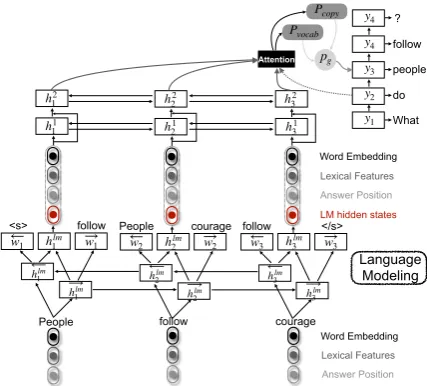
Figure 1: Overall structure of our joint-learning model.
previous word whose input is a plain text without relying on any annotation. The two tasks are then combined with a hierarchical structure, where the low-level language modeling encourages our rep-resentation to learn richer language features that will help the high-level network to generate better expressive questions.
We conduct extensive experiments on two reading comprehension datasets: SQuAD and MARCO. We experiment with different settings to prove the efficacy of our multi-task learn-ing model: with/without language modellearn-ing and with/without features. Experimental results show that the language modeling consistently yields ob-vious performance gain over baselines, for all evaluation metrics, including BLEU, perplexity
and distinct. Our full model outperforms the existing state-of-the-art results on both datasets, achieving a high BLEU-4 score of 16.23 on SQuAD and 20.88 on MARCO, respectively. We also conduct human evaluation, and our generated questions get higher scores on all three metrics, includingmatching,f luencyandrelevance.
2 Model Description
The baseline model is an attention-based seq2seq pointer-generator reinforced by lexical features, like the work ofSun et al.(2018). In our proposed model, we employ multi-task learning with lan-guage modeling as an auxiliary task for QG. The whole structure of our model is shown in Figure1.
2.1 Feature-enriched Pointer Generator
The feature-rich encoder is a bidirectional LSTM used to produce a sequence of hidden stateshLt. The encoder takes a sequence of word-and-feature vectors as input ((x1, ..., xT)), which concatenates the word embedding et, answer position embed-ding at and lexical feature embedding lt (xt =
[et;at;lt]).The lexical feature is composed of POS tags, NER tags, and word case.
The attention-based decoder is another unidi-rectional LSTM, which is conditioned on the pre-vious decoder statesi−1, decoded wordwi−1, and
context vector ci−1 which is generated via
atten-tion mechanism (Bahdanau et al.,2014):
si=LST M([wi−1;ci−1], si−1) (1)
Further, a two-layer feed-forward network is used to produce the vocabulary distributionPvocab.
The pointer generator (See et al.,2017) incorpo-rates a copy modePcopy(w), which allows copy-ing words from the source text via pointcopy-ing. The final probability distribution is to combine both modes with a generation probabilitypg∈[0,1]:
P(w) =pgPvocab(w) + (1−pg)Pcopy(w) (2)
The model is trained to minimize the negative log-likelihood of the target sequence. We denote this loss asE.
2.2 Language Modeling
The language model is to predict the next word and previous word in the sequence with a forward LSTM and a backward LSTM, respectively. First, we feed the input sequence into a bidirectional LSTM to get the hidden representationshlmt .
Then, these states are fed into a softmax layer to predict the next and the previous word:
Plm(wt+1|w<t+1) =sof tmax(Wf
−→
hlmt ) (3)
Plm(wt−1|w>t−1) =sof tmax(Wb
←−
hlmt ) (4)
The training objective is to minimize the loss function which is defined as the average of the negative log-likelihood of the next word and the previous word in the sequence:
Elm=− 1
T −1
T−1
X
t=1
log(Plm(wt+1|w<t+1))
− 1
T−1
T
X
t=2
Dataset SQuAD MARCO
Model BLEU-1 BLEU-2 BLEU-3 BLEU-4 BLEU-1 BLEU-2 BLEU-3 BLEU-4
NQG++ (Zhou et al.,2017) - - - 13.29 - - - -matching strategy (Song et al.,2018) - - - 13.91 - - - -Maxout Pointer (sentence) (Zhao et al.,2018) 44.51 29.07 21.06 15.82 - - - 16.02 answer-focused model (Sun et al.,2018) 42.10 27.52 20.14 15.36 46.59 33.46 24.57 18.73 position-aware model (Sun et al.,2018) 42.16 27.37 20.00 15.23 47.16 34.20 24.40 18.19 hybrid model (Sun et al.,2018) 43.02 28.14 20.51 15.64 48.24 35.95 25.79 19.45
Our Model
[image:3.595.74.526.62.219.2]pointer generator with features (baseline) 41.25 26.76 19.53 14.89 54.04 36.68 26.62 20.15 w/ features + language modeling 42.80 28.43 21.08 16.23 54.47 37.30 27.31 20.88 w/o features + language modeling 42.72 27.73 20.26 15.43 54.62 37.37 27.18 20.71 w/ features + 1-layer encoder 42.12 27.48 20.12 15.33 53.51 36.42 26.49 20.11
Table 1: Experimental results of our model in different settings comparing with previous methods on two datasets.
2.3 Multi-task Learning
Instead of sharing representations between two tasks (Rei,2017) or encoding two tasks at the same level (Liu et al.,2018;Chen et al.,2018;Kendall et al., 2018), we adopt a hierarchical structure to combine the two tasks, by treating language mod-eling as a low-level task and pointer generator net-work as high-level, because language modeling is fundamental and its semantic information will benefit question generation. In details, we first feed the input sequence into the language model-ing layer to get a sequence of hidden states. Then we concatenate them with the input sequence to obtain the input of the feature-rich encoder.
Finally, the loss of LM is added to the main loss to form a combined training objective:
Etotal=E+βElm (6)
where β is a hyper-parameter, which is used to control the relative importance of two tasks.
3 Experiments
3.1 Dataset
We conduct experiments on two reading compre-hension datasets: SQuAD and MARCO, using the data shared by Zhou et al. (2017) and Sun et al. (2018), where the lexical features are ex-tracted with Stanford CoreNLP. In details, there are 86,635, 8,965 and 8,964 sentence-answer-question triples in the training, development and test set for SQuAD, and 74,097, 4,539 and 4,539 sentence-answer-question triples in the training, development and test set for MARCO.
3.2 Experiment Settings
Our vocabulary contains the most frequent 20,000 words in each training set. Word embeddings are
initialized with the pre-trained 300-dimensional Glove vectors, and are allowed to be fine-tuned during training. The representations of answer po-sition, POS tags, NER tags and word cases are ran-domly initialized as 32-dimensional vectors, re-spectively. The encoder of our baseline model consists of 2 BiLSTM layers, and the hidden size of both the encoder and decoder is set to 512.
[image:3.595.339.492.419.501.2]In our joint model, grid search is used to deter-mineβ and results are shown in Figure2. Conse-quently, we set the value ofβ to 0.6.
Figure 2: The impact ofβon BLEU-4
We search the best-trained checkpoint base on the dev-set. In order to mitigate the fluctuation of the training procedure, we then average the nearest 5 checkpoints to obtain a single averaged model. Beam search is used with a beam size of 12.
3.3 Automatic Evaluation
Results on BLEU The experimental results on
BLEU (Papineni et al., 2002) are illustrated in Table 1. Our full model (w/ features + lan-guage modeling) significantly outperforms previ-ous models and achieves state-of-the-art results on both datasets, with 16.23 BLEU-4 score on SQuAD and 20.88 on MARCO respectively.
Results without Features To investigate the
fea-Dataset SQuAD MARCO
Model perplexity distinct-1 distinct-2 perplexity distinct-1 distinct-2
[image:4.595.75.526.63.139.2]pointer generator with features (baseline) 41.24 9.67 39.46 17.69 16.84 45.61 w/ features + language modeling 34.09 9.80 40.94 15.17 17.31 47.51 w/o features + language modeling 38.70 9.73 40.89 14.07 17.13 46.98 w/ features + 1-layer encoder 38.40 9.56 39.71 17.61 17.10 46.87
Table 2:Perplexityanddistinctof different setting models on two datasets
Dataset SQuAD MARCO
Model Matching Fluency Relevance Matching Fluency Relevance
pointer generator with features (baseline) 0.983 1.573 1.540 1.133 1.667 1.593
+ language modeling 1.147 1.690 1.600 1.160 1.720 1.603
kendall correlation coefficient 0.820 0.814 0.796 0.852 0.792 0.824
Table 3: Human evaluation results on two datasets.
tures (w/o features + language modeling). We can see that the auxiliary task of language mod-eling boosts model performance on both datasets, demonstrating that our model guarantees higher stability because it does not depend on the quality of lexical features. Therefore, our model can ap-ply to low-resource languages where there is not adequate data for training a well-performed model for lexical features extraction.
Results with a 3-layer EncoderTo validate that
we gain the improvement not due to a deeper net-work, we replace the language modeling module with one encoder layer, that is to say, we adopt a 3-layer encoder. Comparing this model (w/ features+1-layer encoder) with the full model (w/ features+language modeling), we can see that our joint-learning model performs better than simply adding an extra encoding layer. The results on MARCO also clearly show that a deeper network does not guarantee better performance.
Perplexity and DiversitySince BLEU only
mea-sures a hard matching between references and gen-erated text, we further adoptperplexityanddistinct
(Li et al.,2016) to judge the quality of generated questions. The results in Table2indicate that the language modeling task helps the model to gener-ate more fluent and readable questions. Besides, the generated questions have better diversity.
3.4 Human Evaluation
For a better study on the quality of generations, we perform human evaluation. Three annotators are asked to grade the generated questions in three aspects: matching indicates whether a question can be answered with the given answer;f luency
indicates whether a question is fluent and gram-matical; relevance indicates whether a question can be answered according to the given context. The rating score ranges from 0 to 2. We randomly sample 100 cases from each dataset for evalua-tion. Results are displayed in Table 3. The co-efficient between human judges is high, validating a high quality of our annotation. The results show that by incorporating language modeling, the gen-erated questions receive higher scores across all three metrics.
Context: Prior to the early 1960s, access to the forest’s interior was highly restricted, and the forest remained ba-sically intact.
Answer:The early 1960s
Reference: Accessing the Amazon rainforest was re-stricted before what era?
Baseline:When did access to the forest’s interior? Joint-model:When did access to the forest’s interior be-come restricted?
Context: This teaching by Luther was clearly expressed in his 1525 publication on the bondage of the will, which was written in response to on free will by Desiderius Eras-mus (1524).
Answer:1525
Reference: When did Luther publish on the bondage of the will?
Baseline:In what year was the bondage of the will on the bondage of the will?
Joint-model: When was the bondage of the will pub-lished?
Table 4: Examples of generated questions by different models.
3.5 Case Study
[image:4.595.74.528.175.249.2]base-line model and our joint model respectively. It is obvious that questions generated by our proposed model are more complete and grammatical.
4 Conclusion
This paper proves that equipped with language modeling as an auxiliary task, the neural model for QG can learn better representations that help the decoder to generate more accurate and fluent questions. In future work, we will adopt the aux-iliary language modeling task to other neural gen-eration systems to test its generalization ability.
Acknowledgments
We thank Weikang Li and Xin Jia for their valu-able comments and suggestions. This work is sup-ported by the National Natural Science Founda-tion of China (61773026, 61572245).
References
Dzmitry Bahdanau, Kyunghyun Cho, and Yoshua Bengio. 2014. Neural machine translation by jointly learning to align and translate. CoRR, abs/1409.0473.
Rich Caruana. 1998. Learning to learn. chapter Mul-titask Learning, pages 95–133. Kluwer Academic Publishers, Norwell, MA, USA.
Ying Chen, Wenjun Hou, Xiyao Cheng, and Shoushan Li. 2018. Joint learning for emotion classification and emotion cause detection. InProceedings of the 2018 Conference on Empirical Methods in Natural Language Processing, Brussels, Belgium, October 31 - November 4, 2018, pages 646–651.
Kenneth Mark Colby. 1975. Artificial Paranoia. Else-vier Science Inc., New York, NY, USA.
Xinya Du and Claire Cardie. 2017. Identifying where to focus in reading comprehension for neural ques-tion generaques-tion. In Proceedings of the 2017 Con-ference on Empirical Methods in Natural Language Processing, EMNLP 2017, Copenhagen, Denmark, September 9-11, 2017, pages 2067–2073.
Xinya Du, Junru Shao, and Claire Cardie. 2017. Learn-ing to ask: Neural question generation for readLearn-ing comprehension. InProceedings of the 55th Annual Meeting of the Association for Computational Linguistics, ACL 2017, Vancouver, Canada, July 30 -August 4, Volume 1: Long Papers, pages 1342–1352.
Nan Duan, Duyu Tang, Peng Chen, and Ming Zhou. 2017. Question generation for question answer-ing. InProceedings of the 2017 Conference on Em-pirical Methods in Natural Language Processing, EMNLP 2017, Copenhagen, Denmark, September 9-11, 2017, pages 866–874.
Han Guo, Ramakanth Pasunuru, and Mohit Bansal. 2018. Soft layer-specific multi-task summarization with entailment and question generation. In Pro-ceedings of the 56th Annual Meeting of the Associa-tion for ComputaAssocia-tional Linguistics, ACL 2018, Mel-bourne, Australia, July 15-20, 2018, Volume 1: Long Papers, pages 687–697.
Kazuma Hashimoto, Caiming Xiong, Yoshimasa Tsu-ruoka, and Richard Socher. 2017. A joint many-task model: Growing a neural network for multiple NLP tasks. In Proceedings of the 2017 Conference on Empirical Methods in Natural Language Process-ing, EMNLP 2017, Copenhagen, Denmark, Septem-ber 9-11, 2017, pages 1923–1933.
Alex Kendall, Yarin Gal, and Roberto Cipolla. 2018.
Multi-task learning using uncertainty to weigh losses for scene geometry and semantics. In2018 IEEE Conference on Computer Vision and Pattern Recognition, CVPR 2018, Salt Lake City, UT, USA, June 18-22, 2018, pages 7482–7491.
Jiwei Li, Michel Galley, Chris Brockett, Jianfeng Gao, and Bill Dolan. 2016. A diversity-promoting ob-jective function for neural conversation models. In
NAACL HLT 2016, The 2016 Conference of the North American Chapter of the Association for Computational Linguistics: Human Language Tech-nologies, San Diego California, USA, June 12-17, 2016, pages 110–119.
Lizhen Liu, Xiao Hu, Wei Song, Ruiji Fu, Ting Liu, and Guoping Hu. 2018. Neural multitask learning for simile recognition. In Proceedings of the 2018 Conference on Empirical Methods in Natural Language Processing, Brussels, Belgium, October 31 -November 4, 2018, pages 1543–1553.
Tri Nguyen, Mir Rosenberg, Xia Song, Jianfeng Gao, Saurabh Tiwary, Rangan Majumder, and Li Deng. 2016. MS MARCO: A human generated machine reading comprehension dataset. In Proceedings of the Workshop on Cognitive Computation: Inte-grating neural and symbolic approaches 2016 co-located with the 30th Annual Conference on Neu-ral Information Processing Systems (NIPS 2016), Barcelona, Spain, December 9, 2016.
Kishore Papineni, Salim Roukos, Todd Ward, and Wei-Jing Zhu. 2002. Bleu: a method for automatic eval-uation of machine translation. InProceedings of the 40th Annual Meeting of the Association for Compu-tational Linguistics, July 6-12, 2002, Philadelphia, PA, USA., pages 311–318.
Pranav Rajpurkar, Jian Zhang, Konstantin Lopyrev, and Percy Liang. 2016. Squad: 100, 000+ questions for machine comprehension of text. InProceedings of the 2016 Conference on Empirical Methods in Nat-ural Language Processing, EMNLP 2016, Austin, Texas, USA, November 1-4, 2016, pages 2383–2392.
55th Annual Meeting of the Association for Compu-tational Linguistics, ACL 2017, Vancouver, Canada, July 30 - August 4, Volume 1: Long Papers, pages 2121–2130.
Abigail See, Peter J. Liu, and Christopher D. Manning. 2017.Get to the point: Summarization with pointer-generator networks. InProceedings of the 55th An-nual Meeting of the Association for Computational Linguistics, ACL 2017, Vancouver, Canada, July 30 - August 4, Volume 1: Long Papers, pages 1073– 1083.
Heung-Yeung Shum, Xiaodong He, and Di Li. 2018.
From eliza to xiaoice: challenges and opportuni-ties with social chatbots. Frontiers of IT & EE, 19(1):10–26.
Linfeng Song, Zhiguo Wang, Wael Hamza, Yue Zhang, and Daniel Gildea. 2018. Leveraging context infor-mation for natural question generation. In Proceed-ings of the 2018 Conference of the North American Chapter of the Association for Computational Lin-guistics: Human Language Technologies, NAACL-HLT, New Orleans, Louisiana, USA, June 1-6, 2018, Volume 2 (Short Papers), pages 569–574.
Sandeep Subramanian, Tong Wang, Xingdi Yuan, Saizheng Zhang, Adam Trischler, and Yoshua Ben-gio. 2018. Neural models for key phrase extrac-tion and quesextrac-tion generaextrac-tion. In Proceedings of the Workshop on Machine Reading for Question An-swering@ACL 2018, Melbourne, Australia, July 19, 2018, pages 78–88.
Xingwu Sun, Jing Liu, Yajuan Lyu, Wei He, Yan-jun Ma, and Shi Wang. 2018. Answer-focused and position-aware neural question generation. In Pro-ceedings of the 2018 Conference on Empirical Meth-ods in Natural Language Processing, Brussels, Bel-gium, October 31 - November 4, 2018, pages 3930– 3939.
Duyu Tang, Nan Duan, Tao Qin, and Ming Zhou. 2017.
Question answering and question generation as dual tasks.CoRR, abs/1706.02027.
Hai Ye and Lu Wang. 2018. Semi-supervised learning for neural keyphrase generation. InProceedings of the 2018 Conference on Empirical Methods in Natu-ral Language Processing, Brussels, Belgium, Octo-ber 31 - NovemOcto-ber 4, 2018, pages 4142–4153.
Yao Zhao, Xiaochuan Ni, Yuanyuan Ding, and Qifa Ke. 2018. Paragraph-level neural question gener-ation with maxout pointer and gated self-attention networks. InProceedings of the 2018 Conference on Empirical Methods in Natural Language Process-ing, Brussels, Belgium, October 31 - November 4, 2018, pages 3901–3910.
Qingyu Zhou, Nan Yang, Furu Wei, Chuanqi Tan, Hangbo Bao, and Ming Zhou. 2017. Neural ques-tion generaques-tion from text: A preliminary study. In
Natural Language Processing and Chinese Comput-ing - 6th CCF International Conference, NLPCC